A Boy Was Left in the Cold, and the School Blamed Her—But One Detail on the Bus Route Sheet Didn’t Fit
Chapter 1: The Empty Curb
By the time the school board called Mara Bell into the conference room, nine-year-old Jonah Pike was home from the hospital. His father had posted a photograph of his red, swollen hands beneath a question: *Who took my son off the bus route?*
The answer seemed to be Mara.
She built the daily route packets for Ash County Schools in western Pennsylvania. On Thursday afternoon, Jonah’s stop had disappeared from the driver’s sheet. His bus passed the turn onto Mercer Road, and Jonah, who had stayed after school for reading help, waited outside the middle school until the late buses were gone. He started walking in the cold. A woman delivering groceries found him nearly two miles from school.
The route record on transportation director Paul Renner’s screen showed the change under Mara’s initials. So did the printed sheet he laid before her.
Two weeks earlier, Mara had argued with Jonah’s father, Daniel, about the stop. The district planned to move it from Mercer Road to the main highway in spring. Daniel said Jonah couldn’t safely reach the highway. Mara had said, “I can’t promise that stop will stay.”
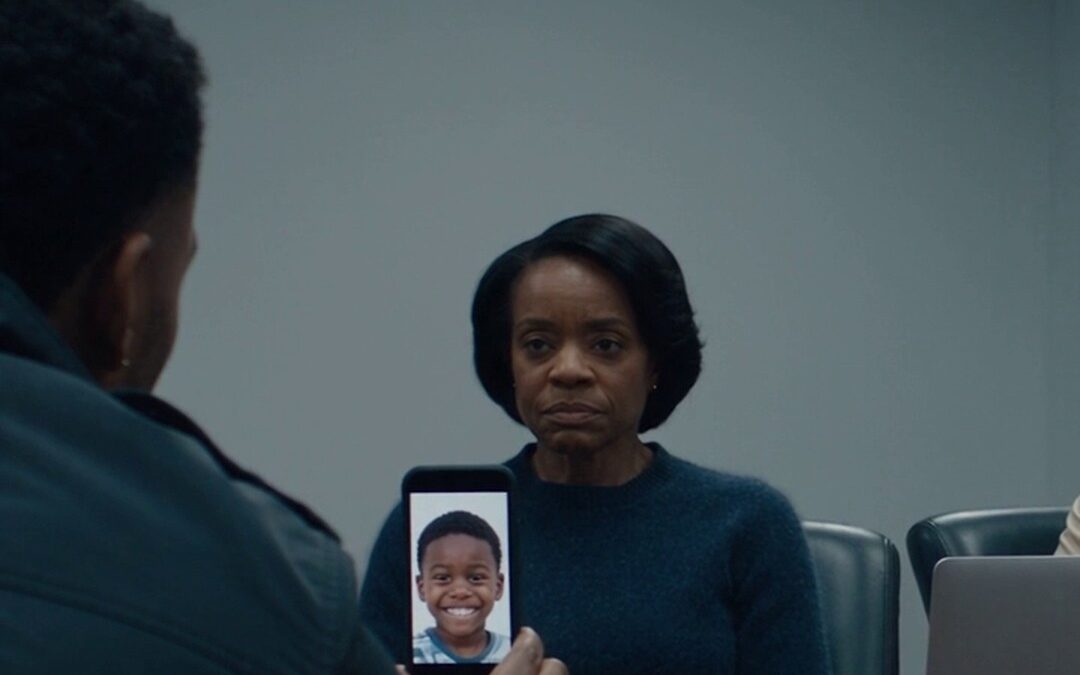
Now Daniel stood across the table from her, holding the photograph on his phone.
“I meant I couldn’t promise what the board would decide,” Mara said.
Paul turned the sheet toward the superintendent. “The removal happened yesterday.”
Mara recognized her initials in the footer. She also recognized the small coffee ring above them. It was on every copy of the route packet she had printed Monday, three days before the removal Paul was describing.
She pointed to it. “That footer came from the old packet.”
Paul didn’t look down. “Are you saying the system made this change by itself?”
“No. I’m saying this paper doesn’t show who made it.”
She asked to open the route history. Paul closed his laptop. The district was preserving records, he said, and she would be on leave while it investigated.
At home, Mara found a voicemail from Jonah’s mother. There was no shouting. “He asked me if the bus didn’t come because we complained,” she said.
Mara listened twice. Then she took out the Monday packet she had kept in her bag. Her initials and the coffee ring were there.
So was Jonah’s stop.
Chapter 2: The Road the Bus Took
On Friday morning, Mara drove to the transportation office because she had left her winter boots beneath her desk. The receptionist met her at the locked inner door with a cardboard box. Her boots were inside, along with a mug, a desk calendar, and a framed school photograph of her daughter. Someone had packed the drawer where she kept Jonah Pike’s route file, but the file was absent.
“Paul said you can email if you need something else,” the receptionist told her.
Mara thanked her. On the way back to her car, she passed three bus drivers waiting beside the garage door. They stopped talking when they saw her. One of them, Celia Orr, lifted a hand as if to wave, then let it fall.
Mara had worked in that building for eleven years. She knew which bus needed a second try to start in damp weather and which driver brought extra gloves for children who forgot theirs. She had helped Jonah’s mother find a route when the family moved to Mercer Road the previous fall. On ordinary days, the work was a sequence of addresses, turns, pickup times, and corrections. On Friday, every glance made it feel like a verdict.
The radio news played in her car before she could turn it off. The announcer said the district was investigating “an unauthorized route change following a dispute with a parent.” Mara heard her own words in that sentence, though no one had used her name.
At home, she spread the Monday packet across the kitchen table. Her daughter, Tess, came in carrying a bowl of cereal.
“Are you really suspended?”
“On leave while they investigate.”
Tess looked at the route sheet. At seventeen, she understood enough of Mara’s job to know what its columns meant. “Did you change something?”
“No.”
“Did somebody use your computer?”
“I don’t know.”
That answer seemed to trouble Tess more than a firm denial would have. She took her cereal upstairs.
Mara could not blame her. The route record on Paul’s screen had shown her initials, and she had left her computer unlocked at least once on Thursday. She remembered hurrying to the garage to tell a driver about a wheelchair lift problem, then returning to find a stack of field trip requests on her chair. She could not remember whether she had locked the screen. A year earlier, Paul had written her up for leaving it open while she went to the printer. She had called the rule fussy at the time. Now she wished she had treated it like a locked door.
She read the Monday sheet again. Route 14B, bus 26, afternoon run. After the middle school, the bus was to follow County Line Road, turn onto Mercer Road, and stop at the gravel pull-off beside the Pikes’ mailbox. Jonah was the only child who used that stop on Thursdays. On other weekdays, his grandmother collected him after reading help. His parents had told the school he would ride Thursday because his grandmother had an appointment.
At the bottom of the sheet, beside Mara’s initials, was the coffee ring. She had set her cup on the first page while the printer warmed up. When she caught herself, she moved it, but the ring appeared on the master copy. The packet had gone to the driver Monday morning.
Paul’s Thursday sheet contained the same ring. It also lacked the Mercer Road turn and stop. Mara put the pages side by side. The route directions were different, but the footer was identical down to a faint broken line beneath her initials.
She could explain the footer. She could not explain the change.
The district used a route program that produced a master sheet for each run. When someone revised a route, staff often copied the prior sheet and changed only the affected rows. The footer was part of the page, like the district logo. Her initials could have survived a revision made by anyone with permission to copy the master. But the screen Paul had shown them also displayed “Last prepared by: M. Bell.” She did not know whether that meant the last person to alter the route, the person who had created the sheet, or the person whose copy someone had revised. She had never had a reason to ask.
She called the district’s human resources office and requested the route history, the full Thursday packet, and the policy for reviewing electronic changes. She kept her voice level and wrote down the name of the person who took the request. Then she called the union representative, who told her not to discuss the incident with parents or staff while the district investigated.
The advice made sense. It also left Daniel Pike’s photograph on every local screen without an answer from her.
At noon, Tess came down for lunch. She saw the two sheets.
“If that’s Monday’s, why does his say you did it Thursday?”
“That’s what I need to find out.”
“Did you tell them about the ring?”
“Yes.”
“Did they check?”
“No.”
Tess looked back at the pages. “Then make them.”
***
On Saturday, Mara drove the route herself.
She left the middle school at the time printed on Thursday’s sheet, with a dashboard clock she had checked against her phone. Route 14B served two apartment buildings, a church parking lot, and a group of houses off County Line Road before it reached Mercer. She made each turn slowly, stopping where the bus would stop. The trip took longer in her car than it would have in a bus with children boarding and leaving, but she wanted to see the roads while the question was still fresh.
At the turn for Mercer Road, an orange sign leaned against a fence: ROAD WORK AHEAD. Beyond it, the county had dug a narrow trench along the shoulder. Traffic could still pass. There were cones on the near side of the road, and a plate covered part of the trench at a driveway.
Mara pulled into the church lot and walked back. The gravel pull-off at the Pikes’ mailbox was blocked by equipment and a mound of crushed stone. A bus could not have stopped there on Thursday. The district should have been told about the work and set a temporary place for Jonah to board. A notice should have gone to his parents and the driver.
Had the stop been removed for the road work? It was possible. It did not explain why Jonah was left at school. A temporary stop belonged somewhere on the route sheet.
A pickup truck slowed beside her. The driver, wearing a county roads jacket, lowered his window.
“Can I help you?”
“I work for the schools. When did this start?”
“Wednesday morning. We told the bus garage before we put cones down.” He looked at the mailbox, then at her. “You’re here about that boy.”
“I’m trying to understand what happened.”
The man’s expression closed. “I already talked to the school.”
He drove on. Mara wrote down the number on the side of his truck. She had no authority to ask him for records, and she would not make him repeat a statement in the cold beside the road. But his words changed the shape of the problem. If the garage had known Wednesday, someone had needed to decide what to do with the stop before Thursday afternoon.
She sat in the church lot and checked the photos she had taken of the two sheets. On the Monday packet, the Mercer stop was listed as number eight. On Paul’s Thursday sheet, number eight belonged to a different stop farther down County Line Road. The directions sent bus 26 straight past the Mercer turn. There was no temporary stop marked on the page Paul had shown at the meeting.
The route sheet had made the driver’s decision understandable. If a child was waiting at the school bus line but absent from the list for that run, the driver was supposed to send the child back to school staff. That was the rule the district used to keep a child from boarding the wrong bus. Mara needed to know whether Jonah had reached the bus line and who had sent him away.
She called the middle school office and reached a recorded weekend message. She did not leave a voicemail. If she was going to ask staff about a child, she wanted the request to be clear and on record.
On Monday morning, the superintendent’s office sent Mara an email. It attached a letter confirming her leave and told her not to enter district property except by appointment. It said the review included “a change to the route sheet attributed to your user profile” and “a prior complaint involving the affected family.”
The wording was narrower than Paul’s statement at the conference table. *Attributed to your user profile.* It did not say she had made the change. But to Daniel, and probably to the board, the distinction would sound like an excuse.
Mara forwarded the letter to her union representative, Elaine Cho. She asked for the route program’s change history and the road work notice. Elaine answered that they could request both at the meeting scheduled for Wednesday. Until then, Mara could prepare questions.
Mara wrote them on a yellow pad:
*Who received the road notice?*
*Who decided where Jonah would board?*
*What does “Last prepared by” mean?*
*Who printed Thursday’s packet?*
Then she added the question that hurt most:
*Why was Jonah told the bus would not take him?*
***
Celia Orr called that evening. Mara almost let the phone go to voicemail. She knew Celia drove bus 26, and she knew any conversation could be recounted badly. She answered.
“I shouldn’t be calling,” Celia said.
“Then you can hang up.”
“I’ve been trying to remember Thursday. Paul asked me if I saw Jonah. I didn’t. I told him that.”
Mara sat down. “Did you have a new sheet?”
“A sheet was on my seat when I came back from lunch. It said revised at the top. Mercer wasn’t on it.”
“Did you ask where they moved him?”
“I asked the garage on the radio before I pulled out. They told me, ‘No Mercer pickup today. Follow the sheet.’”
“Who said it?”
“I don’t know. It was dispatch.”
Mara tried to remember who had staffed the radio at that hour. Paul sometimes took it when the regular dispatcher went to lunch. So did Nina Patel, the assistant director. Their voices were different, but a short transmission under static might not have been easy to identify.
Celia continued. “I thought his grandmother was getting him. That happens most Thursdays.”
“This was the Thursday he was supposed to ride.”
“I know that now.” Celia’s breath caught. “I should have asked again.”
Mara wanted to say that Celia had followed the sheet she was given. She also knew the sheet contained a missing child, and a child had suffered. “Did you tell Paul about the radio call?”
“Yes. He said they had it.”
“Thank you for calling me.”
“If this becomes a statement, I’ll say it. I’m not asking you to hide it.”
After they hung up, Mara added another question to the pad: *What did dispatch know when Celia called?*
The next morning, Daniel Pike posted a screenshot of an email Mara had sent him two weeks earlier. It contained the line she had explained at the meeting: “I can’t promise that stop will stay.” He wrote that he had warned the district his son would be stranded if the bus stopped coming up Mercer Road.
The comments divided between sympathy for Jonah and anger at Mara. Someone found the public board minutes from the previous year, where Daniel had spoken against a proposal to combine rural stops. Someone else wrote that Mara had “finally shown him who decides.” A neighbor whom Mara had helped with a lost bus pass shared the post without comment.
Mara opened her sent mail and read the whole exchange. Daniel had asked whether Mercer Road would remain a stop when the district reviewed spring routes. Mara had replied that the board had not decided, that she could not promise the stop would stay, and that she would notify the family of any change before it took effect. She had not notified them Thursday because she had not known there was a change.
She sent the full exchange to Elaine. She did not post it. Daniel had every reason to be frightened and furious, and the rest of the exchange would not tell him where Jonah had been while the bus left.
At the Wednesday meeting, Paul brought a district attorney, the superintendent, and a thick folder. Mara brought Elaine and her yellow pad.
Paul described the case first. The county road crew had reported work at Mercer Road. A revised route sheet removed the unsafe stop. The change appeared in the system under Mara’s profile. The school had received no alternate pickup instruction. Jonah was turned away from bus 26 and later walked home. The district was investigating whether Mara had removed the stop without arranging a replacement after her dispute with Daniel.
Mara listened for the sentence that would answer the road notice question. It did not come.
“When was the county notice received?” she asked.
Paul looked at his folder. “Wednesday.”
“By whom?”
“The transportation office.”
“Who took the call?”
“I’d have to check.”
“Was there a written notice?”
“There may have been an email.”
Mara turned a page on her pad. “What does ‘Last prepared by’ mean in the route program?”
“It identifies the staff member responsible for that sheet.”
“Responsible when it was made, or responsible for every later revision?”
Paul frowned. “It’s your name on the record.”
“That doesn’t answer the question.”
The superintendent raised a hand. “We’ll ask the vendor.”
Mara showed them the Monday packet and the photograph of Paul’s Thursday sheet. She pointed out the identical coffee ring and damaged footer line. Paul said the old template could have been used for the revision. Mara agreed. That was her point: the footer alone could not tell them who revised it.
The district attorney examined the copies. “Do you have the original Thursday sheet?”
“Paul does.”
Paul said it was in the file. Mara asked to see it. He slid over a photocopy, not the original. The top line read “Revision 6.” Beside it was a printed time: 12:41 p.m. Thursday.
She checked the Monday packet. It read “Revision 5,” printed at 7:18 a.m. Monday. The old footer had been carried forward into revision 6. That established a copy had been made. It did not establish who made it or why.
“What happened between the county notice and this print at 12:41?” she asked.
“We’re still reviewing that,” Paul said.
“Was a temporary stop assigned?”
“No temporary stop appears on the sheet.”
“Was there one somewhere else?”
Paul said he did not know.
Mara asked for the full route history, the county notice, the radio log, and the dispatch notes for Thursday. The attorney wrote the requests down. Elaine asked for the middle school’s bus dismissal record. The superintendent agreed to collect them and reconvene after reviewing them.
As they stood to leave, Paul said, “Mara, I want to be fair. But you knew that family opposed the route plan, and you knew how this system worked.”
“I knew how to print a route sheet,” she said. “That’s why I’m asking you to find out who printed this one.”
***
The next day, the district posted a statement saying it had placed an employee on leave while it investigated an “improper route revision.” It did not name Mara, but Daniel’s post and the board meeting had done that already. Tess came home from school angry. A classmate had asked whether her mother had tried to make a little boy walk.
“What did you say?” Mara asked.
“I said you didn’t.”
Tess dropped her bag on the floor. “I hope I was right.”
“You were.”
“I know.” Tess picked up the bag. “I’m mad that I had to answer it.”
Mara understood. She had given Tess an answer, but she had not yet given her a reason anyone else would believe.
On Friday, Elaine sent the first batch of records. The district had provided copies of two emails, a radio call list, and an export of the route program’s history. The county road supervisor had emailed the transportation office at 9:14 a.m. Wednesday. The subject line was MERCER ROAD SHOULDER WORK. It said the pull-off beside the Pike mailbox would be blocked for approximately two days and asked the district to arrange an alternate bus stop. The message had gone to Paul and Nina Patel. Mara was not copied.
At 9:32, Paul had replied: “We will handle the stop.”
That was a relief, but it did not settle who had removed it. Paul could have forwarded the notice or instructed someone verbally. Mara searched the rest of the records. There was no forward to her and no written assignment.
The route history showed revision 6 created Thursday at 12:36 p.m., printed at 12:41. Under “Owner” it listed M. Bell. Under “Action,” it said “Copy prior route and edit.” The “User” column, the one Mara needed, was blank in the export.
Elaine had noticed. She had asked the district attorney whether the source report contained a user column. He had said they were checking.
Mara read the road email again. *Arrange an alternate bus stop.* She circled the phrase. Paul had known the existing stop could not be used. Someone had made a route sheet that removed it. Nobody had told Jonah’s parents where to send him. The question of who pressed the keys mattered, but so did the decision that preceded it.
The radio call list showed a transmission from Celia’s bus at 2:47 p.m. and a reply from dispatch at 2:48. The list gave times and radio identifiers, not words. The district kept recordings for a limited period, according to the policy Elaine had sent, but it had preserved Thursday’s calls after the incident. Mara asked Elaine to request the audio at the next meeting.
Mara also asked for the road notice’s complete email thread. Paul’s reply might not have been the last message.
Elaine wrote back: *I’ll request it. You should be prepared for them to say that even if you did not receive the email, someone told you.*
Mara stared at her screen. She could remember Thursday’s rush: the wheelchair lift problem, the field trip requests, a driver searching for a lost lunch bag. Could Paul have mentioned the road work while she was distracted? She did not remember it. She would not claim that he could not have said it.
She wrote a timeline from Wednesday morning to Thursday afternoon. Whenever she knew a time from a record, she used it. Where she remembered an event without a time, she left a space. The empty spaces bothered her, but they also stopped her from turning a guess into a fact.
At the bottom, she wrote: *Who was at the route computer at 12:36?*
The route office had three workstations. Mara’s was beside the window. Nina’s was in a smaller room off Paul’s office. Paul had his own desk. The route program could be opened from any of them by authorized staff. Mara’s user profile could own a route without her being at her desk. She needed the source history to confirm that distinction.
She called the program vendor’s public support number. The representative would not discuss the district’s account with an employee on leave, but Mara could ask a general question about the fields in an exported report.
“Does ‘Owner’ identify the person who made the most recent edit?” she asked.
“It identifies the record owner,” the representative said. “That’s usually whoever created the route.”
“Does it change when another user copies the route and edits the copy?”
“Not automatically. The owner carries over unless someone changes it.”
Mara wrote the answer down, along with the representative’s name and the time. Then she asked where an administrator would find the editing user. The representative described an audit report available to the district. Mara asked him to email the public documentation for those fields. He did.
She sent it to Elaine. It showed that Paul’s screen had been displaying a record owner, not proof of who made revision 6. If the audit report still existed, it could show the user who had.
For the first time since Thursday, Mara felt an answer coming into focus. She called Tess to the kitchen and showed her the documentation.
“So they used your copy,” Tess said.
“Yes.”
“Who changed it?”
“We still have to find that out.”
***
The setback arrived before the next meeting.
On Monday, the superintendent sent Elaine a witness summary. A dispatcher named Greg Mullen said he had heard Mara tell Paul, “I’ll take care of Mercer,” on Wednesday morning. Greg also said he had seen Mara at her workstation around lunchtime Thursday, before the revised sheet appeared. Paul submitted a note saying he had understood Mara to be handling the temporary stop and had assumed she would contact the school and family.
Mara read the summary twice. Greg’s first statement was new to her; the second was true in a useless way. She had been at her workstation around lunchtime Thursday. She worked there.
Elaine called. “Do you remember saying anything like that?”
“No. I remember Paul asking me about three field trip buses on Wednesday. Mercer wasn’t part of it.”
“Could you have said you’d take care of a route problem?”
“I might have. But not this one.”
“Paul’s note gives them a story. He told you; you accepted; you failed.”
“It leaves out why he didn’t check for a temporary stop.”
Elaine was quiet for a moment. “That’s a question we can ask. We need evidence for your part.”
Mara knew she was right. She had spent days looking for signs that someone else had changed a sheet. Paul now had a witness who placed her in the conversation and at the computer. The accusation had grown from a misleading footer into an alleged instruction she had neglected.
The district’s second statement to staff said an employee had been asked to arrange an alternate stop but failed to complete the task. Mara’s phone filled with messages. Some friends said they believed her. A former coworker asked, gently, whether she had simply forgotten. Mara did not answer.
She went back through Wednesday. At 9:14, the county notice arrived. At 9:32, Paul replied. Mara’s calendar showed a 9:30 meeting with the special education coordinator about two routes for children using wheelchairs. The coordinator kept minutes. Mara had been in that meeting until 10:05.
Greg had said he heard the exchange “Wednesday morning,” with no time. It could have happened afterward. Mara emailed the coordinator for the minutes and asked her to send them directly to Elaine. Then she stopped. A meeting record might narrow a window, but it could not prove what Paul had or had not said later.
She called Celia. “Do you remember who handed you the revised sheet?”
“It was on my seat. Why?”
“Paul says he asked me to arrange a temporary stop.”
Celia exhaled. “Then where was the temporary stop?”
“That’s what I’m asking.”
Celia told her something she had not mentioned before. Around noon Thursday, bus 26 had been in the garage for a tire check. Celia had gone to the break room. When she returned, the revised sheet was on her seat with a yellow sticky note: “Use this PM. Mercer out.” She had handed the sticky note to Paul after the incident.
“Did you keep a photo?”
“No. I should have.”
“You gave him the original?”
“Yes.”
Mara imagined the note in Paul’s folder, its handwriting visible to anyone who asked. Perhaps it was his. Perhaps it was Nina’s. Perhaps Mara herself had written it during a moment she could not remember. She knew she had not, but she was learning how little that assertion did for her.
“Will you tell Elaine?” Mara asked.
“I already told the investigator.”
The witness summary had not mentioned the sticky note.
Mara added it to her timeline and sent Elaine a message. She did not accuse Paul of hiding it. She asked for a copy.
***
The district agreed to a second meeting on Wednesday. It produced the route audit report, the full email thread, and a photograph of the sticky note. The radio recording was still being prepared.
The audit report did what the footer could not. Revision 6 had been made under Paul Renner’s user account at 12:36 p.m. Thursday.
Mara felt her hands go cold as Elaine turned the page toward her. She had spent nearly a week trying to establish that the route sheet did not prove she had changed it. Now a district record named the person who had.
Paul did not deny the entry. He said he had opened Mara’s route to complete the change she had failed to make. “She was supposed to arrange the alternate stop,” he said. “By Thursday, nothing was entered. I removed the unsafe stop so the bus wouldn’t pull into the work zone.”
“Where was Jonah supposed to board?” Mara asked.
“At a temporary point on County Line Road.”
“Which point?”
Paul looked to the superintendent. “That was what Mara was handling.”
Mara kept her eyes on him. “When you took Mercer off the sheet, did you put the County Line point on it?”
“No. I expected the school would receive the instruction separately.”
“From me?”
“Yes.”
She turned to the superintendent. “I did not receive the road notice. I did not accept an assignment to move Jonah’s stop. Paul knew the pull-off was blocked and made the revision. The sheet he printed gave the driver no place to take Jonah.”
Paul pushed back his chair slightly. “This is exactly why procedures matter. I was trying to keep a bus out of a work zone after a task wasn’t done.”
The district attorney intervened. “Let’s go through the records in order.”
The email thread showed Paul’s reply to the county at 9:32 Wednesday. At 11:06, the county supervisor had sent a photograph of the blocked pull-off and asked where to direct the family if they called. Paul replied at 11:19: “We’ll use the church lot at County Line and Mercer. School will notify parent.”
Mara read the line again. The church lot was where she had parked on Saturday. It was large enough for a bus to enter and turn around. An alternate stop had been selected. The road crew had been told. Yet no alternate appeared on revision 6.
“Who at the school was told?” she asked.
Paul opened his folder. “I sent a message.”
The district attorney searched the email packet. Paul had sent one to the middle school principal at 11:24 Wednesday: “Mercer pull-off closed through Friday. Pike student to use church lot for afternoon bus. Please advise family.” Mara was not copied.
The principal had replied at 1:03: “Received. I’ll pass to attendance.”
That response might have ended the issue if anyone had completed the last step. The attendance office had a record of parent notices. Elaine asked for it.
“It isn’t in this packet,” the attorney said.
The superintendent said they would obtain it.
Paul pointed at the email. “I told the school. This wasn’t just on my desk.”
Mara agreed silently. The trail was widening. That did not make her responsible for the stop, but it meant more than one person had had a chance to prevent what happened. She wanted the trail followed to the end, even if it made the answer less simple than Paul’s account.
Elaine held up the sticky note photograph. The note read, “Use this PM. Mercer out.” Beneath it, in smaller letters, was “PR.” Paul acknowledged writing it. He said it was an instruction to Celia not to drive into the work zone. It was not a replacement for a complete route sheet.
“Why does the sheet say straight on County Line after stop seven?” Mara asked. “If the bus was to use the church lot, it needed to turn in there.”
“I thought the church stop would be communicated separately,” Paul said again.
“Did you tell Celia separately?”
“I left the note.”
“The note says Mercer out. It doesn’t say church lot.”
Paul looked at the superintendent. “I was dealing with a safety closure and an employee who hadn’t made the change.”
Mara had expected to feel vindicated when the audit report named Paul. Instead, she found herself looking at all the missing pieces around Jonah: a county email, a principal’s reply, a route sheet, a sticky note, a bus radio call. Every piece had been close to someone who could have acted.
The superintendent called a break.
In the hallway, Elaine told Mara that the audit report had cleared one part of the allegation. It had not yet established whether Mara had agreed to arrange the stop. Greg’s statement still existed.
“I know,” Mara said. “But Paul picked the church lot and told the school.”
“He may say he expected you to put it on the route sheet.”
“Then why didn’t he tell me?”
Elaine looked at the yellow pad in Mara’s hand. “Let’s find out whether he did.”
***
That afternoon, Mara received the minutes from her Wednesday meeting. They confirmed she had been with the special education coordinator from 9:28 to 10:07. She sent them to Elaine, who asked Greg to clarify when he had heard Mara say she would take care of Mercer.
Greg amended his statement. He thought the conversation had occurred after 10:30. He was unsure of the exact wording. He remembered Paul mentioning road work and Mara saying she would handle “the list.”
Mara remembered “the list.” At 10:44 Wednesday, according to her sent email, she had asked Paul for the field trip bus list for Friday. He had stopped at her desk while Greg was using the copier behind them. Mara had told Paul she would handle the list if he sent the final student counts. She had no memory of Mercer Road being mentioned.
Elaine asked for any email Paul had sent Mara assigning the stop. There was none. Paul maintained the instruction had been verbal.
There was no recording of the office conversation, and Mara did not pretend the field trip email proved what Greg had heard. It gave his memory another explanation. His amended statement gave them something to test rather than something to accept whole.
The district sent the middle school’s parent notice record the next morning. At 1:11 p.m. Wednesday, attendance clerk Jo Ellis had created a call task for the Pike family. At 1:26, she had marked it complete. Beside it she had written, “Spoke to grandmother; church lot Thurs/Fri.”
Mara’s stomach tightened. Jonah’s grandmother sometimes picked him up. If she had been told, why had the boy gone to the bus line Thursday? A call to one adult could satisfy an office checklist while leaving another adult unaware, but the record made the district’s case stronger. The family had apparently received notice. Mara might have been expected to add the stop to the sheet afterward, even without the original email.
Elaine said they needed to verify the call. Mara agreed, but she would not call the Pikes herself. Elaine asked the superintendent to have someone obtain the attendance office’s phone record and ask Jo what number she had dialed.
While they waited, Mara went back to the route sheet. The district had used the church lot as a bus stop before, during a bridge repair two years earlier. She found the old packet in an archived binder she had taken home when she was updating route templates in the summer. It showed a turn into the lot, a place for the bus to stop, and a return to County Line Road. The stop had a name in the route program: CHURCH LOT, MERCER. Adding it to revision 6 would have taken a few minutes.
She sent the old page to Elaine. It proved there was an established way to show the temporary stop on the driver’s sheet. It also gave Mara a hard question for herself. If Paul had told her about the change, she would have known exactly how to enter it. She could not rely on the work being unfamiliar.
Tess came into the kitchen while Mara was scanning the page. “Did they find out who changed it?”
“Yes. Paul.”
“Then you’re going back?”
“Not yet. He says I was supposed to arrange the new stop, and he stepped in when I didn’t.”
“Did he ask you?”
“I don’t remember him asking, and there’s no message.”
Tess pulled out a chair. “What about Jonah?”
“That’s still the part they’re checking.”
Tess looked at the old route page. “Could the bus have gone into the church lot?”
“Yes.”
“Then why didn’t it?”
“Because the page Celia got didn’t tell her to.”
Mara heard how spare the answer sounded. A child had spent a night in the hospital, and the reason began with an absent line on a piece of paper. That was the work she did every day. She had always known the lines mattered. She had not known how difficult it would be to make other people look at one that was missing.
***
The phone record came Friday. Jo had dialed the number stored for Jonah’s grandmother at 1:18 p.m. Wednesday. The call lasted forty-eight seconds. Jo told the investigator she had reached a woman who said she was Mrs. Pike and had repeated “church lot” before hanging up.
Daniel Pike’s mother, Ruth, confirmed she had received a call. She also said she had told Jo she was in a noisy doctor’s waiting room and would tell Daniel when she got home. She had forgotten. It was her first admission to the district since Jonah was found, and Mara did not know how it would be received within the family.
Daniel had asked the school to use him or Jonah’s mother for route changes. The student contact form listed Ruth as a pickup contact for emergencies, but it did not make her the primary contact for transportation notices. Jo had called the first number that answered in the attendance system, then marked the task complete.
The school had not called Daniel or Jonah’s mother. It had not sent a written notice. On Thursday, Jonah had been told to wait for bus 26, as usual.
When Mara read the account, she thought of Ruth sitting in the waiting room, trying to hear over the noise, unaware that the call would become one link in a chain. It would be easy to turn her into a new person to blame. Mara knew Daniel might already be doing that. But the driver’s sheet still lacked the church lot, and the school’s bus dismissal list still showed Jonah assigned to bus 26 at the usual loading area. A better phone call alone would not explain everything that followed.
The district had finally released the preserved radio audio. Mara listened with Elaine in the union office.
At 2:47 p.m., Celia’s voice came through: “Dispatch, twenty-six. My sheet says Mercer out. Is Pike going at the church?”
There was a hiss, then Paul’s voice. Mara knew it at once.
“Negative. No Mercer pickup today. Follow the sheet.”
Celia replied, “Copy.”
Mara looked at Elaine. The radio call had not been a driver asking vaguely whether she should follow instructions. Celia had named the church. Paul had told her no.
Elaine replayed it.
“Could he have meant no pickup at the Mercer pull-off?” she asked.
“He could say that.” Mara pointed to the old route page on the table. “But Celia asked about the church.”
They listened a third time. The superintendent had the same audio. Mara asked Elaine to send a written request that the district preserve the full recording and include those exact words in the findings. She wanted Paul given a chance to explain what he had meant before anyone reduced it to a line in a summary.
His explanation arrived Monday. Paul said he had believed Jonah was not riding Thursday because his grandmother usually collected him after reading help. He had told Celia to follow the sheet because he thought no Mercer pickup was needed that day. He acknowledged knowing about the church lot, but said the temporary stop had not been fully arranged with the family or school.
That account accounted for his words on the radio. It also raised another question: where had he obtained the belief that Jonah was not riding?
The school’s dismissal list had Jonah assigned to bus 26. It was printed Thursday at 1:45 p.m. The transportation office received a copy each day. Mara had helped set up that exchange years ago after a child boarded the wrong bus. If Paul had checked it, he would have seen Jonah’s name.
Paul said he had not seen Thursday’s list before taking the radio call. Mara believed that could be true. The lists came by district email, and on busy afternoons people often relied on the route sheet already in hand. A system could contain the right answer and still fail a child if no one read it at the decision point.
The district then gave Elaine the middle school’s bus line incident form. Jonah had presented himself to the aide for bus 26. The aide had checked Celia’s revised sheet, found no Pike stop, and sent him to the main office to call home. The office phone was occupied with another child’s transportation problem. Jonah waited, then went outside when he saw two late buses leave. No adult realized he had left the building until his mother called the school asking why he was late.
Mara set the form down. For days she had pictured Jonah waiting at a road where no bus came. He had reached the bus line. Adults had been near him. He had been turned away because the sheet did not show a place for him, and then he had slipped through a second gap when the office became busy.
She did not want the findings to collapse that sequence into “a child walked home.” Each decision mattered.
***
The board scheduled a special public meeting for the following Thursday. The district planned to discuss its preliminary findings in open session, with personnel details kept private. Daniel asked to speak. Elaine told Mara she could attend and address the board, though the investigation had not formally closed.
Mara prepared a short statement. She read it to Tess at the kitchen table.
“I did not remove Jonah Pike’s stop. The audit report shows Paul made the revision. I was not sent the county notice or assigned the church lot by email. The route sheet printed Thursday contained no temporary stop.”
Tess waited.
“That’s all?”
“It’s what I can prove.”
“You can say he made you look guilty.”
“I can say the footer was carried over from my old packet. They can see what Paul did with it.”
Tess studied her. “You still sound like you work there.”
“I might.”
Mara had thought often about going back. She wanted her job and her name, but the office had been a place where a child’s stop could vanish between a notice and a printer, then turn into a story about one employee’s grudge. Going back would mean insisting that the records were used even when they embarrassed the people in charge.
Daniel spoke before Mara at the board meeting. He did not bring the photograph this time. He said Jonah had stopped waiting at the window for the bus and asked each morning which adult knew where he was supposed to go. Daniel’s voice shook when he said he had argued with Mara, and that the argument had made the district’s first explanation easy to believe.
“I still want to know who decided my son had no stop,” he said.
Paul sat with the administrators. Mara could not tell whether he was looking at Daniel or at the board table.
The superintendent summarized the investigation. The county had warned the transportation office about the blocked pull-off. Paul had selected the church lot and notified the school principal. A school clerk had called a secondary contact, but the family had not received reliable notice. Paul had revised the driver’s route without adding the church lot. The printed footer named Mara because the revision had been copied from her master packet; the audit report identified Paul’s account as the one used to make the change. On Thursday afternoon, he had told Celia over the radio that there was no Mercer pickup and to follow the sheet.
The superintendent paused before the next sentence.
“The evidence does not support the allegation that Mara Bell removed Jonah Pike’s stop or withheld an alternate stop because of her dispute with his father.”
Mara heard someone behind her whisper. Daniel looked toward her, then back at the superintendent.
A board member asked Paul why he had told Celia there was no church pickup.
Paul leaned toward the microphone. “I believed Jonah wasn’t riding that day. His grandmother usually collected him. I made an incorrect assumption.”
“Did you check the dismissal list?” the board member asked.
“No.”
“Did you tell Ms. Bell the church lot had been selected?”
“I thought I had asked her to handle the route entry.”
“You testified that you thought she had,” the board member said. “What do you recall saying to her?”
Paul looked down at his notes. “I can’t give you the exact words.”
Mara watched him. She had waited for this moment to feel like a confrontation. It was quieter than she had imagined. Paul was not admitting that he had set out to frame her. He was describing a chain of assumptions as if each one had been a small, separate mistake. Yet he had known his own account made Mara appear responsible. He had shown the copied footer as evidence at the first meeting, then let the accusation harden while the audit report sat in a system the district controlled.
The board member turned to the superintendent. “When did we obtain the audit report?”
“Last Wednesday, after Ms. Bell requested it.”
“Could we have obtained it the day Jonah was found?”
“Yes.”
There was no further question for a moment.
Mara stood when invited. She put her statement on the lectern but did not read it immediately.
“I had an argument with Mr. Pike,” she said. “He was right that the highway stop proposed for spring would be unsafe for Jonah. I gave him an answer about a board process when he needed a firm answer about his child’s route. I should have told him more plainly that nothing would change without notice.”
Daniel looked up.
“I also left my workstation unlocked on Thursday. That was careless. The audit report shows the change was made under Paul’s account, so my computer was not used to make it. But I don’t want to claim I was careful in every part of my job because I wasn’t.”
She took a breath. “Those things made the accusation believable. They did not put Jonah’s stop back on the route sheet. The county gave us notice. The church lot was chosen. The school received a message. Celia asked about it on the radio. At each step, somebody had enough information to check the next one. I’m asking the board to keep the whole sequence in its findings.”
She sat down before she could say more than she knew.
Daniel spoke again during the public comment period. He asked the district to put route changes in writing to parents and to make drivers’ sheets show every temporary stop. He did not apologize to Mara. She had not expected him to. When he left, he passed her row without stopping.
Tess reached for Mara’s hand beneath the chair.
***
The board issued its final findings the following week. It restored Mara to her position with back pay and removed the allegation of misconduct from her file. Paul was placed on leave pending a separate personnel review. The district required temporary route changes to include a named alternate stop on the driver’s sheet and a confirmation that the family and school had received the same instructions. A revised sheet could not be released on a driver’s seat with only a sticky note.
Mara knew new rules would matter only if people followed them. She had once thought the screen lock rule was fussy. She was less certain now which safeguards were small.
Her first day back, she found her desk cleaned and her boots beneath it. The coffee mug had a chip she did not remember. Celia came in before the morning runs and stood beside the door.
“I keep thinking about the radio call,” she said.
“I heard you ask about the church.”
“I should’ve asked one more time.”
“Maybe,” Mara said. “You asked the question you needed to ask.”
Celia nodded, though neither of them looked satisfied. She went out to her bus.
At lunch, Mara opened route 14B. The road work was finished, and the Mercer pull-off had been cleared. Jonah’s stop was back on the sheet. Beside it was a note requiring the driver to report any obstruction before leaving the school. Mara checked the current dismissal list and the parent contact record, then printed the packet. She waited for it to come through the machine and read the Mercer line on paper before she put it in Celia’s tray.
A week later, Daniel came to the office to ask about the spring route review. Mara met him at the public counter. He held a folded sheet showing the proposed highway stop.
“Jonah won’t walk there,” he said.
“I’ve put the distance and the crossing into the review file,” Mara told him. “The board hasn’t decided. The Mercer stop stays in place unless you receive a written change with a date and an alternate.”
Daniel studied the sheet in his hands. “Ruth thought she told us about the church. She didn’t.”
“I know.”
“I thought your email meant you were trying to push the stop out.”
“I can see why.”
He looked at her then. “I wish I’d asked you before I posted your name.”
Mara could have told him how Tess had come home from school, or how the drivers had gone quiet when she walked past. She could also see his son’s hands in the photograph he had taken. Neither of them could undo the week.
“I wish Jonah had been told where to go,” she said.
Daniel nodded. He folded the proposed route sheet once more and left.
That afternoon, Mara filed the spring review with his objection attached. She had no promise to give him about the board’s decision. She could make sure the people deciding saw the road, the crossing, and the child whose stop was a line on their page.