A Caterer’s Brass Button Stopped the Family Lunch—and Put One Woman’s Long-Buried Story on the Table
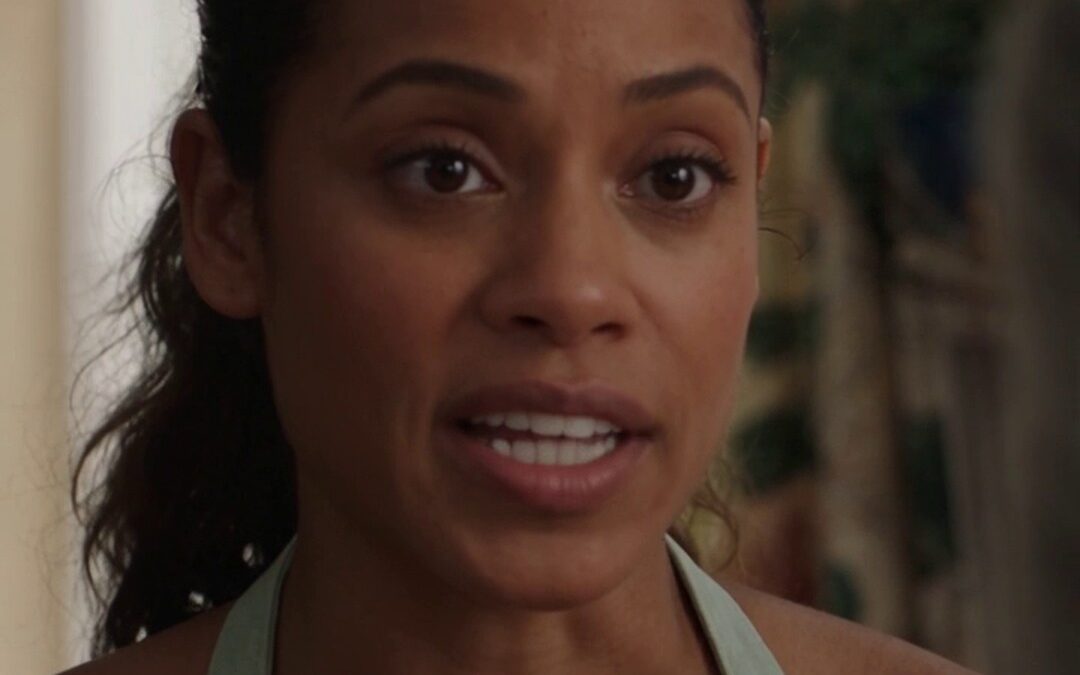
Chapter 1: The Wrong Story
“Hold that plate—where did you get the button?” Mrs. Vale called before June Alvarez could set down the lemon tart.
June steadied the platter. The older woman in the coral jacket was staring at the brass button pinned inside June’s pale-blue server’s vest, holding its loose lapel in place.
“This? My aunt gave it to me when I started catering. It came from her sewing tin.”
“May I see it?”
June glanced toward Lydia, her supervisor. Lydia nodded. June unclipped the button and placed it in Mrs. Vale’s open palm.
“Thirty years ago, my son Eli cut two notches in the rim with his father’s pocketknife,” Mrs. Vale said. “He did it so I’d stop mixing up his coat with his cousin’s.”
June looked closer. Two shallow nicks marked the brass beneath the thread holes.
“My aunt said she found it in a thrift-store jar,” June said. “She repaired my vest and pinned it there.”
“What’s your aunt’s name?”
“Rosa Alvarez.”
A man at the table shifted in his chair. June recognized him from the place cards: Mark Vale, the host and Mrs. Vale’s younger son.
“Mom, don’t,” he said.
Mrs. Vale turned the button over. A blue thread clung to one hole. “Eli sewed it back on with blue thread after he cut it. He said he wanted to know which coat was his.”
“I don’t know an Eli,” June said. She kept her voice level. “My aunt never mentioned him.”
“My older son,” Mrs. Vale said. “He left in 1998.”
Mark lowered his gaze. “We’ve told people he died that winter.”
The words landed harder than the platter’s weight. June tightened her fingers around its rim.
Mrs. Vale looked up. “Rosa said she found it?”
“Yes.”
“Then she may know what happened to Eli.” Her voice broke, though she did not reach for June. “I’ve spent twenty-eight years believing my son was dead.”
June drew a breath. “My aunt told me she found it in a thrift-store jar.”
Mrs. Vale closed her hand around the button. “That button was on Eli’s coat when he walked out of my house,” she said. “And Rosa was the last person who saw him alive.”
Chapter 2: What the Button Kept
June did not take the button back.
For a moment, the lunch continued without anyone in it. A sprinkler ticked against the courtyard wall. A glass touched a plate with a small, bright clink. Mrs. Vale’s fist remained closed around the brass; Mark sat rigid beside her, his napkin folded into a narrow strip.
June set the tart platter on the table.
“Mrs. Vale, please open your hand.”
The older woman looked down as if she had forgotten she was holding anything. Then she opened her palm. The button lay there, its two little notches visible again.
“Thank you,” June said. “I want to understand what you’re saying. But I don’t want anyone deciding what my aunt did before I’ve spoken to her.”
“You’re right,” Mrs. Vale said. “I’m sorry.”
Mark stood. “June, you can go. You don’t need to stay in this.”
June looked toward Lydia, the catering lead, who had come closer from the service gate.
“I’m on break in ten minutes,” June said. “I can take it now.”
“You can take it now,” Lydia replied. “I’ll finish the dessert pass. You’re still paid for the shift.”
June nodded. She had promised Rosa she’d be home by six to help paint the spare room before her cousin Mateo moved in for the semester. She also had a community-college enrollment appointment in two days and needed every hour on the catering schedule. Leaving work early wasn’t nothing. Staying in the middle of a family’s accusation wasn’t nothing either.
“I’ll take ten,” she said. “Then I’m calling Rosa. I won’t put her on speaker without asking.”
Mrs. Vale placed the button on a saucer rather than keeping it. “I understand.”
“You knew the cuts were there,” Mark said to his mother. “You didn’t know who had it.”
“I knew the cuts. I knew the blue thread.” Mrs. Vale looked at June. “I didn’t know anything else.”
“That makes it a question,” June said. “Not an answer.”
Mark met her eyes, startled. Then he nodded. “Fair.”
Lydia passed June a paper cup of water. June carried the saucer to a small table by the service gate, left it in the sunlight, and pulled out her phone.
Rosa answered on the third ring. “You all right, mija? Is the event running late?”
“I’m on break. A woman here recognized the button on my vest.”
Silence.
June stood very still. “Helen Vale says her son Eli cut two notches in it and sewed it back with blue thread.”
“Where is she?”
“At the lunch, with Mark. He says the family was told Eli died in 1998.”
“June, tell me exactly what she said.”
June repeated the words without adding her guesses. On the other side of the call, Rosa’s breathing grew uneven.
“Did you know Eli?” June asked.
“I knew him.”
“Did you see him in 1998?”
“I saw him that winter. He was alive when I last saw him.”
“That isn’t the same as knowing what happened after.”
“No,” Rosa said. “It isn’t.”
June gripped the phone. “Where did you get the button?”
A pause, longer this time.
“It was on the coat he left with me,” Rosa said. “I shouldn’t have told you the thrift-store story.”
June closed her eyes. The courtyard was full of pale stone and yellow flowers, a pretty place for someone to redraw the past.
“Why did you?”
“I thought it would be simpler.”
“For who?”
“For you, at first. Later, for me.”
June looked toward the table. Helen and Mark hadn’t moved. The button stayed on its saucer, separate from both families.
“Did Eli give it to you?”
“Yes.”
“Was he dying?”
“No. He wasn’t dying.”
“Did he ask you to hide him?”
“No.” Rosa’s voice sharpened, then softened. “He asked me to keep a package safe. The coat was in it. I didn’t understand what he wanted me to do with the rest.”
“What rest?”
“Letters. I have them. Not all of them. Some went to Helen.”
June glanced at the saucer.
“Did you tell the Vales he was dead?”
“No.”
“Did someone else?”
“Yes. I can’t tell you what they believed. I can tell you what I did.”
“Then do that.”
Rosa asked whether June could come by after work. June said she might, but she’d decide after speaking with Helen. She wouldn’t promise to bring the button or invite anyone to her home.
“Tell her I’ll speak with her,” Rosa said. “Not on speaker. Not in front of the whole family.”
“I’ll ask.”
“And June?”
“What?”
“I’m sorry I let that lie settle in your life.”
June pressed her lips together. “I’ll call you later.”
When she returned to the patio, Lydia had taken over the dessert pass.
“Helen,” June said, “Rosa will talk to you. She wants it private, and not on speaker.”
Helen rose slowly. “I’ll do that.”
“Not today if she isn’t ready.”
“I won’t insist.”
“Also, I want the button back.”
Helen glanced at the saucer. “Of course.”
She picked it up by the edges and offered it to June. June took it and clipped it to the inside seam of her vest. She checked that it sat securely, then turned to Lydia.
“I’m taking my break.”
“Okay,” Lydia said. “I’ll keep things moving.”
Helen looked as though she wanted to say something more. June gave her a moment.
“My son has been called dead for nearly thirty years,” Helen said. “I heard his name from you before I heard it from anyone else in this family.”
“I didn’t know his name until ten minutes ago.”
“I know.”
“Then please don’t make me responsible for what you didn’t know.”
“I won’t.”
Mark rose too. “I can drive you to Rosa’s after work, if she wants—”
“No.”
He stopped.
“I’ll make my own plans. If Rosa wants to meet you, she can say so.”
“Understood.”
June sat on the low stone wall by the service gate and drank her water. Her phone buzzed. Mateo had sent a picture of the spare room, still full of boxes.
How much paint do I need? he’d written.
Two gallons, June replied. And don’t start without me.
She didn’t tell him about Eli. Not yet. She wanted one piece of news to remain hers while she thought.
Helen waited several paces away. She didn’t approach. Mark stood beside her, eyes on the patio floor.
When June’s break ended, she went back to work. By the time the last plates were cleared, Helen had stayed without asking June to sit with the family or return the button.
“Would you be willing to talk tomorrow, if Rosa agrees?” she asked.
“Maybe. I need to speak with her first.”
“Of course.”
June clocked out at five-thirty. Lydia handed her a container of leftover tart and her share of the gratuity. June put both in her tote and walked to the bus stop. She didn’t let Mark follow her there.
At home, Rosa was sitting at the kitchen table beside a cardboard box. The table was clear of mail and Mateo’s paint swatches. A strip of old tape crossed the box’s top.
June set down the tart.
“You said letters.”
Rosa nodded. “I have them.”
“Did you bring the box out because you want me to see them, or because you think I should?”
“Because you asked what I knew. I won’t ask you to read anything tonight.”
“Good.”
Rosa was fifty-one, broad-shouldered, with graying curls she usually tied up with a pencil. The pencil was still in her hair, tilted at an angle.
“Before you ask,” Rosa said, “I never told the Vales Eli was dead. I told you I found the button in a thrift-store jar. That wasn’t true.”
“Why did you tell me?”
“You were twelve. You found the button in the sewing tin and said it looked like a bird had nibbled it. I got scared.”
“Of what?”
“That you’d ask who it belonged to. That you’d ask how I knew Eli. That you’d find out I was still angry with him.”
June pulled out a chair but didn’t sit. “Were you angry because he left?”
“Yes.”
“Did he leave you, or did he leave the Vales?”
“He left everyone, eventually. But not all at once.” Rosa glanced at the box. “He and I were friends. Not romantic. Not secretly married. We met when I worked in the hotel laundry and he did maintenance. He was twenty-two. I was twenty-four. He liked old radios and hated mayonnaise. He thought every broken thing could be fixed if you gave it enough time.”
“That sounds like you.”
“It was probably why we got along.”
June sat. “What happened?”
“His father died in March 1998. Eli had been working with him at the machine shop. After the funeral, he and Helen argued about what to do with the shop and the house. She wanted him to take over. He wanted to leave town and study radio repair. She thought he was running from responsibility. He thought she’d never let him become anything else.”
“That sounds like a regular family fight.”
“It started as one. A few weeks later, Helen asked me to talk him into coming home. She thought I could calm him down. I tried. He said every choice he made became proof that he didn’t love her.”
“Did he leave that night?”
“No. He left in October, carrying a duffel and a grocery bag. The coat was in the bag. He said he was taking a bus west, maybe to Denver, maybe farther. He didn’t have a plan beyond finding work and learning something he could call his own.”
“Was he alive when you saw him last?”
“Yes. I drove him to the station. He gave me the coat because his duffel was full. He said he’d come back for it.”
“Did he?”
“No.”
“Did he call?”
“Once, from Colorado. He said he’d found work at a repair shop. Then again the next spring. After that, I got a postcard from Oregon. He said he was well and didn’t want anyone trying to find him.”
“Did you tell Helen?”
“I told her he was alive and had called. I didn’t tell her where. I didn’t know if he wanted me to. I said he was safe, that he needed time, and that I’d pass along a message if he wanted one.”
“You knew she wanted to hear from him.”
“Yes.”
“Did he ask you not to tell her?”
“He asked me not to tell her where he was. He didn’t say I couldn’t tell her he was alive. I chose not to tell her that part.”
June held her gaze. “Why?”
“I was angry at him for disappearing. I was angry at Helen for sending me to fix him. I was angry at both of them for treating me like a hallway between two rooms. I thought one more piece of information would make me responsible for carrying everything.”
“So you let them think he might be dead.”
“I told Mark I hadn’t heard from Eli in years. I told Helen I had no address and no way to reach him. Mark said the bus station had called after a man matching Eli’s description was found after an accident on the highway. I never confirmed it was him. I thought it wasn’t. But I didn’t correct the story when it hardened.”
“Did Mark tell the family he died?”
“He said it was likely. Later, he said we had to accept Eli was gone. I don’t know what he told everyone else.”
“That isn’t the same as dead.”
“No. I know.”
June sat with that. Rosa didn’t reach for her hand.
The box had a date written on its side in Rosa’s handwriting: 2001. Beneath it was another, added later: KEEP.
“Why the date?”
“That’s when I put the letters away. I moved apartments twice. I kept them because I thought one day I’d know what to do.”
“Did you ever write back?”
“I did. He gave me a post office box in Oregon. I sent two letters. One came back. The other didn’t. I never knew if he received it.”
“What did his letters say?”
“That he was fine. That he was sorry he’d left so abruptly. Not much more.”
“Did you have his address?”
“Only the temporary box. I wrote it on the envelope.”
“Do you still have it?”
“Yes.”
“Then we can try to find him.”
“June, it’s been—”
“I said we can try. I didn’t say we’ll track him down or force him to talk.”
Rosa nodded. “You’re right.”
“Do the letters have a return address?”
“Some do. The ones from Oregon.”
“Can I see the envelopes?”
“Tomorrow, if you still want to.”
“I do. I want to talk to Helen before I read anything that belongs to her son.”
“That’s fair.”
Rosa pushed the box toward her. June didn’t open it.
“Why is the button here?” June asked. “You said you kept the coat.”
“It was in a closet at my old apartment. When I moved in with you, it was in a storage tote. The lining was coming apart, so I cut off the button. I donated the coat.”
“You donated it?”
“I didn’t know it mattered to anyone but me.”
“Wasn’t it important to you?”
“It was. I kept it for years. Then it got musty, and I was moving. I thought the button was enough to keep.”
“And then you made up the thrift-store story.”
“Yes.”
June pushed her chair back and went to the sink. She turned on the tap and washed her hands, though they were clean. Rosa sat quietly behind her.
“I want you to call Helen tomorrow,” June said. “You can tell her what you just told me. I’ll be there if I choose to be. I’m not going to be the messenger.”
“Okay.”
“I’m not going to say she’s my family. I don’t know her.”
“I understand.”
“And I’m not going to help you make the lie smaller by calling it protection.”
“I won’t.”
June dried her hands. “I’m still mad at you.”
“You have reason.”
“I’m still going to help Mateo paint.”
“I know.”
“I’m not moving into anyone’s house. I’m not taking money. I’m not quitting my job.”
“I didn’t think you would.”
“I’m saying it anyway.”
“You should.”
The next morning, June called Helen from her own phone.
“Rosa will meet you at a café near her house at two,” June said. “She asked me to come, but I haven’t decided whether I’ll stay for the whole conversation.”
“Thank you for letting me know.”
“Don’t bring Mark unless Rosa says he can come.”
“I won’t.”
“And don’t bring the rest of the family.”
“I won’t.”
“Okay.”
Helen was quiet. “I’d like to apologize to Rosa.”
“You can do that when she’s ready to hear it.”
“Yes.”
June hung up and went to her enrollment appointment. She chose two design classes and one accounting class because she wanted to understand the business side of event work. She wasn’t sure she could afford a full semester, but she had saved for books and bus fare and would have to make a plan for tuition.
At two, she met Rosa at the café. Helen was already there in a pale-green blouse, seated near the window. She’d left her coral jacket at home. Mark wasn’t with her. June took the seat at the end, close to the door.
“I’ll start,” Rosa said. “I told June I found the button in a thrift-store jar. That wasn’t true. It came off Eli’s coat. He gave me the coat in 1998 when he left town.”
Helen folded her hands. “You said he was safe.”
“I said that once. Later, I stopped saying it. I told you I hadn’t heard from him in years.”
“You had.”
“Yes.”
“Why?”
“I was angry. I thought he’d made me responsible for keeping everyone calm. I didn’t want to be the bridge anymore. I knew you wanted a sign he was alive, and I withheld one. It let me avoid a conversation I didn’t want.”
Helen looked down. “I don’t know if I would have chased him. I might have written. I might have waited. I’ll never know.”
“I know.”
Helen raised her eyes. “I’m sorry I sent you to talk him into coming home. I asked you to take my side without saying that was what I wanted.”
Rosa looked at her for a long moment. “Thank you.”
June watched them. She had expected someone to defend herself or break down. Instead, two women were looking at the same bad decision from different directions.
Helen turned to June. “I’m sorry you were given a false story about the button.”
“Thank you.”
“I won’t ask you to call me anything.”
“Good.”
“I would like to learn who you are, if you choose that.”
June’s shoulders loosened a fraction. “I’m studying event design. I like making things fit together without looking too arranged. My cousin is moving in with us. I’m helping paint his room, and I’m not good at painting.”
“What color?”
“Yellow.”
“Of course.”
“Why ‘of course’?”
“Because you chose lemon tart’s color for a room you’ll have to look at every day.”
“That’s not why I chose it.”
“Then why?”
“Mateo likes yellow. He’s the one who has to sleep there.”
Helen nodded. “That’s a good reason.”
The café owner brought coffee. Rosa asked for tea. June ordered nothing; she’d bought a sandwich before coming.
Helen took a folded letter from her bag. “I found this in a drawer after the family lunch. It’s from Eli, dated 1999. Mark found it while looking for an old insurance paper.”
Rosa didn’t reach for it. “What does it say?”
“It’s addressed to me. He says he was in Oregon and had a job. He wasn’t ready to come home, but he hoped we’d stop calling him selfish.”
“Why didn’t you see it?” June asked.
“I don’t know. It was behind the drawer lining. Mark found it.”
“Did you write back?”
“I don’t remember seeing it.”
“Did anyone else handle your mail?”
“Mark was sixteen. He sometimes brought it in. He wouldn’t have known what it was.”
“Do you think he hid it?”
“I don’t know,” Helen said. “I won’t accuse him on the basis of this. I’ll ask him. He may remember. He may not.”
Rosa tapped the table once. “There’s something else. Eli’s letters to me stopped in 2001. I wrote to the address on his envelope. One came back. One didn’t.”
Helen’s expression changed. “You may have had a way to contact him.”
“Briefly. I didn’t share it with you.”
June studied the letter. “We don’t know if any of this connects to him now.”
“No,” Helen said. “But I can’t say there was never a chance to reach him.”
They photographed the envelope. The paper was yellowed at its fold; the handwriting compact and slanted. The postmark read Eugene, Oregon, February 1999. Rosa’s postcard was from a different Oregon town. The writing looked similar, but it didn’t prove the same person had sent both.
“Can we make a copy?” June asked.
Helen nodded. “Take a photo.”
June sent it to herself. “I want to ask a librarian how old post office box records work, if that’s even possible. I’m not going to request private information. I just want to know whether the address can tell us anything.”
“We can do that,” Helen said. “I don’t know what’s available.”
“Neither do I.”
Rosa gave Helen copies of the two letters she still had. They were brief: one from Eli in 1999, one in 2000. He mentioned repairing a jukebox at a café, then a dog that sat outside the shop every afternoon. No grand confession. He didn’t say he was coming home. He wrote that he was “making something of the days.”
The dog detail stopped Helen.
“He hated dogs.”
“Maybe he met one he liked,” Rosa said.
“He said he hated anything that drooled on his shoes.”
“He also hated mayonnaise and put it on sandwiches when he was trying to impress people.”
“That sounds like him.”
Mark called Helen that evening. June was at Rosa’s kitchen table when Helen put the call on speaker.
“I found the letter,” Mark said. “I remember seeing the envelope. I thought it was junk mail. I don’t remember opening it.”
“You never showed it to me,” Helen said.
“No. I didn’t know it was from Eli.”
“Could you have put it in the drawer?”
“I might have. I was sixteen. I brought in the mail and stuffed everything into the side table when we had company. I don’t remember doing it.”
“You told the family he was dead.”
“I said we had no reason to think he was alive.”
“You told Aunt Carol he’d died in the accident.”
“I told her there was a report of a man who might have been him. I didn’t say they identified him.”
“You let her repeat it.”
“I know.”
“Why?”
Mark exhaled. “Dad had just died. You couldn’t sleep. You kept asking whether Eli would call. I thought if we accepted he wasn’t coming back, you’d stop waiting at the window.”
“That was not your decision to make.”
“No. It wasn’t.”
“Did you know Rosa had heard from him?”
“No. She said she hadn’t heard from him in years.”
Rosa sat very still.
“I did say that,” she said.
Mark was silent.
“I’m sorry,” Rosa continued. “I made your uncertainty easier to turn into certainty.”
“You could have told me,” Mark replied.
“I could have.”
The call quieted. June could hear the refrigerator motor.
Mark said, “I’ll tell the family I don’t know what happened to Eli. I’ll correct what I said.”
“Not at dinner,” Helen said. “Not as a speech you can use to feel better. Write to the people you told. Say the truth is that I don’t know whether he died. Say I received no confirmation.”
“I can do that.”
“And don’t use June’s name.”
“I won’t.”
June looked at Rosa. “I want him to include that I’m not proof of anything.”
“I will,” Mark said. “I’m sorry I put you in this.”
“You didn’t put the button on my vest,” June replied. “But you don’t get to make me evidence.”
“I understand.”
The call ended. Mark hadn’t been cruel, but he’d shaped the family’s story to manage his mother’s grief. Rosa had helped by withholding what she knew. Neither fact erased the other.
In the weeks that followed, June kept working. She enrolled in two evening classes and postponed accounting until spring. She picked up shifts at the catering company, partly because she needed the money and partly because she liked watching an event come together from the back room: the order of plates, the rhythm of service, the way a room changed when people settled into it.
Helen didn’t call every day. She sent one short message asking whether June might like coffee sometime. June said not that week. Helen replied, “Whenever you choose.”
Rosa didn’t push. She did leave the box of letters on the kitchen shelf instead of in her closet. June noticed, but said nothing.
One Friday, Helen invited Rosa and June to her home for lunch. June asked whether Mark would be there.
“He will,” Helen said. “If you prefer not to see him, I can ask him to leave.”
“I don’t need him banished. I want him to understand he can’t speak for me.”
“I’ll tell him.”
At lunch, Mark apologized once, directly, and didn’t repeat it. He brought no documents or old photographs. Helen made chicken salad and sliced pears. June chose a chair by the window.
“I’m glad you came,” Helen said.
“I said I would.”
“That counts.”
They talked about June’s classes, Rosa’s work at the hotel, and Helen’s habit of growing too much basil. There were gaps, but nobody treated them like emergencies.
After lunch, Helen brought out a small radio with a cracked wooden case.
“This was Eli’s. He took it apart every summer.”
June examined it without touching. “Does it work?”
“Not since he was a teenager.”
“Could I look at it sometime?”
Helen’s face warmed. “If you want to.”
“I’d like to. I’m not a repair person, but I’m learning.”
“I’d be happy to show it to you.”
She didn’t call it an heirloom or hand it over as a test. June liked her more for that.
A month later, Rosa found a postcard at the bottom of the box. It was dated 2002, written in the same narrow hand as the Oregon letters. It had no return address, only a postmark from a coastal town in Washington.
Rosa showed June before Helen. “I don’t remember seeing this.”
The postcard said: “I’m working in a shop with a window facing the water. Some mornings I can hear the ferry before I can see it. I’m still not ready to come back. I’m not asking you to find me. Tell June’s mother I’m sorry I didn’t say goodbye properly.”
June read the last line twice. “My mother?”
Rosa nodded. “Eli knew you were born.”
“When?”
“In 2002.”
June looked up. “This says August. I was born in May.”
“I know.”
“He asked you to tell my mother he was sorry.”
“Yes.”
“Did you?”
“No.”
The words seemed to strike the kitchen table between them. June’s mother, Marisol, had died when June was six. June remembered a warm hand at the back of her neck, laughter from another room, and a red mug with a chipped handle. Rosa had raised her after Marisol’s death. She’d never said Eli knew of June’s birth.
“Why not?” June asked.
“I didn’t know how to say it. Your mother was sick then. We’d been arguing about whether she should move closer to me. I thought she had enough to carry.”
“Did she know Eli?”
“She met him once, years before you were born. He came through town and stayed two nights. They got along. He made her a radio antenna from a coat hanger because the reception was bad.”
“Did he know I was her daughter?”
“I believe so. Marisol wrote after you were born. I gave him the address.”
“Why didn’t he write to me?”
“I don’t know. The postcard says he knew. It doesn’t say he intended to contact you.”
“Did you keep this from me because you thought I didn’t need another person who might not show up?”
Rosa nodded. “That was part of it.”
“And the other part?”
“I was still angry. I felt he’d chosen to stay away, and I didn’t want to let him back in by carrying messages.”
June looked at the postcard. “You made that choice for Marisol, too.”
“Yes.”
“Did she know he’d written?”
“No.”
“Did she ask about him?”
“Once. I told her I didn’t know where he was.”
“Why?”
“I didn’t want her to hope for a visit that might never happen. I thought I was sparing her.”
“You were also keeping yourself out of the middle.”
“Yes.”
Rosa’s honesty didn’t undo the harm, but it left less room for June to guess.
“I need you to tell Helen about the postcard,” June said.
“I will.”
“Not because it makes you look better. Because she deserves to know he knew I existed.”
“I will.”
“And I want to know what you’ll do with the rest of the letters. I don’t want them hidden again.”
“They can be yours.”
“They’re not mine. They were between you and Eli.”
“You’re right. I’ll make copies for Helen and you, if you want them.”
“I want copies.”
Rosa placed the postcard in a clear sleeve. June watched her, then asked, “What did you think I’d do if you told me he was alive?”
“I thought you’d want to find him. I thought you’d be hurt when he didn’t answer. I thought you’d decide I’d kept you from him.”
“I’m hurt that you decided for me.”
“I know.”
“But I didn’t know him. I don’t get to miss someone I never met the way you and Helen do.”
“That’s true.”
“I’m curious. That’s different.”
“It is.”
June carried the postcard to Helen the next day. Rosa came with her. Helen read it standing at her kitchen counter, one hand braced against the stone.
“He knew about you,” she said.
“Apparently.”
“And asked Rosa to tell Marisol he was sorry.”
“Yes.”
Helen lowered the card. “I thought he’d cut us all off.”
“He did. He also left a message.”
“He didn’t send it to you.”
“No.”
“He didn’t write to your mother himself.”
“No.”
“He was good at leaving the smallest possible opening and calling it enough,” Helen said.
Rosa looked down. “That’s fair.”
Helen didn’t reach for the postcard. “May I make a copy?”
“Yes,” June said.
“I don’t want to keep the original unless you want me to.”
“It stays with Rosa’s letters.”
“Then it stays here.”
Mark called that evening. He’d sent letters to the relatives he’d told Eli was dead. Some had replied with confusion, others with anger. He was correcting the story one person at a time.
“Have you asked your mother whether she wants you to keep looking for Eli?” June asked.
“Yes. She said only if it doesn’t become another way to keep her waiting.”
“That seems clear.”
“It is.”
Mark had contacted the old machine shop, which had been sold years ago. The new owner had no records from Eli’s time. He had also called the bus station from the highway report. The company had changed names and kept no records that far back. The accident involved an unidentified man, and the family had only been told the clothing might match Eli’s. No one had ever made a positive identification.
“Why did the family think that meant he was dead?” June asked.
“Because we wanted an answer,” Mark said. “A likely one became certain.”
“Did you tell Helen it was confirmed?”
“I might have. I don’t remember.”
“You have to stop saying ‘I don’t remember’ like it makes the effect disappear.”
“You’re right.”
Mark was quiet. “I’ll write that too.”
It took several weeks for Rosa to decide she was ready to open the rest of the letters with Helen present. June joined them at Rosa’s kitchen table. They laid the envelopes in date order. There were four letters and two postcards. None revealed a new address. One letter, from 2000, said Eli had started repairing radios at a small shop and hoped to save enough to rent a bench of his own. Another mentioned a book Helen had recommended when he was a boy. He signed one “E.”
Helen read the line about the book twice. “I used to tell him to read something besides repair manuals.”
“Did he listen?” June asked.
“Eventually.”
A slip of paper was folded inside the final envelope. It wasn’t a letter, only a note in Eli’s handwriting: “Rosa, if you can, please tell Marisol I’m sorry I stayed away. I know it isn’t your job. I just don’t know how to say it to her.”
Helen read it again. “He wrote this before June was born?”
“Maybe,” Rosa said. “The envelope was from 2001. Marisol was already pregnant.”
“Why didn’t you tell her?” June asked.
“I told myself it was his job to say it. Then he asked me to do it, and I still didn’t.”
“What did Marisol say when she asked about him?”
“She asked if I’d heard from him. I said no.”
“You had.”
“Yes.”
“What did you do with this note?”
“I put it in the envelope and waited.”
“For what?”
“To feel certain.”
“You weren’t going to feel certain.”
“No.”
Helen kept her finger near, but not on, the paper. “Maybe he wanted an apology delivered without facing the person.”
“Maybe,” Rosa said.
“Or maybe he meant it and didn’t know how to do better.”
“Both can be true.”
June looked at the note, then at Rosa. “You said you thought it was his story to tell. But he asked you to tell Marisol.”
“Yes.”
“So that explanation wasn’t true for everything.”
“No. I made it simple because the real reason was less kind.”
“What was the real reason?”
“I didn’t want to reopen the connection. I’d spent years being the person between him and everyone else. By then, I wanted it over. I wanted to see Marisol without wondering whether Eli might call. I didn’t know if I’d hear from him again, and I didn’t want to carry his apology into her life.”
“Did Marisol ever ask whether you were still angry with him?”
“Yes. She said I spoke about him like he’d stolen something from me.”
“Had he?”
“I don’t know. I liked him. I trusted him. He left without saying goodbye properly. I was hurt. But I was also using my anger to make my choice look noble.”
Rosa hadn’t been cruel for sport. She’d been tired and resentful, convinced that silence would be merciful. The result was still silence imposed on other people.
Helen’s eyes were wet, but she didn’t cry. “I spent years believing he died before he could make peace with any of us.”
“He may have,” Rosa said. “We still don’t know what happened after 2002.”
“We know he was alive then,” June said. “That matters.”
“Yes,” Helen said. “It does.”
They couldn’t say Eli was dead. They couldn’t say he was alive now. They could say he’d left, had been heard from, had known June existed, and had sent apologies he never delivered. The brass button had brought the first fact into the open, but it couldn’t answer what happened afterward.
June agreed to send a note through the last known post office box, even though it might be closed. She wouldn’t hire a search service or ask Mark to use his money to chase someone who’d asked not to be found. If another return address appeared, she’d decide then whether to write.
She wrote the note herself:
My name is June Alvarez. I’m Marisol’s daughter. I have the brass button from your coat. Rosa kept it after you left and gave it to me when I started working. I learned you knew I existed. I don’t know what you wanted from me, and I’m not asking you to come back. If you want to tell me anything about my mother, I’d read it. If you don’t want contact, I’ll respect that.
She addressed the envelope to the box number from 2002. Rosa went with her to the post office. June dropped the letter into the blue collection slot. The box might no longer exist. The note might return unopened. Sending it wasn’t the same as knowing.
A month later, a letter arrived at Rosa’s house with no return address. The handwriting resembled the postcards, though June didn’t call that proof. Inside was a single sheet.
Eli wrote that he’d moved from the coast in 2004. He’d worked in a repair shop in Tacoma, then in a small business fixing radios and record players. He’d married no one and had no children. He knew Marisol had been pregnant. He hadn’t written because he’d already broken trust with her and feared she’d think he was trying to enter her life for his own comfort. He said that fear had become an excuse.
He didn’t say where he lived now. He didn’t ask June to find him. He wrote that he was glad the button had stayed with someone who cared about making things work.
At the bottom, he’d added: “I wanted it to go to the person who would remember the notch without needing the story. I’m sorry it took me so long to understand that remembering isn’t the same as explaining.”
June read the page twice.
“He knew the button was with Rosa,” she said.
“He gave me the coat,” Rosa replied. “He must have meant for me to keep it until he asked for it back. I assumed he’d forgotten.”
“Did he say to give it to me?”
“No.”
“Did he say it was for Marisol?”
“No.”
“Then why does he write that?”
“I don’t know.”
Helen sat across from them, hands folded. “Could he have meant you in the future? He knew you were born.”
“Maybe,” June said. “Maybe he meant whoever kept it. I’m not going to turn that sentence into a plan he never stated.”
The letter changed what Rosa’s choice meant. She’d thought the coat was a burden, then a keepsake. Eli had apparently considered it an unfinished handoff, though he’d never made the next step clear. Rosa had kept the button, hidden it from June, and eventually given it to her as a bit of sewing tin treasure. The gift had been careless and loving at once. Eli had left an object behind without clear instructions. Rosa had been left to decide what it meant, then made that decision for June.
June didn’t answer the letter. Not yet.
Helen asked if she could keep a copy. June agreed. Mark asked whether he could tell the family Eli had written in 2026. June said he could say an undated letter had arrived and that they still didn’t know where Eli was. She didn’t want him to claim more than they knew.
“I’ll say exactly that,” Mark replied.
Helen didn’t ask June to come to every family gathering. She asked whether June would be willing to have dinner once a month. June said she could try once, then decide. They started with lunch at the same café where the first private conversation had happened. Helen learned June preferred black coffee and hated parsley. June learned Helen liked crossword puzzles and couldn’t keep basil alive despite claiming otherwise.
At the second lunch, Helen brought the broken radio. June looked it over, checked the casing, and said she might be able to clean the contacts, but couldn’t promise to make it work.
“I’d rather you tell me that than promise,” Helen said.
June took the radio home with her permission and returned it a week later, still silent but clean. She hadn’t fixed it. They listened to the old speaker hiss when Helen turned the dial.
“Maybe it’s just old,” June said.
“Maybe it is.”
“Do you want to keep trying?”
Helen looked at the radio, then at June. “Only if you want to.”
“I want to learn how it works. I don’t mind trying.”
“Then we’ll try.”
That was how the relationship began: not with a name for it, but with a radio neither of them could repair and no one had to pretend was fixed.
The next family lunch was held in the same courtyard. June wasn’t serving. She arrived as Helen’s guest, wearing a green cotton shirt and jeans. Mark greeted her by name and pulled out a chair. He didn’t introduce her as evidence of anything. Helen had left a place at her side, but June chose a chair near the end of the table, where she could see the garden.
The brass button was pinned inside her jacket. It stayed there, close to the seam, both notches turned toward her skin.
When Helen asked whether she wanted to hear the latest crossword clue, June leaned over.
“Only if you let me solve it myself.”
“I can do that,” Helen said.
This time, when June held out her hand for the pencil, Helen passed it to her without asking what the answer was supposed to be.








