A Child Was Made to Sleep Beneath the Grand Piano When the Billionaire Father Came Home Early
Chapter 2: The Voice Beneath
The recording ended.
June did not move.
Grant held her beneath the piano’s raised lid, his coat wrapped around her shoulders. She watched him with wary eyes, as if his face might change again.
Mina kept the phone raised.
Celeste stood between them and the door.
No one spoke.
Then June began to shiver.
Grant lowered himself to one knee. “Nora, call Dr. Hsu.”
“Already did.”
“Good.”
Celeste gave a short laugh. “This is absurd.”
Grant looked up.
“Step away from the door.”
“You’re taking her side over a recording?”
“I’m taking her out of this room.”
“She was misbehaving.”
“Move.”
Celeste’s eyes shifted to Mina. “You have no idea what you’re doing.”
Mina lowered the phone slightly. Her hand trembled.
“I know what I heard.”
Grant reached for June.
She flinched.
He stopped.
That hurt more than the recording.
“June,” he said softly. “May I pick you up?”
She looked at Nora.
Nora left the choice to her.
“Can Nora come too?” June asked.
“Yes.”
June crawled out from beneath the piano and took Nora’s hand. Grant waited while Nora lifted her. June clutched Nora’s collar.
Grant stood.
Celeste blocked the doorway again. “This is my home too.”
“It isn’t,” Grant said.
Her mouth tightened.
Mina stepped beside him. “The east hall is clear.”
“Thank you.”
“You should know,” Mina said, “the recording isn’t the only one.”
Celeste’s expression sharpened.
Grant headed for the door.
“Don’t touch her,” Celeste warned.
He turned back. “You don’t get to say that.”
The words were quiet.
They carried.
Celeste watched him leave with June in Nora’s arms. Mina followed, holding the phone in both hands.
Dr. Hsu arrived nine minutes later. He checked June’s hands, temperature, and breathing. She was cold and frightened, but not injured.
“She needs warmth and quiet,” he said. “I’d like to examine her again in the morning.”
Grant nodded.
“Can I stay with Nora?” June asked.
He looked at Nora.
“I’m staying,” she said.
“You have work tomorrow.”
“I know.”
“I’ll pay you for the night.”
“I’m not doing this for the money.”
“I didn’t say you were.”
“You were about to.”
Grant fell silent.
Dr. Hsu finished examining June and asked to speak with Grant in the hall. Nora stayed in the guest room with the child. A fire burned low. Warm milk sat untouched on the nightstand.
June watched the door.
“Is he mad?”
“No.”
“He gets mad when I make noise.”
Nora tucked Grant’s coat around her. “You didn’t do anything wrong.”
“Celeste says Daddy doesn’t like me.”
“Your father has to show you how he feels.”
June considered that.
“Can you stay until he shows me?”
“Yes.”
A little later, Grant returned alone. He stopped at the threshold.
June looked at him, then at Nora.
“You can come in,” she said.
He entered, but stayed at the foot of the bed.
“I’m sorry.”
June’s lip trembled. “For the piano?”
“For what I said on that recording.”
“You said I was in the way.”
“I did.”
“Why?”
“I was leaving for the hospital. My father had collapsed. I was angry, and I thought I could make everyone move faster by being cruel.”
“Did you know I heard?”
“No.”
“I heard.”
His shoulders lowered. “I know now.”
“You didn’t come back.”
“I should have.”
“You didn’t ask.”
“No.”
June looked at the coat. “Can Nora stay?”
“Yes,” he said. “If she wants to.”
Nora had expected an order or an offer of money. He did neither.
“I’ll stay tonight,” she said. “Tomorrow, we figure out what happened.”
Grant nodded.
As he turned to leave, June spoke again.
“Daddy?”
He stopped.
“Don’t make the piano angry.”
“I won’t.”
He closed the door gently.
Nora sat beside June until she slept. Mina returned with blankets and a small lamp, then stayed in the hall.
Only then did Nora study the phone.
Mina had saved the file under a plain date. Its details showed it had been recorded in the music room three months earlier.
“Did you record Celeste?” Nora asked.
“I recorded the room.”
“Why?”
“Because I was afraid no one would believe what she was doing.”
“How many recordings?”
“Six.”
“Have you shown Grant?”
“No.”
“Why not?”
Mina rubbed her thumb over the phone case. “The first time I tried, Celeste said he’d fire me. Then she said he’d fire you too.”
“How long has this been happening?”
“Since she moved in. Seven months.”
Nora looked at the phone. “We need someone who can verify it.”
“I kept the originals.”
* * *
Grant called his attorney at 5:40 in the morning.
By seven, Dana Brooks was in the estate library with a laptop and a legal pad. She listened to the recording twice.
“Don’t send it to anyone,” she said.
“I wasn’t planning to.”
“Don’t delete anything. Don’t confront Celeste alone. Don’t take June away without documenting why.”
“I’m her father.”
“She’s a child whose safety and routines need to be established. You can be angry later.”
“I’m not angry later.”
“Then control it now.”
Mina placed her phone on the table. “These are the originals.”
“Have you made copies?” Dana asked.
“Two. One on a drive in my locker. One with my sister.”
“Good. Don’t alter anything. I’ll arrange a forensic examiner.”
Grant looked at Nora. “Why didn’t you tell me?”
“I told your staff. I told the head housekeeper twice. I told Celeste once.”
“You never told me.”
“You weren’t here.”
“You could have called.”
“I did. Your assistant said you were in a meeting.”
“I would have called back.”
“She told me that too.”
Dana raised a hand. “The immediate issue is June. The next is whether this recording is real.”
Nora remained standing at the table. “The music room clock chimes twice in the background. One chime is always late.”
Dana glanced at her. “You noticed that?”
“I mend curtains there. The clock’s been wrong since spring.”
“That tells us the room, not the date,” Dana said. “But it may help.”
Mina added, “The app saves the original data.”
“An examiner can check it. We need the phone, the backup, and its system records.”
Grant leaned forward. “What do you need from me?”
“Your calendar, travel records, and hospital records from that date. You said you were at your father’s bedside.”
“I was.”
“Where?”
“St. Vincent’s. He was admitted after a stroke.”
“Could you have been in the music room too?”
“No.”
“You understand I’m going to verify that.”
“Yes.”
Dana wrote down the date. “Do you know the exact day?”
Grant named it.
Nora recognized the week. She had been at the estate, taking a hem out of a winter coat. Staff had rushed to a car after a call from the hospital.
Grant’s father had died that night.
Dana gathered the files. “Until we know more, Celeste should leave the property.”
“She has a bedroom here.”
“She also has access to your daughter.”
Grant stood. “She can pack while I’m present.”
“No,” Dana said. “Security can accompany her to retrieve essentials. The rest can be arranged through counsel.”
“She’ll say I’m overreacting.”
“Let her say it to a judge.”
Grant looked toward the hall.
“June needs predictable steps,” Dana said. “Not another scene.”
Grant ordered security to accompany Celeste to a separate guest wing while her bags were prepared. Celeste argued, then asked to speak privately. He refused.
“You can communicate through Dana,” he said.
“You’re making a mistake.”
“I made one already.”
“You’re believing a servant’s phone.”
“I’m believing my daughter.”
Celeste looked toward the stairs. “She’ll forget this by breakfast.”
“No,” Grant said. “She won’t.”
She gathered her purse and went to the guest wing.
June slept until nearly nine. When she woke, Nora found her sitting upright in a robe.
“Is Celeste here?”
“She’s packing.”
“Is she coming back?”
“I don’t know.”
June looked troubled. “I don’t want her to be mean.”
“I know.”
“Will Daddy make her stop?”
“He has to choose what he does next.”
Grant appeared at the door. “Would you like pancakes?”
“Will you make them?”
“I can ask the cook.”
“That isn’t making them.”
Grant took the correction. “Then I’ll make them.”
June looked at Nora.
“Your choice,” Nora said.
June slid from the bed.
At breakfast, Grant burned the first pancake. June stared at its dark center.
“Is it supposed to be black?”
“No.”
“Did you make it angry?”
Nora covered a smile with her cup.
Grant set it aside. “I’ll try again.”
The second was pale and lopsided.
June ate two bites.
It was not forgiveness.
It was a beginning.
Dana returned with a list of people to contact. The recordings had been made while Grant was away. One captured Celeste locking June in the pantry after she spilled juice. Another showed the girl being kept awake while adults held dinner downstairs.
The audio was clear. The context needed checking.
A forensic examiner would need Mina’s original phone, not an exported clip. The house’s security system might corroborate dates, if the footage had not been overwritten.
“Who has access?” Dana asked.
“Facilities, security, and my office,” Grant said.
“Celeste?”
“She had a guest credential.”
“Who issued it?”
Grant paused.
Nora said, “Elliot handled the account.”
“Could he access security logs?” Dana asked.
“Yes.”
“Then that’s our next question.”
Nora stared at the table. The lie had not begun with Celeste. It had begun inside Grant’s office.
“Elliot gave her the credential,” she said.
Grant looked up.
“I don’t know whether he knew what she was doing,” he said.
“Maybe not,” Nora replied. “But someone had to make your voice sound like you were there.”
Grant turned to Dana. “Could the recording be edited?”
“Possible. The examiner can compare the voice, file structure, and background sounds. We also need your hospital records.”
Grant looked at the date.
Dana closed her folder. “Whoever made this wanted June to hear it.”
Grant stared at the page.
The lie had been designed to make his daughter believe he rejected her.
* * *
The examiner arrived two days later.
He worked from Mina’s original phone and backup drive, documenting each handoff. He explained what he could test: whether a file had been edited, whether the voice matched Grant, and whether the metadata agreed with the phone’s records.
The original files showed no sign of editing.
The voice match was strong, but could not alone establish when or where the words had been spoken.
Grant’s hospital records supplied the next piece. He had entered St. Vincent’s at 2:14 p.m. The music room recording was timestamped 2:31.
He could not have been in both places.
The examiner also found that the voice had been played through a device near Mina’s phone. The room acoustics gave the sentence a thin, distant quality.
“It sounds like a speaker,” Nora said.
“Yes,” the examiner replied. “The file captures sound from a speaker, not directly from someone in the room.”
The sentence was not a live remark.
Someone had played it for June.
“I can’t identify the playback device from this file,” the examiner continued. “But the voice matches a recording you made for the company’s internal training library.”
Grant looked at Dana. “I did a training video last year.”
“Who had access?” she asked.
“Communications. My office. Maybe the production vendor.”
Nora remembered a tablet on the hall console, always charging. “Celeste watched videos with June.”
Grant looked at her.
“I saw her use the tablet for cartoons. The company portal was still logged in.”
“Did you tell anyone?”
“I didn’t know what it meant.”
Dana asked, “Can we see the tablet?”
Security retrieved it. Grant’s company account was logged in. The browser history showed repeated visits to the training library. One file, titled “A Note from Grant,” had been downloaded the afternoon of the recording.
The clip was a line from a company safety presentation.
Grant’s voice said, “Keep the child out of my way.”
The phrase had been cut from a longer statement about keeping a child’s toy away from a loading zone in a staged demonstration. The word “child” referred to a doll.
Nora listened to the full recording.
The voice was exact.
Celeste had played the clipped phrase for June.
The examiner confirmed that Mina’s phone had captured sound from the tablet speaker. The download had occurred on Celeste’s guest profile.
Dana set the tablet beside the phone. “This is evidence of deliberate deception.”
Grant pressed both palms to the table. “She wanted June to think I said it.”
“Yes,” Dana said.
“And somebody helped her get access.”
“Possibly.”
“Elliot.”
“We don’t know that yet.”
They traced the credential request through the company’s identity system. It came from Elliot Rusk, Grant’s chief of staff. Its stated purpose was “household media access for family use.”
Elliot had signed the approval.
Nora noticed the request date: two days before Celeste moved into the estate. Her access had been planned.
“Did you tell Elliot to do this?” she asked.
“No,” Grant said.
“Could he have thought you wanted it?”
“He could have asked.”
The security logs supplied another detail. On two recording dates, a service corridor camera had been disabled for routine maintenance. The tickets carried Elliot’s authorization.
Dana leaned back. “We don’t accuse him yet. We preserve the records and request the company’s access logs.”
Grant’s face tightened. “Do it.”
Mrs. Laird had managed the estate for decades. She remembered the security changes. In Dana’s interview, she admitted Elliot had told her to give Celeste wider access and not bother Grant with details.
“He said it was a family arrangement,” she said. “I thought it was.”
“Did you see Celeste play the recording?” Dana asked.
“No.”
“Did you hear anything?”
“I heard June crying one afternoon. I thought the nanny had her.”
“Did you check?”
Mrs. Laird lowered her eyes. “No.”
June sat in the adjoining room, coloring on a paper placemat.
“I should have checked,” Mrs. Laird said.
“Yes,” Nora replied.
“I’m sorry.”
“Be different now.”
Mrs. Laird nodded. She arranged a new schedule so two adults would always be present when June was with staff. Grant asked June which rooms she wanted to use. She chose the sunroom and the kitchen. The music room stayed closed.
At night, Grant read to her in the sunroom. He stopped when she asked. He asked before picking her up. He burned another pancake.
Nora watched him learn the ordinary work of being present.
He signed an employment agreement for her to continue repairs at the estate. He asked what would make the job workable.
“Regular hours,” Nora said. “I need to take my brother to appointments twice a week.”
“Done.”
“Not done until it’s written.”
Dana put it in writing.
Nora would not mistake a practical arrangement for trust.
But Grant had listened.
When the access audit came back, it traced Elliot’s permissions to a private server used by his office. A deleted file recovered by the company’s investigator was titled “June bed.”
The file held an email chain.
Celeste had written: “She needs to understand that he does not want her near him.”
Elliot had replied: “Use the line from the presentation. The phrasing is already his.”
Then Celeste asked, “You’re sure he won’t find out?”
Elliot answered, “He won’t. I’ll handle the records.”
Nora read it twice.
The lie had not come from a stranger.
Elliot had built it from Grant’s own words.
* * *
Grant did not call Elliot to the house.
Dana advised against it. The company’s counsel and an outside investigator would conduct a formal interview. The security logs and email chain were preserved. No one entered Elliot’s office without a witness.
For two days, nothing happened.
Then June’s school called.
A man had arrived to pick her up, claiming to be her uncle. He showed a printed authorization bearing Grant’s signature. The school called its emergency contact before releasing her.
The signature looked real.
Grant’s assistant confirmed the form had been created from a scanned document. The school’s camera showed the man leaving when the office refused him.
The threat stayed quiet. There was no chase or confrontation. A false paper had put an unfamiliar face at a child’s school.
Grant brought June home and called the police.
Dana contacted the school’s lawyer and requested that all pickup permissions be reset. An officer took a report. The school saved the footage.
“Did Elliot know the school’s schedule?” Grant asked.
“Yes,” Dana said. “He had your calendar.”
“Celeste?”
“She had the family schedule.”
“Then both knew.”
“We still have to prove who used that knowledge.”
Grant looked through the glass doors at June, sitting with Nora on the sunroom floor and building a tower from wooden blocks.
“I want to take her somewhere private.”
“Your home is safe with the current plan,” Dana said. “A sudden move could frighten her. We can arrange a temporary security detail and a second pickup contact.”
Grant nodded, though he disliked it.
Nora sat with June that evening, helping her stack blocks.
“Will the man come back?” June asked.
“I don’t know.”
“Will Daddy stop him?”
“Your father called people who can help.”
“Can you stop him?”
“I’ll do what I can.”
June placed a block on top. It wobbled.
Nora steadied the tower.
“Can I sleep with the light on?”
“Yes.”
“And can the door stay open?”
“Yes.”
June leaned against her. “I want the piano to be nice again.”
“It can be.”
“Can we put a blanket under it?”
“We could.”
Grant listened from the doorway. He waited until June saw him and invited him in.
The next morning, Dana received a message from Elliot’s attorney. Elliot denied wrongdoing and said the email chain was fabricated.
The company’s investigator had confirmed the server copy was authentic and sent from Elliot’s account. His lawyer argued another person might have used it.
Dana arranged an interview.
Elliot arrived at Mercer Maritime with his lawyer. Grant stayed away. Dana and the investigator questioned him, recording the meeting and presenting access logs.
Elliot admitted approving Celeste’s guest access. He said he had done so at her request.
He denied disabling the cameras.
He denied knowing about the false pickup form.
He said the email about the video had been taken out of context.
“Who created the file called ‘June bed’?” the investigator asked.
“I don’t remember.”
“Did you send it to Celeste?”
“I don’t recall.”
“Did you tell her to use Grant’s voice?”
“No.”
“Did she tell you she was using it?”
“I don’t remember.”
The repeated answer chilled the room.
Elliot had worked for Grant for eleven years. He knew the company’s systems and the family’s routines. He knew how to say nothing without sounding like he was hiding it.
The investigator asked about the false pickup form.
“I have no idea what you’re talking about,” Elliot said.
His lawyer ended the meeting.
Dana told Grant what had happened. “The records establish access. We need proof he initiated the pickup attempt.”
“What would prove it?”
“More records. The school footage may identify the man. The signature can be compared to the source scan. The form may contain printer or document history. Police can follow up.”
Grant paced the library once.
“Then follow up.”
He wanted action he could see. Dana gave him the slower work that would hold up later.
The outside investigator found that the false form had been printed from a machine in Elliot’s office suite. The building’s access log showed his badge entering after hours the night before.
That did not prove he printed it. It did prove he had an opportunity.
The school footage showed the man’s face. A security contractor identified him as a former driver who had worked for Celeste’s family. Police found him through an address connected to her family.
He admitted carrying the form but said he had been told it was a routine pickup authorization.
He named Celeste.
He also said Elliot had paid him.
The payment appeared in a company expense account categorized as courier services. A receipt showed cash withdrawn near headquarters.
That evening, Grant sat with June in the sunroom. She had built a small house from blocks and placed a toy person by the window.
“Who lives here?” he asked.
“Me.”
“Who else?”
“Nora.”
“Anybody else?”
June looked at him. “You can come if you knock.”
“I’ll knock.”
He tapped gently on the block wall.
June opened an imaginary door.
He entered.
It did not erase the weeks she had believed he rejected her. It gave them somewhere to begin.
The next day, Elliot’s counsel asked for a meeting. Elliot wanted to cooperate if the company protected his position.
Grant refused the condition.
Dana replied in writing that the company would consider truthful cooperation, but would promise neither employment nor immunity.
Elliot responded with a confession.
Not a full one.
He admitted using the training video to create the clipped audio and supplying it to Celeste. He said he thought she wanted to make Grant appear inattentive, not frighten June. He admitted arranging the guest credential and disabling cameras. He denied ordering the false pickup attempt.
The statement did not explain why.
A second meeting supplied the motive.
Elliot had been embezzling from the company for nearly two years. He created a consulting vendor and routed payments through it, then used the money to cover debts and buy a waterfront property through a shell company.
Celeste discovered the payments while reviewing household spending. She threatened to expose him unless he helped her gain influence over Grant.
Elliot said he thought he could control her.
Dana read the statement to Grant.
“You thought you could use my daughter?”
“I didn’t plan for her to be hurt.”
“You supplied a recording telling her I didn’t want her.”
“I thought it would make her stay quiet.”
Grant’s face went still.
Dana ended the call.
Elliot’s confession named the architect of the plan.
Celeste.
Her motive was not only money.
She wanted Grant’s household and company under her control.
* * *
Celeste agreed to attend a board meeting at Mercer Maritime. She claimed she could explain the recordings and the school form. Her attorney insisted she be allowed to speak before the company suspended her access to estate accounts.
The meeting included three board members, the company’s general counsel, Dana, and the investigator. Grant attended. Nora came because investigators needed her account.
Mina joined by secure video from the estate.
Celeste arrived in a cream suit carrying a leather folder.
She looked composed.
“Thank you for coming,” the chair said.
“I came because Grant has been manipulated.”
Grant did not answer.
Celeste opened her folder. “Nora has a personal interest in this family. Mina secretly recorded private conversations. Their claims aren’t impartial.”
“Were you in the music room with June?” Dana asked.
“I don’t recall every time I was in every room.”
“Did you play Grant’s voice for her?”
“No.”
“Did you download the company training file?”
“I used the household tablet.”
“Did you know the clip told June that her father wanted her out of his way?”
Celeste’s expression hardened. “That’s not what happened.”
“Then tell us what happened.”
“She was upset. I was trying to manage her.”
“By placing her beneath a piano?”
“She crawled there.”
“Why was she cold?”
“I don’t know.”
“Why did she say you would punish Grant for helping her?”
Celeste glanced at Nora. “Because Nora has been filling her head with stories.”
Nora kept her hands flat on the table.
“I didn’t tell June what to think,” she said. “I asked if she wanted to be picked up.”
“You were paid to repair curtains.”
“I was.”
“You had no authority to intervene.”
“I had a cold, frightened child in front of me.”
Celeste gave a thin smile. “Convenient.”
Grant spoke. “You used my voice to make my daughter believe I hated her.”
“I used a clip you had already said.”
“You cut it from a safety presentation.”
“I don’t know what you mean.”
The investigator opened a folder and set down a transcript. “The original training video has been preserved. The line referred to a doll in a staged demonstration. The audio on Mina’s phone was played from the household tablet.”
Celeste looked at the page and away.
“The device history shows your profile downloaded the clip,” Dana said.
“Anyone could have used the tablet.”
“The access logs show your profile.”
“Profiles are not people.”
The investigator placed the email chain beside the transcript.
Celeste looked at it.
“Is this also fabricated?” Dana asked.
She said nothing.
The chain showed Celeste asking Elliot to make June believe Grant did not want her near him. Elliot suggested using the clipped voice. The company investigator had verified the server records and account data.
Celeste’s lawyer leaned toward her, then stopped.
She had nearly won the room by making the witnesses look like employees with grudges. The email ended that argument.
Celeste recovered.
“You’re treating this like an elaborate plot,” she said. “It was a private family issue. I was helping.”
“You tried to arrange an unauthorized pickup,” Grant said.
“I didn’t.”
“The driver identified you.”
“He was paid by Elliot.”
“Elliot says you instructed him.”
“Elliot is a thief.”
“He is.”
“You trusted him.”
“I did.”
“And now you blame me for your failures?”
Grant did not flinch. “I’m responsible for what I did. You’re responsible for what you did.”
Celeste leaned back. “You want to sound noble now.”
“I don’t.”
“You left her with strangers.”
“I did.”
“You let your staff raise her.”
“I did.”
“You came home and decided a recording made you a hero.”
“I came home and found my child under a piano.”
“You weren’t there for her.”
“No,” Grant said. “I wasn’t.”
The admission changed the room.
It was not a defense or a confession on Celeste’s behalf. It was Grant’s own.
Celeste had expected him to argue he had been a good father.
He did not.
Dana placed a final document on the table: the visitor record from St. Vincent’s, verified by the hospital.
Grant had been at his father’s bedside when the phrase was played in the music room.
Celeste looked at it, then at Grant.
“You still said it.”
“I did.”
“And she heard it.”
“Yes.”
“Then you hurt her too.”
“Yes.”
The room stayed quiet.
Celeste’s lawyer asked for a recess. The board agreed.
During the break, Grant stood by the window. Nora joined him.
“She’ll use the truth against you,” Nora said.
“It’s true.”
“She’ll say you were absent.”
“I was.”
“You can’t give her every point.”
“I’m not giving her anything. I’m admitting what June already knows.”
Nora watched traffic below.
“When you admitted it, she lost her cleanest argument,” she said. “She wanted you to deny it.”
“I can’t undo it.”
“No.”
“What do I do?”
“Keep showing up.”
He nodded.
The meeting resumed. Celeste’s lawyer said she would no longer answer questions. The company suspended her access pending the police investigation. Grant’s family trust sought a court order barring her from contacting June or entering the estate.
Police pursued the false pickup attempt and forged authorization. A judge issued a temporary protective order. Celeste was served through her attorney.
The company’s financial audit found that Elliot had diverted more than $1.8 million through the consulting vendor. Celeste had received payments from it, though she claimed they were consulting fees.
The records showed no consulting work.
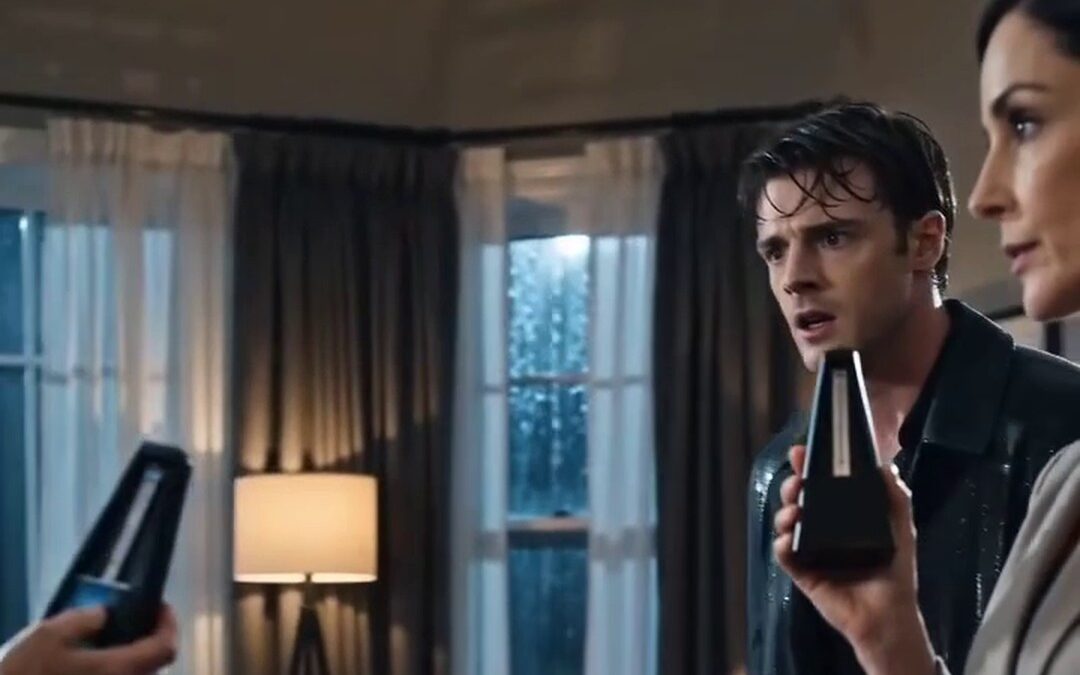
The decisive evidence came from the black metronome.
It had sat on the piano bench during the recordings. Mina remembered Celeste saying June had knocked it down. Nora remembered that too.
When the investigator examined it, he found a hidden voice recorder beneath the felt base. It was a simple device, bought on Celeste’s account at a local electronics store.
The recorder held a longer version of one afternoon.
It captured Celeste ordering June to sit beneath the piano, then playing Grant’s clipped voice from the tablet. It captured her telling the child, “He said it himself.”
Then Celeste’s voice changed.
“If you tell him, he’ll think you’re making it up.”
The metronome had not been broken. It had been used to record the room.
Its audio matched Mina’s phone recording and the tablet playback. The store receipt and account records linked the device to Celeste.
One object joined the lie, the child’s fear, and the person who built them.
The metronome was proof Celeste could not explain away.
The legal outcomes arrived over the following months.
Elliot pleaded guilty to wire fraud and evidence tampering. He agreed to repay part of the stolen funds and received a prison sentence. His cooperation helped establish Celeste’s role in the forged pickup authorization.
Celeste was charged with conspiracy to interfere with custody and fraud tied to the false vendor payments. She accepted a plea agreement after the evidence review, admitting she had used the edited recording to frighten June and arranged the unauthorized pickup attempt.
The family court extended the protective order. The judge did not offer a dramatic speech or instant healing. There were filings, hearings, and careful rules.
The company recovered part of the diverted money through the sale of the shell company’s property. Civil proceedings pursued the remainder.
Celeste’s final sting came in a statement to the court.
“Grant was never there,” she said. “I only made the child hear what he already showed her.”
Grant stood beside Dana.
“You’re right that I was absent,” he said. “You’re wrong that it made her yours to use.”
He did not look at Celeste again.
* * *
Six months later, June chose to return to the music room.
She did not want the piano played.
She wanted its lid closed and the metronome removed.
The instrument was moved to the estate’s smaller music salon, where the family could see it from the hall. The bench was repaired. The hidden recorder was sealed in an evidence bag and stored with the case files.
Nora helped June choose a blanket for the space beside the piano.
“Why do you want one there?” Grant asked.
“So no one gets cold.”
They laid it on the rug, not beneath the piano.
June watched them.
“Is it okay here?”
“It’s your room too,” Grant said.
She considered him. “It’s not my room.”
“Would you like it to be?”
“Maybe.”
“Then we’ll make it yours.”
Nora became part of the estate’s daily routine, but kept her own apartment and hours. Her brother’s treatment continued at a rehabilitation center across town. Grant’s company paid her for actual work, at the rate she negotiated.
He once offered to cover her brother’s bills.
She refused.
“Make a fund for the clinic,” she said. “The patients who can’t pay need it more.”
Grant asked Dana to structure the fund transparently. Nora reviewed the terms before agreeing to help choose its first recipients. She refused to become a symbol in a company press release. The fund carried the clinic’s name, not hers.
Mina took paid leave, then returned to the estate in a new role overseeing staff training. Grant asked whether she wanted the job. She said yes, provided she could set clear rules for reporting concerns.
Mrs. Laird retired the next winter. She apologized to June once, plainly, without asking to be forgiven. June listened, then asked her to make cocoa.
That was enough.
Grant changed his schedule. He left the office before dinner three nights a week. He attended school meetings. He learned June’s favorite stories and exactly how she liked her toast cut.
Being present was not the same as being trusted.
Sometimes June wanted him close. Sometimes she asked him to wait outside. He did both.
The board offered him a new executive suite and more security. Grant declined the suite and used the savings to fund an independent compliance office with direct access to the board.
The new office found other weak spots in the company. None involved June. None excused Elliot.
Nora’s brother began walking short distances with a cane. Her appointment times remained on her calendar. Grant’s staff learned that her availability was not an obligation.
One afternoon, June asked Nora to help her make a sign for the music room.
Nora wrote the words as June dictated:
ASK BEFORE YOU COME IN.
Grant read it and nodded.
“Can I come in now?” he asked.
June held up the sign.
“Knock first.”
He knocked on the open door.
“May I?”
“Yes.”
It was a small rule.
It mattered.
* * *
Four years later, the estate’s music room hosted a school recital.
June was seven. She had chosen a short piano piece with a wandering rhythm and a bright final note. Grant sat in the second row. Nora sat beside him. Mina had brought her sister and two nephews.
The room smelled of waxed wood and orange peels.
June stood beside the bench.
“Are you ready?” Grant asked.
“Not yet.”
“Okay.”
She glanced at the audience.
“Can the door stay open?”
“It will,” he said.
June sat.
Her hands hovered above the keys.
Then she began.
She played slowly, stopping once to correct a note. Nobody rushed her. Nobody told her to keep quiet. When she finished, the room held still for a moment.
Then came the applause.
June looked at Grant.
He did not leap up or call attention to himself. He waited.
She ran to him anyway.
The old metronome remained sealed in the evidence archive. The repaired piano kept time without it.
The blanket lay folded by the wall.
June had chosen it for a child at the clinic who was afraid to sleep alone. Nora helped sew a bright blue border around it.
A year after the recital, June carried it to the clinic herself.
She told the child it was warm, and that nobody had to earn warmth.
The little girl held it to her chin.
June looked at Nora, then Grant.
“You can come sit,” she told her father.
He sat on the floor beside her.
The piano stood behind them, its dark lid reflecting the open door.
* * *
Years later, when June was eleven, she asked Nora to teach her to mend a torn cuff.
Nora showed her how to thread the needle. June made the first stitch crooked and the second too tight.
“Does it have to look perfect?” June asked.
“No.”
“Then why do people fix things?”
“So they can keep using them.”
June thought about it, then made another stitch.
Grant was in the next room, speaking with the clinic’s director about the fund. He had not taken over the conversation. He had asked Nora to join the advisory board, and she had accepted because the clinic needed someone who understood what a missed appointment could cost.
June tied off the thread.
“Can I show Dad?”
“Of course.”
She carried the cuff into the hall.
“Dad, look.”
Grant examined it. “That’s excellent.”
“It’s crooked.”
“It holds.”
June smiled.
The family had not become perfect. Grant still worked late sometimes. Nora still told him when he pushed too hard. Mina kept the old phone in a drawer, though the recordings were preserved elsewhere. Mrs. Laird sent a card each winter.
Celeste served her sentence and completed supervision under the plea agreement. She never contacted June. Her name appeared in the news once when a civil judgment was entered for the stolen funds. Grant did not read the coverage aloud.
Elliot’s sentence was longer. He repaid what he could. The company did not rehire him.
The court orders expired when June turned eighteen.
No one used them as a reason to reach out.
By then, June knew the truth. She had asked her questions herself, and Grant had answered without hiding his part.
He told her about the hospital, the clipped presentation, and the words he had spoken in anger.
He did not ask her to forgive him.
She gave him trust in her own time.
On her eighteenth birthday, she asked to see the metronome.
Dana arranged for the sealed recorder to be shown under supervision. June studied its black casing through the evidence bag.
“It looks ordinary,” she said.
“Most dangerous things do,” Nora replied.
Grant sat beside her. “You don’t have to keep looking.”
“I want to.”
She examined the tiny switch, the felt base, and the worn corner where it had sat on the piano bench.
“Can I keep it?”
“No,” Dana said. “It’s part of the court record.”
“Could I have a picture?”
“Of course.”
June took one.
The image was plain: an old metronome in a sealed bag, her hand beside it.
She saved it with the school recital, the clinic blanket, and the paper sign from the music room.
The object that had captured a lie had become proof she had not imagined what happened.
* * *
Ten years after the night beneath the piano, June returned to the estate for a spring concert.
She was twenty-three and studying child advocacy. She had chosen the field after volunteering at the clinic, where a little boy asked whether adults could change.
She had told him the truth.
Sometimes they did.
Sometimes they did not.
He deserved someone who would listen either way.
The music room had been renovated. The old piano stood in the same place, tuned and polished. The doors opened easily from either side.
June had asked for that change.
Nora sat near the front with Grant and Mina. The clinic’s director sat beside them. June’s brother had come too, walking with only a slight limp.
Before the concert, June placed the folded blue blanket beside the piano.
It was worn at the edges. The clinic had used it for years, then returned it when the child who first received it outgrew it.
June had washed it and brought it home.
“Are you sure you want it here?” Grant asked.
“Yes.”
She laid it on the rug.
The blanket no longer marked a hiding place. It marked a room where a child could ask for warmth and receive it.
June stood at the piano bench.
Grant stayed in his seat.
She did not need him to rescue her anymore.
She wanted him there.
When the audience quieted, she began the same piece she had played at seven. She had added a new ending, steady and clear.
The notes filled the room.
No one hurried her.
At the final chord, June let the sound settle.
Then she stood.
Grant met her in the aisle but waited.
She opened her arms first.
He held her carefully.
“Can I come sit with you?” he asked.
“You already did.”
He laughed softly.
“Then can I stay?”
“Yes.”
The old line returned with a different meaning.
Nobody was in the way.
THE END








