A Grieving Maid Quieted a Powerful Man’s Screaming Baby—Then She Saw a Mark That Reopened His Wife’s Last Question
Chapter 1: The Mark Beneath His Sock
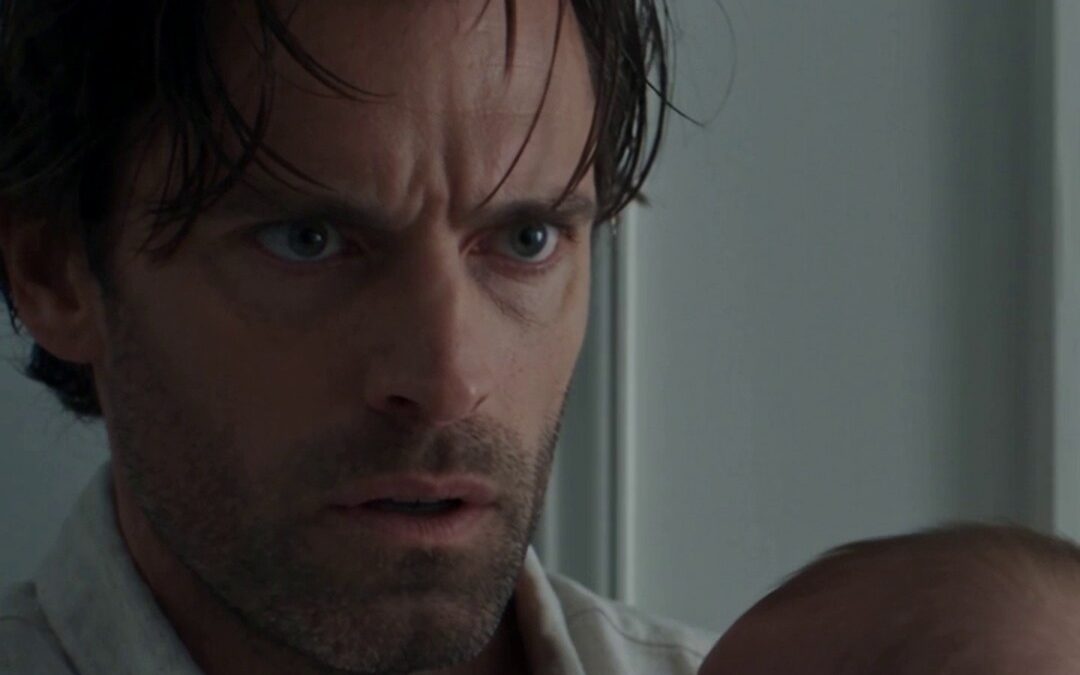
Nico Varric’s cries followed Liana Graves down the marble hall, and she nearly dropped her stack of linens when Matteo emerged from the nursery with his nine-month-old son against a shirt stained with formula.
For weeks, the housekeeper had told her, Nico had screamed despite medical appointments, medicine, and a father who walked the floors with him every night.
Liana had buried Miles twenty-two days earlier, and her arms moved before she remembered they were empty.
She had taken the maid’s job because grief did not pay rent and work kept her moving.
“Let me try,” she said, setting down the linens.
Matteo, whose name made people lower their voices, looked too exhausted to hide his distrust.
“You started today,” he said, shifting Nico higher.
“I know how to hold a tired baby,” Liana said, keeping her hands at her sides.
Nico turned toward her voice and reached with both hands, and Matteo let her take him.
Liana settled him upright against her chest and began the slow step she had used through Miles’s hardest evenings, humming a tune her mother had taught her.
Nico went quiet immediately, though his breathing still caught and his fingers clutched her collar.
Matteo stared, but Liana knew a familiar rhythm could comfort a distressed child without explaining what hurt him.
“He still needs a doctor,” she said.
“I’ll call again,” Matteo replied, reaching to straighten Nico’s slipped right sock.
Above the child’s inner ankle, Liana saw a narrow, comma-shaped pale mark with two faint dots beside it.
On December 21, a nurse at St. Anselm Medical Center had shown her where an IV had irritated her newborn’s skin, and the wound clinic had photographed the spot.
Miles had come home with a bandage there, but when it fell away she found smooth skin and accepted the nurse’s assurance that it had healed.
“Where was Nico born?” she asked.
“St. Anselm,” Matteo said.
Liana held Nico securely while she made herself remember that similar scars proved nothing.
“Before your wife died,” she asked, “did she ever question Nico’s hospital records or ask for a DNA test?”
Chapter 2: What the Records Kept
Matteo did not answer until Liana had sat down in the nursery chair with Nico, whose grip had loosened around her collar but whose body still jerked whenever a door closed downstairs.
“My wife asked the hospital for his records,” he said, “and they told me she was mistaken about something in them.”
Liana looked at the child’s damp lashes rather than at Matteo, because her question had brought an old argument into the room and she did not yet know whether he would protect that argument or the baby in her arms.
“Call his pediatrician first,” she said, “because whatever I saw on his ankle doesn’t explain why he’s hurting.”
Matteo took out his phone and called Dr. Priya Shah, who had seen Nico twice during the past three weeks, then asked Liana whether Nico had eaten since the last bottle listed on the nursery board.
She had worked in the house for less than a day and could only tell him what she had seen: Nico had pushed away a bottle an hour earlier, had taken several sips of water from his cup, and had finally slept for perhaps seven minutes against her.
Matteo read aloud the amounts entered by the night nurse, and Liana noticed that the recent bottles were smaller than those from the previous week, though Nico’s wet diapers had remained regular.
Dr. Shah wanted Nico examined that afternoon, and Matteo arranged a car while Liana asked the housekeeper to put the fresh linens away.
“You can leave,” Matteo told her when he ended the call, his voice gentler than it had been in the hall.
“I’m coming if the doctor wants to hear what happened,” Liana said, “and afterward I need to go home.”
He nodded, then paused beside the nursery door as though he had forgotten how to ask a question without issuing an order.
“Her name was Sofia,” he said.
Liana knew that much from the photograph on the nursery shelf, where a dark-haired woman held a newborn beneath a hospital blanket and looked directly into the camera.
“I’m sorry she’s gone,” Liana said.
Matteo glanced at the photograph, but he gave no account of Sofia’s death while Nico stirred against Liana’s shoulder.
At Dr. Shah’s office, the receptionist checked Nico’s identity against his chart, and a nurse weighed him, took his temperature, and asked Matteo about bottles, stools, sleep, medicines, and the length of the crying spells.
Liana answered only the questions she could answer, including how Nico had quieted in her arms, and Dr. Shah wrote that down without treating it as a diagnosis.
The doctor examined his ears twice after clearing a little wax and found an infection behind the right eardrum, along with fluid behind the left that she wanted to watch.
She also found a raw patch beneath his diaper and signs that a recent change in formula had made his stools hard, and she explained that pain in several places could leave a child difficult to settle even after one problem began to improve.
Matteo told her that the earlier visits had focused on reflux because Nico had been arching during feeds, and Dr. Shah said the ear findings had become clearer since she last saw him.
She prescribed an antibiotic appropriate for the ear infection, reviewed the pain medicine already in Nico’s chart, and gave Matteo clear reasons to call that night or seek urgent care.
“Keep offering his usual feeds without forcing them,” she said, “and have the nurse record what he takes, his diapers, his sleep, and when the crying starts.”
When Liana showed her the ankle, Dr. Shah turned Nico’s foot gently under the examination light and described the pale curved mark and two dots in her note.
“It could be an old IV site,” she said, “but I can’t tell whose IV it was from looking at it.”
She asked whether any newborn photographs or records showed the mark, and Matteo said his copy of Nico’s discharge summary described an uncomplicated stay with no IV.
Liana said that Miles’s December 21 wound visit at the same hospital had produced a photograph, though she had only a paper instruction sheet at home.
Dr. Shah suggested they obtain certified records through the proper requests and warned Matteo that Nico’s medical care should proceed on his current symptoms while the records were checked.
In the parking garage, Matteo asked whether Liana could stay long enough to help him compare what she had with what he had.
“I’ll bring my papers tomorrow,” she said, “but I’m not staying at your house tonight, and I need you to understand that I don’t know what this means.”
“I don’t either,” he said.
Nico cried again when Matteo buckled him into the car seat, and Liana waited while Matteo checked the straps and offered the child the cloth rabbit he had held in the exam room.
The crying eased after the car began to move, a small improvement that belonged to the ride and the medicine and the exhausted boy himself, rather than to any answer about his birth.
At her apartment, Liana found the white envelope from St. Anselm in the kitchen drawer beneath paid bills and the unopened packet from the funeral home.
Miles’s name stood at the top of the December 21 wound instructions, followed by her own name, a newborn encounter number, and a line drawing of a right ankle with the irritated site circled.
She had kept the sheet because the nurse had told her what changes to watch for, then kept it longer because almost every scrap of Miles’s first days had become precious.
A blue knit hat lay folded beside the envelope, and she touched its edge before opening the folder that held Miles’s birth certificate, discharge papers, pediatric visits, and death certificate.
The official birth certificate said Miles Adrian Graves had been born at 8:46 on the morning of December 20, 2025, in delivery room four at St. Anselm.
The newborn discharge summary said he had received an IV for suspected infection and had left the hospital with her at 3:18 on December 23.
The death certificate recorded that Miles had died on August 29 of complications from bacterial pneumonia, after three days of treatment in a children’s hospital where Liana had remained at his bedside.
His funeral had been September 1, twenty-two days before she walked into Matteo’s nursery, and none of the papers in her hands could make those eight months feel shorter.
She took a photograph of the wound instructions to send to no one yet, then placed the originals in a new folder so the folds and staples would remain as they were.
The next morning Matteo met her in a room off the estate kitchen rather than his office, with Nico’s discharge packet, a notebook, and coffee he had forgotten to drink.
His copy named Nico Rafael Varric, born December 20 at 9:11 in delivery room six, and discharged on December 23 at 3:41, twenty-three minutes after Miles.
Both babies had undergone newborn screening on December 21, but Liana noticed that the screening identifier printed on Miles’s discharge page ended in 714 while the one on Nico’s ended in 741.
“That could be a typo,” she said, drawing a line between the numbers without touching either document.
Matteo turned to a separate page where Sofia had written 741 in the margin, alongside the words ask about heel card.
Liana felt the pressure of another mother’s question in the small, hard strokes of the pen, but she made herself read the rest of the page before guessing what Sofia had known.
The official nursery transfer record showed both infants in the correct bassinets throughout December 22, with their bracelet numbers unchanged from birth through discharge.
It supported the hospital’s story plainly, and Matteo tapped it as though he had spent months asking that page to settle the matter.
“Sofia said the bracelet she saw in a photograph had a different final digit,” he said, “but the hospital told her the image was blurred.”
Liana asked to see the photograph, and Matteo found it on his phone: Sofia’s hand rested against a clear bassinet, while a white band on a tiny wrist showed only the first part of a number.
“It is blurred,” Liana said.
“That’s what I told her,” Matteo replied.
She could hear regret beneath the flat words, though regret did not make the numbers on the papers more reliable.
Liana laid Miles’s discharge summary beside Nico’s and saw that the same nursery clerk had signed both, an ordinary overlap in a busy unit that might explain errors as easily as wrongdoing.
The wound instructions were less easy to reconcile with Nico’s smooth newborn history, but Dr. Shah’s caution stayed with her: a similar mark did not identify a child.
“Who can get the hospital records?” she asked.
“Parents can request their children’s records,” Matteo said, “and I can have our lawyer push.”
“Your lawyer should tell us what we can ask for,” Liana said, “but the hospital needs to send my records to me.”
Matteo agreed, and she noticed that the agreement cost him a moment’s effort.
His attorney, Evelyn Park, came that afternoon and listened without interrupting while Liana explained the ankle note, the screening numbers, and Sofia’s old question.
Park said each parent could request certified medical records for the child legally recorded as theirs, while the screening laboratory and hospital would have separate rules for releasing underlying identifiers and audit trails.
“If there was a record change, a printout may hide it,” Park said, “so we’ll ask the hospital to preserve the original data and its access history.”
She drafted preservation notices for Matteo to approve and gave Liana the hospital’s patient-record form, which Liana completed herself at the kitchen table.
Park also advised Liana to keep her original papers in her own possession and offered a list of independent legal-aid attorneys who could explain her position without charging her.
Liana accepted the list because an attorney paid by Matteo could be careful and fair while still owing his duties to Matteo.
That evening Nico took most of a bottle after his first doses of medicine, slept for ninety minutes, and woke crying when laid flat, according to the nurse’s entries that Matteo showed Liana the next day.
Dr. Shah called to check on him and asked that the entries continue, then made a follow-up appointment in two days.
Liana worked her scheduled shift folding laundry and cleaning guest rooms while every sound from the nursery made her hands pause.
She visited only when the nurse asked her to bring a clean blanket, and Nico looked at her without reaching from Matteo’s lap.
That ordinary look hurt in a way she could not explain, though it also reminded her that the first quiet moment had belonged to a tired child in need of comfort.
The hospital sent portal copies faster than the certified records, and Liana opened Miles’s chart at her apartment with a legal-aid attorney, Naomi Chen, on the phone.
The wound note, created by a wound-care nurse at 11:07 on December 21, described a superficial IV injury on the inner right ankle and referred to three clinical photographs stored in St. Anselm’s image archive.
Another entry said the dressing remained in place on December 22, yet the discharge examination on December 23 said the skin beneath it was fully healed.
Naomi asked whether Liana remembered anyone removing the dressing in front of her, and Liana said she remembered a nurse saying it would come off at home.
At home, Liana had cut the little tape carefully and found smooth skin, an inconsistency she had set aside because a nurse had assured her the mark could fade.
Naomi suggested they wait for the original photographs and complete audit information before treating the chart as evidence of a switch.
The portal chart for Nico still contained no IV entry, and Matteo’s copy of the nursery record still showed continuous matching bracelet scans.
On the third day after Liana noticed the scar, Dr. Shah found that Nico’s fever had stayed down, his feeding had improved, and the right ear was beginning to respond to treatment.
She asked Matteo to keep the follow-up for the fluid in his left ear and to call if the crying persisted after the infection resolved.
Nico protested the examination, then quieted against his father while Dr. Shah washed her hands, a moment Liana was grateful Matteo had been able to feel.
Outside the clinic, Matteo told her that Sofia’s questions had begun six weeks after Nico’s birth, when she requested copies of his screening and nursery records for a routine insurance form.
“She circled the screening number and wrote that it belonged to another bassinet,” he said.
“Did she say how she knew?” Liana asked.
“She said she’d seen the card before it went out,” Matteo replied, “and I told her hospitals reused numbers on forms.”
He had been wrong about that possibility, Park later explained, because newborn screening identifiers were assigned to individual specimen cards, although a number copied onto a summary could still be transposed.
Matteo asked Liana to come to his office and read Sofia’s notes, but she told him Naomi should be there first.
With both attorneys present the following morning, he opened a drawer containing a slim folder of Sofia’s papers and let Liana look through it at the conference table.
The first item was an email Sofia had sent to St. Anselm’s patient-safety office on January 8, asking why Nico’s discharge record listed screening card 741 while a nursery photograph appeared to show card 714 beside his bassinet.
The second was a response from hospital risk director Marion Vale on January 10, saying staff had reviewed the original logs and found no identification error.
Vale had attached the same continuous bracelet-scan report Matteo had shown Liana, and she had offered Sofia a meeting to discuss her concerns.
Sofia’s handwritten notes from that meeting said Vale had called the card number a transcription problem, but the next line read, Why changed after I asked?
A January 17 message to a private genetic counselor requested an appointment for parentage testing, and the counselor’s office had offered February 3.
Sofia never attended because she died on January 30 from a pulmonary embolism, a death her physicians and the medical examiner had documented without any indication of injury or interference.
Matteo had shown her folder to a detective after she died because she had been upset with the hospital, and the detective had closed the inquiry after reviewing the medical findings and Vale’s account of the records.
“I thought reopening it meant claiming someone had killed her,” Matteo said.
Naomi rested one finger beside Sofia’s appointment notice.
“Her death can remain what the medical evidence says it was,” Naomi said, “and her records complaint can still deserve an independent investigation.”
Liana read Sofia’s last note again, struck by the practical act of making an appointment when everyone around her seemed ready to call the matter settled.
A receipt tucked behind it showed that Sofia had paid a hospital records fee on January 23 for an older copy of Nico’s chart.
That copy was missing from Matteo’s folder, but the receipt gave Park another document to request and placed Sofia’s search closer to her death than Matteo had known.
The hospital’s patient-safety office acknowledged the preservation notices and said an outside reviewer would examine the complaint, though it would not release other patients’ records to either family.
Liana understood the privacy rule when it protected Miles’s papers from strangers, even as she wished someone could put every card and photograph on a table at once.
Naomi filed a request for the certified version of Miles’s chart, including its original images and an amendment history, while Park did the same for Nico.
Sofia’s phone held a January 24 voice message that Matteo had never deleted, and he played it only after asking Liana whether she wanted to hear it.
In the message Sofia said she had found a print date on a hospital page that came after the date the page claimed to describe, then asked Matteo to call when he could talk without Nico waking.
Her voice sounded tired but deliberate, and Liana asked Matteo to stop the recording after its short final click.
He said he had returned the call that evening and had argued about whether the discrepancy justified another test, a memory he had carried as evidence of his own failure.
“She made the appointment anyway,” Liana said.
Matteo nodded, looking at the dark phone screen.
The outside reviewer, a pediatric patient-safety specialist named Dr. Helen Ruiz, contacted both attorneys a week later and said she had asked St. Anselm to secure the nursery audit logs, image archive, screening laboratory records, and any paper transfer sheets retained offsite.
She would not share another family’s private information with them, but she confirmed that both families’ December 20 deliveries fell within the review.
Liana asked whether the archived wound photographs still existed, and Ruiz said the image system showed files with timestamps but the original exports required verification.
For Liana, that answer was both more and less than she needed, because a file’s survival might show the ankle she remembered without explaining the infant who had worn the bandage home.
Naomi told her that a photograph could establish what was documented at a particular time if the patient identifier and storage history were sound, but it could not by itself establish parentage.
Matteo called Liana later to say that a supervised parentage test might resolve the biological question sooner than the records review.
She was standing in the grocery aisle with Miles’s old shopping list in her hand and had to lean against a shelf before answering.
“I want to know,” she said, “but I want Naomi to read the consent forms, and I don’t want you arranging anything around me.”
“I’ll have Park speak to her,” Matteo said.
Nico’s legal parent, Matteo, could consent to a cheek swab for him, and Liana could consent to her own sample; the attorneys arranged an accredited laboratory appointment where staff checked identification, photographed the collection seals, and documented each transfer to the courier.
Matteo also gave his own sample, which would let the laboratory test both proposed relationships rather than forcing one result to carry the entire conclusion.
At the collection office, Nico sat in Matteo’s lap chewing the corner of his cloth rabbit, and Liana kept her hands folded while the technician explained the procedure.
Nico fussed for a few seconds after the swab, then accepted his cup, giving everyone in the room a mundane task to attend to while the labeled tubes were sealed.
The technician read the names aloud, and Liana heard Miles’s name nowhere among them.
Naomi had warned her that if Nico proved biologically related to Liana, the identity of the child buried as Miles would still require separate, respectful proof.
Liana went home after the appointment and washed the blue knit hat by hand, though it was already clean.
Two days later Ruiz asked both families to meet separately with their attorneys because the screening laboratory had located the original dried-blood-spot accession register.
Liana sat with Naomi in a small hospital conference room where Ruiz showed them only the entries they were authorized to see: card 714 had been collected from the infant identified at birth as Graves, and card 741 from the infant identified at birth as Varric.
The register had been written by a laboratory clerk on December 21 and stored with batch records that the nursery staff could not edit through the patient portal.
Its numbers agreed with the birth bracelets, Ruiz said, while the discharge summaries placed those same numbers beside the opposite children.
Liana stared at 714 until Naomi touched the margin and reminded her that labels could still have been mixed up during collection.
Ruiz agreed that a specimen register could establish what the laboratory received and recorded, not whose blood was actually on each card.
She had also found the original wound photographs from December 21 in the image archive, with the Graves newborn identifier embedded by the wound-care camera.
The images showed the dressed injury above the inner right ankle, including a narrow curved patch that the wound nurse measured and marked for follow-up.
Liana looked once, then asked Ruiz to close the image, because the photograph showed a baby she had held before he had a name and she could not bear to study him as an exhibit.
A later image had been uploaded under Miles’s chart on December 23, but its audit history showed that the upload had occurred on January 12.
The image itself showed healed, smooth skin, and Ruiz said she was asking the hospital to identify who had taken it, because its date and body location were missing from the original file.
It was the first document Liana had seen that appeared to have been placed where it did not belong, though she knew appearances were why the review needed records from more than one system.
When Matteo heard the screening results through Park, he asked whether St. Anselm had notified the police.
Ruiz said the hospital had referred the discrepancies to its independent investigator and the state health department, while the attorneys could contact law enforcement if the evidence supported a criminal report.
Matteo bristled at the pace, but Park told him that an investigation begun with preserved records would do more for the children than a demand made through his security staff.
He put his phone down, and Liana saw how unfamiliar it was for him to leave a locked door to someone else.
The parentage results arrived the following Monday at both attorneys’ offices, each in a sealed laboratory report with the collection identifiers and chain-of-custody pages attached.
Naomi read Liana’s report with her in person and explained the conclusion before handing over the pages: the tested genetic markers supported Liana as Nico’s biological mother with a probability above 99.99 percent.
The second conclusion excluded Matteo as Nico’s biological father, a result that made Liana grip the edge of her chair though she had spent days trying to imagine it.
She read the names on the sample labels three times, because the result answered a question about Nico without answering who Miles had been or how either child came to be raised in the wrong home.
Matteo had received his copy across town, and Park asked Naomi whether Liana would accept a call after she had time to absorb the result.
Liana said yes an hour later, when she had walked two blocks and discovered she could not remember what she had gone outside to buy.
“I’m sorry,” Matteo said when she answered.
She could not tell whether he meant for the switch, for Miles, or for the way he had dismissed Sofia, so she thanked him for calling and asked how Nico was doing.
“He ate breakfast and fell asleep on my shoulder,” Matteo said.
“That’s good,” Liana replied, and the relief she felt for a child who had slept made the report in her hand no less frightening.
The attorneys advised that Nico remain in Matteo’s established care while child-welfare and family-court professionals considered the new information and his needs.
Liana agreed that an abrupt move would be hard on a nine-month-old recovering from illness, though agreement did not dull the force of seeing her own name beside his on a laboratory page.
At Dr. Shah’s next visit, Nico’s ear infection was resolving, his feeding had returned close to its previous pattern, and he had slept longer stretches for three nights.
Dr. Shah said the remaining fluid might take time to clear and scheduled a hearing check if it persisted, keeping the medical plan separate from the identity investigation.
She also recorded the parentage finding in a restricted portion of Nico’s chart after Matteo gave her the report, because it could matter to family medical history.
Liana told Naomi she wanted the hospital where Miles died to preserve any remaining clinical samples that could establish his identity without reopening his grave.
Naomi contacted the children’s hospital and learned that its pathology laboratory had retained a properly labeled blood specimen from Miles’s August admission under its normal storage policy.
The laboratory’s collection record, courier log, and admission photograph linked that specimen to the child Liana had brought for treatment, though Naomi still sought a court order for comparative testing and an independent reviewer.
Liana supplied her consent for her own sample and her records as Miles’s legal mother, while Matteo, as a possible biological father, consented to comparison only after Park explained the scope.
No one asked Liana to stand beside a grave or describe Miles’s final days again to make the case.
While the order was pending, Ruiz’s investigator interviewed the December nursery staff and retrieved a paper transfer ledger kept in an offsite archive after St. Anselm changed record systems in January.
The ledger recorded a fire alarm at 2:06 on December 22 that moved several bassinets into an adjacent treatment area.
At 2:14, a nursery nurse named Dana Kline had written the Graves bracelet number in the Varric return column and the Varric number in the Graves column, then drawn a line through both and initialed a correction.
The electronic transfer log showed no disruption at all, because someone had later entered a clean sequence of scans under an administrative override.
Ruiz told the attorneys that the paper ledger made an accidental exchange during the alarm plausible, but it did not yet prove how long either infant remained in the wrong place.
Kline, now working at another hospital, remembered the alarm and the crowded treatment area but said she had corrected the numbers before the babies went back to their rooms.
She had no reason to believe a child left under the wrong name, and Liana listened to the summary with the same care she gave the documents that pointed the other way.
A billing record then showed that the wound-care supplies used for the Graves infant were charged again on December 23 to the Varric account, though Nico’s official chart still said he had required no dressing.
The charge had been created by a pharmacy technician fulfilling a requisition, stored in the hospital billing system, and found by Ruiz’s investigator rather than by either family.
It could reflect a mistaken account number, Ruiz cautioned, but it was independent of the nursery chart and matched a time when the bandage should still have been present.
Liana remembered Miles asleep in his car seat after discharge, a white strip of tape visible above his sock, and wondered how long she had looked at it without knowing what lay beneath.
Naomi reminded her that the discharge nurse’s reassurance had given her a reasonable explanation when the tape came off.
The court authorized testing of the retained clinical specimen, with an independent laboratory receiving a sealed aliquot directly from the children’s hospital and documenting every handoff.
Liana waited at Naomi’s office when the report came back, because she had asked not to hear its conclusion over a phone.
The specimen from the child who had died as Miles Graves was inconsistent with Liana as a biological mother and strongly supported Matteo as his biological father.
The independent reviewer had checked the admission identifiers, specimen labels, storage log, and laboratory seals, then issued a report explaining why the result was reliable and where a labeling error could still theoretically occur.
Naomi laid those supporting pages beside the parentage reports and said that the combined DNA findings, clinical history, and independent records established the children’s identities to the standard the court would need to consider.
Liana heard the words, but what came to her first was Miles’s habit of opening one hand against her wrist whenever she sang while folding his laundry.
She had given him his name, carried him through eight months, and sat with him through an illness neither of them could stop.
“He was my son,” she said.
“Yes,” Naomi answered.
Liana asked for a copy of the full report to keep with Miles’s papers, including the page that named Matteo, because she wanted no later account of the switch to make his life sound like a clerical interval.
That afternoon she asked Matteo to meet her at Naomi’s office instead of the estate.
He looked at the report without reaching for it, and when Naomi told him the finding, he sat motionless long enough for Liana to hear the clock above the door.
“I never met him,” he said.
“You did once, at the hospital, before they went home,” Liana replied, remembering the blurred photograph of the two bassinets outside the nursery.
Matteo closed his eyes, then asked whether Liana would tell him about Miles when she was ready.
“I will,” she said, “but please don’t ask today.”
He accepted that, and Park turned the conversation to the children’s records and the custody professionals who needed notice.
A child-welfare caseworker named Tessa Morgan met with Liana and Matteo separately, then observed Nico at the estate with his usual caregivers.
Morgan explained that the identity findings required legal action, but Nico’s daily care and attachments mattered while the court decided what arrangements served him.
Liana described her housing, her income, her grief, and her wish to know Nico without taking him from every familiar person in one day.
Matteo described Nico’s routine and agreed to give Morgan the feeding and sleep records, though he asked twice how quickly a judge might rule.
Morgan said she could not promise a date and recommended that the attorneys propose regular, supported contact between Liana and Nico while the court gathered assessments.
Liana had expected to resent hearing a stranger discuss visits with her biological child, but Morgan’s attention to Nico’s naps, medicine, and reactions made the word feel less like a judgment.
The first visit took place in a quiet room at a family center, with Matteo nearby and a worker available to help if Nico became distressed.
Nico examined the blocks on the floor, crawled to Matteo for his cup, and later let Liana read him a cloth book whose pages he preferred to chew.
When he grew tired, he reached for Matteo, and Liana handed him over without pretending the motion meant less than it did.
Afterward Morgan told them that the visit had gone well because the adults had followed Nico’s signals, a sentence Liana carried home beside a photograph of his small hand on the book.
Ruiz’s review moved from possible accident to concealment when the hospital’s security team produced an audit trail preserved on a separate server.
At 8:32 on January 11, Marion Vale had used a privileged account to open both newborn charts; over the next forty minutes, that account amended the December 22 bracelet-scan sequence and linked the screening numbers to opposite discharge summaries.
The official chart displayed the amended records without obvious marks, while the audit server retained the old values and the identity of the account that changed them.
Vale had told Sofia on January 10 that no identification error existed, and the following day she had altered the records on which that reassurance relied.
Ruiz said the timestamps identified an account, not the person at the keyboard, and the investigator was checking workstation access and staff schedules before assigning responsibility.
Matteo asked why Vale would hide an error that the hospital might have repaired in January, when both children were still young.
Park had found a board packet from a pending hospital acquisition: Vale’s employment agreement included a large retention payment if St. Anselm closed the transaction without an undisclosed serious safety event.
The agreement had been signed in December and stored with board counsel, while the acquisition closed in March after Vale certified that no unresolved infant-identification event had been found.
The payment gave her a possible motive, not proof that she had touched a chart, but it changed how Liana heard the confident language in Vale’s letter to Sofia.
Ruiz’s investigator then found a January 9 laboratory reconciliation email to Vale from a screening supervisor, who had noticed that the discharge names assigned to cards 714 and 741 contradicted the original collection register.
The supervisor had attached a scan of the register and asked whether the nursery should notify the families.
Vale replied the next morning that risk management would handle the matter, then told Sofia later that day that the hospital had found no identification error.
The email was created and stored in the laboratory’s mail archive, outside the patient-chart system, and its attachment matched the paper register Ruiz had already secured.
It showed Vale knew of a discrepancy before the edits, though a discrepancy alone could still have meant mislabeled screening cards rather than exchanged infants.
The investigator found another limit in the evidence when a hospital badge report placed Vale on the risk-management floor throughout the January 11 edit window, but the report could not say who used her unlocked workstation.
Vale told investigators that she had directed a records analyst, Peter Redd, to correct a clerical transcription after the laboratory flagged it.
Redd had since left St. Anselm, and his first interview supported that account: he said Vale had shown him the original register and asked him to align the discharge summaries.
That explanation fit the two screening-number edits, but it did not explain why the bracelet-scan sequence had been rewritten to erase the alarm entry.
When Ruiz’s investigator showed Redd the full audit trail, he said he had made the chart changes under Vale’s account because she said the migration software required it, and he produced the work ticket she had given him.
The ticket ordered a “continuity repair” for both newborn charts and specifically instructed him to replace the interrupted scan sequence with the clean one attached.
Redd said he had not seen the paper transfer ledger or any wound photographs, a claim the investigator could test only against his access history and the documents he retained.
His account made him responsible for executing the changes, but it also placed the decision to erase the interruption with Vale, whose signature and staff identifier appeared on the ticket.
The investigator checked the ticket’s creation date and storage path against the service-desk archive before giving it weight, and its January 11 timestamp matched the audit server within minutes.
Liana read the summary with Naomi and kept returning to Sofia’s words, Why changed after I asked?
Sofia had noticed the timing without knowing about the laboratory email, and her appointment with the genetic counselor showed she had intended to test what Vale would not explain.
Another clue came from the financial records Park had requested in the acquisition dispute: Vale’s retention payment had been approved in April on the strength of the same safety certification she had signed in March.
The payment did not tell Liana what Vale had feared in January, but it showed that concealment had protected a benefit beyond a reputation.
The hospital’s outside counsel reported the matter to state regulators and police, and the hospital placed Vale on leave while investigators took statements under ordinary legal procedures.
Matteo’s guards remained at the estate, where their work was keeping the household secure and had no part in obtaining files or questioning hospital staff.
Liana was relieved when Park said that aloud in a meeting, because Matteo’s wealth had opened doors quickly but could also make every step look purchased if he tried to run the investigation himself.
Vale’s attorney disputed the allegation that she had known the infants were switched, arguing that she had ordered a bad chart correction after staff presented a muddled paper trail.
The claim had force where the December alarm was concerned: Dana Kline still insisted she had corrected her mistake before discharge, and no camera had recorded each baby every minute.
Ruiz’s investigator looked for what Vale had done after the chart changes, when an honest correction should have prompted more questions rather than fewer.
A January 12 calendar entry showed Vale had scheduled a private meeting with the wound-care supervisor, and the supervisor’s contemporaneous notes recorded Vale asking whether the December 21 Graves ankle images could have been attached to the wrong chart.
The supervisor had answered that the camera imported the newborn identifier directly from the patient band before each image, then documented Vale’s request to leave the images out of the packet being prepared for Sofia.
Those notes were stored in the supervisor’s dated work journal, which the hospital had collected during the review, and they showed Vale had sought information that could challenge the official discharge story.
The journal was one person’s account of a conversation, Ruiz cautioned, but the image access log showed Vale opening the same photographs eleven minutes after the scheduled meeting.
The later smooth-ankle image in Miles’s chart had been uploaded that afternoon through Vale’s department; its original file came from a routine January photograph of the infant then living with Liana, supplied by a pediatric clinic for an unrelated follow-up.
The clinic’s own image archive preserved the original January date and patient label, while the hospital chart displayed it as part of the December wound sequence.
Liana learned that Vale had requested the clinic photograph by saying the hospital needed to verify healing, an explanation the clinic had accepted because Vale represented St. Anselm.
The borrowed image could not prove which newborn had gone home with Liana, but its misleading placement showed another effort to make the wound record appear consistent.
At home that night Liana opened Miles’s baby album and found a photograph from January in which his right foot rested bare on her knee, its inner ankle smooth.
She had taken it to show her mother how fast he had outgrown his first socks, and the image’s timestamp placed it after the hospital discharge and before Sofia’s complaint.
Liana gave Naomi a copy while keeping the phone and its original file, aware that a family photograph could support the timeline without replacing the laboratory and hospital records.
Her mother came over after Naomi left and sat beside her on the couch while Liana turned the album pages.
When Liana said the child in the pictures was Matteo’s biological son, her mother touched Miles’s face in one photograph and asked whether she wanted to stop for the evening.
Liana said she did, then found herself telling the story of how Miles had laughed whenever the apartment radiator knocked three times.
The next day she brought Matteo one copied photograph, the one where Miles lay awake beneath the blue knit hat and stared suspiciously at a spoon.
Matteo held it by the edges and asked whether he could keep the copy.
“Yes,” Liana said, “and I’ll tell you the rest slowly.”
He thanked her without saying anything about what Miles would have been in his house, which made it possible for her to stay a few minutes longer.
The police investigation could not recover a complete video record of the December alarm, but it obtained the nursery’s paper transport sheet from the same archive as the transfer ledger.
On that sheet, a second nurse had written “bands checked after move” at 2:39, then crossed out the phrase and replaced it with “bands checked before discharge” without a date for the correction.
The nurse said she had made the change on Vale’s instruction in January, after Vale told her the earlier wording would suggest a gap in identification.
She had not seen the babies leave in the wrong bassinets and did not claim to know when the exchange became permanent, but her testimony explained why the paper record no longer matched the electronic certainty Vale had built.
Ruiz assembled a timeline for the families that separated what was established from what remained inference.
The birth-room records and original screening register identified Liana’s biological newborn as the child assigned Graves bracelet 714, and Matteo’s as the child assigned Varric bracelet 741.
The wound photographs showed the Graves infant’s right ankle injury before the December 22 alarm, while the December 23 supply charge followed the bandage to the account labeled Varric.
The paper transfer ledger placed the bracelet numbers in opposite return columns during the alarm, and the later DNA tests showed the child raised as Nico carried Liana’s genetic relationship while the child raised as Miles carried Matteo’s.
The most likely sequence was an accidental bassinet exchange on December 22 that staff failed to catch before the December 23 discharges.
Vale had learned enough from the laboratory’s January reconciliation to suspect the exchange, then used Redd’s edits and the misplaced image to conceal the gap while rejecting Sofia’s questions.
No record showed Vale had planned the initial exchange, and Ruiz refused to make that claim merely because her later conduct was clear.
Liana was grateful for the distinction, because an answer she could trust had to leave room for the parts no one had witnessed.
The state regulator ordered St. Anselm to correct both children’s records while preserving the old versions, audit its infant-identification procedures, and notify the licensing boards responsible for the staff involved.
Police filed charges against Vale for falsifying medical records and obstructing the investigation, with the court left to determine guilt under a standard different from the one used to correct a patient chart.
Redd’s work ticket and cooperation became part of that case, and his professional board opened its own review of why he had changed clinical history without verifying the source.
Kline’s role in the initial error remained under review, with investigators taking account of her crossed-out entry and the absence of evidence that she knew children had gone home under exchanged identities.
Matteo asked Park whether Sofia’s death investigation needed to be reopened because Vale had lied to her.
Park obtained an independent review of Sofia’s medical and examiner records, and the reviewer found no evidence that Vale or the records dispute had caused the pulmonary embolism.
Sofia’s patient-safety complaint, however, was formally reopened and attached to the corrected identity findings, including her January appointment request and the copy fee she had paid.
Matteo read that finding beside Liana and said he wished he had believed Sofia while she was alive.
Liana could offer him no way to change that, but she pointed to the counselor’s appointment card and said Sofia had kept looking even when no one agreed with her.
The family court received the parentage reports, Ruiz’s record review, Morgan’s assessment, and medical advice about Nico’s recent illness and established routines.
Matteo remained Nico’s legal caregiver under an interim order while the court considered the identity correction and long-term arrangements, and Liana received scheduled contact that increased gradually with Nico’s comfort.
The order also gave Liana access to appropriate information about Nico’s health and asked the adults to keep his caregivers consistent during the transition.
No one asked Nico to understand the order; they watched whether he ate, slept, played, and found comfort with the people around him.
At the estate, Liana found that her uniform made every visit confusing, because Nico sometimes saw her carrying laundry and sometimes sitting on the floor with his toys.
She told Matteo she would stop working as a maid there at the end of the week and would visit under the court’s plan rather than through her employment.
He offered to keep paying her, and she asked him to put any financial support through the attorneys and court where it could be understood without owing him her presence.
“I can’t be on call in your house,” she said, “and Nico needs to know who is caring for him, whatever the judge decides.”
Matteo accepted her notice and paid her for the shifts she had worked, along with the ordinary severance the household gave employees whose positions ended unexpectedly.
Naomi helped Liana review the payment, and Liana took a part-time records job at a neighborhood clinic that left room for visits and grief counseling without tying her rent to Matteo.
During one visit Nico crawled across the family-center rug toward her with his cloth rabbit caught beneath a knee, then let her lift him so he could retrieve it.
He stayed on her lap long enough to turn two pages of the cloth book before wriggling down to follow a rolling ball back toward Matteo.
Liana watched them play and felt sorrow for Miles rise beside relief for Nico, neither feeling asking the other to leave.
Matteo later asked whether he could visit the place where Miles was buried, and Liana said she would take him when she could do it without feeling hurried.
She brought him there on a clear October morning, carrying the blue knit hat in her bag and a photograph she had printed for herself.
Matteo stood beside her while she told him that Miles had liked pear slices mashed into oatmeal, had slept with one fist near his cheek, and had laughed at the radiator as if it were a person trying to make him laugh back.
He listened, then set the copied photograph beneath a small stone so the wind would not lift it.
Liana kept the hat, because it still held a shape her hands knew, and when they left she put it beside Nico’s next visit card in her bag.
At the family center that afternoon, Nico reached for his rabbit from Matteo’s arms and offered it briefly to Liana before pulling it back against his chest.
She smiled and opened the cloth book on the rug, making space for him to come closer at his own pace while the card and the blue hat rested together in her bag.








