A Little Girl Caught a Blue Tile Before It Shattered, Then Said Her Mother Had Made One Just Like It
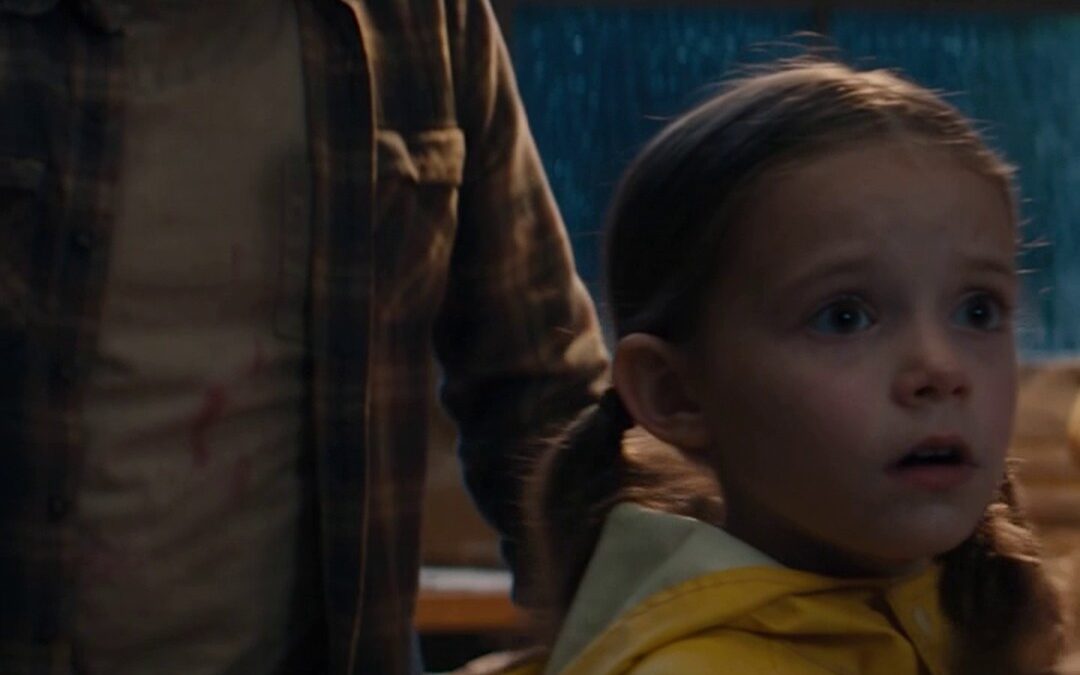
Chapter 2: The Other Moon
Rowan held the tile.
The knocking came again.
The girl backed away.
“Is it him?” Rowan asked.
“I can’t see.”
The studio door had a tall pane of dark glass.
Rain covered the person outside in moving streaks.
The volunteer approached the lock.
“Wait,” Rowan said.
The volunteer stopped.
Rowan set the tile on a table.
“Who did your mother mean?”
The girl pressed her broken coat snap together.
“Grandpa Grant.”
Rowan looked at her.
“Grant Bell?”
The girl nodded.
Grant was Rowan’s former husband.
He had not been her husband for eleven years.
He still chaired the arts foundation across town.
He still gave interviews about Iris.
Rowan moved between the girl and the door.
“Do you know me?”
“You teach the Saturday clay class.”
“That’s all?”
The girl shook her head.
“My mom said I could talk to you.”
“Did she send you here?”
“No.”
“My sitter did.”
The volunteer checked his phone.
“The sitter says she’s outside.”
He held up the screen.
A woman stood beside a silver car.
Beyond her, under the awning, was Grant.
He had one hand raised.
The girl saw him.
Her face changed.
“Please don’t give him my mom’s tile.”
“It’s mine,” Rowan said.
“I know.”
The answer unsettled her.
Grant shifted beneath the awning.
He glanced at the volunteer’s phone.
Then he looked straight through the glass.
Rowan could remember that look from crowded rooms.
It meant he had already decided what everyone would do.
“Does he have a key?” she asked.
The volunteer checked the lock.
“Not anymore.”
He had changed it that morning.
Rowan picked up her box.
She slid it against the door.
It would not stop anyone.
It gave the girl something to see.
The volunteer opened the door only far enough for the sitter.
The woman hurried in.
She was young, soaked, and apologetic.
“I was finding parking,” she said.
Then she saw the girl’s face.
“What happened?”
“Grant’s outside,” the girl said.
The sitter looked back through the glass.
“He said he was picking you up.”
“He isn’t.”
Rowan stepped closer.
“Call her mother.”
The sitter did.
Her fingers slipped on the wet screen.
She tried again.
She put the phone on speaker when a woman answered.
“Poppy?”
“I’m okay, Mom.”
“Stay inside with Ms. Bell.”
A pause followed.
Rowan had expected a stranger’s voice.
Instead, she heard an adult holding herself steady.
“I’m here,” Rowan said.
“Please keep my daughter there.”
“Is Grant allowed to take her?”
“No.”
The sitter whispered, “He knows where she is.”
“He saw the registration list,” the woman said.
Grant’s foundation had paid for the studio’s children’s classes.
Rowan looked at the door.
Grant had lowered his hand.
He waited as though an invitation were overdue.
“I can call the police,” the volunteer said.
“Please do,” the woman answered.
The volunteer called from the office phone.
He gave the address twice.
Outside, Grant checked his watch.
He took one step toward the door.
Poppy caught Rowan’s sleeve.
Rowan stayed where she was.
Grant walked away before the call connected.
He did not hurry.
That was how Rowan remembered him leaving arguments.
He expected everyone else to feel foolish afterward.
Poppy leaned against Rowan’s side.
Rowan let her.
The woman on the phone spoke again.
“My name is Mae.”
Rowan closed her eyes.
“Why does he know you?”
“He says he’s my father.”
Rowan looked at Poppy’s face.
The eyes were Iris’s.
She had noticed them earlier.
She had refused to give the thought a name.
The sitter took Poppy to wash rain from her hands.
The volunteer watched the door.
Rowan stood alone beside the table.
A corner of felt had peeled from the tile.
She could see pencil beneath it.
She had never lifted the felt.
Iris had glued it there herself.
Rowan slid a fingernail under the corner.
Four words appeared.
For my sister, Mae.
* * *
Mae arrived twenty minutes later.
The police had already spoken with the volunteer.
Grant had gone.
The officer wrote down Mae’s account and confirmed that Poppy would leave with her mother.
The sitter showed him Mae’s message.
Mae had told her to bring Poppy home.
No one else had permission to collect her.
The officer copied the message’s time.
He asked whether Grant had tried the door.
“He knocked,” Rowan said.
“And he stayed outside.”
“That matters,” the officer replied.
He gave Mae a report number.
He told her to call again if Grant returned.
Rowan watched the door open.
For one terrible second, she thought Iris had walked in.
Mae had the same dark eyes.
The same long face.
She held herself differently.
Iris had entered rooms with her chin high.
Mae stopped at the threshold.
Poppy ran to her.
Mae knelt despite her wet coat.
“You did everything right,” she told her daughter.
“I caught the moon.”
“I heard.”
Poppy looked toward Rowan.
“Is she mad?”
“No,” Rowan said.
Mae rose.
Up close, she was not Iris.
There was a pale mark beside her eyebrow.
Her voice had a rough edge.
Her hands shook when she tucked Poppy’s hair behind an ear.
Rowan wanted to ask twenty questions.
She asked one.
“How old are you?”
“Thirty-seven.”
Iris would have turned thirty-seven in May.
Mae saw the answer on Rowan’s face.
“I don’t expect you to believe me tonight.”
“I believe what’s written on that tile.”
Mae looked at it.
“Iris gave me the other one.”
“When?”
“Nine years ago.”
A year before the crash.
Rowan sat on a stool.
Mae kept one arm around Poppy.
The volunteer offered to make tea.
No one wanted any.
He turned the lights back on instead.
Under the bright bulbs, Mae looked less like a memory.
Rowan found that harder.
“We met at a craft fair,” she said.
“I saw her working with clay.”
“People had compared us before.”
“I thought I knew why.”
Mae had grown up knowing she was adopted.
Her parents had never hidden that.
They had been told her birth mother had chosen a closed placement.
Mae had stopped searching at twenty-five.
Then she had seen Iris.
Iris had followed her into the hall after the fair.
Mae described the crowded tables.
The paper name tags.
The way Iris held a clay bowl in both hands.
“She asked if we’d met.”
“What did you say?”
“I said people asked me that a lot.”
Iris had smiled.
Then she had noticed Mae’s birthday.
They had compared birthdays.
Then they had compared the names on their records.
Iris had called her three nights later.
Mae remembered letting the call ring.
She had been afraid of wanting too much.
On the fourth ring, she answered.
“She said her father would explain,” Mae said.
“Did he?”
“He came to my apartment.”
Mae rubbed rainwater from her sleeve.
“He told me you knew about me.”
Rowan looked up.
“He said I had signed the papers.”
“I never did.”
“That’s what Iris said.”
Iris had gone home with Mae’s adoption documents copied in her bag.
She had promised to speak with Rowan.
Two days later, Grant told Rowan that Iris wanted space.
He said she was angry about a gallery contract.
Rowan had left messages.
Iris returned none of them.
Mae said Iris had been trying to collect more proof.
The sisters met twice after that.
At the second meeting, Iris gave Mae the matching moon.
“She said we would put them together,” Mae told Rowan.
“Why didn’t you come to me?”
“Grant said you were ill.”
Rowan’s hands tightened around the stool.
“He said a shock could put you in the hospital.”
“He lied.”
“I know that now.”
Mae had waited for Iris to call with a plan.
Then the highway patrol came to Mae’s door.
They found her number among Iris’s recent calls.
Mae had gone to Grant after the funeral.
He told her Rowan knew everything.
He said Rowan wanted no contact.
Mae had stood on his front steps.
She could see flowers through the window.
She could hear people inside.
“I asked to speak with you myself.”
“What did he say?”
“That you couldn’t bear to see me.”
Rowan looked at Poppy.
She was making tiny moons on a fogged window.
Eight years had passed.
Poppy had been born during them.
Rowan had spent those years believing Iris’s last silence was anger.
Mae had spent them believing Rowan had rejected her.
Iris had been carrying the truth toward both of them.
* * *
The next morning, Rowan found a box she had avoided for years.
It sat above the refrigerator.
She needed a chair to reach it.
The chair wobbled.
She climbed down before opening the lid.
Inside were Iris’s birthday cards.
Her art school bills.
A hospital folder Rowan had never had reason to open again.
The folder held invoices from the night the girls were born.
Two infant warming beds had been charged.
Rowan read the line three times.
She found a pencil in the kitchen drawer.
She underlined nothing.
She was afraid of changing the page.
Grant had always handled their bills.
He said the hospital had made errors.
Rowan photographed each page.
Then she called Mae.
Mae did not answer immediately.
When she did, Poppy was practicing piano in the background.
“I found something,” Rowan said.
“So did I.”
Mae’s adoptive parents had kept every document.
Her father, now seventy-two, brought them over that morning.
The adoption order was valid.
Its account of Mae’s birth was another matter.
It said her mother was unmarried.
It said the father was unknown.
It gave the correct hospital and date.
The birth mother’s signature was hidden by a sealed file.
Mae had requested that file years earlier.
She had been told access required another petition.
“I’m calling a lawyer,” Mae said.
“I know one,” Rowan answered.
“Through Grant?”
“Through my sister.”
Rowan’s sister June—no, she stopped herself.
Her sister’s name was Ellen.
Even thinking had become difficult.
Ellen worked at a county records office.
She knew an adoption attorney who represented adult adoptees.
By afternoon, Rowan and Mae were in that attorney’s waiting room.
Poppy sat between them with a coloring book.
No one mentioned the resemblance.
The receptionist kept looking up anyway.
The attorney, Ms. Ortiz, listened without interrupting.
She reviewed the documents.
Then she gave them a measured answer.
A private DNA test could help them understand the relationship.
A court could decide what records they could access.
Neither would answer every question about who had lied.
“For that,” she said, “we’ll need the original paperwork.”
Mae touched the edge of her tile.
She had brought it wrapped in a scarf.
Rowan placed Iris’s tile beside it.
The moons faced one another.
Their chipped edges nearly met.
Rowan moved them closer.
They touched with a small click.
Poppy looked up from her coloring book.
“Did she make them together?”
“We can ask someone who knew her,” Rowan said.
“She made the second one later,” Mae replied.
“Iris told me she had to remember the curve.”
Rowan studied the different blues.
Iris had mixed glazes by eye.
She never wrote enough down.
Beneath Mae’s felt was another pencil message.
Until we can show her.
Poppy leaned forward.
“Show who?”
Mae looked at Rowan.
“You,” she said.
Rowan traced the last letter with her eyes.
She had spent years studying every mark Iris left behind.
Here was one she had never seen.
Ms. Ortiz asked permission to photograph both tiles.
She told them to keep the originals safe.
Then she called the hospital records department.
The hospital still had an archived delivery log.
It would release Rowan’s own medical records to her.
Mae’s records required a separate process.
Rowan completed her request at the desk.
While they waited, Ms. Ortiz drew a timeline.
The girls’ birth.
The adoption.
Iris and Mae’s first meeting.
Iris’s death.
Grant’s recent contact with Mae.
“Recent?” Rowan asked.
Mae looked down.
Grant had called three weeks earlier.
Poppy’s doctor had recommended a family history before deciding whether more heart testing was needed.
It was a precaution after Poppy fainted during a fever.
Mae had asked Grant about illnesses in his family.
He offered to pay for private testing.
Then he asked for both tiles.
“He said Iris’s work belongs to the foundation,” Mae said.
“She made those for us.”
“I told him that.”
He had called twice more.
He said the studio was closing and Rowan was upset.
He offered to collect Poppy after class.
Mae had refused.
Ms. Ortiz circled the calls on her timeline.
“Keep the messages,” she said.
Mae opened her phone.
Grant’s offers were still there.
So was her refusal.
“I should have told you sooner,” Mae said.
“You told me when you could.”
Poppy colored a moon green.
“Can hearts be green?”
“Today they can,” Rowan said.
Two days later, the hospital sent Rowan’s chart.
The envelope was thick.
She waited until Mae arrived to open it.
They sat at Rowan’s kitchen table.
Poppy built towers from unopened mail.
Mae turned each page with clean hands.
The chart recorded a twin pregnancy.
It recorded two live births.
Rowan remembered seeing two bassinets through a haze after surgery.
Grant had said one belonged to another patient.
The chart showed no death for the second baby.
There was a transfer note.
Rowan found her own discharge form.
Grant’s handwriting appeared in the margin.
She knew the sharp hook of his B.
He had written that the matter was settled.
Rowan took it to Ms. Ortiz.
The receiving agency’s name matched Mae’s adoption order.
The listed parent authorization was Grant Bell’s.
Rowan’s signature did not appear.
Ms. Ortiz laid the pages side by side.
She asked Rowan to tell her what she remembered.
Rowan described the surgery.
The fever afterward.
The nurse who brought Iris to her.
“The nurse said ‘your daughter,’” Rowan recalled.
“She never said ‘your only daughter.’”
Ms. Ortiz wrote down the nurse’s name from the chart.
She said they would look for her.
She did not promise the woman would remember.
Grant had arranged Mae’s adoption.
* * *
The DNA results arrived the following week.
Rowan opened the message with Mae beside her.
They had used a testing service Ms. Ortiz recommended.
Each woman had mailed her own sample.
Each had kept the confirmation email.
The report identified a parent and child relationship.
Mae read it herself.
Then she passed the phone back.
Poppy sat at the kitchen table.
She had built a family of clay people.
Two adults stood beside a smaller one.
A fourth figure lay on its side.
Poppy kept trying to make it stand.
Mae reached over and steadied it.
Rowan had expected certainty to bring relief.
Instead, it brought questions with sharp edges.
Had Grant held both babies?
Had he chosen which one to bring home?
Had Iris guessed why?
Mae folded the report into its envelope.
“Does this change your family?” Rowan asked.
“My parents are still my parents.”
“I know.”
“I wanted you to hear me say it.”
Rowan nodded.
She had wanted to hear it.
She also wanted Mae to know she had not come to take their place.
Neither woman had the words yet.
Ms. Ortiz urged patience.
She had petitioned for the sealed file.
She was also tracing the agency’s old records.
Grant had not answered her letter.
He answered Rowan directly.
A courier brought an envelope to her apartment.
Inside was a foundation letterhead.
Grant offered to pay the balance on Rowan’s studio cabinet.
He would also cover Poppy’s medical bills.
In return, the family would surrender the tiles.
The letter called them foundation property.
Rowan laughed once.
There was no humor in it.
Iris had paid for her own clay.
Rowan still had the receipt.
She had kept it because Iris had scrawled a shopping list on the back.
Rice.
Soap.
A candle for Mom.
Rowan sent the receipt to Ms. Ortiz.
Mae sent Grant’s letter.
Ms. Ortiz called within the hour.
“Don’t answer him directly,” she said.
“I wasn’t going to.”
“Keep the envelope.”
Rowan set it beside the receipt.
That evening, Poppy’s sitter reported a car waiting near her building.
The car left when she approached with a neighbor.
Mae filed a report.
The officer took the plate number.
No one claimed the car was Grant’s.
No one needed to.
Mae changed Poppy’s pickup list.
Rowan began meeting them after class.
On Saturday, Poppy made a lopsided cup.
It leaned so far left that water would spill.
“I can fix it,” she said.
“Maybe,” Rowan answered.
“Would Iris fix it?”
“She liked odd things.”
Poppy considered the cup.
“Then I might keep it.”
Mae watched from the doorway.
She looked tired.
Poppy’s doctor had explained that the fainting spell was probably tied to fever and dehydration.
The follow-up appointment was still on the calendar.
Rowan went with them.
She gave the doctor her medical history.
Mae gave hers.
No one offered a dramatic diagnosis.
The doctor asked ordinary questions and ordered an ordinary check.
While Mae spoke with the nurse, Poppy climbed onto the exam table.
The paper cover crackled beneath her.
“Is the test scary?”
“I don’t think so,” Rowan said.
“You can tell me if it is.”
Poppy considered that.
“Mom says you’re good at fixing things.”
“Your mom is being generous.”
“You fixed the studio sink.”
“That took three tries.”
Poppy smiled.
Outside, Poppy took Rowan’s hand.
“Are you really my grandmother?”
“Yes.”
“Did you know?”
“No.”
“Are you glad?”
Rowan could not speak at first.
Mae stopped beside them.
“I am,” Rowan said.
Poppy swung their joined hands.
“Good.”
The adoption file arrived two weeks later.
Ms. Ortiz called both women into her office.
Mae’s father came too.
He waited in the reception area with Poppy.
Before Mae went in, he squeezed her shoulder.
“I want you to know everything,” he said.
Mae squeezed his hand back.
The original consent had been signed by Grant.
A separate page carried an account of Rowan’s condition.
It claimed she had been told about both babies.
It claimed she was too unwell to sign.
A doctor’s signature followed.
The doctor had died years earlier.
Ms. Ortiz would not guess whether the signature was genuine.
She had found something else.
The agency’s financial ledger recorded a payment from Mae’s adoptive parents.
Most covered fees.
A separate amount had gone to a company Grant owned.
Mae stared at the figure.
Forty-six thousand dollars.
Ms. Ortiz showed them the company registration.
Grant’s name was on it.
The payment had gone through three days after Mae’s placement.
Mae asked for a copy.
She read the line once more before putting it away.
Her father came in when she called him.
He recognized the total his family had paid.
He had never heard of Grant’s company.
“We thought every dollar went to the agency,” he said.
Mae leaned against him.
He put an arm around her.
Grant had told Mae he placed her because the family could not afford two children.
The ledger gave the harder truth.
He had taken the money.
* * *
The foundation board met on a Thursday evening.
Grant had built its reputation over twenty years.
He had funded children’s art classes.
He remembered donors’ birthdays.
Photographs of him and Iris hung in the entrance hall.
He stood beside one when Rowan arrived.
For a moment, she saw the man who had carried groceries up four flights of stairs when she was pregnant.
Then he saw Mae.
His expression closed.
Poppy stayed with Ellen at home.
Mae had chosen that.
The room held the board, two foundation employees, and their attorneys.
Ms. Ortiz had requested the meeting.
She had also sent the board copies of the documents in advance.
Rowan could see the packets at each seat.
A board member had marked several pages.
The woman gave Rowan a brief nod.
Grant greeted Rowan softly.
“You could have called me.”
“I did,” she said.
“For years.”
He glanced at Mae.
“I was trying to protect your mother.”
Mae placed the two wrapped tiles on the table.
“From me?”
Grant did not answer her.
He addressed the board.
Rowan had been very ill after the birth, he said.
Doctors had feared for her.
Their finances were desperate.
The adoptive family could give Mae a secure home.
Grant said he had made one unforgivable decision in impossible circumstances.
Several board members listened closely.
He had included enough truth to sound brave.
Rowan had been ill.
They had owed money.
Mae’s adoptive parents had loved her.
None of that explained the lie about her death.
None explained the money.
The board chair asked about the payment.
Grant had his answer ready.
The agency had needed help covering its work, he said.
His company had handled transportation and paperwork.
Ms. Ortiz asked for an invoice.
Grant looked at his attorney.
“There may be one in the archive,” he said.
Mae opened the folder before her.
“My father brought his receipts.”
She passed them down the table.
They listed agency fees in full.
There was no mention of Grant’s company.
Grant turned to Rowan.
“I should have told you afterward.”
“Yes.”
“I tried.”
“When?”
He named a night six months after the birth.
Rowan remembered it.
Iris had cut her first tooth.
Grant had come home late and said nothing through dinner.
“I couldn’t bear to hurt you,” he said.
Mae leaned forward.
“You found the strength to tell Iris I was unwanted.”
Grant’s mouth tightened.
“Iris misunderstood me.”
“She gave me this.”
Mae uncovered her tile.
Rowan uncovered the other.
The two moons faced each other beneath the bright room lights.
Grant looked at them.
For the first time, he seemed surprised.
“Iris wanted us to meet,” Rowan said.
“She wasn’t ready.”
“You kept her from me.”
“I asked her to wait.”
“Then she died.”
Grant looked down.
He had not caused the crash.
The investigation had found winter ice and a driver who lost control.
Rowan knew that.
She also knew Iris had spent her last year carrying a secret he made.
Grant lifted his head.
“The tiles belong to the foundation.”
That was why he had come to the studio.
A board member shifted in her seat.
“Both of them?” she asked.
“Iris made them while we supported her work.”
Mae turned her tile over.
“Read the back.”
The board member leaned closer.
“For my sister, Mae,” she read.
She turned the second tile.
“Until we can show her.”
Grant said the words proved nothing about ownership.
Ms. Ortiz agreed they should examine the records.
She opened another folder.
Iris’s will left her personal work to Rowan.
Grant had filed a document granting the foundation permission to license several designs.
It bore Rowan’s signature.
Rowan had never signed it.
Grant said she had forgotten.
Rowan had proof he could not explain away.
On the date beside the signature, she had been in another state helping Ellen after surgery.
The hospital’s visitor log confirmed it.
More important, the electronic file’s history showed it had been created on Grant’s office computer eighteen months earlier.
The board’s independent accountant had verified the record.
The signature had been copied from an older studio form.
A faint dot of blue ink appeared in both places.
It was a printer mark, repeated exactly.
The accountant slid the two signatures across the table.
The dot sat beside the final letter in each one.
A board member held the pages to the light.
She put them down slowly.
Grant looked at his attorney.
His attorney said nothing.
The board chair asked the employees to step out.
Then she asked Grant to leave while the board considered the documents.
He rose slowly.
At the door, he turned toward Rowan.
“After all these years, this is how you want Iris remembered?”
Rowan held the tiles steady.
“She wanted her sister to come home.”
Grant left.
The board suspended him that night.
It stopped the licensing payments and hired outside counsel to review its records.
Rowan and Mae gave statements to investigators.
They also gave the tiles back to one another each evening after anyone needed to examine them.
The investigation took months.
An investigator asked Rowan about the original studio form.
She found it in Iris’s files.
The copied signature matched.
The agency gave investigators its payment records.
Mae’s parents provided their receipts again.
The old adoption could not be undone.
Mae did not want it undone.
Her parents were her parents.
The state reviewed the agency records.
The foundation recovered money Grant had taken through false licensing agreements.
He later pleaded guilty to charges tied to those recent documents.
The court ordered restitution.
Rowan attended the hearing with Mae.
Grant did not look at them.
The judge spoke about the false records.
She spoke about the money.
She did not try to describe their family.
Rowan was grateful for that.
His name came off the foundation wall.
No one held a ceremony for that.
Rowan walked past the empty space once.
It looked like a wall ready for something better.
* * *
Spring came slowly.
The studio moved into two rooms above a bakery.
On the first morning, Rowan found Poppy beneath a table.
She was painting its underside.
“Why down there?”
“The table looked lonely.”
Mae appeared behind her.
“She got that from Iris.”
Rowan smiled.
“You didn’t know Iris as a child.”
“I know Poppy.”
The new rooms smelled of bread by nine.
By eleven, they smelled of wet clay.
Rowan taught three classes a week.
Mae helped on Saturdays.
She was an accountant and knew how to make small fees cover real costs.
On the first Saturday, six children arrived early.
There were only five clean aprons.
Mae offered Poppy hers.
Poppy tied it twice around her waist.
The hem still brushed her shoes.
Rowan gave each child a lump of clay.
She watched their hands begin.
No one asked who used to own the room.
Poppy appointed herself the official cup tester.
Most cups failed.
She drank from them anyway.
The foundation offered Rowan a seat on its board.
It also offered a settlement for the licensed designs.
She accepted the money Iris had been owed.
She used part of it to fund classes for children whose families could not pay.
She kept enough to replace the heater in her apartment.
Mae helped her compare estimates.
Rowan chose the repairman who could come soonest.
For the first winter in years, she did not sleep in two sweaters.
Mae came over for dinner on Tuesdays.
Sometimes she brought her parents.
The first evening was awkward.
Her adoptive father stood holding a pie for several minutes.
Rowan finally took it from him.
“You raised her well,” she said.
“We got lucky,” he answered.
“We both did.”
Mae heard them from the kitchen.
She pretended not to.
Later, Mae’s mother asked about Iris.
Rowan brought out a photograph.
It showed Iris at ten, covered in clay.
Mae’s mother studied it.
“She looks like Mae did at that age.”
Mae sat down beside her.
Poppy climbed between them.
“Which one is my mom?”
“Your mom is right here,” Rowan said.
Poppy pointed at the photograph.
“I know.”
The adults laughed softly.
Mae’s mother gave Poppy a slice of pie.
It was too large.
No one corrected her.
Poppy’s follow-up appointment brought reassuring results.
Her doctor explained what to watch for if she fainted again.
Mae filed Rowan’s family history with the rest.
It was useful.
It was also the first form Rowan had ever filled out for Poppy.
She kept a copy in her desk.
Grant wrote from prison once.
The letter began with an apology.
Halfway through, he described the sacrifices he had made.
Rowan put it down.
She let it sit overnight.
In the morning, she read the rest.
There was no question about Mae.
There was no question about Poppy.
She wrote a brief reply.
She acknowledged the apology.
She told him to contact her only through his attorney about restitution.
Mae read her own letter from him months later.
She chose not to answer.
Neither woman asked the other to feel differently.
One afternoon, Mae found Rowan looking at Iris’s old sketchbook.
“I thought I was angry at her,” Rowan said.
“For leaving?”
“For keeping you from me.”
Mae sat beside her.
“She was trying to find a way through.”
“I know.”
“She made us something.”
They looked at the drawing on the open page.
Two moons.
A narrow space between them.
Iris had written three possible glaze colors in the margin.
Rowan touched one.
“She hated this shade.”
“Then why write it?”
“She liked being wrong out loud.”
Mae laughed.
It startled them both.
Rowan turned the page.
Iris had drawn the same moons again.
This time, she had left room beneath them.
Perhaps for names.
Perhaps for nothing.
Rowan did not need to know.
She closed the book carefully.
“I’m sorry you had to hear that I didn’t want you.”
“I’m sorry you spent all that time believing I was gone.”
They sat together awhile.
The apology did not return those years.
It made room for the years ahead.
That summer, Rowan asked Mae whether she wanted a key to her apartment.
Mae accepted.
She asked before bringing Poppy over.
Rowan asked before telling stories about Iris.
Each question made the next one easier.
In September, Poppy arrived carrying a small box.
Inside lay the crooked cup.
It held water now.
“Mom fixed the bottom,” she said.
“I helped,” Mae added.
Poppy lifted it toward Rowan.
“Can it live here?”
Rowan set it by the sink.
“It already does.”
Poppy watched her for a moment.
Then she asked another question.
“Can I call you Grandma in front of people?”
Rowan bent until their eyes met.
“I’d like that.”
Poppy nodded, satisfied.
Then she asked for juice in a different cup.
* * *
Five years later, rain tapped the studio windows again.
Poppy was twelve.
She no longer needed help reaching the highest shelf.
She still left clay on every door handle.
Rowan had stopped pretending to mind.
The studio held an exhibition of work made by its students.
Mae came after work with her parents.
Ellen brought too many flowers.
A new board chair brought a check for next year’s free classes.
Poppy’s work stood near the entrance.
It was a wide ceramic bowl.
Two blue moons curved along its rim.
They did not match exactly.
One had a crooked thumbprint.
The other had Poppy’s.
Rowan stood before it longer than she meant to.
Poppy came up beside her.
“It’s for all of us.”
“I can see that.”
“I almost broke it.”
“You caught it?”
“No.”
Poppy grinned.
“I asked for help.”
Mae joined them.
She put a hand on Poppy’s shoulder.
On the wall behind the bowl hung the two old tiles.
Iris’s pencil words were visible beneath clear mounts.
For my sister, Mae.
Until we can show her.
They had finally put the moons together.
Visitors stopped to read.
Some asked about the artist.
Rowan told them Iris loved uneven edges.
Mae told them she had been kind during the brief time they knew each other.
Poppy told them Iris would have liked her bowl.
Rowan believed her.
Outside, the rain grew heavier.
Inside, someone dropped a tray.
Nothing broke.
A child cheered anyway.
Rowan looked around the room.
Mae was here.
Poppy was safe.
Her parents had a place at the table.
Iris’s work was being seen.
The classes would continue.
The old lie had lost its hold on them.
Poppy slipped her hand into Rowan’s.
“I thought you were going to cry,” she said.
“I might.”
“Is that okay?”
Rowan looked at the two moons.
Then at the girl who had caught one.
“Yes,” she said.
Poppy held on while the rain passed.
THE END








