At 64, She Finally Found Somewhere She Could Fail—Then Everyone Asked Her to Take Over
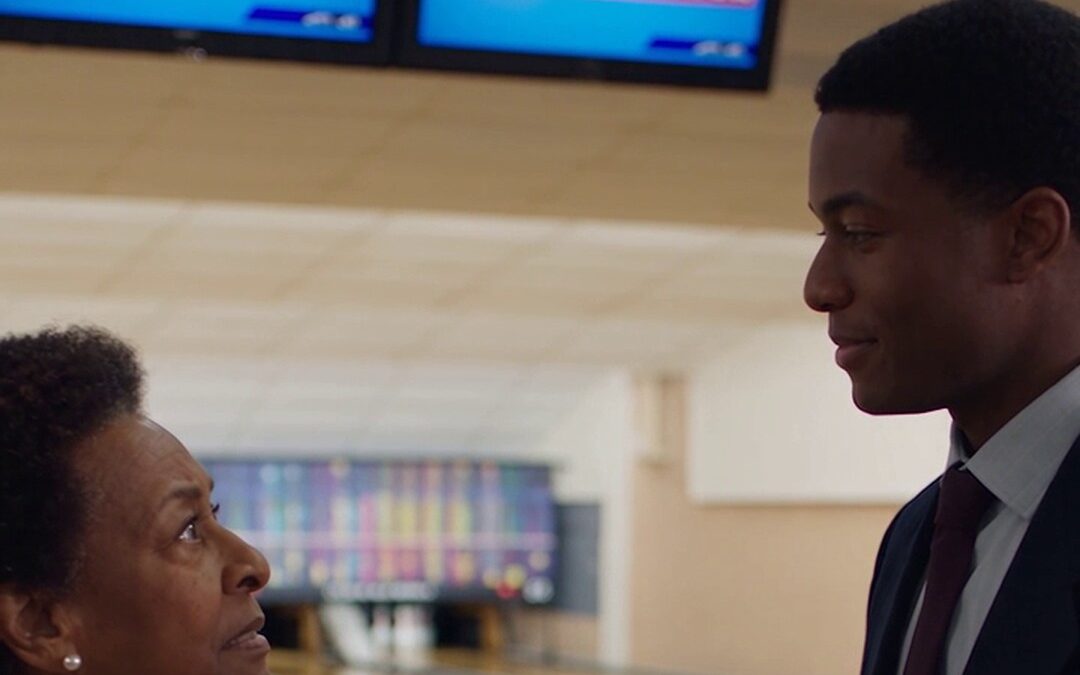
Chapter 1: The Orange One
When Della set the orange bowling ball on the banquet table, Kit asked, “Are you quitting too?”
Six weeks earlier, she had arrived at the bowling center wearing pearl earrings and carrying her own disinfecting wipes.
Kit, who stocked groceries overnight, was kneeling beside the rental-shoe rack, repairing a split shoelace with a knot.
At sixty-four, Della had spent thirty years making people stop interrupting one another across conference tables.
At thirty, Kit could persuade fourteen adults to pay their league dues, but not persuade them to put away their own shoes.
“Which ball belongs to beginners?” she asked.
“The one you can lift.”
“That seems dangerously democratic.”
He looked up, and she smiled first.
Her rented shoe had a lace too short to tie, so he exchanged it without commenting on the wipes.
Then he found a light orange house ball with a pale crescent beside its thumb hole.
Della sent it directly into the gutter.
Kit watched her shoulders rise.
“Excellent,” he said.
“What was excellent?”
“You let go.”
She laughed so abruptly that she missed the ball returning.
Their Tuesday league used handicaps, but practice before it began was theirs alone.
Kit showed her the arrows on the lane, the foul line, and why she should wait when someone on the neighboring approach was ready.
She showed him how to ask for something without apologizing first.
“Try this,” she said.
“Please put your shoes away.”
He practiced on her.
She put her shoes away.
The next Tuesday, she arrived early.
So did he.
They each rolled one ball before offering advice, then named something they wanted to try again.
Della usually chose bowling.
Kit sometimes chose a conversation.
When she missed every pin, he stayed beside the return.
“You still get another turn,” he told her.
Across the concourse, their captain, Bev, watched Della carefully wipe the orange ball.
“Kit does have patience,” she said.
Della’s smile shortened.
By their third Tuesday, Kit was standing straighter when he spoke.
By their fourth, Della had stopped bringing wipes.
Then Kit arrived holding his work jacket instead of wearing it.
“I got the apprenticeship,” he said.
“Six weeks until I leave.”
He had applied to learn how to restore pipe organs, a job Della had never known existed.
Bev set the tournament folder on the banquet table.
“Then Della can take your place running everything.”
Della lifted the orange ball from its cradle and carried it over.
Kit watched her set it beside the folder.
“Are you quitting too?”
Chapter 2: Another Turn
“No,” Della said.
Kit’s fingers tightened around his jacket.
“Then what’s the ball doing here?”
“Keeping this from becoming another conference table.”
Bev looked from the ball to the tournament folder.
Nobody laughed.
From the lanes came the long, rattling collapse of somebody else’s pins.
Della had meant the line to be funny, or at least light enough to make the next sentence easier.
Instead, she had given it the precise, polished delivery that once made opposing counsel check the wording of a contract.
She tried again.
“I’d like to be asked.”
“I just did,” Bev said.
“No.”
“You told us.”
Bev was fifty-two, with a restaurant shift beginning at six the next morning and a daughter whose car had needed another expensive repair.
She had been captain for eleven years because everyone else found reasons not to be.
Della knew this because Bev had explained it during their first game together, while simultaneously locating a missing shoe and answering a question about dues.
“I’m asking now,” Bev said.
Kit opened his mouth.
Della put up one finger, then immediately lowered it.
Even here, apparently, she could summon a witness to silence.
“Let me think about what I can actually offer.”
Bev pulled the folder toward herself.
“That would be helpful.”
She went back to the counter, where two teammates were waiting to ask her things.
Kit watched her go.
“She’s tired,” he said.
“I could tell.”
“She didn’t mean anything by it.”
“I could tell that too.”
He looked at the orange ball.
Della turned it until the pale crescent faced upward.
“Congratulations on the apprenticeship.”
“Thanks.”
“Do you want it?”
His answer came so quickly that it startled them both.
“More than anything.”
“Then we should begin there.”
He lowered himself into a molded plastic chair.
“I haven’t told them I’m definitely coming.”
“How long do you have?”
“Until tomorrow afternoon.”
Della sat beside him, leaving the ball between their places on the table.
Six weeks, she thought, was enough time to become accustomed to something and not nearly enough time to understand what losing it would feel like.
“Does Bev know that?”
“About tomorrow?”
“No.”
He folded his jacket into an increasingly small rectangle.
Della recognized the motion.
She used to square the corners of her notes before delivering news someone would dislike.
“Tell me what you’re afraid will happen.”
Kit looked toward the counter.
“They’ll find out how much I wanted to leave.”
***
The bowling center stood behind a grocery store in a small Great Lakes town where the lake itself was several miles away and most people saw more parking lots than water.
Kit finished work at seven in the morning, slept while delivery trucks crossed his apartment windows, and came to the center on Tuesdays before the league arrived.
He had joined at nineteen because his father had bowled there.
He had become secretary at twenty-two because he knew how to work the scoring console.
By thirty, knowing how to do one thing had somehow made him responsible for everything.
Della learned this in pieces while he explained the tournament.
“It’s ours,” he said.
“Just the Tuesday league.”
“So no national governing body will descend on us?”
“Not unless somebody reports our nachos.”
She smiled.
He didn’t.
“We use the averages from the season for handicaps.”
“New people need enough games before tournament night.”
“How many more do I need?”
“Three Tuesdays.”
“And there are six before you leave?”
“Five league nights.”
“The last Tuesday is the tournament.”
Della looked down the row of lanes.
“So I have time.”
“You do.”
“Then I would like to bowl in it.”
Kit rubbed a thumb over the seam of his jacket.
“You really don’t want to run it?”
“I really don’t.”
He nodded too many times.
She let him finish.
“What does restoring an organ involve?”
At last he looked directly at her.
“Woodworking, for me, to start.”
“Cases, wind chests, parts that have to fit exactly.”
“Eventually more.”
“How did you find it?”
“I took a cabinetmaking class at the technical center.”
“The instructor knew somebody.”
“Is it paid?”
“Enough if I live carefully.”
He had already looked at rooms near the workshop, checked the bus route, and calculated what he would need for the deposit.
His grocery manager had agreed to take him back if the apprenticeship failed, provided there was an opening.
This was not a daydream Della had wandered into.
It was a door he had built and could not make himself walk through.
“What did you tell the workshop?”
“That I was sorting out obligations.”
“Which ones?”
Kit looked toward Bev again.
Della waited until he turned back.
“Those are people,” she said gently.
“What are the obligations?”
For the first time that evening, he seemed slightly annoyed with her.
Good, she thought.
Perhaps they could begin telling each other the truth.
***
They went back to their lane before the others arrived.
Kit put the orange ball in Della’s hands, then selected his own dark green one.
“One each,” he said.
“No fixing anything yet.”
Della rolled first.
The ball traveled halfway down the lane with an encouraging steadiness, then moved decisively away from the pins.
“I’ve taught it loyalty,” she said.
“To the gutter.”
Kit laughed.
His own ball left one pin standing.
He stared at it.
“What would you like to try again?” she asked.
“The last ten seconds.”
“That’s cheating.”
“It’s my ritual.”
“I understood it to be jointly administered.”
He sat on the edge of the chair, elbows on his knees.
“I want to call them without making it sound accidental.”
“The workshop?”
He nodded.
Della picked up her shoes from where she had left them beneath the table.
“I’d like to lose without explaining why.”
“You don’t explain.”
“I explain in my head.”
“What do you say?”
“That the shoes are unfamiliar.”
“That I’m tired.”
“That this activity rewards skills I haven’t cultivated.”
Kit considered this.
“Could just be a bad ball.”
She looked at him.
“That’s a very short explanation.”
“Leaves more time for the next one.”
When the league arrived, Kit asked three people to collect their own rental shoes.
One pretended not to hear.
Kit repeated himself.
Della, seated nearby, concentrated fiercely on undoing the knot in her lace.
Afterward, as she packed her earrings into a little pouch so they would not catch on her scarf, Kit stepped into the concourse and made his call.
She could hear only his side.
“Yes.”
“I’d like to accept.”
“No, six weeks is right.”
He came back with his phone in his pocket.
“Well?” she asked.
“They said they’re glad.”
“Imagine that.”
He smiled, then looked past her at the lanes.
The room had not changed.
The orange ball still waited in its cradle.
Bev was still collecting dues in a zippered pouch.
Yet he stood as if he had moved one heavy piece of furniture and discovered a door behind it.
“I have to tell Bev,” he said.
“Yes.”
“Will you stay?”
Della slipped the pouch into her bag.
“For the conversation?”
“Just until I start.”
She stayed, and when he began, she went to return her shoes.
***
The following Tuesday, Kit arrived with a length of unfinished wood wrapped in an old dish towel.
It was only a practice joint from his class, two pieces fitted together without a screw.
Della turned it in her hands.
The outside was plain, but the edges met so closely that she could barely feel the seam.
“You made this?”
“On my third try.”
“What happened to the first two?”
“They have less successful relationships.”
She laughed and handed it back.
He had brought it because she had asked what he liked about the work.
No one at the grocery store had asked to see anything.
His sister had asked whether he would have health insurance.
Bev had asked whether he would be back at Christmas.
Both were reasonable questions.
He had wanted one unreasonable minute in which someone cared about the way the pieces joined.
Della pressed her thumb against the smooth corner.
“I understand the appeal.”
“What’s that?”
“Something fits, or it doesn’t.”
“You can’t argue it into fitting.”
“You absolutely can try,” he said.
“It just gets worse.”
She looked at him over the wood.
He grinned.
Their practice changed after that.
Kit stopped offering six corrections after every throw.
Della stopped demanding them.
They chose one thing each week.
Her feet first, then her arm, then the difficult business of letting the ball go without trying to supervise its future.
At work, Kit asked his manager to put his last shift in writing.
At home, Della unpacked the hobby supplies she had ordered during her first month of retirement and quietly admitted that she did not want to paint landscapes.
She took them to a community center that accepted unused materials.
She kept the bowling schedule on her refrigerator.
On their second Tuesday after the acceptance call, she knocked down seven pins.
Kit lifted both hands in celebration.
Della pointed at him.
“Don’t make it a public event.”
“You got seven.”
“People have done that before.”
“Not you.”
She tried to glare, but her face would not cooperate.
At the counter, Bev watched them with a small smile.
Then someone asked her about the tournament meal, and the smile disappeared.
“Kit knows,” she said automatically.
Kit was halfway out of his chair before he stopped.
***
He returned to the table after answering the meal question.
Della was changing back into her street shoes.
“You could have said you didn’t know.”
“I did know.”
“That isn’t always the same thing.”
He sat down hard enough to make the plastic chair complain.
“You make it sound easy.”
“No.”
“I make it sound possible.”
For a moment he disliked her expensive wool scarf, her unhurried hands, the fact that she could come here without having first slept badly beside a loading dock.
“You got to retire,” he said.
The words came out more sharply than he intended.
Della put both feet on the floor.
“Yes.”
“I’m sorry.”
“Don’t withdraw it before we look at it.”
He stared at the ball return.
She had money enough to stop working, a paid-off condominium, and no shift manager deciding whether she could attend a class.
Those facts did not disappear because she was lonely on Tuesdays.
“I had choices you haven’t had,” she said.
“I still do.”
Kit picked at a loose thread on his cuff.
“That’s not what I meant.”
“It may be part of what you meant.”
He looked up.
She was not offended, which somehow made the conversation more difficult.
“People don’t ask me because they think I’m powerful.”
“They ask because I’m there.”
Della nodded.
“That’s different.”
“And if I stop being there—”
He left the sentence unfinished.
She looked at the empty approach.
“For years, I thought every invitation was personal.”
“Then I retired.”
“What happened?”
“A surprising number of people no longer needed lunch.”
Kit let out a short breath.
“That’s rotten.”
“Some were honest working relationships.”
“I had mistaken them for something else.”
“Did you call anyone?”
“Not enough.”
He studied her.
“Why not?”
Della wound the scarf once around her neck.
“I didn’t know what to offer them.”
Kit’s face changed.
She wished she had kept that sentence to herself.
Then he nudged the orange ball in its cradle.
“Could offer to lose at this.”
Della laughed, but softly.
Across the concourse, Bev was putting chairs on tables so the closing staff could clean.
Kit rose to help her.
This time, Della understood why he went.
She also understood that understanding was not going to make leaving easier.
***
Three weeks before Kit’s departure, Bev brought a sheet of jobs to practice.
She placed it flat on the table and held it down with the dues pouch.
“I’ve separated everything,” she said.
“No one has to take all of it.”
Della looked at Kit.
He gave a small, surprised nod.
There were tasks she had never noticed: confirming the lanes, checking scores against the season averages, collecting meal choices, returning calls, arranging substitutes, keeping track of who had already paid.
Bev tapped the top of the sheet.
“I can keep the money.”
“I can’t keep answering messages during breakfast service.”
“That’s reasonable,” Della said.
“Would you handle the messages?”
“No.”
The speed of her answer hurt Bev’s face before Bev had time to conceal it.
Della felt the old reflex rise.
She could do it efficiently.
She could create a schedule, set boundaries, make a clear system.
She could become useful and receive, in return, the relief of everyone in the room.
Then next season she would still be doing it.
“I’ll put the shoes away after our games,” she said.
“Every week I’m here.”
“That’s a job I can promise.”
Bev glanced down.
“All right.”
Kit took the sheet.
“I can explain the scoring to someone.”
“Who?”
He looked around the mostly empty room.
“We’ll ask tonight.”
They did ask.
Two teammates offered to help with the meal.
Another agreed to make the weekly lane reservation.
Nobody volunteered to manage the tournament entries or scoring.
One man said he was no good with computers while holding a phone on which he regularly managed an elaborate fantasy league.
Kit laughed along with him.
Della did not.
Later, Bev caught Della by the counter.
“He listens to you,” she said.
“About some things.”
“Could you explain that we need a transition?”
“He’s offered one.”
“I mean a real one.”
Della looked at the job sheet, now folded into quarters in Bev’s hand.
“Do you mean he should stay?”
“Another month wouldn’t ruin his life.”
Della heard the care beneath the frustration.
She also heard where it had begun turning into something else.
“You should ask him directly.”
Bev’s mouth tightened.
“I thought you understood how much this place matters.”
Della reached for her shoes.
“I’m beginning to.”
***
The restriction arrived as a practical solution.
Because Kit needed to train someone before leaving, Bev asked him to use their early practice time for tournament preparation.
Della could practice during the league warm-up like everyone else.
There was nothing cruel about the suggestion.
There were limited hours, ordinary jobs, and a bowling center that could not give them free lanes indefinitely.
That was what made Della feel foolish for minding.
On the next Tuesday, she arrived to find the orange ball already on the rack and Kit seated beside the scoring console.
Bev stood behind him with the tournament folder open.
“I thought we could get ahead,” Kit said.
Della set down her bag.
“Of course.”
He looked at her shoes.
“You can take a few throws.”
“By myself?”
The question escaped before she could improve it.
Bev glanced up.
“We won’t need him long.”
Della walked to the rack, selected the orange ball, and carried it to the lane.
Without Kit beside the return, the distance to the pins seemed absurd.
She rolled too quickly.
The ball dropped with a heavy thud and wandered into the gutter.
Behind her, Kit explained how to enter an absent player.
She heard his careful voice, the one he used when someone was likely to decide they could not learn.
Della took a second turn without waiting for advice.
This time she knocked down two pins.
It should have pleased her.
Instead, she put the ball away.
When Kit finally came over, she was tying her street shoes.
“You’re leaving?”
“I’ll be back for the games.”
“We still have ten minutes.”
“Then you should use them.”
His expression closed.
It was precisely the expression she used to see when someone realized a negotiation had become personal.
“Don’t take this away,” he said.
Della stopped pulling on the lace.
“I’m not taking anything.”
“You’re doing the quiet voice.”
“What quiet voice?”
“The one where I’m supposed to work out what I did.”
She looked down at her hands.
He had been paying attention.
That was inconvenient.
“I wanted our practice,” she said.
“So did I.”
“Then why did you give it away?”
Kit looked toward the console.
“Because somebody had to.”
Della stood.
Neither of them said what was obvious.
They had both come here to escape a sentence that had followed them into the room.
***
Della returned for the league games because she had said she would.
She bowled badly and did not make jokes about it.
Kit answered questions at the table and missed two of his turns until somebody called his name.
Bev watched them both, increasingly unhappy.
At the end of the night, the center manager came over to discuss the tournament booking.
Her name was Noreen, and she had a pencil behind one ear and the patient expression of someone who had explained the same rental policy for twenty years.
“I need a named organizer by next Tuesday,” she said.
“Someone who’ll actually be here.”
“I’m here through tournament night,” Kit said.
“Then I leave the next morning.”
Noreen shook her head.
“I know.”
“But your league has to exist the week after that.”
Bev folded her arms.
“We’re working on it.”
“The booking stays if you give me a plan.”
Noreen was willing to reserve the lanes, but her staff could not run a private league’s handicap competition while also managing the public lanes and snack counter.
They could provide ordinary open bowling instead.
They could not provide an invisible replacement for Kit.
“How much would staff help cost?” Della asked.
Kit looked at her quickly.
Noreen named an amount.
It was more than the league’s small reserve could cover.
Della could have paid it without changing her month.
Everyone at the table knew this without anyone saying so.
She kept her hands in her lap.
“What would the simpler version involve?”
“People come.”
“People bowl.”
“No individual tournament calculations.”
Bev looked stricken.
“We’ve done the tournament for eighteen years.”
“I’m not telling you to stop,” Noreen said.
“I’m telling you what I can provide.”
After she left, Kit opened the folder.
“I can finish the preparation before I go.”
Bev leaned toward him.
“And if something changes afterward?”
“I’ll answer questions.”
“From the workshop?”
He hesitated.
Della watched his future become another place where he would be interrupted.
“I could ask to start later,” he said.
The sentence landed between them.
Bev shut her eyes briefly, as if something painful had finally become manageable.
Della pushed back her chair.
Kit looked up.
“Please don’t say it.”
She had not spoken.
That frightened her more than if they had argued.
***
She found him the next Tuesday beside the shoe rack.
He was holding two rental shoes that did not match.
“Are we practicing?” she asked.
“I thought you didn’t want to.”
“I was angry.”
“That seemed pretty clear.”
“I handled it badly.”
He set the shoes down.
Della had rehearsed a longer apology in the car, one that included context and careful distinctions.
She abandoned it.
“I punished you for disappointing me.”
Kit looked at her for a moment.
“Okay.”
“I’m sorry.”
“Okay,” he said again, more gently.
She took the orange ball from the rack.
“I also don’t want you postponing the apprenticeship.”
“I haven’t asked yet.”
“Have you decided to?”
“No.”
They walked to their lane.
Della waited while the neighboring bowler finished, then took her turn.
Four pins fell.
Kit rolled and left two standing.
They sat beside the return.
“What would you like to try again?” he asked.
“Explaining why I come here.”
He looked uncertain.
“I know why.”
“Tell me.”
“You wanted something to do after retirement.”
“True.”
“You wanted to meet people.”
“Also true.”
“You wanted to get good at bowling.”
Della rested her hands on her knees.
“That’s the part I’m less certain about.”
Kit frowned.
She could see him remembering every correction, every careful demonstration, every evening he had stayed late because she had not improved.
“I like trying,” she said.
“I like that I can be terrible and come back.”
He looked down the lane.
“The first day, you said I still got another turn.”
“I say that to everybody.”
“I don’t hear it everywhere.”
For thirty years, a room had often depended on her being the most prepared person in it.
At home, too, she had become the one who knew when something was due, who remembered the reservation, who made the difficult call.
Her marriage had ended politely enough that people assumed it had not hurt.
Retirement had removed the last place where being indispensable reliably produced company.
“I didn’t come here to find a new room to manage.”
Kit looked at the orange ball.
Then he looked back at her.
“You came here to be bad at something.”
Della considered the phrase.
“With prospects,” she said.
His laugh was short and startled.
Then his face changed again.
“Oh,” he said.
It was a small word for the work it did.
***
Kit had thought he was being kind when he made Della’s improvement his responsibility.
He had stayed after practice because he did not want her to feel she had wasted her time.
He had praised every successful throw with the energy of a man coaxing a stalled engine into life.
Now he remembered the way she laughed after the worst ones.
He remembered that she sometimes seemed disappointed when he explained too quickly.
“I’ve been a little exhausting,” he said.
“Occasionally instructional.”
“You could have told me.”
“I only just found the words.”
He turned his palms upward.
“I thought you’d leave if you didn’t improve.”
Della was quiet.
On the next lane, a ball returned with a familiar hollow knock.
“Is that why you think people stay?” she asked.
Kit rubbed his hands together.
He had never considered it a belief.
It had simply been how he moved through a room.
Know the answer.
Carry the extra bag.
Be there early.
Make leaving inconvenient.
“My dad could just come in,” he said.
“People wanted him here.”
“What was he like?”
“Loud.”
“Wrong about most sports.”
“He used to claim the lanes were crooked.”
“Were they?”
“Only when he lost.”
Kit smiled, then looked away.
His father had moved south with his second wife four years earlier, taking his loudness and his complaints somewhere warmer.
Kit had inherited neither.
He had inherited the league folder because it was already in the back of their car.
“He still calls people from the league,” Kit said.
“They call him.”
Della let the silence remain.
Kit finally gave a small, embarrassed shrug.
“I guess I figured I needed a reason.”
“For them to call?”
“For anybody to.”
She did not tell him he was wrong in the reassuring voice adults had used on him when they did not know what else to say.
Instead, she picked up the orange ball.
“I would like to bowl another terrible frame.”
“Would you stay and watch?”
He looked at her.
“You don’t need me to show you?”
“No.”
“You don’t need anything?”
“Company.”
Kit leaned back in the chair.
“That I can do.”
She rolled one ball into the gutter and knocked down six pins with the next.
He said nothing about either result.
Della turned around, grinning.
At the end of practice, they went together to find Bev.
This time, neither asked the other to begin.
***
Bev was counting shoe-rental receipts at the counter.
When she saw them, she tucked the stack beneath the tournament folder.
“I’ve been thinking,” she said.
“So have we,” Kit answered.
Della stood beside him, close enough to be company and far enough away that the conversation remained his.
“I’m starting the apprenticeship on the date I accepted.”
Bev looked at him.
“All right.”
The answer was so restrained that he almost rushed to soften it.
He pressed his thumb against the seam of his pocket instead.
“I can teach people what I know before I go.”
“I can’t keep being secretary from there.”
Bev glanced at Della.
“Is that what you advised?”
“No,” Kit said.
“It’s what I’m telling you.”
Bev lowered her eyes to the folder.
For a moment Della saw how this might look from her side.
A stranger had arrived with good shoes, free afternoons, and the confidence to decline things.
Six weeks later, the dependable young man was leaving.
Whatever had happened between the two of them, Bev was the person still standing at the counter with the receipts.
“I know this creates work,” Kit said.
“Yes.”
“I should’ve told you when I applied.”
“Yes,” she said again.
“I didn’t want you worrying before there was anything to worry about.”
“You mean you didn’t want me talking you out of it.”
Kit looked at her.
“Yes.”
Bev exhaled through her nose.
Della admired her for not pretending the accusation was impossible.
“I might have tried.”
“I know.”
“I’m proud of you.”
Kit’s face loosened.
“I’m also angry.”
“It can be both.”
“I know,” he said, though he was only beginning to.
Bev pulled out a chair.
They sat.
Together, they crossed out tasks that belonged to tradition rather than necessity.
They did not need a printed program.
They did not need a speech.
They did need accurate averages if they wanted a handicap winner.
They needed someone to confirm attendance and someone to handle money.
They needed to decide what would happen if nobody volunteered.
That last question sat longest on the table.
“Then we do less,” Della said.
Bev studied her.
“People won’t like that.”
“No.”
“You seem comfortable with it.”
Della looked at Kit.
“I’m practicing.”
***
The league meeting took place before bowling, which meant everyone attended but nobody was pleased about it.
Balls waited in the returns.
The overhead screens glowed.
Somebody’s dinner cooled in a paper tray.
Bev stood beside the banquet table with the shortened list.
Kit sat rather than standing beside her.
It was a small choice, and Della saw how much effort it required.
“We need four people,” Bev said.
“One job each.”
“Kit will teach you.”
A man at the end of the table asked why they were making something simple so complicated.
Bev looked at him.
“Because one person has been doing the simple thing.”
A few people shifted in their chairs.
Someone offered to collect the meal money, forgetting that Bev had already agreed to handle it.
Someone else said they would help wherever needed.
Kit leaned forward.
“With which job?”
The person looked startled.
“I don’t mind.”
“Then attendance?”
A pause followed.
“All right.”
Kit wrote the name down.
Della kept her hands folded.
The scoring job remained.
It involved checking the final standings and resolving any obvious entry errors, not designing software or mastering advanced mathematics.
Still, everyone looked toward Kit.
Then, gradually, they looked toward Della.
“You did legal things,” someone said.
“I did.”
“So numbers wouldn’t bother you.”
“Some numbers bother me deeply.”
There was a little laughter.
She let it fade.
“I’m here to bowl.”
Bev read out the remaining job again.
Nobody spoke.
Kit could feel the silence asking him to make it end.
He had spent most of his adult life answering that request.
Beside him, Della adjusted the tongue of her rental shoe.
She was not looking at him.
She was giving him room to disappoint them.
“We can have a regular bowling night instead,” Bev said.
“No individual trophy this year.”
Now everyone had an opinion.
The trophy was part of the league.
The tournament mattered.
People had been looking forward to it.
Kit listened until the comments began repeating.
“Then somebody has to learn the scoring,” he said.
He did not smile afterward.
Across the table, one of the quieter members slowly raised her hand, then lowered it.
“I’ll look at it,” she said.
Kit felt relief rush through him.
Bev held up a palm.
“Looking isn’t agreeing.”
The woman nodded.
“I know.”
For the first time, Kit saw Bev protect someone else from becoming him.
***
The lesson did not go well.
The volunteer understood the scoring but discovered she would be caring for her grandson on tournament night after all.
Another member agreed to learn, then missed the next Tuesday because of a shift change.
Nothing dramatic happened.
No one betrayed anyone.
Ordinary life kept arriving with ordinary reasons.
By the final league night before the tournament, Kit had packed most of his apartment into boxes collected from the grocery store.
He had paid the deposit on a room near the workshop.
His last shift was scheduled.
He had also spent three evenings answering league questions instead of sleeping.
Della noticed the gray half-moons beneath his eyes.
“How many messages?” she asked.
“Not that many.”
“How many?”
“Twenty-three yesterday.”
“Were any emergencies?”
“Someone’s average looked wrong.”
“Was it?”
“No.”
He sat down heavily.
She handed him the orange ball.
“My turn first,” she said.
“You don’t want to hear about the messages?”
“After we bowl.”
He watched her approach.
She had learned to slow down.
Her arm swung without the stiff little correction she used to make halfway through.
The ball knocked down eight pins.
Della turned, pleased and trying not to look too pleased.
“Prospects,” Kit said.
She bowed from the waist.
He rolled next and missed his usual target by a wide margin.
“What would you like to try again?” she asked.
“Sleeping.”
“Ambitious.”
He laughed, then rubbed his face.
“Noreen needs the final plan tonight.”
“I know.”
“There still isn’t anyone for scoring.”
Della waited.
“I could do it.”
“On tournament night?”
“I’ll still be here.”
“That was always possible.”
“I could leave afterward.”
“And bowl?”
He looked at his dark green ball.
“Probably not.”
For months, he had imagined his last night in the league as something he would get to participate in.
Now he was offering it away without anyone having to ask.
Della rested her forearms on the table.
“Do you want that?”
“No.”
The answer came quietly.
He seemed almost surprised to hear it.
“Then that belongs in the discussion,” she said.
At the counter, Bev was already talking to Noreen.
The folder lay open between them.
Kit stood, then sat again.
Della waited.
This decision, she understood, could not be made less frightening by making it faster.
***
Bev’s strongest argument was not tradition.
It was the people who had built their week around this place.
She made it quietly after Noreen left them alone with the booking deadline.
“There are people here who don’t go anywhere else,” she said.
“They work, they go home, they come on Tuesday.”
“I know,” Kit answered.
“You know because you’re the one who notices.”
Della saw him absorb that.
Praise could be a warm hand.
It could also hold someone in place.
Bev rubbed her forehead.
“I’m not trying to trap you.”
“I know.”
“But I can’t pretend this won’t change things.”
“If we stop doing the things that make us a league, people drift.”
She had watched it happen to other groups, once the reliable person moved or got tired.
The monthly dinner stopped.
The calls became occasional.
Then somebody discovered that a friend had been lonely for a year.
“I don’t want that happening here,” she said.
Kit looked out at the lanes.
Neither did he.
Della knew better than to dismiss Bev’s fear as resistance to change.
It was a description of something real.
“So what can you promise?” Bev asked him.
The old answer waited in his mouth.
Everything he could possibly manage.
More than he should.
Enough that nobody could accuse him of not caring.
Kit put both hands flat on the table.
“I can finish the current averages.”
“I can explain the system once more.”
“I can bowl next Tuesday.”
Bev waited.
“I can’t run the tournament while I do it.”
The room seemed louder for a moment.
A ball struck the pins.
Someone cheered.
Bev looked at Della.
“And you?”
Della felt the opening.
She could end this discomfort.
She could organize one evening, accept their gratitude, and make her refusal next season.
She had negotiated enough agreements to recognize that last thought as the clause that would undo the rest.
“I can return shoes.”
Bev’s eyes shone with frustration.
“That’s all?”
Della swallowed.
“I can keep coming.”
Nobody spoke.
It was the smallest offer at the table and the one she had found hardest to make.
Bev closed the folder.
“Then we have to tell them there’s no tournament.”
Kit’s mouth opened.
Della watched him.
He closed it again.
***
They told the league together.
Bev did not blame Kit.
She did not call the change exciting.
She explained that they had not found enough people to run the competition and would use the reserved lanes for an ordinary final night instead.
The meal would stay.
The individual trophy would not be awarded.
Anyone who wanted their extra tournament fee back could have it.
The first response was silence.
Then came disappointment, irritation, and several suggestions that arrived too late to be useful.
“Can’t Kit just do this last one?” someone asked.
Kit felt Della go still beside him.
He answered before Bev could.
“I want to bowl with you.”
The man looked confused.
“You always bowl.”
“Sometimes.”
A woman farther down the table nodded slightly.
She had seen him eat cold fries while correcting scores.
She had seen him miss the jokes because he was fetching a substitute’s shoes.
“I’d rather have you on our lane,” she said.
It did not settle the room.
Two people said they might skip the evening.
One wanted the entire extra fee back even though the meal had already been ordered.
Bev explained what was refundable and what had been committed.
Her voice remained steady.
Kit watched the consequences arrive without the ceiling falling.
Then someone asked about next season.
Bev took a breath.
“I’ll captain one team.”
“I won’t coordinate the whole league alone.”
Another silence.
This one was larger.
Della looked at her with new respect.
The conversation lasted long enough that their regular games began late.
By the end, three people had agreed to meet with Noreen about a simpler arrangement for the autumn.
There was no promise that it would look the same.
There was only a date and three names, none of them Kit’s.
As they dispersed, Bev remained at the table.
Kit sat beside her.
“Are you disappointed in me?”
She looked tired enough to tell the truth.
“I’m disappointed.”
He nodded.
“I’m trying to aim it properly,” she added.
He let out a breath that was nearly a laugh.
“That sounds difficult.”
“It is.”
Della carried a stack of abandoned shoes to the counter.
Behind her, she heard Bev ask Kit about his new room.
This time, the question had nothing hidden inside it.
***
On the last Tuesday, Kit arrived wearing a clean shirt and carrying no folder.
He stopped just inside the bowling center as if he had forgotten something essential.
Della stood beside their lane with the orange ball already waiting.
“You’re early,” he said.
“It’s our practice.”
He looked at the table.
No lists.
No dues pouch.
No stack of meal choices.
“Bev has everything?”
“She has what she agreed to have.”
Kit nodded, then laughed at himself.
“Right.”
Della rolled first.
She knocked down five pins, then two more.
Kit took his turn and made a strike.
She folded her arms.
“Rather ostentatious.”
“I could fall over next time.”
“Don’t patronize me.”
They sat beside the return.
“What would you like to try again?” he asked.
Della looked around the room.
People were arriving carrying jackets, homemade desserts, and the ordinary complaints of a Tuesday.
Two members had chosen not to come.
Their absence mattered.
So did the people who were there.
“I’d like to ask someone to lunch,” she said.
“Without attaching an agenda.”
“Anyone particular?”
“Bev.”
Kit smiled.
“She gets off at two on Thursdays.”
“I’ll let her tell me.”
“Right.”
Della turned toward him.
“Your turn.”
He watched the dark green ball rise into the return.
“I’d like to introduce myself without explaining what I can do.”
“To the people at the workshop?”
“To anybody.”
“What would you say?”
He thought about it.
Then he extended his hand.
“I’m Kit.”
Della shook it.
“Della.”
“What do you like doing?” he asked.
She glanced at the lane.
“At present, this.”
“That any good?”
“Intermittently.”
He laughed.
Across the room, Bev called them over for food.
Kit started to ask whether she needed help carrying anything, caught himself, and looked at Della.
“You can ask,” she said.
“You don’t have to become the evening.”
He considered that.
Then he called back.
“Need a hand?”
“Two plates,” Bev answered.
“Yours and hers.”
***
They ate before bowling because, with no tournament schedule to preserve, there was no reason not to.
The meal was slightly disorganized.
Someone had forgotten serving spoons.
The desserts occupied more space than the actual food.
Bev borrowed what they needed from the snack counter and allowed the imbalance to stand.
Kit sat through an entire conversation about a teammate’s disastrous bathroom renovation without once getting up.
When bowling began, Della took her place in the lineup.
She had enough recorded games to establish an average, though that fact no longer admitted her to anything more important than the next turn.
Her average was low.
She found she could survive its public existence.
Kit watched her roll, then returned to his own lane.
For the first time, she missed him while he was still in the room.
There would be no one beside the return next Tuesday who knew exactly why four fallen pins could make her smile.
There would be no one to remind her that a bad ball was allowed to remain merely a bad ball.
She would have to remember.
Halfway through the second game, Bev sat beside her.
“Thursday?” she asked.
Della blinked.
“For lunch.”
“Kit told you?”
“He said you might ask.”
Della looked across the lanes at him.
He gave her an apologetic little wave.
“Terrible at keeping out of things,” Bev said.
“He’s learning.”
“So am I.”
Della turned back.
“Thursday would be good.”
“I finish at two.”
“Then two-thirty.”
“Somewhere I don’t work.”
“Agreed.”
Bev watched Della select the orange ball.
“I thought you didn’t like us much at first.”
“Because of the wipes?”
“Partly.”
Della winced.
“New places make me very particular.”
“I noticed.”
“I’m sorry if I seemed—”
“Particular?” Bev offered.
Della laughed.
Bev smiled, but her eyes stayed on the lane.
“I thought helping you would make it easier for Kit.”
“Easier to stay?”
“Yes.”
Della held the ball against her hip.
“Thank you for telling me.”
“I’m glad you came anyway.”
Della went to the approach before she could turn that sentence into something she had earned.
She knocked down nine pins.
Behind her, Bev made a delighted noise.
Della did not ask her to keep it quiet.
***
At the end of the night, the league gave Kit a card and a small grocery-store cake.
He read the card privately while the others divided the cake with a plastic serving knife.
Nobody made a speech.
That had been one of the things they crossed off the list.
Bev did stand beside him for a moment.
“I’m going to miss you,” she said.
Kit looked up.
“I’ll miss you too.”
“I may complain about it.”
“That seems fair.”
“I won’t ask you to come back and fix the scoring.”
He smiled.
“Thank you.”
Della began carrying rental shoes to the counter.
Kit rose automatically.
She looked at him.
He sat back down and finished his cake.
When she returned, he was turning his empty paper plate in his hands.
“Can I call you?”
“Yes.”
“I mean, I won’t have bowling news.”
“I expect there will be wood.”
“Probably a lot of wood.”
“I’ll prepare myself.”
He laughed, then looked down.
“What if I’m bad at it?”
“The apprenticeship?”
He nodded.
Della sat beside him.
“You will be.”
He looked offended for half a second before he understood.
“At parts of it,” she added.
“Possibly for quite a while.”
“You’re really selling this.”
“I’ve recently developed an appreciation for beginners.”
His smile stayed, but it was smaller now.
They exchanged numbers without promising a weekly call.
Kit’s new hours were uncertain.
Della did not want to turn friendship into another schedule he could fail.
When it was time to leave, he carried his own bowling bag and nothing else.
The folder remained with Bev.
At the door, he turned back once.
Della was still standing beside the lane.
“Next Tuesday,” he said.
It came out as a habit, and then both of them heard it.
She lifted one hand.
“Your turn.”
He nodded.
Then he went.
***
The following Tuesday, Della arrived early.
The center was quieter without the full league booking, but Noreen had kept one lane available for anyone who wanted to continue through the summer.
Bev would come after an errand.
Two others had said perhaps.
Della changed her shoes and found the orange ball in its usual place among the house balls.
For a moment, she considered waiting until someone arrived.
Then she carried it to the return.
Her phone vibrated inside her bag.
Kit had sent a photograph of a practice joint with one visibly crooked edge.
Beneath it, he had written that he had already been told to try again.
Della smiled.
She put the phone away without answering immediately.
On the approach, she waited for the bowler on her right to finish, took three careful steps, and sent the orange ball down the lane.
It knocked down one pin.
She stood watching that solitary success with her hands on her hips.
Behind her, Noreen called from the counter.
“Everything working?”
“Yes,” Della said.
She returned to the ball cradle as the orange sphere rose with its familiar hollow knock.
When Della set the orange bowling ball on the banquet table, she was only making room to tie her shoe.
Then she picked it up and took another turn.








