At Her Father’s Wedding, a Four-Year-Old Ran to the Server—Then One Folded Paper Made the Family Question Everything
Chapter 1: The Run
The quartet played beneath the glass ceiling while four-year-old Nell pressed her palms over her ears.
“Too loud,” she whispered.
Her father, Graham, bent to her level. “We can go outside after Grandma’s toast.”
Nell shook her head. Across the ballroom, a woman in a black service vest was stacking empty glasses. A blue button gleamed at her cuff.
Nell knew that button. She knew the small scar across the woman’s thumb, too.
“Mara!”
She tore away from Graham and ran, tears already spilling. The woman dropped the tray before it struck the floor and caught Nell against her hip.
“There you are, little bird,” she murmured, one hand covering Nell’s ear. “Breathe with me. In, out. Just like the porch swing.”
Nell locked both arms around her neck. “You came back. You said you’d come back.”
The nearest guests stopped talking. Graham crossed the room; his mother, Evelyn, followed close behind.
“Let go of her,” Evelyn said.
Mara held Nell more tightly. “She’s frightened.”
“She’s a server,” Evelyn replied. “This is a family celebration. Security?”
Nell buried her face in Mara’s shoulder. “No. I want Mara.”
Graham raised a hand to stop the guard. “Nell, how do you know her?”
Mara’s eyes flicked toward Evelyn. “I used to care for her.”
“Once,” Evelyn said. “Years ago.”
Nell reached for the blue button on Mara’s cuff. “You fixed my coat. The moon coat.”
Mara went still. “You remember that?”
“It had a hole.” Nell rubbed the button between two fingers. “You said the moon could peek.”
Graham looked at his mother. “You told me Nell had never met Mara.”
“She was a temporary nanny,” Evelyn said. “She left. That’s all.”
“Then why does she know what Nell calls her coat?” Graham asked.
Evelyn’s jaw tightened. “This is not the place.”
“It’s where you hired her to work tonight,” Graham said.
Mara began to lower Nell, but Nell clutched her collar. Graham stepped between them and the guard.
“Let them stay together,” he said. “Tell me the truth.”
Mara swallowed. “Nell stayed with me the week you were in the hospital. She woke at night and—”
“Enough,” Evelyn cut in. “You have no right to confuse her.”
Graham turned to her. “You said Mara quit before Nell came home.”
“She did.”
Mara’s hand trembled where it cupped Nell’s back. “I didn’t quit.”
Graham looked at the woman who had raised him.
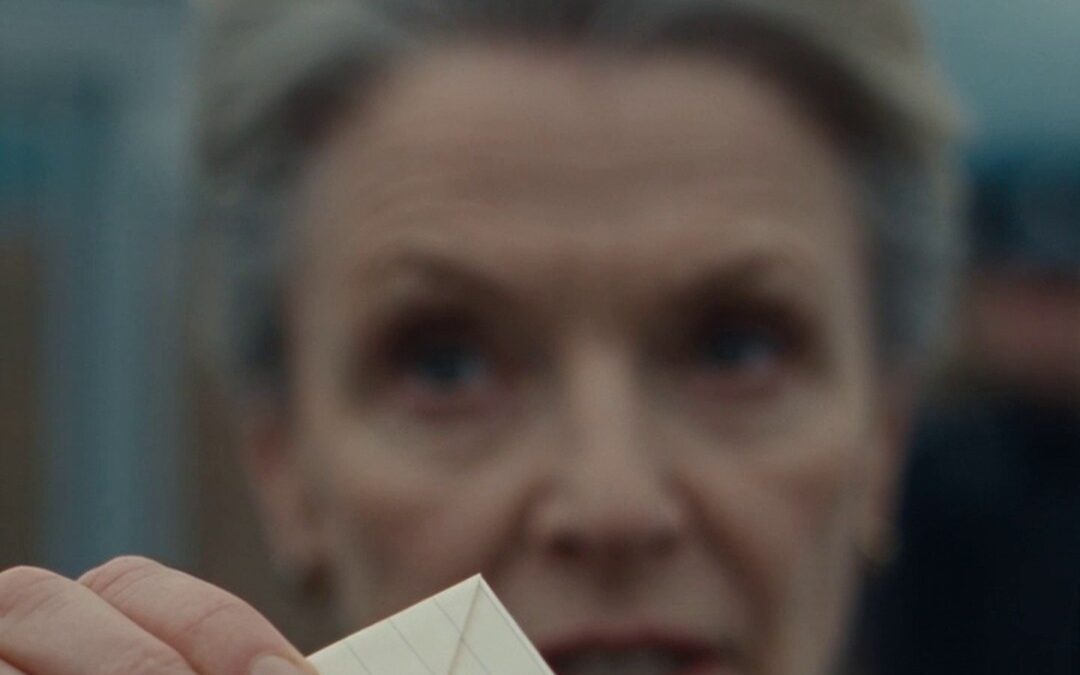
Evelyn pulled a folded paper from her evening bag. “You should ask your wife what she signed.”
Chapter 2: The Paper in Her Bag
The paper shook in Evelyn’s hand.
Nell squeezed Mara’s neck. The ballroom had gone quiet around them; even the quartet had stopped. Graham held out his hand.
“Give it to me.”
“It concerns your daughter.”
“Then give it to me.”
Evelyn kept hold of the page for one more beat. The folded corner pressed into her palm. Graham watched her eyes move from his face to Nell’s, as if she were weighing which of them would blink first.
“Mom,” Becca said. She still wore her wedding dress. One hand had gathered its skirt clear of the floor. “Give it to him.”
Evelyn passed Graham a photocopy. Becca’s name appeared beneath the words TEMPORARY CARE AUTHORIZATION. The form was dated five months earlier, for one week.
Graham read the dates twice. He had expected a note, perhaps a photograph, something his mother could wave around to make the moment seem smaller. The form had the force of ordinary paperwork: a box checked, a signature placed on a line, a week measured out in blue ink.
He looked at Mara.
“Did you keep her?”
“No. Becca asked me to stay with Nell while her fever broke. I brought her home on Sunday.”
“That’s what the form says,” Evelyn said. “Mara was paid to care for her. She had no reason to build a private attachment.”
Mara’s mouth tightened. Nell’s small fist had caught in the back of her vest.
“I asked if she was well,” Mara said. “You told me not to call again.”
“You agreed to stay away.”
“I agreed not to make trouble for the family.”
Nell rubbed the blue button on Mara’s cuff. “I asked for you.”
Becca’s face pinched. She looked at Nell, then at Mara. “You asked for her?”
Nell nodded against Mara’s shoulder. Her voice came out muffled. “At bedtime.”
“Why didn’t you tell me?” Becca asked.
Nell did not answer. She reached up and touched the button again, turning it beneath her thumb.
Graham turned to his mother. “You said Nell had never met her.”
“She was a temporary helper. This is not the place.”
“You hired her to work here tonight.”
Evelyn’s jaw tightened. “Security.”
The guard at the ballroom entrance took half a step forward. Nell heard his shoes cross the polished floor. She clamped her arms around Mara’s neck.
Graham raised a hand to stop him. “No one is separating them.”
The guard halted. Guests watched from beneath the chandeliers. Someone whispered. A champagne flute tipped on a tray and rang against another.
Nell tucked her face against Mara. Graham saw her shoulders jump with each shallow breath. He had seen her cry at scraped knees and thunder, but never with this kind of whole-body panic.
“Let’s go somewhere quiet,” he said.
“Together?” Nell whispered.
“Yes. You, me, Mara.”
Becca knelt so Nell could see her. “And me?”
Nell looked at her mother. Her hand opened, reached toward Becca, then closed again on Mara’s collar.
“Mom, too,” she said.
Becca’s eyes filled. “I’m here.”
The conference room off the ballroom was empty except for a table set with programs and a bowl of mints. The air smelled of lemon polish. Mara sat with Nell on her lap. Evelyn remained standing. Becca joined them, still in her wedding dress, and shut the door.
Graham set the form on the table. “Becca, did you sign this?”
“Yes. I asked Mara to stay with Nell while she was sick. I was there, too.”
“Did you ask Mom to handle it?”
“I asked her to find extra help. I didn’t ask her to end Mara’s job or tell anyone to stay away.”
Evelyn crossed her arms. “You were exhausted. I was trying to keep things stable.”
Becca’s gaze stayed on her mother. “You told me Mara left town. I thought she’d taken another job.”
“I did take another job,” Mara said. “But I was still in the city.”
Becca looked at her. “Why didn’t you call me?”
Mara lowered her eyes. Nell’s cheek was wet against her shoulder, and Mara’s hand rested flat between the child’s shoulder blades.
“Your mother said you were struggling and didn’t want me near you. I should have asked you myself.”
“You could have.”
“Yes.”
The admission did not settle anything. Becca looked angry, and Mara did not try to talk her out of it. Graham saw his wife press her lips together as if she had more questions but no room for them yet.
He faced Evelyn. “Did you tell Mara I wanted her gone?”
“I told her the family needed distance.”
“Did you say I wanted a clean break?”
Evelyn held his gaze. “You were grieving. I thought it was best.”
“My father died two years ago.”
The room seemed to shrink around the table. Evelyn looked down at the form, then smoothed its crease with one thumb.
The door opened. A coordinator stood outside with Becca’s sister Leah. Leah took in their faces, the child in Mara’s arms, and the form on the table.
“What happened?”
“Mom says I asked her to keep Mara away,” Becca said. “I didn’t.”
Leah stepped into the room and shut the door behind her. “I thought Mara left because the job ended.”
“It did,” Mara said. “Evelyn ended it.”
Evelyn’s mouth tightened. “The job was temporary.”
“Why did you tell me you wanted a clean break?” Graham asked.
“Because Nell was attached, and I thought a clean break would spare her confusion.”
Nell lifted her head. Her hair stuck to one damp cheek. “I was sad.”
Becca knelt beside her. “You missed Mara?”
Nell nodded and put her cheek back on Mara’s shoulder.
Graham studied his mother. He had thought she was correcting a misunderstanding. Instead, she had chosen the misunderstanding, then used it to keep everyone apart.
“We’re leaving,” he said.
Evelyn stepped toward the door. “You can’t take Nell into a service corridor with a stranger.”
“She isn’t a stranger to Nell.”
“She works for the caterer.”
“She comes with us.”
Mara shifted Nell in her arms. “I don’t want to make this harder.”
“It’s already hard,” Graham said. He leaned closer to the table. “I need you to answer me plainly. Did you ever try to see Nell after you left?”
“No.”
“Did you write?”
“No.”
“Why?”
“Your mother told me you and Becca wanted me gone. I believed her. I was afraid she could ruin my references.”
“So you chose silence.”
“Yes.” Mara’s voice stayed low. “I was afraid for my work, and I thought I had no claim to Nell. I’m sorry.”
Graham believed she meant it. He did not yet know what that forgiveness should cost. Mara had left a door unopened because she feared what might wait behind it. Nell had been on the other side.
Becca touched Nell’s back. “Let’s all go home. We’ll talk there.”
Nell reached one hand toward her mother but kept the other hooked in Mara’s collar. “Home. Our porch.”
“There’s no porch here,” Mara said. “But we’ll find a quiet place.”
They left the ballroom together. The corridor behind it was narrow and cool. A cart of folded linens stood by the wall, and a caterer pressed flat against it to let them pass. Music resumed behind the ballroom doors, too cheerful and distant.
Evelyn followed them into the corridor, gloves clenched in one fist.
“You’re making a scene,” she said.
“People saw what happened,” Graham replied. “We’re leaving.”
“You’ll regret humiliating me.”
“I’m thinking about Nell.”
The driver brought the car around. As Graham helped Becca into the back seat, he heard a guest call Evelyn’s name from the ballroom. She did not turn.
In the car, Nell settled against Mara. Becca sat beside Graham. The child’s breath was still uneven, but the harder catches began to fade. When the car passed under a streetlamp, Nell opened one eye and touched Mara’s blue button.
“Stay,” she murmured.
“I’m staying,” Mara said.
Graham called his house manager and asked her to have Nell’s pediatric nurse, Dr. Sayer, meet them in the morning. He wanted someone who knew Nell and could tell them whether the evening had frightened her beyond the ordinary.
At home, Nell asked for her yellow cup and drank from it in the kitchen. Mara stayed beside her. Becca stood across the table, watching the child touch the blue button on Mara’s cuff.
“You really did look after her?” Becca asked.
“For six nights. I was working at your house before that, mostly helping with meals and laundry. You were recovering after the birth. When Nell got sick, you asked me to stay overnight.”
“Did she sleep in the guest room?”
“The first night. She cried whenever I put her down, so I moved the crib mattress by the porch door. She could see the rain.”
Nell’s eyes lifted above the rim of the cup. “Rain song.”
Mara looked at her. “Do you want it?”
Nell set the cup down. “Yes.”
Mara sang two soft notes and a line about rain knocking on the house. Nell hummed the last note with her.
Graham had never heard the song. Becca’s lips moved with the melody.
“Where did you learn that?” he asked.
“From Becca’s father,” Mara said. “She sang it to Nell. I sang it while she was sick.”
Becca stared at her. “I didn’t know you remembered it.”
“I remembered.”
“Dad used to sing it?” Graham asked.
“He sang it at the lake house,” Becca said. She kept her eyes on Mara. “I sang it to Nell when she was little. I didn’t know you’d learned it.”
“I heard you sing it in the kitchen,” Mara said. “Nell liked the rhythm.”
Nell put the cup down. “Can Mara stay?”
“For tonight,” Graham said. “We’ll talk about tomorrow when you’ve slept.”
The child nodded and leaned against Becca’s side, still holding Mara’s sleeve.
That night, Becca and Graham sat in the kitchen after Nell had fallen asleep. Mara was in the bedroom, sitting near the bed but not touching Nell. The house was quiet except for the rain.
Becca watched the dark window. “She knew the song.”
“You did too.”
“I heard it from Dad. Mom told me he didn’t like children.”
Graham looked at her. “What?”
“She used to say he didn’t know what to do with me. That she was the only one who wanted me.”
Becca had told him parts of her childhood before. She had never said that. He had known her father died when she was young, and that Evelyn had handled the funeral, the estate, and the move from the lake house. He had not known she had carried this.
“Did you believe her?”
“I was little. I believed her when she said Dad didn’t want me. I stopped asking him to take me to the lake house.”
“Did you ever ask him?”
“I don’t remember. I remember Mom saying he was too busy.” Becca rubbed her thumb over the rim of her cup. “Maybe I thought I was being good by not asking.”
Graham waited. Becca stared at the cup as if it might tell her which memories were hers and which had been planted.
“Did he say that to you?” Graham asked.
“No. I don’t remember him saying it. I remember her saying he’d rather be alone.”
“Could she have been wrong?”
“She could have been.” Becca’s voice thinned. “I hate that I don’t know.”
Graham said nothing. He had not known that Evelyn’s control began so early, or that her account of Becca’s father could be another lie.
The next morning Evelyn sent an envelope with a note: Nell should be examined for “confusion and distress after contact with a former caregiver.” She had written that Dr. Sayer had requested an appointment.
Graham laid the letter on the kitchen table beside Becca’s coffee. The clinic logo sat at the top, slightly blurred. Below it, the appointment was listed for eight o’clock.
Becca read it once, then again. “She told us this was from the doctor?”
“That’s what the note says.”
“You called Dr. Sayer?”
“No. I wanted you to see it before I did anything.”
Becca ran a finger along the printed signature. “It looks wrong.”
Graham called the clinic. Dr. Sayer answered herself.
“I didn’t schedule an exam,” she said. “Your mother called to ask whether Nell needed an assessment. I told her I couldn’t discuss Nell’s care without you or Becca.”
“Did you send this letter?”
“No.”
Becca took the envelope from him. The clinic logo was an old version, and the signature had been printed rather than written.
“She made it look official,” Becca said.
“Do you recognize the paper?” Graham asked.
“No. I’ve never seen this format.”
“I can document the call,” Dr. Sayer told them. “If you’d like, I can see Nell today, with both parents present.”
“Yes,” Graham said. “Please.”
He told her about the wedding and the crying. He explained that Nell had recognized Mara, clung to her, and asked to go home with her. Dr. Sayer did not interrupt. When he finished, she asked what Nell had said about Mara before that night.
“She remembered the coat Mara repaired,” Graham said. “The rain song.”
“Did she talk about Mara in the months between?”
“Sometimes,” Becca said. “She asked who fixed the moon on her coat. I thought she meant me.”
Dr. Sayer was quiet for a moment. “Let’s speak to her directly, and keep it simple.”
Nell was healthy and tired from the wedding. Dr. Sayer asked her a few simple questions, watched her move between her parents, and let her choose whether Mara stayed in the room. Nell nodded when asked.
“Do you remember the party?” Dr. Sayer asked.
“The music was loud.”
“Was anything else scary?”
“Grandma said Mara had to go.”
“Did that scare you?”
Nell nodded. “I didn’t want Mara to go.”
Dr. Sayer did not press her for more. She let Nell show her the blue button, then asked if it belonged to Mara.
“Her shirt,” Nell said.
“Do you like being with Mara?”
“Yes.”
“Do you feel safe with her?”
Nell looked at Becca, then at Mara. “She knows the rain song.”
Dr. Sayer smiled gently. “That’s a nice thing to know.”
“Children can remember someone who comforted them during an illness,” Dr. Sayer said afterward. “A strong reaction to seeing that person again doesn’t by itself mean anything is wrong.”
“Did my mother ask you to diagnose Nell as confused?” Graham asked.
“No. She asked if she should be concerned. I told her I needed to see Nell and speak with both parents.”
The letter did not prove why Evelyn had made it, but it changed what Graham thought she might do. His mother had tried to turn a child’s longing into a medical problem without either parent’s consent.
Becca kept the letter. “I want a record of what she did.”
“I’ll document the call and today’s visit,” Dr. Sayer said. “I can’t speak for your mother’s reason. I can only record what I saw and what you told me.”
“That’s enough,” Becca said.
After the doctor left, Becca called Leah, who worked at the clinic. Leah could not access Nell’s chart, but she confirmed Evelyn had called twice, asking for a patient summary under an old authorization. The front desk had refused.
“I thought I revoked that permission,” Becca said.
“You asked Mom to stop arranging appointments,” Leah replied. “That may not have revoked the written authorization.”
“Can the clinic check whether she got anything?”
“The records office can audit it. I can tell them the parents are asking, but I can’t look myself.”
“Do that,” Becca said.
Graham watched Becca’s face as she ended the call. “She tried to get Nell’s records.”
“She didn’t get them,” Becca said. “But she tried.”
For the first time, Becca’s anger had turned toward her mother instead of toward Mara. That did not make her trust Mara. It did make her question who had been telling her the truth.
They took Nell to the covered porch. Rain tapped the rail. She sat between Graham and Becca, boots swinging above the boards. Mara stayed just inside until Nell turned around.
“Come.”
Graham glanced at Becca. She nodded. Mara came out and sat on the step, leaving a hand’s width between herself and Nell.
“Sing,” Nell said.
Mara sang the rain song. Becca joined on the last line. Her voice caught slightly on the final note, and she smiled at the child when Nell looked back.
“Dad used to sing that at the lake house,” Becca said. “I thought Mom donated the music box.”
“Which one?” Graham asked.
“The little one from the mantel.”
A photograph of Becca’s father stood on the mantel inside. When they returned to the living room, Graham opened the little box beside it. Its warped tune rose through the same notes as Mara’s song.
Nell pointed. “That one.”
Becca held the photograph. Her father sat on a porch swing, six-year-old Becca beside him. His hand was resting over hers on the swing’s wooden slat.
“Did he teach you the song?” Graham asked.
“He sang it. I don’t know if he made it up.” Becca turned the photograph over, but there was no writing on the back. “I thought Mom had cleared the house.”
The memory changed the song again: Mara had not brought an unfamiliar comfort into the family. She had learned the family’s comfort from Becca and returned it to Nell.
“Mom said she cleared the house,” Becca said. “I want to know what else she kept.”
That afternoon, they drove to the lake house. Leah came with them. The house manager had given Becca a key, and the place smelled of dust and closed rooms. The rain had stopped, but water still dripped from the gutters.
Becca walked slowly through the front hall. “She said she donated the music box and all of Dad’s papers.”
“Maybe she meant most of them,” Leah said.
“Maybe. I’m tired of maybe.”
In her father’s study, the shelves stood nearly bare. Graham ran a finger over one clean rectangle in the dust where a book had been. Becca opened drawers, checking each one before pulling it free. The bottom drawer stuck halfway. She braced her knee against the desk and tugged until it came loose with a dry scrape.
A few photographs remained in the drawer, along with a small brass storage key marked NORTH PIER STORAGE.
Becca turned it over. A unit number had been written on the back.
“Could Dad’s papers be there?” Graham asked.
“Or nothing,” she said.
She held the key as if it were hot. For a moment Graham thought she might put it back. Then she closed her fist around it.
They called the storage company. It would not disclose contents or grant access based on the key alone. The account was in Evelyn’s name. She had paid the rent for three years.
“Does the key open the unit?” Becca asked the clerk.
“It may open the padlock, but our office still has to verify the account holder before access.”
“Could my mother authorize me?”
“If she adds you. Otherwise, you’ll need to resolve access through the account holder or the proper legal process.”
Becca thanked him and ended the call. She set the phone down on the desk.
Graham asked, “Do you want to call her?”
“Yes.”
He did not suggest what to say. Becca dialed and put the call on speaker.
“I found the storage key,” she said.
“You went through my things?”
“It was in Dad’s desk. What’s in the unit?”
“Nothing you need.”
“You don’t get to decide that.”
“I’m not ready to open it.”
“Why?”
“There are things that will hurt you.”
Becca went still. “You don’t get to use that as an answer anymore.”
“I’m asking you to trust me.”
“You told me Dad didn’t want me. You told Mara I didn’t want her near Nell. You sent a false letter from my daughter’s doctor. I don’t have any trust left to give you.”
Evelyn ended the call.
For a few seconds, no one moved. Graham heard the faint crackle of the disconnect in the phone speaker.
Becca found an attorney. The attorney explained that she could request her personal records, but they would need to clarify ownership of the storage unit and its contents. They could not simply force entry. It might take time.
“I hate waiting,” Becca said afterward.
“I know,” Graham replied. “But we have a way to ask.”
The attorney had been careful: Becca could not treat the key as permission, and Graham could not use his own family connections to get around the account. They would send a written request, preserve the clinic’s report, and keep Nell’s medical authorization limited to her parents.
Becca signed the request without reading it twice. Graham watched her pen stop at the end of her name.
“What if Mom never answers?”
“Then we follow the attorney’s advice.”
“What if there’s nothing in the unit?”
“Then there’s nothing.”
“What if she’s right that it will hurt me?”
“Then it will still be yours to decide whether to read.”
Becca looked at him. “You believe that?”
“Yes.”
At home, Nell was building a house from blocks with Mara. When the walls fell, she placed Mara’s hand against them.
“Hold it.”
Mara held the blocks while Nell rebuilt. The child leaned over her work, tongue caught between her teeth. She fit two blocks together, frowned at the gap, and tried again.
Becca watched from the doorway. “I want Nell to keep seeing Mara. I also want to know why my mother thought she could choose this for all of us.”
“We can find out one question at a time,” Graham said.
“Can we?”
“We have to.”
Nell looked over. “It fell.”
“I saw,” Becca said. She came to sit on the rug. “Can I help?”
Nell handed her a yellow block. Becca fitted it into the wall. Mara let go only when Nell’s little hands were steady.
The clinic’s records officer called the next day. Evelyn’s request for Nell’s chart had been blocked. She had cited the old caregiver authorization and said Becca wanted her to manage the child’s care. No records had been released. The false letter was also documented.
Graham asked the officer to read back the date and time of each attempt. He wrote both into a notebook. Becca asked whether Evelyn had requested a particular kind of record.
The officer could not say more about the details of a denied request. She could confirm that the chart had not been accessed and that the front desk had followed policy.
“That’s enough,” Becca said. “We know she tried. We know she didn’t get anything.”
Graham and Becca sent a joint revocation of the authorization and changed Nell’s emergency contacts.
Becca stared at the form after they signed it. “I thought asking Mom to stop was enough.”
“It should have been,” Graham said.
“It wasn’t.”
She folded the copy and placed it beside the false appointment letter. “I want these kept.”
Graham slid the documents into a folder. “We’ll keep the originals.”
That evening Evelyn called Becca. She said she had found the storage key and was willing to meet at the lake house. Becca agreed, with Graham beside her. Mara stayed home with Nell.
Evelyn waited in the study, empty-handed. She had chosen a chair by the window, far from the desk. The gray afternoon light made her look smaller than she had at the wedding.
“I don’t have the key,” she said.
“We do,” Becca answered. “Tell us what’s in the unit.”
Evelyn looked at the bare shelves. “Your father had a child before he met me. A daughter. Her name was Anna.”
Becca gripped the desk. The pads of her fingers went white against the wood.
“You told me he never wanted children.”
“I thought he wanted Anna.”
“What does that mean?”
“He was nineteen. He sent money and wrote to her. Then he left town. They argued with her mother, and he stopped.”
“How old was Anna?”
“Five.”
“Did she know he was her father?”
“I don’t know.”
“You said he wrote.”
“I don’t know what he told her.”
Becca’s voice sharpened. “Why did you keep it from me?”
“I didn’t want you to feel you had to compete with another family.”
“She’s my sister.”
“If she’s alive.”
Becca stepped away from the desk. “Did Dad try to find her?”
“Yes. After you were born. I told him not to.”
“Why?”
“I said it would hurt you.”
“Did he stop?”
“He said he’d wait. Then he died.”
The old story of the father who had not wanted children fell apart. Becca’s father had failed Anna, then tried to speak of her before he died. Evelyn had hidden the attempt, as well as the child.
“What’s in the unit?” Graham asked.
“Letters. Photographs. Some papers from the investigator I hired.”
“You hired someone?”
“Five years ago. He found a woman with the same name in Ohio. He couldn’t confirm she was the right person.”
“And you didn’t tell Becca.”
“I was afraid she’d find Anna and learn her father had chosen her.”
“He didn’t choose her over me,” Becca said. “He failed her before I was born.”
Evelyn could not answer. She pressed her hands together in her lap, turning her wedding ring around her finger.
Becca put the key on the desk. “Come with us and open it. Or we make a formal request and wait. Your choice.”
Evelyn looked at the key. Her gaze rested there long enough for the rain to begin again against the window.
“I’ll come.”
At the storage facility, the manager checked Evelyn’s ID, then had her sign the access form. He asked Becca for identification as well. Evelyn held the pen carefully, her signature smaller than it had been on the form from the ballroom.
Inside, boxes were stacked to the ceiling. The metal door groaned as the manager rolled it up. Dust stirred across the concrete floor.
The first box held linens and a lamp. Evelyn lifted the lamp by its base, inspected the cracked shade, and set it back down.
“Nothing that matters,” she said.
Becca glanced at her. “You said there were papers.”
“There are. We have to find them.”
The second box contained Becca’s childhood drawings and baby clothes. Evelyn sat on a box when Becca found the blanket she had brought home from the hospital.
“You kept everything,” Becca said.
“I couldn’t throw it away.”
Becca touched the blanket, then drew her hand back. “You kept this while telling me Dad didn’t want me.”
Evelyn looked down. “I didn’t say that to hurt you.”
“You said it because you were hurt.”
“I was angry.”
“That doesn’t make it less true that you said it.”
“No.”
The next box held photographs. Becca sorted them by hand, setting aside each one with her father in it. In one, he stood in front of a little house with a curly-haired toddler on his shoulders. The child’s face was turned toward the sky.
“Anna?” Becca asked.
“I think so.”
“Did you take this?”
“I don’t remember.”
“You were married to him.”
“I know who I was.”
Becca looked at the photo again. “You must have seen him holding her.”
“I did.”
“And you still thought he wanted her more than me?”
Evelyn looked away. “I thought he had a part of himself he never gave me.”
“Did he say that?”
“He talked about her.”
“That isn’t the same thing.”
“No,” Evelyn said. “It isn’t.”
Under the photographs lay letters tied with twine. Some had been returned, the envelopes marked undeliverable. Graham picked one up by its edges and read the date.
“He tried,” he said.
“Twice,” Evelyn replied. “Then he thought she’d moved.”
“Why did he stop?” Becca asked.
“He didn’t know where to look.”
“Did he ask you to help?”
“He asked me to keep the letters. He said he would try again later.”
“And you?”
“I told him to wait.”
Becca’s eyes stayed on her. “You told him not to look for his daughter.”
“I told him not then.”
“You told me he never wanted children.”
“Yes.”
“So don’t make it sound like you were protecting a little girl. You were protecting yourself.”
Evelyn’s face went slack. She did not argue.
A folded note fell from the letters. Becca recognized her father’s handwriting and read it aloud. “I have to tell Becca about Anna. She deserves to know she isn’t the only child I failed. I don’t expect her to forgive me. I want her to have the choice to look.”
The note was dated a week before he died.
“You knew,” Becca said.
Evelyn’s hands tightened in her lap. “Yes.”
“You kept this from me.”
“I couldn’t bear to tell you he’d failed another child.”
“You could have let me decide what to do with it.”
“Yes.”
Becca found the investigator’s report in a flat box. The woman in Ohio was a possible match, not a confirmed one. The investigator’s firm had closed the search after making brief contact. According to an archived note, the woman had declined to discuss her family history with a stranger.
“She said no to him,” Becca said. “That doesn’t mean she said no to us.”
“No,” Graham agreed. “We should go through the firm and write once. Let her choose.”
Becca nodded. “No surprise visit. No pressure.”
She put the report back in its folder instead of folding it into her pocket. “We’ll make a copy for the attorney. The letters stay here until we know what Anna wants.”
Evelyn watched her. “You don’t have to bring her into this.”
“She’s already in it. Dad wrote to her.”
“She might not want anything from us.”
“Then we will accept that.”
They contacted the investigator’s firm through its public office number. It verified the old report and agreed to forward one letter. Becca introduced herself as Thomas Vale’s daughter, included a photograph, and said she would welcome a conversation if Anna wished. She asked for no proof and made no demand.
Graham read the note before Becca sealed the envelope. “Do you want to say anything about the letters?”
“I said we found them,” Becca replied. “She can decide if she wants copies.”
“Good.”
The reply came twelve days later. Anna agreed to a phone call, but not a visit.
Becca and Graham sat at the kitchen table when the call connected. Evelyn had been invited. She declined.
A woman’s voice said, “I remember my father’s name.”
“I’m Becca,” Becca replied.
“I saw the photograph.”
“He wrote to you. We found the letters. They were returned.”
“I never saw them.”
“I’m sorry.”
There was a pause. Becca gripped the edge of the table. Graham stayed quiet, his hand close to hers but not covering it.
“Did he ever tell you about me?” Becca asked.
“No. I knew he married someone. My mother said he wasn’t coming back.”
“I’m sorry.”
“Did he try?”
“He wrote twice. He wanted to tell me about you before he died.”
“Why didn’t he?”
“My mother says she told him not to.”
“Your mother.”
“Yes.”
“And she kept the letters?”
“Yes.”
Anna’s breath came through the speaker, then disappeared. “That’s a lot to hear from someone I don’t know.”
“I know.”
“You don’t.”
Becca closed her eyes briefly. “You’re right. I don’t.”
“Did he love you?”
“Yes.”
“Then why didn’t he come back for me?”
Becca looked down at the letters on the table. “I don’t know. He made choices that hurt you. I don’t want to make excuses for him.”
“Good.”
“I can send you copies of the letters, if you want.”
“Maybe later. I have a daughter of my own. I don’t want someone showing up and telling me I’m part of a family now.”
“I understand.”
“Do you?”
“I’m trying to.”
They spoke for twenty minutes. Anna said she was not ready for a relationship, but she agreed to receive copies of two letters. Becca asked whether Anna wanted the investigator’s firm to keep acting as a go-between. Anna said yes. Before they hung up, she said, “Maybe we’ll talk again.”
“Maybe,” Becca said.
Afterward, she sat with the phone in her hands. Her shoulders had drawn up toward her ears.
“I found a sister,” she said. “And I can’t make her want me.”
“You didn’t ask her to,” Graham replied.
“I don’t want us to do what Mom did. Decide what people need before they tell us.”
He took her hand. “Then we won’t.”
That night Nell asked whether she could call Mara “Mara-mine.”
Mara smiled. “You can call me Mara.”
“But you’re mine.”
Becca sat by the bed. “You can love Mara, and she can love you. She belongs to herself, too.”
Nell considered this. She rolled the blue button between her fingertips, then held it out toward Mara.
“Can she come tomorrow?”
“Yes,” Graham said.
“And Grandma?”
Becca paused. “Grandma can call me tomorrow. We’ll decide about a visit after we talk.”
The answer did not make Nell smile, but she accepted it and tucked her blanket under her chin. Graham sat beside the bed until she stopped watching the doorway.
Evelyn called the next day. She asked to speak with Becca.
“I want to see Nell,” she said.
“What do you want to tell her?”
“That I’m sorry.”
“For what?”
“For making her think Mara went away. For the clinic letter. For what I told you about your father.”
“Can you say it without explaining why?”
A pause. Becca glanced toward Graham. He stayed by the kitchen doorway, letting her hold the call.
“I lied to you,” Evelyn said.
“Why?”
“I was jealous and afraid.”
“Are you still afraid?”
“Yes. That you won’t need me.”
“I may need you sometimes. That doesn’t mean I’ll let you control me.”
“I understand.”
“Do you?”
“I’m trying to.”
Becca looked down at the table, where the folder containing the clinic letter sat beside a drawing Nell had made.
“You can visit here,” she said. “Graham and I will be present. It will be short. You won’t take Nell anywhere. You won’t tell her what Mara feels or what I think. If you’re uncomfortable, you leave and we try again another time.”
“I can do that,” Evelyn said.
“That isn’t forgiveness.”
“I know.”
On Saturday, Evelyn arrived without a bag. She waited at the door until Becca invited her inside. Nell sat on the floor with blocks. Mara was nearby, sewing a cloth rabbit.
“Hello, sweetheart,” Evelyn said.
Nell looked up from the blocks. “You came.”
“I did.”
“Are you staying?”
“Just a little while.”
“Can Mara stay, too?”
“Yes,” Evelyn said.
Nell returned to her blocks. Evelyn sat in the chair farthest from Mara. No one pretended the room had been repaired.
After a few minutes, Nell handed Evelyn a block. “Hold this.”
Evelyn held it carefully while Nell stacked another on top. The child watched her fingers.
“Don’t let it fall.”
“I’ll try.”
Mara kept sewing. Becca watched her mother’s fingers tense around the small block tower. Evelyn glanced at Becca once, but Becca did not nod or smile for her. She let the visit stand on its own.
When the half-hour timer rang, Evelyn stood. “I’ll go.”
Nell looked up. “Come again?”
“If your parents invite me.”
“Okay.”
At the door, Evelyn turned to Becca. “I’ll send the rest of the papers to your attorney.”
“Thank you.”
She left without asking to stay.
Nell ran to Mara, then turned and reached for Becca. Becca gathered her close.
“You’re safe,” she whispered.
Nell leaned back. “Mara comes tomorrow?”
“Yes,” Becca said. “And we’ll make a plan together.”
“Can she sing the rain song?”
“She can.”
Nell settled against her mother and listened to the rain begin again against the windows.