At Sunday Dinner, She Was Told She Had No One to Call—Then Someone Answered
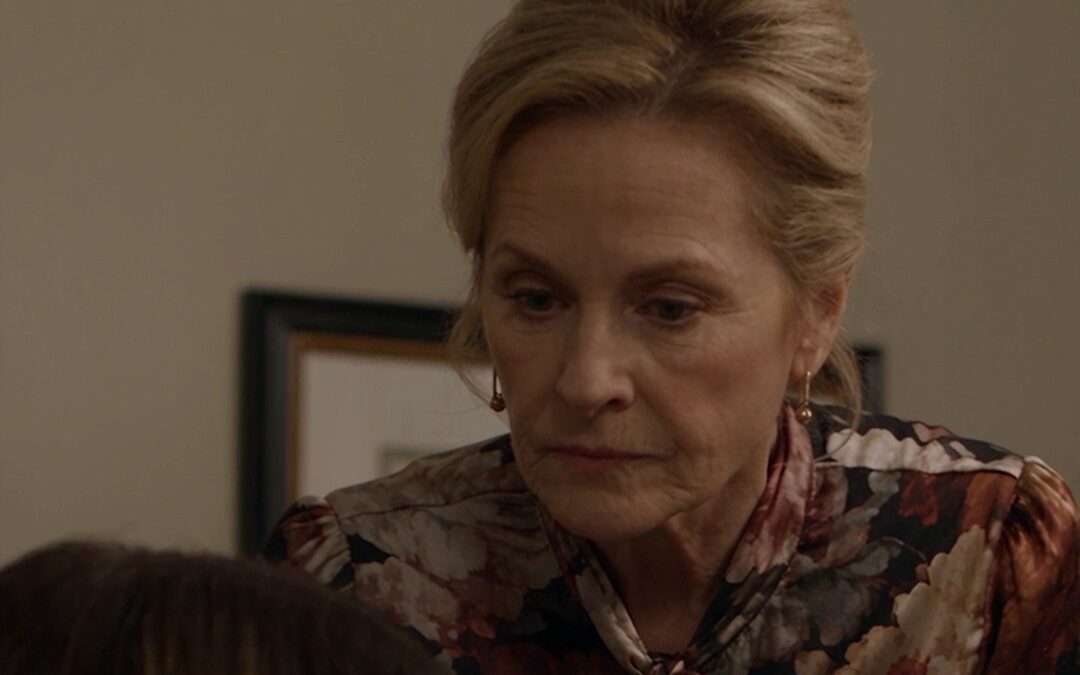
Chapter 1: The Empty Place
Marlene tipped the platter of glazed carrots into Nina’s lap. “You can serve the people who belong here after you clean that up.”
Carrots slid across Nina’s pale-blue blouse and onto the rug. Her four-year-old daughter, Lucy, stopped swinging her feet.
“Mommy?” she whispered.
Nina looked at her mother-in-law. Marlene had turned the platter with both hands.
“You did that on purpose.”
“I’m teaching you not to make a production of everything.”
Nina’s husband, Grant, stared at his napkin. “Mom, it’s just carrots. Nina, get a towel and let’s not ruin dinner.”
The words landed harder than the food. That morning Nina had asked Grant to speak up if his mother assigned her chores in front of Lucy again. He’d promised.
Lucy reached for Nina’s hand. “You sit by me.”
“I will.” Nina removed her wedding ring and set it beside her plate. “I’m done pretending this is fine.”
Marlene’s smile tightened. “Don’t be dramatic. You married into this family. You don’t get to call someone every time you dislike a rule.”
“I’m calling someone because I want Lucy and me somewhere quiet tonight.” Nina picked up her phone.
Grant finally looked up. “Who?”
“Dad.”
Marlene laughed dismissively. “Your father hasn’t been welcome here in years.”
“He’s still my father.”
“He’ll tell you what I have: you have nowhere else to go. You gave up your apartment when you married Grant.”
Nina called. Her father, Paul, was helping a neighbor ten minutes away. He answered on the second ring.
“Dad, can you pick us up? I need a place for Lucy and me tonight. Just bring the car.”
“I’m on my way.”
Marlene rose and moved between Nina and the hall. “We are not finished eating.”
“We are finished.”
Grant stood, but only to push the dining-room door mostly shut. “Could you give it a minute? Mom’s upset. You’re making this bigger than it has to be.”
Lucy pressed her cheek to Nina’s arm. Nina kept one hand on her daughter’s shoulder and the phone in the other. The carrots brightened the rug.
A few minutes later, headlights crossed the front window. Marlene folded her arms as the bell rang. Grant opened the door.
Paul stood on the porch beside the blue toolbox Marlene had claimed he’d taken when she ended their renovation agreement. He held up its brass key.
“I’m not a stranger, Marlene,” he said. “Your kitchen is still under my crew’s warranty.”
Chapter 2: The Key in His Hand
No one moved for a beat.
Paul’s toolbox sat on the porch between him and the open door. Behind him, his old green wagon idled at the curb. He had not brought a crew, a lawyer, or anyone else to make a point. He had come in work pants and a faded work shirt, with a smear of white caulk on one cuff.
Marlene stared at the key in his hand.
“That’s my key,” she said.
“It was issued to me for the cabinet work,” Paul replied. “I’m returning it. I came for Nina and Lucy.”
Grant kept one hand on the doorknob. “You can’t come in here and threaten my mother.”
“I’m not threatening anybody,” Paul said. “I’m standing on a porch with a toolbox.”
Nina looked at her father. “I asked you to pick us up. I didn’t ask you to take over.”
Paul lowered the key. “You’re right. What do you want?”
“Just the ride. And somewhere for Lucy and me to sleep.”
“Then that’s what you’ll get.”
Lucy’s fingers tightened around Nina’s sleeve. “Can Grandpa come sit?”
“He can sit in the car with us,” Nina said. “Would you like your yellow blanket?”
Lucy nodded.
Nina bent to pick up the blanket from the chair where she had left it. Her blouse was damp with carrot glaze, and orange streaked one cuff. She saw her ring beside her plate and left it there.
Marlene stepped away from the doorway, though not far. “This is absurd. Paul, you finished that kitchen two years ago.”
“Eighteen months,” he said. “The last payment is on the invoice. The service clause says I come back for defects in the cabinets. It doesn’t give me rights to your house.”
The exactness in his voice seemed to unsettle her more than anger would have.
“I never said you had rights to the house.”
“You told Nina I’d taken the toolbox and that I wasn’t welcome to retrieve it. You also told her I had no reason to contact this family.”
Nina turned to Marlene. “You told me Dad quit the job and walked away with your deposit.”
“I said he left the work unfinished.”
“Did you?”
Grant released the doorknob. “This is not the time to get into the contract.”
“That’s what you said at the table,” Nina answered. “It wasn’t the time to stop her. It wasn’t the time to say the carrots were an accident. It wasn’t the time to let me finish a sentence.”
“I didn’t say it was an accident.”
“You said I was making it bigger than it had to be.”
Marlene made a sharp sound. “Because you are.”
Nina straightened. “I’m taking Lucy with me tonight. I’m not asking permission.”
Grant looked past her toward their daughter. “She has preschool in the morning.”
“I know. Her bag is upstairs. I’ll get it.”
“I can get it,” he said.
“Not alone.”
Grant’s mouth opened and closed.
Paul set the toolbox down just outside the threshold. “I can wait here.”
Nina appreciated that he did not cross into the house. He had always been capable of confusing help with taking charge. When Nina was younger, he’d respond to a problem by showing up with a wrench before asking whether she wanted one. He had learned, slowly, after she moved out. She had learned to say what help she needed.
She faced Grant. “You can come with me while I get Lucy’s things. Mom can stay here.”
Marlene bristled. “This is my house.”
“And I’m asking my husband to walk upstairs with me.”
Grant glanced at his mother. The pause was small, but Nina saw the familiar calculation: which person would make the next hour harder?
“Fine,” he said.
Lucy reached both arms up. Nina lifted her. “We’re getting your blanket and your school bag,” she told her. “Grandpa’s waiting outside. Nobody’s mad at you.”
“Grandma mad?”
“Grandma is upset. That’s for the grown-ups to handle.”
Marlene started to speak, then stopped. Grant led the way up the stairs. Nina carried Lucy behind him, one arm supporting her legs, the other keeping her close. At the top landing, Lucy hid her face against Nina’s shoulder.
Their bedroom was bright with late afternoon sun. The open closet showed Nina’s clothes on one side and Grant’s on the other. A stack of picture books sat on the dresser. Lucy’s blanket, yellow with small white moons, lay at the foot of the bed.
Grant reached for the overnight bag on the closet shelf.
“Wait,” Nina said. “I’ll pack.”
“I’m trying to help.”
“I know. I need to know what we have.”
He stepped back.
Nina set Lucy down on the bed and opened the bag. “Pajamas. Toothbrush. Her inhaler.”
“She doesn’t need the inhaler unless she has a cough,” Grant said.
“She had a cough yesterday. It’s going with us.”
He nodded, then picked up Lucy’s stuffed rabbit from the pillow. “Bunny?”
Lucy reached for it.
Nina watched Grant hand it to her. For a moment, his face softened into the father she knew: gentle, funny, able to make a whole breakfast plate into a bear. Then his expression closed again when they heard Marlene’s voice downstairs.
“I’m not letting Paul tell people I sabotaged my own kitchen.”
Nina put the inhaler in the bag.
Grant lowered his voice. “Mom is embarrassed.”
“She should be.”
“She didn’t mean to get it on you.”
Nina zipped the bag halfway. “You were looking right at her.”
“She was moving the platter. You pulled back.”
“I didn’t.”
“You were standing up.”
“I was sitting down.”
Grant rubbed his forehead. “I can’t remember exactly.”
“You can remember enough to tell me I made it bigger.”
He didn’t answer.
From downstairs came the clink of dishes. Marlene had started clearing the table as though the meal could be put away before anyone described it.
Nina picked up Lucy’s preschool folder and slid it into the outer pocket. “I asked you this morning to say something if she put me to work in front of Lucy. You told me you would.”
“I thought she’d be in a better mood.”
“That was your condition?”
“I thought if we got through dinner, she’d relax.”
“And if she didn’t?”
Grant looked toward the doorway. “I didn’t want another fight.”
Nina felt the answer settle into place. “So you chose the fight you thought I could absorb.”
“That’s not fair.”
“It’s exactly what you chose.”
He looked at her, then at Lucy. “I didn’t know she’d dump the platter.”
“But you knew she was going to make me serve everyone.”
“I knew she’d asked you to help.”
“She told me the cake was my contribution, then asked me to take plates, clear dishes, and stand by the stove. In front of Lucy, she said I was useful when I remembered my place.”
Grant’s jaw tightened. “She shouldn’t have said that.”
“She said it. You looked at your napkin.”
“I was trying not to escalate things.”
“You could have said, ‘Mom, don’t talk to my wife that way.’ That’s one sentence.”
“I know.”
“You knew before tonight. I asked.”
“I know.”
Nina secured the bag and handed Lucy the blanket. “Then this isn’t about whether you knew what happened. It’s about what you did with the knowledge.”
Grant sat on the edge of the bed. “I’m sorry.”
Nina did not answer immediately. Lucy stroked the rabbit’s ears and watched them.
“Not yet,” Nina said finally. “You’re sorry I’m leaving.”
“I’m sorry I let her treat you that way.”
“Those are different things.”
“I know they are.”
“Do you?”
He looked up, and for the first time that afternoon he seemed to see her rather than the disturbance around her. “Yes.”
Nina could not tell whether that was understanding or fear. She didn’t need to decide yet.
“I want space tonight,” she said. “I’ll take Lucy. You can stay here.”
“I’ll come with you.”
“I didn’t ask you to.”
“She’s my daughter too.”
“I know. I’m not keeping her from you. I’m telling you I’m going somewhere else tonight. You can call tomorrow, and we can talk about what comes next.”
“Can I at least drive you?”
“No. Dad’s here. I want to leave with him.”
Grant’s face changed. “You want him there instead of me.”
“I want the person I called to do what I asked.”
He looked away.
Nina picked up the bag. Lucy climbed down from the bed and took Nina’s free hand.
On the stairs, Grant followed close behind. At the bottom, Marlene stood beside the dining table. The serving platter was empty; the carrots had been scraped back into it. The rug still showed orange smears.
“This is ridiculous,” Marlene said. “She has a stain on a blouse and now she’s leaving her marriage.”
“No,” Nina said. “I’m leaving a room where I asked for help and got told to clean up.”
“I didn’t tell you to clean up.”
“You said I could serve the people who belonged here after I did.”
“I was angry.”
“You chose those words.”
Marlene’s chin lifted. “You’re taking them out of context.”
“What context makes that acceptable?”
Marlene glanced at Grant. “Tell her she’s overreacting.”
Grant stayed quiet.
Nina looked at him. “There it is again.”
He flinched. “Mom, stop.”
It was a start, but not enough to change the plan. Nina walked to the entryway.
Paul remained outside, as promised. When she stepped onto the porch, he looked at her blouse, then at Lucy, and kept his hands to himself.
“Want my jacket?” he asked.
“No. I’ll change when we get to your place.”
“Okay.”
Lucy leaned toward him. “Grandpa, my bunny came.”
“I see him. He looks ready for a ride.”
Paul opened the back door of the wagon and checked the booster seat. “I brought the one you keep in my garage, Nina. Is that still the right one?”
“Yes. Thanks.”
He fitted the bag beside it. Nina buckled Lucy in herself, checked the clip, and tucked the yellow blanket over her knees. Lucy held the rabbit under her chin.
Grant stood in the doorway. “I’ll call in the morning.”
“Text first,” Nina said. “If I don’t answer, don’t keep calling.”
“Okay.”
Marlene’s voice came from behind him. “You’re really going to let her make a scene?”
Nina closed the car door. Through the window she met Grant’s eyes.
“I’m not making a scene,” she said. “I’m making a decision.”
Paul drove only after Nina nodded. The house receded in the side mirror, bright windows and a blue front door against the green of Marlene’s garden. Nina’s ring remained by her plate. She did not know whether she would put it back on. She knew she was not ready to wear it as if nothing had happened.
At Paul’s small ranch house, Lucy asked for toast and the moon blanket. Nina changed into an old gray T-shirt and wiped the glaze from her wrist. Paul made toast while she called the preschool to say Lucy would be late, then texted Grant the same information.
Paul set a mug of tea beside her. “Do you want to tell me what happened?”
“I want to eat first.”
“Then eat.”
He sat across from her, not asking a second time. The kitchen smelled like coffee and toast, and Lucy was already showing the rabbit how to drink from a plastic cup.
After a while Nina told him about the platter, the words, and Grant’s silence. Paul listened without interrupting. When she finished, he said, “I should have asked more questions when Marlene told me you didn’t want me around.”
Nina looked up. “She said I told you that?”
“She said you needed distance and didn’t want me contacting you. I thought she was passing along your boundary.”
“I never said that.”
“I should have checked with you directly.”
“Yes,” Nina said. “You should have.”
He accepted it with a nod. “I’m sorry.”
“What made you believe her?”
“Because I’d been difficult during the kitchen job. I told her the pantry layout wouldn’t work, then kept pushing after she’d made her choice. She said she was done hearing from me. When she said you agreed, it fit what I already believed about myself: that I’d overstepped and needed to back off.”
“You did overstep about the pantry.”
“I did.”
“That doesn’t mean I asked you to disappear.”
“No.” He folded his hands. “I can help with the cabinet issue because I have the contract. I can’t fix what happened between you and Grant.”
“I know.”
“Do you want me to contact him?”
“No. If I want you to, I’ll tell you.”
“Okay.”
That mattered. It did not undo the lie or his failure to check. It gave her something she could use: a person who could admit where he had guessed wrong.
At nine, Grant sent a text: Mom says you took her ring.
Nina stared at the screen.
She typed: I left my ring beside my plate. It is mine. I can collect it later if I decide to. Please keep tonight about Lucy’s routine.
A minute passed. Then another.
Grant replied: I didn’t know she said that. I’ll find it and put it somewhere safe.
Nina showed Paul the message.
“He believes her again,” he said.
“He’s asking before he repeats it this time.” Nina put the phone down. “That’s a small difference.”
“Does it change what you want?”
“Not tonight.”
She gave Lucy a bath in Paul’s narrow tub. Lucy splashed twice, then asked if Grandma was coming to read the moon book.
“Not tonight,” Nina said. “We’ll read it here.”
“Daddy too?”
“Daddy is at home.”
“Will he come?”
“I don’t know yet. You can love Daddy and stay with me tonight.”
Lucy nodded, satisfied with the part she understood. Nina tucked her into the small guest bed, where she had slept during visits as a child. The room still had the same pale yellow walls, but the old posters were gone. Paul had painted over them after Nina moved out.
“Stay till I sleep,” Lucy said.
“I will.”
Nina sat beside her until her breathing evened out. She watched the rabbit slip from Lucy’s hand and land by the pillow. It was not the night she had planned. Still, Lucy was warm, clean, and safe, and Nina had not apologized for leaving.
She slept badly, waking once when her phone buzzed with a message from Grant: I’m sorry. I should have stopped it.
Nina read it, then set the phone face down.
In the morning she drove Lucy to preschool in Paul’s wagon. On the way, Lucy asked for a song. Nina sang one they had made up together about a stubborn rabbit who wouldn’t wear a hat. Lucy laughed at the same silly line twice.
The ordinary sounds helped Nina remember there was a life outside the Mercer dining room: books waiting to be reshelved, a staff meeting on Wednesday, a library display she still wanted to build around local gardens. She had been proud of that display. For weeks, she had postponed buying the paper flowers because Marlene wanted her to help sort family photographs for a reunion.
At work, Nina answered a few emails and stayed through lunch. Grant texted twice. The first asked if Lucy had slept. The second asked to talk. She replied that she could meet him at the library café at five, without Marlene, and only for half an hour.
He agreed.
Paul offered to pick Lucy up so Nina could go. She declined. “I want to get her myself.”
“All right,” he said. “I’ll be at home if you need me.”
At five, Grant was waiting outside the café. He wore the same navy sweater from the night before and looked tired. He had brought Nina’s ring in a small paper envelope.
“I found it under a napkin,” he said.
Nina took the envelope but did not open it. “Thanks.”
“Mom said she didn’t see it.”
“She said I took hers.”
“I know. She told me that last night.”
“And you texted me before checking.”
“I did. I shouldn’t have put it that way.”
They went inside and chose a table near the window. Nina ordered tea. Grant got coffee.
“Mom says she meant to move the platter and didn’t mean to dump it,” he said.
“Did she tell you that before or after I left?”
“After.”
“What did she say about the things she said before it?”
“She said she was frustrated because you weren’t helping.”
“Was I supposed to be helping?”
“She’d asked you to serve.”
“I made the cake. I took the dishes out. I served the first course. Then she told me to stand by the stove while everyone else sat down. You heard her say I was useful when I remembered my place.”
Grant looked down. “I did.”
“Why did you tell me she’d asked me to help? That made it sound ordinary.”
“Because it was easier than telling her she was being rude.”
“Easier for whom?”
“For me.”
The answer was clear. Nina believed it more than a polished apology.
Grant wrapped both hands around the coffee cup. “I knew she’d been telling people you were difficult. I didn’t correct her.”
“Who?”
“My aunt. Mom’s sister. A couple of people at the neighborhood association. They asked why you weren’t coming over as much. Mom said you didn’t like family gatherings and preferred to stay home.”
“I did stay home because you told me she wanted fewer people around. You said she’d asked for quiet after the kitchen work.”
“She did say the house was exhausting while the cabinets were going in. Then later she said you’d told her you didn’t want to come around.”
“Did I say that?”
“No.”
“Did you ask me?”
“No.”
Nina stirred her tea. “So you let her tell people I didn’t want to see them.”
“I didn’t want to contradict her and then have her angry with me. I told myself it wasn’t important.”
“It was important to me.”
“I see that now.”
“You saw me stop getting invited, and you didn’t wonder?”
“I thought you preferred it.”
“You never asked.”
“No.”
The café door opened. A bell chimed. Nina glanced toward it, then back at Grant. “What did your mother say when you asked her why she told people I didn’t come?”
“She said she was trying to avoid putting you on the spot. She thought you were uncomfortable.”
“Did you believe that?”
“I wanted to.”
Nina let the silence sit. The first shift had been his silence at dinner. The second was clearer now: he had accepted a convenient story that let him avoid choosing a side. It had cost her contact with people she had known for years.
“I’m not going to your mother’s house for a while,” she said. “I’m not going to family dinners. If Lucy sees her, it will be with me or with someone we both agree on.”
Grant nodded quickly. “Okay.”
“That’s not a punishment. It’s what I need while I figure out whether I can trust you to tell me the truth.”
“I understand.”
“I want you to talk with someone. A counselor. Not because you’re broken. Because you have to learn to say no to your mother without making me pay for it.”
“I’ll do that.”
“Don’t agree because you want me back tonight.”
“I want you back tonight,” he said. “But I’ll do it because I need to understand why I keep backing down.”
Nina looked at him carefully. “That’s the first thing you’ve said today that sounds like it belongs to you.”
He gave a short, rueful smile. “I deserve that.”
She didn’t reassure him. She did not want to turn his discomfort into her responsibility.
“Lucy can call you tonight,” she said. “Five minutes before bed. I’ll stay in the room.”
“Thank you.”
“She doesn’t need to hear about the dinner. She doesn’t need to carry messages.”
“Agreed.”
“And you don’t go to Dad’s house unless I invite you.”
“I won’t.”
Nina opened the envelope. Her ring lay inside. A thin smear of orange remained in one groove. She rubbed it once with her thumb, then closed the paper again.
“Do you want it back?” Grant asked.
“I want to decide later.”
“Okay.”
He looked as though he wanted to say more, but the meeting was over. Nina stood. “I have to get Lucy.”
“Can I come by later and see her?”
“Not at Dad’s. Call at seven. If she wants to talk, I’ll put her on.”
“That’s fair.”
Nina left the café with the envelope in her pocket. She had not decided whether the marriage could be repaired. She had decided what contact looked like today.
That evening Lucy talked with Grant on speakerphone. She told him the rabbit had eaten pretend toast and asked when he would read the moon book. Grant said he missed reading it. Nina said they could talk about a visit later in the week.
“Can I come tomorrow?” he asked after Lucy ran off to show Paul a drawing.
“Not tomorrow. I’ll check my schedule and text you.”
“Okay.”
He took the answer without arguing. It was another small difference. Nina did not count it as a promise.
On Tuesday morning, a woman from the preschool office called. Marlene had asked to pick Lucy up early for an “emergency family visit.” The school had not released her because only Nina and Grant were listed as approved pickups.
Nina thanked the office and called Grant.
“Did you know your mother planned to pick Lucy up today?”
“No. I didn’t tell her she could.”
“She called the school.”
“I’ll talk to her.”
“You can tell her she is not to arrange pickups or visits through Lucy’s school. She can ask us.”
“I will.”
“I’m also asking the school to keep the approved list as it is.”
“Yes.”
The obstacle was small on paper: one pickup list, one child’s afternoon. But the call showed that Marlene still expected to set the terms, and that Nina’s departure had not made her stop.
That afternoon, Marlene sent Nina a message: I was trying to surprise Lucy. You don’t need to make everything a security issue.
Nina replied: Please ask before making plans with her. Do not contact the school to arrange pickup. If you want a visit, ask Grant and me.
Marlene answered: I’m her grandmother. This is between you and me.
Nina put the phone down. She didn’t reply.
On Wednesday, Grant came to Paul’s house to see Lucy in the front yard. Nina had agreed to a short visit. Paul stayed inside, visible through the kitchen window but not hovering. Grant brought a small book and a bag of apples.
Lucy ran to him. “You came!”
“I did.” He crouched and opened his arms. Lucy hugged him. “I brought your garden book.”
They sat on the low wall by the flower bed and looked at the pictures. Nina sat on the porch. She could hear them without listening to every word.
After twenty minutes, Grant asked whether they could take Lucy to the park together on Saturday.
“I’m not ready to be alone with you for an afternoon,” Nina said. “You can take her with me there, or we can try another short visit next week.”
“That’s okay.”
He looked disappointed but didn’t push. Lucy wanted him to stay longer. Nina agreed to ten more minutes, then ended the visit.
When Grant left, he did not ask Nina to reassure him. He kissed Lucy’s forehead and told her he’d call Friday.
The first week passed in practical pieces: preschool, work, laundry, short calls, a visit in the yard. Nina kept the ring in its envelope in the side pocket of her bag. She did not put it on. She did not throw it away.
At the library, her coworker Jenna noticed the envelope when Nina took out her keys. “You okay?”
“I’m working on it.”
“Do you want to talk?”
“Not yet.”
“Okay. Want me to cover the display meeting on Thursday so you can take the afternoon?”
Nina had not told her the details. Jenna simply knew Nina had sounded exhausted for two weeks. “I’d like that,” Nina said.
She used the time to bring Lucy to the park and sit on the bench while her daughter climbed the low ladder, slid down, and demanded another turn.
The next Sunday, Paul called Nina while she was making pasta.
“I found the old email chain about the cabinets,” he said. “I thought you might want to know what I meant when I said the warranty was still active. It doesn’t affect the house or any of this. It’s just the work records.”
“I’m listening.”
“When Marlene asked me to change the pantry layout, I told her the plan she picked would block the lower drawer. I was right about the drawer, but I kept pushing after she said she understood. I apologized the next morning. She accepted it. I kept the email because of the change order.”
“Did she ask you not to contact her again?”
“She wrote that she wanted to handle the rest directly with Grant. I took that as a boundary. I should have called you.”
“You already said that.”
“I know. I’m not looking to make myself look better. There’s something in the thread that might matter to you.”
“What?”
“She asked me for a family contact number so she could invite you to a reunion lunch. I gave her yours, but she wrote back that you’d prefer not to receive invitations from her.”
Nina stopped stirring the sauce.
“When was this?”
“About six months ago.”
“Did she invite me?”
“She said she would. I don’t know what she did after that.”
“Did you tell her I wanted invitations?”
“I wrote that you’d enjoy seeing your cousins and that you’d told me you missed them.”
Nina turned down the burner. She remembered the reunion lunch. Marlene had told her the cousins were busy and didn’t want to make the drive. Grant had said his mother thought Nina would be uncomfortable around the extended family. Nina had assumed the invitation had never been real. She had been hurt, but she had not challenged it.
“Can you forward me the email?” she asked.
“Yes. Do you want me to send it to Grant too?”
“No. I’ll decide what to do with it.”
The email arrived later that afternoon. Nina read it twice. Paul had asked Marlene to include Nina in the reunion planning. Marlene had replied, “Nina doesn’t want to be pulled into family events. I’ll keep it simple for her.” The thread did not prove she had meant to isolate Nina. It proved she had been told plainly that Nina wanted to see the cousins, and she had chosen a different account.
Nina called Grant.
“Did your mother tell you she’d invited me to the reunion lunch?”
“She said she’d mentioned it and you weren’t interested.”
“She never asked me.”
“I thought she had.”
“Why?”
“She said you’d declined.”
“Did you ask me?”
“No.”
“Did you tell her I wanted to see my cousins?”
“I might have said you missed them. I remember we talked about it.”
“You knew I wanted to go, and you still let her say I’d declined.”
“I didn’t see the email.”
“I’m not saying you saw the email. I’m saying you heard me say I wanted to see them. Then you accepted her claim that I didn’t.”
He was quiet.
“Do you have the email?” he asked.
“Yes.”
“Will you send it?”
“I’ll send it after I’m ready. I need you to understand what it changes. Your mother told me I didn’t have anyone to call. She had been deciding which people I got to see, then telling you I’d chosen it.”
“I didn’t know she’d done that.”
“You didn’t ask me.”
“I know.”
“Now I need you to stop treating her version as the default. You can have your own relationship with your mother. You don’t get to tell me what I want based on what she says I want.”
“I understand.”
“And I’m not bringing Lucy to her house.”
“I won’t ask you to.”
“I may agree to a visit somewhere public later. Not now.”
“All right.”
Nina sent him the email after the call, without comment. She wanted him to read it himself.
On Monday he replied: I read it. She knew you wanted to go. I should have asked you instead of accepting what she told me. I’m sorry.
Nina did not answer immediately. The discovery changed the shape of the problem. Marlene had not simply been rude at dinner; she had managed access and then used Nina’s supposed preference as cover. Grant had not invented that account, but he had helped it stand by never checking.
On Tuesday, Grant asked to meet at the library café again. Nina agreed. He arrived with no envelope, no gift, and no prepared speech.
“I talked to a counselor,” he said.
“That was quick.”
“She had an opening. I went once. I booked another appointment.”
“What did you talk about?”
“Why I think keeping Mom calm is my job, and why I’ve been treating you like the person who can handle whatever she does.”
Nina held his gaze. “That’s accurate.”
“I know.”
“What are you asking for?”
“To keep working on it. I want to be able to see you and Lucy. I want to repair what I can.”
“You can’t repair it by saying you’ll do better. What will you do the next time she tells you I don’t want something?”
“I’ll ask you.”
“And if she insults me?”
“I’ll tell her to stop.”
“What if she gets angry at you?”
“I’ll let her be angry.”
Nina considered him. “That’s the part I need to see.”
“I know.”
They agreed to try a short visit with Lucy at the park that weekend, then revisit the schedule. Nina did not agree to move back. Grant did not ask her to. He started a weekly call with Lucy, and Nina stayed nearby. It was awkward. Lucy sometimes talked to the rabbit instead of the phone. Grant kept calling.
Two weeks after the dinner, Marlene asked to meet Nina alone. Nina declined. She offered a written message or a brief conversation in a public place with Grant present. Marlene chose the public place.
At a bright bakery near the library, Marlene sat upright with a cup of coffee untouched before her. She wore a coral blouse and pearl earrings. Nina arrived in a green cardigan, carrying no ring.
“I’m glad you came,” Marlene said.
“I agreed to hear you.”
Marlene’s mouth tightened. “I was upset that night.”
“I know.”
“I had been hosting all day. The food was getting cold. You seemed checked out.”
“I was clearing plates.”
“You were standing there looking at me.”
“I was sitting down.”
Marlene looked at her cup. “I don’t remember exactly.”
“I do.”
“I didn’t mean to spill the carrots.”
“You turned the platter toward me. You said I could serve the people who belonged there after I cleaned up.”
“I was trying to make a point.”
“What point?”
“That you can’t come into someone else’s house and refuse to help.”
“I made the cake you asked me to make. I served dinner. I did not agree to be ordered around.”
“You’re part of this family.”
“Then speak to me like I am.”
Marlene looked up. “I was afraid Grant was pulling away.”
Nina waited.
“He used to call me every day,” Marlene said. “After you got married, it was less. Then Lucy came, and everything was about her. I felt as if my place was shrinking.”
“That’s why you treated me like staff?”
“I didn’t think of it that way.”
“You said I should serve the people who belonged there.”
“I was angry.”
“Anger doesn’t change what you chose.”
Marlene’s fingers tightened around the cup. “I thought if I stayed in control of dinner, everyone would settle down. Grant was supposed to take care of the cake and the dishes. He didn’t, so I asked you.”
“Why didn’t you ask him?”
“He’d been working all week.”
“So had I.”
Marlene had no answer.
“Did you tell the cousins I didn’t want to come to the reunion?”
“I thought it would be simpler.”
“For whom?”
“For everyone.”
“Were you trying to protect me, or keep me from going?”
“I didn’t want another argument about plans.”
“That wasn’t your decision.”
“No.”
Nina believed Marlene understood the words. She did not yet believe she would act differently.
“Did you tell Grant I’d asked you not to invite me?”
“I told him you didn’t like family gatherings.”
“That’s not the same.”
“No.”
“Did you tell him I asked to see my cousins?”
“I don’t remember.”
“I have the email.”
Marlene flinched. “Paul showed you?”
“He sent me an email he was part of.”
“I was trying not to pressure you.”
“You were told I wanted the invitation. You answered for me anyway.”
“I made a mistake.”
“You made more than one choice. You told people I preferred to stay home. You told me my father had taken his tools. You told me I had nowhere to go. Then you put food on my clothes and expected me to clean it up.”
“I didn’t put the food on you.”
“You tipped the platter.”
Marlene looked down again. “I’m sorry.”
Nina waited, but no explanation followed.
“Are you sorry you did it,” Nina asked, “or sorry that I left?”
“I’m sorry I did it.”
“Will you tell Grant and the cousins that you were wrong about me declining the reunion?”
“I can.”
“Will you stop making plans with Lucy through the school?”
“Yes.”
“Will you stop calling me difficult when I say no?”
Marlene’s eyes shone, though no tears fell. “I can try.”
“I don’t need you to try. I need you to stop.”
Marlene pressed her lips together. “I don’t know how to promise that and mean it.”
That was more honest than Nina expected. It was not enough.
“Then there won’t be a visit with Lucy yet,” Nina said. “You can write to her. I’ll decide when we’re ready for more.”
“Grant thinks you’re keeping her from me.”
“Grant doesn’t get to decide that on his own. Neither do you.”
Marlene nodded once. “I’ll tell him I agreed.”
Nina stood. “I’m not asking you to like my boundaries.”
“I know.”
“I’m asking you to respect them.”
“I heard you.”
Nina left without a hug. She did not feel triumphant. She felt tired, and a little steadier. Marlene had admitted enough to make the story clearer. The apology did not buy access.
That weekend Grant brought Lucy to the park and stayed for an hour. Nina sat on a bench while he helped Lucy collect leaves. Lucy asked him to name each one. He knew some, guessed at others, and admitted when he was wrong.
On the way home, Lucy asked if Grandma would come to the park next time.
“Not next time,” Nina said. “Maybe later.”
“Can she see my leaf?”
“You can show her a picture.”
At home, Nina helped Lucy photograph the leaves. She sent the image to Marlene with no additional message.
Marlene replied: Those are lovely. Thank you for showing me.
It was not repair. It was one small thing done within the boundary.
Grant kept his counseling appointments. After the third, he asked Nina whether she would meet with him and a counselor together. She said she would consider it after they had spent a month keeping the arrangements they had made. He accepted that.
A month later, they met for one session. Nina told the counselor she was not there to decide whether to return home that day. Grant said he understood. They discussed the dinner, the family invitations, and the difference between a request and an assumption. The counselor asked Grant what he would do if Marlene said Nina had refused an invitation.
“I’d ask Nina directly,” he said.
“And if she says yes?”
“I’d tell Mom that Nina is coming.”
“And if your mother argues?”
“I’d end the conversation.”
Nina looked at him. “Would you tell her why?”
“I’d say it’s not hers to decide.”
The sentence sounded practiced, but not empty. Nina would judge it by what happened outside the room.
They agreed to keep living separately for now. Grant would have scheduled visits with Lucy, and Nina would remain present until they both felt comfortable changing that. Grant would pay his share of Lucy’s preschool expenses directly, as he had before. Nina would keep her own accounts and schedule. There was no dramatic contract or sudden legal ruling. There were calendars, follow-up appointments, and clear messages.
The next family gathering came in early spring: a cousin’s birthday lunch at a public picnic shelter. Nina had been invited directly by the cousin, who texted her the details. She asked Grant whether he wanted to go with Lucy. He said he did. She decided to attend for one hour.
Marlene was there. She approached Nina only after Grant asked, “Are you okay if Mom says hello?”
Nina said, “A hello is fine.”
Marlene kept her distance. “Hi, Nina.”
“Hi.”
The children ran between the tables. Lucy carried her leaf picture in a folder to show her cousin. Marlene did not ask Nina to serve or take a plate. When she needed napkins, she got them herself.
After an hour, Nina told Grant she was ready to leave.
“Do you want me to come?” he asked.
“No. I’ll take Lucy. You can stay.”
“Okay.”
He helped Lucy put on her jacket, kissed her cheek, and let her go with Nina. He did not ask whether she was sure or complain that she was making a point.
Outside, Lucy slipped her hand into Nina’s. “We can go home now?”
“Yes.”
“Can we get the library book?”
“If we have time before dinner.”
“We do,” Nina said, and they walked toward the car.
The ring still rested in its envelope at home. That night, Nina took it out and cleaned the orange smear from its groove. She turned it once in her palm. Then she put it in the small dish on her dresser. She wasn’t choosing divorce, and she wasn’t promising reconciliation. She was keeping the choice with herself.
The following week Grant texted: Mom asked whether she can call Lucy on Sunday. I told her she needs to ask you first. I haven’t answered for you.
Nina read the message twice. It was a small, ordinary sentence, but it returned something she had not realized she’d been missing: the right to speak for herself.
She replied: Sunday is fine. Ten minutes, with me nearby.
Grant sent the time. Marlene called Sunday and spoke to Lucy about the moon book and the garden display at the library. She did not ask when Nina would come home. After ten minutes, Nina said it was time to go.
“Bye, Grandma,” Lucy said.
“Bye, sweetheart.”
Nina ended the call. Lucy tucked the phone into Nina’s hand and climbed down from the chair.
“Can we read the moon book?”
“Absolutely.”
Nina opened the book on the couch. Lucy settled against her, rabbit tucked under one arm. In the kitchen, the ring caught a stripe of afternoon sun from the dresser across the hall. Nina left it where it was and turned the page.








