At the Library Opening, His Daughter Called the Nanny Mom—and Asked Who Had Told Her to Leave
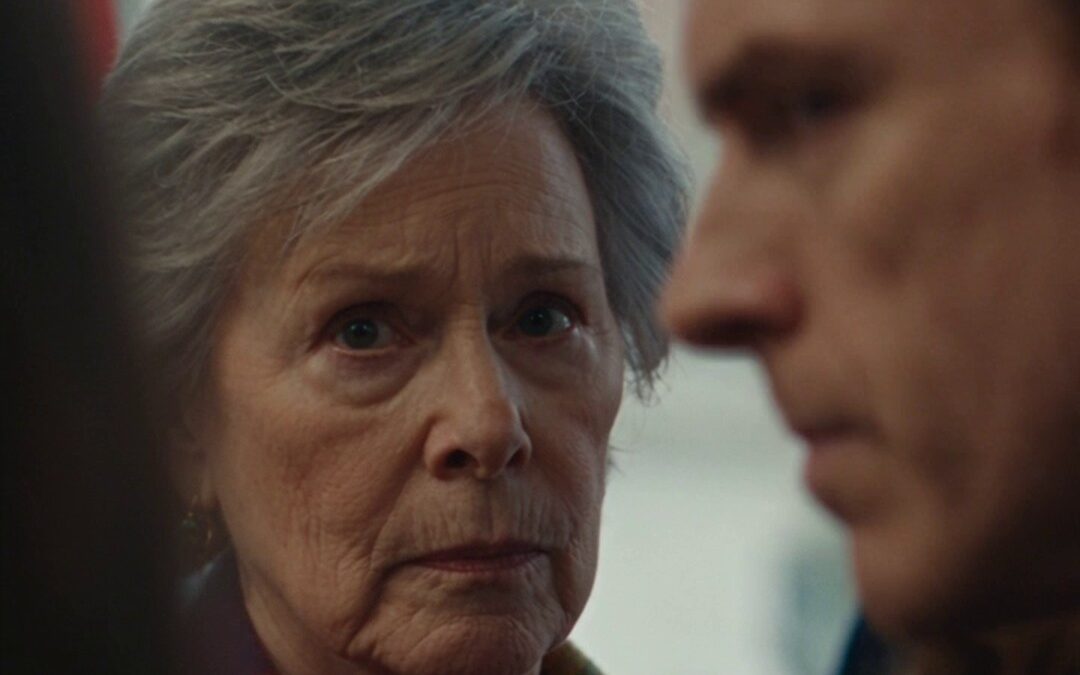
Chapter 1: The Wrong Side of the Ribbon
“Mom, come here,” six-year-old Willa called across the new children’s library, and the woman holding the ceremonial scissors lowered them without cutting the ribbon.
Nora stood beside the service door in a plain navy sweater, holding the folded paper boat Willa had made that morning from the grocery list.
“Willa,” Julian Mercer said quietly, “come back beside me.”
But his daughter slipped under the ribbon and ran to Nora, who crouched just in time to catch her.
“I can’t do it if you’re over there,” Willa whispered.
Nora held out the boat, whose crooked bow she had repaired with a piece of tape after breakfast.
“You can keep this in your pocket,” she said.
“No, you hold it,” Willa said, pressing it into Nora’s hand.
Across the room, a photographer lowered his camera, and Julian saw that the foundation guests had turned away from the mural honoring Willa’s late mother.
His mother-in-law, Beatrice, stepped toward the service door with the smile she used when a board meeting ran late.
“Everyone is waiting, sweetheart,” Beatrice told Willa.
“She waits with me,” Willa said.
Nora looked up at Julian, startled enough that he knew she had never asked for the name Willa had used.
“She sits outside the bathroom when I’m scared of the hand dryers,” Willa added.
“Willa, you don’t have to explain,” Nora said.
“And she makes the oatmeal without the hard apples.”
Julian had approved the library plans, paid for the mural, and practiced his remarks about Celia, yet he had never known Willa disliked the apples in her breakfast.
Beatrice reached for the scissors.
“Nora can take her usual place once the photographs are finished,” she said.
Nora rose, keeping Willa’s hand in hers.
“She’s frightened,” Nora said, her voice carrying farther than she intended.
A guest near the mural asked whether the nanny would be in the family picture.
“She will not,” Beatrice said, before Julian could answer.
Willa gripped Nora’s sweater.
“Then I don’t want a picture,” she said.
Beatrice’s face tightened, and she turned to Nora.
“This is exactly why we agreed Friday would be your last day.”
Nora went still.
Julian looked at Beatrice, then at the paper boat crushed in Nora’s hand, and understood that someone had made a decision about his daughter’s life without telling him.
Willa looked from one adult to the next.
“Did you know she was going away, Dad?”
Chapter 2: The People Who Stay
“No,” Julian said, and Willa’s hand loosened around Nora’s sweater only enough for her to turn toward him.
Beatrice kept the scissors at her side as though their weight might remind everyone why they had gathered.
“This is neither the time nor the place,” she said.
Willa looked at Nora.
“Are you going?”
Nora glanced at Julian, but he had no answer to give her and no right to expect one.
“I was going to talk to you,” she told Willa.
“On Friday?”
“Before Friday.”
“Is Friday tomorrow?”
“No, honey, it’s four sleeps away.”
Willa counted on her fingers, stopped at three, and buried her face against Nora’s ribs.
A few people near the back began speaking softly, the rustle of polite retreat moving through a room Julian had expected to fill with applause.
He had built hotels on waterfront lots where everyone else saw abandoned warehouses, and he knew how to speak when a room turned against him.
He could not find a sentence that would make his daughter stop counting sleeps.
“Put the scissors down, Beatrice,” he said.
She set them on a nearby table with careful hands.
“The children from the neighborhood are waiting outside,” she said.
“They can come in,” Julian replied.
“The ribbon hasn’t been cut.”
“Then open the doors without cutting it.”
The library director, Mrs. Cho, met his eyes from beside the entrance.
“Is that what you want?” she asked.
“Yes.”
She nodded to the volunteers, and the doors opened while the red ribbon still hung across the small platform, leaving children to duck beneath it as Willa had done.
A boy in a yellow raincoat ran straight to the low shelves, and the ordinary sound of his shoes against the floor made the room feel less like a stage.
Julian turned back to Nora.
“Who decided Friday was your last day?”
Beatrice answered before Nora could.
“I asked the agency to send another caregiver, and Nora told me she had accepted a position elsewhere.”
“Which happened first?” Julian asked.
Nora’s eyes met his.
“I accepted the position last Tuesday.”
“I spoke to the agency on Wednesday,” Beatrice said.
Willa lifted her head.
“Are you going because I called you Mom?”
“No,” Nora said at once.
“I didn’t mean to say it loud.”
“You didn’t do anything wrong.”
“Then don’t go.”
Nora’s face changed, not with doubt about Willa but with the strain of being asked for a promise she could not make.
Julian put a hand on his daughter’s shoulder.
“Willa, I’m going to take you somewhere quiet so we can talk.”
“She can come.”
“If Nora wants to.”
Nora looked at the boat in her hand.
“I’ll come.”
They moved through a side door into a small office where new books sat in unopened boxes, and Julian closed the door against the noise of the library.
Willa climbed into a visitor’s chair and pulled her knees under her dress.
Nora sat in the chair beside her, though she stayed an inch away until Willa reached for her sleeve.
Julian remained standing, suddenly aware that both chairs had been filled before he knew where to put himself.
“Nora has another job,” he told Willa.
“But we need her here.”
“I know.”
“Tell the job we need her.”
“It doesn’t work like that.”
“Why not?”
Julian could have told her about contracts and notice periods, but she was asking why need did not settle everything.
“Because Nora gets to decide where she works,” he said.
Willa looked down at her shoes.
“Did she decide she doesn’t want us?”
“No,” Nora said.
“Then why?”
Nora rested her hands on her knees.
“I’ve wanted to work at a library for a long time, and a library in Tacoma has offered to train me.”
“This is a library.”
“This one belongs to everybody, and the job in Tacoma would be mine.”
Willa frowned at the distinction.
“You can read books here.”
“I can,” Nora said, “but that job is something I’ve worked toward.”
Willa rubbed the toe of one shoe against the chair leg.
“I thought you liked your job with me.”
“I do.”
“Two things can be true?”
“Yes.”
Willa considered that, then held out her hand for the paper boat.
Nora gave it to her, smoothing the crushed side with her thumb.
“If I keep this, will you know how to come back?” Willa asked.
“I already know the way.”
Julian sat on the edge of a book box because he could no longer bear to tower over either of them.
“We’re going to talk about what happens next,” he said.
“When?”
“Today.”
“Before four sleeps?”
“Before tonight.”
Willa watched him as if she were checking whether he understood what a promise meant.
He did, though he had learned too late how many promises a child could hear in things adults considered schedules.
Nora waited until Willa asked to look at the new books, then took her to the adjoining reading nook where Mrs. Cho could keep an eye on them.
Julian stepped into the corridor with Beatrice and shut the office door.
“You arranged a replacement without consulting me,” he said.
Beatrice folded her arms.
“The agency contract lists me as the household contact.”
“It lists you because Celia was ill and I was staying at the hospital.”
“And after Celia died, you asked me to keep things running.”
“I did.”
“I have kept them running for four years.”
Julian looked through the glass at Willa, who had opened a picture book but was watching Nora’s face instead of its pages.
“You should have told me.”
“I intended to tell you after the opening.”
“After the opening?”
“She had already taken the other job.”
“You called the agency the next day.”
“Because I wasn’t going to leave Willa without help.”
“That isn’t all you did.”
Beatrice’s expression hardened.
“I have watched this coming for months.”
“What?”
“Willa searching for Nora whenever she enters a room, refusing invitations when Nora has an evening off, speaking of her as though she belongs at the table.”
“She does eat with Willa.”
“In the kitchen, Julian, and now she has become the reason your daughter won’t stand beside you at a dedication for Celia.”
Julian felt the blow because it landed near a thought he had not admitted even to himself.
The library had been Celia’s idea in its earliest form, a place where children could take books home without a card or a fine, and he had wanted Willa to smile beneath her mother’s name.
“I asked Willa to do too much today,” he said.
“You asked her to cut a ribbon.”
“In a room full of strangers who knew Celia.”
“Children manage difficult things with preparation.”
“Who prepared her?”
Beatrice opened her mouth, then closed it.
Julian remembered a message from Nora two weeks earlier, asking whether he could spend ten minutes with Willa and the mural before the opening.
He had forwarded it to Beatrice with a note that said she knew the event schedule better than he did.
“She tried to tell me,” he said.
Beatrice glanced toward the reading nook.
“She has had plenty of time to make herself indispensable.”
“That sounds like an accusation.”
“It is a concern.”
“Then say what you mean.”
“I mean that an employee should have helped Willa come to you.”
Julian had no answer that would defend what he had done with those chances.
Inside the reading nook, Willa slid off the bench and took Nora’s hand to show her a book with a dog on its cover.
“She has,” he said.
Beatrice followed his gaze.
“A child cannot understand what it means to depend on someone who can leave.”
“Apparently neither could I.”
He went back into the library, where the children from the neighborhood had taken possession of the room more thoroughly than any guest could have done.
Mrs. Cho approached with a folded program in her hand.
“We can skip the photographs,” she said.
“Please.”
“Your remarks are still scheduled.”
“Give me a minute.”
She nodded.
“Celia would have liked the noise,” she said.
Julian looked at the children on the floor, their coats piled in an undignified heap beneath the mural.
“She would.”
Mrs. Cho hesitated.
“Willa asked me last week whether books can have two homes.”
“What did you tell her?”
“That sometimes they do.”
“She didn’t tell me she’d visited.”
“She came with Nora after school, and she wanted to see where the books would sleep.”
Julian thanked her, though he suspected Mrs. Cho could hear how little he knew.
He found Willa in the reading nook and asked whether she wanted to stay for his speech.
“Will Nora be there?”
“She can stand wherever she likes.”
Nora looked up sharply.
“It’s your event,” she said.
“It’s a public library.”
“I know what you mean.”
“So do I.”
Willa slid the paper boat into the pocket of her dress.
“I can stay if you don’t make me cut anything.”
“No scissors,” Julian said.
“And no picture with all the people.”
“No picture.”
She took his hand with one of hers and Nora’s with the other.
He had imagined the three of them walking back into the room would feel like a declaration he had not earned, but Willa only wanted help crossing the crowded floor.
At the microphone, Julian unfolded the remarks his office had prepared.
They described Celia’s generosity, the foundation’s gift, and the number of books the room would hold.
All of it was true, and none of it sounded like the woman who used to read recipes aloud to Willa before Willa could understand a word.
“Celia thought a book should be waiting for every child who wanted one,” he said, leaving the paper closed.
“She asked for this room before she knew she would never see it, and Mrs. Cho and her staff have made it warmer than anything I pictured.”
A child near the front sneezed loudly.
Julian smiled at him.
“I’m sorry the doors opened late, and I hope you’ll make yourselves at home.”
He stepped away before he could turn the moment into an explanation of his family.
There was applause, but Willa paid it no attention.
She was studying the painted wall, where Celia’s name appeared in small letters beneath a row of sea creatures.
“Can I touch the crab?” she asked.
Mrs. Cho told her yes, and Willa let go of both adults to put one finger on its red claw.
Beatrice left before the reception ended.
Julian saw her coat disappearing through the front entrance, and for the first time in years he did not follow to repair the conversation.
That evening, Willa refused the dinner the cook had prepared and asked Nora for toast.
“She needs more than toast,” Julian said from the kitchen doorway.
“She had cheese and pears in the car,” Nora replied.
“When?”
“On the way home.”
“I was in the car.”
“You were on the phone.”
He remembered taking a call about a hotel opening in Portland and waving when Willa held up a pear slice.
Nora put bread into the toaster.
“I didn’t say it to make you feel bad,” she said.
“I know.”
“I can make another plate if you’d like.”
“I’d rather hear what she ate.”
“Then cheese, pears, half a cracker, and two bites of a muffin Mrs. Cho gave her.”
“Thank you.”
Willa sat at the kitchen table tracing the tape along the boat’s bow.
“Dad, can Nora work at both libraries?”
“No, sweetheart.”
“What if she works here when the other library closes?”
Nora set the toast on Willa’s plate.
“Tacoma is a little far for that.”
“Then we could move there.”
Julian pulled out the chair across from her.
“You have your school here.”
“I can go to school there.”
“Nora hasn’t asked us to move.”
Willa looked at Nora.
“Can I ask?”
“You can always ask,” Nora said.
“Will you say yes?”
“I don’t know what to say yet.”
Willa ate a corner of toast.
“I don’t like that answer.”
“I know.”
Julian stayed at the table while she finished, resisting the urge to offer a plan simply because she looked at him as though fathers were supposed to have one.
After Nora took Willa upstairs, he called his office and canceled a breakfast meeting.
His assistant, Dev, paused long enough to confirm that Julian meant the breakfast with three property partners.
“I mean it,” Julian said.
“You’ve been trying to get them in one room for six weeks.”
“They can meet without me.”
“Should I tell them why?”
“Tell them I’m with my daughter.”
Dev let out a short breath.
“I’ll make it work.”
Julian went upstairs expecting Willa to be asleep.
She was sitting on her bed while Nora searched beneath it with a flashlight.
“What happened?” he asked.
“The boat fell,” Willa said.
“It’s beside your foot.”
“That’s the old one.”
Nora looked back at him.
“She folds one after breakfast,” she explained, “and keeps the older ones in a tin.”
Willa leaned over the edge of the bed.
“The one from today was scared too.”
“You mean the one from the library?” Julian asked.
Willa nodded.
Nora found it near the wall and held it up.
“There you are.”
Willa took it carefully.
“Do boats get scared?”
“I think people put their scared feelings into things sometimes,” Nora said.
“Then this one has a lot.”
Julian sat beside his daughter.
“May I see it?”
Willa handed it over after a moment.
The grocery list had milk and lemons written along one side, and on the other Nora had drawn a tiny door with a pencil.
“What’s the door for?” he asked.
“So the people inside can get out,” Willa said.
“There are people inside?”
“Only when I need them.”
He handed it back.
Nora went to the bathroom to put away the flashlight, and Willa scooted close enough for her shoulder to rest against his arm.
“Did Mom like boats?” she asked.
“She liked ferries.”
“Because of the water?”
“Because they made everybody wait together.”
Willa smiled faintly.
“Did she make paper ones?”
“No, but she made terrible pancakes.”
“How terrible?”
“She tried to make a fish and it looked like a shoe.”
Willa laughed, then grew solemn.
“I called Nora Mom.”
“I heard.”
“Is Mom mad?”
Julian looked at the picture of Celia on Willa’s shelf, taken before Willa was born.
“I don’t think your mother would be mad that someone takes care of you.”
“Grandma looked mad.”
“Grandma was surprised.”
“She said Nora can’t be in the family picture.”
Julian had spent the afternoon avoiding a simple answer because any answer would expose how little he had considered the question.
“I should have spoken when she said that,” he told Willa.
“Why didn’t you?”
“I was surprised too.”
“That’s okay.”
“It wasn’t helpful to you.”
Nora returned and paused at the door.
Willa held the boat to her chest.
“Will you both stay until I’m sleepy?”
“I will,” Julian said.
Nora sat in the chair by the bed.
He wanted to ask her not to leave that chair, then understood that the wanting was his own.
The next morning, Julian took Willa to school himself.
He had done the trip before, usually on days when he could leave her at the curb without getting out, but this time she asked him to walk her inside.
Her teacher, Ms. Avery, greeted them with a bright voice that softened when she saw Willa’s grip on Julian’s hand.
“We have painting first,” Ms. Avery said.
“Can the boats watch?” Willa asked.
“From your cubby.”
Julian realized she had brought the tin from her room, its lid secured by a rubber band.
“Are they allowed?” he asked.
Ms. Avery smiled.
“They’ve visited before.”
Willa went to her cubby and returned once to hug him around the waist.
“If Nora calls, will you answer?” she asked.
“Yes.”
“Even if you’re talking to a hotel?”
“Even then.”
Ms. Avery waited until Willa joined the other children.
“She seemed unsettled at drop-off last week,” she said.
“Did you call the house?”
“Nora and I spoke.”
“What about?”
“Willa had been asking which adults could pick her up if someone got sick.”
Julian looked through the classroom window, where his daughter was placing brushes into a jar with fierce concentration.
“Did Nora know why?”
“She thought the library opening might be on Willa’s mind.”
“I didn’t know Willa was worried.”
Ms. Avery considered him for a moment.
“Nora suggested that you and Willa make a list together, because Willa wanted to hear it from you.”
Julian remembered another forwarded message, this one headed “school question,” that he had meant to answer after a board call.
“I’ll make the list with her tonight,” he said.
“She’ll like that.”
He walked out carrying the uncomfortable fact that Nora had repeatedly directed Willa toward him, and he had repeatedly sent Willa back through Nora.
At home, he went into Willa’s playroom while Nora was collecting laundry.
A calendar hung beside the low bookshelf, each square filled with marks he had mistaken for Nora’s schedule.
“Tuesday is soup,” he read.
“Tuesday used to be the day Celia had treatment,” Nora said.
“She remembers that?”
“She remembers that you often come home early on Tuesdays.”
He looked at the last four Tuesdays, where a little circle had been drawn around the word “Dad.”
“I missed two of these.”
“You called.”
“That isn’t the same.”
“No.”
Nora placed a stack of pajamas into the basket.
“I should have made the messages clearer,” she said.
“You sent them.”
“I sent more than you could read sometimes.”
“That doesn’t make them unclear.”
He noticed several little boats lined up on the shelf.
“Why boats?”
“The first week I worked here, Willa wouldn’t get into the bath because she was afraid water could go down the drain and take her with it.”
“She was four.”
“She was small enough that the drain looked enormous.”
“What did you do?”
“I folded a boat from a receipt and floated it in the sink, then we watched where it went when I pulled the plug.”
“She got in the bath?”
“After three nights.”
Julian touched one of the boats, which was made from a school lunch menu.
“Why does she keep making them?”
“She likes to put things in them.”
“What kind of things?”
“Questions she doesn’t want to ask yet.”
He looked at her.
“You know what’s in them?”
“Sometimes she tells me.”
“Do you open them?”
“No.”
He let go of the paper.
“I thought this was a craft.”
“It is one.”
Nora lifted the laundry basket.
“Julian, I need to finish packing my room after school.”
“We haven’t talked.”
“We will.”
“Will you wait until I get back?”
“I’ll be here when Willa comes home.”
It was a careful answer, and he knew better than to ask for more while she stood in the doorway with his daughter’s laundry in her arms.
That afternoon, he came home before the school bus.
Nora was in the small room above the garage, where she had lived for almost three years, filling a box with her own books.
He knocked on the open door.
“I can come back,” he said.
“You’re here.”
The room looked less like an employee’s quarters than it had when he last stepped inside to fix a leaking window latch.
There were postcards from Tacoma on the wall, a photograph of Nora with an older woman and two teenagers, and a stack of course books beside the bed.
“You’ve been studying,” he said.
“For a while.”
“I didn’t know.”
“You didn’t ask.”
She said it without sharpness, which left him nowhere to put an argument.
“What’s the position?”
“Children’s services trainee at the Tacoma Public Library.”
“That sounds like a good job.”
“It is.”
“When do they need you?”
“In three weeks.”
“Beatrice told the agency Friday.”
“She decided the shorter date would be cleaner.”
“Did you agree?”
“I told her I would finish the notice in my contract.”
“You had two weeks.”
“I did.”
“Then why didn’t you tell me Tuesday?”
Nora closed the box.
“I was going to tell you that night, and you were in Portland.”
“I came home Wednesday.”
“You were getting ready for the opening, and Beatrice said she would tell you herself.”
“You trusted her to?”
“No,” Nora said.
“Then why?”
“Because I wanted the conversation to happen without Willa in the room, and every time you came home she was waiting for you.”
Julian looked at the course books.
“How long have you been working toward this?”
“Two years.”
“You could have told me.”
“I could have.”
“Why didn’t you?”
“Because each time I mentioned classes, somebody here asked whether I could change them to cover an evening.”
“Beatrice?”
“Sometimes Beatrice, sometimes you.”
He remembered asking Nora to stay late for a dinner when he had misplaced the date, and the memory brought with it her quiet question about leaving by eight.
“You stayed that night.”
“My instructor let me make up the work.”
“Nora, I’m sorry.”
She picked up a book and wiped dust from its cover with her thumb.
“I’m glad you are.”
He had expected her to say it was fine, or that his apology came too late, and her plain acceptance asked more of him than either.
“I can talk to the library,” he said before he had thought it through.
Nora set the book down.
“About what?”
“A later start, perhaps, or a partnership with this branch.”
“You don’t know the people who hired me.”
“I know people who know them.”
“I believe you.”
“I meant that I could help.”
“I know what you meant.”
He stepped back from the offer as though he had seen its shape for the first time.
“This job is yours,” he said.
“Yes.”
“Beatrice thinks you let Willa get too attached.”
Nora’s mouth tightened.
“I know.”
“Did she say that to you?”
“More than once.”
“What did you say?”
“That Willa loves the people who take care of her, and we should take that seriously.”
“What did Beatrice say?”
“She said Willa would forget me when the next nanny arrived.”
Julian looked at the empty space where Nora’s books had stood.
“She won’t.”
“I know.”
“Then why leave?”
“Because I can’t keep postponing my life until your family decides whether I matter to hers.”
A car door shut outside.
Nora reached for her cardigan.
“That’s the bus.”
Julian moved aside so she could pass, and he followed her downstairs without asking her to defend the sentence she had earned.
Willa came in carrying a painting of a green ferry with six windows.
“Ms. Avery said I can put it on the fridge,” she announced.
“You can,” Julian said.
“And she said you came into the classroom.”
“I did.”
Willa studied him.
“Were the boats good?”
“They behaved beautifully.”
She handed the painting to Nora.
“Can you hold this while I wash?”
“I can.”
Willa headed for the sink, then turned back.
“Dad, can you make the list tonight?”
“I can.”
Nora looked from Willa to Julian and understood which list she meant.
“I’ll leave you two to it,” she said.
“No,” Willa said quickly.
“We can make it with three people,” Julian told her.
Willa accepted that, though Julian noticed she kept one eye on Nora while she scrubbed her hands.
After dinner, the three of them sat at the kitchen table with paper.
“Who comes if I get sick at school?” Willa asked.
“I do if I can get there,” Julian said.
“And if you’re very far?”
“Nora can come while she’s working here, and after that Mrs. Alvarez can come.”
“Who is Mrs. Alvarez?”
“She lives two houses down and has offered to help,” Nora said.
“She has the dog with the black ear?”
“That’s her.”
“Can she drive?”
“Yes,” Julian said, “and she knows your school.”
“What if she has to take the dog to the vet?”
“Then I’ll arrange another grown-up with Ms. Avery,” he said.
Willa tapped the pencil against her chin.
“You need more grown-ups.”
“I do.”
“Can Grandma come?”
“She can.”
Willa wrote a crooked B and stopped.
“Will she tell me not to cry?”
Julian met Nora’s eyes.
“I’ll talk to her about that,” he said.
Nora did not rescue the answer.
Willa added a small boat at the bottom of the paper.
“That’s for if the grown-ups forget,” she explained.
“I’ll put the list on the fridge,” Julian said.
“And one in my backpack.”
“I’ll make a copy.”
“And you need to know where the backpack is.”
“I know where it is now.”
Willa gave him a skeptical look.
“Where?”
“By the stairs.”
“It’s in the laundry room because the zipper broke.”
Julian looked at Nora, who was trying not to smile.
“Then I’ll learn where it is every day,” he said.
Willa seemed satisfied with the smaller promise.
Later, when she was asleep, Julian called Beatrice.
“Come over tomorrow,” he said.
“I have a foundation meeting.”
“After that.”
“Is this about Nora?”
“It’s about Willa.”
“It has been about Willa from the beginning.”
“Then we should have the conversation.”
Beatrice arrived the next afternoon in a raincoat Willa had always liked because its buttons resembled brass coins.
Willa was at school, and Nora had asked for two hours to visit her own mother in Tacoma by video call from a quiet café.
Julian had nearly asked why she could not call from her room, then remembered she had a room she was packing to leave.
He and Beatrice sat in the front parlor, a space his father had once called the waiting room because no one in the family ever waited there.
“I spoke to the agency,” Julian said.
“I assumed you would.”
“You told them you could end Nora’s placement.”
“The contract gives the household contact authority to request a replacement.”
“I’ve changed the contact to me.”
Beatrice nodded once.
“That is your right.”
“You also told them Willa needed someone with firmer boundaries.”
“She does.”
“What would that have looked like yesterday?”
“Nora should have returned her to you.”
“She tried.”
“She went with her into the office.”
“Because Willa asked her to.”
“Willa asks for many things.”
Julian leaned forward.
“Tell me the strongest reason you think this attachment is bad for her.”
Beatrice’s eyes filled, to his surprise, but her voice remained steady.
“When Celia was dying, Willa began calling every woman who stayed more than an afternoon ‘Mama.’”
Julian remembered fragments from that year, hospital corridors and childcare schedules, but not this.
“Why didn’t you tell me?”
“You were at the hospital.”
“You were there too.”
“I could not bear to tell Celia her daughter was reaching for other women.”
“Did Celia know?”
“Of course she knew.”
Beatrice looked down at her hands.
“She told me to let Willa love whoever was kind to her, and I thought she was being brave because she had no choice.”
Julian let the silence stay.
“I lost my daughter,” Beatrice said, “and now I’m expected to smile while her child uses the same name for a woman who will be gone in a week.”
“Nora never asked Willa to call her that.”
“I know what you believe.”
“I’ve heard Nora tell Willa about Celia.”
“That doesn’t make the name easier to hear.”
“No.”
“Willa thinks love makes people stay, Julian, and we know that it cannot.”
He could hear the truth inside her fear.
“Then we have to stop promising that it can,” he said.
“And what do you propose?”
“That Willa knows who is leaving, when they’re leaving, and who will take care of her afterward.”
“She needs more than a calendar.”
“She does.”
“Nora will have her own life in Tacoma, and your daughter will spend years waiting for visits that may stop when Nora meets someone or takes a better job.”
“I can’t guarantee visits.”
“You can spare Willa an attachment that grows deeper.”
“It’s already deep.”
“Then don’t make it worse.”
Julian looked toward the door where Willa would come through after school, usually calling for Nora before she removed her shoes.
“I helped make it deep by leaving Nora to do things I should have done,” he said.
“You worked to give Willa a secure home.”
“I did.”
“Celia admired that about you.”
“Celia also told me when I was hiding at the office.”
Beatrice turned toward the photograph on the mantel.
“You are confusing guilt with judgment.”
“I’ve done that before,” he said, “but I’m asking you to see what Willa feels.”
“I see it.”
“You keep treating it like an inconvenience.”
“I treat it like something that could hurt her.”
Julian stood.
“I’ll decide who works in this house, and I’ll decide with Willa how she keeps in touch with Nora after Nora leaves.”
“You’re going to encourage her to call Nora mother?”
“I’m going to let her tell me what she means.”
Beatrice rose too.
“Celia’s place in this family deserves protection.”
“Yes,” he said, “and Willa deserves room beside it.”
Beatrice left without slamming the door.
Julian watched her car pull away and felt no victory, only the loss of a familiar way to let somebody else settle what frightened him.
That night, Nora found him in the dining room with Willa’s school papers spread across the table.
“She keeps everything,” he said.
“Almost everything.”
“This is a drawing of me at work.”
Nora glanced at the picture.
“It’s from last spring.”
“He gave himself a door,” Julian said.
“She did.”
The drawing showed a tall building with Julian behind a square window and a tiny Willa on the sidewalk.
A paper boat floated in the sky above them.
“I asked her why the boat was up there,” Nora said.
“What did she say?”
“That it could bring questions to the window.”
“Did you tell me about it?”
“I put it on your desk.”
Julian remembered setting it aside during a call and never finding it again.
“I should have looked.”
“Yes.”
He laid the drawing flat.
“I want you to stay.”
Nora did not answer at once.
“Beatrice told me you changed the agency contact,” she said.
“I did.”
“I’m glad Willa has you making those decisions.”
“I’m asking what you want.”
“I want the job in Tacoma.”
“I meant after the job starts.”
“What are you asking me to be, Julian?”
“I don’t know yet.”
“Then please don’t ask me to stay inside a place you haven’t named.”
He had come into the room believing sincerity might be enough to repair the question.
“I can raise your pay,” he said, and hated the sound of it as soon as he heard it.
Nora pushed back her chair.
“That isn’t why I’m going.”
“I know.”
“Do you?”
“I’m trying to find something I can offer.”
“You can offer Willa your time.”
“I will.”
“You can tell Beatrice that Willa’s love for me is Willa’s feeling, and she hasn’t misbehaved by having it.”
“I told her.”
“You can let me leave without making me the person who broke this house.”
“You aren’t.”
“Then let Willa hear that from you when I’m not in the room.”
Julian stood, but he kept his hands at his sides.
“I’m sorry I made you ask for that.”
Nora gathered the papers nearest her.
“I need you to understand something else.”
“I’m listening.”
“I care about you too, and I don’t want that used to turn my leaving into a test I have to fail.”
The room seemed to narrow around them.
“How long have you felt that?” he asked.
“Long enough to know I shouldn’t stay here hoping you’ll notice me when your daughter goes to bed.”
He opened his mouth, then stopped.
“I’ve noticed you,” he said.
“As Willa’s nanny.”
“Yes.”
“That’s the job I was paid to do.”
“It isn’t all you are to me.”
“I need to find out whether that can be true when you don’t sign my checks.”
Julian looked at the drawing on the table, at the boat still carrying questions toward his closed window.
“I won’t ask you to give up Tacoma,” he said.
“Thank you.”
“I’ll stop employing you at the end of your notice, even if you choose to visit Willa after.”
“I would like to visit her.”
“She would like that.”
“We should give her dates we can keep.”
“We will.”
Nora nodded, though neither of them moved toward the other.
What lay between them was no longer the easy intimacy of sharing a child’s bedtime routine, and he understood that was necessary.
The following week was full of small disappointments that no adult could solve with one conversation.
Willa wanted Nora at breakfast and Julian at breakfast, but she also wanted them to stop speaking in the careful voices they used when she entered.
She wanted to visit Tacoma, though she could not yet understand why Nora’s new apartment would not have a room for her.
She asked whether library workers slept at the library, whether Saturday counted as a workday, and whether paper boats could travel in the mail without getting wet.
Julian answered what he could and told her when he did not know.
On Wednesday, he came home early enough to make oatmeal.
He cut the apples into small pieces and cooked them until he thought they were soft.
Willa tried one bite.
“They’re still hard,” she said.
“I’ll cook them longer.”
“Nora puts them in first.”
“Before the oats?”
“Before everything.”
Nora, standing at the sink, said nothing.
Julian emptied the pan and started again while Willa watched him with patient doubt.
The second bowl passed her test, though he had added too much cinnamon.
“It’s different,” she said.
“It is.”
“You can practice.”
“I intend to.”
She took another bite.
“Nora’s is still better.”
“I know.”
Nora covered her mouth with the dish towel, and Willa smiled for the first time that morning.
On Thursday, Julian took Willa to the library after school and let her show him every shelf Nora had shown her.
Mrs. Cho gave Willa a book about an otter, and Willa carried it to the mural.
“Mom liked ferries,” she told the painted crab.
“She did,” Julian said.
“Would she like Nora?”
Julian knelt beside her.
“I think she would have been grateful that Nora takes good care of you.”
“That’s not the same as like.”
“No,” he admitted.
“I think she would have liked the way Nora reads all the pages, even the boring ones.”
Willa touched the crab’s claw.
“Can I have two moms if one died?”
“You can love Celia and love Nora.”
“Even if Nora moves?”
“Yes.”
Willa turned to him.
“Grandma says it makes things mixed up.”
“Grandma has feelings about your mom that are hard for her.”
“I have hard feelings too.”
“I know.”
“Do I have to call Nora Mom again?”
“No.”
“Can I?”
“That’s something you and Nora can talk about, because it’s her name you’d be using.”
Willa thought about that.
“Will it make her leave faster?”
“No.”
He hoped he had finally given her one answer that would remain true.
On Friday morning, Beatrice came to the house before Willa left for school.
Julian had asked her to wait until the weekend, but she stood in the foyer beside a woman holding a leather portfolio.
“Julian, this is Evelyn Hart,” Beatrice said.
Evelyn offered her hand.
“I’m with the agency.”
Julian shook it, looking past her to Willa on the stairs.
“I thought the interview was next week.”
“It was,” Evelyn said.
Beatrice removed her gloves.
“I asked Evelyn to come while Nora was still here so the transition would be gentle.”
Nora appeared behind Willa with her backpack.
“No one told me,” she said.
“It was arranged last night,” Beatrice replied.
Willa gripped the banister.
“Is she taking Nora’s room?”
Evelyn’s face changed.
“I’m here to meet your family,” she said.
Willa looked at Beatrice.
“Nora’s still here.”
“Only until this evening,” Beatrice said.
Julian moved to the foot of the stairs.
“Evelyn, I’m sorry you were brought here without the plan we discussed.”
She closed her portfolio.
“I can reschedule.”
“That would be best.”
Beatrice faced him.
“An introduction takes ten minutes.”
“Willa is going to school.”
“She can be five minutes late.”
“No,” Willa said from the stairs.
Every adult turned toward her.
“I don’t want a new Nora.”
Evelyn’s expression softened.
“I’m not a new Nora,” she said.
Beatrice looked pained, but she lifted a hand as though to quiet the girl.
“She needs to learn that people can care for her without being the same person.”
“Then we can teach her without bringing someone to the house unannounced on Nora’s last day,” Julian said.
“You’re embarrassing our guest.”
“Evelyn deserved a call before she came.”
Evelyn put her portfolio under her arm.
“I’d be happy to speak another time,” she said.
“I’ll call you myself,” Julian told her.
After Evelyn left, Beatrice stood very still.
“You’re refusing help because you’re angry with me.”
“I’m refusing this timing.”
“The school term won’t pause while you sort out your feelings.”
“Neither will Willa’s life.”
Nora went down the stairs and held out Willa’s backpack.
“Your bus is almost here.”
Willa took it.
“Are you coming to the stop?”
“Yes.”
“Dad too?”
“Yes,” Julian said.
Beatrice stepped aside to let them pass, though she did not leave.
At the bus stop, Willa stood between Julian and Nora, holding one hand from each.
“Will Grandma be here when I get back?” she asked.
“I don’t know,” Julian said.
“I don’t want her to be mad at me.”
“She’s upset with me.”
“Because I said no?”
“Because I asked her not to decide things for us.”
Willa looked at Nora.
“I’m glad you were here this morning.”
“So am I.”
The bus arrived, and Willa climbed aboard without turning around until she reached the third step.
“Don’t pack all the boats,” she called.
“I won’t,” Nora answered.
When the bus had gone, Nora let out a breath.
“Evelyn seemed kind,” she said.
“She did.”
“Willa will need someone when you’re at work.”
“I know.”
“Don’t reject a good person just because Beatrice chose badly today.”
Julian glanced at her.
“You’re defending your replacement.”
“I’m defending Willa’s chance to know her.”
“She may resent anyone who comes next.”
“Then give her time to resent the change before asking her to trust the person.”
Julian watched the empty road.
“I didn’t realize how much of this you’d already thought through.”
“I had to.”
Inside, Beatrice was waiting in the kitchen.
“I’ll leave when I’ve said what I came to say,” she told Julian.
Nora stopped at the threshold.
“I’ll be upstairs.”
“No,” Beatrice said, surprising them both.
“You should hear this too.”
Julian pulled out a chair but did not sit.
“Go ahead.”
Beatrice looked at Nora.
“I believed you were doing Willa harm by allowing her to depend on you.”
Nora held her gaze.
“I know.”
“I still believe an adult has a duty to consider what happens when a child loses daily care.”
“So do I.”
“Then why didn’t you draw away sooner?”
“Because Willa would have thought she’d done something wrong,” Nora said.
“I tried to help her ask Julian for what she needed, and I should have told him directly more often.”
“You did tell me,” Julian said.
“Sometimes I left the hardest part out.”
“Why?”
“Because you were my employer, and it’s difficult to tell someone who pays you that his daughter keeps asking when he’ll come home.”
Julian felt Beatrice look at him, but he kept his eyes on Nora.
“She asked that?” he said.
“Yes.”
“How often?”
“More last winter.”
“I was opening two hotels.”
“I know.”
Beatrice took off her gloves again.
“This is what I feared,” she said.
“Willa turned toward the person who was there, and now everyone is treating that as proof of a greater love.”
“I have never measured her love for us against her love for Nora,” Julian replied.
“You are ready to let a nanny call herself Willa’s mother.”
“Nora hasn’t called herself anything.”
“Willa has.”
“And we need to listen to what Willa means.”
Beatrice looked at the floor.
“Celia was my only child.”
Nora’s face softened.
“I know.”
“When she died, I wanted Willa to have her name kept safe.”
“It is safe,” Nora said.
“You weren’t there when Celia held her.”
“No,” Nora said, “and I’ve never told Willa I was.”
Beatrice looked up.
“I saw you holding her yesterday and heard the same word Celia heard.”
Nora took a moment before answering.
“I understand why it hurt.”
“It did.”
“I won’t ask Willa to forget Celia.”
“I know that now,” Beatrice said, and seemed almost surprised to hear herself say it.
Julian pulled out a chair for her.
“Will you sit?”
She did.
“I need you to stop arranging care for Willa,” he said.
Beatrice pressed her lips together.
“I can still be her grandmother.”
“She needs you to be.”
“I don’t know how to speak to her about Nora.”
“Ask her what she wants to tell you.”
Beatrice gave a small, tired laugh.
“She will tell me I’ve been wrong.”
“She may.”
“I suppose I can hear it.”
Nora stayed long enough to make sure Beatrice understood that Willa would return at three, then went upstairs to finish packing.
Julian did not follow her.
He sat with Beatrice while she talked about Celia as a little girl who had once tried to carry home every library book she touched.
It was the first time in months he had heard a story about Celia that was neither solemn nor intended to teach Willa a lesson.
At three, the bus delivered Willa with a paper flower pinned to her coat.
Ms. Avery had helped the class make them, and Willa had chosen a blue one because Nora liked blue.
She found Nora in the garage room with the last box open.
“Where are the boats?” Willa asked.
“On your shelf.”
“All of them?”
“All the ones you made.”
Willa saw a paper boat on Nora’s windowsill, made from the grocery list they had used on the day of the opening.
“That one is mine.”
“I know.”
“It was scared.”
“Yes.”
“Why is it here?”
“I was hoping you might let me take it, so I’d have something you made in my new home.”
Willa touched its taped bow.
“Does it have people inside?”
“I don’t know.”
“I put you in it,” Willa said.
Nora’s eyes filled, but she did not look away.
“Then I’ll take very good care of it.”
Willa climbed onto the bed beside the empty suitcase.
“If I said Mom, was I trying to make you stay?”
“No, honey.”
“I thought maybe I was.”
“You wanted me near you at the library.”
“Yes.”
“People sometimes use a word because it feels right in a moment.”
“Can it be right after the moment?”
“It can.”
“Do you want me to say it?”
Nora brushed a loose thread from Willa’s coat.
“I want you to say what you mean, and I want you to know I love you whatever word you use.”
Willa leaned against her.
“I mean you know me.”
“I do.”
“And I know you like the blue flowers.”
“You do.”
“And Dad is my dad.”
“He is.”
“And Celia is my mom who died.”
“Yes.”
Willa considered the crowded arrangement of her heart.
“Maybe I have room.”
Nora kissed the top of her head.
“I think you do.”
Julian heard only the last few words from the hallway, where he had come to carry the box downstairs.
He waited until Willa climbed off the bed before he knocked.
“I can take this,” he said.
“I can carry the flower,” Willa replied.
Beatrice was in the kitchen when they came down, with a plate of sandwiches she had made herself because the cook had the afternoon off.
Willa stopped when she saw her.
“Are you mad?” she asked.
“Not at you,” Beatrice said.
“Are you mad at Nora?”
“I was frightened about Nora going away, and I handled it badly.”
“You told everybody.”
“I did.”
“That made my stomach hurt.”
Beatrice set down the plate.
“I’m sorry.”
Willa studied her.
“Can you be sorry and still be scared?”
“Yes.”
“I’m both too.”
Beatrice opened her arms, leaving Willa free to decide whether to come.
Willa went to her, though she kept the blue flower tucked safely between two fingers.
The farewell did not become a ceremony.
Nora ate a sandwich at the kitchen table while Willa told her that the class hamster had learned to climb the wrong side of its wheel.
Julian carried the boxes to Nora’s car and checked that the back door closed around them.
At six, Nora put on her coat.
Willa took the paper boat from the windowsill and placed it in Nora’s hands.
“You can have this one,” she said.
“Thank you.”
“I’m keeping the others.”
“You should.”
“Saturday is after one sleep.”
“It is.”
“You said we can call at ten.”
“I’ll call at ten.”
“And next Saturday you can come to Mrs. Cho’s story time.”
“I’ll be there.”
Willa turned to Julian.
“You wrote it down?”
“On the fridge and in my phone.”
“Good.”
Nora crouched, and Willa hugged her so tightly that the paper boat bent against Nora’s sleeve.
“I’ll miss you when I wake up,” Willa whispered.
“I’ll miss you too.”
“Can you still be my Nora?”
“Always.”
Willa held her another moment, then stepped back on her own.
Julian walked Nora to the car.
He had prepared several sentences during the afternoon, but each sounded like an attempt to put a claim on her departure.
“Your last pay and the notice amount will come through the agency,” he said.
“I saw the email.”
“I’ve removed the house key from the account, so you don’t have to return it tonight.”
“I’ll mail it.”
“Whenever you’re ready.”
Nora looked toward the kitchen window, where Willa and Beatrice stood together.
“Stay with her after I drive away,” she said.
“I will.”
“She may get angry later.”
“I’ll stay then too.”
Nora gave him a small smile.
“I believe you.”
He wanted to reach for her hand, but the boxes in her car and the house behind him were reasons to let her leave without another request.
“Have a good first week,” he said.
“I start Monday.”
“Then have a good weekend.”
“I’ll call Willa tomorrow.”
Nora got into the car and drove away while Willa watched from the window.
Julian went back inside before the taillights disappeared.
Willa did get angry.
She asked why adults could choose new jobs if children could not choose to keep the people they loved nearby, and Julian told her he understood why that felt unfair.
She said he did not understand because he had not loved Nora first, and he accepted that she might be right.
They ate soup that neither of them wanted, then made a new paper boat from the grocery list.
Willa drew three small windows along its side.
“Who lives in this one?” Julian asked.
“Me and you.”
“And the third window?”
“Whoever visits.”
He set the boat on the windowsill beside the calendar.
The next morning, Nora called at ten exactly.
Julian answered and handed the phone to Willa, who took it into the playroom and spent eleven minutes describing the hamster’s wheel in greater detail.
When she came back, she looked surprised to find him still at the kitchen table.
“You stayed,” she said.
“I said I would.”
“I forgot.”
“That’s all right.”
Over the following month, Julian learned that keeping time for Willa required turning down work he had once treated as impossible to refuse.
He hired a manager for the Portland opening, left two dinners before dessert, and stopped pretending a late video call was the same as sitting beside Willa while she read.
He also interviewed Evelyn Hart again, this time at a café after Willa’s school day.
Evelyn told him she could cover three afternoons a week and would rather Willa meet her gradually than be asked to welcome a stranger into Nora’s room.
“That sounds sensible,” Julian said.
“It’s how I’d want someone to meet my son,” Evelyn replied.
Willa liked Evelyn’s stories about her cat but made it clear that she did not want Evelyn to fold boats.
“That belongs to Nora,” she said.
Evelyn found a book about insects instead, and the two of them began looking for beetles in the garden.
Julian heard Willa tell Nora about Evelyn during their Saturday call.
“She knows a lot about bugs,” Willa said.
“That sounds fun,” Nora replied.
“But I still like you.”
“I still like you too.”
Julian stood in the hallway and heard the ease in Nora’s voice.
He had feared Willa would experience every new adult as a betrayal, and Willa had simply needed permission to know more than one person.
Beatrice came for Sunday lunch twice that month.
The first time, Willa showed her the boats on the shelf and told her she could look but not open them.
The second time, Beatrice brought a photograph of Celia at nine years old, sitting on the floor of a library with six books stacked around her.
“She took all six home,” Beatrice said.
“That’s too many,” Willa replied.
“Her arms were full.”
“Did you help?”
“I carried the heavy ones.”
Willa put the photograph next to the paper boat on the windowsill.
“Then you can help me carry books too,” she said.
Beatrice took her to the library the next weekend.
She did not ask Willa to choose between telling her about Celia and telling her about Nora.
Three months after Nora left, Julian drove to Tacoma for Willa’s first visit to the library where Nora worked.
They had waited until Nora knew her schedule and Willa knew a canceled plan would be disappointing rather than catastrophic.
The children’s room had low windows and a carpet printed with roads, and Nora was helping a boy find a book about bridges when Willa walked in.
Willa waited until the boy had his book.
Then she ran.
Nora caught her, laughing, and Julian felt the old jolt of seeing how completely his daughter trusted someone else.
This time he let the feeling lead him closer instead of turning away.
“Show me where the books sleep,” Willa said.
“I can show you during my break.”
“You have a break?”
“Even library people do.”
Willa looked at Julian.
“Can we wait?”
“We came to spend the day.”
They ate lunch with Nora after her shift ended.
She lived in an apartment two blocks away with her sister, who worked nights at a hospital, and she spoke with the satisfaction of someone whose days had begun to belong to her again.
Julian asked about the children’s reading group she was helping to run.
“Next month they’re building a cardboard city,” she said.
“Willa will want to see it,” he replied.
“She’s welcome if the drive isn’t too much.”
“We’ll decide when we know the date.”
Nora glanced at him, hearing the care in the answer.
After lunch, Willa went with Nora to buy postcards while Julian waited outside the shop.
He watched them through the window, heads bent over a rack, and knew that whatever happened between him and Nora would have to leave this bond free to be what it already was.
On the drive home, Willa fell asleep with a postcard of the Tacoma library in her lap.
Julian thought about Nora’s question in the dining room, about whether he could see her when she was no longer his employee.
He had begun to know her as a woman with deadlines, classmates, a sister whose shift changes affected dinner, and opinions about books he had never thought to read.
He liked the impatience in her voice when he tried to solve a problem she had not asked him to solve.
He liked that she called Willa at ten because she had promised, and that she sometimes ended the call after ten minutes because she had somewhere else to be.
He waited another month before asking her to dinner without Willa.
Nora took a full day to answer.
“Yes,” she said on the phone, “if you can tell Willa you’re having dinner with me without making it her idea.”
“I can.”
“And if we can go slowly.”
“I’d like that.”
Willa’s response was simpler than either of them expected.
“Can Evelyn come when you’re gone?” she asked.
“She can,” Julian said.
“Then bring back the noodles from that place Nora likes.”
Dinner was sometimes awkward.
They talked too much about Willa, then deliberately talked about anything else, then returned to Willa because she mattered to them both.
Nora told Julian how frightened she had been to leave school the first time, and he told her how he had gone back to work two weeks after Celia’s funeral because people there knew what to ask of him.
Neither story excused what they had missed.
Both gave them a place to start.
In spring, the children’s library held a small weekend program where families were invited to make things from discarded paper.
Willa sat between Beatrice and Nora at a table covered with old maps.
Julian came in carrying drinks and found Evelyn showing a younger child how to fold a box.
There was no ribbon, no photographer, and no place marked for family in front of the room.
Willa made a boat from a map of Tacoma and drew a tiny door on its bow.
“This one knows two ways home,” she said.
“Which way does it go first?” Julian asked.
Willa set the boat in Nora’s palm, then reached back for his hand.
“Let’s find out,” she said.








