Facing eviction by Friday, an aging compass maker and an uncertified trawler mechanic risk everything to protect the only harbor they have left.
Chapter 1: The Shuddering Slab
Frankie Duarte held a sixty-pound steel torque wrench in one hand and a jeweler’s brass loupe in the other.
At five in the morning, the concrete floor of Dock Shed Four smelled of salted herring, damp grease, and freezing salt spray.
She worked as the sole hydraulic technician for thirty-two commercial trawlers, keeping high-pressure winch pumps from exploding under winter loads.
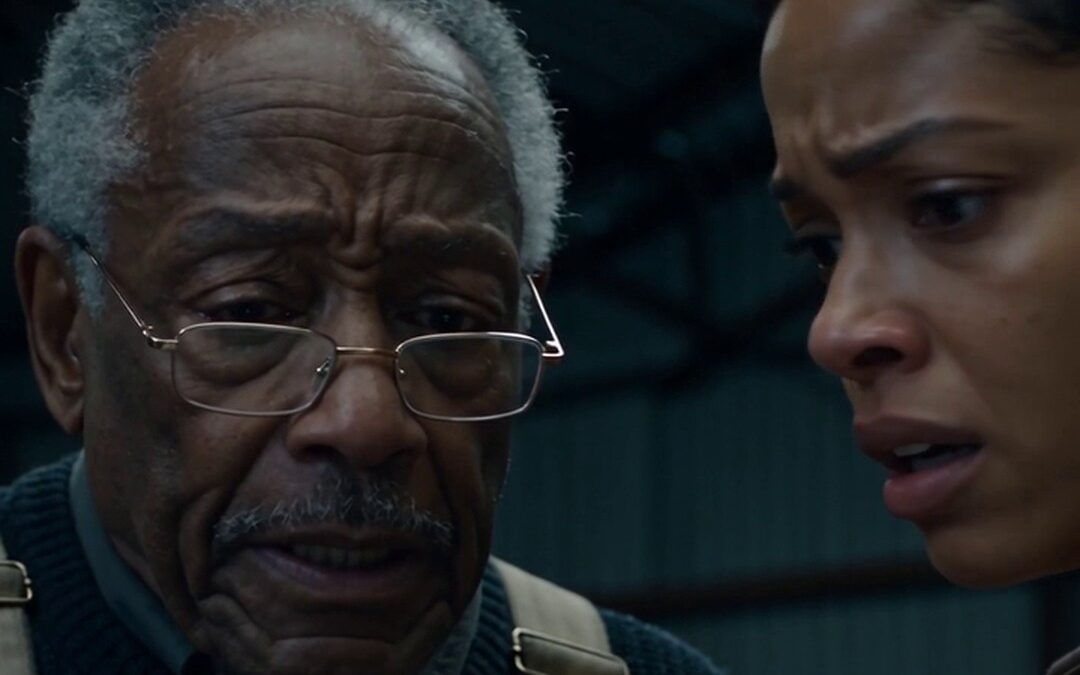
Two benches down, Arthur Finch sat under a forty-watt drop light with a brass gimbal ring resting between his palms.
Arthur was sixty-two, wore a spotless wool sweater under a faded canvas vest, and had spent forty years surveying tide lines for the county.
Nobody expected the dock’s grease-stained pump mechanic to have anything to say to a retired clerk who calibrated antique ship compasses.
When Arthur’s left thumb gave an involuntary, violent flutter against the bench edge, Frankie did not ask what was wrong.
Instead, she set a three-pound lead counterweight against his vibrating steel rule to kill the harmonic resonance.
“Your needle isn’t sticking because of the pivot,” Frankie said.
“It’s sticking because this whole concrete slab shudders every time the ice plant cycles on.”
Arthur adjusted his wire-rimmed glasses, looked at the heavy lead block, and let out a dry, raspy chuckle.
“And here I thought the Pacific Ocean had developed a personal grudge against magnetic north,” Arthur replied.
That was the first laugh they shared in the cold shed.
By the third week of November, their morning ritual had become as fixed as the tide tables.
Every morning at five-fifteen, before the trawler crews arrived, Arthur brought two paper cups of black chicory coffee from the corner diner.
In return, Frankie used her hydraulic bench’s pneumatic micrometer to level Arthur’s brass compass gimbals to within a thousandth of an inch.
They worked in companionable silence, surrounded by the smell of kerosene solvent and warm machine oil.
Then Carl Briggs, the port operations manager, stopped in the open doorway with a clipboard tucked under his arm.
“Finch, the county auditors want these rental lockers cleared by Friday,” Carl said.
“And Duarte, your certification file is still missing the written engineering exam results.”
Carl tossed a manila folder onto the workbench between them and walked back toward the rain.
As the folder slid across the steel plate, Frankie’s official exam notice spilled out beside Arthur’s open medical evaluation form.
Arthur’s gaze dropped to the red failure stamp stamped across Frankie’s reading comprehension section.
Frankie’s eyes froze on the diagnosis line of Arthur’s notice, where the neurologist had revoked his commercial calibration license.
Arthur slowly reached for the brass gimbal ring, his hand trembling openly in the cold draft.
“Frankie,” Arthur said, his voice dropping to a whisper.
Chapter 2: The True North Line
“Don’t read that,” Frankie said, slamming her callused palm flat over the red failure stamp before he could lean any closer.
Her knuckles were permanently stained with black moly grease, and they pressed hard against the cheap paper until the fibers groaned.
Arthur did not pull his eyes away immediately, but he let his spectacles slide a fraction down the bridge of his thin nose.
His left hand retreated into the pocket of his canvas vest, where his thumb kept up its rhythmic, silent twitch against his thigh.
“I wasn’t prying,” Arthur said, his voice level and entirely devoid of pity.
“You were looking right at the red ink,” Frankie said, jerking the state examination sheet toward her chest.
“A man with two working eyes tends to notice when someone stamps four inches of crimson across an official seal,” Arthur replied.
He picked up a clean linen cloth and began polishing the outer edge of the brass gimbal ring with circular, mechanical strokes.
“It isn’t any of your business what the state board puts in my file,” Frankie said.
“Neither is the neurologist’s letterhead under your elbow,” Arthur said softly.
Frankie looked down at the white sheet resting beside a tray of stainless steel needle bearings.
The letterhead bore the embossed insignia of the regional medical center in Portland, dated eleven days prior.
The central paragraph stated clearly that progressive involuntary motor tremors in the upper extremities disqualified the subject from certifying commercial vessel navigation systems.
The word revoked was typed in bold black letters just above the physician’s sharp signature.
Frankie did not reach for it, nor did she slide it toward herself to read the rest of the clinical paragraphs.
Instead, she dragged a clean red shop rag across the oily steel plate of her workbench and folded her arms across her chest.
“Carl had no right to dump those together in one folder,” Frankie said.
“Carl has a clipboard and thirty-two delinquent dock leases to settle before the fiscal audit,” Arthur said.
“He doesn’t care whose business is printed on the paper so long as the lockers are empty by Friday.”
Arthur set the brass ring down on the felt pad, but the metal gave a tiny, sharp chink against the wood because his fingers did not open simultaneously.
He stared at his hand for two seconds, his jaw set in a hard, pale line that made the deep creases around his mouth look like carved stone.
“You’re going to pack your chest,” Frankie said, watching his posture stiffen.
“That seems to be what the county has mandated,” Arthur replied.
“You’ve been in Shed Four longer than the current harbormaster has had his license,” Frankie said.
“My brother built this workbench out of salvaged fir stringers in nineteen sixty-eight,” Arthur said.
“He used a hand adze on the underside so the planks wouldn’t cup when the harbor fog rolled in.”
He reached out and touched the pale corner of the bench where the wood had been worn smooth by fifty years of wool sleeves.
“The county doesn’t care about fir stringers,” Frankie said, her voice dropping into the quiet hum of the shed.
“They care about square footage and cold storage contracts.”
“And the maritime licensing division cares about standardized multiple-choice paragraphs,” Arthur said quietly.
Frankie flinched as if a high-pressure hydraulic line had cracked against her shins.
“I know how to rebuild an axial piston pump blindfolded in a four-foot swell,” Frankie said.
“I know you do,” Arthur said.
“I can tell you the clearance on a swashplate bearing just by listening to the casing with a wooden screwdriver handle pressed against my ear,” Frankie said.
“I have watched you do it twice this month,” Arthur said.
“Then why did you stare at the stamp like I was an idiot who couldn’t read a pressure gauge?” Frankie demanded.
“I stared at it because the people who write those examinations don’t know the difference between an engine room and an office desk,” Arthur said.
He picked up his wooden-handled brass burnisher, his fingers working deliberately to keep the tool aligned with his forearm.
“My cousin had the same trouble with the army telegraph manual in fifty-four,” Arthur said.
“The letters looked like a net of barbed wire to him whenever the clock was running, but he could repair a field transmitter in the dark.”
Frankie leaned her hip against the cold steel lathe table and stared at the floorboards where saltwater had tracked in from her rubber boots.
“They give you ninety minutes in a room with fluorescent lights that buzz like wasps,” Frankie said.
“Every question is half a page of legal double-talk about hydrostatic pressure head and liability statutes.”
“By the time I untangle what the third sentence is asking, my vision starts swimming and the words flip sideways.”
“It doesn’t make you incompetent,” Arthur said.
“It makes you unqualified according to a clerk who has never had salt brine in his boots.”
“It’s the same thing on paper,” Frankie said.
“Paper is only what people write when they don’t want to look each other in the eye,” Arthur said.
He pulled a wooden cigar box from beneath his bench, lifting the brass latch with his steady right hand while his left rested firmly against his knee.
Inside lay six miniature compass pivots, each tipped with synthetic sapphire, nestled in blue velvet that had faded to slate gray.
“If I pack this box today,” Arthur said, “my fingers will stop moving entirely by February.”
Frankie looked from the velvet trays to the massive hydraulic winch motor suspended from the overhead gantry crane behind her.
The winch belonged to the *Marigold*, an eighty-foot dragger that had to clear the bar on Saturday morning or lose its quota of winter rockfish.
The motor’s internal relief valve was sticking, bleeding fifty gallons of pressurized oil back into the sump every time the drum took load.
“I can’t lift that valve body into the test tank by myself without a second pair of eyes on the overhead chain,” Frankie said.
Arthur looked up from his velvet box, his eyes catching the yellow glare of the drop light.
“You have a pneumatic hoist with a pendant switch,” Arthur said.
“The pendant switch binds when the cable swings wide,” Frankie said.
“I need somebody who understands load balance and doesn’t panic when an oily chain rattles.”
Arthur stood up from his wooden stool, his movements slow and deliberate, and smoothed the front of his canvas vest.
“The diner doesn’t start brewing the chicory blend until four-forty,” Arthur said.
“I know when they brew it,” Frankie said.
“I expect the coffee to be hot when you walk through the sliding door,” she added.
Arthur looked down at the red-stamped paper lying beside his medical revocation notice on the steel bench.
“If I bring the coffee,” Arthur said, “you will leave those manuals on the drill-press table where I can reach them.”
“Why would you want to reach them?” Frankie asked, her chin lifting defensively.
“Because the legal double-talk has a grammatical syntax,” Arthur said.
“It was written by county lawyers, and I spent forty-two years translating county lawyers into surveyor’s field notes.”
“I don’t need charity, Arthur,” Frankie said.
“Neither do I, Duarte,” Arthur said, reaching for his wool flat cap hanging from a brass peg on the door frame.
“We will call it an exchange of industrial calibration services between independent contractors.”
He turned and walked out into the coastal drizzle, his boots making a dry, scuffing cadence against the wet gravel of the access road.
Frankie stood alone in the drafty shed, listening to the rhythmic thump of the distant ice plant compressor.
She picked up the neurologist’s letter, folded it neatly along its original creases, and slid it into Arthur’s cigar box beside the sapphire pivots.
Then she took her examination notice, flattened the crumpled corners with the heel of her hand, and weighted it down with the brass gimbal ring.
The rain beat against the corrugated tin roof of Shed Four all through the night, dripping into the galvanized tubs placed along the north wall.
At five-fifteen the next morning, the heavy wooden sliding door rattled on its iron rollers, groaning against thirty years of salt rust.
Arthur stepped inside carrying two cardboard cups with brown paper sleeves, steam venting from the plastic drink spouts into the freezing air.
He set one cup beside Frankie’s hydraulic pressure gauges without saying good morning.
Frankie was already kneeling beside the stripped casing of the *Marigold’s* winch pump, her hands covered in gray assembly paste.
“The relief spring is cracked across the third coil,” Frankie said, pointing with the tip of a brass drift punch.
“You can’t buy a replacement from the distributor until Monday,” Arthur observed, taking a sip from his cup.
“I have two blanks of spring steel in the rack behind the lathe,” Frankie said.
“I can wind a replacement on the mandrel if someone holds the tension vernier steady while I turn the chuck.”
Arthur set his cup down, took off his wool gloves, and tucked them into his canvas vest pocket.
His left hand trembled with a quick, nervous oscillation, but he placed both palms flat against the steel bed of the lathe to ground the movement.
“Tell me the pitch,” Arthur said.
“Point one eight seven five inches per turn,” Frankie said, sliding the heavy tool carriage into position.
“Three-sixteenths,” Arthur translated instantly.
“Don’t give me fractions,” Frankie muttered, reaching for the compound slide.
“Fractions are just decimals dressed up in Sunday clothes,” Arthur said.
He gripped the brass vernier wheel with his right hand, bracing his left wrist against the heavy cast-iron tailstock to steady the pointer.
For twenty minutes, neither of them spoke as the lathe turned at forty revolutions per minute, the smell of sulfur cutting oil rising thick and sharp between them.
Arthur watched the engraved markings on the brass collar, calling out the thousandths of an inch in a steady, monotonous baritone whenever the needle neared the index line.
Frankie fed the tempered wire into the grooved mandrel, her forearms corded with muscle as she fought the spring’s violent elastic memory.
When the final coil was set, Frankie hit the mechanical foot brake, and the chuck clunked to a dead stop.
The newly formed spring sat perfect and concentric on the arbor, every coil spaced to an exact sixteenth of an inch.
Arthur let out a long breath through his teeth and released his grip on the vernier wheel.
His left hand was shaking noticeably now, the muscles in his forearm knotted from the sustained effort of holding the frame rigid.
Frankie picked up a pair of heavy wire cutters, clipped the tail of the spring, and dropped the hot steel into a can of quenching oil with a loud, spitting hiss.
She did not mention his shaking hand, but she handed him a fresh cup of coffee and kicked an overturned wooden crate toward his legs.
“Sit down before you drop your spectacles into the swarf tray,” Frankie said.
Arthur sat down on the crate, cradling the warm cup between both palms to let the heat soak into his stiffening knuckles.
“Question fourteen,” Arthur said suddenly, without opening the state manual that lay beside his elbow.
Frankie stopped scraping grease off the pump flange and stared at him with narrowing eyes.
“What about question fourteen?” she asked.
“A hydraulic circuit displays an unexpected pressure drop of thirty percent across a directional control valve while fluid temperature remains constant,” Arthur quoted.
“Option A: The return line filter is choked with particulate matter.”
“Option B: The valve spool exhibits excessive radial clearance due to mechanical wear.”
“Option C: The pump displacement has automatically compensated for downstream resistance.”
“Option D: The reservoir atmospheric breather has become obstructed by salt encrustation.”
Frankie blinked, her wrench held motionless in midair.
“It’s B,” she said immediately.
“Why isn’t it A?” Arthur asked, leaning back against the wooden siding of the bench.
“Because if the return filter was choked, the backpressure would go up, not down, you old mule,” Frankie said.
“And if the breather was plugged, the pump would cavitate with a sound like a bucket of gravel,” she added.
“Radial clearance on a worn spool lets the high-pressure fluid slip right past the lands into the tank gallery without doing work.”
“Correct,” Arthur said.
“Then why did you mark Option D on your test sheet last month?” Arthur asked.
Frankie dropped the wrench onto the rag with a heavy metallic clatter.
“Because the question had three lines of introductory fluff about ambient humidity in an enclosed harbor basin,” Frankie said, her voice rising.
“I spent five minutes trying to figure out why the state board was telling me about the weather in Coos Bay.”
“By the time I got to the word ‘breather,’ my brain had already decided the humidity was the culprit.”
“The examiners use scenery to hide the mechanism,” Arthur said, taking a measured sip of chicory.
“Lawyers do the exact same thing in deed descriptions.”
“They will spend forty lines describing an oak tree that was struck by lightning in eighteen ninety-two just to distract you from an unrecorded easement across the creek.”
“You have to read the question backwards, Frankie.”
“Read the last sentence first, find the noun that moves, and ignore everything about the weather.”
Frankie picked up the newly quenched spring with a pair of long-nosed pliers and tapped it against the steel anvil to check its ring.
The sound was high, clear, and true, vibrating with clean harmonic balance.
“Read another one,” Frankie said, her back turned to him as she fitted the spring into the pump valve body.
Arthur adjusted his spectacles with his right index finger, turned the page of the greasy manual with a delicate flick of his wrist, and cleared his throat.
Over the next two weeks, the routine inside Dock Shed Four settled into a quiet, clockwork discipline.
At dawn, they overhauled diesel injectors, ground valve seats, and rebuilt steering actuators for the harbor fleet.
While Frankie worked with her wrenches, Arthur read the regulatory codes aloud, translating convoluted legal clauses into functional machinery.
When Arthur’s hands could not steady the tiny adjustment screws on a seventy-year-old brass binnacle, Frankie stepped up to his bench.
Her hands, which could wrestle a hundred-pound steel cylinder into place, learned the feather-light touch required to seat a sapphire cup without cracking the stone.
She built a lead-weighted stabilizing bridge that clamped directly to his bench, allowing Arthur to rest his forearm on a solid, vibration-dampened rail while his fingers manipulated the tweezers.
For the first time in six months, Arthur calibrated a commercial binnacle for Captain Halloway’s schooner, stamping the deviation card with his personal steel die.
When Halloway handed Arthur three crisp hundred-dollar bills, Arthur did not look at the money.
He looked at the neat, sharp imprint of his die on the paper, where the letters *A. FINCH — CERTIFIED SURVEYOR* stood out in clean black ink.
“Not bad for a man who belongs in an invalid home,” Arthur muttered under his breath as Halloway walked down the gangway.
“Don’t get cocky,” Frankie said, not looking up from her honing stone.
“You dropped two lock-washers into the sawdust before breakfast.”
“I dropped three,” Arthur corrected, a small, stubborn smirk touching the corner of his thin mouth.
“One of them rolled into the woodpile, where it will remain until the next century.”
The humor was dry and brittle, but it kept the damp cold of the harbor from settling into their bones.
By the first week of December, Frankie could answer forty regulatory questions in an hour without hesitating on a single trick clause.
She learned to listen for the core mechanical principle hidden beneath the examiner’s verbose phrasing, cutting through the verbiage like a cold chisel through soft copper.
Then, on a Tuesday morning when the harbor was shrouded in a freezing white fog that smelled of chimney soot, Carl Briggs returned.
Carl did not come alone.
Behind him walked two men in bright yellow plastic hard hats and brand-new neon safety vests that rustled loudly with every step.
One carried a digital laser measuring device; the other held an architectural clipboard with blueprints bound in heavy blue cardstock.
“Morning, Carl,” Arthur said, not looking up from the azimuth ring he was polishing with a strip of jeweler’s rouge.
Carl did not return the greeting.
He stepped into the center of Shed Four, his rubber boots squeaking on the oil-stained planks, and gestured toward the north wall.
“The structural survey starts today,” Carl said, addressing the empty air between Frankie’s lathe and Arthur’s fir workbench.
“The county commissioners signed the lease option with North Coast Cold Storage yesterday afternoon.”
Frankie laid her heavy torque wrench on the bench plate with deliberate slowness.
“The lease option requires thirty days of public notice before any structural alteration,” Frankie said.
The man with the laser measuring tool pointed his red beam at the overhead fir stringers, and a small red dot danced across the wood Arthur’s brother had adzed fifty years ago.
“This isn’t an alteration, Duarte,” Carl said, his voice flat with bureaucratic finality.
“This is an engineering assessment for the demolition permit.”
“The ammonia refrigeration units need a six-inch reinforced concrete pad, which means this timber floor and the underlying pilings have to be pulled by the crane barge next week.”
Arthur’s hand stopped moving against the brass ring.
He slowly placed the polishing strip on the bench, folded his arms over his chest, and tucked his twitching left thumb firmly beneath his right armpit.
“The municipal harbor charter of nineteen fifty-two designates Shed Four as a perpetual working berth for small-craft maintenance,” Arthur said.
The man with the blueprint laughed once, a short, wet snort that vanished into the cold draft of the shed.
“The fifty-two charter was superseded by the Regional Port Consolidation Act in ninety-eight, pop,” the man said, tapping his clipboard with a ballpoint pen.
“This entire parcel is zoned for commercial processing infrastructure now.”
“Carl,” Frankie said, stepping out from behind her hydraulic test bench until she was standing three feet from the port manager.
She was half a head shorter than Carl, but her shoulders were wide from twenty years of hauling iron, and her grease-stained jacket smelled of diesel fuel and cutting solvent.
“The winter fleet is in the middle of their maintenance window,” Frankie said, her voice dropping into a dangerous, quiet register.
“If you shut this shed down before January, twelve boats will miss the Dungeness crab opening because there isn’t another hydraulic press between here and Newport.”
“The crab boats can haul out at the commercial yard in Coos Bay,” Carl said.
“The yard in Coos Bay charges three hundred dollars an hour just to hook up a diagnostic gauge,” Frankie said.
“Half these skippers are two bad seasons away from losing their boats to the bank.”
“That’s between them and their lenders,” Carl replied, glancing at his watch.
“Finch, your eviction notice was taped to the outer locker door on the first of the month.”
“You have until five o’clock on Friday to clear your tools and personal effects.”
“Anything left on the premises after five o’clock will be inventoried as salvage scrap and hauled to the county transfer station.”
Carl turned his back to them, pointing toward the south corner where Frankie’s hydraulic oil storage drums were stacked.
“And Duarte,” Carl added, speaking over his shoulder.
“The licensing board in Salem notified the port authority this morning.”
“Your final appeal exam is scheduled for Thursday at nine in the county annex basement.”
“If you don’t present a passing certificate to my office by Friday noon, your dock access pass is deactivated.”
“The port insurance policy does not cover uncertified technicians operating high-pressure equipment on municipal property.”
The two men in safety vests followed Carl out into the fog, their laser tool beeping twice as they measured the doorway clearance.
The heavy sliding door remained halfway open, letting in the sound of seagulls screaming over the fish processing offal across the slip.
Frankie did not move for nearly a minute.
Her hands hung at her sides, curled into tight, hard fists that trembled with sheer, helpless rage.
“Don’t do that,” Arthur said quietly from his stool.
“Don’t do what?” Frankie snapped, whirling around to face him.
“Don’t let your anger rattle the valves,” Arthur said.
“Anger is like high-viscosity oil in a cold pump; it blows the seals out before you ever generate working pressure.”
“They’re going to throw your brother’s bench into a dumpster on Friday, Arthur!” Frankie shouted, her voice echoing off the tin rafters.
“And they’re going to lock me out of the only harbor where I have an account at the supply dock!”
“How am I supposed to stay calm when two idiots in yellow hats are pointing red lasers at the ceiling?”
Arthur stood up from his bench, walked over to the open sliding door, and pulled it shut with a firm, steady heave of his right shoulder.
The iron wheels rumbled over the track, cutting off the sound of the gulls and the cold salt draft.
“We have forty-eight hours until Thursday morning,” Arthur said, turning back to face her.
“I need seventy-two hours just to review the fluid dynamics formulas in chapter nine,” Frankie said, pressing the heels of her hands against her eyes.
“You don’t need seventy-two hours,” Arthur said.
“You already know the formulas; you just don’t know the Latin symbols they use to write them down.”
He walked over to his tool chest, pulled out a small pad of drafting paper and a mechanical lead pencil, and laid them on the steel bench.
“Sit down, Duarte,” Arthur said, his tone leaving no room for argument.
“We are going to translate chapter nine into English before the diner closes tonight.”
They worked until midnight under the forty-watt drop light, surrounded by the smell of cold coffee and lead graphite.
Arthur did not read the formulas as abstract algebra; he described them as physical actions inside a closed iron pipe.
He drew velocity vectors as water rushing through an open sluice gate, and he explained Bernoulli’s principle using the lift on a boat’s rudder in a heavy tide.
Whenever the letters began to scramble across Frankie’s vision, Arthur reached out with a brass rule and covered the lines above and below the equation, leaving only a single mathematical thought exposed to the light.
By midnight, Frankie’s eyes were bloodshot and her head throbbed with a dull, rhythmic ache, but she could write the pressure equations without hesitating.
When Arthur stood up to leave, his legs were visibly stiff, and his left hand was trembling so violently that he had to button his canvas vest with his teeth holding the lapel.
“Go home, Arthur,” Frankie said softly, setting her pencil down on the scarred drafting paper.
“I will see you at the annex at eight-thirty on Thursday,” Arthur said.
“You don’t have to come to the annex,” Frankie said.
“It’s twenty miles inland, and the county bus doesn’t run on a regular schedule after the storm warnings.”
“I am not taking the bus,” Arthur said.
“I have a nineteen ninety-four Buick with four studded snow tires that hasn’t failed an inspection in thirty years.”
“Besides,” he added, pulling his wool cap down over his gray hair, “someone has to make sure the proctor doesn’t use unauthorized Latin on you.”
He walked out into the darkness, the taillights of his old sedan glowing red through the thick harbor mist a few minutes later as he pulled onto the highway.
On Wednesday morning, Frankie arrived at Shed Four at dawn to find the padlock on Arthur’s tool locker cut in half and lying in the gravel.
Inside the locker, his cedar chests were gone, along with his brass burnishers, his velvet trays, and the framed photograph of his brother standing on the deck of a newly built wooden trawler.
Only the heavy fir workbench remained, bolted securely to the floor stringers with half-inch iron drift pins that had rusted solid into the wood.
A yellow eviction tag was stapled directly to the front face of the fir planking, stamped with the sheriff’s department seal.
Frankie felt a cold knot tighten in her stomach.
She ran down the wooden pier toward the port administration building, her boots hammering on the frosted planks.
The office was warm and smelled of burned filter coffee and floor wax.
Carl Briggs sat behind a laminate desk, thumbing through a stack of computer printouts while a small electric space heater hummed beside his ankles.
“Where is he, Carl?” Frankie demanded, slamming the door shut behind her.
Carl looked up, his expression hardening into an exasperated scowl.
“Who, Finch?” Carl asked.
“You cut his padlock before the deadline,” Frankie said.
“The notice said Friday at five o’clock!”
“Finch came in here yesterday afternoon and surrendered his key,” Carl said, leaning back in his swivel chair.
Frankie stopped, her breath catching in her throat.
“He did what?”
“He came in here at four o’clock yesterday, signed the lease termination waiver, and had his nephew load his toolboxes into a pickup truck,” Carl said.
“Why would he do that?” Frankie asked, her voice cracking slightly.
Carl reached into his desk drawer, pulled out a signed carbon copy of a municipal form, and tossed it onto the desk between them.
“Because he made a deal, Duarte,” Carl said.
Frankie looked down at the document.
Across the bottom, Arthur’s signature was shaky and uneven, the letters trailing downward toward the right edge of the paper.
Directly above the signature was a handwritten addendum in Carl’s neat, bureaucratic script: *Lessee agrees to immediate voluntary forfeiture of Locker 14 in exchange for a thirty-day provisional variance on the mechanical certification requirement for Dock Maintenance Slip 4B.*
Frankie stared at the words until they blurred together into a black smudge.
“He gave up his locker for my variance?” Frankie whispered.
“He thought he was being noble,” Carl said, shrugging his shoulders with cold indifference.
“He told me you needed time to study for the spring examination cycle.”
“He said a young mechanic with good hands shouldn’t be thrown out on the street because of a couple of administrative tests.”
“And what did you do, Carl?” Frankie asked, her voice shaking with quiet fury.
“I took his signature,” Carl said plainly.
“The county commissioners wanted that locker cleared so the refrigeration contractors could drop their test borings today.”
“As for your variance, the port legal counsel kicked it back this morning.”
“They said an uncertified technician on high-pressure systems is a non-waivable liability under maritime admiralty law.”
“So his deal was worthless,” Frankie said.
“His deal gave us the locker forty-eight hours ahead of schedule,” Carl said, picking up his ballpoint pen.
“Your exam is tomorrow morning in Salem, Duarte.”
“If you pass, you can stay until the bulldozers arrive next month.”
“If you fail, you don’t even get to pack your wrenches; the sheriff will lock the sliding door at noon.”
Frankie turned without saying another word, walked out of the office, and let the glass door slam behind her so hard the metal frame rattled in its brick casing.
She drove forty miles inland through the pouring rain to the small timber town where Arthur lived in a clapboard house behind the municipal water tower.
His Buick was parked in the muddy driveway, its hood cold to the touch and covered in wet yellow pine needles.
She did not knock on the front door; she walked straight through the side gate into the small, drafty garage behind the kitchen.
Arthur was sitting on an overturned plastic bucket in the center of the concrete floor, surrounded by his cedar tool chests that were still strapped shut with rope.
In his lap, he held a set of four miniature brass counterweights, his fingers turning them over and over in a slow, aimless circle.
“You traded your locker for a lie,” Frankie said, standing in the doorway with water dripping from the hem of her jacket.
Arthur did not startle.
He looked up slowly, his eyes tired and sunken beneath his heavy gray brows.
“Carl has a very flexible relationship with the truth,” Arthur said softly.
“You let him take your brother’s bench!” Frankie shouted, stepping into the garage.
“You let him throw you out forty-eight hours early for a piece of paper he knew the lawyers would throw in the trash!”
“I took a calculated risk,” Arthur said.
“You took pity on me!” Frankie yelled, her voice breaking with raw, wounded pride.
“You thought the poor illiterate mechanic couldn’t pass her own exam, so the wise old surveyor had to sacrifice his little wooden shed to save her!”
“I don’t need you to fall on your sword for me, Arthur Finch!”
“I have fought my own battles on these docks since I was sixteen years old!”
Arthur stood up from his bucket, his movements sudden and unexpectedly sharp.
The brass counterweights slipped from his lap, clattering across the bare concrete floor and rolling into the shadows under his workbench.
“Do not flatter yourself, Duarte,” Arthur said, his voice ringing with a cold, cutting authority she had never heard from him before.
“I did not do it because I thought you were weak.”
“I did it because I am sixty-two years old, my hands are failing me, and for the last four weeks in that freezing shed, I had a reason to get out of bed at four in the morning.”
He took two steps toward her, his left arm held rigid against his ribs, his right hand pointing directly at her face.
“For ten years since my wife died and the county retired me, people have looked at me like I was a piece of broken furniture waiting for the scrap heap,” Arthur said.
“The doctors speak to me in that soft, sickening voice they reserve for children and dying dogs.”
“Carl Briggs looks right through my chest like I’m already made of harbor mist.”
“You were the only person in that entire damn county who looked at me and saw someone who knew how to balance a compass.”
“You didn’t ask me about my tremors; you asked me about harmonic vibration and hydrostatic head.”
“If I gave up two days in a drafty locker so you could keep turning wrenches on those boats, it wasn’t charity for you, Frankie.”
“It was the only useful thing I had left to do with my life.”
The garage went dead silent, save for the steady drumming of the rain against the cedar shingles overhead.
Frankie stood with her arms hanging at her sides, her breathing ragged, staring at the old man who stood before her with his chin held high and his eyes burning with fierce, unyielding dignity.
She looked down at the brass counterweights scattered across the concrete floor.
Slowly, without saying a word, Frankie knelt down on the cold floor and picked up the first brass weight.
She wiped the grit from its polished surface with the cuff of her flannel shirt and set it carefully on the edge of his cedar chest.
Then she found the second, the third, and the fourth, lining them up in a neat, orderly row according to their graduated sizes.
“The exam is tomorrow at nine,” Frankie said, still looking at the brass weights.
“I know when it is,” Arthur replied, his voice rough and uneven.
“The steering gear on the *Marigold* has a dual-circuit feedback loop with an unloader valve,” Frankie said, looking up at him from the floor.
“If the unloader valve jams open during a high-speed maneuver, which port loses pressure first?”
Arthur took a deep, shuddering breath, reached into his pocket for a clean handkerchief, and wiped his spectacles.
“The secondary circuit,” Arthur said, his voice steadying with every syllable.
“Because the pilot line is tapped into the primary accumulator, and the pressure differential will dump the auxiliary charge straight back into the reservoir.”
Frankie stood up and wiped the dust from her knees.
“Be at the annex by eight-thirty,” she said.
“If you’re late, I won’t have anyone to tell me what the Latin words mean.”
Arthur looked at her for a long moment, then nodded once, a sharp, decisive gesture that settled the matter between them forever.
“I will be there at eight-fifteen,” Arthur said.
“And bring your own pencil; the state proctors provide cheap graphite that snaps under heavy pressure.”
Thursday morning broke over the coastal range with a sky the color of bruised slate.
A massive Pacific storm system had slammed into the Oregon coastline twelve hours ahead of schedule, driving fifty-knot winds through the river valleys and sheeting the mountain passes with freezing rain.
Frankie sat in the basement of the county annex building under four long tubes of flickering fluorescent lights that hummed like a swarm of hornets.
Across the room, three other men—two young diesel technicians from the truck depot and an older plant mechanic from the paper mill—hunched over long laminate folding tables.
The proctor was a small, dry man with a gray mustache who sat on a raised platform beside a ticking electric clock, reading a paperback novel without looking up.
On the table before Frankie lay the test booklet, eighty pages thick, bound with a heavy black plastic spiral.
Beside her sat Arthur Finch, allowed into the room under a special regional accommodation rule that permitted an official reader for candidates with documented perceptual processing variances.
Arthur was not allowed to explain the questions or offer technical advice; he was permitted only to read the text aloud, verbatim, in a neutral, uninflected tone.
For three hours, Arthur’s voice was the only sound in the basement beside the humming lights and the ticking clock.
He sat with his back straight, his left hand tucked securely beneath his thigh, holding the test booklet with his right hand while a six-inch steel rule moved down the page line by line.
Whenever a sentence was choked with superfluous legal verbiage, Arthur did not alter a single syllable, but his voice placed a subtle, almost imperceptible stress on the operative mechanical nouns.
He read the pressure ratios clearly; he enunciated the valve designations with crisp, surveyor’s precision; he kept his cadence as steady and unhurried as the swing of a heavy pendulum.
Frankie did not look at the crowded pages of text.
She looked at a blank sheet of scratch paper where she drew the circuits Arthur described, her pencil moving with lightning speed to sketch the spools, springs, check valves, and accumulators.
Once the circuit was drawn, the answer was obvious to her eyes; she could see where the oil flowed, where the pressure built, and where the mechanical failure would occur.
She marked her answer sheet with firm, dark circles that filled the bubbles completely, never hesitating for more than thirty seconds once the schematic was on paper.
When the proctor called time at twelve noon, Frankie was on the final question.
She laid her pencil down on the table, her fingers cramped and gray with graphite, and let out a long breath that sounded like a deflating pneumatic cylinder.
Arthur closed the booklet with a soft, definitive snap and laid his steel rule across the cover.
His face was pale with exhaustion, and the fine muscles around his eyes were twitching with strain, but when he looked at Frankie, his mouth twitched into the faintest hint of a smile.
“That wasn’t Latin,” Arthur whispered as the proctor walked down the aisle to collect the papers.
“That was just bad English written by people who don’t know how to build things.”
The automated scoring machine sat in the corner of the proctor’s office, feeding the optical answer sheets through its rubber rollers with a series of rhythmic, mechanical chirps.
Ten minutes later, the proctor walked back into the basement holding a single sheet of paper with a perforated edge.
He looked at Frankie over the top of his half-moon reading glasses, his expression mildly surprised.
“Duarte, Francesca M.,” the proctor read aloud.
“Ninety-four percent.”
“That is the second-highest score recorded in this testing district since the revised maritime code was adopted in twenty-eighteen.”
He handed her the embossed provisional certificate, stamped with the gold seal of the State Board of Marine Examiners.
Frankie took the paper in her grease-stained fingers, staring at the black letters that spelled out her name beneath the words *MASTER MARINE HYDRAULIC TECHNICIAN*.
She did not cheer, nor did she pump her fist in the air.
She simply turned to Arthur, held the paper out so he could see the gold seal, and said, “We have thirty minutes to get to the harbor before Carl locks the shed.”
When they reached the coast, the storm had turned into a full-scale hurricane-force gale.
The Pacific Ocean was a churning chaos of gray water and white froth, throwing twenty-foot breakers over the concrete breakwater at the harbor entrance.
Down at Dock Shed Four, the scene was pure bedlam.
Thirty-two commercial trawlers were surging against their nylon mooring lines, their hulls grinding against the creosote pilings with deafening, wooden groans.
The harbor basin was filling rapidly as the astronomical high tide combined with a four-foot storm surge, pushing seawater up through the gaps in the dock planking.
At the center of the seawall stood the municipal storm surge gate, a massive thirty-ton steel barrier designed to swing shut across the harbor mouth to protect the inner fleet from catastrophic swell damage.
The gate was half-closed, stuck at a thirty-degree angle, shuddering violently as each successive wave slammed into its exposed steel face.
Carl Briggs was standing on the flooded concrete apron in a bright yellow rain slicker, shouting into a handheld marine radio while three dockworkers struggled with a portable hydraulic power pack.
The power pack’s small gasoline engine was screaming at maximum throttle, but the gate’s massive hydraulic rams were not moving an inch.
Every time a wave hit the gate, high-pressure oil erupted from a severed flange on the main accumulator line, atomizing into a fine, toxic mist that blew across the pier.
Frankie pulled her truck up onto the gravel apron, jumped out into the driving rain, and ran toward the pump vault with Arthur following right behind her.
“Briggs!” Frankie yelled over the roaring wind and the crash of the breakers.
Carl spun around, his face white with terror beneath the hood of his rain slicker.
“The digital control module shorted out when the surge breached the lower vault!” Carl screamed, grabbing her arm.
“The manual bypass is jammed, and the accumulator pressure is dropping through the floor!”
“If that gate doesn’t lock in ten minutes, the next surge wave is going to rip the entire south pier off its pilings and smash twelve draggers into the fish plant!”
Frankie shook his hand off her arm with a violent twist of her shoulder.
“Get away from that portable pack before you blow the pump casing apart!” she yelled.
“You’re feeding two thousand pounds of pressure into an unloader valve that’s seated backwards!”
She dropped to her knees on the flooded concrete apron, peering into the dark, churning water of the machinery vault beneath the gate platform.
The vault was three feet deep in freezing saltwater, and the main hydraulic manifold was completely submerged, identified only by the violent churning of escaping oil on the surface.
“I can’t see the bypass lever!” Frankie shouted, wiping salt spray from her face.
“The whole manifold is under water, and the linkage is non-standard!”
Arthur stepped up to the edge of the pit, ignoring the freezing rain that soaked through his wool sweater and plastered his gray hair to his forehead.
He looked down into the dark water, his mind instantly pulling up the municipal engineering schematics he had filed in the county archives thirty years ago.
“It isn’t a modern manifold, Frankie!” Arthur yelled, his voice cutting through the gale with astonishing clarity.
“It’s a nineteen seventy-two Vickers rotary block!”
“The bypass isn’t a lever; it’s a four-square brass nut recessed two inches behind the primary return port!”
“How many turns?” Frankie shouted, pulling a heavy adjustable spud wrench from the pocket of her canvas jacket.
“Three and a half turns clockwise to seat the pilot spool!” Arthur shouted back, his hand pointing steadily down into the dark water despite the gale.
“Then you have to reach beneath the check valve and pull the manual detent pin toward the seawall!”
“If you don’t pull the pin while you turn the nut, the hydraulic lock will shear the brass threads!”
Frankie did not hesitate for a fraction of a second.
She plunged both arms into the freezing, oil-slicked seawater, her fingers searching blind along the submerged iron casting of the ancient valve body.
The water was so cold it burned like liquid fire, and the high-pressure oil made the metal surfaces slick and treacherous.
“I’ve got the nut!” Frankie yelled, her teeth chattering violently.
“Where is the detent pin?”
“Six inches to the left of the flange bolts, right behind the secondary pilot line!” Arthur called down, leaning over the pit edge with his hand braced against a steel stanchion.
“Feel for a round steel ring about the size of a half-dollar!”
Frankie stretched her left arm deeper into the dark slurry, her shoulder pressing hard against the concrete lip of the vault.
Her fingers brushed against freezing iron, slipped over a greasy copper tube, and finally hooked into a cold steel ring.
“I have the ring!” she screamed.
“Pull the ring toward the seawall and turn the wrench clockwise!” Arthur commanded.
“Now, Frankie! The next wave is coming over the breakwater!”
Frankie hauled back on the steel ring with every ounce of strength in her back, feeling the heavy internal spring compress beneath her fingers.
With her right hand, she heaved on the spud wrench.
The brass nut resisted for two agonizing seconds, frozen by forty years of silt and corrosion, then gave way with a sharp, metallic crack that vibrated up her arm.
She turned the wrench one full rotation, two, three, and a half.
Deep beneath the water, a heavy hydraulic spool clunked into its seat with a muffled thud.
High above them, the massive steel cylinders hissed as thirty thousand pounds of hydraulic pressure surged into the blind ends of the rams.
The thirty-ton storm surge gate groaned, lifted its leading edge out of the foam, and swung smoothly through the churning water, slamming into the concrete receiver pocket with a thunderous, echoing boom just as a twenty-foot breaker crashed against its outer face.
The steel barrier held rock-solid, deflecting millions of gallons of green ocean water back into the open sea, leaving the inner harbor basin as calm and sheltered as a farm pond.
Carl Briggs dropped his radio into the puddle at his feet, his mouth hanging open as he stared at the closed gate.
The dockworkers stood frozen on the pier, their rain hoods pushed back, staring at the woman who was slowly pulling her oil-blackened arms out of the freezing vault.
Frankie sat back on the wet concrete, shivering uncontrollably, her hands shaking from adrenaline, cold, and sheer physical exhaustion.
Arthur knelt down beside her in the rain, took off his heavy canvas vest, and draped it carefully over her soaked shoulders.
Then he reached into his vest pocket, pulled out the gold-sealed examination certificate that he had kept dry inside a plastic zip-top bag, and handed it to Carl Briggs, who had walked over to the pit edge with slow, uncertain steps.
“She is certified, Briggs,” Arthur said, his voice quiet, steady, and deadly serious.
“And if you ever touch that fir workbench in Shed Four again, I will personally file an injunction under the municipal charter that will tie your port authority up in federal district court until you are eighty years old.”
Carl looked down at the certificate, then at the closed storm gate that had just saved twelve million dollars worth of commercial vessels, and finally at the two people sitting in the freezing rain before him.
He swallowed hard, his throat clicking in the cold air, and handed the certificate back to Arthur.
“The port commission met informally this morning, Finch,” Carl said, his voice lacking every trace of its former bureaucratic arrogance.
“They voted to table the cold storage lease indefinitely.”
“The fleet owners threatened to pull their berthing fees if Shed Four was demolished.”
“They said they needed a master calibration shop on the south pier more than they needed another ammonia freezer.”
Carl looked at Frankie, his eyes dropping to her grease-stained boots.
“Your dock pass is reauthorized for three years, Duarte,” Carl said.
“And Finch… the commissioners approved a line item for an archival maritime consultant to maintain the municipal navigation standards.”
“Fifty hours a month, funded through the harbor safety district.”
“It comes with a locker in Shed Four.”
Arthur looked at Carl for a long moment, then slowly shook his head with a dry, wry smile.
“I don’t need a line item from your commission, Carl,” Arthur said.
“I already have a contract with Duarte.”
“We provide industrial calibration services between independent contractors.”
Two weeks later, the winter solstice brought a clear, freezing dawn to Coos Bay.
The sky over the timber ridges was a pale, clean violet, and the harbor water was as flat and polished as a sheet of dark glass.
Inside Dock Shed Four, the air smelled of fresh chicory coffee, kerosene solvent, and warm cedar shavings.
Arthur’s fir workbench sat firmly in its rightful place, its drift pins freshly greased, the sheriff’s yellow eviction tag scraped clean from the wood with a sharp razor blade.
His cedar tool chests were open on the shelf above, their brass latches gleaming under the warm yellow beam of the forty-watt drop light.
Beside him, Frankie stood at the lathe, wearing a clean canvas jacket with her new state master’s badge pinned neatly above the left pocket.
She was turning a new set of brass set-screws for a ninety-year-old binnacle that sat on Arthur’s felt pad.
Arthur sat on his wooden stool, his spectacles perched securely on his nose, holding his wooden burnisher with a steady, practiced grip.
His left arm rested comfortably on the lead-weighted stabilizing bridge Frankie had bolted to the bench frame, completely eliminating the harmonic shudder from the concrete slab below.
On the felt pad between them lay the solid brass gimbal ring.
Inside the ring, a newly balanced compass needle swung back and forth through a tiny, diminishing arc, its sapphire pivot gliding without friction across the hardened steel arbor.
Arthur did not look at the needle to see if it was sticking.
He knew it wasn’t.
He watched the tiny brass counterweight Frankie had machined from a scrap of naval bronze, filed to within three milligrams of perfect balance.
The needle gave one final, delicate shiver, settled into its magnetic groove, and pointed dead on true north, rock-steady and immovable even as the distant ice plant compressor kicked on with its familiar, heavy thud.
Arthur looked up from the bench, met Frankie’s grease-smudged gaze through the warm yellow light, and picked up his steaming cup of chicory.
“Your needle isn’t sticking, Arthur,” Frankie said softly, setting her brass calipers down on the clean felt.
“It never was, Frankie,” Arthur replied, his voice raspy, warm, and entirely steady in the quiet morning air.
“It just needed someone who knew how to hold the frame while the world was shaking.”








