For Eleven Years, My Sister and I Visited Dad’s Grave—Then One Cemetery Record Made Me Question Our Whole Life
Chapter 1: The Empty Grave
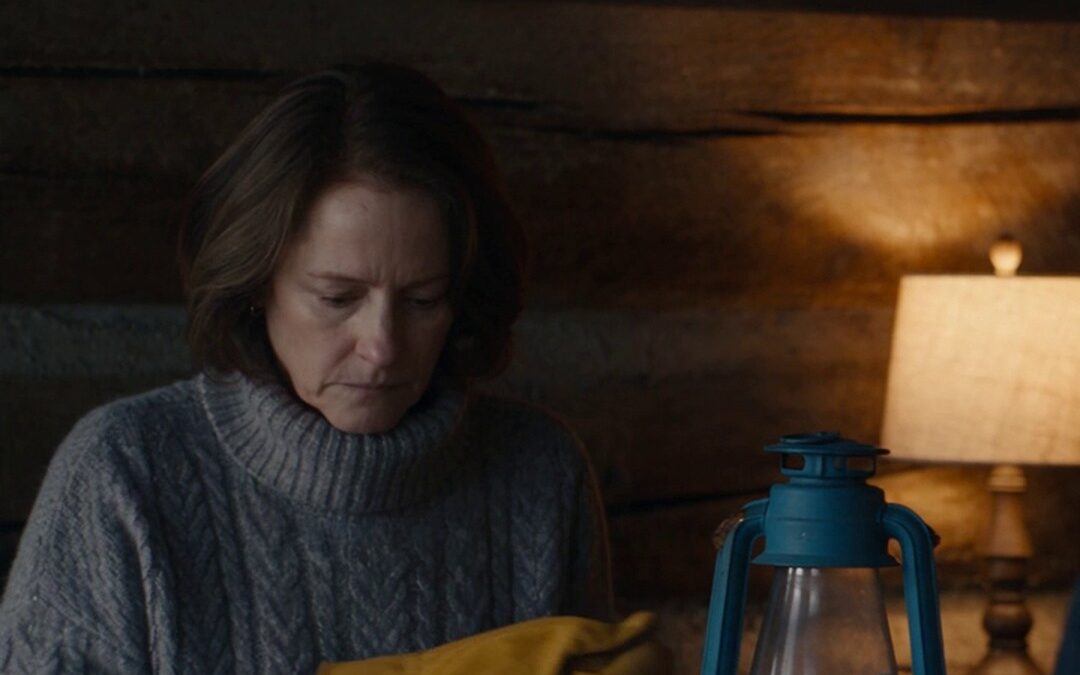
The blue lantern I had polished every Sunday sat on my kitchen table beside a cemetery record that said my father was never buried.
Nora took one look at the record and stopped pulling off her work gloves.
My sister and I had shared the little house above the cemetery road for eleven years, long enough to know each other by the sounds we made coming through the door.
She heard the latch and put water on for tea; I heard her boots and moved my car so she could leave before dawn.
Neither of us usually needed to ask.
That morning, while updating an old section map at the cemetery office, I had found no burial entry for my father’s plot.
I thought I had copied the number wrong, so I checked the bound register and the original paper card.
Both named the plot; neither recorded an interment.
Nora set her gloves beside the lantern, careful to keep them off its chipped blue glass.
“Where did you get that?”
“At work.”
“You shouldn’t bring records home.”
“It’s a copy.”
She reached for it, then pulled her hand back.
Every Sunday since I was eight, we had carried that lantern to the stone with our father’s name.
Nora always cleaned its narrow brass hinge herself, though she let me do everything else.
“Maybe the old entries are incomplete,” she said.
“The office has entries for the graves on both sides.”
“Then ask your supervisor.”
“I did.”
That was where my simple explanation had failed: my supervisor had checked the same registers, then quietly asked whether my family had chosen a memorial without a burial.
I had said no.
Nora stood with her hands against the table, staring at the lantern instead of the record.
“When were you going to tell me?” I asked.
Her jaw tightened.
“Josie, please sit down.”
“No.”
The kettle began to whistle, but neither of us moved.
Nora had been seventeen when our mother died and our father was lost to us the following year; I had been eight, and most of what I remembered about that year came from what she told me afterward.
I touched the lantern’s brass hinge and felt the shallow dent she had always warned me not to straighten.
“If the record is wrong, say so.”
“It isn’t.”
Outside, a cemetery truck rolled past our window toward the gate.
Nora finally looked at me, and I saw that she was afraid of what I would do with the answer.
“Then why is Dad’s grave empty?”
Chapter 2: The Door He Could Find
“Then why is Dad’s grave empty?”
Nora reached behind her and turned off the kettle.
The sudden quiet made the traffic on the cemetery road sound close enough to be inside the room.
She left her hand on the stove knob until I said her name.
“Because he isn’t dead,” she said.
I looked at the copied card, then at the lantern, as though one of them might object.
The card held the plot number, our father’s name, and a date in Nora’s handwriting beneath the printed line for a memorial marker.
The stone outside held his name and the year 2001.
I had stood before it on birthdays, on Father’s Days, and once in a hard winter wind while Nora held the lantern steady so I could light it.
“You told me he died,” I said.
“Yes.”
“When?”
“When you were eight.”
“I know when you told me.”
Nora drew out a chair but did not sit.
I stepped away from the table.
“Where is he?”
“At a residence in New Castle.”
That was less than an hour away.
Nora watched me make the distance in my head.
“He’s had a brain injury since the fall,” she said.
“What fall?”
“From a loading platform at work.”
The story came in pieces because I kept stopping her: he had fallen the spring after our mother died, survived surgery and months in rehabilitation, and left the hospital unable to care for two children or reliably manage his own days.
Our aunt had taken us into her house.
Nora had visited him while I went to school, and by the time I was old enough to ask why he never came home, she had already told me he could not.
Then she had told me he was dead.
“You had years to correct it,” I said.
“I know.”
“Eleven of them in this house.”
“I know.”
She looked at the chipped pane of the lantern.
For the first time in my life, her refusal to meet my eyes felt less like grief than practice.
I picked up my keys.
“Give me the address.”
“Let me call first.”
“You can call from the car.”
“He needs things explained before people arrive.”
“So did I.”
Nora took the small calendar from beside the refrigerator and wrote down an address and a room number.
I had seen that calendar every day.
Among grocery lists and appointments were blocks marked with a single blue dot, days I had assumed meant overtime at the rink where Nora repaired skates and managed the morning sessions.
There were three blue dots that week.
I took the calendar as well as the address.
“You’ve been going there all this time?”
“Yes.”
“Does he know about me?”
Her face changed before she answered, and I wished I had asked a different question.
“He asks,” she said.
I went outside.
Nora followed me as far as the porch, carrying the calendar I had left on the table.
I took it from her without speaking.
At the cemetery office, my supervisor was pinning new section maps to a board.
She looked up at my face and lowered her hand.
“Did you speak to your sister?”
“Yes.”
I put the copied card on the counter.
My supervisor, Denise, was a practical woman who could tell from a muddy wheel track which cemetery truck had driven across fresh turf.
She had been kind to me that morning, but she had also refused to treat an empty line in an old register as proof that anyone was alive.
“Can you show me everything the office actually has?” I asked.
“We can review the public plot records.”
“I need to know which parts came from Nora.”
Denise pulled two folders from a drawer and took me into the small room where families usually chose marker placements.
The first folder contained the original card I had copied: a reserved plot, a marker permit, a sketch showing the stone’s position, and no burial date.
The second contained the invoice for the stone.
Nora had paid for it in installments.
There was no death certificate in either folder, and Denise said the cemetery had never required one for a memorial marker on a reserved family plot.
“The date on the stone?” I asked.
“It was supplied with the order.”
“By Nora.”
“Yes.”
Denise let that sit between us.
The cemetery had kept the cards because each plot had to remain accounted for, and the paper originals had stayed in their drawers through two changes of software.
Their value was narrow and solid: they showed that no burial had happened there, but they could not tell me where my father had gone.
I had spent years tending a grave that was a record of Nora’s choice.
I stood up too fast and hit my knee against the table.
Denise reached toward me, then stopped.
“I’m sorry,” she said.
“You wondered this morning if I already knew.”
“I did.”
“Why didn’t you say what you were thinking?”
“Because the record didn’t tell me he was alive,” she said. “And you looked certain.”
She was right, which made me angrier than a mistake would have.
I asked for copies of the marker order and the plot card.
Denise made them herself.
At the door she said, “You can take the afternoon.”
“I’m taking the morning.”
“You can have both.”
“I’ll call if I need it.”
I drove west with Nora’s calendar on the passenger seat.
At a gas station, I stopped to read the address again, then called the residence from its public number.
A woman at the front desk told me she could not discuss a resident over the phone just because I gave his name.
I said I understood.
She offered to take a message for the person who handled his visitors, and when I identified myself as his daughter, she grew quiet for a moment before saying someone would call me back.
I waited in the car for twenty minutes.
Nora called twice.
I let both calls ring through because I could hear what she would say: that she would explain when she arrived, that Dad might be tired, that I needed to trust her judgment one more time.
A woman named Paula finally called from the residence.
She said my father lived there, that Nora was listed as his family contact, and that she would speak with him about a visit before inviting me in.
She would not tell me more until she had checked what he wanted.
“How long?” I asked.
“Give me half an hour.”
I bought coffee I could not drink and watched cars enter and leave the station.
For twenty-four years I had told people my father died when I was a child.
Sometimes I had been specific about the cemetery.
When someone asked what happened, I repeated Nora’s words about his heart giving out after our mother’s death.
I tried to remember the first time she had said it.
I could remember our aunt’s kitchen, Nora standing beside the sink, and my own hands wrapped around a mug that was too hot.
I could not remember whether I had asked where his body was.
Paula called back.
“He would like to see you,” she said. “He asked me to tell you he’ll be in the sitting room.”
I asked whether Nora had been called.
“Yes,” Paula said. “She’s aware.”
I almost asked Paula to keep my sister away, but I had just learned what it felt like to have someone else arrange a family visit without asking me.
“Thank you,” I said.
The residence was a long brick building near a grocery store, with a bus stop at the entrance and a garden whose late flowers had gone to seed.
Nothing about it explained why Nora had made it seem unreachable.
Paula met me at the desk.
She was around my age and spoke without the hush people use when they think a family is about to break in public.
“Your father knows you’re coming,” she said. “I told him your name and that you’re an adult now.”
“Did he need reminding?”
“Sometimes he needs a little time with a change.”
She asked whether I wanted Nora present.
“No.”
“Would you like me nearby?”
“Yes.”
Paula nodded and led me down a hall lined with photographs residents had chosen for their doors.
My father’s door held a picture of a small sailboat cut from a magazine.
I stopped before it.
Nora had told me he hated boats because he got sick on them, and I caught myself trying to decide which version of him the picture proved.
Paula noticed.
“He chose it because he likes the colors,” she said.
The sitting room had windows on two sides and a table covered with half-finished wooden projects.
A man sat at one end with a piece of sandpaper in his hand.
He had our father’s broad forehead and Nora’s habit of lifting his chin when someone came in.
His hair had gone white.
I knew it was him before Paula said his name, but knowing brought no rush of recognition.
It felt like arriving at a familiar address and finding a different building.
“Cal,” Paula said, “Josie is here.”
He set down the sandpaper.
“Josie,” he repeated.
I stayed by the door.
He did not stand, and after a moment I understood that he was giving me room to choose the distance.
“You remember me?” I asked.
“I remember a little girl who hid peas under the table.”
I did remember that.
I had thought the memory belonged only to me.
“She wore red boots indoors,” he added.
I looked down at my shoes.
My father smiled at the wrong place, as though he had missed a cue and knew it.
“I’m sorry,” he said. “That was a long time ago.”
I sat across from him.
Paula moved to a chair near the windows and opened a book.
I wanted to ask him everything before anyone could take the hour away from me.
Instead I asked about the piece of wood in front of him.
“It’s a handle,” he said. “If I make it round enough.”
“What for?”
He glanced at the other pieces on the table.
“I haven’t decided.”
We talked about my job at the cemetery.
He asked whether I worked outside, and when I said some days, he told me to wear gloves around stone cleaner because his hands used to crack in cold months.
The advice was ordinary enough to hurt.
Halfway through a story about a squirrel that had run through our old kitchen, he lost its ending.
He stopped, frustrated, then said, “I know there was a squirrel.”
“There was,” I said.
He looked relieved.
I did not remember the squirrel, but I believed him.
When I told him I had come from the house above the cemetery road, he drew his hands back from the wood.
“Nora’s house?”
“Ours.”
“She kept it.”
“Yes.”
“She said it needed a roof.”
“She fixed it.”
He nodded with the certainty of someone who had been told about each repair.
I watched his hands.
There was a scar across one thumb that I remembered from childhood, and beside it a new pale crescent where a tool must have slipped.
The man at the table had had an entire life while I lit his lantern at an empty grave.
“Did you know I thought you were dead?” I asked.
Paula closed her book.
My father looked from me to the doorway.
“Nora said you needed time,” he said.
“Did she say what for?”
He frowned.
“She said you were growing up.”
“That was twenty-four years.”
He pressed his scarred thumb into the handle.
“I’m not good with years,” he said.
I had no answer that would not punish him for it.
“Did you ask to see me?”
“Yes.”
“What did Nora tell you?”
“That she would ask.”
I looked at Paula, who held my eyes without offering a judgment.
My father said, “I thought maybe you said no.”
I gripped the edge of the chair.
“I didn’t know I could.”
He nodded once, but his face showed that he could not place where the mistake had been made.
That was the first consequence of the lie I could see beyond myself: he had lived with my imagined refusal.
I told him I wanted to come back.
He asked whether I could come after lunch because mornings were when the woodshop was open.
I said yes.
Outside, I sat on a low wall by the garden and called Nora.
She answered before the first ring finished.
“Did you see him?”
“Yes.”
“Was Paula with you?”
“Yes.”
“Good.”
I looked through the window at my father’s white head bent over the table.
“He thinks I knew about him.”
Nora made a small sound.
“He thought you might.”
“You let him.”
“I told him I was trying.”
“You weren’t.”
“I tried at first.”
“Then you stopped.”
“Yes.”
A delivery van pulled up behind me, and I moved along the wall so its driver could reach the door.
Nora waited on the line.
“I’m going back to work,” I said.
“Josie, we need to talk.”
“We do.”
“I’ll be home tonight.”
“So will I.”
She started to say my name, but I ended the call.
At the cemetery, I helped Denise replace two temporary plot stakes that a mower had knocked loose.
She did not ask whether I had found my father.
I was grateful until I realized I wanted someone to ask.
When we finished, I told her he was alive.
She rested the mallet against her boot.
“I’m glad you found him,” she said.
“I don’t know what to do with that.”
“You don’t have to decide while holding a mallet.”
I laughed once, to my surprise.
Denise put the stakes away while I returned to the office to look at the oldest section map.
Dad’s marked plot was beside Mom’s actual grave.
Nora had ordered his stone three months after his fall, when she was seventeen.
Our aunt’s signature appeared beneath hers on the permit because a minor could not complete the arrangement alone.
I had spent the drive to New Castle imagining Nora had invented everything by herself.
Now I had another adult’s name on the page.
I called our aunt, who lived in Ohio and usually answered with a complaint about the hour.
She answered on the fourth ring.
“Josie? Is something wrong?”
“Dad is alive.”
Silence settled on the line.
Then she said, “Nora told you.”
“No. The cemetery did.”
Our aunt asked where I was.
I told her I was at work and wanted to know what she had signed.
She did not pretend she had forgotten the stone.
“She thought you needed somewhere to go,” our aunt said.
“After she told me he was dead?”
“Yes.”
“You knew that part?”
“I knew.”
I watched the cemetery truck move slowly between rows.
“Why did neither of you tell me?”
“Your sister was falling apart, and you were eight.”
“I’m thirty-three.”
“I know that, honey.”
“When did you decide I was old enough?”
Our aunt said nothing.
I waited until the silence became an answer.
“She told me it wasn’t her place once you were grown,” I said.
“She said that to me, too.”
“But it was her place when I was eight.”
“Our place,” our aunt said.
There was no defense in her voice, only an admission too late to change anything.
She offered to drive over.
I said I did not want her to.
Then I hung up and spent an hour checking dates because anger had made every number feel unreliable.
Mom died in October 2000.
Dad fell the following April.
Nora ordered the stone in July 2001.
We moved from our aunt’s house back into the little house in 2014, after Nora had made the mortgage payments and enough repairs to keep it standing.
The blue lantern appeared in my memory a few years later, though I could not place its first Sunday.
At closing, I walked to Mom’s grave.
The lantern sat on the narrow concrete base between the stones, its chipped pane catching the last light.
I lifted it and found the dent in the brass hinge with my fingertip.
Nora had once slapped my hand away from that dent, then apologized before we reached the car.
I had thought she was protecting something Dad had owned.
I turned the lantern over.
The bottom had four small feet, each worn unevenly.
Inside, beneath the candle cup, a pencil mark formed a crooked N.
I knew Nora’s handwriting well enough to see that the letter was not hers.
She had made the lantern sound precious by refusing to explain it; I had supplied its history myself.
I brought it home after dark.
Nora was waiting at the kitchen table with two cups of tea.
Her work gloves lay where she had left them.
She saw the lantern in my hand and stood.
“You took it from the grave.”
“I’ll put it back.”
“I didn’t mean that.”
I set it between us.
I wanted to ask about its maker, but there were larger questions.
“Why did you say his heart gave out?”
“I said he couldn’t come home.”
“You said he died.”
“Yes.”
“And then you made a grave.”
Nora sat down.
“I had to tell you why he wasn’t coming back,” she said.
“No. You chose a reason.”
She rubbed her palms against her trousers, leaving faint gray streaks from the skate blades she had worked on.
“When Dad came out of the hospital, he knew us one day and didn’t the next,” she said. “He got frightened in busy rooms. He tried to leave the first place they sent him because he thought you were waiting at school.”
“I could have visited with you.”
“At first, you could have.”
“Why didn’t I?”
“You were having nightmares after Mom died.”
“I was eight.”
“You were afraid every time the phone rang.”
“So you lied.”
“I told myself I’d wait until he was more settled.”
Nora held my gaze for a moment.
“Then he wasn’t more settled, and you were sleeping through the night, and every month I waited made the truth harder to say.”
“That explains a year.”
“I know.”
“Explain the rest.”
She looked toward the dark window over the sink.
“By twelve you were asking me if people got their memories back,” she said. “You’d read something at school, and I thought you’d guessed, so I told you Dad wasn’t coming home.”
“I asked because Mom’s voice was fading.”
“I know that now.”
“By sixteen?”
“You were saving money to leave town.”
“By twenty?”
“You had left.”
“By twenty-two, we were living together.”
“I thought you would hate me.”
“You were right to think it was possible.”
Nora took that without arguing.
She told me she had worked extra shifts to cover things Dad’s benefits did not, first bus fares and clothes, later outings and supplies for the woodshop.
There had been no secret inheritance and no impossible private hospital bill.
His public benefits covered the residence; Nora had paid for what she wanted him to have and visited on the blue-dot days.
She had told coworkers she had a standing family obligation, which was true enough that no one asked for details.
At home, she used the same sentence for me.
A phone that only she answered held calls from the residence, and she had her mail sent there when it concerned Dad.
The lie had survived because she had built a routine around it and because I trusted her.
“Why three visits this week?” I asked.
Nora glanced at the calendar.
“He’s been asking about the house.”
“He asked me today if you kept it.”
“He remembers pieces.”
“Are you planning to bring him here?”
“I asked Paula what visiting would take.”
“Visiting or moving in?”
“I asked about both.”
The room seemed smaller.
“You were going to put him in this house without telling me who he was?”
“No,” Nora said. “I couldn’t.”
“You were getting ready.”
“I was trying to find out whether it was even possible.”
“For you or for us?”
She pushed her tea away.
“He wants to see it once.”
“Then say that.”
“I’m saying it.”
“After I found the record.”
Nora looked at the lantern.
“He made that,” she said.
I put my hand over the pencil mark on its base.
“In the woodshop?”
“The frame and the hinge.”
“The blue glass?”
“I cut the panes because he couldn’t hold the cutter steady.”
I remembered the warning whenever I tried to straighten the dent.
“You let me think it was something he left behind.”
“He did leave it here.”
“That isn’t what I mean.”
“He made the first one when you were fourteen,” she said. “There are three more in the shed because the joints on those wouldn’t hold.”
I pictured her carrying a lantern from the residence to our house, then letting me carry it to his stone.
“What did he think it was for?”
“He wanted a light by Mom.”
“And his name was beside hers.”
“Yes.”
“Did he know we used it there?”
Nora’s eyes went to the table.
“Yes.”
I stood.
“You took his work to his own grave.”
“He knew the stone was there.”
“Did he understand why?”
“Some days he did.”
“Which day did you ask him?”
Nora did not answer.
That silence mattered more than the story about the lantern.
For years she had decided what Dad could bear as well as what I could know, then treated our lack of protest as permission.
I picked up the lantern and carried it to the hallway.
“I’m putting this in my room,” I said.
“It belongs to him.”
“I know.”
I shut my bedroom door gently because I did not want our father’s work to be the thing I broke.
Sleep came in short pieces.
At dawn I heard Nora moving around the kitchen, setting out two mugs by habit.
I stayed in bed until her car left for the rink.
Then I called Paula.
I told her what Dad had said about thinking I knew he was alive and asked whether she could tell me what he understood about visits.
She said she could speak about what I had seen and heard with him, but she would need his permission before sharing records or past conversations.
“I’m not asking for a file,” I said. “I’m asking whether I should go back.”
“He asked me when you might.”
I closed my eyes.
“Tomorrow after lunch.”
“I’ll tell him.”
“Has Nora asked about moving him into our house?”
“She asked what a visit might look like,” Paula said. “We discussed a short visit with support, if Cal wants it.”
“So she didn’t ask about moving.”
“She asked whether a move would be safe, and I told her that would take planning and his consent.”
Nora had described both questions accurately.
It did not make the way she had asked them easier to forgive.
Paula added, “Your father’s wishes can change from day to day, so we check with him close to a visit.”
“Does he get to decide who he sees?”
“Yes.”
I thought of how often I had spoken about him as though he were a mystery to solve rather than a person waiting at a table.
“Please ask him if he wants me back,” I said.
At work, Denise gave me a list of stones that needed photographs for the next map update.
I walked the oldest rows with a camera and found myself studying every blank space beside a name.
A marker could mean a body, a reservation, a memory, or a plan someone had never completed.
The people visiting knew stories the register did not.
The register knew things visitors had never been told.
Neither was the whole truth.
Near noon, our aunt arrived despite what I had said.
She stood by Mom’s grave, looking at the empty lantern base.
“I came to see the stone,” she said when I approached.
“You’ve seen it before.”
“I signed for it.”
She held a paper bag with two sandwiches.
I did not take one.
Our aunt said that after Dad’s injury, she had been appointed to care for us while he could not.
Nora had come home from hospital visits exhausted, and I had begun asking whether Dad had forgotten my name.
At the time, our aunt had believed a clear, false ending might hurt less than an uncertain one that stretched on.
She had been wrong.
“I should have stopped her,” she said.
“You helped pay for the stone.”
“Yes.”
“Did Dad know about that?”
“Not then.”
“Did anyone ask what I needed after I grew up?”
“No.”
Our aunt put the bag on the low wall by the path.
“I kept thinking it was Nora’s story to correct,” she said. “Then I would remember that I had put my name on it.”
“I’m not ready for you to explain why you stayed quiet.”
“I know.”
She left the sandwiches and walked to her car.
I sat by the wall long enough to eat one.
It was the kind she used to pack for our school trips, with mustard on both pieces of bread so the filling would not make them soggy.
I hated that she remembered how I liked it.
That evening, Nora came home to find me measuring the doorway between our kitchen and the back hall.
“What are you doing?”
“Checking whether Dad could get through if he visits.”
She set down her bag.
“Paula called you.”
“I called her.”
“Did she say he wants to come?”
“She said she’ll ask him.”
I wrote the doorway width on a scrap of paper.
Nora watched me measure the turn by the bathroom.
“I can show you where the floor catches,” she said.
“I know where it catches.”
“You’ve never brought someone through in a wheelchair.”
“Neither have you.”
“He doesn’t always use one.”
“Then we’ll ask what he needs when he comes.”
Nora folded her arms.
“We?”
“It’s my house too.”
For a moment she looked hopeful, and I had to set the tape measure down.
“This isn’t me agreeing he can live here,” I said.
“I know.”
“I want to see whether he wants one visit.”
“All right.”
“And I want you to tell him the truth about what I knew.”
Nora’s face closed again.
“I’ll do it with you there.”
“He believed I stayed away by choice.”
“I know.”
“Then say it before he asks me to explain myself.”
Nora nodded.
We spent the next half hour arguing over the loose rug by the front door.
She wanted to roll it up; I wanted to move it to the bedroom.
Neither choice mattered much, but the argument let us discuss something we could actually change.
When she finally carried it out of the hall, she caught the corner on a nail and swore.
I took the other end.
We stood there holding our mother’s old rug between us, each waiting for the other to move.
“I’m sorry,” Nora said.
“You’ve said that.”
“I mean for the years.”
“I heard you.”
She lowered her end.
I did not tell her it was all right, because it wasn’t.
The following afternoon I visited Dad again.
He was waiting with the handle he had sanded smooth, though he still had not decided what it belonged to.
I told him about the house.
He remembered the narrow stairs and a cupboard door that used to stick.
I told him Nora had fixed the cupboard.
He asked if the pear tree was still outside.
“There’s a stump,” I said.
He looked disappointed.
“It never gave good pears.”
“No.”
“I kept it anyway.”
We sat with that.
I had brought a photograph of the blue lantern on my phone.
When I showed it to him, he touched the screen near the hinge.
“That one went wrong,” he said.
“The dent?”
“I hit it too hard.”
“Nora never let me fix it.”
“She said the door closes.”
“It does.”
He studied the photograph for longer than I expected.
“Nora takes it to your mother,” he said.
“I’ve taken it too.”
“I know.”
I waited.
He pointed to the blue pane.
“I wanted her to see the light.”
“Mom?”
“Yes.”
I had come prepared to ask whether he understood the stone beside hers, but he was talking about the lantern he had made with his hands.
I put the phone away.
“Would you like to see the house?” I asked.
He looked at Paula, who was arranging wood on a shelf nearby.
“Could I?”
“We’d have to plan it,” she said. “Josie and Nora can help.”
He turned back to me.
“Would Nora be there?”
“Yes.”
“Are you two fighting?”
I could not tell whether he had noticed something in my voice or remembered yesterday’s visit.
“We’re trying to talk,” I said.
He nodded as though that answer required care.
“She works hard,” he said.
“I know.”
“Don’t let her tell you she’s fine when she isn’t.”
“I won’t.”
The old instruction landed in the middle of everything Nora had done.
I wanted to ask whether he had said it to her years ago.
Instead I asked him what he wanted to eat if he came over.
He said toast with butter, then changed his mind to soup.
I wrote down both.
Paula and I spoke afterward about a short visit.
She described what had helped Dad feel comfortable on other outings: familiar plans, time to rest, and a way to leave without anyone treating it as a failure.
She did not promise that the house would restore memories or settle a family argument.
Neither had I asked her to.
I left with a date for the next week, subject to Dad still wanting to go when the day came.
That gave me six days to decide what I wanted from Nora.
On the first, I moved the rug.
On the second, I took an extra shift at the cemetery because home felt crowded when she was there.
On the third, I found her in the shed with a box of blue glass wrapped in newspaper.
She held a frame in her lap.
One joint had pulled apart.
“You said there were three,” I said.
“There are.”
“What were you going to do with them?”
“Ask Dad if he wants another try.”
I sat on an overturned bucket.
The shed smelled of dry wood and the oil Nora used on skates.
I had come to ask whether she had told Dad the truth yet, but she handed me the loose frame before I could speak.
“See where the pin missed?”
I turned it over.
The hole went crooked through the brass.
“He made this one first?”
“Yes.”
“Why did you keep it?”
“He was proud of getting the glass to stand.”
I looked at the fragile little frame.
“You brought these home after visits.”
“Sometimes.”
“Where did you say they came from?”
“An estate sale, if you asked.”
“I believed you.”
“You had no reason not to.”
Nora took it back.
I told her Dad wanted to visit.
“I know,” she said. “Paula called.”
“She asked him?”
“Yes.”
“He chose next Thursday.”
“I know.”
I watched her turn the crooked pin between her fingers.
“I want us both to tell him,” I said.
“About what I told you?”
“About what I didn’t know.”
Nora set the frame down.
“I’ll start.”
“And I’ll say what I want him to know.”
“All right.”
“I don’t want you speaking for me afterward.”
“All right.”
She agreed so quickly that I wondered if she had expected a harsher condition.
“I also want Aunt Ellen there another day,” I said. “She signed the marker order.”
Nora looked surprised.
“You called her?”
“Yes.”
“She shouldn’t have come here without asking.”
“I can tell her that myself.”
Nora closed her mouth.
That small retreat mattered.
I did not want a new arrangement in which she confessed her decisions and then kept making mine.
The next morning, Denise asked me to help a family find a reserved plot near the north fence.
One woman kept saying her brother would know where it was, though he had died the previous month.
I showed them the map and walked them to the place.
When we got there, the woman touched the empty ground and said, “He picked it out when he could still walk the hill.”
I had looked at an unburied plot and found my sister’s lie.
This woman looked at one and found her brother’s care for her.
The record held both kinds of space.
Back at the office I asked Denise whether the date could be removed from Dad’s marker.
“It can,” she said. “The stone company would need to assess the face.”
“Could we leave the name?”
“That’s your family’s decision, and the plot owner’s.”
“Nora owns it.”
“She does.”
I folded the section map.
I had assumed I would want the whole stone gone.
Now I knew Dad had made a lantern for Mom and understood at least some days where Nora placed it.
I wanted to ask him before anyone moved a thing.
That night I told Nora what Denise had said.
She stood at the sink with a dish towel in her hands.
“I’ll pay to change it,” she said.
“I haven’t decided what change to ask for.”
“The date is false.”
“Yes.”
“We should take it off.”
“We should ask Dad what he wants.”
Nora put the towel down.
“You’re right.”
I had spent years wanting her to answer quickly when I asked a hard question.
Now each quick agreement showed me how much I had once let her decide.
On Thursday, we drove separately to the residence.
I arrived first and met Dad near the front door.
He wore a blue jacket and held the smooth wooden handle in one hand.
“What’s that for?” I asked.
“Still deciding.”
Paula came with us in the residence’s van because Dad was more comfortable with someone who knew his routines, and Nora followed in her car.
During the drive he talked about a diner that had closed before I learned to drive.
I told him a pharmacy stood there now.
He shook his head at the loss of the diner’s pie.
As we turned onto the cemetery road, he became quiet.
The house came into view above the bend, its porch newly painted and its windows wider than they had seemed to me as a child.
Dad looked at it without smiling.
“Nora did the roof,” he said.
“She hired the crew,” I said.
“Good. She shouldn’t be up there.”
Paula pulled into the drive.
Nora was already on the porch, holding the door open.
Dad took his time crossing the front walk.
He stopped by the pear stump and rested his hand on it.
I did not tell him it would never grow again.
Inside, he recognized the cupboard before the living room.
He opened its door, shut it, and opened it again.
“Fixed,” he said.
Nora smiled.
“Years ago.”
“Still fixed.”
He sat at the kitchen table while I made soup.
Nora cut bread.
For a few minutes we moved through the room the way we always had, passing things without asking.
Dad watched us.
“You two do this a lot,” he said.
“Every day,” I said.
He looked pleased, then uncertain.
“I thought you lived away.”
“I did for a while.”
“Nora said you came back.”
“I did.”
He turned his soup spoon in his hand.
“How long?”
“Eleven years.”
He looked at Nora.
She put down the bread knife.
“Dad, I need to tell you something I should have told you long ago.”
Paula stayed at the far end of the table, close enough to help if he wanted a break.
Nora told him that when I was little, she had said he had died.
She did not begin with my nightmares or her fear.
She said what she had done.
Dad looked at his soup.
“You told Josie I died?”
“Yes.”
“Why?”
“I thought I was protecting her.”
“But I was here.”
“I know.”
He turned to me.
“You didn’t know?”
“No.”
“So when I asked to see you—”
“Nora didn’t ask me.”
He put the spoon down carefully.
I had pictured anger, then tears, then some sign that would tell me how to respond.
Instead he looked toward the doorway, thinking.
“I thought you didn’t want to,” he said.
“I didn’t get to choose.”
Nora’s hands were flat on the table.
“I let you think she had chosen,” she told him. “I’m sorry.”
Dad sat back.
For a moment I thought he might not have followed all of it.
Then he said, “That was a lonely thing to tell me.”
Nora’s face tightened.
“Yes.”
He looked at her, then at me.
“I don’t know what to do with it today.”
“You don’t have to,” Paula said.
Dad asked to see the back room.
He left his soup half eaten.
I walked with him while Nora remained at the table.
In the back room, he found a pencil mark on the door frame where we had measured our heights as children.
Mine stopped when I was twelve.
Nora’s stopped earlier because she had already grown taller than the part of the frame we could reach.
Dad touched the lowest mark.
“Was that you?”
“Yes.”
“I missed the tall ones.”
“I know.”
He took the wooden handle from his pocket.
“It might be for this door,” he said.
The door already had a handle.
I did not correct him.
“Let’s see whether it fits your hand first.”
He wrapped his fingers around it and handed it to me.
I tried it.
The wood was warm and smooth.
“I think it does,” I said.
When we returned to the kitchen, Nora had cleared the soup.
Dad asked for toast.
She made it with butter and set it before him without comment.
He ate two pieces.
Afterward, he asked if we could go to the cemetery.
I looked at Nora.
Neither of us answered for him.
“It’s close,” I said. “Do you feel up to walking?”
“With you.”
Paula suggested we drive to the gate and take the level path.
Dad agreed.
We left the house with Nora carrying the lantern, the way she had on hundreds of Sundays.
At Mom’s grave, he read her name aloud.
Then his eyes moved to the stone beside it.
He read his own name and the year at its end.
“I didn’t die then,” he said.
“No,” I said.
Nora set the lantern on the concrete base.
“I’m going to have the date removed,” she told him.
Dad bent closer to the stone.
“Is this mine?”
“The plot is reserved for you,” Nora said. “The marker was my choice.”
He straightened slowly.
“I don’t want people to think I’m under there.”
“Neither do I,” I said.
He looked from one of us to the other.
“Can the stone just say the name?”
“We can ask,” Nora said.
“Ask the people who make them.”
“We will.”
He touched the lantern’s brass hinge.
“That door still closes.”
“It does,” I said.
“I made the dent.”
“I know now.”
He smiled faintly.
The three of us stood there until he said he wanted to go back to the house for his jacket.
It was already on him.
Paula met my eyes and asked whether he was ready for the van.
He said yes.
Nora carried the lantern home; I walked beside Dad.
At the residence, he thanked us for the toast.
He did not ask for another visit.
He also did not say he never wanted one.
I had wanted the day to change something clear enough to name, and it had: he knew I had not refused him, and I knew what he wanted done with his stone.
The rest would take longer.
On the way out, Paula caught up with me by the front desk.
“He may ask the same questions again,” she said.
“I’ll answer them.”
“And if he doesn’t?”
“I’ll still come.”
I visited the following Saturday.
Dad was working on a small frame and asked how the house had looked.
I described the porch and the fixed cupboard.
He did not mention the conversation at our kitchen table.
I did not force it into the hour.
Before I left, he asked whether Nora was angry with him.
“No,” I said.
“Are you angry with her?”
“Yes.”
He turned the frame in his hands.
“She was a kid when it happened.”
“She was.”
“You aren’t now.”
“Neither is she.”
He nodded, satisfied that I had understood the difference.
Over the next month, I took my own visits while Nora kept hers.
Sometimes we saw Dad together.
Sometimes he wanted one of us and sometimes he preferred the woodshop to either of us.
I learned which questions tired him and which memories he liked telling twice.
I learned that his injury had changed much of his life without turning every moment of it into a tragedy.
Nora and I still shared the house.
We paid the bills from separate accounts, as we always had, but we stopped using one calendar to stand for both our plans.
She told me when the residence called about Dad.
I told her when I planned to visit him.
Neither of us asked permission.
One evening our aunt came over at my invitation.
We sat at the kitchen table and let her tell me what she remembered about the first year after Dad’s fall.
I challenged parts of it.
Nora corrected a date.
Our aunt admitted she could no longer remember the exact words she had used in that old kitchen when I was eight.
I believed her about that.
I did not offer her an easy ending to the conversation.
At work, Denise helped me arrange for the stone company to inspect Dad’s marker.
Dad chose to have the false year removed and his name left beside Mom’s.
The work took several weeks.
When the company finished, I checked the stone before I told Nora or Dad.
There was no fresh, bright patch pretending it had always looked that way; the worked surface would need time to weather.
I liked that.
The cemetery record kept the old marker order and added the correction.
It would show both what had happened and what we had done about it.
On the first Sunday after the change, Nora and I carried the blue lantern down the road together.
She held the handle while I protected the pane from swinging against her coat.
At Mom’s grave, I opened the little door and set a candle inside.
The hinge caught against its dent.
I eased it past without trying to make it straight.
Nora lit the wick, then handed me the lantern.
I placed it between the stones, where Dad had asked for a light he could leave with Mom.
His name stood beside hers, with room for the years he was still living.
Nora waited while I checked that the blue door had closed.








