Framed for Sabotage, She Rides an Experimental Motorcycle Into a Lake to Save the Evidence That Could Clear Her
Chapter 1: The Shoreline
Mara Venn looked back once at the police lights gaining on the lakeside road, then opened the throttle of the black motorcycle as another marked cruiser came around the bend ahead and stopped across her lane.
The light shirt beneath her black leather jacket was damp with sweat under her protective vest, and her helmet pressed against the shoulder she had strained getting the machine out of its bay.
She had helped engineer the Kestrel, an experimental motorcycle built to carry one rescuer across flooded roads and open water, but she had never intended its first public crossing to begin with police ordering her to stop.
The cruiser ahead left too little pavement for a safe turn, the vehicles behind had closed the space she needed to brake, and the only clear ground lay across the grassy strip used by her team for supervised shoreline trials.
Mara eased away from the road before the blockade, felt the rear tire kick over wet grass, and saw empty water beyond the low bank.
She had checked the lake that morning for the scheduled test, but checking a landing zone was different from reaching it with patrol cars behind her and no crew waiting below.
The Kestrel struck the bank hard enough to jar her teeth and rose above Bellweather Lake.
For an instant it was still a black road bike against the gray water; then its wheels drew into protective wells, broad sealed side sections unfolded around the central frame, and the narrow tail opened into a water drive.
The controls resisted her hand until the wheel locks reported closed, and she held the bars steady while the machine completed the change it had never made at this speed.
Its new hull hit the lake crookedly, slapped once, and steadied into a fast, shallow run that sent spray over her visor.
Behind her, the cruisers stopped along the bank, their red and blue lights trembling across the wake.
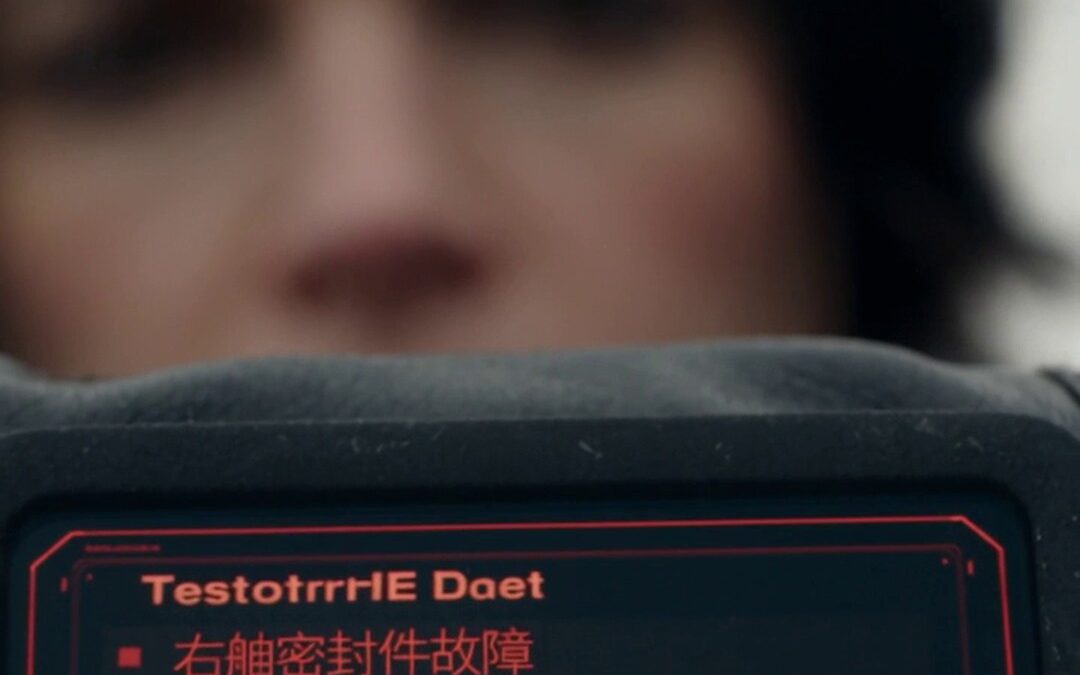
A warning lit beneath her left hand: STARBOARD SEAL FAULT; ROAD MODE LOCKED; WATER RESERVE NINETEEN MINUTES.
Pain spread down her shoulder as she looked toward the far shore, where the company’s test pier stood beyond a stretch of open lake.
A second message replaced the warning, carrying the name of the evidence repository she had been trying to protect.
CAMPUS TEST ARCHIVE: DELETION IN PROGRESS.
Chapter 2: The Original Record
The deletion notice remained on Mara’s display while the Kestrel’s damaged right side took on water, and she forced herself to look past it at the low shapes ahead.
Two fishing boats were returning toward Glasswick, their running lights small in the gray morning, so she steered toward the empty center of the lake even though it made the crossing longer.
The prototype’s water reserve estimate fell to sixteen minutes as its pump worked against the leak.
Mara could feel each correction through her injured shoulder, and she knew the motor had enough power to keep the hull level only while she stayed within the narrow speed range the team had tested.
Her phone showed a signal, but the files she needed were inside a sealed recorder beneath the Kestrel’s frame, where they could survive a crash and remain tied to the machine’s own clock.
She could send a photograph of a warning or tell someone what the display said; neither would preserve the original signed log if the motorcycle was seized by the people deleting its matching archive.
On shore, Officer Lena Calder watched the black craft pass the returning boats at a wide distance.
She had arrived behind the first cruiser and had seen Mara choose open water, but she had also seen a prototype launch from a public roadside without a rescue crew, and neither observation made Mara safe to trust.
Calder asked dispatch for the incident report that supported the pursuit while another officer called for a lake patrol boat.
The report said Mara had injured a technician during an unauthorized test at Lattice Transit’s research campus, then stolen the company’s prototype after security confronted her.
A supervisor’s note identified her as technically capable of erasing the test record and warned that the motorcycle held proprietary data.
Calder saved the dispatch packet she had received at the start of the pursuit, as department procedure required, and kept her camera running while the cruisers waited at the shore.
Across the lake, Mara watched the test pier grow through spray.
It belonged to Lattice, which made it a poor place to stop, but its outer platform had a public emergency landing and a phone under a weather hood.
A narrow stone breakwater shielded it from the small waves, and the team had used it as the end point for several licensed water trials; she had chosen the shoreline because she knew the open crossing and had checked it before the morning’s scheduled run.
She did not know whether anyone from the company was waiting there now.
The Kestrel lurched when the flooded side struck a wake left by one of the boats, and Mara’s shoulder flashed with pain as she caught herself against the bars.
The reserve dropped again, this time to eleven minutes, because the cooling loop was shedding heat poorly with water inside its damaged housing.
She reduced speed and let the two boats clear the pier before turning toward it.
One fisherman raised an arm, perhaps to warn her that police were coming, and Mara gave him a brief wave to show that she had seen him.
The Kestrel reached the platform with six minutes of estimated power remaining.
Mara shut down the drive, caught a mooring line with her good hand, and nearly fell when she tried to lift the machine’s weight against the pier.
A woman in a rain jacket stepped out from the phone hood and took the line before the Kestrel drifted away.
“You’re hurt,” Priya Sen said.
Mara looked at her closest colleague, whose face showed relief and fear in equal measure, and remembered that Priya had sent her a warning twenty minutes earlier: They’re taking the recorder.
“Did you know they’d call the police?” Mara asked.
“No,” Priya said, keeping the line taut, “but I knew Nolan was moving the archive.”
Nolan Rusk was Lattice’s executive vice president for programs, the man who had stood beside Mara at every investor demonstration and praised her work as the reason the company might finally deliver a flood-response vehicle.
That morning he had stood outside the damaged test enclosure with a calm expression and told Mara to wait in his office while he sorted out what had happened.
The injured technician, Theo Marsh, had been carried past them on a stretcher.
Mara had followed the stretcher with her eyes, then seen a security worker heading toward the Kestrel’s bay with a removal order bearing her name.
When Priya’s warning arrived, she had taken the prototype out of the bay because its recorder held the morning’s original machine states and the company archive could be changed by administrators.
She had expected to reach the test pier, call a lawyer, and hand the recorder to someone outside Lattice.
She had not expected marked cruisers before she had left the campus perimeter.
Priya secured the mooring line and stepped back from the wet machine.
“The archive purge started right after you cleared the gate,” she said, “and Nolan told the staff you’d run because Theo might die.”
Mara gripped the pier rail until her shoulder settled.
“Is he alive?”
“He was talking when the ambulance left,” Priya said, “and the hospital told his family his leg was broken, but nobody there would tell me more.”
That mattered more than Priya seemed to understand; Mara had watched Theo check the rescue cradle that morning, and the thought of his fall had stayed with her through every second of the chase.
The scheduled test had been simple by the standards of the Kestrel project: a stationary load exercise to confirm that the cradle would stay stable when a rescuer helped one passenger aboard at the waterline.
Theo had been the passenger, wearing protective gear beside a padded catch area.
A side support had failed during the exercise, throwing him off the cradle before the safety team could stop it.
The company’s first internal message said Mara had approved a higher load condition without the review that the test required.
Her own name appeared on the console record at 7:41 that morning.
Mara had seen the record on a screen for less than a minute before security asked her to leave, and the sight of her name there was one reason she had hesitated to accuse anyone else.
She had signed into the bench the previous evening to review a warning about the support assembly.
Leaving the session open had been careless, and she had no proof yet that someone had used it after she left.
“Can you copy the recorder?” Priya asked.
“Only through the certified reader at the campus or the state lab,” Mara said, “and the campus has already started deleting its copy.”
The Kestrel’s recorder was designed to survive water and impact, not to broadcast a full trial history across a lake.
Its status transmitter could report faults and short archive alerts through the company gateway, which explained how Mara had seen the purge, but the gateway was now controlled by the same people she suspected of destroying evidence.
Even if she could have uploaded a video from her phone, it would not establish that the log had remained complete between the test and the jump.
Priya reached into her jacket and showed Mara a paper envelope sealed with clear tape.
“I pulled the morning’s witness sheet before they locked the test room,” she said, “but I didn’t sign anything after Theo fell.”
Mara took the envelope without opening it.
Priya’s name was already on the sheet as the test coordinator, so a paper copy in her possession could explain facts or make her look involved.
“You were at the bench before the test,” Mara said.
“I was,” Priya answered, “and Nolan asked me to let him through the workshop door for a board inspection.”
Mara felt the weight of the envelope against her wet glove.
“Nolan isn’t on the engineering access list.”
“He had a temporary escort authorization from facilities,” Priya said, “and I logged him in under it.”
Mara wanted to ask why Priya had not told her that at once, but the lake patrol boat appeared beyond the breakwater before she could speak.
It was still far enough away for them to leave the pier, yet the Kestrel’s road mode was locked and its water reserve was almost gone.
The pier phone was tied to the county emergency system, and its calls would be recorded.
Mara crossed to it while Priya stayed beside the motorcycle.
She gave her name, location, injury, and the condition of the prototype, then asked for medical help and a lawyer rather than pretending she could disappear.
The dispatcher told her officers would come to the pier.
“I understand,” Mara said, “but please record that the prototype has a sealed original test recorder and that the company archive is being deleted.”
The dispatcher repeated the statement back to her.
Mara did not tell her how to reach the recorder, because she had not yet found an independent custodian and did not know who would receive the call.
The lake patrol boat slowed outside the breakwater.
Its operator kept a careful distance from the pier while asking Mara to remain where she was, and Mara raised her empty left hand so he could see it.
Her right arm stayed close to her body because lifting it hurt.
Priya stood between the machine and the phone, her gaze moving from Mara to the water.
“You should give them the key,” she said.
“If they take it to Lattice, the only original goes back to the company,” Mara answered.
The patrol operator said he was waiting for instructions.
Mara asked him to note the machine’s seal fault and the risk of losing the recorder if anyone tried to move it before the hull was supported.
He acknowledged her words but did not promise anything.
At the roadside, Calder received the transcript of Mara’s pier call.
She listened to it once while a tow crew arranged a way to reach the platform, then returned to the pursuit packet because the time on one line still bothered her.
The theft alert had entered dispatch at 8:17 a.m.
The attached company statement said Mara stole the Kestrel from its bay at 8:22.
Five minutes could be a clerical error, and Calder knew that an emergency report sometimes contained an estimate made before a witness checked a clock.
She asked dispatch for the original intake audio and the first version of the alert rather than assuming the error cleared Mara.
Her sergeant, Owen Pike, had ordered the cruiser ahead to close the road after reading the warning that Mara might carry dangerous equipment.
Calder had been angry when she saw his car stop across Mara’s lane; now she wanted to know precisely what Pike had been told.
Pike sent her his unedited dispatch screen and his camera file without argument.
The packet on his screen said Lattice security had observed Mara taking a prototype with a damaged power system toward a populated shoreline.
Nothing in Pike’s footage showed him receiving a private call from the company or changing the alert.
It did show the grassy gap beyond his cruiser, and Calder watched Mara use it while Pike shouted for the other cars to hold their positions.
That cleared one suspicion Calder had begun to form about her own sergeant, but it did not explain who had placed an alert before the theft it described.
Mara remained on the pier for forty-three minutes while a medic crossed by boat and put her shoulder in a sling.
The medic wanted her at the hospital, where an X-ray could rule out a fracture, and Mara agreed on the condition that her departure be recorded with the Kestrel still tied to the pier.
She left her jacket on because the wind was cold, though its sleeves had become stiff with lake water.
The patrol operator photographed the machine’s position, visible damage, and display warning before anyone touched it.
Mara asked him to photograph the envelope in Priya’s hand as well, then watched Priya give it to the operator for a receipt.
Priya looked hurt by the request.
Mara knew the feeling, but she also knew that friendship was not a chain of custody.
At the hospital, an officer stayed outside Mara’s treatment room while a doctor confirmed a strained shoulder and bruising from the landing.
No one questioned her during the examination.
Afterward a county detective said the company wanted the Kestrel returned because it owned the prototype, and Mara asked for counsel before answering him.
The detective said a warrant request was being prepared and warned that the lake flight might support an additional charge.
Mara thought of the fishing boats and the cruiser at the bend.
She had tried to avoid them, but she had made the choice to cross the grass and launch a damaged experimental vehicle into public water, and she could not ask anyone to ignore that choice merely because she had been afraid.
Her lawyer, Dana Ortiz, arrived from Glasswick in a dark suit damp at the shoulders.
Dana had represented small manufacturers in safety investigations, and Mara knew her through the project’s certification meetings rather than through any secret plan.
Mara told her about Theo first.
Dana called the hospital through its public desk and learned only that he was stable after surgery.
That was enough to let Mara speak without imagining the worst, though it did nothing to ease her guilt about the test.
Mara then described the recorder, the archive purge, Priya’s escort, the false theft time, and her own open console session.
Dana wrote the times down separately.
“You have a claim that evidence is at risk,” she said, “and you also have a company vehicle you took without permission and a recorded refusal to stop.”
“I know.”
“We can ask for a preservation order and an independent examination,” Dana said, “but I need you to tell me every fact that looks bad for you before Lattice does.”
Mara told her about the warning she had filed the previous evening.
The side support had carried a supplier batch that did not match the approved trial list, and she had sent a hold request to the design review queue at 6:14 p.m.
Nolan had replied at 6:32 that the paperwork was being corrected and that the morning test could proceed within the approved load condition.
Mara had trusted him enough to leave the office after saving the message.
Dana’s pen stopped.
“Do you have your copy?”
“Only the receipt number on my phone,” Mara said, “because the review system holds the message body.”
The receipt number proved she had submitted something but did not prove what she had written.
It was a clue, not an answer.
Dana contacted the state transportation safety office, which already held a sealed copy of the test plan filed before the trial.
Because the Kestrel might be used by public rescue agencies, Lattice had agreed to let a state observer witness major safety tests, though the company still owned the vehicle and its designs.
The observer had not been present for the morning exercise because it was classified as an internal rehearsal.
She had, however, received the planned conditions and a checksum from the lab’s certification system at 5:50 a.m.
The copy listed the lower approved load and the original support batch.
If the company’s current record differed, the state copy could show that a change had occurred, though it could not by itself identify who made the change or when Theo was hurt.
Dana asked the office to preserve the copy and told Mara she would not accept a verbal assurance as a substitute for a custodian’s receipt.
By early afternoon, Lattice’s story was everywhere in Glasswick.
Nolan stood outside the campus with its lake visible behind him and told reporters that an engineer facing questions about an unauthorized test had taken a prototype into public traffic.
He said Lattice was cooperating with police, that Theo’s family deserved answers, and that the company was working to recover data from a vehicle that could have helped explain the accident.
He did not call Mara guilty in so many words.
He did not have to, because footage from a roadside camera showed her leaving the pavement with three police vehicles behind her.
The short clip ended before the Kestrel landed.
A second clip from someone near the lake showed the transformation in midair, but the image was too distant to show the empty water ahead or the damage after landing.
Mara watched both on Dana’s phone and felt her own stomach tighten at how reckless the launch looked from shore.
Nolan’s account had a clear strength: she had taken the machine, disobeyed officers, and made a jump nobody had authorized.
His explanation for the test failure also had a clear path through the company’s records, because her user name appeared on the changed condition.
Dana turned the phone face down.
“We preserve the full footage if we can find it,” she said, “but the footage won’t decide what happened in the workshop.”
Mara nodded and asked whether the state office had answered.
It had agreed to send an investigator, but the county detective still intended to seek a warrant that would put the prototype in local evidence storage.
Local storage was ordinarily proper; in this case, Lattice had offered its own technicians to help transport and stabilize the damaged machine.
Dana objected to that offer in writing.
At the pier, Calder met the detective and saw the Kestrel resting partly in its flooded hull against padded supports.
The starboard fairing had a long crack, the right water surface had folded unevenly after impact, and a warning on the display still prohibited road mode.
Calder took photographs from the pier without touching the machine.
She could see why Mara had stopped there, and she could see why moving it carelessly might damage the recorder.
The detective showed her an email from Nolan offering Lattice’s recovery crew.
Calder said the state investigator should examine it before any company employee came aboard.
Her objection did not make Mara innocent; it kept a possible source of evidence from being handled by someone who had an interest in its contents.
Calder’s request for the original dispatch intake audio returned that afternoon.
The caller was Nolan, speaking from a campus office line at 8:16, and he told dispatch that Mara had injured a worker by altering the test and was “about to remove” the Kestrel.
A dispatcher had converted that warning into a theft alert at 8:17 after Nolan said campus security had lost sight of her.
The original wording was narrower than the packet sent to Pike and Calder, but it was still serious enough to justify a response.
Calder checked the source of the 8:22 theft time and found that a Lattice security report had supplied it later, after the pursuit had begun.
Someone had amended the alert without marking which facts were new.
She saved the original audio, the amended packet, and the system audit entry under separate evidence numbers.
Then she asked the detective for the vehicle-bay camera rather than confronting Nolan with a question he could answer around.
The camera showed Mara entering the bay at 8:20 and riding out at 8:24.
A security worker stood at the bay door with a removal order at 8:21, just as Mara had described, but the camera did not capture the order’s text.
Calder could not tell from the image whether Mara had been trying to save evidence or take it.
She could tell that Nolan’s call had prepared police for her departure before it happened.
When Calder reported that distinction, the detective asked whether she thought the company had predicted a theft.
“I think they reported one early,” she said, “and I want the first copy of the removal order.”
The detective did not argue.
He had spoken with Theo’s family and wanted the test failure explained as badly as anyone.
That evening, Priya came to Dana’s office with a bruise of exhaustion beneath each eye.
Mara sat across the room in a sling, and Dana asked Priya to speak from her own memory before showing her any of Calder’s records.
Priya said Nolan had called her at 7:33 that morning and asked for access to the workshop, claiming the board’s outside examiner needed a current image of the support batch label.
She had been test coordinator, so she could escort him.
At the door she had used her badge and watched him sign the visitor tablet.
She said he had gone to the bench where Mara’s session was still open, but she had stepped away to check whether the safety team had arrived.
When she came back, the test condition on the screen looked higher than she expected.
“I asked him about it,” Priya said, “and he told me you had approved a revised rehearsal.”
Mara felt heat rise in her face.
“You knew I was worried about that batch.”
“I did,” Priya said, “and I let him tell me you’d changed your mind.”
Dana asked Priya why she had not warned Mara before the exercise.
Priya looked at Mara rather than the lawyer.
“Nolan said you’d asked him to keep the change quiet until after the investor call,” she said, “and I thought you were protecting the project.”
Mara wanted to say she would never hide a safety change from Priya, but she remembered how often she had kept investor pressure to herself and how easily her silence had let Nolan speak for her.
Priya had made a choice that might have helped him.
Mara had made one that left her colleague room to believe him.
Dana asked for the visitor tablet and door records to be preserved.
Priya said Lattice security controlled both, but the tablet vendor kept a separate transaction log under its service agreement.
Dana sent a preservation request to the vendor that night.
Priya also told them that Nolan had removed her from the project after the lake flight.
He had said her close friendship with Mara made her account unreliable.
The company had locked her out of the workshop and told her not to speak to reporters.
She had come anyway because the witness sheet she had taken from the test room contained a detail she had not understood until Mara described the warning.
At 7:56, the sheet listed the support batch as “verified pending,” with a blank beside the actual verification signature.
Priya had signed the attendance line, not that blank.
Nolan had later told staff the entire sheet was complete.
Dana asked whether Priya had altered anything on it.
“No,” Priya said, “and the patrol officer sealed the copy at the pier before I even read it again.”
The paper did not prove who had changed the component or whether the test condition had caused the fall.
It did show that the morning’s safety check had not been signed off as Nolan claimed.
Mara thanked Priya for bringing it.
Priya did not ask to be forgiven.
The next morning, Calder received the tablet vendor’s transaction log through the detective’s subpoena.
It showed Priya’s badge opening the workshop door at 7:35 and Nolan’s visitor signature on the same entry.
It also recorded a second door opening at 7:48 under a facilities badge assigned to a technician named Ellis Ward.
For several hours, Ellis became the strongest alternative suspect.
He handled component storage, had been seen near the failed support on earlier days, and had asked Mara whether the morning test could still go ahead despite the mismatched batch.
Calder requested his work assignment and the raw door-controller export rather than treating the badge entry as proof that he entered the room.
The export showed that Ellis’s badge had been used to admit a wheeled parts cart through the adjacent receiving door by a security escort, while Ellis himself was at the clinic signing in for a scheduled hand examination.
Clinic lobby footage, the appointment record, and the escort’s body camera placed him away from the workshop throughout the relevant minutes.
The camera did not prove that nobody had borrowed his badge earlier, but the receiving-door record explained the apparently suspicious access without placing Ellis at the bench.
Calder told the detective the evidence did not support naming him as the person who changed the test.
Mara learned of that finding from Dana and felt a small, sharp relief.
Ellis had looked frightened after the accident, and she had wondered whether fear meant guilt.
Now she understood that he had been trying to explain a record that made him look involved while everyone around him was looking for one person to blame.
Calder also reviewed Pike’s original pursuit packet with the detective.
Its warning that the Kestrel might have a damaged power system came from Lattice’s first call, and Pike’s camera showed him ordering his cruiser to hold rather than move toward Mara after she left the road.
The record cleared him of a private effort to force her into the lake.
It did not erase the danger of the blockade, but it established that Pike had acted on information supplied through dispatch and had tried to contain the scene once she went off the pavement.
Dana passed that finding to Mara because Pike’s name had begun appearing in posts accusing him of helping Lattice.
Mara asked her to correct the public accusation when it was safe to discuss the case.
She did not want someone else carrying a false story because her own was hard to tell.
By then, the Kestrel had been lifted from the pier under a court order that required a state investigator, a county evidence technician, and a Lattice representative to observe without any one of them controlling the examination.
Mara watched a recording later.
The damaged hull took hours to drain and support, and each step was photographed before the next began.
The recorder’s seal was intact, but a sensor in its enclosure showed that the lake impact had driven water into a neighboring service compartment.
The test team had allowed for a hard water landing; they had not allowed for the combination of a high-speed jump, an uneven transformation, and a cracked fairing.
The recorder might still hold everything, but nobody would know until an independent reader opened it.
Lattice’s representative objected that the company owned the Kestrel and should receive a complete copy first.
The court order gave the state investigator and county evidence unit identical read-only copies before Lattice received anything.
Mara had asked for that arrangement, and accepting it meant the state would see the project’s unresolved safety warning as well as any record that might clear her.
Dana had explained the cost.
If the design was unsafe, disclosure could stop certification, end the acquisition talks, and leave Mara’s years of work as evidence in a failed program.
She had signed anyway.
The state reader recovered the recorder’s event log, but one segment from the morning test appeared at first to confirm Lattice’s account.
At 7:41, a design-condition entry carried Mara’s user name.
At 8:09, the load exercise exceeded the value in the sealed plan.
At 8:10, the support fault triggered, and Theo fell.
The log’s signing key belonged to the Kestrel, and its counters advanced normally through the later road and water events, including the jump, hull strike, and seal warning.
The recorder was credible about what the machine had measured.
It did not know which human hands had used the open bench session.
Nolan seized on that limit.
In a statement to investigators, he said he had entered the workshop for an approved board check, had not touched the test condition, and had trusted Mara’s name on the system because she was the project’s lead engineer.
He said the component batch had been properly substituted after a supplier delay and that the test team had accepted it.
He also said the Kestrel’s recorder could have been damaged during Mara’s “unauthorized lake maneuver,” leaving gaps she might exploit.
Every part of his defense could be checked, which made it more effective than a wild accusation.
Mara sat with Dana as the state investigator read Nolan’s statement aloud.
When the investigator reached the phrase “properly substituted,” Mara stopped her.
“Ask for the approval history,” she said, “including the rejected version.”
The investigator said a preservation order already covered it.
Lattice’s version-control server had a published record of the support specification, but its administrators could replace a visible document and leave an ordinary user looking at the latest copy.
An outside certification service received approval hashes whenever a safety-critical revision became final.
That service had a 6:32 p.m. receipt for Nolan’s reply to Mara’s hold request and a 7:43 a.m. receipt for a new design condition.
The morning receipt’s document was signed through Mara’s still-open session.
Its metadata showed Nolan’s board-review account had requested the approval packet two minutes later.
That sequence did not prove he had typed the change; it showed that his account had interacted with the revised record almost immediately while he was in the workshop.
The state investigator asked Lattice to produce the original support batch purchase order.
It had been approved by Nolan’s office, with a deadline note tied to the company’s coming acquisition review.
The component itself had gone to a third-party materials lab after the accident because the county detective had ordered the failed pieces preserved before Lattice could remove them.
The lab found a supplier identifier that did not match the batch listed in the sealed test plan.
It did not find evidence of a deliberate cut or a hidden device.
The support had failed under a condition outside the approved rehearsal range, and the substituted part had not been certified for that condition.
Those findings explained the physical event without offering anyone a recipe for causing it.
They also left a question that mattered to Theo’s family: who had decided to proceed with the substituted part under the higher condition?
Mara’s hold request finally emerged from the certification service’s archived message body.
It described the mismatched batch and asked that the rehearsal wait for an approval review.
Nolan’s 6:32 reply said the supplier paperwork would be corrected before the morning test and instructed the team to keep to the filed condition.
At first the reply made him look careful.
Then the investigator compared it with the morning approval packet, the blank verification line on Priya’s sealed witness sheet, and the purchase order he had authorized.
Nolan had known the batch needed review, had assured Mara the condition would remain unchanged, and had stood beside an open session when the condition changed.
The evidence was strong, but Mara would not let herself call it complete.
She had once left the session open.
She had taken the Kestrel.
She had watched Theo fall under a condition bearing her name.
If investigators could not prove who used the session, Nolan could still say she had changed the record and he had merely looked at it afterward.
The answer came from two records nobody at Lattice could rewrite together.
The workshop visitor tablet had stored a short acknowledgement when Nolan used his temporary board credential at 7:39 to receive the test packet.
The tablet vendor kept the signed transaction, including the packet identifier, while the Kestrel recorder had logged the same packet identifier entering the bench at 7:41.
Priya’s badge placed her at the door, and the room camera showed her walking to the safety cabinet during those two minutes.
The camera did not show the bench screen clearly, but it showed Nolan standing alone at it when the entry was made.
The independent tablet record linked his credential to the packet; the room camera linked him to the console; the machine log linked that packet to the changed condition.
No single image or timestamp carried the case.
Together they made Mara’s name on the entry mean something different from what Nolan had claimed.
Calder pursued a separate line.
She obtained the first draft of the removal order that the security worker had carried to the vehicle bay.
Its creation time was 8:13, four minutes after the support fault and before anyone had told Mara that the company wanted the Kestrel secured.
Nolan’s office had requested it, naming Mara as the person likely to remove the prototype and directing security to take custody of its recorder.
The order did not authorize destruction, and a company could reasonably secure a vehicle after a serious accident.
The wording became more troubling beside Nolan’s 8:16 call to dispatch, which had prepared police for a theft before Mara reached the bay.
Calder compared the call with the bay camera, the road cameras, and her own patrol video.
Mara had taken the Kestrel after seeing a removal order.
She had fled police after the warning had been circulated.
She had avoided the fishing boats and stopped at the first tested pier, where she reported herself and asked for medical help.
Those facts did not excuse her flight, but they did not match Nolan’s suggestion that she had run to destroy the only evidence of the test.
The machine’s log showed she had kept it powered just long enough to reach the pier and had not opened the recorder enclosure.
Calder delivered her findings through the county detective rather than calling Mara.
She had not met Mara except as a rider seen through a windshield, and she wanted her conclusions to rest on records rather than sympathy.
Mara learned about the report when Dana brought it to the hospital for her to read.
She paused at Calder’s note that the roadblock left Mara with no safe turn on pavement.
The officer had still written that Mara chose the lake jump and that the public risk required separate review.
Mara was glad both sentences were there.
The archive purge was harder to explain.
Lattice said it was routine cleanup of duplicate test files after the accident, but the system administrator’s preserved ticket used different language.
Nolan’s office had asked at 8:24 for the trial repository to be retired immediately because the Kestrel had been removed.
The ticket referenced a retention exception that had never been approved by the compliance officer.
The server did delete working copies while Mara was on the lake, exactly as the Kestrel’s short status message had warned.
An off-site backup held directory names and a few earlier versions, but not the complete morning test.
The attempt to erase the archive was itself documented in a service provider’s audit log kept outside Lattice’s control.
The provider’s log showed who submitted the request, when it began, and which files were lost.
It did not show what every deleted file contained.
That limit made the surviving recorder and the state’s sealed plan even more important.
Dana showed Mara the service provider’s notice while the morning light came through the hospital window.
The alert at the end of the chase had been real, but Mara felt no triumph in being right.
If the Kestrel had sunk before the pier, Theo’s injury might have been explained entirely by a changed company record under her name.
If a fishing boat had crossed her path, she might have injured someone else while trying to preserve the truth.
She asked Dana whether she could see Theo when he was ready.
Dana said his family had asked for space and that Mara should respect it.
Mara agreed.
A week after the test, investigators found the financial reason Nolan had pushed so hard.
Lattice’s acquisition agreement with a regional equipment group promised him a large retention payment if the Kestrel program cleared its safety review before the quarter ended.
The agreement also let the buyer reduce the price if a certified component was missing or a safety hold remained unresolved.
Nolan had authorized the substitute part after the original supplier missed a delivery, then told the board the schedule was secure.
Mara’s hold request threatened both the review and his payment.
The investigators did not find a message in which he asked for anyone to be hurt.
They found purchase approval, a deadline warning from the buyer, his response to Mara, and his presence at the console when the higher condition entered the test.
The county prosecutor described the pattern as an effort to keep the review moving and then place the failure on Mara when the substitute could not bear the revised exercise.
Nolan’s lawyers argued that the component was expected to pass the lower condition, that the higher entry might have been Mara’s, and that his early call to police was an attempt to prevent a theft.
The arguments required the investigators to keep testing their own account.
They checked whether Mara’s phone or badge placed her near the workshop at 7:41.
The campus gate camera showed her vehicle arriving at 7:52, and a coffee shop receipt and exterior camera placed her in Glasswick shortly before that.
The time sources had been compared against the county’s clock record, with their margins noted in the case file.
None of them alone was perfect.
Together they placed her away from the bench when the change was entered.
Priya’s role remained painful.
Her escort had put Nolan in the workshop, and her silence after seeing the higher condition had helped the exercise proceed.
She gave investigators her messages with Nolan, including his claim that Mara had privately approved the change.
The messages were on Priya’s personal phone and in the company’s retained messaging archive, giving the investigators two copies to compare.
Priya admitted she should have stopped the test until she spoke directly with Mara.
She had not altered the record or the component, but she had accepted a story that let the schedule continue.
Mara read that account more than once.
She could see the line between a bad decision and a frame-up, and she could also see how Nolan had used the trust between them as part of his plan.
The county prosecutor asked Mara to make a formal surrender of the Kestrel’s recorder and her phone, though both had already been held under preservation orders.
Dana arranged for the transfer in open court, with the state investigator, county evidence unit, and an independent lab each receiving a verified copy of the recorder image.
The original would remain sealed.
Mara also signed a consent allowing the safety office to disclose the unresolved component warning to rescue agencies that had asked about the prototype.
Lattice objected because the disclosure exposed design information and threatened the acquisition.
Mara told the judge why she had chosen it.
“A rescue crew should know what this machine did before anyone promises them what it can do,” she said.
The choice cost her any easy claim that the Kestrel was ready for sale.
She had built much of its control system and wanted it to work, but Theo had been hurt while people inside Lattice treated a schedule as proof of safety.
The judge approved the protected examination and disclosure.
He also said plainly that Mara’s cooperation did not erase the conduct captured by the road cameras.
The state investigator’s final technical report separated the morning failure from the lake landing.
The support used during Theo’s exercise was a substituted batch that had not completed the required approval process, and the exercise ran above the sealed planned condition.
The Kestrel’s recorder had accurately logged that condition under an open session bearing Mara’s name, but campus camera, gate records, vendor transactions, and approval history showed Nolan at the bench and Mara elsewhere when it changed.
The lake landing caused the cracked fairing, flooded service compartment, cooling loss, and permanent road-mode lock.
Those later faults had no connection to Theo’s fall, though they showed how close Mara had come to losing the recorder she was trying to protect.
A separate investigative report tied Nolan to the frame-up.
His office issued the preemptive removal order and the dispatch call, then requested the archive deletion after Mara took the vehicle.
The dispatch intake audio preserved what he had said before the alleged theft; the provider audit preserved the deletion request; the bay camera and court-held recorder established that Mara had not opened or erased the original log.
The vendor packet and room camera connected him to the altered condition through a second path.
Financial records explained why he needed the test to proceed and why Mara’s hold request threatened him.
Nolan continued to deny changing the condition.
The case did not require him to confess.
Charges against Mara for sabotage and evidence destruction were dismissed after the prosecutor reviewed the independent records.
Nolan was charged with falsifying safety records, making a false material report that shaped the police response, and attempting to destroy relevant business records.
The court proceedings took months, and Mara attended when she could, though her shoulder had healed long before she stopped feeling it whenever she saw footage of the jump.
Nolan’s defense tested the camera timing, the tablet log, and the recorder’s integrity.
The independent lab explained the recorder’s intact seal and continuous counters, while the tablet vendor testified to its own retained transaction.
The jury found Nolan guilty on the records and reporting charges.
The court’s sentence included imprisonment, restitution connected to the investigation and Theo’s injury, and a ban on directing regulated safety testing.
Mara heard the verdict beside Dana, with Priya two rows behind them.
She felt relief, then an unexpected sadness that Theo had needed an injury and she had needed a lake to make the records receive that much attention.
Theo’s recovery was uneven.
He regained the use of his leg after therapy but could not return to the physical work he had done on the test team.
Lattice settled his civil claim and funded retraining under an agreement reviewed by his own lawyer.
When he eventually agreed to meet Mara, he told her he had read the technical report and did not hold her responsible for the changed condition.
He also said he wished she had closed the bench session and forced the hold into a meeting no one could ignore.
Mara did not defend herself against that.
“I wish I had too,” she said.
The state did not dismiss her traffic and flight conduct with the sabotage case.
Mara entered a plea to a misdemeanor arising from her refusal to stop and the dangerous shoreline launch.
The court took account of the compromised report, the narrowing road trap, her effort to avoid other people, and the fact that she reported herself at the pier, but it also took account of the public risk she had created.
Her license was suspended for a period, she paid for damage to the shoreline barrier and emergency response, and she completed a supervised safety program.
She accepted those terms without claiming that innocence of sabotage made every choice afterward harmless.
Calder testified about the road conditions and the boats, giving the court the same measured account she had written in her report.
Pike’s name was removed from the rumor that he had helped Nolan trap Mara.
The department reviewed how an amended company statement had been folded into a dispatch alert without keeping the original wording visible to officers in the field.
Calder did not make a speech about believing Mara.
She kept the initial packet, requested the earlier version, and followed the difference until it could be explained.
Mara thanked her in the courthouse hallway after the hearing.
Calder said she was glad the recorder had survived, then asked how Mara’s shoulder was healing.
“Well enough to remember when I push it,” Mara said.
Calder nodded as if that was an answer she understood.
Lattice’s board canceled the acquisition after the safety findings became public.
A new management team agreed to transfer the damaged Kestrel and its test data to a regional public research consortium as part of a settlement with regulators and Theo.
The company retained some patents, but future emergency trials required independent approval of components, test conditions, and data custody.
Mara could have fought for a private license to the machine she had spent five years building.
Instead she supported the transfer, knowing that no rescue agency should have to trust a single company’s version of a failed test.
Priya left Lattice.
She accepted a formal reprimand from her professional association for failing to halt the exercise when the condition appeared changed, then took a job in a laboratory where she had no schedule to protect.
She and Mara did not return at once to the easy shorthand of late nights in the workshop.
They met for coffee occasionally, talked about Theo when he wanted news shared, and learned to ask each other directly when a decision felt wrong.
A year after the chase, Bellweather Lake lay flat under a pale spring sky.
The consortium had rebuilt the Kestrel’s damaged side, replaced the unapproved support, and kept its road mode disabled until a separate review could be completed.
That morning’s test concerned only its behavior on water, with a rescue crew nearby, a state observer at the pier, and a recorder whose original data would go to more than one custodian.
Mara stood on the platform in a life vest over a clean shirt, reading the approved conditions while Priya checked the witness sheet.
Theo had chosen to watch from a chair under the shelter.
He raised a hand when Mara looked toward him, and she raised hers in return.
The Kestrel moved from its supported cradle onto the lake under a test rider’s careful control.
Its side sections settled around the central frame, its water drive engaged, and it traveled a short measured course before returning to the pier.
There were no sirens on the shore.
The only lights reflected in the water were the steady ones on the test platform, where the observer signed the result and handed an identical copy to each custodian.
Mara watched the copies leave in separate hands, then looked back at the machine resting safely at the waterline.








