He Brought His Distant Wife Divorce Papers—Then Overheard Her Mother Say He Would Be Dead by Morning
Chapter 1: The Papers in His Hand
Dante Cavali signed the divorce papers while rain dragged the lights of Chicago down the penthouse windows, leaving his name dark and steady beneath terms generous enough to buy Serena a life beyond both their families.
At thirty-two, he could make boardrooms fall silent by entering, but after three years of marriage he still couldn’t touch his wife’s shoulder without feeling her brace.
Arthur Pendleton, his aging family attorney, had included the house, unrestricted funds, and permanent independent security Dante had requested.
“Delivery can wait until morning,” Arthur had said before leaving.
Dante had waited through enough mornings.
Their marriage had ended a feud between the Cavalis and the Romanos, and somewhere between Serena remembering his coffee and quietly defending an employee he had misjudged, it had become real for him.
For her, apparently, it had remained a sentence.
He carried the unsigned acknowledgment of receipt beneath his own completed signatures toward the sunroom, where Serena’s mother had arrived unexpectedly ten minutes earlier.
“Your father and Carlo Esposito are moving against the South Docks tonight,” Patricia Romano said through the partly closed door.
Dante stopped.
“Vincent intends you to be a widow by morning, and the lobby team, the phones, the exits—Serena, you cannot trust any of them.”
“Then I’m staying,” Serena said.
“He won’t believe you.”
“I love him, and I’m not leaving him here.”
The papers bent under Dante’s fingers.
“You were supposed to become his perfect wife,” Patricia whispered.
“So he’d give me his schedules, his passwords, the names of everyone protecting him,” Serena said, her voice breaking on none of it.
For three years he had heard that voice thank him for flowers as though acknowledging a delivery.
“I made sure he never trusted me enough to give me those things, and I let him think I hated him because every kindness became something Father wanted me to use.”
Dante’s phone vibrated against the papers.
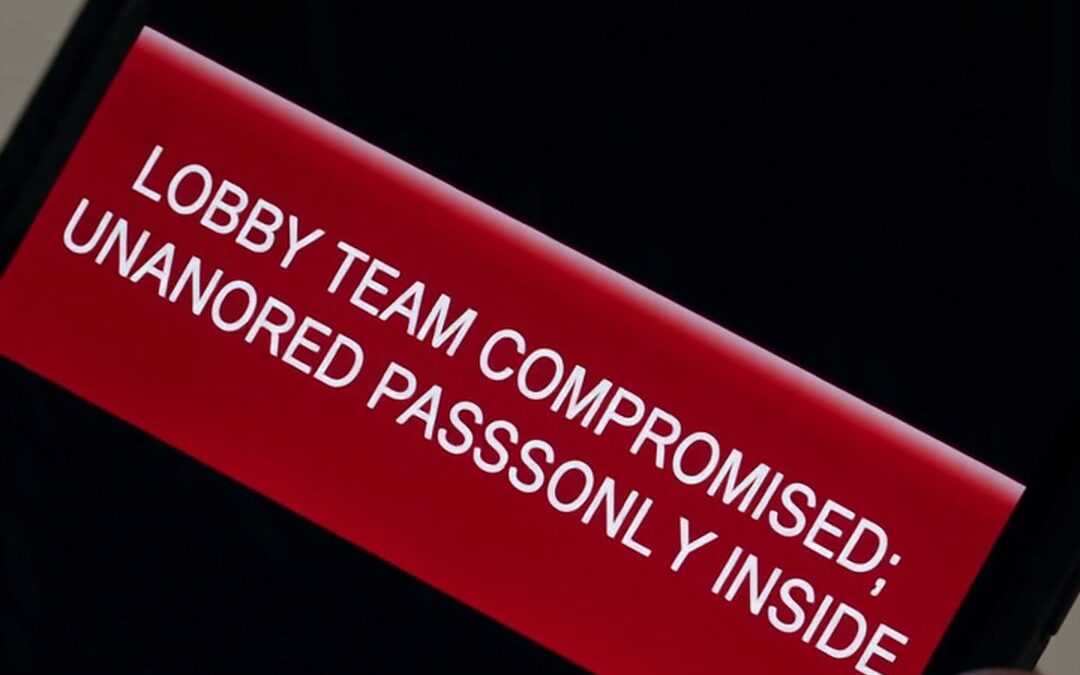
A signed alert from Leah Mercer, the outside security auditor he had hired that week, displayed a timestamp of 9:14 p.m. and the emergency phrase they had agreed upon in person: GLASS HARBOR.
LOBBY TEAM COMPROMISED; UNAUTHORIZED PERSONNEL INSIDE; DO NOT ACCEPT INTERNAL ESCORT.
Beyond the sunroom glass, lightning exposed Patricia’s white face.
The private elevator indicator climbed toward thirty-eight.
“You said he had until ten,” Serena whispered.
Patricia looked toward the hall as though she already knew who was coming.
The elevator chimed.
Chapter 2: What the Silence Kept
The sound finished before Dante pushed the sunroom door open, and Serena turned toward him with the expression of someone watching two disasters finally meet.
“Come with me,” he said, keeping his voice low because panic would spend the seconds they needed.
Patricia started to explain, but he raised one hand and looked only at Serena.
“There’s an authenticated warning on my phone, and someone has just reached this floor.”
Serena crossed the room immediately, catching her mother’s wrist when Patricia remained frozen beside the wicker chair.
Dante led them into the study adjoining the sunroom, where a reinforced inner door had been installed after a threat against the building two years earlier.
It was a shelter designed by people whose work he had approved without ever imagining Serena might need it because of the family that had placed her beside him.
He closed the door, engaged its emergency lock, and put the bent papers on the desk.
From the hall came a man’s voice announcing building security and asking Mr. Cavali to open up.
Dante recognized neither the voice nor the supposed courtesy in it.
Patricia reached toward the study telephone, and Serena caught her hand before she lifted the receiver.
“She said the phones were compromised,” Serena told Dante, as though she had to establish that she wasn’t inventing precautions to delay him.
He used his own cellular phone to call Leah through the number saved when she had first come to his office, rather than any number supplied in the alert.
She answered with her full name and the verification phrase he had chosen during their meeting, then told him she had already contacted emergency services.
“The alert was mine, sent at nine fourteen, and I’m outside with the responding officers,” she said.
“Who’s in my lobby?”
“People admitted under replacement staff credentials that your security director approved this afternoon.”
His security director, Mark Voss, had worked for him for eleven years.
“Where’s Mark?”
“He says he’s supervising an evacuation, but the building manager has no fire or evacuation order.”
Dante looked at Serena, who had gone still at Mark’s name.
Leah asked him to put emergency dispatch on the call, and for the first time that night he surrendered the shape of the next few minutes to someone with authority beyond his own front door.
He gave the dispatcher the names of the three people inside, their exact room, and the fact that they had heard unauthorized people enter the residence.
When asked about injuries, he said there were none.
When asked whether he intended to confront the men, he looked at Serena’s hand locked around her mother’s wrist and said no.
The stranger in the hall tried the study handle.
“Mr. Voss sent us,” the man called through the door.
Dante said nothing.
On the phone, Leah explained that the ordinary lobby staff had been relieved early under a forged maintenance notice, while the residential concierge had called her after finding his own credentials canceled.
She had received that call because her audit notice, circulated the previous day, included an outside reporting number.
The coordinated camera outage had followed at 9:11, and the building manager had preserved the system’s remote service records before anyone could replace them.
“That’s what I know now,” Leah said, “and I don’t yet know who all these people are or what they’re carrying.”
The distinction steadied him more than certainty would have.
Patricia pressed a hand over her mouth when another voice sounded beyond the study door.
“That one’s Carlo’s driver,” she whispered.
Dante repeated her statement to dispatch, naming Patricia as its source instead of presenting it as something he could verify.
Serena released her mother at last and moved away from the windows, leaving a small distance between herself and Dante that suddenly looked less like distaste than habit.
He wanted to ask how many nights she had measured rooms this way.
Instead, he asked whether anyone else was supposed to arrive.
“Carlo told my mother ten,” she said.
Patricia shook her head once, then forced herself to speak.
“He told Vincent the change would begin at ten, and I assumed that meant here as well as the docks.”
“So you didn’t know,” Dante said.
“No.”
The answer mattered because assumptions had already cost everyone in that room too much.
He told dispatch there might be a related threat at the South Docks, gave the address of Cavali Freight’s administrative building, and asked Leah to contact its night supervisor through a verified outside number.
He did not order his employees to hold the property.
“Tell them to follow the police instructions and get people out,” he said.
A hard impact shook the study door, followed by a second that made Patricia flinch into the bookcase.
Serena stepped toward her mother, but Dante caught himself before reaching automatically to restrain her.
“Stay back from it,” he said instead.
She looked at his open hand, then nodded.
The dispatcher remained on the line while voices moved through the hall, too muffled for him to separate threats from arguments.
Sirens rose somewhere below, and the person outside the door stopped demanding that he open it.
The next minutes passed through small, unbearable details: Patricia’s wet coat dripping onto the rug, Serena’s bare feet, the corner of the divorce agreement lifting in the study’s ventilation.
When police finally announced themselves, Dante waited while dispatch confirmed their presence and instructions.
He opened the door to officers whose arrival had been verified through the call, not to another familiar-sounding promise.
Two men were being held near the elevator, and a third had been stopped downstairs after trying to leave through a service entrance.
An officer guided the three of them away from the residence without letting them approach the detained men.
Dante saw an overturned console table, a dropped visitor badge, and the ordinary blue overshoes one stranger had worn to protect his floor.
The absurd politeness of the overshoes made his stomach turn.
He retrieved the divorce papers from the study only after asking the officer, slipped them into the attorney’s envelope, and kept them separate from everything police collected.
Serena noticed the letterhead as he passed her, and he saw her understand enough to look away.
By 10:03, they were in separate interview rooms at a district station while the rain beat against high, wire-glass windows.
Leah met Dante there with a paper cup of water and news that the South Docks night shift had been moved out of the affected administrative area.
“Two people are in custody there, but the scene is still being assessed,” she said.
“Carlo?”
“Not yet.”
He drank the water because his hand needed something useful to do.
Arthur arrived twenty minutes later in a coat buttoned incorrectly, carrying the same worn leather case he had brought to Dante’s father’s funeral.
“I’ll protect your interests,” the attorney said, “but Serena needs someone who doesn’t answer to you.”
“Find her choices,” Dante said.
Arthur nodded without mistaking that permission for authority to choose for her.
Detective Elena Ruiz introduced herself shortly afterward, explained that she was coordinating the connected incidents, and asked whether Dante would consent to a joint conversation after their individual accounts had been recorded.
Serena had requested it, she said, because there were documents she could identify that he needed to understand.
He agreed, although understanding had begun to feel more frightening than the men outside his study.
Serena entered wearing borrowed shoes from a station supply cupboard and carrying a clear property bag that held her phone.
She sat across the table rather than beside him.
“I have a notebook in the bottom drawer of my dressing table,” she said, “and there are original messages on this phone and the one I stopped using last year.”
Ruiz asked permission to obtain the devices and notebook, then explained how each item would be recorded and preserved.
Serena gave it, specified where the old phone was stored, and asked for a receipt.
Dante remembered her requesting receipts for insignificant deliveries and had to make himself stop translating every small habit into a revelation before there was evidence.
“What do you think they show?” Ruiz asked.
“What he asked for, what I sent instead, and what happened when I said no.”
“Who is he?”
“My father, mostly, and sometimes Carlo.”
Ruiz wrote the names rather than allowing the pronoun to carry the accusation.
Serena described a message from November 4, 2022, thirteen days after their wedding, in which Vincent had asked for Dante’s actual departure time before a freight council dinner.
She had sent the time printed on the public invitation, which was ninety minutes later than the departure arranged by his staff.
Dante remembered waiting downstairs that evening while Serena claimed a headache through the bedroom door.
He had thought she couldn’t bear another public appearance with him.
“Why didn’t you come?” he asked.
“Because Father wanted me to call him from the car.”
Her hands lay flat on the table, deliberately visible.
She described a February message seeking the names of Dante’s weekend security staff, and the list she had supplied instead from an old charity event program.
Ruiz asked how she knew those people weren’t protecting him.
“The program listed ushers and event volunteers,” Serena said.
“So the original program can be compared with what you sent.”
“Yes.”
That answer gave Dante something sturdier than the immense, dangerous relief he wanted to feel.
Serena had also declined access to his shared calendar, returned a family office tablet without activating it, and refused the driver Mark had offered to assign exclusively to her.
Dante remembered all three things as rejections.
The tablet had come with a note from him saying it might make planning dinners easier, and she had returned it through his assistant in its unopened box.
He had stopped asking her to dinner for nearly a month.
“Did you know what that did?” he asked.
“Yes,” she said, and the absence of a defense made the answer worse.
Ruiz let the silence stand before asking about the notebook.
Serena had begun it on October 19, 2022, three days before the wedding, after hearing Vincent and Carlo discuss what the marriage would give them.
It contained dates, requests, the responses she had sent, and descriptions of threats that had arrived by telephone instead of text.
She had not recorded the conversation she overheard before the wedding.
“Then the notebook is your account of that conversation,” Ruiz said.
“Yes.”
“And entries can be useful without independently proving that every event happened as described.”
“I know.”
Dante watched the detective avoid making either an accusation or a promise, and he realized how rarely people had done that in rooms where he sat.
Serena said she had kept original messages because her father occasionally contradicted himself about what he had demanded.
At first she wanted proof against him for the day she could get away.
Later she wanted proof that she had not delivered what he wanted.
“What changed between those two things?” Dante asked.
She looked at him for the first time since sitting down.
“You started leaving a light on when I couldn’t sleep.”
He remembered the first winter of their marriage, when he had found her standing alone in the dark kitchen and quietly switched on the lamp above the breakfast table before going back upstairs.
She had begun sitting there some nights afterward, always gone before he came down.
Ruiz asked about outside storage, and Serena explained that she had periodically sent copies to a private email account, while keeping the phones because she knew copies could be disputed.
The detective said specialists would need to authenticate the messages through devices, account records, and any available recipient information.
Nobody declared the contents true because Serena could display them.
Dante found himself grateful for the delay, because his heart had become an unreliable witness.
He asked why she hadn’t told him even a small part of this.
Serena drew a breath that caught halfway in.
“I tried Arthur’s office once,” she said.
The aging attorney, standing near the door, lifted his head.
“Not you personally, and I didn’t know then that the difference mattered.”
On March 8, 2023, she had submitted a request through the family legal office’s appointment portal, asking for a confidential consultation about pressure from her father.
Before the office replied, Vincent called and repeated a phrase she had typed into the request.
He told her Dante’s advisers returned family problems to the family.
Arthur’s face changed with a slow anger Dante had seen only twice before.
“That portal was administered through the family office,” he said.
“Who could read it?” Ruiz asked.
“I’ll obtain the permissions history rather than guess.”
Serena looked down at the table.
“After that, every safe person seemed to lead back to him.”
Dante understood the shape of the trap without yet accepting that it had no exits.
“Three years is a long time to stop looking,” he said.
“I didn’t stop looking, but I stopped believing my judgment about people.”
The admission was small enough to be credible and terrible enough that he couldn’t answer it.
Ruiz ended the joint interview shortly afterward so Serena could speak with independent counsel before providing more extensive statements.
As she stood, Serena looked at the envelope beside Dante’s chair.
“Were those for tonight?”
“Yes.”
She nodded as though he had confirmed a reservation she had already expected to miss.
“I’m not asking you to change them,” she said.
After she left, Dante put the envelope inside his coat and realized he had not once considered whether she might have wanted the freedom he had planned to offer.
At 1:40 a.m., the first account that seriously challenged Serena’s explanation arrived through Mark Voss’s attorney.
Mark had presented himself at a different station, asserting that he had been conducting a protective relocation after receiving a credible warning from Serena.
His lawyer supplied a payment confirmation showing forty-eight thousand dollars transferred from Serena’s personal account to a consulting company Mark owned.
Attached was a message Serena had sent Carlo six days earlier containing a South Docks meeting location and a time of 10 p.m.
The location was the same administrative building evacuated that night.
Dante read the two pages twice before allowing himself to look up.
“Is the message real?” he asked Ruiz.
“We haven’t authenticated the extraction supplied by his attorney, but your wife’s bank has confirmed the transfer with her consent.”
“Did she tell you about the money?”
“Her attorney is with her now.”
The detective’s answer was neither reassurance nor indictment.
Mark’s account had an ugly internal logic: Serena had hired him privately, provided the destination, and then panicked when an arranged escort reached the penthouse.
According to his lawyer, the disabled cameras were a technical fault, the changed personnel were precautionary, and Leah had misunderstood a security operation outside her authority.
Dante could hear Mark saying it in the patient voice he used when explaining why frightened employees had misread something harmless.
The man had once stayed all night at a hospital with a Cavali driver whose son had been injured in a collision.
Dante had paid the bills afterward, but Mark had been the person sitting in the plastic chair.
Loyalty, Dante thought, was most persuasive when it had sometimes been real.
Ruiz did not show him statements from witnesses he had not heard, but she asked whether a 10 p.m. meeting at the docks had ever been part of his plans.
“Not tonight.”
“Was there an older plan?”
“There might have been.”
He called his executive assistant with Ruiz present and asked for calendar records without telling her what answer he hoped to receive.
There had been a proposed insurance inspection on October 16 at ten in the evening, arranged to coincide with the end of a late shift.
It had been canceled on October 9 because the administrative building’s upper floor required electrical repairs.
Dante had never intended to attend it himself.
Yet Mark’s attachment contained an itinerary bearing Dante’s name and an instruction that he arrive without his usual staff.
The document looked like the travel summaries Dante received weekly.
Its footer even carried the correct office template number.
Ruiz asked him to stop studying it and provide a clean example from his office for comparison.
“Familiar formatting tells us where to look,” she said, “but it doesn’t tell us who made this.”
Outside the interview room, dawn began turning the rain a dull metallic gray.
Arthur returned with the name of the attorney Serena had selected, a woman called Nina Bell who handled complex domestic matters and had arranged separate criminal-law advice for the interviews.
“She’s represented,” Arthur said.
“Good.”
“She paid the initial retainer from her own account.”
Dante heard the boundary and accepted it.
When Serena agreed to speak with him again, Nina remained at her side, and Ruiz recorded the conversation with their consent.
“The transfer is real,” Serena said before he could ask.
“Why did you pay him?”
“He said he had the legal-office request and other messages that could make you believe I was reporting on you.”
“You were reporting on me.”
“I was answering requests with things I thought couldn’t hurt you.”
“You were letting someone decide which version I’d see.”
Serena swallowed and nodded.
Mark had approached her in May, saying Vincent was threatening to give Dante a selected record of her correspondence.
He offered to obtain the full archive, including the demands and threats, and arrange a protected consultation outside the family office.
He had described the money as the cost of separating the records from a private contractor’s account.
“You believed him?” Dante asked.
“He already knew things I thought only my father knew, and he said knowing them was how he could help.”
“Did he help?”
“He sent a folder with copies I mostly already had, then told me the other records weren’t ready.”
She had preserved his messages and the folder but concealed the payment because admitting it meant admitting how completely she had misjudged him.
The answer did not make the money innocent by itself, and she didn’t ask anyone to treat it that way.
Nina handed Ruiz a written authorization to obtain the relevant account records and Mark’s full correspondence with Serena.
Dante sat back, remembering that Mark had urged him in June to stop leaving confidential material in rooms Serena could enter.
He had presented it delicately, as concern for a wife who might be vulnerable to her father’s pressure.
The advice had deepened a distance Mark had then charged Serena to repair.
“What about the itinerary?” Dante asked.
“I sent Carlo an old inspection notice on the sixteenth.”
“The version here puts me in that building tonight.”
“Mine didn’t.”
For the first time, anger broke through her careful voice.
“I knew the inspection was canceled because I had arranged a donation pickup there, and the facilities manager sent me the closure notice.”
Ruiz asked where that notice could be obtained.
“From the freight company email account, and the charity coordinator has the rescheduling thread.”
The detective wrote both sources down.
Serena said Carlo had demanded a location where Dante would be without his usual staff, so she had supplied the canceled inspection notice while telling him she couldn’t confirm attendance.
She had hoped another useless answer would buy time.
“Time for what?” Dante asked.
“To get through your audit without giving them anything new.”
“You knew about the audit?”
“Mark told me Father was frightened by it.”
Nina touched the edge of the table, a quiet invitation for Serena to slow down.
Serena looked at Dante instead.
“I knew they wanted access, and I knew they threatened people, but I didn’t know until my mother came that they had decided to kill you tonight.”
Dante wanted to reject the distinction because accepting it required living inside uncertainty.
“What did you think they would do with a real location?”
“Pressure you, steal from you, corner you into giving them back control.”
“Would that have been safe?”
“No.”
The word stood between them without decoration.
“I didn’t send it because I thought that would be harmless,” she said, “but because I believed the event no longer existed.”
Ruiz said the chronology could be tested, including when the altered itinerary had been created and who had distributed it.
Until then, Serena’s explanation remained an account with supporting leads and a serious contradiction.
Dante asked for a moment alone with Arthur after the interview ended.
His lawyer waited while he stared at the gray window.
“Tell me if I’m being a fool because I want her to be telling the truth,” Dante said.
“You’d be a fool to make the evidence answer that need.”
“And if I stop wanting anything?”
“That would be another way of letting fear do your thinking.”
Arthur left him with the envelope and a silence that offered no instructions.
By late morning, police had secured the penthouse, and Dante was permitted to collect essential belongings under supervision.
He did not enter Serena’s rooms because her consent to the evidence collection had not made the rest of her life his to inspect.
An evidence technician emerged with the old phone and the notebook already packaged, each labeled with the location, time, and name of the person who had collected it.
Serena’s dressing-room door remained open behind her.
Dante had spent three years resenting that door.
He could remember a night in January when he had knocked because he’d heard crying, and Serena had said she was tired before turning the lock.
He had answered that he wouldn’t trouble her again.
Now he wondered how much cruelty a wounded man could fit into a sentence he believed dignified.
Arthur met him downstairs with the original marriage settlement retrieved from the firm’s document archive.
The agreement had been signed on October 15, 2022, a week before the wedding, and its business provisions were less romantic than the announcement both families had released.
Vincent had withdrawn disputed claims against two Cavali freight leases, while Dante had ended litigation over Romano invoices and allowed a Romano-affiliated staffing contractor a three-year transitional role at the South Docks.
The marriage had been framed as proof that neither side would reopen the feud.
There was no written condition requiring Serena to provide information, affection, or obedience.
There was, however, a letter from Vincent to his own advisers describing the alliance as a route back into decisions from which the Romano family had been excluded.
Arthur’s firm held it because Vincent’s attorney had copied the negotiating group before later asking that it be disregarded as an internal communication.
Dante remembered the letter as bluster he could afford to ignore.
“Tomorrow was the contractor’s last day,” he said.
“Today,” Arthur corrected gently.
The audit had been scheduled to present preliminary findings at nine that morning, after which the temporary access arrangements would expire.
Dante had moved the review forward when unexplained overtime charges appeared in September.
He had thought he was checking a vendor.
Vincent had apparently understood that he was closing a door.
Leah joined them at a borrowed office later that afternoon, bringing only records the company was entitled to share and separating them carefully from material now held by police.
The disabled cameras were concentrated around the lobby and the elevator bank, but an independent maintenance service had retained the commands that took them offline.
Those commands came through Mark’s administrative account.
“That connects the account to the outage,” Leah said, “and the device evidence will determine how strongly it connects him.”
The elevator service retained its own event log, showing the lobby group traveling directly to thirty-eight at 9:16 after a residential override approved under the same account.
The replacement credentials had been issued at 4:32 that afternoon.
None belonged to the employees named on the submitted staffing roster.
Dante asked whether Mark could have been deceived by someone else using his access.
“Yes,” Leah said, “which is why the logs aren’t the whole case.”
The answer gave him permission to believe in the work rather than in a new, supposedly infallible person.
Arthur had also obtained the appointment portal’s access history.
Mark’s role included a security-screening permission added years before Serena’s request, and that permission exposed submissions that users reasonably believed were confidential legal intake.
On March 8, 2023, his account had opened Serena’s request seventeen minutes after she sent it.
Arthur’s own account had not accessed it before the request was withdrawn the following morning.
“I didn’t withdraw it,” Serena said when Nina brought her into the meeting.
The portal administrator had preserved the withdrawal event, which also originated from Mark’s account.
Dante looked at Arthur, ashamed of the suspicion he had carried since Serena first named the office.
“I wondered if you’d told Vincent.”
“So would I,” Arthur said.
The old attorney did not ask gratitude for being cleared.
He said the firm’s intake arrangement had failed Serena regardless of who exploited it, and he had ordered it suspended pending independent review.
Serena listened without forgiving him for something he hadn’t done or relieving him of responsibility for what his office had allowed.
For the first time, Dante saw an apology offered without a demand that the injured person make it comfortable.
Over the next two days, the notebook’s dates began acquiring witnesses.
A November dinner invitation from the charity’s archive matched the harmless departure time Serena had supplied, while Dante’s driver log placed his actual departure ninety minutes earlier.
The February volunteer list matched her supposed security roster down to a misspelled surname belonging to a retired school principal.
A message Vincent sent the following day complained that none of the names was useful.
The original device held that complaint, and investigators obtained a matching record from an account recovered under legal process.
None of it proved what Serena had felt, but it proved a pattern of resistance that existed long before the night she needed Dante to believe her.
Dante remembered the returned tablet again when Leah found its provisioning record.
Mark had requested that a family-sharing function be enabled before it was delivered, despite the device having been purchased through Dante’s office.
Serena’s notebook described Vincent asking whether she had begun using it and pressing her to persuade Dante to put his work calendar on the shared service.
She had refused the gift because she couldn’t explain the danger without explaining her father.
“You could have said you preferred paper,” Dante told her during another meeting with their attorneys.
“I thought if you knew I liked the gift, you’d try again.”
He remembered the note he had written, the careful hope he had hidden inside a practical object.
“I would have.”
“I know.”
That was the first time her understanding of him hurt more than her silence.
The summer she declined a weekend away acquired a different meaning through a message requesting a photograph of the itinerary before they left.
A canceled birthday dinner had followed Vincent’s insistence that Serena seat Carlo beside Dante and persuade him to discuss staffing.
Even her refusal to let the penthouse host a Romano holiday gathering appeared beside an instruction from her father to leave the study open after dessert.
Dante had accused her, quietly and with perfect manners, of being unwilling to make any home with him.
She had answered that perhaps she wasn’t suited to marriage.
He read the line in her notebook that followed the exchange, written in cramped ink beneath the date.
He believes me.
There was no theatrical account of her sacrifice, only those three words and a small indentation where the pen had stopped.
“I made it easier for you to think I was cold than to notice where I was frightened,” Serena said.
“Sometimes I did notice.”
She waited.
“I decided it was fear of me because that explained why asking would make everything worse.”
He had been feared long before he married her, and he had allowed that reputation to become an excuse for avoiding answers he might dislike.
Before their wedding, he had known Serena through three formal dinners and a meeting about a foundation project.
At the second dinner, she had corrected Vincent when he called a warehouse employee dishonest over a missing delivery, explaining that the man had reported the missing goods himself.
Dante had admired the steadiness of her voice.
After the wedding, she had sent the employee a reference when he left, and Dante had found himself falling in love with the person who remembered the cost of an accusation after everyone important had moved on.
He told her that now, awkwardly, because it seemed wrong that investigators should know more about the beginning of his love than she did.
“I thought you liked that I didn’t embarrass you in public,” she said.
“I liked that you were brave.”
She looked away.
“I wasn’t always.”
The evidence did not turn every absence into protection, and Serena refused to let him make it do so.
Some nights she had avoided him because she couldn’t bear pretending.
Some mornings she had been angry that he moved through a world arranged around his authority while she saw traps in favors.
Once she had deliberately hurt him by returning flowers unopened after Vincent called her useless.
“That wasn’t a strategy,” she said, “and you don’t have to make it one to believe the rest.”
Dante sat with that distinction until the urge to absolve everything loosened.
On the third day, Patricia gave a fuller statement with her own lawyer present.
Dante did not attend, but Ruiz later shared the portions relevant to his safety and asked him to identify several dates from family events.
Patricia had known before the wedding that Vincent expected Serena to cultivate access.
She had carried requests disguised as maternal advice, urging her daughter to accept the tablet, host dinners, and stop making the marriage difficult.
For months she had accepted Vincent’s description of the plan as restoring a fair share of family influence.
Then, on October 20, she had heard Carlo tell Vincent that the audit would expose payments they could not explain.
Two days later, she had seen a message confirming Mark’s changes to the building staff.
She had delayed for hours before coming to the penthouse, first begging Vincent to cancel and then asking Carlo whether Dante would be allowed to leave Chicago instead.
Carlo had told her that leaving was no longer part of the arrangement.
Her warning had been real, but so had her long participation in making Serena feel trapped.
Dante asked whether Patricia’s account could be checked.
Ruiz said her phone contained the staffing message she described, while building footage from an unaffected street-facing camera established her arrival at 9:08.
A recorded call to Carlo shortly before that arrival corroborated her attempt to intervene, although the existence of a call alone could not establish what had been said.
There were also messages in which she had pressured Serena to obey Vincent.
“She gave us those voluntarily,” Ruiz said.
“Does that change what they mean?”
“It changes how we obtained them.”
Dante carried that answer into his next conversation with Serena.
Her mother had asked to visit the temporary apartment Nina had arranged for her, and Serena had declined.
“I can be glad she came and still not let her into my home,” Serena said.
Dante nodded, feeling how much of their future would depend on respecting sentences that gave him no role.
The altered itinerary took longer to untangle than he wanted.
Serena’s original phone showed the canceled October 16 inspection notice sent to Carlo with a message saying she had nothing current and could not confirm Dante would attend.
The copy Mark supplied omitted that message and replaced the notice with a document dated October 22.
Investigators did not rely on the difference alone.
The charity coordinator produced the October 9 closure notice from her organization’s retained mailbox, and the facilities manager supplied the original canceled inspection thread from the freight company’s server.
Those records established that Serena had reason to believe the event she described would not happen.
Mark’s office computer, obtained through a warrant, contained an earlier saved version of the revised itinerary.
Its creation history placed the change on October 21, five days after Serena’s message to Carlo.
The template came from files Mark legitimately used to prepare Dante’s movements.
Ruiz explained the findings at a meeting one week after the breach, with a prosecutor present and careful limits around material still under investigation.
“They repurposed something she sent,” the detective said.
“So she gave them the building,” Dante said.
“Yes, and we won’t pretend otherwise.”
Serena sat very straight beside Nina.
“But their choice to place you there came later, and we have evidence that she neither created nor received the revised plan,” Ruiz continued.
It was narrower than innocence as a feeling and stronger than innocence as a plea.
The forty-eight-thousand-dollar payment also acquired a context Mark’s lawyer had not supplied.
Messages recovered from Serena’s phone contained his promises to retrieve the complete archive and arrange independent legal help.
Corresponding messages were found on his device, along with a note identifying her payment as a separate opportunity from the Romano arrangement.
Investigators traced part of the money to a personal debt payment, while the supposed outside records contractor denied ever receiving a request or fee.
The bank records established where the money had gone, not whether every spoken promise Serena described had been made.
The matching messages established enough.
Dante asked whether Mark had actually intended to protect anyone that night.
The prosecutor declined to speculate about intentions beyond what the evidence supported.
At 6:47 p.m. on October 22, Mark had sent Carlo a message confirming that the household would be offered “relocation” if the first approach failed.
At 8:52, he had approved the credentials later used by the men detained in the residence.
One of those men had initially believed he was working a private recovery assignment, according to his lawyer, but police found restraints and a printed photograph of Dante among the items carried by the group.
The photograph bore the same job reference found in Carlo’s staffing messages.
No single item explained everything, and together they made Mark’s protective-escort account increasingly impossible.
The South Docks records supplied the other half.
The night supervisor had retained the legitimate staffing roster when replacements appeared carrying a different one.
He had called the contractor to question it at 8:36, and the recorded business line captured an instruction to accept the changes under Carlo’s authority.
A Cavali facilities employee refused to surrender the administrative records room, then reported that she had been threatened with dismissal.
Her written complaint, sent before Leah’s warning, gave investigators an independent account of the pressure at the site.
When police arrived, they separated employees from the unauthorized group and stopped company records from being removed.
The two people detained there possessed access documents issued through Mark’s office and instructions identifying specific financial files.
The instructions did not describe an ordinary inspection or an emergency evacuation.
Carlo was arrested the following afternoon after officers located him at a Romano-owned office under a warrant based on the initial communications and witness accounts.
His phone supplied messages connecting the building breach to the docks operation, although investigators continued checking them against other devices and provider records.
Vincent’s plan had been to remove Dante, take control during the confusion through the contractor’s remaining access, and seize records that would expose years of diverted fees.
He expected fear and the old alliance to discourage anyone from challenging the transfer before the documents disappeared.
The marriage had been his preferred route to that control because a trusted wife could have supplied information no vendor was entitled to receive.
When Serena failed him and the audit approached, he had paid for access elsewhere.
A series of payments from a Romano-controlled company to Mark’s consulting business began eight months after the wedding.
They were described as risk assessments, but the company could produce no assessments, and messages linked several payment dates to specific access changes.
The largest payment arrived two days before the breach.
Dante recognized the date as the day Mark had reassured him that Leah’s audit would find nothing serious.
He sat through the explanation without speaking until the prosecutor asked whether he needed a break.
“What about our people?” he asked.
The night staff had all been accounted for, no one had been seriously injured, and the threatened facilities employee had given a statement with independent representation.
The ordinary lobby team had been cleared of participation after their time records and messages confirmed they had been sent home under false instructions.
Dante had almost condemned them all in the study because Patricia said the lobby was compromised.
He understood now how easily a description of a danger could become an accusation against everyone standing near it.
He asked Leah to make sure their wages continued during interviews and the building review.
“Through ordinary payroll, with no conditions,” he added.
She wrote that down as carefully as she had recorded the canceled credentials.
Vincent did not make a dramatic confession.
Through his attorney, he maintained that the payments were legitimate and that Carlo had exceeded instructions intended to protect the family’s contractual interests.
But messages recovered from his account referred to Serena’s failure to become the “perfect wife,” linked the expiring access agreement to the need for action, and approved Carlo’s proposal after Mark confirmed the building arrangements.
An older email, retained by Vincent’s former business administrator and obtained during the investigation, described what Serena was expected to learn after the wedding.
It listed departure times, personal access, staff rotations, and the private information a husband might share with a wife he trusted.
The administrator had preserved the email as part of routine business records, without understanding its later significance.
Its date was October 18, 2022, one day before the conversation Serena described overhearing.
For Dante, that sequence finally settled the question he had tried not to ask aloud.
She had not invented the trap after being caught inside it.
The prosecutor still distinguished the provable acts from the broader story people might want to tell about the marriage.
Vincent, Carlo, and Mark faced charges arising from the coordinated intrusion, planned violence, coercion, and financial offenses supported by the developing record.
Other allegations would depend on additional evidence and judicial decisions.
Dante’s name would not shorten that process.
Arthur advised him to preserve company records, avoid contacting defendants, and make no public claim that outran the filed case.
Dante agreed, then authorized an independent review of the freight operation and the family office permissions that had made the conspiracy possible.
He removed Mark from employment through counsel and replaced the security arrangement with a firm Leah helped evaluate but did not own.
The review also found decisions Dante had approved because the people presenting them had been useful and loyal for years.
He signed the report acknowledging those failures rather than letting employees absorb all the blame.
Patricia’s responsibility followed a separate course.
Her early messages and financial records showed that she had helped transmit demands and accepted money from the alliance’s continuing contractor fees.
They did not show that she approved the planned killing.
Her late warning, subsequent cooperation, and omissions were all documented, and her attorney negotiated over conduct she admitted rather than over a borrowed version of her daughter’s courage.
Months later, she would plead guilty to an offense arising from knowingly assisting the coercive financial arrangement.
At the time of the first charging decisions, Serena asked only that no one promise her mother forgiveness on her behalf.
Dante told Arthur to make that boundary explicit in every conversation where his name might otherwise be used to soften it.
By then he and Serena had been living separately for nineteen days.
His temporary residence was a furnished apartment near his office, while hers was in a building she had selected with Nina and an independent security consultant.
The permanent security provision he had planned for the divorce remained available, but Serena chose the personnel and held the contract.
They reported safety concerns to her, not her movements to him.
When Arthur first explained the arrangement, Dante had felt a sharp, unreasonable urge to ask whether he would at least know where she went at night.
He kept the question to himself until therapy, where saying it aloud made its origin embarrassingly plain.
He wanted certainty because he had been frightened, and certainty about another person could become a form of control before the frightened person noticed.
Serena began individual therapy separately, and their first joint session happened only after both therapists agreed they could approach it without treating reconciliation as the required result.
In that session Dante said he had loved her for most of their marriage.
Serena said she had loved him longer than she had allowed herself to admit.
Neither statement solved the practical matter of what they had done while loving each other.
“I need to be able to ask you something and believe the answer isn’t chosen to manage me,” he told her.
“I need to be able to disappoint you without thinking I’ve become unsafe,” she said.
He wanted to say she had always been safe with him.
Instead, he remembered the employees who lowered their eyes when he was angry and the favors he had called in without explaining whose lives they might alter.
“I can understand why my saying it wouldn’t be enough,” he answered.
Outside the therapist’s office, they waited for separate cars under an awning while a delivery cyclist shook rain from his sleeves.
Serena stood close enough that Dante could smell the plain soap she had always used.
He asked whether she wanted him to stay until her car came.
“Yes,” she said.
The simplicity of the answer nearly undid him.
A week later, they met with Arthur and Nina to discuss the papers.
Dante brought the original envelope, its lower edge softened from being carried through the night of the breach.
His signatures remained where he had placed them, and the acknowledgment of delivery was still blank.
Arthur explained that the agreement could not stand in for Serena’s advice, consent, or an actual filing decision.
Nina had reviewed the settlement and proposed changes preserving Serena’s independence regardless of whether they remained married.
The revised terms removed language that could be read as requiring contact through Dante’s family office and clarified that security support would not depend on their relationship.
Serena asked for additional time before deciding whether to proceed with divorce.
Dante felt hope rise so quickly that he had to hold still to keep it from becoming pressure.
“How much time?” he asked.
“Three months before we review it, and either of us can decide sooner.”
He agreed.
They signed a temporary arrangement covering separate residences, independent funds, privacy, and voluntary contact.
There would be no announcement that the marriage had been saved.
There would be no family dinner staged to prove that everyone had survived.
They would meet for therapy, have dinner when both wanted it, and tell each other when they didn’t.
After the attorneys left the room, Serena touched the creased corner of the original agreement.
“Did you think I’d be happy?” she asked.
“I thought you’d be relieved.”
“I might have been, and I would still have loved you.”
He looked at her, feeling the old instinct to turn a complicated answer into a rejection.
This time he let the whole sentence remain true.
“I signed because I couldn’t bear watching you live like a guest who was afraid to overstay,” he said.
“You could have asked whether I wanted to go.”
“I was afraid you’d say yes.”
She drew the papers toward her just far enough to look at his signature.
“I was afraid that if I told you, you’d go straight to my father and one of you wouldn’t come back.”
“You didn’t give me a chance to choose differently.”
“No.”
Her eyes filled, but she did not use the tears to soften the answer.
“I kept making the decision alone because the first time seemed necessary, and then every year made admitting it harder.”
Dante understood that kind of momentum too well to mistake it for an excuse.
“I don’t know how to get back what we missed,” he said.
“I don’t think we get it back.”
He watched a tear fall onto the table beside her hand.
She wiped it away herself.
“Maybe we can stop spending what comes next,” she said.
He asked before taking her hand, and she turned her palm upward.
The touch contained no promise about the rest of their lives.
For once, that made it easier to trust.
Winter brought the slow, public work that the night itself could not finish.
Company auditors reconstructed the diverted fees, employees gave testimony, and the court kept Vincent, Carlo, and Mark subject to restrictions that prevented them from contacting witnesses.
Dante attended the proceedings where his presence was useful and stayed away from those where it would turn Serena’s testimony into a performance for him.
By early spring, Mark entered a guilty plea supported by the records already gathered, and Carlo followed after his attempts to blame the entire operation on a routine contract dispute failed against the communications and witnesses.
Vincent’s case ended later that spring with a plea that acknowledged his authorization of the coordinated plan and the intended violence against Dante.
The evidence existed before those admissions and did not depend on them.
Patricia received a separate sentence reflecting her participation and cooperation, and Serena chose limited written contact without inviting her back into daily life.
The South Docks staffing contract was replaced through an open review, the employees returned to ordinary schedules, and the financial records remained available to investigators until the case requirements were satisfied.
There was no final gathering where the families agreed to call the damage finished.
At the three-month review, Serena had asked to continue living separately while they worked on the marriage.
At six months, they jointly instructed their attorneys to close the divorce matter without filing, after converting the financial protections into an independently reviewed agreement.
Dante did not bring flowers to that meeting.
He brought the breakfast sandwich Serena had mentioned wanting, then asked whether she had already eaten.
She laughed at the care he took with the question, and he discovered that a laugh could feel more intimate than a vow spoken in front of two hundred people.
They still had difficult evenings.
Once she hid a letter from Patricia for two days before bringing it to therapy, and once Dante asked Leah a question about Serena that he should have asked Serena herself.
Both incidents mattered because neither became a secret protected by another secret.
They apologized, changed what needed changing, and resisted the temptation to declare themselves finished learning.
On a Saturday in May, Serena invited him to breakfast at her apartment.
Rain had passed before dawn, leaving the Chicago sidewalks bright beneath a pale blue sky.
He arrived carrying the original envelope because she had asked to see the papers one last time before they went into the attorneys’ closed file.
She set them on the kitchen table beside a bowl of oranges.
The wrinkles had become permanent, crossing his signature and the blank acknowledgment where her receipt was supposed to have been recorded.
“I used to think that night was when I almost lost you,” Dante said.
Serena poured coffee into the cup she kept there for him.
“What do you think now?”
“That it was when I finally found out how much there was to lose.”
She sat across from him and told him about an ordinary problem at work, expecting neither rescue nor permission.
He listened until she finished.
When breakfast was over, she asked whether he wanted to stay while she repotted the basil on the balcony.
He said yes, and she smiled as though yes was something they could both afford.
The crumpled papers stayed on the table, undelivered, while Serena opened the balcony door and left it open behind her.








