He Came Home With Divorce Papers—Then Heard His Wife’s Mother Say He Would Be Dead by Morning
Chapter 1: The Papers in His Hand
Dante Cavali signed the divorce papers while rain blurred Chicago beyond his study windows, leaving the settlement figure untouched because thirty-two years of acquiring power had taught him nothing about making his wife feel safe.
Arthur Pendleton, his aging family attorney, had added the provision Dante requested: permanent independent security for Serena, controlled by her and funded beyond his ability to withdraw it.
After three years, freedom was the kindest thing he had left to offer.
Their arranged marriage had ended the hostility between the Cavali and Romano families, but somewhere between Serena remembering his coffee and sitting outside his hospital room, Dante had made the mistake of believing it could become a home.
She remained painfully polite, careful around his hands, distant even when she thought he was asleep.
He took the papers down the hall.
Patricia Romano’s voice reached him through the partly open sunroom door.
“Your father and Carlo are moving against the South Docks tonight, and Vincent expects Dante to be dead by morning.”
Dante stopped.
“The lobby team belongs to them now,” Patricia said.
“The phones and exits are covered, so you have to come with me.”
“No,” Serena answered.
“Your father gave you three years.”
“He gave me three years to become the perfect wife so Dante would tell me his schedules and let my family near his security.”
The papers bent beneath Dante’s thumb.
“I made sure he didn’t trust me,” Serena said.
A chair scraped.
“He thinks I can’t bear him, and every day I let him believe it because the moment he opened his life to me, my father would have a way inside.”
“Serena, please.”
“I love him, and I’m not leaving him here to die.”
Dante’s phone vibrated against the ruined fold of the settlement.
The separate security application showed an alert from Leah Moss, the independent auditor he had retained eight days earlier.
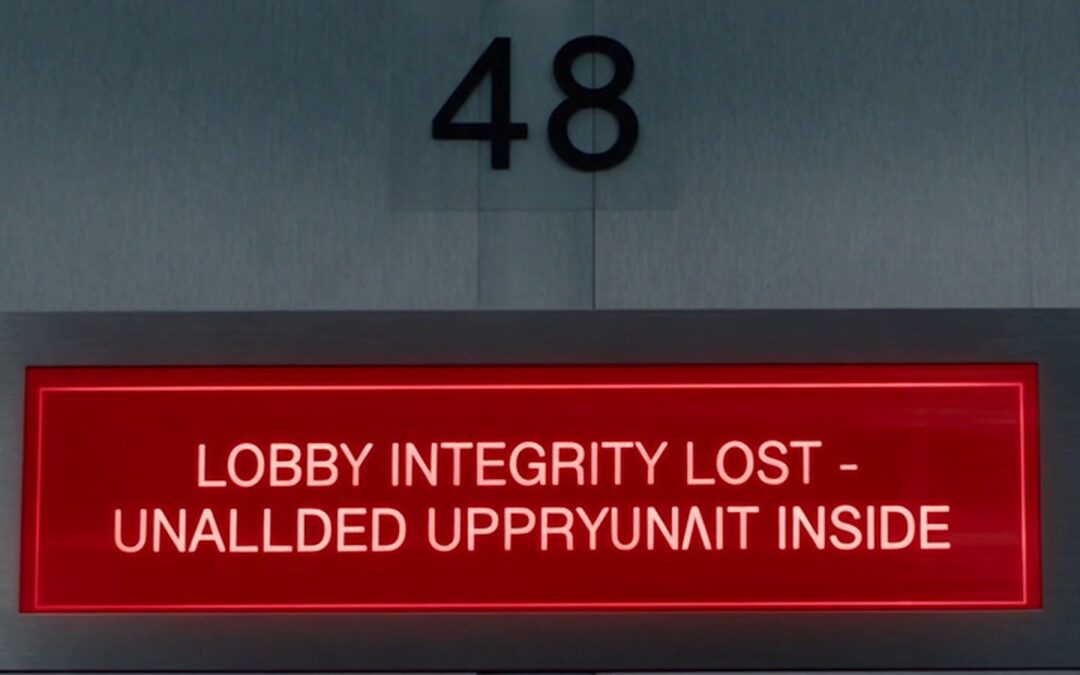
BLUE WINDOW — LOBBY INTEGRITY LOST — UNAUTHORIZED PERSONNEL INSIDE.
Beneath it appeared the verified duty credential and a timestamp of 10:14 p.m.
Across the hall, the elevator indicator changed from forty-seven to forty-eight.
Patricia saw its reflection in the sunroom glass.
“He said we had until quarter past,” she whispered.
Dante stood outside the door with the divorce papers crumpled in his fist as the elevator chimed.
Chapter 2: What the Distance Concealed
The chime was still fading when Dante pushed open the sunroom door.
Serena turned toward him, her eyes moving from the papers in his hand to the hallway behind him.
“Come with me,” he said.
Patricia reached for her daughter, but Serena stepped away and crossed to Dante without touching him.
Beyond the hallway, Owen Rusk called his name in the reassuring voice Dante had trusted for eleven years.
“We need to move you downstairs.”
Owen had guided him through hospital corridors, crowded loading yards, and the bitter negotiations that preceded the marriage.
Tonight he had said he was working from home.
Dante ushered the women into the interior sitting room adjoining his study and closed its reinforced door.
“Who came up with you?” he asked.
“Relief personnel.”
“Give me their names.”
A brief silence followed.
“There’s a problem at the docks.”
Dante engaged the room’s emergency call unit, installed after a building fire and maintained separately from the penthouse telephone system.
He had used it only during inspections.
When the operator answered, he gave the address, reported three people sheltering upstairs, and said members of his security team might be involved in a threat against them.
His mobile phone began ringing with Owen’s name.
For years, Dante had answered fear by purchasing more control.
Now he had to explain that his control was part of the danger.
The operator connected emergency services and instructed him to remain inside.
Serena stood beside a low cabinet, watching Patricia.
“Did you tell him where we were?” she asked.
“I told your father I would bring you down.”
“Did you tell Owen?”
Patricia shook her head.
Dante called Leah Moss through the number in her signed engagement letter rather than any contact information attached to the alert.
“Tell me what you sent,” he said when she answered.
Leah repeated the coded warning, its 10:14 timestamp, and the verification phrase established when he hired her.
“The building manager called after a relief roster appeared without her approval,” she continued.
“She has already notified police.”
“Can you account for Owen?”
“He ended our call when I asked why his credentials were approving personnel changes.”
Owen knocked twice.
“Your mother-in-law understands what’s happening.”
Patricia pressed a hand against her mouth.
Dante confirmed to the emergency operator that no one inside was injured.
Leah said the building manager had asked the elevator service desk to preserve the lift events.
Those records would establish movements, she cautioned, rather than identify everyone inside the car.
Several lobby cameras had gone offline shortly before the personnel change, but the emergency call system and alarm network remained active.
Patricia’s claim that every phone and exit had been taken exceeded what Leah could verify.
The distinction steadied Dante.
“What about the South Docks?”
“The site manager is stopping work and accounting for everyone while police assess the threat.”
“No one goes looking for Carlo.”
“I’ve already told them.”
Outside, Owen tried the handle.
Serena flinched and folded her arms tightly across herself.
Dante recognized the gesture from unexpected visits, calls from her father, and evenings when he had approached after something between them briefly softened.
He had always put himself at the center of her fear.
“There’s a pouch in my study drawer,” she said.
“It has messages.”
“We’ll get it when it’s safe.”
Owen spoke again through the door.
“You’re making a private misunderstanding public.”
At the operator’s request, Dante consented to recording their emergency call.
“Police are coming,” he told Owen.
No answer followed.
Patricia lowered herself onto a chair.
Only then did Dante notice how deeply the divorce papers had creased beneath his fingers.
He laid them on the cabinet and covered his signature with the envelope.
Serena recognized Arthur’s stationery.
Neither spoke about it.
For the next twelve minutes, Dante listened to the operator’s questions, rain against the study windows, and a heavy sound beyond the hall.
When someone outside identified himself as a police officer, Dante waited while the operator verified the responding unit.
He opened the door to uniformed officers and the building manager, whose wet coat covered pajamas.
Owen was gone.
Two men admitted under temporary staff credentials had been detained downstairs, and officers were searching for another.
No one had fired a shot.
Dante’s knees threatened to give way anyway.
An officer asked the three of them to leave separately so their initial accounts could be recorded independently.
Serena took only her phone.
Dante retrieved the envelope and followed her into a hallway where his authority no longer established what was true.
Arthur arrived at the district station shortly after eleven, wearing an overcoat over his cardigan.
He handed Dante a bottle of water before asking anything.
“Drink before you decide something.”
Dante had given a preliminary statement and temporarily surrendered his phone for preservation of the alert and call records.
Elena Ruiz, the investigator handling his interview, had explained the receipt and the limits of his consent without allowing room for favors.
Across the corridor, Serena sat with a victim advocate while Patricia spoke to another investigator.
Arthur followed Dante’s gaze.
“I represent you tonight, but I can’t advise Serena about statements that might put her interests against yours.”
“Find someone independent.”
“I’ve made the call, and she decides whether to retain her.”
Dante placed the crushed envelope between them.
“Were these delivered?” Arthur asked.
“No.”
“Then they’re still an unaccepted proposal.”
“Keep them.”
Arthur put the envelope in his briefcase without treating the gesture as a decision about the marriage.
At eleven twenty, Serena agreed to speak with Dante and Ruiz after consulting the lawyer Arthur had contacted.
Her lawyer remained beside her.
An officer had recovered the pouch from Serena’s study with her consent, photographing its location before collecting it.
Inside were three old phones, an inexpensive notebook, printed messages, and a bank receipt.
Ruiz kept the originals packaged.
“We can examine copies tonight,” she said.
“A printout alone won’t establish who sent a message.”
Serena nodded.
“The notebook begins October ninth, three years ago.”
“Six days before our wedding,” Dante said.
He remembered October fifteenth beneath a canopy his mother had chosen, Serena’s pale dress, and the cool pressure of her fingers.
He had not known she was already documenting what the marriage might cost.
“What happened on the ninth?”
“I heard my father tell Carlo the marriage would give them access they couldn’t negotiate.”
She glanced at Ruiz.
“I couldn’t record it, so that entry is only my account.”
The copied page contained the date, two names, and words underlined hard enough to score the paper.
Perfect wife first, useful daughter second.
Dante remembered the agreement they had called peace.
Competing South Docks lease claims would be settled, private intimidation would stop, and shared business would move into audited contracts.
The marriage was intended to make the arrangement endure.
Vincent had expected it to accomplish what his lawyers could not.
“He thought you’d include him in meetings because he was my father,” Serena said.
“He expected me to get passwords because I was your wife.”
Dante recalled refusing to discuss work over Sunday lunch and mistaking Vincent’s disappointment for ordinary wounded pride.
Serena indicated a message dated November second, less than three weeks after the wedding.
Vincent had asked her to photograph Dante’s desk calendar.
Her answer contained appointments that looked plausible and meant nothing.
“They came from a public fundraiser program,” she explained.
“Two had already happened.”
Ruiz asked which device retained the original exchange.
Serena identified the oldest phone.
“The devices and records from the other participants will matter more than these copies,” Ruiz said.
Dante welcomed the caution because relief was already trying to become certainty.
Other pages recorded requests for shift changes, travel plans, office access, and the code to a private document cabinet.
Sometimes Serena answered that she did not know.
Sometimes she supplied information that was public, obsolete, or invented.
Beside each response, she had noted what she actually knew.
“You kept a ledger of lying to him,” Dante said.
“And to you.”
One entry described refusing a weekend trip after Vincent demanded photographs of the house where Dante stayed outside Chicago.
Dante remembered two packed bags and Serena politely saying she preferred to remain in the city.
He had unpacked alone.
“You could have come without taking photographs.”
“He said he’d mention them to you afterward like an ordinary family conversation.”
“So you made sure there weren’t any.”
“Yes.”
Her voice held steady while her hands tightened beneath the table.
Arthur received an update from Leah.
Workers had been evacuated from the affected administrative and loading areas at the South Docks, and supervisors were completing the head count.
Police had found people whose temporary credentials did not match scheduled contractors.
Their purpose remained under investigation.
Dante asked about the overnight clerk who often stayed late correcting payroll.
“She’s accounted for,” Arthur said after checking.
Serena’s shoulders lowered.
Ruiz’s phone vibrated before Dante could ask what the clerk meant to her.
The investigator read the message and asked Serena about a transfer made nine months earlier.
The amount was forty-two thousand dollars.
Serena closed her eyes.
Dante knew before she answered that the notebook did not contain every truth.
The money had left Serena’s personal trust and gone to Lakefront Protective Services.
Owen had recommended that company for temporary staffing at the South Docks.
Ruiz said the lead came through counsel for one of the detained men.
Investigators would need the bank’s records before relying on the financial details.
“I made that transfer,” Serena said.
“What did you believe you were paying for?” Ruiz asked.
“To make Carlo leave a household employee alone.”
Serena described an older housekeeper who had driven her to a library without reporting the trip to Patricia.
Carlo later sent Serena a photograph of the woman’s adult son outside his workplace.
The message accused the family of helping Serena hide things.
“I paid because I thought he’d stop threatening them.”
“Did he?” Ruiz asked.
“He stopped mentioning them.”
The bank receipt had been in the pouch when Serena requested its recovery.
She had preserved it alongside the evidence that helped her.
Dante registered that without letting it explain away the payment.
“You knew Carlo used that company?”
“Yes.”
“Why didn’t you tell me?”
“Because he included a private report Owen had written about your movements the week before.”
Arthur’s pen stopped.
“He wanted me to understand that anything I told your security might reach him,” she added.
Ruiz asked to see the report.
Its copy bore Owen’s name, a January date, and details of a meeting Dante remembered.
One detail was wrong.
It placed him at his office afterward, when he had gone to Arthur’s.
“This could have been assembled from guesses,” Dante said.
“Yes.”
“You treated it as proof.”
“I treated it as a threat I couldn’t afford to misunderstand.”
Ruiz wrote that down without endorsing the conclusion.
Then she placed another document on the table.
It was a visitor authorization bearing Serena’s account identifier and naming Patricia Romano and Carlo Esposito.
The approval time was 6:42 that evening.
Serena stared at Carlo’s name.
“I approved my mother and her accountant.”
“What was the accountant’s name?” Ruiz asked.
“It wasn’t filled in.”
Dante heard his voice harden.
“You approved an unnamed visitor?”
“My mother said she wanted to discuss separating her accounts from my father’s.”
“Did you believe her?”
“I wanted to.”
Serena had an email confirmation and consented to preservation of the relevant messages.
Ruiz explained that the confirmation might establish what Serena received, while the building system’s original history would be needed to show whether anything changed afterward.
Dante watched Serena nod and felt an anger he could not entirely justify.
He had spent years unable to read her composure.
Now he could not tell whether it meant discipline, exhaustion, or another concealed fact.
Ruiz set down a third document.
Owen had sent it to Arthur’s office while their preliminary interviews were underway.
He accused Serena of arranging that evening’s access and supplying the South Docks appointment intended to draw Dante into danger.
Attached was a message sent from Serena to Vincent five days earlier.
Dante will be at the South Docks administration office Friday at eleven thirty, without the full team.
Dante’s calendar contained that meeting.
“I invented that,” Serena said.
“I accepted it Wednesday.”
“I sent this Sunday.”
Arthur looked up.
“Who proposed the meeting?”
“Owen.”
He had said the docks manager needed a private discussion about theft among the night staff and recommended a small presence to avoid alarming employees.
Dante had agreed because Owen seemed concerned about reputations that an unfounded accusation could destroy.
“I gave my father an appointment I thought couldn’t happen,” Serena said.
“And someone made it happen,” Arthur said.
“That’s one possibility,” Ruiz replied.
Dante could see the other.
Serena might have known about the meeting before it reached his calendar and created a record to protect herself.
The notebook could be a shield.
The payment could be assistance.
What he had overheard outside the sunroom did not answer everything.
“Why that building?” he asked.
“You told me in August the old administration office was closing for repairs.”
“The work was postponed.”
“I didn’t know.”
He remembered searching for his keys while she sat over untouched tea.
He had assumed she barely listened.
Ruiz stopped the discussion until she could obtain separate accounts.
As Serena rose with her lawyer, she paused beside Dante.
“You don’t have to believe me tonight.”
For three years, he had wanted her to ask something of him.
Now she offered permission he wished he did not need.
“I need to know what happened,” he said.
“So do I.”
After she left, Arthur waited before speaking.
“You can love her and let the evidence take its time.”
Dante had not told Arthur he loved her.
Apparently that had been the least secret thing in their marriage.
At one in the morning, Leah arrived with the building manager and the first records that did not depend on remembered conversations.
The access-system vendor had preserved its hosted history at the manager’s request.
Leah carried a preliminary export, the support ticket, and the original preservation request.
Ruiz recorded their source and arranged for a formal production.
Serena’s initial approval named Patricia and described the second visitor as financial adviser.
At 9:51 p.m., an administrator session associated with Owen’s account replaced that description with Carlo Esposito.
Three minutes later, the same session expanded the visit permissions.
“The normal desk display doesn’t show earlier versions,” the manager explained.
“Does this put Owen at the keyboard?” Dante asked.
“It puts his account there,” Leah said.
“We need the device and corroborating records to identify the user.”
Dante had hired her eight days earlier to audit security spending and had found her refusal to accept convenient answers irritating.
Now that refusal was one of the few things he trusted.
Serena’s separately preserved email confirmation matched the original authorization.
It narrowed the claim against her without explaining the payment or the Sunday message.
Ruiz made the distinction explicit.
The next entry concerned Arthur.
A visitor credential issued to his office had admitted Patricia at 9:38.
Dante looked at the man who had negotiated his marriage, drafted his divorce, and served the Cavalis for forty years.
Arthur removed his glasses.
“That credential should have expired after the estate meeting in June.”
Leah had asked his office administrator to preserve the relevant notices.
The preliminary history showed a June cancellation request followed by reactivation through a security administrator account.
Arthur’s office entry record and a recorded evening conference placed him at his firm when Patricia arrived.
His administrator produced the original cancellation email from the firm’s archive.
Together, the records explained why his name appeared without establishing his participation.
Arthur looked across the table.
“I’d rather you ask than decide quietly.”
Dante nodded.
“I wondered.”
“I know.”
Arthur put on his glasses, and Dante found the small steadiness of the gesture difficult to bear.
At Serena’s request, investigators obtained the marriage agreement from Arthur’s retained closing file.
It contained no promise that Vincent would receive private schedules, household access, or authority over security.
Attached correspondence showed that Vincent had requested a continuing family advisory role.
Dante had refused.
Another message, printed from Serena’s oldest phone, supplied the private instruction that followed.
You can achieve as a wife what the lawyers are making impossible.
The device still required examination, but Arthur’s independently retained correspondence established the request and refusal.
Dante remembered Serena at the rehearsal dinner, holding her water glass in both hands while Vincent described the marriage as a beginning.
He had thought she disliked the guests.
After giving her separate account, Serena returned with her lawyer.
Dante asked about the car she had refused during their first winter.
“My father wanted his driver assigned to it,” she said.
She had thanked Dante for the gift and continued using ordinary hired cars.
He had understood it as rejection of his right to give her anything.
“Why not ask for another driver?”
“Because my father would’ve asked you why.”
“And I might have told him.”
“Yes.”
Back then, Dante would have confronted Vincent immediately.
He had believed making a threat visible automatically made it weaker.
The notebook connected other old wounds to specific requests.
Serena had refused a shared password manager after Vincent asked for account access.
She kept her household calendar separate after he demanded Dante’s travel dates.
A dinner she canceled coincided with a request to learn whether Dante would bring financial reports home.
His office calendar could confirm the disrupted occasions, even where it could not prove her motive.
Dante made himself remember that distinction.
Not every painful evening had been a calculated act of protection.
Some had simply been painful evenings.
“What about the hospital?” he asked.
Her expression changed.
Eighteen months earlier, a van had struck Dante’s car on an icy street.
He had awakened with a concussion, a fractured wrist, and an empty chair beside his bed.
Owen said Serena had gone home.
“I stayed outside until your cousin arrived,” she told him.
“Why didn’t you come back?”
“My father wanted the visitor list and the name of whoever was taking you home.”
“So you stayed away.”
“I also couldn’t bear how relieved I was that you were alive.”
No document accompanied that answer.
He remembered the paperback left on his bedside table, a book he had mentioned only once.
“Did you bring the book?”
“Yes.”
He lowered his eyes to the water bottle.
Understanding could change the meaning of a memory without returning what had been lost inside it.
By two, the rain had weakened to a thin tapping against the station windows.
The penthouse threat appeared contained, but Owen remained missing and police were still assessing the South Docks.
Dante wanted to go there.
Ruiz asked what he expected to accomplish that the people already present could not.
He had no answer beyond needing to feel useful.
Instead, he authorized the company’s records custodian to preserve calendars, staffing contracts, invoices, and relevant messages without routing them through his executive office.
Arthur explained that those records might expose failures beyond the immediate conspiracy.
Dante signed.
“You should have hired someone like Leah years ago,” Serena said.
“Yes.”
“I thought everyone around you belonged to you.”
“Some of them thought so too.”
His reputation had made employees careful.
He had mistaken their carefulness for candor.
Serena described her first attempt to seek help, seven months into the marriage.
Without naming Vincent, she asked Owen whether someone could report a family threat confidentially.
That evening Patricia called and warned her against making strangers responsible for family misunderstandings.
The notebook documented the sequence.
A retained call log supported the timing, although it could not establish what Patricia said.
“You concluded Owen told your father,” Dante said.
“Yes.”
“Did you consider Arthur?”
“He negotiated the marriage.”
Arthur accepted the answer without defending himself.
Serena had later contacted a community legal service and attended one consultation.
An appointment confirmation remained in the pouch.
She authorized her current lawyer to verify attendance without turning privileged advice into evidence.
“What stopped you after that?” Dante asked.
“I was told there were ways to report threats and make a safety plan.”
She looked toward the corridor.
“I went home intending to try, and Carlo sent a photograph of the entrance.”
The copied photograph showed no weapon or violence.
Its power depended on what Serena believed private and how Carlo had found it.
Investigators would need to establish when and by whom it was taken.
For Dante, it helped explain the fear without proving every conclusion she drew from it.
“I should have gone back,” she said.
“I kept turning one more day into a plan.”
He had expected some single reason large enough to explain three years.
She offered repeated fear, temporary choices, and a strategy that had hardened until it hurt everyone except those imposing it.
“There were chances,” she said.
“I won’t tell you there weren’t.”
He allowed that truth to remain.
Her protection and her concealment could exist together without canceling each other.
“What changed tonight?”
“My father called Tuesday and said the South Docks review would destroy the agreement.”
Leah’s audit had identified unexplained increases in temporary security spending.
On Monday, it would expand into connections between Romano-associated vendors and dock contracts.
An independent valuation of Vincent’s remaining lease interests was also approaching.
Instead of opening Dante’s business, the marriage had accompanied its gradual separation from Romano influence.
Outside scrutiny now threatened what access Vincent retained.
“He said I had until Friday to become useful,” Serena said.
Dante looked at the Sunday message.
“You gave him another false appointment.”
“I thought it would keep him waiting.”
Someone inside had made her invented destination real.
The trap depended on trust flowing in the direction she had tried to block.
An archived maintenance notice later confirmed that the administration building’s closure had been postponed.
Its distribution list contained department heads, not Serena.
That supported her account without proving she could not have learned the information elsewhere.
Dante was beginning to understand how much room existed between suspicion and certainty.
Patricia requested a conversation with her daughter.
Serena declined.
Dante did not suggest she reconsider.
Instead, he asked Ruiz whether Patricia had come to warn Serena or deliver her.
“We’re still establishing that.”
Through a glass panel, Dante saw Patricia alone with an untouched paper cup.
She looked frightened.
That did not tell him whether she was innocent.
At three fifteen, Miriam Cole, the South Docks night supervisor, arrived to give a statement.
Dante knew her for correcting invoices in red ink and once refusing to let Vincent park in an emergency access lane.
She had preserved the evening’s staffing changes because they looked wrong before anyone warned her of a threat.
Unfamiliar temporary personnel had been assigned where no extra work was scheduled.
Two regular employees had been removed from the late shift.
Miriam objected by email at 7:06 p.m.
Owen replied that Dante approved the changes.
Dante had not.
The original exchange remained on the company server under the records custodian’s preservation order.
Miriam also supplied the visitor list she had marked during the evening.
Carlo appeared as the representative of a Romano vendor under an inspection work order.
The relevant department had requested no inspection.
Miriam called its head, confirmed that fact, and refused to countersign Carlo’s visit.
Her ordinary refusal had interrupted part of the plan before Dante knew there was one.
He had spent the night searching for a person capable of saving everyone.
Several people had already performed the smaller tasks that made survival possible.
The disputed staffing changes connected the docks to Lakefront Protective Services.
They did not establish what every temporary worker intended.
Ruiz said police had found equipment and materials inconsistent with the claimed inspection, alongside documents referring to a transfer of control Dante’s company had never authorized.
Specialists were securing the affected areas.
All regular employees were accounted for.
One worker had sprained a wrist during evacuation, but no one had suffered a serious injury.
Dante asked for the worker’s name, then stopped before requesting a direct call.
Miriam said medical assistance could be handled through established company procedures.
He told her to ensure it was.
Carlo had been detained after employees identified him as the person directing activity under the disputed work order.
His communications, the physical evidence, and independently obtained accounts would determine the case against him.
At four, Owen’s lawyer contacted Ruiz.
Owen would surrender but claimed he had been protecting Dante from Serena.
He repeated that she had financed the personnel and supplied the destination.
Dante felt grief beneath his anger.
Owen had stood beside him at his father’s funeral and remembered how he drank coffee when he had not slept.
The betrayal did not erase those details.
It made them impossible to arrange.
Ruiz instructed him not to contact Owen.
He agreed.
By dawn, Owen was in custody, the penthouse had been cleared of the immediate threat, and investigators controlled the affected dock areas.
Dante and Serena left in separate cars provided by a security firm Leah had independently checked.
Patricia remained for further questioning with counsel.
Arthur took Dante to a hotel beyond his former security office’s control.
Serena chose another.
He watched her car depart without asking where she would stay.
Before leaving, she had given him a copy of the oldest notebook page after her lawyer confirmed the original was preserved.
“I don’t expect this to be enough,” she said.
He folded it into his coat.
“It isn’t nothing.”
Over the next twelve days, the evidence became less dramatic and harder to dismiss.
A bank could authenticate a transfer long before investigators understood why it happened.
A message changed meaning when the exchanges surrounding it became available.
An account identifier required corroboration before it could become a person.
Ruiz provided updates through counsel when disclosure would not interfere with the investigation.
Leah managed the internal preservation and security review.
Dante was not allowed to turn his payroll into a private court.
The access vendor’s formal production confirmed the alterations to Serena’s visitor approval and linked the administrator session to an assigned security device.
Investigators recovered that device when Owen surrendered.
Its records, the hosted history, and footage from cameras unaffected by the lobby outage placed him in control of the changes.
Elevator records and surviving footage established his ascent with the two men detained downstairs.
One man, speaking through counsel, described instructions to escort Dante to a waiting vehicle and prevent Serena from speaking to him.
His account supported the records without replacing them.
The lobby camera outages had also originated through Owen’s administrative access.
A service record confirmed that no legitimate maintenance was scheduled.
Dante read that finding twice.
A mundane absence carried more weight than years of reassurance.
Bank records obtained through legal process showed regular payments from Lakefront Protective Services to a consulting business Owen controlled.
Those payments began more than a year before Serena’s transfer.
The staffing company’s books, seized under warrant, recorded Romano-funded work under descriptions inconsistent with the services provided.
Several entries matched dates when Owen altered staffing or approved unusual access.
The pattern did not prove every payment purchased a crime.
It established a concealed financial relationship between Dante’s security director and a vendor connected to Vincent and Carlo.
Recovered communications made the immediate connection clear.
Carlo forwarded Serena’s Sunday message to Owen.
Owen replied that he could put Dante there.
The exchange was recovered from Owen’s device and corroborated on Carlo’s phone.
Wednesday’s calendar invitation came from Owen’s company account.
Dante’s acceptance remained in the office archive.
The chronology broke the strongest claim against Serena without requiring anyone to accept her memory.
She had invented an appointment.
Owen had arranged it.
Dante read the sequence alone in Arthur’s office.
He expected clean relief and found instead the weight of how readily the accusation had fitted his oldest assumptions about his wife.
Arthur let him sit without offering absolution.
“Does she know?” Dante eventually asked.
“Her lawyer received the same disclosure.”
“I should call.”
“Decide what you want to say first.”
He wanted to apologize, ask forgiveness, ask whether she had eaten, and tell her how wrong the empty chair felt.
None of those wants entitled him to her immediate attention.
He sent a message asking whether she would speak with him.
An hour later she offered a time the following afternoon.
He kept the appointment.
The old phones supplied a history Serena could not have constructed at the station.
Forensic examination recovered message databases, attachments, and fragments of deleted exchanges.
Investigators compared them with records from Vincent’s and Carlo’s seized devices.
Where both sides survived, dates and content matched.
Where only Serena’s copy remained, Ruiz identified the limitation.
Different inks in the notebook suggested repeated use, but no one claimed they proved every entry’s date.
Its greatest value lay in directing investigators toward events independently documented elsewhere.
A canceled dinner matched Vincent’s demand for financial reports.
The refused weekend matched his request for photographs and his later complaint that Serena made herself useless.
A Christmas disagreement matched instructions to seat Carlo beside Dante’s operations manager.
Dante remembered leaving that holiday furious that his wife preferred spending the evening apart.
The records showed that her refusal had also kept Carlo from attending.
He could forgive her decision more easily than he could recover the evening.
Other entries exposed limits in her strategy.
Vincent had challenged several false schedules when Dante appeared elsewhere, forcing Serena to invent excuses about changed plans.
On two occasions, her harmless answers were followed by threats against people she had not anticipated involving.
The notebook recorded her fear but no reliable way to protect those people.
She had been improvising under pressure, not directing events from safety.
Her forty-two-thousand-dollar transfer remained one of those failures.
The threat involving the housekeeper’s son survived on Carlo’s phone.
Nearby messages described the payment as a means of keeping Serena obedient.
An invoice created afterward disguised it as authorized security spending.
Those records supported extortion rather than willing participation in the later attack.
They did not make paying quietly a decision without consequences.
The housekeeper and her son gave statements through their own counsel.
Neither had understood why the threatening contact stopped.
Dante arranged no private payment and requested no gratitude.
Arthur directed them toward available legal remedies while the company examined whether its failures had exposed them.
Serena wrote the housekeeper an apology and asked for no reply.
When Dante spoke with her the next afternoon, he told her the authenticated chronology had changed what he believed about the appointment.
She listened without making him withdraw every question he had asked.
“I was angry you could believe it,” she said.
“I know.”
“I also knew what it looked like.”
He admitted that the allegation had fitted too easily into his belief that she wanted a life without him.
Serena went quiet.
“A life without my father was the thing I couldn’t imagine,” she finally said.
Dante understood that she was describing a failure of imagination imposed over years, not asking him to excuse every choice it produced.
Patricia’s role emerged separately.
Her communications documented years of relaying demands, minimizing threats, and telling Serena to accommodate Vincent.
She knew he wanted access through the marriage and encouraged Serena to provide it.
She also arranged the final visit under the pretense of separating her finances from his.
The story worked because Serena wanted to believe her mother might leave.
Dante found that detail harder to read than some of the explicit threats.
Patricia’s lawyer supplied a preserved voice message Vincent sent at 8:47 that evening.
He instructed her to retrieve Serena before the security change and said Dante would not survive what followed if he resisted.
Investigators authenticated the message against Vincent’s device and available provider records.
It established that Patricia knew the threat was lethal before entering the building.
She nevertheless delayed.
Location records and a pharmacy receipt placed her sitting in her car during part of the interval.
They could not measure her fear, only the time that passed.
At 9:26 she asked Vincent to cancel.
He told her to collect her daughter and leave the decisions to him.
She never called police.
She went upstairs intending to remove Serena without warning Dante.
Only her daughter’s refusal forced the fuller disclosure.
Patricia also acknowledged delivering the warning after Serena’s early conversation with Owen.
She identified Vincent as its source, and a recovered message between them corroborated the instruction.
That supported Serena’s fear that seeking help through Dante’s security had reached her father.
It did not prove every possible route to assistance had been closed.
At their next scheduled conversation, Serena said Patricia wanted to visit.
“Do you want that?” Dante asked.
“Not yet.”
He waited rather than filling the silence.
“She says she thought marriage would soften my father.”
“Do you believe her?”
“I believe she wanted me to.”
Patricia later entered a cooperation agreement subject to court approval and faced charges arising from her assistance and concealment.
Her warning mattered alongside what she had done before it.
Serena chose to receive updates through counsel and refused direct contact for the time being.
Dante did not offer forgiveness on her behalf.
Vincent’s motive took shape in leases, contracts, and money.
The South Docks had given him influence over employment and business dealings across both families.
The marriage agreement restricted that influence while giving him a respectable explanation for accepting the loss.
He expected Serena to restore privately what the contract denied him publicly.
When she failed, Owen and Carlo supplied other access.
The coming audit threatened concealed payments and unauthorized vendor arrangements.
The lease valuation would make it harder to pressure Dante over Vincent’s remaining interests.
Friday’s plan was intended to bring Dante under their control, obtain signatures and access, and remove him as an obstacle.
Authenticated communications supported the lethal threat Patricia described.
It was not merely a frightened interpretation overheard in the sunroom.
The docks operation belonged to the same plan.
False staffing changes, the invented inspection, and unauthorized transfer documents were meant to make a change in control appear accomplished before anyone outside the compromised group intervened.
Police and employees stopped that sequence before Dante arrived.
Dangerous materials at the site were documented and secured.
The workforce returned in stages after investigators released the affected areas.
Carlo’s communications showed him recruiting and directing personnel.
Vincent’s records established authorization, money, and pressure.
Owen’s devices and the company archive established manipulation of Dante’s schedule and security.
Each man offered an explanation through counsel.
Vincent called it emergency protection of family assets.
Carlo described contract enforcement.
Owen claimed divided loyalties and insisted he intended to prevent harm.
Their accounts could be tested against threats, concealed payments, altered access records, and documents the company had never approved.
The case did not depend on a confession.
Arthur reviewed the charging summaries with Dante and separated allegations from facts still requiring proof in court.
Arrests were not verdicts.
Dante agreed to testify honestly and permit examination of his records.
That meant answering why Owen could approve his own vendors and why employees believed questioning security decisions threatened their jobs.
The company suspended implicated contracts, placed relevant employees on leave through established procedures, and commissioned an outside review.
Its findings would be reported beyond Dante’s private office.
He withdrew from decisions affecting witnesses.
At the first staff meeting after the docks reopened, he apologized without describing the danger as something inflicted only on him.
People had been frightened at work because a system he controlled had failed.
Miriam listened with folded arms.
Afterward, she said the revised process would matter more than his speech.
He agreed, uncertain whether he would have understood that before the rainstorm.
Three weeks after that night, Dante met Serena in a conference room at Arthur’s firm.
Her lawyer sat beside her.
The original divorce proposal lay between them inside its creased envelope.
Arthur had retained it exactly as Dante handed it over.
Dante’s signature remained on the papers.
Serena had not signed, and nothing had been filed.
Dante requested the meeting, but Serena chose the time and asked to address the legal arrangements before discussing their marriage.
He agreed.
Her independent security provision was being established through an irrevocable fund under her control, administered outside his company.
The generous settlement remained available.
Neither depended on staying married, remaining silent, or cooperating with Dante’s lawyers.
Serena read every provision.
Three years earlier, he might have mistaken that care for an insult.
Now he understood that she was supposed to read it.
“I don’t want gratitude in the agreement,” she said.
“There isn’t any,” Arthur replied.
“I mean from either side.”
Dante met her eyes.
“I understand.”
They addressed housing, personal property, and practical boundaries.
Serena had rented an apartment in her own name.
Dante had returned to the penthouse after investigators released it and the compromised security arrangements were replaced.
He still found the sunroom difficult to enter.
He did not present that difficulty as a reason for her to come home.
After the legal discussion, Serena requested a private conversation in the adjoining room.
Dante followed her into a space containing two chairs, a narrow sofa, and a neglected plant.
It was the least impressive room where they had ever discussed their future.
He preferred it to every formal dinner.
“I heard you say you loved me,” he said.
“I know.”
“I wanted that to answer everything.”
“Did it?”
“For about thirty seconds.”
A small, sad smile moved across her face.
“That sounds fair.”
He sat opposite her.
“I loved you before the wedding.”
She looked surprised.
He described the meeting where their families argued over employees who would lose work under the agreement.
Serena had remained quiet until Vincent dismissed severance as unnecessary.
Then she asked for the employees’ names.
When nobody answered, she asked again.
Dante had noticed the courage before understanding its cost.
Later came coffee outside his study, the hospital paperback, and her habit of remembering people whom others called simply staff.
He had fallen in love through small observations and then refused to examine the signs of her fear.
“I asked whether you were unhappy with me,” he said.
“I never asked what happened when your father called.”
“I probably would’ve lied.”
“Probably isn’t the same as never giving you the chance.”
She lowered her eyes.
He remembered standing outside her closed bedroom door and retreating because anticipated rejection was easier to survive than hearing it.
“I was afraid you’d say you couldn’t love me,” he told her.
“So I let silence answer.”
Serena breathed out slowly.
“I kept imagining a future where I could finally explain.”
“And each year made it harder.”
“Yes.”
He asked about her physical distance and the rigidity that sometimes overtook her when he approached.
She considered the question before answering.
“My father wanted intimacy to make you careless, and eventually I couldn’t separate wanting you from being used to reach you.”
Dante felt the words beneath his ribs.
“Sometimes I was also frightened by how angry you could get without raising your voice,” she added.
He resisted explaining that he had never intended to frighten her.
He remembered rooms falling silent when he entered.
“I need to understand that.”
“So do I.”
Serena said she could not promise that learning to feel safe would bring back what they might once have had.
Dante said he could not promise never to feel hurt when she needed distance.
They agreed neither feeling could become a demand that the other surrender a choice.
She wanted individual therapy before joint counseling, and any joint work had to allow the possibility that remaining married would not be the right outcome.
Dante had already attended an initial appointment.
The therapist had shown little interest in his surname.
Serena almost smiled when he told her.
They chose ninety days apart, with scheduled conversations and no surprise visits.
Either could decline contact without retaliation or a campaign of persuasion.
The interval would not become a deadline for forgiveness.
At its end, they would decide what came next.
“What happens to the papers?” she asked.
“Arthur keeps them while you consider them.”
“And if I sign?”
“I honor what I signed.”
The answer hurt, but his voice held.
Offering freedom meant accepting that she might use it.
Winter arrived before the criminal case began to settle.
Evidence hearings moved slowly.
Some charges were contested, while certain facts were stipulated.
The detained men’s accounts were checked against their devices and arrival records.
One had accepted work under a false explanation and refused further involvement after hearing Owen’s instructions.
He became a witness.
Carlo entered a plea after the court admitted communications connecting him to the threats and docks operation.
Owen followed, accepting responsibility for offenses reflecting both his financial arrangement and participation that night.
Vincent contested the case longer.
The authenticated messages, financial records, and corroborated testimony eventually supported his conviction.
Dante attended when counsel advised it or his testimony was required.
He did not turn the gallery into a place to watch Vincent suffer.
Serena made her own decisions about attendance.
Patricia’s sentence reflected her lesser role, cooperation, and admitted participation before her warning.
Her assistance to investigators did not erase her daughter’s memories.
Serena sent one letter through counsel establishing conditions for possible future contact.
There would be no requests for Dante’s movements, no appeals to family obligation, and no assumption that an apology purchased access.
Dante never asked to read it.
He was learning that trust included things he was not entitled to inspect.
Their first joint counseling session felt so uncomfortable that he nearly concluded they were doing it incorrectly.
The therapist asked whether Serena believed he could tolerate an answer he disliked.
Serena said she was finding out.
On the drive home, Dante resisted calling to demonstrate that he could.
At the next session, he admitted the urge.
Serena laughed softly, and for once neither of them immediately became careful afterward.
Progress looked smaller than he expected.
She told him when she did not want dinner.
He stopped proposing alternatives as though refusal were a practical problem.
He admitted when a missed call frightened him.
She sometimes explained where she had been, then reminded him that she would not construct another marriage around reporting her movements.
He learned to let that distinction stand.
Some sessions ended in anger.
Some conversations settled nothing beyond a promise to return to them.
Keeping those ordinary promises began to matter more than anything said under threat.
At ninety days, Serena requested another three months.
Dante agreed.
They began meeting for breakfast near her apartment, where a server misheard his name and called him Dan.
Neither corrected her.
One morning, Serena ordered pancakes and then admitted she disliked them.
Patricia had called eggs inelegant, and she had spent years ordering accordingly.
Dante stared before he began laughing.
Serena laughed too, and neither apologized for how long it lasted.
There were worse things to discover about a spouse than her preferred breakfast.
There were better ways to discover them than through a police report.
In April, she invited him to her apartment on a Sunday morning.
Rain had passed before dawn, leaving bright sidewalks and water trembling on bare branches.
He arrived at the agreed time with bread from her favorite bakery.
He rang instead of trying the handle.
Serena opened the door barefoot, wearing a sweater he had never seen.
The unfamiliarity pleased him.
Her separate life no longer had to be evidence of danger or rejection.
Arthur had met with them two days earlier.
After independent advice, they withdrew the old divorce proposal and replaced the temporary financial arrangements with documents preserving Serena’s independence.
They chose to remain married.
They did not yet choose to live together.
Neither decision demanded a promise about forever.
Arthur returned Dante’s original papers because they were his copy and no longer operative.
The creased envelope now rested inside his coat.
Serena knew he would bring it.
She stepped aside, and Dante entered an apartment smelling of coffee and toasted butter.
Two mugs waited on the counter.
At the penthouse, he had taught himself to stop setting out a second cup.
He looked at these longer than he intended.
“Is this all right?” Serena asked.
“Yes.”
He placed the bread beside them and removed his coat.
She noticed the envelope without reaching for it.
“Do you want to keep them?” he asked.
“No.”
“Neither do I.”
She considered the papers.
“We don’t have to decide today.”
He set the envelope on a shelf beside her cookbooks.
It could remain ordinary paper for a while.
At breakfast, Serena described a class she had joined and an argument with the instructor about a short story’s ending.
Dante told her Miriam had rejected a staffing proposal because it added forms without improving safety.
“Did you listen?” Serena asked.
“I asked her to help rewrite it.”
“Good.”
The word held neither caution nor performance.
When Dante rose to carry the plates to the sink, Serena caught his hand.
Her touch was light enough that he could have kept walking.
He stopped.
She stood close by her own choice and rested her forehead against his chest.
He waited until she lifted her face before kissing her.
Nothing required the moment to prove more than it did.
An hour later, the rain had cleared completely.
Serena stood in the doorway while he put on his coat, the old envelope unopened on the shelf behind her.
Dante stepped into the hall and turned to say goodbye.
This time, she left the door open until he was ready to go.








