Her Mother Told Her to Keep Her Hands Off the Expensive Clock, but the Repairer Saw Something She Couldn’t Ignore
Chapter 1: The Blue Tag
Lena Calderón slid a blue bread tag under a clock worth more than her mother’s car.
“Hands off,” Rosa said.
Lena drew back so quickly the tag skittered across the workbench.
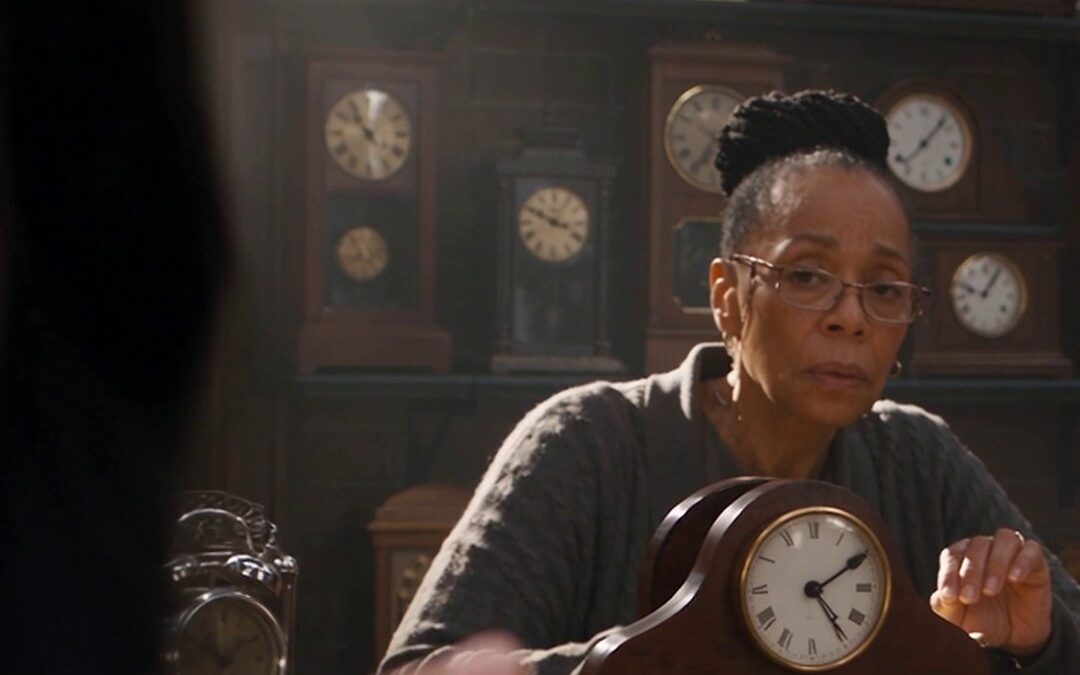
The clock belonged to a customer of Ada Finch’s repair shop in Holyoke, Massachusetts, and its walnut case had been polished until the overhead lights shone in it.
Rosa picked up the tag, which had a bite-shaped notch in one side.
“She does this at home,” Rosa told Ada.
“She moves things and then says she didn’t break them.”
“I didn’t say that,” Lena said.
Rosa’s dispatcher shift began in twenty minutes, and the after-school bus that usually brought fifteen-year-old Lena home had been canceled.
Ada had agreed to let her sit in the shop until Rosa finished work.
“Sit,” Rosa said, pointing to a stool.
Lena sat, pulled a paperback from her bag, and watched Rosa check the clock’s case for scratches.
She liked the book well enough, but she liked the clocks more: the little brass alarm clock with its hurried tick, the wall clock that seemed to hesitate, and the walnut one, whose pendulum she could see through a glass door.
A customer called from the front room.
Rosa went to answer, leaving Lena with instructions not to touch anything.
The walnut clock ticked twice.
Lena’s thumb tapped the edge of her paperback.
It ticked twice more, and her thumb stopped.
She looked down at the blue tag in Rosa’s hand on the counter, then at the narrow gap beneath the clock’s right foot.
Ada came in carrying a paper bag of parts.
“Your mother said no touching,” she said.
“I know.”
Lena opened her book again.
After a few ticks, Ada set down the bag and followed Lena’s gaze from the pendulum to the clock’s foot.
She moved a folded shop card close to that foot without sliding it underneath.
The ticking went on.
Lena’s thumb stopped again.
Ada’s hand stayed on the card.
From the front room, Rosa called, “Everything okay?”
“Give us a second,” Ada said.
She lifted the folded card away, looked at the clock, then took the blue tag from the counter and placed it beside Lena’s book.
Lena picked it up and reached past the walnut clock toward a smaller clock behind it.
That clock was silent.
Ada caught her hand gently before the tag touched its case.
“Lena,” she said, “what are you marking?”
Lena stared at the silent clock’s crooked base, then at the tag between her fingers.
Why had she reached for the blue tag before that clock had ticked once?
Chapter 2: The Work Between Ticks
Why had she reached for the blue tag before that clock had ticked once?
“Because it’s going to rock,” Lena said.
Ada kept her hand around Lena’s wrist, lightly enough that Lena could pull free.
“The clock?”
“When you start it.”
Rosa appeared in the doorway with her work phone pressed against her palm.
“I told her to sit.”
“She was sitting,” Ada said.
Lena returned the tag to the counter and opened her paperback to a page she had already read three times.
Ada crouched until she could see the narrow space beneath the smaller clock.
Its case rested on four little feet, and one stood a fraction above the workbench.
She pressed the top corner with one finger.
The case shifted with a soft wooden knock.
“That’s what she saw,” Ada said.
Rosa looked at Lena.
“You could have told me.”
“I tried with the other one.”
“You put something under a customer’s clock.”
“I hadn’t put it there yet.”
Rosa glanced at Ada, who was still beside the silent clock.
“I have to get to work.”
“I can keep her here,” Ada said.
Rosa lowered her voice.
“That walnut clock is insured for more than I make in a year.”
“I know whose clock it is.”
“She takes things apart when she’s curious.”
Lena looked up from the book.
“I took apart our broken fan.”
“And left the screws in a cereal bowl.”
“The fan works now.”
“One speed works.”
Ada pressed the silent clock’s corner again.
“I’ll put a clear space at the far end of the bench,” she said.
“If Lena wants to look, we’ll find her something she has permission to look at.”
Rosa studied her daughter’s face.
It was the expression Lena wore when she was trying to decide whether telling the whole truth would make matters worse.
“Don’t make Ada chase you around this place,” Rosa said.
“I won’t.”
Rosa touched Lena’s shoulder on her way out.
Lena leaned into the touch for half a second, then straightened before her mother reached the front door.
Ada waited until Rosa’s car had pulled away from the curb.
“Show me the rock,” she said.
Lena pointed to the raised foot of the silent clock, but Ada did not wind it.
First she cleared a patch of bench and placed a piece of felt there.
“This one belongs to me,” she said, lifting a plain kitchen clock from a shelf.
“You can touch the case and the outside of the movement.”
“What’s the movement?”
“The parts that make it go.”
Ada set the clock down and gave it a small push.
It stayed steady.
Lena turned it a quarter turn.
It stayed steady again.
“Now the little one?” Lena asked.
“After you tell me what you saw.”
“The corner was high.”
“That could make the case rock.”
“It will when the pendulum moves.”
Ada nodded, then slid the silent clock onto the felt.
She wound it just enough to start the pendulum.
For several swings, nothing happened.
Lena felt heat climb her neck.
Then the case gave a faint knock against the bench.
The knock returned after several more swings.
Ada stopped the pendulum before either of them could decide that the sound proved anything more.
“You spotted an uneven base,” she said.
“That’s useful.”
Lena stared at the silent face of the clock.
“The walnut one’s different.”
“How?”
“I don’t know.”
Ada checked the time.
Rosa would be back in five hours.
A customer’s wall clock waited for pickup, two watches lay in labeled trays, and the walnut clock needed its own careful work.
Ada could have put Lena back on the stool.
Instead, she took three clocks from a shelf of shop projects and carried them to the clear end of the bench.
“We have time to find out what you mean by different,” she said.
One clock ran evenly.
One had an obvious rattle.
The third looked ordinary and stopped once when Ada moved it.
Lena asked whether she was supposed to pick the broken one.
“No,” Ada said.
“Tell me what each one does, even if the answer is nothing.”
Ada started them in turn without showing Lena which clock had stopped on the shelf.
Lena listened with her head tilted, then moved the blue tag from beside her book to the space between the first two clocks.
Ada took out a pencil.
“What does that mark mean?”
“The first one sounds the same while it runs.”
“Both parts of the tick?”
Lena made a face.
“They’re not the same sound, but the space after them is.”
Ada wrote that down.
The rattling clock was easier.
Lena heard the loose sound before Ada set it on the felt.
For the third clock, she closed her eyes.
Ada watched her thumb tap her knee: quick, slow, quick, slow, then nothing.
Lena opened her eyes.
“That one loses its place.”
“Once?”
“Every few turns, maybe.”
“How many?”
“I can’t tell yet.”
Ada did not tell her what had made the third clock stop.
She put the clocks away, brought out a different one, and repeated the exercise.
This time Lena announced a problem that Ada could not hear.
They listened together for nearly four minutes.
Nothing happened.
Lena slid the tag back toward her book.
“I got it wrong.”
“You may have,” Ada said.
She wound the clock down and set it aside.
“That’s why we try again.”
When Rosa arrived after dark, Lena was drawing boxes on the back of an old envelope.
Some boxes had long spaces between them, and some were crowded together.
Ada had given her a pencil and a kitchen timer that no longer rang.
Rosa hung up her coat.
“What are the boxes?”
“I don’t know yet,” Lena said.
Ada did not call them a gift or a talent.
She told Rosa about the raised foot, the three shop clocks, and the fourth clock on which Lena might have been mistaken.
“Then she should come home,” Rosa said.
“She can,” Ada replied.
“Or she can come back Thursday, if both of you want that.”
Rosa looked at the walnut clock, safely out of reach on the other bench.
“Thursday, I can get somebody to meet the bus.”
Lena folded the envelope and put it in her pocket.
“I want to come back.”
Rosa let out a breath.
“Then I’ll ask your aunt to cover one Thursday.”
The next afternoon, Lena brought the envelope to the shop before Rosa had agreed to a second visit.
She had drawn more boxes at home beside the refrigerator clock.
Ada compared the marks with what she heard when that clock ran.
The boxes were not measurements, but Lena had kept track of which pause came after which sound.
“You’re following the intervals,” Ada said.
Lena shrugged.
“I’m trying to.”
Ada found a small mechanical clock she had not shown Lena before.
It had come from an estate sale and had not yet been opened.
“I don’t know what is wrong with this one,” Ada said.
Lena narrowed her eyes.
“Then how do we check me?”
“We listen separately, write down what we notice, and see whether it happens again.”
They each took a page.
Ada did not watch Lena’s pencil, and Lena turned away from Ada’s.
The clock ran for ten minutes on the bench.
Lena marked a longer gap about once a minute, though she could not say why it occurred.
Ada’s page showed that the clock’s beat sounded uneven whenever its minute hand reached roughly the same place.
“That might mean something catches,” Ada said.
“Or it might mean we’ve both started expecting it.”
She moved the clock to a level table near the front window and repeated the listening that evening.
The pauses returned.
They returned the next morning, too.
Ada opened the case only after writing down the pattern and showing Lena how to keep track of the tiny screws.
A hand brushed a raised spot inside the glass.
The mark was faint, but it was there.
Lena touched neither the hand nor the glass.
“That’s the place,” she said.
“It seems to be,” Ada replied.
She adjusted the clearance, closed the case, and ran the clock through the troublesome part of the hour several times.
The pause disappeared.
Lena smiled at the clock, then tried to hide it by asking for a snack.
Ada gave her crackers from the drawer where she kept them for herself.
On Thursday, Rosa watched Lena sit at the end of the bench and listen to a clock while Ada finished an invoice.
“She never sits that long over math homework,” Rosa said.
“I heard that,” Lena answered.
“You were meant to.”
Rosa had spent years urging Lena to finish instructions in order.
At school, Lena often reached for the materials before a teacher finished explaining the assignment, then missed a step and had to start again.
At home, she noticed a kitchen drawer that scraped and would empty it onto the floor before asking whether anyone had time to fix it.
Rosa knew those moments had reasons.
She also knew who picked up the drawer contents at midnight.
“I need her to ask before she touches a customer’s work,” Rosa told Ada.
“So do I,” Ada said.
Lena put down the pencil.
“I can ask.”
“Then ask,” Rosa said.
“Can I listen to the wall clock?”
Ada checked its tag.
“It’s mine,” she said.
“Yes.”
That became the rule.
Lena could listen to any clock in the shop.
She could move only the ones Ada named, and she had to ask before opening anything.
For each clock she studied, she wrote what she expected to hear, what she actually heard, and whether she heard it again.
Sometimes her first guess was good.
Just as often, the second line embarrassed her.
She thought one table clock slowed each hour because a gear caught.
Ada showed her how the sound changed when the shop heater started and the clock’s thin case vibrated against the wall.
She marked a stopped watch as broken, then learned its spring had simply run down.
She grew impatient with the forms Ada made her use.
“Why do I need to write down ‘clock stopped’?”
“Because next week you’ll remember that it skipped,” Ada said.
“Next week I’ll remember this argument.”
“Write that down too.”
Lena did, under a column she labeled OTHER.
By November, Ada could trust Lena’s records even when she disagreed with Lena’s guesses.
When Ada looked again at the walnut clock from the first day, Lena asked whether she had caused its problem.
Ada set the case on the bench and showed her the folded shop card.
“No,” she said.
“The owner told me it had been losing time before it came here.”
“Then why did Mom look so scared?”
“Because she didn’t know what you meant to do.”
Lena rolled the blue tag between her fingers.
“I didn’t know either.”
“You knew something sounded wrong.”
“I knew the space was wrong.”
Ada waited.
Lena tapped twice on the bench, leaving a short gap and then a longer one.
“At school I tap like that when I’m waiting for someone to finish talking,” Lena said.
“Sometimes I’m listening, and sometimes I’m bored.”
Ada smiled.
“That sounds familiar.”
“So if I tap here, don’t assume I know anything.”
“I’ll ask.”
In December, Ada invited a clock repairer from Springfield to inspect a movement she could not service herself.
His name was David Ko, and he had worked on clocks for thirty years.
He arrived with magnifying lenses in his shirt pocket and asked Lena to describe the problem before he looked inside.
She showed him two pages of observations.
David read them without comment.
“You’ve marked the same interruption on three different days,” he said.
“I thought it was the hour hand.”
“What changed your mind?”
“It happened before the hand got there once.”
David looked at Ada.
“She noticed that too?”
“Ada noticed it first,” Lena said.
“Good,” David replied.
“Then you both have a reason to open the case.”
He examined the movement with Ada while Lena watched from behind the marked line on the floor.
The problem was a worn part that allowed a little too much movement near the clock’s striking mechanism.
David showed Lena the play in it, then asked her to describe what she heard without using the words wrong, broken, or bad.
“It changes the space between two ticks,” she said.
“Then it goes back.”
He nodded.
“That is an observation I can use.”
He gave Ada a repair estimate for the owner.
When he left, he did not offer Lena a job or promise she could repair every clock in Massachusetts.
He did ask to see her records again in the spring.
Rosa heard that part while she was picking Lena up.
“You paid him to come here,” she said later in the car.
“Ada needed him for the clock.”
“And he looked at your work.”
“He asked me one question.”
“He may ask more if you keep going.”
Lena watched the shop disappear in the rearview mirror.
“You don’t have to drive me every day.”
“That isn’t what I’m saying.”
Rosa stopped at a light.
“Ada is teaching you something that matters to you.”
“I know.”
“I need to know how much time it takes, and what you’re going to do when school gets hard.”
Lena wanted to say school had already been hard.
Rosa knew that, too.
Instead, Lena unfolded the list Ada had given her: Friday afternoon practice, one Saturday each month, and homework finished before she came to the shop.
Rosa read it at the next light.
“She wrote in snack breaks.”
“Ada thinks crackers count as lunch.”
“They don’t.”
“I told her.”
The light changed.
Rosa handed back the paper.
“We’ll try it through the end of the semester.”
Lena kept the paper in her book bag until its folds tore.
Winter gave her time to learn what the sounds could not tell her.
Ada showed her how to check whether a case stood level, how to handle a pendulum without bending its suspension, and why a clock that ran perfectly on a bench might stop on a customer’s uneven mantel.
David showed her drawings of escapements and made her name the parts before she was allowed near an open movement.
A clock’s rhythm could point toward a question.
It could not identify a hidden part by itself.
Lena disliked that lesson most when she had been sure.
One February afternoon, she told Ada a wall clock needed a new spring.
Ada asked what else might make it lose force.
Lena named two possibilities, then ran out.
They spent an hour checking the clock and found old, hardened oil where the parts moved together.
“A spring would have been expensive,” Ada said.
“I know.”
“The customer would have waited weeks.”
“I know.”
“Tell me what you’ll write.”
Lena wrote that she had heard the clock slow but had guessed the cause.
Ada read the entry and initialed it.
Across town, Lena’s grades rose in one class and fell in another.
She learned to finish her assignments before Friday shop hours most weeks.
On the weeks she did not, she stayed home.
The first time Rosa enforced it, Lena accused her of caring more about a worksheet than about the one place she wanted to be.
Rosa set the worksheet on the table between them.
“I care that you can read a work order and calculate a bill,” she said.
“I can read.”
“Then read what the teacher asked.”
Lena did.
It was a project with three stages, and she had done only the first.
Her anger lasted long enough to carry her through the next two.
She made it to the shop the following Friday.
In the spring, David brought an unfamiliar clock to Ada’s shop for Lena to study.
He had inspected it already but had not told Ada what he found.
It ran on the bench for twenty minutes while Lena listened, moved it once with permission, and listened again.
She wrote down a faint change in the rhythm near the end of each cycle of the striking parts.
David asked what she thought caused it.
“Something is catching there.”
“That tells me where to look,” he said.
“Do you know what?”
“No.”
He opened the movement and showed her a small lever that returned late because its pivot was dirty.
On a second day, he brought a clock that sounded similar for a different reason.
Lena placed the interruption in the right part of its cycle but guessed the same dirty pivot.
The fault was elsewhere.
She crossed out her guess and wrote the new finding beneath it.
David took both pages home.
A week later he called Ada.
“Her observations repeat,” he said.
“She still needs years of bench work.”
Ada put him on speaker so Lena could hear.
“Years sounds long,” Lena said.
“It is,” David replied.
“Do you want to learn?”
Lena looked at the clocks on the wall, all asking different questions.
“Yes.”
“Then the years will have work in them.”
At sixteen, Lena spent two afternoons a week at Ada’s shop for pay.
She swept, cleaned cases under supervision, photographed parts before disassembly, and learned to turn away a repair she could not do safely.
The pay covered her bus fare and a little savings.
It did not make her quick.
One afternoon, she labeled a tray of screws with the clock’s intake number, then discovered she had copied one digit incorrectly.
Ada halted her work until they compared each screw against the photographs.
Nothing had been lost.
The hour it took to be certain came out of time they could have spent finishing two other jobs.
“I checked it twice,” Lena said.
“You checked the same line twice,” Ada replied.
Lena hated the difference.
She copied future numbers from the customer tag to the tray and then read them back against the work order.
The extra step stayed in her routine.
That summer, the city’s small history center asked Ada whether her shop could assess a clock from an old mill office.
Its face was chipped, its case had been altered, and nobody knew when it had last run.
The center had a limited budget for an assessment, no budget yet for restoration, and a board that would decide what to do after receiving Ada’s report.
Ada accepted the assessment.
She told Lena that taking photographs and measurements would be part of her paid hours.
“This is the kind of work I want,” Lena said.
“Then you should see the whole job,” Ada replied.
“The forms too.”
At the history center, the clock stood on a cart beside a stack of accession papers.
The director, Marian Bell, wanted to know whether it could be made to run for a planned exhibition.
Ada explained that they would not know until they examined it, and that running was only one question.
A previous repair had changed some visible parts.
Any proposed replacement would have to be documented and approved.
Marian looked at Lena.
“You’re the apprentice?”
“Yes.”
“How long have you done this?”
“About a year and a half.”
“I’d like Ada’s name on the report.”
“You’ll have it,” Ada said.
Lena kept her face still until they reached the van.
“She thinks I’m going to break it.”
“She is responsible for it,” Ada said.
“She asked a fair question.”
Lena lifted one end of the padded case into the van.
“Will my name go on anything?”
“On the work you record.”
At the shop, they photographed the clock before removing its back.
Lena made sketches of every place she saw a newer screw beside older wear.
She listened to Ada explain why an old repair could matter even if it looked untidy.
The later part might be evidence of the clock’s years in service.
It could also be the only reason something fragile had survived.
Lena began to understand why Ada paused before picking up a tool.
For the first few days, the mill clock gave her almost nothing to hear.
It would not run for more than a few seconds.
She wanted to fix the obvious bend in one part and try again.
Ada asked her to measure first.
When the measurements were done, David came in to examine the movement.
He agreed that the bend needed attention, but he also found wear that Lena had missed.
“We repair what the evidence supports,” he told her.
“We record what we changed.”
The history center approved a limited repair for the exhibition.
Ada would do the delicate work.
Lena would clean the case, prepare the documentation, and help test the movement after assembly.
The deadline was six weeks away.
That deadline sat in Lena’s mind each time she arrived from school.
She checked the clock’s run every few minutes, even when Ada had asked her to leave it alone long enough to learn whether it could keep time.
She made marks on a long strip of paper.
At first, the marks showed steady running.
Then the clock stopped.
Lena restarted it.
It ran for hours, then stopped again.
She found a new pattern in the intervals before each stop and announced that they had bent the same part too far.
David came to look.
He asked Lena to show him the times, the room temperature, and every occasion when she had moved the clock.
She had written down the stops.
She had not written down that she had opened the case twice to look inside.
“You changed the conditions,” David said.
“I didn’t touch the movement.”
“You opened the case.”
“I thought I heard something.”
“I believe you did.”
He stood beside her strip of paper.
“But we cannot use this record to say the repair failed.”
Ada delayed the exhibition test by two days so they could gather a clean run.
Marian called to ask why.
Ada answered without shifting the blame onto Lena.
When she hung up, Lena wished she had.
“You should tell her I messed it up,” Lena said.
“I told her our first run wasn’t controlled.”
“That means me.”
“It means our process needed a rule.”
Lena pressed the blue tag’s notch into her thumb.
“I can make the rule.”
“Then write it.”
She wrote that the case would stay closed during a timed run unless the clock stopped or Ada decided intervention was necessary.
Beside it, she left spaces for time, location, and who had touched the clock.
For three days, Lena obeyed her own rule.
The mill clock ran.
It did not keep time well enough for the exhibition.
Ada and David adjusted it, then began another run.
A week later, Marian visited and saw the clock working on its stand.
She thanked Ada.
Then she thanked Lena for the diagrams in the report, which showed which repairs were original to the shop and which had been found in the clock.
Lena had thought she wanted Marian to notice that she had heard the trouble first.
The diagrams had taken more work.
“Can they stay with the clock?” she asked.
“In the records,” Marian said.
“They should.”
On opening day, the clock stood behind a low rail.
Visitors stopped to listen.
Lena stood with Rosa for a few minutes and then moved away from the crowd.
Rosa found her near the exit, examining a door that closed too slowly.
“Are you checking the building now?” Rosa asked.
“The hinge is loose.”
“I was joking.”
“I know.”
Rosa stood beside her.
“You did good work.”
“Ada did the repair.”
“I saw your name on the report.”
Lena pulled the blue tag from her pocket.
It had grown smooth from months of turning in her hand.
“I got impatient and cost us two days.”
“You told me.”
“I thought you’d say I shouldn’t be here.”
Rosa looked back toward the clock.
“I’m still the person who worries when you take the kitchen drawer apart.”
“I ask first now.”
“Most of the time.”
Lena grinned.
Rosa nudged her shoulder.
“You were worth worrying about before any of this.”
“I know.”
“I’m saying it anyway.”
Over the next year, Lena found out that a successful exhibition did not make the difficult parts of learning easy.
Ada taught her to disassemble and reassemble simple movements under supervision.
David let her watch him make a replacement part, then gave her scrap metal to practice filing to a measured shape.
Her first pieces looked right until he checked their fit.
A little too much metal caught.
A little too little let a part shift.
Lena spent afternoons correcting errors she could barely see.
She continued to hear changes in running clocks earlier than Ada sometimes did.
Ada continued to find causes Lena could not name.
They both wrote those facts down.
At seventeen, Lena applied for a summer place in a regional museum workshop program.
The application asked for samples of documentation, a teacher’s recommendation, and an explanation of why she wanted to work with historical objects.
Ada helped her choose pages that included her wrong guesses and later corrections.
“Won’t that make me look careless?” Lena asked.
“It shows how you reached your conclusion.”
“I could just send the finished diagrams.”
“You could.”
Lena included the corrections.
The program admitted her as one of six students.
It paid a small stipend, but the bus ride required a transfer and started early enough that Rosa had to drive her to the first stop.
For eight weeks, Lena cleaned tools, learned to photograph objects consistently, and watched conservators refuse work when they lacked enough information to do it safely.
On her first day, she heard a clock in a storage room falter and asked whether anyone wanted to investigate.
The workshop supervisor handed her its file.
The clock had been waiting for assessment for eleven months.
“Add your observation,” the supervisor said.
“We won’t open it today.”
Lena spent lunch reading the file.
Patience was easier when she could see what it protected.
Her senior year filled with school assignments, shop hours, and applications for training after graduation.
She chose a two-year technical program with machining classes she could reach by bus.
Its tuition would still require aid and work.
Ada wrote a recommendation.
Rosa helped her compare the bills for both years, including tools and travel.
Lena had imagined the decision would feel like a bright door opening.
It felt more like balancing a clock on an uneven shelf.
“Are you sure?” Rosa asked one evening.
“No.”
“Good.”
“Good?”
“You know what it costs.”
Lena looked at the numbers again.
“I want to learn to make the parts I keep asking David to make.”
“Then we’ll plan for that.”
They did.
The following September, Lena made parts that failed inspection, improved, and sometimes failed for a new reason.
She returned to Ada’s shop on Saturdays.
She carried a small notebook of measurements and learned that the sound she trusted most became more useful when she could describe it to someone who heard it differently.
At nineteen, she spent a summer with a clock restoration firm in Connecticut.
The first month, she documented incoming pieces and polished tools.
The second, a supervisor let her assist with a long run test on a large clock movement.
She noticed a change that came and went near the same position, but her first proposed cause was wrong.
She found the real contact point only after taking measurements with the supervisor and checking them against photographs from disassembly.
He signed her record for the test.
The signature meant she had completed the work under supervision.
She liked that it said exactly what had happened.
The hardest job she did with Ada came home with her at twenty.
A town hall in western Massachusetts had an old indoor clock whose hands faced a public meeting room.
It had been stopped for years.
A committee had saved money for an assessment, and Ada’s shop had won the work after submitting a proposal with a schedule and references.
Lena was now employed by the Connecticut firm.
She took two weeks of approved leave to assist Ada, with the town’s agreement.
The clock’s movement sat in a wooden enclosure above the meeting room.
Someone had replaced parts at least twice.
A loose metal plate lay in a box of old hardware beneath it, and nobody knew whether it belonged to the clock.
The committee wanted the hands moving before its building anniversary.
Ada explained at the first meeting that they would examine the clock before promising a date.
A committee member pointed to the plate.
“Can you put that back?”
“We need to learn where it came from,” Lena said.
“If it came from here.”
He looked at Ada.
“She’s the other repairer on the proposal,” Ada said.
Lena took photographs while Ada discussed access to the room and the dates when public meetings would interrupt their work.
They had three weeks for the assessment.
If the town approved repairs, the work would take longer.
On the first day, Lena heard a faint scrape when they moved the stopped hands by the approved method.
She marked its position.
The scrape did not return when they tried it again.
She wanted to call it a clue.
Ada asked her to mark it as something heard once.
They measured the space around the moving parts and checked it against old holes in the wooden enclosure.
The loose plate did not fit any of them.
A small hole beside a support beam seemed promising.
It was also clean inside, unlike the surrounding wood.
Lena remembered how confidently she had once blamed a spring for dirty oil.
“I don’t trust that hole,” she said.
“Neither do I,” Ada replied.
They found photographs in the town’s records that showed the clock decades earlier.
The plate appeared in none of them.
Another image showed a wire leading from the movement to the hands.
The wire was missing now.
It would have been easy to make something that connected the two.
It was harder to know how much force the old arrangement had used, and whether a new connection would harm surviving parts.
Ada called David for a second opinion.
He came on a rainy Tuesday and examined their measurements before he climbed to see the movement.
“Your proposed support is too close to the old wood,” he said.
Lena argued that there was room.
“Measure it while the parts move,” David said.
They did.
At one point, the clearance vanished.
The new support would have rubbed against the enclosure.
Lena erased two days of drawing.
Ada said nothing until they were alone.
“I wanted that to work,” Lena said.
“I know.”
“I kept drawing it so I wouldn’t have to start over.”
“I’ve done that.”
The assessment went to the town committee with a longer schedule and a higher cost than it had hoped for.
For a week, nobody answered.
Lena returned to Connecticut and thought the work might end there.
The town eventually approved a limited first phase: stabilize what remained, build a reversible support outside the old enclosure, and run the clock without connecting its public hands.
Only after that test would the committee decide on the next phase.
A year earlier, Lena might have heard the decision as a refusal to trust them.
She read it as a way to learn whether their plan worked.
They began in late winter.
David reviewed the replacement parts Lena made.
Ada checked the records against the clock before anything went back together.
A local carpenter made the support from their approved drawing.
The first assembled run stopped after six hours.
Lena had heard the rhythm change before it stopped, but the recorded times pointed to two possible causes.
They inspected one, found nothing conclusive, and reassembled the clock.
It stopped again.
The second possibility required undoing a day’s careful work.
Ada looked tired.
Lena knew the town had paid for a fixed amount of labor and that they could not keep adding hours without speaking to the committee.
“We should tell them,” Lena said.
“We will.”
“I want one more look at the records first.”
They spread the run sheets across Ada’s dining table that night.
Rosa arrived with dinner because the shop had closed two hours earlier and neither woman had come home.
She found them arguing over whether the clock had slowed before or after a turn in its cycle.
“Eat,” she said.
Ada moved a drawing so Rosa could set down the bags.
Lena had written the same note three times in different words.
She pushed the pages away.
“I used to think I could hear where everything went wrong.”
“Sometimes you can,” Ada said.
“Now I hear more and know less.”
Rosa handed her a fork.
“When you were little, you’d hear the refrigerator make a new noise and stand beside it until I came home.”
“It needed cleaning.”
“It did.”
“You were mad.”
“I had groceries melting.”
Lena looked up.
Rosa smiled at her.
“I’m glad you told me, even when I didn’t have time to listen right then.”
Ada went to the sink to wash her hands.
Lena ate, then returned to the records.
She stopped looking only at the moments before the clock failed.
Earlier in each run, the rhythm had recovered from a small hesitation.
The recovery had occurred at the same point both times.
“That might be where it starts,” she said.
Ada came back to the table.
“Show me.”
The next morning, they tested the clock through that part of its cycle while watching the parts from a safe position.
The first pass looked ordinary.
On the second, a narrow piece shifted just enough to touch its neighbor.
The contact did not stop the clock immediately.
It changed how the next part moved, and the clock ran on for hours before the trouble built enough to halt it.
David checked their finding that afternoon.
He agreed with the contact point and helped them choose an adjustment that preserved the old piece.
After assembly, the clock ran for two days.
Then four.
Then a full week.
Lena recorded every interruption in the room: a meeting, a door held open for moving furniture, a child who asked why the clock had no hands attached.
The clock kept running through them.
The town approved the second phase.
Connecting the public hands required one more design, a new cost review, and another test.
At the anniversary meeting, the hands moved above the council table.
No one applauded when they crossed the hour.
Lena was relieved.
The clerk had asked for a clock people could rely on, and people continued with their meeting as the hands moved.
Afterward, the committee member who had asked about the loose plate stopped beside Ada and Lena.
“What happened to that piece from the box?” he asked.
“It’s still in the box,” Lena said.
“We couldn’t establish that it belonged to this clock.”
He considered the working hands.
“Good to know.”
The clerk asked for a copy of the maintenance schedule.
Lena gave her one and showed her which sounds meant the clock should be stopped and the shop called.
She had learned that a finished repair needed someone to care for it after she went home.
That evening, Lena and Rosa drove back toward Holyoke while Ada slept in the passenger seat.
Rosa kept her voice low.
“You could hear the problem early.”
“I heard part of it.”
“You stayed until you knew what to do.”
“We almost didn’t.”
“But you asked for the time you needed.”
Lena watched the town hall shrink behind them.
“That used to be the hard part.”
Rosa reached across the console for Lena’s hand.
Lena took it.
Six years later, Lena worked in a restoration shop of her own above a storefront in Holyoke.
She was twenty-six and employed two people: a machinist who loved exact measurements and a trainee who asked more questions than either of them.
Ada still visited on Fridays, usually with a clock she claimed was too interesting to keep at home.
David had retired from daily bench work but reviewed Lena’s plans when she asked.
Rosa stopped by after her dispatcher shift with food when Lena forgot what time it was.
There were months when the shop had more inquiries than it could accept.
There were clocks Lena declined because she lacked the right tools, enough evidence, or the time to give them proper care.
She no longer mistook a refusal for failure.
On a Friday in October, the trainee set a small walnut clock on the clear end of the bench.
“It runs here,” he said.
“It stops at the owner’s house.”
“Did they send a picture of where it sits?”
He showed Lena a photograph of a crowded mantel.
She asked him to make the clock safe, then moved it with him to a test shelf that tilted very slightly.
Its case rocked.
The trainee reached for a wedge.
“Wait,” Lena said.
He pulled his hand back.
“What did you notice before that?”
“The beat changes when it rocks.”
“Write it down.”
While he found his notebook, Lena opened a drawer and took out an old blue bread tag with a bite-shaped notch.
She had kept it through school, two jobs, and the opening of this shop.
It no longer fit securely under anything, which was fine.
She set it beside the clock as a marker and waited with the trainee for the next change.
From downstairs came the sound of the front door opening and Rosa calling her name.
Lena could hear that her mother had brought lunch.
She could also hear the clock miss a beat.
“Right there,” the trainee said.
Lena smiled and let him make the mark himself.








