I Caught the Baby Falling From the Balcony, but His Father Hit Me Before Anyone Asked What Happened
Chapter 1: The Sound Above Me
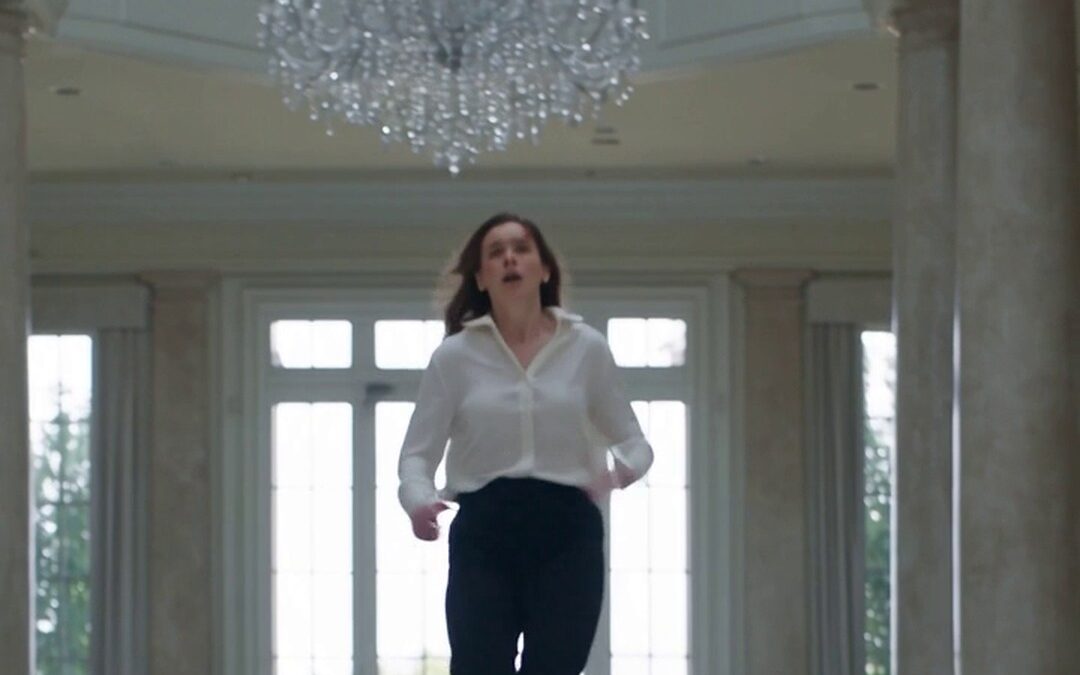
I heard Eli’s blanket slide against iron before I looked up, a soft dragging sound above the marble foyer, and by the time I saw his small body tip over the second-floor balcony, I was already running.
My shoes lost their grip near the center of the floor, but I caught the nine-month-old against my chest and turned so my shoulder took our fall, holding him tight while his breath caught and then broke into a furious cry.
Richard came through the front door as I struggled to sit up, with Eli crying in my arms and the blue blanket spread across the marble beside us.
“What did you do to him?” he demanded, crossing the foyer before I could answer.
I said Eli had fallen from the balcony, but Richard looked at the blanket, then at me, and struck my left cheek with his open hand while I was still holding his son.
The blow snapped my head sideways, and I curled over Eli until Richard stepped back.
“I caught him,” I said, keeping my voice steady enough for him to hear, “and you need to call 911.”
Eli’s face was red and wet, and although his cry was strong, I could feel my right wrist beginning to swell beneath the arm that supported his back.
Richard stared at us, breathing hard, while I asked him again to call and told him neither of us should be moved until someone checked Eli.
Sophie appeared at the hall entrance in her socks, stopped when she saw her brother, and pointed past Richard to the security monitor on the foyer console.
“Daddy, look up there,” she said.
The upper panel showed the balcony camera that Richard had installed months earlier after Sophie tried to climb the railing, while the lower panel showed the front door and the stretch of marble I had crossed.
On the delayed replay, the blanket slipped over the iron first, Eli followed, and I ran beneath him from the far side of the foyer.
Richard’s face changed as he watched himself enter through the front door seconds after I caught Eli.
Then he looked back at the upper panel, where his wife, Celeste, stood at the railing with her hands still extended into the space where their son had been.
Chapter 2: What the Cameras Could See
For one second Richard seemed unable to move either of his hands, so I told him the street address and made him repeat it into his phone while I stayed on the floor with Eli.
The dispatcher asked whether Eli was breathing normally, whether he had lost consciousness, and whether I had seen him strike the floor, and I answered from what I knew rather than from what I desperately wanted to believe.
Eli had cried as soon as I caught him, his eyes were open, and I had kept his head clear of the marble, but I had no way to know what the sudden stop had done inside his small body.
When the dispatcher told me to keep him as still as I could, I rested my good forearm against my knees and let him cry against the collar of my shirt.
Richard crouched a few feet away and held out his arms, but I said, “Wait for the paramedics,” because his face had just changed twice in less than a minute and Eli did not need either of us acting on panic.
Sophie remained by the hall entrance with her hands tucked under her elbows, looking from the monitor to her brother as if she could keep him safe by watching both.
I asked her to sit on the bottom stair, where I could see her, and she obeyed without asking why her father was no longer speaking.
Celeste came down the upper hall while Richard was still on the phone, one hand sliding along the railing, and stopped when she saw Eli moving in my arms.
She said his name once, softly, then asked what had happened to me.
I told her I had caught him and that an ambulance was coming, and I watched her glance at the monitor before she looked at Richard.
“I was holding him,” she said, “and he jerked when I pulled the blanket up.”
Richard did not answer her.
That silence was the first space anyone had given me since the fall, but I could not use it for relief because Eli’s cries were growing uneven and my wrist hurt whenever I adjusted my grip.
The front door opened again, and Mateo, the house manager, stepped in from the drive with a delivery receipt in his hand.
He saw us on the floor and put the paper down without being asked, then stood near Sophie until the dispatcher told Richard the ambulance was two minutes away.
I had worked in the Vale house for fourteen months, long enough to know Mateo would bring Sophie water without drawing attention to it, and he did.
Celeste started toward us, but I asked her to stay where she was until the medics could examine Eli, and she stopped with her hand resting on the newel post.
She had brushed his teeth the night before while he protested with all four limbs, and I knew the exact crooked tune she used to make him laugh during baths, which made it harder to understand the image still glowing on the console.
The paramedics entered through the front door at 3:20, six minutes after the fall, and took the room apart with ordinary questions about Eli’s age, the height of the balcony, his cry, his color, and where my arms had met him.
I told them the balcony floor was about eleven feet above the foyer and showed them how I had turned as I caught him, careful to say that I had heard the blanket first and had seen only the last part of his descent.
One paramedic knelt in front of me and watched Eli’s breathing while the other checked his scalp and limbs, and the first told me to loosen my hold by degrees so they could lift him without twisting my wrist.
I let go only when I saw both of their hands supporting him.
Eli reached toward my shirt as they laid him on the padded stretcher, and I put my left hand near his foot until they had finished fastening the straps.
The paramedic checking me found swelling along my right wrist, tenderness in my shoulder, and a red print rising on my left cheek.
When he asked how I had hurt my face, Richard said, “I hit her,” before I had opened my mouth.
I looked at the medic and said Richard had struck me once after I caught Eli, because I wanted the injury recorded under the correct cause.
The medic asked whether I felt dizzy or sick, and I said my ear rang but I had not blacked out.
He recommended that I come to the emergency department too, and I agreed because I could not work out how much of my shaking came from pain.
Richard wanted to ride with Eli, but the crew needed to leave, so they told him to follow in his own car and warned everyone not to handle the baby’s blanket or the landing area.
Celeste said she would follow Richard, and the medic looked at me when she spoke.
“I want her separate from me and Eli,” I said, without explaining the footage to a man who needed to get the child into the ambulance.
Richard heard me and told Celeste to remain at the house until the police arrived, which made her turn toward him so sharply that Sophie flinched on the stair.
I asked Mateo to stay with Sophie and call her aunt Lena, whose number was on the refrigerator beside the school calendar, because neither parent was in a position to make the foyer feel safe to her.
Mateo said he would, and Sophie nodded when I told her Lena would meet her soon.
Before I followed the medics outside, I looked once at the monitor and saw the image had returned to its live view, the balcony empty above a floor where my blue sleeve and the stretcher wheels left no lasting mark.
Richard stood beside his car with the keys in his hand, waiting as if I might decide we should travel together.
I took the front seat of the second ambulance instead, and when he said my name, I told him I would speak to him after the doctors had seen Eli and after I had spoken to the police.
He nodded, but I did not wait to see whether he understood how much he had lost by making me say it.
At the hospital, a nurse took Eli directly to a pediatric treatment room while another led me to an examination bay across the hall.
Through the open door I heard him object to a cold stethoscope with a healthy, indignant scream, and I held on to that sound while a doctor asked me to turn my wrist and then stopped when I could not.
The pediatric team examined Eli from head to toe, checked his pupils and breathing, and asked again about the height and the catch, because a strong cry did not rule out injury from a fall that far.
They found a small bruise on his right upper arm where my fingers had closed around him, but no sign that his head had struck the floor, and they kept him under observation while they decided which tests the mechanism justified.
The doctor treating me ordered an X-ray of my wrist, checked my shoulder and neck, and documented the swelling on my cheek and the ringing in my left ear separately from the injuries caused by the catch.
When she asked whether I felt safe going back to the house, I said I did not know yet, and she gave me time to answer the rest of her questions without Richard in the room.
My wrist had a small fracture near the end of the radius, the doctor said after the X-ray, and she fitted a temporary splint before checking my fingers for warmth and feeling.
I stared at the white wrap around my hand and thought of how often that same hand had tested Eli’s bathwater, cut his food, and fastened the buckle on his stroller.
The injury would heal, but I could not pretend it was nothing simply because Eli had been heavier than he looked when he fell.
A hospital social worker asked whether I wanted to make a report about the blow, and I said yes.
I had seen families turn an ugly moment into a story about stress before, and I wanted the record to show what happened while the mark was still on my face.
Richard was allowed into Eli’s room once the doctors had completed their first examination, but a nurse told me Celeste had been asked to wait elsewhere pending a child safety assessment.
I did not know then whether anyone had told the hospital about the monitor, and I would not guess what the staff knew from the way they moved.
At 4:02, while I was still waiting to hear whether Eli needed imaging, a city police officer came to the door of my bay and asked if I could give a statement.
I asked for a few minutes to hear the pediatric update first, and she said she would speak to the other adults separately.
The pediatrician returned at 4:11 and explained that Eli was alert, feeding normally, and showing no signs of a head injury on repeated exams, though they intended to observe him through the evening because the height of the fall and the force of the catch still mattered.
She said they would reassess if his behavior changed, and I appreciated that she gave me a plan instead of a promise.
Only then did I tell the officer what I had heard, what I had seen, and what I had done.
I described the sound of the blanket on iron, the distance I crossed, Eli’s position when I caught him, and Richard’s arrival, and I kept Celeste’s name out of my account until I reached the monitor because I had not seen her on the balcony with my own eyes during the fall.
The officer asked what the monitor had shown me, and I said it had shown Celeste at the railing and me moving below after Eli was already going over.
When she asked whether the recording proved Celeste had dropped him on purpose, I said I did not know what had happened in her mind or hands before the seconds I had watched.
I wanted the truth badly enough to be careful with it.
The officer asked about Richard’s blow, and I gave her the same account I had given the doctor, including which cheek he struck and where Eli had been in my arms.
She photographed my face with my permission and took the hospital’s contact information for my wrist records.
Richard had built the camera system after Sophie climbed onto the balcony bench the previous winter, and he had shown me the foyer monitor during my first week so I would recognize the chime if a child went near the railing.
The balcony camera was mounted high at the east end of the upper hall, with a wide view of the landing, the railing, and the doorway to Eli’s nursery, while a separate camera above the front door showed the foyer.
Both fed into a recorder in the locked utility closet, and the foyer monitor displayed their live views side by side with the same system clock.
I told the officer all of that, including the camera’s blind spot behind the linen cabinet, because no one could see what Celeste had done before she stepped into the recorded stretch of hall.
The officer called the house before she left my bay, asking the colleague there to keep anyone from touching the recorder, the monitor, or the balcony until they could document them.
I had been the one who dusted the monitor each Tuesday, and I remembered the scratched corner of its frame and the tiny green light beneath it, details that felt ridiculous to offer until the officer wrote them down.
Mateo later told me the police photographed the two live camera views, noted the system clock against their own time, and copied the original files without asking anyone in the family to send a clip from a phone.
The recorder kept a thirty-day rolling archive, which meant the crucial minutes would have been overwritten eventually, but it also meant the police could preserve the source rather than depend on the short replay Sophie had pointed out.
I knew the front-door camera’s angle because it caught me bringing Eli’s stroller inside every afternoon, and it could see the front door, the console, and most of the marble path to the stairs.
It could not see around the corner into the breakfast room, where I had warmed his bottle, or through the balcony rail to a person standing back in the upper hall.
Those limits mattered later, when Celeste tried to make the unseen part of the house carry her explanation.
The officer returned to say the copied footage showed the blanket crossing the railing at 3:14:06, Eli entering the frame a fraction of a second later, and me leaving the breakfast-room doorway at 3:14:08.
Richard came through the front door at 3:14:14, after I had caught Eli, and the camera showed his hand strike my face at 3:14:18.
Hearing those numbers made me grip the edge of the bed with my good hand, because four seconds had been enough for Richard to decide what kind of person I was.
The officer added that the upper camera showed Celeste at the rail and no one else near Eli during those seconds, though the picture did not reveal every movement of her fingers behind the blanket.
I asked whether they could see her face, and the officer said they could identify her clearly as she turned toward the stairs after the fall.
The recording had undone Richard’s accusation against me, but it had not yet settled whether Celeste had lost her grip, taken a reckless chance, or meant Eli to go over.
That distinction did nothing to lessen the height he had fallen, but it kept me from claiming certainty I did not have.
Near five o’clock, the nurse let me stand in the doorway of Eli’s room.
He lay on his back in a hospital crib with one sock missing, working a soft plastic ring from hand to hand while Richard sat beside him and watched each movement as if it were a message.
When Eli saw me, he made the short impatient noise he used when I took too long to lift him after a nap.
I stayed where I was because the doctor had asked that he remain in the crib until the next exam, and I told him his other sock had probably escaped under the stretcher.
Richard looked up at my voice, then at the splint.
“I’m sorry,” he began, but I said, “This isn’t the place,” and he stopped.
A nurse came in to check Eli’s temperature, giving me a reason to leave without asking Richard for one.
Outside, the social worker told me Celeste had offered a different account: Eli had twisted while she held him on the balcony, the blanket had slipped from her shoulder, and she had grabbed for him too late.
Celeste said she had gone out there because he liked to watch the cars turn into the drive, and the baby had been fussy after a nap.
I knew he did like the cars, particularly the white delivery van that arrived most afternoons, and I hated that the familiar detail made the rest of her explanation easier to hear.
The social worker said Celeste also claimed she had called me to come through the foyer with a bottle because she expected to bring Eli downstairs.
That part was true; at 3:09 she had sent me a message asking for his bottle in the foyer, and I had replied that I was warming it.
At the time, the request had struck me as ordinary because Eli’s feeding schedule lived in my head and Celeste sometimes carried him down to meet me instead of waiting in the nursery.
The officer asked to see the message, and I showed her the screen while she photographed it with the time visible.
I also told her I had gone into the breakfast room at 3:12, leaving the foyer empty until I came back with the bottle a minute or two later.
Celeste’s explanation could place me exactly where she expected me to be without admitting she had needed me there.
At 5:30, Celeste’s attorney called the hospital social worker and asked whether the family could arrange a quiet transfer to private pediatric care, saying the parents were worried about publicity and that the household had suffered a terrible accident.
The social worker told me about the call because the attorney had also asked whether I would sign a statement describing Eli’s fall as accidental once I was discharged.
I said I would give a truthful statement to investigators, and I would not sign one drafted by a person who had not spoken to me.
A few minutes later Celeste sent me a text from somewhere in the hospital: I know you’re hurt, and I’m grateful you caught him, but please don’t let Richard turn a terrible accident into something worse for our children.
I read it twice, noticing how she had made Richard the danger in a message sent after he had already struck me.
I forwarded it to the officer and put the phone face down.
Celeste had always been careful with the children in ways other people could see.
She taped the corners of hardback books before Eli learned to pull himself up, made Sophie wear a helmet on the slowest bicycle ride, and once drove forty minutes to replace a recalled car-seat clip.
Those memories were not proof that she had protected Eli on the balcony, but they were part of why I could not simply fit the image of her extended hands into the woman I had known.
The other part was work.
I earned enough at the Vale house to pay my rent, send money to my mother when she needed it, and keep a small savings account that had taken years to build.
If Celeste and Richard decided the word accident should end every question, they had lawyers, schedules, and a home I entered through a service door, while I had a fractured wrist and a hospital bracelet.
The social worker asked whether I wanted someone from the hospital to help me arrange a ride home.
I said I would call my friend Tessa, who lived twenty minutes away and had once brought soup when I had the flu, because I did not want a Vale car at the curb.
Before Tessa arrived, Mateo called to tell me Lena had Sophie with her and that the police had asked everyone at the house to wait in separate rooms until they finished their initial interviews.
He sounded tired, and I asked only whether Sophie had eaten.
“She had toast and a pear,” he said, which was enough to let me breathe for a moment.
The next time the officer came to me, she asked whether anything about Celeste’s behavior earlier that day had seemed unusual.
I remembered her standing in the breakfast room at lunch, reading something on her phone while Eli mashed peas into the tray, then looking at me when I said Sophie had a school assembly on Friday.
She had asked whether I planned to go, and when I said I did if the family wanted me there, she had told me it would probably be a complicated week.
I had taken that as a reference to the separation she and Richard had announced to the staff two days earlier.
They had kept their voices low during the announcement and said the children’s routines would continue, but Celeste had pressed her thumb so hard against a folded paper that I could see the edge whitening.
I told the officer about the conversation, then said it might mean nothing beyond a strained marriage.
She asked what else had changed, and I remembered the balcony chime had been silent that afternoon.
The chime usually sounded through the foyer monitor when someone moved into the camera’s marked zone near the railing, a setting Richard had insisted on after Sophie’s climbing incident.
It was not an alarm that stopped a child from falling, but its little double note had become part of the house, and I had not heard it when Celeste and Eli appeared upstairs.
I had thought the sound was lost under the bottle warmer and the dishwasher.
When I told the officer, she asked whether I had ever seen the monitor muted, and I said Celeste sometimes lowered the speaker during Eli’s naps because its chime could carry up the stairwell.
That was a harmless reason to touch the controls, and I made sure the officer heard it.
At 6:18, Lena called from the house and asked if Sophie could speak to me.
Sophie’s first words were, “Is Eli still loud?” and I said he was making plenty of noise and the doctors were watching him carefully.
She asked whether I would come back for the dinosaur book because I knew which pages he liked to chew, and I told her we would decide that when everyone was safe.
I did not ask what she had seen on the balcony.
A child who had pointed to the screen while the adults argued had already done more than anyone should have needed from her.
After Sophie handed the phone back, Lena told me Sophie had said one other thing when she saw the monitor in the foyer: “Mommy made the bell sleep.”
Lena had written the words down because she did not know whether Sophie meant the doorbell, the camera, or something from a game.
I asked her to tell the officer exactly what Sophie had said and to let Sophie be done with questions for the evening.
Later, an investigator trained to speak with children arranged a recorded interview instead of letting each adult ask Sophie for a version that suited them.
Sophie said she had seen Celeste touch the monitor’s speaker button while she stood on the stairs before Eli’s fall, and that Celeste had told her the bell might wake him.
She had not seen her mother let go of Eli.
When the investigator asked why Sophie had pointed at the monitor, she said she had seen “Mommy and Eli up there” on the screen while Richard was shouting at me.
Her words matched the small thing she could know: who had been above, who had been below, and where she had seen it.
They did not have to carry the weight of deciding what her mother intended.
At 6:40, the pediatrician said Eli’s repeated neurological exams remained normal, his breathing was clear, and he had taken his bottle without vomiting.
She still wanted him observed overnight because his fall was serious and because the adults responsible for his care were giving conflicting accounts.
I asked whether the bruise on his arm matched where I had caught him, and she said its location was consistent with the grip I described, while being careful not to turn one bruise into a complete reconstruction.
The medical record could support that he had been caught and examined, and the video showed how he reached my arms.
Neither required anyone to pretend he had been safe when he went over the rail.
Tessa arrived with a sweater that did not belong to any Vale and sat beside me while I completed the hospital paperwork.
She did not ask for the story until we were in her car, and when I told her Richard had hit me, she pulled into a parking space rather than trying to react in traffic.
I said I had reported it and that the baby was being watched, then asked her to drive.
We reached her apartment at 8:05, and I sat on the edge of her couch with my splinted wrist on a pillow while she found a bag of frozen peas for my cheek.
The television stayed off, and the absence of voices gave me room to remember the last two weeks more clearly.
Celeste and Richard had been meeting with attorneys about living apart, though they had not told the children when either parent would move.
Three days earlier, Celeste had asked me to sign a new household incident log stating that I had twice left Sophie unattended near the balcony.
I had refused because both entries were wrong.
On the first date Sophie had been at a dentist appointment with Richard, and on the second I had been with both children in the downstairs playroom during a storm.
Celeste had said the log was only for an insurance review and that dates were often approximate, but I had written the corrections on a copy and given it back to her.
I told Richard about it that morning, after finding my corrected copy missing from the staff binder, and he had asked me to send him photographs if I still had them.
I did, at 10:36, with a short note saying I could not sign an inaccurate account.
He had replied at 11:02 that he would speak to Celeste after his meeting.
The officer had not asked for those messages because I had not yet connected the log to the fall, and I sat up so quickly that pain shot through my wrist.
Tessa watched me search my phone, then helped me set it down where I could scroll without bending the splint.
The photographed pages showed Celeste’s proposed entries, my handwritten corrections, and her initials beside the instruction to return the log before the end of the week.
They did not prove what happened on the balcony, but they gave a reason for Celeste to know I would contradict a story that blamed me for neglect.
I called the officer’s number and left a message saying I had records she should see.
While I waited, I thought of Celeste’s text from the hospital and the careful way it thanked me before asking me to keep quiet.
She had offered me a place in her version: brave employee, frightening accident, no need to examine the seconds before I ran.
If I accepted it, she could still say she had been reaching for Eli and that no one could know more than the camera showed.
At 8:37, the officer returned my call and asked me to send the photographs through a secure evidence link she provided.
I sent the images, the original text thread, and the message from Celeste’s attorney’s office that had arrived after the hospital call, asking when I might be well enough to discuss “the family’s statement.”
The officer acknowledged receipt and said investigators were requesting the original log from the house.
I asked if Eli was still at the hospital, and she said she had no new medical information to share.
That answer felt cold until I remembered she was protecting a child’s information from becoming part of every phone call made about the case.
At 9:20, Richard called.
I let it go to voicemail, then listened when Tessa went to make tea.
He said Eli was still doing well, that a child protection worker had met with him at the hospital, and that he knew he had no right to ask me to talk to him.
He did not try to explain the slap in the message.
I saved it and returned to the part I could verify: Eli was feeding and the doctors were still checking him.
An hour later, the officer called again and asked me to describe the blue blanket.
It was cotton with a narrow white edge, washed thin at one corner because Eli liked to rub that seam between his fingers before sleep.
Celeste kept it in his nursery basket, and I had handed it to her when she took him upstairs after lunch.
I had seen it fall before he did, and I had seen it on the marble beside us afterward.
The officer said they had photographed a few blue fibers caught on a curled section of the balcony’s ironwork.
That detail could fit Celeste’s account of a blanket snagging during an accidental slip, so I asked why it mattered.
She said the fibers were on the outside of the rail, beneath the decorative curl, where the blanket could have brushed only after part of it was already beyond the safe side.
She did not claim the fibers alone explained how Eli got there.
I looked at the blanket in my memory, floating for a moment between the upstairs iron and the floor, and realized I had not understood which side of the rail it had touched first.
The upper landing had a vertical iron balustrade topped by a broad wooden handrail, with gaps too narrow for Eli’s body.
Celeste could not have been holding him against the floor and watched him slip through those bars.
For him to cross the rail, someone had to hold him high enough or far enough outward that the barrier no longer guarded him.
That was consistent with a terrible accident while lifting him to see the cars, but it also made the choice to take him near the edge impossible to ignore.
The officer said investigators had measured the height and photographed the rail before anyone cleaned it.
They had also taken the blanket as evidence, leaving Eli with the spare yellow one from his hospital bag.
I knew he would complain when he tried to find the white seam, and I hated that the smallest discomfort was the only one I could imagine fixing with my hands.
The next message came from Mateo at 10:46, after police had released him from the house.
He asked whether I needed anything brought to Tessa’s, and I requested the extra wrist wrap from my locker, then stopped myself and told him the house could wait until the investigators were finished.
He said Sophie was asleep at Lena’s and that Celeste had left with the police for an interview.
He did not say whether she had gone voluntarily, and I did not ask him to guess.
I slept in pieces, waking each time my wrist shifted against the pillow or I dreamed I had heard the blanket too late.
At 1:12 in the morning, the officer sent a brief message confirming they had received my records and would speak to me again after I had rested.
I was awake anyway, and I opened the photographs of the incident log instead of replying.
On the second page, beneath the false entry about Sophie, Celeste had written a note in the margin: “Pattern must be documented before hearing.”
I had seen that note before, but I had treated it as language from an insurance form because Celeste had called the whole binder a compliance task.
With the separation now in the open, the word hearing had a different possible owner.
I left it to the investigators to ask what proceeding she meant.
The following day began before dawn for me, though the Vale house would not see me until later.
At 6:15, the hospital called to say Eli had remained stable overnight, with normal checks and no new symptoms, and that he would stay until a safe discharge plan was approved.
I asked the nurse to tell him I was coming when I was able, and she said he had already been awake long enough to object to breakfast.
Tessa drove me back after I washed my face carefully around the swollen cheek.
In the pediatric room Richard was standing by the window while Eli sat with a nurse on the bed, reaching with both hands for a spoon he was not allowed to keep.
The bruise on his arm had darkened, and I could see the little square marks left by hospital tape near his wrist.
I stayed beside the nurse long enough to let him grip one finger of my uninjured hand.
He inspected my splint with solemn interest, then tried to put the spoon against it.
Richard watched without approaching us.
The child protection worker came in soon afterward and explained that Eli could not leave with Celeste while the circumstances of the fall were being investigated.
Richard could care for him only under an immediate safety plan that included Lena’s presence at home, no unsupervised contact with Celeste, and follow-up visits and interviews.
The worker also said Sophie would remain with Lena until they had assessed where she felt safe and how the adults would keep her from being pulled into their dispute.
Richard agreed in front of me, but I knew an agreement spoken in a hospital room would have to survive a house full of habits.
The worker asked whether I planned to return to my job, and I said I had not decided.
I made it clear that no safety plan should depend on my unpaid presence or on my willingness to work under a parent who had struck me.
She wrote that down.
At 8:05, the officer met me in a quiet consultation room with an investigator from child protection.
They had the original camera files, the monitor settings log, the blanket, photographs of the rail, my messages, and copies of the incident log.
They told me only what they could share without compromising their interviews, and I answered questions about the ordinary operation of the house.
The monitor log showed the balcony motion chime had been muted at 3:07 through the foyer console using Celeste’s personal code.
The cameras had continued recording, and the system clock had stayed synchronized with the front-door entry and the police’s reference clock.
At first the muted chime supported Celeste’s explanation that she had wanted to keep Eli asleep.
Combined with Sophie’s observation and the timing of the bottle request, it showed Celeste had prepared a silent interval immediately before bringing him to the railing.
The investigator asked whether Celeste had muted it on other afternoons, and I said she had done so sometimes during naps but usually turned it back on when Eli woke.
The system history, he said, would let them compare rather than rely on my impression.
I was relieved he wanted the comparison, because a habit should not become sinister merely because one afternoon ended badly.
The original recording began well before the fall.
The upper camera showed Celeste carrying Eli from his nursery at 3:11, standing back near the linen cabinet for a while, then moving to the balcony with his blanket across one shoulder.
At 3:13:42 she set her phone on the narrow table by the rail, and at 3:13:51 she shifted Eli outward until his body was above the handrail.
The camera’s view of her arms was partly hidden by the blanket, but it showed her staying in that position for several seconds rather than losing her footing in one sudden motion.
At 3:14:06 the blanket slid over the outside curl of iron, and Eli followed.
Celeste reached forward after he left her arms, a movement that could be a genuine attempt to catch him, an effort to make it look that way, or both.
The investigators did not ask me to choose among those possibilities.
They asked instead whether I had ever been told to receive Eli in the foyer rather than his nursery, and I said the message at 3:09 was the only time I remembered Celeste specifying that spot for a bottle.
Richard’s arrival had its own record.
He had been on a work call downtown and told Celeste he would be home before Sophie’s music lesson, but his car passed the gate camera at 3:13:58 and the front-door camera caught him at 3:14:14.
Investigators had not found a message from Celeste telling him to hurry, though she knew his schedule and could have heard the car on the drive.
The recording could prove he saw only the aftermath before he hit me.
It could not prove Celeste had counted on him arriving at that exact second.
I told the officer I would not build her plan out of a coincidence just because Richard had made the coincidence worse.
The officer gave me a look I could not read and moved to the next question.
She wanted to know when I had first challenged the false incident log.
I said I had refused to sign it on Wednesday, corrected it on Thursday, and sent photographs to Richard on the morning of the fall because my marked copy had disappeared from the staff binder.
Mateo had seen me put it there, but I had no idea who removed it.
The investigator said Celeste’s attorney had drafted a proposed parenting statement for a hearing scheduled the following week, and the version recovered from her email described Richard’s home as dependent on “an inattentive employee whose conduct had placed the children near the balcony.”
The draft predated the fall by two days.
I felt cold under the hospital blanket because the phrase had been written before Eli had gone over the railing.
The investigator said the draft did not mention a fall or any injury, and I repeated that distinction before it could disappear beneath my anger.
It showed Celeste was already trying to make me the example of unsafe care.
It did not, by itself, show she had planned to put Eli over the balcony.
A later message, sent from Celeste to her attorney at 2:41 on the day of the fall, said, “If there’s a documented event today, I need the emergency filing ready before he changes the staff story.”
The investigator read it aloud once, then placed the printed page face down while I gathered myself.
Celeste could argue she expected a verbal dispute over the log or another staff complaint.
She would have to explain why she used the word event and why she wanted an emergency filing ready before anyone had been hurt.
I asked whether her attorney knew what she meant, and the officer said that was still being investigated.
No one in the room treated a lawyer’s draft as permission to guess at a conversation they had not heard.
Celeste’s counterclaim had grown more detailed overnight.
In her interview she said Eli had been warm and restless, that she had taken him to see the cars, and that she had raised him slightly above the rail because he pushed his feet against her stomach.
She said the blanket had snagged on the iron curl, pulled across her forearm, and made her lose her grip.
She acknowledged muting the chime because she had not wanted it to startle him, and said the message asking me to bring his bottle to the foyer showed she expected a normal handoff.
It was the strongest version she could give without denying what the cameras showed.
It also required us to believe she had lifted a restless baby beyond an eleven-foot drop while holding a loose blanket against an iron snag.
Even if every part about the slip were true, she had made a choice that placed Eli where a slip could kill him.
The investigators were still testing the question of intent, and I did not need a final answer to know why I could not put him back in her arms that morning.
At 9:30, Richard asked to speak to me with the social worker present.
I agreed because he was Eli’s father and my employer, and because a witness in the room would let me leave if he tried to turn an apology into a negotiation.
He sat across from me with his hands on his knees and said, “I accused you of hurting Eli when you had just saved him.”
He looked at my cheek, then at the splint, and said, “I hit you while you were holding him, and I was wrong.”
He did not tell me fear had made him do it, though I could see he had been afraid.
“I reported it,” I said, and he answered that he knew and would cooperate with the investigation.
I told him he had entered too late to see the fall but had been quick to decide I was guilty.
He said, “I did,” and waited while I took in the fact that he had not added a defense.
I explained that I would not discuss returning to work while I was injured or while Celeste had access to the house.
I also said any communication about my wages, medical expenses, or employment would go through a representative I chose, because I would not sit across from him as a grateful employee accepting whatever he offered.
Richard agreed to pay the wages already owed and to provide the household insurance information to my representative.
I told him payment was an obligation, not a remedy for what he had done.
He lowered his eyes and said he understood.
Whether he truly did would be measured by what he did after we left the room, and I had no reason to decide that question for him yet.
Before I went back to Eli, Richard told the social worker he wanted the foyer monitor left in place and the original camera files preserved for anyone who needed them.
He also said he had given police his phone because they had asked when he arrived and what Celeste had told him that morning.
Those were ordinary acts of cooperation, not courage, but they were the first useful things he had done since the fall.
I returned to Eli’s room and found him asleep with the yellow blanket over his legs, one hand open beside his face.
His bruised arm was visible, and I stayed long enough to make sure the nurse knew he liked the bottle warm but not hot.
Then I went to the window because I needed a minute in which I did not hear anyone explaining him.
That afternoon, the investigators returned to the house with a technician from the security company to document the system settings and confirm the code history.
Celeste had said she used her own code because the foyer console asked for it whenever she changed the chime volume, which was true.
The technician found that the balcony zone had been muted on four afternoons in the previous month, all during Eli’s naps, but on each of those days it had been restored within an hour.
On the day of the fall, Celeste muted it at 3:07 and left it off through the incident.
That comparison narrowed what the setting proved.
It showed a familiar action at an unusual time, coordinated with the bottle request and her move toward the rail, without turning the button press into a confession.
Mateo supplied another limited piece of timing.
He had signed for a delivery at the side entrance at 3:13 and heard Richard’s car on the drive a minute later, but he had heard no alarm from the foyer monitor when Celeste stepped near the balcony.
He had not seen Celeste or Eli before coming into the foyer, and he said so plainly.
I was glad the investigators had not asked him to become the witness the camera could not be.
The physical evidence was less simple than I had hoped.
The blanket’s blue fibers were caught outside the curled iron, but a blanket could snag there during a careless lift as well as during a deliberate release.
The handrail had no fresh damage, and Eli’s clothes had no tear that showed where his body had been supported.
The police photographed the marks on Celeste’s forearms, which she said came from grabbing for him, and consulted the medical records instead of treating scratches as a verdict.
The evidence could establish how dangerous her position at the rail had been.
It could not read the last thought she had before his weight left her hands.
The change came from something she had prepared before she reached the balcony.
At 4:45, the officer called me to ask whether I recognized a small adhesive label photographed on the underside of the foyer console.
It was white, the kind I used to mark freezer bags, and it carried my initials in Celeste’s neat handwriting beside the words “staff access.”
I had never seen it.
The officer said Celeste’s attorney had supplied a draft account, created before the fall, stating that I had turned off the balcony alert while caring for the children and that Celeste had repeatedly warned me about the danger.
The label alone could have been ordinary housekeeping, and a draft allegation could have been part of the earlier dispute about the log.
The trouble for Celeste was that the system recorded her personal code at 3:07, and the technician confirmed my staff code could not mute that zone at all.
I asked when the draft was created.
The officer said its file history showed the paragraph about the alert had been added at 1:28 that afternoon, nearly two hours before anyone in the foyer knew Eli would fall.
For a moment I saw the console as Celeste must have hoped Richard would see it: my initials beneath a silent screen, my bottle on the marble, Eli hurt in my arms.
The camera had spared me from that picture becoming the only one the house possessed.
The officer said investigators were seeking the original versions of the draft and interviewing the people who had handled it.
I thanked her for telling me and sat with the phone in my lap after she hung up.
I had spent months teaching Sophie to ask before blaming someone when a toy broke, and I could not stop thinking about how little time her father had taken before he struck me.
Later, the child protection worker asked whether I would be willing to speak with Sophie once she had checked that Sophie wanted to.
Sophie had asked whether I was angry at her for pointing to the monitor, a question Lena had tried to answer without claiming to know my feelings.
I said I would speak to her.
On the call Sophie said, “I thought Daddy would look.”
I told her she had helped everyone see where Eli had been, and that the adults were responsible for what happened after that.
She asked whether the bell was awake again.
I said the people at the house were checking it and that she could ask Lena if she wanted to know more.
Sophie went quiet, then told me she had finished the dinosaur book without Eli chewing a page.
I said that sounded like a different kind of ending for it.
Her laugh was brief and uncertain, but it belonged to her rather than to the footage.
By evening, the hospital approved Eli’s discharge under the written safety plan, with a pediatric follow-up scheduled for the next day and clear instructions about vomiting, unusual sleepiness, breathing trouble, or changes in movement.
Lena agreed to stay at the house with Richard and the children.
Celeste would not return while the child protection investigation continued, and any contact with the children would be arranged through the appropriate workers and court process.
The police had not announced a final charging decision.
They had opened an investigation into child endangerment and the prepared false account, and they had a separate report concerning Richard’s assault on me.
Those were different acts by different people, and I wanted each record to stay attached to the person who had made the choice.
At 7:10, Celeste’s attorney sent my representative a request for a statement that she had been trying to catch Eli.
I had watched the recording only once in the foyer and later heard its sequence described by investigators, so I could truthfully say her hands moved after he fell.
I could not truthfully say what she meant by that movement.
My representative answered that I would provide any further statement to investigators and that the attorney should not contact me directly.
It was a small boundary on a day full of large ones, and I slept better for having someone else hold it.
The police interviewed Celeste again after obtaining the draft about the alert.
I learned the outline later from the investigator, who was careful about what she could tell me while the case remained open.
Celeste acknowledged she had prepared an emergency custody filing and had wanted Richard to believe I was unsafe around the children.
She said she had planned to document an argument about the monitor, not an injury, and that lifting Eli over the rail had been a reckless moment she could not explain.
She did not say she had intended him to fall.
The investigators did not stop at her words or treat the absence of a confession as the end of the matter.
They compared the draft files, the code log, her messages, the timing of her request to me, and the camera footage, then sent the case for a charging decision.
I did not need to turn her account into a hidden speech about evil to understand the part she admitted.
She had chosen to make me look dangerous to improve her position in a fight over the children, and she had brought Eli into that plan.
Whether she expected him to be caught, expected only a frightening near miss, or lost control of a stunt she thought she could manage remained for investigators and, if charges followed, a court to test.
I knew what the cameras showed: Eli crossed the railing, and I had less than two seconds to reach him.
On the morning after the fall, Tessa drove me to the Vale house because I needed to collect my medication and a few belongings from my locker, and because I wanted to see the children before deciding anything about work.
The foyer was clean, but no one had moved the console.
Its screen showed the empty balcony and the quiet marble below, with the chime setting restored by the technician and a paper notice beside it asking that no one change the system during the investigation.
Mateo met us at the door and spoke softly, as if a loud voice might bring back the sound of the blanket.
In the kitchen, Lena made toast while Sophie sat at the table drawing a bus with far too many windows, and Richard stood near the sink holding Eli’s cup.
No one said Celeste’s name.
The silence was not an agreement about what she had meant to do, and it was not enough to keep a child safe, but it showed how thoroughly the night had changed what the house believed.
Sophie came to me with her drawing and stopped when she saw the splint.
I let her decide whether to hug me, and she touched my uninjured hand instead.
Richard asked whether I wanted Mateo to bring my things downstairs, and I said yes.
Then I told him I was ending my employment, effective immediately, and that my representative would send the practical details.
His face tightened, but he said he would follow those instructions.
I asked that any future visit with the children happen only if I chose it, with Lena present for now, and that Sophie not be asked to carry messages between adults.
Richard agreed without asking me to reconsider.
Lena set Eli’s cup on the tray of his high chair, checked the buckle, and moved the chair away from the kitchen doorway where people were passing with hot food.
I watched her take the ordinary extra second to make sure the strap lay flat against his stomach.
Eli reached for me with both hands, and I could not lift him with my broken wrist, so I gave him one finger to hold while Sophie set the bus drawing on the table where he could see it.
When I left, the balcony remained on the monitor, the chime was on, and the adults who stayed had to keep making choices the children could live inside.








