I Defended a Hungry Boy Outside My Daughter’s School, Then His Bracelet Threatened to Expose the Secret I’d Kept for Years
Chapter 1: At the School Gate
The first thing I saw outside Bellwether Academy was a paper cup bursting against a boy’s torn hoodie, followed by fries scattering across the sidewalk and a student in a clean blue blazer telling him he didn’t belong there.
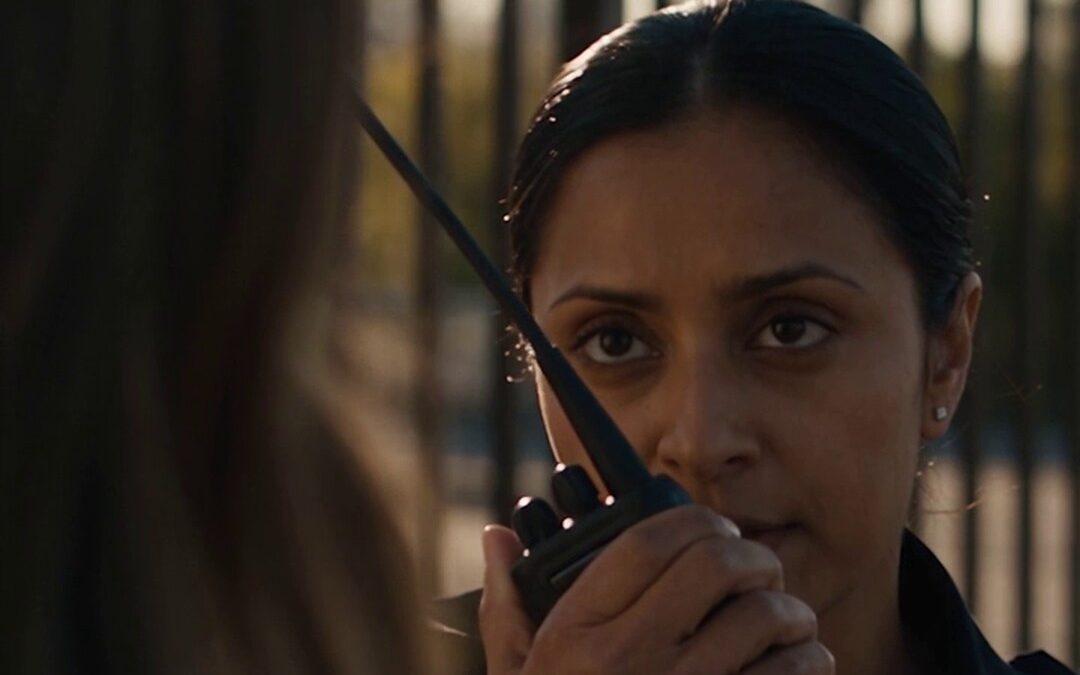
I was walking to meet my seven-year-old daughter, Lucy, and I stepped between the boy and the three students while the last of the drink ran off his battered backpack, then called to the security officer at the gate and asked her to bring the school counselor.
The students stopped when Officer Patel said their names, and I left her to handle them instead of turning the boy’s worst minute into a public argument.
He looked about nine, with dirt along one cheek and the fixed, careful expression of a child trying not to show how hungry he was.
I knelt several feet away, where he could see both me and the open sidewalk, and asked, “Are you hurt?”
He shook his head, reached for his backpack, and said, “I’m used to it.”
Lucy came out with her teacher just then, and I asked the teacher to keep her close while the counselor arrived.
The boy pulled the bag against his chest so quickly that I thought he expected someone to take it, and his sleeve slid back over a wide black cord around his wrist.
Stitched beneath clear plastic was a narrow strip of faded blue hospital band, much too small to circle his wrist on its own.
I read ST. AGNES MERCY and a date in September 2017, and then I saw the surname a nurse had written first as VAIL before correcting the I into an E with a dark second stroke.
Nine years earlier, I had watched her make that correction while my newborn son lay against me, so warm and heavy for someone who weighed only six pounds.
I had signed papers at that hospital and left without him, believing I would never know the name he grew into.
The boy’s dark eyes and the shape of his mouth seemed suddenly familiar, but I knew how readily a face could become what a frightened person wanted to see.
He noticed my tears, tightened his grip on the bag, and asked, “Why are you looking at me like that?”
The answer rose so fast I nearly said it, but Lucy was beside her teacher, this boy was a stranger who deserved more than my certainty, and the child I had never told my family about was still only a possibility.
The counselor reached us as Officer Patel spoke into her radio, and I heard her give a dispatcher the name from a missing-child notice: “Eli Mercer, age nine.”
Chapter 2: What the Records Could Tell Us
“Eli,” the counselor said, keeping her voice low as she stopped beside me, “I’m Ms. Chen, and I can get you somewhere quiet while we find out what you need.”
He looked from her badge to Officer Patel’s radio, then asked whether they were going to take his backpack.
“No,” Ms. Chen said, “and nobody needs to touch your bracelet.”
I stood up slowly and told him I was stepping back, because the space around him had filled with adults and I had already become one too many.
Lucy slipped her hand into mine, and I asked her teacher, Mr. Alvarez, to take her to the library, where she could sit with the classmate whose mother usually picked them both up.
Lucy looked at the stain spreading across Eli’s hoodie and asked whether he could have her spare sweater from the bag in my car.
“That’s kind of you,” I told her, “and Ms. Chen will make sure he has warm clothes.”
She seemed disappointed that kindness could not be carried straight from her hands to his, but she went with Mr. Alvarez when I promised to find her as soon as I could.
Inside the gate, the three students waited with Officer Patel, who had their names, the discarded cup, and a clear view of the sidewalk camera.
Ms. Chen told her to preserve the recording and call the students’ parents separately, without saying anything about Eli’s circumstances to them.
Eli agreed to walk to the small health office only after Ms. Chen pointed out a chair near the door and said his backpack could stay on his lap.
I followed at his request, though I stayed across the room while the school nurse brought water, a blanket, and a clean sweatshirt from the office’s supply closet.
The nurse asked a few short questions about pain, dizziness, and when he had last eaten, and Eli answered some of them with shrugs.
When he said he had eaten a packet of crackers the previous afternoon, she offered a small snack while she arranged a medical evaluation, leaving the amount and pace of food to the clinician who would see him.
He drank cautiously, with one hand looped through the backpack strap.
Officer Patel returned to tell Ms. Chen that the missing-child notice came from a neighboring police district and had been entered two days earlier under the name Eli Mercer.
Eli’s shoulders climbed at the sound of the report, and he asked, “Did Graham call?”
“Someone who was looking for you made the report,” Ms. Chen said, “and the caseworker will explain what we know.”
He shook his head once, as though the difference mattered to him, but he said nothing else.
The district’s child-welfare worker, Leah Benton, arrived before the ambulance crew, carrying no file where Eli could see it.
She introduced herself to him first, asked what name he wanted her to use, and accepted “Eli” without asking about the name on his wrist.
I told her privately that I had given birth to a boy at St. Agnes Mercy in September 2017 and that the strip on Eli’s cord appeared to bear the name and correction I remembered.
“I might be wrong,” I said, forcing the words out before she could mistake my face for evidence, “and he doesn’t know why I reacted.”
Leah wrote down my contact information and asked me not to raise the possibility with Eli while she checked his immediate safety and legal status.
I agreed, although I wanted to tell her every detail I remembered, because the choice to wait was the first useful thing I could give him.
A paramedic found that Eli was alert but cold, tired, and mildly dehydrated, with no obvious injury beyond a tender elbow he said he had bumped against a wall.
The crew took him to a pediatric emergency department for a fuller assessment, and Leah rode with him after he chose her over a patrol officer.
He asked whether his bag could ride on the stretcher.
“It can stay with you,” Leah said, and he held it against his chest as they left.
I watched the doors close, then went to the library for Lucy.
She was drawing a ladder beside a house, and she asked whether the boy had somewhere to sleep.
“Adults are working on that right now,” I said, “and you did the right thing by telling me you were worried.”
She asked why I had cried, which was harder to answer without putting a secret into her care.
“I remembered something sad from a long time ago,” I said, “and I’m going to talk to Dad about it.”
On the drive home, I stopped at a light and saw my hands shaking on the wheel.
Lucy was humming in the back seat, already concerned with whether her drawing would fit on our refrigerator, and I let her be seven.
My husband, Daniel, met us at the door because I had texted him only that something difficult had happened at school and I needed him home.
I gave Lucy her usual afternoon snack, set her up with her homework at the kitchen table, and asked Daniel to come into our bedroom.
He listened while I told him about the bullying, the hospital band, and the missing-child report, then waited through the silence that followed.
“There’s something before all that,” I said.
At twenty-two, before I met Daniel, I had become pregnant during the last year of nursing school, though I had left the program before anyone outside my family knew why.
My boyfriend then, Aaron, had told me he would not be involved, and my mother had offered a room only if I agreed to place the baby for adoption.
I had a job that paid by the shift, a car I could barely keep running, and a fear of becoming a mother who resented her child for what she could not provide.
No one physically took the pen from my hand at St. Agnes Mercy, and no one signed my name for me.
I chose a voluntary relinquishment after the required waiting period, met with a counselor who told me I could refuse, and said yes when she asked whether I wanted the adoption agency to proceed.
I also declined the option to leave a letter or receive future information through the agency.
For years I had described that decision to myself as giving my son a better life, because the phrase let me leave out how badly I wanted my own fear to end.
Daniel sat on the edge of our bed and asked, “Why didn’t you tell me?”
“I was ashamed,” I said, “and then every year I kept quiet made the next year harder.”
He looked toward the closed door, where Lucy was sounding out words to herself, and asked whether the boy at school knew any of this.
“No,” I said, “and I don’t know if he’s the child I had.”
Daniel pressed his palms together for a long time before he said, “We need to do right by both of them, whatever the records say.”
I nodded, but I could see that he was hurt by nine years of silence and had no reason yet to trust my promise of honesty.
That evening Leah called from the hospital with permission to tell me only that Eli had been evaluated, had eaten under the staff’s guidance, and would spend the night somewhere safe.
She said his missing-person report was being updated, a trained worker would speak with him once, and she needed the hospital and agency details I could provide about my own birth history.
I gave her the September date, the name Vale, the adoption agency, and the number of the attorney who had represented me, which I found in an old email I had never quite managed to delete.
Leah did not tell me whether Eli’s records matched.
After the call, I opened a box in the back of my closet and took out the discharge folder I had carried from St. Agnes Mercy.
It contained my wristband, a hospital bill, a photograph of my son’s hand wrapped around one finger, and a carbon copy of the consent form bearing my full name, Mara Vale.
The photograph did not show his face or his bracelet, but the corner of the bassinet card was visible behind his hand.
I could make out a blue 4 and the edge of a letter that might have been a B.
I put everything back in the folder without deciding what the shapes meant and told Daniel I would give the originals to whoever had lawful reason to examine them.
He asked whether he could see the photograph, and I showed him without watching his expression.
“You held him,” he said.
“For most of one afternoon,” I said, “and then I asked them to take him because I was afraid I wouldn’t leave if I held him again.”
Daniel did not offer me comfort for that choice, and I was grateful he did not ask me to defend it.
The next morning, Leah told me a hospital records officer could verify my own treatment record once I signed a release, but Eli’s medical and child-welfare files would remain protected while the agency established who had authority to access them.
I signed my release at St. Agnes Mercy and sat in a waiting area that had been repainted since 2017.
The records officer, Mr. Webb, confirmed that I had delivered a male infant on September 21 at 11:48 p.m. and that my chart included the consent process and discharge two days later.
He could not show me the infant’s separate chart or the adoption file simply because I believed the child might have returned.
I asked him to preserve the original bracelet-issue log and the nursery photograph listed in my chart, along with their audit histories, for a lawful records request.
He wrote down the request, checked the retention schedule, and promised to send the preservation notice to the hospital’s legal office that day.
On my way out, I passed the elevators where I remembered standing with an empty car seat brochure in my hand.
The memory was vivid, but it established only what I had done, not where Eli had been.
At home, I called my former adoption attorney, who had retired but directed me to the agency’s records custodian.
The custodian would not discuss the child’s sealed file with me, though she accepted the case number from my consent form and agreed to respond to an authorized request from Leah or the court.
I sent Leah a clear scan of my form and offered the original for comparison.
By afternoon she had a problem I had not imagined: a preliminary index showed that the infant entered as Jonah Vale had been adopted by a family named Hart, while Eli Mercer’s adoption entry traced to a different birth surname.
“The index isn’t the underlying order,” she said, “but it’s a serious reason to slow down.”
I stared at the word Hart on the note I had made, hearing it as a door closing.
The simplest explanation was that Eli had received a keepsake that had belonged to another child, especially if the two boys had passed through the same foster home.
Leah had learned that Eli’s adoptive mother, June Mercer, once fostered infants, and she was checking whether Jonah Vale had been among them.
I thanked her for telling me before I could build a certainty around an object sewn into a cord.
When Daniel came home, I told him the apparent mismatch before he asked for news.
He said he was sorry, and I said I did not yet know what kind of news it was.
Lucy looked up from the table and asked whether the boy had found his home.
“He’s safe with people who know how to help,” I said, “and they’re still figuring out where he’ll stay.”
She wanted to know whether the students would get in trouble.
“The school is handling what they did,” I said, “and you don’t need to tell other children anything about him.”
She thought about that and asked if she could tell her friend she had seen someone get hurt.
“You can tell me or Dad whenever you need to talk,” I said, “and Mr. Alvarez can help you at school.”
The next day, Bellwether’s principal called to say that camera footage and staff accounts confirmed the students’ behavior, and the school would follow its discipline policy without identifying Eli to other families.
She had arranged for Lucy to speak with the school counselor if she wanted to, and she asked me to tell her if the attention at the gate made pickup difficult.
I thanked her, then asked that the footage be provided to investigators and kept out of any message sent to parents.
The principal said Officer Patel had already secured it.
I wanted the school to repair the harm its students had done, but I did not want Eli to become a lesson presented under bright lights to children who had thrown food at him.
Leah’s next call came while I was folding Lucy’s school clothes.
Eli had agreed to one interview with a child-welfare specialist after being told what questions mattered for finding safe adults, and he had declined to let anyone empty his backpack.
“He did let me photograph the outside of his wrist cord with his consent,” Leah said, “and he asked that I tell you he kept it because June told him it was his.”
I sat down with a shirt still in my hands.
June Mercer had adopted Eli when he was an infant and died the previous year, Leah explained, leaving her sister Tessa as his court-appointed guardian.
Tessa had been hospitalized suddenly on Friday, October 2, and Eli’s cousin Graham had promised by phone to pick him up from her apartment.
Graham came, stayed briefly, and left Eli there without a reliable adult, saying he would return after work.
Eli waited until the next day, heard no answer when he called, and left because he believed Graham meant to send him somewhere he had refused to go.
Leah did not tell me where he had slept or ask me to imagine it.
A family friend named Viv Alvarez had filed the missing-person report Sunday after she found Tessa’s apartment empty and could not reach Graham.
I had heard Eli ask whether Graham called, and now I understood that he had been trying to learn which adult had noticed he was gone.
Tessa was still in the hospital, exhausted and angry, with records showing that she had repeatedly called Graham and the police as soon as staff returned her phone.
The first missing report had been entered by Viv in the neighboring district because that was where she lived, while the apartment, hospital, and Bellwether Academy sat across three separate response areas.
Eli’s missing notice was active, but its initial description said he wore a green coat he had left behind, and no one at Bellwether knew his legal name until Officer Patel checked the broader database.
That gap did not make his disappearance inevitable, but it explained why an officer at one school gate had not recognized a boy sitting outside it.
I asked Leah whether Tessa had been cleared of leaving him alone.
“We have hospital admission times, her call history, and the legal guardianship order,” Leah said, “and we’re reviewing Graham’s account separately.”
I had been ready to blame Tessa because her name occupied the space where an adult should have been, and the evidence made me put that judgment down.
Leah also told me why Eli had come to Bellwether.
June had worked evenings as a custodian there before she became ill, and Eli had sometimes waited inside with a librarian named Mrs. Reed when Tessa picked them both up.
Mrs. Reed had retired in June, but Eli did not know that, and June had once told him he could always ask for her if he needed help.
He had come looking for a person, not for the school’s food or its wealthy families.
I remembered how he had watched the gate between the students’ insults, as though he was waiting for someone to recognize him.
Mrs. Reed had already spoken with Leah and confirmed the old arrangement through her employment records and photographs June had sent her over the years.
She wanted to see Eli, but Leah was leaving the choice to him.
Eli had asked instead for Viv, the friend who reported him missing, because she knew where June’s old dog was buried and how he liked his toast.
Viv was being assessed as a temporary caregiver while Tessa recovered.
When Leah told me that, I felt relief followed by a small, ugly disappointment that I had to name before it hardened into a claim.
I wanted to be the person who could answer Eli’s needs, even though I had not known the words he used for toast the day before.
He had people whose knowledge was earned.
That night Daniel asked me to tell him the whole story of September 2017, not just the part that began in the delivery room.
I told him I had been living in a rented room over a garage, working at a pharmacy counter after dropping out of nursing school when I could no longer cover tuition and prenatal appointments.
Aaron had offered money for an abortion early in the pregnancy, then stopped answering my calls after I chose to continue it.
My mother drove me to appointments but spoke of the baby as someone else’s child before he was born.
I had met an agency counselor at seven months, read profiles, and selected prospective parents who later withdrew for reasons the agency did not explain.
That withdrawal frightened me because I had begun imagining a specific house for my baby, but I did not reconsider the adoption itself.
At the hospital, a different counselor explained that the child would enter temporary foster care while the agency found an adoptive placement, and I said I understood.
I had not understood what temporary meant to an infant, or how many adults might carry him before one could promise to stay.
Daniel asked whether I had ever tried to find him afterward.
“No,” I said, “because I told myself looking would disturb his life, and because I was afraid of learning what that life actually was.”
He asked what I thought he might feel if he found out.
“I don’t get to decide,” I said.
We stayed up after Lucy went to bed, making plans for how to speak honestly to her without giving her the job of comforting us.
Daniel said he needed time to absorb the fact that he had married me without knowing I had another child somewhere.
I said he could take it, and I would answer anything he asked about my choice.
The next morning I told Lucy there was something about my life before she was born that I had kept private.
“When I was younger, I had a baby boy, and another family raised him,” I said, “and the adults are checking whether the boy we saw is him.”
Lucy set down her spoon and asked, “Did you lose him?”
“I chose for another family to raise him,” I said, “and that choice may have hurt him, even though I wanted him cared for.”
She looked at Daniel, then back at me, and asked whether she had to call him her brother.
“Only if that feels right to you someday,” I said, “and nobody is asking you to decide now.”
Her next question was whether I would leave her too.
I moved to the chair beside hers and told her I would keep caring for her, that Dad would too, and that no child had caused the choices I made when I was young.
She asked if she could still have Saturday pancakes with Daniel by herself.
“Of course,” he said, and she resumed eating while he wrote PANCAKES on the calendar where she could see it.
After school she asked to talk to Mr. Alvarez, and he later told me only that she had wanted reassurance the boy was warm.
I did not ask him for the rest of their conversation.
Leah called again with permission to give me a narrow update on the records: the agency’s digital index had listed Jonah Vale and another infant, Noah Price, under neighboring case numbers.
Both had spent time in the home of Lena Ortiz, a licensed foster parent who preserved keepsakes the agency allowed each child to have.
The preliminary index linked Jonah to the Harts and Noah to June Mercer, making the bracelet seem like something that had crossed from one foster child’s keepsake box into another’s.
June had received a blue strip in Eli’s memory tin at placement, but that did not establish whose wrist it had once circled.
“Lena fostered both boys,” Leah said, “and people can mix up small objects years later.”
I asked whether Lena was willing to talk to investigators.
“She is,” Leah said, “and she’s already found a paper inventory she kept in her own file.”
The inventory mattered more than Lena’s recollection because she had dated it when each child left her care, though Leah cautioned that a personal list could contain its own errors.
I spent the waiting hours sorting my old documents by date, leaving the originals in sleeves rather than marking them.
My consent form showed case number A-641, while the visible corner of the bassinet card in my photograph showed a handwritten 4B.
I sent copies to Leah with a note explaining where each had been stored since 2017.
The documents proved that I had saved them; they did not prove that Eli had ever been in my arms.
On Friday, October 9, Leah asked me to meet her at the agency office with my attorney, because a court had authorized limited comparison of the birth and adoption records for the identity inquiry.
I hired an attorney named Ana Ruiz, whose first advice was to treat the sealed files as Eli’s information, not a reward for my cooperation.
We sat across from Leah while an agency records specialist brought scanned copies with names outside the relevant chain covered.
The original placement sheet for Baby Boy Vale, signed on September 24, recorded a transfer from St. Agnes Mercy to Lena Ortiz under case A-641.
An attached hospital inventory listed one blue infant identification strip and one discharge photograph, both sent in a sealed envelope with the agency worker.
The inventory had been signed by a hospital nurse and countersigned by the agency worker on the same day.
I recognized the surname correction on the scanned strip, but I kept my hands under the table while the records specialist laid my hospital photograph beside the nursery image.
In the nursery image, the infant’s full bracelet was visible with code 4B-17, which matched the hospital’s bracelet-issue log and the code on the transfer inventory.
The object Eli wore had the same code and correction in Leah’s consented photograph, but a copied image could not by itself prove that the object had stayed with the same child.
Lena’s dated inventory supplied the next step: she recorded giving Baby Boy Vale’s envelope to the agency worker on December 18, along with the memory tin she had made for him.
The agency’s receipt showed that tin entering storage for case A-641.
Then the documents diverged.
The digital index said case A-641 belonged to the Hart adoption, while a paper order entered five months later assigned case A-641 to June Mercer’s adoption of an infant renamed Eli.
Ana asked the specialist to explain the difference without guessing.
The specialist showed us the original intake sheets for the two infants, each stamped with a separate case number, and a later data-entry log created when the agency moved files to a new system in 2022.
The log listed the two case numbers in reverse beside their names, with no indication that anyone had noticed until Leah requested the paper orders.
It was a serious clerical error, but the paper record had not placed the boys with the wrong families; it had sent a modern search down the wrong trail.
The Hart order belonged to Noah Price, whose file included his own separate hospital and foster records.
I felt the force of the correction, then remembered the rule I had agreed to live by: a chain of documents could identify a path, but it could not turn Eli into someone’s son before the remaining evidence and Eli’s own understanding were handled carefully.
Leah said the agency would notify the Harts through its proper process that their digital index contained an error, without exposing my inquiry to them unnecessarily.
The records specialist showed how June’s adoption packet listed the child’s legal birth entry, placement date, pediatric visits, and final order.
Eli’s amended birth certificate named June as his mother after the adoption, while the sealed original recorded Jonah Vale as the infant born to me at St. Agnes Mercy.
I had written Jonah on a form when the hospital asked whether I wanted to give him a first name, but I had never spoken it aloud to anyone after I left.
Eli had been Eli Mercer since June named him, and I was relieved that the documents did not require anyone to ask him to become Jonah.
The medical continuity was ordinary and persuasive: the infant’s birth weight and vaccination dates moved from the hospital record to Lena’s foster notes, then to June’s pediatric file.
One early pediatric note described a small crescent-shaped mark behind his left ear, but Leah said no one would ask Eli to display his body to satisfy my hope.
His medical team already had the information needed for care, and the mark was only a corroborating detail.
Ana asked about DNA testing.
Leah said Tessa, as Eli’s legal guardian, had been consulted while medically able to understand and authorize the test, and a court order had settled any question about testing during the protective inquiry.
Eli had been told in simple terms what a cheek swab could answer, and he had agreed after asking whether it would change his name.
“He was told it would not,” Leah said.
An accredited laboratory had collected both samples under documented custody on Thursday, with mine taken separately at a clinic that verified my identity.
The lab expected a result the following week.
I had offered to pay, but Leah said the agency had arranged the testing through its normal process and that money could play no role in access or placement.
I went home carrying no copy of Eli’s protected file.
Ana had taken notes on what the court allowed her to receive, and I had enough to know why the bracelet might be his without pretending the inquiry was over.
Daniel listened as I explained the reversed index, and he asked whether anyone could be held responsible for it.
“The agency has to correct it,” I said, “but it didn’t cause Eli to be alone last weekend.”
He said the distinction mattered, especially if we were going to speak about the people who had cared for him.
Later that afternoon Leah told me Eli had chosen to see Mrs. Reed at Viv’s home.
He had asked her why she retired without telling June, and she had explained that she had written a letter which June never got to read because she was already in treatment.
Eli had been angry with her anyway, Leah said, and Mrs. Reed had let him be angry.
Viv’s home assessment had been approved for a short placement, with Eli’s agreement and Tessa’s support, while Tessa recovered enough to care for him.
He had his own bed there and knew the family from dinners with June and Tessa, though he wanted the door left open at night.
Leah told me those details because Eli had allowed her to share them with the woman from the gate.
I was surprised by the tenderness of that permission and careful not to turn it into more.
On Saturday, Ana and I met again to discuss what would happen if the result confirmed maternity.
She laid out what the records already established: June had adopted Eli through a final court order, Tessa had become his guardian after June’s death, and my biological relationship would not undo either fact.
“Would you challenge the guardianship?” she asked.
“No,” I said, before fear could dress itself as concern, “unless the people responsible for his safety found a reason I don’t have.”
Ana asked me to write down why, so I would remember my answer when longing made it harder.
I wrote that Tessa knew Eli’s teachers, his nightmares, his favorite breakfast, and the stories June told him; I wrote that I knew the shape of his newborn hand and almost nothing about the boy who wore the bracelet now.
I added that his recent danger came from Graham’s failure while Tessa was in the hospital, not from Tessa’s ordinary care.
Writing it did not make me less willing to be assessed as a possible support later, but it kept me from treating a legal opening as an invitation to pull him away.
The following Monday, Leah told me the investigation had confirmed that Graham agreed in a recorded hospital call to stay with Eli until Tessa could arrange longer care.
Building entry records and Graham’s own messages showed that he left after less than two hours, then ignored Tessa’s calls and told Viv the boy was with an unnamed friend.
He had not reported Eli missing.
Viv’s report, filed the next day, included the names of the places she thought he might go, but she did not know about June’s old arrangement at Bellwether.
The agency was referring Graham’s conduct for a neglect investigation and reviewing whether Tessa needed a different emergency plan before Eli returned.
Tessa had named Graham because he was family and lived close, Leah said, and she had already removed him from every contact list she could reach.
I had imagined Tessa indifferent when I first heard the boy was missing, and now the documented hours showed a woman trying from a hospital bed to locate a child she loved.
I asked whether I could send her a message.
Leah said I could write one, and Tessa could decide whether to receive it.
I wrote that I was sorry Eli had been hurt outside the school, that I had shared what I knew with the inquiry, and that I would respect the life she and June had built around him.
I did not mention being his mother.
Tessa sent a reply the next day, written in a shaky hand and delivered through Leah.
“Eli is funny when he feels safe,” it said, “and he hates being talked about like a file.”
I read it twice, then put it beside Ana’s notes where I would see it before any meeting.
By Wednesday, the waiting had settled into every room of our house.
Lucy asked less about Eli but drew two figures under an umbrella one evening, then crossed one out because she said the page was too crowded.
Daniel kept their Saturday pancakes as promised and took her to the park while I met with a family counselor Leah had recommended.
The counselor asked what I expected Eli to do if he learned I had left him.
“I don’t know,” I said.
She asked what I wanted him to do.
I wanted him to look at me without fear, ask questions I could answer, and perhaps one day come to my kitchen, but I told her those were wishes rather than tasks I could set for him.
She asked what I could offer if none of them happened.
I said I could tell the truth, follow the limits set by the adults responsible for him, and remain available without turning every silence into evidence that he owed me another chance.
On Thursday morning, Leah asked me and Ana to come to her office for the laboratory result.
Daniel offered to come, but I asked him to stay reachable for Lucy’s pickup, because we had agreed her school day should not rise and fall with every turn in my life.
Ana sat beside me while Leah opened the report that had arrived through the laboratory’s secure portal after a full week of processing and review.
The lab had verified the identifiers and custody forms for both samples, then reported that the genetic comparison supported a mother-child relationship to the standard used for this inquiry.
Leah said the DNA result confirmed the biological relationship, and the independent hospital, court, placement, and medical records established that the infant in my 2017 file was the child legally known as Eli Mercer.
I pressed my feet into the floor because I was suddenly afraid I would stand up and go looking for him.
“What does Eli know?” I asked.
“He knows the test was being done,” Leah said, “and Tessa and I will tell him the result with a counselor he knows.”
I asked whether I could be there.
“No,” she said gently, “he needs room to hear it without watching your face.”
I accepted that answer, though the part of me that had carried his first day for nine years felt the weight of being absent from this one too.
Leah told me Eli would be allowed to decide whether he wanted more information about me immediately, later, or not at all.
I signed a release permitting the agency to share my medical and family history with his care team, including information that might matter to him long before he wanted a conversation with me.
I also gave Ana a letter for Eli that answered three things I thought he deserved to know: I had named him Jonah at birth, I had chosen adoption, and I was sorry for the hurt my choice had caused.
I did not ask him to call me, forgive me, or keep the letter.
Ana read it and pointed to a sentence saying I had wanted him to have a safe home.
“That may be true,” she said, “but he may hear it as a claim that his years with June justify every loss.”
I rewrote it to say I had believed adoption would give him stability, and that I understood the belief did not excuse my silence or guarantee what happened afterward.
Leah took the revised letter and promised only that Eli could choose whether to receive it.
When I told Daniel the result, he closed his eyes for a moment, then asked what Eli had been told.
“Not yet,” I said, “and I won’t be there when he hears.”
Daniel sat down beside me and said he was still trying to understand how I had held this alone through our marriage.
“I know,” I said.
He put his hand over mine anyway, and I let the gesture be what it was rather than a verdict on us.
We told Lucy that afternoon that the adults had confirmed Eli was the baby I had spoken about.
She asked whether that made him older than she was.
“Yes,” I said, “by almost two years.”
She counted on her fingers, then asked whether he would live with us.
“He lives with people who know and care for him,” I said, “and we’re going to let him and those adults decide what contact feels safe.”
Lucy asked if she could still call him Eli.
“That’s his name,” I said.
She nodded, then wanted to know whether her pancakes were still on the calendar.
Daniel showed her the square for Saturday, and she drew a small syrup bottle beside it.
Two days later Leah called to tell me Eli had heard the result with Tessa, Viv, and a counselor present.
He had asked whether June knew who I was, and Tessa had answered truthfully that June knew his birth mother’s first name from the adoption papers but had never met me.
He had asked whether I had searched for him.
Leah said they had told him I had not, because he was owed a direct answer before anyone offered a reason.
He had gone quiet after that and asked to take the bracelet off for the first time in years.
Viv helped him unfasten the black cord, and he put it in the memory tin June had made, alongside a photo of her holding him on the day the adoption was final.
He kept the tin in his room at Viv’s house.
I thought about the blue strip touching his skin through all those years, then about his right to set it down without making a statement to me.
Leah said he had not wanted my letter yet.
I told her it could wait.
The agency’s fuller review of his file gave Tessa and Eli a clearer history than either had held before.
Lena had cared for him from late September until December 2017 while the agency sought a permanent placement, and she had made the tin because she believed children should have something that crossed the gap between adults.
She had put the hospital strip into an envelope marked Jonah Vale, then recorded the envelope and a nursery photograph on her transfer list.
June met him in December, received the tin with his agency packet, and adopted him the following spring.
She kept the strip in the tin until Eli was six, when he asked why the baby in the photograph had a different name.
June explained that Jonah was a name given at birth and that Eli was the name she had chosen when they became a family.
He had asked to carry the strip because it proved there had been a beginning before the photos he remembered, and June sewed the clear pocket onto a wider cord so it would fit.
Tessa repaired that cord after June died, though she had left the original blue material untouched.
Those facts came from June’s dated scrapbook, Lena’s inventory, and Tessa’s account, with Eli’s permission to share the part about why he wore it.
June had also written annual notes to him, which Tessa was saving until he wanted to read them.
I was glad he had those pages, and ashamed that the only letter I had managed was written after someone found him.
The review did not make his recent disappearance less serious.
Leah’s team documented the failure of the emergency plan, the delay between Graham’s promise and Viv’s report, and the slow exchange of information among three districts.
The police closed the missing-child report only after Leah confirmed Eli was safe in Viv’s approved home.
The school gave investigators the gate footage and completed its response to the students, including consequences and work with their families that did not use Eli’s name.
Mrs. Reed asked the school to update its visitor procedures so a child seeking a former staff member would be directed to a counselor promptly, and the principal agreed.
None of those steps gave Eli back the nights he had spent unsure where he could sleep.
Tessa was discharged the next week with restrictions on lifting and driving, and the agency arranged help with meals and school transportation before setting a date for Eli’s return.
Viv told Leah she would continue to be the backup adult, a role Eli already trusted.
Graham was barred from providing care while the neglect investigation proceeded, and Tessa changed the apartment code he knew.
Eli chose to remain with Viv until Tessa could manage her ordinary routine, although he visited Tessa several times and argued with her about the vegetables she insisted he eat.
Leah repeated that last detail with a brief smile, then reminded me that knowing it did not entitle me to join those visits.
I told her I understood.
At the end of October, Eli asked Leah for the letter.
She gave it to him without standing over him while he read.
The next day he sent one question through her: “Why didn’t you write before?”
I took a full day to answer because every first sentence I tried made my silence sound inevitable.
Finally I wrote, “I was afraid that contact from me would disturb your life, but I also stayed silent because I was afraid you would reject me, and I should have allowed you and your family the choice.”
Ana checked that it answered his question without asking him to make me feel better, and Leah delivered it.
He sent no reply.
I went to work, picked up Lucy, made dinner, and looked at the empty place beside the fruit bowl where I had begun leaving my phone.
Weeks later, Leah said Eli wanted to meet me for twenty minutes at the child-welfare office with Tessa and his counselor nearby.
He wanted to ask questions, and he did not want Daniel or Lucy there.
I told Lucy I had an appointment about Eli, then left her with Daniel and kept the promise that we would bake muffins when I came home.
At the office, Tessa was sitting beside Eli in the waiting room, her walking stick against her chair.
She stood when I entered, and I thanked her for caring for him without asking her to make room for me in the sentence.
She said, “June would have wanted him to have the truth, but she’d want him to keep his own feet under him too.”
Eli wore a green sweatshirt and no bracelet.
He glanced at me, then at the clock on the wall, and said, “It’s twenty minutes.”
“Yes,” I said.
His counselor opened the meeting-room door, and Eli chose the chair nearest Tessa.
I sat where he pointed, across a low table with a box of pencils in the middle.
For a while he drew a square with windows on a sheet of paper and did not look up.
Then he asked whether Jonah was the name I had meant to give him or one the hospital used for paperwork.
“I chose it,” I said, “before you were born.”
“Why?”
“It was my grandfather’s name,” I said, “and I liked how it sounded.”
He pressed hard enough to break a pencil tip and asked, “Do you want me to use it?”
“No,” I said, “your name is Eli, and you get to decide what the other name means to you.”
He pushed the broken pencil aside and asked whether I had seen his baby picture.
“I have one photograph of your hand,” I said, “and I’ve seen the nursery picture in the records.”
“June has a lot more,” he said.
“I’m glad she took them,” I said.
He watched me for the first time without glancing at Tessa.
“Did you think about me on my birthday?”
“Every year,” I said.
“Then why didn’t you find me?”
I had prepared an answer, but the room and his face made the rehearsed words feel like a way to escape.
“I told myself looking for you might interrupt a good life,” I said, “and I was afraid of what I might learn, so I didn’t give your family the choice to hear from me.”
“That was a bad reason,” he said.
“Yes,” I said.
He returned to his drawing and added a door with no handle.
Tessa did not step in to soften what he had said.
When the clock reached twenty minutes, Eli turned the page over and told the counselor he was finished.
I stood, thanked him for meeting me, and waited while he and Tessa went out first.
He stopped in the doorway and asked whether Lucy still went to Bellwether.
“She does,” I said.
“Tell her I don’t need her sweater,” he said, “but thanks.”
I promised to pass along only those words.
At home, Lucy poured too much batter into the first muffin cup, and I let it rise unevenly while I told her Eli had thanked her for the sweater offer.
She asked whether he had seemed nice.
“He asked me some hard questions,” I said, “and he was clear about what he wanted.”
“That sounds like you when Dad burns toast,” she said.
Daniel laughed from the sink, and I laughed too, though I knew better than to turn Eli into a resemblance for us to enjoy.
The counselor later recommended short, predictable contacts if Eli continued to request them, with Tessa’s approval and a way for him to end each one.
He chose a second meeting the following month at a public library, because he wanted to show me a book June had given him about bridges.
I read it before I came so I could follow what he showed me, then learned he was far more interested in which bridges had hidden maintenance stairs than in the photographs I had liked.
He asked whether I knew how to draw in perspective.
I did not, and he taught me with a ruler from the children’s desk, growing impatient when I made the far end of a walkway wider than the near end.
After fifteen minutes he said he was done drawing and wanted to find Tessa.
I gave the ruler back and followed him at a distance.
In December he declined two proposed visits, and Leah told me only that he had said no.
I wanted to ask whether I had done something wrong at the library, but I reminded myself that a child could want to spend a weekend with Tessa or feel tired of being studied without producing an explanation for me.
I mailed no gifts to make the silence easier.
I sent a short card through Leah for his birthday the following September, after Tessa approved it, and he sent back a drawing of a bridge with its near end properly wider than the far end.
By then Eli had returned to Tessa’s apartment, with Viv listed as the first emergency contact and a written plan the agency had reviewed with both of them.
The neglect case against Graham remained separate from the identity case; he was no longer allowed to collect Eli from school or care for him, and the agency had given Tessa clear instructions for what to do if she needed help again.
Eli saw his own counselor, kept up with the pediatric follow-up arranged after the gate incident, and chose not to transfer schools.
Lucy continued at Bellwether, where her routine belonged to her.
She knew she could ask about Eli, and sometimes she did, but she also knew I would not bring her to a meeting as a surprise or ask her to make him comfortable.
Daniel and I kept going to counseling, where he could say that my old silence had changed his trust in me without making either child responsible for repairing it.
I had begun to understand that accountability lasted longer than the moment of confession.
The following October, almost a year after the day at the gate, Eli asked for a visit at Bellwether’s community art fair.
Tessa would be there, and Lucy wanted to go because her class had built a cardboard city for the display.
Leah checked with the adults involved, and we agreed that Eli and Lucy could meet briefly if they both still wanted to on the day.
I arrived with Daniel and Lucy to find Eli studying the cardboard bridge she had made from cereal boxes.
Lucy said the supports were supposed to hold a toy bus, and Eli pointed out where an extra folded strip might keep the roadway from bending.
She handed him tape.
For five minutes they worked side by side, talking about the bus and nothing else.
Then Lucy ran to show Daniel the finished bridge, and Eli watched her go without looking wounded or obliged to follow.
Tessa sat nearby with a paper cup of tea, and Eli came over to where I stood by the gate.
He was wearing the black cord again, but the clear pocket was empty.
“The strip’s in my tin,” he said before I could ask.
“That sounds like a good place for it,” I said.
“I might put it back later.”
“You can.”
He watched a group of students pass through the gate toward the art tables, then told me he was still deciding what to call me.
“You can use Mara,” I said.
“I know,” he said, with the small impatience of someone who had already considered the obvious answer.
Tessa called that it was time for the bridge demonstration, and Eli started toward her, then turned back.
“See you next month, Mara,” he said.
I told him I would be there, and I stayed beside the gate while he went to show Lucy where the toy bus should cross.








