I Found My Late Father’s Initials Under Our Kitchen Table, and My Housemate Couldn’t Explain Why They Were There
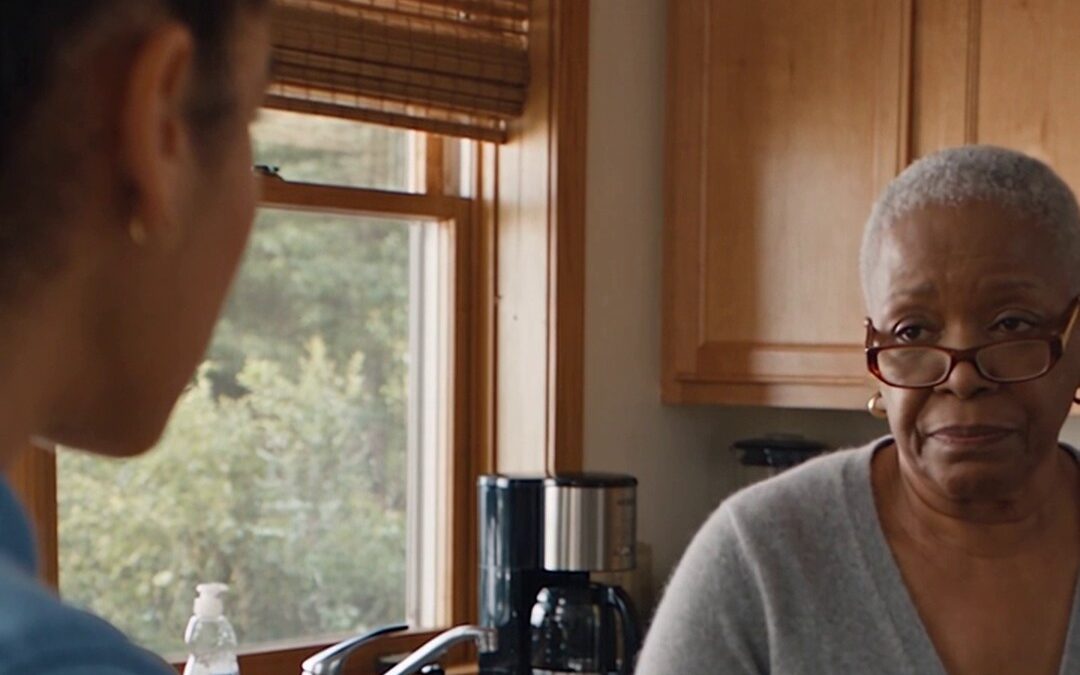
Chapter 1: The Felt Wedge
The blue felt wedge under our kitchen table had my father’s initials cut into it.
I found them when I pulled the wedge free to stop a spoon that had rolled underneath.
For six years, Ruth had pushed that narrow piece of felt beneath the table’s short leg after every time we mopped, then pulled it out again before we ate.
She stood at the sink with our two coffee mugs in her hands.
“Where did you get this?” I asked.
Ruth turned off the faucet before answering.
“Your father gave me some piano scraps.”
“He died before we met.”
“I knew him before that.”
She set the mugs down too carefully.
Outside, the delivery truck idled beside my service van.
I had promised to tune the old upright in the county library before its afternoon rehearsal, and Ruth knew I would have to leave soon.
She always knew my schedule.
She left a thermos by the door on school mornings and kept the kitchen quiet when a tuning ran late enough to give me a headache.
I turned the wedge over.
The letters were unmistakable: **L.V.**
My father, Lionel Vale, had cut those same square letters into every tool he owned.
Ruth reached for the felt, then stopped.
“It’s a table shim, Nora.”
“It came from a piano.”
“You’d know.”
Last night, while I was working at our kitchen upright, I had played the opening of *The Blue Room*, the small piece my father was known for around northern Minnesota.
Ruth had come in at the first phrase, as she sometimes did, and asked me to stop before the last note.
She said the piano sounded tired.
Now she was watching the wedge instead of me.
I took my phone from my pocket and opened the photograph I’d taken at the library the day before.
Its upright had been donated by my father’s old music school.
During the inspection, I had photographed a line of blue felt inside it: three small triangular cuts near the end, like the edge of a paper crown.
The wedge in my palm had three matching cuts.
“That piano’s been at the library for twenty years,” I said.
Ruth dried one hand on a dish towel.
“I can explain.”
“Then do it.”
The delivery truck pulled away, leaving the kitchen suddenly quiet.
Ruth looked at the initials again.
“Lionel took that felt out himself.”
I held it beside my phone.
“Why does a piece cut from the library piano live under our table?”
Chapter 2: The Last Note
“Why does a piece cut from the library piano live under our table?”
Ruth folded the dish towel once, then unfolded it.
“It wasn’t the library’s piano when he took it out,” she said.
The answer came quickly enough that I believed she had rehearsed it.
“Whose was it?”
“Mine.”
The refrigerator motor clicked on behind me.
For a moment, the ordinary noise made the kitchen feel almost normal.
Then I looked down at my father’s initials again.
“You told me you did books for the music school.”
“I did.”
“You never told me you owned an upright there.”
“I know.”
I waited.
Ruth pressed her thumb into the wet towel.
“It needed work, and Lionel helped me with it.”
“How much work?”
“More than either of us expected.”
That was how Ruth answered when she wanted me to stop: a true, small thing placed in the path of a larger one.
I had learned the shape of it over six years.
I put the wedge in my coat pocket.
“I’m going to be late.”
“Nora.”
“I’ll do the library piano.”
“I’d rather you came home first.”
She had never asked me to leave a piano untuned.
That frightened me more than the initials.
At the door, I picked up the thermos she had filled for me.
Ruth watched that too.
I left it on the shelf beside our boots and went out to the van.
***
The library’s upright stood in a meeting room behind the children’s shelves.
It was a plain brown instrument with a bench that creaked and two notes in the upper register that had always been stubborn.
I knew it well.
Lionel had taught lessons on it when the building was a music school, before the county bought the place.
He had died eleven years ago, when I was twenty-four and certain there would be time to ask him about everything.
By nine, I had the front panel off and my tuning tools laid out.
I put the wedge on the bench and opened yesterday’s photograph beside it.
The cuts matched.
That alone proved little.
Piano felt comes in long strips, and a technician might cut several wedges from one piece.
But Ruth had said my father removed hers, and I wanted to see where.
I looked along the rail, checking the work already done on the instrument.
Inside the case, a newer strip ended before a narrow bare patch of wood.
Its edge bore the other half of my father’s square **V**, impressed into the grain beside two old screw holes.
I sat back on my heels.
He had taken the felt from this piano.
Ruth had either forgotten that it was the same one, or she had hoped I would not look.
“Everything all right?”
I turned.
Ellen, the library director, stood in the doorway with a box of folding programs balanced against her hip.
“Fine,” I said.
“You look like you found a mouse.”
“Old repair.”
Ellen set the programs on a chair.
She had a reason to be wary whenever I found one.
The library had little money for the piano, and an unexpected repair could swallow the funds for a whole season of children’s workshops.
“An expensive old repair?” she asked.
“No.”
“Good.”
She came close enough to see the felt in my hand.
“Is that for this thing?”
“I’m trying to find out.”
“Your dad could have told you in five minutes.”
“He probably could.”
Ellen glanced toward the upright.
The county had hired me because I was good at the work, but people still treated that piano as a conversation they could have with Lionel.
Usually I let them.
“What did Ruth say?” Ellen asked.
I looked up sharply.
Ellen held up a hand.
“You mentioned at the last rehearsal that she knew the school.”
“She said the piano used to be hers.”
“That could be.”
“You remember it?”
“I started here after the county bought the building.”
She nudged the programs into a straighter stack.
“There are donation files downstairs, if you need them.”
I had planned to ask.
Now that she had offered, I felt the first small cost of accepting.
Ellen trusted me with the instrument, not with an excuse to search through its history.
“I do,” I said.
“Finish the tuning first.”
She gave the piano a doubtful look.
“The choir children need a decent A this afternoon.”
I finished the work with Ruth’s wedge on the bench.
The piano resisted at the same two notes it always did.
I could have done the job with my eyes closed, but I kept staring at the blue felt.
At lunch, Ellen unlocked the records room and found the upright’s folder.
The county had kept the transfer form from the music school, a delivery receipt, and a photograph taken when volunteers hauled the piano up the library ramp.
I recognized the scrape on its right leg.
The transfer form listed the instrument among the school’s assets.
Beside it, in faint pencil, someone had written, “R. Mercer upright; returned to school.”
“Mercer is Ruth’s last name,” I said.
Ellen leaned over my shoulder.
“She donated it?”
“Maybe.”
The form was dated 2010.
Lionel had still been alive then.
Ruth’s story could fit inside those words, if I wanted it to.
I did want it to.
For a minute.
Then I found a second sheet stapled behind the transfer.
It was an inventory made when the school closed, and beside the piano was a note: “Bench contents boxed separately, archive shelf.”
“Is there an archive shelf?” I asked.
Ellen laughed without humor.
“Every shelf downstairs is an archive shelf.”
She helped me look until another employee needed her at the desk.
I stayed through my lunch hour and then another forty minutes, searching boxes marked with concert seasons, lesson schedules, and broken metronomes.
I found programs bearing my father’s name.
I found a photograph of him leaning over a roomful of children, one hand raised to stop them all at once.
I found nothing that explained Ruth’s piano.
At two, I went upstairs to check the tuning before the rehearsal.
A little girl in a yellow coat sat on the bench, pressing one key over and over.
Her mother apologized.
“It’s all right,” I said.
The girl moved down one key.
“That one sounds sad.”
“It’s a different note.”
“It can be both,” she said.
I thought of Ruth asking me to stop *The Blue Room* before its last note.
I had always taken it as a comment on my tuning, or on her mood.
For the first time, I wondered whether she simply could not bear to hear the ending.
***
Ruth was at the kitchen table when I came home.
The short leg rocked gently against the floor.
A folded square of cardboard lay beside her mug, ready to go underneath it.
I had taken the wedge, and she had found a substitute before making tea.
That small practical act made it harder to stay angry.
It also reminded me how easily she had lived with the larger substitution.
I put the blue felt between us.
“The piano was yours,” I said.
“Yes.”
“You gave it to the school?”
“I let them use it.”
“The county file says it was returned to the school.”
“They bought it from me when I left.”
“You worked there until 2010?”
She nodded.
I had believed she left years earlier.
Ruth lifted her mug, then set it down without drinking.
“What else did you find?”
“Your name in an inventory.”
“That sounds right.”
“Why didn’t you tell me?”
“Because the piano became your father’s story.”
“Ruth.”
She looked toward the kitchen upright.
When we moved into this house, I had brought it in on a trailer.
She had held the front door open while two movers argued about the turn in the hallway.
Since then, she had dusted its lid, watered the fern on top of it, and asked only that I keep the bench clear enough for the mail.
“I played,” she said.
“Lots of people play.”
“I know.”
“Did you and my father play together?”
“Yes.”
“How often?”
“For years.”
The word sat between us.
I thought of every time I had told Ruth a story about Lionel.
How he hated being called a composer.
How he wrote tunes on grocery receipts.
How he made me repeat a phrase until the last note sounded inevitable.
She had listened from across this table and said almost nothing.
“Why did you let me talk about him like you’d barely met?”
“You needed to.”
“That wasn’t your choice.”
“I know.”
It was the first answer she had given me that did not try to shrink the question.
I pulled out the chair opposite her.
Its leg knocked against the floor.
“Tell me what happened.”
Ruth looked at the wedge.
“Not with that in your hand.”
I set it down.
She still did not begin.
Finally she said, “He called the upright the blue room.”
I felt heat rise into my face.
“That was his piece.”
“That was the room where the piano stood.”
I had never heard that.
The school had painted its practice rooms different colors so young students could find them.
Lionel had told me *The Blue Room* came from an apartment where he lived before I was born.
He had described blue walls, a thin window, a neighbor who complained about the piano.
“Which story is true?” I asked.
“The school room was blue.”
“And his apartment?”
“I never saw it.”
Ruth could have told me Lionel was a liar.
She had given me one wall I could verify instead.
“What does the room have to do with the music?”
“A great deal.”
“Then tell me.”
She rubbed both hands over her knees.
“I want to show you something first.”
“What?”
“Tomorrow.”
“No.”
“The station archive closes at five.”
“Which station?”
“County public television.”
The county had a small community station that recorded concerts, council meetings, and any other local event somebody remembered to request.
I had seen its camera at the library benefit the previous year.
“Why would we go there?”
“Because you shouldn’t have to take my word for this.”
I wanted to ask what “this” was.
Ruth’s face told me she would answer only by offering another small, careful piece.
I stood.
“Tomorrow at ten.”
“I’ll come with you.”
“I’ll meet you there.”
She looked hurt, but she nodded.
That night I slept with the door to my room closed.
For six years it had stayed open a few inches because the old latch clicked loudly, and Ruth got up earlier than I did.
I heard her cross the hall in the morning.
Her steps paused outside my door.
Then she went downstairs.
***
The station occupied two rooms above a former hardware store in town.
Most of its public recordings had been copied to digital files, but the older tapes remained in cabinets along one wall.
A man named Cal ran the place with two part-time volunteers and a calendar full of meetings nobody else wanted to film.
Ruth had told me to ask for the 2001 winter recital.
I arrived before her.
Cal found the entry in a paper log and pulled a tape from a cabinet.
“The school paid for two copies,” he said.
“Why keep this one?”
“We kept the master.”
He showed me the station label on its case and a matching entry in the log.
The recording had survived because nobody had decided it was worth throwing away.
That seemed right for a place like this.
People saved concerts because somebody’s child had played three wrong notes in one.
Cal carried the tape to a deck in the editing room.
“You can watch it here.”
“I don’t want a copy yet.”
“Fine.”
He pressed play and left me with the headphones.
The picture opened on folding chairs and a banner made of blue construction paper.
Children came to the piano one by one.
A small boy played with his tongue between his teeth.
A girl froze, went back to the beginning, and got through on the second try.
Then the camera moved to the corner of the room.
Lionel sat at the upright in a dark sweater, younger than I remembered him.
Ruth stood beside him with her hair tied back.
I had never seen a photograph of them together.
The sight hurt in a way I could not have predicted.
My father looked up at her before he put his hands on the keys.
He was asking something without words.
She gave one short nod.
They began *The Blue Room*.
At first I thought they were taking turns on the same bench, but then I saw Ruth’s foot at the pedal.
Lionel played the opening phrase.
Ruth leaned over him and changed one note with the side of her hand.
He grinned.
The audience laughed, assuming it was a joke.
I stopped the tape.
That changed note was in every printed copy of the piece I owned.
I played it at recitals.
I had taught it to children.
I sat in the editing chair until the screen went blue.
Then I called Cal back.
“Can you watch this with me?”
He took the spare headphones.
We watched the piece through.
On the recording, Lionel reached the final phrase and hesitated.
Ruth touched his shoulder.
He played the last note.
The camera was too far away to show what she said, if she said anything.
When the applause began, Lionel stood and gestured toward Ruth.
The camera panned to a row of children clapping.
It never returned to her.
Cal took off the headphones.
“That’s a nice old thing.”
“Do you know who wrote the piece?”
“Your father, I thought.”
“So did I.”
Cal looked back at the frozen image.
“Ruth worked there.”
“You knew?”
“I filmed a few school concerts after this one.”
He pointed at the case.
“The tape tells you who played it that day, Nora.”
“I know.”
I did.
It did not tell me who had written a single note.
Ruth arrived while Cal was returning the master to its case.
She stood in the doorway, her coat still buttoned.
“You found it.”
“I watched.”
Cal looked from one of us to the other.
“I’ll be at the desk.”
When he left, Ruth took his chair.
I replayed the moment when she changed Lionel’s note.
“Why did you do that?”
“He went to the note we used in rehearsal.”
“You wanted another one.”
“Yes.”
“And he used yours afterward.”
“We both did.”
I paused the picture on my father’s grin.
“Did you write it?”
Ruth’s hands closed around the edges of the chair.
“I wrote the opening.”
“How much?”
“The first sixteen measures.”
The piece was thirty-two measures long.
I knew every one of them.
I could not speak.
“Lionel wrote the middle,” she said.
“And the end?”
“We fought over the end for nearly a year.”
The station’s wall clock ticked above us.
I had expected a lie, or an apology, or a confession that would turn the music cleanly from his into hers.
Ruth had brought me something less comfortable.
“What did you agree on?”
“That he would publish it under his name.”
“Why?”
“That’s the part I owe you.”
“Now would be good.”
She glanced toward the closed door.
“Your father had a contract with a small publisher.”
“I know.”
“They’d agreed to print a collection of his teaching pieces.”
“I know that too.”
“He asked to include ours.”
“Ours.”
The word felt like a hand on the back of my neck.
“Yes,” Ruth said.
“The publisher wouldn’t take a second name?”
“He didn’t ask them.”
“Why not?”
She looked at the frozen picture, at Lionel smiling up at her.
“Because I told him not to.”
***
I left before Ruth could tell me why.
It was a childish thing to do, and I knew it while I was doing it.
I also knew I would believe the first reason she offered if I stayed in that little room.
I needed a fact that neither of them had chosen for me.
At home I opened every published copy of *The Blue Room* I owned.
The oldest was a thin booklet from 2002.
On its title page, under Lionel Vale’s name, was a line in small type: “For R.”
I had read it a hundred times.
I thought R was my mother, Rachel.
My mother’s full name was Rachel, but Lionel had always called her Rae.
That could still be the answer.
Or it could be Ruth.
I called my mother.
She and Lionel had divorced when I was sixteen.
They had remained civil enough to share a table at my graduation, but she did not speak about their marriage unless I asked a direct question.
“Do you remember Ruth Mercer?” I said.
A pause.
“From the school?”
“Yes.”
“I remember her.”
“Did she and Dad write music together?”
My mother exhaled.
“I saw them work on things.”
“On *The Blue Room*?”
“I don’t know.”
She sounded irritated, which frightened me more than surprise would have.
“Why didn’t you ever mention her?”
“You didn’t ask who worked with your father.”
“She lives with me, Mom.”
“I know where Ruth lives.”
The room seemed to tilt.
“You knew they knew each other.”
“Ruth told me before she took you in.”
“She took me in?”
“You answered an ad for a room.”
“I did.”
“And she called to ask whether I thought it would upset you.”
“What did you say?”
“I said it might, if she kept her mouth shut about the past.”
I sat on the floor beside the upright.
“She told you she would tell me?”
“She said she would if it came up.”
“It came up today.”
My mother was quiet for a moment.
“Nora, I’m sorry.”
“You could have told me.”
“I could have.”
“Why didn’t you?”
“Because I thought she had.”
That answer was no comfort.
I wanted my mother to have known, to have intervened, to have spared me six years of being the only person in the house who understood our history wrongly.
Instead she had made the same assumption people often made about me: that I already knew what mattered.
“Was Dad having an affair with her?”
“No.”
“You’re sure?”
“Yes.”
“Then what was she to him?”
“Ask her that.”
“I did.”
“Ask again.”
After we hung up, I tried to play the opening of *The Blue Room*.
My hands stopped after four measures.
Ruth had asked me to stop at the ending because the piano was tired.
Maybe she had meant herself.
I shut the lid.
***
The next morning Ellen called about the library’s spring concert.
The program had gone to print, and she needed to know whether I would play my father’s piece before the children’s choir.
I had agreed weeks earlier.
Ellen had arranged the concert to raise money for the piano and a new set of folding chairs.
“It’s still good to go?” she asked.
I looked at the oldest booklet open on my desk.
“I don’t know.”
“Is the piano acting up again?”
“No.”
“What is it?”
“I found something about the piece.”
Ellen let me sit with my own words.
Finally she said, “Are you coming in today?”
“Yes.”
“We can talk then.”
I took the booklet and drove to the library.
Ellen had already put my name on a printed program beneath the line “Music by Lionel Vale.”
It was a modest sheet of paper, folded once.
No company stood to lose money if it was wrong.
That made changing it seem simple until I imagined holding it in front of everyone who remembered Lionel.
“I need to check the credit,” I said.
Ellen read the line.
“Did he use a different title?”
“Ruth may have written part of it.”
Ellen lowered the program.
“Ruth Mercer?”
“Yes.”
“She told you?”
“She showed me a recording where they played it together.”
“That proves they played it.”
“I know.”
She did not sound cruel.
The library was hosting a concert, and I had brought her a claim about a dead man whose name people trusted.
“What proof would satisfy you?” I asked.
“Enough to put her name on a program and answer when someone asks me why.”
“That’s fair.”
Ellen set the paper down.
“Do you have it?”
“Not yet.”
She tapped the printed credit with one finger.
“The printer can run another batch, but I need to tell them by Thursday.”
It was Monday.
I had three days to learn a history my housemate had kept for six years.
I went back downstairs to the music school boxes.
The recital tape showed Lionel and Ruth’s work together, so I searched the years before 2001.
I found lesson rosters, expense sheets, and a ledger with neat columns of piano repairs.
The ledger mattered because it was Ruth’s handwriting.
I knew it from six years of grocery lists.
She recorded every expense, including the felt Lionel had bought for her upright.
Beside the purchase, she had written, “Blue room, rail and wedges.”
The note was dated 1999.
The felt in my pocket had been part of an ordinary repair before it became our table shim.
I had been treating it like a hidden symbol.
Ruth had treated it like something useful.
That did not make her secrecy smaller.
It made the six years of seeing it every day harder to understand.
Near closing, I found a folder of staff compositions used in lessons.
Most were pencil pages with titles like “Marching Duck” and “Two Hands in Snow.”
At the back lay a sheet headed *The Blue Room*.
The first sixteen measures were written in Ruth’s hand.
I knew the shape of her capital B and the way she made a long crossbar on a seven.
Lionel had marked changes in the margin with his square initials.
Beneath the opening, he had written: “Ruth’s line; keep.”
My knees went weak.
I carried the page upstairs in both hands.
Ellen compared it with Ruth’s ledger.
“It looks like the same writing.”
“I know.”
“And your father called it hers.”
“The line, yes.”
Ellen held the manuscript up to the desk lamp.
“Where did this come from?”
“The school’s staff folder.”
“Then let’s keep it there.”
She placed it in a clear sleeve and wrote down the box number.
Her care irritated me for one instant.
I wanted to take the page home and make Ruth answer it.
Then I understood why Ellen was careful.
The sheet had survived twenty-seven years because somebody filed it instead of taking it away.
It would be the same sheet tomorrow because she could say exactly where it had been.
“I can make a scan for you,” she said.
“Please.”
“Do you want me to call Ruth?”
“No.”
Ellen gave me the scan and returned the original to its folder.
I went home with a copy of a page that had already changed my father.
***
Ruth was making lentil soup.
She had put the cardboard shim under the table leg.
I laid the scan beside her cutting board.
She washed the knife before she looked at it.
“You found one,” she said.
“One what?”
“One of our drafts.”
“Dad wrote ‘Ruth’s line; keep.’”
“He was right to keep it.”
“You told him to publish the whole piece under his name.”
“Yes.”
“Why?”
Ruth moved the pot off the burner.
The stove clicked as she turned it down.
“Sit with me.”
“I’ve been sitting with this all day.”
“I know.”
We sat anyway.
She did not reach for the scan.
“In 2000, the school was behind on rent,” she said.
“I remember hearing that.”
“Lionel’s teaching contract was renewed. Mine wasn’t.”
“You were an employee?”
“I taught beginner piano three afternoons a week and kept the accounts the rest of the time.”
“You told me you only kept the accounts.”
“I told you about the work I still wanted to admit to.”
“Why?”
“Because I lost the teaching job.”
Ruth stared at the table’s uneven edge.
“My hands began to shake when I played in front of people.”
I looked at her hands.
They were steady now.
“When?”
“After my son died.”
I knew she had a son.
His name was Daniel.
She had told me he died in a car crash when he was nineteen and had shown me one photograph: a young man laughing beside a lake.
I had never asked for the year.
“It was 1998,” she said.
I reached for the date on the ledger.
The first blue felt purchase came a year later.
“He was gone before you wrote the piece.”
“Yes.”
“Did Dad know him?”
“Daniel took lessons with him for a while.”
That was another door in our house I had passed without seeing.
I knew Ruth kept Daniel’s photograph in her room.
I did not know my father had met him.
“The school let me keep doing the accounts,” Ruth said.
“Lionel let me use the upright in the blue room after the children went home.”
“Why didn’t you tell me any of this?”
“Because every time you asked about him, you brought him back to me as your father.”
“He was my father.”
“I know.”
“And Daniel was your son.”
“Yes.”
“Those things could both be true at this table.”
Ruth gave a tired little nod.
“I’m hearing that now.”
I looked at the scan again.
“What does Daniel have to do with Dad’s name on your music?”
“After he died, I wrote the opening because I could play it without anyone watching.”
“That isn’t a reason to give it away.”
“No.”
“Then what is?”
She took a breath.
“Lionel wanted to put both our names on it.”
I had asked him, in my head, why he had taken her work.
I had been ready to be angry with him.
Now I had to listen harder.
“I said no,” Ruth continued.
“I didn’t want a program, or a review, or a stranger asking what a song about a blue room had to do with a dead boy.”
“You could have used just your name.”
“That was the name I couldn’t stand hearing from a stage.”
There was no neat answer to give her.
Grief explained her choice in 2001.
It did not explain every year after it.
“And Dad agreed?” I asked.
“After we argued.”
“Did Mom know?”
“She knew I’d asked to stay off the page.”
“She told me she saw you work together.”
“Rae knew more than that.”
I remembered my mother saying Ruth had called before renting me the room.
“What happened after publication?”
“People liked the piece.”
“He played it everywhere.”
“Yes.”
“Did you?”
“Sometimes, at the school.”
“Why didn’t he tell people later?”
Ruth rubbed the edge of the manuscript scan.
“He asked me again when the second printing came.”
“When?”
“2007.”
“I was sixteen.”
“He wanted to add my name.”
“And you refused.”
“Yes.”
“Did he ask before he died?”
“No.”
“Why not?”
“He thought I’d come to him if I changed my mind.”
The soup cooled on the stove.
I thought of Lionel’s habit of letting an argument rest for months, then beginning the next one as though we had merely taken a breath.
He had taught me to drive that way.
He had taught me to listen that way too.
“Was it really half yours?” I asked.
Ruth looked up.
“The opening was mine.”
“What about the last note?”
Her expression changed.
“I told you we fought about the ending.”
“You still haven’t told me what happened.”
“I wanted it to stop one note earlier.”
“Why?”
“Because the phrase came back to the place it started.”
“That’s why he added the note.”
“Yes.”
I could hear the whole piece without touching the piano.
The last note sat outside the phrase.
It was gentle, almost unnecessary, and every audience waited for it.
“He said the room needed a door,” Ruth said.
I looked toward our kitchen upright.
Every time I played the piece, she asked me to stop before that note.
I had assumed it hurt her because it belonged to him.
“Is that why you stop me?” I asked.
“I still hear the ending we didn’t choose.”
“You chose to let him use his.”
“I did.”
“But you never liked it.”
“I didn’t say that.”
Ruth folded her hands.
“Some days it’s the only part I like.”
***
I called my mother from the van.
She answered on the third ring.
“Ruth told me about the credit,” I said.
“I wondered if she would.”
“She says you knew.”
“I knew she wrote the opening.”
“Why did you let me believe Dad wrote the whole thing?”
My mother made a small sound before she answered.
“Lionel told me Ruth wanted privacy.”
“And you accepted that?”
“She was my friend, Nora.”
I had not known that either.
“You could have told me you were friends.”
“I thought you knew we knew each other.”
“We keep coming back to that.”
“Yes,” she said.
“We do.”
A bus passed along the road, its tires hissing over wet pavement.
I watched until it disappeared.
“Did Dad tell you he wanted to correct the credit in 2007?”
“He did.”
“Do you believe him?”
“I was there when he brought the new proof pages to Ruth.”
I sat up.
“You saw them?”
“At our kitchen table.”
“What did she do?”
“She thanked him and handed them back.”
Ruth’s account had sounded almost too kind to Lionel.
My mother, who had little reason to protect him, had confirmed it.
“Did he keep a copy?” I asked.
“If he did, it might be in his things.”
I had kept his tools.
I had kept two boxes of scores and tax papers in the closet above the stairs.
For eleven years, I had avoided sorting them because throwing out a single grocery receipt felt like deciding which part of him could go.
Now I wanted a particular piece of paper so badly that I was ashamed of every year I had left the boxes closed.
“I’ll look,” I said.
“Nora.”
“What?”
“Ask Ruth what she wants now.”
“I will.”
“And ask yourself whether you’re trying to defend him from something he knew was true.”
I looked at the station across the street.
“I don’t know yet.”
“That’s an honest place to start.”
***
Ruth was washing the soup pot when I returned.
I went straight to the closet.
She came to the foot of the stairs when she heard the ladder scrape.
“What are you looking for?”
“Proof pages.”
“I told you the truth.”
“I believe you.”
She stepped back.
I took down the first box.
There were receipts for felt, wire, and piano casters, envelopes full of family photographs, and lesson notes in Lionel’s impatient hand.
The second box held music.
I carried it to the table.
Ruth dried her hands and sat across from me while I sorted.
Neither of us spoke for almost an hour.
I found a proof of *The Blue Room* with its familiar title page.
Under Lionel’s name, someone had penciled “and Ruth Mercer.”
A line crossed through the addition.
Beside it Lionel had written, “R says leave it.”
Ruth put her fingertips on the paper.
“I remember this one.”
“Mom said she saw it.”
“She did.”
There was a date in the margin: April 2007.
The pencil line had survived because Lionel kept the proof, and I had kept his box.
It proved that he tried to add her name.
It also proved he had left the published version alone.
“What would you have done if he’d insisted?” I asked.
“I might have stopped speaking to him.”
“He knew that?”
“Yes.”
I put the proof beside the manuscript scan.
Both of them were evidence, and neither made the decision for us.
“Ellen needs to print the concert program by Thursday,” I said.
“I heard.”
“You spoke to her?”
“She called about the piano bench.”
Ellen had called Ruth to ask if the school’s old bench could be repaired.
She had her own work to do; she was not collecting witnesses for my family dispute.
“She thinks there may be another draft in the school files,” I said.
“There are several.”
“Why didn’t you tell me?”
“Because you said you wanted to find out for yourself.”
I wanted to argue.
I had gone to the library and station because I needed to know the records existed.
I could not fairly blame her for letting me finish.
But I could blame her for what came before.
“Six years,” I said.
Ruth looked at me.
“You watched me play it for six years.”
“Yes.”
“You came to every Christmas concert where I played it.”
“Yes.”
“You helped me put Dad’s name on flyers.”
“I did.”
“What did you feel?”
“Proud of you.”
“That’s not all.”
“No.”
“What else?”
“I missed him.”
I had not expected that.
Ruth held the proof page by its corners.
“He was difficult,” she said.
“He could turn a two-minute correction into a lecture.”
“He absolutely could.”
“And he would stay an extra hour after lessons to fix a piano nobody had budgeted for.”
“He did that too.”
“We stopped speaking for almost a year once.”
“Over the piece?”
“Over how he handled Daniel.”
I waited.
“After the funeral, Lionel kept asking me to come back and teach.”
“He thought music fixed everything.”
“Yes.”
“He pushed?”
“He thought he was opening a door.”
Ruth let go of the page.
“I shut it so hard I hurt both of us.”
That was not a secret about a song.
It was a history of two people I loved, one dead and one washing dishes in my kitchen.
I had been living beside its silence.
“You met me before the room ad,” I said.
Ruth nodded.
“At his funeral.”
I remembered a woman standing near the back of the room, carrying a folded program in both hands.
I did not remember her face.
“You spoke to me?”
“Just once.”
“What did you say?”
“That his students would miss him.”
“That was you?”
“Yes.”
I sat still.
“And when I answered your ad?”
“I recognized your last name.”
“You wanted me to live here.”
“I wanted to meet you again.”
“You could have said that.”
“I should have.”
“Did you offer me the room because I was his daughter?”
“Yes.”
The clean answer stung.
My rent had been below what she could have charged, and she had never raised it.
I had thought we were two women making a household because each needed one.
That was true, but she had chosen me before I had chosen her.
“Did you tell Mom about the ad?”
“After you called me.”
“And you called her to ask if I’d be upset.”
“Yes.”
“Then you both let me move in without telling me.”
Ruth did not look away.
“Yes.”
I closed Lionel’s box.
I had found what I needed from it.
There was nothing inside that could tell me whether I wanted to keep living with Ruth.
***
I spent Wednesday at work.
I tuned a church piano before a funeral and a spinet in a farmhouse where three dogs slept under my feet.
At both places, I had to listen closely enough to do the job.
My hands kept moving while my mind returned to the program.
Ellen could print “Lionel Vale and Ruth Mercer.”
Ruth could refuse.
I could play the piece anyway and explain the credit aloud.
None of those choices belonged only to me.
When I got home, Ruth had left a note on the table.
“Soup in the fridge. I’m at the library with Ellen. Back by six.”
I checked the clock.
It was five.
The blue wedge lay beside the note, no longer under the table.
I turned it over.
Lionel’s initials were still there.
I knew now why the cuts matched the library piano, where the wedge had come from, and why Ruth had kept it.
She had kept a usable piece of felt from an instrument she had loved.
For years it had held up one leg of a table where we ate together.
The facts did not need a more dramatic meaning.
At six, Ruth returned with a paper folder.
Ellen had found two more drafts in the school files and made copies.
Ruth placed them on the table but did not open the folder.
“She asked whether you were all right,” Ruth said.
“What did you tell her?”
“That you were working.”
“I was.”
“She also asked if I wanted my name on the program.”
“What did you say?”
“That I needed to answer you first.”
I pulled out a chair.
It rocked until I slid the felt wedge beneath the short leg.
Ruth watched me do it.
“What do you want?” I asked.
“I want people to know we wrote it together.”
“You’ve had twenty-five years.”
“Yes.”
“Why now?”
“Because yesterday you asked me whose piano it was, and I heard myself trying to hide behind a repair.”
She opened the folder.
The first draft had only Ruth’s opening.
The second carried Lionel’s middle section, with a different ending scratched out twice.
In the third, the note he wanted stood alone at the bottom of the page.
Above it, in Ruth’s hand, was a question mark.
“I was angry when he died,” she said.
“We had spoken again, but I was still angry that everyone called it his.”
“You had told him to let them.”
“I know.”
She flattened the page.
“I thought anger would be easier if I could make him responsible for all of it.”
“And after?”
“After, the longer I waited, the more it felt like changing my mind meant accusing a dead man.”
I looked at the two names on the proof page.
“We can tell the truth about what he did.”
“And about what I asked him to do.”
“Yes.”
Ruth drew a breath.
“I don’t want you to play the piece as a punishment for him.”
“I wouldn’t know how.”
“I don’t want you to stop playing it for me either.”
“I haven’t decided about the concert.”
She nodded.
“That’s yours to decide.”
“Not all of it.”
“No.”
I tapped the drafts.
“These are enough for Ellen to correct the program.”
“She said so.”
“Cal has the recital tape.”
“He does.”
“Mom saw the proof pages.”
“She did.”
Ruth gave me a narrow smile.
“You checked everybody.”
“I checked the parts I could.”
“I would have done the same.”
The smile faded.
I asked the question I had carried through two days of work.
“If I hadn’t found the felt, when would you have told me?”
Ruth looked at our kitchen upright.
“I don’t know.”
It was a poor answer.
It was the only one I believed completely.
***
On Thursday morning, Ellen put the three drafts, the school folder, the 2007 proof, and the station log on the library’s meeting table.
Cal came by with a copy of the recital recording.
My mother joined us on a video call from her kitchen.
Ruth sat beside me, close enough that our sleeves touched whenever either of us reached for a page.
Ellen had asked us all to come because the program was hers to print.
She did not want to make that choice from a conversation retold by someone else.
Cal showed the date and source of the station recording.
Ellen showed where she had found the drafts and returned the originals to the school archive.
My mother confirmed seeing Lionel offer Ruth a shared credit in 2007.
Ruth confirmed refusing it.
No one tried to make the old decision sound better than it was.
When Ellen turned to us, Ruth said, “I wrote the opening, and Lionel wrote the middle.”
“We worked out the ending together,” she added.
I looked at the third draft.
“Even though you didn’t agree about the last note?”
“Especially then,” Ruth said.
Ellen picked up her pen.
“For this concert, I can list both names.”
“Do it,” Ruth said.
Ellen looked at me.
“It’s your performance.”
“I know.”
“Will you play?”
I had thought the decision would come after I felt certain about Ruth.
That certainty had not arrived.
I was angry with her.
I trusted what she had shown me.
I loved my father, and the manuscripts had made him more complicated without taking him away.
I could play all thirty-two measures while those things remained true.
“Yes,” I said.
Ellen wrote the two names on her marked program.
She would order the new copies that afternoon.
I asked for one more change.
“Put a note in the concert introduction about the school room.”
Ruth turned toward me.
“The blue walls?” Ellen asked.
“Yes.”
It was a small fact, but it belonged to both writers.
Ellen wrote it down.
The published collection still bore Lionel’s name alone.
Ruth had an appointment with a lawyer the following week to ask what a formal correction would involve.
Neither she nor I knew how long that would take, or what anyone outside the library would agree to change.
The concert program was the decision in front of us.
We had made it on evidence all of us could see.
***
For the next two nights, I slept with my bedroom door closed.
Ruth did not ask me to open it.
We divided the kitchen chores the way we always had, except that she stopped leaving my thermos by the door.
On Saturday morning, I filled it myself.
She was at the sink.
“You don’t have to stop doing that,” I said.
“I thought you might want me to.”
“I want you to ask sometimes.”
“About the thermos?”
“About more than the thermos.”
She dried her hands.
“All right.”
It was a small agreement.
I did not try to make it stand for a larger one.
At the concert, Ellen introduced the piece as work begun on an upright in the school’s blue practice room.
Ruth sat halfway back, near the aisle.
My mother sat beside her.
I saw them together as I crossed to the piano.
For years I had imagined *The Blue Room* as something Lionel made alone, in an apartment I could almost picture because he had described it so well.
Now I pictured a school room after the children left: Ruth at the keys, Lionel arguing over a phrase, the blue felt waiting in a drawer for a repair.
I played the opening she had written.
In the middle, I could hear my father’s habit of leaving no note idle.
At the end, I paused where Ruth had once wanted the piece to stop.
I did not look at her.
I played the last note.
Afterward, a few people asked about the new credit.
Ellen showed them the program.
Ruth answered one question herself.
Nobody apologized on behalf of a town, and nobody needed to.
The choir children were waiting to sing, and Ellen was already moving chairs for them.
I went home with Ruth after the concert.
We carried the leftover programs, my tool bag, and a paper plate of cookies a parent had pressed into our hands.
At the kitchen table, Ruth reached automatically for the blue felt wedge.
She held it out to me.
I took it, felt the three little cuts beneath my thumb, and knelt to fit it under the short leg.
When I stood, the table stayed steady.
Ruth set down the cookies.
“Would you play it again sometime?” she asked.
“Yes,” I said.
“Maybe here.”
“Maybe here.”








