I Found My Roommate in a Photo From the Fire That Killed My Father—and Her Testimony Sent My Mother to Prison
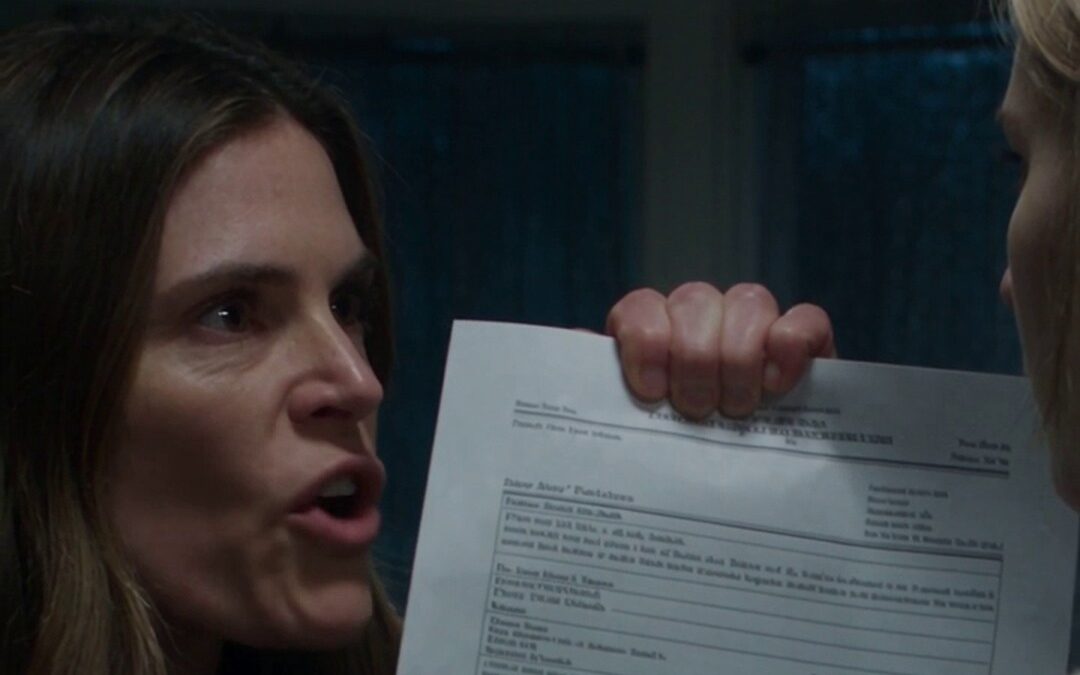
Chapter 1: The Photograph
Jo kept a red wooden doorstop beside our kitchen sink, and tonight she grabbed it like she might use it to keep me out.
I stood between her and the back door with a courthouse envelope in my hand.
“That’s my father’s bakery,” I said.
Jo’s eyes dropped to the photograph sticking out of the envelope.
For six years, she and I had shared this narrow house in western Pennsylvania, dividing the bills, arguing over the thermostat, and eating dinner at the kitchen counter because neither of us cleared the table.
She was my roommate, though after she drove me home from surgery and slept in the chair outside my room, the word had begun to feel too small.
Jo set the doorstop down.
“Where did you get that?”
“The courthouse.”
I repaired locks for a living, and I had spent my day off asking for copies of the case file from the fire that killed my father.
My mother had gone to prison for ordering a chain installed across the bakery’s rear exit.
I had been eight.
I knew the chain from photographs and from the sentence people used when they did not want to say my mother’s name: *The door wouldn’t open.*
Jo reached for the kettle, though she had already filled our mugs.
“Hazel, that was a long time ago.”
The photograph showed the rear exit, a fire investigator’s measuring tape, and the edge of a locksmith’s work van.
It also showed a red wooden wedge holding the door open.
I looked at the wedge by our sink, worn thin on one side, with three small brass tacks across its top.
The photograph had the same three tacks.
At home, Jo used it when she carried groceries or hauled the trash cans through the back door.
Once, when I asked why she never bought a new one, she had said, “That one works.”
I slid the photograph free and laid it on the counter.
Jo stopped touching the kettle.
“You were there,” I said.
“I did service calls for that building.”
“You told me you’d never met my father.”
“I didn’t know who you were talking about then.”
“You knew his name.”
Jo pressed her thumb against the brass tacks, one after another.
In the photograph, a younger Jo stood beside the bakery door, looking directly at the camera.
I turned over the second page of the file.
Beneath her picture was a witness statement bearing the name she had used before her divorce.
I read its first line aloud.
“‘The owner’s wife asked me to install the chain.’”
Jo closed her eyes.
I held the page where she could see it.
“Why did you tell them my mother asked you to lock that door?”
Chapter 2: The Order
“Why did you tell them my mother asked you to lock that door?”
Jo moved her hand away from the wedge as if she had only just noticed what she was holding.
“Let me see the whole statement,” she said.
I kept it against my chest.
“You signed it.”
“I know.”
“Then you don’t need to see it.”
The kettle clicked off behind her, and for a moment we both listened to a machine that had finished a job neither of us wanted done.
Jo reached past me, took her mug, and carried it to the table without drinking.
I had imagined this conversation during the drive home, but in every version Jo admitted some small mistake and helped me understand the rest.
She looked at the chair opposite hers.
“Sit down, Hazel.”
“No.”
“You have half a page from a case that took months.”
“I have your signature.”
“Yes.”
“You said you’d never met my father.”
“I said I didn’t know him.”
I remembered the exact conversation because it had happened over the same sink, after I found an old photograph of my father tucked into a cookbook.
I had told her his name, his job, and the street where he died.
Jo had asked whether I wanted to talk about something else.
“You knew enough to change the subject,” I said.
She put her mug down.
“That’s fair.”
I waited for the explanation she had demanded room to give.
Instead she looked at the folded copies in my hand and said, “Did you speak to your mother?”
My mother lived two counties away, and the last letter I had sent her came back unopened.
Jo knew that because she had been sitting beside me when I found it in the mailbox.
“You don’t get to bring her into this,” I said.
“She’s already in it.”
I turned toward the hall.
Jo stood so fast her chair scraped the floor.
“Please don’t go to the shop tomorrow and start asking about that van.”
I stopped.
I had not mentioned the van.
“Why?”
“The name on the door won’t help you.”
“Whose name was it?”
“My employer’s.”
Jo came no closer.
“Some of the men who worked there are dead, and the business changed hands twice.”
“That sounds like a reason to start tonight.”
“It’s a reason to be careful with whatever you find.”
I took my coat off the hook.
For years, Jo had reminded me to keep the porch light on when I worked late, to write the furnace filter size on the box, and to turn the kettle handle away from the edge.
Now she was asking me to leave a signed statement alone.
“I’m staying with Dina,” I said.
“She closes the shop at six.”
“Then I’ll call her when I get there.”
Jo’s gaze dropped to the envelope.
“Take your records.”
I opened the door.
Behind me she said, “The wedge was mine before the fire.”
I looked back.
Jo’s face was pale, but she met my eyes.
“I should have told you that the first time you asked about it.”
Dina was at the lock shop when I arrived, counting cylinders into bins with her reading glasses pushed up in her hair.
She owned the shop and lived in the apartment above it.
When she saw my overnight bag, she put down the cylinder.
“Did your furnace go out?”
“No.”
She waited while I found a place for the bag beside the counter.
Then I showed her the photograph.
Dina studied the bakery door first, as I knew she would.
The frame was dark from the fire, but the mounting plate of the surface bolt was visible above the knob.
She tipped the page toward the light.
“That’s the door you grew up talking about.”
“Yes.”
“Why bring it here?”
I pointed to Jo.
Dina took off her glasses, cleaned them, and looked again.
“Your Jo?”
“My Jo signed the statement against my mother.”
Dina did not hand the photograph back.
“When did you get this?”
“Today.”
“Have you asked her?”
“She says she did service calls there.”
“That part’s in the photograph.”
Dina laid the page flat.
“You’ve told me yourself that your mother thought the door was unlocked.”
“She did.”
“And you stopped believing her when you were seventeen.”
I felt the old heat in my face.
Dina had known me since I was nineteen, when I came into her shop looking for work and told her I could learn any machine if somebody let me take it apart.
She had let me start with keys.
“I know what I said at seventeen.”
“You said it last spring, too.”
I had, after my mother sent a birthday card with no return address and I left it unopened for a week.
Dina folded her arms.
“I’m not defending Jo.”
“I didn’t ask you to.”
“I’m telling you why I won’t treat a picture as the whole case.”
She took the overnight bag upstairs and made room on her sofa while I read the statement again.
Jo had told investigators that my mother, Ruth, asked for the chain because food had gone missing from the rear storeroom.
Jo said she explained that the door was an exit.
She said Ruth insisted the chain could be removed during business hours.
The statement gave no date for that conversation.
I had read the trial articles as a teenager, usually late at night, and stopped when I reached the parts describing my father’s death.
I had never read what Jo said in court.
The next morning, I called the courthouse to ask what else remained in the case file.
The clerk explained which documents were available, what had to be requested from storage, and the copying charge.
I paid it from the money I had set aside for new tires.
Then I took a second day off work.
Dina did not ask me to repay her for covering the counter.
She did ask me to tell her which jobs I had left unfinished.
At the courthouse, the clerk brought out a box with a paper label so faded I could barely read my family’s name.
Inside were transcripts, exhibits, motions, and the photographs I had copied the day before.
I set the photographs aside and started with Jo’s testimony.
The prosecutor asked whether she had installed a chain on the rear door.
Jo said yes.
He asked who requested it.
Jo said my mother.
The defense lawyer asked whether there was a written work order.
Jo said the office usually made one.
He asked if she had seen it since the fire.
Jo said she had not.
That answer filled less than a line.
I copied the page and read it twice while the clerk wheeled another box past me.
In the trial exhibits, I found a service invoice for labor, a chain, two mounting plates, and screws.
It showed a date three weeks before the fire.
At the top, someone had typed the name of the bakery and its street address.
Near the bottom, beside “authorized by,” there was a dark mark where a signature should have been.
The exhibit was a copy of a copy.
I held it to the reading room window and still could not make out the name.
When I called Dina, she told me the invoice number might lead to the order.
“An invoice tells you what got billed,” she said.
“It may tell me who paid.”
“Maybe.”
She paused while someone entered her shop.
“Hazel, an order might have been written on a separate pad before anyone touched that door.”
I spent another hour reading.
A bakery employee testified that the rear door had stood open during deliveries because the closer was unreliable.
A building inspector testified that the chain should never have been on an exit used by employees.
My mother testified that she had complained about the closer to the property manager and had not ordered a chain.
The prosecutor showed the jury a photograph of a padlocked chain.
He asked why she had a key to it.
She said the property manager gave her one when she complained.
The jury convicted her of involuntary manslaughter and a fire code offense.
She served six years.
My father and a delivery driver died after smoke cut them off from the front.
The fire began in an electrical cabinet near the storeroom, and no one had disputed that part.
For years, I had reduced the case to one question: who put the chain on the door?
Reading the transcripts showed me how many smaller questions had been left hanging around it.
Who called the locksmith?
Who signed when the work was done?
Who paid?
Why had a door with a bad closer been treated as a theft problem?
At four, the clerk said the room was closing.
I packed my copies carefully, with Jo’s testimony on top.
Outside, my phone showed three missed calls from Jo and a text from my mother’s number.
I stared at the second one.
*Jo says you found the file.*
My mother had used that number for almost two years.
She rarely texted me because she had stopped expecting a reply.
I called Jo.
She answered before the first ring finished.
“You called her.”
“She called me.”
“When?”
“Last night.”
I leaned against the courthouse wall.
“You two talk?”
Jo was silent.
“How long?”
“A while.”
I watched people cross the parking lot carrying folders against their chests.
“Since before I moved in?”
“Yes.”
Jo breathed in, and I heard the old floorboard near our kitchen table creak under her.
“I can explain when you come home.”
“No, you can explain now.”
“I’m not going to do that while you’re standing outside a courthouse.”
“Then I won’t come home.”
She let the silence stretch.
“We spoke once after she was released,” Jo said.
“After you testified against her.”
“Yes.”
“And then?”
“She called me when you answered my room listing.”
I closed my eyes.
Six years earlier, I had been looking for somewhere cheap to live after a breakup.
Jo’s listing offered a room, a shared kitchen, and a place to keep my work tools.
She told me at the viewing that she liked a quiet house and did not mind my odd hours.
“You knew who I was before I got there.”
“Your name was on the message.”
“You let me unpack.”
“I did.”
“Did my mother ask you to?”
“No.”
“Did she know?”
“Yes.”
I pushed away from the wall.
Jo said my name, but I ended the call.
At the shop, Dina was cutting a key for a customer, so I went upstairs and sat on her sofa with the copies.
My mother’s text stayed on my screen.
*Jo says you found the file.*
I typed, *How long have you talked to her?*
The reply arrived while I was still looking at the question.
*Longer than I’ve talked to you.*
I set the phone face down.
Dina came upstairs with two sandwiches after she closed.
She put one within reach and sat on the floor because her sofa was covered with my papers.
“I can ask the last owner of that locksmith company about its records,” she said.
“Do you know him?”
“I’ve bought old stock from him.”
“Would he still have orders from twenty-two years ago?”
“I don’t know.”
She unwrapped her sandwich.
“I can ask.”
I told her Jo had known who I was when I moved into her house.
Dina took a bite, chewed, and waited.
“She knew my mother was still alive,” I said.
“You knew that.”
“She knew I’d stopped speaking to her.”
Dina lowered the sandwich.
“Did Jo tell you why she put up the room?”
“No.”
“That’s something you can ask her.”
“I asked her things for six years.”
“Ask again now that you know which things matter.”
I wanted Dina to say Jo had chosen me by accident, or that all our dinners and rides and small acts of care could be set apart from the lie.
Dina put her sandwich down and pulled the invoice closer.
“Look here.”
She pointed to the work date.
The service had been done on a Tuesday morning.
The bakery employee testified that deliveries came through the back between five and seven, and that the door was usually propped after that because the closer dragged.
Jo had stood in the photograph with her wedge at the threshold.
I could not tell whether the picture was taken before or after the chain was installed.
The work invoice gave an address, but it did not identify a caller.
“Find the order,” Dina said.
The retired locksmith’s name was Martin Voss.
Dina called him the next morning while I stood beside her counter.
He remembered the old shop, its sale, and the bakery fire.
He did not have the company’s files.
“The buyer took the customer accounts,” he said through the speaker.
“The buyer retired,” Dina told him.
“Then they went wherever he sent them.”
Martin thought for a moment.
“I kept some personal notebooks.”
Dina glanced at me.
“What kind?”
“Jobs I priced myself, jobs I had to go back to.”
“Could you check the bakery address?”
He asked us to call after lunch.
I worked that morning because a property manager needed three apartment locks rekeyed and Dina had already delayed the job for me.
Each lock gave my hands something ordinary to do.
I removed a cylinder, set its pins in order, and checked the new key against the old one.
At the second apartment, I caught myself wondering whether the person who had ordered the change was the person who lived there.
I had always written down the answer.
At one, Martin called.
He had found a notebook entry for the bakery, with a reference to an invoice number matching the trial exhibit.
He agreed to let us see it.
His garage smelled of cardboard and the machine oil he used on a small bench lathe.
Old locks filled open bins along one wall.
Martin laid a narrow black notebook on the workbench and opened it with both hands.
There was the invoice number.
Beside it, in small block letters, he had written: *Rear exit, chain requested, confirm customer.*
Under that was Jo’s old surname.
I read the line again.
“Confirm customer?”
Martin rubbed the back of his neck.
“If someone called about work in a rented space, I wanted my tech to check who could authorize it.”
“Who was the customer?” I asked.
“Could’ve meant the tenant or the building.”
“Did Jo confirm?”
“I don’t know from this.”
He turned the page.
There were notes for three other jobs that week, each with the same short reminders he used when an order sounded incomplete.
For one, he had written *bring longer screws.*
For another, *call before entering.*
His notebook was a list of questions, not answers.
Martin watched me study it.
“I testified,” he said.
“I know.”
“I told them our invoice was real, and that Jo was the person I sent.”
“Did you know who requested the chain?”
“I knew what Jo told the police.”
He closed the notebook gently.
“After the fire, I asked her if she had checked.”
“What did she say?”
“She said she had.”
On the drive back, Dina kept her hands at ten and two, though she usually steered with one.
“You can ask the company that bought the accounts,” she said.
“I looked it up last night.”
“Of course you did.”
“It closed three years later.”
“Call the last address.”
“I did.”
Dina glanced across the car.
“Who answered?”
“A storage business.”
“And?”
“They have old boxes from closed companies.”
“You’re making this difficult to be pessimistic about.”
“The manager needs proof I have a reason to see them.”
Dina nodded toward the copies on my lap.
“You have a court case.”
“I have a reason to ask.”
“That’s what I said.”
Jo was waiting on our porch when Dina dropped me off.
Dina looked at the house, then at me.
“You can sleep upstairs again.”
“I know.”
Jo came down one step, saw Dina, and stopped.
I got out of the car with the courthouse envelope.
“We need to talk in the kitchen,” I said.
Jo held the door while I went in.
The red wedge was still beside the sink.
My mug had been washed and turned upside down on the drying rack.
Jo sat at the table, leaving me the chair nearest the back door.
“I went to Martin Voss,” I said.
Her eyes moved to the notebook photograph on my phone.
“Then you know why he sent me.”
“He told you to confirm the customer.”
“I tried.”
“Who called?”
“The property manager.”
“What was his name?”
“Paul Mercer.”
I wrote it down on the back of a receipt.
“Did he own the building?”
“His father did.”
“Did my mother ask for the chain?”
“No.”
The word came out plainly.
I looked up.
Jo gripped the sides of her chair.
“She never asked me to install it.”
“But you swore she did.”
“Yes.”
For the first time since I brought the photograph home, Jo said something that matched the question I had asked.
It did not make the kitchen easier to stand in.
“Why?”
“Mercer called the shop and said there had been thefts,” she said.
“He wanted a chain on the storeroom exit.”
“I told him it was an exit.”
“He said it was the back door of a bakery, that your parents had another way out, and that the chain would be off during work.”
“Was any of that true?”
“The front door existed.”
“That’s not what I asked.”
“No.”
Jo rubbed her thumb across her knuckles.
“I should have refused the job.”
“Why didn’t you?”
“I had worked there less than a year, and Martin had sent me with an invoice already written.”
“That tells me why you went.”
“I thought I could speak to your mother before I did anything.”
“Did you?”
“I tried.”
Jo looked toward the sink, where the wedge lay.
“I arrived after the morning deliveries, and the back door was standing open on that wedge.”
I had pictured her in the investigator’s photograph so many times that it took an effort to imagine her there before the fire, holding a tool bag while people moved trays past her.
“Your father was in the kitchen,” she said.
“Your mother had gone to the bank.”
“Then who let you in?”
“He did.”
I tightened my grip on the receipt.
“You met him.”
“Yes.”
“You told me you didn’t know him.”
“I spoke with him for less than ten minutes.”
“You watched me put his photograph on our fridge.”
Jo took the blow without looking away.
“He told me the closer was sticking and asked if I had come to fix that,” she said.
“I told him Mercer had ordered a chain.”
“He said to leave it until Ruth got back.”
“Did you leave?”
“No.”
“Why not?”
“Mercer arrived.”
Jo’s voice became careful.
“He told your father they had agreed on the work.”
“Had they?”
“I didn’t ask your father.”
“You said you would confirm the customer.”
“I let Mercer tell me he had.”
Outside, a car passed slowly enough for its tires to crackle over the patched street.
Jo waited until it was gone.
“I mounted the plates,” she said.
“I set the chain high, where flour dust and carts wouldn’t catch it.”
“I gave Mercer the padlock and both keys.”
“Why two?”
“That’s how it came.”
I thought of my mother holding a key in court.
“Did you see him give her one?”
“No.”
Jo’s chair creaked.
“Three weeks later, the building burned.”
“And you told the police she ordered it.”
“Not at first.”
She swallowed.
“The first investigator asked what I installed and who gave me the order.”
“I said Mercer.”
“Then his lawyer came to the shop with a copy of the invoice.”
“What lawyer?”
“One his family used for the building.”
“He said Mercer had called on your mother’s behalf.”
“Did you believe him?”
“I wanted to.”
Jo’s gaze fell to her hands.
“Mercer said your mother complained about thefts, and that she had asked him to get someone out there.”
“Did he show you anything from her?”
“No.”
“Then why did you change your answer?”
“The invoice was billed to the bakery.”
“Who wrote that on it?”
“Martin’s office.”
“On whose instruction?”
“I didn’t know then.”
I leaned over the table.
“You told a jury you’d heard her ask.”
“Yes.”
“You didn’t misremember a phone call.”
“No.”
“You made one up.”
Jo stared at the receipt under my hand.
“Yes.”
I had wanted her to stop explaining and say that sentence.
Now I wanted her to take it back so there would still be a person in the kitchen whom I understood.
“Did Mercer pay you?” I asked.
“No.”
“Threaten you?”
“He told me the company would say I installed a lock on an exit without approval.”
“That was true.”
“Yes.”
“He said people had died and that I’d be the person they blamed.”
“And you believed he’d let you off if you blamed my mother.”
“I believed the invoice would.”
“You believed whatever let you keep your job.”
Jo flinched at that, then nodded.
“That was part of it.”
I looked at the wedge again.
“Why keep that?”
“I left it there on the service call.”
“Why did you have it after the fire?”
“The investigator returned my tools.”
She held out both palms.
“He thought the wedge was mine because my name was on the photo inventory.”
“It was yours.”
“Yes.”
“Afterward, you brought it home and kept using it?”
“At first I put it in a drawer.”
“Then?”
“I used it.”
I could not bear the calm of that answer.
“My father died at that door.”
“I know.”
“You set that thing beside the sink where I wash dishes.”
“I know.”
I took my bag from beside the hall closet.
Jo stood but did not follow.
“Mercer might still have records,” she said.
“I don’t need help finding him.”
“You need the order.”
“Then tell me where it is.”
“I never saw it.”
I opened the front door.
Jo’s voice reached me before I stepped out.
“I called Ruth after she got out because I thought I could finally say it to her.”
I turned.
“Did you?”
“I told her I’d lied.”
“And she told you to rent me a room?”
“No.”
“Then why did she call when I answered your listing?”
“She wanted me to leave you alone.”
I waited.
Jo looked at the floor.
“I told her I would tell you everything before you moved in.”
The air seemed to press against my face.
“You promised her.”
“Yes.”
“Did she believe you?”
“She said it was the only way she wouldn’t come herself.”
I closed the door behind me.
My mother worked the early shift at a small wholesale bakery outside Erie.
I knew the address from a birthday card I had never answered, and I drove there the next morning.
The counter opened into a room where two women were packing rolls into paper bags.
My mother stood behind a rack, sliding trays onto shelves.
She saw me before I had found the words to ask for her.
For a moment she held the empty tray against her apron.
Then she put it down and told the woman beside her she was taking her break.
We sat on a bench outside the loading entrance with a row of empty flour sacks at our feet.
My mother kept her work gloves folded between her hands.
“You look tired,” she said.
“I’ve been reading the trial.”
“I guessed.”
“Jo says you knew I lived with her.”
“I did.”
“You didn’t tell me.”
“I called you.”
“About Jo?”
“I called your number four times that week.”
I remembered watching it ring.
At twenty-four, I had been living in a room over a noisy bar, certain that my mother wanted to explain the same thing she had explained for years.
I had let the calls go to voicemail and deleted the messages without listening.
“You could have written,” I said.
“I did.”
“Jo could have told me.”
“Yes.”
My mother looked at the loading door.
“I asked her to tell you before she handed over a key.”
“She says she promised.”
“She did.”
I twisted the edge of the envelope.
“Why did you call her in the first place?”
“She came to see me when I got out.”
“What did she want?”
“To say she had lied.”
“Did you believe her?”
“She could have said it in court while your father was still alive to hear his name defended.”
My mother’s jaw tightened.
“She wanted me to tell her what to do with the truth.”
“What did you say?”
“Tell it to somebody who could use it.”
“Why didn’t you report her?”
“I spoke to a lawyer.”
That surprised me enough that she turned back.
“He said a new statement might matter, but we would need records that contradicted what she said at trial.”
“Did Jo offer to make one?”
“She said she would.”
“And?”
“She didn’t.”
My mother pulled off one glove and rubbed a white streak of flour from her wrist.
“I got tired of waiting for her to become brave.”
“Why didn’t you tell me any of this in your letters?”
“I tried in the first one.”
I remembered that envelope, heavy enough to hold several pages, lying unopened on my kitchen counter until I sent it back.
“I thought you’d said everything,” I told her.
“I had.”
She gave a small, humorless smile.
“But I had more to say.”
I asked whether she had ever ordered a chain for the rear door.
“No.”
“Did you complain about thefts?”
“Bread and cash went missing sometimes.”
“Did you call Mercer about it?”
“I called him about the closer.”
She looked down at her gloves.
“It was hard to pull shut, so somebody propped it during deliveries.”
“I told him a door that didn’t close was a problem.”
“What did he say?”
“That he’d send somebody.”
I saw the first loose thread connecting her account to Jo’s.
“Did he say a locksmith?”
“No.”
“I thought he meant someone to fix the closer.”
“Did you talk to Jo that day?”
“After she’d finished.”
My mother breathed out.
“She showed me the chain, and I told her it couldn’t stay.”
“What did she say?”
“Talk to Mercer.”
“Did you?”
“Yes.”
“He gave me a key and said we’d take the padlock off when people were inside.”
“Why didn’t you take the whole chain down?”
“Because he said the building owner wanted it.”
She turned the glove over.
“And because I had orders to fill and a child to get home to.”
She did not ask me to approve that choice.
We sat with it between us.
“On the day of the fire,” she said, “I came in before dawn.”
“The chain was on, and I unlocked it.”
“I put the padlock on the shelf by the mixer.”
“Someone put it back?”
“I don’t know who.”
“The prosecutor said I must have.”
“Did you see anyone?”
“Your father came in after me.”
“The driver came an hour later.”
“Two employees arrived through the front.”
She pressed her lips together.
“I left to get you from school before the fire started.”
“I called the bakery when I heard the sirens.”
“Nobody answered.”
I had known those facts from newspaper articles.
Hearing her say them while workers moved trays on the other side of the door made the hours feel less like a diagram.
“I’m going to find the order,” I said.
“I hope you do.”
“I don’t know what it can change.”
“Neither do I.”
She stood when her break ended, but she did not go inside.
“Hazel, Jo let you live in her house because she wanted to tell you.”
“You think that helps?”
“No.”
“I think she wanted six years of being kind to make telling you easier.”
My mother pulled on her glove.
“I wish she had told you before you got fond of her.”
The storage business occupied a former furniture warehouse forty minutes from Dina’s shop.
Its manager, Leon, had been answering my calls with patient caution.
When I arrived with the trial exhibit and Martin’s notebook photograph, he led me to a desk rather than to the boxes.
“The accounts belong to whoever bought that locksmith company’s assets,” he said.
“That buyer died,” I told him.
“His daughter pays the storage bill.”
“I need her permission.”
“Yes.”
Leon put a business card on the desk.
“I called her after we spoke.”
“She said you could send a description of what you need, and she’d look at it.”
I wrote a short email on my phone, attached the invoice and Martin’s notebook entry, and explained why the original order mattered.
Then I drove back to work.
The daughter replied two days later.
She would let a lawyer or an authorized representative inspect the relevant boxes with Leon present.
I did not have a lawyer.
Dina gave me the number of a legal clinic that handled old convictions, and I left a message.
For three days, I repaired locks and kept my phone where I could see it.
When the clinic called, a lawyer named Ana listened to the outline without promising an outcome.
She asked me to send the pages I had, then arranged to meet after she read them.
Jo called once while I was measuring a door frame.
I let it ring until she left a voicemail.
“I found the date I spoke to Mercer’s lawyer,” she said.
“It was two days after my first police interview.”
“I wrote it in a calendar.”
“I can give it to you.”
I saved the message.
That evening, Dina asked whether I was going home.
“Not yet.”
She cleared a stack of catalogues from her kitchen table.
“Then tell me what you’ve got.”
I laid out the witness statement, the invoice, Martin’s entry, and a photocopy of Jo’s trial testimony.
Dina read without interrupting.
“You still need something made before everyone knew how bad this would be,” she said.
“An original order.”
“Yes.”
“A billing instruction.”
“Maybe.”
She tapped Martin’s note.
“A reminder to confirm the customer tells me he knew the request was odd.”
“He says he doesn’t remember more.”
“He’s allowed.”
I stacked the papers again.
“Jo says Mercer asked for the chain.”
“Do you believe her?”
“I believe she lied once when it mattered most.”
Dina slid my sandwich across the table.
“That’s a reason to check.”
Ana met me at the clinic the following week.
She had read the trial testimony and marked four pages with paper tabs.
“I can help you request the company records,” she said.
“I want to be clear about what they can establish.”
“Who ordered the chain.”
“Maybe.”
“If they show Mercer ordered it, then Jo lied.”
“They may show he placed the call.”
Ana watched me take that in.
“Your mother’s conviction rested on more than Jo’s answer,” she said.
“The prosecution also argued that your mother kept the chain in use after it was installed.”
“She said she took the padlock off.”
“Yes.”
“A record from three weeks before the fire won’t tell us who locked it on the day.”
I nodded, though I had wanted the order to carry more.
“We can still seek review,” Ana said.
“A witness admitting false testimony is serious.”
“Will they believe her now?”
“That’s one of the questions.”
Ana asked whether Jo would make a sworn statement.
“I don’t know.”
“Would your mother speak with us?”
“Yes.”
“Are you willing to keep looking if this takes months and leads nowhere?”
I thought of the tires I still needed and Dina covering my shifts.
“I’ve already started.”
“That wasn’t my question.”
I looked at the tabbed pages.
“Yes.”
Ana contacted the daughter who owned the stored records, and two weeks later we met Leon at the warehouse.
He brought out three boxes from the year of the fire.
The first held invoices in number order, their paper edges soft from years in storage.
The second held customer cards.
The third held duplicate work orders on thin colored sheets.
We put on gloves because Leon asked us to, and worked at a table beneath a humming strip light.
The invoice appeared in the first box.
Its original was clearer than the copy admitted at trial.
Beside “authorized by” was not my mother’s signature.
It was a set of initials, *PM*, written in a square hand.
Ana photographed the page and turned it over.
On the back, someone had written a billing instruction: *Charge building account.*
The invoice had been mailed to the bakery anyway.
The customer card for the building listed Paul Mercer as the manager and gave the building owner’s address.
Under the bakery’s address, a handwritten note said *tenant pays routine service.*
I read those words twice.
Ana moved to the work orders.
The matching number was in the middle of the stack.
At the top, in the office’s handwriting, it said: *Caller: P. Mercer, building manager.*
Below that: *Install chain and padlock at rear exit.*
In a separate box, someone had written: *Closer complaint from tenant; manager wants theft control.*
Dina had come with us to identify the shop forms.
She stood behind my shoulder and pointed to the lower corner.
“This is Martin’s mark,” she said.
“He wrote it when he assigned a tech.”
Beside the mark was Jo’s old surname.
Ana asked Leon for permission to photograph the stack on both sides of the order so its place in the sequence was clear.
He agreed and watched while she did it.
I kept looking at the word *complaint.*
My mother had called about a door that would not shut properly.
Mercer had passed her complaint to the locksmith as a reason to add a chain.
For twenty-two years, I had thought her key proved she asked for it.
It proved she had been handed a way to take off what someone else installed.
Dina rested her hand on the table.
“Hazel?”
I showed her the line about the closer.
She read it and looked toward the warehouse door.
“That wedge,” she said.
“What about it?”
“Jo used it because the closer was failing.”
“She had it before.”
“But this is why it was in that doorway.”
The photograph at home had seemed to show Jo holding the door while the investigators worked.
I had been looking at it as a record of the chain.
The wedge recorded the earlier problem: a door that would not shut, and a call my mother thought would get it repaired.
Ana collected the pages in order.
“We have enough to ask Jo for a formal statement,” she said.
“Will you do it?”
“I’ll ask her.”
I took the last photograph myself, making sure the order number and Martin’s mark were in the frame.
That night, I went home.
The porch light was on.
Jo had left the kitchen table clear except for her old calendar, the red wedge, and a plate covered by another plate to keep dinner warm.
I sat down opposite her.
“I found the order.”
She did not touch the food.
“Mercer called,” I said.
“I know.”
“He told the shop my mother complained about the closer.”
“She did.”
“And he ordered a chain.”
“Yes.”
I showed Jo the photograph.
She looked at the form, then at Martin’s mark beside her name.
“I’d never seen the office copy.”
“He told you to confirm the customer.”
Jo nodded.
“Did you ask my father whether he wanted a chain?”
“No.”
“Did you ask my mother?”
“No.”
“What did my father say?”
“That he wanted the closer fixed.”
“And you put a chain above his head.”
“I did.”
She covered her face briefly, then lowered her hands.
“Mercer said Ruth had agreed.”
“You knew she wasn’t there.”
“Yes.”
I set my phone down.
“Ana wants a sworn statement.”
“I’ll give one.”
“She’ll ask why you lied, and she’ll ask why you waited.”
“She should.”
I looked at the wedge.
“You can tell her why you kept that, too.”
Jo followed my eyes.
“I kept it because it was the last thing I took from the doorway before the fire.”
“You told me you used it on service calls.”
“I did.”
“You told me it worked.”
“It does.”
Her voice thinned.
“When I moved here, I meant to throw it away.”
“Then I needed it for the back door one day.”
“I kept thinking I’d get rid of it after I told you.”
“Instead you let me pick it up every morning.”
“I know.”
I stood and went to the sink.
The wood was smooth where Jo’s fingers had worn it.
“Why rent me the room?” I asked.
Jo took time before answering.
“I saw your name on the message and looked you up.”
“You recognized me from a name?”
“Ruth had told me yours.”
“Before you posted the listing?”
“Yes.”
The room seemed to shrink.
“Did you post it for me?”
“No.”
“I needed help with the bills after my divorce.”
“When you wrote, I should have said the room was gone.”
“Why didn’t you?”
“I thought if I met you, I could tell you what I’d done.”
“You met me.”
“Yes.”
“I moved in.”
“Yes.”
“You watched me repaint that room.”
“Yes.”
Jo looked at the table.
“The longer you stayed, the more I told myself I needed the right moment.”
“What moment would have made it easier?”
“There wasn’t one.”
“Did you help with my surgery because you felt guilty?”
“I stayed because you needed someone there.”
“That isn’t an answer.”
“I felt guilty every day.”
She looked up.
“I also cared about you.”
I had needed her to make the first claim, and I hated that the second one could still be true.
“You let me tell you my mother killed my father.”
“Yes.”
“You let me say she chose a lock over him.”
“Yes.”
Jo’s eyes filled, but she kept speaking.
“I should have told you then that I hadn’t heard her choose anything.”
I gripped the wedge.
“What stopped you?”
“I thought you would leave.”
“That was my choice.”
“I took it away from you.”
For years, Jo had kept a spare key in a blue dish by the door and had never once entered my room without asking.
She understood one boundary and had crossed another every day I lived there.
“I’m not staying tonight,” I said.
Jo nodded.
“I’m going to ask Ana about your statement.”
“I’ll meet her.”
“And I’m going to talk to my mother without you arranging it.”
“Yes.”
I put the wedge back on the counter.
Jo glanced at the covered plate.
“Take dinner if you want.”
“I’m not hungry.”
“I know.”
She did not follow me to the door.
Ana interviewed Jo at the clinic the next week.
I was not in the room.
Jo brought her calendar, her old employment records, and the names of the people who had spoken with her before trial.
Ana took the statement in several sessions because Jo had to distinguish what she remembered from what she had learned afterward.
She admitted that her trial testimony about my mother’s request was false.
She described Mercer’s call, my father’s objection, and the day she installed the chain.
She also admitted that she could not say who fastened the padlock on the day of the fire.
Ana made sure that last sentence stayed in the statement.
My mother read it at the clinic with her work gloves folded on her lap.
I sat beside her because she asked me to.
When she reached the part where Jo described my father asking for the closer, she stopped.
“He told me someone had come,” she said.
“I thought he meant the repair was finally done.”
She read the rest without speaking.
Ana explained that she could use the order, the original invoice, and Jo’s sworn correction in a request for postconviction review.
The state would have a chance to respond.
A judge might decide the new evidence did not change enough, especially because the padlock’s use on the day of the fire remained disputed.
My mother listened closely.
Then she asked, “Will anybody have to say in a courtroom that I didn’t order it?”
“If we get a hearing,” Ana said, “Jo can be questioned about that.”
My mother closed the statement.
“File it.”
It took months.
Jo met with Ana again, then with an investigator who compared her account to the old interviews.
Martin confirmed his notebook and the shop’s ordering practice.
Dina confirmed how the forms were used, though she had never worked for Martin and said so each time anyone asked.
The daughter who owned the records provided the original order through her lawyer.
Mercer’s father had died years earlier, and Mercer declined to speak with Ana.
His lawyer said the order showed a building manager arranging work at a tenant’s request, which was how Mercer had always described it.
Ana put that response in the file.
She did not ask me to pretend it could not persuade someone.
The court scheduled a hearing for the following spring.
By then I had bought the tires.
I had also moved my tools into Dina’s spare room and found a small apartment two streets from the shop.
Jo sent me a check for the part of our rent I had paid after I left.
I returned it.
She mailed a letter.
I read it once, put it in a drawer, and did not answer.
My mother and I began meeting for coffee every few weeks.
At first we talked about the case because it gave us papers to put between us.
Then she asked about my work, and I learned which bakery products she took home when they made too many.
Once, she asked whether Jo had taught me to cook.
“No,” I said.
“She taught me to use the stove’s timer.”
My mother laughed, then stopped when she saw my face.
“It’s all right,” I told her.
“It happened.”
“I know.”
Neither of us knew what to do with the years Jo had been kind to me.
We left them where they were.
At the hearing, the courtroom was smaller than the one I remembered from childhood.
Jo sat on a bench across the aisle from us, wearing the same plain dark coat she wore to funerals.
She did not try to catch my eye.
Ana called her to speak about the work order and her testimony.
Jo answered the questions slowly.
She said she had lied when she told the jury my mother requested the chain.
The state’s lawyer asked whether Jo had installed it anyway.
“Yes,” she said.
“Was Mrs. Bell aware it was there afterward?”
“Yes.”
“Did you see her remove it?”
“No.”
“Did you see who locked it on the day of the fire?”
“No.”
The lawyer let the last answer sit.
Then he asked why Jo had waited more than twenty years to correct the record.
Jo looked toward the judge.
“I was afraid of what I’d done,” she said.
“That fear lasted twenty years?”
“It lasted longer than that.”
The lawyer asked whether living with my mother’s daughter had affected her memory.
Jo said she had known the truth before she met me.
He asked why she had rented me a room while keeping her role secret.
“I thought I could tell her,” Jo said.
“Did you?”
“No.”
“Why should this court trust you now?”
Jo folded her hands.
“I can’t ask the court to trust my character.”
“I brought the order and the records that show what I should have said.”
The judge asked several questions of her own.
No one announced an answer that day.
Outside, reporters gathered near the steps, but my mother wanted to reach the car without speaking to them.
I walked beside her.
Jo came out behind us and stopped a short distance away.
My mother turned before I did.
“Thank you for saying it,” she told Jo.
Jo’s face changed at the sound of her voice.
“I’m sorry I waited.”
“I know.”
My mother opened the car door.
“That doesn’t give me the years back.”
“No,” Jo said.
My mother got in.
I stood with the keys in my hand.
Jo stayed where she was.
“Hazel,” she said, “the back door at the house sticks when it’s damp.”
“I know.”
“I had it adjusted.”
“Good.”
She glanced toward the car, then back at me.
“I kept the wedge.”
I could picture it beside the sink without trying.
“I figured you would,” I said.
The judge ruled later that Jo’s false testimony and the newly located order were enough to require further review of my mother’s conviction.
The ruling did not clear her name.
Ana told us there would be more filings and another hearing.
My mother called me after she read it, sounding cautious and pleased at once.
I went to her bakery the next Saturday.
She had saved two rolls in a paper bag and was finishing her shift when I arrived.
While I waited, the loading door swung shut behind a worker with a hand truck.
It caught, bounced, and drifted open again.
My mother called to him to pull it closed.
He did, and I watched until the latch caught.
That evening, I stopped at Jo’s house to collect the last box from my old room.
She had labeled it *Hazel’s tools* in thick marker.
The kitchen table was clear.
Jo gave me space to carry the box through the hall.
At the back door, the red wedge lay on the counter.
“Does the door close now?” I asked.
“Yes.”
Jo opened it with one hand and let go.
It swung shut and latched.
For a moment we both stood listening to the quiet click.
Then Jo picked up the wedge.
“You want this?”
I looked at the three brass tacks.
For six years it had held a door open while we carried groceries, took out the trash, and came home to each other.
Before that, it had held open the door my father wanted repaired.
“I don’t,” I said.
Jo set it down.
I took my box, and she opened the front door for me.
This time she waited until I had gone before she let it close.








