I Stopped the Bullying Outside My Daughter’s School, Then Saw What the Boy Was Wearing on His Wrist
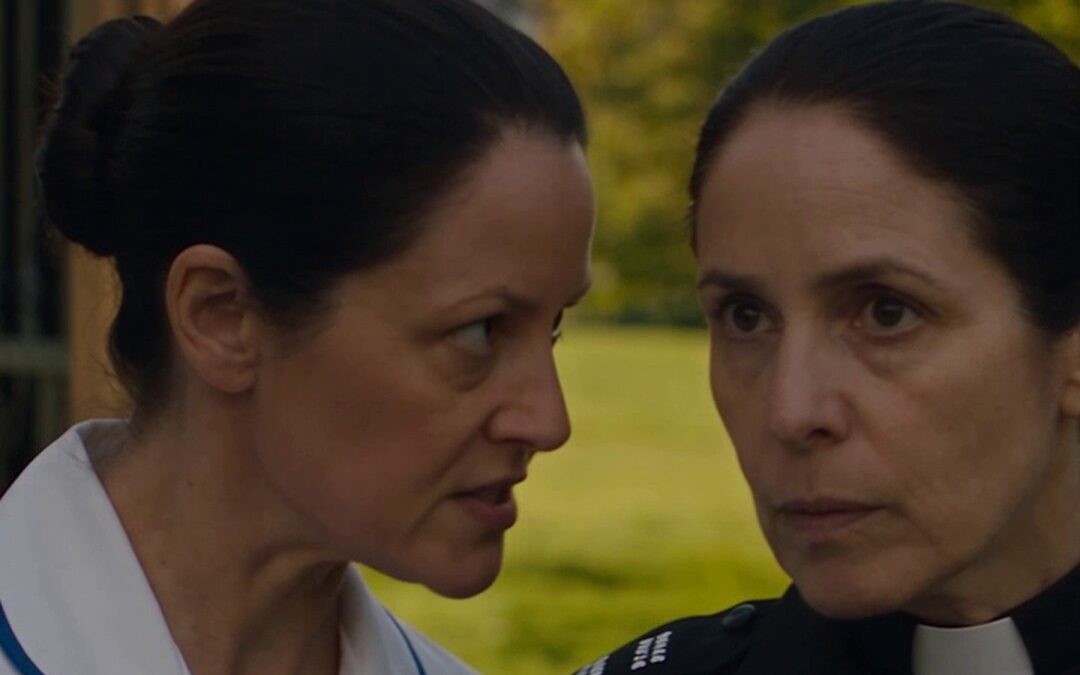
Chapter 1: Outside the Gate
A carton of fries struck the boy’s shoulder outside Wetherby Academy, and a girl in a pressed navy blazer told him he didn’t belong there.
He was about nine, with a torn gray hoodie, a battered backpack clutched against his chest, and the hollow, watchful look of a child who had been awake too long.
A second student tipped a paper cup toward him, and I stepped between them before the drink reached his shoes.
“That’s enough,” I said, pointing toward the open school gate, where the dismissal monitor was already looking our way.
Ms. Alvarez came over at my call, sent the students inside with another staff member, and asked the boy whether he wanted to move away from the sidewalk.
My daughter, Lucy, seven and still carrying the leaf she had found for me on the walk from her classroom, pressed close to my coat.
I knelt several feet from the boy while Ms. Alvarez gave him space beside the gate.
“Are you hurt?” I asked.
He shook his head, watching the adults instead of the departing students.
“I’m used to it,” he said.
That answer landed harder than the fries had, but I kept my hands in my lap and asked Ms. Alvarez to call the school nurse.
The boy reached for the strap of his backpack, and his sleeve slid back from a wide cord tied around his wrist.
A narrow strip of faded blue plastic had been stitched to the cord, too small to have fit him for years.
I saw the old lettering before I could stop myself: MERCY VALE HOSPITAL, 2017, and the infant number B-417.
The four had been written over a one in black ink, a correction I remembered watching a tired nurse make while my newborn slept against my chest.
Nine years earlier, at twenty-two, I had held a boy in a hospital room and left without him.
This boy had my dark eyebrows and the slight notch in his chin, although I knew faces could invite a person to see what she feared and wanted.
He caught me staring, pulled the backpack closer, and looked past me at Lucy.
“Why are you looking at me like that?” he asked.
I almost told him that I was his mother, but Lucy’s small hand was in mine, and a bracelet could have traveled anywhere in nine years.
Then Ms. Alvarez returned with the nurse, who glanced at the boy and said, “The name he gave us is Simon Bell, and the police are looking for him.”
Chapter 2: The Name He Used
The nurse’s words made Simon tighten his grip on the backpack, and I saw at once that being found frightened him more than being hungry.
Ms. Alvarez lowered her voice and told him he could wait in her office, where there was water, a chair, and a door he could leave open.
“I didn’t steal anything,” he said.
“Nobody said you did,” Ms. Alvarez replied.
Lucy looked from Simon to me, expecting the explanation that usually came when an adult’s face changed, and I could not give her one on that sidewalk.
I asked Ms. Alvarez to call Lucy’s father, Ben, from the school office and tell him only that I needed him to collect her.
Lucy asked whether the older children were in trouble, and I told her the school would handle what they had done.
The nurse, Mrs. Chen, offered Simon a clean sweatshirt from the school’s spare clothes cupboard, but he said he would keep his hoodie.
She accepted that answer, then asked whether he was cold, dizzy, or in pain and whether he had eaten that day.
He said he had eaten crackers in the morning, and after a pause he admitted that the crackers might have been yesterday.
Mrs. Chen brought him water and stayed beside him while she called for a medical assessment, explaining each step before she took it.
I stayed near the office doorway because Simon had not asked me to follow him inside.
Through the glass, I watched him choose the chair with a view of the hall and put both feet over his backpack straps.
Mrs. Chen said a county child-protection worker was on the way and that the missing-child report would be checked against the name Simon had given.
I asked whether I should tell them about the bracelet.
“You can tell me what you noticed,” she said, “and he can decide whether he wants anyone to look at it.”
Simon heard us, of course, and pulled his sleeve down.
I told Mrs. Chen that Mercy Vale was the hospital where I had given birth in 2017, and I gave her my name and phone number for the worker.
I did not say that the boy in the office was mine.
Ben arrived ten minutes later, his tie loose from running across the parking lot, and Lucy reached him before he reached me.
I asked him to take her home and stay with her while I spoke to the county worker.
He studied my face, but he did not ask for an explanation in front of either child.
Lucy wanted to know whether I was coming home for dinner, and I said yes, though I could not yet imagine leaving the building.
Ben took her leaf from her hand so she could put on her coat, and she made him promise not to lose it.
A child had brought me that leaf twenty minutes earlier because its edges looked like a crown, and now I could barely remember what I had said to her about it.
I went back inside and told Ms. Alvarez that the students’ behavior needed to be documented without naming Simon to other families.
She had already separated their accounts and saved the camera footage for the head of school.
She thanked me for stopping them, then asked me not to discuss Simon’s circumstances with parents at the gate.
I had no intention of telling anyone there, yet her request steadied me because she was protecting his ordinary right to pass through a school without becoming a story.
The county worker arrived with a badge and a canvas tote bag, introduced herself to Simon as Denise Rao, and asked whether he wanted Mrs. Chen to stay.
He nodded.
Denise told him she needed to make sure he had a safe place to sleep that night and would ask some questions once, in a quieter room.
When she invited me to speak separately, Simon watched me stand.
“I’m not taking your bag,” I said, although he had not accused me of trying.
He looked back down at the floor.
In the conference room, I told Denise about the hospital, the year, the corrected number, and the birth I had never told my family about.
I gave her the name I had used then, Nora Velez, which was still mine before my marriage to Ben Ellis.
She wrote each fact down, including my warning that I could be wrong about the bracelet.
Denise asked whether I had any photograph or record from the birth, and I said I had a discharge envelope in a locked box at home.
I had kept that envelope through two apartments, a marriage, Lucy’s birth, and every move in which I had considered throwing it away.
Denise did not ask why I had kept it.
She asked whether I could give her copies through the county’s process and whether I would be available if a court needed to verify a possible biological relationship.
I said yes, then asked whether Simon had been missing for long.
“He’s safe in the building now,” she said, “and I’m still establishing the rest.”
A police liaison confirmed that a Simon Bell, age nine, had been reported missing in the neighboring county late the previous night.
The report gave his birthday as September 13, 2017, one day before the date I remembered, and listed an adoptive father named Henry Bell.
For a moment the difference felt decisive.
I had given birth early on September 14, after a long night under the lights at Mercy Vale, and I had spent years marking that date in my head.
Denise said a report could contain an error, but she would not turn an error into proof of anything.
She also said that Simon had told her he wore the blue strip because it was the only thing he had from his first day.
That sentence went through me with such force that I had to put both hands flat on the table.
Denise noticed and offered to pause.
I said I could continue, because whatever I felt could wait until Simon had been seen by a doctor.
At the clinic, I sat in a different waiting area while a pediatrician examined him with Denise’s authorization and explained what would happen to Simon first.
Denise later told me he was tired, mildly dehydrated, and cold, with no urgent injury, and that the clinic had given him fluids and food in amounts the doctor considered appropriate.
She did not offer me his full medical history, and I did not ask for it.
Simon accepted a clean pair of socks but kept the hoodie and backpack, which seemed to matter more to him than the dry cuffs.
By evening, Denise had arranged an approved emergency foster placement for him in his own county while she checked Henry Bell’s condition and legal status.
Simon objected to leaving with someone he had never met.
Denise asked what would help him feel safer for the drive, and he chose to have Mrs. Chen walk him to the car and to call Henry’s hospital from the foster home.
He also chose to keep the bracelet on his wrist.
I saw him only once more that day, crossing the clinic corridor with Denise beside him and his backpack hanging from both shoulders.
He looked straight ahead.
I went home with no claim to make and no right to ask him for one.
Ben had set dinner on the table, and Lucy was telling him how Ms. Alvarez had spoken to the students in her firm assembly voice.
She stopped when she saw me and asked whether the boy had somewhere warm to go.
“Yes,” I said.
She asked whether he had been hurt, and I told her a doctor had checked him and that adults were helping him.
Then she returned to her noodles, because seven-year-olds can hold a worry and a hunger at the same time.
I waited until she was asleep before I took the locked box from the top of my closet.
Inside were my Mercy Vale discharge papers, a photograph of my wrist beside a newborn’s blanket, and the unsigned draft of a letter I had once meant to give him.
Ben sat beside me on the bedroom floor while I told him what had happened nine years before.
At twenty-two, I had been working the morning shift at a grocery store and sleeping on my mother’s couch after leaving a boyfriend who had controlled my money and phone.
I had learned I was pregnant late, hidden it poorly, and let my mother tell relatives that I had gone out of state to help an aunt.
My former boyfriend had threatened to find me if I kept the baby, although by the time I gave birth he had moved away and I had no evidence he knew where I was.
My mother had told me that adoption was the only responsible choice, and I had been relieved to let her say aloud what I was frightened of choosing.
Mercy Vale’s social worker had met with me twice, once without my mother in the room, and had explained that I could leave with the baby and ask for support.
I remembered the social worker’s face because I had resented her for making the choice sound like mine.
After the birth, I held the baby for nearly an hour while the nurse corrected the number on his bracelet from B-117 to B-417 to match his chart.
I had named him Jonah in the letter and nowhere official.
I signed a voluntary relinquishment through an adoption agency after the waiting period required by our state, and the agency placed him with a temporary foster caregiver while the court process continued.
I had been told I could ask the agency to keep my medical information current, and I never did.
Ben looked at the photograph for a long time before he asked whether I had ever tried to find him.
“No,” I said.
I could have explained the sealed file, the fear of disturbing his family, and the belief that silence protected him, but the answer remained no.
Ben asked why I had not told him before we married.
“I was ashamed, and then I got used to being a person who had never said it,” I told him.
He set the photograph down carefully.
He said he needed time to understand both what I had done and why I had kept it from him.
I told him I would answer whatever he asked, but I would not bring Lucy into the room to soften his anger or turn Simon into proof that I deserved understanding.
Ben said he was not asking me to do that.
We sat there until the house was quiet enough for me to hear Lucy turn over in her bed.
The next morning I called Denise and offered copies of the envelope.
She directed me to the county records office, where a clerk scanned my papers, logged them, and returned the originals to me.
My hospital wristband carried the same B-417 number and the correction in the nurse’s ink, though a copied wristband could only show that I had been there.
The discharge page listed a male infant born on September 14 and transferred to agency care after my release.
It did not tell me where he had gone.
Denise had requested court authorization to review the sealed adoption file and the hospital’s original birth and transfer records.
She warned me that the process would take days and that I might be asked to give a statement before I learned anything about Simon’s history.
I spent those days noticing how badly I wanted every scrap to line up.
When Lucy left a blue ribbon on the kitchen counter, I looked at it as if it were evidence.
When Ben said Simon’s name over breakfast, I heard the name Jonah underneath and had to remind myself that Jonah had lived only in my unfinished letter.
On the third day, Denise called with the first substantial record.
The agency’s placement log showed that Baby Boy Velez had gone from Mercy Vale to a licensed foster home with a woman named Adele Price.
The child in the log had the corrected B-417 number, and the inventory Adele signed included one hospital identification strip sealed in a paper keepsake envelope.
That was a chain from the hospital to a child, but the next line stopped me.
At ten months, the child had been placed with Daniel and Priya Reed, whose names appeared in an early adoption petition.
Simon’s adoptive parents were Henry and June Bell.
Denise said the Reeds’ petition had not been the final order, but she could not yet disclose what had happened in between.
I heard myself ask whether Adele had fostered other babies from Mercy Vale.
“Yes,” Denise said.
There was the innocent explanation I had not wanted to see: a foster mother with more than one child, a keepsake strip that could have passed through a drawer, and a boy who had no way to know its origin.
I thanked Denise for saying it plainly.
After the call, I sat in my car outside the records office and tried to remember the face I had seen at the school gate without using it to decide anything.
A resemblance could have grown out of nine years of imagination as easily as from blood.
The corrected bracelet number was stronger, but only if the strip had stayed with the child named in the log.
The date on Simon’s missing report still disagreed with mine.
I could not ask Simon to carry my certainty while the paper remained divided.
That afternoon, Denise asked whether I would consent to a properly collected DNA comparison if the court and Simon’s legal representative agreed.
I signed the consent form at the county office after a technician explained that the samples would be labeled, sealed, and sent to an accredited laboratory.
Simon’s assent would be sought in words he could understand, and the court would decide whether testing served his interests while Henry’s condition was assessed.
I asked how long a result might take.
“Usually a couple of weeks once both samples are collected,” the technician said.
Two weeks had once been enough time for me to decide that I could not raise a baby, and now it seemed too short to decide what I would say if that baby had become Simon.
I told Ben about the foster log that evening.
He asked whether the Reeds might be Simon’s birth family under another name, and I said I did not know.
He said he had been trying to keep Lucy’s days normal, but she had asked why I was making calls in the garage.
I had been doing that because I thought closed doors would spare her, although she had noticed the doors.
We agreed to tell her the part that involved our family without asking her to keep it secret.
At breakfast, I told Lucy that before she was born, I had given birth to a baby boy and had chosen another family to raise him.
She asked if I had been married to Ben then, and I said no.
She asked whether the boy at school was that baby.
“We’re trying to find out,” I said.
She considered this while turning her spoon in the cereal.
“Did he get in trouble because I told you about the fries?” she asked.
I told her he had not done anything wrong and that helping an adult notice was the right thing to do.
She asked whether he would come live with us.
“I don’t know where he’ll live, and he gets a say,” I said.
Ben added that Lucy’s room and her school days were hers, whatever the adults learned.
She asked whether I had loved the baby, and I told her I had, but that loving him had not made my choice easy or erased what it cost him.
She wanted to see the photograph in my box, so I showed her the one with only the edge of the blanket and my wrist.
Lucy said the blanket looked scratchy, then asked if I could braid her hair before school.
I did, and I went slowly enough that the braid came out crooked.
For the first time since the gate, I saw how much of my attention she had been living beside rather than receiving.
I started putting my phone away during breakfast, and Ben arranged for Lucy to spend the next school dismissal with him instead of waiting while I watched the gate.
The school head called me after reviewing the camera footage and the students’ statements.
The students had been identified, their parents contacted, and disciplinary steps taken under the school’s harassment policy.
The head said staff would also review how a child could stand outside their gate for nearly half an hour before an adult approached him.
I asked that Simon’s name and circumstances stay out of any general notice, and she said the school would describe the behavior without identifying him.
Mrs. Chen had told Denise that Simon asked for her on the day he was found.
I wondered why until the records began to show June Bell’s path through the school.
June had worked in Wetherby’s library for eleven years, shelving books, repairing torn pages, and teaching children how to use the old paper catalog she refused to throw away.
She had left the job after her cancer diagnosis and died the previous spring.
Simon had sometimes waited for her at the library desk after his own school let out.
He knew Mrs. Chen because she had kept a box of tissues near the library door during June’s last winter there.
The school had been an address Simon believed would still contain someone who knew him.
He had been right.
Henry Bell was alive but hospitalized with a head injury after falling at home four days before Simon appeared at the gate.
The county confirmed Henry’s admission time and the ambulance report, which showed that Simon had left with a neighbor while Henry was taken away.
The neighbor had called Henry’s sister, Cora, who had agreed to care for Simon until Henry could speak clearly and return home.
Cora told the worker she had done well for two nights and badly on the third.
She had left Simon alone in Henry’s apartment while she went to an overnight shift, believing he would sleep and that she could return before morning.
Simon woke, found no adult, and heard an unanswered message on Henry’s phone about a possible temporary placement.
He packed his school things, the blue strip, two small books, and June’s old library badge, then left.
Denise did not tell me where he had slept during the two nights before we found him.
She said only that an outreach team had noted a boy matching his description near the transit station the previous evening and that Simon had reached Wetherby on foot before dismissal.
He had avoided asking for help because he thought anyone who found him would send him to strangers and keep Henry from knowing where he was.
Cora reported him missing after she came back to the apartment.
She told police that he was nine and gave the right legal name, but she read the birth date from an old school form that listed September 13.
The missing-child report went into the neighboring county’s system with that date and an older photograph, while the alert received by Wetherby had only a brief description.
The late report had cost searchers time, and Cora knew it.
The county was reviewing her decision to leave Simon alone, although Denise said Cora had answered questions and given investigators her work schedule and phone records.
I had imagined Henry disappearing, drinking, or letting the boy go after June died.
His hospital chart and calls cleared him of those guesses.
He had asked a nurse about Simon as soon as he could speak after the fall, and a hospital social worker had called Cora and the police before anyone located the boy.
I was embarrassed by how readily I had turned a man I did not know into the reason Simon was outside the gate.
Henry had spent years putting Simon to bed, taking him to doctors, and keeping June’s library badge in a drawer where the boy knew he could find it.
He was also recovering from an injury and could not yet care for Simon alone.
Both facts mattered.
Denise arranged a video call between them once the doctor said Henry could manage it.
Simon asked to have Denise in the room but did not want the foster caregiver to watch.
Afterward, Denise told me only that Henry had promised to keep calling and that Simon had asked him to say what had happened to his dog, Otis.
Otis was with the same neighbor who had stayed with Simon on the day of the ambulance.
I had spent so much of my life thinking about the infant I left that the existence of his dog felt like a rebuke and a gift.
Simon had a whole life with people, habits, grievances, and a dog who waited at a window.
The court granted the workers limited access to the sealed adoption record the following week.
Denise asked me to come to the county office because the file contained a discrepancy that required my own documents to resolve.
An agency supervisor sat with her, along with Simon’s appointed attorney, Elena Brooks, who made it clear that she represented Simon rather than any adult hoping for an answer.
The Reeds had cared for Baby Boy Velez for three months after Adele Price’s foster placement.
Their petition ended when Priya Reed became seriously ill and the couple decided they could not complete the adoption.
The baby returned to agency care under a new case number before June and Henry Bell were matched with him.
The earlier court index had preserved the Reed petition, while a separate final adoption order carried the Bell name.
The agency supervisor laid out copies of the orders in date sequence and kept the originals in the sealed court file.
I could see why a single index entry had seemed to send the child away from Simon’s history.
The file also contained Adele Price’s placement inventory from the return, signed by an agency worker, with the same keepsake envelope listed.
When June and Henry took custody, June had signed for that envelope along with the child’s medical summary, a knitted cap, and two photographs.
Nine years of wear could explain the fading, but the path through the records was unusually steady.
It still did not prove the boy wearing the strip was the child in those orders.
Elena said the amended birth certificate and Simon’s pediatric records were being checked against the final adoption decree.
The amended certificate named Henry and June as parents and gave September 14 as Simon’s date of birth.
His first public school enrollment had the same date, as did six years of vaccination records from the same pediatric practice.
The September 13 on the later school form had been copied from a sports registration that Henry filled out during June’s illness.
A single wrong digit had traveled into the missing report when Cora read the form in a hurry.
I had never felt so grateful to a vaccination ledger, or so angry that an error could take on the force of a life story.
Elena asked whether I understood that Simon’s birth date, documents, and bracelet still required a separate biological test.
“I do,” I said.
She also asked what I wanted from the court if the test confirmed that I was his birth mother.
I wanted to say that I wanted him safe, but that was a wish any decent person could make.
“I want him to have the truth and the adults he trusts,” I said.
“If there’s contact with me, I want it to happen because it helps him.”
Elena watched me long enough for me to hear how polished that sounded.
I added that I would tell him I had left, answer his questions, and accept it if he did not want to see me.
That felt less polished.
The laboratory collected my cheek swab in a county clinic while a technician checked my identification against the consent forms.
Simon’s sample was collected on a different day after Elena and Denise explained the purpose to him and he agreed.
He chose to have Henry on the phone during the appointment, even though Henry could do nothing from his hospital bed.
The samples went into labeled, sealed envelopes with dates, signatures, and transfer records.
I watched mine leave the room and then had no more evidence to gather with my own hands.
During the wait, Denise invited me to give a fuller statement about the relinquishment.
I told her about my mother’s pressure and my former boyfriend’s threats, because those were true.
I also told her that the hospital social worker had offered me a shelter referral, benefits information, and time with the baby before I signed.
I had refused the referral.
At the time, I could not imagine being a mother while broke, frightened, and living on someone else’s couch.
I had also wanted the relief of leaving the hospital as one person instead of two.
Denise wrote that down without changing her expression.
I told her I had believed the adoption would give him stability and that I had used that belief to keep myself from wondering whether he missed me.
She asked if I had been coerced into signing.
“My mother pushed, and I was afraid,” I said, “but I understood what the paper meant.”
Afterward I called my mother, who lived forty minutes away and still believed silence had spared everyone.
I told her I had seen a boy who might be the baby and that Lucy and Ben now knew about the birth.
My mother said I should wait for proof before making Ben carry any more of it.
“He’s already carrying the truth I kept from him,” I said.
She reminded me how little money I had had and how my former boyfriend behaved.
I said those things belonged in the story, but so did the choice I had made after the hospital gave me another option.
She grew quiet, then asked whether the boy was safe.
I could tell her yes for that night.
She asked if she could meet him if he was ours, and I said any meeting would be his decision, made much later.
My mother did not like hearing that, but she said she understood.
I was not sure she did, and I could not make understanding a condition for telling her the truth.
Ben came with me to one meeting with Denise about a possible future contact plan.
He asked practical questions about Lucy’s schedule, privacy at school, and how Simon could reach Henry.
Denise answered what she could and said the county would assess any proposed contact with me separately from Simon’s placement with his adoptive father.
Ben told her he had only recently learned about the birth and would not pretend that our house was ready because we had an empty guest room.
I loved him for saying what the room could not prove.
At home, he was still angry with me.
Some nights he asked nothing, and some nights he asked the same question in different words: how had I looked at Lucy as a newborn without telling him about the first baby?
I answered as honestly as I could, though there was no satisfying account of a secret that had become easier to keep with each year.
We agreed to speak with a counselor before our hurt spilled into Lucy’s hearing.
Lucy noticed the appointments on the calendar and asked whether we were sick.
I told her we were talking with someone who helped grown-ups sort out hard feelings.
She asked if Simon had a person like that.
I said he had Denise, Elena, and a counselor available to him, and he could decide which adults he wanted to talk to.
Lucy drew a picture of Otis after overhearing Ben mention the dog, then asked whether she should send it.
I said she could draw it for herself and that we would wait until Simon asked to hear from us.
She put the picture in her desk drawer and returned to a school project about clouds.
I had to learn to let her interest come and go without making it a measure of her kindness.
The lab result arrived seventeen days after both samples had been collected.
Denise asked me to come in with a support person, and I brought Ben because he had asked to stand beside the truth even while he was working through my silence.
Elena was there for Simon, and a genetic counselor joined us to explain what the result could and could not establish.
The report found a biological mother-child relationship between my sample and Simon’s to a degree the laboratory described as conclusive for the tested relationship.
I had been preparing to hear yes for weeks, yet the word made the chair beneath me feel suddenly narrow.
The counselor did not offer comfort in place of explanation.
She confirmed the identity checks, the sample chain, and the limits of the report: it established biology, not a history of care or a decision about where Simon should live.
Denise placed the laboratory finding beside the Mercy Vale birth record, the corrected B-417 infant chart, the agency inventories, the final Bell adoption order, and Simon’s medical and school records.
The papers joined the child I had held to the boy Henry and June had raised.
The bracelet had pointed us toward the file, but its blue strip had never had to bear the answer alone.
I asked when Simon would be told.
Elena said she and Denise would speak with Henry first, then tell Simon in a way he could question without me in the room.
I was relieved and disappointed in the same breath.
I told them I would answer anything he chose to ask.
Then I went outside and called my mother, because she had once stood beside me while I signed the relinquishment and deserved to hear what the records said from me.
She cried and said his birth name.
“His name is Simon,” I told her.
“I know,” she said after a moment.
For the first time, I thought she might begin to.
Henry was discharged to a rehabilitation program before he was able to resume caring for Simon.
Denise met him there with Elena and the records, and he asked to read the adoption history before speaking to his son.
Later, he gave permission for Denise to tell me a small part of their conversation.
June had kept the hospital strip in Simon’s memory box because she believed he should own the pieces of his life that began before they met him.
When Simon was six, she had shown him the strip and explained that another woman had given birth to him.
She had sewn it onto a wider cord after he asked to wear it during a school project about family objects.
He took it off sometimes for swimming and soccer, but after June died he wore it more often.
Henry had never known the corrected number mattered.
I had thought of the blue strip as something I had lost, and June had spent years making sure it stayed with Simon.
Denise said Henry wanted Simon to know the truth about me but feared he might hear it as another adult preparing to leave.
I told her Henry had good reason to fear that.
The next afternoon, Elena and Denise spoke with Simon while Henry joined by video.
They told him the records and test showed that I was the woman who had given birth to him, that I had chosen an adoption, and that his life with June and Henry remained his life.
They told him he did not have to meet me or decide how he felt.
Denise did not relay his private questions to me, but Elena later gave me one he had authorized her to ask.
“Does she know I’m Simon?”
I told Elena that I did.
Simon had also asked whether I had another child, and Elena told him about Lucy without showing him a photograph.
He asked if Lucy knew about him.
I said she knew there had been a baby and that the boy at her school might be him, but she had not been asked to keep a secret or wait for him.
Elena took the answer back to him.
For three days I heard nothing.
I returned to work, made lunches, and listened to Lucy explain a disagreement about the rules of four-square.
Every ordinary task felt both precious and insufficient.
On the fourth day, Elena called to say Simon wanted to send me three questions in his own handwriting.
They arrived through Denise in an envelope with a picture of a small dog drawn in one corner.
His first question was whether I had named him.
His second was whether I had known June.
His third was whether I had been sick when I left.
I sat with the page for an hour before writing my answers, because each line would be his to keep or tear up.
I told him I had called him Jonah in a letter I never sent, but I had not put that name on his official papers and would use Simon unless he asked me otherwise.
I told him I had never met June, though I had learned how carefully she had kept his things.
I told him I had been frightened and short of money, but I had not been too sick to stay; I had decided that another family should raise him, and I was sorry for the hurt that decision had caused.
I asked Denise to check that the words were age-appropriate without making them sound less true.
She suggested that I explain what I meant by “official papers,” and I changed the sentence to say “the forms at the hospital.”
I did not end the letter by asking him to write back.
A week later, Simon sent one more question: “Why didn’t you look for me?”
I knew there were legal limits to what I could have found, but he had asked why I had not tried.
I wrote that I was afraid of disturbing the life I hoped he had, and that I had let that fear become an excuse for not finding out whether he wanted any information from me.
I wrote that this was my responsibility, not his.
He did not answer.
Henry’s recovery moved in uneven steps, and the county held a placement review with medical information, Simon’s wishes, and the foster caregiver’s observations.
The emergency home was safe, and Simon had begun to sleep through the night there.
He still asked to speak with Henry most evenings and wanted to see Otis.
Denise arranged visits with the dog in Henry’s neighbor’s yard, with a worker present and a ride that did not depend on Cora.
Cora’s review found that she had left Simon unsupervised and had waited too long to report him missing.
She was not approved as his temporary caregiver again, and she agreed to a family support plan before any unsupervised contact.
Simon did not have to decide whether to forgive her in order for adults to make those limits.
Henry could not take him home yet, but his rehabilitation team expected that he might be able to care for him after more treatment and a home assessment.
The court kept Simon in the approved foster placement for the time being, with regular calls and visits with Henry.
Elena asked Simon whether he wanted to consider meeting me while those plans continued.
He said he might, if Henry could know where he was and if nobody expected him to hug me.
I said yes to both conditions before she finished reading them.
Denise explained that any first meeting would be supervised in a family room at the county office and that Simon could end it whenever he wanted.
The county also began assessing Ben and me for contact, including a home visit and background checks, even though no one had proposed that Simon live with us.
I welcomed the review because my intention could not tell them how Lucy would feel, how Ben and I handled conflict, or whether Simon would feel safe in our house.
During the home visit, the worker asked where we would meet Simon if he ever wanted to come over.
I pointed to the kitchen table and the living room, then said we would ask him what he preferred.
Lucy was at school for most of the visit, and when she came home the worker asked her simple questions about her routine without asking her to approve a brother.
Lucy said she liked our house except when the dryer made a knocking sound.
After the worker left, she asked whether Simon had to come here because he was my baby first.
“No,” I said.
She asked if I wished he would.
“I’d like to know him if he wants that,” I said, “and the adults helping him will decide what keeps him safe.”
She thought about this, then asked whether he would touch her art supplies.
I told her no one would use her things without asking.
The question deserved an answer as much as any question about love.
My mother asked twice whether she could send Simon the knitted blanket she had made while I was pregnant.
I asked her to keep it for now.
He already had belongings from people who had stayed with him, and I did not want to place my family’s memories in his hands as if he had asked to carry them.
Ben helped me put the unopened blanket back in the box.
He was still deciding what our marriage looked like with the secret uncovered, but he had begun asking about the months after the birth instead of only about why I had lied.
I told him how I had gone back to work, checked the agency’s first update, and stopped opening its letters after the Reeds’ petition was mentioned because the idea of a settled home let me close the box.
One letter had later reported a change in placement, and I had filed it without reading past the first paragraph.
I found that letter among my papers and gave a copy to Denise, though the county already had the official record.
The fact that I had possessed it all along changed nothing in Simon’s legal history.
It changed the story I could tell myself about how little I had known.
I had chosen not to know more.
At the first meeting, I arrived early and sat in a room with a low table, a box of tissues, and a shelf of games.
Denise told me Simon had chosen to bring Henry on a video call for the first few minutes, then ask him to hang up if he wanted privacy.
He came in wearing the gray hoodie, now washed and mended at one cuff, with the backpack over one shoulder.
The blue strip was no longer on his wrist.
I noticed its absence and kept my eyes on his face.
“Hi, Simon,” I said.
“Hi,” he said, then looked at Denise to make sure the door could stay open.
Henry’s face appeared on the tablet, thinner than in the photograph Denise had shown me with his permission.
I thanked him for agreeing to the meeting.
He said Simon had wanted to come and that was enough for him.
Then he told Simon he would answer when the call was over, and the screen went dark.
Simon sat across from me and opened a deck of cards Denise had left on the table.
He asked if I knew how to play War.
I did, though I had not played since Lucy learned numbers, and I let him deal because he wanted to.
For several rounds we said only the numbers on the cards.
Then he asked whether I had seen June at the school.
I told him I had not, but Mrs. Chen had told me June worked in the library.
“She hated when people folded corners,” he said.
“I think I would have liked her,” I said.
Simon set down a six against my nine and frowned at the cards.
He said he did not want me to call June his “other mother.”
“I won’t,” I said.
He said he also did not want me to call him Jonah.
“I won’t,” I said.
The next cards tied, and we each put three face down while Denise watched from a chair near the door.
Simon won the pile, counted it twice, and asked why I had kept the letter if I had never sent it.
I told him I had wanted him to know I had thought about him, but I had been afraid a letter would trouble the family raising him.
“You could’ve sent it to June,” he said.
“Yes,” I said.
He pushed the cards into a stack with the side of his hand.
I told him that I had been afraid and that he was right.
He looked at me then, briefly and without relief.
The meeting lasted twenty-eight minutes because he decided he had played enough.
At the door he asked whether Lucy liked dogs.
“She does,” I said.
He said Otis would probably like her because Otis liked nearly everyone with hands.
I smiled, and Simon looked startled by my smile before he went out to call Henry.
Denise told me later that he had asked for another meeting, but he wanted two weeks between them.
I put the date on the calendar without drawing a circle around it.
Over the following months, Henry returned home with support from a neighbor, a visiting therapist, and a safety plan the county reviewed before Simon moved back.
Simon went home to Henry and Otis on a cold Saturday in January.
He called me that evening through Denise’s approved contact arrangement to say the dog had stolen one of his socks.
I listened to his account of the chase and did not ask whether he was happy.
When the calls became weekly, he sometimes talked for ten minutes about a video game and sometimes said he had nothing to say after two.
I learned to say goodbye without turning the short calls into evidence that I had failed again.
Henry invited me to a meeting with his counselor and Simon’s worker so we could agree on who would tell Simon about visits, rides, and changes of plan.
He wanted me to know that June’s place in Simon’s life was not a subject for negotiation.
I told him I understood.
He said Simon had enough adults making promises, so we agreed to put only the next visit on the calendar and to tell him promptly if anyone had to change it.
The county closed its emergency placement case after Henry’s home passed review, but Elena stayed involved long enough to help establish a contact plan everyone could revisit.
No petition changed Simon’s name or his parents on the papers.
The court record recognized my biological identity while leaving Henry’s legal parenthood intact.
I could give Simon my medical history, answer questions, and show up when he asked, and Henry could keep raising the child who called him Dad.
Ben met Henry before he met Simon.
They talked at a coffee shop about school pickup, allergies, and how to reach each other if a visit had to end early.
Ben came home and said Henry laughed only once, at a story about Otis, but that he had watched every answer carefully.
I told Ben I would have done the same.
Lucy did not meet Simon until he asked to meet her.
She chose to bring a card game to the supervised visit and asked Ben to stay nearby.
Simon asked whether she was the girl with the leaf at the gate.
She said yes, and that Ben had pressed the leaf inside a dictionary even though it turned brown.
They played a game in which Lucy made up a rule halfway through.
Simon told her that was cheating, she argued that it was a new version, and Denise let them solve it without asking either child to be especially kind.
On the ride home, Lucy said Simon was better at cards than I was.
She also said she did not want him to come to her birthday party yet because her friends would ask questions.
I told her she could have the party she wanted.
At his next visit, Simon told me he had put the hospital strip back in June’s memory box.
He said the cord scratched his wrist during soccer, and he wanted the strip somewhere Otis could not chew it.
I said the box sounded like a good place.
He asked whether I still had the photograph from Mercy Vale.
I told him I did, and I asked whether he wanted to see it then or wait.
He said wait.
Spring came slowly, with Henry walking farther each week and Simon returning to his old school routine.
Wetherby sent Mrs. Chen a note for Simon after the investigation, but he chose not to read it until the end of the term.
The students’ actions had been addressed, and Simon had no obligation to help the school feel finished with what happened.
He did ask to visit June’s library on a day when classes were out.
Henry invited me to walk with them but said Simon would decide whether I came inside.
At the gate, Simon looked at the sidewalk where I had first knelt near him, then at the open doors beyond Mrs. Chen.
“You can come to the library,” he said, “but Dad knows where the books are.”
Henry led the way, and I followed them past the gate without trying to walk between them.
Inside, Simon showed me the shelf where June had repaired a torn atlas and the table where he used to do homework until she finished work.
He called her Mom as he spoke, without checking my face.
I asked him what she had taught him to find in an atlas.
“Places with weird names,” he said, and pointed to one he thought Lucy would like.
When we left, Mrs. Chen held the door while Henry stepped carefully onto the path.
Simon waited beside me until his father reached the gate.
Then he asked if I could come to his soccer game the following Saturday.
“If Henry says it works, I’d like to,” I said.
“He already said,” Simon replied.
He shifted his backpack higher on his shoulder and started after Henry.
“Okay, Nora,” he called back.
It was the first time he had used my name, and I answered it before he reached the gate.








