My Brother Blamed Me for Ruining Our Family Orchard, and Dad Gave Me Until Friday to Prove He Was Wrong
Chapter 1: The Red Tag
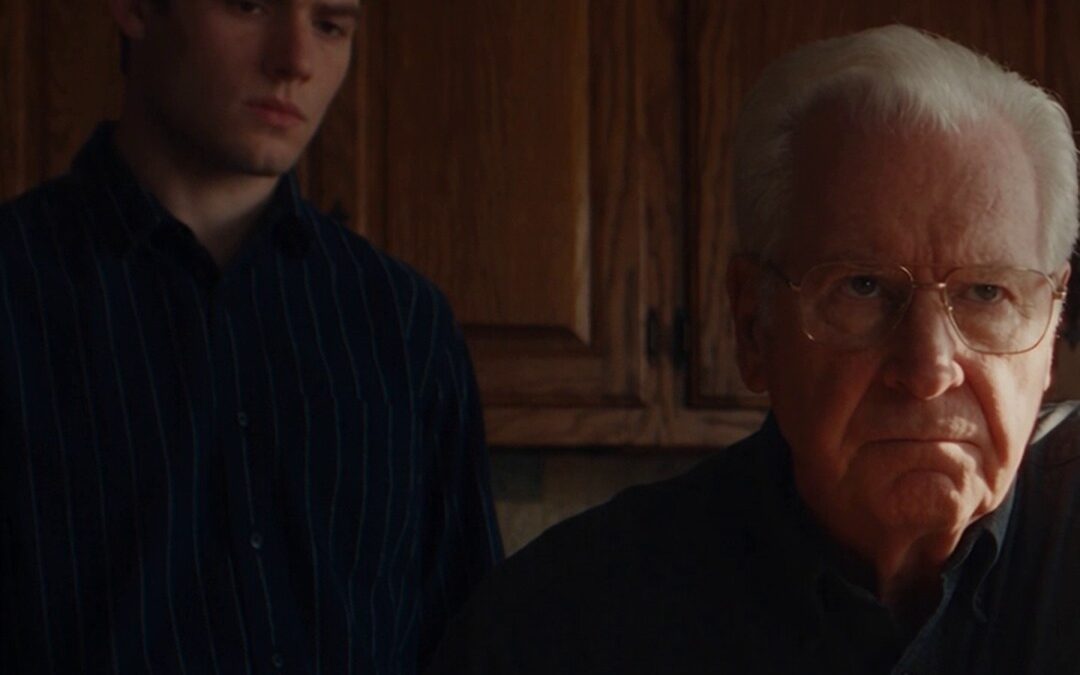
My father slid a red tag across the kitchen table as if he were afraid it might stain his fingers.
“Lot 418,” he said. “Tell me why you released it.”
I read the number twice. Lot 418 had been held for a possible temperature problem while I was quality supervisor at our family’s apple packing house. I had ordered the hold myself.
“I didn’t release it.”
Cal, my younger brother, stood behind Dad’s chair. Since Dad’s stroke, Cal had handled the bills, the growers, and most conversations Dad found tiring. He reached past him and laid down a printed release sheet. My employee login was beside the time: 8:14 a.m.
“The buyer rejected the whole load,” Cal said. “We paid to haul it back. Dad needs to know what happened before Friday.”
Friday was when the bank wanted an answer about Cal’s plan to sell the packing line. Without it, our Hudson Valley orchard would still have trees, but no way to sort and ship fruit under our own name.
Dad watched me over his reading glasses. Last winter, I had admitted that three years earlier I’d hidden a refrigeration alarm for one shift. Cal had missed it; I had hoped to spare him trouble. No fruit had shipped during the outage, but Dad had stopped trusting my word about the cooler.
“I made that mistake,” I told him. “I didn’t make this one.”
Cal turned the release sheet toward Dad. “She knows the password.”
I asked for the original hold log. Cal said the office copies were with the accountant. I asked Dad to wait until I could see them.
“We’ve waited long enough,” he said.
He pushed the red tag back to me. On its corner was a crescent-shaped bite from the old tagging punch, the one we kept beside the wash station. I remembered making that mark on Wednesday morning before the packing line started.
The release sheet said I had cleared the lot at 8:14. At 8:14 every Wednesday, the line was shut down for its weekly wash.
I looked up. Cal had already begun explaining to Dad how much the equipment buyer was willing to pay.
Chapter 2: What the Scale Remembered
On Thursday morning, the packing house smelled of wet concrete and apple juice caught in the floor drains. I had known that smell since I was eight. My mother used to stand me beside the sorting belt with a brass sizing ring and let me decide which apples were big enough for top grade. I was usually wrong. She made me check each one myself.
The ring was in my coat pocket now. The red tag was in the other, sealed inside a clear sample bag. Lot 418. My handwriting. The crescent mark from the old punch beside the wash station.
I had put the tag in the bag the night before because I did not trust myself to leave it on my desk. That thought made me ashamed. Until Cal showed Dad the release sheet, I had never worried that a piece of paper could disappear inside our own office.
Our office manager, Denise, was making coffee when I came in.
“Did Walt believe him?” she asked.
“He believed the release sheet.”
Denise looked into her cup. “That’s different.”
I asked for the original hold log. She searched the cabinet under her desk, then shut it. Cal had taken the September files to our accountant. When I called, the receptionist said Cal had instructed them to discuss the equipment sale only with him and Dad. She could not tell me whether Lot 418 was among the papers.
Denise had one hand on the cabinet handle. For a moment I thought she might offer to call the accountant herself. Then the receiving bell rang, and she went to answer it. She had worked for us for twenty-two years. I could not ask her to risk that job on my suspicion.
I wrote down what the receptionist said and went to the wash station.
Every Wednesday, the crew stopped the line for a full hot-water wash. They removed guards, rinsed the brushes, and flushed the drains. Nothing ran again until sanitation signed the line back into service. The release sheet Cal had shown Dad said I cleared Lot 418 at 8:14 on a Wednesday. I had been supervising that wash.
Luis, our sanitation lead, was coiling a hose.
“Do you remember September twelfth?” I asked.
“That Wednesday? The belt bearing seized.”
“How late were we shut down?”
“After ten. Ray had to bring a puller from maintenance.”
“Would you put that in writing?”
Luis set the hose down. “Cal said you were asking people to take sides.”
“I’m asking when we finished washing.”
“I have kids on this crew.” He picked up the hose again. “My time’s on the sanitation sheet. Use that.”
He turned on the tap to rinse the hose coupling. I waited until he shut it off.
“If someone asks,” I said, “you can tell them exactly what I asked you.”
“I will.” He looked at me then. “I don’t want them saying I lied for either of you.”
Neither did I. I thanked him and went inside.
The binder by the office door showed his initials at 10:26 and mine at 10:31. I photographed the page, then opened Lot 418’s record at the quality terminal. It showed the hold I had entered at 6:40 and a release under my login at 8:14. There was no cooler-bay location between them.
I checked the previous lot to make sure the blank field was unusual. Its screen showed every move from receiving to Bay C. Lot 418 went from held to released as though nobody had needed to find eighteen thousand pounds of apples.
Cal came in while I was printing it.
“You don’t have to sneak,” he said.
“I’m at my workstation.”
“You asked Luis for a statement.”
“I asked when the wash ended.”
Cal glanced at the screen. “Releasing a hold doesn’t mean the apples went down the line. The bins went out ungraded. The buyer handled them at its own plant.”
“Then why did the buyer reject them?”
“The pulp temperature was too high when they opened the trailer.”
That was possible. The wash sheet proved the line had been down; it did not prove a truck could not have taken the bins. I had read more into the clue than it supported.
“Where were they loaded?”
“Dock two.”
“Who drove?”
“The carrier paperwork is with the claim.” He stood between me and the filing cabinet. “Dad told you I’m handling it.”
Dad had told me he wanted an answer before Friday, when the equipment buyer expected a decision. Cal knew I could not settle the difference by arguing with him. I took my printout and left.
Our orchard covered ninety acres on the east side of a Hudson Valley ridge, but the packing house served six other small growers. Selling the line would clear part of our operating loan. It would also send those growers another forty miles to pack their fruit and leave us paying someone else’s rates for our own. Cal said the outside packer had offered a good first-year price. The draft agreement allowed that price to change afterward.
At the loading dock, one of those growers was waiting for his empty bins. He asked whether we would still take his late-season fruit. I told him we were operating today. It was the only promise I could make, and he heard the limit in it. He drove away with his bins without asking another question.
I drove to Hudson North Freight, the carrier named on Cal’s sheet. Bev, its dispatcher, recognized me through the counter window.
“Lot 418,” I said. “September twelfth. I need the driver’s name and loading time.”
She brought up the account, then stopped. Cal was its listed contact. With written authorization, she said, she could print the ticket.
“The claim says I released that lot,” I said. “I’m trying to check the shipment.”
“I understand.” She turned the screen so I could no longer see it. “Bring me authorization from Walt.”
She had not told me whether she found a trip. She had only shown me where the account rule stopped us. I thanked her and took a blank sheet of Hudson North letterhead from the counter to write Dad’s request on later.
Outside, I called our insurance broker. Cal had opened a cargo claim two weeks earlier. The insurer had asked him to hold the rejected fruit for inspection. He reported that it had already been disposed of.
Rejected apples did not vanish. If they went for juice, there would be a processor’s weight ticket. If they went to a compost facility, there would be a disposal record. I added both to the list of documents I needed.
Dad called at noon. Cal had told him I was questioning the crew.
“I looked at the wash sheet,” I said. “I spoke to Luis.”
“You remember what happened the last time people had to choose between you two.”
“I’m not asking anyone to choose.”
There was a long breath on the line. His speech had mostly returned after the stroke, but sometimes a sentence still cost him effort.
“Come for supper,” he said. “Both of you.”
Cal had cooked chicken and put a bowl of applesauce by Dad’s plate because Dad still had trouble with dry food. I hated that I noticed the care in it. I hated more that it was real.
Dad had set three places with the plates Mom used for holidays. He watched Cal cut his chicken into smaller pieces without being asked. Cal had learned to notice what Dad needed before Dad said it. I had spent most of those months at the packing house, doing work I thought kept the business safe. Both kinds of help were real. Only Cal’s was visible at that table.
After we ate, Dad asked what I had found.
“The wash ended at ten thirty,” I said. “Cal says the bins could have been loaded without using the line. I want the carrier ticket and the disposal weight.”
Cal folded his napkin. “You can see the claim file when the accountant returns it.”
“Before Friday?”
“Friday isn’t a trial. The bank needs to know whether we’re taking the equipment offer.”
“The buyer needs to know. The bank needs a payment.”
“We can barely afford to repair that line.”
Dad raised a hand. “One at a time.”
Cal turned to him. “I’m trying to solve that problem. June wants to dispute a release entered under her own password.”
“I didn’t enter it.”
“You said that about the cooler alarm until the insurer found the change.”
Three years earlier, Cal had missed a refrigeration alarm during harvest. I discovered it the next morning. The backup compressor had come on before any fruit shipped, and I held the affected bins while I checked their temperatures. Then I changed the alarm report from “unacknowledged” to “acknowledged during shift.” I told myself I was sparing Cal trouble over a harmless delay. An audit exposed the alteration months later. Dad learned I had lied.
Cal had never asked me to cover for him. I had done it because I thought I knew what he could bear.
“I made that mistake,” I said. “I didn’t make this one.”
Dad looked at the table. “Give me something I can rely on now.”
“I’m trying.”
He did not say he believed me. He did not say he believed Cal, either. I realized I had come hoping he would choose before I could prove anything.
Cal began clearing the plates. “The buyer comes at eleven tomorrow.”
At home, I spread my notes across the kitchen table. On the back of the red tag was a number I had barely noticed: 62. It was not a cooler bay; our bays used letters.
I called Ray, our maintenance mechanic. He kept a notebook of every repair because he distrusted computers that could lose a month’s work in an afternoon. He agreed to show me the September entries in the morning. Cal, he said, had already called to tell him I was confused about a shipment.
I slept badly. Each time I woke, I imagined Dad signing the sale and the crew hearing the line would be gone by November. I also imagined proving Cal had lied and still having no way to pay the bank.
Ray brought his grease-darkened notebook out to his garage. The September twelfth entry read: “Line 2 drive bearing seized. Removed 8:05. Shaft scored. No restart.” The replacement was recorded Thursday at 9:40.
“Cal says they loaded bins without running the line,” I said.
“Could have. I fix belts.”
I photographed both entries. Ray wrote his initials beside them.
He showed me the empty space under Wednesday’s entry. “I thought about putting down every hour we waited for that bearing,” he said. “Nobody needed a longer bill from me.”
The blank space mattered too. Ray had written what he did, not a story built for my argument.
“What’s 62 on a hold tag?” I asked.
“Scale code for outside processing. Juice, mostly.”
A fresh-fruit distributor’s name was on Cal’s rejection sheet. Code 62 suggested someone had planned a different destination. It did not prove the fruit went there.
Denise took me to the yard shed, where the scale printed a ticket whenever a truck weighed in or out. The September records had been archived when the computer was replaced. The scale technician had copied them to an external drive and left it with us. The drive was gone from the safe.
Denise checked behind the newer backup drives, then counted the empty sleeves in the safe. “I signed for it when the technician left,” she said. “I should have noticed it was missing.”
“Anyone with the safe code could have moved it.”
“That doesn’t make me feel better.”
Cal found us in the shed. He sent Denise to receiving and closed the door.
“You’re pulling people off their jobs,” he said.
“I need the scale ticket.”
“I said I’d show you the claim.”
“Is there a ticket for 418?”
“Yes. You’ll see it when Dad does.”
He put me on paid leave for disrupting operations. When I said Dad should tell me himself, Cal opened the door and waited for me to go. The crew on the dock watched me cross the yard. By lunch, everyone would know.
My truck was parked beyond the scale. I had to pass it on foot, the same scale I had used for years to check a doubtful weight. I stopped beside its window, then kept walking. Getting into the shed again would only give Cal another reason to say I was interfering.
I drove to Dad’s house, but he was asleep in his chair. I left a note asking him to call me directly. Then I called the fresh-fruit distributor on Cal’s rejection sheet. Its claims manager would not discuss a shipment without authorization, but the rejection number caught her attention.
“Our claims begin with a two-letter warehouse code,” she said. “What you have could be a purchase order.”
It could also have been a purchase order printed on a rejection form. I recorded her name and what she said without turning it into proof. Cal did not return my message asking for the original notice, carrier ticket, and disposal receipt.
Dad called late that afternoon.
“Why did you leave a note on my door?”
“Cal says you agreed to put me on leave.”
“I agreed you shouldn’t question staff during their shift.”
“That isn’t what he told me. I’m coming over.”
Dad met me on the porch, one hand against the doorframe for balance. Before the stroke, he could lift two field bins at once and complain that nobody had stacked them straight. I showed him Ray’s notebook and the sanitation sheet.
“Cal told me the line wasn’t used,” he said.
“I know. The tag says outside processing, but the claim names a fresh-fruit buyer. I need to follow the truck.”
“If the release was under your login, what do you think happened?”
“Someone used my open session.”
“That’s an answer you’d tear apart if Cal gave it.”
He was right. I had written our login rules. During harvest, I had sometimes left the terminal signed in while I went to the wash station. I could not prove I had locked it that Wednesday.
“I’m checking the records outside our office,” I said.
Cal’s truck came up the drive. He carried a folder and a grocery bag. When Dad asked for the claim documents, he laid them across the kitchen table: a Hudson North manifest for 18,400 pounds leaving our yard at 9:02, a buyer’s rejection dated the next morning, and a waste-hauler invoice for 17,960 pounds disposed of three days later.
The weights were close enough to look ordinary. Cal had brought answers.
I set Ray’s notebook photograph beside the manifest. Cal did not object to the repair entry. He pointed out that field bins could be lifted onto a truck while the belt was down. Dad nodded. It was the answer I had already considered, and hearing it from Cal made my evidence feel smaller.
“Why is outside processing on the tag?” I asked.
“I considered juice if the fresh buyer refused it.”
“Before the lot was tested?”
“Receiving wrote it. They knew juice was an option.”
Dad examined the manifest. “The line was down, but the bins could have left.”
I read the small print: truck HN-204, seal 7118, driver Owen Pike.
“Where’s the scale ticket?” I asked.
“At the broker’s office with the claim.”
Cal slid another paper toward Dad. It was the old cooler alarm report, my alteration circled. On the back was an email from the insurer asking about that incident and our current access controls. It did not accuse me of falsifying Lot 418. Beside the release sheet, it hardly needed to.
“If the claim fails, we eat the loss,” Cal said. “If the equipment buyer walks tomorrow, we still owe the bank.”
I left with copies of the papers and no answer that would pay the debt.
At home, I checked our loading calendar. It listed HN-204 for Thursday, not Wednesday. Calendars changed. I called Hudson North and learned Owen was away on a long run until Friday afternoon.
“June,” Bev said, “the truck number on that paper matters more than the driver’s memory.”
“What do you mean?”
“I can’t discuss the shipment.”
She hung up gently.
Dad texted a signed letter late that night authorizing me to review the carrier records for Lot 418. At seven Friday morning, Bev read it and printed a dispatch history. HN-204 had spent Wednesday at a repair shop in Poughkeepsie, having its refrigeration unit replaced. No Hudson North truck had been dispatched to our packing house that morning. Owen brought HN-204 to us Thursday at 11:18.
Bev gave me a standard certification bearing her name and the report number. The carrier number on Cal’s manifest was real. The trip was not.
“Could someone have entered the wrong date?” I asked.
Bev pointed to the repair entry. “The unit was off the truck for most of Wednesday. Owen couldn’t have taken it even if dispatch missed a job.” She let me read the repair shop’s name but kept the carrier’s own records behind the counter.
I wanted to take it straight to Dad. Then I pictured Cal calling it a clerical error and producing another explanation for the fruit. I still did not know where 418 had gone.
The waste hauler confirmed its invoice was genuine but would not release the compost facility receipt to me; Cal was the account contact. The facility manager confirmed that its receipts recorded a truck’s plate and its weight in and out. He would need authorization to share one.
I asked whether the invoice number appeared on his receipts. He said haulers sometimes combined several customers’ waste into a single load. A real invoice could show what we had paid without identifying every pound delivered to the facility. I crossed “disposal proved” off my notes. I had written it there when I first saw Cal’s papers.
I called the state agriculture office about a held lot whose destination I could not establish. An inspector could examine our traceability records, the woman said, but probably not until the following week. I gave my name and made a formal report.
She repeated the lot number and asked me to spell the orchard’s name. I did. When she asked whether other fruit from the same storage block had shipped, I opened my calendar and gave her the dates I could verify. I could hear her typing. The report was no longer a question I could take back before Dad heard about it.
For a while I sat in my truck outside the waste hauler’s office. Dad and Mom had borrowed against their home to build our first line. I had just asked the state to examine the business on the day Dad hoped to secure a sale. But if held fruit had entered commerce without testing, the question could not stay inside our family.
Dad called at ten.
“Cal says you contacted the state.”
“Yes.”
“Were the apples unsafe?”
“I don’t know.”
“You could have told us first.”
“I asked for the records.”
The equipment buyer was already at the orchard, he said. If I had something to show him, I should come now.
Her representative, Maren, was measuring the loading doorway when I arrived. She bought used packing machinery for resale. She had no reason to wait while we settled a family argument. Dad called Cal into his office, and I put Bev’s certification beside the manifest.
“The carrier copied the wrong truck number,” Cal said.
“They certified that no truck came here Wednesday,” I told him.
“Then we used another carrier. I’ll check.”
“Why does the manifest have Hudson North’s logo, driver, and carrier number?”
“I received it with the claim papers. I didn’t make it.”
Dad held it up. “Find the original. Call the broker.”
Cal called on speaker. The broker was in a meeting. He left a message, then looked at Dad. “We can chase a paperwork error all afternoon. Maren has a flight. The equipment sale doesn’t depend on the claim.”
“It depends on whether you’ve been truthful with me,” Dad said.
“The paperwork has errors. I should have checked it.”
Maren gave us one more hour. After that, her crew schedule would change and she could not promise the same price.
When she returned to the doorway, she asked Dad whether there was any dispute over who could sign for the equipment. Dad said he was the owner and would answer when he was ready. She glanced at the papers on his desk, then went to wait in the conference room. Her question made clear that finding a false manifest would not itself stop the sale. Dad still had to decide.
Denise appeared in the doorway holding a manila envelope. Inside was the external drive from the old scale computer. She had found it in Cal’s locked desk drawer when he sent her for a checkbook that morning.
“It’s a company backup,” Cal said when he saw it. “I didn’t hide it.”
“Then we’ll read it,” Dad said.
The drive was password protected. Cal entered the password without protest, which made me uneasy.
The September twelfth scale record showed two truck visits. One grower had delivered fruit. Another truck weighed in at 6:02 a.m. and out at 7:11. It carried 18,400 pounds away on account code 62.
“Outside processing,” I said.
“That’s the fruit,” Cal said. “I sent it for juice.”
“Before June released the hold?” Dad asked.
“I entered the status late. We needed the dock clear before the morning deliveries.”
The number on the red tag meant more than I had thought. Someone had assigned the lot to an outside processor before I put it on hold at 6:40. The truck left while the hold was active. The release under my login came more than an hour later.
I checked the plate on the ticket against Cal’s manifest. They were different. He said that was the other carrier he had been trying to remember. His explanation kept pace with each record, but it never accounted for why he had given Dad a Hudson North manifest in the first place.
“Which processor?” Dad asked.
“River Bend Cider.”
“Call them.”
“The purchase went through another account,” Cal said.
“What account?”
“My company’s.” He pulled out a chair but stayed standing. “I bought the fruit from the orchard and took the transport risk. I’ve done it with surplus lots this season.”
Dad’s hands were flat on his desk. “You have a company buying our apples?”
“The orchard needed cash. I was going to tell you when things settled.”
“You sent held fruit out before it was tested,” I said.
“It was suitable for pressing.”
“You didn’t know that when it left.”
Cal looked at Dad. “I knew June would stop it. I thought the claim would cover the loss and we could move on.”
“You put her name on the release,” Dad said.
“I used the open session. The system kept her login.”
He had chosen that explanation himself after the scale record put the truck ahead of the release. There was no need for me to guess who had touched the terminal. He had known I sometimes left it open while supervising the wash.
Dad stood carefully. “Tell Maren we need more time.”
“The bank payment is Tuesday,” Cal said.
“Then ask her for until Tuesday.”
“If she walks, the bank can take the line anyway.”
The loan was secured by equipment and crop proceeds. He was not inventing the debt, and I still had no way to pay it.
Maren left after Dad told her he would not sign that day. She said her offer expired at five. Cal watched her walk through the loading doorway she had measured. Then he went to make the bank’s scheduled payment list, as though the morning had changed nothing about the bills.
By afternoon, the state inspector had arrived. Kendra Shah copied the hold record, scale ticket, and our handling procedure. She asked for River Bend’s receiving record and tests. Until she could establish where Lot 418 had gone, she told us to pause shipments from the same storage block and separate them from the growers’ fruit.
We walked the cooler with her. I pointed out the floor marks that divided our orchard’s bins from the growers’ bins. Kendra checked the tags instead of taking my word for it. One was damp and nearly illegible; Denise found its matching receiving ticket while I held it under the light. Until we matched that bin, Kendra would not clear the row.
Two growers called within an hour. Cal listened while I explained what was held.
“This is what you bought us,” he said when I hung up.
“This is what happens when we can’t trace a held lot.”
“That’s easy to say when you aren’t paying the truckers.”
He was right about the truckers. Argument would not move their fruit. I asked Kendra what she needed to clear the unaffected bins. Denise and I spent four hours matching source tags, receiving temperatures, and cooler charts. Cal could have enforced my leave. He did not.
Near closing, Denise found a receiving ticket stuck to the back of another grower’s invoice. Its bin numbers filled the last gap in our list. Kendra checked them against the cooler chart while a driver waited at the gate. When she nodded, Denise ran outside with the release. The driver still charged us for waiting, but he took the fruit.
Kendra allowed the other shipments to resume that evening. We had lost a pickup slot, but no fruit spoiled. Lot 418 remained open.
Dad invited me to supper alone. He served soup and did not ask me to apologize for calling the inspector.
“I should have checked the truck,” he said.
“I should have locked my screen.”
“That isn’t the same thing as what he did.”
“I know. But it helped him.”
He stirred his soup. “When I got sick, Cal was here every morning. He learned the bank calls and the payroll. He learned which step I forget on the porch. I thought you were angry because I needed him.”
“I was angry because decisions were made without me.”
“I knew about the first equipment offer in July,” Dad said. “I didn’t tell you. I knew what the line meant to you.”
“It means income. It means the growers can stay.”
“It also means your mother.”
I touched the brass ring through my pocket.
Dad noticed the movement. “She kept those rings in a drawer for years after we put in the cameras.”
“She said the cameras could be wrong.”
“She said people could be wrong about what the cameras showed.”
I set my spoon down. I could hear Mom saying it, though I had forgotten the words.
“We might still have to sell,” he said.
“I know.”
That hurt, but it was a decision we could discuss using real numbers. Dad arranged for the bank manager to meet us Monday. I said I would come after I learned what happened to the apples.
At River Bend on Saturday, receiving manager Tessa would not show me Cal’s account records. Kendra had already called her. When I asked whether Lot 418 had been pressed, she said only that River Bend followed its hold procedures. She agreed to preserve the delivery records.
I had driven past River Bend for years but never been inside its receiving yard. A driver eased a full bin off his truck while Tessa waited for the scale display to settle. She wrote the weight down before she turned back to me. I wanted to ask her what weight our lot had shown. She had made her position clear, so I did not.
As I left, she added, “Your brother’s account has its own carrier.”
The plate on our scale ticket belonged to a local hauler. Its owner confirmed a one-way delivery to River Bend on September twelfth and no return load. Cal’s papers described a trip to a fresh-fruit buyer, a rejection, and disposal of nearly the same weight. The actual truck had driven one way to a cider plant.
The waste invoice was genuine, but its description said “mixed fruit waste,” not Lot 418. We paid the hauler to empty a covered bin behind the packing line twice a week. An ordinary invoice had been placed beside the claim so Dad would think it documented this lot.
I drove behind the packing house and looked at that bin. It stood where it always stood, with bruised fruit and wash debris under its lid. It was easy to imagine the hauler emptying it three days after Lot 418 left. The invoice belonged to a real service. That was why it had been persuasive.
On Sunday, Dad asked Cal to authorize River Bend and the hauler to release their records to us. Cal refused the River Bend authorization.
“My company’s records are private,” he said. “You can audit my purchase invoice.”
Denise found it in our accounts receivable files. Cal’s company had paid for 18,400 pounds at a price below that week’s processing market. Dad had approved neither the buyer nor the discount.
“Why show us a rejection from a fresh-fruit buyer?” I asked.
Cal said he had used the wrong form while assembling the claim. He had an answer for each paper, but he would not explain why all the wrong papers supported the same story.
Dad pushed the authorization back toward him. “Sign it.”
“If I do, you’ll see the money went into an account I control. You’ll call it theft. I used that company to keep this place running while you were learning to walk again.”
“What money?” Dad asked.
Cal said his company had a line of credit. It had advanced money to the orchard when our operating loan was full. The advances were recorded, and part of the amount was due Tuesday.
Dad asked him whether any other buyer or lender had a claim against our equipment. Cal said the accountant could explain the paperwork better than he could. It was the first time I had heard him ask someone else to explain a decision he had made.
He left the unsigned authorization on the table.
After his truck was gone, Dad looked toward the nearest rows of trees. “I let him do too much.”
“You were recovering.”
“I was still the owner.”
Monday morning, our accountant met us at the bank. Ms. Navarro, the manager, reviewed the operating loan and the payment due Tuesday. Then she mentioned a lien against the packing line. Cal’s company had filed it as security for money it said the orchard owed.
“You put a lien on our equipment?” Dad asked.
“I advanced funds,” Cal said. “It protects the loan.”
The accountant said he had recorded transfers based on documents Cal supplied. He had not advised on the lien. The bank’s older lien took priority, Ms. Navarro explained, but an equipment buyer would want Cal’s released before closing.
“What would your company get from the sale?” I asked.
“Whatever remained after the bank. It wouldn’t cover what I advanced.”
The ledger showed real payments from Cal’s company for payroll, parts, and freight. It also showed the orchard selling fruit to Cal’s company, which then resold it. Without his company’s books, we could not see how much he kept from those sales.
Dad traced one transfer with his finger. “You lent us money from a company buying our fruit.”
“I found buyers. I took the risk.”
“And you made me think the bank had ordered us to sell the line.”
“The bank wants payment.”
It did. Ms. Navarro gave us the amount and said she might allow a short extension if we produced a credible cash plan. The bank had not required us to sell the line. The Friday deadline had belonged to Maren’s offer. Cal had made the two deadlines sound like one.
Ms. Navarro turned her copy of the ledger toward Dad. “I can review a plan today if you bring me figures I can verify. I need receivables, a source for the partial payment, and an independent review of these transactions.”
Dad asked if that meant she believed Cal had done something wrong. She said the bank was not deciding that. It needed to know what the orchard owed and to whom. I wrote down each item. We finally had a way to ask for time that did not depend on Maren’s price.
Outside, Cal asked to speak to me away from Dad.
“You think you saved the line,” he said. “Where’s the money?”
“I’m working on it.”
“You have one day.”
“You had months to tell us.”
“I told Dad what he could bear. When a bill came in, he asked whether we’d have to cut a tree or lay somebody off. I made sure the answer was no.”
“You used me to make him sign the sale.”
“You left a session open. You’re the one who taught everybody the rules.”
He was shifting blame, but he had used a real failure of mine. I could not deny it.
“You could have asked for help,” I said.
“You would’ve stopped the cider sales.”
“I would have tested the held lot.”
“And paid another week’s interest. What did you think was happening while Dad couldn’t work?”
He looked tired. I believed he had carried more than I knew during Dad’s recovery. I also believed he had come to need being the only person who could explain the books.
At the packing house, Denise and I reviewed receivables. Several buyers owed us for fruit already delivered. I persuaded one to pay early for a small discount. Another could not. Our largest grower would consider prepaying some of next year’s packing if we put a rate cap in writing.
The buyer who agreed asked me to read back the invoice numbers. He had once caught us applying a payment to the wrong grower, and I could hear him checking each digit against his own books. When he promised to send the money, I asked Denise to stay on the line long enough to hear it too. I wanted Dad to have something firmer than my note of a phone call.
By midafternoon, I had less than half of Tuesday’s payment. Dad read my figures.
“It’s a start,” he said.
“It isn’t enough.”
Kendra called before closing. River Bend had given her its records. Lot 418 arrived at 8:03 Wednesday morning, tested within the limits required for its process, and was pressed Thursday. It had not been rejected. She still had to review our release procedure before closing the inquiry.
Tessa could not give me Cal’s resale price without his authorization. She suggested asking the accountant for every transaction between the orchard and his company. Dad made that request as an owner.
The accountant brought the invoices to Dad’s house Tuesday morning. Every payment into the orchard matched its ledger. What we still could not see was Cal’s resale price. The invoice for Lot 418 showed something else: his company had purchased the apples from the orchard two hours after the truck took them. They were already at River Bend.
“He knew they weren’t his when they left,” Dad said.
“And the hold was still active.”
Dad put the invoice next to the scale ticket, aligning the dates with one finger. He read the times twice. I had watched him do the same thing to my red tag at the kitchen table, looking for a reason to trust Cal’s sheet. This time he was checking the sequence for himself.
At nine, Ms. Navarro called. The bank would extend the deadline thirty days if Dad made a partial payment that afternoon and hired an independent accountant to review the transactions with Cal’s company.
The early buyer payment and our reserve would cover it, leaving almost nothing for a repair. Dad decided to ask the largest grower about an advance while the line was still working.
He called Cal to the packing house at noon. Denise and the accountant attended. Kendra agreed to join by phone to state what she could verify about the fruit.
I set the red tag beside the scale ticket, the false carrier manifest, Bev’s dispatch certification, the sale invoice, and the bank papers. I had spent days imagining Cal admitting what he had done. The records mattered more.
Before Cal arrived, Denise asked whether I wanted her to explain the template email or simply hand it to Dad. She had saved the message in her sent folder when Cal requested the blank manifest. I told her to explain it in her own words. She was the one who knew what she had sent.
Cal arrived last and sat at the far end of the table.
Dad began. “First, Lot 418. Then the debt and the line.”
Cal repeated that he had bought the fruit, sent it to River Bend, and used my open session to clear a hold he considered unnecessary. He called the fresh-buyer claim paperwork an error made under pressure.
“This is more than a wrong truck number,” I said. “Hudson North had no truck here Wednesday. The driver wasn’t dispatched. That buyer never received the fruit.”
“I didn’t make the manifest.”
“Who did?”
“I asked the office for the paperwork. Someone assembled it.”
Denise slid an email across the table. “You asked me for a blank Hudson North manifest because you said the original was lost. I sent a template. I didn’t fill it in.”
The attachment had “TEMPLATE” printed across the bottom. That word was cropped from the manifest Cal had shown Dad.
Cal held the two pages side by side. He said a cropped copy did not prove who had filled it out. Denise agreed that it did not. Then she pointed to his email asking her for the blank form. He had received it before he submitted the cargo claim.
“I was trying to document a real loss,” Cal said.
“There was no rejected load,” Dad replied.
Kendra joined by speakerphone. She confirmed that River Bend received all 18,400 pounds and processed them. Its tests met its requirements. She could not certify that our hold procedure had been followed, but River Bend had no rejection record for the lot. When she finished, Dad thanked her and ended the call.
Cal said the waste invoice documented a different load and had been attached by mistake. Each explanation addressed one paper. Together, they required a series of mistakes that all pointed at me.
I laid the tag in the middle of the table.
“I put the hold on at six forty. Your truck left at seven eleven. River Bend received the fruit at eight oh three. At eight fourteen, you used my open session to clear the hold. Your company bought the apples after they were already on the road. Later, you gave Dad a rejection from a fresh-fruit buyer and blamed me for the loss.”
Cal looked at the tag. “The line needed to be sold before this happened. We needed the money.”
“You used this lot to make me the reason,” I said.
He faced Dad. “I kept payroll covered. I kept the growers here while you could barely get down the stairs. If I’d told you each week how close we were, you would’ve tried to work and hurt yourself. Somebody had to decide.”
“You also made up a story about your sister,” Dad said.
“I knew she’d stop the sale.”
“Until we knew the terms,” I said. “Until we knew what else we could do.”
“We didn’t have time.”
“We have thirty days now.”
“Because you found cash we didn’t have in August.”
The receivables were due now, not then. He was right about that. It did not explain the invented loss or why he made Dad believe I had caused it.
Dad asked the accountant about the lien. Some of Cal’s advances had paid genuine orchard expenses. An independent review would establish how much was owed and whether the terms were proper. Dad said he would not deny legitimate debt, but he would not let Cal’s company take the line or its sale proceeds before that review. Cal said he would fight it. Dad said he could.
The accountant asked Cal for the invoices behind three advances that had been entered as single totals. Cal said he had them at his office. Dad gave him until the next morning to provide copies. I could see Cal counting what else was in that office and who would now be allowed to look at it.
When the meeting ended, Cal stayed in his chair.
“Are you firing me?” he asked.
“I’m removing your authority to sign for the orchard,” Dad said. “The accountant will handle payments with June until we hire someone independent. You can give him your records.”
“That’s firing me.”
“For now, yes.”
Cal nodded once and walked out past the sorting line.
I expected Dad to ask me to forgive him. Instead he looked at the bank letter. “We have to write those growers tonight.”
We put together a one-page plan: thirty days to review the debt, repair estimates for the line, and a proposed packing rate for next season. Our largest grower read it at the conference table while the last bins rattled along the belt. He agreed to prepay a portion of next year’s packing if the rate cap held and an independent accountant signed off on the books.
“It won’t save you by itself,” he said.
“We know,” Dad answered.
He asked who would approve quality holds now. I showed him the temporary procedure Denise and I had written that afternoon: my release and a second signature from someone who had checked the lot record. He read it as carefully as the rate cap. The apples he brought us next season would depend on both.
It made the bank plan credible. Over the next month, the accountant traced Cal’s advances and his purchases of our fruit. Some of his money had genuinely kept the orchard operating. Some profits from reselling our apples had stayed in his company while he charged the orchard interest on loans made with that cash. Cal disputed the findings, and lawyers began working through the amounts.
The state required a second approval to clear a quality hold. We added automatic screen locks. Kendra closed the traceability inquiry once we documented where Lot 418 had gone and changed the procedure. The insurer denied the cargo claim. It had paid nothing.
The bank accepted our payment plan. We kept the line through the season. I stopped saying we had saved it forever. Machines wore out, crops failed, and the debt was still real. We had time to decide what to do with the line using numbers we could both see.
Dad and I disagreed about those numbers often. When I left a meeting angry, he sometimes called later to ask which figure he should look at again. It was an ordinary kind of trust, smaller than what I had wanted at the kitchen table and more useful.
I saw Cal once before winter. He had come to collect tools from the orchard shed.
“How’s Dad walking?” he asked.
“Better. He still forgets the step by the porch.”
“I’ll fix the railing.”
“It’s fixed.”
He looked toward the house. I wanted him to apologize for making Dad believe I had endangered the business. He wanted, perhaps, to hear that his care during Dad’s recovery still counted. Neither of us said it.
“The accountant has questions about three invoices,” I told him. “Please answer them.”
“I will.”
He loaded his tools and drove away.
On the last packing day before Christmas, I found Dad beside the sorting belt holding Mom’s brass sizing ring against an apple. The cameras graded fruit more accurately, but he still liked to check one by hand.
“This would have made her top grade,” he said.
“It’s too small.”
He moved the ring over the apple. It slipped through.
“You’re right.” He put the fruit in the next bin. “She would’ve made me check it myself.”
Dad stayed until the crew finished the lot. When we shut down the line, we locked the office screens before we went home.