My Brother Took Mom Somewhere Else After Rehab, and the Canceled Ride Had My Name on It
Chapter 1: Family Pickup
My brother Nathan said our mother had asked for him.
He said it in the parking lot of Birch Hill Rehabilitation, with rain dripping off the collar of his coat and Mom’s yellow transport card folded between his fingers. For three weeks, she had kept that card on her bedside table. In the blank marked *Destination*, she had printed HOME, underlined it twice, and written my address beneath it.
“She changed her mind this morning,” Nathan said.
Mom sat in the passenger seat of his truck. I went to her window, but she turned her face toward the glass. She had practiced climbing the four steps to my porch every afternoon since her hip surgery. I had put a rail on the wall and moved my bed downstairs so she could have the quiet room.
“Mom?”
She looked at me then. “You canceled my ride, Claire.”
I owned half of the patient transport company Dad had started. I was also its dispatcher. I knew every driver, every van, and every trip on the board that day. I had not canceled anything.
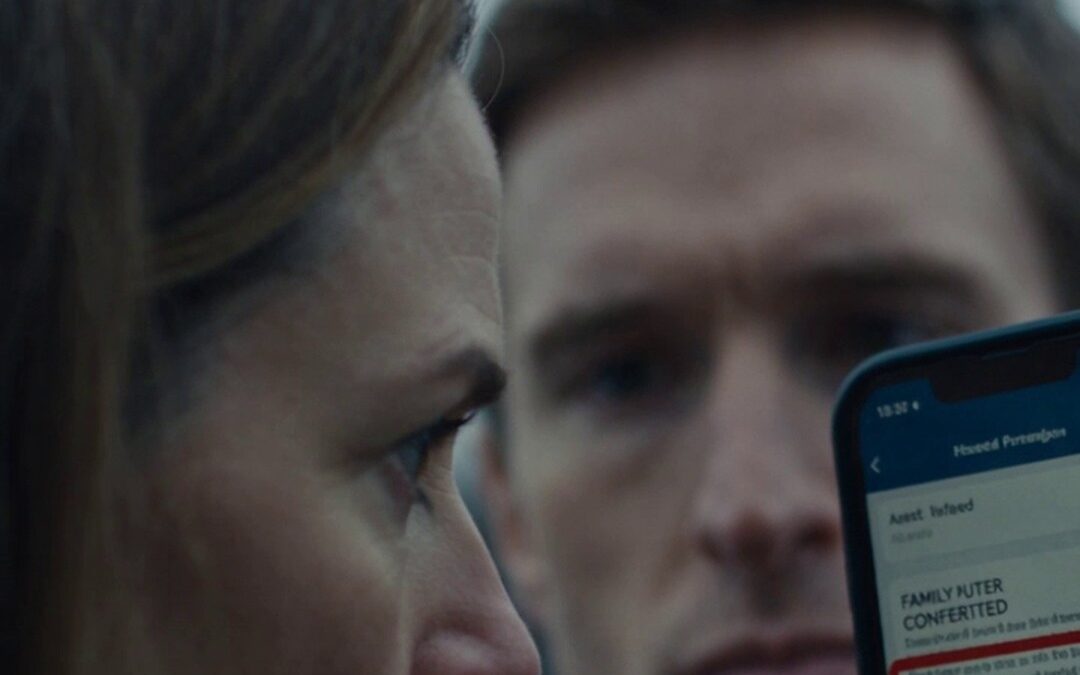
Nathan held up his phone. The trip screen showed a cancellation under my user name at 8:14 a.m. Below it, a note read: FAMILY PICKUP CONFIRMED.
“I called you twice,” Mom said. “Nathan came.”
My phone had been on the desk beside me all morning. There were no calls from Birch Hill and no missed calls from her. I told her so, but Nathan opened the passenger door and said she was tired. Mom let him close it again.
I followed them to his truck’s tailgate. “Where are you taking her?”
“To the place she chose.”
He drove away before I could ask which place.
Back at the office, I pulled up the trip record. My user name was there. So was the cancellation time. Nathan had temporary access to my dispatch account for emergencies; I had given it to him two winters earlier and never taken it back. That was my mistake, but it did not prove he had used it.
I called Birch Hill. The discharge nurse said the ride had been changed during a meeting with Mom and Nathan. She could not discuss the meeting over the phone. When I asked whether Mom had signed a new destination, the nurse paused.
“There’s a card in the file,” she said. “You’ll have to see it.”
Chapter 2: Where She Meant to Go
Nathan did not answer his phone that evening. Mom’s went straight to voicemail.
I stayed at the dispatch desk after the last van came in, listening to drivers return keys and describe the day in the small, tired ways they always did. A client had left a blue scarf behind. A ramp had stuck in the rain. Route Six needed fuel before morning. I wrote everything down because the next day depended on someone remembering it.
Dad had built Mercer Medical Transport around that habit. A ride to dialysis or physical therapy could look like a line on a schedule to anyone else. To the person waiting at the curb, it could be the difference between getting care and going without it.
I had run the schedule since Dad died. Nathan handled contracts, bills, and the buildings we owned. He liked to say the company worked because he understood numbers and I understood people. It sounded generous until we disagreed. Then he called my work sentimental and his work necessary.
I printed Mom’s trip record. The page gave me the time, the cancellation, and my name. It did not show who had been at the keyboard. Our dispatch software recorded a user name for every change, but we had never bought the extra feature that tied each session to a particular device. Nathan had argued it was an expense we could skip. I had agreed.
I could blame him. I could not yet prove it.
I called our after-hours line from my mobile, just to hear the familiar message and make sure it was working. It rang through to the driver on call, as it should have. He sounded concerned when he recognized my voice. I apologized and said I was checking the phones. He asked whether my mother had gotten home all right. Angela had mentioned the canceled trip, and the drivers had assumed Nathan had picked Mom up for me. I told him she was safe and ended the call before he could ask anything else.
At seven, I drove to my house. Mom’s room smelled of new paint and the lemon soap she liked. The rail by the stairs gleamed under the hall light. On the dresser sat a little ceramic dish I had brought from her kitchen for her hearing aids.
The bed was made with the quilt she used when she visited. I had put a glass of water beside it, then poured it out that morning so it would be fresh when she arrived. The empty glass was still there. I carried it to the sink and stood holding it longer than I needed to.
Three months earlier, when she first fell, Nathan had urged her to recover at his house. He lived on one level and had a guest room. Mom thanked him and chose mine. His wife worked nights; his teenage boys had friends coming in and out. Mom wanted someone around in the evenings who would sit with her without trying to cheer her up.
I had been proud that she asked me. I had also made it harder for her than it should have been.
Before her fall, I sometimes answered her questions while looking at a screen. If she asked what time a ride was coming, I told her the time and returned to work. When she asked again, I grew sharp. Nathan would stop by with groceries and listen to her talk about the neighbors for half an hour. I knew he cared about her. That knowledge made the trip record hurt in a way a stranger’s lie could not.
At nine, Mom texted me two words: *I’m safe.*
I called. She declined it. A minute later she wrote, *Please wait.*
I typed that I loved her. Then I erased it, afraid she would hear it as another request to answer me. I sent only, *I will.*
I slept badly. By morning, I had decided to begin with the part I could check: what had happened at Birch Hill.
The discharge nurse, Ms. Patel, met me in a small room beside the therapy gym. I had brought the medical release Mom signed when she entered rehab. It allowed the facility to share discharge information with me, though Mom could withdraw it. Ms. Patel checked it before opening the file.
Through the wall I could hear someone counting steps with a therapist. It was the same count Mom had repeated to me every afternoon that week: one up, both feet together, then the next. I kept my hands flat on the table while Ms. Patel turned the pages.
“Your mother made her own decision,” she said. “I want that clear before we discuss the paperwork.”
“I want it clear too.”
She turned a page toward me. Mom’s discharge plan listed an assisted living apartment at Briar Glen, ten miles east of town. Nathan was named as the person collecting her. The entry at 8:14 said the company ride had been canceled after family pickup was confirmed.
“That’s our trip screen,” I said.
“It was provided to us.”
“By whom?”
Ms. Patel looked at the notes. Nathan had shown it during the meeting. She had not called my office herself.
Then she took a yellow card from a clear sleeve in the file. Mom had carried it through rehab, adding notes as her therapy changed. The front still said HOME and my address. On the back, in a different hand, was a phone number for Briar Glen. Beneath it, Nathan had written: *Discussed alternative with patient.*
I asked whether Mom had crossed out my address. She had not.
Ms. Patel remembered the meeting. Mom had asked why I could not come. Nathan had shown her the canceled ride and said I was overwhelmed. He told her Briar Glen had a ground floor apartment available that day. Mom did not want to burden me, Ms. Patel said. She agreed to see it.
“Did she ask anyone to call me from here?” I said.
Ms. Patel checked the page again. There was a note that Mom had tried to reach me, but no note of a call placed by staff. Mom had her mobile with her. Nathan had told them he would handle the family arrangements, and they had no reason then to question him.
“She could have called me,” I said.
“She said she tried.”
I thought of the two calls Mom believed she had made. My phone showed none. Ms. Patel let me read the file but would not guess where those calls had gone. She also reminded me that Mom was entitled to change her plans. I had no argument with that. I wanted to know what she had been told before she chose.
Before I left, Ms. Patel asked if I wanted her to contact Mom. I said no. Mom had asked me to wait, and I had already come to her rehab without telling her. Ms. Patel said she would make a note that I had reviewed the discharge plan under the release. Even that ordinary sentence made me uneasy. If Mom asked, she would know I had been there.
Outside, I sat in my car with the yellow card’s image in my mind. The number on the back had been written where Mom would see it each time she turned the card over. On the front, she had left my address untouched.
I drove to Briar Glen. It was a low brick building with flower beds and a broad covered entrance. The receptionist told me Mom was in an activity and asked me to wait. I watched a staff member help a man choose between two kinds of tea. No one looked frightened. Whatever Nathan had done, I could not make the place into a villain simply because he had taken her there.
I had brought her mail, three envelopes held together with a rubber band. The receptionist said I could leave them at the desk. I kept them in my bag. I wanted Mom to decide whether to see me, even though I had not given her much warning.
Mom came through the hall using her walker. She stopped when she saw me.
“I said wait,” she told me.
“I know. I wanted to see you.”
Her hair was brushed, and she wore the green cardigan I had packed for her room at my house. Nathan must have collected her bag from my car while I argued with him in the parking lot.
We sat in a quiet corner. I asked how the apartment felt. She said the bathroom was easy to reach and the staff had been kind. Then I asked about the calls.
“I called the office,” she said. “Nathan had given me the number on a card because he said the main line was busy.”
“Do you still have it?”
She searched her cardigan pockets. Her face changed when she found nothing. “I left it in the room. He said you were with a driver and couldn’t come.”
I wanted to tell her that he had lied. Instead I asked what she would have done if I had been free.
“I was going to your house.” Her voice dropped. “But if you couldn’t manage it, I wished you’d told me yourself.”
“I could manage it. I was waiting for you.”
She looked down at her hands. “The screen had your name.”
“I saw it.”
“Then how did it get there?”
“I’m trying to find out.”
She rubbed her thumb along the walker’s handle. “Nathan says you’re going through the company files because you’re angry I chose this place.”
“I am angry about how you got here. I’m listening to what you want now.”
She studied me for a moment, then said the apartment would be hers for a week. She had agreed to a trial stay, and she wanted time to think. When I offered to bring her favorite blanket, she said yes. It was a small answer, but it was hers.
I gave her the mail. One envelope was a church newsletter. She opened it and pointed out the time of Sunday service, as if we were discussing an ordinary weekend. I asked whether she wanted a ride. She said she would decide later. When I stood to leave, she kept the newsletter in her lap and said, “I’m glad you came, even if I’m still upset you did.” I told her both things could be true.
At the office, I asked our scheduler, Luis, for the original trip packet. Every discharge ride had one: booking request, address, mobility needs, driver assignment, and any change notes. Luis found Mom’s in the filing cabinet. He had prepared it himself.
The request from Birch Hill gave my address and a pickup time of ten thirty. We had assigned Route Four, with Angela driving. At eight fifteen, Luis saw the cancellation and released Angela to another trip. He assumed I had done it because my user name appeared on the screen.
“Where was Nathan?” I asked.
“In the back office. He came in early for a bank call.”
I had been in the garage at eight fourteen. One of our vans had returned with a ramp alarm, and I had gone out to check it with the mechanic. Luis remembered seeing me there, but memory would not settle an argument with Nathan. Besides, I could have signed in from my phone.
Luis showed me another line in the packet: the cancellation note had first been entered as “family pickup arranged,” then edited to “family pickup confirmed.” The screen we normally used showed only the latest version. He had found the earlier wording in a daily change report.
“Who edited it?” I asked.
“Same account. Yours. Eight twenty-two.”
At that time I had been on a call with our mechanic’s parts supplier. The supplier might confirm the call, but again, my phone could have done both things. Nathan knew how the system worked. He had not left an easy answer behind.
Luis took out his pen and circled the two times on a copy of the report. “Arranged is what you say before somebody agrees,” he said. “Confirmed is what you say after.”
I looked at the sheet. Between those entries, Mom had tried to call me. I did not yet have her call history or Birch Hill’s full notes, so I could not tell exactly when she had spoken to Nathan or what she had been told. I asked Luis to keep the original packet in its usual place and gave him back the copy he had marked.
I asked Luis not to discuss the matter until I knew more. He said Nathan had already called him that morning. He had wanted to know whether I had requested reports and reminded Luis that owners’ family problems should stay outside the office.
That was Nathan’s first answer to my questions. He was watching where I looked.
At lunch, I went to the phone company storefront with Mom’s permission sent by text. The clerk could not give me a record for her mobile account because I was not the account holder. Mom would need to request it herself. I left with instructions she could follow and a sinking feeling. I had spent so many years arranging her rides that I had forgotten how much of her life rightly remained outside my reach.
I sent her a photo of the instructions and asked whether she would be willing to get the call history. She did not answer that day.
By late afternoon, Nathan came into dispatch. He waited until Luis and the drivers had gone.
“You visited her,” he said.
“Yes.”
“She told me.”
“Then she can tell you I didn’t ask her to leave Briar Glen.”
He put his briefcase on the counter. “You’re treating a choice you dislike as a crime.”
“You used my account to cancel her ride.”
“I used the account to help with a change. You gave me access.”
I held his gaze. It was the first time he had admitted touching the trip, though he had chosen words that could mean almost anything. “What did you change?”
“Mom was upset. Birch Hill needed an answer. I made sure nobody drove out for a ride she wasn’t taking.”
“She was taking it until you showed her a cancellation.”
“She had questions about living with you.”
“What questions?”
Nathan looked toward the empty driver board. “Whether you would have time for her. Whether she would be in the way.”
“She could have asked me.”
“She tried.”
“You gave her a number.”
“I gave her a number where someone would answer.”
That made me stop. “Whose number?”
“The office line.”
“Our office line rings at the desk.”
“It was forwarded to me while you were in the garage.”
We sometimes forwarded the main line during storms or power outages. Nathan had administrator access to the phone account. If he had sent Mom’s call to his mobile, she might have believed she had tried to reach me. It also meant he knew I could check.
I asked why he had done it. He said he had not wanted to interrupt me over a question Mom was embarrassed to ask. Then he picked up his briefcase.
“She likes it there, Claire. Let her have something without making her defend it.”
When he left, I wanted to call Mom and repeat every word. I stopped myself. Nathan had given her a comfortable room after frightening her with the idea that I had failed her. If I brought only my suspicions, she would have to choose between us again.
I pulled the company’s phone account. The call-forward setting had been turned on at 7:52 that morning and off at 9:03. The forwarded number was Nathan’s mobile. The account showed three incoming calls during that period. Two came from Mom’s number. The third came from Birch Hill.
I saved the report. Then I sat with it.
It proved Mom had called a number that reached Nathan. It did not prove what he told her. And because Nathan was an owner, he had authority to forward the office line. He could say he was covering calls while I dealt with the broken ramp. In fact, that was close enough to something we had done before that I could hear him explaining it to Mom.
I checked the dates of previous forwards. During the ice storm two winters earlier, Nathan had taken calls for most of a day. Since then, there had been a few short forwards when the building’s service failed. That Friday morning was different in timing, but a report could not tell anyone why he had chosen it. I wrote down the question and left it unanswered.
I had helped him by giving him the access. Two winters earlier, an ice storm had shut the office for a day. I was stranded across town with a van; Nathan took calls from his kitchen. Afterward, I meant to restore the usual settings and change my dispatch password. The work never made it to the top of my list. I had trusted him, and I had also been careless.
The next morning, I told Luis to reset every shared credential and put separate accounts in place. Nathan’s account would keep the permissions he needed for contracts and billing, but cancellations would require a dispatcher’s account. Luis looked relieved. It was overdue whether Nathan was guilty or not.
We worked through the list together. A driver might need to report that a patient was not ready, but Luis or I had to make the change after checking with the facility. A contract owner could see whether a ride was scheduled without being able to erase it. Luis wrote the new permissions beside each role, and I called our software provider to make sure we understood what the system could do. The changes took most of the morning. Every time the phone rang, I wondered if it was Nathan.
Nathan called within an hour.
“You locked me out.”
“Your billing access works. You can view rides. You can’t cancel them.”
“I own half this company.”
“So do I.”
“This is going to affect more than you think.”
I had heard him use that voice with vendors. It meant he had found the place where a problem could spread. By noon, I knew what he meant.
Our largest clinic had asked for a meeting about reliability. Nathan had sent its office manager a message the previous evening saying a family dispute had exposed weak controls in our dispatch system. He had recommended postponing the renewal of our transport agreement until we could demonstrate a fix.
He had told the truth in a way that made me the problem. We did have weak controls. I was the dispatcher whose account had recorded a cancellation. He could point to my old decision to share access and say he had warned me about it.
The clinic served people who needed repeated rides. If we lost the agreement, three drivers would lose full schedules. I could not ask them to carry the cost of my fight with Nathan.
Before the meeting, I spoke to Luis about the change procedure. He asked whether he would be blamed for accepting the cancellation. I told him he had followed the process we gave him. That was precisely why the process needed fixing. He looked at the board, where the clinic’s trips filled two columns for the next week, and said, “Whatever happens in there, those people still need to get picked up.” I promised him they would.
At the meeting, I brought the new account list and a written procedure for schedule changes. Every change would record who requested it, who entered it, and who confirmed it with the rider or facility. The office manager, Ms. Moreno, read it carefully. Nathan sat beside her, speaking in the measured tone he used when he wanted to seem like the only adult in the room.
“Claire is very good with riders,” he said. “Administration has always been harder for her.”
I had once agreed with that assessment. Years earlier, a driver named May had missed an early pickup after staying overnight with her sick son. I quietly moved the trip to another driver and entered the change late so May would not be disciplined under our own policy. Nobody missed care, but the record was wrong. Nathan discovered it and made me sign a warning. He kept a copy.
He placed it on the table now. Ms. Moreno frowned as she read. I told her exactly what I had done. I told her May had later become one of our most reliable drivers and that neither fact excused the bad entry. Then I showed her the new process, including a rule that I could not approve my own correction without a second person.
Ms. Moreno asked who would make that second approval if Luis was away. I showed her the backup schedule I had worked out with our lead driver and explained which changes could wait for the next shift. She asked whether Nathan’s account was affected. I said it was. Nathan confirmed he could still see the records he needed for billing. For the first time since he had entered the room, he had no further point to make.
Nathan had expected me to argue about the warning. Instead, the discussion returned to the present. Ms. Moreno agreed to renew for ninety days while we showed the new controls worked. It was a real chance, though shorter than the year we needed.
In the parking lot, Nathan said I had embarrassed the family.
“You brought May’s warning,” I said.
“You brought company reports into a private matter.”
“You brought the private matter to our largest client.”
He did not deny it. “You’re going to drag this out until Mom feels she has to leave a place she likes.”
“I’ve told her to take her time.”
“Then why are you still digging?”
“Because she thinks I refused to come.”
Nathan looked past me toward the road. “Maybe she already believed you would. One false impression wouldn’t have worked otherwise.”
That landed because it held a piece of truth. Mom had heard me impatient. She had seen me take calls over dinner. Nathan had used something he knew she worried about.
I said, “She still deserved to talk to me.”
“She did talk. I was there.”
Then he got into his car.
That evening, Mom called. Her voice sounded clearer than it had in days. She had requested her mobile call history and would show it to me if I came to Briar Glen on Saturday. She added that Nathan was coming too.
“I don’t want another parking lot fight,” she said. “If you both have something to say, say it where I can hear you.”
I agreed. Saturday gave me two days. I used them.
First I called the parts supplier. He remembered our conversation because the ramp motor we needed was back-ordered. His call record placed me on the phone from eight eleven until eight twenty-six. That supported my account of where I was. It did not prove I had not used another device. I asked him to email the order confirmation, which carried the time.
Next I spoke to Angela, the driver originally assigned to Mom. She had walked through the garage at eight sixteen and seen me on the supplier call with my hands under the ramp. She was willing to say so to Mom, but I did not want her caught between two owners. I wrote down her account and told her she would not need to attend a family meeting.
Angela asked whether Mom was angry with her for not coming. I said Mom knew the trip had been canceled before Angela could leave. Angela nodded, then told me she had already checked whether Route Four could take Mom to church on Sunday if she wanted it. I thanked her, but said I would ask Mom myself. It would be another decision for Mom to make, and I wanted her to hear that directly from me.
The call-forward report mattered more. I took it to the phone provider’s business support line and asked what the report could reliably establish. The agent explained that it showed incoming numbers, forwarding times, and the destination number. It did not record conversations. The report showed the two calls from Mom’s phone lasted forty-eight seconds and one minute, twelve seconds. Someone had answered long enough to talk.
I could imagine Nathan saying Mom had reached him and he had told her I was busy. That could be true. The harder question was why he had then shown her a trip cancellation in my name. He could claim she had already chosen Briar Glen. I needed to know the order in which those things happened.
Birch Hill’s file held meeting notes. Ms. Patel had let me read them, but I had been too angry to notice every time. Mom could request a copy for herself. I asked her by text whether she would. She answered: *I will look at it Saturday.*
I wanted to push. I wrote three messages and erased each one.
On Friday, I went to my mother’s house to bring her mail. Nathan had collected some clothes there, but the porch light was off and the kitchen table still held a stack of church bulletins. Mom’s yellow transport card had been her way of keeping the destination straight while medications, exercises, and visitors changed around her. She had written my address in block capitals because she sometimes mixed up numbers when she was tired.
In a drawer beside the phone, I found a small notebook. Mom had used it for years to record appointments and who drove her. The week of discharge had only three lines:
*Thursday — stair practice with rail.*
*Friday — Claire, 10:30.*
*Ask about going back for church Sunday.*
Nothing about Briar Glen. I photographed the page and put the notebook back. It showed what she expected before Friday. It could not tell me what she decided that morning.
The landline rang while I was closing the drawer. I let it ring because it was Mom’s house and I did not know whether she wanted me answering for her. A moment later the kitchen was quiet again. I thought of the office calls Nathan had taken while Mom believed she was trying to reach me. A telephone could connect you to someone and still leave you wrong about who was listening.
I walked through her rooms before leaving. Nathan had been wrong about one thing: Mom was not simply deciding between his care and mine. At my house, she would need help on stairs and perhaps with bathing for a while. At Briar Glen, she could ask staff instead of her daughter. At her own house, she would eventually have to face the steps that had frightened her since the fall. Each choice cost her something. She had the right to make it with a clear understanding of what we could offer.
At Briar Glen on Saturday, Mom had arranged for us to meet in a small sitting room. She sat at the table with the yellow card, her call history, and a copy of Birch Hill’s discharge notes. Nathan was already there.
“I asked the nurse for these,” she said. “I want you to listen before either of you explains.”
She read from the notes slowly. At 7:45, the therapist had confirmed Mom could manage four steps with a rail and someone beside her. At 8:05, Mom asked to call me about a Sunday church visit. At 8:12, the note said she was “unable to reach daughter directly.” At 8:14, “daughter’s company transport canceled.” At 8:25, Nathan discussed Briar Glen as an alternative. At 9:10, Mom agreed to a trial stay.
She put down the paper. “I didn’t remember all the times. I remembered feeling foolish.”
Nathan reached toward her hand. She drew it back, gently but unmistakably.
“Claire,” she said, “show me what you have.”
I laid out the phone report and the parts order. I explained that the office line had been forwarded to Nathan’s phone when she called, and that I had been occupied with the ramp during the cancellation. I told her Nathan had been allowed to use my account, because I had failed to remove his access. I did not say the reports proved who made the entry. They did not.
Mom looked at Nathan. “When I called, did I talk to you?”
“Yes,” he said. “You remember that.”
“I remember a man saying Claire couldn’t come to the phone.”
“I told you I was covering calls.”
“You didn’t tell me it was you.”
“You were upset.”
She ran a finger down the call history. “Why was her ride canceled before you told me about Briar Glen?”
Nathan had an answer ready. He said the ride had been canceled because he had offered to pick her up and show her the apartment. He had expected she might prefer it. He had used my account because I was busy and he did not want Angela sent to Birch Hill for nothing.
Mom turned to me. “Was that allowed?”
“No. But he had the access.”
Nathan leaned forward. “I shouldn’t have used Claire’s login. I’ll own that. But you did choose to come here, Mom. Claire can’t turn every poor procedure into proof you were tricked.”
It was his strongest argument. The trial agreement had Mom’s signature. Birch Hill believed she understood it. Briar Glen was pleasant. If I argued that she had not truly chosen, I would be taking away the very independence I said I wanted for her.
Mom looked at the trial agreement beside the notes. She said she remembered signing it. She remembered the woman at Briar Glen asking whether she wanted to see the apartment before making a longer commitment. Nathan waited while she said it, as if the memory settled everything. It settled one thing: nobody had put a pen in her hand without telling her what the page meant. It did not settle why she had felt she needed the apartment that day.
I told her I believed the signature was hers. I told her she could stay as long as she wanted. Then I asked Nathan one question.
“What did you tell her about my house before she signed?”
He looked at Mom. “I told her you’d been making preparations.”
“That wasn’t all,” Mom said.
Nathan sighed. “I told her you were stretched thin. You are. I’ve seen you eat standing up over a route board.”
“I asked you if Claire had said she couldn’t take me,” Mom said. “You said, ‘Her actions have made it clear.’”
“I was trying to spare you.”
“You let me think she canceled because she wanted me somewhere else.”
“I said she was overwhelmed. She is.”
Mom stared at the yellow card. I thought the meeting might end there, with Nathan admitting just enough to hurt us and too little to settle anything. Then she turned the card over.
“I kept asking why this number was on the back,” she said. “You said it was Briar Glen’s. I called it the first night, before they showed me how the room phone worked. You answered.”
Nathan’s face did not change, but he went still. Mom held out the card. I had seen the number at Birch Hill and accepted the note beside it. In my mind it had become Briar Glen’s number. Mom had seen what I missed: it was his.
“I checked it this morning,” she said. “The real number is on the folder they gave me. This is yours.”
Nathan looked at the card. “I wrote it down so you could reach me.”
“You wrote it under ‘Discussed alternative with patient.’ The nurse thought it was the place’s number. So did Claire. Did you want me to have a way to reach you, or did you want every call about leaving to come through you?”
He said he had been handling arrangements. That was true as far as it went. He had made himself the contact for the apartment, the discharge, and the ride. All three routes led back to him.
Mom asked why.
For a moment he seemed ready to repeat that he had helped. Instead he said, “Because you weren’t safe at Claire’s.”
I looked at him. “You’ve never been inside that room.”
“I’ve been inside her life. She misses meals. She answers work calls while she drives. She forgets to turn off a forwarded number for two years. If something happened to Mom, who would notice first?”
“I would,” I said.
“You’d mean to.”
That was what he believed. He had watched me make mistakes and decided that my love for Mom was less dependable than his judgment. Yet he had not offered Mom his own guest room this time. He had arranged a trial apartment without speaking to me.
Mom asked him the same thing. “If you thought Claire’s house was unsafe, why didn’t you tell me your reasons and let me decide?”
“I tried.”
“You showed me a canceled ride.”
Nathan finally looked at her. “I knew you would go to Claire because you’d promised. You wouldn’t even look at this place. So I got you through the door.”
“You used my promise against me.”
“I wanted you to have a choice.”
“You made one choice look like my daughter had abandoned me.”
He opened his mouth and closed it.
I had prepared to argue about timestamps, permissions, and calls. Mom had found the sentence that mattered. Nathan could claim concern for her safety. He could point to my careless account access and my impatience. He could even believe he had brought her somewhere better. He had still made her believe I had broken my word.
After a long silence, Nathan said he was sorry she had felt abandoned.
Mom shook her head. “Tell me what you did.”
He looked at the door. No one stopped him from leaving. He stayed. He admitted that he had forwarded the office line before the meeting because he wanted to speak to Mom if she called. He had entered the cancellation through my account before she agreed to Briar Glen. He had shown it to her when she asked why I was not coming. He said he had intended to tell her afterward that I had not personally canceled it, but by then she was upset and Ms. Patel was waiting for a destination.
He called it a bad decision that grew worse. I believed that description, though it did not make it smaller.
Mom asked whether he had tried to call me from the meeting. He said no. He knew I would have come.
She folded the yellow card carefully along its old crease. “I need both of you to leave now.”
I stood. Nathan began to speak, but Mom raised her hand. We went out separately.
In the hallway, I passed a staff member carrying clean towels. She stepped aside for us, unaware of what had happened in the sitting room. I wanted to turn around and ask Mom if she believed me now. She had asked us to leave, so I kept walking. Outside, I sat in my car until my hands were steady enough to drive. Knowing the truth had not given me the right to hurry her through it.
The next week did not deliver the clean relief I had imagined while chasing the records. Mom stayed at Briar Glen. She told me the apartment gave her a chance to practice managing her days without a child at the end of every request. She wanted to know whether she liked that life on its own merits. I visited on Tuesday and brought the blanket. On Thursday, she asked me to drive her to church on Sunday so she could see how getting in and out of my car felt.
At our Tuesday visit, she had set out two cups of tea. She showed me where she kept her medication and how far she could walk from her door before needing a rest. I listened without offering to rearrange anything. When she asked about the room at my house, I said it was ready whenever she wanted to use it. She nodded and changed the subject to the church newsletter. That evening, as I left, she hugged me with one arm and held the walker with the other.
Nathan came by the office on Monday. He asked to return to the dispatch system to help during busy periods. I refused. We put the new account rules in writing and had our accountant review who needed access to what. Nathan still handled contracts and bills, but schedule changes went through dispatch. He signed the policy after reading every line.
He had also written to Ms. Moreno at the clinic, telling her the cancellation under my account had been his and that he had acted without confirming the rider’s decision. It did not erase the weakness in our system, but it corrected the story he had started. The ninety day renewal remained in place. We had to earn the longer contract by following our new procedure.
Ms. Moreno replied that she would review the change log at the end of each month. Luis printed the first one and put it in a folder where either of us could find it. The work was dull and exacting. That was how it needed to be. The next person waiting for one of our vans should not have had to know why we had become more careful.
Two drivers asked why things had changed. I told them we had found a way a ride could be canceled without a clear request and had fixed it. I did not make them choose a side in our family. Angela checked on Mom anyway, sending her a card that said Route Four missed her. Mom taped it to the kitchen cupboard in her apartment.
Nathan and I still had to work together. Some days we managed it with short emails. Other days, a bill or a schedule question forced us into the same room. I no longer treated access as proof of trust, and he no longer offered to “take care of” a problem without saying how. Neither change felt warm. Both made the company steadier.
One Sunday after church, Mom asked me to drive past my house. She wanted to see the new rail. She climbed the four steps slowly, with me one step behind her and my hand near her elbow. At the top she turned and looked down the sidewalk.
“I could do that,” she said.
“You could.”
Inside, she sat in the downstairs room and noticed the dish for her hearing aids. She picked it up, smiling, then set it back.
“I’m going to stay at Briar Glen through the winter,” she said. “I’ll come here for dinner. Maybe I’ll stay some weekends, if you want me. In spring I’ll decide again.”
“I want you.”
“I know that now.”
I sat beside her. “I should have told you earlier how much I was looking forward to having you here. I talked about rails and medication times because I thought those things would reassure you.”
“They did.” She touched my hand. “I needed to hear the other part too.”
I said it plainly. I had made the room because I wanted her company.
Mom stayed for dinner and asked me about the drivers she knew by name. When I took her back, she carried her blanket into Briar Glen herself. At the apartment door, she showed me the yellow card, now tucked into her handbag. My address was still on the front. She had written Briar Glen’s real number on the back, beside the old one, so she would know which was which.
“I’m keeping it,” she said.
I nodded. It was her card, and she knew where she meant to go.