My Daughter Reached for a Snack When I Came Home Early—Then Her Stepmother Told Me a Rule I’d Never Made
Chapter 1: The Blue Lid
“Put the peaches back, June. You already had your snack.”
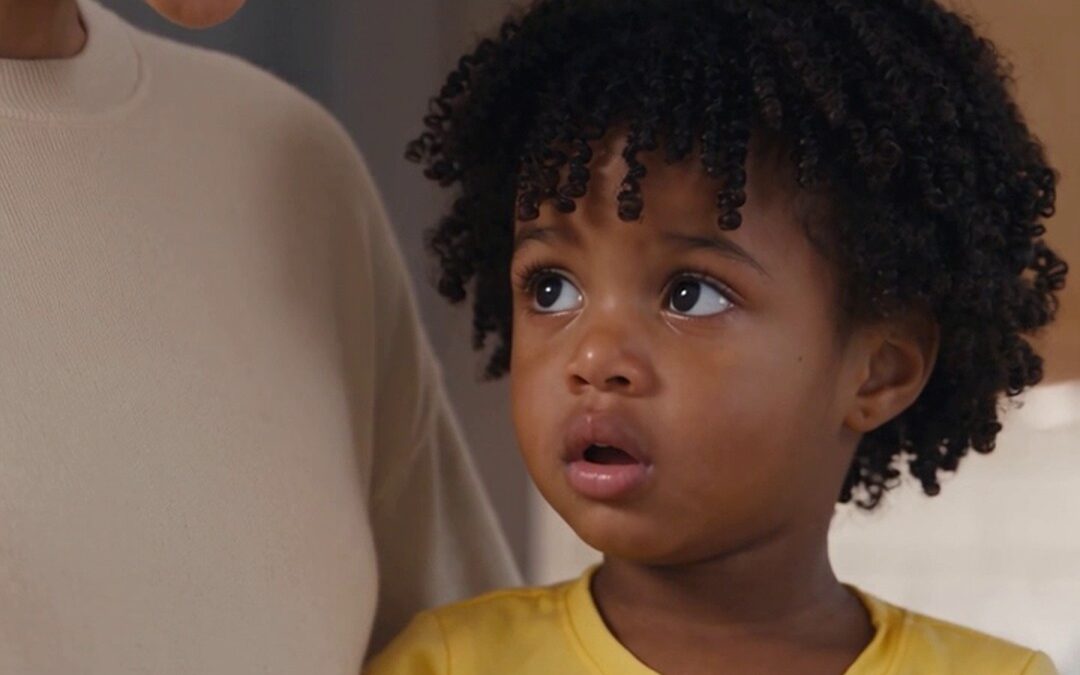
Four-year-old June held the small blue bowl against her chest. A peach slice slipped over the rim and landed on the table.
“I didn’t have peaches,” she said. “I had crackers.”
At the counter, her seven-year-old half brother, Milo, stopped coloring his paper rocket. Tessa, their stepmother, moved the bowl out of June’s reach.
“Crackers count,” she said. “Your dad asked me to keep things simple while he’s gone. One snack, then dinner.”
“But my tummy’s still hungry.”
June’s voice wobbled. She was wearing green shorts and a yellow shirt with a smiling sun on it. She pressed the empty hand to her stomach, then looked toward the back door.
The latch clicked.
Evan stepped inside, still wearing his transit-yard vest. He’d come home early after his shift was shortened. His keys were in one hand; his lunch cooler, in the other.
“Hey,” he said. “What happened?”
June hurried to him, but stopped when Tessa spoke.
“She’s upset because I said no to another snack. She ate plenty earlier.”
Evan set down the cooler and crouched. June tucked her face against his shoulder.
“Did you eat peaches today?” he asked.
She shook her head.
Tessa folded her arms. “She had crackers. I’m not turning every request into a second meal.”
Milo climbed down from his chair, rocket drawing in hand.
“Dad, she didn’t get crackers,” he said. “Tessa put them in the top cabinet for dinner. I saw.”
Tessa gave him a quick look. “You were busy coloring.”
“I was getting my blue marker.” Milo pointed toward the counter. “She told June crackers were for later.”
Evan kept one hand on June’s back. “June, can I get you something to eat?”
“Peaches,” she whispered. “The soft ones.”
“Okay. You don’t have to finish anything. You can sit with me.”
Tessa’s chin lifted. “There weren’t enough for everyone to keep picking at. I saved what was left for Milo’s lunch.”
Evan glanced at Milo. “Did you have some?”
“No. I have the apple I packed.”
June sniffed against his shoulder. Evan stood and opened the refrigerator. On the middle shelf sat a clear container of sliced peaches, bright orange in their juice. A strip of masking tape ran across its lid.
He read the block letters aloud.
“June—afternoon snack. Please offer before four.”
Chapter 2: The Rule Beneath the Rule
For a breath, nobody moved.
The container stayed in Evan’s hand, its lid beaded with cold. June was tucked against his shoulder. Milo stood by the table with his rocket drawing bent in one fist. Tessa’s hand rested on the chair she had pushed away from June.
Evan looked at the clock. “It’s four twenty. This was set aside for June.”
“That note is from Monday,” Tessa said.
“It says afternoon snack.” He turned the container so she could see the label. “You told me there wasn’t enough for everyone. These are hers.”
“I didn’t say there was no food in the house.”
“You said she’d eaten plenty, and that I asked you to keep things simple.”
“I meant the crackers.”
Milo shook his head. “There weren’t crackers.”
Tessa turned toward him. “Milo, don’t.”
Evan looked up. “He can tell me what he saw.”
“I’m not putting him in the middle.”
“You did when you told me she ate them.”
Tessa looked away. June’s fingers tightened in the back of Evan’s vest. He set the container on the counter and bent toward her.
“Would you like peaches in a bowl?”
“Not the cold ones.”
“Okay. We can let them warm up. Would you like toast while they do?”
Tessa gave a disbelieving laugh. “She isn’t going to starve waiting twenty minutes.”
“She’s hungry now.”
“Then she should have taken what was offered.”
“What was offered?”
“Crackers.”
Milo pressed his drawing to his shirt. “They were up there.”
“Go sit in the living room,” Tessa told him.
“He stays,” Evan said. “He’s not in trouble.”
Milo’s shoulders rose toward his ears. June hid her face against Evan again.
Evan found a small loaf in the bread box and held up a slice. “Would you like toast?”
June nodded.
“Butter?”
“Just toast.”
He put the slice in the toaster. “You can eat when you’re ready. It can sit there.”
“You make it sound like I refused to feed her,” Tessa said.
“You moved food out of her reach. Then you said she’d eaten and told me I made the rule.”
“I gave her a boundary.”
“Not the one on that label.”
The toaster clicked. Evan set the toast and an empty bowl on the table, then sat with June beside him. She touched the toast, looked at Tessa, and took a small bite.
He turned to Milo. “Tell me what you saw, and then you don’t have to keep talking about it.”
Milo glanced at June. “Tessa put the cracker box on the high shelf. She said it was for later. I was looking for my blue marker.”
“Did June get any?”
“No. I got my apple.”
“Thank you. You aren’t responsible for fixing this.”
Milo flattened the crease in his drawing. “Can I finish it in the living room?”
“Yes.”
He went, still holding the rocket.
June nibbled her toast. Evan waited until she swallowed.
“Does your tummy hurt?”
“No. It’s empty.”
“Okay.”
“Can I have the peaches now?”
“Yes. I’ll get them.”
Tessa rose. “I’ll do it.”
“I’ve got it.”
“Why?”
“Because June asked me.”
Tessa stepped back. Evan spooned peaches into the blue bowl and set it beside June. She ate one slice, then another.
“This is humiliating,” Tessa said from the counter.
“I’m not trying to humiliate you.”
“You’re questioning me in front of them.”
“You gave me an explanation in front of them. I need to correct it in front of them.”
“I didn’t mean to hurt her.”
June paused with a slice halfway to her mouth.
Evan kept his voice level. “You may not have set out to hurt her. You still made a choice that left her hungry and afraid to ask.”
“I didn’t see fear.”
“You see her watching you before she eats.”
“She does that when she wants attention.”
“That answer makes this worse.”
Tessa looked toward June, whose eyes had dropped to the bowl. “I’m not saying she’s pretending.”
“Then don’t turn her need into a trick.”
The room went quiet. In the living room, Milo began talking to himself about the rocket’s engines.
Evan walked to the doorway. “I’m glad you told me what you saw.”
Milo held up his drawing. “Is a rocket supposed to have two fins or four?”
“Four for yours.”
“Can I use the silver marker?”
“Sure.”
Evan returned to the table. June had eaten half the peaches. She still held his sleeve.
“Do you want more toast?” he asked.
“Maybe after.”
“That’s fine.”
Tessa sat at the far end of the table. “I didn’t say she couldn’t eat anything. I said no more peaches.”
“You said she’d already had a snack.”
“She had crackers.”
“Which she didn’t.”
“She had something.”
“What did she have?” Evan asked.
“A cheese stick at lunch.”
“And Milo?”
“He had an apple.”
Milo called from the living room, “And crackers in my lunch bag.”
Tessa shut her eyes briefly. “You don’t need to list every bite.”
“I’m asking because you said she ate crackers.”
“I thought she had.”
“You didn’t check.”
“I was trying to get things done.”
Evan put a few more peaches in June’s bowl. “You can tell me you’re unsure. You can’t present a guess as fact because it makes the no easier to defend.”
“I didn’t want a fight.”
“You were willing to have June cry instead.”
“I didn’t want her crying.”
“But she did.”
“I can’t control every reaction.”
“No. You can control whether you give her the food you set aside.”
Tessa rubbed her thumb along her sleeve. “I thought if I made her wait, she’d stop asking constantly.”
“Asking for what?”
“For snacks. Help. Someone to sit beside her. It becomes a whole performance.”
“She’s four.”
“She can eat by herself.”
“She can. She doesn’t have to.”
“She clings to you, and then you think I’m cruel if I ask her to do anything alone.”
“I don’t think you’re cruel when you ask her to play by herself. I think you were unfair when you tied food to whether she stopped asking for comfort.”
“I didn’t say that.”
“You just did.”
Tessa looked down. “I thought she needed to learn I couldn’t drop everything every time she called.”
“That’s something we can discuss. It doesn’t make it okay to tell her she ate something she didn’t.”
“I know.”
“You read the label?”
“Yes.”
“And knew I meant June?”
“I knew you wanted her to have some.”
“Then today you decided she didn’t need it.”
“Yes.”
“Why?”
“Because she’d had the cheese, and she kept asking you to sit with her.”
“That’s clearer,” Evan said. “Still unfair.”
Tessa’s eyes shone. “I’m not a monster.”
“I didn’t call you one. I’m asking you to take responsibility for the choice.”
“I can apologize.”
“If June is willing to hear it. Ask first. If she says no, leave it.”
Tessa nodded.
June set down the last peach slice. “Can I have more later?”
“Yes,” Evan said.
“Cold?”
“If you want.”
“Okay.”
Tessa started to speak, then stopped. Evan saw June glance at her.
“You can ask next time,” he told June. “You don’t have to wait because you think you made someone mad.”
“Even if she says later?”
“If an adult says later, you can ask another grown-up for help. You can come find me. You can call Aunt Nia with me.”
Tessa’s voice sharpened. “Milo isn’t supposed to manage me.”
“He isn’t. He’s allowed to tell me what he saw.”
“I didn’t mean he couldn’t.”
“Milo isn’t June’s backup caregiver. Neither of them should have to manage an adult’s feelings.”
Milo had gone quiet. Evan returned to the living room and crouched beside him.
“You heard me?”
Milo nodded.
“You don’t have to watch June’s food for me. If something feels wrong, tell me, then go back to your drawing. It’s my job to figure out what to do.”
“I didn’t want her to think I got more,” Milo said.
“You don’t have to give up your snack to make things fair. Adults handle fair.”
“Okay.”
Evan returned to the kitchen. Tessa stood at the sink, rinsing a clean mug.
“I do everything for them,” she said.
“I know you handle a lot of daily things.”
“You’re gone before breakfast four days a week. Sometimes you get home after they’re in bed. I keep track of school papers, lunches, dance, laundry. You come home and get to be the fun one.”
“I haven’t been fair about the work.”
Her hand stopped under the faucet.
“But that can’t be the way we solve it,” he continued. “June is four. She doesn’t control our schedule.”
“You think I’m jealous of a four-year-old?”
“I think you’re tired of being the person who absorbs everyone’s needs. I think you’ve started treating June’s needs as optional when they interrupt your plan.”
“That’s not true.”
“Today it was.”
“I’m not a monster.”
“I didn’t say you were.”
“You look at me like I am.”
“I’m looking at what happened.”
She turned off the water. “I thought if I was strict, she’d stop asking for you every time she wanted something.”
“Did you tell me that?”
“I tried to tell you I was the only person who couldn’t say no.”
“When?”
“The weekend before your overtime stretch. I said I couldn’t keep being the one everyone asks while you get to come home and be the fun one.”
Evan remembered a rushed conversation beside the laundry basket. Tessa had been holding Lila’s dance costume and asking him to handle the next day’s school pickup. He’d said he would check the schedule. Then his supervisor called.
“You’re right,” he said. “You did tell me.”
“I did.”
“I said I’d look, then I took the overtime.”
“You needed the money.”
“I did. I also could have declined that shift.”
“You said it was important for the new equipment line.”
“It was an opportunity. I didn’t tell you I was taking it until the night before.”
“You left me alone with the kids.”
“I did.”
She watched him, waiting.
“I should have made a better plan,” he said. “I should have asked what was hard instead of assuming you had it handled. That doesn’t make today’s choice yours to avoid.”
“I didn’t say it did.”
“You keep using how tired you were to make the restriction sound reasonable.”
“I’m telling you why I was angry.”
“Then let’s deal with the anger. Don’t put it on June.”
Tessa leaned against the counter. “You corrected me in front of her. If I told her to put on shoes, you’d say she had time. If I told her to finish, you’d say she could stop. If I said wait, you’d come help her. I never knew if I was allowed to parent her.”
“I should have talked to you privately instead of reversing you in front of her.”
“You were always her safe person.”
“She was two when her mother died.”
“And I did bedtime when you worked nights.”
“I know.”
“You said I was part of the family.”
“You are.”
“Then why am I trusted to do everything except make a decision?”
Evan took a breath. “I haven’t been clear about which decisions were yours. I let you carry the work without enough say in the routine. That’s on me.”
“So you admit this is partly your fault.”
“My absence and my poor communication are mine. Denying the peaches and misrepresenting what happened are yours.”
“You always split it that way.”
“Because we did different things.”
“You didn’t know about the rule because you didn’t ask.”
“I should have asked more. I can take responsibility for missing things. I can’t know what you don’t tell me.”
She looked away. “I didn’t want to admit I was angry.”
“About June?”
“About being the person who did the daily work while she wanted you. When you came home, she’d ask you to sit by her.”
“She was asking for company.”
“I thought she was asking because she didn’t want me.”
“She likes you.”
“She doesn’t act like it.”
“She’s careful with you right now.”
Tessa’s hands settled on the counter. “I told her once that you couldn’t come running every time she wanted a snack.”
“When?”
“Last week. She asked me to get you to open yogurt.”
“Was I home?”
“You were on a call.”
“So she asked you?”
“She asked me to get you.”
“What did you say?”
“I said you were busy. Then I said she didn’t need to keep calling you over tiny things.”
“Did you give her the yogurt?”
“Yes.”
“Did you tell me?”
“No.”
“Why?”
“I didn’t want another conversation where you said I was reading her wrong.”
“You could still have told me what happened.”
“I know.”
“Did you tell her not to ask me?”
“Not exactly. I said she should ask me first because I was there.”
“That can be reasonable in the moment. Did you tell her I didn’t want her?”
“No.”
“Did you tell her she had to earn snacks by eating alone?”
“No.”
“Did you use this rule to make her stop asking for me?”
Tessa’s face tightened. “Yes.”
Evan stayed quiet.
“I thought if she stopped calling for you, I could get through the day without feeling like the second choice,” she said. “I knew the peaches were for her. I decided she’d had enough, and I thought you’d question me if I said that. So I told you she’d had crackers.”
“You expected me to accept that because I’d trust your account.”
“I expected you to be angry if you knew I’d made the decision.”
“So you used my name to protect it.”
“I didn’t say you ordered the peach rule.”
“You told me you were following what I’d asked.”
“I did. I shouldn’t have.”
From the living room, Milo called, “Dad, does the rocket need a seat for the rabbit?”
“If the rabbit’s going, yes,” Evan called back.
“Okay.”
Tessa looked toward the doorway. “Are you taking the children to dance?”
“I’ll pick up Lila. Nia can stay with June and Milo.”
“You can’t keep changing the plan without talking to me.”
“I’ll keep you informed. But today I’m not leaving you alone with them.”
“I’m their stepmother. I take care of them every day.”
“You have responsibility for them. That doesn’t give you permission to make one child ask while the other gets what he wants.”
“Milo didn’t get what he wanted. He got an apple.”
“He also had crackers in his lunch bag. June couldn’t have the food I left for her.”
“He didn’t eat the crackers.”
“That makes your reason less clear, not more.”
“You’re treating this like a whole pattern.”
“I don’t know whether it’s a pattern. I know what happened today.”
“You said I can’t be alone with them. That’s a pattern.”
“That’s a temporary change because I no longer know whether your account of their care is reliable. We’ll figure out what follows.”
“What if I say I’m sorry?”
“An apology matters. It doesn’t settle the care plan.”
Tessa pulled out a chair but didn’t sit. “I have to pick up Lila.”
“I’ll go.”
“She has dance until five thirty.”
“I’ll leave at five.”
“You don’t have her shoes.”
“They’re in the hall cubby.”
“You don’t know which bag is hers.”
“I can ask.”
June looked up from her bowl. “Are you mad at me?”
Both adults stopped.
Tessa’s face softened. “No, honey.”
“Because I asked?”
“No.”
June’s shoulders curled. “I can wait next time.”
Evan set his hand on the table, palm up, and waited. After a moment, June placed her fingers in his.
“You can ask next time,” he said. “You didn’t do anything wrong.”
“I cried.”
“Crying isn’t wrong.”
“I spilled peach.”
“That was an accident.”
“Can I have them tomorrow?”
“Yes.”
“Cold?”
“Yes.”
June leaned against him. Evan didn’t ask her to reassure anyone.
Nia arrived shortly after. Evan met her at the door.
“What’s going on?” she asked quietly.
“June was denied a snack I left for her. I got a false explanation. The children are okay, but I need you here while I handle pickup.”
Nia looked past him toward the table. “Are they all right?”
“They’re settled.”
“I can stay.”
“Thank you.”
Tessa’s voice carried from the kitchen. “I can hear you.”
“I know,” Evan said. “Nia is here because I need another adult while I’m gone.”
“You can trust me.”
“Today I’m not.”
Nia put her purse on a chair. “I’m here for the kids. I don’t need to hear the rest.”
“I don’t need your help,” Tessa said.
“The kids do,” Evan replied.
Milo appeared with his rocket. “Can I go with Dad?”
“Do you want to?” Evan asked.
“Yes. I want to see the red bike by the dance place.”
“The bike shop near the studio?”
“Yes.”
“Then come along.”
June stayed on the couch with Nia and her picture book. Evan asked if she wanted to go too. She shook her head.
“I want to stay with Aunt Nia.”
“Okay. You can ask for anything you need.”
“Can I have my book?”
Nia found it in the basket. “Here it is.”
On the drive, Milo sat in the back with his rocket beside him.
“Was I bad?” he asked.
“No.”
“I said Tessa put the crackers up.”
“You told me what you saw. That was okay.”
“Is she mad?”
“I can’t decide how she feels. You don’t have to manage it.”
“I don’t want her to get in trouble.”
“Adults handle adult choices. You didn’t cause them.”
Milo studied the rocket’s paper fins. “I want to show June.”
“You can when we get home.”
At the dance studio, Lila came out with her duffel. She was nine, Tessa’s daughter from before the marriage. Milo, seven, was Tessa’s son. June, four, was Evan’s daughter from his first marriage. The three had lived together for two years.
“Why are you here?” Lila asked. “Mom said she’d get me.”
“My shift ended early,” Evan said. “I got you.”
“Where is she?”
“Home with June and Aunt Nia. We changed the plan.”
“Is something wrong?”
“Everyone’s safe. The adults are working something out.”
Lila looked at Milo. “What happened?”
Evan answered before Milo had to. “There was a disagreement about a snack. You don’t need to take sides.”
“Can I call Mom?”
“Of course.”
Lila phoned Tessa. Evan heard only her side: she was all right, Aunt Nia was there, and yes, she still wanted the chicken noodles Tessa had promised to save.
When she hung up, Lila asked, “Are you mad at Mom?”
“I’m concerned about what happened, and I’m talking to her. I love her. I love you. You don’t have to choose.”
“Did she make June not eat?”
“I saw her move June’s bowl. She told me June had already eaten. The food was there for June. That’s what I know.”
“Was it a mistake?”
“I don’t know yet.”
Lila fiddled with the strap of her bag. “Mom gets worried when there isn’t enough time.”
“That can be hard.”
“She says June takes all the attention.”
“Have you heard her say that before?”
“Last week. I was looking for my shoe. Mom said she couldn’t do everything for everyone because June kept asking.”
“Did your mom ask you to keep it secret?”
“No.”
“Have you heard it other times?”
“A few. Not every day.”
“What did you think she meant?”
“That I should be a big sister and show June how to wait.”
“That isn’t your job.”
“I told June to stop following Mom once. Mom was fixing my dance ribbon, and June wanted her to look at a rabbit picture.”
“Were you trying to be mean?”
“No. I wanted Mom to finish the ribbon.”
“That makes sense. You can ask for time with her. Mom can tell June to wait a little while. You don’t have to send June away or teach her to wait.”
Lila nodded. “Can I still ask for the ribbon?”
“Of course.”
Back at the house, Nia sat with June at the table. Milo showed June his drawing.
“Four fins,” he said.
“They’re shiny,” June replied, touching the silver moon.
“Can I have a moon too?”
“I’ll draw you one later.”
Evan set Lila’s bag by the stairs. Tessa stood at the sink.
“The noodles are in the fridge,” she said. “I’ll heat them.”
“Lila asked you to save them. That’s fine. I can heat them.”
“You’re taking every task away from me?”
“For tonight, yes.”
“This is absurd.”
“We need a plan for tomorrow.”
“I have the school run.”
“You have Lila’s school run. I can take June and Milo.”
“Your shift starts at six.”
“I’ll ask for a later start or use a personal day.”
“You need the paycheck.”
“I’ll figure out the cost.”
“You’re going to lose hours over peaches?”
“Over trust.”
Tessa looked at Nia. “You already have another adult on standby.”
“I asked for practical help,” Evan said.
“You’ll tell your family.”
“I haven’t told them what happened.”
“She never liked me,” Tessa said, nodding toward Nia.
Nia stood. “I’m here to keep the afternoon stable. I’m not asking you to like me.”
“Everyone will hear one sentence and decide I’m the problem.”
“They don’t know the story,” Evan said. “I haven’t asked them for a side.”
“Everything is relevant when you decide I can’t be trusted.”
“I’m deciding you won’t manage the afternoon alone today. That’s based on what happened.”
“I take care of them every day.”
“You do a lot of the daily work. Today you denied June her snack and told me something untrue.”
Tessa’s shoulders stiffened. “I didn’t take anything from her.”
“You moved the bowl out of her hands after telling her to put it back.”
“I thought she was going to spill.”
“The bowl was on the table.”
Tessa glanced toward the blue bowl. “Fine. I shouldn’t have taken it.”
“Thank you.”
“I didn’t do it to hurt her.”
“I hear that. What you meant and what she experienced can both matter.”
June came to the doorway. “Can I have water?”
Evan reached for her cup, then stopped when she looked first at Tessa.
“You can have water,” he said.
“I want my purple cup.”
“It’s in the dishwasher,” Tessa said.
“I can wash it,” Evan replied.
He found it on the rack, rinsed and dried it, then passed it to June. She drank.
Tessa watched. “Do you expect me never to handle anything again?”
“No. I expect you to be honest with me and fair with both kids.”
“And if I am?”
“Then we figure out what care looks like. Today you won’t be alone with June and Milo. Tomorrow I’ll arrange other coverage while I’m at the yard. We’ll talk to a family counselor and review the plan.”
“You’re removing me from the family.”
“No. I’m changing supervision until I understand what happened and can trust the plan.”
“No one was in danger.”
“June thought she had to wait next time because she cried. That’s enough to change today’s arrangement.”
Tessa sank into a chair. “I’ll follow the schedule.”
“What schedule?”
“The note. I’ll offer her what you set aside.”
“I need more than a promise. We need one written routine we both understand. We also need you to be honest when you disagree with it.”
“I can do that.”
Evan checked the time. “I’m picking up Lila. Nia will stay with June and Milo.”
Tessa stood. “I can make June comfortable.”
“Ask her what she wants. Don’t make it a test.”
“June, do you want the couch?”
“By the window.”
Tessa placed a pillow there. June climbed up with her book. Evan watched until she was settled.
When Nia left for the evening, Evan took Milo to collect Lila. Tessa stayed home with June while Evan kept Nia on the phone until he returned. He told Tessa not to message relatives with an account blaming June or attributing the rule to him.
“You’re controlling what I say now?” she asked.
“You can tell your mother we had a serious disagreement. Don’t say I ordered a restriction I never ordered.”
She turned away. “Fine.”
Later, after the children were settled, Evan asked Tessa to talk in the kitchen. He left the door open.
“I need the facts about the afternoon,” he said. “Not a defense. What did June have?”
“A cheese stick at lunch.”
“Did she ask for peaches before four?”
“Yes.”
“Did you offer the crackers?”
“No.”
“Did she eat any?”
“I don’t know.”
“Then why tell me she had?”
“I thought she had.”
“You didn’t check.”
“I was rushing. I wanted to get them out the door.”
“Did you know the peaches were set aside for her?”
“I read the label.”
“Why did you decide she couldn’t have them?”
“She’d already had the cheese. And she kept asking you to sit with her.”
“You used the snack decision to make her stop asking for me.”
“I thought it would help her be more independent.”
“Did she know that was the rule?”
“No.”
“Did you tell me you were doing it?”
“No.”
“Did you say I didn’t want her to ask?”
“Last week I told her you couldn’t come running every time she wanted a snack.”
“That wasn’t what I asked. Did you say I didn’t want her?”
“No.”
“Did you say not to tell me?”
“No.”
“Did you say I’d be angry if she asked?”
“Not that I remember.”
“Not that you remember, or no?”
Tessa looked down. “No.”
“Did you ever tell her to wait for food because she wanted me beside her?”
“Sometimes I told her to wait when I was busy.”
“Did she have another food option?”
“Usually.”
“Did you say she’d already eaten when you weren’t sure?”
“I can’t remember.”
“Was it twice?”
“Maybe. I don’t know.”
“I’m not going to say it happened every day. I also can’t ignore what you’ve admitted.”
Tessa pressed her fingertips to the table. “I didn’t want to be the only person who had to say no.”
“You can set ordinary limits. You can say you’re busy. You can ask me to take a bigger share. You can’t make food the tool for correcting a four-year-old’s attachment to her father.”
“I know.”
“Do you?”
“Yes.”
“Then say what happened today.”
“I saw June reach for the peaches. I told her to put them back. I said she’d had crackers, though I didn’t know that. I moved the bowl. I told you she had eaten and made it sound like your rule.”
“Why?”
“Because I didn’t want you to think I was unreasonable. I wanted her to stop asking for you so much.”
Evan nodded once. “That’s what I need you to own.”
“I’m sorry.”
“Are you sorry she was hungry, or sorry I found out?”
Tessa flinched. “Both. I’m sorry she was hungry and scared to ask. I’m sorry I lied to you. I’m sorry I used your name.”
“Thank you.”
“I don’t want to lose my family.”
“I’m not deciding the marriage tonight. I am deciding that the old care arrangement can’t continue unchanged.”
“I can do better.”
“I hope you can. The children need to see it over time.”
“Can I apologize to June?”
“I’ll ask her. She can say no.”
Tessa nodded.
Evan opened the family app on his phone. A month-old draft schedule appeared: breakfast, school drop-off, afternoon snack, dinner. Beside snack he had written, “June: fruit or yogurt around 3:30; Milo/Lila: packed snack as needed; check with T.”
He showed it to Tessa. “This is the schedule I meant.”
She read it. “You never asked me what fruit or yogurt I wanted to keep.”
“I didn’t. I left it unfinished.”
“I thought you were deciding for me.”
“You could have asked.”
“I could have. Instead I made my own rule.”
“Yes.”
“That’s fair.”
They refined the schedule together. It listed a snack around three thirty, with fruit, yogurt, toast, or cheese available. The children could ask for food outside that time. If the planned item wasn’t available, the caregiver would offer another ordinary choice. No adult would say a child had eaten unless they knew that was true. The schedule assigned adults to pickups and noted who was responsible at each hour.
Evan admitted he had treated Tessa’s daily work as something that would simply happen. He agreed to handle two weekday mornings, pack school things the night before, and review the family calendar each Sunday. Tessa agreed to tell him when the plan felt unfair rather than putting the conflict on the children.
The supervision changed immediately. Evan would take a personal day or arrange another adult for the next morning. Kendra, his sister-in-law and June’s aunt, could help for three afternoons. Nia could cover Thursday. Tessa would see the children with Evan or another trusted adult present until the counselor helped them assess the plan.
“You’re making me prove I’m safe,” Tessa said.
“You need to show me you can follow a simple routine and be honest when you don’t agree.”
“Is that a punishment?”
“No. It’s a boundary while trust is unclear.”
“I’m still their stepmother.”
“You are. You have real responsibility for them. We have to make sure it’s being handled fairly.”
Tessa looked toward the den. “I don’t want the kids thinking I’m bad.”
“We’ll tell them the adults are working out a plan. We won’t ask them to take sides.”
“Can I talk to June tomorrow?”
“I’ll ask her.”
Nia offered to stay until bedtime. June declined to hear Tessa’s apology that night, and Tessa accepted her answer without pressing. Evan read June the rabbit book and let her choose the star night-light and leave her door halfway open.
“Can I ask for water if I wake up?” June asked.
“Yes.”
“Even if it’s late?”
“Yes.”
“Can I ask Tessa?”
“You can ask any grown-up who’s here. If you don’t feel comfortable, call me or Nia.”
“Okay.”
The next morning, Evan told the children that Tessa was staying with her mother for a few nights while the adults worked out a plan. He didn’t use June’s name as the reason.
“Is she coming back?” Lila asked.
“I don’t know yet. You can call her if you want.”
Milo asked for cereal. June asked for the peaches.
Evan brought the container to the table. “Would you like a bowl?”
“The blue one.”
June carried it to the table, sat beside Milo, and ate a peach slice while his cereal softened in milk.
“Can I have crackers too?” she asked.
“Yes.”
Milo placed the sleeve between them. “There are four.”
“Take what you want,” Evan said.
Milo took two. June took one. They left the last on the plate.
The first practical obstacle arrived when Evan called his supervisor to request a temporary schedule change. The yard was short-staffed. The early route meant fewer hours and no premium shift.
“You turn it down, you lose the bonus,” his supervisor said.
“I understand.”
“I can’t promise the opening will be there next month.”
“I need to be home by three thirty for the next two weeks.”
“I’ll see what I can do. I can’t guarantee it.”
“Thanks.”
When Evan hung up, Lila was listening.
“Is art camp still happening?” she asked.
“I don’t know yet. The shift change may cost the bonus I planned to use.”
“Oh.”
“I’ll check the budget. I won’t promise until I know.”
“Mom said the bonus was for camp.”
“I did too.”
“Can I use my savings?”
“We’ll look at the cost together, but I won’t ask you to pay for an adult schedule problem.”
“I don’t want June to stay with Mom just so I can go.”
“You don’t have to choose between them.”
Evan called Kendra. She could pick up June from preschool and collect Milo from aftercare three afternoons, if the school added her to the list. Nia would cover Thursday, and Evan would request an earlier Friday start. He sent the school updated pickup instructions without dramatizing the reason.
At Kendra’s bright kitchen, June went straight to the window where a bird feeder hung.
“Is that a finch?” she asked.
“I think so,” Kendra said.
“Can I look?”
“From here.”
Milo showed her the rocket drawing. Evan reviewed the pickup plan with Kendra.
“Has this happened before?” she asked privately.
“I don’t know. Tessa says maybe twice she told June to wait after she’d eaten. I won’t call it a pattern without more information. It’s enough to change care while we find out.”
“Did June say she was afraid?”
“She said she could wait next time. She asked whether Tessa was mad at her.”
Kendra’s face grew serious. “That’s a lot for four.”
“I know.”
“Keep listening. Don’t keep asking her to repeat it.”
“I won’t.”
Later, Tessa asked to visit the children and return Lila’s dance things. Evan agreed to a short visit with him present. Before Tessa arrived, he asked June whether she wanted to hear an apology.
“Not yet,” June said.
“Okay.”
When Tessa came in, she stayed by the entry. Milo showed her his rocket. She admired its fins. Then she said, “June, I was wrong to move your bowl and tell your dad you had crackers. You hadn’t eaten them. I should have given you the snack I set aside. You did nothing wrong by asking. I’m sorry. You don’t have to say anything.”
June turned a page in her book.
Tessa didn’t press her. She left Lila’s dance bag on the bench and said goodbye.
After she left, Evan asked June whether she wanted to see Tessa again.
“Not tomorrow.”
“Okay.”
The family counselor, Marisol, fit them in the following week. They met without the children present, with Kendra handling pickup. Marisol asked each adult to describe what happened without interrupting.
Evan described the bowl, the label, Milo’s observation, and Tessa’s account. Tessa said she had believed June ate crackers and felt challenged when June asked for another snack.
Marisol asked whether Tessa had believed Evan ordered the restriction.
“No,” Tessa said.
“Then why tell him he’d asked you to keep things simple?”
“I didn’t want him to think I was unreasonable. I knew he wanted June to have the peaches. I decided she’d had enough, and I thought he’d question me if I said that. So I told him she’d had crackers.”
Evan looked at her. “Thank you for saying that.”
Marisol asked what she’d hoped would happen.
“I wanted June to stop asking for Evan every time she wanted something. I was angry that she wanted him and that he got to be the person she reached for.”
“What did you do with that anger?”
“I made her wait. I treated her requests as interruptions. I didn’t tell Evan directly.”
“Did you mean to make her afraid?”
“No. But I can see she was.”
Marisol turned to Evan. “What did you understand about Tessa’s role?”
“I thought she handled daily routines while I worked. I assumed she’d tell me if something wasn’t working.”
“Had she told you she felt displaced?”
“She’d told me she was carrying the daily work while I came home as the fun parent. I heard her, but I didn’t change my schedule.”
Tessa looked at him. “You said you would.”
“I didn’t.”
Marisol said, “There are two issues. One is a deliberate food restriction and a misleading account. The other is an unclear care role and resentment that wasn’t addressed directly. The second doesn’t excuse the first.”
They agreed to a written meal routine, direct adult conversations, and no asking the children to settle disputes. Evan agreed to take on more of the daily work. The temporary supervision arrangement would remain until they had demonstrated a reliable routine and checked in again.
Marisol didn’t declare the matter solved. She asked them to return the next week.
Outside, Tessa asked, “Do you still want to be married to me?”
“I don’t know yet.”
“You’re already moving me out.”
“You chose to stay at your mother’s. I haven’t asked you to leave permanently.”
“Will I get to see the kids?”
“Yes, if they want to and the plan stays appropriate.”
“June won’t choose me.”
“Then visits will be short and low pressure.”
“That’s not a relationship.”
“No. It’s a beginning.”
At a short visit the following Saturday, June chose to stay in Kendra’s backyard while Tessa sat on the patio. Evan remained in sight. Milo asked Tessa to help fold his paper rocket. June drew a yellow bird and watched from the grass.
“Would you like to show me your picture?” Tessa asked.
“Not now,” June said.
“Okay.”
Tessa helped Milo with the rocket without asking June to watch. After a few minutes, June brought her drawing to the patio.
“It’s a finch,” she said.
“I like the feet,” Tessa replied.
June held the drawing but didn’t hand it over. “Can I have a peach?”
“Would you like me to get one?” Tessa asked.
“Cold.”
Tessa went inside and returned with a small bowl of cold peach slices. She set it within reach without asking for thanks. June took one, then another.
“Can Milo have one?”
“If you want.”
June pushed the bowl toward her brother. He took a slice.
Nobody told her to share, and nobody stopped her from doing so.
Evan changed his work schedule for a month. He lost the premium hours and postponed the art camp deposit until he knew what the budget could handle. Lila was disappointed, but Evan promised they would look for a way to make camp work without asking her to solve the care problem. He kept the temporary pickups with Kendra and Nia, and he handled two school mornings each week.
At their next counseling session, Tessa brought a typed copy of the meal routine. She had added: If a child asks for food and the planned item isn’t available, offer another ordinary choice. Don’t say they already ate unless I know they did.
“I wrote that,” she said. “I want you to know I understand what was wrong.”
“What do you understand?” Marisol asked.
Tessa answered slowly. “I decided June’s asking for Evan was the problem. I used the snack rule to make her stop. I told him she’d eaten because I didn’t want him questioning me.”
“What will you do when you feel that resentment again?”
“I’ll tell him directly. I’ll ask for a break or a schedule change. I won’t make June responsible for how I feel.”
Evan added, “And I need to respond when she tells me. I need to take a real share of the routine instead of assuming it will work itself out.”
The supervision arrangement remained in place for another month, with a review date. Tessa found it hard, but agreed. She continued to see the children in short visits. June could say no, and Tessa was expected to accept it without asking for comfort in return.
One evening, Evan noticed a folded sheet partly sticking out of June’s backpack, beside her sticker book.
“Is this yours?” he asked, holding it up without opening it.
“My school picture,” June said.
“Do you want to show me?”
“Maybe.”
“Okay. You can keep it closed.”
June colored an orange beak on her bird. “Tessa can see it too?”
“If you want her to.”
“Not yet.”
“That’s fine.”
He put the folded paper back in the backpack. He didn’t ask what it meant.
The next day, Tessa came for a planned visit with the bird book June had shown her before. She set it on the couch and waited.
“Can we read it?” June asked.
“If you want.”
June glanced at Evan. He nodded. She climbed onto the couch beside Tessa, leaving a little space between them.
“Can you read the bird names?”
“I can.”
They read about finches, robins, and cardinals. June turned the pages herself. When the book ended, she returned to her drawing.
“Thank you,” Tessa said.
June kept coloring.
Tessa looked at Evan. “That felt better.”
“Good.”
“Does it mean she trusts me?”
“It means she wanted the book today.”
Tessa nodded. “I’ll take that.”
At the next review, Marisol asked what had changed. Evan said he was handling school lists, two weekday mornings, and the snack routine. Tessa said she had begun asking June what she needed instead of treating requests as interruptions.
“One night June asked for toast after dinner,” Tessa said. “I said the kitchen was closed. Then I realized that sounded like the old rule. I asked if she was hungry or just wanted toast because she was still awake. She said she was hungry. I made it.”
“Did she eat it?” Marisol asked.
“Two bites.”
“That was okay?” Evan asked.
“Of course.”
Marisol nodded. “A request can be ordinary even when it arrives at an inconvenient time. You can set limits without making a child feel wrong for asking.”
Evan said, “I learned that trust doesn’t mean assuming the care routine is working. I need to ask and listen before a crisis.”
They were not yet back to the old arrangement. They agreed to another month of the written plan and a further review. It wasn’t a promise their marriage would survive. It was a practical agreement that the children’s needs would come first while they worked out the adults’ future.
On the day they tried a short unsupervised visit, Evan stayed at work until three. Kendra remained in her house but gave Tessa and the children the den. June sat at the low table with peaches. Milo built a tower from wooden blocks.
Tessa stopped at the doorway. “Do you want me to sit with you?”
“Over there,” June said, pointing to the opposite side of the table.
“Sure.”
June took a peach slice. Milo’s tower tipped, and he groaned.
“It’s okay,” June said. “You can make it again.”
“I’m out of the flat blocks.”
Tessa started to rise. “Would you like help finding some?”
“Yes.”
She found the blocks on the shelf. Milo rebuilt the tower. June ate another peach.
When the visit ended, June let Tessa help her with her shoes. She didn’t hug her. Tessa didn’t ask.
At the door, June held out the blue bowl to Kendra. “Can I bring my rabbit book next time?”
“Yes,” Kendra said.
“Can Tessa read it?”
“If you want,” Evan said.
June looked toward Tessa. “The rabbit one.”
“I’ll be happy to,” Tessa said.
On the drive home, Evan asked, “How was it?”
“Tessa sat where I said.”
“That sounds good.”
“She didn’t make me eat all the peaches.”
“No.”
“I ate three.”
“You did.”
“Can I have them tomorrow?”
“If you want.”
“I want them cold.”
“Cold peaches tomorrow.”
At home, June opened the refrigerator and reached for the blue bowl on the low shelf. She turned to Evan.
“Dad, can I have a peach?”
“You can,” he said.
June took one without looking to see whether anyone would stop her.








