My Daughter Thought I Stopped Showing Up, and Her Mother Made Every Missed Visit Harder to Explain
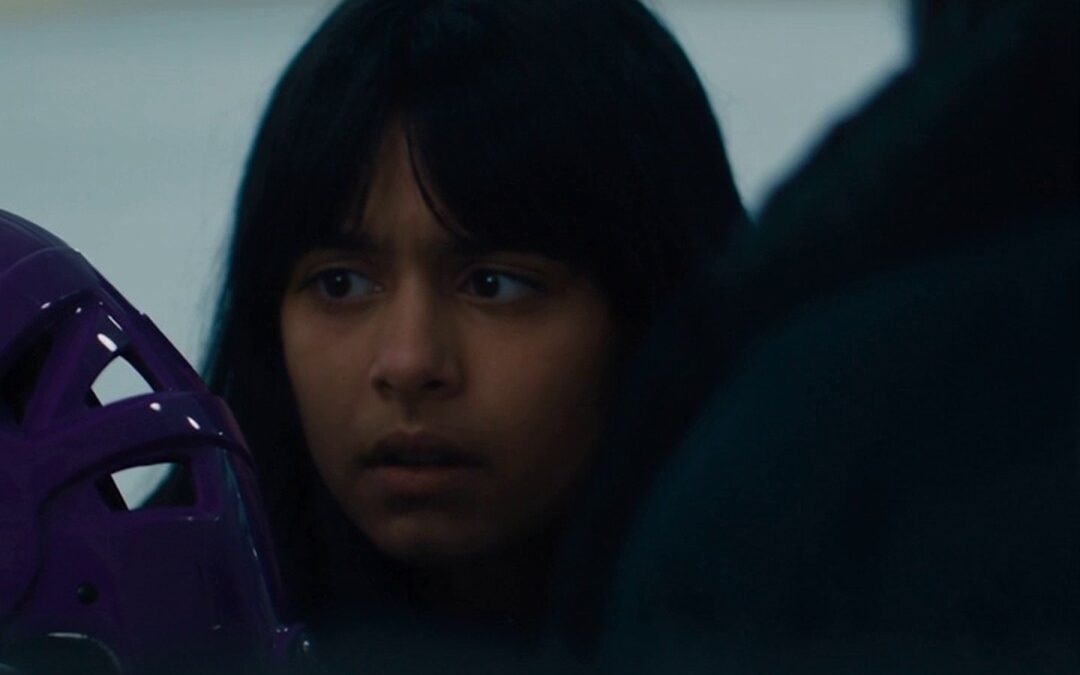
Chapter 1: The Purple Guards
The purple skate guards came back across the counter in a clear plastic bag, as if they were evidence.
“June doesn’t need another pair,” Mara said.
I had repaired the cracked heel of the left guard because our daughter had kept it through three sizes of skates.
“She asked me to fix them.”
“She was being polite.”
Behind Mara, the ice rink smelled of wet wool and the rubber mats that ran from the lobby to the locker rooms.
For eight months, Mara had brought June here for practice while my scheduled visits kept falling apart: a stomachache, a changed pickup time, a message saying June didn’t want to come.
June was thirteen and had begun to believe I stopped showing up whenever seeing her became inconvenient.
I drove the county school bus, finished my afternoon route at four, and still reached every pickup location Mara sent me.
Each time, I wrote down where I had waited.
My lawyer had filed a request for the court to review the missed visits, but the hearing was weeks away.
Mara put the bag on top of my gloves.
“You can send her things, Caleb.”
“You don’t need to be here.”
The rink’s public exhibition was starting, and families were filing toward the bleachers.
I could stay to watch, though I knew an approach to June would make a hard evening harder for her.
Through the open lobby doors, I saw June beside her coach, bending to free a caught skate lace.
A strip of purple plastic hung from her gear bag.
She had kept the old guards after all.
June looked up and saw me.
For one suspended second, she smiled with the unguarded surprise she used to have when I arrived early.
Then she stopped.
Mara stepped into the space between us, holding June’s water bottle.
“Your father has the wrong night,” she told her.
June’s eyes dropped to the guards in my hand.
“I waited Tuesday,” she said.
“I did too.”
“At the warm-up doors.”
I had waited Tuesday at the entrance beside the rental counter, exactly where Mara’s message had sent me.
The warm-up doors were on the other side of the building.
Mara’s hand tightened around the water bottle.
“June, they’re ready for you.”
June went onto the ice without looking back.
I stood with the guards while the rink attendant pulled the lobby door closed against the cold.
If June had waited at the warm-up doors, who had sent me to the rental counter?
Chapter 2: The Hours Between
“Your father has the wrong night,” Mara said again, though June was already beyond the doors.
She said it for me this time.
I took out my phone and opened the message from Tuesday.
The rental counter was named in Mara’s own words, beneath the time she had changed from six to six-thirty that afternoon.
Mara looked at the screen without leaning close.
“You’re doing this here?”
“You told her to wait somewhere else.”
“I told her where practice ends.”
“You told me where to meet her.”
An attendant crossed behind us carrying a bucket of worn practice pucks.
Mara waited until he was gone.
“June had her skates on for forty minutes because she thought you were coming.”
“I was here.”
“Then put that in your folder.”
She opened the lobby door, and the cold reached us both.
I could have followed her as far as the bleachers.
June was skating in a public exhibition, and no order kept me from watching, but Mara had already turned my arrival into another argument June would have to carry home.
I put the guards in my coat pocket and left before June came off the ice.
In the parking lot, I sat in the bus driver’s habit of checking every mirror before moving.
Cars pulled out around me.
I read Tuesday’s message twice more, then took a picture of the entrance beside the rental counter.
I had taken the same picture on Tuesday, after waiting past the pickup time.
At home, I sent both pictures and the message to my lawyer, Anita Bell.
She called before I had taken off my coat.
“Was June present when you argued?”
“She heard two sentences.”
“Tell me exactly which ones.”
I did.
Anita let the silence sit after June’s words.
“You said the warm-up doors?”
“Yes.”
“Those are across the rink.”
“I know.”
“Don’t contact June about it tonight.”
“I wasn’t going to.”
“I’m asking because this is the kind of thing a child tries to solve for the adults.”
I set the purple guards on the table.
A thin white line ran through my repair on the left heel, and I could still picture June at nine, planting both feet in our kitchen and telling me a good repair had to survive her jumping test.
“When can we get in front of the judge?” I asked.
“Our hearing is in five weeks.”
“Five weeks is a long time.”
“It is.”
Anita’s voice softened, then became practical again.
“Send me the original messages, not just pictures of them.”
“Tonight?”
“Tonight.”
I forwarded the conversation as I had kept it.
Then I turned over the guards and found a piece of old tape tucked inside the right one.
It had been there since June labeled her equipment in grade school.
One edge had curled up, and I pressed it flat with my thumb.
I thought of her saying she had waited.
For months I had imagined her at home being told I was late.
Now I could see her dressed to leave, standing by a door I had never been told to use.
By morning, Mara had written to Anita.
She said I had approached June during a team event, upset her, and questioned Mara’s parenting in front of other families.
Anita read me the message while I sat in the empty bus before my first route.
“She’s asking that exchanges stop at the rink,” Anita said.
“I didn’t approach June.”
“I know what you’ve told me.”
“Will the judge know?”
“We’ll show what we can prove.”
Mara had attached a proposed change: future visits would begin only after June finished the season, and only if a counselor thought she was comfortable.
There was no counselor named.
The season had three months left.
“She can’t decide that by email,” Anita said.
“But she can make the next pickup fail.”
“We’ll address that.”
I started the bus.
The engine made the seat tremble beneath me.
June had a visit scheduled for Saturday, in four days, under the existing order.
Anita sent a short reply asking Mara to confirm the place and time in writing.
Mara confirmed a library parking lot that both households had used before.
For the rest of the week I drove my routes and checked my phone at stops, though I knew Anita would call if anything changed.
On Saturday I arrived fifteen minutes early.
I parked under the plain white library sign, where June had once made me read the same book about migrating birds three visits in a row.
At the scheduled time, Mara’s car did not appear.
Ten minutes later, she sent a message saying June had refused to get in.
I called once.
Mara declined it.
I stayed another half hour and then went inside to warm my hands.
The librarian at the returns desk recognized me from afternoons I had brought June there.
“Is she coming?” she asked.
“I don’t think so.”
She looked toward the doors.
“I’m sorry.”
I wanted to tell her that June might be at some other library entrance, waiting with her coat zipped to her chin.
Instead I checked whether the building had another lot.
It did not.
I bought a bottle of water from the machine, kept the receipt with its time printed on it, and drove home.
Anita had told me a receipt could show where I was.
It could not show what June had been told.
On Monday, after my morning route, I went to the rink office.
The building was quiet except for a scraper moving over the ice.
A man at the desk looked up from a rack of numbered skate rentals.
I had seen him for years, usually carrying a ring of keys or pushing carts of equipment, but we had never spoken for more than a minute.
His name was Ben.
“My daughter skates here,” I said.
“I know who June is.”
“I’m trying to clear up a pickup time.”
Ben’s face changed slightly.
“If this is a family matter, I can’t get involved.”
“I’m not asking what anyone told you in private.”
“What are you asking?”
“Whether the warm-up doors were open last Tuesday.”
“They’re open during team sessions.”
“Do they have a desk?”
“There’s a folding table when teams are signing in.”
“Would someone record who came through?”
“For a public session, sometimes.”
He looked past me at the empty lobby.
“For team practice, the coaches keep their own attendance.”
“Who keeps the building schedule?”
“We do.”
“Could I have the schedule for Tuesday?”
“Through the office manager.”
He pointed me toward a narrow hall.
I thanked him and started away.
“Caleb,” he said.
I stopped.
“If this is about June, use the proper request.”
His caution irritated me for half a second.
Then I saw that he was giving me what he could without making June’s rink a place where adults traded stories about her.
The office manager printed a public schedule showing a team practice Tuesday from six to seven.
It showed the warm-up doors were in use.
It said nothing about a pickup, and she made that clear before handing it over.
At home, I laid it beside Mara’s message.
The time Mara had sent me was six-thirty.
The place she had sent me was the rental counter.
June said she had waited at the warm-up doors.
They could both be true if Mara had brought her there and expected me to cross the rink.
But Mara had looked at my phone.
She had seen the words.
I asked Anita what else could be requested.
“Your message history is useful,” she said.
“Mara can say it was a mistake.”
“She can.”
“Then what do we need?”
“We need the whole pattern.”
Anita asked me to build a dated list of every missed visit since the schedule began.
I had already done most of it in a spiral notebook.
At first I wrote things down because the court order told us both to keep each other informed about changes.
Later I wrote them down because I needed to know whether I was remembering correctly.
There were eleven failed pickups in eight months.
Two were June’s illnesses, confirmed by Mara’s messages and followed by makeup visits.
Three were last-minute cancellations that Mara said June had requested.
Six were changes of time or place.
Of those six, I had photographs or receipts for four places where I had waited.
I had no way to know where June had been.
Anita asked me to copy the messages exactly and leave a space beside each date for what June might remember.
“That part can stay blank,” she said.
“It’s for us to see what we don’t know.”
I filled pages over three evenings.
The bus depot closed early on Thursday, and I sat at my kitchen table while the house next door emptied for a school concert.
My phone was near my elbow.
I still had June’s last direct message, sent the previous summer after she had stayed with me for a weekend.
It was a picture of the purple guards drying beside my sink.
Under it she had written that they looked like tired shoes.
Since then, messages to June went through Mara.
That was part of the order we had agreed to when June began withdrawing after the divorce.
We were meant to reduce pressure on her while a family counselor helped us settle into separate homes.
The counselor had met with us twice.
Then June’s team schedule changed, the counselor had no evening openings, and neither Mara nor I found another time all three could manage.
I had accepted that delay.
I had also accepted Mara’s claim that June was asking for space.
Seeing June’s face at the rink had unsettled what I thought I knew.
I went back through my notebook and found an entry from early September.
Mara had moved a pickup from her house to the rink.
I had arrived at the rink.
After twenty minutes, she had texted that June was tired and they had gone home.
At the time I thought Mara meant they had arrived and left before I got there.
Now I noticed that she had never said which door.
The next day I asked Anita to request the rink’s records for the dates it had been used as an exchange point.
“We may get a schedule,” she said.
“We may get nothing more.”
“Ask anyway.”
“I will.”
“Can I ask Ben?”
“You can ask him to talk with me if he’s willing.”
I called the rink office.
Ben answered.
I gave him Anita’s number and said he was free to call or ignore it.
“I didn’t see every pickup,” he said.
“I understand.”
“I don’t want June caught in this.”
“Neither do I.”
He was quiet.
“Then I’ll call her.”
Mara’s next message arrived that evening.
She had heard I was questioning rink staff.
She wrote that June felt embarrassed at practice and had asked Mara to keep me away from the building.
I read it standing in the aisle of a grocery store, holding a carton of milk.
I wanted to answer that I had spoken to an adult in an office while June was at school.
I wanted to ask whether June had truly said any of it.
Anita had warned me that every accusation sent by message would become one more thing June might have to read.
I wrote, “I’ll follow the current order and keep exchanges between adults.”
Mara replied with a single word: “Good.”
At Mara’s house, June sat on the bottom stair with her practice bag between her feet.
Mara was in the kitchen, talking on the phone in a voice June could hear but could not make out.
June had heard her mother say “rink staff” twice.
When Mara came in, she ended the call.
“Your dad’s asking people about us,” she said.
“What people?”
“People at the rink.”
“Why?”
“He’s unhappy with the schedule.”
June traced the edge of a skate lace with her finger.
“He was there Friday.”
“He was.”
“You said he had the wrong night.”
“He did.”
June looked up.
“Friday was the exhibition.”
“His visit wasn’t Friday.”
“I know.”
Mara took the bag and set it beside the stairs.
“He came to make a point.”
“He had my guards.”
“He should have mailed them.”
June thought about the bag on Caleb’s arm and the repaired white seam on the plastic.
Her father had always fixed things where the repair could be seen.
When she was smaller, he said a hidden crack was the one that broke again.
“On Tuesday,” June said, “I waited.”
“I know you did.”
“Was he there?”
Mara’s gaze rested on the hallway beyond June.
“He says he was.”
“Where?”
“June.”
“I’m asking where.”
“At the other entrance.”
June waited for the rest of the answer.
Mara pulled her phone from her pocket, then put it away.
“You don’t have to manage him.”
“I’m not.”
“You have school tomorrow.”
June took her bag upstairs.
She did her homework with the rink’s dull blade smell still caught in the fabric.
The next morning she checked the kitchen calendar.
Mara had written the Tuesday practice there in dark green marker.
Beside it was a small arrow pointing toward the warm-up doors.
June could not remember whether the arrow had been there before Tuesday.
She stood looking at it until Mara asked if she wanted toast.
I learned none of that then.
What I learned was that Ben had called Anita.
He remembered me in the rental-counter lobby on two of the dates in my notebook.
One night he had been repairing the register beside me; on another, he had lent me a pen so I could write down a time.
“He won’t guess where June was,” Anita said.
“He shouldn’t.”
“He also told me the building uses a digital door schedule.”
“What does that show?”
“When the warm-up entrance was opened for team use, not who went through.”
“Can we get it?”
“I’ve requested it.”
She paused.
“Ben’s going to tell the office manager what he personally saw.”
“Why?”
“He said he watched June look for someone after practice last month.”
I gripped the phone.
“He saw her?”
“He saw her waiting by the warm-up doors with Mara.”
“Which date?”
“He’s checking his work schedule before he says.”
I could hear a vehicle backing up at the bus depot behind me.
For a moment I wanted to drive straight to the rink and ask Ben every detail.
Instead I asked Anita whether his memory would matter.
“It may help,” she said.
“But the strongest thing is still going to be a clear record of what each of you was told.”
That record lived partly on my phone.
The other half was with Mara and June.
Anita sent Mara’s lawyer a request for the messages and calendars Mara had used to arrange exchanges.
Mara had retained a lawyer soon after the divorce.
I had represented myself until the cancellations became frequent enough that I could no longer follow their explanations.
Anita told me the request might be refused outside a formal court process.
Two days later it was.
Mara’s lawyer said my questions were distressing June, and proposed that any discussion of the schedule wait for the hearing.
The same letter offered a solution: I could agree to suspend in-person visits until a counselor reviewed June’s wishes.
I called Anita after reading it.
“Do they have a counselor?” I asked.
“No.”
“So there’s no date.”
“No.”
“What happens if I say no?”
“The existing order remains in place.”
“What happens if Mara says June won’t come?”
“We document it and ask the court to address it.”
I heard how small that sounded, though Anita had done nothing small.
There were rules for changing the order.
There was no person waiting at the library lot who could make a thirteen-year-old get into my car, and I would never have wanted one.
The following Saturday Mara brought June to the library lot.
For the first time in six weeks, June got out.
She stood beside Mara’s car in a gray sweatshirt and looked at the passenger door of mine.
I stayed where I was.
“You okay, Junebug?” I asked.
She made a face at the old name.
“Don’t call me that here.”
“Fair.”
Mara stood a few steps behind her.
June looked at the library entrance.
“Mom said we could go in for ten minutes.”
I had expected an afternoon under the order.
Mara saw my expression.
“June asked for a short visit.”
June’s eyes flicked toward her.
I wanted to ask whose idea ten minutes had been, but June was already standing between us, ready to walk inside.
“Ten minutes sounds good,” I said.
We sat at a table beside the returned books.
June kept her hands in her sweatshirt pockets.
I asked about school.
She told me her science class was building small bridges from paper.
I asked whether she still liked the rink.
“I like skating.”
“What don’t you like?”
She shrugged.
I had brought no folder and no messages.
I had promised Anita that I would let this visit be a visit.
June spotted a repair mark on the strap of my watch.
“You did that yourself?”
“Badly.”
“It’s holding.”
“For now.”
A little of her old amusement reached her mouth.
Then she looked toward Mara, who was reading near the front desk.
“Mom says you want a different schedule.”
“I want the one we have to work.”
“She said you want me every weekend.”
“I haven’t asked for that.”
June rubbed a thumb over the seam of her pocket.
“I don’t want every weekend.”
“You don’t have to decide that today.”
The library clock moved toward the end of our ten minutes.
I could feel the question rising, and I knew she could feel it too.
“Were you there Tuesday?” she asked.
“Yes.”
“At the rental counter?”
“Yes.”
She looked down.
“That’s dumb.”
“I went where I was told.”
“Mom told me warm-up.”
I let her words rest.
She glanced toward Mara again.
“I’m not saying she lied.”
“I didn’t ask you to.”
“You always say that.”
“Say what?”
“That you’re not asking.”
I had no answer that would make the table less crowded.
Mara closed her book and came toward us.
“Time,” she said.
June stood.
I stood too, leaving enough space for her to walk around the table.
She stopped at my side.
“Did you fix both guards?”
“Just the left one.”
“The right one still slips.”
“I can fix that if you want.”
She nodded once and went with Mara.
The visit lasted eleven minutes.
I sat for a while after they left.
June had not walked into my arms.
She had asked a question, listened to my answer, and told me something she thought might hurt her mother.
That was more trust than I had earned by waiting at any door.
At home I wrote down the visit, including the part where she said she did not want every weekend.
I sent Anita the entry.
“She should know I heard that,” I said.
“She will.”
Mara’s counterattack came the next week.
Her lawyer filed a statement saying I was making June responsible for adult conflict.
Mara described the library visit as an interrogation.
She said June had come home shaken and had asked not to see me until after the hearing.
The statement included a true thing that hurt to read: two years earlier, before our separation, I had missed June’s school presentation because I took an extra bus route without checking the time.
June had waited in the hallway with a paper bridge in her hands.
I had apologized when I got home.
I had assumed the apology was enough because she helped me rebuild the bridge that night.
Mara’s statement said June had never forgotten being left there.
Anita asked me to read it twice before we spoke.
“Mara isn’t wrong about that day,” I said.
“No.”
“I took the route.”
“You did.”
“Does that make everything else sound possible?”
“It gives June a reason to believe a missed visit.”
I stared at the place where Mara had written that June needed consistency.
She had used the word I used with parents when a bus changed drivers: children needed to know who would arrive.
“I should have been at that presentation,” I said.
“You can say that without agreeing you missed these pickups.”
“I know.”
I did not feel as if I knew.
For two days, every account of the recent visits ran through the old hallway.
Maybe June had been standing there each time, holding the next version of her paper bridge.
Maybe being at the wrong door would feel no different to her than my being absent.
I had been angry at Mara for using a true memory as a weapon.
June had lived it before Mara wrote it down.
On Friday, my sister called.
I had told her very little because she had opinions about Mara that came quickly and loudly.
“You sound tired,” she said.
“I am.”
“Come over for dinner.”
“I’ve got paperwork.”
“Bring it.”
“I don’t want you reading it.”
“Then bring an empty folder.”
I went.
Her sons were at their father’s house, and the kitchen was quiet.
She put soup in front of me and listened while I told her about the rink.
When I finished, she asked whether I wanted her to call June.
“No.”
“I wasn’t offering.”
“Everyone thinks there’s one phone call that solves this.”
“I know.”
She pushed bread toward me.
“What did June say in the library?”
“That she doesn’t want every weekend.”
“Did you hear her?”
“I wrote it down.”
“That isn’t what I asked.”
I set the bread back on the plate.
“I heard her.”
“Good.”
My sister had known June since birth.
She also knew how easily our family treated a quiet child as a person waiting to be persuaded.
She would not call behind Mara’s back.
The useful thing she did was ask whether I still had the paper bridge from the presentation I missed.
I did.
June had made me keep it because one side leaned after we rebuilt it.
At home, I took it from the top shelf of my closet.
The paper had yellowed at the folds.
I could not use it as proof of anything.
I kept it beside my notebook to remind myself what Mara’s strongest argument felt like from June’s side.
Anita got a response from the rink in the fourth week.
The office had retained the public schedules and door-use reports because the season was still underway.
The records showed when team sessions used the warm-up entrance.
They did not say who had directed anyone there.
Ben provided a short, signed account of the two evenings he remembered me at the rental counter.
He had checked his work schedule first.
One of those evenings matched the night he saw June waiting with Mara after practice.
“Was he sure?” I asked Anita.
“He said he saw her looking toward the lobby and asking whether someone had come in.”
“Did Mara answer?”
“He couldn’t hear.”
Ben had not been at either doorway for the whole evening.
Mara’s lawyer challenged his account before the hearing, pointing out that he was often busy with rentals and might have confused one practice night with another.
Anita expected that.
“Can he bring his schedule?” I asked.
“He will.”
“What about the desk logs?”
“The rink says they don’t keep names for team entry.”
The truth felt close enough to touch and still too thin to hold.
I had records of where I stood.
Ben could place me there on two nights.
June had told me where she stood on one.
Mara could say she had made an honest mistake, or that I should have walked around the building.
The first claim might be true for a night.
Eleven failed visits had made it harder to believe for all of them.
Three days before the hearing, Mara asked for a conversation without lawyers.
Anita advised me to keep it in writing or have the lawyers arrange it.
Mara agreed to meet with both of us at a table in the library’s small meeting room.
Anita came.
Mara came alone, carrying June’s practice bag.
“I’m here because June is exhausted,” Mara said.
Anita asked whether June knew we were meeting.
“She knows I’m trying to settle this.”
I watched Mara place the bag on the floor beside her chair.
The strap was frayed where June gripped it.
“What does she want?” I asked.
“She wants the questions to stop.”
“I can do that.”
“She doesn’t want to be told she’s mistaken about waiting.”
“I didn’t tell her that.”
“You showed her I might be.”
I had expected Mara to deny the different entrances.
Instead she spoke of what happened after June noticed them.
Anita asked whether Mara would agree to a set exchange place, written plainly in one shared message to both adults.
“We already have places in the order,” Mara said.
“And the rink became another one,” Anita replied.
“I tried to work around her practices.”
“Then let’s remove the uncertainty.”
Mara looked at me.
“Every time she says she needs a little space, you come back with a document.”
“When I get told the wrong place, I need a record.”
“You could have walked around the rink.”
“I would have if I knew she was there.”
“You know what she’s like before a competition.”
“Yes.”
“You know she gets nervous and looks for a reason to go home.”
“Yes.”
Mara leaned forward.
“Then understand why I didn’t tell her to search a building for you.”
The room was still.
It was the nearest she had come to admitting she knew we were in different places.
“Did you know where I was?” I asked.
“I knew where I had told you to go.”
Anita’s pen stopped moving.
Mara looked at the bag.
“I was trying to get June through practice.”
“By letting her wait for me?”
“I made a bad call that night.”
“One night?”
“I’m here to talk about what happens next.”
She offered one hour with June at a counselor’s office after the hearing, provided I agreed to stop attending exhibitions and practices until June invited me.
I told her I would stay away from practices while we worked on a plan.
I could not agree that one hour would replace the visits already in the order.
Mara stood.
“She will hear that as you choosing a schedule over her.”
“Tell her I heard what she wants,” I said.
“I heard the part about every weekend.”
Mara’s face shifted.
For the first time, I thought she might believe I had listened.
Then she lifted the bag and left.
In the hallway, Anita said, “She acknowledged telling you where to go.”
“She called it one bad night.”
“She did.”
“I still don’t know what happened the other nights.”
“We may never know every one.”
That evening I moved the repaired guards off the table.
The paper bridge and notebook stayed.
I had begun this thinking I needed a single piece of proof large enough to make June believe me all at once.
The proof we had was made of small, stubborn things: a message, a work schedule, a receipt, two people who remembered waiting.
I could see how each might be questioned.
I also knew each existed because someone had been there.
At the hearing, June was at school.
Neither Mara nor I had asked her to attend.
Anita showed the court my message history and notebook, the library receipt, the rink’s schedules, and Ben’s account.
Mara’s lawyer questioned why I had never gone through the rink to look for June.
I answered that the entrance Mara named was the exchange location, and I had no reason to enter a team area during her practice.
He asked about the school presentation.
“I missed it,” I said.
“Did June wait for you?”
“She did.”
“Then this was not the first time June had reason to doubt you.”
“No.”
The answer cost me less than trying to escape it would have.
Mara said June had been increasingly anxious about visits.
She described driving to exchanges while June asked to go home.
I believed some of it.
I had seen June’s shoulders at the library.
When asked about the rink night, Mara said she had confused the doors during a busy week and should have corrected the message.
Ben spoke after her.
He used his work schedule to explain why he knew which two nights he had been in the lobby.
He said I had waited by the rental counter past closing on one night and had borrowed his pen on the other.
He also said he had seen June near the warm-up entrance after practice on one of those nights.
Mara’s lawyer asked if he could be certain it was the same night.
Ben checked the schedule in his hands.
“Yes.”
“Can you tell the court what Mara said to June?”
“No.”
“Can you tell the court whether June knew her father was elsewhere in the building?”
“No.”
Ben did not try to make his memory do more than it could.
I was grateful for that.
The court kept the existing parenting schedule in place and directed us to use one written exchange plan with a single entrance for each visit.
We were also told to arrange a family counselor who could hear June’s wishes and help us make the visits workable.
The judge did not decide that Mara had lied eleven times.
The judge did say the accounts of the rink nights were troubling and that June should not be left waiting while adults used different instructions.
There would be a review after the counselor had met with us.
Outside the room, Mara’s lawyer handed Anita a proposed list of counselors.
Mara stood a few steps away.
She looked as tired as I felt.
For a moment we were simply two people holding paper while our daughter sat in math class, unaware which hour of her day we had spent explaining her.
Then Mara said, “She’ll think I dragged her into this.”
“You told her I had the wrong night.”
“I know what I told her.”
I waited.
Mara looked toward the doors at the end of the corridor.
“I was afraid she would go looking for you,” she said.
“Why?”
“Because once she saw you, I couldn’t get her back into practice.”
“Then practice could wait.”
“You weren’t there for the weeks she begged not to leave the house after we separated.”
“I came when I was scheduled.”
“That isn’t what I said.”
She was right.
I had come to the agreed places.
Mara had lived with June’s dread between them.
I could acknowledge that without accepting what she had done.
“You could have told me,” I said.
“I tried.”
“You told me she wanted space.”
“She did.”
“And you let her think I’d left.”
Mara’s eyes filled, though she did not cry.
“I thought she would stop waiting.”
I wanted to ask how she could say that aloud and still stand upright.
Anita touched my elbow.
There was nothing more to settle in the corridor.
The counselor’s first available appointment was three weeks later.
June met her alone.
Mara and I each met her separately afterward, and the counselor warned us that she would not repeat everything June had said.
She could tell us June wanted contact with me and felt angry about the rink.
She could also tell us June was afraid every visit would turn into a search for who had been right.
“She wants to be allowed to have a good hour,” the counselor said, “even if the adults have had a bad week.”
Mara looked at the floor.
I said I could do that.
The counselor proposed short visits in a familiar public place, then longer ones if June wanted them.
Our order allowed more time.
Anita and I discussed the difference.
I could insist on the written hours and have someone tell June she was expected to come.
I could also agree to a temporary plan that June had helped describe, while keeping the review date and the order in place.
I agreed to the plan for six weeks.
The first visit was at the library, with Mara in another part of the building.
June arrived carrying a paperback and wearing the gray sweatshirt again.
We chose a table near the windows.
I asked whether she wanted a drink from the machine.
“No.”
“Okay.”
She opened her book but did not read.
“Mom told me she sent you to the other door,” she said.
I kept my hands on the table.
“When?”
“After the hearing.”
“I’m glad she told you.”
“She said she was trying to keep me from getting upset before practice.”
“I think that’s what she was trying to do.”
“You don’t sound like you believe her.”
“I believe she was worried about you.”
June ran one finger along the page.
“You were there.”
“Yes.”
“And she knew.”
“Yes.”
“She said she didn’t know you would wait so long.”
“I did.”
June shut the book.
“I thought you went home.”
“I thought you had.”
For the first time since the rink, we looked directly at each other without Mara between us.
June’s expression was not relief.
It was the work of fitting two painful memories into the same Tuesday.
“Why didn’t you ask someone where I was?” she said.
“I was supposed to meet you at the rental counter.”
“I know that now.”
“I didn’t know you were waiting at all.”
She pulled at a loose thread on her sleeve.
“I didn’t want you to come inside the team area.”
“I wouldn’t have.”
“I just wanted you at the door when practice was over.”
I thought of my car idling outside the wrong entrance.
“I wanted that too.”
June nodded, but the movement was small.
She told me about a skating drill that made her ankles ache.
I listened.
When our hour ended, she packed her book slowly.
“Mom says you kept pictures,” she said.
“Of where I waited.”
“Can I see them sometime?”
“If you want.”
“Not today.”
“Not today.”
Mara was waiting by the returns desk.
June went to her without hesitation, and I was glad she could.
At the door June turned back.
“Do you still have the guards?”
“Both of them.”
“The right one slips.”
“I remember.”
She left before I could promise to repair it.
I worked on the guard that night anyway.
The plastic had not cracked; the heel clip had worn down.
I shaped a thin piece from an old spare and fitted it beneath the clip.
Then I put both guards in the bag and left them on the shelf by my door.
I did not give them to Mara to pass along.
June had asked to see me again, and I wanted to hand them to her myself.
The second visit lasted two hours.
We walked through the library and chose books neither of us expected the other to like.
June showed me a guide to small engines because she remembered I liked fixing things.
I showed her a book about birds because of the old migrating-bird story she had made me read.
“You only liked that because I liked it,” she said.
“That’s why I remember it.”
At the table she asked to see the photographs.
I showed her the two from the rink and one from the library lot.
I did not show her the whole notebook.
She studied the rink’s empty rental counter, then handed back my phone.
“That place looks weird with no people.”
“It was late.”
“I was still in my skates.”
“I know.”
She looked down at her own shoes.
“I was mad at you for months.”
“You had a reason.”
“I was mad even when Mom said I didn’t have to be.”
I waited.
“I kept thinking if you came one time, I’d have to decide whether I wanted to go.”
“You still get to decide.”
“Do you get mad when I say no?”
“I get disappointed.”
“That’s different?”
“It should be.”
June considered that.
“I don’t want you at every practice.”
“All right.”
“I might want you at an exhibition.”
“Tell me when.”
“And don’t talk to Ben about me anymore.”
“I won’t.”
She watched me carefully, then opened her book.
The visit ended without an embrace.
I went home with the sound of her turning pages still in my ears.
Over six weeks, our visits grew.
Some were awkward.
One Saturday June was annoyed with me because I kept asking whether she was comfortable.
“Can we just pick a sandwich?” she said.
We did.
Another day she asked why I had waited months to bring the missed visits to court.
I told her the first cancellations had sounded like ordinary problems, and I had believed she needed space.
“When did you stop believing it?”
“When you told me you waited Tuesday.”
“That’s a long time.”
“It was.”
I wanted to blame every lost hour on Mara.
June would have heard me avoiding my part in how slowly I had understood.
“I should have asked for help sooner,” I said.
June took a bite of her sandwich.
“I should’ve asked you where you were.”
“You were twelve.”
“Thirteen.”
“Thirteen.”
“I know.”
At the counselor’s review, Mara acknowledged that she had changed the rink pickup instructions on three dates.
She had first told the counselor one was a mistake.
After going through her own calendar, she admitted she had known on the other two nights that June expected the warm-up doors and I had been directed to the rental counter.
She said June had become upset before skating, and she had feared that if we met there, June would be unable to compete or go through with a visit.
The counselor asked why Mara had allowed June to believe I had failed to arrive.
Mara stared at her folded hands.
“Because I thought the next visit would go better.”
“And then?”
“The next one didn’t.”
June was not in the room for that conversation.
Later, with the counselor, Mara told her the same thing in simpler words.
June did not forgive her that day.
She also did not stop loving her.
For a week she refused to discuss rink pickups with either of us.
She went to practice with Mara, spent Sunday afternoon with me, and answered most questions with “I don’t know.”
The counselor told us to let that be a complete answer.
At the court review, the judge approved a revised exchange plan that named one place and time for each transfer and required changes to be confirmed in writing by both adults.
The regular visits resumed in stages over the following two months.
The court also left room for June’s school and skating commitments, with makeup time spelled out when a visit had to move.
It did not order June to feel ready.
Mara had to follow the schedule.
I had to stop treating every quiet moment with June as a chance to measure how much time we had recovered.
Neither task came easily.
In April, June asked whether I wanted to attend an exhibition.
I told her yes.
“Mom will be there,” she said.
“I figured.”
“She’s bringing my water bottle.”
“I’ll stay out of its way.”
June smiled despite herself.
At the rink, I entered through the main lobby with the other families.
Ben was at the rental counter.
He lifted a hand.
I lifted mine and kept walking.
Mara sat two rows below me in the bleachers.
She did not turn around.
June came off the ice after her first program and found us both in the crowd.
She looked at Mara, then at me, and gave a quick, embarrassed wave that was large enough for both of us.
Afterward, we met in the lobby.
Mara handed June her water bottle.
I handed her the clear plastic bag.
“The right one too?” June asked.
“Try it.”
She clipped a guard over each blade and took two careful steps on the rubber mat.
Then she jumped once.
Both guards held.
“You hid the fix,” she said, turning the right one over.
“I wanted to see if you’d notice.”
“I always notice.”
Mara stood nearby while June inspected the clip.
There were still visits we would have to arrange and evenings June would spend angry with one of us.
The months she had waited at the wrong door were gone.
June slipped the guards back off and carried them in her hand.
“Next time,” she told me, “wait here.”
“I will.”
She pointed to the patch of rubber mat where we stood, between the rental counter and the doors to the ice.
“Here,” she said again.
Then she walked beside Mara toward the parking lot, and I stayed long enough to watch her turn back and make sure I had understood.








