My Foster Sister Heard a Boy Calling From Our Kitchen Sink, and Saving Him Put Our Life Together at Risk
Chapter 1: The Voice in the Sink
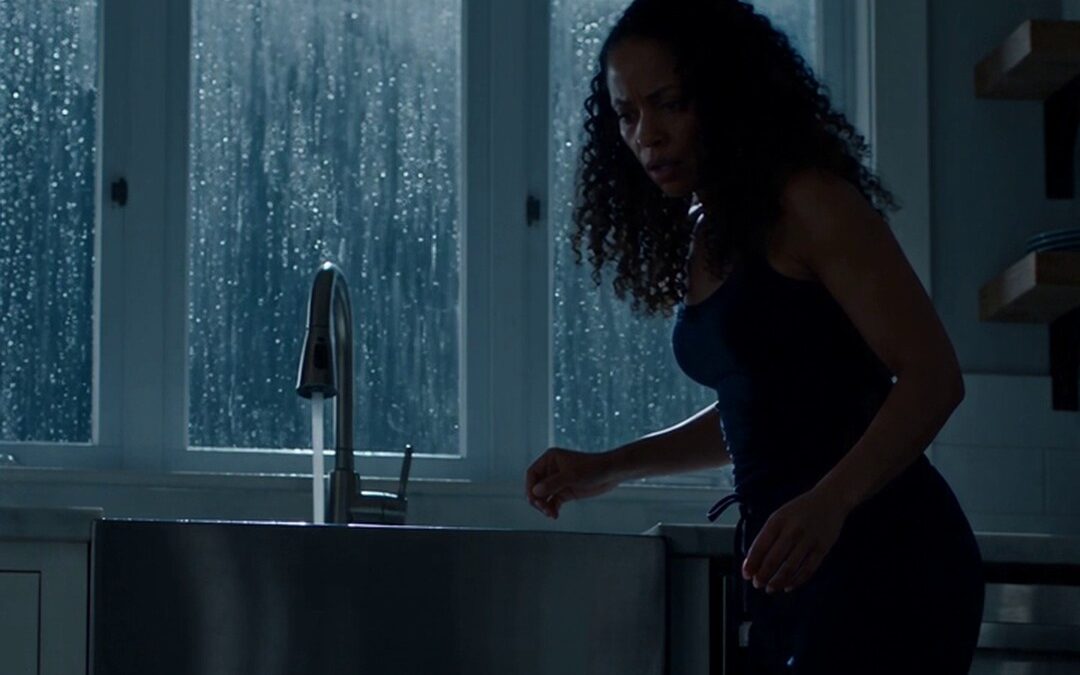
At 2:17 in the morning, Mara turned on the kitchen faucet and told a boy neither of us knew to keep his face above the water.
I had come downstairs because the rain was knocking branches against my bedroom window. Mara stood barefoot at the sink, one hand gripping the counter. The blue cup we used for measuring rice lay broken at her feet.
“Who are you talking to?” I asked.
She held up a finger. Her eyes were fixed on the drain.
A thin voice came through it. I heard only three words clearly: “Can’t get out.”
Mara said, “Look for a ladder.”
I reached for my phone. By day, I inspected storm drains for the city, and I knew what rain like this could do to the older streets. “Where is he?”
“I’m trying to find out.”
“Ask him.”
“I am.”
She spoke again, slowly, toward the water. “Tell me one thing you can see.”
The faucet ran over her fingers. For a moment she looked frightened of it. Then the voice said, “Red paint. Number six.”
I knew a painted six. It marked an access opening beside the abandoned rail spur, two blocks downhill. Its grate should have been bolted shut.
I called 911. Mara wrote the location on the back of a grocery receipt so I could read it to the dispatcher. When I looked up, she was staring at me with the wary politeness she usually reserved for strangers.
“Mara?”
She glanced at the receipt in my hand. “Did you call for him?”
“Yes.” I stepped around the broken cup. “It’s Gabe.”
Her expression changed. She said my name, relieved, and then looked away.
Mara and I had shared this house for seven years. We were former foster siblings who had found each other again as adults, and she knew the sound of my feet on those stairs. Lately she had forgotten where we kept the coffee filters. Last week she had asked whether the spare bedroom was rented.
I had blamed her long shifts at the pottery studio. She had let me.
Down the street, sirens rose over the rain. I saw a rescue truck turn toward the rail spur.
Mara shut off the faucet. “Before you ask me anything,” she said, “get my notebook from under the sink.”
Chapter 2: What the Water Keeps
The notebook was wrapped in a plastic grocery bag behind the cleaning supplies. Its cover was soft from use, and a strip of blue tape across the front said HOME in Mara’s blocky handwriting.
Inside were drawings of our rooms.
The kitchen page showed the back door, the stove with its unreliable front burner, and the narrow cupboard where Mara kept her good tea. An arrow pointed to the refrigerator: GABE’S WORK SCHEDULE HERE. Another pointed to the small table beside the window: WE EAT BREAKFAST TOGETHER WHEN HIS SHIFT ALLOWS.
I turned the page. There was a picture of me, copied from a photograph on the mantel. Under it she had written, Gabriel Reyes. Foster brother. Lives here. Safe with him.
I heard Mara draw a breath behind me.
“How long?” I asked.
She leaned against the counter. Rainwater rattled in the downspout outside, then gurgled beneath the floor. The house sat at the low end of the street, where three old storm lines met before running toward the river. In heavy weather, you could hear the system working through every sink.
“The notebook?” she said. “About eight months.”
I looked at the drawing again. “And the voices?”
“Since I was twelve.”
The sirens had stopped moving. I could see their lights washing across the houses downhill, though the rescue truck itself was out of sight.
Mara bent to pick up the pieces of the cup. I stopped her; she was barefoot. She stayed where she was while I swept the blue shards into a dustpan.
When I had found her again seven years earlier, after nearly two decades apart, she had made tea in that cup because we hadn’t unpacked the mugs. At sixteen, she had used it to divide a packet of instant oatmeal between us at our foster home. It had chipped long before we moved into this house. Neither of us had considered throwing it away.
I set the dustpan on the counter.
“You heard someone in the drain,” I said. “I heard him too.”
“You heard him because I answered.”
“What does that mean?”
She touched the running faucet, then withdrew her hand. “I can hear people in the stormwater when they’re close to drowning. Usually all I get is a few sounds. If I speak into the water, they can hear me. Sometimes you can too.”
“And then you forget who I am?”
“Sometimes.”
From downhill came the metallic clang of equipment being unloaded. I wanted to go to the access opening. I also wanted to stay where I could see her face.
“Why didn’t you tell me?”
Mara looked at the notebook. “When I was a kid, adults who believed me made me listen whenever it rained. Adults who didn’t believe me thought I was sick. You were one of the few people who just sat with me afterward.”
“I didn’t know there was an afterward.”
“No. You didn’t.”
A knock hit the front door hard enough to make us both turn.
Officer Price stood on the porch with rain running off his cap. I knew him from street closures and blocked culvert calls. He had come to tell us the crew had found a boy at opening six. He was conscious, and paramedics were taking him to the hospital.
“The bolts were missing,” Price said. “Looks like he got pulled into the access chamber when he went near it.”
I asked whether there had been a ladder. Price nodded. The boy had been hanging on to one when rescuers reached him.
“Good call on the location,” Price said.
Mara stood behind me, beyond his view. I told him I knew the marker from work. That much was true. He thanked us and headed back into the rain.
After I shut the door, Mara said, “You didn’t have to cover for me.”
“I know.” I had done it before deciding whether she wanted me to. “I should have asked.”
“It’s all right this time.”
I didn’t know if she meant the lie or the boy. I let her take the notebook upstairs and went to find her slippers.
By morning the rain had eased. The local news showed a photograph of the rail spur from years earlier, when freight trains still used it. They reported that twelve-year-old Eli Turner had been rescued after a surge of runoff carried him into the old access chamber. He had called to his friend, who ran for help, but the friend had lost sight of him in the dark.
Eli’s family asked for privacy. I turned off the television.
Mara was at the kitchen table studying the notebook as if she had not drawn its pages herself. She had found a clean mug for her tea.
“Do you remember last night?” I asked.
“I remember the boy.”
“Do you remember me?”
She gave me a tired look. “Yes, Gabe.”
I sat down. “You couldn’t for a minute.”
“I know. You wrote it down.”
She turned the notebook so I could see a fresh entry in the back.
October 3, 2:17 a.m. Warning sent to boy at rail spur. Forgot Gabe for about four minutes. Recognized him when he spoke. Blue cup broken. Boy found alive.
The entry was in my handwriting. I remembered her putting the notebook and a pen in front of me after Price left, though I had barely considered what I was doing.
“You have me keep the record?”
“When you’re there.”
“How often am I there?”
Mara closed the book. “I haven’t called anyone through the water since spring.”
That answer left room for seven years’ worth of storms. She saw me hear it.
“I’ll tell you,” she said. “I need to put the kiln on first. I promised Celia I’d open.”
“I can drive you.”
“I can take the bus.”
“I know you can. I’m offering.”
She considered it, then nodded.
We worked at opposite ends of the city. My crew maintained catch basins and inspected storm lines before road projects. Mara taught pottery classes in a converted machine shop, where the kilns warmed the whole building and everyone smelled faintly of clay. We had arranged our schedules so one of us was usually home for dinner. When my mother died, Mara took over cooking for a month because I kept burning things. When Mara broke her wrist, I learned to wedge clay for her students.
I had thought those routines told me who she was.
On the drive to the studio, I asked, “Does it happen with every person who’s drowning?”
“No. Only when they’re in water connected to that old storm system. And even then I might hear nothing.”
“Connected how?”
“I’m not sure. My grandmother said it ran under the part of town where her family lived. I’ve tried listening at the river, at the lake, during a regular shower. Nothing. Stormwater in these lines when they’re rising—that’s all I know.”
“Your grandmother knew?”
“She knew what I told her. She believed me.”
Mara watched a city truck pass us in the other lane.
“She made me a notebook when I was younger,” she said. “She noticed what happened after I answered.”
“What happened?”
“For a while, I couldn’t place people I was closest to. It started with a few minutes. I’d see her in our kitchen and know I ought to know her, but I didn’t. Every time I spoke through the water, it lasted longer. Some things came back. Some didn’t.”
Her hands were folded tightly in her lap.
“In May, I forgot the morning you taught me to drive,” she said. “You told the story at dinner. I knew every street you mentioned. I couldn’t remember being in the car with you.”
I nearly missed the turn for the studio.
I remembered that morning. We had been seventeen. Our foster father had an old sedan with a loose passenger door, and Mara had stalled it six times in an empty church parking lot. On the seventh try she drove a perfect circle and screamed loud enough to bring a custodian outside.
I had told the story in May because she had laughed at my new trainee for stalling a city truck. She had laughed with me. When she asked what color the sedan was, I thought she was testing my memory.
“Why didn’t you tell me then?” I asked.
“Because you’d already lost the same years I had. I couldn’t stand to see you wonder how many of the ones since were missing too.”
“That was my worry to have.”
“I know.”
We pulled into the studio lot. Celia’s car was already there. Mara unfastened her seat belt but didn’t get out.
“I made a decision for both of us,” she said. “I’m sorry.”
I could have told her that I needed time. It was true, but it felt too small to say. I watched her cross the wet pavement and let herself into the building.
At work, I went first to the rail spur. I told my supervisor I wanted to look at opening six before the repair crew sealed it. That was an ordinary request after an injury, and she handed me the inspection keys.
The chamber stood behind a chain-link fence with a gap large enough for a child to slip through. The red six was stenciled on concrete above it. Two empty bolt holes showed where the grate should have been secured. Inside, a narrow ladder descended toward a black pool. The waterline from the night before was nearly seven feet above the bottom.
I pictured Eli clinging to the top rungs while the chamber filled. He had seen the painted number from inside. Mara could not have guessed it. I had given the dispatcher the location before anyone knew where he was.
My coworker Dan came up behind me carrying a box of replacement hardware.
“You okay?” he asked. “Price said the call came from your place.”
“I’m okay.”
“Lucky you knew the spur.”
“Yes.”
Dan went to examine the hinges. I stayed beside the fence, thinking about the boy’s voice. Mara had told him to look for a ladder. I had heard those words with my own ears. Whether I had heard the boy through a pipe, through her, or through something I couldn’t name, he was alive.
The repair crew bolted a new grate in place. I measured the fence gap for a work order. Neither job required me to decide what I believed about Mara, so I did them carefully.
That evening she was home before me. I found her at the table with both notebooks: the current one and a smaller green book I had never seen. She had set out leftover chicken, rice, and the vinegar-dressed cucumbers I liked.
“You don’t have to feed me into a good mood,” I said.
“I made dinner because it’s Thursday.”
It was. On Thursdays I came home late from field reports, and she cooked. I sat down.
The green book had a drawing on its cover that I recognized: two stick figures beneath a roof, one considerably taller than the other. Mara had drawn it in our foster home, on a scrap of paper she kept tucked into a library book. I hadn’t known she still had it.
“This is the first one,” she said. “Grandma started it. I kept it after she died.”
I asked if I could read it. She pushed it toward me.
The early pages were in her grandmother’s handwriting. They recorded dates, storms, what Mara said she heard, and how long it took her to recognize people afterward. Some entries had short notes in another hand, signed E. Morris. Mara explained that Ellen Morris was a dispatcher her grandmother trusted. Ellen had once stayed on a call while twelve-year-old Mara described a man trapped in a flooded underpass. An officer found him where she said he would be.
“Ellen called me herself a few times after that,” Mara said. “Grandma found out and stopped it.”
I looked up. “A dispatcher asked a child to do this?”
“Three times. She thought she was saving people.”
“Was she?”
“Once. The other two times I heard nothing. Grandma said that was enough.”
I turned the pages. Near the back of the book, the entries grew sparse. When Mara entered foster care, the notes stopped. Her grandmother had died that winter.
“Did you tell our foster parents?”
“I tried. Mrs. Bell told me I was having nightmares. Mr. Bell believed me after he found me at the kitchen sink during a storm.” She rubbed her thumb along the edge of the table. “Then he wanted to know whenever the drains got loud.”
I remembered those nights differently. Mara would come into my room and sit on the floor until dawn. She said she hated thunder. Sometimes she didn’t know which house she was in when she woke. I had thought she was missing her grandmother.
I closed the book. “He used you.”
“He was afraid someone would die if he didn’t ask.”
“That doesn’t make it yours to carry.”
“I know that now.”
I wanted to believe her. I also wanted to know why she had taken it up again as an adult.
She opened the newer notebook to a page marked with a clay-smudged receipt. A list ran down the margin. There were nine entries from the past seven years. Some recorded voices she had heard but could not locate. Four recorded warnings she had sent.
The first was during a storm three years after we moved in: a man trapped in his car beneath the Mercer Avenue railroad bridge. She had told him to leave the car and climb onto its roof. Firefighters reached him there. I remembered the rescue from the news and the way Mara had spent the next morning asking me where we stored our winter coats.
Another entry was a woman caught in a flooded basement. Mara had heard the woman shout her street address to someone upstairs and called 911. She hadn’t answered through the water; the woman never knew Mara had heard her. Beside that entry Mara had written, No loss noticed.
“When you just listen, nothing happens?” I asked.
“Not that I’ve found.”
The next warning had cost her the memory of my college graduation. She had still known I went. She had forgotten standing with me afterward in the parking lot, holding flowers wrapped in grocery-store paper.
I could see the photograph from that day on the mantel. I had never wondered why she stopped telling the story behind it.
“I thought you hated that picture,” I said.
“I hate that I need the picture.”
I read the last two entries. May’s warning had gone to a child under a flooded playground platform. Mara had given him directions to a higher railing; a passing driver saw him there and called for help. Afterward she had not recognized the inside of our house for nearly an hour. The memory of the driving lesson never returned.
“What made you start again?” I asked.
Mara traced the name of the man at the railroad bridge. “I heard him from the sink. I knew the bridge because you’d shown me the trouble spots on your route. I could have told someone, but he was already saying the door wouldn’t open. There wasn’t time to hope a dispatcher could reach him first.”
“And after that?”
“After that I kept telling myself I’d only listen.”
Rain began softly against the kitchen window. We both turned toward the sound.
For the first time since we’d moved into the house, I thought about what it asked of her to live here. The lowest point on the street wasn’t just a nuisance when the gutters overflowed. It was where the voices came clearly.
“Did you choose this place because of the pipes?” I asked.
“No. You found it. Remember? The landlord let you fix the porch in exchange for the first month’s rent.”
I did remember. Mara had been living in a room above the studio. I had called her from the porch because there were two bedrooms, and because I was tired of going home to a place where no one knew I had arrived.
“I would have moved if you’d asked,” I said.
“I know.”
“You could still ask.”
“I know that too.”
I didn’t believe she would.
For two days, we spoke politely. We ate breakfast together and discussed practical things: whether the dryer belt was slipping, when the city would replace the rail-spur fence, whether Celia needed help carrying clay on Saturday. The notebooks stayed on the shelf by the table. Mara did not turn on the kitchen faucet while I was home. She filled a pitcher from the upstairs bathroom and brought it down for cooking.
That hurt more than I expected. Our house had always been a place where neither of us had to make ourselves smaller. Now she moved through it as though any ordinary sound might burden me.
On Saturday morning I took the green book to Mara and asked if Ellen Morris was still alive.
“She retired years ago,” Mara said. “I don’t know where she is.”
“I want to talk to someone else who saw this happen. Would you come with me if I found her?”
Mara looked at the book in my hand. “If she’ll speak to us.”
Ellen had left her number on an old holiday card tucked inside. Mara recognized the handwriting. I called, expecting a disconnected line. A woman answered on the fourth ring.
She sounded startled when I said Mara’s name, then asked whether Mara was all right. I told her we wanted to talk about what had happened when Mara was young. Ellen was quiet for a moment.
“I’ll come to you,” she said.
She arrived that afternoon in a compact car full of gardening supplies. She was in her seventies, with gray hair cut close to her head and an impatient way of taking in the room. When Mara came downstairs, Ellen stepped forward as if to embrace her, then stopped. Mara hugged her.
We sat around the kitchen table. Ellen noticed the green book immediately.
“I was wrong to call you those times,” she told Mara.
Mara’s face tightened. “You helped find Mr. Watkins.”
“Yes. And then I asked again. Your grandmother was right to be furious.”
I had been prepared to question Ellen’s account. Instead I found myself listening to an apology she had owed Mara for twenty-four years.
Ellen described the underpass call. A driver had phoned 911 from a gas station after seeing water pour toward the road. The caller could not tell whether a stalled car remained under the bridge. Mara’s grandmother, who lived nearby, had called the dispatch desk to report that her granddaughter heard a man shouting from the kitchen sink. Ellen knew the family from church. She sent a patrol car to check.
“They found him on the hood,” Ellen said. “I could have left it there. A good call, however the information came to us. But the next big rain, I called your grandmother and asked if you’d heard anything.”
“I had,” Mara said.
“You were twelve.” Ellen looked down at her hands. “I remember that clearly now.”
I asked what she had personally heard.
“Only Mara telling me what the man said. I never heard voices in pipes. At the time, I didn’t know what to make of it.”
“Do you believe her now?” I asked.
Ellen met my eyes. “I believe that when she said someone was in danger, we found someone in danger. More than once. I believe she paid for my asking. Her grandmother wrote that down before I did.”
It wasn’t proof of every part of Mara’s explanation. It was enough to show this had existed long before our house, and that other adults had seen its cost.
After Ellen left, Mara stood at the sink rinsing the cups. I came beside her with a dish towel. The water ran clear over the rim of Ellen’s mug.
“Do you hear anything now?” I asked.
“No. It takes a lot more water in the lines.”
She handed me the mug. For a few minutes we washed and dried without speaking.
On Monday, my supervisor called a meeting about the storm forecast. A slow-moving system was expected to arrive Wednesday and stay through Thursday. The city was clearing inlets, staging pumps, and checking the temporary barriers along the river. Forecasts changed; we worked from what we had.
The rail-spur opening was on the list. So was the old Mill Street trunk line, which carried runoff past our neighborhood and under a stretch of warehouse property before reaching the outfall. During the storm that had trapped Eli, its water level had risen faster than our monitoring station showed. We suspected a partial blockage downstream.
I volunteered to inspect accessible points along the line with Dan. We found leaves and construction debris at two inlets, cleaned them, and sent camera equipment through a dry section farther uphill. At the downstream access, the current was too strong to send anyone in. The camera showed a concrete joint that had shifted, narrowing the passage. There was room for water to pass, but heavy rain could back it up.
My supervisor requested a contractor and put a crew on standby. I went home thinking about the line beneath our street.
Mara had seen the forecast too. The kitchen table held a stack of clean towels, flashlights with fresh batteries, and a handwritten list of phone numbers. She had packed a bag with her medications, a change of clothes, and both notebooks.
“You’re ready to leave?” I asked.
“If the basement floods.”
“That’s sensible.”
“And if I can’t remember where I live.”
I set my keys down. “Mara.”
“I’m trying to make it easier for you.”
I pulled out the chair opposite her. “We need to decide how we handle this storm.”
“You’re working it.”
“Probably.”
“I won’t call you out of a site because I hear something I can’t locate.”
“I didn’t ask you to promise that.”
She waited.
“I don’t want you answering through the water alone,” I said. “If you hear someone, call 911. If you have a location and there’s a way to get help there, use it. If you think you have to speak to them, call me or someone you trust first.”
“There might not be time.”
“I know. I’m asking you to try.”
Mara looked at the list. “I can do that.”
“And you need to tell me when you’ve lost a memory. Even if it’s one you think I’ll miss.”
Her eyes filled. “I can do that too.”
I wanted to promise I would stay calm whenever she told me. I couldn’t. Instead I said, “I’m still angry you kept it from me.”
“I know.”
“I’m here.”
She reached across the table and put her hand over mine. We sat that way until the dryer buzzed.
On Wednesday morning, the rain arrived earlier than forecast. By noon, water was standing along several curbs. My crew drove between blocked inlets, lifting grates and pulling out mats of leaves. Cars sent waves over our boots. We worked with the unglamorous focus of people who knew each clear drain might spare a basement.
Mara texted once: Studio closing early. Going home with Celia. I’m fine.
I called her during a break. She was in Celia’s car. I could hear Celia talking about detours in the background.
“You can stay at her place tonight,” I said. Celia lived on high ground west of the river.
“I could,” Mara said. “I haven’t decided.”
“I’d feel better.”
“That’s part of deciding.”
She didn’t sound offended. I watched brown water pour into the inlet we had just cleared.
“Call me when you get there,” I said.
Celia dropped her at our house before the worst of the rain. Mara sent a photograph of the front porch, dry beneath its awning, and another of the basement floor. There was an inch of water near the furnace, the usual amount during a hard storm. She had moved the storage boxes onto shelves.
At four, my supervisor reassigned us to Mill Street. The monitoring station downstream showed a sharp rise, and the contractor could not reach the shifted joint until the flow dropped. We set barriers at the low intersection and directed drivers away. The road climbed on both sides, making a shallow basin over the buried trunk line.
At five-thirty, Mara called.
“I can hear somebody,” she said.
I stepped under the truck’s open hatch to hear her. Rain hammered on the metal above me.
“Where?”
“I don’t know. A woman. She’s calling for a little girl named June.”
“Does she say what she sees?”
“She can’t hear me unless I answer.”
My grip tightened on the phone. “What can you hear around her?”
“Something banging. Maybe a gate. There are other voices farther away.”
I looked down Mill Street. The warehouses on the east side had ground-floor loading bays. Several had old drainage connections below street level. Our crew had checked the occupied buildings at the start of the shift, but water could have entered since then.
“Call dispatch,” I said. “Tell them what you heard. I’m going to check the east side.”
“She could be anywhere on the system.”
“I know. I’ll start with the part that’s flooding.”
“Gabe—”
“I’ll call you back.”
I told my supervisor. I said a resident had reported hearing someone calling from the warehouse blocks; I did not say where the sound had traveled. She sent Dan with me and notified dispatch. We went door to door, pounding on metal service entrances. Workers at a packing company had evacuated. A mechanic in the next building said everyone was out. At the third warehouse, the lights were off and water was spilling down a ramp into a lower loading bay.
A woman stood at the top of the ramp shouting into the dark. Her daughter June, she said, was twelve and had gone down to retrieve a backpack. The woman had followed her, then been forced back when a door slammed and the lower passage filled. She had been banging on the door to get June’s attention.
I called Mara. “We found the woman. It’s a warehouse on Mill Street. Her daughter’s below.”
For a second all I heard was the rush of the storm. Then Mara said, “I’ve heard another voice. I think it’s the girl.”
I looked at the water pouring down the ramp. Dan had called for fire rescue. We could not go through that door without knowing what lay below.
“What is she saying?” I asked.
“She says she can’t lift something. She keeps saying, ‘The light went out.’”
The warehouse manager arrived from the office upstairs. His hands shook as he unlocked a side entrance and spread a floor plan across a desk. The lower level had a storage room and a maintenance corridor. The corridor connected to a stairwell at the rear of the building, but the manager said its bottom door often stuck.
“Could she be by that door?” I asked.
“She could be anywhere down there.”
The mother heard us and stepped closer. “Can you tell her we’re coming?”
The question was for us, for anyone. I looked at my phone. Mara had heard it.
“I can speak to her,” Mara said quietly.
I walked away from the desk until I stood beneath an overhang outside. I didn’t want the mother to hear me asking about a cost she could not weigh for us.
“Wait for the rescue crew,” I said.
“If June can find the rear stairwell, they might reach her from the alley. Water’s running into the front.”
“We have the plan.”
“She doesn’t.”
I pressed the phone to my ear. “Mara, you don’t know what you’ll lose.”
“No.”
“You could come here. We could let her mother speak—”
“It doesn’t work that way. The water carries my voice when I answer. I’ve tried putting other people beside me.”
She had never told me that. There were things we still hadn’t reached in the notebooks, questions I had not thought to ask.
“Gabe,” she said, “I’m at the sink. Tell me where the stairs are.”
I looked back at the plan. The storage room opened into a corridor along its left wall. The rear stairwell was at the far end, behind a heavy fire door. The maintenance staff had painted its frame yellow. The manager confirmed that both doors opened outward from the corridor, though the rear one stuck at the bottom.
I gave Mara the directions. She repeated them to make sure she had them right.
“Has anyone checked the alley door?” she asked.
“Dan’s going now.”
“Then I’ll tell her.”
The call went quiet. I could hear water running through her kitchen faucet and, underneath it, the faint sound of Mara speaking too softly for me to make out the words.
I wanted to stop her. June was below us, with water rising around her, and Mara had already made her choice.
Dan called from the alley. The rear door was locked from the inside. He could hear pounding somewhere beyond it. Fire rescue had arrived and was bringing equipment to force the exterior door.
Mara came back on the phone. “She heard me. She said she sees yellow.”
I ran toward the alley. Firefighters moved us clear, then forced the door. A second door stood at the bottom of a short flight of steps. It resisted when they pulled it. One firefighter braced himself on the stairs while another worked a tool into the frame. From behind it came a girl’s voice, hoarse and furious, telling them to hurry.
When they got the door open, June stumbled into their arms. She had a cut on her forehead and carried a soaked backpack. She was shivering but able to walk. Her mother reached her at the top of the alley steps and held on while a paramedic checked them both.
The warehouse manager had gone pale. He said the loading-bay door’s closer had been broken for months. The surge had slammed it shut behind June. The exit door had stuck too. There would be inspections and questions later, but for that moment June was above water.
I found my phone in my coat pocket. The call to Mara had ended.
She did not answer when I tried again.
I told my supervisor I had an emergency at home. Dan drove me to the truck because my hands were shaking too badly to find the right keys. The streets toward our house were still open, though water reached the tops of the curbs. I drove slowly past crews clearing drains and neighbors stacking sandbags.
Our front door was unlocked. I called Mara’s name as I stepped in. The kitchen faucet was off. Her notebook lay open on the table beside a wet towel.
Mara sat on the floor near the back door with her packed bag beside her. She looked up at me without recognition.
“I’m Gabe,” I said. “I live here with you.”
“I know.” She glanced at the notebook. “I read it.”
“Are you hurt?”
“No.”
I knelt a few feet away. Her eyes followed me carefully.
“June got out,” I said. “She found the yellow door. Her mother’s with her.”
Mara closed her eyes. When she opened them, she smiled for a moment.
“That’s good,” she said. “Was I there?”
“You talked to her from here.”
She looked toward the sink. “I thought so.”
I wanted to put my arms around her, but she was watching me as she would watch a person newly introduced. I stayed where I was.
The notebook entry was brief. 5:48 p.m. Warning sent to June, Mill Street warehouse. Gabe at scene. Recognition lost at 5:50. I wrote this at 6:03 by reading earlier pages. I remember June’s voice. I do not remember Gabe.
Below that, in smaller letters: He may be upset. Let him tell you.
“I am upset,” I said.
Mara gave a little nod, as if she had expected that.
“I’m glad you got June to the stairs. I’m upset that this happened to you. Both are true.”
“I’m sorry,” she said automatically.
“You don’t have to settle it tonight.”
Outside, a truck engine idled and drove away. The rain softened. I sat on the floor with her while we waited to see whether she would know me again.
After an hour she remembered that we had lived together in a foster home. She could picture me at sixteen, thinner and always hungry. She could not connect that boy to the man beside her without looking at the photograph in her notebook.
After two hours, she remembered us painting the front room of this house. She described the day accurately: she had bought too much yellow paint, and I had got some in my hair. She still looked startled whenever I moved.
At midnight, she asked whether my mother had liked the house.
“She did,” I said. “You sat with her on the porch the last time she came over.”
Mara searched my face. “I don’t remember that.”
I brought her a blanket. We slept in separate chairs in the living room, close enough to hear each other wake.
The next morning, my supervisor told me to take the day. The storm had moved east overnight, leaving branches, mud, and a long list of repairs. She had heard about June from the rescue crew. She thought my call about the warehouse had come from the mother’s first report. I let her think so until I knew what Mara wanted disclosed.
Mara woke recognizing me. She said my name before she opened her eyes, then cried when she saw my relief. But the recognition was fragile. Twice during breakfast she paused before answering a question, as if she had to find me again.
She remembered June’s voice and the yellow frame. She did not remember our first Christmas in the house. She knew I had been there; the photographs proved it. The morning itself was gone.
“I can live without that morning,” I said.
“I liked it.”
“I know.”
“I don’t want you deciding it doesn’t matter so I’ll feel better.”
She was right. It mattered. The fact that it had mattered to both of us made losing it worse.
We spent the afternoon writing. Mara made an entry in the notebook while I told her what had happened at the warehouse. I added the details she could not have seen: the mother at the ramp, Dan at the alley door, June walking out with her backpack. We called Celia and asked her to come over, because Mara wanted one more person to know where her bag and notebook were if I was away.
Celia listened without interrupting. She had noticed Mara’s lapses at the studio and had offered to reduce her teaching hours, which Mara had refused. She was angry about the refusal, then frightened, then practical.
“I can drive you to an appointment,” she said. “Whatever kind of appointment makes sense.”
Mara had seen a doctor in the spring. She showed us the written summary. The examination had found no clear cause for her memory gaps; a referral for further testing was still open. Mara had not followed up.
“I will now,” she said.
I called the clinic with her. We arranged the next available visit and asked what changes should prompt urgent help sooner. Mara took notes herself. Whatever the water had done, she deserved medical care for what she was experiencing.
That night the kitchen was quiet. I almost enjoyed the sound of the refrigerator humming and the dryer turning upstairs. Mara sat at the table trimming clay from a small bowl she had brought home unfinished. Her fingers knew what to do even while she struggled to recall the day she had made it.
“I thought you might tell me to leave,” she said.
“I thought about asking whether we should move.”
“That’s different.”
“It might be safer.”
“For whom?”
I looked at the sink. “For you. If living over the lines makes you hear people.”
“I could live on the hill and still know the water’s coming downhill.”
“You wouldn’t hear them as clearly.”
“No.” She set the bowl down. “And I might stop waiting for the next voice. I’ve thought about it.”
“What kept you here?”
“You.”
I waited, because I didn’t want her to make that answer larger than she meant it.
“And the studio,” she added. “And this neighborhood. I built a life here, Gabe. I don’t want the worst part of it to choose my address for me.”
“We can talk about it without deciding tonight.”
“I’d like that.”
The following week, June’s mother sent a card to the city crew. She thanked the firefighters, Dan, and whoever had told them to check the rear stairwell. She wrote that June had heard a woman’s voice telling her to follow the yellow frame. June believed it had come from a pipe in the wall. Her mother did not try to explain it.
I showed Mara the card. She read it twice and placed it inside the notebook.
“Do you want to meet them?” I asked.
“No. I’m glad she’s well. That can be enough.”
The city inspected the warehouse exits and ordered repairs. I took part in the Mill Street review and gave an accurate account of the blocked doors and what we had found. When my supervisor asked how I had known to check the warehouse, I said someone at home had heard a woman calling for June. She asked whether that person would speak to an investigator.
I told Mara about the request before answering. She chose to give a statement about what she had heard and when she called me. She did not try to explain how the voice had reached her. The investigator asked if she had been near the warehouse. She said she had been at home. He wrote it down, asked two more questions, and thanked her.
No one arrived demanding demonstrations. A few people at work teased me about my “mystery tipster.” I let the joke pass. Mara was relieved that her statement existed somewhere outside our notebooks.
At the clinic, she described her memory loss plainly. The doctor asked careful questions, ordered tests, and suggested ways to make the house safer while we waited for results. We followed the practical advice: clear labels, a list of contacts by the doors, and a plan for what either of us would do if Mara became disoriented. We also wrote down that she could refuse a conversation and return to it later. She had spent too much of her childhood being asked to perform when she was frightened.
One Saturday, we walked through the house with fresh paper and tape. Mara put a label inside the kitchen cupboard: TEA AND COFFEE. I put one beside the back door: BASEMENT STEPS — LIGHT SWITCH ON LEFT. She laughed at that one.
“I’m more likely to fall over your boots,” she said.
I moved the boots.
We took down the old photograph from the mantel and made a new page for her notebook. It showed us on the porch that afternoon, our sleeves rolled up, the repaired railing behind us. Celia took the picture. Mara insisted we print it instead of leaving it on a phone.
On the back she wrote the date and our names. Then she hesitated.
“What else?” I asked.
She looked at me. “That I told you.”
I handed her the pen.
She wrote: Gabe knows about the voices. He was angry that I kept them from him. We are talking about what to do when I hear one. I can ask him for help.
It wasn’t a promise that we would agree every time. I liked it better for that.
In late October, a steady rain came after several dry weeks. It was nothing like the storm that flooded Mill Street. I was making dinner when Mara stopped chopping carrots and turned toward the sink.
I turned off the stove. “Someone?”
She listened. Water ticked in the downspout.
“No,” she said at last. “Just the pipes.”
I waited while she checked again. Then she came back to the cutting board and slid the carrots into the pot.
We had bought a new blue cup at a yard sale. It was too wide to fit on the old shelf, so Mara kept it on the table. She picked it up to measure rice, and I saw her glance at the notebook before setting it down.
“I remember breaking the first one,” she said.
“So do I.”
She filled the cup, leveled the rice with her thumb, and poured it into the pot. Outside, rain traveled through the gutters, under our street, and on toward the river. Inside, Mara asked me to pass the lid, and I did.








