My Roommate Helped Me Honor My Late Husband—Until an Old Bridge Photograph Made Me Question Everything She’d Told Me
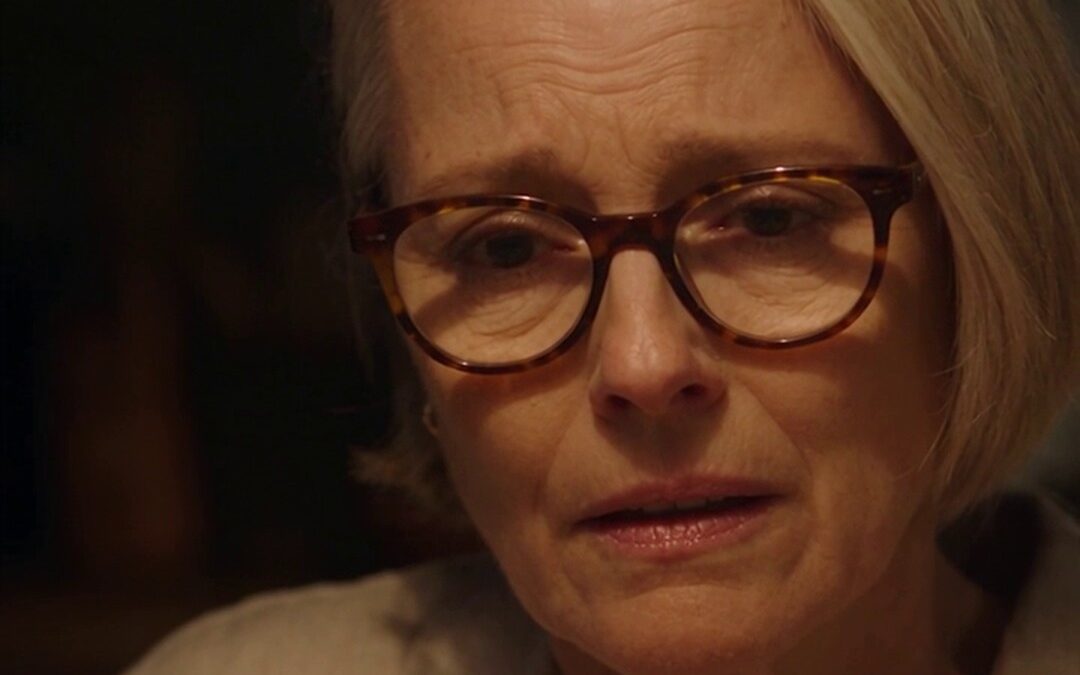
Chapter 1: The Photograph
June found the photograph while looking for a picture of her husband.
The city had asked for one to put beside the new footbridge at Saturday’s dedication. She had spread six years of family albums across the kitchen table, trying to choose between Micah laughing at a barbecue and Micah squinting into the sun with their daughter on his shoulders. Across from her, Ren peeled an orange in one long, careful strip.
“Neither,” Ren said. “He’d hate that his eyes are closed in the first one.”
“They’re closed because he’s laughing.”
“I know. I was there.”
Ren had rented June’s spare room three years after the old bridge collapsed. By then, June’s daughter was in college, and the house had grown too quiet. Ren paid rent on time, took the trash cans in before June got home from her bus dispatch shift, and knew which grocery store still sold Micah’s favorite hot sauce. She had become the person June told things to before she remembered she meant to keep them to herself.
June’s phone buzzed. The city had sent another link, this one to a page of old newspaper images for the dedication display. She scrolled past pictures of rescue crews and the railing bent into the creek.
Then she stopped.
Four people stood around a table covered in bridge drawings. The woman at the far end had dark hair and a sharper face, but June knew the way she held her shoulders. She looked up at Ren.
Ren’s orange peel broke.
The caption read: *City consultant Lorraine Vale discusses repairs to the Willow Creek footbridge, May 2017.*
Six weeks before Micah died.
“You worked on the bridge,” June said.
Ren looked at the phone without touching it. “June—”
“You told me you did books for construction companies.”
“I did.”
“Is that you?”
Ren set down the orange. Outside, the first rain of the week tapped against the kitchen window. June had been checking the forecast all day, worrying about whether the dedication would be moved indoors.
“Yes,” Ren said.
June turned the phone toward herself again. Beneath the photograph was a sentence she had passed over on first reading: *Consultants say the crossing can remain open while scheduled repairs are arranged.*
For years, June had understood the collapse as a failure no one had seen coming. She looked at the woman across her kitchen table, at the orange Ren had peeled for her, and waited for her to explain why she had let June believe that.
Chapter 2: What the Report Said
Ren did not reach for the phone. She folded her hands in her lap, which June recognized as something she did when she was trying to keep them from shaking.
“Lorraine Vale was my name before my divorce,” she said.
June stared at her. “That’s the part you want to explain?”
“No.”
“Then start with the bridge.”
Ren’s eyes moved to the albums. In one photograph, Micah was teaching their daughter Willa to skip stones at Willow Creek. June turned that album over.
“I was a structural engineer,” Ren said. “My firm had the city’s inspection contract. I looked at the bridge that spring.”
“And?”
“I found corrosion in one of the hanger connections.”
June knew only what years of news stories had taught her about the bridge: cables, a failed connection, a crossing that dropped without enough warning for the people on it to run. Micah had been walking home from the pharmacy with a bag of cold medicine for Willa. He was one of two people killed.
“And you said it could stay open.”
Ren took a breath. “I said it should close until a temporary support was installed. The city asked for a second opinion. Then they proposed a support system and asked whether the bridge could stay open *after* it was installed. I said it could, with restrictions.”
“Was it installed?”
“I don’t know.”
June pushed back her chair. Its legs caught on the kitchen rug. “You don’t know?”
“I never saw it.”
The rain grew louder. For a moment June could hear the familiar little drip in the mudroom where the window frame needed sealing. Ren had promised to fix it Sunday. June had let her promise it, as she had let her fix the loose stair rail and the furnace switch and a hundred smaller things that made the house feel looked after.
“Did you sign something?” June asked.
Ren’s silence answered before she did.
“Yes.”
June picked up her phone and searched the caption for a link to the rest of the archive. The page showed a photograph, a date, and the newspaper’s old reporting. It did not show the inspection file.
“I want to read it,” June said.
“I have copies.”
“Of course you do.”
Ren flinched. June had seen Ren stay calm through a burst pipe at two in the morning and Willa’s call from the highway after a flat tire. The sight of her flinching gave June no satisfaction.
“Where?” she asked.
“In my room.”
“Bring them down.”
Ren got up. At the doorway, she paused beside the pencil marks that measured Willa’s height until she left for college. Ren had added the last mark, at Willa’s insistence, on the morning Willa moved into her dorm. June watched her pass it and wondered when Ren had learned whose house she was entering.
While Ren was upstairs, June called Willa. It went to voicemail. She hung up without leaving a message and opened the newspaper picture again. Ren was standing beside a man in a city polo shirt, one finger resting on the edge of a drawing. She looked like a professional answering questions she had been asked. June tried to remember what she had looked like when she first answered June’s ad for the spare room. Tired. Polite. Carrying two suitcases and a plant that was already dying.
June had asked why she wanted to move to Willow Creek.
“Cheaper rent,” Ren had said. “And I’m ready for a quieter place.”
It had seemed like an answer.
Ren came back carrying a flat cardboard box. She placed it on the table and stood beside her chair rather than sitting. Inside were folders, some clipped together, and an envelope with a torn corner. The top sheet bore the logo of the engineering firm.
June read slowly. An inspection note identified substantial corrosion at a bridge hanger connection and recommended closing the crossing pending temporary stabilization. That paragraph had a line drawn down its margin in blue ink.
The next document was a letter from the city. It described a plan to attach supplemental steel and limit the number of people on the bridge at one time. It asked whether the proposed work would address the immediate concern.
The reply carried Ren’s signature.
*Provided the supplemental assembly is installed as described and inspected before reopening, limited pedestrian use may resume pending full repair.*
June read it twice. “It says ‘before reopening.’”
“Yes.”
“Then why did you say you signed for it to stay open?”
“Because that’s how they used it.”
June pulled another sheet from the folder. It was a one-page city notice saying the bridge would remain available to pedestrians while repairs were scheduled. Ren’s letter was listed as the basis. The notice was dated two days after her conditional reply.
“Did you tell them they were using it wrong?”
“I called the project manager. He told me the crew had installed the support that morning. I asked for photographs.”
“Did he send them?”
“No.”
June looked up.
“I should have gone out there,” Ren said. “I should have put the question in writing when he didn’t send them. I knew the notice made my letter sound like permission to leave the bridge as it was. I told myself I would check the following week.”
“Did you?”
“No.”
The plainness of it was almost unbearable. June wanted a more complete account, one that would arrange the dates so that the catastrophe sat neatly inside a single decision. Instead she had a margin note, a condition, a phone call without photographs, and a woman she trusted who had gone on with her week.
“What happened the following week?” June asked.
“My wife was admitted to the hospital.”
June knew about Ren’s wife, Diane. She knew Diane had died of cancer the year before Ren moved in. She had heard about the garden Diane kept in mismatched pots and the way she refused to throw out chipped plates. June had thought she knew where that grief fit in Ren’s life.
“Was she in the hospital for the next six weeks?”
“No,” Ren said. “That explains one week.”
June closed the folder. “I need you to stop explaining.”
Ren nodded. She left the box on the table and went upstairs.
June stayed where she was until the rain stopped. She read every page Ren had brought down. There were meeting notes, drawings June could not interpret, and an invoice from the firm for the inspection. There was no record of the supplemental steel being installed. There was also no record that proved it had not been installed. The final page was a copy of Ren’s signed reply, which June could now recite without looking.
At eleven, Willa called back.
“Did you pick a picture?” she asked.
June looked at the overturned album. “Not yet.”
“Mom, you have to send it tomorrow.”
“I know.”
Willa heard something in her voice. “What happened?”
June could not bear to make her daughter learn this while standing in a college apartment, with roommates passing through the kitchen. “I found something about the bridge,” she said. “I want to understand it before I tell you.”
“What kind of something?”
“Something important. I’ll call you tomorrow.”
“Are you okay?”
“No,” June said. “But I’m here.”
After they hung up, June went to the mudroom. The drip had stopped with the rain. A towel Ren had put beneath the window that morning was damp along one edge. June moved it to the laundry basket, then stood holding it, unable to decide whether to wring it out.
The next day at work, June sent three school buses away from the depot and caught a mistake on the afternoon route before the drivers left. She could do those things because they had steps. Check the roster. Check the road closure. Call the driver. Say the street name twice. When her supervisor, Al, asked whether she could stay late to cover a field trip return, she told him she had a family matter. He looked at her face and said he would handle it.
June drove to the public library. The local history room kept paper copies of the newspaper and a computer with access to older city council records. The librarian helped her find the weeks after the collapse. June remembered the photographs. She remembered standing at a press conference while people spoke of an unforeseeable failure and promised a thorough review. She had Willa beside her, fourteen and furious at every adult who used Micah’s name as if they knew him.
The review available online was a summary. It said a corroded connection failed during a period of heavy use. It noted that the city had been planning repairs. It referred to an engineer’s assessment of a temporary measure, then said installation records could not be located.
June sat with that sentence for a long time.
She searched Lorraine Vale. An old professional listing showed her license number and the firm where she had worked. A later notice showed the license had lapsed. June found the firm’s phone number, but did not call. She had evidence enough that Ren had been who she said she was. What she lacked was an account of what Ren had done after Micah died.
On the drive home, she took the long way past the creek. The old bridge was gone; the new crossing stood farther upstream, broad enough for two wheelchairs to pass. Its dedication had taken years because of funding disputes, design changes, and an argument over whether the city should build another bridge at all. June had agreed to let Micah’s name appear on a small plaque because Willa wanted a place to bring her children someday, if she had them. Now June found herself wondering who had written the words beneath it.
Ren’s car was in the driveway. Inside, the kitchen smelled of onions. A pot sat on the stove, untouched.
June put her keys down. “Did the investigation ask you about your letter?”
Ren was at the sink. “Yes.”
“What did you say?”
“That my approval was conditional.”
“And that you never confirmed the condition was met?”
“Yes.”
“Show me.”
Ren dried her hands and went upstairs again. June remained by the stove, watching the surface of the soup tremble. When Ren returned, she had a thinner folder. The investigator’s interview transcript was inside. June read Ren’s answers. They were accurate in pieces. She had said she was informed by phone that work had been done. She had said she requested photographs but did not receive them. She had said she did not personally inspect the bridge after the work was reported complete.
She had not said that the city’s public notice alarmed her. No one had asked.
“You could have volunteered that,” June said.
“I know.”
“You could have told them you thought your letter was being misused.”
“Yes.”
“Why didn’t you?”
Ren pulled out a chair and sat, though June remained standing. “My firm’s attorney told me to answer the questions asked. I was afraid of losing my license. I was afraid of what it would cost if the city blamed me. Diane was sick, and I had no idea how I would pay for her care.”
June heard the familiar facts of Diane’s illness and Ren’s money trouble. Ren had always described that period as a series of jobs ending and medical bills arriving. Those things were true. June hated that truth had made such useful cover.
“Micah died,” June said.
“I know.”
“You got to decide which fear mattered most.”
Ren looked down at the table. “Yes.”
June had expected Ren to defend herself. The agreement left June nowhere to put the next thing she felt. She took the transcript upstairs and shut herself in her bedroom.
In the evening, Willa called again. June told her everything she knew, as carefully as she could, beginning with the newspaper photograph. Willa interrupted to ask whether Lorraine Vale was definitely Ren. June told her about the license record and the files. When June described the condition in Ren’s letter, Willa became quiet.
“She lived with us all this time?” Willa asked.
“Yes.”
“She helped me study for my driver’s test.”
“I know.”
“She came to Dad’s birthday dinners.”
June sat on the bed beside the photograph she had finally chosen: Micah at the barbecue, eyes closed and mouth open in laughter. “I know, honey.”
Willa said she would take the morning train home.
After the call, June remembered one of those birthday dinners. The first year Ren lived with them, Willa had come home from college for the weekend. June made Micah’s chili, which was never as good as his, and Willa set an extra bowl on the table without noticing. They had stood staring at it. Ren had picked up the bowl and put it in the cupboard. Then she asked Willa about a class she liked. June had loved her for doing that.
Now June wondered what Ren had known as she took the bowl away. The memory had not become false. It had become harder to hold.
Willa arrived before noon, carrying a backpack and no overnight bag. She hugged June in the driveway and went directly into the house. Ren was waiting in the living room. June had told her Willa was coming; she had not told her what to say.
“You knew who we were,” Willa said.
Ren nodded.
“When?”
Ren glanced at June, then returned her eyes to Willa. “The day I came to see the room. Your dad’s photograph was on the mantel.”
June felt something fall into place with a force that made her grip the back of a chair. She had assumed Ren learned after moving in. There was no reason she should have assumed it, except that she needed there to have been at least one day when Ren had not chosen to lie.
“You recognized him?” Willa asked.
“I recognized his name. I’d seen it in the investigation.”
“And you took the room anyway.”
“Yes.”
“Why?”
Ren’s face had aged overnight. “I needed a place. June was kind to me. I thought I’d stay a month and find somewhere else.”
“You stayed five years,” June said.
“I know.”
Willa looked around the living room. Ren’s knitting sat in a basket beside the couch. A photograph from Willa’s graduation hung above it: June and Willa in the middle, Ren smiling at the edge, one hand resting lightly on Willa’s shoulder.
“Did you think we would never find out?” Willa asked.
“At first, I told myself I would tell June when I knew her better. Then every day I stayed made telling her worse.”
“That didn’t answer me.”
“No,” Ren said. “I hoped you wouldn’t.”
Willa sat down. She pulled her backpack onto her knees, unzipped it, then zipped it again. June knew the motion; Willa had done the same thing at fourteen whenever she needed a minute to decide whether to cry in front of someone.
“Were you trying to make up for it?” Willa asked.
“I wanted to help.”
“That’s different.”
Ren nodded once. “You’re right.”
Willa asked to see the files. The three of them sat at the kitchen table while she read. June left the room twice to get water and once because she could not stand watching Ren sit beside Willa as though this were any other difficult afternoon they might get through together. Each time she returned, Willa was farther into the folder, asking pointed questions about dates.
“What does ‘limited pedestrian use’ mean?” she asked.
Ren explained the proposed restrictions: fewer people on the crossing at once, warning signs, barriers during busy events. She showed Willa where those requirements appeared in her letter.
“Were there signs?” Willa asked June.
“There was one about bicycles,” June said. “I don’t remember a limit.”
“I don’t either.”
“That doesn’t prove they weren’t there,” Ren said.
Willa met her eyes. “I know what proof means.”
Ren let her continue reading.
By late afternoon Willa had called the city clerk to request the full investigation file. The clerk directed her to an online records form and warned that archived material could take time. Willa submitted a request for the installation work order, any inspection photographs, and correspondence about the reopening notice. She copied June.
Ren watched her do it. “My lawyer can help you phrase the request.”
Willa closed her laptop. “I don’t want your lawyer in this.”
“I understand.”
June did not know whether Ren truly understood. She was beginning to see how often Ren offered a useful action in place of the one being asked for. She had offered soup. She had offered documents. She had offered a lawyer. June wanted her to live, for one minute, without making herself helpful.
That night June told Ren she needed to move out.
Ren stood in the doorway of the spare room. Its door was open, and June could see the small lamp Ren left on when she read. “All right,” she said.
“You can take a week. I know you need to find a place.”
“I can stay with my sister. I’ll call her tomorrow.”
June folded her arms. “You have a sister?”
“Yes. In Peoria.”
Five years of meals and grocery lists and hospital visits, and June did not know whether Ren’s sister had children. She did not know which details Ren had held back because they led toward the bridge and which she had simply never asked about.
“Do that,” June said.
Ren closed the spare-room door. June went to bed but did not sleep. At two in the morning, she heard Ren moving carefully down the hall to the bathroom. June knew the sound of that floorboard under her feet. She had known it so well that some nights she could tell whether Ren was sick by how slowly it creaked. She lay awake until the house was still.
The next morning, Willa found June on the back steps with a cup of coffee gone cold. “I looked at the dedication program,” she said. “They’ve got a paragraph about the collapse.”
June took the paper Willa handed her. *Following the tragic, unforeseeable failure of the former Willow Creek crossing in 2017…*
“That word again,” June said.
“The city manager is speaking. The same one who signed the reopening notice.”
June read the list of speakers. Martin Bell had been an assistant project manager in 2017. He was city manager now. June had shaken his hand twice over the years at memorial events.
“Do you want me to ask them to change it?” Willa said.
June looked at the photograph selected for the display. She had already emailed it the night before she found the newspaper archive. Micah’s laughing face would sit beside a sentence June no longer believed.
“I don’t know what we can prove yet,” she said.
“We can prove someone warned them.”
“We can prove Ren did. We don’t know what they did next.”
“Then we ask.”
Willa had inherited Micah’s stubbornness and June’s habit of planning a route before driving it. She got out her laptop and drafted a short email to the dedication coordinator. June revised it. They asked the city to remove *unforeseeable* pending review of the inspection record and to send them the source for that description. They did not mention Ren’s living arrangement. June sent it.
At work on Monday, June watched buses leave in rain that never became a storm. Al came into the dispatch office carrying a replacement radio battery and found her rereading the email on her phone. She told him she might need a day off later in the week. He said yes before she explained.
June and Al had worked together since before the bridge fell. His wife had brought casseroles after Micah’s funeral. June had no reason to keep the news from him except that saying it made it more real.
“Ren worked on the bridge,” she said.
Al set the battery down. June told him enough for him to understand why her hands had been shaking when she checked the morning routes.
“You always trusted her,” he said.
“Everyone did.”
“Doesn’t mean she didn’t earn some of it.”
June looked at him sharply.
“I’m not telling you what to feel,” Al said. “I’m saying people can be good to you on Tuesday and owe you the truth about Friday.”
June turned back to the route screen. One bus was running eight minutes late because a road crew had closed a lane without telling the district. She radioed the driver an alternate turn. When the driver repeated it back, June realized her voice sounded steady.
At lunch, the city coordinator replied. The dedication program had already gone to print, but the city would omit the word *unforeseeable* from the spoken remarks. Bell’s office believed the phrase reflected the investigation’s findings. They appreciated June’s concern.
June read the email twice. Willa was in class, so she forwarded it and waited.
That evening Ren brought two boxes down from her room. June had come home to find the soup from Friday still in the refrigerator. She threw it out while Ren stood by the stairs. For a while neither spoke.
“I’ve arranged to leave Thursday,” Ren said.
“The dedication is Saturday.”
“I know.”
“Are you planning to come?”
“No. Not unless you ask.”
June rinsed the pot. “Do you have anything else about the bridge?”
Ren’s eyes went to the cardboard box on the table. “Everything from my own files is there.”
“Is there anything you remember that isn’t there?”
Ren leaned against the doorframe. “The city’s project manager called me the morning after my letter. He said the contractor had fitted the steel. I asked which inspector signed off. He said the city would handle it internally.”
“Was that Bell?”
“Yes.”
June turned off the water.
“I should have told you that Friday,” Ren said. “I’ve been trying to remember every conversation. It’s not all in the notes.”
“Write down what you remember. Dates if you have them. What you know, what you only think.”
“I will.”
June put the pot in the rack. “And please don’t tell me what you should have done. I can work that out.”
Ren accepted that. She went upstairs, leaving June alone with the empty pot.
On Tuesday, Willa came back to the house after spending a night with a friend. She and June drove to the old bridge site. A narrow dirt path still followed the creek to the place where the crossing had been. The new bridge was visible through the trees. Workers were planting shrubs along its approach.
Willa stood at the water’s edge. “I used to think about what Dad did that morning,” she said. “Whether he stopped at the pharmacy because I asked, or because Mom told him to.”
“I asked him,” June said. “You had a fever.”
“I know. You’ve told me.”
“I want you to hear it again.”
Willa picked up a stone and turned it in her hand. “I’m not blaming either of us.”
“I know.”
“What if Ren’s letter makes no difference? What if they did put in the support and it failed anyway?”
“Then we’ll know that.”
“And if they didn’t?”
June looked at the creek. The water was ordinary that day, running over a snagged branch and carrying a paper cup beneath the construction fence. “Then the people who told us nobody saw it coming knew more than they said.”
Willa threw the stone. It fell short of the far bank.
“Ren kept coming here with us,” she said.
“She did.”
“At Dad’s birthday, she knew why we were sad. Every time.”
June remembered Ren standing beside the memorial bench, holding a paper cup of coffee while Willa told a story about Micah singing the wrong words to a song. There was no way to know whether Ren had been grieving him, grieving what she had done, or simply grieving with them. June suspected all three could be true. She was angry that Ren had made her responsible for sorting them.
The city sent the first batch of records on Wednesday. Most were duplicates of documents Ren had kept. The installation work order had been authorized but carried no completion signature. A later invoice charged the city for steel and labor. There were no inspection photographs in the file. The clerk’s note said staff were still searching archived email.
June and Willa spread the pages across the dining room table. Ren stayed upstairs. June had told her not to come down while they worked. Willa marked each document with a sticky note. She was studying environmental policy at college and had learned enough about public records to know an absence could be important without proving the reason for it.
“The invoice says three workers, four hours,” Willa said. “Could they have installed it?”
“I don’t know,” June said.
“What does Ren say?”
“We can ask her.”
June went to the stairs. She had spent days wanting Ren out of the house; now she called her down because Ren knew how to read a drawing. The dependence made her furious.
Ren came with a notebook. She had written six pages of memories in tight print, each entry labeled as fact, recollection, or inference. She placed it on the table and stood back.
Willa pointed at the invoice. Ren examined it. “This might cover installation. It might cover preparation. The labor description is too broad. If the support was installed, someone should have checked its attachment points and recorded the inspection. I don’t see that.”
“Could it have failed even if it was installed?” Willa asked.
“Yes. The design depended on sound material at the ends of the span. We couldn’t fully examine one of those points while the bridge was open.”
June turned to her. “Was that in your letter?”
“Yes. Here.” Ren found the paragraph. June read it. She had seen it before without understanding its weight.
“Why would you approve something you couldn’t fully examine?”
“I approved limited use after the city’s proposed support was installed and inspected. I believed that would reduce the immediate risk while they planned a full closure. I did not approve leaving the bridge open indefinitely.”
“How long was it supposed to stay open?”
“Two weeks before another inspection. The bridge fell six weeks later.”
June had known the dates. She had not put them together that way.
“Did you schedule the next inspection?” she asked.
“My firm sent an estimate. The city didn’t authorize it.”
“And you let the date pass.”
“Yes.”
Ren did not reach for the papers to hide behind them. June was glad of that much.
Willa looked from the invoice to the missing sign-off. “Will you tell the city what you just told us?”
“I’ll give a statement to the clerk and the investigators, if they reopen the review.”
“Bell is going to speak Saturday,” June said. “He’ll say the crossing failed without warning. Are you willing to tell him in public that your first recommendation was to close it?”
Ren took her time answering. “Yes.”
June felt a quick, unwanted relief. Then she pictured Ren standing at a podium, making the story about her remorse while Micah’s photograph hung behind her.
“I haven’t asked you to speak at the dedication,” June said.
“I know.”
“I’m asking whether you would tell the truth if the city tries to use your name to support that sentence.”
“I will.”
“Even if it costs you?”
“Yes.”
June left the table. She had wanted the answer and could not bear to hear it in Ren’s voice.
Thursday morning, Ren’s sister arrived in a blue pickup. June watched from the front window as the two women carried boxes down the porch steps. Ren had packed her books, the dying plant that had somehow survived five years, and a chipped yellow mug Willa had given her for Christmas. She left the lamp behind.
When the truck was full, Ren came to the kitchen. June was sorting the mail.
“The leak by the mudroom window needs more than caulk,” Ren said. “The lower wood is soft. I wrote the carpenter’s number on the pad.”
June put down an envelope. “Ren.”
“I’m sorry.” Ren looked at the pad, then tore off the page with the number. “I keep doing that.”
“You can leave it. I need a carpenter.”
Ren set it down again.
“I gave Willa a copy of my notes,” she said. “And I’m sending my statement to the city today.”
June nodded.
Ren’s sister called from the porch that they had to go if they wanted to miss traffic. Ren picked up her coat. She had worn it every winter June had known her, a gray coat with one button that never stayed sewn on. Last November June had replaced the button with a dark blue one from Micah’s old sewing tin. Ren’s hand closed over it as she spoke.
“I cared about you,” she said. “That part was real.”
June believed her. It did not make the room easier to stand in.
“You knew something I needed to know,” June said. “For five years, you let me tell you the story without it.”
Ren nodded. “I did.”
June opened the front door for her. She watched the pickup leave, then went into the spare room. Without Ren’s books it looked smaller. A rectangle of brighter paint marked the wall where she had hung a photograph of Diane’s garden. June sat on the bed, now stripped to its mattress, and let herself miss Ren. Missing her felt disloyal to Micah, so June stayed until she could say aloud that Micah was gone and Ren was gone for different reasons.
On Friday, Bell’s office called. He had received Ren’s statement and wanted to meet June and Willa before the dedication. June agreed, on the condition that Willa could attend by video if the train was delayed. Willa came in person.
Bell met them in a city conference room with a glass wall overlooking the parking lot. An attorney sat beside him. Bell had more gray hair than he did in the old photograph, but the same habit of setting his pen square with the edge of his paper.
“I’m sorry this has been painful,” he began.
June opened the copy of Ren’s first report. “Did you receive this in May 2017?”
Bell glanced at the attorney. “The city received a number of documents during the repair planning.”
“This one recommends closing the bridge.”
“I’m aware of the recommendation.”
“Did you close it?”
“No. We sought an alternative that would allow access while the work was arranged. The bridge connected residents to the pharmacy and bus stop. Closing it was a serious decision.”
June thought of Micah using that connection, carrying Willa’s medicine home. The practical reason did not make the choice sound better. It made it sound like a choice.
“Where is the inspection showing the alternative was installed?” Willa asked.
“Our staff are searching for all records,” the attorney said. “We have an invoice indicating work was performed.”
“An invoice for work,” Willa said. “It doesn’t say what was finished or inspected.”
Bell put his hands on the table. “The accident investigation reviewed the available evidence. I won’t speculate about missing files today.”
“Then don’t call the failure unforeseeable on Saturday,” June said.
Bell’s expression tightened. “We’ve already revised the remarks.”
“The printed program still says it.”
“We cannot replace every copy this close to the event.”
“Put an insert in them.”
The attorney wrote something down. Bell said they could consider it.
June had spent years listening to officials speak gently about Micah. She had accepted some kindnesses she needed and rejected some that felt like a request to stop asking questions. Now she saw Bell waiting for her to be satisfied by the offered edit.
“Ren says she called you after the city announced the bridge would remain open,” she said. “She says she asked you for photographs of the temporary support.”
Bell looked at Ren’s statement, which lay in front of him. “I haven’t had a chance to verify every recollection in Ms. Mercer’s account.”
“In your recollection, did she ask?”
“I remember discussing installation.”
“Did you tell her it was complete?”
“My understanding at the time was that the contractor had done the work.”
“That’s different from seeing it.”
“Yes,” Bell said.
June waited. He did not add anything.
The meeting ended without agreement about the insert. Bell promised a further review of the records and told them the city would respect whatever June decided about the photograph. In the parking lot, Willa took her mother’s arm.
“He kept saying ‘the city,’” she said. “When he meant himself.”
June thought of Ren saying *my firm’s attorney* and *the project manager* until June asked what she herself had done. “People learn that,” she said. “Maybe because it works.”
They drove home with the photograph in an envelope between them. June had to tell the dedication coordinator by five whether she still wanted it displayed. At four thirty, she called Willa into the kitchen.
“I want Dad there,” she said.
“Me too.”
“But I don’t want his picture next to that paragraph.”
“We can take it off the display.”
June looked around the kitchen. The wall calendar still carried Ren’s handwriting on the square for Saturday: *Bridge, 10 a.m.* June had nearly pulled the page down after Ren left. Instead she had crossed out Ren’s note and written *Micah* beneath it.
“I’m going to speak,” June said.
Willa sat down. “Do you want me with you?”
“Yes. I’ll tell them the photograph stays if they let me read my own words.”
The coordinator called back within an hour. Families of both people who had died were already on the program, though June had declined earlier. There was room for her to speak. The coordinator could not promise anything about Bell’s remarks, but she agreed to place an insert in the programs saying the city had received new records and would review its account of the collapse.
June spent that night writing. Her first page named every omission in the file. Her second page accused Bell of knowing exactly what had happened. Willa read both and set them down.
“You don’t have to prove everything in three minutes,” she said.
“I don’t want them walking away thinking an engineer sent a letter and everyone did their best.”
“Then say what you know. Say what you want them to do.”
June rewrote the speech on the back of an old bus route sheet. She kept Micah’s name at the beginning. She wrote that a report had recommended closing the bridge, that a later reply allowed reopening only after specific work and inspection, and that the city had not produced a record showing those conditions were met. She asked for a public accounting and a correction to any description that called the failure unforeseeable.
At the bottom, she added: *Micah trusted the crossing because the city left it open.* That was the sentence she could not revise.
Willa went to bed. June stayed at the kitchen table, reading her words aloud to the empty chair where Ren usually sat. Halfway through, her voice broke. She began again. On the third try she reached the end.
At the dedication, people gathered under a white tent because the morning had turned cold. The new bridge arched beyond it, its rail still bright from the factory. June recognized families from the years after the collapse: people who had brought food, attended meetings, planted flowers near the creek. The other person killed, a nurse named Darnell Price, had a brother who lived two towns over. June found him near the front and told him about the new documents before the ceremony began. He listened without interrupting, then asked for copies. She promised to send them.
Ren was standing beyond the tent.
For a moment June thought she had come despite being told not to. Then she saw the folded statement in Ren’s hands and the city clerk beside her. Ren was waiting near a table where residents could submit comments. She looked up, saw June, and did not approach.
Willa followed June’s gaze. “Did you know she’d be here?”
“No.”
“Do you want me to ask her to leave?”
June considered the question. Ren had a right to give her account, and June did not want to spend the morning managing her. “No. Stay with me.”
The coordinator introduced the bridge designer, then Bell. Bell spoke about years of planning and the neighborhood’s need for a safe crossing. He acknowledged “questions raised by recently submitted materials” and said the city would review them. He did not use the word *unforeseeable*. June watched people turn their programs over and read the insert. Some looked toward her. A few looked toward Ren.
Darnell’s brother spoke first. He told a story about Darnell coming off a double shift and still stopping to help a neighbor carry groceries. He did not mention the records. June was glad he had been free to choose what he wanted the morning to hold.
When June stepped to the microphone, she could see Micah’s picture on an easel beside the plaque. His eyes were closed. Behind the photograph, through the tent opening, was a bridge he would never cross.
She told the crowd that Micah had been walking home with cold medicine for their daughter. Willa made a small sound beside the front row. June took a breath and continued.
“We were told no one knew this could happen,” she said. “A report I’ve now read recommended closing the old bridge until repairs were made. A later letter set conditions for opening it. I want to know whether those conditions were met. So does Darnell Price’s family.”
June heard the wind lift the edge of the tent.
“The people who used that bridge could not inspect it themselves. They trusted the decisions made for them. Micah trusted the crossing because the city left it open. We deserve a public account of those decisions, including the records that are missing.”
She finished by thanking the workers who had built the new bridge. The applause was uncertain at first, then steadier. June stepped down. Willa put an arm around her waist. Neither looked for Ren.
The coordinator invited the families to cut the ribbon. June had agreed to this before she knew about the file, and now the scissors felt absurdly ceremonial in her hand. Darnell’s brother held the ribbon steady. Willa stood on June’s other side. They cut it together.
Afterward, people crossed and crossed back. Children tried to race. A man using a walker paused halfway over the creek and rested his hands on the rail. June stayed at the near end, listening to footsteps on the new deck. She had thought the sound would make her angry. It made her think about all the mornings Micah should have had after the old one.
Ren waited until the crowd had thinned. She came over without her coat buttoned, though the air was cold.
“I submitted the statement and my files to the clerk,” she said. “Darnell’s brother has a copy. I gave the investigator permission to contact me.”
June nodded.
“I heard you speak.”
“I saw you.”
Ren looked toward the new bridge. “What you said about trust was right.”
June could have told her that the speech was about more than the bridge. Ren knew.
“Will you tell them about the phone call?” June asked.
“It’s in my statement. I’ll answer their questions.”
“Even the ones that make you look careless?”
“Especially those.”
June studied her face. Ren could choose to tell the truth now. She could not go back and choose it five years earlier in June’s kitchen, or in the investigation office after the collapse. June had spent the week hoping for a sentence that would restore what she had lost. There wasn’t one.
“I’m glad you came,” she said. “I’m still not ready to have you in my house.”
“I understand.”
Ren reached into her pocket, then stopped herself. “I was going to give you a receipt for the file submission. Willa has a copy.”
“Good.”
Ren gave a small, tired smile. “I’ll go.”
June watched her walk past the planting crew and out to the parking lot. When she turned back, Willa was halfway across the bridge with Darnell’s brother. They were talking. June could not hear what they said. She joined them, her hand sliding along the new rail, and followed them to the other side.
The review took months. The city found photographs of the temporary steel stacked at a maintenance yard three days after Ren had been told it was installed. It could not establish whether the steel had later been fitted to the bridge. No inspection record appeared. An independent engineer concluded that the corroded connection identified in Ren’s first report had failed, though the available evidence could not show whether the proposed temporary support would have prevented the collapse.
June read each finding at her kitchen table. She learned to live with the parts that could not be settled. The city corrected the wording on its website and removed *unforeseeable* from the plaque text it kept in its records. Bell resigned the following spring. Ren gave two further interviews. A licensing board reviewed her conduct and issued a public finding that she had failed to follow up when the inspection and renewed assessment specified in her letter did not occur. June read that too.
None of it brought Micah home. It changed what June told people when they asked about the bridge. That mattered to her, though she could not have explained how much before the first corrected account appeared in print.
Winter made the house quiet again. June hired the carpenter Ren had recommended. He replaced the rotten wood under the mudroom window and showed June where water had been getting in. On the day he finished, she took Ren’s handwritten number off the pad and put it in a drawer. She did not throw it away.
Ren wrote once in January. The letter was short. She said she was living near her sister, helping in a community garden when the weather allowed, and learning to ask before she tried to fix things. She did not ask to come back. June answered in March. She told Ren the window no longer leaked and that Willa had been accepted into a graduate program. Then she wrote that she still missed their dinners, and that missing them did not change her decision. It took her all evening to put the letter in an envelope.
That summer, Willa came home for a weekend. She and June carried plates onto the back porch, where Micah’s old radio still caught the baseball game if the antenna was held at an angle. Willa set three plates on the table by mistake.
She looked at the extra one. June looked at it too. Then Willa picked it up.
“We could call her sometime,” Willa said.
“We could,” June answered.
They ate with the third place empty beside them. June knew whom she had lived with, and what Ren had hidden. She knew why the truth had mattered at the bridge and why it mattered in the house. For now, she let the empty chair remain where it was while she and Willa listened to the game.