My Roommate Hid a Letter From My Late Son for Two Years, and I Found It in Our Kitchen
Chapter 1: The Tin Above the Stove
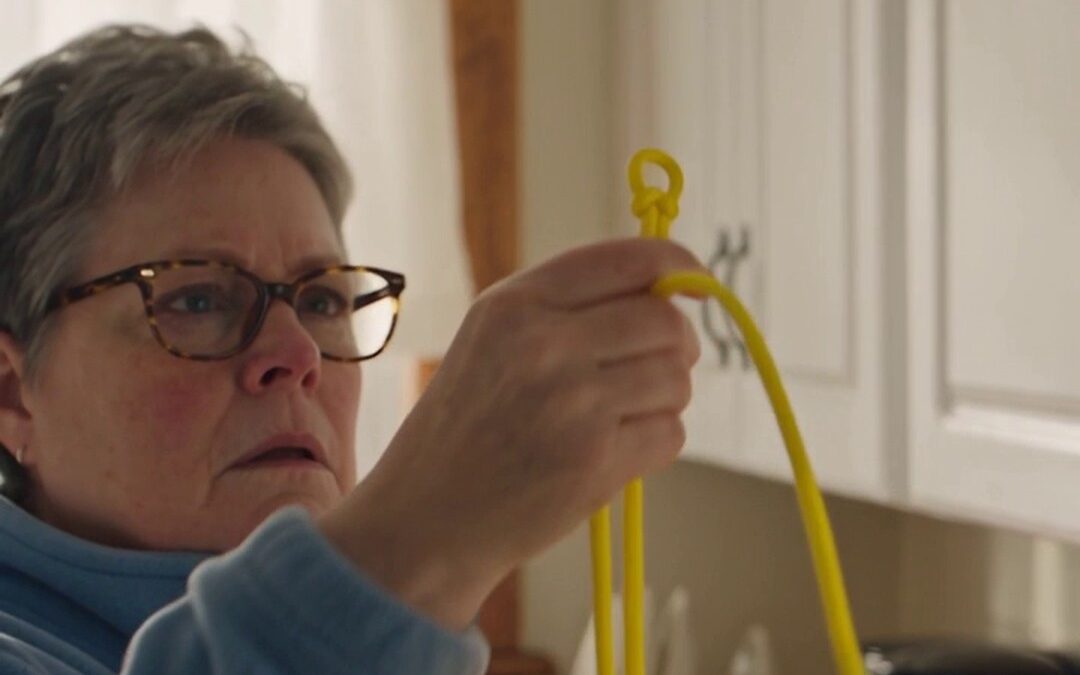
The yellow skate lace slipped from the tin above our stove, and I caught it before it touched the burner.
Mara went still behind me.
For two winters she had lived in my spare room, paid half the rent, and left soup on the stove when my shift at the rink ran late.
She knew I kept my son Theo’s skates in a closet I never opened.
She also knew he used to tie one yellow lace around his left skate so I could spot him among the children on the ice.
I held up the lace.
“Where did you get this?”
“An old pair of skates,” she said.
Mara reached for the tin, but I pulled it away.
Our kitchen was small enough that she had to step around me to turn off the burner.
She did that instead, her hand shaking against the knob.
The tin held spare buttons, a bent safety pin, and the mailbox key.
Mara had tied the key to the lace.
“Everybody at the rink used those,” she said.
“They sold white.”
She looked toward the back door.
That morning, I had found a second yellow thread caught in the zipper of her canvas bag.
I had told myself it came from my laundry.
Now she tried to take the lace again.
“I should’ve asked before I used it,” she said.
“That isn’t what I asked.”
The kettle clicked as it cooled.
I worked at a county rink where loose laces vanished into the sharpening room by the handful.
I knew a replacement when I saw one.
Near the lace’s plastic tip was a knot Theo had made too tight to undo.
I felt it through my thumb.
Mara saw my face and let go of the tin.
A folded envelope slid from beneath the buttons.
On its front, in Theo’s slanting handwriting, was a single name: **Mara**.
I had not seen that handwriting since the week before his bicycle accident.
Mara pressed her palm flat against the counter.
“Please,” she said.
I turned the envelope over.
Its flap was still sealed.
For a moment, neither of us moved in the kitchen we shared.
Then I looked at the woman who had eaten dinner across from me almost every night for two years.
“Why did my son write you a letter?”
Chapter 2: What He Chose
“Why did my son write you a letter?”
Mara stared at the envelope in my hand.
The soup began to bubble behind her, slow and thick, until she turned the burner down again.
“He wrote it before he died,” she said.
“I can see that.”
“I haven’t opened it.”
“You kept it in a tin above our stove.”
“I know.”
I put the envelope on the table between us.
For two years, that table had held our grocery lists, my rink schedules, and the puzzle Mara worked whenever she could not sleep.
There was a pale square on its wood where her bowl usually sat.
“Tell me how you knew him.”
She pulled out a chair but did not sit.
“I can. I need a minute.”
“You’ve had two years.”
Mara closed her eyes.
That did something ugly to me.
I had asked about the lace twice before, though never directly.
Once, when I saw it tied around the mailbox key, she had said she liked the color.
Another time, when she caught me looking at it, she had tucked the key into her pocket.
Both times I had let her.
Now Theo’s name seemed to fill every space I had left empty for her.
I went to the coat rack for my jacket.
“Where are you going?” she asked.
“To the rink.”
“It’s closed.”
“I have a key.”
She moved toward the back door, then stopped well short of it.
“I’ll tell you tonight.”
I put on my jacket.
“You can decide what to say while I’m gone.”
The ice rink sat six blocks from our duplex, beside a school bus garage and a strip of county land nobody wanted to mow.
I had worked there eleven years.
In the sharpening room, I switched on the light over the bench and took a pair of rental skates from the unfinished rack.
The machine was unplugged.
I sat with the skates in my lap until my hands stopped trembling.
Theo had worked at the rink through college breaks.
He taught small children to stand after they fell, and he repaired rental skates when the rest of us were busy.
The knot in the lace was his.
I knew because I had watched him make it.
A child had stepped on the trailing end during a lesson.
Afterward Theo shortened the lace with two furious pulls and a knot close to its tip.
“You’ll never get that out,” I’d said.
“That’s the plan.”
I remembered the conversation clearly.
I could not remember which winter it was.
That unsettled me almost as much as the envelope.
I called our rink manager, Ben.
He answered on the third ring with the wary voice he used for problems involving refrigeration.
“The ice is fine,” I said.
“Good evening to you, too.”
“I need to ask about Theo’s old work records.”
There was a pause.
“Why?”
“I found something that says he knew Mara.”
“Mara who lives with you?”
“Yes.”
“I thought she met you through the room listing.”
“So did I.”
Ben had known Theo since he was fourteen.
He knew why I sometimes stayed in the sharpening room after closing.
He did not offer me a comforting guess.
“What records?” he asked.
“Schedules. Leave. Anything you still have.”
“I won’t go through personnel files over the phone, Nell.”
“I’m not asking you to.”
“You can come in tomorrow.”
“I’m here now.”
He sighed.
“Then please leave the machine unplugged. You sound upset.”
I looked at the rental skates in my lap.
“I am.”
“I’ll be there at eight.”
After the call, I took a notebook from the drawer under the bench.
Inside were dates for sharpening orders, blade replacements, and lessons.
Theo had kept the same kind of notebook, with little sketches in the margins.
I had given his last one to a child who wanted to learn to sharpen skates.
At the time, giving it away had felt like refusing to turn our home into a storage unit for grief.
Tonight I wished I could have it back.
I went home after ten.
The kitchen light was on.
Mara sat at the table with the sealed envelope in front of her and two bowls of soup cooling beside it.
She had not touched either bowl.
“I’m not going to open your letter,” I said.
“It’s his letter.”
“It has your name on it.”
“That’s what I mean.”
I stayed by the doorway.
Mara was thirty-seven, seven years younger than I was.
She had moved in after I put up an ordinary room listing.
She had arrived with one suitcase, two plants, and a folded towel she placed beneath the wobbly kitchen chair.
For two years, she had been the person who knew which cupboard held the extra tea bags.
I could not fit the woman at the table together with the woman who had hidden a letter from my son.
“Start with how you met,” I said.
“At the rink.”
I waited.
She looked at her hands.
“Four years ago. I took an adult skating class.”
“The Saturday class?”
“Yes.”
“Theo taught that class.”
“Yes.”
I remembered him complaining that the adults held the rail harder than the children.
I also remembered Mara telling me she had never been on skates.
That had happened in this same kitchen, one winter after she moved in.
“You told me you’d never skated.”
“I said I was terrible at it.”
“You said your ankles gave up before you reached the ice.”
“That was true.”
She rubbed her palms together.
“Nell, I knew him for more than a class.”
“How much more?”
“A while.”
I laughed once.
She flinched.
“Give me a number.”
“Almost two years.”
The room tipped, though nothing moved.
Theo had died three years ago.
Mara had known him during the last two years of his life.
She had lived with me for two years afterward.
“You found my listing because of him.”
“Yes.”
“Did he tell you about the room?”
“No. The listing came later.”
“Then why answer it?”
Mara’s eyes filled, but her voice stayed level.
“I thought you might want a tenant who knew how to live quietly with what happened.”
“That’s an answer you made after the fact.”
“It’s the answer I had then.”
I picked up my bowl.
The soup had gone cold.
I poured it into a container and put it in the refrigerator because doing something ordinary kept me in the room.
Mara watched me close the door.
“There’s more,” she said.
“I assumed there was.”
“I want to tell you carefully.”
“You can tell me plainly.”
She looked at the envelope, then back at me.
“I’m trying.”
I took my bowl from the refrigerator and set it on the counter.
“If you can’t say it tonight, I’ll find out what I can tomorrow.”
She nodded.
That was the first time she had accepted a sentence from me without trying to soften it.
I slept badly in a bed that had once belonged to my parents.
At six, I heard Mara in the kitchen.
The kettle clicked.
A cupboard opened.
She did not knock on my door.
I waited until I heard the back door close before I got up.
The tin sat where I had left it.
The lace was looped around the mailbox key.
I put the key on the table, took a photograph of the knot, and wrote down the dates I knew: Theo’s last summer at the rink, the accident, Mara’s move into the spare room.
Then I went to work.
Ben was in his office with the old scheduling binder open.
The rink had switched to software years earlier, but he kept the paper binder from Theo’s last season because the county had not yet finished deciding what to archive.
He moved it across the desk.
“Look at the pages you need,” he said.
“I’m sorry to drag you into this.”
“You didn’t drag me. You asked.”
I turned to the summer before Theo died.
His shifts ran in short blocks around adult classes and youth lessons.
Then there was a long stretch with no shifts.
I checked the month again.
“Seven weeks?”
“Roughly,” Ben said.
“Why?”
“He asked for leave.”
“Did he tell you why?”
“He said it was medical and private.”
I looked up.
Ben folded his arms.
“He was twenty-two. I accepted that.”
“He told me he had a temporary job out of state.”
Ben nodded slowly.
“I thought you knew.”
“Apparently he didn’t tell me.”
Ben pulled the binder closer and pointed to a note in his own handwriting.
It recorded that Theo would be back for limited hours at first.
“I wrote that because I needed to schedule lessons,” he said.
“It doesn’t tell you what happened to him.”
“No.”
“Did Mara know?”
“I remember her from the adult class. I don’t know what she knew outside it.”
Ben had every reason to think I was searching for a story that would make sense of Theo’s death.
He did not offer me one.
“He was an adult,” he said. “He had parts of his life we didn’t see.”
“I know.”
“You say that like I’m arguing with you.”
“You sound like you think I’m going to make this into something it isn’t.”
“I think you’re hurt.”
He tapped the binder.
“This proves a leave. It doesn’t prove whatever you’re afraid of.”
He was right.
I wrote down the dates and thanked him.
On my way out, I stopped by the sharpening room.
The rental skates were still on the bench where I had left them.
I plugged in the machine and finished the pair.
The work steadied me because the blade gave an answer if I paid attention.
Too much pressure and I could see what I had done.
Too little and I could see that, too.
After lunch I opened the online account where I kept family photographs.
Theo had uploaded pictures there because he disliked keeping track of separate passwords and knew I would want copies.
I had avoided the folder from that summer for years.
The first photographs showed a school camping trip, a bicycle with its back wheel off, a cake Ben had brought to the rink.
Then the pictures stopped for almost two months.
When they resumed, Theo looked thinner.
He stood at the rink counter with one hand resting against his side while a child held up a pair of tiny skates.
I zoomed in.
His shirt covered him.
There was nothing to see.
I closed the folder and opened it again.
I hated myself for looking at my son as if he were evidence.
I also knew I would keep looking until I understood what Mara was hiding.
At home that evening, she was pulling clothes from the washer.
She laid my black rink sweater over a chair because she knew it shrank in the dryer.
The sight made me angrier than if she had done nothing for me.
“Ben showed me Theo’s leave,” I said.
Mara held the sweater in both hands.
“He wouldn’t tell you why.”
“He didn’t know why.”
She folded it.
“I thought you’d ask him.”
“You thought about this while I was gone?”
“I’ve thought about it a long time.”
I moved closer.
“What happened to Theo that summer?”
Mara set the sweater down.
“He had surgery.”
I waited for the rest.
She gripped the edge of the washing machine.
“He recovered. He went back to work. The bicycle accident was two years later.”
“You’re answering a question I haven’t asked.”
“Because I know what you might think.”
“What surgery?”
She looked toward the kitchen.
“Please let me show you the records.”
“Where?”
“In my room.”
I followed her down the short hall.
I had entered that room to fix a stuck window and once to water her plants.
Her bed was neatly made.
A stack of library books sat on the floor.
She took a folder from the bottom drawer of her desk.
For a moment she only held it.
“You can say no,” she said.
“To what?”
“To seeing my medical information.”
“I want to know what happened to my son.”
“I know.”
She opened the folder but kept one page turned toward herself.
I saw a hospital letterhead, her name, and dates from the summer Theo had been away.
There were pages behind it with appointments months and years later.
She turned the folder toward me.
I read the word *transplant*.
I read the date.
Then I looked at her.
Mara swallowed.
“Let me finish before you decide what kind of person I am.”
I closed the folder.
“You’re asking for something you didn’t give me.”
Her face changed.
It was a small change, but I knew her well enough to see it.
She knew I was right.
I walked out of her room.
In the kitchen, the envelope waited on the table.
I did not open it.
Mara came as far as the doorway.
“The record says what happened to me,” she said.
“It doesn’t say what Theo chose.”
“No.”
“Then I need more than your record.”
“I have it.”
“Why didn’t you bring it out first?”
“Because once you see it, you can’t unsee it.”
I turned around.
“That choice stopped being yours yesterday.”
She nodded.
She went back into her room and returned with another folder, thinner than the first.
She laid it beside the envelope but did not open it.
“His copies,” she said. “He gave them to me.”
“Of what?”
“The donation paperwork. What he wanted me to keep.”
I put my hand on the folder.
Mara stepped back.
I read enough to understand the outline.
Theo had volunteered to give Mara a kidney.
He had gone through an evaluation and surgery that summer.
The documents were copies, bearing his name and dates I could match to the leave Ben had recorded.
One page named Mara as the intended recipient.
Another was a discharge instruction sheet with Theo’s familiar habit of drawing a box around anything he meant to remember.
I sat down.
I did not ask Mara whether it was true.
My son’s name was there.
His pencil marks were there.
“He gave you a kidney,” I said.
“Yes.”
I pictured Theo at twenty-two, standing in my kitchen before a trip he had called a short job.
I had handed him a container of pasta for the road.
I had asked if he had enough gas money.
He had kissed my cheek and said he did.
“I would’ve gone with him,” I said.
“I know.”
“He knew I would’ve gone.”
“Yes.”
“Why didn’t he want me?”
Mara pulled out the chair across from me.
She waited until I nodded before she sat.
“He wanted you,” she said. “He didn’t want to spend weeks persuading you to let him do it.”
“He didn’t need my permission.”
“He said that.”
“So he lied.”
“Yes.”
She made no attempt to give the word a prettier shape.
I pushed the folder away.
“And you moved into my house afterward.”
“After the accident, yes.”
“Why?”
Mara looked toward the spare room.
“I thought I could explain that part with the letter.”
“The letter is yours.”
“He wrote it for me when I was recovering. I left it sealed.”
“Why?”
“He told me what it said when he handed it over. I was angry with him. He said I could read it when I stopped being angry.”
“What were you angry about?”
“He’d refused to promise he would tell you.”
I stared at her.
“He told you he might never tell me?”
“He said he would. He kept putting it off.”
“And you let him.”
“It was his body and his mother.”
“That sounds convenient for you.”
“It was also true.”
She held my gaze.
“I asked him again after he went back to work. I asked in the spring. We fought about it.”
“What did he say?”
“He said he wanted one year when the choice belonged to him before everyone made it about what a good person he was.”
I looked down at the discharge sheet.
Theo had hated the rink’s little awards ceremony at the end of each season.
He would stand for a photograph with a child he had helped and then slip away before anyone made a speech.
That much of Mara’s account sounded like him.
It did not tell me why she had waited after his death.
I asked her.
She rubbed a thumb over the edge of the table.
“At first I thought I’d write you. I wrote three letters.”
“Where are they?”
“In my desk.”
“Did you send any?”
“No.”
“Then you saw my room listing.”
“Yes.”
“And decided to move into my house with this secret.”
“I saw the listing six months after the accident. It said you needed someone quiet who could share chores.”
“You could have said who you were at the door.”
“I should have.”
“Why didn’t you?”
“You made coffee. You showed me the room. You laughed because the window stuck the same way it had when Theo was little.”
“That’s why?”
“I couldn’t put the worst conversation of your life into an interview at your kitchen table.”
“You could have called the next day.”
“Yes.”
“Or the next.”
“Yes.”
Mara folded her hands.
“I kept thinking I had to earn the right moment. Then we started living here, and every ordinary day made telling you harder.”
I thought of every meal she had cooked when I worked late.
Every light she had left on.
Every time she had listened while I told a story about Theo and she had already known the part I was telling.
“You heard me say I wished he’d had more time to choose what he wanted,” I said.
“I did.”
“You knew about one of the biggest choices he made.”
“Yes.”
“And you let me say it.”
Mara’s eyes dropped to the table.
“I did.”
I took the envelope and stood.
“I need you somewhere else tonight.”
She looked up sharply, then nodded.
“I can stay with a friend.”
“Take what you need for a few days.”
“I’ll still pay my share.”
“This isn’t about rent.”
“I know.”
She packed a small bag while I sat in the kitchen.
When she came out, she had left the transplant folder on the table.
“I’ll answer anything you ask,” she said.
“I don’t have all the questions yet.”
She accepted that, too.
After she left, I put her untouched bowl of soup in the refrigerator beside mine.
I hated that there was room for both.
I called Ben the next morning.
“I found out what the leave was for,” I said.
He listened while I told him.
He did not say Theo was brave.
He did not say he was foolish.
“Do you need me to check the dates again?” he asked.
“No. They line up.”
“What do you need?”
“I don’t know.”
“Come in if you want a shift.”
“I’m scheduled.”
“I know. I meant come in for the work.”
At the rink, I scraped old tape from the rental skate shelves.
Then I replaced broken laces and sorted guards by size.
I had spent years teaching new staff that a blade could look fine until you checked its edge.
Now every small task seemed to accuse me of having missed something much larger.
At noon, Ben brought me a sandwich.
I set it aside.
“You didn’t do this to him,” he said.
“I’m not sure what ‘this’ is.”
“Whatever you’re carrying.”
I told him about Mara living in my house.
Ben sat on the stool across from me.
“That’s a hard thing to learn.”
“She says Theo wanted to tell me himself.”
“Maybe he did.”
“You don’t believe her?”
“I believe a young man could put off a difficult conversation. I knew him.”
I picked at the paper around the sandwich.
“I keep trying to remember if he looked sick that summer.”
“Kidney donors are screened before they’re allowed to do it,” Ben said. “Beyond that, I don’t know enough to tell you.”
“Neither do I.”
“Then ask someone who does.”
The hospital could not simply discuss Theo’s adult medical care with me over the phone.
I knew that before I called.
The person who answered explained how to request records as his legal representative and what documents I would need.
She did not confirm a name or a procedure.
I was irritated by the process until I hung up and realized I would have been furious if she had discussed his private care with a stranger.
I gathered the documents that night.
I also asked Mara, by text, whether she had any record Theo had not given her permission to keep.
She answered quickly.
*Only the copies he handed me.*
Then, after a minute:
*You can have them.*
I typed a reply and erased it.
I wanted the records from the place that had made them, not only from the person who had hidden them.
I submitted the request.
There would be a wait.
I could do nothing about that.
For the first time since finding the envelope, I ate at the kitchen table.
The mailbox key lay beside my plate.
Its yellow lace ran through a punched hole in a little metal tag.
Theo had taught children to make a loop that would not slip when their fingers were numb.
I tried to remember him tying this one for Mara.
I could not.
The next day Mara texted about the rent.
She asked whether I wanted her to transfer her share directly or leave a check.
I told her to transfer it.
Then I wrote: *Did Theo give you the lace?*
Her answer came a few minutes later.
*Yes. I can explain when you’re ready.*
I put down the phone.
The knot I recognized was real.
So was the part of Theo’s life I had never seen.
Those two facts could occupy the same small piece of string.
On Friday I went to the rink’s adult class.
I did not teach it anymore, but Ben let me stand at the boards.
Six people stepped onto the ice, each with a different idea of what their feet were supposed to do.
One woman held the rail and laughed at herself.
The instructor glided backward in front of her.
“Bend your knees,” he said. “Look where you’re going.”
Theo used to say the same thing.
So did every instructor who had ever worked there.
I had begun to search for him in things too common to belong to anyone.
After class, I found an old registration sheet in a box of forms Ben had set aside for disposal under the county’s retention schedule.
Mara’s name was on it.
She had registered for beginner lessons four years earlier.
There was no revelation in the sheet.
It confirmed exactly what she had told me.
I took a photograph anyway, then felt foolish.
Ben saw me returning the box.
“You’re checking her story,” he said.
“Yes.”
“Good.”
“You sounded doubtful the other day.”
“I was doubtful of what the schedule could prove.”
“And now?”
“Now I think you should keep asking.”
That evening I called Mara.
She answered in a quiet room.
“I found your class registration,” I said.
“Okay.”
“Why did you take skating lessons?”
“My doctor wanted me moving more before the transplant evaluation. Walking was boring. Skating looked fun.”
“Was it?”
“Not the first week.”
I almost smiled.
“Did you know Theo taught the class when you signed up?”
“No. He was assigned after I registered.”
It was the kind of detail I could check, but I did not need to yet.
“What happened next?”
“I quit after three lessons. I fell and bruised my hip.”
“Then how did you become friends?”
“He saw me in the lobby waiting for a ride. He asked why I’d stopped.”
“And you told him about your kidneys?”
“Not that day. We started talking. Later I did.”
I looked at the empty chair across from me.
“Did he offer right away?”
“No. He asked questions for months.”
“What questions?”
“How the transplant list worked. Whether I could work. What happened on days I felt well and days I didn’t.”
“What did you tell him?”
“The truth.”
“Did you ask him to donate?”
“No.”
“He asked?”
“Yes.”
I let the silence sit.
Then I said, “I don’t know how to believe you when you’ve lied to me every day.”
“I know.”
“I’m asking anyway.”
“That’s more than I expected tonight.”
“I haven’t forgiven anything.”
“I heard you.”
After the call I opened the tin.
Under the buttons was a receipt for two new batteries, a screw from the kitchen drawer, and the sealed envelope.
I had been taking things from that tin for years without lifting the buttons.
Mara had hidden the letter in the most ordinary place in our house.
I wondered whether she had wanted me to find it.
When I asked her the following morning, she said no.
“I put it there when my room flooded from the window leak,” she said. “The desk drawer got wet.”
“The envelope stayed there afterward.”
“Yes.”
“You could have moved it.”
“I could have done a lot of things.”
I checked the window that afternoon.
The wood still showed a faint tide mark from the leak we had repaired the previous spring.
That did not excuse Mara.
It told me she was not inventing the reason for the envelope’s location.
The hospital records arrived two weeks later.
I took them to the rink office before opening them.
Ben was working at the counter.
He pointed me toward the empty conference room and left me alone.
The pages showed evaluations and consent, the surgery date, follow-up instructions.
They also showed that Theo had been told he could withdraw before the operation.
I read that line three times.
Mara’s name appeared where I expected it.
The records answered the part I had most feared to ask.
There was no indication that the donation had caused the accident two years later.
Theo had been back at work, skating, biking, and living in the intervening years.
I had known that with my memory.
I needed to see it against the dates anyway.
I called Mara from the conference room.
“The records came.”
“Are you all right?”
“I’m reading them.”
“I can wait.”
“He could have backed out.”
“Yes.”
“Did you tell him that?”
“Every chance I got.”
“What did he say?”
“He said the doctors had already told him.”
I turned a page.
“When did you know he meant to do it?”
“After the evaluation. He called me from the parking lot and said they’d approved him.”
“How did he sound?”
“Annoyed.”
“Why?”
“He’d lost his parking ticket.”
I pressed my fingers against my eyes.
That was Theo.
A decision large enough to change two lives, and he would have been furious about a parking ticket.
“He gave you his paperwork,” I said.
“Some copies. He said if anyone got the dates wrong later, I should be able to show them.”
“Did he mean me?”
“I don’t think so. He was arguing with an insurance form.”
That, too, was possible.
I wanted every answer to be either a lie or a key.
Most were neither.
I took the records home.
Mara was still staying with her friend.
Her half of the hall closet stood open because she had taken her coat and boots.
I put Theo’s records in a clean folder and set Mara’s copies beside them.
Then I called my sister, Ruth.
She knew Mara as the woman who brought cinnamon rolls to our holiday breakfast and remembered that Ruth’s youngest hated raisins.
I told her what I had learned.
Ruth was quiet for a long time.
“Are you certain?” she asked.
“I have the records.”
“Why would Mara move in with you?”
“She says she wanted to help.”
“Help or watch?”
“I asked myself that.”
“Did Theo know she intended to?”
“He was dead by then.”
Ruth drew a breath.
“That sounded cruel. I’m sorry.”
“It’s a fair question.”
“Do you want me to come over?”
“No.”
“You don’t have to decide anything tonight.”
“I know.”
But I was already making small decisions.
I had not opened Mara’s letter.
I had asked for Theo’s records instead of demanding access to every drawer in her room.
I had told her to leave, then accepted her rent because the lease still held both our names.
I was beginning to understand that the answer to what she had done might not tell me what to do with her.
That evening I took the letter to Ruth’s house.
She had made coffee.
We sat at her kitchen table while her family’s dog slept under it.
“Are you going to read it?” she asked.
“It isn’t addressed to me.”
“He’s your son.”
“And it’s her letter.”
Ruth looked at the envelope.
“You could ask her to open it with you.”
“I think I will.”
Ruth touched my wrist.
“I need to say something you may hate.”
“Go ahead.”
“I would be angry at him, too.”
I looked up.
“He died.”
“He can still have lied to you.”
“He gave away a kidney.”
“He could do a generous thing and hurt you with the way he hid it.”
I turned the envelope over.
The flap was still firmly sealed.
For days I had been treating Theo’s choice like a light that would make every other part of this clear.
Ruth gave me permission to see the shadow it cast.
“I am angry,” I said.
“I know.”
“I’m relieved he was healthy afterward. I’m proud of him. I’m angry.”
“You can carry all three home.”
I asked Mara to meet me at the rink after closing on Monday.
She arrived in ordinary shoes and the green coat she wore to the grocery store.
She stopped at the boards when she saw the empty ice.
“I haven’t been back here since his funeral,” she said.
“I didn’t know that.”
“There are a lot of things you didn’t know.”
“I chose this place because I know how to leave it if I need to.”
She nodded.
I sat on the bench where parents tied children’s skates.
Mara sat several feet away.
The building hummed around us.
I had brought the letter, the two sets of records, and the lace.
I put the lace between us.
“Tell me about this.”
Mara picked it up but kept it flat on her palm.
“I wore skates from the rental rack. One lace broke during class. Theo replaced it with a yellow one from his bag.”
“I remember him tying that knot.”
“He said it would hold until I bought skates of my own.”
“You kept one lace for four years.”
“When I stopped skating, I used it on my keys.”
“Then you used it on our mailbox key.”
“I lost the plain key in my bag twice.”
“Why didn’t you think I’d recognize it?”
“I did think you might.”
“So every time you picked up the mail—”
“I thought about telling you.”
She looked at the lace.
“I know how that sounds.”
I waited.
“After the accident, I put my own keys on it,” she said. “When I moved in, the mailbox key was loose in the tin. I tied it on without thinking.”
“Then you left it there.”
“Yes.”
“You kept making that choice.”
“Yes.”
The ice reflected the overhead lights in long, uneven bands.
“When Theo gave it to you,” I said, “did he know about your kidneys?”
“Not yet. I told him after I quit the class and we kept talking.”
“Why did he keep talking to you?”
Mara gave a small, incredulous shake of her head.
“We liked each other.”
“As friends?”
“Yes.”
I had not meant the question as an accusation, but it landed like one.
Mara saw my expression.
“He told me about his work here. I told him about mine. We went for coffee.”
“What work?”
“I was scheduling home repairs for a contractor. I still do.”
I knew that.
I knew the names of people whose calls made Mara sigh.
I had simply never placed Theo among the people she had known before me.
“Did he tell you about me?”
“He said you could tell from across the rink when a blade needed sharpening.”
“That was a joke.”
“I know.”
“What else?”
“He said you always cut his sandwiches diagonally, even when he made them himself.”
I looked down.
Theo had complained about that since he was six.
“He said you kept the rink going when the county forgot it was there,” Mara added.
“That wasn’t true.”
“He thought it was.”
The claim hurt in a way I could not argue with.
I picked up the envelope.
“Did he tell you what was in this?”
“The day he handed it to me, he said it was a reminder.”
“Of what?”
“That I wasn’t supposed to repay him.”
“Why were you angry?”
“Because he said it as if I’d asked to be in debt.”
I considered that.
“What did you say?”
“I said he couldn’t give me something that big and then order me to feel nothing about it.”
“What did he say?”
“That feeling something wasn’t the same as owing him.”
I looked at the sealed flap.
“You want to open it?”
“Yes,” Mara said. “If you’ll stay.”
“That’s your decision.”
“I’m asking you to stay.”
I did.
Mara slid one finger beneath the flap and opened it carefully.
The paper inside was a single folded sheet.
She read silently.
Her mouth tightened.
Then she offered it to me.
I shook my head.
“He wrote it to you.”
“He mentions you. I want you to read it.”
I took the sheet.
Theo’s handwriting leaned harder to the right when he wrote quickly.
The letter began with a joke about Mara being terrible at taking orders.
Then it told her he had made the choice after listening, reading, talking to the doctors, and imagining the life he wanted afterward.
He wrote that she could thank him once.
She could argue with him as often as she liked.
She could not spend the rest of her life doing favors in his name.
Near the bottom was the line Mara had warned me about.
He had not told me yet.
He wrote that he knew I would show up, carry bags, ask good questions, and worry until he recovered.
He wanted to make the decision himself first.
He wrote that he would tell me when he had found the words.
I read the last sentence twice.
It asked Mara to remind him if he kept putting it off.
“You did remind him,” I said.
“Yes.”
“He still didn’t tell me.”
“No.”
I folded the sheet along its old crease.
“He thought there would be time.”
Mara’s hands closed around the yellow lace.
“So did I.”
For a moment I could picture both of them as they had been: Theo with his stubborn plans, Mara arguing because she wanted to keep him alive.
Then I pictured Mara at our kitchen table after his funeral, knowing something about him I did not.
I put the letter down.
“Why did you move in?”
She looked at me.
“I answered that.”
“You answered why you thought it might be good. Tell me what you wanted.”
Mara held the lace so tightly its plastic tip bent.
“I wanted to know you were all right.”
“You could have knocked on the door and told me who you were.”
“I was afraid you’d say you never wanted to see me.”
“That would have been my right.”
“Yes.”
“What else?”
“I missed him.”
The words came out low.
Mara stared at the ice.
“You spoke like him sometimes. You set the kitchen timer the way he did. I thought being near someone who remembered him would make losing him less lonely.”
“You let me think we met by chance.”
“Yes.”
“You listened while I told you the story of his accident.”
“Yes.”
“You knew him, and you sat there while I explained who he was.”
“I did.”
Her voice broke on the last word, but she stayed where she was.
“You got something from living with me,” I said.
“I did.”
“And I got a friend whose story I didn’t know.”
“I know.”
I thought about the many nights Mara had eaten across from me.
She had not performed kindness all that time.
She had also withheld the fact that would have let me decide whether I wanted her in my home.
The two truths refused to cancel each other.
“Why didn’t you tell me after the first month?” I asked.
“Because by then I cared what you thought of me.”
“That was when you needed to tell me.”
“I know.”
“Why not after a year?”
“I was a coward.”
That was the first answer she had given without an explanation attached.
I believed it.
“I don’t know whether I can live with you again,” I said.
Mara nodded, though her face went pale.
“I’ll find another place.”
“I didn’t ask you to decide tonight.”
“I don’t want to keep you waiting for a room you need.”
“It’s your home, too, for now. We have a lease.”
She looked at me then.
“I haven’t earned that consideration.”
“I’m not awarding it. I’m telling you what our agreement says.”
She gave the lace back.
I put it in my pocket.
Outside the rink, she walked toward her friend’s car.
I went back inside and turned off the lights one bank at a time.
For the next month, Mara stayed away.
We dealt with rent and mail by text.
I returned the hospital copies she had given me and kept the records I had requested.
I put Theo’s letter in a clean envelope and asked Mara whether she wanted it back.
She did.
I met her at a coffee shop on a Saturday morning.
She looked tired.
So did I.
“I’ve found a room,” she said. “I can move at the end of the month.”
“All right.”
“I’ll pay through then.”
“I know.”
She wrapped both hands around her cup.
“I’m sorry I made you find out at the stove.”
“I’m sorry you thought living beside me was the only way to remember him.”
She looked down.
“It wasn’t the only way. It was the way I chose.”
I appreciated the correction.
“I talked to Ruth,” I said. “She thinks I should tell you I’m angry with Theo, too.”
Mara waited.
“He lied because he wanted control of his choice. I understand why. I still wish he’d trusted me.”
“He knew you’d worry.”
“That was part of being his mother.”
“He knew that, too.”
“He left you to remind him.”
“And I didn’t do enough.”
“I don’t know what more you could have done while he was alive.”
“I could have told you after.”
“Yes.”
Mara nodded.
We sat with that answer.
Then she reached into her bag and took out a small photograph.
“I found this while packing,” she said.
It showed Theo standing beside Mara at the rink entrance.
He had his arm around her shoulders.
She wore rental skates and held the rail with her free hand.
Both of them were laughing at whoever had taken the picture.
“Who took it?” I asked.
“Ben. Theo asked him.”
I looked at the image.
The yellow lace showed clearly against Mara’s black skate.
“I’d like a copy.”
“I brought you this one.”
I put it in my bag.
Mara stood.
At the door, she turned back.
“I’ll leave the mailbox key when I move.”
“Keep your own lace.”
“It’s been on that key for two years.”
“I know which part is yours.”
She pressed her lips together and went out.
I returned home to a kitchen that was beginning to look as it had before Mara moved in.
Her plants were gone from the window.
The chair no longer needed the towel beneath it; we had finally fixed its leg last year.
I had been expecting the house to feel restored once her things disappeared.
Instead, it felt like a place where two people had lived and one was leaving.
At the end of the month, I helped carry a box to Mara’s car.
It held books and the chipped blue bowl she used for soup.
She offered me the mailbox key.
The yellow lace was still tied through its tag.
I took the key and worked the tag free.
“The knot won’t come out,” I said.
“Theo said that.”
I handed the lace to her.
She held it by its frayed end.
For a moment we stood on the back step, where we had stood with grocery bags and muddy boots and too many ordinary evenings to count.
“I don’t know what we are after this,” I said.
“Neither do I.”
“I can’t promise we’ll be friends.”
“I won’t ask you to.”
I looked at the lace in her hand.
“You can tell me stories about him sometime. If I ask.”
“I’d like that.”
She put the lace in her pocket.
Months later, when the rink opened for its next winter season, I found the photograph in my bag and set it on the sharpening room shelf.
In it, Theo leaned toward Mara as if he had just said something that made her laugh.
I did not know what he had said.
I sharpened the morning’s first pair of skates, then looked at the photograph again.
There was a great deal about my son I would never know.
There was also the yellow lace, bright against the ice, exactly where he had tied it.








