My Sister Blamed Me for the Diner’s Closure, and Mom Was Ready to Sell Before I Could Clear My Name
Chapter 1: The Morning the Doors Stayed Locked
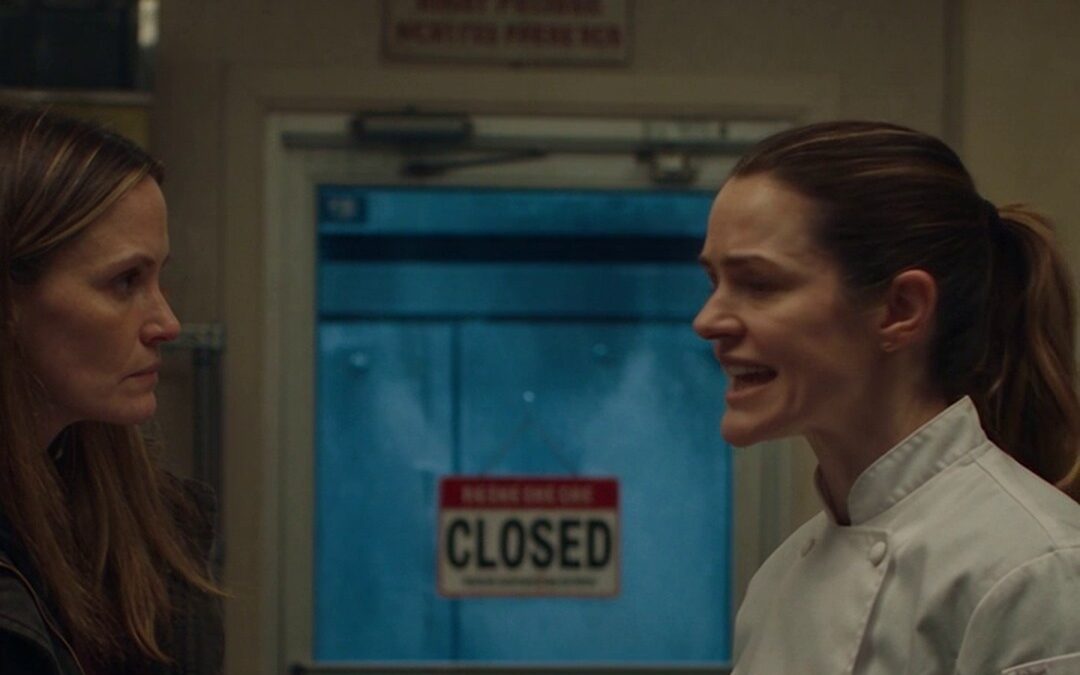
At six on Monday morning, my sister Celia had already taped a sign to the diner door: CLOSED UNTIL FURTHER NOTICE.
Inside, the walk-in refrigerator smelled faintly sour. Celia stood beside a health inspector, holding our temperature log open to a page with my initials on it. Three nights in a row, the numbers climbed above forty degrees. Each night, according to the log, I had checked the thermometer and served breakfast the next morning anyway.
“You knew,” our mother said.
She was sitting at the counter in her winter coat, though it was June. After her hip surgery, she trusted Celia to handle the books and me to handle the kitchen. I had been trying to arrange a loan to buy the diner from her. Now she looked at me as if I’d risked our customers’ health to keep it.
“I didn’t write those numbers.”
Celia turned the book toward me. The initials were mine. The handwriting looked like mine too.
The inspector had us discard everything in the walk-in. He would return after the refrigeration company repaired it and we demonstrated safe temperatures. Until then, the doors stayed locked.
I called the repair company from the empty dining room. Their technician couldn’t come until afternoon. When I hung up, Celia told me the buyer she’d been talking to could still take the property as it stood.
“You’ve been talking to a buyer?”
“Mom asked me to find out what it was worth.”
Mom stared at the floor. She had promised we would discuss any sale together.
I tried to show her the log. “We started closing at eight in April. I haven’t done a nine o’clock check since then.”
Celia pointed to the printed column heading: *Close*. “Then you copied the old time into the book. Either way, you signed it.”
Mom asked me to leave before I said something else I couldn’t take back.
I went behind the counter for my keys. Beside the register lay the yellow order tickets I’d used for Sunday’s peach cobbler. I had served the last portion at three. But the log described me checking a full tray of cobbler in the walk-in at nine that night.
I took one ticket with me. On the back, in my own handwriting, was the date.
Celia was right about one thing. I had written the page in that log.
I just hadn’t written it this June.
Chapter 2: What the Page Remembered
I sat in my car across the street until the inspector left. Through the front window I could see Mom at the counter and Celia moving around her, making calls, gathering the food we had to throw away. From outside, they looked like the two people keeping the diner together.
The repair company called back at eleven. The earliest their technician could reach us was four.
I went home and found last June’s calendar in a drawer. I keep old calendars because I write supplier deliveries, staff shifts, and menu changes in their margins. The peach cobbler had been a special on Sunday, June ninth, the year before. I remembered it because Mom had insisted we make it with the first local peaches, even though they cost too much. I had written *last pan sold, 3 p.m.* beside that date.
On the Monday that followed, I had been at the diner until nine. We hadn’t shortened our hours yet.
That made the cobbler entry possible last year. I still needed to know what page Celia had shown the inspector. A familiar special and my initials would mean little if someone had simply copied them onto a new sheet.
I called our evening dishwasher, Ben. He had worked Sunday and helped me carry the empty cobbler pan to the sink.
“Did you see me write in the temperature book before I left?” I asked.
“No. I thought Celia did the close.”
“She did.”
He paused. “Am I in trouble?”
“No.”
“That’s usually what people say before I am.”
I apologized and told him what had happened. Ben said he would answer the inspector’s questions if asked, but he couldn’t say anything about the book. He had been mopping the dining room when Celia checked the kitchen.
At noon, my credit union loan officer called. She had heard the diner was closed and asked whether the inspection would delay the purchase. I told her I didn’t yet know what had failed. She said the lender needed a current inspection report and a working refrigerator before it could finish reviewing my application. She hadn’t rejected it. She also couldn’t promise to hold it open indefinitely.
The loan had felt fragile even before that call. The building belonged to Mom, and for two years I had been putting my savings toward a down payment while taking a cook’s wages. Celia said I treated that as a sacrifice everyone owed me for. She wasn’t entirely wrong. I knew what the sacrifice had cost me, and I had begun to assume it ought to settle arguments.
At one, Mom called.
“Did you find the tickets?” she asked.
“Yes.”
“Bring them when the repairman comes. Celia says you’re accusing her of forging your handwriting.”
“I told her the page was old. I want to see the book again.”
Mom was quiet for a moment. “You know I don’t want to sell because of one bad morning.”
I gripped the phone. “Then why is there a buyer?”
“Because one bad morning isn’t the whole year.”
I could hear the exhaustion in her voice. Since her surgery, she couldn’t stand through a breakfast rush, and she missed the room so much she sometimes came in just to fold napkins. I had been telling her the loan would solve things. It would give her money and let her keep a place at the counter. I had not asked what she would do if she no longer wanted a place there.
“I’m coming at four,” I said.
“Bring the ticket.”
The diner opened in 1987, when my parents bought a narrow brick building near the courthouse in western Pennsylvania. Dad repaired the booths himself. Mom made the same sour-cream coffee cake every Thursday for almost forty years. People still called it Hale’s, though Dad had been dead six years and the sign out front had lost the light behind the H.
Celia and I learned the place in different ways. I learned how long a griddle held heat after you shut it off. She learned which bills could wait until Friday and which customers needed a phone call before they stopped coming. When Dad died, neither of us could have kept the diner open alone.
That was why the page hurt. If Celia had used an old entry to persuade Mom I was careless, she had chosen the thing Mom trusted me with most.
At four, a white refrigeration van pulled into the alley. I parked behind it. Through the back door, I heard the technician explaining that the walk-in’s compressor was running but the evaporator fan had stopped. The motor had failed. He could replace it from stock, then leave a thermometer in place overnight to confirm the repair held.
“How long has the fan been out?” Celia asked.
“Can’t tell you exactly. Could have quit yesterday. Could have limped along before that.”
She glanced at me when I entered.
The inspector had already taken photographs, noted the food we discarded, and left written instructions for reopening. Celia had stacked the empty food containers by the back door. I had made breakfast for some of those customers for twenty years, and I felt sick thinking about what might have been served if the motor had failed earlier. I was glad Celia had called the inspector that morning. It was the three entries she had shown him that I couldn’t explain.
Mom sat at the prep table. I laid the yellow ticket and the old calendar in front of her.
“This was last year’s special,” I said. “The date matches the Sunday before those three log entries.”
Celia picked up the ticket. “Peach cobbler isn’t proof of when you checked a refrigerator.”
“No. It tells us where to look.”
“The inspector looked.”
“He saw the page you gave him. Where’s the book?”
Celia nodded toward the office. “In the file cabinet. I’m keeping the records together until we reopen.”
I went for it. The cabinet drawer was locked.
“We keep the food safety records in the kitchen,” I said.
“And that system worked beautifully.”
Mom flinched. It was a fair blow. In March, I had forgotten to test the walk-in’s high-temperature alarm. The alarm’s battery had been dead when a service technician found it the following week. I had replaced it and started a monthly check sheet, but I had not told Mom until Celia saw the invoice. I had been embarrassed, and I had hoped the fix would be enough.
“It’s working now,” I said.
“It didn’t warn us Sunday,” Celia replied.
The technician looked up from the fan housing. “This model’s alarm only sounds here in the kitchen. Nobody was here overnight to hear it.”
That did not make my missed test harmless. It also did not put me in the kitchen at nine on three nights I had left at eight.
Mom held out her hand to Celia. “Give her the book.”
Celia took a key from her purse and unlocked the cabinet. She put the log on the table between us.
The page showed temperatures of forty-one, forty-three, and forty-five degrees, written on Thursday, Friday, and Saturday. My initials sat beside each number. Celia had shown the inspector that pattern as evidence the walk-in had been warming for days before it failed. Below Saturday’s entry, in smaller writing, was *cobbler, back shelf*. My handwriting again.
I turned back two pages. The entries ran from the first week of June into the second. On the page before that, someone had recorded a Memorial Day cleaning. Those dates belonged to the current year. The book looked continuous until I examined the binding.
The suspect sheet lay tighter against the spine than the others. Its lower corner had a dark grease stain I remembered seeing last summer. Above it, the page number was 46. The preceding page was numbered 52.
“Why does it go backward?” I asked.
Celia leaned over. “Because you pulled it out and put it back.”
It was a quick answer, and Mom heard it before she saw what I meant.
“I didn’t have the book this morning,” I said. “Celia did.”
“You had it every day before that,” Celia replied. “And you were alone in the kitchen Sunday.”
She had more than one way to make me responsible. Even if the page was old, she could say I had slipped it in to hide my missing current entries. I could not show Mom a row of honest checks for the days in question. I had delegated closing to Celia while I prepared the loan paperwork and trained our new breakfast cook. The book should have reflected that handoff. It didn’t.
Mom examined the numbers. “Why would either of you put an old page in here?”
“We don’t know yet,” I said.
Celia folded her arms. “The refrigerator is broken. The inspector saw unsafe temperatures. Are you going to spend the night arguing about paper?”
The technician finished replacing the motor. Cool air began moving through the walk-in again. He said he would call with the overnight readings in the morning, then ask the inspector to return. Celia paid him from the diner account. She was doing everything that needed doing to reopen.
When he left, Mom asked us both to stop. Her hip ached; she wanted to go home. Celia offered to drive her. I offered too, and Mom chose Celia.
After they went out, I stayed behind to clean the prep table. The log was still there. I opened it again and studied the stitching. Each sheet had been sewn into the book in groups of four. Page 46 did not belong beside page 52, but it had not been casually dropped between them either. A short strip of clear tape held it close to the fold.
At the bottom of page 46 was a mark shaped like half a circle. I knew it: the stain from a jar of pickled onions Dad used to keep beside the slicer. We had stopped making those onions after our supplier changed jars the previous autumn.
I took photographs of the page in place, the page numbers around it, and the tape. Then I put the book where Celia had left it and locked the kitchen.
Tuesday morning, the refrigeration technician sent readings from the thermometer he had left overnight. The walk-in had held below forty degrees since the repair. The inspector came at ten, checked the temperature, and allowed us to reopen after we received new stock and cleaned the shelving again.
Celia called every supplier. I did the cleaning with Ben. We reopened Wednesday for lunch.
The reopening should have helped. Instead, people kept asking whether we had served unsafe food for days. Celia answered honestly that we had thrown away everything in the walk-in and were reviewing the log. When I went into the dining room, conversations dipped. The inspector had not said I knowingly ignored a rising temperature; he had only recorded what he had been shown. But the story people repeated had my name in it.
On Wednesday afternoon, Celia changed the office cabinet lock.
She told Mom she wanted to protect the records while we sorted out the page. Mom agreed. I could still enter the kitchen and handle food, but Celia asked me to do the closing checks with Ben as a witness. That was sensible. It also meant that every task I performed looked like something that required supervision.
I asked Celia for a copy of the full log. She gave me photographs of the suspect page and the two pages around it. The tape was visible in one corner.
“What happened to page 47?” I asked.
“It might be in one of the old books. I’ll look.”
“When?”
“When I’m finished sending payroll.”
I wanted to demand the key. I had no right to take it from her purse, and Mom had already sided with her on the cabinet. So I started with the records Celia did not keep there.
Our food supplier delivered three mornings a week. I called Ruth, the route driver, and asked whether she had kept our delivery slips from June last year. She said the company retained signed copies, but the office would have to find them.
“What are you looking for?” she asked.
“A delivery that matches a page in our log.”
“Did you sign the delivery?”
“Probably. I signed most of them then.”
Ruth knew our family too well to pretend she hadn’t heard about the closure. She said she would ask the office to send the slips through the usual records request. Then she asked if Mom was all right.
“She’s angry with me.”
“That wasn’t my question.”
I looked through the diner window at Mom in her usual booth. She had come to lunch but let Celia bring her plate rather than coming behind the counter to taste the soup. “I don’t know,” I said.
The next day, I took my old calendar to the county health office. The inspector, Mr. Varga, had ten minutes between appointments. I showed him the photographs and explained the page numbers.
He did not look surprised. That worried me.
“Is it proof she put it there?” I asked.
“No. It’s proof the sequence needs explaining.” He turned to the image of the three high temperatures. “These readings concern me whether the page is old or new. If they were taken last year, I want to know what happened then.”
I had been thinking of last year’s page as my defense. Mr. Varga saw another possible food safety problem.
“I remember the fan repair last June,” I said. “We threw out food then too.”
“Do you have that report?”
“I think so.”
“Bring it. And find out what happened to the original page for this week. A missing current log matters.”
He handed back my phone. “The repair this week is verified. The diner can operate. My report about the closure will stay factual until I have records I can confirm.”
Outside, I sat in the car and searched my email. Last June, I had arranged the repair because Celia was at a banking appointment. The invoice was there: fan motor replacement, June twelfth. We had lost stock that week, too. I had forgotten how similar the failures were.
I remembered the June date because Dad’s birthday fell three days later. Mom had asked me to make a small supper for the four of us after closing. Celia had brought a photograph of Dad leaning against the old sign. We laughed at how young he looked, and for a few hours nobody asked who would take over his place.
The resemblance between the two repairs gave Celia a stronger explanation than I expected. The old page could have been tucked into the current book by mistake while we searched for service history. I needed to know when it was moved and who had access to it.
At home I found a cardboard box of old kitchen records. Celia had stored them in my garage during Mom’s recovery because the diner office was cramped. Several years’ logs were there. Last year’s book had a space where page 46 should have been. I could see short torn threads at the center fold.
I also found an envelope labeled *June repair*, in Mom’s handwriting. Inside were the invoice, the food disposal list, and a note Celia had written for the insurance claim. The insurer had reimbursed part of our lost inventory. Attached to the list was a photocopy of page 46, showing the same three rising readings and my initials.
I stood in the garage for a long time with both versions in my hands.
Last year, I had been the person who noticed the temperature climbing. I had kept the refrigerator shut, called the repair company, and thrown away food before we served it. The copied page proved I had recorded the problem. It also showed the entries Celia now used to suggest I had watched a refrigerator fail and done nothing.
On the back of the insurer’s copy, Mom had written: *Wren caught it early. Thank God.*
I wanted to take that sentence straight to her. Then I remembered what Celia would say: that Mom’s note described last year, while this week’s failure was still mine. I put everything back in the envelope and drove to the diner.
Celia was in the office with a real estate agent. They stopped talking when I appeared. A folder lay open on the desk, showing photographs of the dining room taken when the booths were empty. Mom’s house did not appear in the listing because she had moved to a small apartment after Dad died. The building and the diner were the whole property Celia was discussing.
“I thought you were finding out what it was worth,” I said.
“That is what he’s doing,” Celia replied. “We’re looking at comparable sales.”
The agent rose and introduced himself. He had known Dad. He said he would come back another time.
When he was gone, I asked Celia why she had taken photographs before Mom and I had agreed to sell. She reminded me that Mom owned the building. Mom could ask for a valuation whenever she wanted.
“Did she ask you to show it to a buyer?”
Celia shut the folder. “She asked me to find options.”
“Then show her all of them. Including my offer.”
“Your loan isn’t approved.”
“It was progressing until you showed an old page to the inspector.”
She leaned against the desk. “I called him because the walk-in was warm. The food wasn’t safe.”
“I agree with that. I’m asking about the page.”
“You want a clean story where I invented the whole problem. The motor failed. The alarm didn’t reach anyone. Your financing is uncertain. Mom can barely walk through a breakfast shift without pain.”
“She doesn’t work the shift.”
“She feels she has to whenever somebody calls in sick. You don’t see it because you’re on the griddle.”
That landed. Mom had once stayed four hours to cover the register when I sent a feverish cashier home. I had told her she could sit. She had, for ten minutes at a time.
Celia opened the office door. “I have invoices to send.”
I went to Mom’s booth. She was reading a newspaper, though she hadn’t turned the page since I came in. I sat across from her and gave her the envelope from last year.
She read her own note twice.
“I remember that dinner for Dad,” she said. “You insisted we still make it, even after throwing away all those groceries.”
“The page in this year’s book is from that week.”
“It looks like it.”
“Then why did Celia tell the inspector I ignored those temperatures this year?”
Mom slid the photocopy back into its envelope. “I need to hear what she says.”
“She’ll say I moved it.”
“Maybe. You have to let me ask.”
I wanted her to say she believed me. Instead, she asked whether I had completed the monthly alarm check in May. I had. I showed her the check sheet on my phone.
“And April?”
“Yes.”
“March?”
I could have pointed to the new battery. Mom already knew why I couldn’t point to a test record.
“I missed March,” I said. “I fixed it when the technician found it.”
“You should have told me yourself.”
“I know.”
She pressed the envelope flat with her palm. “Celia did tell me. She said you would be angry with her for it. You were.”
“That doesn’t make her right about this week.”
“No.” Mom looked toward the office. “I’m trying to find out what happened this week.”
On Friday, our supplier sent the old delivery slips. Ruth had delivered peaches on June sixth last year. My signature was on the slip. A week later, after the fan repair, she had brought replacement cream and eggs. The two deliveries fit the old log page exactly.
I sent the invoice, slips, and photographs to Mr. Varga. He replied that the records supported my account of the page’s date, but he still wanted to see the original books. Celia was the business’s records contact, so he would request them from her. He also wanted an explanation for the current week’s missing checks.
Celia responded by calling a family meeting for Sunday evening.
She sent the message to Mom, me, and her husband, Paul. She said we needed to decide whether to accept the buyer’s proposal before it expired on Tuesday. I had not known there was a proposal with an expiration date.
I called Mom. She had heard about the deadline the day before. Celia had told her the buyer owned two local restaurants and would keep the building operating as a diner if the equipment passed inspection. He wanted to review the books and make an offer through the agent. He was willing to move quickly because another property he wanted had just gone under contract.
I asked why I had not been told.
“Celia says she thought you’d call him and tell him the place isn’t for sale,” Mom said.
“I might have.”
“That’s what worries her.”
“What worries you?”
Mom took a breath. “That if I say I’m tired, you’ll hear it as me giving up on Dad.”
I sat down on my kitchen steps. Across the yard, my neighbor was teaching his little boy to ride a bike. I watched the child pedal three yards before putting both feet down.
“I don’t think that,” I said.
“You told me the diner was the only place we could still be a family.”
I remembered saying it. It had been after her surgery, when she was frightened and I was frightened for her. I had meant that I didn’t want us to drift apart. She had heard a demand to return to work.
“I was wrong to put that on you,” I said.
She did not rush to forgive me. “I want to hear what you found on Sunday. I also want you to hear what I want.”
After we hung up, I opened my loan folder. It contained two years of figures, estimates for replacing the range, and a plan to reduce the breakfast hours so Mom would never have to cover the counter again. I had built it around keeping the diner in the family. The numbers worked only if I did most of the cooking and Celia kept doing the books at the same salary. I had never asked whether she wanted to spend another ten years balancing receipts at night.
Celia’s choice to use that page still felt cruel. I could also see how easy it would be for her to describe my plan as another way of keeping all of us in the same positions.
On Saturday morning, Ben found me labeling fresh stock in the walk-in.
“Celia wants me to sign a statement,” he said.
“What kind?”
“That she followed the closing procedure Sunday. I was here. She did the walk-in check. I saw her read the thermometer.”
That surprised me. “What did it say?”
“I don’t remember the number.”
“Then don’t sign a number.”
“She didn’t put a number in the statement. It says she checked it and it was within range.”
“Did she tell you it was?”
“She said ‘We’re good,’ like she always does.”
Ben held out the paper. Celia had written it carefully. It said he saw her enter the walk-in on Sunday evening and heard her say the temperature was safe. It did not say he saw the thermometer himself. He could sign it truthfully.
“She can ask you to say what you remember,” I told him. “You decide whether this says it.”
He read it again. “I’ll tell her I didn’t see the temperature.”
He left the kitchen before I could thank him. Ten minutes later, Celia came in holding the unsigned statement.
“You’re dragging staff into our argument now?”
“He brought it to me. I told him to be accurate.”
“He was accurate.”
“Then let him write his own account.”
Celia put the paper on the counter. “He needs this job.”
“I know.”
“So do I,” she said. “People keep talking as if I can walk out of here with half the sale price tomorrow. Until Mom sells, my wages come from these tables. If the lender rejects you, we still have repairs, taxes, and payroll.”
“Who put page 46 in the current book?”
She looked at me for a long moment. “I found it there Monday morning.”
“Did you check the page number?”
“I checked the temperatures. We had a warm refrigerator and a dead fan.”
“When did you show it to Mom?”
“Before the inspector arrived.”
“Did you tell her the readings were from this year?”
“I believed they were.”
I watched her face. She seemed to believe at least part of what she said. She had found a real hazard and called for help. But I had seen the tape holding the page into a different book, and I could not believe she had missed the number if she had looked at it as closely as she claimed.
“What were you doing with last year’s logs?” I asked.
“I pulled the repair file to give the technician the motor number.”
“The repair file had a photocopy. The original page was in last year’s book.”
Her gaze moved to the order shelf, where Ben’s statement lay.
“You should finish putting those groceries away,” she said.
It was the first time she had ended one of our arguments without an explanation. I wished it meant I had won something. Instead, she asked Mom to change the Sunday meeting from the diner to Mom’s apartment. She said the dining room made every conversation feel like a vote on whether Dad’s life had mattered.
I spent the rest of Saturday finding out what I could prove.
The old book in my garage had been sealed in its cardboard box with packing tape. I had written *kitchen records* across the top after carrying it out of the diner in February, when Mom’s office files had overflowed. I had not inventoried every book. Celia knew the box was there; she had helped carry it.
I photographed the torn threads around the missing page and counted the sheets in the bound section. The page had been removed cleanly enough that the matching sheet behind it remained. The date of the last entry before the gap matched the page I had photographed in the current log. There was no reasonable chance that two independently written pages with the same stain and handwriting existed.
But the question Mom would ask was still: who moved it?
The office cabinet had no access log. Celia, Mom, and I all had keys until Celia changed the lock. Ben sometimes collected the kitchen log for me, and the repair technician had looked at the service file last year. I could show that Celia had held the book Monday morning. I could not show her hand taping in the page.
I called Mr. Varga and asked what he needed for the report. He said Celia had provided both books that afternoon. He had inspected the old binding and found the page displaced. He would amend his report to say the three high readings belonged to the previous year. He would also note that the current closing entries were absent and that our alarm procedure needed updating.
“Can you say I didn’t write the false entry?” I asked.
“The writing is yours,” he said. “The date is the part that was represented incorrectly. I can say what the records establish.”
He was right. My real handwriting had given the false story its force.
After the call, I walked through the diner before opening for dinner. I touched the end booth where Dad used to sit with his coffee. The vinyl had been patched twice; one more winter would probably split it again. Across the room, the ceiling tile near the register bore an old water stain. My loan plan included replacing the roof, but the estimate was six months old. I had treated the building as if affection could hold its costs still.
At the Saturday dinner rush, a woman I’d known since middle school asked whether Mom planned to close for good. I told her Mom was considering options. She said she hoped we would stay, then complained that our new breakfast hours made it hard for her to stop on the way to work. I wanted to laugh at the contradiction. I had made those hours shorter to keep Mom off her feet.
Sunday afternoon, Mom asked me to come early.
She had spread my loan plan on the apartment table. Beside it lay an estimate Celia had requested for the roof and a statement from Mom’s physical therapist about how long she should stand at one time. Mom was wearing a blue sweater Dad had given her. She poured coffee into two mugs, though she had switched to tea months before. She drank half of hers before saying anything.
“I didn’t know Celia had a proposal with a Tuesday deadline,” she said. “I knew she was looking.”
“Do you want to sell?”
“I want to stop feeling responsible for every hour the place is open.”
“You wouldn’t be if I bought it.”
“Maybe. But you still call me when you can’t find the key to Dad’s recipe box.”
I started to object, then remembered calling her last month.
“That’s a habit,” I said. “I can change it.”
“I believe you can. I don’t know if I want to wait while you learn.”
She turned a page of my plan. I had included a small weekly payment to Celia for bookkeeping. Mom tapped it.
“Did she agree to this?”
“No. I was going to ask.”
“You wrote a future for both of you before asking either of us.”
I had no defense. The plan began with what I wanted to save and worked outward until everyone had a role.
“I’m sorry,” I said.
Mom nodded. “I want Celia to answer for the log. I also want you to understand that I was thinking of selling before the motor failed.”
The two truths stood together. I had spent a week trying to prove Celia invented the sale. She had made the closure more damaging, but she had not invented Mom’s fatigue.
At six, Celia and Paul arrived. Paul carried a folder from the agent. He set it on the table but did not open it. He was a high school custodian with the habit of listening through a whole argument before speaking. I had assumed he knew everything Celia had done. When I mentioned the old page, he looked from her to me with genuine alarm.
Mom began. “I asked for this meeting. I’ll hear the evidence about the log first. Then we’ll talk about the property.”
Celia nodded. She had brought the current log and the old one in a shopping bag. Mr. Varga’s amended report was clipped to the front. She placed it in front of Mom herself.
“It says the readings were from last year,” she said. “I was wrong about that.”
“You told me Wren saw the walk-in warming for three days,” Mom said.
“I said the book showed it.”
“You knew how I would hear it.”
Celia looked at me. “I believed the book was current when I called the inspector.”
“You called him before seven,” I said. “The book was in the office. You had to get it from the cabinet.”
“Yes.”
“And page 46 was taped into it. It was page 46 between pages 52 and 53.”
“I didn’t notice the numbers.”
I slid the insurer’s copy across the table. “You used this page for last year’s claim. You wrote the claim note. You knew it showed the same fan problem in June.”
“I handle thousands of pieces of paper,” she said. “A year ago isn’t yesterday.”
She could survive that answer. She had enough records in her head to forget a page number. Mom had spent days believing I had put the page in myself; a mistaken filing was still possible.
I turned to the service invoice. “This week’s technician needed a motor number. The model number is printed here. You could have pulled the file for him. If the old page got moved while you were doing that, why tape it into the current book?”
Celia glanced at Paul. “I didn’t tape it.”
“Then who did?”
“I don’t know.”
I could hear my voice rising. Mom held up her hand. “Wren, let her finish.”
Celia said the page might have been taped into the current book earlier for reference. Perhaps I had done it when organizing the garage records; perhaps Mom had. She did not accuse either of us directly. That made the explanation harder to disprove, because she was offering uncertainty in place of a claim.
Paul finally spoke. “Cel, you told me you found the old repair file on Sunday.”
The room went quiet.
Celia turned toward him. “I was looking for the motor number.”
“You said you’d bring it to the diner Monday morning so the technician would have it.”
“I did.”
“You said that Sunday night. Before the fan failed.”
She pressed her lips together. “I saw the thermometer running high when I closed. I thought the fan sounded wrong. I was preparing.”
Ben’s statement could support that she had been in the walk-in on Sunday. It could not tell us the temperature. If she had suspected trouble, why had she not called anyone? I asked her.
“It was forty-one,” she said. “I thought it might recover if nobody opened the door.”
Mom looked up sharply. “You told the inspector you found it warm for the first time Monday morning.”
“I told him that’s when I knew it had failed.”
“You let us open Monday?” I asked.
“We didn’t open. I came in early and called him.”
She had acted before breakfast, but she had allowed the food to sit overnight after seeing an unsafe reading. She had also said nothing to me, though I lived ten minutes away. I could have come in to check it, and we could have moved food to our backup freezer.
Celia saw the questions on our faces. “I made a judgment. It was late. I thought the fan would keep up.”
That could have been an honest mistake. It also meant she had pulled last year’s repair file before the closure and had had a chance to remove the old log page.
I pointed to the service invoice. “When I found a rising temperature last year, I called the repair company that night. You used those entries to tell Mom I’d ignored the same warning this week.”
Celia’s face changed. For the first time all evening, she stopped preparing an answer.
“I didn’t say you’d ignored it to the inspector,” she said. “I showed him what I thought the log said.”
“But you told me I had endangered customers,” Mom said.
Celia put both hands on the table. “I was wrong about the page. I should have checked it. I was frightened when I saw the walk-in in the morning.”
“Did you tape it into the book?” Mom asked.
Celia looked at the two log books. She could have kept denying it. The amendment would still clear the false dates, while no one could prove her hand had moved the sheet.
“Yes,” she said.
Paul leaned back in his chair.
“I pulled the old page out Sunday night to show the technician how the temperature climbed last year,” Celia continued. “When I came in Monday, the walk-in was warm. I put the page in the current book. I wanted someone else to see the pattern.”
“Why tape it beside this year’s entries?” Mom asked.
Celia rubbed her thumb along the edge of the folder. “Because if I kept it separate, Wren would say the old repair meant nothing. I wanted the inspector to look closely.”
“You let him believe I had written those readings this week,” I said.
“Yes.”
The word was quiet. I had wanted it all week. Hearing it did not make me feel better.
Celia looked at Mom. “I knew the diner was becoming too much for you. Every time I brought up selling, Wren had another plan that depended on you coming back for just a little while. The refrigerator failed, and I thought if the truth about how fragile everything was came out, we might finally make a decision.”
Mom pushed her chair away from the table. “You had the truth. The motor failed. Food was lost. You didn’t need her name on an old page.”
“I know that now.”
“You knew it then,” I said.
Celia did not answer me. She was looking at Mom, who had believed I might serve unsafe food to protect my dream. I could see Celia understanding that her argument about the building had reached Mom by damaging something much larger.
Paul closed the agent’s folder. “I didn’t know about the page,” he said to Mom. “Celia told me the readings were current.”
“I know,” Mom said. She stood slowly. “I need a minute.”
She went into the bedroom. We heard the door close.
Paul asked Celia why she hadn’t told him. Celia said she had meant to correct the record after the inspector confirmed the repair. I said the loan officer had already heard the story. She said she hadn’t called the loan officer. Both things could be true; in a town that size, bad news traveled without help.
Mom returned with Dad’s old recipe box. I recognized the nick in one corner from the time he dropped it carrying it out of a flooded kitchen. She put it on the table between us.
“When your father got sick,” she said, “he made me promise I’d keep the diner open until he was well enough to come back. I did. Then he died. Neither of you asked if the promise still applied, and I never said it didn’t.”
She opened the box and took out a card for Thursday coffee cake. Dad’s handwriting filled the back with notes about oven temperatures.
“I have been tired since before the surgery,” she said. “I want to sell the building. I should have told you both plainly. I kept saying I was considering it because I didn’t want to hurt Wren.”
She turned to Celia. “You didn’t trust me to make that choice in front of her.”
Celia’s eyes filled. “She would have talked you out of it.”
“Maybe she would have tried. I could have answered her.”
Mom closed the recipe box. “You both made plans for me. I don’t want either of you doing that again.”
No one spoke for a while. The agent’s folder remained shut.
At last Mom said she would ask her own attorney to review any offer. Celia would no longer speak to the buyer for her. She wanted a week to consider the building’s value and the terms. If the buyer withdrew on Tuesday, she would let him go.
Celia protested that the deadline was real. Mom said she believed it was. She was willing to lose that offer.
I asked whether Mom would still consider my loan proposal. She looked at me with a tenderness that hurt more than anger.
“I’ll read anything you want me to read,” she said. “But I’ve decided to sell. If you bought it, you’d spend years trying to make me feel at home in a place I’m ready to leave.”
I could not tell her she was mistaken. I had written exactly that future into my plan.
We went home separately. At the door, Celia said my name. I stopped.
“I’m sorry I used your handwriting,” she said.
I wanted her to understand more than that. She had chosen the one thing I believed our family knew about me: I would feed people carefully, even when I was angry or tired. Mom had doubted it because the evidence looked real.
“I need you to correct it with everyone you told,” I said.
“I will.”
“Start with the staff. Then the loan officer.”
She nodded. I left before the apology became a conversation about why she had felt forced to do it.
On Monday, Celia wrote a statement for the staff. She said the three high readings shown during the closure were from the previous year, that I had reported the problem at the time, and that the current closure resulted from a failed fan motor discovered before we served breakfast. She also said the current closing checks had been incomplete and that we had changed the procedure. Ben asked her to read it aloud at the start of the morning shift. She did.
She sent the same correction to the loan officer and gave Mom a copy. Mr. Varga’s amended report stayed with the current log in the kitchen, where any staff member could see it.
Some customers had already heard a version in which I was negligent. Celia could not retrieve every conversation. For a month, I answered questions I hadn’t earned. Usually I showed people the amended report. A few accepted it. A few changed the subject. I learned that being cleared on paper and being believed again happened at different speeds.
The buyer withdrew on Tuesday. Two weeks later, Mom listed the building with a different agent. She set a price based on a fresh appraisal and asked an attorney to handle offers. Celia provided the books when asked, but Mom made the decisions. That arrangement cost Mom more in fees and gave her room to think.
I withdrew my loan application. The credit union would have continued reviewing it after the correction; the officer told me so. The choice was mine.
Celia and I still worked together until the sale. We spoke about orders, shifts, and what the new owner would need. She checked each refrigeration reading in a log that stayed on an open shelf. I installed a monitoring service that called two phones when the walk-in rose above the set temperature. We agreed that Ben would be one of the people who received the call. It was the first decision we had made together in weeks.
Mom sold the building in September to a couple who had run a café in the next county. They kept six of our staff. They bought the grill and the booths. They did not buy the Hale name.
On the last Thursday, Mom came in before dawn while I made coffee cake. She sat at the counter and watched me measure sour cream into the batter.
“I used to think your father put too much cinnamon in it,” she said.
“He did.”
“You put in more.”
“I know.”
She smiled. After a while, she asked whether I had found a kitchen for the catering work I’d been talking about. I had. A church across town rented its inspected kitchen three mornings a week, and Ruth had introduced me to two offices that wanted breakfast trays. I would start small, with Ben helping on delivery days.
Mom took Dad’s recipe box from her bag and set it beside the flour.
“I want you to have this,” she said. “There are cards in there Celia might want copies of.”
“I’ll ask her.”
Mom ran a finger over the nicked corner. “I’m sorry I believed you could see those temperatures and say nothing.”
I stopped stirring. She had told me she was sorry once before, right after Celia admitted what she had done. That night there had been so much else to decide that I had only nodded.
“You believed the page,” I said. “I might have believed it too.”
“I also knew you. I should have asked you sooner.”
I set down the spoon and went around the counter to sit beside her. The cake could wait. Outside, the streetlights were still on, and the new owners would be arriving in a few hours to learn where we kept the spare till rolls.
Celia came in through the back door at six. She stopped when she saw Mom and me together, then asked whether the coffee was ready. I poured her a cup. We did not settle what we were to each other over breakfast. We ate warm coffee cake at the counter while the room filled with people who had come to say goodbye to Hale’s.
When the new owners turned the sign to OPEN, Mom stood without reaching for her cane right away. She looked around once, at the booths Dad had repaired and the window where Celia had taped the closure notice. Then she took my arm, and I walked outside with her.