My Sister Brought Our Mother’s Blue Tin Home Every Thursday—Then One Photograph Made Me Question Nineteen Years Together
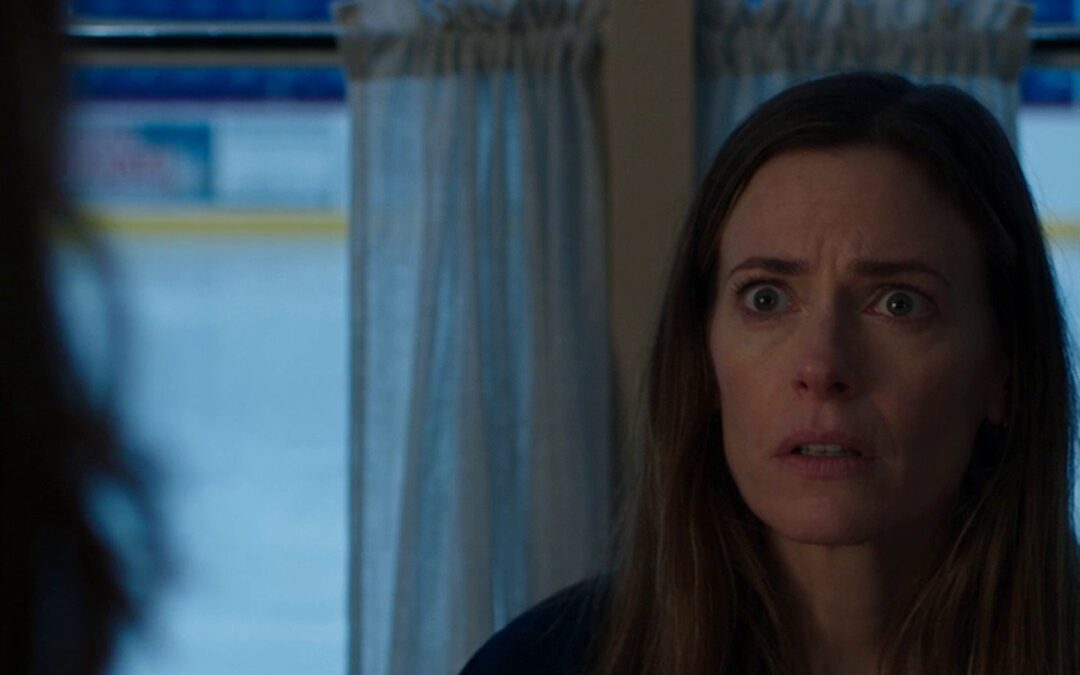
Chapter 1: The Woman in the Photograph
My sister kept our mother’s blue lunch tin on top of the refrigerator, where neither of us could reach it without a chair.
On Thursday, I found it on the kitchen table beside two peeled oranges and a photograph of a woman who had been dead for nineteen years.
The tin had a white skating rabbit painted on its lid, one ear rubbed down to bare metal.
Mom had carried it to the rink when she taught beginners, and Tess had carried it to work ever since.
I picked up the photograph.
The woman’s hair was silver and thin, but I knew the crooked line of her smile.
Tess stood beside her in a hallway I had never seen.
I heard Tess’s car and put the photograph down.
We lived above the rink we ran together: Tess handled the books and front desk, and I kept the ice smooth.
I had stayed upstairs to replace a leaking faucet while Tess went to what she called a supplier meeting.
She came through the door with cold hands and a grocery bag.
“You’re home,” she said.
“The faucet lost.”
Her eyes went to the photograph.
She set the bag down so hard an apple rolled across the floor.
“Who is she?”
Tess stepped toward the table, then stopped.
“You know who she looks like.”
“I know who she is.”
Tess pulled out a chair but did not sit.
Mom had died when I was twelve, Tess had told me, after a fall that left her unable to come home.
We held a memorial at the rink; Tess said Mom had wanted her body donated.
For years I had pictured one final kindness.
In the photograph, the woman wore a purple sweater and held a peeled orange.
A strip of photo booth pictures lay half under the tin: Tess beside her in the same hallway, then both of them laughing.
“That isn’t what it looks like,” Tess said.
“She has Mom’s scar.”
“She’s older than Mom was.”
“So are we.”
Tess pressed her thumb into the rabbit’s worn ear, the way she did when she needed time to think.
I turned the photograph over.
On the back, in Tess’s square handwriting, were the words *Thursday, September 18*.
The faucet tapped steadily into the sink.
Tess reached for the picture, and I held it against my chest.
“Why were you with Mom last Thursday?”
Chapter 2: What the Tin Carried
“Why were you with Mom last Thursday?”
Tess looked at the photograph against my chest, then at the paper bag on the counter.
“Mae,” she said.
“You can tell me she’s alive.”
“She’s alive.”
The faucet tapped again.
I had spent an hour on my knees under the sink, trying to stop that sound, and now it seemed to come from every room.
“Where?”
Tess sat down.
I remained standing because sitting beside her felt too much like agreeing to something.
“North of here,” she said.
“That’s a direction.”
“She lives at a care residence outside Montpelier.”
“What care?”
“She had a brain injury after the fall.”
“You said the fall killed her.”
“I know.”
The answer came without an excuse, which made me angrier.
Outside our kitchen window, the first parents were pulling into the rink lot for lessons.
In twenty minutes a line of children would shuffle across the rubber mat below us, carrying skates by their laces.
Tess glanced toward the clock.
“Go down,” I said.
“I can ask Calvin to cover the desk.”
“Then ask him.”
She called him from the kitchen while I watched the photograph.
Her voice sounded ordinary.
She told him to open the register and put out the rental skates.
She did not tell him that our mother had returned from the dead between the refrigerator and the sink.
When she hung up, I asked, “How long?”
“Since the accident.”
“Nineteen years?”
“Yes.”
I set the photograph on the table.
Tess put both hands around the blue tin but left its lid closed.
“We’ll talk,” she said.
“You’ve had nineteen years.”
“I meant now.”
I went downstairs through the back stairwell.
The compressor hummed behind the wall, steady and familiar.
At the rink door I saw a little boy sitting on the bench while his father worked a skate over his heel.
I could have told Tess to leave the house that minute, but I did not know whose name was on its deed.
I could have driven north, but I did not have an address, and I had no reason to believe a stranger at a care residence would tell me where a resident lived.
I went into the equipment room and took the ice depth gauge from its hook.
There were places where the blade had been cutting close to the painted lines.
I checked them twice, wrote down what I found, and stood there with the clipboard until the numbers stopped moving in my hand.
Calvin came to the doorway.
He was seventeen and had been helping us after school since spring.
“Your sister said you might need the morning.”
“I’ll finish the ice.”
“You look terrible.”
“That’s fair.”
He waited, then retreated when I gave him nothing else.
I hated that the first person to notice my face was a kid who depended on us for a paycheck.
I picked up the gauge again and walked to the far end of the rink.
At the painted circle, I pressed its point gently through the ice and read the depth.
It was the same as it had been five minutes earlier.
I wrote it down anyway.
A little girl approached the gate, holding her skates to her chest.
“Is the ice broken?” she asked.
“No.”
“Then why are you poking it?”
“So I know how much is there.”
She considered that, satisfied, and went back to her father.
I stared at the neat row of measurements on my clipboard.
Tess and I had checked this floor together for years, each trusting the other to notice what could hurt someone.
By the time I came upstairs, Tess had put the groceries away.
The photograph was still on the table.
She had left the blue tin beside it, although she usually wiped it and returned it to the top of the refrigerator.
“I made coffee,” she said.
“I need a name for that place.”
“I’ll give it to you.”
“Now.”
She wrote the residence’s name and town on the back of a grocery receipt.
I read it, folded it, and put it in my pocket.
“Is she sick?”
“She needs help with some things.”
“Which things?”
“Her balance, mostly, and her memory when she’s tired.”
“You see her every Thursday?”
“Most Thursdays.”
I looked at the tin.
“Is that why you leave before breakfast?”
“Yes.”
“For nineteen years?”
“For most of them.”
For years I had heard her come home on Thursday afternoons and lift that tin onto the refrigerator.
Sometimes it smelled of orange peel.
I had thought the oranges were for Tess, who never remembered to eat when she drove.
“Does Mom know I live here?”
“Yes.”
“Does she know I think she’s dead?”
Tess opened her mouth.
I waited.
“Yes,” she said.
That was the point where I left.
I drove to the rink’s old overflow lot and parked beside the pile of dasher boards we kept for repairs.
From there I could see our kitchen window.
Tess moved across it once and vanished.
I called the residence.
The woman who answered was polite, and when I asked for Evelyn Pike, she told me she could not give out information about residents over the phone.
I said I understood and asked about visiting.
She repeated that she could not discuss a resident without permission.
I thanked her.
I did not understand, but I knew she was doing her job.
The grocery receipt crumpled in my fist.
When I was twelve, I had asked to see Mom one last time.
Tess had told me there was nothing left to see that would help me remember her.
I had believed she meant a body.
Now I wondered whether she had been deciding what I could bear to know.
That night I took the receipt to the public library.
The rink’s office computer still had invoices open, and I did not want Tess coming down to find me at it.
I searched for Mom’s obituary first.
There was the notice I remembered, headed with her name and a photograph from an ice show.
It said a memorial gathering would be held at the rink.
It did not say she had died.
I read the notice three times.
At twelve I had not cared how such things were worded; I had cared that everyone kept bringing casseroles, and that Tess would not let me go to the hospital.
I printed it.
Then I searched the local paper’s archive for the accident.
The short report said an adult woman had fallen on the service stairs at a rink in another county and had been taken to a hospital.
No later report appeared.
I paid for a copy of that page too.
The printer dropped both sheets into its tray while I stood with my hand underneath, ready to catch them.
A librarian passing behind me asked whether it had jammed.
“No,” I said.
She looked at the pages without reading them and moved on.
I sat at the end of a table and laid the notice beside the accident report.
One described a woman taken to a hospital.
The other invited people to remember her.
I searched again, this time for a death notice in the months between them, then in the months after.
The library computer warned that my session was almost over.
I added more time and kept looking until I understood that another search would only postpone going home.
At home, Tess was waiting at the kitchen table.
She had changed into the old sweatshirt with a hole at the cuff.
It was the one she wore when the ice plant acted up and we might have to be awake half the night.
“You went to the library,” she said, seeing the pages.
“Yes.”
“The notice was wrong.”
“You wrote it.”
“I wrote what I could say then.”
“You could say she was hurt.”
Tess looked down.
“I could have.”
I put the pages between us.
“You told everyone she died.”
“I told you.”
“That was enough for everyone else.”
She did not argue.
I wished she would, because an argument would have given me somewhere to put the anger.
Instead she turned the tin until the rabbit faced me.
“Mom fell at the rink where she was teaching that summer,” Tess said.
“She was on the service stairs with a crate of skates.”
“She struck her head.”
“She survived surgery, but for weeks she didn’t know where she was.”
“When she began to know us again, she had trouble speaking and walking.”
I knew a fall could change a person.
I had seen a coach hit the ice hard enough to spend months learning to trust her legs again.
Tess’s words still sounded like an account of someone else.
“Why tell me she died?”
“Because I was afraid to take you to her.”
“Afraid of what?”
Tess ran a finger around the tin’s clasp.
“What you would see.”
“You didn’t get to choose that forever.”
“No.”
“You got to choose it when I was twelve?”
“I did choose it,” she said.
“That’s the part I have to answer for.”
She opened the tin.
Inside was a folded napkin, clean and soft at the edges, and a small plastic container with two orange segments left in it.
No document waited beneath them.
There was no explanation Tess had saved for the proper day.
I closed the lid.
“Was she asking for me?”
Tess’s hand stayed on the tin.
“Sometimes.”
I pushed back my chair.
“Sometimes when?”
“Mae, I want to tell you in order.”
“Did she ask for me last Thursday?”
“Yes.”
I went to my room and shut the door.
At six the next morning, I was downstairs checking the resurfacer before opening.
Its blade had to meet the ice evenly; when I was distracted, I could leave a ridge that every skater would feel.
I made myself check the bolts and walk the rink before I started.
Tess came through the gate while I was near the far boards.
She held a mug for me.
I kept walking.
She set it on the bench and went to the office.
For years we had worked around each other that way.
If I forgot lunch, she left something where I would find it.
If the desk line ran long, I took the next parent without being asked.
We could move a hundred people through a Saturday session without saying much.
I had taken that ease as proof I knew her.
At noon I called the county clerk’s office and asked how to request a death record.
The clerk explained that I would need the person’s name, an approximate date, and proof of my relationship for a certified copy.
I had those things.
When I asked how long it would take, she said the request would be reviewed through the usual process.
I submitted it online from my phone in the equipment room.
I did not need a certificate to believe the photograph.
I needed to learn what Tess had done in our mother’s name, and what she had left for me to discover.
After the afternoon lessons, Tess came down while I was sweeping wet grit from the rubber mat.
“I called the residence,” she said.
“So did I.”
“They said Mom can decide whether to see you.”
“Has anyone asked her?”
“I asked last Thursday.”
The broom stopped.
“What did she say?”
“She said she wanted to.”
“Then why didn’t you tell me?”
Tess gripped the gate.
“Because she said the same thing in August, and the next morning she said she wasn’t ready.”
“Maybe she changed her mind.”
“She has done that before.”
“So you chose for both of us.”
“I was going to ask again.”
“When?”
Tess looked past me toward the empty ice.
I let her have the silence she had given me for nineteen years.
She said, “I don’t know.”
That evening I found a number for the rink where Mom had fallen.
Its manager had changed years ago.
The woman I spoke with remembered my mother’s name because older skaters still mentioned her classes, but she had not worked there at the time.
She could tell me only that the service stairs had been replaced years later.
I thanked her and hung up.
The search had cost me an hour and confirmed almost nothing.
It had also reminded me that Mom had a life outside the few pictures we kept upstairs.
She had driven to another county to teach children who were probably my age now.
Some of them still remembered her.
I asked Tess for the hospital’s name.
She gave it to me.
I called and learned that I could request my own records from childhood if any had been kept there.
I was surprised when the woman on the phone asked whether I had been a patient.
“I wasn’t,” I said.
“Then we can only discuss your mother’s records with her authorization or the proper legal paperwork.”
I wrote that down.
Tess found me at the table with the notebook open.
“You’re checking everything,” she said.
“Yes.”
“I’ll give you what I have.”
I closed the notebook.
“Bring it.”
She came back with a folder.
The papers inside were old bills, care plans from different years, and letters about Mom’s housing.
Tess had sorted them by date.
I could see her handwriting on notes tucked beside some pages: shoes, glasses, winter coat, orange marmalade.
There were years of a life there, recorded in Tess’s square letters, and none of them had reached me.
I read enough to see that Mom had first spent months in rehabilitation, then lived with help in an apartment, then moved to the residence after another fall.
The papers did not prove everything Tess said.
They showed where she had spent her Thursdays.
A photograph was tucked behind one of the care plans.
Mom sat at a kitchen table with a pair of reading glasses in her hand, looking away from the person taking the picture.
I had never seen that table.
Tess reached for the photograph, then stopped before touching it.
“That was her apartment,” she said.
“Did you take this?”
“Yes.”
“What was she looking at?”
“She thought I’d left the kettle on.”
“Had you?”
“No.”
I slid the photograph back into the folder.
I wanted to ask about the cups behind Mom, the plant in the window, every ordinary thing that had filled rooms I had never entered.
I could not bear to learn it all from Tess.
“Why did she move from the apartment?” I asked.
“She couldn’t manage the stairs anymore.”
“Did you ask me to help?”
“You didn’t know.”
“That’s what I mean.”
Tess sat opposite me.
“I was ashamed by then.”
“You should have been.”
“I was.”
“But you kept going.”
“Yes.”
She held my gaze for once.
“I thought each year made telling you harder.”
“You made it harder every Thursday.”
“I know.”
I pointed to a bill for winter shoes.
“Were you paying for these?”
“Sometimes.”
“Out of the rink?”
“Out of my pay.”
“Our pay comes from the same place.”
“I didn’t take money without putting it through the books.”
I knew she kept careful books, but I no longer wanted to accept her word because it was hers.
“I’ll look.”
“I expected you to.”
The next day, I did.
The rink was ours because Dad had left it to both of us.
When he died, Tess was already handling its bills, and I had been glad to let her keep doing it.
Now I sat in the office after closing with the bank statements and the accounting files.
I matched the largest withdrawals against repairs, payroll, and our regular draws.
I found no payments to the residence.
Tess had been sending money from her own account, as she said.
That did not restore my trust.
It narrowed what I had to fear.
One payment I could not place turned out to be the deposit for new rental skates.
I pulled the vendor invoice from the cabinet and held it beside the statement until the dates lined up.
The metal cabinet had a drawer Tess called the graveyard, full of receipts she said we would never need again.
I searched it too.
I checked the amounts she paid herself against the deposits we both took from the business.
The work was slow, and I resented every minute of it.
I also knew exactly what I would say if I found something wrong.
For the first time since the photograph, I had a question I could answer without Tess telling me how to feel about it.
Calvin came in for his gloves and stopped when he saw the papers spread across the desk.
“Are we in trouble?” he asked.
“The rink’s all right.”
“Because Tess looked like someone died.”
I nearly laughed.
“She has something to deal with at home.”
He considered that.
“She said you might close Saturday.”
“We won’t unless the ice gives us a reason.”
“Okay.”
He took his gloves and lingered.
“People keep asking if you two had a fight.”
“We did.”
“Should I tell them anything?”
“Tell them where the rental sizes are.”
He nodded.
After he left, I checked the statements once more.
I could doubt Tess’s reasons without making a rumor out of them.
That was the first decision I had made since I found the photograph that felt entirely mine.
On Sunday, I drove to the care residence.
Tess had told me Mom’s room number, but I went alone.
I had called ahead and been told I could come to the front desk and ask for a visit.
The building was plain brick, with a covered entrance and a row of shrubs someone had recently trimmed.
I sat in my car for twenty minutes.
I had spent nineteen years wanting one more day with the mother I remembered.
I was afraid that walking inside would make me lose that version of her too.
At the desk, a staff member took my name and went to ask Mom whether she wanted to see me.
I waited beside a rack of local brochures.
A man passed through with a basket of laundry folded so neatly the edges lined up.
Nothing about the place resembled the terrible room I had imagined as a child.
The staff member returned.
“She would like you to come in,” she said.
Mom sat at a table near a window with a jigsaw puzzle spread before her.
She wore the purple sweater from the photograph.
In front of her lay three pieces she had turned face down.
When I entered, she looked up and held the edge of the table.
“Mae?”
Her voice was rougher than I remembered.
I could still hear the woman who used to count my first wobbly circles on the ice.
“Hi, Mom.”
She pushed back her chair too quickly, then caught herself.
“Stay sitting,” I said.
“I’m trying to look at you.”
I crossed the room.
Her scar was pale against her cheek.
I had got my own, a thin line through one eyebrow, when I fell against the gate at eight.
She touched that eyebrow with one finger.
“You grew,” she said.
I laughed once because I had no other way to breathe.
“Yes.”
She withdrew her hand.
“I thought you wouldn’t come.”
“I didn’t know I could.”
Mom looked toward the window.
“Tess said you were angry.”
“She was right.”
“At me too?”
“I don’t know yet.”
She took a puzzle piece and put it down in the wrong place.
I did not correct it.
We talked for almost an hour.
She knew what year it was, and she knew the rink still existed.
She forgot whether I had told her my age, so I told her again.
When she tired, finding words took effort, and she paused with her lips pressed together until one came.
She asked whether we had kept the little door in the rink boards where children stepped onto the ice.
I told her I had replaced its latch last winter.
She wanted to know if children still tripped over the rubber mat on their way out.
“Only the ones watching their friends,” I said.
“That would be most of them.”
She smiled.
“Do you still skate after closing?” she asked.
“When the ice is good.”
“You used to refuse to leave.”
“You used to tell me the lights cost money.”
“They did.”
“They still do.”
She moved a blue puzzle piece against another and turned it twice before setting it down.
I wanted to tell her that I had kept the rink running after Dad died, that Tess and I had bought a used resurfacer, that I could hear a bad bearing over the sound of a public session.
I wanted her to have watched me learn those things.
Instead I told her about the resurfacer, and she asked what color it was.
Then I asked the question I had carried north.
“Why didn’t you call me?”
Mom’s fingers closed around a puzzle piece.
“I wrote.”
“When?”
“After I came home from the hospital.”
“What did you write?”
“That I was here.”
“Did you send it?”
She looked at me for a long time.
“I gave it to Tess.”
My stomach tightened.
“Did she tell you she gave it to me?”
“No.”
“Why didn’t you ask?”
“I did.”
“What did she say?”
Mom put the piece down.
“She said you were twelve.”
“That isn’t an answer.”
“No.”
Mom’s eyes filled, but she kept her voice level.
“I told her I would wait until you were ready.”
“Were you ready?”
“Some days.”
“And the other days?”
“I thought you might see me and be frightened.”
I wanted to say I would never have been frightened of her.
I had just spent twenty minutes frightened in the parking lot.
“Did you want me to think you were dead?”
“No.”
She answered before I finished asking.
I looked away.
Across the room, someone was searching under a chair for a puzzle piece.
Mom waited until I looked back.
“I was angry when Tess told me,” she said.
“When did she tell you?”
“After the memorial.”
“She had a memorial for you while you were alive.”
Mom nodded.
“I didn’t go.”
A dry, surprised laugh came out of both of us.
Then she said, “I told her to fix it.”
“Did you?”
“Yes.”
“She didn’t.”
“No.”
I took out my notebook.
Mom watched me turn to a clean page.
“I need to know which parts you remember yourself.”
“I do too,” she said.
We began with the letter.
She remembered writing it during rehabilitation, holding the pen awkwardly in her left hand.
She had asked Tess to deliver it because she could barely read what she had written.
She remembered asking again when she moved to the apartment.
There had been phone calls she wanted to make and days she did not want anyone to see her.
She could not give me dates for all of them.
I did not ask her to make her memory cleaner for my sake.
I asked whether she remembered the apartment in the photograph.
“The little kitchen,” she said.
“With the plant in the window?”
“The plant died.”
She touched the page of my notebook.
“I remember asking Tess if you liked school.”
“What did she say?”
“That you liked the library better.”
That had been true.
I wrote it down beside the other things Mom remembered, although it proved nothing.
Mom watched the pencil move.
“You can cross out anything I get wrong,” she said.
“I’d rather hear you get it wrong.”
She gave me a puzzled look.
“Then I know it’s you telling me.”
When I rose to leave, she held out the three face-down puzzle pieces.
“What are these for?” I asked.
“I turn them over when I’m tired of trying.”
“That sounds useful.”
“I can try again tomorrow.”
She put them back beside the puzzle.
At the door, I asked if I could come another day.
“Yes,” she said.
“Call first if you like, but come.”
I drove home slowly.
I wanted Tess to be standing in the kitchen so I could tell her what Mom had said.
I also wanted the house empty.
The blue tin was back on top of the refrigerator.
For the first time I understood why Tess had kept it out of easy reach.
If she left it on the table, I might ask where she took it.
If she hid it in a cupboard, she would have to admit to herself what she was doing.
On top of the refrigerator, it had looked like a keepsake.
I called Tess from the driveway.
“She remembers the letter.”
Tess was quiet.
“She told you.”
“Yes.”
“I have it.”
“Where?”
“In my room.”
I went upstairs.
Tess stood beside her open dresser with an envelope in her hand.
She held it out, but I did not take it yet.
“You carried that through four moves?”
“Yes.”
“You lived with me through every one.”
“Yes.”
“Did you ever open it?”
“No.”
I looked at the old envelope.
Mom’s handwriting was uneven across the front.
My name was unmistakable.
“Why keep it?”
“I couldn’t throw it away.”
“That’s about you.”
“I know.”
I took the envelope to my room and opened it along a seam that had already begun to split.
The letter was short.
Mom wrote that she was alive, that she had been hurt, and that she wanted to see me when she could sit beside me and tell me herself.
She wrote that she loved me.
There was a crooked little drawing of a rabbit beneath her name.
I read it twice, then put it back in the envelope.
The words did not give me nineteen years.
They told me exactly when Tess had had a chance to tell the truth.
The envelope still had the faint fold from being tucked into something narrow.
I held it against the light, looking for a date that would tell me more than the letter did.
There was none.
Mom had handed it to Tess, and Tess had kept it where I could never find it.
I remembered a night in our first apartment when Tess helped me pack for a school trip.
She had written my name inside every glove because I lost things.
I had been annoyed then, and grateful when I came home with both.
The same hands had put this envelope in a drawer.
I left it on my bedside table, where I could see it before I turned out the light.
That night I slept in the narrow office behind the rink desk.
The couch was too short, and the humming ice plant woke me whenever it changed pitch.
In the morning Tess found me making coffee in the concession stand.
“You can have the house,” she said.
“I haven’t decided where I want to sleep.”
“I can stay somewhere else.”
“You can stay upstairs until we work it out.”
“We could close the rink for a few days.”
“No.”
She nodded and reached for a paper cup.
I took it from the stack before her hand got there.
“Mom said she told you to fix it.”
“She did.”
“What did you say?”
“I said I would.”
“And then?”
Tess stood with her hand still extended.
“Then I went home,” she said.
“You were thirteen by then and back at school.”
“You had stopped asking why she couldn’t come to your plays.”
“I told myself I’d wait until there was a good day.”
I poured coffee into both cups.
“There wasn’t one.”
“There were plenty.”
She accepted the cup.
I had hoped she would tell me Mom had demanded silence, or that some doctor had warned her, or that a document left her no choice.
Tess had made a choice when I was twelve.
After that, she had made it over and over because telling the truth would expose the first one.
I could understand the fear.
I could not make it into permission.
We opened the rink at nine.
A school group came through at ten, and the usual work filled the hours.
Tess fitted skates.
I helped two children who had drifted toward the gate with tears in their eyes because they thought everyone else had learned faster.
One of them kept turning her toes inward until the blades crossed.
“Watch my feet,” I told her.
I showed her how to stand still first.
She held the boards and copied me, her jaw set so firmly she looked angry at the ice.
From the desk, Tess called out a rental size to Calvin.
For a second I heard Mom counting behind me, the way she had when I was that small.
I turned.
There was only Tess at the desk, bending over a pair of skates.
The child tugged my sleeve.
“Again?” she asked.
“Again.”
By afternoon my back ached from bending, and I had almost forgotten to eat.
Tess left a sandwich outside the equipment room.
I brought it to her at the desk.
“You made this?”
“Yes.”
“I can make my own lunch.”
“I know.”
“Then ask me before you decide what I need.”
She looked at the sandwich.
“Would you like it?”
“I would.”
I took it back.
It was a small exchange.
It cost her more effort than preparing the sandwich had.
The following week, Mom called me herself.
A staff member had helped her find the number, but Mom spoke without anyone beside her.
“I have a puzzle question,” she said.
“I may be the wrong person.”
“There is a piece with half a red mitten.”
“Have you looked under the chair?”
“I have.”
“Turn over the pieces you stopped trying yesterday.”
She laughed.
“There you are.”
We talked for fifteen minutes.
She asked if I was angry with Tess.
“Yes.”
“She came every Thursday.”
“I know.”
“She brought oranges because I can peel them myself.”
I sat down on the equipment room floor.
“For a long time I thought she brought them for me,” Mom said.
“Then you found out she packed two?”
“Yes.”
“What’s the tin for?”
There was a pause.
“It was ours before it was hers.”
I waited.
“When Tess was small, I taught mornings at the rink,” Mom said.
“She came with me on school holidays, and we shared lunch from that tin.”
“I painted the rabbit because she wanted to know which one was ours.”
“You never painted over the ear?”
“She rubbed it bare carrying it.”
I pictured Tess, small enough to sit on a rink bench with her legs swinging, pressing the tin against her coat.
For nineteen years I had seen it in our kitchen and thought of Mom.
Tess had been carrying her own memory too.
“She asked if she could keep bringing it,” Mom said.
“I let her.”
“That must have hurt.”
“It did some days.”
“Why let her?”
“Because she was my daughter when I was angry at her.”
I could hear someone speaking to Mom in the background.
“I should go,” she said.
“I’ll come Sunday.”
“Call when you set out.”
“I will.”
I stayed on the floor after we hung up.
Mom had not asked me to forgive Tess.
She had given me one true thing about the tin, and I could decide what to do with it.
Tess and I drove separately to the residence that Sunday.
I had asked her to come because Mom wanted us both there.
I had also asked for a room where we could talk without Mom tiring in the middle of it.
A staff member showed us to a small sitting room and said Mom could join us when she was ready.
Tess kept her coat on.
“You can take that off,” I said.
“I know.”
Neither of us sat.
I set Mom’s letter on the table between the chairs.
Tess looked at it.
“Does Mom want to read it?” she asked.
“She already knows what she wrote.”
“I thought it might help if she saw it.”
“She can decide.”
Tess nodded and drew her hands into the sleeves of her coat.
I remembered doing that in hospital waiting rooms after Dad died, when the chairs were cold and I did not know where to put my hands.
I pulled out one chair, then left it where it was.
I was not ready to make this easier for her.
“I asked Mom about the letter,” I said.
Tess nodded.
“I showed it to her.”
“What did she say?”
“She remembered drawing the rabbit.”
“Good.”
“I want you to tell her, in front of me, why you kept it.”
Tess touched the cuff of her coat.
“I’ll tell her.”
“I don’t want another version later.”
“You won’t get one.”
Mom came in using a cane, stopped when she saw us standing at opposite sides of the room, and chose the chair between us.
“You both look like you’re waiting for a dentist,” she said.
I sat beside her.
Tess sat across from us and finally took off her coat.
For a moment no one spoke.
Mom pointed at the envelope in my hand.
“I remember that.”
“You gave it to Tess,” I said.
“I did.”
Tess leaned forward.
“I didn’t give it to Mae.”
“I know,” Mom said.
“I told Mae you had died.”
“I know that too.”
“I want to tell you why.”
Mom folded her hands.
“Tell her.”
Tess looked at me.
“At the hospital, Mae asked if you could still teach her to stop with both feet.”
I remembered asking that.
Tess had told me to wait and see.
“Mom couldn’t walk across the room without help then,” Tess said.
“She would start a sentence and lose the word in the middle.”
“You were twelve, and you’d seen Dad die two years before.”
“When the doctors talked about how long recovery might take, I heard how much more you might lose.”
“I thought I could spare you the waiting.”
“By saying she was dead.”
“Yes.”
I heard the old anger rising, but I wanted her to finish.
“The memorial was my idea,” Tess said.
“I said it would help you mark what had happened.”
“Mom was in rehabilitation and couldn’t come.”
“I told myself I was marking the life she’d had before the fall.”
Mom looked at her.
“It was still my life.”
“I know.”
“No,” Mom said.
“You know now.”
Tess accepted that.
“Afterward, you asked for Mae’s name every time I visited.”
“I brought the letter home.”
“I stood outside Mae’s door with it.”
“What stopped you?” I asked.
“She was asleep, and the next day I had to send her to school.”
“That stopped you for nineteen years?”
“No.”
Tess’s voice shook, but she kept going.
“The first time, I was afraid for her.”
“After that, I was afraid she would know what I’d done.”
Mom turned toward me.
“I could have tried to reach you another way.”
“You were in rehabilitation.”
“Later I wasn’t.”
“You didn’t have our number?”
“I did.”
“Then why didn’t you call?”
Mom looked down at her hands.
“Some days I wanted to hear you more than anything.”
“Other days I could hardly bear that you remembered me standing on skates.”
“I kept thinking I would feel better next month.”
Tess said, “I told her you were happy.”
I turned to Tess.
“What did you tell Mom about me?”
“That you had friends and the rink and plans.”
“Those were true.”
“I also told her you didn’t ask about her anymore.”
“I didn’t ask you.”
“I know.”
Mom took a breath.
“I should have called you myself,” she said.
“Yes,” I answered.
It hurt to say it.
I had spent days preparing to meet a mother Tess had kept from me, and here was Mom admitting she had stayed away when she could have tried.
I wanted to hold on to a simpler story.
Neither woman offered me one.
Mom rested her cane against her knee and looked at Tess.
“When I asked if Mae was ready, you always said you’d know,” she said.
“I thought I would.”
“You couldn’t know without asking her.”
“No.”
I picked up the envelope.
“I was twelve when you made the first decision,” I said.
“I’m thirty-one now.”
Tess looked at the letter in my hand.
“I know.”
“You came home to me every Thursday.”
“Yes.”
“Did you ever decide I might be ready?”
“I did.”
“Then you decided I would hate you.”
Tess’s eyes met mine.
“Yes.”
I put the envelope down before I bent it.
Mom reached toward it, then withdrew her hand.
“I kept letting Tess be the one who asked you,” she said.
“You never knew she wasn’t asking.”
“I knew she was afraid.”
“And you let that answer for me.”
Mom nodded.
“I did.”
Tess gripped the arms of her chair.
“Mae, you can decide what happens between us,” she said.
“I’ll give you the records, and I’ll leave the house if you want me to.”
“You don’t get to offer me another disappearance.”
She stared at me.
“I’m asking you to stay while I decide.”
“I can do that.”
“I also want you to stop speaking for Mom.”
Mom lifted an eyebrow.
“I can help with that.”
Tess gave a brief, strained smile.
“I’ll stop.”
“That includes telling me when she asks for me, even if she changes her mind later.”
“I will.”
I turned to Mom.
“And I want you to tell me when you don’t want a visit.”
“All right.”
“You don’t need Tess to explain it.”
“I can say it myself.”
Mom’s hand found mine on the chair.
I held it.
Tess watched us, then looked away to give us a moment.
I was not ready to comfort her.
I asked her one last question.
“Why did you keep taking the tin?”
She looked surprised.
“Mom and I used it when I was little.”
“She told me.”
“I packed two lunches on the first visit because I thought I might stay all day.”
“Then you kept doing it.”
“She started bringing an orange for me.”
“After a while she could peel hers, and I stopped doing it for her.”
“It took me longer to stop packing the second lunch.”
Mom reached across and touched the bare metal ear of the rabbit on the lid.
Tess had brought the tin that morning.
I had seen it beside her chair without noticing.
“It wasn’t evidence that you were good to her,” I said.
“I know.”
“You carried it home to me every week.”
“I know that too.”
Tess’s eyes went to the floor.
For once she did not try to lift the weight of what I said with an explanation.
When we left, Mom asked for a visit the following Sunday.
I put it in my phone while she watched.
She asked me to bring a photograph of the rink as it looked now.
Tess said she could print one from the office computer.
“I can,” I told Mom.
Mom nodded.
“I’ll wait for yours.”
On the drive home, Tess and I stopped separately at the same gas station.
I was at the pump when she came out carrying two bottles of water.
She offered me one.
I took it.
“We need to talk about the house,” I said.
“I’ve been thinking about it.”
“So have I.”
“The house and the rink belong to both of us.”
“Yes.”
“I want access to every account we use for them.”
“You have it.”
“I want to understand what I’m looking at.”
“I can show you.”
“And if one of us needs a week away, we ask the other how the work gets covered.”
Tess turned the bottle in her hand.
“That’s fair.”
“I’m staying in the office a few more nights.”
“I’ll put fresh sheets there.”
“I can do that.”
She nodded.
We stood beside our cars until the pumps clicked off.
I could have gone upstairs that night and resumed our old routine.
I could also have left town and made Tess run the rink alone.
Neither choice would tell me whether we could build an honest life in the house we shared.
Three weeks later, the reply to my death record request came by mail.
There was no record matching Mom in the place and period I had given.
I showed the letter to Tess.
She read it and handed it back.
“I’m glad you checked,” she said.
“I wish I’d done it years ago.”
“I made sure you had no reason to.”
“That part was yours.”
“It was.”
I filed the letter with Mom’s first note to me.
I did not need either paper to make her real.
I kept them because I had spent too long letting one person hold all the proof of our lives.
By November, I was sleeping upstairs again.
Tess and I still worked the rink together.
Some mornings we spoke easily over coffee, and on others I remembered the letter while she asked whether we needed more paper towels.
When that happened, I told her.
She listened, even when she had heard it before.
One evening we stayed late to replace a strip of rubber mat near the rental counter.
Tess held the loose end flat while I worked it into place.
“You missed a corner,” she said.
“I see it.”
She kept her hand there until I finished.
Afterward we stood up and looked at the smooth edge.
I could remember a thousand nights of working beside her without thinking about it.
I could remember every Thursday she had left while I was asleep.
Both memories belonged in that room, and neither one moved aside for the other.
On Sundays I drove north.
Sometimes Tess came separately and sometimes she stayed home to run the public session.
Mom had begun asking me about the ice depth gauge, though she had never needed one when she taught.
She liked hearing what my work involved.
I liked telling her.
One Thursday morning I found the blue tin on the kitchen table.
Tess had packed two sandwiches and set a peeled orange beside it.
She was by the sink, waiting.
“Mom asked if you’d come with me today,” she said.
“I told her I would ask.”
I looked at the white rabbit and its worn ear.
For years that tin had left our shared kitchen carrying a life I knew nothing about.
Now I opened it, moved one sandwich so the lid would close properly, and took an orange from the bowl for myself.
“Let me get my coat,” I said.








