Seven Months Pregnant, Khloe Was Attacked in a Hospital Suite—Then Her Attacker Told Marcus a Different Story
Chapter 1: The Quiet Suite
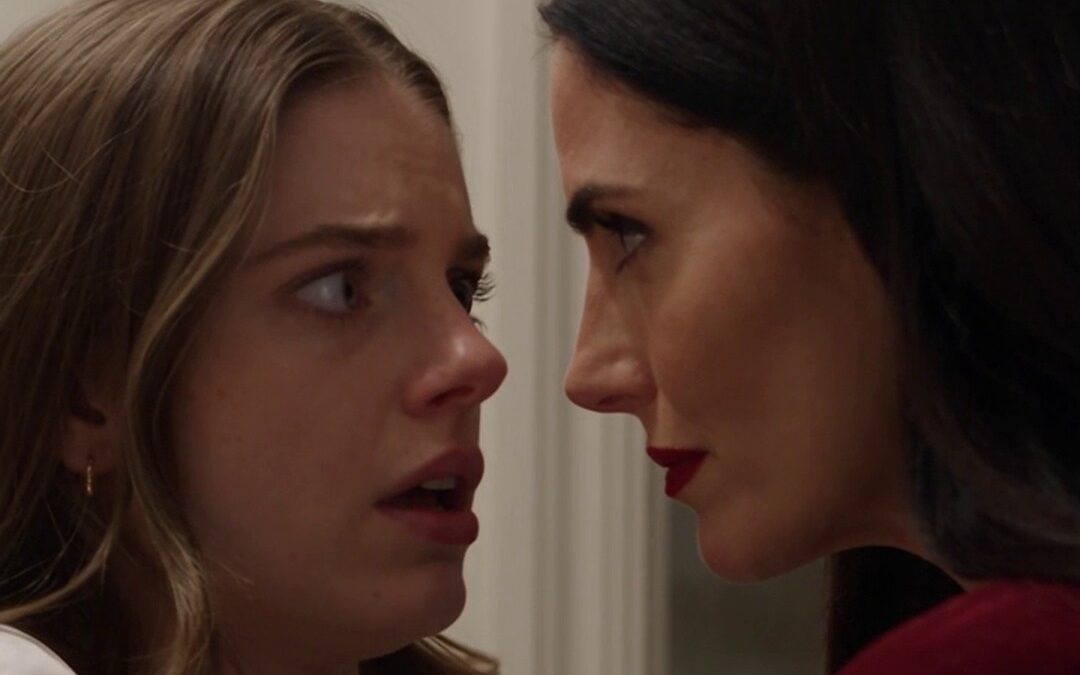
Khloe Thorne had just eased herself onto the edge of the suite’s bed when Isabella Rossi shut the door and shoved her hard enough to send her back to her feet.
At seven months pregnant, Khloe could not recover her balance quickly, and the white silk of her maternity dress caught beneath one shoe as she reached for the marble table.
“You were supposed to give Marcus a child and then disappear,” Isabella said, her crimson gown bright against the pale wall.
Khloe caught the table’s edge with her shoulder, and the crystal water glass beside her skidded off the marble and shattered near the door.
She put both arms around her abdomen as Isabella came forward again, striking at her shoulder and pushing her down beside the table while fragments clicked beneath Khloe’s heel.
Khloe reached under the table for the staff call button, pressed it once, and heard the faint chime above the suite door.
When the door opened, Marcus stood there with gala coordinator Elaine Parker close behind him, and Khloe saw their eyes move from the broken glass to Isabella’s upright figure and then to her on the floor.
“Get a nurse,” Marcus told Elaine, already taking out his phone as he knelt where Khloe could see him.
Elaine stepped into the corridor and called for help while Marcus kept his hands clear of Khloe’s abdomen and asked whether she could breathe comfortably.
“I’m here,” Khloe said, though the words she needed seemed to break apart before she could say them.
Isabella backed toward the wall, one hand pressed over the small beige bandage on her wrist, and gave Marcus a look Khloe knew from weeks of polite concern offered across crowded tables.
“She attacked me with the glass,” Isabella said, her voice steady enough to carry into the corridor, “and I pushed her away because I had to.”
A nurse arrived with another clinician, directed Marcus aside, and began asking Khloe short questions while someone brought a stretcher from the maternity unit.
Beyond the open door, Khloe glimpsed her uncle Daniel Vale approaching in his hospital identification badge, his face tightening when he saw the white silk against the floor.
Daniel was the hospital’s director of patient safety, a job that let him request preservation of routine records but gave him no authority to decide whose story was true.
He stopped short of the threshold, took in the call light glowing above it, and turned to the security supervisor behind him.
“Preserve the suite call log and the corridor entrance footage,” he said.
Chapter 2: What the Door Could Show
The nurse asked Khloe where she hurt while two staff members raised the stretcher, and Khloe could answer about her shoulder and the ache low in her abdomen but could not yet make the rest of the room fit into words.
Marcus walked beside her to the maternity unit, where a clinician asked him to wait while they settled Khloe on a bed, checked her vital signs, and began monitoring the baby.
He gave them the name of her obstetrician and answered what he could about the fall without claiming he had seen it.
Khloe held his gaze when he reached the part he did know, and he said, “I found her on the floor beside broken glass.”
That sentence left room for Isabella’s account, a space Khloe resented even as she understood why he had to leave it there for the clinician.
A nurse asked whether Khloe felt movement, and Khloe closed her eyes until she could separate a familiar small pressure from the tremor running through her own muscles.
“I think so,” she said, and the nurse told her they would keep watching rather than rely on one uncertain moment.
An examination found bruising where Khloe had caught the table and soreness along one hip, while the monitoring gave the team reason to continue observing her.
Her obstetrician, Dr. Maya Chen, arrived and explained that the impact, pain, and brief tightening Khloe reported deserved time and repeated assessment.
Khloe asked whether the baby was all right, and Dr. Chen said, “What we’re seeing now is reassuring, and I want to see how both of you do over the next several hours.”
Marcus stayed near the foot of the bed while a nurse helped Khloe change out of the white dress, which bore a gray smear at the shoulder and a small cut near its hem.
The silk disappeared into a patient belongings bag, and Khloe wanted it back because leaving it behind felt too much like leaving the suite to Isabella.
Marcus asked the nurse to label and secure it, a useful request delivered without his customary assumption that usefulness required command.
Khloe gripped the blanket when she heard Isabella’s name beyond the door.
“She’s being kept separate from you,” the nurse said after Khloe asked, “and security has been told she is not to come onto this unit.”
An hour after the fall, Dr. Chen said the monitoring remained reassuring but that she wanted to continue it overnight and reassess Khloe if the tightening returned.
Only then did Khloe ask where Daniel was, and Marcus said her uncle had stayed outside the treatment area after checking that the proper staff had been called.
Daniel came in with Khloe’s permission, still wearing his hospital badge, and tucked his hands into his jacket pockets as though that might keep him from reaching for her.
“I asked the security supervisor to preserve the entrance camera and the call system records,” he said, “and I told patient relations that I’m your uncle, so someone outside my department will lead the review.”
Khloe asked if he had watched anything, and Daniel shook his head.
“I haven’t asked to see it,” he said, “because the camera serves patients and staff in that corridor, and my relationship to you is exactly why I should stay out of interpreting it.”
Marcus looked toward the dark window when Daniel added that the camera covered the corridor and suite entrance but had no view of a closed room.
“It may establish when people came and went,” Daniel said, “and the call log may establish when the button was pressed, but neither record heard what Isabella said or shows what happened by the table.”
Khloe could feel the button beneath her fingers again, tucked under the marble lip where a nurse had pointed it out when she brought Khloe to the suite.
She had used the room because the gala’s crowded reception had left her feet aching and Dr. Chen had suggested a short rest when Khloe mentioned intermittent tightening earlier that evening.
Elaine had arranged it through the hospital’s event office as a quiet room for Khloe, and a maternity nurse had shown her the call button before leaving her to rest.
“Did you tell Marcus why you were going?” Daniel asked.
“I told him I needed to sit down,” Khloe said, remembering that Marcus had been speaking with board members when she left.
She had spared them an explanation because Isabella had spent weeks making her need for rest sound like a public performance.
Daniel saw enough in her face to say, “You can give an account when you feel able, and patient relations can arrange for someone independent to take it.”
After he left, Marcus said Isabella had told him Khloe wanted a revised seating sheet delivered to the suite.
“I didn’t ask you,” he said.
“Why would I want a seating sheet after the speeches were over?” Khloe asked.
Marcus had no answer that reached her.
Elaine visited after midnight with a patient relations officer, Nora Bell, who asked whether Khloe wanted to hear what had been recorded so far or wait until morning.
Khloe wanted to know whether anyone had mistaken Elaine’s arrival for a witness to the attack, so she asked Bell to stay and let Elaine speak.
“I saw Marcus open the door, Khloe on the floor, Isabella standing near the table, and broken glass between the table and the doorway,” Elaine said.
She had heard Isabella claim self-defense, heard Marcus call for help, and seen Khloe draw her arms around her abdomen, but she had not seen either woman touch the glass.
“Isabella said I rushed in just after Khloe came at her,” Elaine added, “but I can only tell you what I saw when the door opened.”
Khloe thanked her, and Elaine’s shoulders lowered as if she had expected to be asked for certainty she could not provide.
Bell explained that she would keep the clinical record separate from staff recollections and security records while collecting immediate accounts for the hospital review.
Before Elaine left, Khloe asked who had allowed Isabella onto the suite corridor.
Elaine said Marcus had approved a donor liaison pass after Isabella told him she was carrying a corrected seating sheet and a message Khloe had requested.
The pass allowed Isabella through the event wing’s controlled doors, Elaine explained, but did not authorize her to enter a patient room without the occupant’s consent.
“I printed it,” Elaine said, “and I told her to leave anything for Khloe with the desk if she wasn’t invited in.”
Khloe remembered opening the suite door to a soft knock, expecting the nurse who had promised to check back, and finding Isabella holding a red leather folder against her gown.
Isabella had said Marcus needed one signature, so Khloe had moved aside because she was tired of hearing later that she had made his work difficult.
“Did she show you a message from me?” Khloe asked Marcus.
“No,” he said, “and I should have asked.”
In the morning, the tightening had settled and the monitoring continued to reassure Dr. Chen, though Khloe’s shoulder and hip remained sore enough to make getting out of bed slow.
Bell returned after breakfast with Grace Moreno, a hospital investigator from outside Daniel’s department, to take Khloe’s fuller account.
Moreno said she was reviewing access to the suite and staff response, while any criminal allegation would belong to police if Khloe chose to report it.
Khloe described Isabella entering with the folder, closing the door, and saying Khloe had been useful only until she gave Marcus a child.
Her mouth dried before she reached the shove, and Moreno let her drink water without prompting her to fill the silence.
Khloe then described striking the marble with her shoulder, the glass falling, Isabella coming toward her while she shielded her abdomen, and her hand finding the button under the table.
“I did not throw the glass,” Khloe said, “and I did not touch her wrist.”
Moreno asked whether Isabella had struck her after she was on the floor, and Khloe said yes, though she could identify the shoulder blows more clearly than their number.
Bell wrote down that distinction, and Khloe felt less exposed for saying what she knew rather than reaching for certainty she did not have.
When Moreno asked about the folder, Khloe remembered Isabella placing it on the narrow console by the doorway before stepping toward her.
“It had the hospital’s cream event label on it,” Khloe said, “but there was no paper inside when it fell open.”
Marcus lifted his head from the chair by the wall.
“You saw it open?” Moreno asked.
“After the glass broke,” Khloe said, “because the cover slid against my shoe, and I saw the bare lining while I was reaching under the table.”
Moreno said the folder had been logged among items left in the suite, although the review team would need to document what it contained.
Khloe asked her to record the empty lining as a memory rather than an established fact, and Moreno did.
The difference mattered because Isabella had spent weeks treating any correction Khloe made as proof she had changed her story.
At a board luncheon, Isabella had offered Khloe a chair before she asked for one, then announced that Khloe had become too fragile for the foundation’s longer meetings.
At another event, she had taken a glass from Khloe’s hand with an affectionate laugh and told Marcus that Khloe was forgetting limits Dr. Chen had never set.
Khloe had objected privately, and Marcus had called Isabella clumsy with words but indispensable to the foundation’s donor relationships.
Now he went to the window while she told Moreno about those incidents.
Moreno asked whether Khloe had ever threatened Isabella, and Khloe said she had told her to stop speaking for her and had warned Marcus two nights before the gala that Isabella needed to leave the foundation’s work.
“What prompted that warning?” Moreno asked.
“Rossi Events has a contract up for renewal, and Isabella promised donors something the board never approved,” Khloe said.
She had found the discrepancy while reviewing language for the maternal care fund she volunteered to advise and planned to raise it with the board after the gala.
Marcus said, “You showed me the donor letter.”
“I showed you one page,” Khloe replied, “and you told me she had probably used old language.”
Moreno asked for a copy if Khloe had lawful access to it, and Khloe said it was in her foundation email account but she wanted to rest before opening it.
When Bell and Moreno left, Marcus sat down without trying to touch her.
“I knew you were angry with her,” he said, “but I thought you had started reading every mistake as a move against you.”
“You heard that from her,” Khloe said.
“I heard it from both of you differently.”
Khloe asked whether he had repeated her concerns about the contract to Isabella.
Marcus took too long to answer.
“I told her the renewal would need a review,” he said, “and I told her you had raised the question.”
“You gave her my name before anyone looked at the letter,” Khloe said.
He began to explain that he wanted Isabella to know the concern was serious, then stopped when Khloe turned away.
For months, Isabella had been the woman who could reach Marcus between flights, solve seating crises, and make any objection to her sound like a threat to the gala itself.
Khloe had asked Marcus to set limits after the luncheon, and he had come home with pastries Isabella sent and a story about how sincerely she worried that pregnancy was overwhelming Khloe.
Khloe could see a chain from the chair offered too publicly to the pass Marcus approved, though she could not yet tell which links showed preparation and which showed practiced cruelty.
“I need you to leave for a while,” she said.
Marcus stood and asked whether she wanted Daniel or the nurse.
“I want you to leave,” Khloe said, “and I want the nurse to know I’m resting.”
He nodded and did not ask her to make his regret easier.
By afternoon, Dr. Chen was willing to discuss discharge the following day if the monitoring stayed reassuring and Khloe’s symptoms did not change.
She said soreness might outlast the hospital stay and asked whether home was a place where Khloe felt safe.
“Isabella knows the address,” Khloe said, “but Marcus can keep her off the property.”
Dr. Chen offered a social worker’s help with a safety plan and reminded Khloe she did not have to decide where to stay while she was still being observed.
Khloe accepted the visit and called her friend Lila to ask whether she could come after discharge.
Later, Moreno returned to ask when Khloe had first noticed the folder.
“Isabella was holding it when I opened the door,” Khloe said, “and she put it down before she said Marcus needed a signature.”
“Why does the timing matter?” Khloe asked.
“Isabella says she brought a revised seating sheet because you asked for it,” Moreno said, “so we’re checking how that request reached her.”
Khloe remembered a message she had sent Elaine while leaving the ballroom, saying she was going to the suite, did not need visitors, and would ask if she needed anything.
She showed Moreno the message with its time visible and agreed to preserve a copy for the review.
Moreno said Elaine’s event schedule showed the last seating revision had been printed before the speeches, but she did not yet know whether Isabella had carried some other sheet.
That evening, Marcus asked through the nurse whether Khloe would speak with him for ten minutes, and she allowed him in because she needed to hear what else he had withheld.
“Isabella gave me a packet last week,” he said, “with notes about incidents she thought I should know.”
“She said you left a board dinner upset, accused her of changing the maternal fund language, and had begun telling people you wanted her gone.”
Khloe remembered leaving because Isabella had described her as emotionally delicate to a donor she had just met.
She also remembered Marcus finding her afterward and asking whether she had made a scene, without telling her Isabella had already described one.
“Did you keep the packet?” Khloe asked.
“Yes,” he said, “and I gave my copy to a lawyer today so the messages and dates can be preserved without my editing them.”
“Why did you believe her notes deserved a file?” she asked.
“Because I believed she saw details I missed,” he said, “and because it was easier than admitting I had missed them.”
“You knew I was asking you to hear me,” Khloe said, “and you let her write the record.”
Marcus pulled a chair near the door rather than the bed.
“I can’t undo that,” he said, “and I’m going to tell Moreno exactly what I approved and what Isabella sent me.”
Khloe asked whether the lawyer represented him or the foundation, and he said the lawyer represented him personally because the foundation needed an independent review of the contract and his part in it.
That distinction mattered more than a promise of belief, which could fade under Isabella’s next polished explanation.
On the second morning, Dr. Chen reviewed another reassuring period of monitoring and cleared Khloe to leave with follow-up plans and instructions to return for concerning symptoms.
Khloe dressed slowly in clothes Lila had brought, leaving the white silk in its sealed bag because she had agreed to make it available if an investigator requested it.
Daniel met her at the unit exit only after she called him, and his first question was whether she wanted an arm or someone to carry her overnight bag.
“Carry the bag,” she said, and he took it.
Before discharge, Moreno explained that security had preserved the corridor footage and access events under the hospital’s incident process.
The entrance camera monitored a controlled event wing, recording the hall and the outer edge of an open doorway but nothing inside the suite while its door was closed.
The access system logged when approved passes opened the wing door, while the staff call system logged activation from the suite without identifying who pressed the button.
Moreno could review those records for the hospital investigation, and police could seek them through the appropriate request if Khloe reported an assault.
Khloe asked to see the footage, and Moreno said a limited viewing might be arranged after privacy review because other patients and staff crossed the hall.
Moreno could share verified times: Isabella’s pass opened the wing door at 9:12, she reached the suite shortly afterward, and the staff call activated at 9:17.
Marcus and Elaine entered the camera’s view after the call, following a nurse who was moving toward the suite from the far end of the corridor.
“The camera shows the door opening for Isabella and closing behind her,” Moreno said, “but it doesn’t settle what happened once she was inside.”
Khloe tried to place the five minutes against the brief assault and the slower conversation that preceded it.
According to Isabella’s statement through counsel, Khloe had invited her to bring a corrected sheet, then accused her of trying to take Marcus and the foundation away from her.
Isabella said Khloe snatched the water glass, threw it toward her, and followed it with both hands raised, leaving Isabella no way to get past without pushing her once.
“She says you fell by the table, pressed the call button, and began accusing her before Marcus arrived,” Moreno said.
The account fitted a closed door, a broken glass, a real dispute, and a mark Isabella described as a new scratch on her wrist.
It also made Khloe’s call for help look like part of a performance, an idea so ugly that she waited before speaking.
“I never picked up the glass,” she said, “and she wasn’t trying to get out when she pushed me.”
“She also says the door stayed partly open while she was trying to leave,” Moreno added.
“It was shut,” Khloe said, “because I heard the latch when she came in.”
“The camera shows it shut after she entered,” Moreno said, “but she may argue it was opened later and closed again.”
Khloe wished she had seen the door rather than the red gown moving toward her.
At Lila’s house, Khloe accepted a ground-floor bed, extra pillows, and the fact that she needed help standing after sitting too long.
Marcus came only when she invited him to drop off her prenatal records and clothes, and he left the bag just inside the door.
He had moved out of their house for the week at Khloe’s request, arranged for building staff to deny Isabella entry under the property’s guest rules, and recused himself from the foundation’s review of the Rossi Events contract.
“You can still call the house yours,” he said.
“I know,” Khloe said, “but I’m staying where I can sleep.”
One board member wanted the contract renewed quietly to avoid questions about the gala, Marcus said, while another wanted Isabella removed before hearing any account.
“I told them neither choice belonged to me alone,” he said, “and I gave them the donor letter you showed me.”
Khloe asked whether he had admitted dismissing her concern when she first raised it, and he said he had.
What she could not see yet was whether he would hold that boundary when Isabella spoke in the language of an old friend he had trusted for years.
Three days after discharge, Detective Lena Ortiz took Khloe’s report at Lila’s kitchen table, with Khloe’s consent and no hospital representative present.
Ortiz asked about the fall, Isabella’s words, prior contact, and the call button, then explained which records she would seek and what she could not promise.
Khloe gave her the message to Elaine, the donor letter from her foundation account, and photographs of the bruising taken after discharge for medical follow-up.
She told Ortiz about the folder, too, and Ortiz asked why its empty lining had stayed with her when so much else felt blurred.
“Because she said Marcus needed a signature,” Khloe said, “and there was nothing to sign.”
Ortiz wrote the answer down without calling it proof.
After the detective left, Khloe opened the donor letter she had sent Marcus two nights before the gala.
The maternal care fund was supposed to support direct patient services approved by the foundation board, yet Isabella’s letter to a sponsor promised a branded series of events managed by Rossi Events for the following year.
Khloe had circled the sentence because the series would make Isabella’s company the fund’s organizer again, an obligation no board vote had approved.
Marcus had called the wording stale, but the sponsor’s reply thanked Isabella for securing the yearlong commitment and asked when they could announce it.
Khloe sent both messages to the foundation’s independent counsel, whose contact information the board had provided after Marcus recused himself.
She did it for the fund as well as herself, knowing Isabella’s account might turn any objection Khloe raised into another supposed outburst.
That afternoon, Elaine called after Moreno cleared her to speak about her own event records.
She had checked the event office’s print log because the alleged corrected sheet bothered her.
The office printer had produced the final seating sheet at 7:38, before guests sat down, and no revision had been requested or printed after the speeches.
“Isabella could have had a handwritten change,” Elaine said, “and I can’t rule out a page from somewhere else.”
“Did you see a page when she took the folder?” Khloe asked.
“I saw the folder closed,” Elaine said, “and I saw her cover it with her arm when I offered to carry it.”
Khloe remembered the bare lining by her shoe.
Elaine added that Isabella had asked twice whether the suite door would lock automatically once Khloe opened it.
“I told her it latches when it closes,” Elaine said, “because she said she didn’t want to disturb someone who was resting.”
Khloe asked Elaine to give Moreno and Ortiz the exact wording rather than an interpretation, and Elaine said she already had.
The following day, Ortiz asked whether Khloe would consent to the hospital releasing the portion of her clinical record relevant to the injuries and pregnancy response.
Khloe agreed after discussing the scope with her own counsel, though signing felt like inviting strangers into the most frightened hours of her life.
The record could show where clinicians found tenderness and bruising and when they examined her, Ortiz said, but no clinician could identify an attacker from those findings.
At a follow-up visit, Dr. Chen said Khloe’s symptoms had improved and the pregnancy remained on its expected course, then asked about her sleep.
Khloe had slept in short stretches, waking whenever a door clicked shut elsewhere in Lila’s house.
She had also begun to resent questions about whether the baby was moving when they arrived before anyone asked how she was.
Dr. Chen asked both questions and discussed continuing care rather than declaring the danger over.
That night, Marcus asked whether Khloe would read the packet Isabella had given him if her lawyer made a copy first.
Khloe said yes, and her lawyer delivered a scan the next morning while the originals remained preserved.
The packet resembled an event manager’s account of difficult moments, each dated entry wrapped around a helpful offer Isabella claimed to have made.
At the luncheon, Isabella wrote that she had secured a chair when Khloe became overwhelmed; at the reception, she wrote that she had quietly protected an expectant mother from ignoring medical advice.
At the dinner Khloe had left, Isabella wrote that Khloe accused her in front of donors of changing fund language and then refused to discuss it.
None of the entries called Khloe dangerous, yet together they invited Marcus to complete that thought.
The first was written the week after Khloe questioned Rossi Events’ proposed renewal, and the later ones grew more urgent as the gala approached.
Khloe read the packet twice, once as Marcus had received it and once as a record of Isabella arranging an audience for whatever she intended to say after the suite door closed.
She called Marcus and asked what he had done after reading the dinner entry.
“I told Isabella to stop discussing your health with donors,” he said.
“Did you tell her Dr. Chen had never limited my attendance?”
“No,” he said.
Khloe waited until he admitted he had wanted to avoid another argument during gala week.
“She learned that you would correct her manners and leave her account standing,” Khloe said.
Marcus did not defend the choice.
He told her the board had invited him to a donor call about Isabella’s company, but he had declined because his presence would pressure people either way.
“One donor says I’m abandoning her before she’s heard,” he said, “and another says I should use my vote to end the contract today.”
“What will you do?” Khloe asked.
“I’ll give the board my records, answer questions about my part, and stay out of their decision.”
A week later, Moreno invited Khloe and her lawyer to review preliminary findings in a conference room, with Marcus attending only after Khloe agreed.
Daniel did not attend, and Moreno made clear that the meeting concerned hospital access and response while Ortiz’s criminal investigation remained separate.
The corridor footage had been retained under a routine thirty-day schedule, and the incident hold placed that night had preserved the relevant segment before it cycled out.
Moreno showed a privacy-reviewed clip that began at the controlled wing door and ended after staff entered the suite.
Isabella appeared in crimson carrying the folder, stopped at the suite door, and entered when Khloe opened it.
The angle held a narrow slice of the doorway, enough to show a red sleeve cross the threshold and the door close, then only the closed panel for several minutes.
At 9:17, the call light above the door came on, matching the separate call log.
The door remained closed while a nurse approached from the far end of the corridor and Marcus and Elaine came from the event wing.
Marcus opened it ahead of them, blocking most of the angle, and the clip ended after the nurse followed them inside.
Khloe watched the blank door longer than anything else, aware that a viewer could place almost any private action behind it.
“The system recorded a single activation from inside the suite,” Moreno said, “but it doesn’t identify you.”
Isabella’s account had Khloe pressing the button after throwing the glass, while her statement also said she kept the door partly open to leave.
“The door remains shut from her entry until Marcus opens it,” Moreno said, “and there is no visible attempt to exit.”
Khloe felt the contradiction settle, but Isabella could say she had been afraid to turn her back, so Khloe asked about the folder.
Moreno showed a photograph security had made after clinicians moved Khloe and closed the area for cleaning.
The folder lay open near the console, its lining empty except for an event label in a clear pocket.
A page could have been removed during the incident, Moreno said, so the photograph could not prove the folder entered empty.
Khloe asked whether the event office had a record of the label.
Elaine, asked to join for her portion of the review, said she had issued that label for donor welcome packets two weeks earlier and given Isabella a stack for deliveries.
Its presence, therefore, did not authenticate a seating change.
Khloe remembered Isabella carrying neatly marked folders into every room as though the marks themselves made her welcome.
“Isabella told Marcus I requested the sheet,” Khloe said, “but the pass was approved through him, and my only message to Elaine said I didn’t want visitors.”
Moreno agreed the facts did not fit Isabella’s stated reason for entry, while stressing that a false reason alone would not establish who first used force inside.
“Keep that precise,” Khloe said, “because if we claim the camera saw a shove, she can make the truth sound careless.”
The pass had worked as designed for the wing door, Moreno explained, but event instructions had left room for someone with social standing to treat corridor access as permission to visit.
Elaine had warned Isabella to leave a delivery at the desk unless invited in, and Moreno accepted that account without treating the warning as a safeguard the hospital had verified.
Future event passes would separate corridor delivery from patient-suite visitation and route deliveries through staff.
It was a small repair beside the violence in the room, yet Khloe understood which unguarded step it addressed.
After the meeting, Marcus walked beside her to the lobby without touching her.
“I thought that folder meant she had a task,” he said.
“She knew you would,” Khloe replied.
Isabella had called him that morning through a donor’s phone after he blocked her number, Marcus said, claiming the hospital was building a case because of Daniel and asking him to stop the board review.
“I said Daniel had stepped aside,” Marcus told Khloe, “and I wasn’t going to call the hospital or the board on her behalf.”
Isabella had threatened to tell donors he abandoned an old friend to save his marriage.
For years, Marcus had treated access to him as something a small circle had earned permanently, and Isabella knew how to make a boundary sound like betrayal.
“Will you tell them what you actually know?” Khloe asked.
“Yes,” he said, “including the part where I gave her the pass.”
Khloe left with her lawyer and did not tell him she forgave him, because she had not decided what forgiveness would require.
Ortiz’s investigation moved more slowly than the hospital review because she needed original records through lawful channels and Isabella’s attorney supplied a revised account.
Isabella no longer insisted the door had stood partly open the whole time; she said she had reached for it several times, then pulled back whenever Khloe advanced.
Ortiz asked whether Khloe remembered hearing the latch again after Isabella entered.
“I remember it once,” Khloe said, “and I don’t remember it opening before Marcus.”
The footage showed no opening, Ortiz said, but could not show whether Isabella touched the handle from inside.
The revised account could survive the camera, Khloe understood, though it left Isabella in a room she had entered voluntarily with a false errand.
Ortiz then asked about the bandage Isabella had worn before entering the suite.
Khloe remembered seeing the beige strip when Isabella first held out the folder.
“It was on her wrist already,” she said, “and she put her hand over it when she claimed I attacked her.”
Isabella’s attorney had supplied photographs of a shallow scratch near that wrist taken later that night, describing it as evidence Khloe threw the glass.
The photographs alone could not establish when or how the scratch happened, Ortiz said.
Elaine had given Isabella the bandage earlier at the gala after she snagged her wrist on a metal clasp while moving a sponsor display, an incident Elaine reported before anyone asked about the assault.
An event photographer’s reception image showed the bandage in place well before Isabella approached the suite, though its resolution did not permit a reliable comparison of the skin beneath it.
“So the bandage wasn’t from me,” Khloe said.
“The bandage predates you being together in that room,” Ortiz answered, “and I’m keeping the scratch separate until I know more.”
Khloe thought of Isabella standing beside broken glass with her hand over an existing bandage, letting others connect them.
She gave Ortiz a supplemental statement about that distinction, and Ortiz recorded it without suggesting the earlier omission damaged her credibility.
Two weeks after the gala, the foundation board’s independent counsel invited Khloe to answer questions about the donor letter and her interactions with Isabella.
Khloe met separately from Marcus and Isabella so each account would have its own source.
The questions stayed close to documents: when she received the sponsor correspondence, which approved language she compared it with, and whether she confronted Isabella.
Khloe had challenged her at the donor dinner, she said, but had asked, “Who approved this promise?” rather than accusing her of theft.
She admitted she later asked Marcus to remove Isabella from foundation work until the board reviewed the contract, a choice Isabella could fairly describe as a threat to her position.
“Did that give her reason to fear a public accusation at the gala?” counsel asked.
“Yes,” Khloe said, “because I intended to bring the letter to the board afterward, and she knew Marcus had heard about it.”
The admission kept the motive grounded in a real conflict rather than a contest for Marcus’s attention.
Counsel showed her a packet entry claiming Khloe had become possessive of the maternal fund and angry whenever Isabella met its donors.
Khloe pointed to her event approvals and said she had questioned a specific promise that exceeded them.
“You can check my emails to the fund committee,” she said, “because I asked for a review before the gala.”
That request, sent two days before the event, showed Khloe had chosen a formal route even while furious.
On the way out, she saw Marcus waiting across the lobby with his own counsel, and he approached only after she crossed to him.
“I told them you raised the letter before I spoke with Isabella,” he said, “and I told them I let her write those notes while I treated your account as personal.”
Khloe asked whether he had told them why he authorized the pass.
“I said she claimed you wanted a sheet delivered, and I approved it without checking.”
“We have an appointment with Dr. Chen tomorrow,” Khloe said, “and I want you there if you can listen without speaking over me.”
“I can,” he said.
She believed he intended to try, which was smaller than believing everything between them was repaired.
The hospital completed its internal review the next month and offered Khloe a meeting with Moreno and a patient advocate.
By then her shoulder bruise had faded, but she still took the chair facing the door without thinking and noticed only when Marcus sat where he would not block it.
Moreno said staff had responded promptly after the call, separated the parties, and preserved available records under policy.
The review found that the event pass process had permitted an avoidable ambiguity about who could approach a patient suite, and the hospital had changed its instructions and practice.
It did not purport to decide criminal intent, though it found Isabella had used a reason for entry unsupported by event records and contrary to Khloe’s message declining visitors.
“Her attorney says she could have been carrying a handwritten change,” Khloe said.
“She could have been,” Moreno answered, “and our finding rests on the absence of a request from you, the lack of a recorded change, and the pass Marcus authorized on her representation.”
Moreno then addressed Isabella’s claim that Khloe threw the glass and Isabella pushed once to protect herself.
The hospital could not see inside the closed room, and physical findings alone could not establish intent, but Isabella’s account of a partly open escape route conflicted with the corridor footage.
The call log, Khloe’s description of reaching the button from the floor, Elaine’s immediate observation of Khloe’s position, and the absence of any visible attempt by Isabella to leave formed a sequence the review considered together.
None required treating Khloe’s fragmented first answer in the maternity unit as a complete statement.
Khloe asked whether the review had considered her report that Isabella struck her again after she fell.
“Yes,” Moreno said, “and we recorded it as your account, consistent with your examination but beyond what the corridor records can directly establish.”
At the end, Moreno said the hospital had barred Isabella from its event spaces pending the conclusion of its process and referred preserved material to Ortiz through the proper legal channel.
Outside, Daniel waited near a vending machine with two bottles of water and offered them without asking for the report.
Khloe told him the pass rules had changed, and he looked down at the bottle in his hand.
“I wish the old ones had held,” he said.
“You made sure the records held,” Khloe replied.
“Security preserved them because that is their job,” he said, “and Moreno reviewed them because I stepped aside.”
Khloe took the water, knowing he was right to keep the distinction even though he had reached the corridor frightened for his niece.
Ortiz called three days later to say Isabella now claimed the seating sheet had slipped out when Khloe threw the glass and a staff member must have removed it during the emergency.
Ortiz had checked the room inventory and spoken with the responders who cleared the floor; none reported handling a sheet, though that absence could not prove one never existed.
More useful was Elaine’s account that there had been no requested revision to deliver, coupled with Khloe’s message declining visitors.
Ortiz had obtained the original access and call records directly from the hospital, so the case did not rest on Daniel’s description of them.
“What happens next?” Khloe asked.
“I’ll present the evidence to the prosecutor,” Ortiz said, “and that office will decide whether to bring a charge, while you decide what safety measures you want regardless.”
Khloe wanted the accusation answered, but she also wanted to stop waking at a latch.
After its own review, the foundation board announced that it would not renew Rossi Events’ contract and would correct the sponsor’s understanding of the maternal fund before accepting further restricted gifts.
Its notice described a review of donor commitments and contract procedures without turning the assault into a fundraising story.
Marcus resigned his chairmanship for the remainder of the year while the board revised its approval process.
He continued to support the fund financially but no longer treated that support as a reason to control its account of what had happened.
A donor who trusted Isabella called him furious, then withdrew from a planned business introduction when Marcus would not press the board to restore her contract.
Marcus told Khloe because she had asked him to be honest about consequences, not because he wanted credit for enduring one.
“She said I was letting you make decisions through me,” he told her as they walked slowly after a prenatal appointment.
“What did you say?” Khloe asked.
“I said the board made its own decision from records, and you made yours from what happened to you.”
“Keep saying it that way,” Khloe said.
The prosecutor’s office took longer, and during that time Isabella continued to maintain that she had defended herself.
Through counsel, she argued that the lack of an interior recording left doubt about who first touched whom and that Khloe’s opposition to her contract explained a false report.
Khloe felt the old impulse to produce one perfect piece of proof, though every real piece had been partial from the start.
Her lawyer reminded her that she could give a truthful account without predicting how every decision maker would weigh it.
Khloe returned to work on the fund’s patient advisory materials in hours Dr. Chen said she could manage.
She removed a line from a brochure promising families “complete peace of mind” after a favorable check and replaced it with language about follow-up and questions.
No one outside the committee would know why the promise bothered her, which made the work feel honestly hers.
In early winter, the prosecutor filed charges alleging assault and false reporting, and Isabella appeared through her attorney at an initial hearing where no one declared the case proved.
Conditions set for the case kept her from contacting Khloe, while disputed facts remained for the court’s ordinary process.
Khloe chose not to attend that first hearing and went to her prenatal visit instead.
Weeks later, Isabella accepted an agreement that included an admission she had entered the suite under a false pretext and used force after the disagreement began, with the precise description and penalty entered through the court.
She did not confess to every word Khloe remembered or explain the blows after Khloe fell, and Khloe disliked the gaps even as she recognized that the reversed accusation had failed on the evidence.
The court imposed supervision and a no-contact condition, while the hospital’s guest restriction and the foundation’s contract decision remained separate actions.
When Ortiz called with the outcome, Khloe asked whether the original report accusing her would remain in a file somewhere.
“It remains documented as a statement Isabella made,” Ortiz said, “alongside the investigation that tested it and the disposition that followed.”
Khloe requested copies of the records she was entitled to keep, placed them in a folder at home, and did not open them again that night.
At a later appointment, Dr. Chen found Khloe tired but recovering, and the baby’s movement interrupted the discussion just as Marcus began asking a question Khloe had meant to ask herself.
He stopped and waited.
Khloe asked about a new ache, heard the answer, and made her own note in the margin of her appointment card.
The small pause did not erase his earlier silence when Isabella spoke for her, but Khloe noticed it because it was his to choose and hers to use.
They had begun meeting with a counselor on Khloe’s terms, discussing the marriage separately from the assault and the work of rebuilding trust separately from public appearances.
When a donor invited them both to a spring event, Marcus passed the invitation to Khloe without answering for her.
She declined because she wanted a quiet evening, and he sent the reply in his own name without making her choice into an announcement.
One night, after Lila had gone home and Khloe had returned to the house, Marcus set a plain water glass on the kitchen table beside her chair.
It had no cut pattern to catch the light, and for a moment Khloe could see the crystal one sliding from the marble edge again.
Marcus noticed where she was looking and moved his hand back, leaving the glass within reach without asking her to prove the room was safe.
Khloe took a drink, set it down firmly, and opened the appointment card between them.
She pointed to the question she had written for Dr. Chen, and Marcus drew his chair closer to listen.








