She Had Two Minutes Before His Bus Left—Then a Stranger Tied His Shoe the Way She Could Never Forget
Chapter 1: The Last Bus
The stranger left one loop of his shoelace twice as long as the other, and June missed the boarding call she was supposed to make.
She stood behind the counter of the Walla Walla bus depot with the microphone in her hand.
The man crouched beside a rolling bag, tugged the short loop tight, then folded the long one over his thumb before standing.
June had tied a little boy’s shoes that way because he hated knots he could not undo himself.
For twenty-six years, she had caught herself doing it whenever a child came through the depot with loose laces.
The man looked up.
“Is the six-ten still running?” he asked.
“It is.”
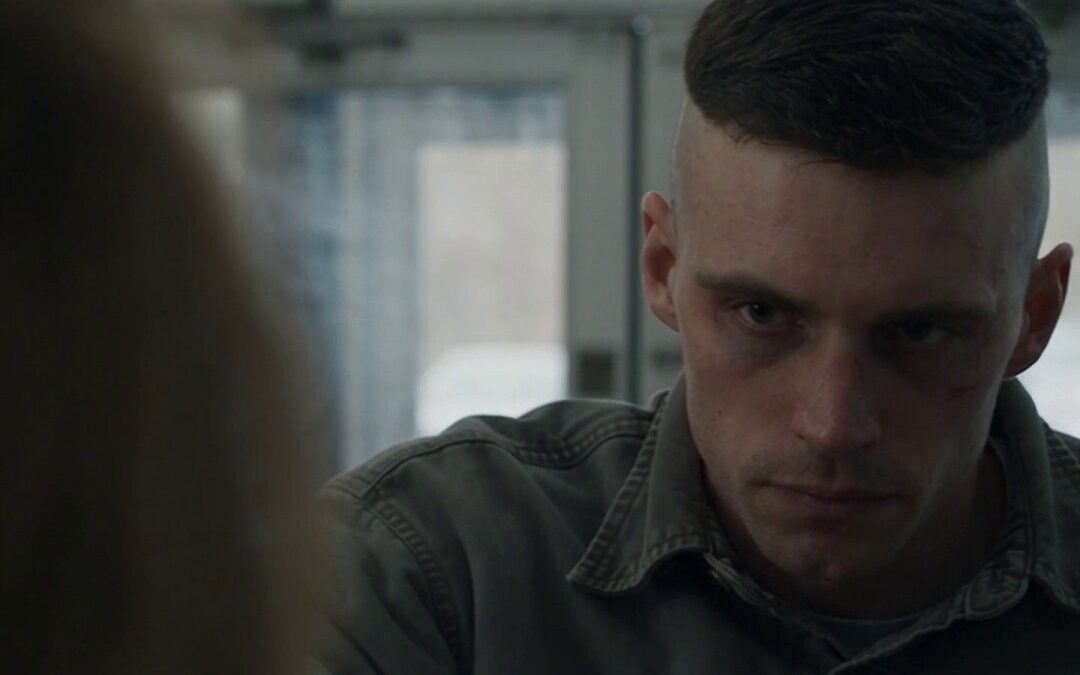
He was about twenty-nine, with dark hair cut close at the sides and a gray work jacket carrying the pale outline of a removed name patch.
June lowered the microphone.
“Spokane?”
“Eventually.”
He set a folded street map on the counter, holding one corner down with a hand that would not stay still.
Across town, he had spent the morning outside the county office before going in to ask what records an adopted person could request.
Now he had a form in his bag and no idea what to write in its last empty box.
June had her own unfinished forms in a drawer at home.
Every November, she bought a pair of children’s shoes and gave them to the shelter where she and her little brother had spent their last night together.
She never chose the size he would have worn.
The man turned the map toward her.
“Do you know where Orchard Street used to end?”
June touched the counter instead of the map.
“Before they put in the bypass?”
He nodded.
She had not said the name Orchard Street aloud in years.
A driver knocked on the window and raised six fingers.
“Two minutes,” June called.
The man folded his map, but a drawing showed through the thin paper: a square house with a crooked moon above it.
June had drawn that moon on every scrap of paper she gave her brother when he was small.
Then the man caught her looking and closed the map.
“My mother drew it,” he said.
June knew people put moons over houses.
She knew children copied drawings from one person to another.
She also knew the bus would pull away in two minutes, and the stranger with the long shoelace loop would go with it.
“Does your mother live here?” she asked.
His hand tightened around the map.
“I don’t know.”
The driver opened the depot door.
June reached for the microphone, then stopped.
Would she ask him who had taught him to draw that moon before the bus took him away?
Chapter 2: The Empty Box
June left her hand on the microphone.
The driver waited in the doorway, one gloved hand braced against the frame.
“Boarding?” he asked.
“In a second.”
The stranger slipped his map into his bag.
“What’s your name?” June asked.
“Cal.”
The driver glanced at the clock above the counter.
June wanted to ask about the moon, but a woman came in carrying two shopping bags and a ticket she could not find.
June helped her search.
When she looked up, Cal had stepped outside.
Through the glass she saw him stop beside the coach and pull a county form from his bag.
A gust from the idling engine flipped the paper against his jacket.
June picked up the microphone.
“Last boarding for Spokane.”
Cal looked toward her through the window.
For one foolish second she thought he might come back.
Then he folded the form and boarded.
The coach pulled out at six-twelve.
June had asked a stranger whether his mother lived here.
She had not asked who drew the moon.
That night, the left side of the shoe box in her hall closet was empty.
June had delivered this year’s new shoes to the shelter three weeks earlier, on November fourteenth, and had not put the box away.
She carried it to the kitchen table.
Inside lay a receipt, a shelter thank-you card, and an old bus timetable marked in her own handwriting.
At twelve, she had believed a bus could take her anywhere if she could buy the fare.
Her phone rang.
“Ada,” she said.
“You sound worn out,” her aunt said.
“Long shift.”
“You ate?”
“Yes.”
Ada had raised June from the winter she turned thirteen.
She could hear a lie about dinner across two hundred miles.
“Did you get another letter?” Ada asked.
“No.”
June looked at the empty shoe box.
“There was a man at the depot.”
Ada waited.
“He tied his shoe like Eli did.”
“You taught Eli that.”
“I know.”
“Then you know how many children you taught after him.”
“He had a drawing.”
“What drawing?”
“A house with a moon over it.”
Ada was quiet long enough for June to hear her refrigerator motor come on.
“June.”
“I didn’t ask.”
“Maybe that was kind.”
June pressed her thumb into the cardboard rim until it bent.
“Maybe.”
In Spokane, Cal went straight from the bus to the bike shop where he worked.
The owner had left a repair stand open for him.
Cal hung his jacket on a hook and stared at the county form until the lights went off on a timer.
He switched them back on.
The last box asked whether he wanted identifying information forwarded through the adoption agency if another family member had registered for contact.
He had checked yes in his head ten times.
His pen had never touched the square.
His mother Ellen called at nine.
“How was the trip?”
“Fine.”
“Did you see the old street?”
“The bypass goes through it.”
“I’m sorry.”
“It isn’t your fault.”
“I know.”
Cal turned the map over.
“You said I drew this.”
“You did, when you first came to us.”
“Did I ever tell you what it meant?”
“You said the moon watched the house.”
“That’s all?”
“That’s what I wrote down.”
He heard a chair scrape at her end.
“Did you send the form?” she asked.
“Almost.”
“You can take your time.”
“I’ve taken twenty-six years.”
“That wasn’t all your choice.”
Cal looked at the box again.
“I don’t want you thinking I’m looking for a better mother.”
“I don’t.”
When he was seven, Ellen had told him he was adopted and shown him a folder instead of inventing a simpler story.
At fifteen, he had found a note in it saying he had an older sibling, with no name he could use and no promise that the sibling wanted to see him.
He had shut the folder before Ellen finished explaining the contact process.
For years he told himself he was waiting until his parents were ready.
They had been ready longer than he had.
“I met someone at the station,” he said.
“Someone you knew?”
“No.”
He turned the map faceup.
“She looked at this like she recognized it.”
“Did you ask her?”
“She was working.”
“That isn’t what I asked.”
“No.”
The next day, June asked her supervisor to cover the depot for two hours.
She walked to the county building with the older forms in her pocket.
At nineteen, she had asked where her brother had been placed.
At twenty-seven, she had asked whether his adoptive parents had left any way to contact her.
At thirty-three, she had submitted a new address after an envelope came back.
This time she asked for the form that allowed an adult sibling to register willingness for contact.
The woman at the counter handed her a packet.
“I filed one before,” June said.
“Do you have the acknowledgment?”
June unfolded a copy, its corners worn soft.
The woman read it.
“This confirms they received your address change.”
“And the registration?”
“I don’t see it here.”
“I gave them both.”
“I can only tell you what this copy says.”
June remembered sitting at this counter six years earlier after a night shift, filling out two forms while a printer jammed behind the clerk.
She could remember signing one page.
She could not remember seeing either form stamped.
“What happens if I file today?”
“The agency can explain its contact process.”
“How long?”
“I can give you the number.”
Outside, June sat on a concrete wall and read every page.
She had spent six years believing someone would call if Eli ever asked.
She phoned Ada.
“I’m filing again.”
“Good,” Ada said.
“I thought I had.”
“Then fill it in.”
“What if he asked already?”
“Make it possible for them to find you now.”
June went back inside, completed the packet, and took a copy of the stamped receipt.
By the time she returned to the depot, the afternoon coach was loading.
She tied a little girl’s loose shoe while the girl’s grandfather searched for their bag tag.
One loop came out long.
June loosened it and made the loops even.
The girl looked down.
“I liked it the other way,” she said.
June met her eyes.
“So did I.”
The following Friday, Cal returned to Walla Walla by train and borrowed a car.
He had sent his form.
The agency had acknowledged it but said any exchange of identifying information depended on its records and the choices recorded by the other person.
He could wait for that process.
He also had a public question he could answer himself.
On a library computer, Cal found an archived road plan showing the bypass cut through the end of Orchard Street in 2003.
The house on his childhood drawings had stood near the bend.
He drove there and parked beside a tire shop.
Nothing on the block looked as if it had held a house.
A man carrying filters out of the shop paused beside him.
“Looking for the bus stop?”
“No.”
Cal pointed toward the roadway.
“Was there a house here?”
“Several.”
“Do you know what happened to the families?”
“Moved, I expect.”
Cal thanked him and drove back to the library.
The librarian showed him the old city directories and their address index.
In the 1999 volume, Orchard Street ended at number 408.
There were six households on the last block.
Cal copied every name.
His amended birth certificate named Ellen and her husband Martin.
The small folder they had received at adoption gave his birthplace and first name at placement: Eli.
It did not include his original surname.
None of the names in the directory felt different under his finger.
He checked the years on either side, then asked for newspapers.
There was no story about him.
He read about a sidewalk repair, a school play, and a grocery opening.
He was relieved, then angry with himself for wanting some printed sign that he had lived there.
At the depot, June was taping a torn corner of the route board.
She turned at the bell over the door.
“Spokane,” she said.
“Not today.”
Cal wore the same gray jacket.
“You found Orchard Street?” she asked.
“Most of it’s under a road.”
“That sounds right.”
He glanced at the counter.
“I owe you an apology.”
“For what?”
“You asked me about my mother.”
“You didn’t owe me an answer.”
“I gave you a strange one.”
“It was a strange question from a stranger.”
He smiled briefly.
“I’m adopted,” he said.
June held the tape dispenser so tightly it clicked.
Cal saw her face change.
“People say odd things when they come back here,” he added.
“Are you from here?”
“I was born here.”
A bus pulled into the bay, its air brakes releasing.
“How long are you staying?” she asked.
“Until tomorrow.”
She wanted his age.
She wanted the name he had before Cal.
She wanted to hear the answers without forcing them from a man at her counter.
“Did the county help?” she asked.
“Some.”
The driver came in for his manifest, and June passed it over.
“Can I ask you something?” Cal said.
“Of course.”
“Do you know anyone who lived near 408 Orchard?”
June and Eli had lived at 412.
She had gone back once, years before the bypass, and stood across the street because she could not approach the steps.
“Why 408?” she asked.
“It was beside the house on my map.”
“On the drawing?”
“Yes.”
The driver asked whether a passenger’s folded bicycle belonged in the lower compartment.
June went outside to check the space.
When she returned, Cal was at the door.
“That address isn’t mine to guess about,” she said.
“I’m sorry I asked.”
He went to the borrowed car.
June let him walk away because she did not know what he wanted from his search.
The doorbell sounded again.
Cal stood just inside.
“My name used to be Eli,” he said.
June’s hand found the edge of the counter.
A passenger behind him cleared his throat.
Cal moved aside.
June gave the passenger his ticket.
When she raised her head, Cal was still there.
“Eli was my brother’s name,” she said.
“How old?”
“He’d be twenty-nine.”
“I’m twenty-nine.”
Neither moved.
“That isn’t enough,” Cal said.
“I know.”
“I came here hoping.”
“I know.”
He stepped back.
June saw the defense come into his face.
He was right to have it.
She had once spent a month talking to a man online who claimed to know where Eli had gone.
He wanted money for the name of the family.
When June refused, he sent her a name anyway.
It belonged to a child who had died in another state.
Since then, she had learned to ask what a person knew and how they knew it.
“Do you want to sit down?” she asked.
“I need to go.”
June nodded.
“My shift ends at five.”
“If I come back, we can talk.”
“I’ll be here.”
He left without promising.
June went into the office and called Ada.
“He said his old name was Eli.”
“Did he give a surname?”
“No.”
“June.”
“He was three.”
“I know how old he was.”
“He might have kept the name.”
“He might.”
“I told him about my brother.”
“You told him the truth.”
“He looked frightened.”
“So are you.”
At five, Cal had not returned.
“He has a mother,” June told Ada.
“So did Eli, after he left us.”
“That isn’t what I meant.”
“I know.”
Cal sat in the borrowed car outside the library while the clock passed five.
Speaking his old name to June had felt different from writing it on a form.
For a moment, her face had held so much recognition that he wanted to let her decide everything.
Then he remembered how little either of them knew.
Eli was a common name.
June had not claimed to know who he was.
That frightened him more.
Ellen answered his call on the third ring.
“I met her again,” he said.
He told her what June had said.
“You can go back,” Ellen told him.
“What if she is my sister?”
“Then you can meet her.”
“What if she’s a person I don’t like?”
“Then you’ll have met her.”
Cal watched a family cross the library steps, a little boy running ahead and returning when called.
“I don’t want you to feel replaced.”
“You couldn’t replace me if you tried,” Ellen said.
Her voice shook on the last word.
“You’re scared,” he said.
“Yes.”
“You said you weren’t.”
“I said I don’t think you’re looking for a better mother.”
“That’s different.”
“It is.”
He had grown up in a house where Ellen answered hard questions when she could.
“I’m scared too,” he said.
“Then we can both be scared, and you can still go.”
Cal drove back to the depot at five-twenty.
June’s car was gone.
A relief clerk told him she had left at five.
Cal wrote his phone number on the back of a blank timetable.
“Could you give her this?”
“Sure.”
He wrote only *Cal* above the number.
The clerk put it under the cash tray so it would not get buried in the weekend receipts.
That night, a driver reported a missing passenger bag.
The clerk used the tray to make change while taking calls, and Cal’s timetable slid behind the drawer.
On Monday, June came in before six.
No one told her he had returned.
At noon, she phoned the agency to confirm that her registration had reached the right office.
The woman could confirm receipt, but not whether anyone else had asked for contact.
“Can they tell him I’m here?” June asked.
“If our records identify the relationship and both sides agree, we can explain the next step.”
“What if he comes to me first?”
“That’s your choice.”
The agency could give them a way to exchange names.
It could not tell June what to do if Cal came back and said Eli.
In Spokane, Cal worked, waited, and checked his phone.
He told Ellen he had gone back and left his number.
“Maybe she needs a few days,” Ellen said.
“Maybe.”
He had left a first name with a clerk and no explanation.
June might think he had changed his mind.
She might have the number and choose not to call.
He tried to respect both possibilities.
At work, a customer brought in a child’s bicycle with a bent rear wheel.
Cal steadied it while the child explained how it had happened.
“I can fix it,” he said.
The child looked at his father for permission to believe him.
Cal had given Ellen that look when she first told him he was adopted.
She had said it would always be true, however he felt about it.
After the child left, Cal found the depot’s public number on his phone.
He did not call.
He wanted to speak to June without asking a stranger to find her in the middle of her shift.
On Wednesday, June drove to the shelter after work.
The building had changed since she and Eli slept there in 2000.
The room where they had watched a vending machine glow through the night was now an office.
A staff member named Marisol knew June from the annual shoe donations.
“You didn’t stay for coffee this year,” Marisol said.
June sat beside the donation shelves.
“Do you remember when I asked about the old records?”
“I remember.”
“I’m not asking you to search them.”
June unfolded a copy of the intake page she had received years earlier after asking for her own shelter records.
Most of it covered June: her age, the aunt who would take her, and the date she left.
Eli appeared only as the younger child who arrived with her.
June pointed to a line she had never understood.
“Do you know what this means?”
Marisol read it.
“ ‘Blue cord retained with child’s belongings.’ ”
“What cord?”
“I can’t tell from that.”
“I thought it meant the drawstring on his coat.”
Marisol handed the page back.
The night they arrived, Eli had held a length of blue cord tied to June’s wrist.
She had made the loops from a broken laundry line so they could walk through a crowded food pantry without losing each other.
At the shelter door, a worker asked them to untie it.
June had tied the cord to Eli’s little bag instead and told him the long loop was his to open.
She had not remembered whether it went with him when they were placed apart.
“It was his,” June said.
Marisol waited.
“I thought I left him with nothing.”
Cal spent his next day off at Ellen and Martin’s kitchen table.
Martin made coffee while Ellen brought out the adoption folder.
They had shown Cal its contents over the years, but never all at once.
Now he asked for everything they still had.
Ellen slid the folder across.
“You can keep it.”
“I thought it belonged here.”
“It belongs wherever you want it.”
Cal read the placement dates again.
He had come to Ellen and Martin in early 2001, when he was four.
The adoption was finalized the following year.
His first name had been Eli.
The copy the family received did not give him the surname he had before placement.
None of it named June.
Martin set a small cloth bag beside the folder.
“We kept this separate,” he said.
Inside were two toy cars, a smooth stone, and a length of faded blue cord.
Cal lifted the cord.
One end held a short loop.
The other held a longer loop tied over itself.
“I thought you’d lost it,” he said.
“You stopped carrying it when you were about ten,” Ellen said.
“You put it in the cabinet?”
“You asked me to keep it.”
Cal ran the longer loop between his fingers.
He could remember the cord brushing his wrist as he walked.
He could not remember the face at the other end.
“Did you tie this?” he asked Ellen.
“No.”
“Dad?”
“No.”
Martin sat across from him.
“You wanted it tied to every bag you owned.”
“I remember that.”
“You showed me how the long loop worked.”
Cal looked down at his shoe.
He had thought Martin taught him to tie it that way.
Martin had taught him to make a bow when he started school.
Cal had insisted on the long loop first.
“You could pull it loose with mittens on,” Martin said.
“I kept telling people you taught me.”
“You taught me.”
Ellen touched the folder.
“We knew there was an older sibling.”
“Why didn’t you tell me about the cord?”
“We did.”
“When?”
“When you were small, you said someone gave it to you.”
“That’s all?”
“That’s all you said.”
Cal remembered Ellen asking, when he was ten, whether he wanted to keep his old things in his room.
He had said no because boys from school were coming over.
She had kept them anyway.
“I wish you’d pushed me,” he said.
“About searching?”
“Yes.”
“You got upset whenever we tried.”
“I know.”
“I thought you needed to choose when.”
Cal looked at a toy car with one wheel missing.
“I did.”
Martin stood to refill the coffee.
“You can wish we’d done it differently,” he said.
“So can we.”
June called Ada that evening.
“I went to the shelter.”
“You find something?”
“Eli had the cord when they sent him out.”
“The blue one?”
“Yes.”
Ada remembered it.
“You tied yourselves together at the pantry,” she said.
“I was scared somebody would take him without telling me.”
“You were twelve.”
“I could have held on.”
“June.”
“I thought they threw it out.”
“The note says it went with his things.”
“That’s something.”
June stared at the intake page.
“If that man comes back, I can ask about it.”
“You can.”
“I might frighten him.”
“Then tell him why you’re asking.”
“Would you come over?” June asked.
Ada lived too far away to arrive that night.
“I can be there tomorrow.”
June nearly told her not to make the drive.
Then she said, “Please.”
On Thursday afternoon, Ada reached the depot just as June’s shift ended.
She was sixty-eight and still walked faster than June through a parking lot.
Ada read the shelter page and touched the line about the cord.
“I remember him asking for it,” she said.
“At the shelter?”
“The morning I came for you.”
“You were there when they took him?”
“No.”
“I thought you came after.”
“I came while he was waiting for his car.”
June remembered Ada’s coat in a doorway and Eli asleep against her shoulder.
She remembered someone saying Ada could take only one child that day.
The rest had blurred.
“Why didn’t you tell me?”
“You were angry I couldn’t take him.”
“I was.”
“I was angry too.”
Ada folded the page.
“I thought you remembered.”
“Did you see the family who took him?”
“Not his adoptive family.”
“The foster car?”
“A county car came.”
Ada put the page down.
“He wouldn’t let go of the cord.”
June tried to bring back that morning.
She remembered the cord in his hand.
She remembered tying a knot slowly because her fingers had gone stiff.
“You said something to him,” Ada added.
“What?”
“I couldn’t hear it.”
A driver called June from the lot, asking where to park a coach for the night.
She answered him.
When she turned back, Ada was watching her.
“You don’t have to remember every minute to have been there.”
June picked up her bag.
“That man knows something.”
“He may.”
“I need to find out.”
The relief clerk was counting the till when June and Ada came through the office.
He pulled out the cash drawer to check a bill behind it.
Cal’s folded timetable fell onto the desk.
“What’s this?” June asked.
The clerk opened it.
“Oh.”
“A man left that Saturday.”
June took the paper.
The phone number was clear, with *Cal* beneath it.
“I should have put it in your mailbox,” the clerk said.
“Yes,” June said.
“He did come back,” she told Ada outside.
She called before she could decide how to sound.
Cal answered on the second ring.
“Hello?”
“It’s June, from the depot.”
Silence.
“I just found the number you left.”
“I thought you had it.”
“I didn’t.”
A door closed at his end.
“I found something that may matter,” June said.
“So did I.”
They both stopped.
“Can we meet?” she asked.
“I can drive over Saturday.”
“That’s two days.”
“I have work tomorrow.”
June pressed the timetable to her chest.
“Saturday, then.”
“Where?”
“The depot has a quiet room after the morning coach.”
“The depot’s fine.”
“There’s something I want to show you,” Cal said.
“Me too.”
After the call, Ada followed June home.
June brought out the papers she had gathered over the years.
There were agency replies, returned envelopes, and copies of forms with new addresses written neatly in the spaces provided.
Ada set aside the ones June might need.
“You’re making a file for him to read,” she said.
“I don’t want to put twenty-six years between us.”
“Then bring what answers his questions.”
June picked up the shoe donation receipt.
Ada saw it.
“You can tell him about the shoes later.”
“If it’s him.”
“If it’s him.”
June put the receipt away.
At Ellen’s house, Cal laid the blue cord beside his county form.
Martin asked whether he wanted a ride Saturday.
“I can drive.”
“I know.”
Cal turned the cord over.
“Why did you keep this?”
“Because you asked us to.”
“I was ten.”
“You were ours at ten.”
Martin picked up the toy car with the missing wheel.
“People kept telling us you were lucky,” he said.
“We were lucky too.”
He rolled the car across the table.
It made a small, uneven circle.
Ellen came in with an envelope.
“I wrote down what I remember from your first months.”
“What kind of things?” Cal asked.
“Words you used. Places you mentioned.”
“Would it hurt you if she is my sister?”
Ellen sat beside him.
“It would hurt to see what you lost.”
“That’s not what I asked.”
“Yes, a little,” she said.
“I may wish I’d known how to find her for you.”
“You couldn’t.”
“I know.”
“And I love you.”
“I know that too.”
Cal opened the envelope after dinner.
Ellen had written from memory and an old notebook she kept when he was little.
The entries were plain.
*Eli does not like closed closet doors.*
*Eli calls the longer bow loop “the handle.”*
*Eli drew a house under a crooked moon today.*
*Eli asked whether the moon could see the same street from another house.*
Cal stopped there.
He remembered Ellen answering that it could.
He had not been asking whether the moon was real.
He had been asking whether another person could look up and know where he was.
On Saturday, the morning coach left the depot at nine-oh-five.
June had told the relief clerk she needed the back room until ten.
She set out two chairs and a pitcher of water, then moved one chair so neither person had to face the door.
At nine-twelve, she moved it back.
Cal arrived at nine-seventeen.
He carried the rolling bag from their first meeting, although he could have left it in his car.
June understood the impulse.
People carried what they could hold when they did not know where to put their hands.
“Coffee?” she asked.
“No, thanks.”
“Water?”
“Maybe later.”
They went into the back room.
The wall held old route maps and a shelf of unclaimed umbrellas.
Cal sat where he could see the door.
June stayed standing until he looked at the other chair.
“I told my parents about you,” he said.
“How are they?”
“Worried.”
“That makes sense.”
“They’re good people.”
“I didn’t think otherwise.”
He rubbed his palms against his jeans.
“I keep wanting to make sure you know.”
“I hear you.”
Outside, a coach engine started and settled into idle.
June put the shelter page on the table.
“This is from the night my brother and I stayed there.”
Cal read the date.
November 2000.
He read June’s age: twelve.
He read the line about the younger child who arrived with her.
The child’s first name was Eli.
His mouth moved over it without sound.
June did not lean toward him.
“Does any of that match what you have?”
“My placement was after this.”
“That’s all right.”
“It could be.”
“Yes.”
He took his folder from the bag.
The agency copy showed his first name and the county.
June read it, then returned it.
The dates were close.
The ages fit.
Neither page gave them a shared surname.
“I brought a picture,” June said.
Cal stiffened.
“It’s of me, from that year.”
“I want to see it.”
In the photograph, June stood outside Ada’s house in a coat too large for her.
Cal studied it.
“I don’t remember your face.”
“You were three.”
“I thought maybe I would.”
“You don’t owe me that.”
He laid the photograph down.
June had prepared herself for him to recognize her.
She had not prepared for the relief she felt when he told the truth.
Cal reached into his jacket pocket.
“Do you know what this is?”
He placed the blue cord on the table.
June put her hands beneath the table.
The color had faded, but the longer loop still lay over the shorter one.
She had tied it around his little bag while a worker waited by the shelter door.
For years she had pictured it in a bin with clothes that no longer fit him.
“I carried it everywhere,” Cal said.
June reached toward it, stopping before she touched it.
“You used to call that long part the handle.”
Cal looked at the loop.
Ellen had written those words in her notes.
He had not shown June the envelope.
June bent her finger beneath the long loop without lifting the cord.
“You couldn’t open a tight knot with mittens on.”
“That’s why it’s long?”
“You could pull it loose yourself.”
He looked down at his shoes.
“I thought my dad taught me.”
“Did he?”
“He says I taught him.”
June’s finger stayed under the cord.
She could see Eli at the shelter door, furious with her for taking it off her wrist.
She could hear herself telling him to keep the handle and pull it whenever he needed to.
She had meant that he could undo the knot.
At twelve, she had made a promise sound like an instruction.
“I thought they took it from you,” she said.
“They kept it with my things.”
The cord lay between them.
Then June said, “Your moon was crooked.”
Cal looked up.
“You drew it that way?”
“You always made it round. I couldn’t.”
“Why did we draw it over the house?”
She had drawn it on scraps for him while they waited in lines at offices and food pantries.
At night, she held the drawings near the window so he could see the moon outside and the one on the paper.
“When we stayed somewhere new,” she said, “you asked if it could see our old street.”
“What did you tell me?”
“That it could see both.”
A memory did not arrive whole for Cal.
There was no sudden picture of her face.
He remembered a pencil scratching paper and a voice saying the moon had a long way to look.
He could not tell whether the voice was June’s or one he had supplied after years with Ellen’s notes.
He wanted it to be hers.
June withdrew her hand.
“We should let the agency check,” she said.
Cal nodded.
Outside, the driver tapped the horn twice to tell June the coach was ready.
She would usually have stood at once.
The relief clerk could handle it.
“I’m glad you asked me to come,” Cal said.
“I’m glad you did.”
He looked at the photograph again.
“Your name was June then?”
“It never changed.”
“Mine did.”
“I know.”
“Ellen and Martin called me Cal from the start. It became my name.”
June had practiced Eli for a lifetime.
The man across from her had lived most of his as Cal.
“May I call you Cal?” she asked.
“Yes.”
He looked at the cord in his hand.
“You can call me Eli sometimes too. I might be slow to answer.”
June smiled, then covered it because she did not know whether smiling was too much.
Cal saw and smiled back.
Before he left, they called the agency from June’s office.
Each spoke separately to a staff member about the contact forms already on file.
She could not confirm the relationship on that call.
She explained what records the agency would review and what permissions they needed to sign before she could share identifying information.
June asked for the forms to be sent to both addresses.
Cal asked how long the review might take.
Weeks, the woman said, perhaps longer if older files had to be retrieved.
When they hung up, June picked up the photograph.
“You can take this if you want.”
“I’d rather see you again.”
“You can.”
“Even while we wait?”
“If you want to.”
He put the photograph back on the table.
“Next Saturday?”
“I’m off at noon.”
“Then after noon.”
He drove home with the cord on the passenger seat.
June went back to the counter and found a child trying to untie a stubborn shoe.
She asked permission before kneeling.
The knot loosened with one pull.
On Tuesday, the agency forms arrived.
June signed hers at her kitchen table while Ada watched her check every page.
Cal signed his after Ellen read the instructions with him.
They sent the forms back and kept copies.
The next Saturday, Cal came without his rolling bag.
June took him to lunch two blocks from the depot.
They sat where the window looked toward the bus bay.
Cal ordered first.
June realized she had no idea what he liked to eat.
He learned that she still lived in Walla Walla and could tell which coach was approaching by the sound it made turning into the lot.
She learned that he repaired bicycles because he liked putting something back into use.
He told her about Martin teaching him to ride.
She told him Ada had taught her to drive in an empty school parking lot.
They did not talk through lunch about the shelter.
When Cal spilled water reaching for the salt, June handed him napkins.
“You don’t have to take care of me,” he said.
“I hand people napkins at work all day.”
“That’s a fair answer.”
After lunch they walked to Orchard Street.
The bypass crossed the place where June remembered their block.
She pointed to where their front steps had been, though she could only estimate it now.
Cal stood beside the curb and compared the road to his map.
“Was 408 next door?”
“Across the narrow lot.”
“I got that wrong.”
“You were three.”
“I drew it about fifty times.”
“You put the moon over the wrong roof too.”
“You didn’t correct me?”
“You liked the picture.”
He folded the map.
“Ellen said I asked whether the moon could see this street from their house.”
“What did she say?”
“Yes.”
“She was right.”
Cal glanced toward the road.
“You’d like her.”
“I think I would.”
The possibility of the two women meeting felt larger than the sidewalk beneath him.
June let it rest.
Over the next three weeks, they saw each other twice more.
Cal brought Ellen’s notes and let June read them.
She recognized some words and not others.
She could tell him why he had disliked closed closet doors at the shelter: a worker had used one to hide donated toys he wanted to play with.
She did not speak as if she could explain every part of his childhood.
She had not been there for most of it.
Cal read June’s old letters to the agency.
Some had been returned unopened.
One had reached the right office and received a reply explaining that it could not release identifying information to her through that request.
“You kept trying,” he said.
“I stopped for stretches.”
“You started again.”
“I thought if you wanted to find me, you’d know my name.”
“I didn’t.”
“I know that now.”
He held a letter June had written at twenty-one.
Its last line asked whether her brother was safe.
“You could have left a message for me.”
“I thought I had.”
The envelope had been forwarded, then returned after the office moved.
“That must have been awful,” Cal said.
“It was a Tuesday.”
He looked at her.
“An awful Tuesday.”
They both laughed quietly.
June had lived many ordinary days around the search.
It had gone to work with her and come home.
It had bought shoes each November.
It had made room for Ada, friends, late dinners, and the rest of her life.
At the end of the third week, the agency called June.
A staff member had reviewed the available records and their signed permissions.
The birth records and placement history connected June and Cal as siblings.
She would call Cal separately before sending them written summaries.
June sat on the edge of her bed after hanging up.
Ada was making tea in the kitchen.
“Well?” Ada asked.
“It’s him.”
Ada came to the doorway.
June had expected to cry.
Instead she looked down at her shoes, tied with two even loops.
“It’s him,” she said again.
Cal called twenty minutes later.
“They told me,” he said.
“Yes.”
June could hear a bicycle bell in the background, then a door closing.
“I’m at the shop.”
“You can call later.”
“I wanted to call now.”
“All right.”
Cal rested his hand on the workbench.
The answer changed the name of someone he had already started to know.
“I’m glad,” he said.
“Me too.”
“I don’t know what happens next.”
“I don’t either.”
He looked at the blue cord tied to his tool bag.
“I can come Saturday.”
“I’d like that.”
In November, Cal turned thirty.
He drove to Walla Walla the evening before.
June met him at the depot after the last arrival, carrying an empty shoe box.
He saw it and stopped.
“I should tell you what I do on your birthday,” she said.
They sat beneath the departure clock.
June told him about the shoes.
She bought them for the shelter every year because she could not send him a present and did not know what size he wore.
Cal ran a thumb along the box lid.
“Did they know why?”
“I told them a child once left there without his sister.”
“They kept taking the shoes?”
“Children kept needing them.”
“You don’t have to stop,” he said.
“I wasn’t going to ask you to decide.”
“I’d like to bring the next pair.”
June nodded.
Outside, a coach eased into the bay, carrying people who had been somewhere else that morning.
Cal pulled the blue cord from his pocket.
He had left one end loose so he could tie it to a new bag, but had never decided which bag deserved it.
June held out her hand.
“Show me the handle?”
He laid the longer loop across her fingers.
She could have tied it for him.
Instead, she held the cord steady while he made the knot, and when he finished, he left the long loop where either of them could reach it.








