She Handed the Groom a Note on the Church Steps—Then His Phone Showed a Face He Knew
Chapter 1: The Photograph in Favorites
“Stop,” the woman said, blocking the steps.
My hand came up before I understood why. “Ma’am, you can’t come through here.”
I was thirty-three, newly married, and descending the sunlit stone steps beside Rachel, my bride of forty-five minutes. Her white lace skirt brushed the rail; pale roses and yellow ranunculus filled her bouquet. Behind us, our guests spilled out beneath the church’s green garlands and cream banners.
The woman wore a brown coat shiny at the cuffs. Gray-brown hair escaped a neat braid. She looked tired, not confused.
“I’m not asking to come through,” she said. “I need you to do one small thing.”
“Now?” I glanced at the waiting photographers. “Please. This is our wedding.”
“I know.”
Rachel touched my sleeve. “Ethan, let her speak.”
The woman held out a folded slip of paper. I didn’t take it.
“If you need help,” I said, “my father’s handling the church donations.”
Her mouth tightened. “I don’t want your money.”
That should have made me listen. Instead, I reached for the note because guests were watching, and embarrassment felt easier than curiosity.
Inside, in careful blue ink, were seven words: Open the photo hidden in your Favorites.
I looked up. “How do you know what’s on my phone?”
“I don’t,” she said. “You do.”
My phone held a scan of an old black-and-white print, transferred years ago from the family albums. I’d starred it because it showed me at four, grinning beside a woman whose face I barely remembered. I’d never asked much about it. Dad said my mother left when I was little. My aunt June said she’d been gone long enough that searching would only hurt me.
I found the picture.
Rachel leaned in. “That’s you?”
“Yeah.”
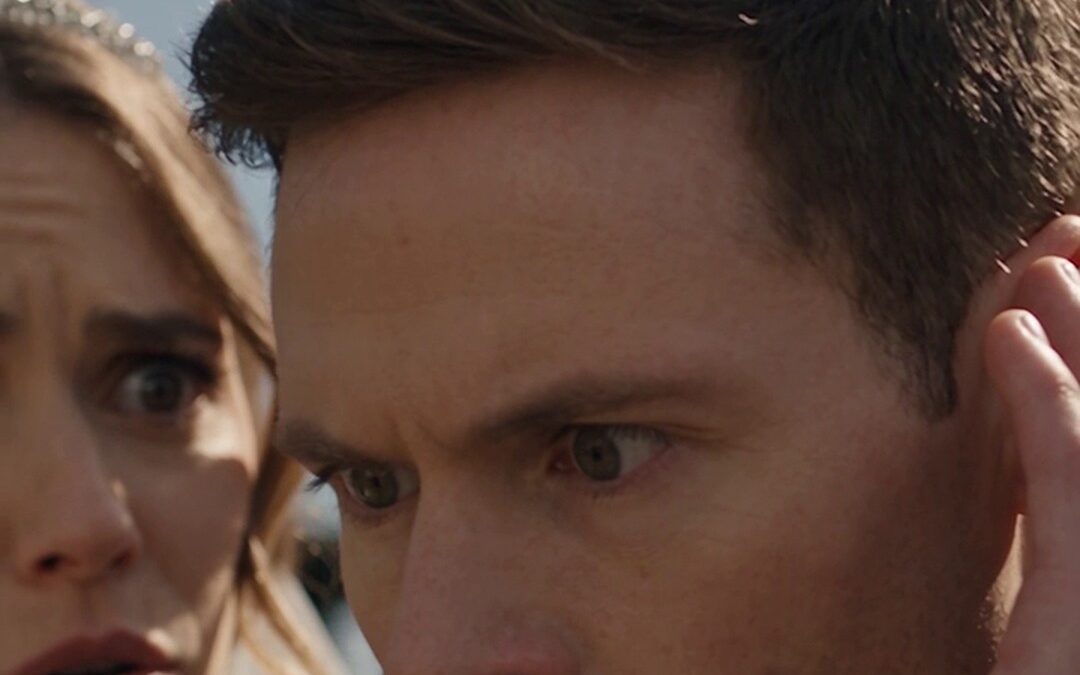
The woman beside the boy had one crooked finger curled around his ear. I had the same habit, rubbing the small notch there whenever I was nervous. The woman on the steps lifted her hand to her own ear. A pale crescent scar crossed the same notch.
My throat closed. “Who are you?”
She looked at my face as if giving me time to decide whether I wanted the answer.
“Your mother.”
I stepped back. “My mother left.”
“No,” she said. “Your father told you I was dead.”
Chapter 2: The First Honest Question
My phone stayed open in my hand, the photograph bright against its black screen. My mother stood one step below me, close enough to touch, far enough that I could pretend the distance was a choice.
Rachel moved between us, not to block either of us, but to make a pocket of space on the broad landing. “We’re going to sit down,” she said. “All three of us. No one is leaving until Ethan has heard what he wants to hear.”
“I don’t want to trap him,” the woman said.
“You’re not,” I answered. My voice sounded unfamiliar. “I’m trying to understand why you’re here.”
“I can tell you that. I can’t tell you everything in one breath.”
“Then start with the part that contradicts what I was told.”
Her gaze flicked toward the church doors. Dad had come out with Aunt June and two cousins. He wore the pale gray suit he’d chosen for the ceremony, his boutonniere still straight. When he saw the woman, he stopped speaking.
“I can’t do this on the steps,” he said.
“You mean you can’t do it in front of your guests,” I said.
Dad looked at me. “Ethan, let’s get you and Rachel to the reception. We can deal with this later.”
Rachel held her bouquet against her waist. “He gets to decide that.”
My mother lowered her eyes. “I’ll go if you want me to.”
That offer cut through the noise more cleanly than an accusation would have. She was giving me a door out. I had spent most of my life believing my mother had taken one herself and never looked back.
“Don’t go yet,” I said. “There’s a bench by the side garden.”
Dad’s jaw tightened. “You’re choosing a stranger over your family?”
“I don’t know what I’m choosing.”
“Then don’t make a decision while you’re upset.”
“I’m choosing to hear a sentence.”
Rachel turned to Dad. “You told us his mother died.”
“I told you what I understood.”
“Did you?” I asked. “Or what you wanted me to understand?”
Dad’s face went still. Aunt June stared down at the pale yellow flowers along the church wall.
The wedding coordinator appeared at the top of the steps, holding a clipboard. “The shuttle is here. The photographer says he can wait ten minutes, but the reception room is booked for the next party at four.”
The time made the day suddenly measurable. Our guests were waiting. The cake stood in a bright room two miles away. My mother had crossed some distance to reach these steps, and now the event we had planned for months was tugging me forward.
“Tell the driver we’ll be there later,” Rachel said.
“It’s your wedding too,” I said.
“It is.” She looked at me, eyes wet but steady. “I’m not going to make a decision for you. But I will not pretend this didn’t happen so the pictures look perfect.”
I nodded to the coordinator. “We’ll meet the shuttle at the reception. Give us half an hour.”
Dad took one step toward us. “This is a mistake.”
“Maybe,” I said. “But it’s mine.”
He didn’t follow when we crossed to the garden bench. Aunt June did. She held herself carefully, as if she feared one wrong movement might break something. Behind her, Dad remained on the steps among the guests.
My mother stopped at the edge of the bench. “May I sit?”
I had wanted to ask that question of her for years without knowing I was asking. “Yes.”
She sat at the far end. Her coat smelled faintly of laundry soap and rain dried in a warm room. The day was bright, the garden full of green leaves and white blossoms. In the black-and-white photo, the woman’s hair was dark and waved at her temples. This woman had lines at her mouth and gray at her braid. Time had changed her. The scar hadn’t.
“My name is Marlene,” she said.
“I know your name.”
“Do you?”
“Dad called you Mara once. When I asked about the photo, he said it was an old family picture. Aunt June said you died.”
Marlene gave a small nod. “My name is Marlene. He used to call me Mari.”
I stared at the image again. “Were you married to my father?”
“Yes. We were both young. I was twenty-four when you were born. Your father was twenty-six.”
“You’re fifty-seven now?”
“Fifty-eight next month.”
I did the arithmetic. “I’m thirty-three. I was four in that picture.”
“Four years and three months,” she said. “It was taken in June, at the little zoo in Riverside Park. Your birthday was in February.”
The exactness didn’t prove anything. It did make the photograph heavier.
“What happened?” I asked.
“Your father and I separated. We were already living apart when you were three. I had a room in a house on Juniper Street. He kept you on weekends and two evenings a week. We had a schedule, though it wasn’t court ordered. We disagreed about a lot. We agreed you should see both of us.”
“Then why didn’t I?”
“Because he came to the room one Friday and told me you were sick. He said you’d been admitted to the hospital.”
Dad’s voice came from behind us. “That’s not how it happened.”
Marlene turned. She didn’t flinch. “You said he had a fever and I shouldn’t come.”
“He was sick. You had been working nights.”
“I was his mother.”
“You were exhausted.”
“That was my decision to make.”
Dad glanced at me. “She was working at a diner. She had a room with no proper kitchen. You were having breathing problems. I thought you needed a stable home.”
“You told her I was in the hospital?” I asked.
“I told her you were ill. I didn’t want her carrying you across town in the cold.”
“It was June,” Marlene said. “Not cold.”
Dad rubbed his forehead. “I don’t remember the weather.”
“You remember the hospital?”
“I said you weren’t well.”
“And when I called the next morning?”
“You called the house. You spoke to June.”
“I left a message for you,” Marlene said. “June told me he’d call when you were better.”
Dad looked at his sister. “You said you passed it on.”
June’s fingers tightened around the handle of her purse. “I did.”
“Did you?” I asked her.
She looked at me, then at my mother. “I gave him the message.”
“And?” Marlene asked.
“And he said he would call.”
“He never did.”
“He said you had been drinking,” Dad said.
“I had one glass of wine at dinner with my sister. You knew that.”
“You’d been late twice.”
“I was working the late shift.”
The answers arrived in small, sharp pieces. I wanted one to settle the matter, but each made another part harder to trust.
“What do you remember?” Rachel asked me.
I shut off the phone screen. “I remember a room with a radiator that hissed. I remember being carried down a hallway. I remember Dad saying Mom was gone. I don’t remember a hospital.”
“Your hospital stay was one night,” Dad said. “You had a respiratory infection.”
Marlene stared at him. “I was told he was too sick for a visit. Then no one answered when I called.”
“You were told I’d get back to you.”
“By your sister. Not by you.”
Dad took in a breath and released it slowly. “After that, she missed a visit. The next one too. Then she stopped coming.”
“I went to Juniper Street.”
“After you moved out.”
“When I came home from work, you were gone. Mrs. Givens told me the room had been cleared.”
“Because the lease ended.”
“It was still my address when I left that morning.”
“I arranged the move. I thought you knew.”
“You thought wrong.”
June finally sat, on the low stone wall opposite us. “I thought she knew,” she said.
Marlene turned toward her. “You told me he would call.”
“I did.”
“Then why didn’t he?”
June looked at Dad.
He let out a humorless breath. “I was angry. I didn’t know how to co-parent with someone who couldn’t stay steady.”
“Couldn’t stay steady?” I said. “You told me she died.”
“Years later,” Dad said. “After she disappeared.”
“Did you look for her?”
“I tried the last address.”
“Did you ask the police?” Rachel said.
“This was thirty years ago. We were young. I had a job, a toddler, bills. She left.”
“Did you file anything saying she’d abandoned me?”
“I don’t remember the paperwork.”
Marlene pulled her hands into the sleeves of her coat. “I went to family court in August. I couldn’t afford a lawyer. The clerk told me the schedule we had wasn’t enforceable. She said I could file a petition, but I needed an address to serve him. I went to the house where June lived, and she told me he’d moved to a new apartment.”
June shook her head, pained. “I told you he’d moved to the Oak Street place.”
“You gave me an old address,” Marlene said. “I went there twice. A family lived there.”
“I must have been confused.”
“You wrote it on the back of the envelope.”
The first contradiction was no longer a missed phone call. It was an address, repeated and wrong, tied to someone who knew the family.
I looked at June. “Did you know where Dad was living?”
“I knew he’d been looking at apartments. I didn’t know which one he chose.”
“Did you know he was keeping me?”
“I knew you were with him.”
“Did you think she had a right to see me?”
“Of course.”
“Then why didn’t you make sure she could find us?”
June’s mouth opened and closed. Her eyes filled. “I was trying to keep the family calm.”
“Which family?”
She looked at Dad.
Dad shifted his weight. “My mother had just died. June was helping me with you. Everything was chaos.”
“I’m asking June.”
“I didn’t want you hurt,” she said. “Your dad was angry. You were little. We all thought it was better to wait until things settled.”
“How long did you wait?”
She covered her mouth. “I don’t know.”
“That’s not an answer.”
“Years,” she whispered.
Marlene stood. “I’m not here to make her answer for him.”
“Sit,” I said, more sharply than I meant to.
She held my gaze. “I’ve sat in enough offices waiting for people who don’t come.”
I stood too. “I’m not telling you to stay. I’m asking you not to leave yet.”
“Why?”
“Because I need to know if this is real.”
“It’s fair to ask.”
“Can you prove who you are?”
“I can tell you where you were born, what name I gave you, who held you at the hospital, and what happened at your first birthday. I can show you letters I kept. I can give you the name of the clinic where I took you when you had that cough. But I can’t make a piece of paper undo your father’s story.”
“Did you ever get a death certificate?”
“No.”
“Did you think I was dead?”
“For a while, I thought you might be. Not because anyone told me that. Because I couldn’t reach you, and I didn’t know if you were safe. Then your aunt said you were fine.”
June’s face tightened. “I said he was healthy.”
“You said he was happy,” Marlene answered. “You said he called you Mom.”
June looked at me. “You did call me that sometimes.”
“Did you tell her?”
“I didn’t think it mattered.”
“It mattered to me,” Marlene said. “I thought you were letting me know he had someone. I didn’t know he had been told I was gone.”
“Did you try to find me after that?” I asked.
“Yes. I tried for years.”
“Why did you stop?”
“I didn’t stop wanting to. I stopped going to places where your father could call me unstable for appearing. I had a job, and then I had a life. I didn’t want your childhood to become a parade of adults arguing outside your school. I wrote to the address your aunt gave me. The letters came back. I called a number that no longer worked. I asked a lawyer about filing again. She told me I’d need to establish paternity and locate your father. We couldn’t afford to keep paying her.”
“You just stopped?”
“No. I stopped trying in ways that put you in the middle.”
That was not the same as never trying. It was also not an answer to every year. I felt both truths at once.
Rachel sat beside me. “What do you need right now?”
I looked at Marlene. “An ordinary thing. Something I can verify today.”
She nodded. “There’s a woman named Pearl Givens. She rented me the room on Juniper. She’s still alive, I think. She witnessed your father taking your crib when the lease ended. She also saw me asking for the new address.”
Dad scoffed. “Pearl was eighty then.”
“She was fifty-three,” Marlene said. “She’s eighty-two now.”
“Do you have her number?” I asked.
“I wrote it down.” She reached into the pocket of her coat, paused, and looked at me. “May I?”
“Yes.”
She took out a small address book, the paper softened at the corners. She found a number, then read it aloud. I called. The line rang four times before a woman answered.
“Hello?”
“Ms. Givens? My name is Ethan Mercer. I’m trying to reach Pearl.”
“This is Pearl.”
I glanced at Marlene. “I’m the son of Marlene Ellis. She rented a room from you on Juniper Street around 1997.”
There was a pause. “Marlene’s with you?”
“Yes.”
“Is she all right?”
“She’s here.”
“I wondered what happened to her boy,” Pearl said. “She asked me every week if anyone had seen him.”
My grip tightened on the phone. “Did my father tell her she could see me?”
“I don’t know what he told her. I know she came back after he moved your things. She had a letter for him and didn’t know where to take it. I called the number he left with me. A woman named June answered. June said she’d deliver it.”
June looked down.
“Did the letter get delivered?” I asked.
“I can’t say. I didn’t watch her hand it over. But Marlene came back two weeks later asking whether he’d replied.”
Marlene’s eyes closed briefly. “You said you never heard from me,” I said to June.
“I don’t remember that letter.”
Pearl’s voice came through the speaker. “There was one more thing. Marlene left a photograph with me once. She said if she couldn’t keep it safe, I should send it to you when you were old enough to ask.”
My pulse jumped. “What photograph?”
“One of you two at the zoo. She had a copy made. I gave it to June when she came to collect Marlene’s things.”
June turned pale.
Dad said, “I never saw any photograph.”
“Did you give it to him?” I asked June.
“I did.”
“Why did you tell me this photo was just an old family picture?”
“I didn’t know you’d never seen it.”
“You put it in the family album.”
“I thought it would be kinder than throwing it away.”
“Why didn’t you say who she was?”
June’s voice broke. “Your dad said it was better not to reopen things.”
I stared at Dad. “You knew.”
“I knew there was a picture. I didn’t know it was the same one.”
“The scan came from your album,” I said. “You sent it to me when I asked for childhood photos for the wedding slideshow.”
He looked at the phone in my hand. “I didn’t remember that particular picture.”
“Did you know it was my mother?”
“I knew it might be.”
The wedding photographer had texted Rachel. She read the message and put her phone away. “They can start without us.”
“You don’t have to stay,” I said.
“I know.” She glanced toward the church doors, where guests were beginning to drift down the steps. “I’m staying because I want to hear what you decide. I’m also angry that our wedding was the first time you and I learned this story was incomplete.”
“I’m sorry.”
“I’m not asking for an apology yet. I’m asking you not to make me perform a happy reception while you hide from the truth.”
“I won’t.”
Dad stepped closer. “I did what I thought I had to do. You were a little boy. You needed one stable home.”
“Was she dangerous?”
“No.”
“Was she using drugs?”
“No.”
“Did she hurt me?”
“No.”
“Then what did she do that meant I couldn’t see her?”
“She was unreliable.”
“She worked nights.”
“She was late to a few visits.”
“Was I unsafe with her?”
“No.”
“What did you think would happen if I saw her?”
Dad’s eyes moved from me to Rachel, then to June. “You were bonded to me. I was afraid she’d take you.”
“Was there a custody order?”
“No.”
“Did she threaten to take me?”
“No.”
“Then you decided she couldn’t see me because you were afraid she might ask to?”
“I was your father. I had to make a decision.”
“Your decision kept her from knowing where I was.”
“I thought she knew.”
“June gave her the wrong address.”
Dad turned. “I didn’t tell June to do that.”
“No,” June said. “You didn’t.”
“Did you mean to keep her from finding us?” I asked her.
June pulled a tissue from her bag. “At first, no. I was frightened of how angry he was. He had just lost his mother, and you were clinging to him. I thought if she came back, it would tear your life apart.”
“And after?”
“After, I knew the address was wrong.”
The garden seemed to contract around us. “When did you know?”
“Within a year. I ran into Pearl at a grocery store. She said Marlene had been asking about you. I told her you were doing well.”
“Did you give her our address?”
“No.”
“Did you tell Dad she was still looking?”
“I told him she’d asked. He said not to bring it up.”
“So you both knew she hadn’t simply vanished.”
Dad’s face hardened. “I didn’t know she was trying to find you. I knew she had asked once.”
“More than once,” June said.
He stared at her. “You told me she’d moved on.”
“I said I thought she had.”
“You said she wanted a clean break.”
“I was trying to make it easier for you.”
“For me?” I asked. “Or for yourself?”
June couldn’t answer.
Dad’s voice softened, the voice he used when he wanted a hard thing to sound settled. “I did raise you. I was there every day. I put you through school. I taught you to drive. I came to your games and your graduations. None of that was a lie.”
“No,” I said. “But it doesn’t answer why you told me she was dead.”
“I never said I saw a body. I said she was gone from our lives.”
“You said, ‘Your mother died when you were little.’ I remember.”
“You were asking why you didn’t have a mother like your friends did. I wanted to give you an answer you could live with.”
“You gave me an answer that took away her choice.”
He looked toward the guests. Some had begun to realize this was not a schedule problem. “Are you going to announce this to everyone?”
“I don’t know.”
“Your wedding day doesn’t need to become a family tribunal.”
“I’m not putting you on trial. I’m trying to figure out if I can trust you.”
“You can.”
“How?”
“By remembering what I’ve done for you.”
“That’s not how trust works.”
The coordinator returned, accompanied by the photographer. “I’m sorry to interrupt. The reception venue says we need to leave within fifteen minutes if we want the meal served on time.”
Rachel answered first. “We’re coming. We’ll tell the guests there’s a delay.”
Dad said, “Good. This can wait until tomorrow.”
“It can’t,” I said. “Not all of it. But I won’t make a public announcement today. I won’t pretend the story is settled either.”
I turned to Marlene. “Would you come to the reception?”
She considered it. “If I’m invited as myself. I won’t stand in a corner while people decide whether I’m a stranger or a spectacle.”
“You’re invited as my mother.”
She looked at me without reaching for my hand. “That’s a beginning. It isn’t the same as knowing me.”
“I understand.”
“Do you?” she asked.
“Not yet.”
She nodded, accepting the limit. “Then I’ll come for an hour.”
Dad shook his head. “This will confuse everyone.”
“I can handle a confused room,” Rachel said. “I can’t handle a marriage where we protect a story because it photographs better.”
That made me look at her. She had spent the morning carefully placing her late grandmother’s brooch at her collar because she wanted someone she loved to be present. She had asked me three months earlier whether I wanted a chair saved for my mother, and I had said no, she was gone. Rachel had trusted that answer when she printed the seating chart. She had not accused me of choosing to erase Marlene. She was asking what I would do now that I knew.
“I’m sorry I told you she was dead,” I said.
“You believed your father.”
“I also never asked again.”
“You were a kid.”
“I was an adult for a long time.”
She looked at the photograph on my phone. “You kept that picture.”
“I thought I liked the way the boy was smiling.”
“Maybe you did.”
Marlene touched the edge of her sleeve. “He liked the carousel. He got frightened when the horse went up, then laughed every time it came down.”
I remembered a pale horse in a faded picture book, though I could not tell whether that memory belonged to the photograph or to something she had just put back into the room.
“How did you know the picture was in my Favorites?” I asked.
“I didn’t know the name of the folder. I knew you kept the scan because Pearl told me you had shown it to her.”
“Pearl has seen my phone?”
“No. Years ago, she saw you at the bakery where she worked. You were about twenty. You had the picture printed for your grandmother’s memorial board. You told her it was the only clear photograph you had of yourself before kindergarten.”
“I don’t remember meeting her.”
“You were there with your aunt. Pearl said you looked like your father.”
“And you knew I was getting married today?”
“Pearl told me she saw the announcement on the church bulletin board. Your aunt had posted it for the family. I didn’t know whether I should come. I asked Pearl what she thought. She said if I wanted to see you, I should let you choose whether to speak.”
“You came anyway.”
“I came to give you the choice in person. I thought if I wrote a letter, someone else might decide what it said. I wasn’t sure you’d read a long one from a woman you believed was dead.”
“So you wrote one sentence.”
“I wrote the smallest request I could make that you could check for yourself.”
“Why ‘hidden’?”
“Because you told Pearl the photo was in your phone, but you never looked at it when she saw you. It was hidden in plain sight. She told me you’d put a star on it.”
“Favorites.”
“I didn’t know the word your phone used. I didn’t want to pretend I knew more than I did.”
The note had been careful. Not magic, not a message from inside my phone. A chain of ordinary people had carried its knowledge: Pearl, a chance encounter, a memory of me holding a print. Each link was limited. Each could be checked.
At the reception, the room was bright with white linens, pale pink flowers, and sunlight through the windows. The guests rose uncertainly when we came in. Our cake stood beneath a garland of fresh greenery. The band had paused. A hush began to spread, and I felt the polished version of the day waiting for me to restore it.
I took the microphone.
“We’re sorry for the delay,” I said. “A family matter came up, and we’re going to continue the celebration. This is Marlene. She is my mother. I was told she had died when I was four. I’ve learned that wasn’t true, and I don’t know the whole story yet. I’m not asking anyone to choose a side. I’m asking for room to find out what happened.”
No one applauded. I was grateful.
Aunt June stood near the back, her hands folded. Dad remained by the windows. A few relatives glanced between them. My mother chose a chair near the open doors, not a place at the head table. She declined the champagne and asked for iced tea. When the server brought it, she thanked her by name after reading the badge.
Rachel leaned toward me. “You said what you know.”
“I left out the part about Dad.”
“That was your choice.”
“I don’t want to punish him in front of everyone.”
“Then don’t. But keep asking him in private.”
The first dance was waiting on the schedule. The band leader approached, uncertain. Rachel took my hand. “I still want to dance.”
“With me?”
“With the man I married. I also want him to tell me the truth when he learns it.”
“I will.”
She watched my face. “That’s a promise you’ll have to keep more than once.”
“I know.”
We danced beneath the warm lights and sunlit windows. The room smelled of lemon cake and fresh flowers. I could see Marlene from the floor. She watched us with a careful smile, neither claiming the moment nor withdrawing from it. When the song ended, she clapped once, quietly.
Dad waited until the guests had returned to their tables before approaching. “Can we talk outside?”
“Rachel comes too.”
“I wanted to speak to my son.”
“She’s my wife,” I said. “And this affects her.”
He looked at Rachel, then nodded. We went to the terrace, where bright green shrubs framed the patio and the stone warmed beneath the sun. June followed at a distance but did not sit with us.
Dad faced me. “I can’t give you a clean answer. I was afraid she would take you. I was working double shifts. I had no help except June. You had been sick. I thought I was the person keeping you safe.”
“You said she was dead.”
“Later. When you were older and kept asking.”
“Why not tell me you didn’t know where she was?”
“Because I didn’t want you to believe you’d been abandoned.”
“So you told me she was dead to make the abandonment hurt less?”
“I thought it would end the questions.”
“It did.”
He put his hands on the low wall. “I know what this looks like.”
“What did you tell June to do?”
“I told her not to give Marlene our new address until we spoke. I thought we’d discuss it. Then you started preschool. Then there was work. There was always a reason to wait.”
“That’s not what you told me.”
“I didn’t know she was writing.”
“June says she told you.”
“She may have said Marlene asked about me. I don’t remember a letter.”
“What did you do when she asked?”
“I said I’d think about it.”
“Did you?”
He looked away. “Not in a way that mattered.”
The answer was small, but it changed the shape of the lie. Dad had not planned an elaborate scheme. He had made one decision out of fear, then let each later silence protect it. June had helped by holding the address and withholding what she knew. Later, both had helped convert an uncertain absence into a finished death.
“Were you trying to keep custody?” I asked.
“There was no court order. I was afraid she’d file and take you.”
“She had every reason to file.”
“I was afraid of losing you.”
“You didn’t lose me. You kept me.”
His eyes filled. “I was your father.”
“You were. You still are. That doesn’t make what you did harmless.”
“I know.”
“What do you want from me now?”
“I want you to remember the good years.”
“I do. I’m trying to remember them without making them excuse this.”
He sat down. For the first time that day, he looked less like the man who had planned the reception and more like the young father who had been afraid of losing the only child in his life. It helped me understand him. It did not settle anything.
“Are you going to cut me off?” he asked.
“I don’t know.”
“I raised you.”
“I know.”
“I was there.”
“I know.”
“Then what more do you need?”
“An honest answer when you have it. A willingness to let Marlene speak for herself. And no more deciding what I can handle.”
He nodded once. “I can do that.”
“You don’t get credit for promising. You get the chance to do it.”
He looked at the floor. “Fair.”
When we returned, June was sitting alone at a table with a glass of water. She looked up at me. “I’m sorry.”
“What did you mean when you told Marlene I was happy?”
“I meant you were well. You had friends. You were doing fine.”
“You knew she was looking for me.”
“I did.”
“Why didn’t you tell me?”
“Your dad asked me not to. I told myself he was your parent and I should respect that.”
“You were my aunt.”
“I know.”
“Did you ever tell him she was asking for me more than once?”
“I told him she had called. I told him Pearl had seen her. I didn’t tell him about every conversation.”
“Why not?”
“I wanted peace.”
“For whom?”
“Your dad. You. Myself.”
Marlene sat across from her. “Did you ever tell me he was afraid I would take Ethan?”
June shook her head. “No.”
“I might have understood that fear. I would have asked for visits in public. I would have gone through court. I would have tried to show him I wasn’t taking him away.”
“I know.”
“Do you?” Marlene asked. “Or do you only know what you wish you had done?”
June wiped her eyes. “I can’t fix it.”
“No,” Marlene said. “You can tell the truth.”
“I don’t remember all the dates.”
“Then say what you remember and don’t fill in the rest.”
June glanced at me. “I remember a call from Pearl in the fall. She said Marlene wanted an address. I remember telling her you had moved. I remember your dad saying he wasn’t ready for contact. I remember later telling him she had stopped asking.”
“Did she stop?”
“I don’t know.”
“Did you ask?”
“No.”
That was the first fully honest answer she had given.
Marlene placed the address book on the table. “I don’t want an apology that makes me comfort you.”
June looked at her. “I’m sorry I helped keep you from him.”
Marlene considered the words. “Thank you for saying that. I’m not ready to forgive you.”
June nodded, eyes wet. “I understand.”
“I hope you do.”
I looked at the photo again. “Why did you leave the copy with Pearl?”
“I was moving out of Juniper Street. Your father had taken most of your things. I thought the picture mattered, and I didn’t trust myself to keep it safe. I asked Pearl to pass it on if she ever knew where you were.”
“Why didn’t you keep the original?”
“I did. The one you have is a copy. I kept the original in a box with my papers. I thought I might need it someday.”
“Did you?”
“I needed something to remind me I had been your mother before the story was rewritten.”
The sentence did not accuse me. It named the cost.
“Can I see the original?”
“Yes. Not tonight. It’s at home.”
“Where do you live?”
“An apartment near the library. I work mornings at the community garden shop. I have a cat who dislikes visitors. You don’t have to come there.”
“I’d like to see it.”
“You can, when we decide a day.”
“Would tomorrow be too soon?”
She smiled faintly. “Tomorrow is a day. We can decide tomorrow.”
Rachel joined us with two plates of cake. “Marlene, would you like some?”
“Thank you. A small piece.”
“You don’t have to stay longer than you want,” Rachel said. “I’m glad you came.”
“I’m glad you asked me to stay.”
Rachel set the plate down. “I’m still angry about what happened.”
“You should be,” Marlene said.
“I’m not angry at you.”
“I know. But you don’t have to make me comfortable either.”
Rachel let out a breath. “Thank you.”
Marlene took a bite of cake. “It’s good.”
“It was my grandmother’s recipe,” Rachel said. “She used orange zest.”
“Your grandmother must have known what she was doing.”
“She did.”
We sat together while the reception resumed around us. The guests began to talk again, cautiously at first, then about ordinary things: the weather, the cake, the drive home. The family did not become a single audience with one opinion. Some people came to greet Marlene. Some avoided her. One cousin asked if she wanted another glass of tea. She answered for herself.
Dad left before the cake cutting. He hugged me at the door and said he would call the next day. I did not promise to answer. He seemed to understand.
June stayed until the first dance with Rachel’s father. Before she left, she asked Marlene if she could call her sometime.
“You can ask Ethan to pass along your number,” Marlene said. “I’ll decide when I’m ready.”
June accepted that.
At the end of the reception, Rachel and I stood beneath the church’s old stone arch for a few last photographs. A guest had tucked a white rose into Marlene’s coat pocket. She was speaking to Pearl on the phone, laughing softly at something I couldn’t hear. She had a life before that afternoon and a life continuing after it. I had not restored her to anything. I had only stopped pretending she had never been there.
Rachel offered her hand. “Ready?”
I looked at my mother. “Would you walk with us?”
She glanced at the guests, then at the open path toward the garden. “A little way.”
I held out my hand, palm up. She did not take it immediately.
“May I?” I asked.
“Not yet,” she said. “But you can walk beside me.”
So I did. Rachel took my other hand, her bouquet pale against the green leaves. Marlene kept her coat on and chose her own pace. We descended the church steps together, and when she reached the last one, she turned toward me.
I listened as she told me which way she wanted to go.