She Promised Dottie a First Look—Then the Newspaper’s Final Edition Brought Back the Mistake That Changed Her Life
Chapter 1: The Date Stamp
Dottie Park set a library date stamp beside Evelyn Vega’s keyboard, though the library branch had been closed for six years.
Its rubber face was wrapped in a dish towel.
Evelyn did not touch it.
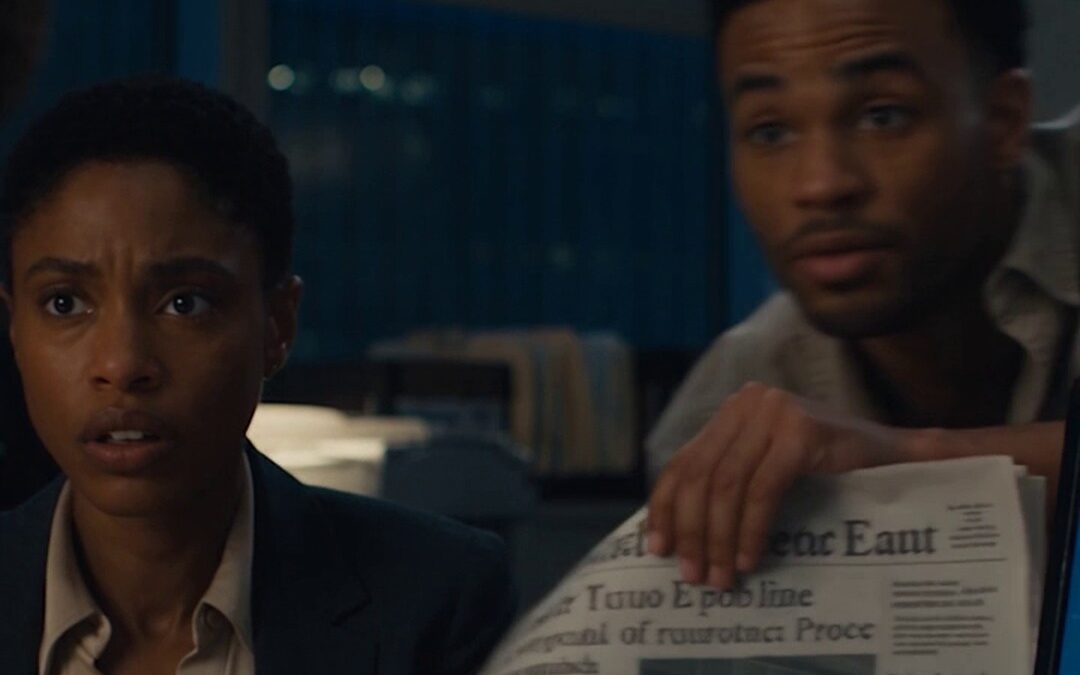
Across the newsroom, Sam Kline lifted the last edition of the weekly paper from the layout table, where its pages had been spread to dry after proofing.
“Is that the old one?” he asked.
Dottie nodded, then looked at the page in his hands.
Six years earlier, Evelyn had reported on the county’s decision to close the eastern library branch.
Dottie, its longtime circulation manager, had brought Evelyn a stack of books that morning because the branch’s return slot was already sealed.
“You can keep those until they decide what belongs where,” Dottie had said.
Evelyn had returned them the next week, with a grocery receipt tucked between two covers because Dottie liked finding things Evelyn forgot.
The article Evelyn wrote said Dottie had recommended the closure.
Dottie had come to the newspaper office after it appeared.
Evelyn still remembered the way she had laid the paper flat, pressing its curling corners with both palms.
“I recommended closing it with one worker,” Dottie had said.
The county had proposed keeping the branch open with reduced paid hours and volunteers covering the rest.
The distinction should have been in the article.
Evelyn had promised to correct it, but her editor had allowed only a short notice two issues later.
When Dottie left, Evelyn had followed her to the door.
“You’ll see it before anyone else does,” Evelyn had said.
At the time, she meant any future story about Dottie or the branch.
She had thought she was offering a courtesy she might never need to perform.
Now the paper had one edition left.
Sam’s final-issue feature paired the branch’s closure with a new proposal to reopen the same rooms as a volunteer reading space.
The opening photograph showed Dottie carrying a box of books out of the building.
Evelyn had found the picture in the archive and put it on Sam’s desk herself.
Yesterday, she had tried Dottie’s old telephone number.
It rang without answer, and the print deadline was tomorrow morning.
Evelyn slid the feature from Sam’s hands.
Dottie unfolded the dish towel and picked up the stamp, turning it so the worn rubber faced Evelyn.
“You’ll see it before anyone else does,” Dottie said.
Chapter 2: What the Page Could Hold
Evelyn held out the feature.
Dottie left the stamp on the desk and took the page by two corners, careful of the ink on her fingers.
Sam pulled out a chair, but she remained standing.
Evelyn watched her eyes move past the photograph and down the first column.
At the bottom, Dottie laid the page flat beside the stamp.
“You called the new plan a reopening,” she said.
“That’s the language the organizers use,” Sam said.
“Then you should put their names next to the word.”
Sam glanced at Evelyn.
He had interviewed the volunteers twice, attended a planning meeting, and walked through the empty branch with the county facilities manager.
Evelyn knew he had done more reporting than the last issue’s schedule could comfortably hold.
“I can change it,” he said.
Dottie turned the page over.
“What hours did they tell you the room would be open?”
“Tuesday and Thursday afternoons to start.”
“With whom?”
“Volunteers.”
“That’s an answer about wages,” Dottie said.
“I asked who would be there.”
Sam reached for his notebook.
“They’re making a rota.”
“Who holds the key when someone doesn’t come?”
“The organizer.”
“Who tells people the room’s closed?”
Sam stopped turning pages.
The question seemed smaller than the others, and Evelyn recognized the danger in that.
For years, the old branch’s door had carried a paper notice whenever Dottie was sent to cover another location.
People blamed the person whose handwriting they recognized.
“The organizer told me they were still working that out,” Sam said.
“Then they’re still working out whether it opens.”
Dottie pushed the proof toward Evelyn.
The article’s photograph occupied more space than the account of the proposed hours.
Evelyn saw the familiar shape of the story she had written six years earlier: a tidy decision, a face to stand beside it, and too little room for the work underneath.
“Why the stamp?” she asked.
Dottie picked it up and pressed the handle once against the desk without ink.
The dry rubber made a soft thump.
“I was clearing a drawer,” she said.
“From the branch?”
“From my kitchen.”
Evelyn knew Dottie kept very little without a use for it.
Dottie folded the towel around the stamp again.
“I brought something else,” she said, “but first I wanted to know what page you meant to show me.”
Evelyn looked at Sam.
He took back the proof and drew a line through *reopening*.
“I’ll call them again,” he said.
Dottie did not sit down.
“You should,” she said, and let the word land between them.
The newsroom had once filled the entire storefront.
Now the front half held three desks, a rack of unsold editions, and a packing table built from a door laid across filing cabinets.
Sam went to the back for the telephone because its cord reached far enough to let him take notes away from the printing noise next door.
Evelyn set Dottie’s chair at the packing table.
This time, Dottie sat.
“The new group asked me to help,” she said.
“With the reading room?”
“They asked me to make the volunteer schedule.”
“That sounds like something you know how to do.”
“I know how to make a paid schedule.”
Evelyn waited.
Dottie rubbed a thumb along the towel’s hem.
“When the county cut the branch hours, I made every schedule myself for four months,” she said.
“Three people worked there before the cuts, and afterward they wanted one of us at a time.”
Evelyn remembered a chart from that meeting, colored blocks showing when volunteers could staff a desk.
She had photographed it because the colors reproduced well.
She had not asked who would train the volunteers or take responsibility for the doors.
“I told the board the plan wouldn’t work,” Dottie said.
“Did you say the branch should close?”
“I said I wouldn’t tell people it was open on a day I couldn’t promise them a worker.”
That was close to the sentence Evelyn had quoted.
It was also far from the meaning her article gave it.
“Your correction said you objected to the staffing plan,” Evelyn said.
“It said that after everybody knew me as the woman who closed the library.”
Dottie spoke evenly.
Evelyn remembered hoping the correction would settle the matter because she had no better way to go back into the first edition and change it.
“Why didn’t you ask for more?” Evelyn said.
“I did.”
Evelyn opened her mouth, then closed it.
Dottie gave her a look she used to give patrons who insisted a book could not possibly be overdue.
“I came here twice,” she said.
“The second time, your editor told me the correction had run.”
Evelyn could picture the office door and the narrow space just inside it.
She could not picture that second visit.
“You were on the road,” Dottie said.
“You were interviewing people at the other branches.”
Evelyn had been proud of that follow-up.
It had not included Dottie.
Sam’s voice carried from the back room as he asked someone for the current staffing plan.
Dottie heard it too.
“He’s doing the job,” she said.
Evelyn moved the old stamp away from a damp ring left by her water glass.
“I want to do mine.”
“Then find out what they’re asking me to put my name on.”
Evelyn could have answered that the proposal was not Dottie’s responsibility.
She knew Dottie would agree, and that it would leave the question untouched.
Instead, she went to the filing cabinets and pulled open the drawer marked for the year the branch closed.
The cabinet gave its usual metallic squeal.
Dottie glanced up.
“You still have those?”
“We kept every printed issue.”
“I know,” Dottie said.
The other things in the drawer had been harder to find: Evelyn’s notebooks, a folder of photocopied board materials, and a packet of reader letters held by a rubber band gone brittle with age.
She carried the packet back without opening it.
Dottie watched her set it down.
“Before you go digging,” she said, “I brought my own records.”
From her canvas bag, she took a small stack of branch duty sheets in a plain folder.
They showed dates, assigned workers, and spaces where staff had marked a closure or a shortened shift.
Dottie kept one finger on the folder.
“I’m not handing you these to prove I wanted the building closed,” she said.
“I kept them because the work happened, whether the doors were open or not.”
Evelyn looked at the pencil marks.
On many days, one name appeared beside tasks that would have filled several people’s hours: returns, shelving, holds, desk coverage, and the delivery bins sent between branches.
“May I copy them?” she asked.
“After you tell me what you think they show.”
Evelyn sat down.
For the first time since Dottie arrived, the print deadline stopped sounding like a clock in her head.
“They show the hours the county was trying to replace,” she said.
“And?”
“They show you were working those hours.”
Dottie slid one sheet toward her.
A line crossed the middle of the day.
Evelyn recognized Dottie’s handwriting from the notes she had put into returned books.
“Look again.”
Beside the line were two initials.
“One of the other workers covered you?”
“For forty minutes,” Dottie said.
“I was at the board meeting.”
Evelyn checked the date against her notebook.
It was the meeting she had reported.
Her notes from that evening began with the county’s recommendation, followed by a hurried account of public comments.
She had written Dottie’s name in the margin and underlined *cannot open as proposed*.
Below it, in smaller letters, she had written *close branch?*
Evelyn stared at the question mark.
She remembered standing at the back of the crowded room, unable to hear the end of Dottie’s answer over a chair scraping across the floor.
She had asked the county administrator afterward what the board was being advised to do.
He had summarized his proposal.
Evelyn had placed that summary near Dottie’s words and let it become her position.
Sam returned with his notebook under his arm.
“They haven’t got a keyholder for Thursdays,” he said.
“The county won’t release keys until the agreement’s signed.”
“Is the agreement signed?” Evelyn asked.
“No.”
Dottie put the duty sheets back in line.
Sam looked from her to the old notebook.
“What did I miss?”
“Enough that the page needs to come apart,” Evelyn said.
He glanced toward the press room.
“The press slot’s ten tomorrow.”
“I know.”
“We can lose the photograph and get a column back.”
Dottie turned toward him.
“Keep the photograph,” she said.
Evelyn expected her to say why.
Dottie only opened the folder to the sheet from the board meeting and touched the two initials penciled beside her own.
Sam’s feature had grown from a modest idea.
For the paper’s final edition, Evelyn wanted stories about places readers had argued over, protected, changed, or lost.
She had sent him to the branch because the new reading-room group was meeting there.
He came back with photographs of bare shelves and volunteers measuring tables with string.
They hoped to open before winter, if the county approved the use agreement and someone could cover each public hour.
Those conditions were in Sam’s notes.
In the draft, they had become one sentence near the end.
The photograph from the closure gave the piece an easy beginning, and Evelyn had encouraged him to use it.
Dottie lifted the page again.
“Who’s the woman beside me?” she asked.
Evelyn looked closely.
In the photograph, Dottie held one box.
A woman behind her steadied the handcart stacked with three more.
“I don’t know,” Evelyn said.
“Her name’s Carla,” Dottie said.
“She worked mornings.”
Evelyn searched the caption.
It named Dottie alone.
“Did you speak to her, Sam?” she asked.
“No.”
“She still lives here,” Dottie said.
“She’ll tell you what that day looked like.”
Sam reached for his coat.
Evelyn stopped him long enough to ask what else his draft relied on.
“The county’s public proposal, an interview with the organizer, and two volunteers,” he said.
“One volunteer hasn’t committed to a shift.”
“She told me she probably could.”
“Call her again,” Dottie said.
“She’s a person, not a square on a rota.”
Sam nodded and went to make the calls.
Dottie folded the proof so only the photograph faced up.
“Carla brought the cart,” she said.
“I couldn’t get those boxes across the threshold by myself.”
“I should have asked her name.”
“You can ask it now.”
Evelyn opened the packet of reader letters.
The first three were about different stories.
The fourth was a typed note Dottie had delivered after the correction ran.
Evelyn read it slowly.
Dottie thanked the paper for printing the correction, then asked for an account of what the staffing proposal required and why she had spoken against it.
In the margin, someone had written *covered*.
The handwriting belonged to Evelyn’s former editor.
Evelyn set the letter down.
“I never saw this.”
“You said you were out.”
“I was.”
Dottie waited while Evelyn turned it over, though there was nothing on the back.
The letter had been kept with the other mail.
It had not been hidden, and Evelyn had not looked for it.
“I could have asked you,” Evelyn said.
“Yes.”
Sam came back into the room with Carla’s telephone number and the uncertain volunteer’s answer.
“She can cover two Tuesdays a month,” he said.
“The organizer had her on every week.”
“Can she tell the organizer?” Dottie asked.
“She said she already had.”
Sam looked unhappy with the information, not with the woman.
He crossed out the line in his notebook and went back to call Carla.
Evelyn took a sheet of plain paper from the printer tray.
“I need to write a correction to the old article,” she said.
Dottie’s gaze shifted to the duty sheets.
“A correction says what the paper got wrong.”
“That’s where I’ll start.”
“It won’t answer why the same plan came around again.”
“No,” Evelyn said.
She picked up a pen.
“Sam’s reporting has to do that.”
Dottie finally loosened her grip on the folder.
By early afternoon, Sam had reached Carla.
She came to the newsroom after her shift at a grocery store, carrying a coat she never put on because she stayed near the door.
Carla remembered the day of the photograph in practical pieces.
They had packed the reference books separately so the county driver could find them first.
They had tied the rolling handcart’s loose wheel with cord until maintenance could collect it.
Dottie had gone outside with the first box to answer a patron who thought the branch was closing a week later.
“I was behind her because the cart kept drifting,” Carla said.
“What was in the box?” Sam asked.
“Returns.”
She smiled briefly.
“People kept bringing them right through the last hour.”
Evelyn showed her the photograph without its caption.
Carla pointed to the edge of the frame.
“That’s the cord,” she said.
Sam leaned in.
The thin line ran from the cart handle down beyond the picture.
He wrote it down, then asked about the staffing proposal.
Carla’s smile went.
“They gave me a form to say which unpaid hours I could take after my paid hours were cut,” she said.
“Did you fill it in?” Evelyn asked.
“No.”
“Why?”
“I already had another job lined up.”
She looked at Dottie.
“I’m sorry I left you there those last weeks.”
“You gave notice,” Dottie said.
“You worked your shifts.”
Carla nodded once, as if the distinction still mattered.
Sam asked whether she thought volunteers could run a reading room now.
“They might,” Carla said.
“It depends what they promise the public.”
She had no objection to someone unlocking a room twice a week so neighbors could sit and read donated books.
She objected to calling that a restored library if the county would supply neither trained staff nor its collection and services.
“The branch handled holds, returns, computers, questions,” she said.
“A room with books can be good.”
“It’s work too.”
After she left, Sam stood over the proof.
“I wrote that they’d bring the library back,” he said.
Evelyn heard Dottie set the stamp down on the table.
The soft thump was becoming a punctuation mark in the room.
“What are they bringing back?” Dottie asked.
“A place people can use,” Sam said.
“That’s worth reporting.”
He pulled a chair beside her.
“I can tell it without calling it the old branch.”
“You can ask them what they want it to be,” Dottie said.
Sam drew a box around the first paragraph.
The three of them worked through it line by line until a voice came from the press-room doorway.
“I need to know whether this page still belongs in tomorrow’s run,” said Len, the printer.
He held a stack of blank paper against his hip.
He had kept the presses running for twenty-three years and was due to begin at a commercial shop the following Monday.
Evelyn had promised him final pages by eight that night.
“It does,” she said.
“Is eight still eight?”
She looked at Sam.
He had interviews left, and she had an error to trace and correct.
“No,” she said.
Len lowered the paper to the floor.
“Tell me what time to tell my crew.”
“Ten.”
“They have other plans.”
“I’ll ask them first,” Evelyn said.
Len stayed where he was.
“They already gave you a late night for the farewell pages.”
Evelyn felt Dottie watching her.
A promise to one person had reached the people standing just beyond the doorway.
“I know,” Evelyn said.
“I’ll cut pages if I have to.”
Len considered that.
“Ask them by four,” he said.
“If they can’t stay, I need the shorter run planned before supper.”
He went back to the press.
Sam looked at the proof as if the paper itself might tell him what to cut.
“The retrospective photos can go,” he said.
“Those took you weeks.”
“The captions are done.”
“And the people in them expect to see them.”
Sam rested his pen on the desk.
They had offered extra copies to families who lent photographs for the final issue.
Dottie reached for her bag.
“I don’t need to sit here while you work out the whole edition,” she said.
“You promised to show me the page,” Evelyn said.
“I’ve seen it.”
“Will you come back when it’s ready?”
Dottie pulled out her telephone and checked that it had sound.
“Yes,” she said.
“Call this number.”
Evelyn wrote it down herself and read the digits back.
Dottie gathered her duty sheets but left the stamp.
“You can keep that until I return,” she said.
At the door, she paused beside Sam’s photograph.
“Call the organizer before you call me,” she told him.
“He needs to hear what you’re printing about his plan.”
Then she left them with the page.
Evelyn had expected the correction to take three sentences.
At her desk, she wrote eight versions and disliked each one.
The shortest stated that the paper had attributed the county’s closing recommendation to Dottie.
It was accurate but sounded as though the error had moved into the article by itself.
The longest explained the board meeting, the staffing proposal, the misleading quote, and the later correction.
It crowded Sam’s reporting off the page.
She carried her notebook to the archive rack and found the original issue.
The article’s first paragraph said the eastern branch would close at the end of the month.
The second named Dottie as the person who recommended it.
Farther down, Evelyn had reported that the county planned to replace staff hours with volunteers.
She had possessed both facts on the night she wrote the article and failed to put them into a truthful relationship.
She returned to the desk.
Sam was speaking with the reading-room organizer, whose name was Peter.
Evelyn could hear Peter say the volunteers had worked for months.
Sam agreed.
He asked whether the county had approved their use of the room.
Peter said the agreement would come.
Sam asked about a person responsible for the Thursday opening.
Peter repeated that a rota was being formed.
Then he fell silent.
Evelyn went back to her correction.
She wrote, *I reported that Dottie Park recommended the branch close.*
Below it she wrote, *She argued against a plan to operate it with reduced paid staffing and volunteers in place of workers.*
That much could be checked against her notes and Dottie’s duty sheets.
She added, *I treated the county’s recommendation as hers.*
For a moment, she could hear her former editor asking why she had used *I* when the paper had run the piece.
The answer was on the archive rack.
Her name was under the article.
Len came in at four with two crew members’ answers.
One could stay until ten.
The other had to leave at eight to pick up his mother.
Len could run the press with one person if the pages were ready, but bundling and loading would take longer.
“I can help bundle,” Sam said.
“You have a page to finish,” Len said.
Evelyn stood.
“I’ll bundle.”
“You’ll still be editing,” Len replied.
He was right.
The last edition already had a careful sequence of tasks.
Pages would be checked, plates prepared, the run printed, copies stacked and bundled, then routes packed for delivery before dawn.
An hour taken from one part of that sequence could not be wished away by offering two hands later.
“What if we drop four pages?” Evelyn asked.
“Then the press finishes earlier,” Len said.
“What’s on them?”
Evelyn named the photographs, the local-history column, and a page of readers’ memories.
Len knew two of the people whose photographs appeared.
He suggested moving the photographs into smaller spaces rather than cutting them all.
Sam had another idea.
“The retirement tribute is two pages,” he said.
“It’s ours.”
The tribute thanked former staff, carriers, and advertisers.
Evelyn had written most of it herself.
She looked at the photographs and then at the tribute.
“One page,” she said.
Sam began shifting the layout.
Len took the new schedule to his crew.
Evelyn crossed half her own thank-you piece out with a ruler.
The words had seemed necessary that morning.
By four-thirty, they fit in the space she had left.
Peter came to the newsroom before Sam could finish his second call with him.
He had paint flecks on his sleeve and the tired politeness of someone who had spent the day assembling shelves.
“I’d rather talk in person,” he said.
Sam offered him the chair Dottie had used.
Peter stayed beside it.
“You’re writing that we can’t open,” he said.
“We’re writing what’s ready and what isn’t,” Sam replied.
“We have people.”
“You have Tuesday coverage,” Sam said.
“You’re short on Thursdays.”
“More people offered to help after the meeting.”
“Have they agreed to a schedule?”
Peter took a breath.
“Some have.”
Evelyn stepped away from her desk.
“We’re still checking the proposal,” she said.
“We’ll describe the hours you hope to offer.”
“Dottie was here.”
“She was.”
Peter looked at the old stamp.
“She thinks volunteering always replaces somebody’s job.”
“Did you ask her to make the rota?” Evelyn said.
“Yes, because she knows how.”
“Did she agree?”
“She said she’d think about it.”
Evelyn did not know what words Dottie had used, and she had promised herself not to borrow certainty from Peter’s account.
“Ask her again,” she said.
“And listen to the answer.”
Peter rubbed the paint on his sleeve with a fingertip.
“Our group isn’t the county board,” he said.
“I know.”
“We want a place where children can sit with books after school.”
“That belongs in the story.”
He looked at Sam.
“Will it?”
“Yes,” Sam said.
“So will the key agreement and the staffing.”
Peter’s shoulders settled a little.
He explained that the group planned to accept donated books and set hours when an adult volunteer could attend.
The county would keep ownership of the building.
The group was still negotiating insurance, access to the washrooms, and who would secure the room at closing.
Peter had spoken of an opening date because he thought a public goal would bring volunteers forward.
Now he admitted that it had also made their unfinished plans sound settled.
Sam wrote while Peter spoke.
At the door, Peter turned back.
“If you call it a reading room,” he said, “some people will think we’ve given up on a library.”
“Have you?” Sam asked.
“No.”
“Then say that.”
Peter gave him a rueful nod and left.
The room felt quieter after he had gone.
Dottie wanted people to understand the work.
Peter wanted people to believe the work could begin.
Sam had to put both on a page that would arrive at their doors tomorrow, after the paper itself had no next issue in which to clarify them.
He placed the revised opening in front of Evelyn.
It began with volunteers carrying shelves into the closed branch.
It named the reading-room proposal and said the group hoped it could become part of a larger effort to restore library service.
The difference took only two sentences.
It changed the rest of the article.
Evelyn marked one phrase and handed it back.
“Get the agreement’s status from the county,” she said.
Sam reached for the telephone.
Before it rang, Dottie called.
Evelyn answered.
“I spoke with Peter,” Dottie said.
“So did we.”
“He told me you’re writing about the volunteers’ hours.”
“We are.”
“He thinks I asked you to stop them.”
“Did you?”
“No,” Dottie said.
“I asked him what he meant when he said I could build his schedule.”
“What did he mean?”
“He hadn’t decided whether I’d be a volunteer.”
Evelyn leaned against her desk.
“What did you tell him?”
“I told him I would show them how our old shifts worked.”
“That sounds useful.”
“I said I’d do it once, at their meeting, with Carla there.”
Dottie let Evelyn hear the limit.
Evelyn repeated it back.
“One meeting.”
“Yes.”
“Do you want Sam to include that?”
“Ask me after he’s written it.”
Evelyn smiled despite the pressure in the room.
“Fair.”
Dottie was quiet for a moment.
“Your young reporter called me before Peter came by,” she said.
“He asked whether I had offered to run the place.”
“I’m glad he asked.”
“So am I.”
Dottie’s voice softened.
“I don’t want him to spend his last night here correcting your article.”
“He’s reporting his own.”
“Then make sure he gets the space for it.”
After the call, Evelyn returned to her correction.
She had been treating it as a separate box that could sit beside Sam’s feature.
Dottie’s words made her see that Sam’s reporting would be the first full account of the old staffing dispute many readers encountered.
A correction was necessary.
It could not be asked to carry the whole story, and Sam’s story could not be asked to conceal the correction.
She moved the two pieces onto facing pages.
The county clerk called Sam back at six.
The use agreement was scheduled for a board vote in three weeks.
Until then, the group could enter the branch to clean and arrange donated furniture during approved visits.
They could not announce public opening hours.
Sam wrote the detail into the article and called Peter to tell him.
Peter was disappointed.
He said he had understood that permission was close.
Sam said the vote remained on the calendar.
Peter asked if the paper would print the proposed hours anyway.
“We’ll print what you hope to offer,” Sam said.
“We’ll say people can’t use the room yet.”
Peter thanked him without much warmth.
Sam put down the telephone.
“He’ll lose volunteers over that sentence,” he said.
“He may,” Evelyn replied.
“He might also keep the ones who can wait three weeks.”
Sam looked at the old photograph.
He had interviewed Dottie, Carla, Peter, two volunteers, and the county clerk in one day.
His first draft had been easier to write.
“This is going to read like a delay,” he said.
“It is a delay.”
“People wanted good news in the last issue.”
“Give them the work people have done,” Evelyn said.
“Let the date be what it is.”
Sam went back to his desk.
Evelyn read her correction aloud, listening for the places where she softened her own part.
She cut *may have suggested* and kept *reported*.
She cut *confusion arose* and wrote exactly whose conclusion she had printed.
Then she called Dottie.
“The page is changing,” Evelyn said.
“I can bring you the new proof when it’s ready.”
Dottie asked where the article would appear.
“Across from Sam’s piece.”
“Will it have your name?”
“Yes.”
There was a pause.
“I’ll come to you,” Dottie said.
“I want to see what’s beside it.”
Evelyn looked at the clock.
“About seven-thirty.”
“I’ll be there.”
At seven, Len brought news from the press room.
The crew member who had to leave at eight had finished preparing the paper stock and could stay another fifteen minutes if the pages arrived before then.
That would help, but it did not make ten o’clock an easy deadline.
Sam’s feature was nearly set.
The correction still needed one fact checked: whether the county’s proposal had specified volunteers as replacements for paid desk hours, or whether Evelyn was reading that into Dottie’s schedules.
She had the old board packet.
Its colored chart showed the proposed coverage, but the labels were small and the copy had faded.
The county clerk said archived materials were available at the county office until five.
It was closed now.
Evelyn could publish the correction using what she had already verified: her mistaken attribution and Dottie’s objection to reduced staffing.
She could leave the detailed account of volunteer hours to Sam’s current reporting.
That would be sound.
It would also leave readers without the part that made Dottie’s words matter.
“I can drive to Dottie’s for the original packet,” Sam said.
“She told me she kept it.”
“Don’t take time from your feature,” Evelyn said.
“I’ll go.”
“You need to edit the whole edition.”
“Then bring her here early.”
Evelyn called Dottie.
Dottie was already on her way, and she had the packet in her bag.
Sam shook his head.
“You were going to wait until seven-thirty to ask?”
“I thought my copy was enough.”
Evelyn looked at the old notebook, open to its question mark.
“It wasn’t last time.”
Dottie arrived with Carla.
They had come from the closed branch, where Peter’s group was measuring the space for low shelves.
Carla carried the board packet in a grocery bag because it was too wide for Dottie’s canvas one.
Evelyn thanked her.
“I wanted to see the pages too,” Carla said.
She set the packet on the packing table.
The proposal was more precise than the blurred copy Evelyn had kept.
It listed two part-time positions to be eliminated and volunteer shifts to cover hours the branch would otherwise remain open.
The county had proposed training volunteers to check out materials but not to handle some services that required staff access.
Dottie’s statement was attached to the meeting record.
She had written that she could not recommend opening the branch under the proposed schedule because residents would be promised services the county was no longer providing.
Below it, she asked the board to restore staff hours or state plainly which services would end.
Evelyn read both pages, then gave them to Sam.
Carla watched his face.
“Does that change what you wrote?” she asked.
“It changes what I can say about the old plan,” he said.
“I hadn’t seen her statement.”
Dottie touched the packet.
“I handed copies out at the meeting.”
“I should have asked for one,” Evelyn said.
“You should have heard what I said,” Dottie replied.
Evelyn accepted that.
Carla took off her coat.
“Show us the new page.”
Sam had it almost ready.
The photograph remained, now with Carla’s name in the caption and the handcart described accurately.
The feature followed Peter’s group through the room, then explained the pending county vote and the difference between a volunteer reading space and the services the staffed branch once offered.
Dottie read without speaking.
Carla stopped at the paragraph about the last day and pointed to the word *discarded*.
“Those books weren’t discarded,” she said.
“They went to the other branches.”
Sam checked his notes.
He had taken the word from an old photo caption.
He changed it.
Dottie read on.
At the end, the feature described her offer to show the group the old schedules at one meeting.
It did not say she had joined the project.
“That’s right,” she said.
Evelyn brought over the correction.
It occupied a narrow column across from the feature.
Dottie read it once, then a second time.
“You wrote that I opposed closing the branch,” she said.
“Didn’t you?”
“I opposed that plan.”
“I can make it precise.”
“Please.”
Evelyn edited the sentence.
Dottie took the pen when she finished and added a comma to separate two clauses.
She handed it back without a smile.
“That’s the first thing I ever wanted changed in your copy,” she said.
Evelyn heard Len calling from the next room.
The eight o’clock press preparation deadline was a few minutes away.
She carried both pages to him.
Len examined the page count and nodded.
“We can still do the short run,” he said.
“Then do it.”
He took the pages into the press room.
For a brief moment, Evelyn stood with nothing in her hands.
Sam was checking the remaining captions.
Carla put on her coat.
Dottie gathered her old packet.
Evelyn’s eyes went to the stamp on the desk.
She had promised Dottie a first look at a page about her.
She had shown her the page, listened, reported more, and changed it.
The work had been less like keeping a courtesy than reopening a task Evelyn had once declared finished.
Len returned before she could call it done.
“The correction needs another inch,” he said.
“The new sentence wraps into the photograph.”
Sam came over.
“We can crop the cart.”
“No,” Carla said.
The cord would disappear, along with the part of the picture that placed her in the scene.
Evelyn looked at her one-page retirement tribute.
It had a blank strip beneath the photographs of former staff.
She measured it with Len’s ruler.
“Move the correction there,” she said.
“Then it won’t face the story,” Dottie replied.
“It will face the first half of it.”
Sam held the two pages together.
Readers turning from the correction would see his account of the present plan.
The photograph could keep its full frame and both names.
Len waited.
Evelyn made the change.
The farewell tribute lost another paragraph.
She took her red pen and struck through a memory about learning to run the press.
Len watched her for a second.
“You can tell me that one sometime,” he said.
Evelyn gave him the pages.
“You’ve already heard it.”
“Probably.”
He went to prepare the plates.
Dottie stood beside the packing table.
“I didn’t come to take your last page,” she said.
“You came because I asked you to trust me with one.”
“You asked me six years ago.”
Evelyn picked up the stamp.
Its handle had been rubbed smooth where Dottie’s thumb rested.
“Why keep it?” she asked.
“It still worked.”
Dottie took it and pressed the clean rubber face against her palm.
“When I cleared the branch, people kept asking what to do with books they’d borrowed.”
“I told them where the other branches were, but some came back to that door anyway.”
“So I kept the stamp at home for a while, in case I needed the old dates.”
“That sounds like you.”
“It stayed in the drawer after that.”
Dottie wrapped it in the towel.
“I nearly put it in the donation box this morning.”
“What stopped you?”
“I knew you’d recognize the sound.”
From the press room came the first heavy movement of the machine.
Then it stopped.
Len appeared in the doorway.
“Before we start,” he said, “one more thing.”
The last edition contained a full-page advertisement from a regional hardware supplier.
Its proof had come back with a small change to the store hours.
The replacement file was ready, but using it would delay the press while Len prepared another plate.
They could run the older version and call the supplier later.
Evelyn asked when the hours changed.
“Next week.”
“The edition could sit on someone’s kitchen table for months,” she said.
Len held up the corrected proof.
“Then decide whether they need the right hours.”
Sam reached for his coat.
“I can take the replacement across.”
Len shook his head.
“The plate’s here.”
“The extra time is what it is.”
Evelyn checked the clock.
The route drivers were due before dawn.
Their delivery window was tight, but the shorter edition had given the press some room.
“Use the corrected hours,” she said.
Len nodded and went back.
Carla laughed softly.
“You’ll be checking commas in your sleep.”
“I’ve done that for years,” Evelyn said.
Carla held the door for Dottie.
Dottie did not move yet.
“May we stay for the first copy?”
Len called from the press room that they could, if they kept clear of the working area.
The four of them stood by the open doorway.
No one needed to fill the wait.
When the press began, its rhythm moved through the floor and up Evelyn’s legs.
She had imagined she would spend this final run remembering earlier ones.
Instead, she watched Len watch the sheets.
He pulled a copy, checked the ink, and passed it to her.
The pages were warm.
Evelyn opened to the correction.
Her name appeared beneath the words she had chosen.
Across the fold, Dottie and Carla carried the boxes together.
Sam read the caption over her shoulder.
“It’s right,” he said.
Dottie asked for the paper.
Evelyn gave it to her.
She read her own statement in the correction, then the account of Peter’s group, and finally the caption beneath the photograph.
Carla leaned beside her.
“That was a terrible cart,” she said.
“It was,” Dottie replied.
“You kept steering it at me.”
“You kept walking in front of it.”
They exchanged a look that belonged to the old branch and to neither newspaper article.
Len returned to the press.
The next sheets came through clean.
Dottie folded her copy with the correction on the outside.
She did not thank Evelyn.
She had done more than a reader should have had to do to make those pages accurate, and Evelyn was glad Dottie did not make the work feel settled.
At the door, Dottie said she would see Peter and the volunteers at their meeting.
“One meeting?” Evelyn asked.
“One meeting.”
Carla offered to go with her.
“I know where the old schedules hurt,” she said.
Dottie nodded.
They walked out together, carrying the paper and the board packet.
Sam went back to check the bundles.
Evelyn stayed until the last sheet of the run cleared the press.
Three weeks later, the county board approved a limited use agreement for the reading room.
It allowed the volunteer group to open on Tuesday afternoons once it had an approved rota and a named person responsible for each shift.
Thursday remained on the proposal.
Peter told volunteers the difference at their meeting, with Carla beside Dottie at a table covered in old duty sheets.
Dottie explained how a schedule failed when every empty space was treated as someone else’s spare time.
Then she closed the folder and let the group make its own plan.
The newspaper office had already emptied.
Sam had taken a reporting job two counties away.
Len had started at the commercial shop, where the press ran different work through most of the week.
Evelyn spent her first free Tuesday sorting archive boxes for the county historical room.
Some held issues she remembered vividly.
Others held stories she could no longer explain writing.
She set both kinds on the shelves.
On opening day, the reading room offered donated books, chairs, and a table where people could sit for two hours.
It did not offer library cards or promise that a trained worker would answer every question.
Peter posted the agreed hours by the door.
When Evelyn arrived, he was telling a visitor which services remained available at the staffed county branch.
Dottie stood inside, showing a volunteer how to make room on a low shelf for large-print books.
Carla was at the table, repairing the torn corner of a donated box.
No one asked Dottie to stay beyond the meeting’s end.
Evelyn brought a copy of the last edition for the room.
She had saved it flat between two boards so its pages would hold their shape.
Dottie pointed her toward an empty space on the shelf.
Evelyn laid the paper there, folded to Sam’s feature.
Beside it sat the old date stamp in its dish towel.
“You brought it back,” Evelyn said.
“Peter needed something to mark the donated books we’ve sorted.”
Dottie unwrapped the handle.
The stamp still carried the old branch’s date, six years past.
Peter had asked whether they should change it.
Dottie said they could get one for the new room when they knew what hours they could keep.
She pressed the old stamp, dry, onto the towel to show him its shape.
It made the same soft thump Evelyn had heard in the newsroom.
Then Dottie set it beside the newspaper and turned back to the shelves.








