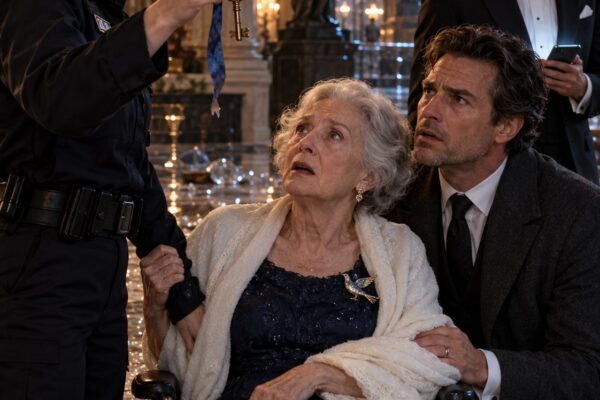
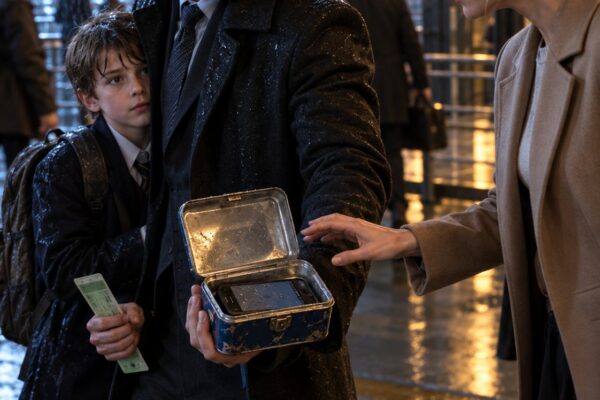
She Said the Records Were Gone—Then a Student Set One Brass Key on the Table

Chapter 2: The Missing Pages
The box rattled as Mr. Bell stopped it.
Ms. Harlan’s hand hovered above the phone.
Darius felt the brass key against his leg.
Nia had gone quiet again.
“Put that away,” Ms. Harlan said.
Mr. Bell kept both hands on the cart.
“Which part?”
“The box.”
“It’s school property.”
“So is the cabinet.”
“I know.”
Ms. Harlan looked toward Darius.
“You’re not responsible for these files.”
“I’m responsible for moving them,” Mr. Bell said.
“Then move them.”
“Not until the principal sees them.”
Darius watched the doorway.
Principal Everett was somewhere upstairs.
He could hear a bell down the hall.
The meeting had already lasted twelve minutes.
His father was waiting at home.
The pharmacy closed at six.
The attendance office had told Darius to stay until Ms. Harlan finished.
Now the box held something that might explain why.
“Mr. Bell,” Darius said.
“Don’t touch anything, son.”
“I just need to know what that is.”
“A ledger.”
“I can see that.”
“Then keep looking.”
Nia stepped away from the door.
“I’m calling the front office.”
Ms. Harlan lifted the receiver.
“Put it down.”
“I’m calling the principal.”
“You’re both behaving like this is a courtroom.”
“It has records,” Nia said.
“It has a classroom discipline matter.”
“You said you shredded them,” Darius said.
“I said they were archived.”
“You said both things,” Nia replied.
Principal Everett appeared in the open doorway.
He looked first at the cart, then at Ms. Harlan.
“What happened?”
“Darius found an office key,” Ms. Harlan said.
“I found it in a drawer.”
“He accessed a restricted cabinet.”
“I haven’t opened it.”
“Mr. Bell brought a box from storage,” Nia said. “He says it has the attendance records.”
Principal Everett set his folder down.
“Ms. Harlan, step away from the cabinet.”
She blinked.
“Excuse me?”
“Please step away.”
Mr. Bell rolled his cart back a few inches.
The principal examined the box without opening it.
“What exactly did you find?”
“A ledger,” Mr. Bell said.
“Anything else?”
“Three envelopes and a folder.”
“Did you remove anything?”
“No.”
“Did you open anything?”
“No.”
“Good.”
Principal Everett looked at Darius.
“Have you handled the cabinet?”
“No.”
“The ledger?”
“No.”
“Then let’s keep it that way.”
Darius wanted to ask about the signature.
He wanted to ask why his father’s name was there.
Instead, he watched the principal call the district records office.
A woman in a gray suit arrived fifteen minutes later.
“I’m Mara Voss,” she said. “I oversee student records.”
She took in the cart and the people around it.
“Who found the ledger?”
“Mr. Bell,” Principal Everett replied.
“Who touched it?”
“No one.”
“Who brought it here?”
“Mr. Bell.”
“Did anyone photograph it?”
“No.”
“Good.”
Mara put on thin gloves and photographed the box.
Darius flinched at the shutter.
“Sorry,” she said.
“It’s fine.”
She opened the box.
Inside lay folders, envelopes, and a bound ledger.
The cover read JONATHAN COLE.
Below it: TRANSPORTATION ASSISTANCE REVIEW.
Darius had never heard that phrase.
“Is this about our bus pass?” he asked.
“Possibly,” Mara said. “Who provides your father’s ride?”
“The district shuttle.”
“Since when?”
“January.”
“Was it approved?”
“I thought so.”
“Who told you that?”
“The counselor.”
Mara turned toward the principal.
“Can you contact transportation?”
“I can.”
“Please do.”
As the principal stepped into the hallway, Mara photographed the ledger.
She opened it carefully.
Names filled the left column.
Dates filled the center.
The final column held initials.
Darius recognized his father’s name beside one entry.
March fourth.
PICKUP DECLINED.
“That’s wrong,” he said.
“What happened that day?” Mara asked.
“The driver never came.”
“Did you call?”
“I called the number on the notice.”
“Who answered?”
“Ms. Harlan’s office.”
The teacher stiffened.
“That call didn’t come to me.”
“I said your office.”
“The attendance line is separate.”
“You answered.”
“I answer the main line sometimes.”
“Do you remember that call?” Mara asked.
“I don’t.”
“Have you seen this ledger before?”
“No.”
Mara turned another page.
The initials H.R. appeared beside several entries.
Pickup canceled.
Late arrival.
Parent notified.
Review pending.
Darius recognized the dates.
He remembered the rain, waiting with his father, and the shuttle that never came.
He remembered walking his father to a clinic two bus transfers away.
The ledger made those memories look like failures.
“Why does it say my father declined?” he asked.
“I don’t know yet,” Mara said.
“Why does it say he was notified?”
“I don’t know yet.”
“Who wrote it?”
“We’ll find out.”
Ms. Harlan folded her arms.
“This document has no chain of custody.”
“That’s why I’m documenting it now,” Mara replied.
“It may not be official.”
“Then we’ll verify that.”
“It could be a draft.”
“Then we’ll identify its author.”
“You can’t accuse me based on handwriting.”
“I haven’t.”
The principal returned.
“Transportation says the shuttle was active.”
“Any cancellation requests?” Mara asked.
“They’re checking.”
“Who can submit them?”
“Transportation staff, the principal, or an approved case manager.”
“Was Ms. Harlan an approved case manager?”
“No.”
“Did she have access to the transportation system?”
“No. She had access to the attendance portal.”
Mara nodded and continued photographing the pages.
“Were you allowed to change pickup status?” she asked Ms. Harlan.
“No.”
“Could you enter a note?”
“Yes.”
“Did you?”
“I don’t remember.”
The answer came too quickly.
Mara wrote it down.
Darius studied the ledger.
Its last entry bore today’s date.
STUDENT REFUSED REVIEW. GUARDIAN UNAVAILABLE.
“I didn’t refuse anything,” he said.
“What was the review?” Mara asked.
“Today’s attendance meeting,” Ms. Harlan replied.
“Was Darius told that?”
“He was told he was being evaluated.”
“That isn’t the same thing.”
“I didn’t have time to explain.”
“You had time to mark his father unavailable,” Darius said.
“He wasn’t here.”
“I was in class.”
“Because you were late.”
“Because your office called me.”
Ms. Harlan looked away.
That small turn felt like a door closing.
“What does the circle with a line mean?” Mara asked, pointing at a mark beside Darius’s name.
“I don’t know,” Principal Everett said.
“Have you seen it before?”
“No.”
“Ms. Harlan?”
“I don’t recognize it.”
Darius leaned closer.
“I’ve seen it on a printout at the office. It meant household review.”
Mara made a note.
“Could it mean pending?”
“Maybe,” Darius said.
“Transportation can check.”
His father’s arrival interrupted them.
Jonathan Cole came in with a cane and Mrs. Whitlow beside him. His face was pale from managing the apartment stairs.
Darius stood.
“Dad.”
“I’m fine.”
“You’re sweating.”
“It’s warm.”
“It’s October.”
“Still a month.”
His father tried a smile.
Mara explained the ledger and its entries.
Jonathan listened without interrupting.
“What does the book say?” he asked.
“Several transportation entries,” Mara said. “Pickup declined, parent notified, review hold.”
“I never declined a pickup.”
“I understand.”
“I never told anyone to stop the shuttle.”
“We haven’t established who entered the notes.”
Jonathan looked at the page.
“Those are Ms. Harlan’s initials.”
“Not conclusively,” Mara replied.
“I have never seen that handwriting.”
“Have you signed anything about transportation?”
“An application in January.”
“Did anyone explain a review?”
“Ms. Harlan called me.”
“What did she say?”
“That the shuttle program was under review.”
“Did she ask you to sign anything?”
“She brought a form to my apartment. It said I had declined a ride.”
“Did you sign it?” Darius asked.
“No.”
“Why didn’t you tell me?”
“I didn’t want you worrying.”
“You said she would correct it.”
“I thought she would.”
“Did you follow up?”
“I called the number on the notice. It rang through to a recording.”
Darius’s frustration rose.
“You thought she would fix it without checking.”
“I did.”
“You could’ve told me.”
“I should have.”
Jonathan rested both hands on his cane.
“I’m sorry.”
Darius looked down.
Mara asked Jonathan about the timeline.
He remembered the application in January, the first missed pickup on February sixth, and another on the seventh.
A driver came on the tenth.
“His name was Mr. Ingram,” Jonathan said.
“Do you know if he’s still employed?”
“No.”
Mara recorded the name.
Darius remembered the March fourth entry.
“The ledger says I declined that pickup. We waited until eight. Then I called the school.”
“Why was your father waiting outside?” Mara asked.
“The driver usually came to the curb.”
Jonathan glanced at Darius.
“You remember that?”
“I remember you almost fell.”
“There wasn’t ice.”
“There was frost.”
“Not enough to count.”
“You grabbed the rail.”
“I always use the rail.”
“You said you didn’t need me.”
“I didn’t.”
“You did.”
Jonathan’s face softened.
“I did.”
Mara returned to the ledger.
“Could anyone else have made these entries?”
“Attendance staff, administrators, and custodians had room access,” Principal Everett said.
“Who had authority to change transportation status?”
“Only the transportation office.”
“Could school staff request a change?”
“Not without a signed review form.”
“Is that form here?”
“We don’t know.”
Nia shifted in her chair.
“I saw Ms. Harlan take a folder from the cabinet yesterday.”
The teacher’s eyes fixed on her.
“What folder?”
“The yellow one. It had the Cole name on it.”
“There are many yellow folders.”
“You put it under your arm.”
“That is not true.”
“I wrote down the date.”
Nia opened a small notebook.
The page read: Ms. Harlan left office with yellow Cole folder and blue binder, 3:14.
Mara photographed it.
“Did you tell anyone?”
“No.”
“Why not?”
“I didn’t know it mattered.”
“Your parents should know,” Mara said.
“They’re waiting outside.”
Nia went to bring them in.
Ms. Harlan watched her leave.
Darius turned to Mara.
“Could we open the cabinet?”
“Not yet. We need to record its condition first.”
“What if the log is in there?”
“It will still be there in ten minutes.”
“What if someone takes it?”
“I’ll secure the room.”
He took the brass key from his pocket.
“Does this open it?”
“I don’t know,” Mr. Bell said.
“It was in the drawer beside the cabinet,” Darius explained.
Mara photographed it, then placed it in an evidence sleeve.
“Does the cabinet have a keyhole?” Darius asked.
“It does,” Principal Everett said.
“Then this might fit.”
“Let’s record the lock first,” Mara replied.
Darius flexed his split thumb under the table.
He had thought the key would be a simple answer.
Now it was one more item that needed witnesses.
The school office phone rang.
The principal answered.
“Transportation can provide a temporary shuttle beginning tomorrow,” he said after listening. “They’ll confirm the route tonight.”
Jonathan asked for the confirmation in writing.
The principal agreed.
Mara asked about records Darius might have kept.
“I have a shuttle notice in my backpack,” he said.
“Don’t take it out yet,” she replied. “We’ll document it before handling.”
“It’s mine.”
“That’s why you can decide whether to provide it.”
Darius thought about the paper folded into his backpack lining.
It could help.
It could also bring more trouble to his father’s door.
“I want my dad here,” he said.
“That’s reasonable,” Mara replied.
While they waited, Jonathan called Darius’s aunt to say the school had found a ledger.
Then Mara asked what Jonathan remembered about the disputed form.
“She brought a blank one,” he said. “I wouldn’t sign it because it said I had declined service.”
“Did she take it away?”
“Yes.”
“Did she submit a form anyway?”
“I don’t know.”
“Have you seen the shuttle notice?”
“I have it at home.”
Darius remembered the yellow paper.
He had kept it because it was the only thing proving he remembered the promise correctly.
When he finally removed it from his backpack, Mara photographed it before unfolding it.
The printed sentence was clear:
TEMPORARY DISTRICT SHUTTLE SERVICE CONTINUES DURING ELIGIBILITY REVIEW.
At the bottom was a signature.
Mara leaned closer.
“Can you read it?”
Darius shook his head.
Jonathan looked at the page.
“It ends with Harlan.”
Ms. Harlan stood in the doorway.
“I didn’t sign that.”
“Do you recognize the signature?” Mara asked.
“It resembles mine.”
“Is it yours?”
“No.”
“Have you seen this notice before?”
“No.”
Her face had gone pale.
Darius saw something unexpected there.
Not fear of being caught.
Fear that someone else had used her name.
It did not erase the ledger entries.
It changed the shape of the lie.
* * *
The next morning, the shuttle arrived at 7:12.
The driver called from the curb.
Jonathan waited inside the building while Darius stood beside him.
“Are you going to school?” Jonathan asked.
“I have to.”
“Then go.”
“You’re not at the clinic today.”
“I’m going next week.”
“You canceled last week.”
“Because you had a test.”
“You shouldn’t cancel for me.”
“I didn’t.”
“You did.”
“Get to school.”
Darius handed him the yellow notice.
“Keep this.”
“I have a copy.”
“Keep the original. It’s ours.”
Jonathan folded it and put it in his coat pocket.
Darius watched the van pull away.
At school, he had time to eat breakfast.
Nia found him in the cafeteria.
“How was the shuttle?”
“It came.”
“Your dad okay?”
“He sat down.”
“Good.”
They went to class together.
A substitute taught civics while Ms. Harlan stayed away.
That afternoon, Mara and district records officer Celeste Wong arrived to document the cabinet.
They photographed the lock, the desk, and the surrounding area.
The brass key did not fit the cabinet.
“Then what does it open?” Darius asked.
“Storage B,” Mr. Bell said.
The key had not opened the records.
It had brought the box into the room.
The district archive packet arrived on Friday.
The original transportation application showed that Jonathan’s shuttle had been approved for six months. Service was supposed to continue during any eligibility review.
There was also a review form dated February tenth.
Jonathan looked at the signature.
“That isn’t mine.”
Celeste gave him a separate sheet to sign.
His real signature differed from the one on the review form.
“Can an examiner compare them?” Darius asked.
“We can request one,” Celeste said.
The digital audit showed that someone had uploaded the form through the attendance clerk account.
A note had been attached: Family unable to comply. Student may walk. Close review.
“Who wrote the note?” Darius asked.
“The account doesn’t identify the person,” Celeste said.
“Can you find out?”
“IT is checking.”
Darius’s own notes also mattered.
For six dates, he had compared the times on his sign-in slips with his phone. The lobby clock had run seven minutes fast.
Mr. Bell found the maintenance log confirming that it had been flagged on March second.
Darius’s dates overlapped with the clock problem.
That did not prove anyone had changed his slips.
It showed why his notes mattered.
“I checked because the office said I signed in late on a day I was at the clinic,” he told Mara.
“Do you still have the appointment card?” she asked.
“My dad has it at home.”
Jonathan nodded. “In the blue file.”
Mara requested the card and a copy of the shuttle approval.
She also placed a preservation hold on the school’s digital logs.
“Will that stop them from deleting anything?” Darius asked.
“It should prevent routine purging.”
“Can you confirm it in writing?”
“Yes.”
She sent the request while he watched.
That evening, Jonathan arrived at school to review the ledger with Mara.
He said he had never declined service, and he described Ms. Harlan visiting his apartment with a form.
He had refused to sign it.
“Did you tell anyone at the school?” Mara asked.
“I thought she was correcting the record.”
“Did she promise to?”
“She said she would.”
“Did you follow up?”
“No. I should have.”
Darius looked at him.
“You didn’t tell me because you didn’t want me worrying.”
“Yes.”
“I was worrying anyway.”
“I know.”
His father reached for his hand.
“Don’t carry every problem alone.”
“I’m not.”
“You have been working before school.”
“Because the shuttle stopped.”
“We’re finding out why.”
“We know it stopped.”
Jonathan’s face tightened with pain.
Darius wished he could take the words back.
Mara spoke gently.
“You’re both allowed to be upset.”
“We are,” Jonathan said.
Ms. Harlan stood across the room.
“I’m sorry you feel abandoned,” she said.
Jonathan looked at her.
“Did you bring me a form to sign?”
“I don’t remember.”
“You were at my apartment.”
“I visit many families.”
“You had a folder.”
“That doesn’t mean I asked you to sign anything.”
“Did you submit a form?”
“I don’t know.”
Mara ended the exchange and continued the review.
The ledger pages showed repeated entries marked with H.R. Ms. Harlan denied recognizing them.
She denied taking the yellow folder.
Nia’s written observation said she had seen her carrying it, but the district treated the notebook as evidence to verify, not a final answer.
Darius asked whether the cabinet could be opened.
“Your father can request copies,” Mara said.
“Can I see them?”
“Some records include other students. We can redact their names.”
“Will you?”
“I’ll make sure the request is made.”
“Put it in writing.”
“I will.”
The cabinet was opened two days later.
It held attendance slips and parent contact logs.
The Cole pages had been removed.
A shelf index showed a folder had been logged there on February twelfth, then crossed out on March first.
The second entry was initialed P.C.
“Philip Crane?” Jonathan asked.
“Possibly,” Celeste replied.
“Why would he cross it out?”
“We need to ask him.”
The name kept appearing at the edges.
Philip Crane coordinated transportation.
He had received the school’s messages.
He had access to the system that changed the route.
At lunch, Principal Everett told Darius that Ms. Harlan would remain out of his classes.
“Will she come back?” Darius asked.
“I don’t know.”
“Can she?”
“Eventually, perhaps.”
“Even if she wrote those notes?”
“The investigation isn’t complete.”
“She lied about the shuttle.”
“We haven’t established what she knew.”
“She said she didn’t know.”
“That is what we have to prove or disprove.”
“Why are we acting like nobody knows anything?”
“Because we need evidence.”
“It happened to us.”
“I understand.”
“No. You understand a file.”
The principal accepted the criticism.
Jonathan was waiting at the entrance.
They walked toward the shuttle together.
“What do you think they’ll find?” Darius asked.
“I think we’ll find what happened.”
“What if the person says they forgot?”
“Then we show what the records say.”
“What if the records are wrong?”
“Then we show the other records.”
“What if there aren’t any?”
“Then we say what we saw.”
“That’s all?”
“That’s where we start.”
* * *
A week later, the transportation office asked Jonathan to meet.
Darius went with him and Mara.
Philip Crane sat in a small conference room with a laptop.
“Mr. Cole,” he said. “I’m sorry about the confusion.”
“What confusion?” Jonathan asked.
“The service interruption.”
“Who interrupted it?”
“We’re reviewing that.”
“You’re the coordinator.”
“I am.”
“You received an email saying the shuttle should continue.”
“Yes.”
“You received another saying we declined.”
“Yes.”
“Did you verify that with us?”
“No.”
“Why not?”
“The review form was attached.”
“Was it signed by me?”
“I assumed it was.”
“Did you compare it with my application?”
“No.”
“Did you call me?”
“No.”
“Why?”
“I was handling a backlog.”
“That doesn’t answer the question.”
“It is the reason I made the mistake.”
Mara asked whether he changed the status.
“Yes,” Crane said.
“On what date?”
“February twelfth.”
“Using your account?”
“Yes.”
“Did anyone tell you to close the case?”
“No.”
“Did you read the instructions saying service should continue during review?”
“I did.”
“Why did you suspend it?”
“I believed the family had declined.”
“Who told you that?”
“The form.”
“Did you ask Mr. Cole?”
“No.”
Jonathan held his cane between his hands.
“Did you know the form might be false?”
“No.”
“Did you know later?”
“I suspected there might be a problem.”
“When?”
“After the service had been on hold for a while.”
“Why didn’t you investigate?”
“I thought the school had verified it.”
“Did they?”
“I don’t know.”
“Then why did you assume?”
Crane rubbed his forehead.
“I didn’t want to reopen a closed case.”
“You didn’t want more work.”
“Yes.”
Darius stared at him.
“You saw the note saying the ride should continue.”
“Yes.”
“You saw the form saying we declined.”
“Yes.”
“You picked the form.”
“I believed the form.”
“You didn’t ask us.”
“No.”
“Why?”
“I was behind.”
“That’s not a reason. You made a choice.”
“Yes.”
Crane admitted that he closed the case based on the form and never contacted the family.
He did not sign Jonathan’s name.
He did not know who had.
The meeting produced a written acknowledgment that the service change was his decision, made without verification.
It still did not answer who created the form.
On Monday, Nia brought her notebook to Mara with her mother beside her.
She described seeing Ms. Harlan leave the office with the yellow folder and a blue binder.
Then she added a detail she had not mentioned before.
“She put it in her car.”
“How do you know?” Mara asked.
“I saw her through the front windows.”
“Did you see which car?”
“A silver hatchback.”
“Did you see her leave?”
“No.”
“Did you see her return?”
“No.”
“Did you see her holding the folder afterward?”
“No.”
It was useful, but not conclusive.
Nia looked at Darius as they left.
“I’m sorry I didn’t tell you sooner.”
“You wrote it down.”
“I could’ve told you.”
“You were scared.”
“So were you.”
“I still am.”
Nia nodded.
“I hate being scared of her.”
“That makes sense.”
“I don’t want to be the reason she gets fired.”
“You didn’t make the folder. You didn’t stop the shuttle.”
“I know.”
“You wrote what you saw.”
“I know.”
“Let the adults decide what it means.”
“That’s what my mom says.”
“Your mom’s right.”
“She’s usually right.”
“Don’t tell her I said that.”
The following week, Mara obtained the transport office access log.
The disputed form had been uploaded from a terminal in the principal’s suite. Three people had been in the building: Principal Everett, Ms. Harlan, and a district secretary.
The principal was visible on a recorded video call.
The secretary was in another meeting.
The badge log showed Ms. Harlan entered the suite at 3:08 and left at 3:21.
The upload finished at 3:16.
It narrowed the window.
It did not prove who used the terminal.
Darius asked what else they had.
“Access, timing, the ledger initials, the email, and the folder,” Mara said.
“Is that enough?”
“It supports an investigation.”
“Does it support a decision?”
“We need more.”
“What more?”
“Who created the scan. Who wrote the note. Who moved the folder.”
“Are they checking?”
“Yes.”
The next day, the school records clerk, Ellen Price, asked to meet without Ms. Harlan present.
“I’m not comfortable with how this was handled,” she said.
“Did you enter the attendance notes?” Mara asked.
“No.”
“Did you sign the review form?”
“No.”
“Do you know who gave it to you?”
“Ms. Harlan. It was already signed.”
“Did you verify the signature?”
“No.”
“Did you upload it?”
“Yes.”
“Why?”
“She said it was approved.”
“Did you confirm that with the principal?”
“No.”
“Why not?”
“She was my supervisor.”
“Did you know service could be suspended?”
“I didn’t know.”
“Did you ask?”
“No.”
Ellen looked at Jonathan.
“I’m sorry.”
“Did you type the note saying the family was unable to comply?” Mara asked.
“Yes. Ms. Harlan dictated it.”
“Did you believe the family had refused?”
“I did.”
“Why?”
“She said she had spoken with Mr. Cole.”
“Did you speak with him?”
“No.”
“Did you know if the form was genuine?”
“I assumed.”
“Did you move the folder?”
“No. I saw Ms. Harlan move files into a blue binder on March first. I carried one box.”
“Could it have held the Cole folder?”
“It could have.”
“Did you say anything?”
“No. I was afraid she’d make me the problem.”
Ellen agreed to sign a statement.
Her account explained who uploaded the form and typed the note.
She still could not identify who had signed it.
The district scheduled an evidence conference for the following Thursday.
The conference room had a long table and frosted windows.
Mara presented the timeline.
The application was approved in January.
The shuttle route was active.
The school requested a hold.
Transportation instructed the school to maintain service.
A review form was uploaded four days later.
The route was placed on hold.
The ledger recorded a decline.
The folder was moved from the cabinet.
Ms. Harlan attended with her union representative.
“I tried to help a family that wasn’t completing required paperwork,” she said.
“Which paperwork?” Mara asked.
“The transportation review.”
“Was that review required before service continued?”
“I thought it was.”
“The approval letter says service continues during review.”
“I didn’t see that letter.”
“Did you have the application?”
“I had copies.”
“Did you read it?”
“I don’t remember.”
“Did you tell Mr. Cole service would continue?”
“I don’t remember.”
“Did you visit his apartment?”
“I may have.”
“Did you ask him to sign a decline notice?”
“I don’t recall that.”
“Did you tell Ellen Price what to type?”
“I may have explained the situation.”
“Did you use the words ‘family unable to comply’?”
“I don’t recall.”
“Did you move the folder?”
“I moved papers. I don’t recall where.”
Her answers left the evidence unresolved.
The representative asked for a break.
While they waited, Darius went into the hall.
Jonathan came out behind him.
“You okay?” he asked.
“I’m fine.”
“You don’t look fine.”
“I’m tired of hearing her not remember.”
“I know.”
Nia joined them, carrying bandages in her bag.
“Your hand’s bleeding,” she said.
Darius looked down at his thumb.
The split had opened again.
Nia gave him a bandage.
“Thanks.”
“I keep them for my brothers.”
The small kindness helped more than either of them expected.
The meeting resumed.
Ms. Harlan’s representative pointed to the inconclusive handwriting report.
“There is no expert conclusion that the signature was forged.”
“That’s correct,” Mara said.
“There is no original form.”
“Correct.”
“There is no direct proof Ms. Harlan created the scan.”
“Not yet.”
“Then the accusations are unsubstantiated.”
“The investigation is ongoing.”
Celeste Wong entered with her laptop.
“I have the file metadata,” she said.
The scanner log showed the form had been scanned under Ms. Harlan’s account.
The station was in her classroom.
The file had then been saved under the name COLE REVIEW FINAL.
A user had typed that name.
The representative pointed out that another person might have used the account.
“That is possible,” Celeste said.
“Were you in the classroom then?” Mara asked Ms. Harlan.
“I don’t remember.”
“Did you save the file?”
“I don’t recall.”
“Could anyone else access your account?”
“Someone could use the computer if it was open.”
The evidence was strong, but not complete.
Then Ms. Harlan looked toward the family.
“I did not intend for this to happen.”
“What did you intend?” Jonathan asked.
She did not answer.
“I was trying to keep the attendance record consistent,” she said.
“Consistent with what?” he asked.
“School policy.”
“Which policy?”
“I don’t remember the number.”
“Did it say to stop the shuttle?”
“No.”
“Did it say my son had to walk?”
“No.”
“Did it say I refused service?”
“No.”
“Then what were you trying to keep consistent?”
She looked down.
“I thought the family wasn’t following through.”
“You never asked me,” Jonathan said.
“I thought I had.”
“Did you?”
“I don’t remember.”
“You remember we were difficult,” he said. “You don’t remember asking us.”
“I was concerned.”
“Concerned enough to write that my son could walk.”
“I didn’t write that.”
“You sent it in an email.”
“I asked for a hold.”
“After transportation told you not to.”
“I thought the form changed the status.”
“You didn’t check.”
“No.”
Mara asked, “Did you tell transportation that the family declined?”
“I may have described the situation that way.”
“Did you know Mr. Cole had not signed the review form?”
“Yes.”
The room grew still.
“Then why did you say we declined?” Jonathan asked.
“I thought the review would fail.”
“Why?”
“I believed he wouldn’t complete it.”
“You never asked me.”
“I should have.”
It was the first honest sentence.
It came too late to repair what had happened.
Mara ended the meeting and outlined the next steps.
The district would preserve all files, request server backups, correct Darius’s attendance records, and send the family copies of records concerning them.
Ms. Harlan would remain assigned elsewhere.
No one would contact Nia about her statement outside the formal review.
A written update would arrive within ten business days.
At the door, Ms. Harlan stopped Darius.
“I’m sorry your father lost the service.”
“Did you stop it?”
“I don’t know.”
“You know you asked them to hold it.”
“Yes.”
“You know they told you not to.”
“I don’t remember that.”
“It’s in the email.”
She looked at the floor.
“I’m sorry.”
“Are you sorry you did it?”
“I’m sorry it happened.”
“That’s different.”
“I know.”
She said nothing more.
Darius left with his father.
In the shuttle, Jonathan rested his eyes.
“You didn’t yell,” he said.
“I wanted to.”
“I know.”
“Would it have mattered?”
“Maybe.”
“I didn’t want them to call me angry.”
“You were angry.”
“I don’t want that to be the story.”
“What story do you want?”
“That I asked what happened.”
“That’s what you did.”
“I want them to answer.”
“That’s what we’ll keep asking.”
* * *
The first written update arrived nine days later.
The shuttle was restored through the end of the term.
The disputed attendance entries were marked under review.
The district established that Philip Crane changed the route without verification.
He received a formal reprimand and was removed from enrollment decisions for one year.
Ellen Price received training and a written warning for uploading the form without confirmation.
Principal Everett received a corrective action plan for failing to ensure the process was followed.
Ms. Harlan was suspended with pay pending a final personnel decision.
The letter did not say whether she would be dismissed.
“So they haven’t answered everything,” Darius said.
“No,” Mara replied.
“Who signed the form?”
“We haven’t established that.”
“Who moved the folder?”
“We haven’t established that.”
“Then why make decisions?”
“Because the service change and record handling are established.”
“Is that enough?”
“For those decisions, yes.”
The shuttle continued.
The school corrected Darius’s late marks from February through May.
He made up his algebra work and passed with a B-minus.
Jonathan returned to his clinic appointments.
Darius stopped sorting fruit before school but kept the weekend shift.
The district investigation continued.
Two months later, the investigator called Jonathan.
They had found the original review form in the blue binder from Ms. Harlan’s classroom.
A handwriting examiner compared it with Jonathan’s application, clinic forms, and a later consent.
The conclusion was clear: Jonathan had not signed the review form.
The examiner could not identify who had signed it.
The signature appeared traced or copied from the original application.
The form had been scanned under Ms. Harlan’s account.
The copier log showed her badge releasing the print job.
The evidence could not prove she traced the signature.
It did show that she printed and scanned the form.
She told investigators it had been a draft for Mr. Cole to sign, mistakenly uploaded as final.
The records showed it was uploaded as complete.
Her email said the family had declined service.
Ellen Price said Ms. Harlan gave her the wording.
Crane admitted he accepted the form without checking.
The pieces formed a chain.
Ms. Harlan prepared the review packet.
Ellen uploaded it.
Crane suspended the route.
The ledger recorded the false decline.
The family paid the price.
The district disciplined Ms. Harlan for submitting an unverified form, misrepresenting the family’s response, and moving student records without authorization.
She was dismissed from the school at the end of the term.
The district did not publish the details.
Jonathan read the decision letter at the kitchen table.
“Is that it?” Darius asked.
“It’s the decision.”
“Does it say she signed your name?”
“No.”
“Does it say she knew?”
“It says she submitted the form as complete.”
“Does that mean she did it?”
“It means they proved what they could.”
“Are you satisfied?”
“I’m relieved.”
“That’s different.”
“Yes.”
“Do you forgive her?”
“I don’t know.”
“Would you?”
“I might someday.”
“Would you want her back?”
“No.”
“Can you forgive someone and still not want them back?”
“Yes.”
“Why?”
“Forgiveness is a choice about what I carry. Trust is a choice about what I allow.”
Darius sat with that.
“I don’t want her in my classroom.”
“She won’t be.”
“Can she still teach?”
“I don’t know.”
“Do you care?”
“I care that she can’t do this again.”
“What if she does it somewhere else?”
“That’s beyond our reach.”
“That doesn’t feel right.”
“No.”
The school invited Jonathan to meet with the new records director.
He brought Darius.
They described the confusing form, the shared login, and the shuttle that stopped without a phone call.
The director asked what they would change first.
“Send a copy to the family,” Jonathan said.
“We do that now.”
“Call before suspending service.”
“We can add that.”
“Don’t let the person requesting a change approve it.”
“We can require a second signature.”
“Don’t use a shared login,” Darius said.
“We’re replacing those accounts.”
“Tell the student, too.”
“How?” the director asked.
“Tell them when a record says they did something they didn’t do.”
“Would that help?”
“Yes.”
“What if it’s a draft?”
“Then say it’s a draft.”
“What if you’re not sure?”
“Say you’re not sure.”
The director added those points to the draft policy.
She asked Darius to review it after it was revised.
He agreed.
The new form was shorter and used plain language.
It identified who submitted and approved each change.
It included a line for the family’s preferred contact method.
Darius marked one sentence as confusing.
The director changed it.
The final version went into use before winter break.
It was a small rule, but it made the record visible to the family it affected.
The district invited Darius to join a student advisory group.
Principal Everett made clear that he could say no.
“What would I have to do?” Darius asked.
“Read drafts and tell us where they’re unclear.”
“Would I meet with Ms. Harlan?”
“No.”
“Would my name be in a report?”
“Not without your permission.”
“Would I get paid?”
“We can provide a stipend.”
“How much?”
“Twenty-five dollars per meeting.”
“Then I’d do it.”
“Even without the stipend?”
“Maybe.”
“Why?”
“Because I know what happens when nobody checks.”
Darius joined.
He checked every notice.
He asked who approved each change.
He kept copies.
The brass key remained with the district, where it belonged.
The yellow notice stayed in the blue family file.
The district sent copies of the ledger pages concerning Jonathan and Darius, with other students’ names redacted.
The pages looked ordinary.
A few dates.
A few initials.
A check mark.
That was what unsettled Darius most.
The harm had not needed a dramatic scene.
It had needed a form accepted without checking.
At home, Jonathan placed the copied pages in a folder.
“Do you want to keep these?” Darius asked.
“Yes.”
“Why?”
“So no one can tell us it didn’t happen.”
“What if we want to forget?”
“We can put them away.”
“That’s not forgetting.”
“No.”
They labeled the folder FAMILY RECORDS and put it on the high shelf.
Nia visited one Saturday with her two younger brothers.
The youngest had scraped his knee.
Darius helped clean it at the kitchen sink while Jonathan watched.
“Are you a nurse now?” his father asked.
“No.”
“You seem confident.”
“I’m following the package.”
“That’s what nurses do.”
“No, they know things.”
“Some start with a package.”
Nia laughed.
Her brother tried not to.
The kitchen felt warmer than usual.
They shared oranges from the market while Nia told them she was considering nursing school.
She still carried bandages.
Darius still noticed.
Forgiveness did not erase what had happened.
It did not restore the lost mornings or undo the missed appointments.
It gave the family space to put the file away without pretending it had never existed.
The shuttle kept coming.
The corrected attendance record stayed corrected.
Darius’s schoolwork caught up.
He learned to ask for a receipt whenever a decision involved his family.
* * *
Six years later, Darius returned to the school as a paid student advocate.
He was nineteen.
The district had expanded the advisory group.
The old filing cabinet was gone.
A glass-fronted records room stood in its place, with labeled drawers and a sign-out sheet.
Mr. Bell had retired.
Principal Everett had moved to another school.
Nia was studying nursing.
Jonathan’s walking had improved after surgery, though he still used a cane and took the shuttle for longer trips.
The service had never been interrupted again.
A student waited at the reception desk with a late slip.
He looked about the age Darius had been when the ledger appeared.
The receptionist explained that the sign-in slip showed 8:38.
“The clock was wrong,” the student said.
“Which clock?”
“The one by the door.”
“It’s checked every morning.”
“It was six minutes fast.”
“Did you write the time down?”
The student nodded.
Darius stepped closer.
“Do you want help?”
The student held out the slip.
Darius checked it against the digital display.
The lobby clock was six minutes fast.
The sign-in record used the wrong time.
The receptionist looked at the maintenance log.
It had not been checked that morning.
She corrected the attendance entry and printed a new receipt.
“Am I marked late?” the student asked.
“No,” she said.
“Can I get the old slip?”
“Do you want it?”
“Yes.”
She handed it over.
“Keep the new one too,” Darius told him.
“Why?”
“It shows the correction.”
The student folded both slips carefully.
Darius remembered the conference table, the ledger, and his father’s name.
He remembered Nia standing by the door, scared but willing to stay.
The brass key had changed meaning.
It no longer represented a locked cabinet.
It reminded him of the first time he asked someone to show him the record.
Jonathan waited outside in the shuttle.
“Everything all right?” he asked when Darius opened the door.
“Yes.”
“Any problems?”
“One clock.”
“Did they fix it?”
“They checked.”
“That’s not the same.”
“They corrected the record.”
“That’s better.”
Darius helped his father into the van.
“Did you eat?” Jonathan asked.
“Yes.”
“What?”
“Oatmeal.”
“Good.”
“It was terrible.”
“Then it sounds authentic.”
Darius laughed.
Sunlight crossed the dashboard.
The shuttle pulled away from the school.
The student kept both slips.
His name stayed on the corrected page.
Jonathan’s rides kept coming.
The notice stayed in the blue family file.
The school kept the receipt.
The family kept the truth.
And nobody carried it alone.
THE END