She Was Accused in the Mafia Boss’s Bedroom—Then He Saw the One Thing His Fiancée Swore Was Gone
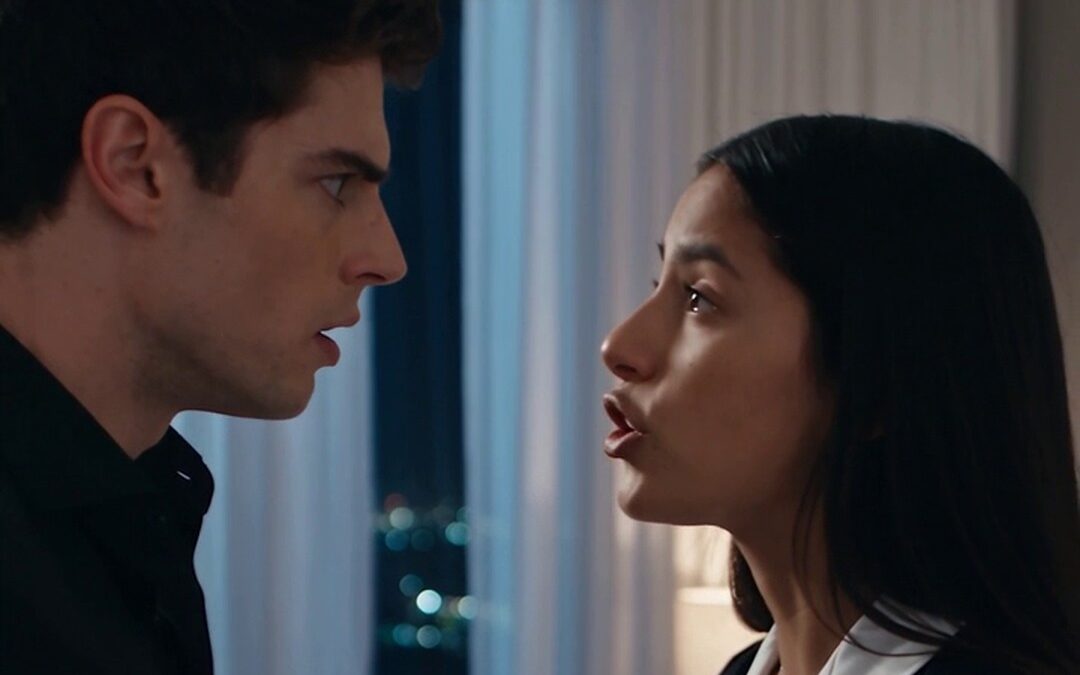
Chapter 2: What the Star Remembered
For one suspended second, nobody moved.
Vivian’s hand remained clenched around the empty velvet box. Lena’s fingers rested at her throat, touching the silver star. Nico stood between them, his right arm lowered, the black serpent tattoo visible from wrist to elbow.
Then he said, “Close the door.”
The guard in the hall obeyed. The latch clicked.
Vivian recovered first. “Nico, she’s spinning a story because she’s been caught.”
Nico kept his gaze on Lena. “Take your hand away from the pendant.”
She did.
“Did your mother leave you anything else?”
“Not here.”
“Where?”
“In my room.”
“Get it.”
“She’s not going anywhere alone,” Vivian said.
Nico turned to her. “I asked Lena.”
“And I’m telling you she’s a thief.”
“Then you won’t mind if we look at what she has.”
Lena looked from one to the other. “I’m not handing over my mother’s things because you suddenly want them.”
His expression shifted. “You’re right. You don’t have to.”
“Good.”
“But I’m asking. If there’s something that connects the pendant to my brother, I need to see it.”
“Why?”
“Because I buried him. And I’m afraid I missed something that mattered.”
She had expected an order, perhaps a threat. Not fear.
Vivian gave a short laugh. “This is ridiculous. She says a name and you start treating her like family?”
“No one said she’s family,” Nico replied. “She made a claim. It needs proof.”
“Then let the police handle the stolen ring.”
He looked at the empty velvet box. “When did you last see it?”
“Yesterday morning.”
“Where?”
“In the vanity drawer.”
“Was the box locked?”
“Why would I lock it?”
“Because it’s worth more than most people’s houses.”
Vivian folded her arms. “I don’t remember the exact time. I noticed it was missing after Lena left.”
“So you didn’t see her take it.”
“She was the only person in the room.”
“That isn’t what I asked.”
Lena studied the box. “I can show you my room, but I won’t let anyone search it while I stand here like a criminal.”
“Fair,” Nico said.
He told the guard to keep everyone out of Lena’s quarters and not to touch her belongings. Then he waited for her to lead the way.
Vivian followed.
“Are you coming?” Lena asked.
“I’m not letting you out of my sight.”
“You’ve been looking at me all morning.”
Nico stepped between them. “Vivian, stay here. If you want to make a formal accusation, I want this room left as it is.”
Her cheeks colored. “You’re taking her side.”
“I haven’t taken anybody’s side.”
“This is my bedroom.”
“This is my house.”
The words landed with the weight of a familiar privilege. Lena had learned in three weeks that choices narrowed under his roof.
She stopped at the doorway. “I’m not going to your study to be questioned in front of your men.”
“Then we won’t do that.”
“My room. Door open. No guards inside. You and me. Vivian can stand in the hall.”
Vivian scoffed. “She sets the conditions now?”
“Yes,” Nico said.
The maid’s quarters were plain and neat. A narrow bed stood beneath a window; a canvas bag sat under the chair. On the dresser was a photograph of a dark-haired woman smiling in summer sunlight.
Lena opened the bag herself. Inside were two sweaters, worn boots, a folder of work records, and a small tin.
“My mother kept it under her bed,” she said. “She gave it to me when she got sick.”
“May I see?”
Lena opened the lid. A folded photograph, a handwritten note, and a brass key lay inside.
The picture showed a young man with dark hair, one arm around a laughing woman beside a wall painted with faded blue flowers. Nico went still.
“Is that your brother?” Lena asked.
“Anthony.”
He did not reach for it. Lena passed it to him.
Anthony Bellini looked twenty-four, with Nico’s dark eyes and an easy smile. The woman was unmistakably Marisol Ortiz.
“That could be anyone,” Vivian said from the hall.
Nico kept looking at the image. “It’s Tony. He had that scar on his chin since he was twelve.”
“So my mother knew him,” Lena said. “What else do you need?”
“The photograph proves they knew each other. Not what she told you.”
Lena read the note. “If Lena ever finds the star’s first home, she deserves the whole story. The key opens the box beneath the blue wall. I’m sorry I waited. I wanted you to have a childhood before the past asked anything of you. —Mama.”
“Where’s the blue wall?” Nico asked.
“Red Hook, she said. I never found it.”
“This was the back wall of our old club,” he said. “Tony loved the mural.”
Lena turned the brass key over. A small star was engraved near the bow.
“Tony used that mark on storage lockers there,” Nico said. “For people who needed somewhere safe to leave things.”
“Why would my mother have the key?”
“She may have left something.”
“Like what?”
“I don’t know.”
“Did you know she existed?”
“No.”
“Did anyone in your family?”
“I don’t know.”
“Did you ever look?”
“After Tony died, I looked for his accounts and contacts. My aunt said he had no serious relationship. We were trying to keep three crews from turning on each other. I believed her.”
“So when I came to work for you—”
“I didn’t know about you.”
“Would you have looked if someone had told you?”
“Yes.”
“How do I know?”
“You don’t.”
She nodded. “At least that’s honest.”
Vivian came closer to the doorway. “That photograph doesn’t make her innocent.”
“No,” Lena said. “But your certainty doesn’t make me guilty.”
Nico looked at the note. “May I copy it?”
“No.”
“I understand.”
“And you don’t take the key.”
“I wasn’t going to.”
“You were thinking about it.”
“I was thinking it could be dangerous.”
“Dangerous for whom?”
“For you. For anyone looking for what Tony left.”
“Do you know someone is looking?”
“Not yet.”
“Then don’t scare me into giving it up.”
He accepted the rebuke. “You’re right.”
Lena closed the tin. “I’ll take my mother’s things when I leave.”
“Where will you go?”
“That’s not your concern.”
“It could be if someone followed you.”
She turned on him. “You have guards and a house full of people who move when you speak. Don’t call that concern and expect me to trust it.”
His jaw tightened. “I don’t expect you to trust me.”
“Good.”
Vivian laughed. “How noble. The maid lectures the man whose home she lives in.”
“I don’t live here,” Lena said. “I work here. I rent a room in the city. I can leave today.”
“You’d lose the wages you’re owed,” Vivian said.
“Then you’ll pay them.”
“I don’t write the checks.”
“No, you just decide who gets hired and who gets called a thief.”
Nico watched her. “She’ll be paid for every day she worked.”
“I’ll discuss it with payroll,” Vivian said.
“You’ll do it now.”
Vivian stared at him. “You don’t get to order me around.”
“Actually, I own the house.”
“You know what I mean.”
“I do.”
Her gaze moved to Lena’s pendant, then the tin, then Nico’s tattoo. “Let’s go to the club,” he said. “We can find out what the key opens.”
“No,” Lena replied.
“Lena—”
“You don’t decide we’re going.”
“I’m asking.”
“And if I say no?”
“Then I’ll ask the building manager to search the lockers. I won’t take your key.”
“You’re still deciding what happens to my mother’s things.”
“You’re right.”
Vivian’s eyes narrowed. “So we sit here while she dictates terms?”
“We go if Lena chooses,” Nico said.
Lena considered him. “I’ll go if I take a cab and keep my key.”
“I’ll drive.”
“No armed guards in the car.”
“One unarmed driver can wait outside.”
“That sounds acceptable.”
“Two cars will follow at a distance.”
“That’s armed guards.”
“I can’t promise there’s no risk.”
“Then I won’t go.”
He studied her, then nodded. “One driver. He waits outside.”
“You drive.”
“I have a license.”
“That’s not the point.”
“No,” he said. “It isn’t.”
He signaled the guard to stand down and called the house manager to say Lena could leave with her belongings. He waited as she straightened the loose chain at her collar.
“Your mother knew my brother,” he said. “I’d like to understand why.”
“So would I.”
“Will you let me help?”
“I don’t know.”
“That’s an answer.”
“It’s the only one you get.”
Vivian’s expression had hardened. “You’re seriously letting her leave with a key to a Bellini storage box?”
“It’s her key.”
“Tony left it.”
“He gave it to her mother.”
“Allegedly.”
“Then we find out.”
Lena put on her coat. “I’m leaving.”
Nico did not stop her.
At the old club, three miles away, the building still carried the faint smell of old wood and lemon oil. A blue floral mural ran along the back wall. Lena compared it to the photograph.
“My mother stood there,” she said.
Nico pointed to the floor near the mural. “The storage compartments are behind this panel.”
He knelt. A brass plate at ankle height carried the same five-point star as Lena’s key.
“My brother’s mark,” he said.
“And your tattoo.”
“It isn’t his tattoo. It was his mark. I had it inked after he died. In our organization it became a sign of responsibility for people under our protection.”
“Were they always protected?”
“Sometimes.”
“And the other times?”
“Sometimes we protected the family first.”
“Which is what you did with me.”
“Yes.”
He opened the panel. A row of numbered metal boxes sat behind it. He stepped aside. “It’s yours.”
Lena fitted the key into box eighteen. Inside lay a tin box, several photographs, and an envelope addressed to Marisol.
Nico stayed where he was. “Do you want me to wait outside?”
“Stay there.”
The photographs showed Marisol and Anthony laughing at the club. On one, Anthony held the silver star in his palm. Lena turned it over. Her mother had written: “Tony says the star belongs with his daughter. I told him she should choose whether to wear it.”
Lena’s breath caught.
A card beneath the photographs read: “Lena’s first name is the name we agreed on. If something happens to me, don’t let her be told she was unwanted.”
“She knew she was having me,” Lena said.
“The card suggests it.”
The date was nine months before Lena’s birth.
Lena opened the envelope. The paper had been sealed and reopened. She read aloud.
“Tony, I know what your father said. I know I should take the money and go, but I can’t make a decision for my daughter based on fear. She deserves to know who her father is, even if she never meets him. You said you would take her to the river one day. You said she could pick her own name for the boat. I’m holding you to that.”
Her voice faltered, then she continued.
“You gave me the star and the key in case I had to leave fast. I understand why. You don’t have to explain the family. I only need you to explain yourself. If you cannot come back, I will not tell her you abandoned us unless I know that is what happened. I won’t teach her to hate a ghost.”
Lena lowered the letter. “She thought he might not come back.”
“Maybe she knew he was at risk.”
“Did he answer?”
“There’s no second letter.”
“Why didn’t she ever tell me his name?”
“I don’t know.”
A copy of Lena’s birth record lay in the box, with Marisol listed as her mother and the father line blank. Another note said: “If he does not return by June, give her the star when she is old enough to decide.”
“That doesn’t prove Anthony was my father,” Lena said.
“No.”
A doctor’s card was tucked beneath it. On the back, someone had written: “Tested after Tony’s death. Blood sample unavailable. No conclusion.”
“What is this?”
“I don’t know,” Nico said.
“A doctor.”
“Maybe Tony was trying to establish something.”
“Without a sample?”
“Maybe he wanted to know whether a test was possible.”
Lena put the papers back. “Don’t take these and investigate my mother as if she’s one of your shipments.”
“I won’t.”
“You keep saying that.”
“Then I’ll put it in writing.”
“Writing doesn’t make it true.”
“No. But it gives you something to hold me to.”
A floorboard creaked in the corridor. The building manager appeared with a tablet.
“Mr. Bellini, someone came last week asking about these lockers.”
“Who?”
“A blonde woman. She said she was looking for a file left by her aunt.”
Lena looked at Nico.
“Can you pull the footage?” he asked.
“I can send a written request.”
“Do that.”
“I’m sorry,” the manager told Lena. “I wasn’t trying to obstruct you.”
“You’re doing your job.”
The manager left to prepare a statement. Lena turned to Nico. “Vivian came here.”
“We don’t know that it was her.”
“She’s blonde. Her aunt had the key. She knew about the boxes.”
“It could be someone else.”
“Is that what you’re telling yourself?”
“No.”
They left the club with the box. Lena rode the bus home. Nico did not insist she take his car. His sedan stayed several blocks behind until she reached her stop, then continued on without following her to the apartment.
At the kitchen table, her friend Tasha read the letter.
“What do you want to do?” she asked.
“Find out whether Anthony was my father.”
“Do you want Nico involved?”
“I don’t know.”
“He can find people.”
“That’s what worries me.”
“Then you set the terms.”
Lena contacted the former lawyer who had handled Anthony’s estate. He confirmed that Tony had asked him to draft a document recognizing a future child if a paternity test confirmed it. Tony never signed it. He canceled a meeting and never called back.
“He knew there might be a child and did nothing,” Tasha said after Lena hung up.
“He started something, then stopped.”
“Maybe he got scared.”
“Maybe he changed his mind.”
“Does it matter?”
“It matters to me.”
The lawyer gave her the estate file number and instructions for requesting public documents. Lena wrote them down. She wanted evidence, not a story shaped to comfort her.
The clinic’s former doctor called after Lena contacted him. He remembered Anthony. After the accident, Tony had asked about paternity testing and how to locate Marisol. He said his family had told him she chose to leave and refused contact. The doctor had told him testing would require reliable samples and cooperation. Anthony never returned.
“Did he say he was afraid?” Lena asked.
“He said his family was watching his calls.”
“Did he leave anything for my mother?”
“He asked me to hold a sealed envelope for Marisol if he didn’t come back.”
The doctor searched his old records and found it. Through the estate lawyer, Lena received a scan of the note.
“Marisol, I did not stay away because I wanted to. I was told you chose to leave and refused contact. I was told to stop looking. I was a coward for accepting that answer. I’m coming to the club on the fifteenth at seven. If you don’t come, I’ll understand. I’ll leave the key with the doctor. —Tony.”
The date was a week before the crash.
“He was coming back,” Lena whispered.
“He was planning to,” Tasha said.
“He thought my mother had left him. Someone told him that. Then he died before he could find out.”
Lena called Nico and told him about the letter.
“I’m sorry,” he said.
“Stop saying that until you know what you did.”
He paused. “What would you like me to do?”
“Ask your aunt who told Tony my mother left. Ask without threatening her. Take notes in front of her and send them to me.”
“I will.”
“Don’t tell Vivian.”
“I won’t.”
Clara lived in a Brooklyn brownstone. Nico went alone, carrying the letter. She opened the door herself.
“You came without calling,” she said.
“I’m sorry.”
“That means you knew I’d say no.”
“I hoped you’d talk to me anyway.”
He showed her the photograph. She didn’t touch it.
“I told you I don’t know Marisol Ortiz.”
“Vivian says you told her about a woman named Marisol who was pregnant with Tony’s child.”
“Vivian is not reliable.”
“Is she wrong?”
“I don’t remember.”
“Did you tell Tony Marisol left?”
“I don’t know.”
“Did you tell Marisol he didn’t want her?”
“I never spoke to her.”
“Did you tell someone else to?”
“No.”
“Did Father?”
“Your father is dead.”
“That doesn’t answer me.”
Clara picked up Tony’s letter. Her face softened. “He was so young.”
“He was twenty-four.”
“He was my nephew.”
“He was my brother. He planned to meet Marisol. He believed she rejected him. Someone told him that. Who?”
Clara looked down. “Your father may have.”
“Did you confirm it?”
“No.”
“Why not?”
“I believed him.”
“Did you tell Tony to stop looking?”
“I told him to give her space.”
“Did you tell him she had left?”
“I may have.”
“Did you tell Marisol he’d moved on?”
Clara’s silence answered first.
“I was trying to protect her,” she said.
“From what?”
“Your father. The family.”
“You told her he didn’t want her?”
“I didn’t say that.”
“What did you say?”
“That she would never be accepted. That she should take the money and make a clean start.”
“Did you tell her Tony agreed?”
“He did not.”
“Did you tell her he had?”
Clara said nothing.
“You told them different stories,” Nico said.
“I thought I was keeping them safe.”
“You kept them apart.”
“I thought it was the only way.”
“Did you know she was pregnant?”
“I suspected.”
“Did you know she gave birth?”
“No.”
“Did you look?”
“No.”
“Did you ask?”
“No.”
Clara lowered herself into a chair. “I was wrong. I thought I was preventing harm. I thought your father would swallow her life, and that Tony would grow tired of fighting. I thought the child would be safer away from us.”
“You decided what was right for everyone.”
“I was older. I knew your father.”
“You weren’t the mother. You weren’t the father. You weren’t the child.”
“No.”
“Then you had no right to decide what they could live with.”
She did not argue. She agreed to write down what she remembered, though she would not sign anything that went beyond her memory.
Nico called Lena from outside. He told her every detail.
“Did she admit there was money?” Lena asked.
“No. She says she doesn’t remember.”
“Did she know I was born?”
“No.”
“Did she apologize to me?”
“She said she was wrong.”
“Then don’t tell me she’s changed.”
“I won’t.”
“Send me your notes.”
“I will.”
The next day Vivian made her countermove. The staffing agency told Lena that the Bellini household had filed a complaint alleging she’d removed property from the old club. It described “a potentially valuable item connected to the Bellini family.” The agency asked her to attend a meeting.
Tasha went with her. Vivian sat at the conference table beside a lawyer.
“I’m glad you came,” Vivian said.
“You filed a complaint.”
“I want to make sure the property is returned.”
“What property?”
“A key and documents from the club.”
“The key belongs to my mother.”
“How do you know?”
“I have her note explaining what it opens.”
“Do you have proof?”
“I have a photograph of everything inside.”
The lawyer said, “The concern is that Ms. Ortiz removed material from a property owned by a Bellini affiliate.”
“I opened a box with my mother’s key. I took nothing that wasn’t hers.”
“Then you can return the contents for examination.”
“No.”
“This could affect your employment record,” the agency director said.
“I no longer work for the household. Put in the record that the employer’s fiancée accused me of theft and the ring was later found in her pocket.”
“You can’t prove she planted it,” Vivian said.
“I can prove she accused me. I can prove she had it.”
Vivian’s voice softened. “I don’t want to hurt you. I’m trying to prevent a misunderstanding.”
“Then withdraw the complaint.”
“I can’t. I don’t know what’s in that box.”
“You said it belonged to the family.”
“It may.”
“Then Nico can ask me for copies.”
“He has.”
“I didn’t agree.”
“You’re making this harder than it needs to be.”
“No. You’re making it harder because you don’t control what I do with my mother’s things.”
Vivian looked to her lawyer, then back at Lena. “I know what your father is.”
The room went still.
“You know who my father is?” Lena asked.
“I know what my aunt told me. She said there was a possibility.”
“When?”
“Before you came to work at the house.”
“You knew my mother’s name, you saw my star, and you recognized me.”
“I didn’t recognize you. I thought the pendant resembled one in an old photograph.”
“And you accused me of theft.”
“I was afraid.”
“Of what?”
“That you’d make a claim. That the family story would decide Nico’s future.”
“Would I have been wrong?”
“I didn’t know.”
“You had three weeks to ask.”
“I didn’t want to open the past.”
“Because you were about to marry Nico?”
“Yes.”
“Did you come to the club looking for a file?”
“I wanted to know whether Tony left papers.”
“Why?”
“I wanted to know if the story could hurt us.”
“You mean whether it would be inconvenient.”
“I mean whether it could destroy the life we built.”
“You thought I was using Nico?”
“I thought you might be.”
“I came to work because you hired me.”
“That was convenient.”
Tasha started to speak, but Lena touched her arm.
“Did you recognize my pendant?” Lena asked.
“I recognized something like it.”
“Did you know Anthony gave it to my mother?”
“I knew she had one like it.”
“Why didn’t you ask me?”
“Because I didn’t want the answer.”
The agency director closed the folder. “This is no longer an employment matter. Ms. Ortiz’s statement will be included. Any property dispute needs to go through appropriate channels.”
The door opened. Nico entered, saw Vivian’s lawyer, then Lena.
“What is this?”
“The meeting is over,” the director said.
Nico looked at Vivian. “You filed a complaint.”
“I’m protecting family documents.”
“She opened a box using her mother’s key.”
“That isn’t proven.”
“Neither is your claim that it belongs to the family.”
The lawyer stood. “My client is exercising caution.”
“Then do it without putting an unsupported accusation in her employment file,” Nico said.
Vivian faced him. “You said you wanted the truth.”
“I do.”
“Then why are you helping her take the box?”
“I’m not. I’m asking you not to claim what you can’t prove.”
“What if she isn’t Tony’s daughter?”
“Then the box still belongs to her mother unless somebody proves otherwise.”
“And if she is?”
“Then she deserves to know.”
“What do I deserve?”
“An honest answer. I don’t know what happens to us.”
“That isn’t an answer.”
“It’s all I have.”
She looked at Lena. “You should understand what this means. He’ll make you the center of everything.”
“I don’t want to be the center of his life.”
“You may not get to choose.”
“I do.”
Nico said nothing.
Vivian’s eyes filled, though she did not cry. “I wanted a life with you. I wanted to stand beside you.”
“You did.”
“Not after this?”
“I don’t know.”
She admitted she had known the name, suspected there might be a child, and gone to the club to find Tony’s papers. She had wanted Lena out before Nico saw the pendant. She had hidden the ring in her robe pocket and accused Lena because she wanted her gone.
“You arranged for her to clean the bedroom?” Nico asked.
“I didn’t know you would come upstairs.”
“You knew I was coming home.”
“Yes.”
“You wanted me to see her as a thief.”
“I wanted her out.”
“Why?”
“Because I knew the necklace might connect her to Tony. If she told you, you’d start digging. I didn’t want your family’s past to decide our future.”
“That was my choice.”
“I know.”
Nico looked at the ring on the table. “You accused her of a crime to control what I knew.”
“I know.”
“You used her job.”
“I know.”
“Then what are we talking about?”
“I don’t know.”
The agency director removed the complaint from Lena’s employment record pending review. Lena made sure her statement was included. She left with Tasha while Nico stayed behind.
Outside, Tasha asked, “Do you trust him?”
“No.”
“Do you want to?”
“I want him to tell the truth.”
“That’s not the same.”
“No.”
Lena hired an independent family lawyer named Ruth Kessler. Ruth reviewed the photographs, letters, key, clinic card, and agency complaint.
“You have evidence that your mother and Anthony knew each other,” Ruth said. “You have a note and a letter suggesting he knew about a pregnancy. You have a doctor’s recollection that he asked about paternity testing and tried to locate Marisol. You have a draft acknowledgment that was never signed. It matters, but it does not establish paternity by itself.”
“What would?”
“A reliable DNA comparison, a signed acknowledgment, or enough firsthand evidence to establish it legally. The material you have supports the possibility. It doesn’t settle it.”
“What about the box?”
“Don’t surrender it based on a verbal demand. Photograph everything and keep it secure. The company may own the wall and the physical locker, but that doesn’t mean it owns every letter inside.”
Ruth drafted an agreement with the Bellini holding company. Lena would keep the box and originals; the company would not claim or destroy her mother’s correspondence, and both parties would share relevant records. The agreement stated it did not establish paternity or create an employment obligation.
Nico signed it. Vivian refused, correctly noting she had no authority over the property.
The company’s old records produced a carbon copy of a check for twelve thousand dollars to Marisol, dated two months before Lena’s birth. The notation said “medical assistance.” A memo signed by Nico’s father instructed Clara to “keep Tony from making further contact until he is ready to accept the family’s terms.” Clara had written: “Marisol says no. She will leave. Tony should stop asking.”
Ruth studied the copies. “The records suggest the family knew about Marisol and pressured the situation. They don’t prove what she said or whether the money was medical help, payment to leave, or both.”
Lena read the memo twice. “They kept everyone apart with secondhand stories.”
“It happens,” Ruth said. “It doesn’t make it less harmful.”
Clara sent Lena a four-page handwritten letter. She admitted telling Marisol that Anthony would choose his family over her. She could not remember whether she told Tony that Marisol had rejected him or merely wanted space. She had feared her brother and the family business, and believed separation was safer. She had not known Lena was born.
At the end she wrote: “I made decisions that belonged to the two of them. I’m sorry. I cannot ask you to forgive me. I can only tell you what I remember, including what I got wrong.”
Lena folded the letter.
“Do you forgive her?” Tasha asked.
“I don’t know.”
“Do you want to meet her?”
“Not yet.”
The estate lawyer later found a draft acknowledgment Anthony had asked him to prepare. It said Tony intended to recognize Marisol’s child if a paternity test confirmed it. It was unsigned. A clinic record showed he’d asked about testing after Lena was born, but he lacked Marisol’s cooperation. A week before his death, he planned to meet her at the club.
The facts did not make a clean story. Anthony had believed Marisol left him. He had tried to find her, then stopped. He had planned to meet her again before he died. He had not signed the document or established paternity.
Lena decided she wanted a DNA comparison. Ruth handled the request. The clinic found an old sample card with a dried blood spot, though the lab warned it might be too degraded. Nico signed as executor. The agreement made clear Lena owed him nothing for the test.
Four weeks later, Ruth called them to her office. Lena brought Tasha. Nico arrived alone.
The lab had completed a comparison despite the age of the sample. It showed a 99.4 percent probability that Anthony Bellini was Lena’s biological father, assuming the sample’s provenance was accurate. Ruth explained the limits: the clinic’s archived records supported the sample’s origin, but the test was not a court order. A second lab could confirm it.
“So he was my father,” Lena said.
“The result strongly supports that,” Ruth replied.
“Did he know?”
“He knew he might be,” Nico said.
“Did he want me?”
“The papers say he did.”
“That’s not the same as being here.”
“No.”
“Did he try?”
“Yes.”
“Enough?”
Nico lowered his eyes. “No.”
“You can’t answer that for him.”
“I know.”
Lena closed the report. “You won’t turn this into a family announcement?”
“No.”
“Call me your niece in public?”
“No.”
“Make me part of your business?”
“No.”
“Make decisions for me?”
“No.”
“I’ll believe what you do, not what you say.”
“I understand.”
She looked at him. “Do you want me to stay at the house?”
“No. You left because you wanted to. I won’t ask you back to a place where you were accused and I failed to question it.”
“Would you hire me again?”
“No. I have power over your employment. I don’t want that deciding whether you keep talking to me.”
“That’s the first sensible thing you’ve said.”
“I’m glad.”
“Don’t be glad. Keep doing it.”
He nodded.
The estate held no active trust. Most of Anthony’s assets had been absorbed into the family business, and Ruth warned Lena not to expect a large inheritance. She found a small account with an outdated beneficiary note naming “any child of Anthony Bellini.” It held enough for Lena’s remaining tuition and a modest emergency fund.
Lena accepted it as an estate distribution, not a gift from Nico. She had the account placed in her own name at a bank she chose. She kept the receipt with her mother’s letter.
Vivian moved from the house before the end of the thirty days Nico had offered her. Through her attorney, she withdrew the agency complaint and issued a written correction: the ring had been found in her possession, and she had no evidence Lena took it. Lena kept a copy.
Nico ended the engagement. The family’s public statement said only that the relationship was over and that Lena had no role in Bellini business affairs. Lena approved the wording. It gave no photograph, no details, and no claim on her identity.
Two months after the bedroom confrontation, Lena agreed to meet Nico at the old club. She chose the hour and brought Tasha. The blue mural had been cleaned, though its cracks remained. The storage compartment was empty; the box was in Lena’s apartment.
Nico wore a dark coat over a black shirt. When he rolled up his sleeves to pour coffee, the serpent showed on his forearm. A small five-point star rested inside its coils.
“Was that always part of the design?” Lena asked.
“No. I added it later.”
“Why?”
“I thought the serpent was too much about power. The star was what Tony meant it to be.”
“Did it change the men who wear the mark?”
“Some of them.”
“Did it change you?”
“Some days.”
“That’s not a full answer.”
“It’s the honest one.”
Tasha took her coffee to a nearby table, leaving them room without leaving Lena alone.
“I’ve been thinking about the letter,” Lena said. “My mother wrote she wouldn’t tell me he abandoned us unless she knew it was true.”
“She didn’t.”
“She told me he couldn’t make it through the same door twice.”
“She was trying to leave the door open.”
“She was trying to keep me from hating him.”
“Maybe.”
“Did she think he was dead?”
“I don’t know.”
“Do you think she ever got his letter?”
“No. The doctor held it and never sent it.”
“So another person decided what was safer.”
“Yes.”
“You can’t apologize for every person.”
“No.”
“You can apologize for yourself.”
“I did.”
“I heard you.”
He waited. “I know.”
She looked at the tattoo. “Do you think Anthony was ashamed?”
“I think he was afraid of my father. I think he was young. I think he kept hoping he could fix it later. I could be wrong.”
“My mother was young, too. She raised me.”
“Yes.”
“She had to make decisions without him.”
“Yes.”
“Do you know what that was like?”
“No.”
“Good.”
He didn’t look away. “I’ll never know.”
“Then don’t say you understand.”
“I won’t.”
They let the silence sit.
“What are you asking from me?” Lena said.
“To keep talking.”
“For how long?”
“As long as you want.”
“You want a relationship with me.”
“I do.”
“Because I’m your brother’s daughter?”
“Because you’re Lena. I know I barely know you. I’d like to, if you choose it.”
“You don’t get to erase what happened by learning I’m related to you.”
“I’m not trying to.”
“Then why should I keep seeing you?”
“Because you might want to. Because I can listen if you tell me to stop. Because I can accept that you may never trust me.”
“That’s all?”
“That’s all I can offer without asking you to take care of my feelings.”
She considered him. “I don’t want a substitute father.”
“I won’t try to be one.”
“I don’t want a brother, either.”
“I’ll respect that.”
“You can’t know me because your brother might be my father.”
“I know.”
“I don’t want to owe you for help.”
“You won’t.”
“What kind of help?”
“A ride. A lawyer’s name. Someone to fix a broken lock. Whatever you ask.”
“And if I don’t ask?”
“Then I don’t show up.”
“Can you do that?”
“Yes.”
“Can you keep your people out of my life?”
“Yes.”
“You understand I’ll believe what you do, not what you say.”
“Yes.”
She extended her hand—not as a promise of affection, but as an agreement to try one conversation at a time. Nico looked at it, then at her.
“Is this okay?” he asked.
She nodded.
He took her hand gently. The serpent’s ink rested near his wrist, the little star visible beside it.
Lena released him first.
“Let’s go,” she said.
They walked out of the old club together, but Nico did not lead. Lena crossed the threshold first, carrying the silver star at her throat and the box of her mother’s words in her bag.
Behind them, the blue wall held its faded flowers.
Ahead, the street was bright with afternoon sun.
The truth had not given Lena the childhood she might have had or the father who once planned to meet her. It had not made the Bellinis a family she had to accept. It had only opened a door other people’s fear had closed.
This time, Lena chose how far to walk through it.








