The Architect Ordered The Cleaning Woman To Pack Her Cart Immediately, Until Her Son Dropped A Silver Draftsman Compass
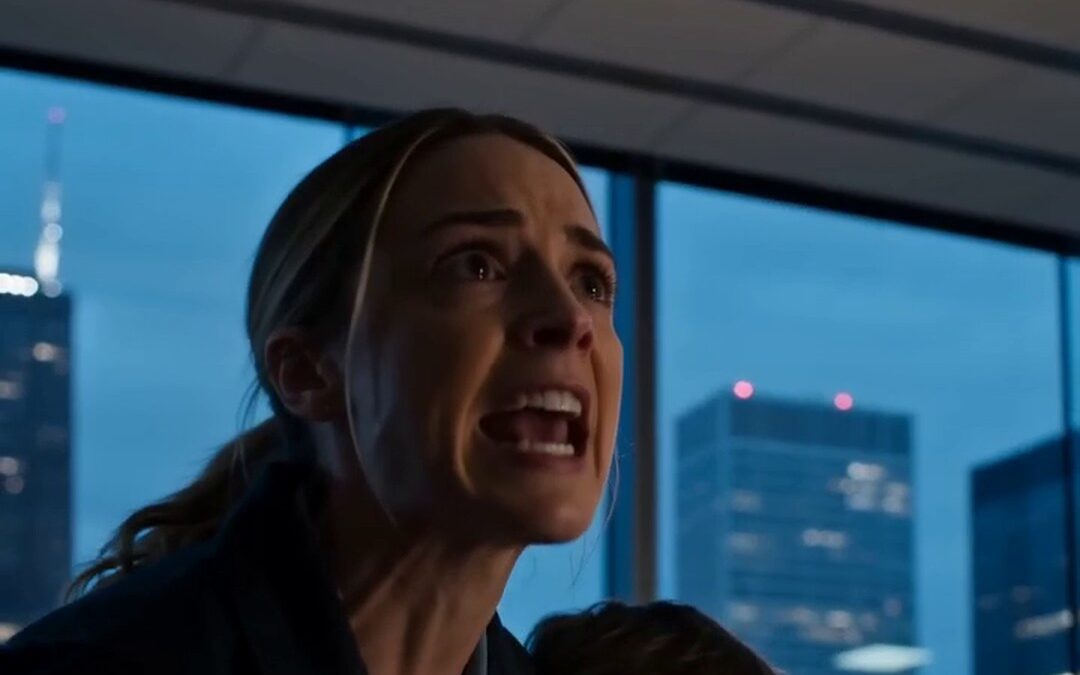
Chapter 2: The Iron Pivot
The slate floor stayed cold.
Vance did not move.
Toby reached for the instrument.
“Don’t touch it,” Vance said.
His voice was thin.
I stepped between them.
My yellow rubber gloves were still damp.
“He didn’t steal it,” I said.
“I didn’t say he did.”
“Then let him pick it up.”
Vance crouched down slowly.
He was wearing a bespoke wool suit.
The knees of his trousers hit the dusty tile.
He picked up the silver compass by its center screw.
His hands shook.
“There is an inscription,” Vance said.
“Inside the hinge,” I said.
He turned the thumbwheel.
The twin silver legs spread apart.
He held it under the halogen desk lamp.
*J. V. to C. V. 1994.*
He read the letters aloud.
Toby leaned against my hip.
The boy’s forehead was burning hot.
“C. V.,” Vance whispered.
He looked up at my face.
“Callum Vance,” I said.
Vance stood up too fast.
His chair rolled back against the credenza.
“Callum died six years ago,” he said.
“In Chicago,” I said.
“In a fire.”
“In an alley behind an auto shop,” I corrected.
Silence filled the wide room.
Outside, the Chicago river was black and spotted with city lights.
The wind rattled the double-pane glass.
“Callum never had a son,” Vance said.
“He had Toby,” I said.
“He never told me.”
“He didn’t trust you,” I said.
Vance flinched.
The hit landed cleanly.
He looked at Toby’s round gray eyes.
They were the exact shape of his own.
The resemblance was sudden and cruel.
“Toby needs a doctor,” I said.
“What is his temperature?”
“A hundred and two.”
“I have a driver downstairs,” Vance said.
“We take the bus,” I answered.
“Not tonight,” he said.
He took his overcoat from the mahogany stand.
He laid the silver compass carefully on his leather desk pad.
“Come,” Vance said.
We rode down forty-two floors in absolute silence.
The brass elevator cage reflected the three of us in distorted gold strips.
Vance kept staring at Toby’s ears.
They had the distinct pointed lobes of the Vance family.
My son coughed into the crook of his small elbow.
Vance flinched with every spasm.
“He breathes too shallowly,” Vance muttered.
“He has had three colds this winter,” I replied.
“Why?”
“Because our radiators freeze in January.”
Vance pressed his lips into a tight white seam.
The elevator chimed on the ground floor.
The marble lobby was empty save for the night security officer behind the curved counter.
The guard jumped to attention when he saw Vance.
“Mr. Vance, sir,” the guard said.
Vance didn’t slow his stride.
“Open the garage bay, Frank.”
“Yes, sir.”
A long black sedan stood idling beneath the yellow fluorescent tubes of the basement level.
A driver in a dark peaked cap stepped out immediately.
“Good evening, Mr. Vance,” the driver said.
“Mercy Hospital is twenty minutes,” Vance said, opening the rear door himself. “The private urgent care on Michigan is four. Take Michigan.”
“Right away, sir.”
I hesitated at the curb of the underground bay.
“Get in, Nora,” Vance said.
“My bucket and mop are upstairs,” I said.
“Leave them.”
“They will dock my pay,” I said.
“No one is docking your pay,” Vance snapped.
“You don’t run the cleaning contractor, Mr. Vance.”
“I own the building that pays their contract.”
“That is not the same thing to a shift supervisor.”
He paused, his jaw working in the dim garage light.
“I will personally cover your shift,” he said.
“Get your boy in the car.”
I pulled Toby into the heated leather interior.
The warmth struck my cold hands like a physical blow.
Toby curled against my coat and shut his eyes.
* * *
The private clinic on Michigan Avenue was quiet at midnight.
A physician named Dr. Patel examined Toby’s lungs.
“Mild bronchitis,” she said.
She prescribed an inhaler and an antibiotic.
Vance paid the bill with a black corporate card before I could reach for my purse.
We sat in the private waiting alcove.
Toby fell asleep on the leather sofa, clutching his plastic juice cup.
“You were his wife?” Vance asked.
“His partner,” I said. “We never married.”
“My name is Marcus.”
“I know who you are, Mr. Vance.”
“Just Marcus.”
I looked down at my worn canvas sneakers.
“I am Nora Kelly,” I said.
“How long have you cleaned my building?”
“Seven months.”
“Why didn’t you say anything?”
“Because Callum warned me,” I said.
Vance leaned forward, his elbows on his knees.
“Warned you about what?”
“About the firm,” I said. “About his share.”
“Callum walked away from the firm,” Vance said.
“That wasn’t his story.”
“He sold his shares to our uncle.”
“He was forced out,” I replied.
“Uncle Arthur handled the buyout,” Vance said. “I was twenty-eight. I was in Rotterdam building the harbor terminal.”
“Arthur told you Callum wanted out,” I said.
“Yes.”
“Callum told me Arthur threatened to ruin him.”
Vance shook his head.
“Arthur loved him.”
“Arthur loved the land portfolio,” I said.
Marcus stared at his own polished oxford shoes.
“Callum and I shared a bedroom until college,” Marcus said quietly.
“He never mentioned that,” I lied.
“He had a drafting table in the attic,” Marcus continued. “He would stay up until four drawing suspension bridges on greaseproof butcher paper. He gave me my first set of rulers.”
“He kept the silver compass,” I said.
“My grandfather gave it to him when he passed the bar of architecture,” Marcus said. “I got a gold watch. Callum got the compass because he was the pure draftsman. I was the manager.”
“He said you were easily blinded,” I murmured.
Marcus looked up sharply.
“By what?”
“By balance sheets,” I said. “And by family respectability.”
Marcus leaned back against the alcove wall.
The fluorescent lights made his hollow cheeks look gray.
“Arthur raised us after our parents’ car accident,” Marcus said.
“He raised you to obey him,” I said.
“He saved the firm from insolvency in 2008.”
“He saved his own stake,” I answered.
The door opened.
A nurse brought a paper bag with Toby’s medicine.
Vance stood up.
“I need a DNA test,” he said.
His tone was not cruel.
It was precise.
“Do it,” I said.
“Tomorrow morning.”
“Whenever you want,” I said. “Toby has nothing to hide.”
“Neither do I,” Vance said.
We walked out into the cold damp air.
His black town car was waiting at the curb.
The driver held the rear door open.
“I want to see where you live,” Vance said.
“No,” I answered.
“Nora.”
“Take us to the station,” I said. “That is enough for tonight.”
He watched us through the tinted window as we walked down into the red-line subway entrance.
He did not look like a tycoon then.
He looked like an abandoned child.
The next morning, a courier arrived at my apartment in Pilsen.
Two buccal swabs in a sterile envelope.
A certified laboratory chain of custody form.
I swabbed the inside of Toby’s cheek while he ate his oatmeal.
I signed the form.
The courier waited on the narrow wooden porch.
Three days passed in heavy silence.
I did not go to work on forty-two.
My cleaning agency called me.
“The client requested a private replacement for your shift,” the supervisor said.
“Did they fire me?”
“No,” she said. “You’re assigned to floor twelve. Commercial accounting.”
Twelve paid fifteen dollars an hour.
One dollar less.
On Thursday afternoon, a knock sounded on my apartment door.
Not the courier.
Marcus Vance stood on the porch in a heavy gray wool coat.
He held a white manila folder.
“Ninety-nine point eight percent,” he said.
He handed me the document.
The chart showed twenty-one identical genetic markers.
“He is Callum’s son,” Vance said.
“I knew that seven years ago,” I said.
He looked past me into the narrow front room.
A second-hand couch.
A small table with Toby’s school drawings taped to the wall.
“May I come in?” he asked.
“Take off your shoes,” I said.
He stepped inside.
He placed the silver compass on the kitchen counter.
Beside it, he placed an old leather ledger.
“What is that?” I asked.
“My father’s estate records,” Vance said.
“Arthur has the originals.”
“These were copies in the safe,” he said. “Callum didn’t sell his shares.”
“What happened?”
“The transfer deed was signed with a power of attorney,” Vance said.
His fingers tapped the cover of the ledger.
“Callum never gave anyone his power of attorney,” I said.
“I know,” Vance whispered.
“Who signed it?”
“Arthur,” Vance said.
* * *
Arthur Vance was seventy-two years old.
He sat on the board of the city transit authority.
He held forty percent of Vance Development Holdings.
He lived in a gray limestone mansion in Lake Forest.
Marcus brought me to his personal attorney on LaSalle Street on Friday.
The attorney was a woman named Elena Reyes.
She had gray hair cropped short and silver-rimmed glasses.
Her office was lined with dark walnut shelves holding thick legal treatises.
She looked at Toby’s birth certificate.
She looked at the DNA report.
She examined the antique silver compass under a magnifying lens.
“Callum had an archive,” Elena said.
“Where?” Marcus asked.
“In a rented storage locker on Blue Island Avenue,” I said.
Marcus looked surprised.
“You knew about a locker?”
“Callum gave me three brass keys before he died,” I said.
“Why didn’t you open it?” Marcus asked.
“Because the rent was paid until Toby’s eighth birthday,” I said.
“That’s next month,” Marcus said.
“Callum told me to wait,” I said. “He told me to wait until Toby was old enough to remember what I showed him.”
“Did he leave instructions?” Elena asked.
“A note in my bible,” I replied. “Three lines: Keep the boy safe. Do not contact Marcus until you have the brass keys in your hand. Look behind the lumber yard.”
Marcus looked stricken.
“He thought I was in on it,” Marcus whispered.
“He didn’t know,” I said. “He knew Arthur controlled the bank accounts. If you took Arthur’s money, Callum assumed you took his side.”
We took Elena’s car to the warehouse district.
The locker was on the third floor of an old brick building.
It smelled of motor oil and damp cedar.
We unlocked the heavy padlock.
Inside were four metal filing cabinets and two pine drafting tables.
Toby ran his fingers over the wood.
“My dad made things?” he asked.
“He made tall things,” I said.
Marcus opened the top drawer of the green metal cabinet.
Dozens of vellum architectural blueprints lay rolled in plastic sleeves.
He pulled one out and unrolled it on the pine desk.
It was the foundation diagram for Tower Three.
The red pencil marks ran along the northern perimeter wall.
Callum’s handwriting was sharp and slanted.
*Unacceptable fill. Keller using industrial aggregate without certified core testing. Voiding warranty.*
Marcus stared at the note.
“He flagged this in March 2018,” Marcus said.
“Before you signed the master loan with Citibank,” Elena noted.
“I never saw this revision,” Marcus said. “Arthur presented the clean version to the underwriters.”
At the bottom of the drawer was a gray metal lockbox.
Elena used the third brass key.
Inside lay three taped microcassettes and a notary ledger from Cook County, dated seven years earlier.
Marcus picked up the first cassette.
He had a portable dictation recorder in his briefcase.
He inserted the tape.
He pressed the play button.
Callum’s voice came out of the speaker.
It was rough and familiar.
My eyes burned immediately.
Toby stopped walking.
“That’s him,” Toby said.
“Yes, baby,” I whispered.
“Marcus,” the tape began. “If you are hearing this, Uncle Arthur told you I ran to Mexico or jumped off a bridge.”
Marcus sat down on a pine stool.
His head dropped into his hands.
“Arthur brought a contractor into the riverfront project,” Callum’s voice continued. “A demolition crew called Keller Excavation. They dumped three hundred tons of unbonded asbestos under the foundation pilings of Tower Three.”
Marcus looked up, shocked.
“Tower Three is our flagship,” Marcus said.
“Callum refused to sign off on the environmental permit,” Elena said, reading a carbon document from the lockbox.
“Arthur threatened him,” the tape went on. “He told me if I went to the state board, he would have my license revoked and claim I embezzled from the payroll account. He showed me the paperwork. He had forged my initials on twelve dummy invoices.”
The tape hissed.
“I took Toby and Nora,” Callum said. “I left the city. But I kept the soil samples. They are in locker forty-four at the rail depot. And I kept the real signature logs.”
The recording ended with a click.
Silence settled over the storage room.
“Uncle Arthur built his entire fortune on Tower Three,” Marcus said.
“And he stole Toby’s legacy to do it,” Elena said.
Marcus looked at the boy.
Toby was drawing a square on a dusty table with his finger.
“What do we do?” Marcus asked Elena.
“We don’t go to the board yet,” Elena said.
“Why?”
“Because Arthur controls the board,” she answered. “We need the soil samples. And we need the notary.”
“Which notary?”
Elena pointed to the ledger in the metal box.
“The woman who stamped the power of attorney transfer. Her name was Shirley Vance-Gomez.”
“Arthur’s sister-in-law,” Marcus said.
“She lives in Kenosha,” Elena said.
“We go tonight,” Marcus said.
“No,” I said.
Both of them looked at me.
“Look at the street,” I said.
Down through the wired window of the storage building, a black sedan was idling at the curb.
It had municipal plates.
A man in a brown leather jacket sat behind the wheel.
“Is that Arthur’s man?” Marcus asked.
“His private driver,” Marcus whispered. “Carl.”
“He followed us from LaSalle,” Elena said calmly.
“Then he knows we have the tapes,” Marcus said.
“Not yet,” I said. “He knows we are here. That’s all.”
“He’ll call Arthur the second we leave the door,” Marcus said.
“Not if we don’t use the front door,” I said.
I took Toby’s hand.
“There is a freight elevator in the rear,” I said. “It opens onto the alley behind the lumber yard.”
“How do you know that?” Marcus asked.
“I spent four years cleaning commercial warehouses before I moved to your tower,” I said.
Marcus smiled faintly.
“Lead the way,” he said.
We slipped down the iron freight lift.
The cable groaned in the darkness.
We walked through the sawdust-covered lane behind the stacks of green timber.
Carl’s sedan was still idling around the corner when our cab picked us up on the avenue.
* * *
We reached Kenosha by train two hours later.
Elena stayed behind in Chicago to lodge the microcassettes in a bank vault.
Marcus, Toby, and I took a commuter car north.
It was raining hard.
The rain beat against the glass of the small suburban house near Lake Michigan.
Shirley Vance-Gomez was sixty-eight years old.
She had arthritis in her hands and lived alone with two cats.
She opened the door on a chain latch.
“Marcus?” she said.
“Aunt Shirley,” Marcus said.
She saw me.
She saw Toby.
Her eyes dropped to Toby’s jacket.
“He looks like Callum,” she whispered.
“He is Callum’s son,” Marcus said.
She let us inside.
The house smelled of peppermint tea and old magazines.
We sat at a small round kitchen table covered in yellow floral oilcloth.
Marcus set the silver compass on the table.
Shirley pulled her cardigan tight around her chest.
“I didn’t want to sign it,” she said immediately.
Nobody had asked the question yet.
“He brought two men to my kitchen,” Shirley said.
“Arthur?” Marcus asked.
“Arthur and his attorney,” she said. “Seven years ago. Callum was already in hiding. Arthur told me Callum was in debt to loan sharks. He told me the firm would collapse if the shares weren’t transferred.”
“You notarized a forged signature,” Marcus said.
“I was terrified, Marcus!” she cried out.
Toby jumped at the sound.
I pulled him into my lap.
“Arthur paid off my mortgage,” she whispered. “Three hundred thousand dollars. He told me it was my retirement.”
“Where is the original notary log?” Marcus asked.
“Arthur took the pages,” she said.
“All of them?”
“He tore them out of the book,” she said. “Right in front of me.”
“Then there is no paper trail,” Marcus said.
His shoulders slumped.
“Wait,” I said.
Marcus looked at me.
“When you notarize a signature in Wisconsin or Illinois,” I said, “the ink stamps leave an indentation on the next leaf.”
Shirley looked up.
“The embossing seal,” I said.
“I used the metal embosser,” Shirley said softly. “The state requires the raised seal.”
“Did you keep the book?” I asked.
“It’s in the pantry,” she said.
She went to the narrow kitchen pantry and brought out a dark blue bound ledger.
Marcus turned to the torn section.
Three pages had been removed with a razor blade.
Elena’s magnifying glass was not there, but Marcus angled the goose-neck kitchen lamp across the surface of the next blank page.
The oblique light caught the ridges in the thick paper.
*Callum Vance — Power of Attorney — July 14, 2019.*
The impression of Arthur’s heavy pen was visible in the paper fiber.
“He pressed too hard,” Marcus said.
“He was angry that day,” Shirley said.
Marcus took his smartphone from his pocket.
He took seven high-resolution photos under the angled light.
The phone buzzed in his palm.
It was a text message.
Marcus looked at the screen.
His jaw tightened.
“What is it?” I asked.
“Arthur called an emergency board meeting for tomorrow at nine,” Marcus said.
“Why?”
“He’s proposing to sell Tower Three to a private equity firm in Dallas.”
“To bury the environmental liability,” I said.
“Once the asset is sold to an out-of-state holding company, the inspection records are sealed for three years,” Marcus said.
“Can you block the sale?” I asked.
“I hold thirty percent,” Marcus said. “Arthur holds forty. The minority shareholders hold thirty. If Arthur convinces them, the sale goes through.”
“Unless Toby votes Callum’s shares,” I said.
Marcus looked at the boy.
Toby had fallen asleep with his head on the kitchen table.
“Callum’s shares were thirty percent,” Marcus said.
“Which means Arthur only had ten,” I said.
“Arthur never owned the controlling block,” Marcus realized.
“He stole the majority,” I said.
“We have twelve hours,” Marcus said.
He stood up.
He kissed Shirley’s weathered cheek.
“Thank you, Aunt Shirley,” he said.
“Don’t let him ruin the family, Marcus,” she wept.
“The family was already ruined,” Marcus said. “We’re just cleaning up the wreckage.”
* * *
The boardroom of Vance Development Holdings occupied the top floor of Tower One.
The walls were paneled in smoked oak.
The table was forty feet long, made of polished black granite.
Nine board members sat in high-backed leather chairs.
At the head of the table sat Arthur Vance.
He had white hair, perfectly trimmed, and wore a navy double-breasted suit.
His gold watch gleamed under the recessed ceiling lights.
“We have a quorum,” Arthur said.
His voice was deep and cultivated.
“The motion on the floor is the liquidation of Tower Three assets to Lone Star Capital,” Arthur continued. “The offer is four hundred and twenty million dollars. Each minority holder will see a sixty percent return on their initial subscription.”
Two older men nodded approvingly.
A woman at the middle of the table adjusted her papers.
“Before we call the vote,” Arthur said, “I must note the absence of our managing partner, Marcus.”
The double doors at the back of the room swung open.
Marcus walked in.
He did not walk alone.
Elena Reyes walked on his left.
I walked on his right.
I was not wearing my yellow gloves.
I wore a dark gray wool dress that Elena had bought for me that morning at a shop on Michigan Avenue.
Behind us walked Toby.
He wore his clean school trousers and held his small sketchpad.
Arthur’s face did not twitch.
He set his gold fountain pen down on the yellow legal pad.
“Marcus,” Arthur said calmly. “You are late. And you have brought unauthorized personnel into an executive session.”
“This is not an executive session,” Marcus said. “This is an audit.”
“We are voting on a sale,” Arthur said. “Take your seat or forfeit your proxy.”
“There will be no vote today,” Marcus said.
He reached the center of the granite table.
He dropped a heavy black binder onto the polished stone.
It landed with a sharp crack that echoed against the glass walls.
“What is that theatrical nonsense?” Arthur asked.
“The soil core reports from Tower Three foundation pilings,” Marcus said.
Two board members sat up straight.
“The pilings were certified five years ago,” Arthur said without blinking.
“They were certified by an inspector who took forty thousand dollars from Keller Excavation,” Elena said.
Elena laid a certified bank subpoena on the table.
“Who is this woman?” Arthur demanded.
“Elena Reyes,” she said. “Special counsel to the estate of Callum Vance.”
The name hit the room like a cold draft.
One of the older board members, an architect named Mr. Henderson, looked up sharply.
“Callum’s estate was settled years ago,” Henderson said.
“It was never settled,” Elena said. “It was forged.”
Arthur chuckled softly.
It was a dry, practiced sound.
“Callum sold his stake before he disappeared,” Arthur said. “Marcus, your grief has made you gullible. This woman is a con artist. And this cleaning woman—”
Arthur pointed his finger directly at me.
“—has clearly found a way to exploit your guilt.”
I did not flinch.
I took the silver draftsman compass from my pocket.
I placed it in front of Mr. Henderson.
Henderson picked it up.
He turned it in his weathered fingers.
“This belonged to Joseph Vance,” Henderson said softly. “The founder. He gave it to Callum on the day Callum passed his licensing exam.”
“Look inside the hinge,” Marcus said.
Henderson opened the legs.
He read the engraving.
“And look at the boy,” Marcus said.
Toby stepped forward to the edge of the table.
He looked at Arthur with calm, curious eyes.
“Arthur,” Marcus said, “this is Toby Vance. Callum’s legitimate heir.”
“A child can’t vote shares,” Arthur sneered.
“A child’s legal guardian can,” Elena said.
She produced the emergency letters of administration signed by Judge Martinez at the Cook County probate court two hours earlier.
“Nora Kelly is the court-appointed administrator of Callum Vance’s estate,” Elena said. “She controls thirty percent of the voting equity.”
Arthur’s hands curled into tight fists.
The knuckles turned white against the black granite.
“The power of attorney is registered with the state,” Arthur said. “It stands until overturned by a trial.”
“The notary was Shirley,” Marcus said.
The room went completely still.
“Shirley gave a sworn deposition this morning,” Marcus continued. “She admitted under oath that Callum was never present. She provided the embossed ledger.”
Arthur looked around the table.
The other board members were moving their chairs back.
Just two inches.
Separating themselves from him.
“You’re making a mistake, Marcus,” Arthur said.
His voice lost its smooth polish.
It became thin and raspy.
“If you halt this sale, the environmental liability will trigger a default on the municipal bonds,” Arthur said. “The firm will lose eighty million dollars.”
“Then we will lose eighty million dollars,” Marcus said.
“It will destroy everything your father built!” Arthur shouted.
“No,” Marcus said, looking down at his uncle. “You destroyed it. We are just paying the bill.”
Two men in dark suits stepped through the boardroom doors.
They were not private security.
They carried state credentials from the Illinois Attorney General’s Special Investigations Unit.
“Arthur Vance?” the lead investigator asked.
Arthur did not answer.
He looked at me.
“A scrubwoman,” he spat out. “You let a scrubwoman take the company.”
“I cleaned your office for seven months, Arthur,” I said.
My voice was quiet.
It did not shake.
“I found three shredder bags full of Keller invoices in your private recycling bin in November,” I said. “I didn’t throw them away. I kept them in my locker.”
Arthur’s jaw fell open.
“A good cleaner notices everything,” I said.
The investigator touched Arthur’s arm.
“Please stand up, sir,” the officer said.
Arthur rose slowly.
His knees wobbled.
He looked around the magnificent room he had ruled for twenty years.
Nobody looked back at him.
They escorted him through the double doors.
The click of the latch sounded final.
* * *
The remediation of Tower Three took fourteen months.
It cost seventy-two million dollars.
Marcus sold his private home in Lincoln Park and moved into a smaller loft near the office.
The firm did not collapse.
The minority shareholders stayed because Marcus gave up his personal bonuses for three years to cover the bond interest.
Toby turned eight.
Then nine.
We stayed in our apartment in Pilsen for the first year.
I did not want Toby’s life to turn upside down overnight.
On a Saturday morning in late spring, Marcus came to our apartment with a large manila envelope.
He sat on the front porch steps, eating a blueberry muffin Toby had brought him.
“The court finalized the trust,” Marcus said.
He handed me the papers.
“Callum’s thirty percent is fully restored,” he said. “The dividends from the past five years were recovered from Arthur’s frozen accounts. After taxes and legal fees, Toby’s trust holds nineteen million dollars.”
I looked at the number on the white page.
It did not feel real.
It felt like a phone number or an address.
“What do I do with that?” I asked.
“You raise him,” Marcus said.
“I don’t know how to raise a rich boy,” I said.
Marcus laughed softly.
“Don’t raise a rich boy,” he said. “Raise Callum’s boy.”
He leaned back against the porch railing.
“The board wants you to take a seat,” he said.
“On the board?”
“On the community foundation committee,” Marcus said. “We’re setting up a fund for workers’ housing along the south branch. We need someone who knows what a drywall hanger makes. Someone who knows what an hour on a night shift is worth.”
“I am not an architect, Marcus.”
“We have enough architects,” he said. “We don’t have enough honesty.”
I looked out at the street.
The neighbors were washing their cars.
Kids were riding bikes on the sidewalk.
“I’ll think about it,” I said.
“That’s all I ask,” he said.
He reached into his pocket and took out a small blue velvet box.
“This is Toby’s,” Marcus said.
He opened it.
The silver draftsman compass lay on the white satin.
It was cleaned and polished.
The twin silver points gleamed like new needles.
“Keep it safe for him,” Marcus said.
“You keep it,” I told him.
Marcus looked surprised.
“Why?”
“Because you’re the one who needs to remember where the lines started,” I said.
Marcus closed the box slowly.
His eyes were wet.
“Thank you, Nora,” he said.
* * *
Four years later, the riverfront promenade opened to the public.
It was a warm October afternoon.
The leaves along the Chicago River had turned bright orange and crimson.
Tower Three stood tall against the autumn sky.
Its glass facade reflected the slow, dark water below.
The foundation was solid.
The pilings were clean.
A brass plaque was set into the granite river wall near the entrance.
*Designed by Callum Vance and Marcus Vance.*
A crowd of several hundred people had gathered for the ribbon-cutting.
City officials in dark suits stood on the temporary wooden stage.
Marcus stood at the podium.
He looked older now.
He had gray hair at his temples, but his eyes were clear and calm.
He did not give a long speech.
“A building is only as strong as what lies underneath it,” Marcus said into the microphone. “If the foundation is built on a lie, the structure will eventually fall. Today we honor the man who refused to build on a lie.”
He stepped down from the stage.
He walked past the reporters and the city council members.
He walked straight toward the first row of folding chairs.
I sat there wearing a simple blue coat.
Beside me sat Toby.
He was thirteen now.
He was tall and lean, with Callum’s long stride and Callum’s quiet smile.
In Toby’s coat pocket was a small leather sketchbook.
Marcus knelt down in front of Toby’s chair.
He took the velvet box from his pocket.
He opened it.
The silver draftsman compass lay inside.
“It’s time,” Marcus said.
Toby looked at the instrument.
“Did my father use this on this tower?” Toby asked.
“He drew the first arch with it,” Marcus said.
Toby took the silver compass into his hands.
He turned the thumbwheel.
The silver legs spread apart smoothly, without a sound.
“What should I draw first?” Toby asked.
Marcus smiled.
“Draw something that will last,” Marcus said.
Toby looked at the tower.
Then he looked at me.
Then he looked at Marcus.
“A bridge,” Toby said.
“A bridge is good,” Marcus said.
The crowd began to applaud as the red ribbon was cut by the river.
The wind off the water was cool and clean.
The old wound had closed.
The debt was paid.
The boy held the silver compass against the sunlight, and for the first time in seven years, nobody had to run.
THE END