The Banquet Server Caught a Media Mogul’s Glass Before It Could Crush a Refugee Seamstress’s Last Evidence
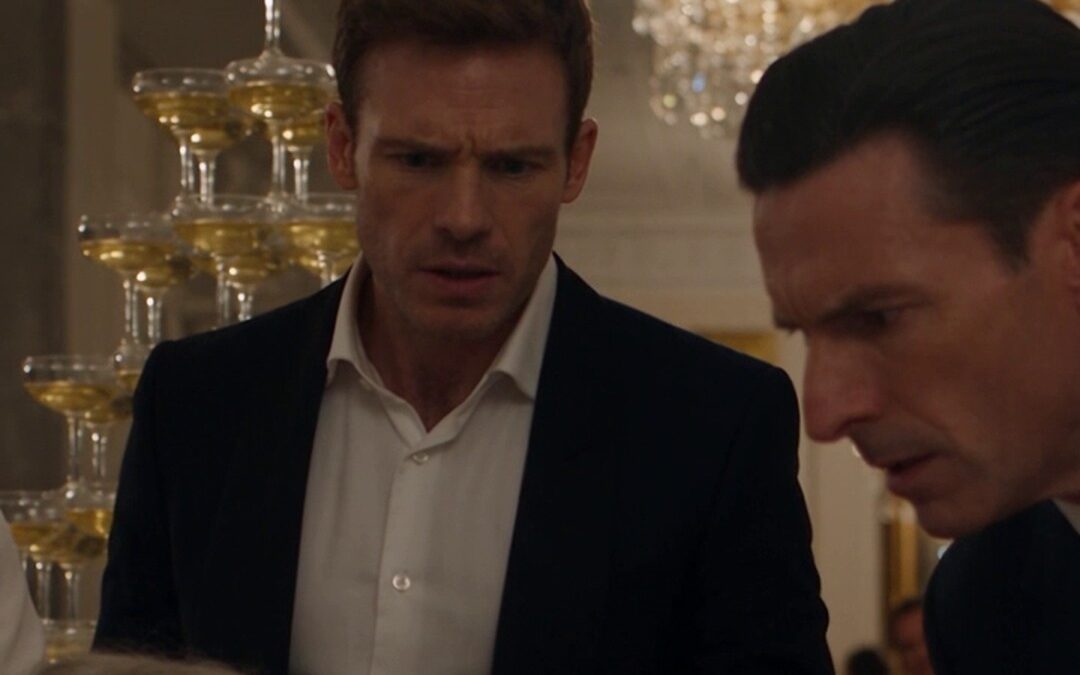
Chapter 2: The Letters Beneath the Hem
Calder’s smile disappeared.
The guard stayed between him and Anya.
The orchestra had gone quiet.
Nobody reached for the champagne.
Elias rose from his knee.
“Which letters?” he asked.
Anya kept the thimble in her fist.
“The ones your mother sent to Jon.”
Mara stared at her.
“My mother died when I was twelve.”
“I know.”
“You knew her?”
“I knew her before you were born.”
Calder glanced at the doors.
“You’re confused.”
Anya turned her chair toward him.
“Your mother was confused when you told her I’d stolen from her?”
“Enough,” Elias said.
Calder looked toward the guests.
“This is a private family matter.”
“Then stop making it a gala performance,” Mara said.
He looked at her again.
She wished she could pull those words back.
Then she remembered his threat about her father.
Elias held out a hand to Anya.
“Can you come somewhere quieter?”
“Not with him.”
Calder gave a sharp laugh.
“She needs medical care.”
“She has a physician,” Anya said. “And I have asked to leave.”
Elias looked at the guard.
“Please escort Mr. Voss to the west lounge.”
Calder’s expression went blank.
“You’re ordering security against me?”
“I’m asking them to keep this room safe.”
“Your own company’s security?”
“The venue’s.”
Helene Sato stepped closer.
“I can confirm he has no authority over this building.”
Calder’s eyes moved to the guests.
A dozen phones remained raised.
He did not fight the guard.
He walked toward the west doors as if he had chosen the route himself.
At the threshold, he paused.
“Mara Bell,” he said. “We’ll talk about your father.”
Mara’s fingers tightened around her tray.
“No, we won’t.”
The doors shut.
Only then did Elias look at her.
“Your father is in Voss Memorial?”
“He’s at home. The hospital has his referral.”
“What does he need?”
“A valve replacement evaluation. They’re checking whether he can handle surgery.”
“Has anyone threatened to cancel the appointment?”
“He just did.”
“I’m sorry.”
“Are you?”
“Yes.”
She heard the exhaustion in his voice.
He had arrived ready for a fight.
He had not expected her.
Anya touched Mara’s sleeve.
“Would you sit with me?”
Mara set down her tray.
The event manager approached from the service corridor.
His eyes went straight to the glass.
“Bell, you need to return to the kitchen.”
“She caught it,” Helene said.
“She’s on shift.”
“She’s no longer on shift,” he replied.
Mara knew that tone.
The employer had already decided what the room required.
Elias turned toward him.
“Who is the event contractor?”
“Caldwell Hospitality.”
“Who is the client?”
“My brother’s foundation.”
“Then settle her hours before she leaves.”
The manager stiffened.
“That isn’t your decision.”
“No,” Elias said. “It’s the law.”
He turned back to Mara.
“Would you like to go home?”
“I want to know what she meant about my mother.”
Anya’s eyes rested on her.
“Then stay.”
Mara looked at the thimble.
The brass had gone dark with age.
A narrow scratch crossed its side, nearly hidden beneath the rim.
“My mother used to sew in the kitchen,” Mara said. “She kept an old tin with buttons and needles.”
“Did she have letters?”
“I don’t know.”
“Did she ever mention a woman named Anya?”
Mara thought of the little she remembered.
Her mother had kept a photograph inside a cookbook.
A dark-haired woman laughed at a table.
Mara had assumed she was a cousin.
“What did you do for my mother?”
Anya’s hand trembled.
“Not enough.”
The hotel offered them a private library off the ballroom.
Elias asked the venue manager to bring tea and water.
He kept the door open.
Mara noticed.
He did not want the room to look like an ambush.
Anya rolled herself inside.
Mara followed.
Elias stayed beside her.
The thimble lay on the table between them.
Mara did not sit.
“Start with the truth,” she said.
Anya nodded.
“I was a seamstress in Queens. Your mother, Ruth, worked beside me at a garment shop. We were both teenagers.”
“Which year?”
“1967.”
“My mother was born in 1951.”
“She was sixteen.”
“That matches.”
Anya looked at the thimble.
“My sister, Vera, was older. She worked in the same building as Calder and Elias’s father.”
“Doing what?”
“Stitching linings for private-label coats.”
Elias sat down.
“My grandfather owned Voss Apparel then.”
“Your grandfather owned the factories,” Anya said. “The women who worked in them owned nothing.”
Mara had heard bits about the company’s past.
Her father once said the Voss name covered more than shipping.
The company’s public history began with a modest garment shop.
It never named the workers who had built it.
“Vera was killed in a fire?” Elias asked.
“Your family said she was.”
“I thought that was the story.”
“That was the story.”
Mara leaned against the table.
“What happened?”
“The building had a fire escape that wouldn’t open from inside. The night of the fire, the doors were chained.”
Elias sat still.
“That’s never appeared in our records.”
“It appeared in mine.”
Anya tapped the thimble.
“Vera copied payroll books. She found the company held back wages from workers without citizenship papers. The money went into a second set of accounts.”
“Did she report it?” Elias asked.
“She sent copies to a labor attorney. Your grandfather found out.”
“How?”
“Someone told him.”
“Who?”
“I didn’t know then.”
Anya stopped.
The teacup rattled as the table shook.
Mara looked at her.
“You were in the building?”
“No. Ruth was.”
“My mother?”
“Ruth took Vera’s papers out after the fire.”
Mara’s chest tightened.
“Why didn’t she tell me?”
“Because she was afraid.”
“Of your family?”
“Yes.”
Elias’s face had gone pale.
“What did my mother have to do with it?”
“Your mother, Miriam, was a bookkeeper at the factory. She found the accounts. After the fire, she helped Ruth hide them.”
“Then why did your family say the papers never existed?”
“Your grandfather said Vera had stolen money.”
Anya looked at Elias.
“He said she set the fire to cover it.”
Mara’s hands went cold.
“You said my mother kept your letters.”
“She did.”
“You sent them to her?”
“I wrote whenever I had a lead.”
“How many?”
“Six that I remember.”
“Where are they now?”
“I don’t know.”
Mara gave a short, disbelieving laugh.
“You bring me into a ballroom, point at a thimble, and expect me to believe my mother hid evidence for a woman she barely knew?”
“Not barely,” Anya said. “They were family.”
The word struck harder than Mara expected.
She sat.
“Why would she keep it from us?”
“Your father was working for the company,” Anya said.
“My father drove delivery trucks.”
“Exactly.”
Anya’s voice softened.
“He needed his wages. He had a new baby. Your mother thought the safest place for the papers was where nobody would look.”
“Where?”
“The seams.”
“Of what?”
“Coats. Blankets. Anything she repaired.”
Mara looked at the thimble.
It was the kind of thing her mother would have kept.
“Who else knows?” Mara asked.
“Calder,” Anya said. “Or someone told him.”
Elias glanced at the open door.
“We need to establish what is real.”
“I’ve been trying to establish it for forty years.”
“Then let us verify it.”
“Your family spent forty years denying it.”
“I’m not asking you to trust me.”
“You’re asking me to trust your access.”
“Yes.”
“And your surname.”
“No.”
He folded his hands.
“I’m asking you to show us what you have. We’ll bring in an independent archivist and a labor attorney. You can choose both.”
Anya watched him closely.
“You’ll let them see the records?”
“All of them.”
“Even the company archives?”
“Yes.”
“Even records involving your father?”
Elias swallowed.
“Yes.”
“Are you prepared for what they might find?”
“No,” he said. “But I’m prepared to find it.”
The venue’s nurse checked Anya’s blood pressure.
She found no emergency and recommended assistance getting home.
Anya waved away the suggestion.
“My hands are tired, not broken.”
Mara asked whether she had a ride.
“I took a rideshare,” Anya said. “I can manage.”
“You can’t manage the ramp from the curb alone.”
“I’ve managed for years.”
“Then let someone help tonight.”
Anya stared at her.
“Your mother used to say that.”
Mara looked away.
The event manager handed Mara her pay envelope and a termination notice.
It blamed “unprofessional conduct toward a client.”
Her father’s name appeared in the notes.
Mara crumpled the page.
Elias started toward it, then stopped.
“Would you like me to call an employment lawyer?”
“I’ll call my own.”
“Good.”
She had no lawyer, but she had a union contact from an old restaurant job.
She could start there.
The hotel supplied a car for Anya.
Mara rode with her.
Elias followed in another vehicle.
Anya lived in a senior apartment building near the river.
Her apartment was neat, with a sewing machine beside a worktable.
Mara stopped at the doorway.
It was an old Singer with a chipped black base.
Her mother had used the same model.
“Ruth gave me mine when she moved,” Anya said.
“When was that?”
“1981.”
“Why?”
“She said she was leaving town.”
“Where did she go?”
“To your father. To you.”
“She didn’t leave town.”
“Not then.” Anya’s face folded. “She changed apartments.”
Mara touched the machine.
“Did you see her after?”
“Once, at the hospital. She was already ill.”
Her mother had died of ovarian cancer.
The week before, she had stitched a loose button onto Mara’s coat.
Mara had been angry that she wouldn’t rest.
“What did she give you?”
“Nothing. She asked me to keep the machine.”
Anya pointed to a wooden box beneath the worktable.
“Did you?”
“Of course.”
The box held spools, needles, and old pattern tissue.
No letters.
Mara lifted the machine’s case.
The bottom panel shifted.
“Is it supposed to do that?”
Anya leaned forward.
“I never noticed.”
A shallow compartment lay beneath it.
Inside was an envelope addressed in Ruth’s handwriting.
For Anya.
“May I read it?” Mara asked.
Anya nodded.
The letter began plainly.
Anya, I kept the six letters.
I could not answer until I knew the books were safe.
Ruth wrote that she had hidden copies of the payroll ledger and fire inspection report inside coats she repaired for a church donation drive.
She named the church and the year.
She wrote that the originals had been taken from the company office before the fire.
At the bottom, she had added:
If Vera was called a thief, the books will prove who was paid.
Mara’s hands shook.
“She wrote this before I was born.”
“Yes,” Anya said.
“Why didn’t you tell me?”
“I didn’t know the letter was there.”
“Why didn’t my mother tell me?”
“Because you were a child.”
“My father knew?”
“I don’t know.”
Elias read the letter only after Mara handed it to him.
He moved slowly.
“Where are the coats now?”
“Ruth wrote the church’s name.”
Mara looked at the page.
“St. Bartholomew’s.”
“That church closed years ago,” Anya said.
“Could the records still exist?” Elias asked.
“Possibly. The parish merged with another.”
Mara folded the letter.
“Who can verify this?”
“An archivist, a labor attorney, a forensic document examiner,” Elias said.
“Your company won’t get to pick them.”
“No.”
“Your lawyers won’t edit their report.”
“No.”
“And I keep the letter.”
“Yes.”
Mara looked at him.
“You don’t get to call this a family matter.”
“I won’t.”
“You don’t get to turn my mother into a symbol.”
“I won’t.”
“You do get to tell me what you know about your father.”
Elias looked down.
“I know he was a child when the fire happened.”
“That doesn’t answer me.”
“I know the company archive has three missing years.”
“Why?”
“The records were moved during a merger. That was the official explanation.”
“Do you believe it?”
“I did.”
“And now?”
“Now I’m not sure.”
Anya watched him.
“Your mother believed your grandfather ordered the doors chained.”
Elias shut his eyes.
“My mother never told me that.”
“Maybe she was trying to protect you.”
“Or herself.”
Mara put the letter in a clear sleeve.
“No one touches the original.”
“Agreed,” Elias said.
A few days later, they met at a labor history center.
Mara brought the letter.
Anya brought the thimble.
Elias brought Nadine Ibarra, a retired university archivist, and Philip Rosales, a labor attorney.
Neither had ties to Voss Holdings.
Mara had checked.
“Let’s set ground rules,” Philip said.
Mara placed the letter on the table.
“The original stays with me.”
“Agreed,” Philip said.
“No document goes to the company without a copy.”
“Agreed.”
“Anya approves every interview.”
“Agreed.”
“Nothing gets called proven until it is.”
Nadine nodded.
“That’s a good rule.”
She examined the letter under magnification and asked Mara about the handwriting.
Mara described her mother’s habit of crossing lowercase t’s high.
Nadine compared it to a birthday card and a hospital form.
“The writing is consistent,” she said. “That doesn’t make the letter conclusive.”
Mara liked that answer.
Nadine photographed the thimble and measured the scratch.
“The maker’s stamp dates this style to the late fifties,” she said. “That fits.”
“Can you tell who owned it?” Mara asked.
“No.”
“Can the mark prove it was my mother’s?”
“Not alone.”
Mara showed Celia Mora, a retired tailor and former coworker, a photograph of the scratch.
Celia had packed coats with Ruth for the church drive.
“That mark,” she said. “A crescent and three dots.”
“Did you see any papers?”
“No. I saw Ruth open a lining and stitch it shut.”
“Did she say what was inside?”
“She told me the less I knew, the longer I’d stay safe.”
Celia signed a statement.
The parish archive had retained old donation logs.
One listed coats delivered by Ruth Bell.
Beside her name, a note read:
Altered linings. Return to sewing circle.
The coats had gone to a neighborhood shelter, which had later closed.
Its records had been sent to a city archive.
Nadine traced one shipment to a county warehouse.
Mara stared at the inventory screen.
“So we have a letter saying the books were in coats, a donation record, and no coats.”
“We have enough to keep looking,” Nadine said.
“Not enough for a public accusation,” Philip added.
“Calder accused Anya in a ballroom.”
“And that can be documented,” Philip said. “The records need their own chain.”
Elias arranged access to the company archive.
He signed a waiver allowing Nadine to examine the stored payroll records.
The general counsel objected.
Elias overruled him as board chair.
At the archive, a retired clerk named George Kline said he remembered a ledger cart leaving the factory after the fire.
“Who pushed it?” Nadine asked.
“Your grandfather’s assistant.”
“Do you remember his name?”
“Samuel Dyer.”
Elias checked the personnel files through the archive protocol.
Dyer had worked as company secretary.
His employment ended three months after the fire.
A severance payment was recorded under a reserve fund used for legal expenses.
The trail moved closer to the family.
That evening, Mara visited her father.
Jon Bell sat at the kitchen table with his pill organizer open.
“Did Mom ever tell you about Vera Petrov?” Mara asked.
“Anya?”
“You know her?”
“I knew she was alive.”
“Did Mom keep letters?”
“Some.”
“How many?”
“I don’t know.”
“Why didn’t you tell me?”
“Because I didn’t want you carrying what we carried.”
“You let me think she kept secrets for no reason.”
“I thought the danger had passed.”
“What danger?”
Jon pushed the pill organizer away.
“Your mother said there had been a fire. She said her friend believed the doors were chained.”
“Did you believe her?”
“I believed your mother.”
“Did you see the books?”
“No.”
“Did you know where they were?”
“No.”
“Did you help her hide them?”
“I moved two garment bags for her.”
“Where?”
“To the church basement.”
Mara stared at him.
“You didn’t tell anyone.”
“There were no investigators.”
“Did you tell the police?”
“I was twenty-two. Your mother said they were looking into the fire.”
“Were they?”
“I don’t know.”
“You didn’t ask?”
“I asked. She said there was nothing to gain.”
The old story shifted.
Her father had not been ignorant.
He had been afraid, with a new baby and a job that paid rent.
“Why didn’t you tell me after she died?”
Jon’s shoulders slumped.
“I was ashamed.”
“Of what?”
“Of not being brave.”
“You were trying to keep us alive.”
“That doesn’t make it right.”
“No.”
He looked at her.
“I’m sorry.”
She let the apology sit.
It did not undo anything.
She reached for his hand.
“Tell the lawyers what you remember.”
“I will.”
“It might hurt your pension.”
“If it helps Anya, yes.”
They agreed to do it carefully.
Weeks later, the county clerk called Philip.
Unsorted garment bags had turned up behind shelving during a floor repair.
They were labeled with the shelter’s name.
The group inspected them in the county evidence room.
Every step was photographed and logged.
Inside one bag, they found a navy overcoat.
The crescent-and-three-dot mark appeared on its lining.
Nadine opened the seam carefully.
A packet rested inside a second layer of cloth.
The outer page had dissolved at the edges.
The inner pages remained legible.
They showed payroll deductions, cash transfers, and worker names.
Some names matched people who had received no wages after the fire.
A forensic review followed.
The paper matched purchase orders from the factory accounting office.
The ink fit the period.
The examiner could not identify every writer.
One set of initials appeared on four pages: Samuel Dyer.
A second hand signed transfer approvals.
The signature matched a company manager, Calder and Elias’s father.
Elias stared at the report.
“My father was twenty-six.”
“Old enough to sign,” Philip said.
“Did he know the doors were chained?”
“We can’t prove that from the ledger.”
“Did he authorize the transfers?”
“The records indicate he did.”
“Then he helped cover the wages.”
“And the fire?”
“We need more evidence.”
Anya had waited outside the archive room.
Mara brought her in.
Anya read the names carefully, then touched one.
“Vera’s name is here.”
“She wasn’t stealing,” Mara said. “They owed her.”
The first secret was verified.
The lie had not ended with the grandfather.
It had passed to Elias and Calder’s father.
The present threat arrived before they could publish anything.
The next morning, Jon received a letter from Voss Memorial.
His referral had been placed under review.
It gave no reason.
Mara sent it to Philip, who contacted the hospital’s patient advocate.
The referral had been flagged by an administrator with no clinical authority.
The hospital restored the appointment while it investigated.
No one admitted the flag had come from Calder.
That afternoon, Mara found her restaurant locker open.
Her coat was missing.
A photocopy of her mother’s letter had been left inside.
Someone had drawn a red line through the words about the payroll books.
She showed it to Philip.
He photographed it and logged it with the other evidence.
“Could be meant to frighten you,” he said.
“It worked.”
“Are you going to stop?”
“No.”
“Then don’t answer it.”
She wanted to tear the page.
Instead, she put it in a sleeve.
Calder’s lawyer later offered her a settlement for lost shifts and medical expenses.
The document required confidentiality and a release of claims.
It also asked her to certify she had not seen Calder try to take the thimble.
“They’re paying me to lie,” Mara said.
“They’re offering money to close the dispute,” Philip replied.
“They want me to sign that I imagined it.”
“Yes.”
“What if I take the money and refuse the statement?”
“Then it’s a different offer.”
“I won’t take it.”
She filed a wage complaint instead.
Her shift logs, bank records, and texts showed the contractor had shorted her overtime at six events.
The labor office opened an inquiry.
The company paid her back wages after the first document request.
Calder had lost control of one small thing.
Then Elias received a board notice accusing him of using company resources for a “private historical dispute.”
“They can remove me,” he said.
“Can they?” Philip asked.
“The bylaws allow a vote.”
“Then make sure the vote includes the archive records.”
“That will expose my father’s signature.”
“Does the board know?”
“Some do.”
“Do they know about the ledger?”
“No.”
“Tell them what you can document.”
Elias called a special board meeting.
Before it began, he sat alone in the company lobby with Mara.
“You don’t have to do this,” she said.
“I do.”
“Because of the records?”
“Because I knew about the gaps and accepted the explanation.”
“That’s not the same as causing the fire.”
“No.”
“Don’t carry blame you didn’t earn.”
“I’m not trying to.”
He looked toward the elevator.
“I’m trying to stop inheriting excuses.”
The board meeting lasted four hours.
Elias disclosed the ledgers, the archive gaps, and his father’s approval signature.
He withheld the workers’ names from public circulation.
The board hired an outside firm to investigate.
A majority voted to keep Elias as chair while the review continued.
Calder voted against him.
The minutes later showed his proposed motion would have sealed the archive.
The board rejected it.
The next day, Calder’s foundation released a statement accusing Anya of repeatedly seeking payment for an unsubstantiated claim.
It called Mara an employee who had misinterpreted a private conversation.
It did not mention Helene’s recording.
Helene supplied it to Philip.
The audio clearly captured Calder threatening Mara’s father’s care and asking where Anya got the thimble.
Philip sent a preservation notice.
Calder’s counsel said the words had been spoken in a public venue.
Then the investigators found recent transfers from the foundation to a consulting firm.
The firm had paid legal expenses connected to the ballroom incident.
It had also hired a security contractor under an invoice marked “sensitive asset recovery.”
Calder had approved it.
“What asset?” Mara asked.
The investigators checked the firm’s files.
The contract date came after Anya had been invited to the gala.
Its target description read:
Unverified papers believed in elder’s possession.
The contract was legal on its face.
It did not establish what Calder intended at the ballroom.
Anya’s voice hardened.
“He wanted the thimble back.”
The investigators found a draft gala speech referring to Anya as a “discredited former worker.”
An attached photo showed the brass thimble.
The seating chart placed her beside the champagne tower.
The investigators also found that Calder’s office had added her name to the guest list three days after the contractor’s first invoice.
The image had been planned: a poor old woman beside crystal, with a famous man calling her a liar and the thimble between them.
Calder expected the room to watch.
He had not expected Mara to catch the falling glass.
The consultant, Peter Rusk, hired counsel and agreed to an interview.
He said Calder called the papers “stolen records” and instructed him to locate them.
Rusk denied being told to intimidate Anya.
He admitted contacting her building manager about storage and produced emails.
One from Calder said:
The old woman will bring the brass piece. She always does.
Another read:
If the room sees the object as mine, the archive story dies.
A third said:
Keep Bell’s daughter employed until we know what she has.
Mara read that line twice.
“He didn’t know what I had.”
“Not yet,” Philip said.
The emails showed Calder wanted the thimble treated as family property, Anya discredited, and the papers found before anyone checked them.
The company was considering a merger with a public firm.
A new labor scandal could delay it and expose hidden liabilities.
Calder also wanted to block Elias’s path to chief executive.
The antagonist was Calder Voss.
His motive was control of the company and its story.
The exposure came at a public foundation review.
The board invited Anya, Mara, and Elias to present their findings at the company’s old headquarters.
Calder arrived late.
He wore a navy suit and silver tie.
The thimble sat in a sealed evidence case.
The ledger pages sat in another.
A court reporter recorded the meeting.
“You’ve turned this into a campaign,” Calder said.
“I turned it into a record,” Anya replied.
“You have no original payroll book.”
“We have authenticated pages.”
“You have a letter written by a dead woman.”
“We have a handwriting comparison.”
“Your mother could have copied the records.”
“She did,” Mara said.
“Then she was part of the theft.”
“The company withheld wages.”
“That is an allegation.”
“The ledger records the deductions.”
“Your evidence doesn’t say who made them.”
The outside attorney spoke.
“The examiner found that four pages were written by Samuel Dyer, the company secretary.”
Calder turned toward him.
“That proves nothing about the fire.”
“Correct,” the attorney said. “The report does not establish who ordered the doors chained.”
“There,” Calder said. “Even your investigator says the central claim is unproven.”
He had found the weakest part of the case.
He treated missing evidence like proof of innocence.
Anya sat upright.
“You’re right that I did not see the chain.”
Calder leaned back.
“You want money.”
“I want Vera’s name restored.”
“You want compensation.”
“I want the workers named.”
“Your friend took company records.”
“She took records of stolen wages.”
“Allegedly.”
An archivist slid a page toward the board.
“These records list nine workers whose wages were withheld.”
Calder did not look at it.
“Some workers may have received cash.”
“Then the company should show the records.”
“It cannot reconstruct every transaction from the sixties.”
“You reconstructed your founder’s story,” Anya said.
The board chair turned to Calder.
“Did you authorize a contractor to seek these papers?”
“I authorized a review of missing company property.”
“Was the thimble company property?”
“My family owned the garment business.”
“That’s not what I asked.”
Calder paused.
“I believed it was part of the family archive.”
“Did you have evidence?”
“I believed it belonged to my mother.”
“Your mother’s records say she gave it to Anya Petrov,” Nadine said.
“Do you have those records?”
“Not yet.”
“Then you don’t know.”
Nadine presented the gala draft.
The thimble was circled.
A note beside it read, “Keep it visible.”
Calder’s attorney objected.
The board chair overruled him.
The email chain followed.
Then the seating chart.
Anya had been placed beside the tower.
Calder glanced at the papers.
“That is an event diagram.”
“With the object identified,” Elias said.
“The staff positioned the chair.”
“You amended the guest list.”
“It was my event.”
“You directed where she sat.”
“I wanted her near the stage.”
“You directed the glass tower beside her.”
“I did not direct the table layout.”
The event manager’s signed statement said Calder’s office requested a “strong visual arrangement.”
Calder turned to the board.
“Are we treating a catering diagram as proof of criminal intent?”
“No,” the chair said. “We are reviewing your conduct.”
Helene’s recording played next.
Calder’s voice came through the speakers.
Your father uses Voss Memorial.
Then:
Then keep your job.
The board members lowered their eyes.
“Out of context,” Calder said.
The recording continued.
Mara said, “Then replace me.”
Calder replied, “You have no idea what this means.”
Anya said, “Your mother gave it to me.”
Calder answered, “That’s impossible.”
The board chair paused playback.
“Is that your voice?”
“Yes.”
“Did you threaten to interfere with her father’s medical care?”
“No.”
The recording played the exchange again.
Calder said nothing.
The hospital’s patient advocate testified by video.
The referral had been flagged after a call from a foundation office.
The caller had asked whether Jon Bell’s appointment could be put “on administrative hold.”
The hospital refused.
The caller ID identified a foundation line.
A junior staffer provided a written statement saying Calder’s chief of staff had directed her to make the call.
That confirmation changed the room.
The foundation’s general counsel turned to Calder.
“Did you request the call?”
“I asked my office to assess whether there was a conflict.”
“Your office contacted the hospital about a patient’s care.”
“I did not order any treatment decision.”
“You threatened Mara Bell’s father’s access in the ballroom.”
“I said he used our hospital.”
“You said, ‘Then keep your job.’”
“I didn’t mean it as a threat.”
Mara felt heat in her face.
She had spent two weeks wondering whether she had overreacted.
Now no one asked her to explain the words away.
The chair called a recess.
Calder’s attorney spoke with him in the hall.
Outside counsel reviewed the documents.
When the meeting resumed, the chair announced temporary measures.
Calder would be removed from foundation duties.
His archive access would be suspended.
The company would preserve its records and cooperate with the state labor review.
The board would commission a public history of the factory and workers.
The matter would be referred to appropriate labor and regulatory authorities.
No one called it a conviction.
No one pretended the legal process was complete.
Calder stood.
“You’re destroying the company over an unproven story.”
“We’re testing the story against records,” Elias said.
“You’ll expose every mistake our family made.”
“Yes.”
“You’ll hand the company to outsiders.”
“If accountability requires it.”
“You think they’ll thank you?”
“I’m not doing it for thanks.”
Calder looked at Mara.
“You’ve made a career out of being in the wrong room.”
Mara stood.
“No. I’ve spent my life being told I don’t belong in the room.”
She took a breath.
“I’m here because your records belong to the people you erased.”
Calder had no answer.
The legal outcome took months.
The labor department opened a formal inquiry.
The recovered records went to the state archive under a chain-of-custody agreement.
The city fire department’s files showed the west doors had been reported as obstructed two months before the fire.
A former inspector’s notebook noted that the chains had been removed during inspection.
It did not establish who chained them later.
A second archive held a witness statement taken in 1969.
Another worker said the west exit had been locked on the night of the fire.
The file had been mislabeled under the factory’s previous address.
The documents supported Anya’s account.
They did not answer everything.
The state referred the wage records for civil recovery.
The company reached a settlement with identifiable workers’ families.
It publicly corrected Vera’s name, describing her as a worker who documented wage theft.
It no longer called her a thief.
The labor department found the foundation had improperly contacted the hospital about Jon’s referral.
The foundation paid a civil penalty and barred contact with medical providers about donors, employees, or critics.
Calder resigned from the foundation after the board removed his authority.
The company’s internal review found that he approved the contractor’s search, shaped the gala presentation, and authorized the hospital call through his chief of staff.
The board terminated his position as president.
He kept his shares.
The law did not take everything from him.
It took his control.
His attorney said Calder had acted in good faith to protect company property.
Anya read the statement once.
“Good faith does not make a lie true,” she said.
The company’s public history took ten months.
Mara reviewed the names and dates.
She refused a paid advisory role.
She would not become the company’s conscience on a stipend.
Elias offered to fund a worker-led archive.
Mara asked for an independent board and public access.
He agreed.
She asked that the Voss family have no veto over exhibits.
He agreed again.
Mara and the worker council chose the first display.
The thimble sat beneath glass.
The ledger pages appeared in a digital archive.
The wall text named Vera and described what the records proved.
It also stated what they could not prove.
“The record has to be honest both ways,” Mara said.
Elias agreed.
“Your mother knew how to find the seam,” he told her.
“My mother.”
Her father’s hospital evaluation went forward.
The cardiologist said surgery was possible, but Jon needed his blood pressure managed first.
The appointment remained on schedule.
The hospital apologized through its patient advocate.
Jon did not want a public statement.
He wanted tea and a day without forms.
Mara brought him both.
Anya visited once.
“I should have told you sooner,” she said.
“I should have asked better questions,” Jon replied.
“I was scared.”
“So was Ruth.”
“So were all of us.”
He looked at her.
“Does that excuse us?”
“No.”
“Does it make us human?”
“Yes.”
They left the apology there.
No one called it forgiveness.
Elias later asked Mara to meet at the labor center.
He brought no company folder.
The thimble rested on the table.
“I wanted you to see the final report,” he said.
The examiner confirmed the mark was consistent with Ruth’s stitching.
The report said the thimble alone could not establish ownership.
The ledger pages matched company paper and ink.
Parish records connected Ruth to the coats.
Celia’s statement connected the stitch mark to Ruth.
The county inventory documented the garment bags.
The chain held.
“What do you want from me?” Mara asked.
“Nothing.”
“Then why call?”
“I wanted you to know the company accepted the findings.”
“Will it publish the report?”
“Yes.”
“Without edits?”
“Yes.”
“Will it name my mother?”
“Yes.”
“Will it say she hid the ledgers?”
“It will say she preserved them.”
“That’s closer.”
He nodded.
“I’d like to ask something else.”
“Ask.”
“Would you consider directing the worker archive?”
Mara leaned back.
“No.”
“I expected that.”
“Why ask?”
“Because the position is open.”
“I don’t want to work for Voss Holdings.”
“Then the archive can be independent.”
“Who pays?”
“The restitution fund.”
“Who controls it?”
“A worker council.”
“Who appoints them?”
“Workers and descendants.”
“Does the family get a vote?”
“No.”
“Then why would I run it?”
“Because you know how to protect a record.”
Mara looked at the thimble.
“I don’t want a job that makes me perform gratitude.”
“I wouldn’t ask you to.”
“I don’t want to be brought out when the board needs a photograph.”
“You won’t be.”
“I want to know the salary before I answer.”
“That’s fair.”
“And I want to meet the worker council.”
“Of course.”
“And I want the title to be plain.”
“What title?”
“Archivist.”
He smiled.
“Then archivist.”
Mara did not accept that day.
She talked to her father and Anya.
She met the council, who wanted access to the records and a place to keep family letters and pay stubs.
Mara accepted a one-year contract.
She negotiated an independent reporting line.
She also asked the council to direct half the budget toward digitizing neighborhood collections.
The first grant went to a union library in Queens.
The second funded oral histories from retired garment workers.
Anya agreed to record hers.
She told the story of Vera and Ruth, the fire, the wages, and the years when every letter felt dangerous.
Mara sat beside her.
The thimble rested on the table.
When Anya finished, she asked Mara to check the recording.
“Did you hear anything missing?”
“Maybe the part about why you kept going.”
“I kept going because I couldn’t stop.”
“That’s not the same thing.”
“No,” Anya said. “It isn’t.”
She thought for a moment.
“Vera deserved a name that wasn’t a warning.”
Mara added the line to the transcript.
Jon’s surgery went well.
Recovery took months.
He could not lift heavy boxes for a while.
He complained about physical therapy, then did every exercise.
Mara visited after work and brought soup.
He kept his pill organizer on the table.
He no longer hid the difficult conversations.
One evening, he showed her an old photograph.
Ruth stood beside a sewing machine.
Anya was beside her.
The two women had their sleeves rolled up.
The thimble hung on a cord around Anya’s neck.
“Mom had this?” Mara asked.
“She gave it to Anya after the fire.”
“Why?”
“She said the mark should stay with the person who remembered.”
Mara looked at the picture.
The thimble had not been a family heirloom.
It had been a promise.
The legal review closed a year after the gala.
Calder’s case did not end with handcuffs or a dramatic courtroom scene.
The state had enough evidence for civil penalties and governance action.
It lacked enough to prove he ordered the fire or personally directed every threat.
He remained wealthy.
He lost his foundation office, his company title, and the public trust he had spent years shaping.
The company’s insurer required stronger controls.
The archive received an independent access policy.
The worker restitution fund began paying claims.
Some families could not be found.
Some records had vanished.
No one pretended the repair could be perfect.
The company listed the restitution as a liability in its annual report.
Elias insisted.
“The cost belongs on the same page as the profit,” he said.
The board accepted it.
Mara returned to the hotel once.
The venue had removed the champagne tower from its ballroom contract.
It required clear space around wheelchair seating.
The manager who had fired Mara sent a written apology and paid the missing overtime.
Mara accepted the wages.
She declined his invitation to return as a server.
That winter, Anya brought the thimble to the labor center.
She asked to display it beside Ruth’s photograph.
Mara explained the options.
The archive could keep it in a climate-controlled case, or Anya could lend it for exhibitions.
Anya thought for a while.
“Let it rest here.”
“You’re sure?”
“It has done enough traveling.”
The thimble went into a small case.
The crescent and three dots faced outward.
The label read:
A sewing tool used by Anya Petrov and Ruth Bell.
Its mark helped connect preserved payroll records to workers’ testimony.
Mara had written it plainly.
A year later, the archive opened its doors.
Former garment workers came from three states.
Some brought photographs.
Some brought pay envelopes.
One woman brought a spool of thread that had belonged to her mother.
Jon came with a cane and stayed through the program.
He sat beside Anya.
Elias stood near the back and did not give a speech.
The worker council chair thanked the volunteers.
Then she invited Mara to say a few words.
Mara looked toward the case.
The thimble was small enough to disappear in a palm.
The records behind it were larger than any one family.
“People call these things old,” she said. “They aren’t old to the people who never got an answer.”
The room stayed quiet.
“Every name is somebody’s mother, sister, father, or friend.”
She stopped there.
After the opening, Mara and Anya sat by the window.
Jon had gone to rest.
Elias approached them.
“May I sit?”
Anya glanced at the empty chair.
“You may.”
He sat.
“You kept your promise,” Anya said.
“I kept part of it.”
“Which part is missing?”
“The company still owns too much of the story.”
“Then keep working.”
“I will.”
Mara watched light move across the case.
“The thimble looks smaller here,” she said.
“It always was small,” Anya replied. “People made it carry too much.”
The company continued changing.
The archive stayed independent.
The restitution fund paid its last eligible claim.
The worker council kept a seat at the board table.
Elias became chief executive after the outside review ended.
He answered for his family’s history each year.
He did not remove the report.
Mara stayed at the archive.
She built a searchable collection of letters, ledgers, photographs, and oral histories.
Jon recovered enough strength to return to part-time work.
He came to the archive once a month and labeled every box.
Anya died at eighty-four, with Mara and Jon beside her.
She left the thimble to the archive.
Her final recording ended with her saying Vera’s name.
Mara played it at the memorial.
No one clapped.
They simply listened.
On the fifth anniversary of the gala, the hotel hosted the archive’s annual benefit.
The ballroom had changed.
The wheelchair spaces were wide.
No tower stood near the tables.
The workers’ names covered one wall.
Mara stood beneath the chandelier.
She was no longer wearing a borrowed vest.
She had chosen a dark blue suit.
Jon sat beside the stage.
Elias stood near the exit.
A young server carried a tray past them.
It shook.
Mara steadied it.
“Thank you,” the server whispered.
“Take your time,” Mara said.
The server continued toward the tables.
Across the room, the brass thimble rested in its case.
Its dented edge caught the light.
Once, it had looked like a claim.
Then it became evidence.
Now it reminded them that someone had kept the record safe.
Mara stood with her father beneath the old chandelier.
Anya’s chair was empty.
Her name was not.
Her sister’s name was not.
Ruth’s name was not.
Neither was the name of the girl who had stepped forward when the room went quiet.
The glass stayed in its place.
The record stayed open.
The story came home.
THE END








