The Boy Thomas Invited to Lunch Had Been in the Garage With His Father
Chapter 1: The Untouched Plate
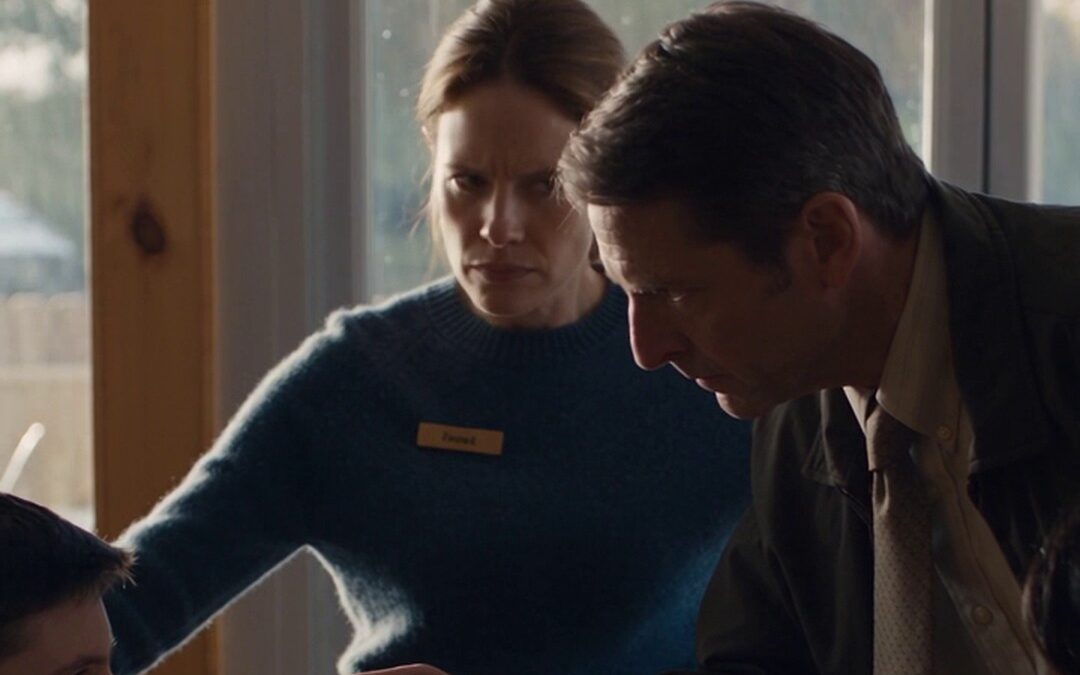
Thomas stood beside the restaurant booth while the spaghetti he had ordered for Nick went cold.
Nick, a narrow thirteen-year-old in a jacket too light for October, kept his hands under the table, and a bruise showed above his collar when he turned toward the door.
“Mom, he took the blows Dad meant for me,” Thomas said.
Valerie stopped with one hand on the back of an empty chair, aware that her lunch manager had brought Nick a meal because Thomas had said she would pay.
“What happened last night?” she asked.
Thomas looked at Nick before answering, and Nick pushed the untouched plate away as if he had accepted it by mistake.
“In the garage, Dad got mad because I saw a message about your restaurant money,” Thomas said.
Nick shook his head.
“I shouldn’t have come,” he said, sliding toward the end of the booth.
“Please stay if you want to,” Thomas said, moving aside to leave him a clear path out.
Valerie remembered Thomas asking to be picked up instead of riding home with Daniel, then saying it did not matter when she had been too busy to ask why.
She remembered the broken bedroom lamp Daniel had called an accident and the evenings Thomas had gone quiet when his father’s car entered the driveway.
Nick touched his jacket pocket, where the corner of an old phone pressed against the cloth.
“I heard him tell Thomas to keep his mouth shut,” Nick said, watching the door, “and when he raised his hand, I got between them.”
Thomas’s face tightened.
“Dad said you’d believe him,” he told Valerie, “because you believed him about the lamp, and because you told me last month to stop making trouble when I said I didn’t want him driving me.”
Valerie could recall her exact words.
A bell sounded over the front door, and Daniel came in carrying the easy smile he used when restaurant guests recognized him.
He saw Nick, and the smile disappeared before Valerie could decide whether to stand between them.
“There you are,” Daniel said to Thomas, then addressed Valerie in a voice just loud enough for the nearest tables to hear.
“That boy followed us into the garage, tried to take my wallet, and hit Thomas when I stopped him,” he said.
Chapter 2: The Seat Across From Him
Valerie pulled out the empty chair and set it across the aisle between Daniel and the booth.
“Thomas, stay where you are,” she said, “and Nick, you can go into the back dining room with Mara if you want, but I need you away from Daniel.”
Daniel looked at the chair as though she had placed it there to embarrass him.
“Val, you don’t know what he did,” he said.
“That’s why I’m getting help,” she said.
Mara, her lunch manager, had come from behind the counter, and Valerie asked her to call 911 for medical help for two children who might have been hurt and to report what Thomas had said.
“You’re calling the police over something a stranger said?” Daniel asked.
“I’m calling because Thomas says you threatened him and Nick is injured,” Valerie said.
Thomas’s shoulders lowered slightly when Mara picked up the phone.
Nick slid out of the booth and stopped where he could see both the front door and the hallway.
“I’m not going somewhere he can follow me,” he said.
“He won’t come into the back room,” Mara said, “and I’ll stay by the open doorway.”
Nick looked at Thomas.
“Can he come?”
“If Thomas wants to,” Valerie said.
Thomas nodded, though he kept his eyes on Daniel.
“Thomas, tell your mother what happened to my wallet,” Daniel said, opening his hands in the patient way he used with difficult vendors.
Valerie felt how readily she might have repeated the question and made her son answer his father before anyone checked his wrist.
“You can tell the officers your account,” she told Daniel.
He took a step toward the boys, and Mara moved aside while she continued speaking to the dispatcher.
Valerie stayed in the aisle.
“They’re going to the other room,” she said.
For a moment Daniel stared at her as if she had forgotten a part they had rehearsed together.
Then he stepped back, took out his phone, and said, “Fine, but I’m calling someone too.”
Mara guided the boys down the hall at their pace, leaving the back room door open.
Nick chose the chair nearest it, and Thomas sat across from him.
The untouched spaghetti remained on the booth table, with the fork still beside the plate.
Valerie asked a server to bring water, then returned to the front where she could keep Daniel in sight.
“You know how bad this looks for me,” he said.
“It looks bad for them,” she said.
Daniel told her Thomas had become upset over a business email, Nick had lunged for his wallet, and he had shoved Nick away to protect their son.
His version left room for Nick’s bruise and Thomas’s fear, which made it harder to dismiss than a flat denial.
Valerie did not try to settle it in the aisle.
She asked the server to give the back room privacy and continue serving the guests already there.
“Should I lock the front door?” he asked.
“No,” Valerie said, “just tell me when help arrives.”
A paramedic team arrived before the officers.
Valerie introduced Thomas as her twelve-year-old son and Nick as thirteen, then let the paramedic ask each boy where he hurt.
Thomas said his wrist ached, while Nick first said he was fine and then admitted that his ribs hurt when he breathed deeply.
The paramedic asked permission before looking beneath Nick’s collar and waited until he said yes.
Valerie was grateful for the pause because she had been about to reach toward him herself.
Both boys needed hospital examinations, the paramedic said, particularly Nick because of the pain in his side.
“Do I have to go with him?” Nick asked, glancing toward the dining room.
“No,” Valerie said, then looked to the paramedic before adding, “We’ll work out how you get there.”
Thomas asked whether his father would come to the same hospital.
“I don’t know yet,” Valerie said.
She hated giving him an uncertain answer, but she had already given him too many answers based on what she wanted to be true.
Two officers arrived while Daniel was speaking on his phone near the front windows.
One stayed with him, and the other, Officer Ruiz, came to the back room after Valerie described what the boys had said and what she herself had seen.
Ruiz asked to speak with the children separately so neither would have to fit his memory into the other’s words.
Thomas wanted Valerie nearby, and Nick wanted Mara by the doorway.
While Thomas spoke with Ruiz, Nick rubbed the edge of the old phone through his jacket pocket.
“Do you need a charger?” Valerie asked.
“It still has some battery,” he said.
Mara brought a cable anyway, and Nick accepted it but kept the phone in his hands.
When it was his turn, he told Ruiz he had started recording in the garage because he heard a man telling a boy that no one would believe him.
He had not known their names then.
He showed her a file marked 7:18 p.m. and looked at Valerie before handing the phone over.
“If it has the part where I yell, I don’t want everybody hearing it,” he said.
“We can listen here,” Ruiz said, “and you can ask us to stop.”
Nick allowed Valerie to stay, while Thomas waited with the paramedic outside the open door.
The recording began with the scrape of shoes and the mechanical voice of an elevator.
Daniel sounded distant beneath the garage’s hum.
“You didn’t understand what you saw,” he said.
Thomas answered too quietly for Valerie to catch more than “Mom.”
A passing car drowned out several seconds.
Then Daniel’s voice came closer.
“You tell her I was taking money, she’ll ask why you were in my computer, and she’ll believe me when I say you got it wrong.”
Valerie knew which computer he meant, a laptop Daniel used for restaurant invoices at home.
The recording showed that he had threatened Thomas with disbelief; it did not show whether he had tried to take money.
“I saw the amount,” Thomas said on the recording.
A sharp sound followed, which Valerie could not identify, and Nick’s breathing grew loud against the microphone.
“Leave him alone,” Nick called.
The phone shifted, footsteps hurried across concrete, and a boy cried out amid a burst of static.
A louder voice ordered everyone to step apart, and the recording ended.
Ruiz did not replay the cry.
“I dropped it when he hit me,” Nick said, staring at the table, “so it’s mostly sound after I went over there.”
He had held the phone at chest height while he approached and gripped it in one hand when he stepped between Daniel and Thomas.
The image showed gray concrete, part of a coat, and then the floor.
It did not show Daniel striking either boy.
Ruiz said an investigator could arrange to document the original file and ask for a copy without changing what was on Nick’s phone.
“Are you taking it?” Nick asked.
“I’ll explain what’s needed before anyone does,” Ruiz said.
When Thomas came back in, Ruiz asked what he had seen on Daniel’s laptop.
Thomas said Daniel had sent him into the kitchen for a charger while an email window stood open on the table.
It mentioned eighty-four thousand dollars, Bellwether Reserve, and moving the money before Valerie reviewed the account on Monday.
Bellwether Reserve was Valerie’s restaurant savings account for winter repairs and a planned kitchen expansion.
“I asked why it had to move before Mom saw it,” Thomas said, “and Dad said it was a supplier payment.”
The next evening Daniel had picked him up from his Friday art class near the garage, and Thomas asked about it again.
“I wasn’t trying to catch him,” he said, “but he said Mom always had to approve big payments, and I thought maybe she didn’t know.”
In the garage, Thomas said he would tell Valerie, and Daniel grabbed his wrist beside the car.
Daniel raised his other hand, though Thomas could not say whether he meant to strike him or frighten him.
Nick came from the stairwell, told Daniel to let go, and stepped between them.
Daniel released Thomas, turned toward Nick, and struck him after Nick pushed against his arm.
“Did Nick take a wallet?” Ruiz asked.
“No,” Thomas said.
“Did you see one?”
“Dad pulled his out when the guard came,” Thomas said.
Nick looked up.
“I didn’t know what was in his hand,” he said.
Ruiz wrote down both answers.
When she asked why Thomas had not called his mother the night before, he said Daniel took his phone in the car.
Valerie remembered finding it on the kitchen counter when she came home near ten.
Daniel had told her Thomas lost screen time over an argument about homework.
She had gone to his bedroom door, seen his face turned toward the wall, and accepted that explanation.
“I came home,” she said.
Thomas nodded.
“I know.”
“I should have asked you what happened,” she said.
He shifted in his chair as if her apology were another thing he might have to handle.
Ruiz asked what happened after Valerie arrived.
“Dad stayed in the kitchen,” Thomas said, “and before Mom got home he said she believed him about the lamp.”
He said Daniel also told him Valerie would choose the person who kept the restaurant running.
Valerie had thanked Daniel for his bookkeeping often enough for Thomas to know what that meant.
“I didn’t think it was true,” Thomas said, “but I wasn’t sure.”
Valerie wanted to put a hand on his shoulder, but he was looking at Nick, who had gone still.
“You shouldn’t have had to be sure,” she said.
Nick said he had been near the garage’s public entrance because rain had started while he was looking for somewhere to go.
A guard had told him earlier that he could wait there until it passed but could not sleep in the building.
Nick went up toward a restroom sign, heard Daniel and Thomas near the second-level elevators, and started the recording after the argument was underway.
He had stepped forward when Daniel raised his hand.
After the guard separated them, Nick left through the public entrance because Daniel kept watching him and he feared police would send him back to the place he had left.
Thomas, already in Daniel’s car, called through the open window that Valerie worked at Bellwether and that he could buy Nick lunch there the next day.
“He said his mom would be there,” Nick added, “but I thought he might get in trouble for telling me.”
Nick had tried a youth drop-in center he knew, found it closed for the night, and gone to an emergency shelter whose beds were full.
Ruiz did not press him for an account of every hour while the paramedic was waiting.
Valerie understood that Nick had come because Thomas gave him a place and time.
Out front, the plate he had been offered was still untouched.
Ruiz stepped away to speak with her partner and Daniel, while Mara returned Nick’s jacket from the booth.
Nick took it from her and put it on himself, careful with one side of his body.
At the hospital, Valerie rode with Thomas while Nick went in the ambulance with a paramedic.
Ruiz arranged for an officer to meet them there and contacted the county child protection line because Nick had no safe adult present.
Thomas watched the ambulance pull away.
“Is he going to think we sent him away?” he asked.
“We’re going to the same hospital,” Valerie said, “and I’ll tell him where we are.”
The boys were examined separately.
Thomas had a strained wrist without a fracture.
Nick had bruising along his side and shoulder, and a doctor ordered an image because breathing hurt.
Valerie waited with Thomas, who usually passed time by drawing animals on receipts but now drew the outline of the waiting room chair.
Daniel called three times.
She let the calls go to voicemail until Ruiz told her he had left the restaurant after giving his account and had not been detained.
Valerie sent him one message saying Thomas was receiving care, asking him not to come to the hospital or contact either boy, and directing further communication through counsel.
His reply came almost at once.
You are making this worse for all of us.
She showed it to Ruiz when the officer returned to document Thomas’s wrist.
Ruiz said an investigator would speak with the garage guard and request the incident log and any available camera footage.
She did not predict what charges, if any, might follow.
A social worker named Lena Park arrived to speak with Nick about where he had been staying and whom he trusted.
Before going into his room, she asked Valerie how she knew him.
“I met him today,” Valerie said.
Lena asked whether Nick wanted her nearby.
“He let me stay for the recording,” Valerie said, “but I don’t know what he wants now.”
Lena went in alone and returned a few minutes later to say Nick wanted Thomas to visit when the medical staff allowed it.
Valerie sat beside her son.
“Is Nick in trouble for leaving where he lived?” Thomas asked.
“I don’t know what happened there yet,” she said, “but Lena is finding out where he can be safe tonight.”
Thomas traced the back leg of the chair with his pen.
“Nick says people ask why he left before they ask why he didn’t stay.”
Valerie looked toward his closed door.
“I hope Lena asks both,” she said.
Daniel’s next call came from an unknown number, and Valerie answered because she thought it might be the hospital.
“You can still stop this,” he said.
“No,” she said.
“You’re letting a kid you met at lunch decide what happens to Thomas.”
“Thomas told me what happened.”
“He saw part of an email and invented the rest,” Daniel said, “and the other boy heard us arguing and made himself useful.”
“Did you grab Thomas’s wrist?” Valerie asked.
“I kept him from walking into traffic when the kid came at us.”
The elevator landing did not open onto traffic, but Valerie had not seen that moment.
She wrote down his words when the call ended.
Once Thomas was cleared, she asked whether he wanted to go home with her.
“Is Dad there?” he asked.
“I don’t know, so we’re going somewhere else tonight.”
Her sister Claire had a spare room and had cared for Thomas before.
Claire said they could stay without asking Thomas to explain himself.
Before they left, an officer said the garage supervisor had located an incident entry from the previous night.
It named Daniel, recorded that a guard separated an adult and two minors, and called it a “juvenile disturbance.”
It did not identify who began it.
“There may be a camera near the elevators,” the officer said, “and the investigator will check what it shows.”
“The guard thought Nick did it,” Thomas said.
“We’ll find out what he actually saw,” Valerie said.
When Thomas was allowed into Nick’s room, Nick sat up with a paper cup of water and his phone beside him.
“I told her you came because I asked,” Thomas said.
“You told everybody I was coming before I did,” Nick replied.
“I wasn’t sure you would.”
“I wasn’t either.”
Thomas looked at Nick’s hospital bracelet.
“I’m sorry you got hurt.”
“I’m mad you got in the car with him,” Nick said.
“The guard told me to.”
“I know.”
Valerie stayed by the door, relieved to hear them disagree about something neither had to solve.
Nick looked at her.
“Your spaghetti probably turned into glue,” he said.
“Mara can make another plate.”
“Without parsley?”
“Yes.”
“I hate when it gets stuck to the sauce.”
Lena returned to explain that Nick needed somewhere supervised to stay while she assessed his situation.
Nick asked whether Thomas would be at the restaurant again.
“I can ask Mom,” Thomas said.
“If you both want to meet when it’s possible, we’ll help arrange it,” Valerie said.
Nick nodded and kept his phone close as they left.
At Claire’s house, Thomas went to sleep in the room where he kept a box of old model airplanes.
Valerie sat with Claire at the kitchen table and listed what she had seen, what each boy had said, and what still needed checking.
Claire offered to call Daniel and tell him to stay away.
Valerie asked her instead to keep the door locked and let Valerie handle any messages.
“I thought he was good with Thomas,” Claire said.
“So did I,” Valerie answered.
The sentence felt incomplete.
“Thomas asked me not to let Daniel drive him, and I called it an argument,” she added.
Claire covered her hand.
“Daniel chose what he did,” she said.
“I know,” Valerie said, “and I need to change what I do when Thomas tells me something.”
After Claire went to bed, Valerie opened the restaurant’s account on her laptop.
Bellwether had been hers before she married Daniel, and she had given him access to enter invoices, create vendor records, and prepare payments when her work at the second location increased.
The bank required her approval for transfers above ten thousand dollars, a control she had insisted on after a supplier error years earlier.
She could see balances but could not tell whether Daniel had prepared a transfer that had not yet reached her.
She wrote to her accountant, Priya Shah, asking for an urgent review, then called the bank to suspend Daniel’s online access under her account authority and requested a record of the change.
Daniel would discover the suspension.
She did it anyway.
On Sunday morning, Thomas found her at Claire’s table.
“Did Dad text?” he asked.
“Yes.”
“What did he say?”
“He wants to talk, and I’m working out a safe way to handle that.”
“I might want to later.”
“That’s allowed,” Valerie said.
He sat across from her.
“I told Nick you’d buy him lunch before I asked you.”
“I’m glad you brought him to me.”
“You were mad when you saw him.”
Valerie looked at the table.
“I thought you’d invited someone without telling me and were hiding a bill,” she said, “and I judged Nick before I asked why he was there.”
“You looked at his jacket.”
“I did.”
“He noticed.”
“I know.”
Thomas pulled the cereal box toward him.
“I almost told him to leave before you got there,” he said, “but he came because I said I’d be there.”
“I should have asked what was wrong before I got upset about lunch,” Valerie said.
He did not tell her it was fine.
They ate while Claire’s old refrigerator rattled in the corner.
Later, Priya called with the results of the first account review.
Daniel had added a vendor named D. Ellis Consulting and attached an invoice for eighty-four thousand dollars, described as an advance for expansion planning.
He had prepared a transfer request from Bellwether Reserve late Friday, but it remained pending because Valerie’s approval was required.
Priya found no contract or work history for that vendor in the restaurant files.
“We can say he created the vendor and prepared the request,” Priya said, “but we can’t say money went out.”
“Can you tell who owns it?”
“Not from this record.”
Valerie asked Priya to preserve the account logs and sent copies to Irene Cho, the attorney who had helped with the restaurant’s second lease.
The bank confirmed that Daniel’s access had been suspended and the pending request would not be approved.
Thomas came into the room while Valerie wrote down the call.
“Was there really money?” he asked.
“There was a request for the amount you saw,” she said, “but the money didn’t leave the account.”
“So Dad lied.”
“He told you there was nothing to ask me about,” Valerie said, “and the records show there was.”
Thomas took that in without asking how vendor approvals worked.
He had seen enough to ask an ordinary question, and Daniel had frightened him for asking it.
That afternoon Ruiz called with the garage guard’s name.
Marcus Bell had written the entry at 7:23 p.m. and had seen the last part of the encounter from the elevator landing.
He remembered Nick on the ground, Daniel beside Thomas with a wallet in his hand, and Thomas holding one wrist close to his chest.
Marcus had told Daniel to step back from both boys before learning their names.
“He says he asked if anyone needed medical help,” Ruiz said, “and Daniel said no.”
“Did he ask the boys?”
“He asked Thomas, who looked at Daniel and shook his head.”
“What about Nick?”
“Marcus says Nick walked away before he got a clear answer.”
Marcus had logged the incident and told his supervisor, but he had not called emergency services.
Ruiz said the investigator would ask him again what he saw and why he did not seek more help.
Valerie could understand how someone arriving late might misunderstand the wallet in Daniel’s hand.
She could also see what had happened when Daniel was allowed to answer for everyone.
On Monday, Valerie met Irene in a small office above a pharmacy.
Irene read the incident number, the hospital discharge papers, and Daniel’s messages.
“What do you need immediately?” she asked.
“I want Thomas to sleep without wondering whether Daniel can come in,” Valerie said.
Irene explained the local process for requesting a temporary protective order and a short term family arrangement while the facts were reviewed.
She did not promise either request would be granted.
Together they prepared an application based on Thomas’s account, the medical findings, the recording described in the police report, and Daniel’s continued calls after Valerie asked him to stop.
Valerie signed her statement.
It cost her an afternoon at the restaurant, legal fees she had not planned for, and the knowledge that the man who knew her schedules best would receive formal notice of what she was doing.
Irene advised her to keep the business records separate from the assault report.
“The pending transfer matters,” she said, “but it doesn’t prove who hurt Nick.”
That afternoon Mara called because Daniel had come to Bellwether asking to review invoices and speak with employees.
Mara had told him his access was suspended and directed business questions to Irene.
“He said I was taking sides,” Mara told Valerie.
“You followed my instructions.”
“He asked whether Nick left with food in his pockets.”
Valerie wrote down the comment.
Mara hesitated before adding that Nick had asked whether he had to pay before she served his spaghetti on Saturday.
She had told him Thomas’s mother owned the restaurant, and he had gone pale.
“I thought he was embarrassed,” Mara said.
Valerie remembered his hands beneath the booth table.
She asked Mara to keep the guest check, which showed when the boys had arrived.
At Claire’s house, Thomas was doing homework when Valerie told him Daniel had contacted the restaurant.
“He’ll say I ruined it,” Thomas said.
“Did he say that to you?”
“In the garage he said if you lost the expansion money, it would be because I couldn’t mind my business.”
“That money was never yours to protect.”
“But he might lose his job,” Thomas said, “and we might lose the house.”
Valerie could not promise they would return there.
“We have a place tonight,” she said, “and I’m working on what comes next.”
“I still don’t want him to get hurt.”
“I know.”
“He hurt Nick.”
“Yes,” Valerie said, “that’s what you and Nick have told me, and I’m taking it seriously while the adults check what they need to check.”
Thomas’s pencil stopped.
“Do you believe me?”
“Yes,” she said, “I believe you’re telling me what happened to you.”
He nodded once and went back to his worksheet.
On Tuesday, Lena called to say Nick was staying in a supervised temporary home while his earlier placement was reviewed.
Nick had asked whether Thomas still wanted to meet him.
Valerie said Thomas had asked about him every day, and Lena arranged a call after checking with both boys and Nick’s caregiver.
“I got a room with a desk,” Nick told Thomas over the phone.
“That sounds like a hotel review.”
“The drawer sticks.”
“Did you eat?”
“Yeah, and nobody put parsley on it.”
“Mom told Mara to leave it off if you come back.”
Nick went quiet.
“You can decide later,” Lena said from his end.
“I know,” Nick replied.
Valerie left the boys to talk with Lena nearby, and afterward Thomas told her Nick liked old monster movies but hated scenes where people went into basements without turning on the lights.
“He says the monsters are usually smarter than the people,” Thomas added.
It was the first thing Valerie knew about Nick that had nothing to do with the garage or his housing.
The next day, Detective Alvarez met Thomas at a child advocacy center.
She told him he could say he did not know, correct an adult, or ask for a break.
Thomas chose to speak without Valerie in the room.
She waited outside, reading the same magazine page while a vending machine hummed beside her.
When he came out, he said only that the crayons had been too small to use.
Valerie did not ask him to repeat the interview.
Alvarez then spoke with Valerie about what she knew firsthand: Thomas’s earlier behavior, the restaurant disclosure, Daniel’s messages, and her authority over Bellwether’s accounts.
She said the garage camera showed Nick leaving the stairwell at 7:18 and Marcus arriving several minutes later.
A support column blocked the place beside Daniel’s car, where the confrontation occurred.
The footage established timing and who was present but did not show the strike.
Marcus had also given a fuller statement.
He saw Daniel step back from Nick after Nick fell, though he could not say what contact happened immediately before the fall.
He had assumed Nick might have tried to steal something because Daniel held up a wallet and said so.
Marcus had never seen Nick reach for the wallet, seen it on the ground, or recorded any missing property.
“He wishes he had called for medical help,” Alvarez said.
Valerie pictured Marcus reading his sparse entry with the knowledge of what followed.
“I hope he tells Nick that,” she said.
Alvarez said his employer would review his response, but she could not predict what that would mean.
The recording, injuries, boys’ accounts, camera timing, and Marcus’s observations each answered a different question.
Together they challenged Daniel’s story, though none supplied a perfect view of the garage.
Daniel had offered to provide an account through his attorney and declined another informal interview after learning the recording existed.
Valerie did not take that as an admission.
That evening Daniel’s mother, Elaine, called.
“He says Nick hurt himself trying to get away,” Elaine said.
Valerie moved into Claire’s laundry room so Thomas would not overhear.
“Nick was examined by a doctor,” she said.
“That doesn’t tell you who caused his injury.”
“No,” Valerie said.
“Then why are you letting strangers take apart our family?”
“Thomas says Daniel threatened him, and we’re taking steps to keep him safe.”
Elaine said Daniel had never been cruel to his son.
Valerie thought of the broken lamp and the rides Thomas had tried to avoid.
“I used to say that too,” she replied.
“Thomas can be dramatic,” Elaine said.
Valerie told her not to question Thomas or contact Nick, then ended the call.
For a minute she sat on the laundry room floor, listening to the dryer turn.
She wanted one complete explanation that would stop every relative from doubting him.
Thomas did not owe the family that explanation.
On Thursday, Priya and Irene joined Valerie for a scheduled call about Bellwether’s accounts.
The proposed D. Ellis Consulting invoice carried the address of a mailbox service, and its attached description of expansion work had no delivery dates.
Priya said those details gave the restaurant reason to reject it but did not, by themselves, establish fraud.
The bank confirmed Daniel had prepared the transfer using his permitted login; no one had approved it, and no money had moved.
Irene recommended an independent review of other vendor records and a written request for any contract Daniel believed supported the payment.
Valerie authorized both.
She hired an outside bookkeeper so managers could prepare routine bills without restoring Daniel’s access.
The extra expense meant postponing some kitchen repairs.
Bellwether stayed open because Mara and the cooks knew how to run lunch, but Valerie felt the loss of Daniel’s daily work in small things: a supplier who called his cell, a missing refrigeration invoice, warranty papers arranged in his handwriting.
She understood why Thomas had feared the restaurant might fail if he spoke.
Daniel had made himself useful everywhere his son could see.
Lena called later with permission from Nick to share news of a family search.
Nick had named an aunt in Ohio, his mother’s older sister, whom he remembered as Aunt June.
She had sent birthday cards when he was younger and taught him to make paper boats that floated upright.
Nick remembered her old first name and phone number, but not the surname she had taken after remarriage, and the number no longer worked.
Lena had found her former name in records from Nick’s mother’s earlier case and was contacting an Ohio agency to help verify her identity and current home.
“Was she contacted before?” Valerie asked.
“An older number was tried when Nick first entered care,” Lena said, “but it was disconnected.”
Nick had been younger then and had not remembered the paper boats until Lena asked about relatives he had known rather than only relatives he could call.
Even if June wanted him with her, Lena explained, there would be checks, conversations with Nick, and a process for placement across state lines.
Valerie offered to help if a phone bill or travel cost became a barrier.
“We’ll identify what’s needed,” Lena said.
The measured reply kept Valerie from turning her gratitude into a plan for someone else’s life.
On Friday, Nick told Thomas he had heard that June had spoken to Lena but had not spoken to him yet.
“What if she’s weird?” Nick asked.
“Most aunts are,” Thomas said.
“Does yours make you talk about your feelings?”
“She asks if I want a sandwich first.”
“That’s better.”
Afterward, Thomas told Valerie he had wanted to say Nick could live with them if June was strange.
“We can stay his friends while Lena checks what he needs,” she said.
“Could he visit us?”
“Maybe, when Nick wants to and the adults responsible for him agree.”
“That’s a lot of people,” Thomas said.
“It is.”
“Last week there weren’t enough.”
Valerie had no answer that made the timing fair.
The following Monday, Irene called to say a judge had granted temporary restrictions on Daniel’s contact with Valerie and Thomas until a hearing.
The order also set a short term arrangement for Thomas to stay with Valerie.
Irene explained how Daniel would receive notice and what Valerie should do if he ignored the terms.
“Did a judge decide he did it?” Thomas asked when Valerie told him.
“No,” she said, “the judge decided we need these arrangements while more is reviewed.”
“Will Dad know what I said?”
“Some of it, yes.”
He looked toward the door.
Valerie told him Claire and the school had been given the instructions they needed, and he could tell her if anyone tried to contact him.
He asked if he could still go to art class.
“I can take you and pick you up,” she said.
“I still want to go.”
“I know.”
She parked across from the art center that Friday instead of in the garage.
Thomas carried his sketchbook inside without looking down the block.
When he came out, he showed her a drawing of a bridge made from mismatched chairs.
“Was that the assignment?” she asked.
“No, I got bored,” he said.
She set the drawing on the dashboard for the ride home.
A week after the restaurant disclosure, Alvarez asked Valerie to come to the station.
Daniel’s attorney had supplied his written account.
Daniel said Thomas misunderstood a routine consulting payment and became upset when Daniel took his phone to stop him from sending false claims to restaurant staff.
He said Nick came from the stairwell, demanded money, grabbed at his wallet, and shoved him.
Daniel acknowledged pushing Nick but called it self-defense; he said Thomas hurt his wrist when he pulled free during the confusion.
The account included details no one disputed: Thomas had seen a payment request, Daniel had taken his phone, Nick had approached, and Marcus had found the wallet in Daniel’s hand.
It relied on what no camera showed.
“Did Daniel tell you he took Thomas’s phone?” Alvarez asked.
“He said Thomas lost screen time over homework,” Valerie replied.
“Where was it when you came home?”
“On the kitchen counter.”
Valerie described finding Thomas turned toward the wall in his room and leaving without asking him what had happened.
Alvarez showed her the time stamp on Daniel’s pending transfer request.
He had prepared it before collecting Thomas from art class, and the amount matched what Thomas said he saw.
That record did not establish Daniel’s ultimate intention for the money.
It did establish that an actual request existed when he told Thomas there was nothing to discuss.
“The financial inquiry will continue separately,” Alvarez said.
Valerie nodded.
“What happens about Nick?”
“We’re sending the completed reports for charging review, and there may be more interviews.”
Valerie left with more information and no clean ending.
On the sidewalk, she called Mara to ask about the afternoon shift.
The lunch crowd had been steady, and someone had fixed the jammed ice machine.
The restaurant kept asking for ordinary decisions.
That evening Lena called about Nick’s previous placement.
He had been with a licensed caregiver, Mrs. Fenton, for seven months.
Nick reported that an adult relative who visited the house mocked him, took money from his bag, and once cornered him in the kitchen.
When he complained, Mrs. Fenton treated the missing money as a dispute between children and did not report the cornering to his assigned worker.
Nick left after the relative arrived again on Friday.
Lena said his account was being checked against Mrs. Fenton’s account, the relative’s, and records of earlier visits.
He would not return there during the review.
“Does he know that?” Valerie asked.
“Yes.”
“Can I tell Thomas?”
“You can tell him Nick is staying somewhere he feels safer,” Lena said, “and Nick can choose what else he shares.”
In their next call, Nick told Thomas he had spoken with June.
“She remembered the paper boats,” he said.
“Did you ask about sandwiches?”
“No, I asked if she had a dog.”
“Does she?”
“An old one that hates the mail carrier.”
“That sounds like a real aunt.”
Nick laughed, then grew quiet.
“She said I could come if the people say yes.”
“Do you want to?”
“I think so, but Ohio is far.”
“We can call.”
“Phones die.”
“We can charge them.”
Valerie, listening from the kitchen doorway at Nick’s request, saw Thomas stop before making another promise.
“We can try again when they do,” he said.
At the temporary order hearing, Valerie sat beside Irene while Daniel sat across the room with his attorney.
Thomas had not been asked to attend.
Daniel’s attorney challenged Nick’s account because he had left his placement and because the recording began after Daniel and Thomas started arguing.
Irene acknowledged what the phone could not show and presented what it did capture alongside the boys’ accounts, the medical findings, and Marcus’s statement.
Daniel testified that Thomas had misunderstood a business document and was about to send an alarming message to Valerie.
He said Nick came close without warning and he pushed him to protect himself.
Valerie listened to the same calm voice that had explained the broken lamp.
When she testified, Irene asked about Thomas’s earlier requests not to ride with Daniel.
Valerie said she had accepted Daniel’s explanations and had not asked Thomas enough questions.
She did not turn her testimony into an apology to a boy who was not there.
The judge continued the temporary contact restrictions while the cases moved forward and set a date for review.
No one left with a final finding about every second in the garage.
Outside the room, Daniel asked through his attorney for a supervised way to send Thomas a letter.
Irene said the family process would address it.
At home, Valerie asked Thomas how he felt about hearing from his father someday, without pressing him for a decision.
“I don’t know,” he said.
“That can stay your answer.”
“Is he mad?”
“I haven’t asked him.”
“He probably is.”
“His feelings are his to handle,” Valerie said.
Several more weeks passed before Alvarez called with the result of the charging review.
Investigators had examined the original recording, obtained the medical records with the required permissions, interviewed Marcus again, and compared the garage entry with the camera’s limited view.
They had also checked Daniel’s wallet claim.
Marcus saw no spilled contents or missing property, Daniel reported none, and the camera showed Nick approaching with his hands visible for several steps before everyone moved behind the column.
The camera could not show what happened behind it.
Together with the boys’ accounts and Marcus’s observation of Nick falling while Daniel stepped away, the evidence supported charges connected to the assault on Nick and the threat to Thomas.
Valerie was in the Bellwether pantry counting boxes of pasta when Alvarez told her.
She wrote down the information and asked how it affected the protective order.
“The criminal case has started,” Alvarez said, “and Irene can explain the family order.”
Valerie put her pen down among the boxes.
She had wanted adults with authority to take the boys seriously.
Now they had, and Thomas still had homework due Monday while Nick was waiting to learn where he might live.
“Will Dad go to jail?” Thomas asked when she told him.
“I don’t know.”
“Do I have to say everything again?”
“There may be more steps, and the people handling the case will explain them.”
“I hate that answer.”
“I do too.”
He went outside with Claire to throw a ball against the garage wall.
Valerie let him be angry without asking him to feel relieved because prosecutors had acted.
The separate business review reached a narrower conclusion than the rumors spreading among Daniel’s relatives.
It confirmed that he had added D. Ellis Consulting without the usual review and prepared the eighty-four-thousand-dollar payment.
It found no completed transfer to that vendor and no missing eighty-four thousand dollars.
Daniel’s attorney supplied a draft proposal from a consultant Daniel said he had discussed the expansion with.
Priya could not verify that Valerie had authorized the work or that anyone had performed it.
Valerie preserved the records for further review and kept Daniel out of the accounts.
She refused to make the boys’ safety depend on proving a completed theft.
The outside bookkeeper stayed, and kitchen equipment waited.
Mara found a used prep table that fit their space better than the one Valerie had planned to buy.
She asked Valerie to measure the dishwashing path before deciding.
As the weeks passed, Valerie practiced letting Thomas finish before she answered.
One night he said he missed Daniel’s pancakes shaped like states.
“Which state came out best?” Valerie asked.
“Texas, because he could add more batter when it went wrong.”
Another night Thomas said he hated seeing Daniel’s coat in the front closet.
Valerie asked whether he wanted it moved.
He did.
Neither answer erased the other.
Valerie filed for divorce after speaking with Irene about housing, finances, and Thomas’s routines.
The filing settled neither custody nor the criminal case.
She rented a small place near Thomas’s school because returning to the family house while Daniel’s access was contested left too much uncertain for them.
Thomas chose where his desk went and hung his drawing of the chair bridge above it.
Nick’s path moved at a different speed.
Lena confirmed through records and interviews that June was his mother’s sister and had known him when he was younger.
June had exchanged letters with the family before Nick’s mother died, then changed her surname and moved within Ohio.
The old case record held a disconnected phone number, while June had not known which county handled Nick’s current case.
An Ohio worker visited June’s home and spoke with the people who lived there.
Nick had several calls with June before anyone proposed a travel date.
After one call he told Thomas the dog’s name was Pickles.
“Is that better or worse than Monster?” Thomas asked.
“Worse for the dog,” Nick said.
Nick asked June whether she still made paper boats.
She said she remembered how, though he might have to show her the trick that kept the bottom flat.
Nick told Lena he wanted to visit before deciding how he felt about living there.
The adults arranged a supported visit after the initial checks and explained what further approval a longer placement required.
Valerie offered to help when she heard Nick wanted school drawings and a book left at Mrs. Fenton’s house.
Lena arranged for the agency to retrieve them.
When Thomas suggested a new sketchbook, Valerie asked Nick before buying one.
He accepted the sketchbook and turned down the expensive marker set Thomas found online.
“They dry out,” Nick said.
Thomas chose pencils instead.
The agency documented concerns about how Mrs. Fenton handled Nick’s complaints and restricted that placement while its review continued.
Nick was not asked to return during the review.
Valerie wanted certainty about every part of his past, but his care did not have to wait for it.
About ten weeks after the garage incident, Marcus asked through Alvarez whether he could write Nick an apology.
Nick could decline the letter.
He read it with Lena.
Marcus wrote that he had stopped the confrontation but relied on Daniel’s assurance that no one needed medical help, when he should have asked Nick directly and sought help for both boys.
He did not ask Nick to forgive him.
Nick folded the letter into the back of his sketchbook.
“He got the part about the wallet wrong,” he told Thomas.
“Yeah.”
“I’m glad he wrote it.”
They left it there.
By the third month, the protective order still governed Daniel’s contact with Thomas, and the criminal case had no final outcome.
Daniel’s attorney continued to challenge the gaps in the recording and Nick’s exact position before the push.
Valerie could live with the limits of what she knew: Thomas had seen a real pending request, Daniel had threatened to make her disbelieve him, Nick had approached after that threat, and Marcus had found Nick down with Daniel stepping away.
There was no perfect view of the strike.
There was enough for her to act when the boys needed protection, and enough for the proper processes to continue without asking either child to prove every second alone.
June’s assessment was completed, and the agencies approved Nick’s move to her home after a visit he had asked to extend.
June arranged a school meeting and a doctor near her town before he traveled.
Nick asked for one more Saturday lunch with Thomas at Bellwether.
Lena and June agreed, and June came with him, carrying a raincoat over one arm and a photograph of Pickles on her phone.
Nick walked into the restaurant beside her and noticed the booth immediately.
Mara had kept it free.
Thomas waited there with two paper napkins folded into boats, neither of which sat straight.
“You made them wrong,” Nick said.
“Then teach me before the sauce comes.”
June sat at the next table with Valerie, close enough for Nick to see her and far enough for the boys to argue about monster movies without an audience.
Mara brought two plates of spaghetti, one without parsley.
Nick took a bite while it was hot.
Thomas reached for the bread basket, and Nick moved it between them without being asked.
Halfway through lunch, Nick pushed the napkin boats aside and asked Mara for another piece of bread.
He left his coat on the back of the chair.
When Thomas got up to refill their water, Nick stayed where he was, eating at his own pace, with Thomas’s empty seat waiting across the table.








