The Dinner Was Already on the Table When He Came Home Early
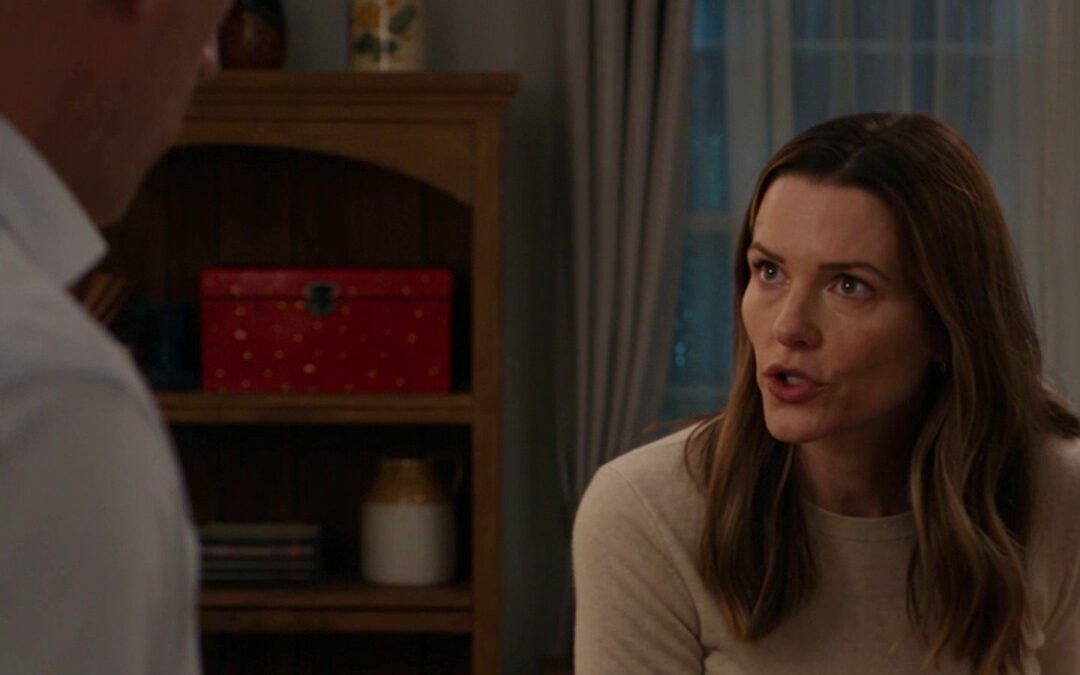
Chapter 1: The Plates
“Why is Willa standing with rice while the rest of you have dinner?” Tom asked from the doorway.
His canvas travel bag slipped from his shoulder and landed beside the wall. In the bright dining room, his eleven-year-old daughter held a small plate in both hands. Plain white rice filled its center. At the table, his wife, Dana, and her children, six-year-old June and eight-year-old Milo, had roast chicken, green beans, rolls, and a bowl of sliced peaches between them.
Willa wore a blue cotton dress patterned with tiny yellow stars. Her gaze stayed on the plate.
Dana pushed her chair back. “She asked for rice. The chicken’s right there, but she said she didn’t want it.”
“I didn’t ask for just rice,” Willa said.
Tom set his bag down. He moved nearer, stopping beside her without reaching for the plate. “What did you ask for?”
Willa swallowed. “Chicken. Dana said the pieces were for you and the little kids. She said I could have rice if I stopped making a fuss.”
Dana’s cheeks colored. “That isn’t what I said. I made enough for the people I knew were eating. Willa had a snack after school.”
The serving platter still held chicken. Tom could see a roll untouched beside Dana’s plate. “You told me everyone was eating the same dinner.”
“I said dinner was handled,” Dana replied. “You’re making this sound much worse than it is.”
June looked up from her green beans. “Mom said Willa had to wait by the counter because she kept asking.”
“June,” Dana said, sharply.
The little girl lowered her eyes. Milo nudged the peach bowl toward June, uncertain.
Willa’s fingers tightened on the plate. Tom could feel the question forming behind his teeth, but he looked at her first. “You don’t have to explain everything right now. Would you like chicken?”
She nodded.
Dana started to speak. Tom lifted one hand—not toward her, but to keep the moment from crowding Willa. “Please get her a plate and a seat.”
Dana turned toward the kitchen. Tom took his phone from his pocket, the same family message thread he had checked during his four-day work trip. The photos Dana had sent on Tuesday showed the familiar blue table runner, the chipped yellow bowl, and the kids smiling over dinner. He had glanced at the first one and accepted her message beneath it: Same dinner for everybody. Willa’s doing great.
He swiped to the next image, sent minutes later in that same thread. June and Milo sat at the table with chicken, green beans, rolls, and peaches. The next photograph showed Willa alone at the counter, a slice of bread beside a small plate of plain rice, the blue table runner visible beyond her.
Chapter 2: A Place at the Table
Tom kept his eyes on the phone. In one photograph, June and Milo ate chicken, green beans, rolls, and peaches at the table. In the next, Willa sat alone at the counter with rice and bread. The blue runner and chipped yellow bowl appeared in both.
Then Willa’s plate shifted in her hands.
“Set it down here, please,” Tom said.
She looked at the table, then at the empty chair by the window. “Can I sit there?”
“Yes. It’s yours if you want it.”
“I’ll get her a plate,” Dana said from the kitchen doorway.
“You can bring one,” Tom replied. “I’ll get the chicken.”
The platter was still warm. Two pieces remained beneath the foil. Tom set a clean plate in front of Willa and added chicken, rice, and a roll. He left the green beans in the middle of the table.
“Do you want those?” he asked.
“Maybe later.”
“Okay.”
Dana set down a fork. “I thought she’d already eaten. She had a snack after school.”
“I had an apple,” Willa said. “I asked for chicken before June got here.”
June’s fork stopped above her plate. “Willa was here before us.”
“Thanks, June,” Tom said. “You can keep eating.”
June nodded, then took a peach slice from the bowl and placed it on Willa’s plate. “Want one?”
“Sure. Thanks.”
Milo kept eating. He watched the adults, trying to understand why the room had gone quiet. The children hadn’t decided who got food or where anyone sat.
Tom stayed beside Willa’s chair. “You don’t have to explain everything right now. Did you choose rice because you wanted only rice?”
“No.”
“Did you tell Dana you were done with dinner?”
“No. I asked for chicken.”
Dana set the remaining plates on the counter. “She didn’t want gravy.”
“That’s not the same as not wanting chicken,” Willa said.
Tom rested a hand on the back of her chair. “You don’t have to argue your way into dinner.”
Willa looked up, eyes bright. “I thought you’d say Dana knew what she was doing.”
The words landed harder than the photograph. Tom could have promised he would never do that. He could have reminded her that he’d come home early. Neither answered her.
“I might have,” he said. “I believed the message because I wanted it to be true. I’m sorry I didn’t ask you.”
Willa looked down. “Okay.”
It wasn’t forgiveness. He let it mean only that she’d heard him.
Dana folded her arms. “You got one picture out of context.”
“I got two pictures from the same dinner,” Tom said. “You told me everyone ate the same thing.”
“I said I made the same dinner.”
“You wrote, ‘Same dinner for everybody.’”
“I meant I cooked one meal.”
“And Willa got rice and bread while June and Milo sat down with everything else.”
“She didn’t want the chicken.”
Willa’s fork stopped. Tom looked at Dana. “She just told us she asked for it.”
Dana glanced toward the window chair. “Can we talk after dinner?”
“Yes. The kids can finish eating without an argument about whether Willa earned a place.”
Dana’s mouth tightened. Tom took his seat at the end of the table and set his phone face down. Willa picked up her fork. She took a small bite of chicken, paused, and chewed.
“Is it okay?” Tom asked.
“It’s cold now.”
“I can warm it up.”
“Don’t. It’s fine.”
He looked at his own plate, not at how much she ate. June began telling Milo that his paper airplane had landed in the library donation box. Milo corrected her: it had hit the box, then fallen in. Willa drank water and listened.
Dana remained standing. “You’re treating a serving mistake like I set out to hurt her.”
“Was the rice a mistake?” Tom asked.
“I made a practical call. She had an apple, she was snippy about the food, and I was trying to get the others served.”
“She asked for chicken.”
“She was in the way.”
“Was she?”
Dana paused. “She was at the counter.”
“That wasn’t the question.”
Willa kept her gaze on her plate. Tom turned toward her. “You can eat at your own speed. I’m going to talk with Dana nearby in a few minutes. You can stay here, come with me, or ask me to stay.”
“Can I stay here?”
“Of course.”
“Can you leave the door open?”
“Yes.”
“Just a little.”
“Just a little.”
Tom waited until she’d taken another bite before he stood. He left the opening between the dining room and living room clear enough for her to see him.
“Tell me exactly what you thought you were enforcing,” he said to Dana.
They stopped in the wide opening. Willa remained in view. Tom left his phone on the table.
“I thought you wanted one standard,” Dana said. “The kids get the same rules.”
“Same rules don’t mean the same food if one child asks for dinner and you put her aside.”
“They get the same dinner.”
“Her plate was different.”
“She wouldn’t take the beans.”
“She asked for chicken.”
Dana pressed her fingertips to her forehead. “You’re deciding one sentence settles everything.”
“No. I’m deciding I need to hear more before I take your account as the whole story.”
“Willa knows how to make herself the center when the others are finally getting attention.”
Tom recognized the idea. Dana had used it the previous spring, when Willa had asked to sit beside him during a video call. He’d called it an adjustment period and told Willa the younger kids needed time with him too. He hadn’t asked why she wanted to sit with them.
“Is that what you call it when she asks for food?”
“I’m talking about the whole dynamic.”
“Then let’s talk about tonight. Did she move food or insult anyone?”
“No.”
“What did she say?”
Dana looked toward the table. “She said, ‘But you made chicken.’”
“She asked for chicken.”
“She was challenging me while I was trying to serve.”
“Was she allowed to ask?”
Dana didn’t answer.
Tom kept his voice low. “Here’s what changes now. Willa eats with everyone. No one is made to stand apart as a consequence. Until I understand what’s been happening, I’m handling meals when I’m here. If you supervise the kids, you tell me if there’s a disagreement about whether anyone gets dinner. I’m arranging other coverage for the next few days.”
“You can’t just replace me.”
“I can arrange backup care while I sort out whether I can leave her in your care alone.”
“That’s your answer to everything? You cancel work and make everyone accommodate you?”
“I’m calling my manager. The children need me here.”
“You have a site meeting tomorrow.”
“I know.”
“That meeting took weeks to arrange.”
“I know that too.”
Dana lowered her voice. “You’re making me sound like a monster because I told a child to wait.”
“I’m saying you made her wait while you served the others. I’m not calling it anything beyond what I saw and what she told me.”
“She wasn’t hungry.”
“An apple isn’t dinner.”
“She got bread.”
“She asked for chicken.”
Dana turned away. “You always make it easy for her to challenge me.”
“What happens when she does?”
“She gets upset.”
“What do you do?”
“I tell her to take a break.”
“From what?”
“Whatever she’s doing.”
“Today, from dinner?”
Dana paused. “She was criticizing the food.”
“Did she say anything beyond asking for chicken?”
“No.”
“Then she was asking for food.”
“She doesn’t use the same manners as June and Milo.”
“What did she say that was rude?”
Dana didn’t reply.
Tom resisted turning each pause into a charge. He needed to understand what happened and protect Willa while he found out.
“Was this the first time you asked her to wait to eat?”
“I don’t have a ledger.”
“Do you remember another time?”
“Maybe.”
“More than once?”
Dana’s mouth tightened. “A few times this fall.”
“What does ‘a few’ mean?”
“I don’t know. She’d challenge a rule, and I’d tell her to wait until I was done serving.”
“Wait where?”
“By the counter.”
“While the others ate?”
“Sometimes.”
“Did you offer her the same food?”
“She could have what was left.”
“Even when she asked before the others were served?”
Dana looked away. “Sometimes.”
The answer changed the scale of what Tom knew. One unequal dinner didn’t prove months of deprivation. Dana’s own admission did establish repeated, intentional waiting tied to how Willa behaved.
“Why?” he asked.
“I was trying to get her to stop questioning me in front of the others.”
“Why did her question bother you?”
“She made everything a comparison. If I gave June and Milo dinner, she’d ask why she had to wait. Then they’d look at me.”
“Did either of them complain?”
“No.”
“Did they say she was taking their food?”
“No.”
“Then what were you trying to stop?”
Dana rubbed a crease in the tablecloth. “I was tired of her challenging every rule. I thought if she had to wait, she’d stop asking in front of the others.”
Tom took in the plainness of it. Waiting had become a lesson in obedience. Willa’s access to dinner was conditional while the younger children kept their seats.
“She asked for chicken,” he said. “She still had to wait.”
“She got dinner.”
“After the others?”
“Sometimes.”
“Was she told she could sit down?”
Dana didn’t answer.
From the dining room, Milo asked for another roll. June pointed out the two remaining in the basket.
“You can have one,” Tom called. “Leave one for anyone else who wants it.”
Milo broke the roll in half. “Want some, Willa?”
“No, thanks.”
“That’s okay,” he said, and began eating.
The children’s quiet exchange made it harder to imagine them as opponents. Tom turned back to Dana.
“I’m not asking them to decide what happened,” he said. “Willa eats with us now. I’ll handle the rest. I need to hear her privately, and I need to check what you told me.”
“What do you think I told you?”
“You sent dinner pictures during my trip and wrote that everyone had the same meal.”
“I made the same food.”
“Did Willa eat the same food?”
“She could have.”
“That isn’t the same answer.”
Dana folded her arms. “You were gone. Someone had to keep things moving.”
“That’s true. It doesn’t explain tonight.”
“You have no idea how hard it’s been.”
“I know I didn’t ask enough. I should have. I’m not leaving Willa alone with you tonight while I sort this out.”
Dana stared at him. “You’re threatening me.”
“I’m setting a boundary.”
“Because you feel guilty.”
“I do feel guilty. That doesn’t make the boundary wrong.”
He returned to the table. Willa had eaten a few bites. Her plate still held most of the chicken. June was telling her she’d seen a blue jay at school.
“That one by the feeder was a sparrow,” Willa said.
“You’re sure?” June asked.
“Yes. The blue jay has a pointy crest.”
Tom sat beside Willa, leaving space between them. “Do you want me here?”
“For a minute.”
“I’m here.”
Willa looked at the bird feeder beyond the window. “You always forget which one is a blue jay.”
“I do.”
“You asked me last week and called it a finch.”
“I was wrong.”
“You said birds were hard.”
“They are for me.”
“That’s because you don’t look long enough.”
Tom smiled, but didn’t use the moment to declare everything all right. “You’re probably right.”
She took another bite. After a while, she set down her fork. “I’m finished.”
“Would you like anything else?”
“No.”
“Okay.”
She took her sketchbook from the empty chair. “Can I draw in the living room?”
“Yes. I’ll be there.”
“Can June come?”
“If you want.”
June climbed down from her chair. “I want to see the bird page.”
Milo looked over. “Can I see it too?”
“Yeah,” Willa said. “But don’t fold the paper.”
“I won’t.”
Willa carried the sketchbook into the living room. Tom followed at an easy pace. She chose the armchair. June sat on the rug and Milo settled on a cushion. Dana stayed by the dining-room opening.
“Can I talk to you alone for a few minutes?” Tom asked Willa.
“Can June stay?”
“If you want.”
“I do.”
June moved closer to the sketchbook. “I won’t listen if you don’t want me to.”
“You can be here,” Willa said. “You don’t have to say anything.”
June nodded.
Tom looked at Willa. “You said you asked for chicken. I believe you. I want to understand what happened, but you don’t have to give me every detail tonight.”
“Are you going to make me tell it?”
“No.”
“Dana says I remember stuff different when I want you to be mad at her.”
“Did she say that tonight?”
“Not tonight. Before.”
“Has that made it hard to tell me things?”
“Sometimes.”
“Thank you for telling me.”
Willa studied the drawing. “I thought if I kept asking for dinner at the table, maybe you’d come home more.”
“You shouldn’t have had to ask that way.”
“I know you have work.”
“I do. I’m still responsible for asking what you need.”
“You don’t have to be home every night.”
“I can’t promise that. I can plan calls and dinners better, and I won’t assume a photo means everything is okay.”
“Will you actually call?”
“Yes. If I miss the time, I’ll tell you when I can call.”
“What if you forget?”
“Then you can be mad. I’ll call as soon as I can.”
“Can I text you instead?”
“Yes. About anything.”
“Even if Dana says I’m interrupting?”
“Yes.”
Willa seemed to test the promise for a loophole. “Will you tell her that?”
“I already did.”
“Then she’ll know.”
“Yes.”
Willa turned the sketchbook over in her lap. “I don’t want June and Milo to get in trouble.”
“They won’t.”
“I don’t want them to give me their food.”
“They’re not responsible for making sure you’re fed. The adults are.”
“June’s nice,” she said.
June smiled but stayed quiet.
“Milo too. He’s just little.”
“He’s eight,” June said.
“He still eats paper.”
“I ate paper once,” Milo called from the dining room.
“It was one corner,” June called back.
Willa almost smiled. Tom let it be small. “You can love them and still be angry about what happened.”
“I’m not angry at them.”
“Okay.”
“I’m mad at Dana.”
“That makes sense.”
“I’m mad at you too.”
“That makes sense too.”
“Are you going to make me say sorry for being mad?”
“No.”
“Good.”
Dana appeared in the opening. “Can I say something to her?”
Tom looked at Willa. “You decide.”
“Not right now,” Willa said.
Dana nodded. “Okay.”
She went back to the kitchen without coming closer.
Milo wandered in carrying a pencil. “Can the bird have a crown?”
“It can in the picture,” Willa said.
“Then I want to draw the crown.”
“Don’t color over the feathers.”
“I won’t.”
Tom watched the three children return to their drawing. He didn’t tell Willa the family was fine or ask her to be kind to Dana. He had made enough choices based on how he wanted things to look.
After dinner, he talked with Dana at the dining table. The children stayed in the living room. He asked direct questions and gave her time to answer.
“Did Willa ask for chicken tonight?”
“Yes.”
“Did you tell her it was meant for June and Milo?”
“I said I had portions in mind.”
“For whom?”
“The kids.”
“Willa is one of the kids.”
“She was upset.”
“Was there enough chicken?”
“Yes.”
“Did you tell her to stand by the counter?”
“I told her to wait there while I served.”
“Why couldn’t she sit?”
“She was leaning over the table.”
“Was anyone else leaning over the table?”
Dana’s gaze dropped. “June had climbed into her chair. She was helping.”
“And Willa had to wait?”
“She was interrupting.”
“She asked for dinner.”
Dana sat back. “You make it sound simple.”
“It is simple to answer whether you let her eat with everyone.”
“I was trying to keep the meal from turning into another argument.”
“Did she argue?”
“She asked again.”
“Did she yell?”
“I don’t remember.”
“Did she insult anyone?”
“No.”
“Then why was she the one who had to wait?”
Dana pressed her lips together. “Because I was in charge.”
Tom heard the rule beneath her explanation. The adult’s authority had mattered more than a child’s access to a shared meal.
“Did I ever tell you Willa had to wait until the younger two were served?”
“No.”
“Did we agree to give her different portions?”
“No.”
“Then the meal choice was yours.”
“You’re making it sound like I planned to keep her hungry.”
“I’m saying you chose the plate. What you intended is a separate question.”
Dana looked toward the living room. “I thought one house needed one routine. Willa came in with different rules from Elena’s. She wanted a different bedtime, different food, more of your time. Every request felt like a test.”
“Did you think she was asking you to replace her mother?”
“Sometimes it felt that way.”
“Did she ask you to?”
“No.”
“Then what did she want?”
Dana was quiet. “She wanted me to sit with her. To look at her drawings. She’d ask if I could read to her, then ask why you weren’t home.”
“That doesn’t mean you had to compete with her.”
“I felt like I did. You asked all the time whether she seemed happy, and I felt as if I was being graded.”
“Did you tell me?”
“I said you were checking on us too much.”
“I thought you wanted fewer calls.”
“I wanted you to trust me.”
“I did. I also wanted reassurance.”
Dana looked up. “You’re admitting that?”
“Yes. I liked the pictures, and I stopped there. I should have asked Willa what her days were like.”
“I sent them because you said it made you feel included.”
“It did.”
“Now you’re using them against me.”
“I’m looking at what they show.”
“They show dinner.”
“They show June and Milo eating. They show Willa at the counter. You wrote that everyone got the same dinner.”
“I meant I cooked one dinner.”
“Did you want me to think Willa was included?”
Dana’s answer came slowly. “I wanted you to think things were okay.”
“Were they?”
“No.”
It was her first direct answer. It didn’t undo what she had done, but it changed Tom’s understanding of the reassuring messages. She hadn’t altered the photographs or staged a fake scene. She’d chosen a comforting description and left the unequal part unspoken.
“Why didn’t you tell me what was happening?”
“Because I was tired of you asking whether Willa was settling in. I thought you’d take her side.”
“What did you tell me instead?”
“That she was jealous.”
“What had she actually said?”
Dana looked down at the table. “She said she wanted dinner to feel like dinner.”
Tom recognized the sentence. He remembered Willa’s message: *Can we eat at the table when you’re home?* He’d replied that Dana had dinner handled and told Willa he’d call after homework.
“What did you think she meant?”
“I thought she wanted you to come home more.”
“She did. Did she also want us to sit together?”
“Yes.”
“Why didn’t you tell me that?”
“I thought if I told you exactly, you’d make it my job to give her what she wanted while you were away.”
“I should have shared that job. You were managing daily care.”
“You kept telling me she needed time to adjust.”
“I did. I should have asked what she was adjusting to.”
Dana rubbed the tablecloth between her fingers. “I thought the meals would teach her not to challenge every rule. I figured if I was consistent, she’d stop testing me.”
“Did it work?”
“No.”
“What happened?”
“She waited.”
“And did she stop asking?”
“Sometimes.”
Tom heard the difference between quiet and agreement. Dana had treated the absence of questions as proof that her method worked.
“How often did you make her wait?”
“I said a few times.”
“Across what period?”
“This fall.”
“Every week?”
“No.”
“More than once?”
“Maybe.”
“Did you ever serve her only what was left after the younger two?”
“Yes.”
“Even if she’d asked for the same food?”
“Sometimes.”
“Was that because there wasn’t enough?”
“No.”
“Because she didn’t like the food?”
“Sometimes she didn’t.”
“Tonight she did.”
“Yes.”
Tom held the boundary steady. “I’m not saying every meal was unequal. I’m saying you’ve described doing this more than once, and I need another adult around while we make a plan.”
“You’re going to treat me like a babysitter in my own home.”
“I’m not leaving Willa in your care alone for now. That’s a temporary decision about her care, not a verdict on every part of our marriage.”
“You don’t trust me.”
“I don’t trust you to handle her meals fairly yet. You can earn that back through what you do next.”
Dana’s eyes grew wet. “And if she never wants to see me?”
“Then we respect what she wants now. We don’t make her decide forever.”
“What about June and Milo?”
“They still have you. They aren’t being punished.”
“You’re going to call Maren?”
“Yes. She can help tomorrow after school. She knows all three children. I’ll tell her not to question Willa.”
“Your sister already thinks I’m the villain.”
“She doesn’t know what happened. I’ll give her the practical arrangement, not ask her to judge you.”
“Where are you sleeping?”
“I’ll ask Willa what she wants. I won’t make her share a room or talk.”
Dana turned her face away. “What about us?”
“I don’t know yet.”
“You’ve said that enough times.”
“It’s the honest answer.”
Tom called his manager before making other plans. The site meeting had taken weeks to arrange, and he’d wanted to lead it. He told his manager he needed to move it and take two days of family leave.
His manager paused. “You’ve been chasing that contract for months.”
“I know.”
“Can you join by video?”
“No. I need to be here.”
“We’ll cover it. The lead may go to another team if the client needs an answer quickly.”
“I understand.”
When Tom ended the call, the lost opportunity felt real. It didn’t make him noble. It made him accountable for putting his family’s immediate needs ahead of a meeting he could reschedule.
Maren agreed to help with pickups and stay with the children while Tom worked from home. She didn’t ask Willa for an account. She helped June with spelling, listened to Milo’s story about a classroom hamster, and asked Willa about the birds she was drawing.
Tom also called Elena, Willa’s mother. He told her what he’d seen and what Dana had admitted, keeping the account narrow. Elena listened and asked whether Willa wanted to stay with her for a few days.
“I want to stay here for now,” Willa said on the phone. “I don’t want to switch schools.”
“You wouldn’t have to,” Elena said. “But you can stay here if that’s what you want.”
“I want to see Grandpa too.”
“Of course.”
“I don’t want you and Dad to fight about me.”
“We won’t make you responsible for that,” Elena said.
Tom nodded. “We won’t.”
Elena didn’t insist Willa move or tell Tom what to do about Dana. They agreed he would remain Willa’s day-to-day parent through the school year, as he had since Elena moved to Ohio to help her father after a stroke. They would arrange a long weekend for Willa with Elena each month if Willa wanted it, then revisit the schedule together.
For the first few days, Tom served meals. He asked each child what they wanted from what was available. No one had to finish a plate, prove hunger, or explain a preference. Dana could sit with June and Milo, and she did. She didn’t serve Willa.
On the third day, Tom asked Willa if she wanted to talk about meals. They sat beneath the backyard pergola. She had her sketchbook and lemonade. Tom placed his phone face down on the bench.
“You can stop me whenever you want,” he said.
“Okay.”
“Since you started living here all the time, were there other times you had to wait to eat?”
“Some.”
“Can you remember one?”
“The pasta night.”
“What do you remember?”
“You made pasta on Sundays when you were home. When you were gone, Dana made it sometimes. I asked if she could save me some. She said the kids were eating and I could have toast.”
“Did you eat toast?”
“Yeah.”
“Did you get pasta later?”
“Everyone cleaned up.”
“Did you ask again?”
“No.”
“Why not?”
“I didn’t want them to think I was trying to make them wait.”
He let the answer settle. “Were there other meals?”
“Sometimes there was food left in the pan, but she said I could have it after the little kids were done. Sometimes it was cold. I didn’t care about that. I just didn’t want to wait there.”
“Did you always have to wait?”
“No. Not every time.”
“Do you remember how often?”
“Maybe three or four times. I’m bad at knowing.”
“You don’t have to know exactly.”
“I don’t want you to say it happened all the time if it didn’t.”
“I won’t.”
“Some nights she made noodles I like. And sometimes I didn’t want what she made, so I had cereal.”
“Did you get the cereal yourself?”
“Sometimes.”
“Did anyone stop you?”
“No.”
“Were you told not to ask for other food?”
Willa ran her finger along the sketchbook’s edge. “Dana said not to ask in front of June and Milo because it made them feel like I wanted their food.”
“Did either of them say that?”
“No. June offered me peaches. Milo gave me his last cheese stick once.”
“So you don’t know if they felt that way.”
“No.”
“Thank you for telling me. I believe what you remember. You don’t have to prove every dinner.”
“Are you going to tell Dana I said that?”
“I’ll tell her the rules need to change. I won’t repeat every detail unless you want me to or need me to keep you safe.”
“Can you tell her I’m not trying to get her in trouble?”
“Would you like me to say that?”
“Maybe. I want dinner to be normal.”
“I can say that.”
“I don’t want everyone staring at me.”
“I won’t make them.”
She looked at her drawing again. “Can you make pasta Sunday?”
“I can.”
“You burn the sauce.”
“I’ll ask you to supervise.”
“I’m not helping if you don’t listen.”
“I’ll listen.”
“Promise?”
“I promise to try. I can’t promise I’ll never get it wrong.”
“That’s better.”
Tom didn’t ask for a list of other meals. Three or four occasions, she thought. Sometimes she’d had cereal by choice. Sometimes she’d been made to wait. Her memory was imperfect and limited; it didn’t need to be more exact for him to take the pattern seriously.
That afternoon, while Willa was at school and the younger children were with Maren, Tom asked Dana about the pasta night.
“Did you tell Willa she could have toast instead of pasta?”
“I told her she could have toast if she didn’t want what I made.”
“Did she ask you to save her a bowl?”
Dana’s eyes narrowed. “I don’t remember.”
“Do you remember telling me Willa was jealous because she wanted dinner with me?”
“I said she was having a hard time sharing attention.”
“Did she tell you she wanted to eat at the table?”
“She wanted you to come home.”
“She wanted both. You knew she’d asked to eat with me.”
“I thought she wanted the old arrangement back.”
“Did you ask?”
“No.”
“Did you tell me she said calls weren’t dinner?”
Dana stared at him. “She said that?”
“She told me that’s what she said to you.”
“I remember her saying it once.”
“Why didn’t you tell me?”
“I thought you’d blame me for not being you.”
“I might have. That’s mine to own. You still left out the part that mattered.”
Dana looked down. “I didn’t know how to make her feel like she belonged without feeling she was asking me to be her mother.”
“She wasn’t asking you to replace Elena.”
“She wanted me to sit with her. Read her drawings. Tuck her in. Then she’d ask why you weren’t home. It felt like I could never get it right.”
“Did you tell me that?”
“I told you she was jealous.”
“That wasn’t the same.”
“No.”
This was the third shift in Tom’s understanding. Willa’s request, which he had accepted as a bid for exclusive attention, had been an invitation to ordinary family time. Dana had heard it as a demand to replace a parent. Tom had let her interpretation stand because it required less from him than changing his work schedule and sharing daily responsibility.
“I should have asked Willa what she meant,” he said. “I wrote her off as jealous because you said that, and because I wanted the arrangement to stay easy.”
“You were working.”
“I was. That explains why you handled the meals. It doesn’t excuse what I missed.”
Dana clasped her hands. “I didn’t want her to feel unwelcome.”
“Did you?”
“No.”
“Do you understand why she did?”
“I do now.”
“What do you think she needed?”
“Food when she asked. A place at the table. To ask without being told she was making everyone compare.”
Tom nodded. “That’s where we start.”
A week later, the aftercare coordinator called Tom about pickup timing. She added that Willa had spoken with her three weeks earlier.
“She said she sometimes didn’t want to go home before dinner because she felt she had to wait until the other children finished,” Ms. Patel said. “She told me she had food, but disliked waiting apart from the table.”
“Did you know what it meant at the time?”
“No. I asked if she wanted me to call you. She said not yet. She wanted to tell you herself when you came home. I should have followed up with her.”
“Thank you for telling me now.”
The call corroborated that Willa had raised the concern before the photographed dinner. It didn’t establish exactly what happened every night. It did show the problem had reached beyond one evening and Willa had tried to find a safe way to tell an adult.
Tom asked Willa about it once. “Ms. Patel said you told her you didn’t like waiting apart from the table. Do you want to talk about it, or not today?”
“Did she tell you everything?”
“She said only that.”
“That’s what I said.”
“Were you trying to get help?”
“I didn’t know. I hoped she’d call you. I also hoped she wouldn’t.”
“Why both?”
“If she called, maybe you’d ask. If she called, Dana would know I told.”
“Were you worried Dana would be mad?”
“Part of it.”
“What else?”
“You said she was doing her best.”
Tom remembered saying that more than once. “I did.”
“You said I should give her a chance.”
“You had given her chances. I should have asked what happened.”
“I didn’t want to be the reason you and Dana got divorced.”
“You are not responsible for what happens in our marriage. That belongs to us.”
“But if I hadn’t said anything—”
“I would still be responsible for asking. You didn’t cause this by telling me.”
“I thought if I made it sound small, you’d listen without getting mad.”
“You shouldn’t have had to make it small.”
Willa traced the edge of her sketchbook. “There were a few times I ate after they were done. Sometimes it was still good. Sometimes I just had toast. I didn’t want to be in trouble for asking.”
“Who told you that you’d be in trouble?”
“Dana said I was turning dinner into a fight. She said she could take away my drawing time if I kept arguing.”
“Did she take it away?”
“Once, I think. I don’t remember what night.”
“You don’t have to remember. I’ll make sure you don’t have to wait for dinner again.”
“I don’t want everyone looking at me.”
“I’ll keep the focus on the adults and the rules. You don’t have to give a list.”
“Can I still go to aftercare? I like the art table.”
“Of course.”
“Can I go to Maren’s on Thursday? She lets me draw on her porch.”
“If you want to.”
“Can June come?”
“I can ask. You don’t have to babysit her.”
“I know. I like showing her the birds.”
“I’ll ask Maren.”
Tom told Dana what Ms. Patel had said and what Willa had shared, without asking Willa for more details.
“She told a teacher?” Dana said.
“An aftercare coordinator.”
“She made me sound like I didn’t feed her.”
“She said she had food. She didn’t like waiting apart from the table.”
“That’s not the same thing.”
“No, it isn’t.”
“She could have told me.”
“She asked you to eat together. She asked me. She asked Ms. Patel.”
Dana’s face had gone pale. “Did she say I hurt her?”
“She didn’t say that.”
“Did she say I hit her?”
“No.”
“Then why are you acting like I’m dangerous?”
“I’m not saying you hit her. I’m saying she was afraid to speak up, and I’m not leaving her alone with you while we work on that.”
“I didn’t know it was that bad.”
“You knew she asked to eat with us. You told me she was jealous.”
“I thought she was.”
“You interpreted the request in the way that let the routine stay the same.”
“I wasn’t trying to make her feel she didn’t belong.”
“I believe you. The impact was still real.”
Dana sat down. “I don’t know how to come back from this.”
“Start with the next meal. Don’t make her explain, apologize, or reassure you. Let her decide whether she wants to talk.”
“You’re letting an eleven-year-old decide our marriage.”
“I’m deciding our marriage. She decides whether she wants to spend time with you right now. Those are different things.”
“What if she never wants to?”
“Then we respect what she wants now and take it slowly.”
“And if you leave?”
“That is my decision. It isn’t Willa’s job to earn it.”
Tom didn’t decide the marriage in one night. He arranged an initial appointment with a family therapist, beginning with the adults. Dana agreed to attend, though she doubted therapy would fix everything. Tom told her he wasn’t asking it to fix everything. He needed help making decisions that included all three children and understanding how his absence had shaped the household.
He also made the meal routine explicit. Whoever cooked made enough for everyone who was home. Each child could say what they liked or didn’t like. No one had to finish a plate, and no one had to wait apart from the table as a consequence. If the adult was busy, they answered the child and made sure there was a place to sit. It applied to all three children; Willa wasn’t asked to carry the rule or enforce it.
For now, Tom handled serving. Dana could sit with June and Milo, and she did. Willa chose the window chair. Some evenings she ate rice and eggs. Some evenings she asked for chicken. June refused green beans one night; Milo asked for more. Their choices were ordinary, and no one’s portion became a lesson.
Tom changed his work routine too. When he traveled, he would call before dinner when possible. If he couldn’t, he would text and say when he’d follow up. The children could contact him directly. Dana could report a problem, but he would ask the children about their experiences as well.
He told Dana he wouldn’t leave Willa in her care alone until he saw consistent change. He didn’t order Dana from the house or keep June and Milo from their mother. She could spend time with them, and Willa could choose whether she wanted her nearby. When Willa said not yet, Dana accepted the answer.
At one dinner, June spilled milk. Dana flinched at the sound, then asked her to help wipe it up. Willa stood as if to fetch a towel, but June had one.
“Do you want to help?” Dana asked Willa.
“No,” Willa said.
“Okay,” Dana replied.
She didn’t call Willa selfish or tell her to stop making comparisons. Tom didn’t praise Dana in front of the children for respecting a basic no. He noted the change and watched to see whether it lasted.
A few days later, Dana asked to see Willa’s bird drawings. Willa said, “Maybe tomorrow.”
“Sure,” Dana said.
The next day Willa brought her sketchbook to the table. Dana studied the blue jay with the crooked crown.
“You made the feathers look shiny,” she said.
“They’re supposed to be layered.”
“I can see that.”
“June wanted the crown.”
“It’s a good crown.”
Willa nodded and closed the book. Dana didn’t ask for a hug or ask whether Willa liked her. Tom saw the restraint but didn’t mistake it for repaired trust.
A month after the dinner, Tom and Willa made pasta on Sunday. She stirred the sauce with careful, serious movements while June drew at the counter and Milo set out forks. Dana came in holding a folded paper.
“I found this with the school forms,” she said.
It was a note Tom had written the spring before: *Willa says she wants family dinner. Let’s make Sundays ours.*
He remembered writing it after Willa asked if they could eat together even when he traveled. He’d put it on the refrigerator, then failed to make the plan. Work took him away the following Sunday. Dana made dinner with June and Milo; Willa had toast in the kitchen, according to the message Tom received. He’d accepted it as a scheduling hiccup.
Dana set the note on the counter. “I thought she was asking for you to come home. I didn’t realize she was asking for this.”
Willa kept stirring. “I asked for both.”
Tom looked at her. “You wanted me home and wanted us to eat together?”
“Yeah.”
“I’m sorry I treated those like the same request.”
“I knew you couldn’t always come home.”
“I could have planned better.”
Dana looked at Willa. “I thought you wanted to take the little kids’ time with me.”
“I wanted you to sit down too,” Willa said. “You were always in the kitchen.”
The note had been visible on the refrigerator. Tom had written a promise, then let work push it aside. Dana had seen Willa’s request and understood it as competition. The warning had been there in plain words: Willa wanted a family meal, not a contest for attention.
Tom set down the spoon. “I wrote that and didn’t follow through.”
“You were working,” Willa said.
“I was. I also didn’t make the plan I said I would.”
Dana’s voice was quiet. “I read it as you promising her something I couldn’t give.”
“You could have asked me.”
“I thought you’d say I had to.”
“Did I ever say you had to do Sundays alone?”
“No.”
“Did I ask you to handle everything while I was gone?”
“Yes.”
“I should have arranged help. And I should have heard Willa before I called her jealous.”
Dana lowered her eyes. “I should have told you I felt resentful instead of making her wait.”
Willa turned off the burner. “Can we eat now?”
“Yes,” Tom said.
Dana looked at her. “Would you like me to sit with you?”
Willa considered it. “You can. I want Dad to cut the bread.”
“I can do that,” Tom said.
They carried the food to the table. Willa chose the window chair. June sat beside her, and Milo set out the forks. Dana took a seat across from Willa. Tom served the pasta. Willa chose a small portion, then asked for more sauce. Dana passed the bowl without comment.
They ate. The conversation wandered from the bird feeder to Milo’s classroom hamster and back. No one made a speech about forgiveness. Dana didn’t ask Willa to say the family was okay. Tom didn’t announce that trust was restored.
When the plates were nearly empty, Willa set down her fork.
“Can I have another piece of bread?”
Tom reached for the basket. “Of course.”
Willa took a piece herself and placed it on her plate. Then she nudged the basket toward June.








