THE FEARED RIVERFRONT BOSS OFFERED A GIRL TWO MILLION DOLLARS TO STOP HIS SHAKING HAND, BUT SHE ASKED HIM TO PROTECT HER MOTHER
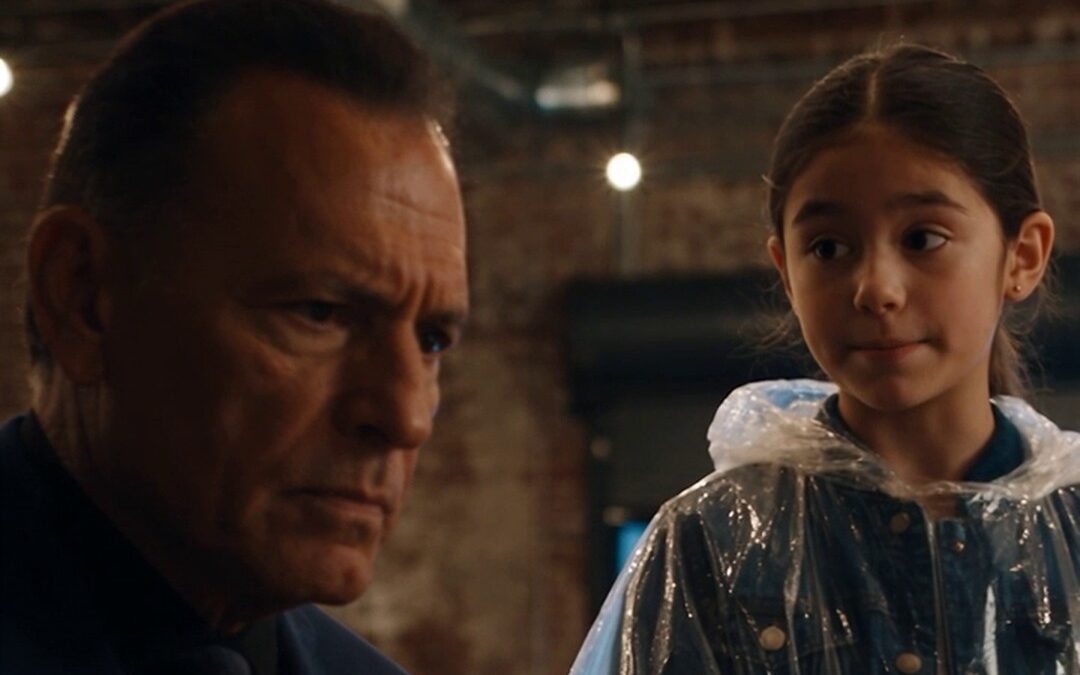
Chapter 2: Every Fourth Beat
Victor held the paper between two fingers.
My signature sat beneath a typed authorization.
The ink looked dark.
The date was yesterday.
June stood beside the metronome.
Her eyes stayed on Victor.
“What is it?” I asked.
“An order to clear the house.”
“I gave no order.”
Victor kept his voice low.
“You’ve been forgetting things.”
A year earlier, I might have let that sentence pass.
I had forgotten a meeting.
I had lost track of an afternoon.
I had blamed the tremor and the pills.
Now June pressed her palm flat against the table.
“Mom said he’d say that.”
Victor looked at her.
“Your mother taught you to lie.”
I moved between them.
The motion cost me.
My hand shook against the chair.
June reached for the fallen cup before it tipped.
I took the paper.
The signature resembled mine.
The loop on the R was exact.
The final stroke was wrong.
I had stopped making that stroke after injuring my wrist three years earlier.
Victor knew that.
He had watched me learn to sign again.
“Who received this?” I asked.
“The property manager.”
“Who delivered it?”
“My office.”
“And where is the manager?”
Victor said nothing.
I turned to my head of security.
“Call her.”
He took out his phone.
Victor’s smile returned.
“This can wait.”
“No.”
The auctioneer cleared his throat.
Nobody looked at him.
A woman near the stage lowered her phone when I turned.
June pulled her coat closed.
Rainwater had gathered beneath her shoes.
Victor glanced at the puddle.
“She needs to leave,” he said.
“She stays with me.”
“You don’t know her.”
“I know the metronome.”
He looked at its scratched corner.
Something passed across his face.
He had seen it before.
I could have asked him when.
I wanted his answer in front of a detective.
June tugged my sleeve.
“She’s at the house now.”
“Alone?”
June nodded.
“She made me promise to come here.”
“Why the auction?”
“Your guards couldn’t keep me from you here.”
She was right.
At the office, Victor screened my visitors.
At home, the staff did.
Here, three hundred people had watched a child cross the room.
I handed the forged order to the guard.
“Photograph both sides.”
Victor’s eyes narrowed.
“Rafael, think carefully.”
“I am.”
The property manager answered.
Her name was Beth Hanley.
She had cared for the empty house for eight years.
I asked her to read the order aloud.
She stopped halfway through.
“Is something wrong?” she asked.
“The signature isn’t mine.”
Beth said she had already scheduled a locksmith.
He would arrive at ten.
She had received instructions to change the locks at ten.
She said my signature was on the order.
She said Victor’s assistant had sent it.
I asked her to stay away from the house.
“Call the locksmith,” I said.
“Tell him the job is canceled.”
“He’s already on his way.”
“Then tell him from somewhere else.”
Beth heard enough in my voice to agree.
Then I called the police.
Victor laughed once.
“You’re making a scene.”
“The scene’s already made.”
I could feel every phone pointed at us.
June’s fingers had turned white around the metronome.
I bent until we were level.
“Your mother has a phone?”
“She turned it off.”
“Why?”
“She said somebody knew.”
“Who?”
June looked past me.
I did not make her answer.
My guard called a patrol supervisor he knew.
I told the supervisor about the forged order and the woman at the house.
He asked for the address.
He did not promise more than a check.
That was enough to begin.
Victor stepped back.
“You’ll regret calling strangers into this.”
I had believed that once.
I had kept trouble inside the family.
Sixteen years ago, I had kept Inez’s disappearance inside it, too.
June touched the metronome’s chipped corner.
“Mom said you’d know this mark.”
“I made it.”
“She kept it anyway.”
The words landed harder than the forged signature.
I had spent years believing my sister had left angry.
That belief had been easier than asking why she might have been afraid.
My phone rang.
The patrol supervisor said an officer had reached the house.
A woman was inside.
She was safe.
She had given her name as Inez Velez.
Victor gripped the chair.
I watched his face lose its careful shape.
“She’s alive,” I said.
June nodded.
“She’s been alive the whole time.”
* * *
I did not take June to the house.
The officer asked us to come to the station.
Victor offered to drive.
I declined.
June and I rode in my guard’s car.
The metronome sat between us.
It had stopped ticking.
Without its sound, my hand shook again.
June noticed.
She did not offer another demonstration.
“You don’t have to fix it,” I told her.
“I know.”
Streetlights passed across her face.
She watched each one disappear.
“Is Mom in trouble?” she asked.
“She’s speaking to an officer.”
“That wasn’t my question.”
I looked at the child beside me.
She had walked into a room full of strangers because her mother was afraid.
“No,” I said.
“I won’t let her face this alone.”
June considered that.
“Mom says you make big promises.”
“She’s right.”
“Can you keep this one?”
“I can try.”
At the station, a detective named Owen Price met us.
He had already spoken to Inez.
He took the forged order.
He asked who had handled it.
Then he asked June if she wanted to wait with her mother.
She followed him through a doorway.
I heard a chair scrape.
Then a woman said her name.
“June.”
The voice was older.
I knew it anyway.
Inez came around the corner with her daughter in her arms.
She had silver at one temple.
There was a small scar beneath her chin.
She had got it falling from my bicycle at nine.
We looked at each other across fifteen feet of tile.
“Inez.”
She closed her eyes.
For years, I had imagined this meeting.
In every version, I ran to her.
In the real one, my legs held still.
She had lost sixteen years.
I had helped make that possible.
June slipped her hand into Inez’s.
Inez noticed my trembling fingers.
She looked away before I could hide them.
Price guided us into an interview room.
Inez kept June beside her.
“Why did you stay away?” I asked.
She studied my face.
“Because the last time I asked you for help, you sent me to Victor.”
I remembered a late call.
She had said the company accounts were wrong.
I had been leaving for a meeting.
Victor handled the accounts.
I had told her to speak to him.
“She said she found missing money,” I told Price.
Inez shook her head.
“I found where it was going.”
She had worked in our shipping office that summer.
The family business had legitimate warehouses along the river.
It also had a reputation I could never clean from our name.
Inez found invoices for equipment we had never bought.
Payments moved through a contractor tied to Victor.
She copied what she could.
Then she asked him about it.
“He said you approved everything,” she told me.
“I didn’t.”
“He showed me your initials.”
Those, too, could be copied.
She had taken her notes to a lawyer.
Before the lawyer could review them, Inez’s apartment was entered while she was out.
Nothing valuable disappeared.
Her files did.
The lawyer advised her to make a report.
She did.
Two days later, Victor brought me a hospital record.
He said Inez had died after being struck by a car outside the city.
I remembered the room.
The curtains were open.
Victor had asked me to sit.
I had refused.
“Where were you?” I asked.
“With a friend in Illinois.”
“Why didn’t you call me?”
“I did.”
She had called my office.
Victor answered.
He told her I knew about the invoices.
He said I had ordered her apartment searched.
Then he told her I had arranged the funeral to end questions.
“I didn’t believe him at first,” she said.
“So why believe him later?”
Inez looked at June.
“Because he knew where I was staying.”
Price set down his pen.
“Did he contact you there?”
“He called the friend’s kitchen.”
Inez could still remember the sound of that phone.
Her friend’s children had been eating breakfast.
Victor had described the blue car in their driveway.
He had named the school the oldest child attended.
“I left that afternoon,” she said.
June leaned against her.
“You never told me that part.”
“You were too young.”
“I’m not now.”
Inez kissed the top of her head.
“No,” she said.
“You’re not.”
She moved twice after that.
The lawyer kept copies of her first report.
Inez changed her surname to Bell.
She found work teaching music.
Years later, June was born.
I tried to fit those years into the minutes we had.
I could not.
Price returned with a folder.
The hospital record I had seen carried a genuine file number.
It belonged to another patient.
The name on the copy I kept had been changed.
I reached for my phone.
Victor had stored the original funeral papers in company files.
Price stopped me.
“Let us request them.”
“You think they still exist?”
“We’ll find out.”
Inez opened the metronome’s back panel.
Inside was a narrow strip of paper.
I had never known it was there.
It held a locker number and a lawyer’s name.
“I kept the copies there,” she said.
“Why bring this tonight?”
“Someone came to my school yesterday.”
The man had asked whether she still owned her old metronome.
He had used her birth name.
That was why she had sent June.
She needed to reach me before anyone reached the locker.
“Why didn’t you come yourself?” I asked.
“He knew my face.”
She glanced at June.
“He didn’t know hers.”
I looked at my niece.
Inez saw what I was thinking.
“I hated sending her.”
“I volunteered,” June said.
“You’re twelve,” I told her.
“That didn’t make Mom safer.”
I had no answer.
I looked at the scratch on the wooden corner.
I had nearly thrown this away when we were young.
Inez had kept it long enough to bring us here.
Price wrote down the lawyer’s name.
Then he showed me a photograph from the station entrance.
Victor stood beside his car.
He was speaking to my doctor.
* * *
My doctor’s name was Dr. Malcolm Reed.
He had treated my tremor since it began.
He had never mentioned knowing Victor outside my appointments.
In the photograph, Victor held his phone toward Reed.
Reed’s mouth was open.
Price would not tell me what they had said.
He had no recording.
He had a photograph.
We could ask questions from there.
I called my regular clinic and requested my medication list.
The nurse sent it to my secure account.
Price suggested I speak to a physician who had no connection to Reed.
I did.
The new physician listened to my history.
She examined my hands.
She asked when the shaking began.
I told her about the injured wrist.
I told her which fingers moved first.
She asked what happened after each prescription changed.
I had never put those dates together.
I found them in my calendar while she waited.
One increase came before my first missed meeting.
Another came before I stopped driving.
She said a diagnosis could not be made in one night.
She also said several of my medicines could worsen shaking.
We set an appointment to review them safely.
I did not stop taking anything on my own.
That would have been reckless.
The metronome had given me seconds.
I wanted years.
At midnight, the lawyer called Price.
Her name was Ada Mercer.
She remembered Inez.
She also remembered the locker.
The building had changed owners.
The lockers remained.
Ada had paid the fee every January from a client account Inez maintained.
That small payment had kept the evidence dry and waiting.
In the morning, Ada met us there.
She brought the agreement and her identification.
Price brought a warrant.
Inez brought the key.
June stayed with a neighbor she trusted.
I wanted her nowhere near another locked door.
The locker room smelled of cardboard.
Ada checked the number against her records.
Inez held the key without turning it.
“You can wait outside,” I told her.
“I waited sixteen years.”
She opened the door.
Inside were copies of invoices.
There were bank notices.
There were dated notes in Inez’s handwriting.
There was also a small cassette.
Ada had made it during her first meeting with Inez.
The tape contained Inez’s account, given before Victor told me she was dead.
It would not prove every charge.
It proved she had reported the scheme then.
Ada identified the envelope she had sealed.
Price photographed it before opening it.
Inez watched his hands.
“Did you expect us to find it?” I asked.
“I hoped someone would.”
“Even when you thought I was involved?”
“Especially then.”
That answer hurt.
It also made sense.
Inez handed me the first invoice.
A contractor had charged us for four loading cranes.
We owned two.
The other two were never delivered.
The payment went to a company Victor controlled through a nominee.
I recognized the warehouse code.
I had approved repairs there.
I had never approved cranes.
“They used my initials,” I said.
Ada turned a page.
“On several forms.”
“How can you tell?”
“Your actual approvals were sent on different dates.”
She had obtained copies through Inez’s work access.
I knew something else.
The forms named a dock we had closed years earlier.
Victor had chosen it because the code remained active.
He thought nobody would notice.
I had closed it myself after a flood.
The office sign still hung in my garage.
Price photographed the page.
Then he called a financial investigator.
I went home under guard.
At my front door, an envelope waited.
There was no message.
Only a copy of June’s school photograph.
The back held her class schedule.
My guard told Price.
Price sent an officer to collect it.
Inez took June out of school for the week.
Ada helped her arrange a safer place to stay.
June protested while packing her books.
“I have a science project.”
“You can finish it later,” Inez said.
“It’s due Friday.”
“June.”
“I know.”
She put the project folder in her bag.
Her hands were steady.
Mine were not.
I wanted to send my own people after Victor.
I knew who would volunteer.
I knew what their presence would mean.
I called Price instead.
He asked us to preserve every message.
He asked us to avoid contacting Victor.
I agreed.
June arrived that evening with Inez.
The safer place was a hotel with a uniformed officer nearby.
They had come to meet my new physician.
June sat in the waiting room with a paper cup of cocoa.
Inez sat beside me.
“You should have listened,” she said.
“Yes.”
“I needed you.”
“I know.”
“No,” she said.
“You know now.”
She was right.
The physician reviewed the list.
Reed had increased one medicine twice.
He had done so despite notes that my tremor had grown worse after each increase.
She could not say why.
She requested his records.
She arranged a gradual change.
On our way out, June saw my hand struggle with the door.
She pushed it open for me.
Inez smiled despite herself.
“She does that for everyone.”
June heard her.
“You both take forever.”
For the first time that day, I laughed.
Then Price called.
The school photograph carried a clear fingerprint on its glossy edge.
They would compare it lawfully.
More urgent was a company access log.
Victor’s assistant had opened June’s school record through a foundation database.
Victor chaired that foundation.
He knew where June spent her days.
The threat had come through my own charity.
Price had another finding.
The contractor’s records showed payments to Reed’s private consulting firm.
They began three months before Reed became my doctor.
* * *
The financial investigator wanted originals.
Our office had them.
Victor controlled the archive.
A judge authorized the search.
Price asked me to stay away.
I stayed.
That choice felt strange.
For years, I had solved problems by entering a room and making people stand.
This time, I waited by a telephone.
Inez waited with me.
June built a paper bridge between two books.
It held six coins before collapsing.
“Seven next time,” she said.
“We’ll need better supports,” I told her.
“That’s what I said.”
She moved the books closer.
The next bridge held eight coins.
She grinned at me.
“Your job is done.”
Inez looked at us.
Her expression softened for a second.
Then her phone rang.
Ada said Victor had called a board meeting.
He planned to remove me as chairman.
The notice cited my health.
It also cited an alleged attempt to disrupt company records.
He was moving before investigators finished.
Ada was not surprised.
“Can he do it?” I asked.
“He can try.”
She explained the voting rules.
I held enough shares to block him if I attended.
Two independent members had asked for medical evidence.
Victor had supplied a letter from Reed.
Inez took the phone.
“Can they hear from the new doctor?”
“With Rafael’s consent.”
“You have it,” I said.
Ada paused.
“The board needs facts, Rafael.”
“So do I.”
The next morning, Price called.
Investigators had found original invoices in the archive.
Several had my forged initials.
The computer timestamps showed Victor’s office created them.
A former accounts clerk had kept emails questioning the crane payments.
She had been transferred after raising them.
Price was interviewing her.
Reed had agreed to speak with an attorney present.
No one promised charges by lunch.
No one promised I would keep my chair.
I could live with both facts.
Before the meeting, Ada spread the documents across my dining table.
She asked me to mark what I knew firsthand.
I circled the dock code.
I identified the date it closed.
I left the bank transfers for the investigator.
“What will Victor say?” I asked.
“That you’re confused.”
“He’ll point to my hand.”
“Then let it shake.”
I looked up.
Ada closed the folder.
“The papers don’t shake.”
The meeting took place in the same terminal as the auction.
By daylight, the glass roof showed a gray river.
The stage was bare.
There were no guests to laugh.
There were eleven board members.
Ada came with me.
Inez came because she held evidence.
June stayed with her neighbor.
Victor sat at the end of the table.
He had always preferred that seat.
It made him look like a guest until he chose to speak.
“Rafael,” he said, “this is unfortunate.”
I took the chair opposite him.
“My sister is alive.”
Two board members turned to Inez.
Victor folded his hands.
“I’m relieved.”
“You told me she died.”
“I passed along what I was given.”
“By whom?”
“A hospital contact.”
“Name?”
“I don’t remember.”
Ada placed the altered record on the table.
It had come from the copy I kept at home.
The hospital had confirmed the file number belonged to someone else.
Victor looked at it.
“I was deceived, too.”
He said it evenly.
For a moment, I saw why people trusted him.
He never rushed toward a lie.
He gave it room to seem reasonable.
Then he addressed the board.
He described my tremor.
He described meetings I had missed.
He described money that had vanished under my initials.
He did not deny the missing money.
He offered an explanation that put it near me.
“We need independent leadership,” he said.
A board member named Elaine asked for the dates.
Victor read them from his notes.
I recognized one immediately.
“I was at your mother’s memorial that day,” I said.
“People sign things remotely.”
“I didn’t.”
Victor turned to Elaine.
“You see what I’m dealing with.”
My hand struck the table twice.
Several people looked down.
I placed it in my lap.
Ada handed Elaine the company’s travel record.
Victor had approved my trip himself.
It did not settle the invoices.
It made him stop using that date.
One member asked Inez why she had hidden.
She told them about her report.
She told them about Victor’s call.
Victor shook his head.
“Inez has suffered.”
“She has,” Ada said.
“That doesn’t make her account accurate.”
Inez’s hands closed in her lap.
I wanted to answer for her.
She answered herself.
“I reported the invoices before I left.”
Ada produced her dated file.
Victor leaned forward.
“A copy can be altered.”
“Then look at the original,” she said.
Inez set the metronome on the table.
Victor stared at it.
For the first time, he looked afraid of something small.
She opened the back panel.
The locker details were still inside.
Ada explained her annual payments.
She showed the building’s records.
She showed the inventory she had signed when the locker was opened.
That proved where the documents had waited.
It did not yet prove who made the false invoices.
The accounts clerk entered then.
She had agreed to speak to the board.
Her name was Frances Lowe.
She carried her old emails.
She explained that she had questioned the crane order.
Victor had replied from his own account.
He had told her the dock code was correct.
He had ordered her to post the payment.
The email existed on the company server.
Investigators had copied it that morning.
Victor’s counsel asked Frances whether I could have instructed him.
“I never heard Mr. Velez discuss those cranes,” she said.
“That isn’t an answer.”
“It’s the answer I can give.”
I respected her for stopping there.
Victor’s counsel tried another question.
“Did you ever hear Mr. Velez reject the order?”
“No.”
Victor spread his hands.
“There you are.”
Frances opened a second email.
She had asked why the delivery address named a closed dock.
Victor had answered that the equipment was being stored elsewhere.
He had supplied a location.
“That location belonged to me,” Frances said.
“My old apartment.”
Victor leaned back.
I looked at him.
“Why use her address?”
“I didn’t enter it.”
“You sent it.”
“My account sent it.”
“Did somebody deceive you again?”
He did not answer.
Inez pushed the metronome’s weight upward.
It began to tick.
Nobody asked her to stop it.
The board’s counsel asked everyone to pause.
The board could preserve records.
It could suspend access.
It could remove officers under its rules.
It could not decide a crime in that room.
That mattered.
I had once confused power with proof.
The board voted to place Victor on leave.
His access ended immediately.
They appointed an outside firm to review the accounts.
My chairmanship remained pending a new vote.
Victor stood.
He looked at Inez.
“You could have come home.”
She met his eyes.
“I tried.”
He turned to me.
“She let you mourn her.”
I felt the words strike.
Inez did, too.
I let them settle.
Then I answered.
“You made mourning useful to yourself.”
Victor’s counsel guided him out.
Police waited outside to speak with him.
They did not arrest him that day.
I stayed until the board’s counsel sealed the records.
Frances packed her emails.
I stopped beside her.
“You should have been heard years ago.”
“Yes,” she said.
I could offer no better answer.
Inez closed the metronome.
Its ticking stopped.
“We did it,” I said.
“We started,” she replied.
Weeks later, the investigation found more.
The bank confirmed the contractor payments.
The hospital confirmed the altered record.
Reed’s records showed changes to my prescriptions and consulting payments from Victor’s firm.
Reed said the payments were for business advice.
Investigators tested that claim against his invoices.
The school record access led to Victor’s assistant.
She admitted printing June’s photograph at Victor’s request.
Victor was charged with fraud, forgery, and witness intimidation.
Reed faced charges tied to false billing and his financial arrangement.
Their lawyers contested the evidence.
Months passed.
I attended one hearing with Inez.
Victor’s lawyer asked for more time to review the financial records.
The judge granted it.
Inez’s shoulders fell.
Outside the courtroom, June called her.
I heard Inez say she would be home for dinner.
The case could wait.
Her daughter could not.
Victor eventually pleaded guilty to several charges.
Reed entered his own plea on narrower ones.
A judge ordered restitution and prison terms.
The court could not give Inez back sixteen years.
It could put their actions in the record.
* * *
By spring, my hand was steadier.
It still shook when I was tired.
The new physician had changed my treatment slowly.
She said the tremor had more than one cause.
I believed her.
June’s metronome had never been a cure.
It had given my hand a rhythm to follow.
More than that, it had made me listen.
Inez returned to teaching.
She chose a school near the river.
She chose her own apartment.
When I offered to buy her a house, she declined.
“When I’m ready,” she said.
I did not make the offer again.
June visited on Saturdays.
At first, I filled the house with things I thought she might like.
A painting set.
A telescope.
A bicycle.
She used the telescope twice.
She asked if the bicycle could go to a child at the clinic.
Then she taught me a card game using the backs of old auction programs.
She won every week.
I suspected she had invented the rules.
Inez laughed when I told her.
“She learned from your side of the family.”
One Saturday, June asked to see the childhood house.
I called Inez before answering.
She came with us.
Beth had opened the windows that morning.
Dust still covered the piano.
June walked past the rooms where I had expected her to linger.
She stopped in the kitchen.
“Mom said you measured her every birthday here.”
There were pencil marks inside the pantry door.
I showed her the last one.
Inez had been seventeen.
June stood beside it.
She was already taller.
“Can I add mine?” she asked.
I looked at Inez.
“It’s your house,” Inez said.
“That wasn’t what she asked.”
Inez considered the door.
“Go ahead.”
June made me hold the pencil.
My hand wavered.
She kept her head against the wood.
“Close enough,” she said.
I wrote the date beside the mark.
Inez ran one finger over her own name.
There were hard days.
A photograph of our parents could empty a room.
A song from Inez’s old piano book could stop us both.
Once, I apologized while she was cutting oranges.
She kept the knife against the board.
“For sending me to Victor?” she asked.
“Yes.”
“For believing him?”
“Yes.”
“For not looking harder?”
I watched her hands.
“Yes.”
She set the knife down.
“I’m glad you said it.”
“I wish it changed something.”
“It changes this conversation.”
She did not hug me.
I did not ask her to.
An apology could open a door.
She would decide when to walk through it.
The business changed, too.
The outside review found contracts I would never have approved.
It found failures that were mine.
I had left too much authority with Victor because trusting him was easy.
I had liked the clean reports.
I had not asked enough questions.
I stepped down as chairman.
I stayed long enough to help sell the warehouses to an operator with no family ties.
Some of the proceeds funded the clinic.
Inez reviewed the gift before it was announced.
She wanted the clinic to have independent oversight.
She wanted its accounts public.
I agreed.
“You’re getting expensive,” I told her.
“You offered two million dollars for a quiet hand.”
June had told her.
“Your daughter drives a hard bargain.”
“She gets that from me.”
We stood in the kitchen with the windows open.
For once, the house held ordinary noise.
A truck passed.
A kettle clicked.
June complained that we were talking through her favorite song.
Later, I asked Inez about the closed casket.
She said she knew little about it.
She had been hiding by then.
Investigators had traced the paperwork.
Victor had used an unclaimed patient’s record and paid a funeral service for a private memorial.
There had been no body in the coffin.
I had carried its weight anyway.
Inez let me tell her about the funeral.
She did not tell me to forget it.
I let her tell me about June’s first day at school.
About the night they lost heat.
About the music students who left notes at their door.
There were years I could only hear about.
Listening was what I had left to give them.
At the end of May, June brought the metronome to my house.
She placed it on the kitchen table.
“Mom says I can leave it here.”
I looked at Inez.
“Only if you want to,” she said.
June rolled her eyes.
“I want to.”
I reached for it.
The pale scratch crossed the corner.
“I’m sorry I broke it,” I told Inez.
“You were twelve.”
“I was still wrong.”
“You repaired the arm.”
“I thought you never noticed.”
“I noticed.”
June set the weight low and started the beat.
My hand rested beside hers.
It shook a little.
Neither of us moved it away.
* * *
Five years later, the river terminal opened before sunrise.
The clinic had outgrown its first building.
Its new entrance faced the same marble floor where June had walked toward me in a wet raincoat.
Now she was seventeen.
She carried a stack of programs.
Her sneakers were dry and bright yellow.
She had chosen them because, she said, people could find her in a crowd.
Inez tuned a piano near the stage.
She taught music at the clinic twice a week.
A few children waited to play with her.
Their parents held coats and paper cups.
Beth arrived carrying flowers.
Frances came with her family.
Ada found a seat near the front.
Inez waved to each of them.
June had helped arrange the chairs.
She had put mine beside the aisle.
“You can leave early if speeches get bad,” she told me.
“Does that include mine?”
“Especially yours.”
The board had asked me to speak.
I had written four sentences.
June had crossed out three.
“You talk too much when you’re nervous,” she said.
“I don’t get nervous.”
She looked at my hand.
It was shaking.
“Of course you don’t.”
I set the old metronome on the table beside the microphone.
Its wood had been polished.
The scratch remained.
We had left it there on purpose.
A boy came close enough to see it.
“Does it still work?” he asked.
June started the weight.
He listened to three beats.
Then he ran back to his mother.
The clinic director introduced Inez.
She played a short piece.
Then she asked a boy from her class to take the bench.
He missed a note.
He found the next one.
Nobody laughed.
When it was my turn, I looked across the room.
Five years earlier, strangers had watched me lift a cup.
Now I saw people waiting for a door to open.
“My sister taught me to listen,” I said.
I glanced at June.
“She sent someone who made sure I would.”
That was the speech.
June gave me a small approving nod.
The director opened the clinic doors.
Families moved inside.
Inez came to stand beside me.
We had never recovered our missing years.
We had filled the ones after them.
I asked if she wanted the metronome for her classroom.
She touched the scratched corner.
“Keep it here.”
“For the next child?”
“For whoever needs to be heard.”
June appeared between us and took an arm each.
“Come on,” she said.
“You’re blocking the entrance.”
Inez laughed.
I let June pull me forward.
Behind us, the metronome ticked on the table.
My hand kept its own time.
THE END








