The Hotel Steward Stopped a Shipping Heiress Before She Could Burn an Elderly Widow’s Harbor Map
Chapter 2: What the Harbor Kept
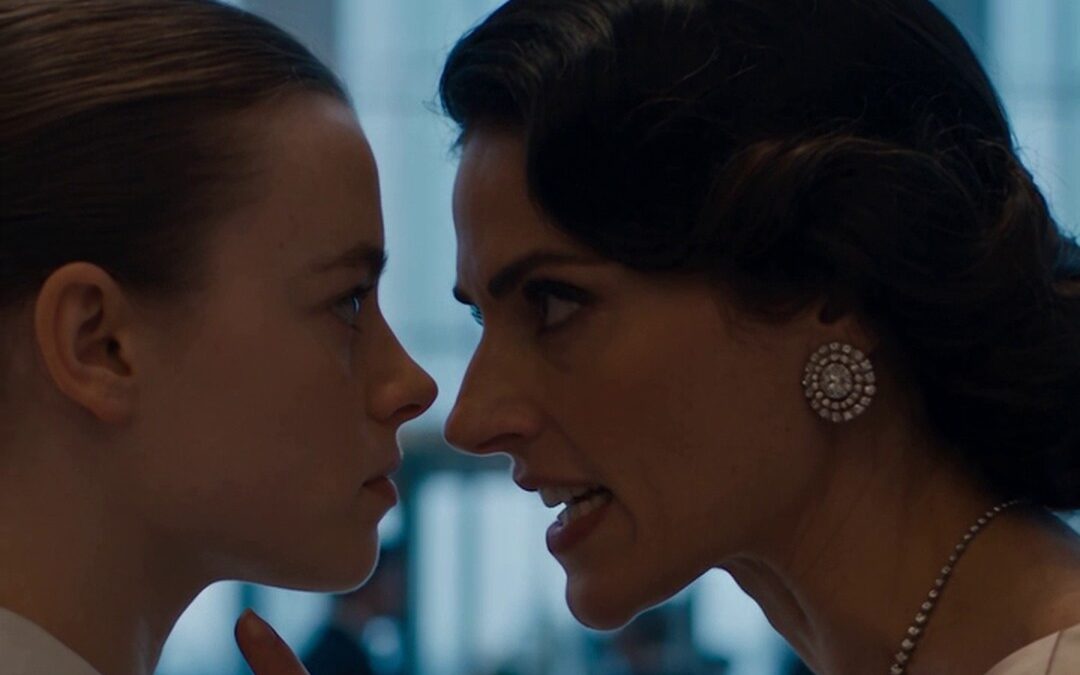
Celeste’s eyes left the key first.
That was all Nora needed to see.
Not guilt, exactly.
Recognition.
The conservatory smelled of hot citrus and candle wax. A quartet had stopped playing. Somewhere behind the guests, a glass settled onto a tray with a careful click.
Elliot held out his hand.
“Security will keep the pouch sealed.”
“You can’t take company property,” Celeste said.
“The key belongs to Mrs. Rook.”
“You don’t know that.”
Mrs. Rook touched the edge of the map.
“I do.”
The security chief, Mara Chen, wore no uniform beyond a dark suit and a pin bearing the hotel crest. She held the pouch without opening it.
“Mrs. Rook, would you like us to contact the police?”
“Yes.”
Celeste stared at her.
“You want police at a Vale event?”
“I want a report made,” Mrs. Rook said. “And the map documented.”
Elliot turned to Mara.
“Please call them.”
Celeste laughed once.
“Your little performance is over.”
“No,” Elliot said. “It has just become official.”
He looked at Nora.
“Can you stay?”
“My shift ends in twenty minutes.”
“I’ll pay for the overtime.”
Nora glanced toward the event manager. He had gone pale enough to match the tablecloth.
“I don’t need overtime,” she said. “I need my job tomorrow.”
“You’ll have it.”
The promise came too easily.
Nora held his gaze.
“Then let the hotel manager say it.”
The general manager, Mr. Alvarez, stepped forward.
“You’re scheduled tomorrow, Ms. Bellamy.”
“And next week?”
“Yes.”
Nora nodded once. That was a promise with a witness.
Celeste had watched the exchange with a hard, bright smile.
“Very noble,” she said. “Do you think this changes anything?”
“No,” Nora said. “It changes what gets written down.”
A police officer arrived with a partner within twenty minutes. They photographed the lighter, the pouch, and the map. They took statements separately.
Mrs. Rook gave hers in the hotel’s small library. Elliot remained nearby, but Nora noticed that he waited for permission before entering.
Nora’s own statement took longer. The officers asked where she had stood, how she had stopped Celeste, whether she had felt threatened, and if anyone had touched the map.
“I caught her wrist,” Nora said. “The lighter closed. I didn’t grab the map.”
The officer wrote it all down.
Celeste described the incident as an “unfortunate misunderstanding.” Her lawyer arrived before the second officer finished.
The brass key stayed sealed.
The officers gave Mrs. Rook a report number and advised her to preserve the map. They did not arrest anyone. No one had been injured, and the lighter had never touched the paper.
By the time the guests drifted away, the event had turned into something they would tell themselves they had barely witnessed.
Nora returned to the service pantry.
Her hands shook when she picked up a clean tray.
Elliot appeared in the doorway.
“You can sit down.”
“I’m working.”
“You stopped a woman from burning evidence in front of two hundred people.”
“And I still have three tables to clear.”
He looked at the tray.
“Let someone else do it.”
“Then someone else gets the tip share.”
He took a step back.
“I didn’t think of that.”
“Most people don’t.”
He accepted the rebuke without a defense.
“Do you know Mrs. Rook?”
“No.”
“Have you seen the map before?”
“Not the whole thing. But I saw similar marks in the hotel archive.”
“Can you show me?”
“If I’m scheduled tomorrow.”
“You are.”
“That doesn’t give you access to the archive.”
“Then I’ll ask the hotel manager.”
Nora studied his face for the trick. She found fatigue and a faint crease between his brows.
“Why were you late?”
“My car was held at the west entrance.”
“By who?”
He looked past her toward the conservatory.
“I don’t know yet.”
The officers had already asked the same question.
Nora set the tray down.
“I recognized the line because it wasn’t a pier boundary.”
“What was it?”
“A water easement. A channel where small boats used to pass.”
“Through the Vale docks?”
“Before the docks.”
Elliot absorbed that.
“My father always said the old harbor was mostly marsh.”
“Your family’s plans call it marsh.”
“And you think they were wrong?”
“I think the documents I filed showed water.”
A bell sounded from the kitchen. Nora’s name was called. She wiped her hands on her apron.
“Tomorrow,” she said.
Elliot nodded.
“Tomorrow.”
* * *
The hotel archive occupied a locked room behind the basement laundry. It held blueprints, old service ledgers, renovation approvals, and boxes no one had opened since the hotel changed owners.
Nora knew the room because a burst pipe had soaked its lower shelves two years earlier. She and another steward had spent a night moving cartons while the facilities crew repaired the ceiling.
At nine the next morning, Mr. Alvarez unlocked it.
Elliot waited in the hall with Mrs. Rook and a lawyer named Dana Feld. The lawyer had been retained by the widow, not the company.
That mattered to Nora.
“I’ll bring you the boxes,” she said.
Dana glanced at the logbook.
“We’ll record every one.”
Nora found the relevant section by year. The old loading plans had been stored in a flat metal drawer marked WEST PIER, 1978–1991.
She pulled out a bundle of paper tied with cotton tape.
The top plan showed the hotel’s east wall and a straight property line. The second showed the same wall, but the line bent around a narrow inlet.
The blue mark sat in the lower corner.
“Mrs. Rook,” Nora said. “Is this the mark?”
Mrs. Rook leaned forward in her chair.
“Yes.”
The mark was a small double wave followed by a four-digit number. Nora had seen it dozens of times without understanding it.
The lawyer examined the paper with gloved hands.
“Is there a legend?”
Nora found one in the bottom of the drawer.
A sheet listed surveying marks and the initials of three men. The last line read: T. Rook, field survey, channel boundary.
“Thomas,” Mrs. Rook whispered.
Elliot stood behind her chair.
“What does the number mean?”
“Map index,” Nora said. “It points to the supporting survey.”
She searched the drawer. No supporting survey appeared.
“Could be filed under the dock name,” Elliot said.
“Or removed.”
Nora had learned not to call a file missing until she checked the neighboring records. She looked through the accession log and found an entry from 1994.
“Transfer to Vale Development, records room C. Box 17.”
Dana wrote it down.
“Who signed?”
Nora followed the initials.
“R. Vale.”
Elliot’s expression darkened.
“My father.”
Mrs. Rook held the edge of her coat.
“Did he take the survey?”
“The log says it was transferred.”
“That isn’t the same as destroying it,” Dana said.
“No,” Nora agreed.
She checked the next line.
The box had been returned to the hotel six months later. Its contents were listed as “obsolete plans.” The return signature belonged to a clerk whose name was crossed out.
Nora showed Dana.
“Can you read that?”
“Maybe. The ink is faded.”
“R. Bell,” Nora said. “I think.”
“My father was a records clerk,” Mrs. Rook said.
The room went quiet.
“Did he work for Vale Development?” Elliot asked.
“Only for a few years. He said they asked him to organize old maps.”
Nora looked again at the log. The return date was March 1995.
Her father had been born a decade later. The name meant nothing to her. But someone had handled that box, and the paperwork had not been cleaned up.
Dana photographed each page.
“Could the key open the old records room?”
“It might,” Nora said. “The hotel has a storage annex by the docks. It was used before the renovation.”
Elliot looked at the map.
“The annex is still standing.”
“Barely,” Mr. Alvarez said from the doorway. “The property is slated for demolition.”
“When?” Dana asked.
“Next month.”
Elliot looked to Mrs. Rook.
“Do you want to go there?”
“I want to know what my husband left.”
“Then we’ll go with the lawyer and the police.”
Celeste’s voice came from the corridor.
“You will do nothing of the sort.”
She stood beyond the archive door, accompanied by a man in a gray suit. Her lawyer, Nora guessed.
Dana stepped between Celeste and the doorway.
“You’re not authorized to enter this room.”
“I own the development company.”
“You don’t own this hotel archive.”
Celeste turned to Nora.
“You found your little line. Congratulations.”
“Those are records,” Nora said.
“Records can be misread.”
“Then let’s read them.”
For a second, Celeste’s expression lost its polish.
Then the smile returned.
“The demolition schedule is not changing.”
Elliot stood beside the old plans.
“It just did.”
“You can’t freeze a permitted project because someone found a sentimental map.”
“Dana will review the permits.”
“You’re making enemies.”
“I’ve had them before.”
Celeste’s gaze moved to Mrs. Rook.
“Your husband signed a settlement.”
“I never saw one.”
“Then ask your lawyer to find it.”
“I have.”
“And?”
Dana answered.
“No signed settlement has been located.”
Celeste’s face tightened.
“Not yet.”
She left before anyone could ask what she meant.
Mrs. Rook folded her hands in her lap.
“Why did she come?”
“To stop us from checking the annex,” Nora said.
Elliot looked at the key pouch.
“Then that’s where the answer is.”
* * *
The annex sat along the old harbor road, behind a chain-link fence and a row of temporary construction signs.
The police advised everyone to avoid the site until they could confirm ownership and arrange a safe inspection. Dana submitted a preservation request to the city’s permit office that afternoon.
A clerk confirmed receipt. The city placed a temporary hold on demolition pending review of the land records.
No one had to break a lock.
Two days later, a city inspector accompanied them to the annex. The building had one room, a leaking roof, and a steel door with a corroded lock.
The brass key turned.
Inside, dust covered two desks and a cabinet. The air smelled of wet wood.
Mrs. Rook waited outside with a city staff member. The inspector required it because the floor near the back wall had softened.
Nora went in with Elliot, Dana, and the inspector.
The cabinet had three drawers. The key opened the top one.
Inside lay survey sheets, a ledger, and a small envelope addressed to Thomas Rook.
Mrs. Rook saw the envelope through the doorway.
“He wrote that.”
Dana photographed it before opening it. The paper had yellowed, but the writing remained legible.
Thomas’s note said the original survey had been copied twice. One copy went to the county recorder. The other was placed with the pier permits.
It also named the person who had asked him to alter the boundary.
Nora read it aloud.
“Richard Vale.”
Elliot shut his eyes briefly.
“My father.”
Mrs. Rook looked at the harbor.
“Your father told my husband to move the line?”
“He pressured him to sign a new plan,” Nora said. “The note says Thomas refused.”
The ledger showed what happened next. Thomas kept the original survey. The public copy disappeared from the permit folder. A payment recorded as “consulting” was issued to a clerk.
The clerk’s name was unreadable.
Dana found another document beneath the ledger. It was a carbon copy of the payment order.
“R. Bell,” she said.
Mrs. Rook went very still.
“My father.”
The lie had led closer to home.
Nora examined the signature carefully. It matched the initials on the hotel archive log.
“Could he have been paid to hide the plan?” Elliot asked.
“Or paid to organize it,” Dana said. “We need records before we decide.”
Mrs. Rook’s jaw tightened.
“My father never spoke about this.”
“He may not have known what the payment meant,” Nora said. “Or he may have.”
“I won’t invent innocence for him.”
“No,” Nora said. “We’ll find out.”
Dana bagged the ledger and requested the county recorder’s copies. She asked the city inspector to document the room. The police collected the documents as potential evidence of a property fraud claim.
The next day, the county recorder located the public copy. It had been filed under the old channel name, not the current dock parcel.
The line matched Thomas’s map.
The county’s stamped copy gave them something the handwritten ledger could not: proof that the channel had been publicly recorded before the Vale company obtained the land.
Elliot arranged for an independent surveyor to compare the old boundary with the current parcel map.
While Dana handled records, Nora called her mother.
“I’ll be late,” she said.
“Is this about work?”
“Yes.”
“Is it the kind of work that gets you fired?”
“I don’t know.”
“Then eat something before you come home.”
Her mother always gave practical advice when she was frightened.
Nora ate a sandwich in the staff room. Elliot sat across from her with his phone face down.
“Your mother knows?” he asked.
“She knows I may lose a shift.”
“Will she?”
“She needs her inhalers more than she needs your confidence.”
He accepted that.
“What do you need from me?”
“Nothing.”
“Everyone needs something.”
“Not from a billionaire.”
He looked down at the paper cup between his hands.
“Fair.”
For a moment, Nora saw how tired he was. Not helpless. Not harmless. Just tired.
“Why are you doing this?” she asked.
“Because if the record is true, my family took land that wasn’t ours.”
“That’s a reason.”
“My father died before I became chief executive. I spent years thinking the port was built on hard decisions. I’m beginning to think some of those decisions were just theft.”
Nora watched him closely.
“If the truth costs your company?”
“Then it costs the company.”
“If it costs you?”
He didn’t answer quickly.
“Then it costs me.”
That evening, the independent surveyor confirmed the old line. The channel had been filled decades earlier, but the underlying easement remained in the county record.
The Vale company’s current parcel included a strip that should have remained accessible to the public.
The evidence did not prove who had altered the later filings.
But it proved the land had been taken.
* * *
The threat arrived in an envelope addressed to Nora at the hotel.
It contained a printed photograph of her mother’s apartment building, taken from across the street. No message. No signature.
Mara Chen called the police and logged it as an intimidation attempt. She also helped Nora request a temporary change to her schedule.
Nora refused to stop working.
“I won’t let them make my job a secret,” she said.
“They may try to make it a target,” Mara answered.
“Then document it.”
That was what Dana had been telling everyone.
The police advised Nora to vary her route home and report any further contact. The hotel added a security escort for the end of her shift. No one pretended it solved everything.
Elliot learned about the photograph from Dana.
He came to the staff entrance after closing.
“Are you safe?”
“I’m going home with Mara.”
“Do you want someone with you tomorrow?”
“I want the police to find out who sent it.”
“They’re working on it.”
“Then let them work.”
“I could have my security team—”
“No.”
He stopped.
Nora softened only slightly.
“If you put private guards around my family, Celeste gets to say you’re using money to intimidate us. Let the officers handle it.”
Elliot nodded.
“You’re right.”
“I know.”
The next morning, the hotel received a second notice. It came from the development company’s lawyer, demanding that staff surrender any copies of archived plans.
Dana replied that the records belonged to the hotel and were already subject to a city hold.
The company’s lawyer withdrew the demand.
That afternoon, a retired surveyor named Emil Price called Dana. He had worked on the harbor in the 1990s and recognized the signature on the old payment order.
He said Robert Bell had not falsified the survey.
He had copied it.
Price had been present when Richard Vale ordered the channel removed from the filing set. Robert refused to destroy the original. He put a copy in the annex and kept the receipt.
Price also remembered the payment.
“It was a month’s wages,” he told Dana. “He’d been promised overtime. They paid him after he finished the inventory.”
“Why didn’t he speak up?” Mrs. Rook asked.
“Because he thought the county copy would protect the line.”
“It didn’t.”
“No,” Price said. “It didn’t.”
The testimony changed the meaning of the payment. Robert Bell had been listed as the clerk who received money, but he had not sold the survey. He had preserved it.
Mrs. Rook covered her mouth.
“My father kept it safe.”
Nora felt the shame in her own chest ease.
“He did what he could.”
“I was angry at him for keeping quiet.”
“You can still be angry.”
Mrs. Rook looked at her.
“I am.”
The two women sat together at the hotel’s small table. Neither tried to make the feeling simpler.
Emil Price signed an affidavit. The city inspector filed his report. Dana submitted both to the county and the company’s independent review committee.
Celeste’s lawyers answered by challenging Price’s memory and the chain of custody.
They had a point.
Price was old. He had not kept the payment receipt. The annex had been accessible to company employees. Any one of the documents could be questioned.
The survey remained strong evidence, but the fraud case had not yet been proven.
That night, Elliot found Nora in the loading area, checking inventory.
“Celeste is asking for a formal hearing.”
“Good.”
“You sound pleased.”
“I’m pleased she has to bring documents.”
“She’ll argue that my father had authority to revise the boundary.”
“Did he?”
“Company authority, perhaps. Not authority over the county record.”
“Then the hearing will show that.”
Elliot leaned against the wall.
“Celeste has spent years keeping the project together. She says the new port access will create hundreds of jobs.”
“Maybe it will.”
“You don’t sound convinced.”
“Jobs don’t erase a stolen easement.”
“No.”
“She’ll use workers as shields.”
“I know.”
“Do you?”
He straightened.
“I do now.”
Nora finished counting the linens.
“My mother’s building is safe?”
“The police have not found anything else.”
“That isn’t an answer.”
“No,” he said. “It isn’t.”
She folded the count sheet.
“Then don’t promise me safety. Promise me you’ll keep the evidence where it belongs.”
“I promise.”
“You can keep that one.”
The city scheduled a public hearing. The company agreed to suspend demolition while its board reviewed the claim.
Celeste’s name appeared on the meeting agenda.
So did the old harbor survey.
* * *
The public hearing took place in the county chamber, a square room with wooden benches and a microphone that clicked whenever someone moved it.
The people who mattered sat in the first two rows.
Mrs. Rook sat beside Dana. Nora sat behind them, wearing her hotel uniform. Elliot sat across the aisle with two members of the company’s board.
Celeste entered with three lawyers.
She looked composed.
The hearing officer, Ms. Robles, explained the limits of the proceeding. It would review whether the demolition permit should remain suspended and whether the boundary evidence required further action.
She could not decide criminal liability. That belonged to prosecutors and courts.
Celeste spoke first.
“This project has cleared every standard review. We have permits, financing, and a signed access agreement. Delaying it threatens work for hundreds of people.”
No one interrupted her.
She presented a later survey bearing a different boundary. She showed construction renderings and letters from unions supporting the project.
Then she argued that the old map had no reliable chain of custody.
“Mrs. Rook’s husband kept a private sketch,” she said. “Ms. Bellamy found old papers in a damp building. The alleged witness remembers events from thirty years ago.”
Her case was not foolish.
The later survey was real. The company had permits. The old annex was poorly secured. The hearing officer took notes.
Celeste looked toward Nora.
“The hotel steward is not a surveyor, a lawyer, or a county clerk.”
Nora kept her hands folded.
“That doesn’t make her observation reliable.”
Dana stood.
“Ms. Bellamy identified a mark matching the county’s recorded survey index. The public record establishes the channel line. Mr. Price’s affidavit supports the chain.”
Celeste’s lawyer rose.
“Mr. Price’s recollection is disputed.”
“Then the records should settle it.”
Dana presented the county-stamped copy. The hearing officer compared it with the later survey.
The two lines did not match.
Celeste’s attorney argued that the county copy might have been misfiled. Dana produced the recorder’s index, which showed the survey had been entered under the channel’s original name.
A clerk from the recorder’s office confirmed the filing date and archive number.
The old map matched the public record.
The later survey had no corresponding amendment.
Celeste’s attorney returned to the payment order.
“A clerk was paid by the company. We cannot conclude why.”
“Correct,” Dana said.
Then she offered the decisive proof.
The brass key had opened the annex cabinet. Inside, alongside Thomas Rook’s note, was a carbon copy of the original transmittal receipt. It listed the county survey number and showed Robert Bell’s signature beside the word COPY.
The county recorder’s stamp appeared on the reverse.
The receipt had been preserved in a sealed envelope. The police documented its condition. The city inspector had photographed the cabinet before removal.
The independent confirmation came from Emil Price, who had signed the matching witness affidavit and now answered questions under oath.
He identified Richard Vale’s instruction to remove the channel plan from the revised packet.
Celeste’s lawyer objected. Ms. Robles allowed the testimony for the permit review, while noting that the court would decide its ultimate weight.
Celeste’s first response was controlled.
“My father’s conduct is not proof of mine.”
It was a good argument.
No one disputed it.
Then Dana presented the event photographs.
They showed Celeste holding the lighter above the map after being told it might document a valid boundary. They showed Nora catching her wrist. They showed the map untouched.
Celeste looked toward Mrs. Rook.
“I was preventing a false claim from being used to damage a public project.”
“You tried to destroy the thing that could prove me right,” Mrs. Rook said.
“I didn’t know what it proved.”
“You called it fake before you read it.”
Celeste turned back toward the hearing officer.
“I was angry. That does not make me responsible for my father’s decisions.”
“No,” Ms. Robles said. “But it does require the court to preserve the evidence.”
The hearing officer denied the request to lift the demolition hold.
She referred the suspected filing fraud to the county prosecutor and ordered the permit office to preserve all related records.
She did not declare the land returned. That required a separate civil case.
She did not accuse Celeste of a crime. That required investigation.
But the project stopped.
The board met three weeks later. The company’s own audit found that the later survey had been used without a documented amendment. The audit also found that Celeste’s office had ordered the archive records transferred shortly before the annex was scheduled for demolition.
A company email showed she had asked staff to “clear any unresolved legacy materials” from the site.
Celeste said she meant construction debris.
The message was ambiguous.
The board voted to remove her from the project and refer the records to the prosecutor. The county filed a civil action seeking restoration of the easement. The investigation continued.
Six months later, a settlement recognized the public channel boundary and required the company to restore access along the harbor walk.
The prosecutor did not charge Celeste with attempted evidence destruction. The lighter had not touched the map, and her intent could not be proved beyond doubt.
She did face a separate records charge tied to the archive transfer. Her lawyers negotiated a plea to a lesser filing offense. She paid a fine, surrendered her role in the company, and was barred from directing the harbor redevelopment.
Her last sting came outside the courthouse.
She approached Nora while cameras waited across the steps.
“You think this makes you important?”
“No.”
“You think he’ll keep protecting you?”
“I didn’t ask him to.”
“You’ll be back carrying trays next week.”
Nora adjusted her cuff.
“Yes.”
Celeste looked at her uniform as if it were a verdict.
Nora held the door for Mrs. Rook.
“My work is not the insult you think it is.”
Celeste had no answer.
* * *
Three months later, the hotel offered Nora a promotion to archive coordinator.
The job came with a modest raise and regular hours. It also came with responsibility for documenting the hotel’s historic records.
Nora asked to see the contract before deciding.
She called her mother from the bus stop.
“They want me to move upstairs.”
“Does it pay more?”
“Yes.”
“Then read the contract.”
“I’m reading it.”
“Good.”
Her mother paused.
“Are you safe?”
“The police closed the intimidation case. They never proved who sent the photograph.”
“That isn’t what I asked.”
Nora watched a bus pull up.
“I feel safe enough to go to work.”
Her mother accepted that.
Nora took the promotion.
Elliot offered to pay for her mother’s inhalers and her brother’s tuition. Nora thanked him and declined.
“I can afford to fund the archive work,” he said.
“Then fund the work.”
“Not your family?”
“No.”
He considered her answer.
“What if I make it anonymous?”
“Then it’s still your money.”
He didn’t argue.
Instead, he asked the board to create a public records fund for the harbor district. It paid for document preservation, survey access, and free legal consultations for residents contesting property claims.
Nora agreed to serve on its local committee.
Mrs. Rook asked for one thing: that the fund keep her husband’s name on the restored harbor path.
The board agreed.
Elliot also apologized to Nora.
He did it after a meeting, with no press present.
“I treated the first promise as if my word could secure your job.”
“It couldn’t.”
“I know that now.”
“Good.”
“I also assumed money was the quickest way to make things right.”
“You still do.”
He looked at the floor.
“I’m trying not to.”
“Trying is not a boundary.”
“No.”
He waited.
Nora let him.
“I’m sorry,” he said.
“I believe you.”
“That doesn’t mean everything is fine.”
“No.”
She studied him.
“If you want my help, ask. Don’t assign me a place because you think it suits your story.”
“I understand.”
“Do you?”
“I’m learning.”
“Then ask.”
He took a breath.
“Would you consider managing the public archive project, with the committee’s approval?”
“I’ll consider it.”
“Thank you.”
“That wasn’t a yes.”
“I know.”
The warmth between them came slowly. It came through work, not rescue.
A year later, Nora’s brother finished his first semester without taking on private loans. Her mother’s breathing improved after a new treatment plan. Mrs. Rook moved into an apartment near the harbor, with a view of the restored walkway.
Elliot kept his distance when Nora asked him to.
He also kept showing up when the committee needed a company representative.
Once, he brought coffee to a meeting and remembered Nora took hers black.
She looked at the cup.
“Is this an attempt to buy my vote?”
“No.”
“Good.”
“Can I still give it to you?”
She took it.
“You can.”
That was enough for both of them.
The harbor project changed. The company built fewer loading bays and more public access. Workers kept their jobs through a revised schedule. The restored walkway followed the old channel line.
The map went into a protected display at the hotel.
The brass key sat beside it.
* * *
Seven years later, Nora stood beneath the glass roof of the Halcyon conservatory.
The hotel had opened the public archive there. Students, dockworkers, and neighborhood residents came to see the original survey.
Mrs. Rook, now in her eighties, sat beside the display in a new wheelchair. Her hands still rested steadily in her lap.
Elliot stood nearby, no longer chief executive. He had stepped away from the company after the harbor settlement and now chaired the public records fund.
Nora’s mother sat in the front row with a cane. Her brother, finished with college, had brought his young daughter to see the map.
The child pointed at the blue line.
“Was that really water?”
“It was,” Nora said.
“Where did it go?”
“People filled it in.”
“Can it come back?”
“Not the water.”
Nora tapped the glass above the map.
“But the path did.”
The old survey showed the channel in blue, the docks in black, and the boundary in a thin red line. The brass key was displayed beside it, with a note explaining where it had been found.
Its final meaning was not that one family held a secret.
It was that someone had kept a record.
Mrs. Rook looked at Nora.
“You still work here?”
“I do.”
“Good.”
Elliot approached.
“May I ask you something?”
“You can ask.”
“The committee wants to name the archive room after Thomas and Robert.”
“Both of them?”
“Both.”
Nora looked at Mrs. Rook.
She nodded.
“Then yes,” Nora said.
The child leaned closer to the display.
“Who stopped the fire?”
Nora glanced at the photograph mounted beside the survey. It showed her hand around Celeste’s wrist, the lighter closed, the map safe between them.
“The person who was closest,” Mrs. Rook said.
No speeches.
No grand promise.
Just a room where the record could be seen.
A path that stayed open.
A map that had outlasted the people who tried to erase it.
And, beneath the glass roof, the blue line still led somewhere.
THE END








