The Mafia Boss Walked In While His Fiancée Humiliated the Maid—and Saw the Star She’d Hidden for Years
Chapter 2: What the House Kept
Marco’s fingers tightened around his phone.
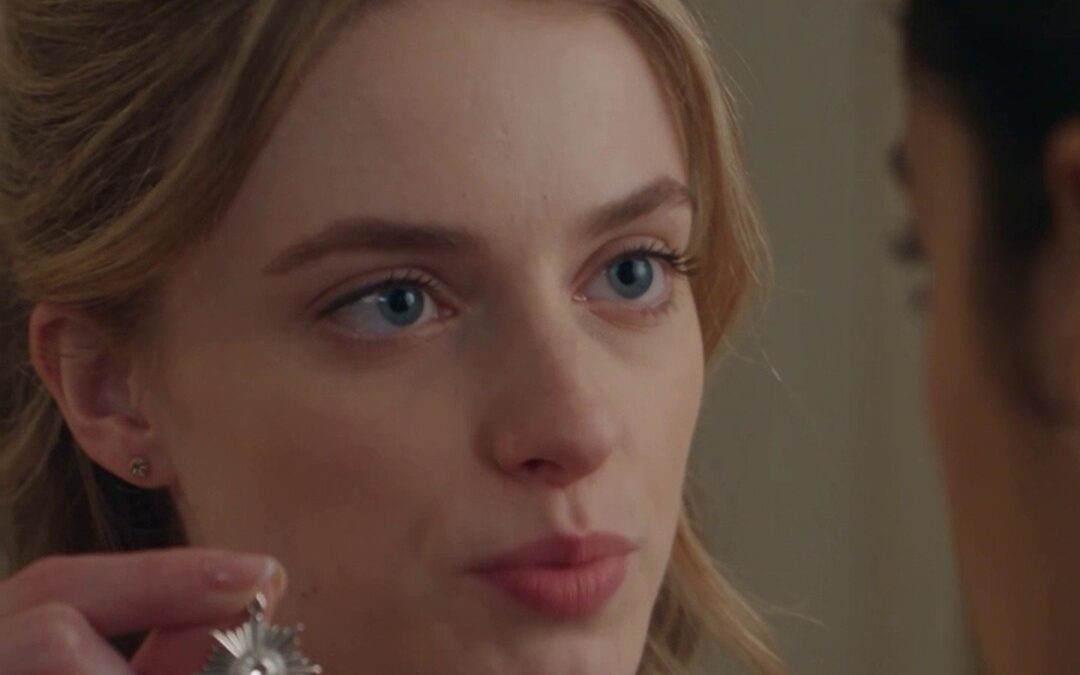
For one suspended second, nobody moved. Rain tapped at the tall windows. The silver star in Elena’s palm caught a sharp point of light.
Then Celeste stepped toward him.
“Marco, that proves nothing.”
“I didn’t say it did.”
“She could have learned the name from a staff member. Your family’s history isn’t secret.”
“My father’s name was Dominic,” Marco said. “She gave me Tomas.”
Elena closed her fingers over the pendant. “My mother said that was the name on the papers she kept. I didn’t know it was connected to your family.”
Marco studied her face. She looked frightened, not triumphant.
“Who was your mother?”
“Lucia Ruiz. She died six years ago.”
“Where?”
“Queens. She was in hospice.”
“Did she ever say she worked for my father?”
“She cleaned for a catering company that served your father’s house. She never said she worked for him.”
Celeste made a dismissive sound. “A thirdhand story and a scratched pendant.”
Elena turned to her. “You said I stole the brooch. You put that star on the vanity.”
“I picked it up because it was lying there.”
“It was in your hand before Marco came in.”
“Because I was showing him what you stole.”
“You didn’t know he was coming.”
“I knew he was expected.”
“That isn’t what I said.”
Marco stepped between them. The black serpent tattoo on his right forearm showed beneath his rolled cuff, its coils disappearing under his sleeve. His father had chosen the design when Marco was seventeen. In the organization, the serpent marked the line of succession. Marco had always worn it as a warning and a burden, though lately it seemed more like a reminder of the certainty his father had demanded from him.
“Celeste,” he said, “where is the brooch?”
“In the safe.”
“Then we can look.”
“I don’t want staff pawing through my things.”
“Your staff?”
She glanced at Elena. “You know what I mean.”
“I do,” Marco said. “That’s why I asked.”
Celeste crossed to the wall cabinet and unlocked the small safe hidden behind a framed print. She entered the code, opened the door, and froze.
“What?” Marco asked.
“The brooch isn’t here.”
“You said it was.”
“I put it there yesterday.”
“Then it’s missing.”
Celeste straightened. “She must have moved it.”
Elena let out a breath. “I’ve been in this room less than ten minutes.”
“Your fingerprints are all over the vanity.”
“So are yours.”
“Enough,” Marco said.
He called the house manager. “Mr. Bell, secure the bedroom and east hall. No one leaves until I’ve seen the service log and camera records.”
“Is there a problem, sir?”
“An accusation was made. I’m checking it.”
Celeste’s mouth parted. “You’re putting the staff on lockdown because she told you a name?”
“I’m checking whether someone took your brooch.”
“You believe her over me?”
“I believe the room.”
He ended the call and looked at Elena. “You can go downstairs.”
“Am I free to leave?”
The question landed harder than the accusation.
“You’re not under arrest,” he said.
“That isn’t what I asked.”
“No. You’re free to leave.”
“Then I’ll get my coat and the pay I earned this week.”
Celeste scoffed. “You’re negotiating now?”
“I’m collecting my wages.”
Marco looked at her. “She’ll be paid in full tonight.”
“I don’t need you to announce it like a favor,” Elena said. “I want a statement of hours from payroll. No cash slipped into an envelope.”
“Done,” Marco said.
“Good.”
Elena walked toward the door. Marco stepped aside. He had spent years making people clear a path when he entered a room. Now he watched a young woman pass without asking permission.
“Wait,” he said.
She stopped.
“May I see the pendant?”
“No.”
“Understood.”
She left.
Celeste folded her arms. “This is absurd.”
Marco turned toward the open safe. “You said the brooch was there yesterday. Who else has the code?”
“Just me.”
“Who has a key?”
“No one.”
“Then how did it get out?”
“I don’t know. Maybe the safe was open.”
“Was it?”
“I don’t remember.”
He studied her. Celeste had been his fiancée for eight months: quick with numbers, brilliant at reading a room, good at making control sound like concern. He had trusted her with his social life and the house. He had called his caution about the organization wisdom. Now he wondered whether his trust had been another kind of blindness.
“How did you know Elena had a pendant?” he asked.
“I see it every day.”
“What did you tell me about her before you hired her?”
“That she was a good housekeeper.”
“You also said she’d been fired from the hotel for theft.”
“That was in her references.”
“I checked them. The hotel said she left to care for her mother.”
“Maybe they were protecting her.”
“You told me she’d been caught taking jewelry.”
“I heard that from Mrs. Bell.”
“Mr. Bell says he told you she left to care for her mother.”
Celeste’s lips pressed together. “You’re taking the house manager’s word over your fiancée?”
“I’m asking questions.”
“You’ve never asked this many questions about a maid.”
“That may be the problem.”
Her composure shifted around anger. “You hired her because I asked you to. I didn’t want another agency sending strangers into the house. I said she was dependable.”
“You also said she was dishonest.”
“I said I didn’t trust her.”
“Had you met her before that?”
“I met her at the interview.”
“After you’d already told me she was untrustworthy.”
“You wanted someone who could manage the house quietly. She fit. I did you a favor.”
“Did you?”
“For months, she’s looked at you like she wants a way into your life.”
“I noticed she works.”
“Then you’re the only one who has.”
“Why bring this up now?”
“Because she’s using your father’s name to get between us.”
“Or because you accused her of stealing something you can’t locate.”
“She has that pendant. It’s right there.”
“That tells me she owns a pendant. It doesn’t tell me she took your brooch.”
Celeste stared at him. “You really believe a scratched silver trinket?”
“No. I believe we should find out where it came from.”
She exhaled, visibly relieved. “Then search her room and her bag. If she’s clean, she can go.”
“No one searches her room without her consent.”
“She’s staff.”
“She’s a person.”
“Since when does that matter to you?”
He had no answer he liked.
Downstairs, Elena waited beside the hallway table with her canvas bag tucked under one arm. Mr. Bell stood nearby, looking worried.
“I’m sorry,” he said. “I should have stopped Mrs. Voss from making the accusation.”
“You didn’t know she would.”
“I knew she didn’t like you.”
“That isn’t the same thing.”
“No.”
“Did she tell you I stole from the hotel?”
He hesitated. “She said you’d left under a cloud.”
“Did you check?”
“I should have.”
“Yes.”
“I’ll correct it.”
“Because it’s true,” Elena said. “Not because Marco is watching.”
Mr. Bell nodded. “I will.”
Marco came down alone. The serpent tattoo showed beneath his cuff. He stopped several feet away.
“I want to ask you some questions,” he said.
“You already did.”
“I’m asking whether you’ll talk voluntarily. Somewhere you choose.”
“With Mr. Bell present.”
“Fine.”
“And I want the truth about why I was accused.”
“I’ll find out.”
“You hired me after hearing I was a thief.”
He took too long to answer. “I heard it from Celeste. I should have checked with the agency.”
“Did you believe it?”
“I didn’t know what to believe.”
“You decided the answer didn’t matter.”
“Yes.”
“That’s worse.”
He accepted the judgment. “I’m sorry.”
“For what?”
“For hiring you after I heard that. For not asking. For allowing you to work here while Celeste treated you like you had to prove you belonged.”
“That’s three things.”
“You’re right.”
“None of them gets me my pay.”
“It will.”
“Then start there.”
He nodded. “Mr. Bell will have payroll prepare it.”
“I want my hours in writing. I don’t want cash.”
“Done.”
She reached for her coat. Mr. Bell retrieved it from the peg.
“Thank you,” she said.
The silver star remained visible at her throat.
“Who gave it to your mother?” Marco asked.
Elena covered the pendant. “That’s not your question yet.”
“Fair.”
“You want to know because of your father. Tell me what you know about him.”
Marco glanced toward the staircase. “He died when I was twenty-six. Near the end, he spoke about people he’d failed. Once he mentioned a woman named Lucia. I thought she was connected to the organization.”
“What else?”
“That’s all I remember.”
“Did he say why he’d failed her?”
“No.”
“Did he say Tomas?”
“No.”
Elena put on her coat. “I’m not coming back to work.”
“I understand.”
“I need another job, but I don’t want one from you.”
“I won’t offer.”
“And I’m not asking for money to cover my mother’s care.”
“I wouldn’t offer that either.”
“You have power over the people who work in your house. Don’t turn money into a reason I have to keep talking to you.”
“I won’t.”
“Then that’s all for tonight.”
She moved toward the front hall.
“Could I ask one more question?” he said.
“You can ask.”
“Why did you keep the pendant on after Celeste put hers on the vanity?”
“Because it’s mine.”
The simple answer unsettled him.
Celeste appeared at the top of the stairs, still wearing her pale-pink satin pajamas. Her posture was perfect; one hand gripped the banister.
“Marco. We need to talk alone.”
“Not now.”
“Your father’s name is being used in this house. You have to consider what that means.”
“I am.”
“If Elena’s mother knew him, that doesn’t mean the girl belongs here.”
“Did she ever say she wanted to belong here?”
Celeste looked away. “You’re letting her make you feel guilty.”
“I may have reason to feel guilty.”
“She’s leaving because she knows she’s exposed.”
“She’s leaving because she was accused.”
“You have no idea where she went.”
“She said she was going home.”
“Maybe she took the brooch with her.”
“Then evidence will tell us.”
He opened the front door. Elena had already left.
Celeste descended three steps. “You’re going to put the whole staff through this over a name and a trinket?”
“I’m checking a missing brooch.”
“You’ve changed.”
“No. I’m asking questions I should have asked before.”
The house manager brought a tablet into the hall. “The east hall camera is working. The bedroom camera is not.”
“Why not?” Marco asked.
“The system log shows Mrs. Voss’s code disconnected it at 2:17.”
Celeste lifted her chin. “I asked the technician to turn it off. I was changing.”
“The camera covers the hall, not the bedroom,” Mr. Bell said.
“I wanted privacy.”
“Did anyone come up here?” Marco asked.
“No.”
The tablet showed a badge entry at 2:24, after the camera went dark. Someone had opened the door to the linen room and returned upstairs.
“Whose badge?” Marco asked.
“Mrs. Voss’s.”
“Could be an error,” Celeste said.
“Could be,” Marco replied. “It’s a reason to keep looking.”
“What are you looking for?” she asked.
“The truth.”
The next morning, Elena did not come in. She texted Mr. Bell that she was taking the day off and had accepted her pay through payroll. She planned to contact the employment agency.
Marco read the message twice.
“Do you want me to call her?” Mr. Bell asked.
“No.”
“Maybe it would help to ask about the name.”
“She said she’d talk when she was ready.”
“Then we wait.”
“Do you think she’ll return?”
“That depends on whether she thinks this house can be safe for her.”
“I can make it safe.”
“Can you?”
Marco looked up.
“I mean safe for her to speak and disagree,” Mr. Bell said. “That’s different from controlling who enters the house.”
Marco set down the phone. “You’re right.”
Celeste arrived in a cream blouse and tailored trousers. “Are we going to spend the whole day interrogating the staff?”
“We’re reviewing the records.”
“Your records.”
“They belong to the house.”
“Your father’s house.”
“My father is dead.”
“His name still has power here.”
“That’s why we need to be careful.”
She sat across from him. “I have a charity board meeting at noon. I’ll need the car.”
“Take it.”
“Will security follow?”
“No.”
“Will the staff be questioned while I’m gone?”
“Mr. Bell is gathering the logs.”
“Then what are you doing?”
“Trying to understand why your story doesn’t fit.”
Celeste poured tea. “You have a talent for making suspicion sound like virtue.”
“How did you know Elena had a pendant?”
“She wears it every day.”
“And the photograph in my wallet? The one of my father holding a child with a silver star?”
Celeste’s cup paused near her mouth. “I’ve never seen it.”
“That wasn’t my question.”
“I don’t know what you mean.”
She knew how to answer without giving him anything. He watched her carefully.
“If the story is true, people will make a spectacle of it,” she said. “Your cousins will claim she’s an heir.”
“She hasn’t asked for anything.”
“Yet.”
“Why do you keep assuming she will?”
“People see what your name can buy.”
“She asked for her wages.”
“She’s smart enough to know that’s only the first step.”
“Did she tell you she wanted anything else?”
“No.”
“Then you’re speaking for her.”
Celeste’s fingers tightened around her cup. “I’m trying to protect what we have.”
“What do we have?”
“Each other.”
“Do we?”
She looked up. “You’re questioning our relationship because of a pendant?”
“I’m questioning what you’ve done. You changed an employment reference.”
“I thought I was protecting you.”
“From a maid?”
“From anyone who would use you.”
“She came here through an agency to work.”
“You don’t know that.”
“I know she worked.”
“You think your father was decent because he thanked a caterer once?”
“No.”
“He lied and abandoned people. If Lucia existed, he may have left her behind.”
“That doesn’t make the story false.”
“You’re chasing this because you want it to be true.”
“I want to know what’s true.”
Her eyes flashed. “If she is his daughter, will you bring her into the family?”
“I don’t know.”
“Let her sit at your table?”
“If she wants to.”
“Will you share your name?”
“She has her own.”
“Will you put her ahead of me?”
“Why would that be the question?”
“Because your father never gave you a choice. I’ve spent years earning my place here.”
“You’re afraid of losing it.”
“I’ve worked for it.”
“You’ve worked to be my partner.”
“I gave up my career to be here.”
“I never asked you to.”
“You wanted someone beside you.”
“I wanted you beside me. I didn’t ask you to control the house.”
“Someone had to.”
“Mr. Bell has run it for twenty years.”
“Your father trusted him. You trust him because he never challenges you.”
“He just challenged me.”
Celeste looked toward the door. “You’re going to regret this.”
“Maybe.”
“You’ll lose more than an engagement.”
“I know.”
She walked out.
The house technician arrived later and confirmed that Celeste had asked him to disable the east hall camera, claiming Marco had approved the change. She had also asked whether the camera could be disabled without triggering an alert.
“Why?” Marco asked.
“She said she didn’t want staff seeing deliveries.”
“Did she have one?”
The technician checked the maintenance request. “There was a jeweler at the service entrance last week. It was listed under Mrs. Voss’s name.”
Celeste stood in the library doorway. “I had something repaired.”
“What?” Marco asked.
“I don’t remember.”
“What did you order?”
“I didn’t order anything.”
The technician left to retrieve the ledger.
Marco turned to Celeste. “You had the camera disabled, a jeweler came to the house, and your badge opened the linen room. You’re changing the timeline.”
“I’m trying to remember.”
“Then help me.”
“I won’t sit here while you put a stranger’s word above mine.”
“You’re not a stranger.”
“Apparently that no longer matters.”
“It matters more than you think.”
“I’ve stood by you through everything.”
“You have.”
“And now you’re turning on me because of an old photograph?”
“I’m trying to find out what happened.”
“You’re choosing her.”
“I’m choosing to ask.”
Celeste left the room before he could ask anything else.
That afternoon, Elena returned. She wore a dark green sweater and plain jeans, her hair tied back. The star rested at her collar.
“I’ll talk to Marco,” she told Mr. Bell. “Then I’m leaving.”
They met in the library, with Mr. Bell present. Elena placed a worn envelope on the table but kept one hand over it.
“I want to know what you can tell me before I show you my mother’s papers,” she said.
“What do you want to know?” Marco asked.
“What was your father’s relationship with Lucia Ruiz?”
“I don’t know. I remember him mentioning her once. He said he’d failed someone named Lucia.”
“Did he have a daughter?”
“Not that I knew.”
“Did your father ever mention a silver star?”
“No. I found an old photograph of him holding a child wearing one. I don’t know who the child is.”
“Can I see it?”
Marco took out his wallet and placed the photograph on the table between them. The child was a girl, perhaps two years old, sitting on Dominic’s knee. The silver star hung around her neck.
Elena leaned over it without touching it. “Do you know who she is?”
“No.”
“How old were you when this was taken?”
“Ten, I think. I don’t know the exact date.”
“You knew your father had another child?”
“No.”
“Did you know he traveled to Providence?”
“I knew he traveled. I didn’t know where.”
Elena studied the photograph. “My mother said she met him when she was nineteen. She worked for a catering company in Providence. He came into the kitchen after a dinner and asked for coffee. She thought he was a businessman who traveled.”
“And then?”
“She became pregnant. He was gone. She had one letter from him, but she never showed it to me. She said he asked her to wait, then she heard he’d been arrested. She stopped expecting him.”
“What year?”
“Twenty-eight years ago.”
Marco was thirty-eight. His father would have been about forty-seven.
“Could the child in the photo be you?” he asked.
“Maybe. It isn’t proof.”
“No.”
“The pendant isn’t proof either.”
“No.”
“What would prove it?”
“Records, letters, someone who knew them. A timeline. Maybe a DNA test, if you wanted one.”
Elena pulled the envelope closer. “My mother kept hospital records, a baptism certificate, rent receipts, and photographs. I’ll show you copies. I keep the originals.”
“Of course.”
She passed him a photograph of Lucia standing outside a brick building, one hand over her stomach. On the back, in faded ink, were the words: Lucia, Providence, March 1998.
The timing could fit. It could also be coincidence.
A hospital admission record from the following year listed the father as “Tomas V.” and left the address blank.
“Did your mother say he used that name?” Marco asked.
“She said he asked her to call him Tom. She didn’t know his full name until the year she died. She told me he was Tomas Vescari.”
“Why did she wait to tell you?”
“She was sick and frightened. She said if anyone from your family came looking, I should ask what happened to the silver star.”
“What happened to it?”
“She said he had the other half.”
Elena lifted the pendant from her throat. “She gave me this when I was twelve. She said it belonged to my father. I didn’t know whether to believe her.”
“The two stars in the photo match.”
“Maybe.”
Marco looked again at the image. “I’ll speak with my father’s former attorney. Maybe he remembers Lucia.”
“Without involving the organization.”
“Yes.”
“Don’t use my name to settle an argument or calm anyone down.”
“I won’t.”
“And don’t call me family in public because it makes this convenient.”
“I promise.”
She closed the envelope. “I’m not coming back to work. I’ll send the agency a correction request.”
“I’ll send one too.”
“From you. Say you heard the accusation and didn’t check it.”
“I will.”
“And tell me if you find the brooch. If you don’t, tell me that too.”
“I will.”
She left, taking her mother’s papers.
That evening, Celeste waited in the gallery.
“Did she show you papers?” she asked.
“That’s private.”
“You can’t be serious.”
“She chose what to share.”
“Are you going to let her make decisions about your family without knowing what she’s doing?”
“She made no decisions about my family. She told me what her mother said.”
“She’s using your guilt.”
“Maybe I have reason to feel guilty.”
“You are not responsible for what your father did.”
“I’m responsible for how I treated her.”
“You treated her like a maid.”
“She was a maid.”
“She was a person.”
Celeste’s expression hardened. “Don’t make me the villain because I was cautious.”
“You altered her employment reference.”
“I thought she was a risk.”
“You accused her of theft because she wore a pendant.”
“I thought it was connected to the photograph.”
“You knew about the photograph?”
“I saw it in your father’s study.”
“When?”
“After he died. I helped sort his papers.”
“Did you see the child?”
“Yes.”
“And the star?”
“Yes.”
“What did you think it meant?”
“I thought it was a family picture.”
“Did you know about Lucia?”
“Not then.”
“When?”
Celeste hesitated. “Last month. I found a letter among your mother’s papers.”
“Why didn’t you tell me?”
“I didn’t know if it was true.”
“Then why did you accuse Elena?”
“Because she came into the room wearing the matching pendant.”
“You knew they matched.”
“I suspected.”
“What did you do with the other one?”
“I don’t know what you mean.”
“The star you put on the vanity.”
“I found it in the papers.”
“Where is it now?”
“I put it somewhere safe.”
“You accused Elena of theft while hiding the evidence you found.”
“I wanted to understand what it meant.”
“You could have asked.”
“I was afraid.”
“Of what?”
“Of losing my place.”
The admission came quietly. Celeste looked down at her bare hand, where the engagement ring had been.
“I’ve spent years arranging my life around the expectation that we’d marry,” she said. “You can walk into any room and everyone knows who you are. I have to earn the right to stand beside you over and over.”
“You were already beside me.”
“Because you let me be.”
“That isn’t nothing.”
“No. But it’s not the same as belonging.”
“Did you think Elena could take that away?”
“I thought if the story were true, everyone would gather around the lost daughter. She’d become the person they protected, and I’d become the woman who stood in the way.”
“So you put her in the way.”
“I thought I could control the story.”
“By accusing her of theft?”
“I thought if she looked dishonest, no one would ask why she had the pendant.”
“You knew she wasn’t.”
“I didn’t know.”
“You changed her reference before she ever started working here.”
“I thought I was protecting myself.”
“From her?”
“From what she might mean.”
He looked at her, trying to see the woman he had planned to marry and the woman who had arranged the camera and altered a record. Both were real.
“What happened to the brooch?” he asked.
“I don’t know.”
“The camera caught you carrying something wrapped in cloth to the linen room.”
“I was carrying towels.”
“Your badge opened the door.”
“I use that room.”
“The jeweler’s receipt says you ordered a replacement.”
Celeste’s expression changed. “How did you see that?”
“Mr. Bell found the ledger.”
“I had the original repaired.”
“The receipt says replacement.”
“Because the clasp was broken.”
“Where is the original?”
“I don’t know.”
“Did you take it out of the safe?”
“I took it to compare it with the star.”
“The brooch and the pendant are different.”
“I know that now.”
“You carried it to the linen room?”
She pressed her lips together.
“You accused Elena of stealing it.”
“I thought she had.”
“You saw her holding her own pendant.”
“I saw her wearing it. I thought she might have found the other star.”
“You said the brooch was in the safe.”
“I panicked.”
“Why?”
“Because I had removed it. I didn’t want you to know I’d been searching through your father’s things.”
“You were afraid I’d find the other star.”
“I didn’t want you to find it before I understood what it meant.”
“So you hid it, staged a confrontation, and tried to make Elena look like a thief.”
“I didn’t plan for the brooch to fall.”
“Did it?”
“I carried it in a cloth. The clasp snagged, and I heard it go down the laundry chute. I panicked.”
“You lost it and then accused her.”
“Yes.”
“Why order a replacement?”
“I thought I could replace it before anyone noticed.”
“Was it your mother’s?”
“My grandmother’s. It wasn’t worth much, but it mattered to my mother.”
“Then you should have told me.”
“I should have.”
“Where is the other star?”
“I put it in the guest room safe.”
“It’s empty.”
“Then I moved it.”
“Where?”
“I don’t remember.”
“Stop saying that.”
“I don’t know where it is.”
“Why take it from my mother’s papers?”
“Because I was afraid you’d see it and ask questions.”
“You already knew about the photograph.”
“I knew there was a child. I didn’t know who she was.”
“Did the letter name Lucia?”
“Yes.”
“Did it say my mother had found the address?”
“It said she’d spoken to the doctor. I didn’t read the whole thing.”
“Then find it.”
Celeste closed her eyes. “You’re going to end the engagement over this.”
“I can’t marry you while this is unresolved.”
“That’s the same thing.”
“It may become the same thing.”
“You used to be kinder.”
“Maybe I used to be easier to persuade.”
Her gaze met his. “I didn’t want to lose you.”
“Then you should have told me the truth.”
“You weren’t listening.”
“Maybe not.”
She pushed the engagement ring box toward him. “Keep it.”
“I don’t want it.”
“Then give it to Elena.”
“Don’t.”
A brittle smile crossed her face. “I knew you’d say that. You’re afraid I’m right.”
She left without taking the ring.
The next day, she delivered a sealed envelope to Mr. Bell. Inside was the second silver star, wrapped in tissue. A note said she had found it among Margaret Vescari’s papers, taken it before the papers were inventoried, and hidden it after Elena arrived. She had been afraid Marco would connect it to the photograph.
The recovered pendant matched the one in Elena’s possession. It had a crescent-shaped notch on one point and a small maker’s mark on the back. It was evidence of a connection, but not proof of what the connection was.
Marco called Elena and asked her to meet at Mr. Bell’s office. She agreed, with Mr. Bell present.
Celeste sat at the table when Elena arrived, dressed in a dark sweater, no jewelry. Elena kept her own pendant visible at her collar.
Marco placed the recovered star on the table.
“Where did it come from?” Elena asked.
“Your mother’s papers,” Celeste said. “My mother-in-law’s papers.”
“Why did you take it?”
“I was afraid Marco would see it and ask questions.”
“Then why bring it to the bedroom?”
“I wanted to see if you recognized it.”
“You knew I had one like it.”
“I suspected.”
“You could have asked.”
“I could have.”
“Instead you put it on the vanity and called me a thief.”
“Yes.”
“Why?”
“I was scared.”
“That’s the reason, not an excuse.”
“I know.”
Elena looked at Marco. “Did you know she changed my reference?”
“No.”
“Did you check?”
“No.”
“Then you helped her.”
“I did.”
“You don’t get to say you didn’t know and call yourself innocent.”
“I don’t.”
Celeste lowered her eyes. “I’m sorry.”
Elena didn’t answer.
Marco expected Celeste to defend herself. Her admission did not repair anything. It did not restore the job, erase the accusation, or return the brooch.
“Is the brooch still missing?” Elena asked.
“Yes,” Marco said. “The clasp was recovered at the laundry. The rest wasn’t.”
“Then you can’t say she took it.”
“No.”
“I did take it,” Celeste said. “I carried it to the linen room. It fell into the chute. I didn’t mean to lose it.”
“Did you tell the truth because you’re sorry or because you were caught?”
“Both.”
Elena nodded once. “That’s honest, at least.”
“I can pay for it,” Celeste said.
“That doesn’t repair the accusation.”
“I know.”
“Can you correct the employment record?”
“Yes.”
“Will you do it in writing?”
“Yes.”
“Tell the agency the theft claim was false.”
“Yes.”
“Tell the staff.”
Celeste glanced at Marco.
“Because you said you would,” Elena added. “Not because he orders you.”
Celeste nodded. “I will.”
Elena turned to Marco. “And you?”
“I’ll write to the agency too. I’ll say I heard the accusation, failed to check it, and allowed you to work under that cloud.”
“Not some vague sentence about a misunderstanding.”
“No.”
“Good.”
Marco slid the recovered pendant toward her. “Would you like it?”
“It may be my father’s.”
“It may be.”
“It belonged to my mother’s papers. She may have kept it for a reason.”
“I think it should be yours.”
“You don’t get to decide that either.”
“You’re right.”
“I’ll take it after we know how it got there.”
“Fair.”
“Where are your mother’s papers now?”
“In storage. I’ll retrieve them.”
“I want to see them, with Mr. Bell here.”
“Of course.”
Celeste stood. “I’ll send the correction letters tonight.”
Elena looked at her. “Do that.”
Celeste paused at the door. “I was afraid you’d take the life I’d built.”
“I was trying to keep the job I’d earned,” Elena said.
“I know.”
“You didn’t care.”
“I cared too late.”
Celeste left.
Marco and Elena remained with the two stars between them.
“Do you still want a DNA test?” he asked.
“I want more records first.”
“That makes sense.”
“If the records fit, I’ll consider it.”
“You don’t have to.”
“I know.”
“If you are my sister, I’ll respect whatever distance you want.”
“If I am, you’ll have to do more than respect distance. You’ll have to learn what that means.”
“I know.”
“You don’t know yet.”
“No.”
“Then don’t pretend.”
He accepted that.
The evidence accumulated slowly. Marco spoke with Franklin Shaw, his father’s former attorney, and showed him the old photograph. Shaw recognized Dominic but couldn’t identify the child.
“Do you remember a woman named Lucia Ruiz?” Marco asked.
Shaw leaned back. “I knew of her. Dominic asked me to draft a letter once. He never sent it.”
“What did it say?”
“That he wanted to acknowledge a child, but he thought his enemies could use the child to reach him.”
“Did he say the child’s name?”
“No. I prepared a trust document with a blank beneficiary line. Dominic funded it modestly, then withdrew the money and asked me to destroy the draft.”
“Did you?”
“I kept a copy in my closed files.”
Shaw found a draft dated August 1999. It began, Lucia, I have no right to ask you to trust me. It ended with a promise that Dominic would return once he had made the situation safe. A note in the margin said Dominic had withdrawn the letter in November.
“Did he go back?” Marco asked.
“I don’t know.”
“Did you see a birth record?”
“No.”
“Then this proves he knew her, not that Elena is his daughter.”
“Correct,” Shaw said. “You need to keep those separate.”
Marco took a copy, leaving the original in Shaw’s file.
He also called his mother’s former physician, Dr. Lowe. The doctor remembered Dominic asking for advice about a woman and child. He remembered Margaret Vescari visiting later to ask whether the office had a forwarding address for Lucia.
“Did she say why?” Marco asked.
“She said she wanted to make sure the woman had help.”
“Did she contact Lucia?”
“I can’t say. She came alone.”
“Did she know the child was my father’s?”
“She believed it.”
The doctor’s recollection did not prove what Margaret had done, but it put her in the chain of events. Marco returned to the mansion and searched his mother’s stored papers with Mr. Bell present. In a folder marked Providence, he found a letter from Margaret to Dominic, dated November 1999. She wrote that she had spoken to Lucia’s doctor and learned the child was safe. She had not given Dominic the address because she feared he would bring danger to their door.
A second page, never sent, was addressed to Lucia. Margaret wrote that she had no right to ask Lucia to disappear, but believed the child would be safer if Dominic did not know where to find them. She had sent money through the doctor and asked that it be used only if Lucia chose to leave Providence.
A receipt showed one month’s room and board at a women’s residence. It carried Lucia’s signature.
Marco called Elena.
“I found a letter from my father to your mother,” he said. “He believed they had a child. He never sent it.”
“Does it name me?”
“No.”
“Did he know she was alive?”
“At the time, yes. I also found a letter from my mother. She had learned about Lucia and kept the address from him.”
“Why?”
“She said she feared he’d bring danger to your door. I don’t know whether she contacted your mother directly.”
“You think she was protecting us?”
“I don’t know.”
“Don’t make my mother’s choices into a story that flatters your family.”
“I won’t.”
“And don’t make your mother a monster because of one letter.”
“I won’t do that either.”
“Where are the documents?”
“Here. I’ll bring copies wherever you choose.”
“Tomorrow, at the library near my apartment. Mr. Bell can come. Celeste stays away.”
“She will.”
“You can’t guarantee that.”
“I can ask her.”
“Ask. Don’t tell me to trust you.”
“I won’t.”
They met the next day in a private study room at the Brooklyn Public Library. Elena brought the same envelope. Mr. Bell sat at the far end of the table while Marco showed her the letters and receipt.
“My mother never told me about this,” she said.
“Maybe she didn’t know the money came from my mother.”
“Maybe she did.”
“She might have thought accepting help meant she owed your family.”
“Or she may have wanted to keep me away.”
“Yes.”
“Your family has a lot of maybes.”
“I know.”
She folded the receipt. “At least the money was real.”
“It appears so.”
“Did your mother tell your father?”
“I found no record.”
“Then she helped without bringing him back into our lives.”
“Maybe.”
Elena looked at the letter. “There’s no address. No promise that my mother could come back. No proof your father ever knew where we were.”
“No.”
“Then she made the choice she thought was safest.”
“That seems likely.”
“You don’t need to turn it into forgiveness.”
“I won’t.”
They sat with the papers between them. Marco explained that Shaw had a draft letter and a trust record, and the doctor could confirm that Margaret had asked about Lucia. The timeline fit. It still did not prove the child was Elena.
“Would you take a DNA test?” he asked.
“I want to know who sees the result and what it tells us.”
“It could confirm whether we share a biological father. It wouldn’t tell us what happened before.”
“Would you do it?”
“Yes.”
“Because you want a sister?”
“Because I want the truth.”
“That’s not the same answer.”
“No. Maybe I want both.”
“I don’t want to fill a hole in your life.”
“I understand.”
“You have people. You have your family.”
“I have people loyal to the organization. That isn’t the same as family.”
“It’s still not my job.”
“I know.”
“I’ll decide about the test when I’m ready. Until then, don’t tell anyone.”
“I won’t.”
She stood and packed the papers. “I have a hotel job interview tomorrow.”
“Good.”
“I don’t need permission.”
“I know.”
“Do you?”
“I’m trying to.”
The weeks that followed were quiet, but not simple. Celeste sent written corrections to the employment agency and the staff. She paid the appraised value of the brooch, though Marco asked that the money go to the household account rather than to him. She resigned from coordinating the house and Marco’s public appearances.
The engagement ended without an announcement. Marco returned the ring to the jeweler and asked that the stone be held until Celeste decided what to do with it.
Elena found full-time work at a boutique hotel in Brooklyn. She rented a small apartment closer to the hotel and kept her mother’s papers in a locked drawer. She and Marco spoke once a week at first, mostly about Dominic and Margaret. Their calls grew less formal, but trust did not arrive all at once.
Marco found more of his mother’s papers in a New Jersey storage unit. Most were ordinary records. The Providence folder contained no address for Lucia, but the date on the residence receipt matched the note from the doctor. Margaret had sent help. She had also made a decision for Lucia without asking her.
Marco showed Elena copies. She read them at the library with Mr. Bell nearby.
“She protected me, in a way,” Elena said. “But she made a decision for my mother.”
“Yes.”
“Your father chose not to go looking.”
“Yes.”
“You chose to believe Celeste.”
“Yes.”
“You’re responsible for your part.”
“I am.”
“Good.”
The DNA test came six weeks later. Elena chose the lab and arranged the collection herself. Marco gave a sample at the same clinic, with Mr. Bell present at her request. The results took twelve days.
They met in a conference room at the clinic. Elena opened the envelope herself. The report showed a biological relationship consistent with half-siblings, sharing the same father. The probability was over ninety-nine percent.
She read it twice, then set it on the table.
“So,” she said.
“So.”
“You’re my half-brother.”
“Yes.”
“That’s strange.”
“Yes.”
“I’m not going to call you family like we’ve known each other all our lives.”
“I understand.”
“I’m angry at your father.”
“I am too.”
“I’m angry at your mother.”
“I understand.”
“I’m angry at you.”
“I understand.”
“Don’t say it like a script.”
“I don’t know what else to say.”
“Say you’re sorry.”
“I’m sorry.”
“For what?”
“For accepting Celeste’s version of you without checking. For letting her treat you like you were disposable. For making you prove you were telling the truth. For not recognizing what the evidence might mean until you put it in front of me.”
She listened without looking away.
“What are you going to do?” she asked.
“Tell the truth about you, if you want it shared. Keep the result private if you don’t.”
“I don’t want the organization involved.”
“It won’t be.”
“Will people find out anyway?”
“Some might. If they do, I’ll say only what you authorize.”
“I’m not authorizing anything today.”
“Then I’ll say nothing.”
She looked down at the report. “My mother spent her life keeping me away from your family. I need time to understand why.”
“You should have it.”
“I don’t want to live in your house.”
“I won’t ask.”
“I don’t want a car, money, a job, or a room.”
“I won’t offer.”
“You can help me find records if I ask.”
“I will.”
“You can tell me stories about your father if I ask.”
“I will.”
“You can call me sometimes. You don’t get to show up at my door.”
“I won’t.”
“You don’t get to decide what our relationship becomes.”
“I won’t.”
“Good.”
She pushed the report toward him. “Keep a copy. I’ll keep the original.”
He made no move to take it until she slid it closer.
They left the clinic separately. Elena headed toward the subway. Marco waited at the curb until she reached the station entrance, then turned away without following.
That night, he returned to the mansion. The east bedroom stood empty. The pale-pink cushions had been removed, and the dressing table had been cleared. Fresh flowers stood where the two stars had rested.
Marco remained at the threshold. The black serpent tattoo showed beneath his rolled sleeve, the same mark his father had made into a promise of power. He thought of Elena’s pendant, which had survived a separate life without proving anything until people chose to look.
Mr. Bell came up behind him. “You all right?”
“No.”
“Good.”
Marco glanced at him.
“I’d worry if you were.”
A week later, Elena agreed to meet him for coffee near her hotel. She arrived after her shift, still wearing her work shoes. She brought the silver star that had belonged to her mother.
Marco had the matching pendant in a small box. He placed it on the table without pushing it toward her.
“Do you want it?” he asked.
“I want to see the back.”
He opened the box. The design matched, though a tiny mark had been etched beside the crescent notch. Elena took out her phone and magnified it.
“D.V.,” she said.
“Maybe my father’s initials.”
“Do you think he gave it to my mother?”
“I think he did.”
“Do you think he planned to come back?”
“I think he planned to believe he would.”
She nodded. The two stars could be fitted together into one larger shape, but they did not lock. They had been made to be carried separately.
“What do you want to do with this one?” he asked.
“Keep it with the papers for now.”
“Okay.”
“I don’t want it as a gift from you.”
“It came from your mother’s papers.”
“Then it belongs with her story.”
He closed the box.
“Are we supposed to hug?” he asked.
“No.”
“Good. I wasn’t sure.”
That almost made her smile.
They drank their coffee and talked about the parents they had shared and the ones they had never known. They did not become close in one conversation. They did not erase the years between them. But when they left, Elena let Marco walk beside her to the corner.
At the crossing, she stopped.
“You can call me next Sunday.”
“Would you answer?”
“If I’m free.”
“That’s fair.”
“If I don’t answer, don’t send a driver.”
“I won’t.”
“Good.”
She crossed when the signal changed.
Marco stayed on the curb. He did not follow, call after her, or try to control the ending.
Across the street, Elena glanced back. Her hand rested over the silver star at her throat.
Then she turned toward the life she had chosen.








