The Maid Was Accused in the Bedroom—Then the Tattooed Boss Saw What She Was Wearing
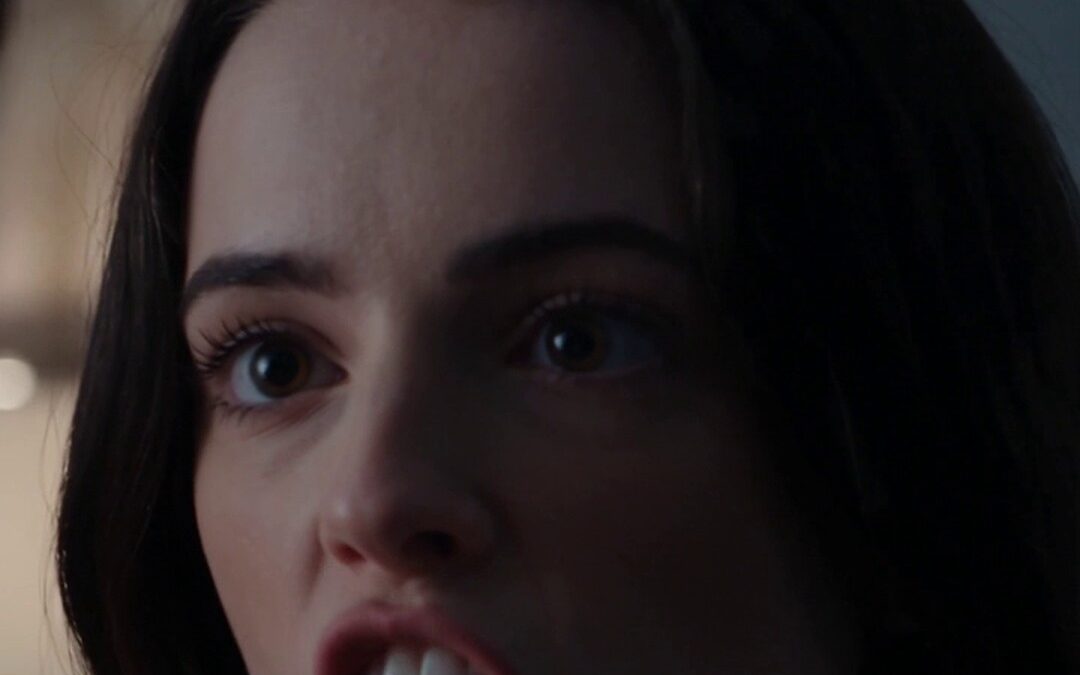
Chapter 2: The Name in the Ledger
Nico did not move.
Mara’s fingers stayed pressed to the silver star. Vivian stood beside the bed with her glass untouched, her mouth slightly open. The missing letter had vanished from the room’s importance, but the accusation still hung there, unresolved and ugly.
“You watched your sister bury a necklace?” Mara asked.
“No. I watched her coffin go into the ground. The necklace was supposed to be inside it.”
“Supposed to be?” Vivian said. “That doesn’t mean anything. There are dozens of silver stars in the world.”
“This one has a mark on the back,” Nico said.
“Lots of jewelry has marks.”
He stepped closer, careful not to crowd Mara. “May I see it?”
Her hand closed around the pendant. “You can explain first.”
The answer came without hesitation. Nico accepted it with a single nod.
“You’re right,” he said. “I’m asking you to trust me with something I haven’t explained.”
“You came in while she was accusing me of stealing. You haven’t asked whether I did it.”
“Did you?”
“No.”
“I believe you.”
“You didn’t ask because you believe me. You asked because you saw the necklace.”
Vivian found her voice. “Nico, stop. This is exactly the kind of confusion people exploit. That pendant could’ve come from anywhere.”
“You’re trying hard to make it ordinary,” he said.
“Because it is ordinary.”
Mara looked at her. “You knew my mother’s name?”
“No.”
“You said, ‘That’s impossible.’”
“I was reacting to Nico.”
Nico turned toward Vivian. “You said you’d never seen that necklace.”
“I haven’t.”
“You said it was ordinary.”
“It is.”
“Those are different claims.”
Vivian set down her glass. “Mara, how long have you been working here?”
“Four months.”
“And you never mentioned that your mother knew the Morettis?”
“She didn’t.”
Nico lifted his left hand, the serpent coiled around a broken crown stretching across his forearm. “My sister’s name was Elena. She died when I was twelve.”
Mara lowered her hand. “How?”
“A car went off the road during a winter storm. By the time I got to the hospital, she was gone.”
“You remember the necklace?”
“I saved money from doing errands for my father and bought it for her. One point bent when she fell against a table. I scratched a line into the back with a pocketknife because she said she wanted a secret mark.”
He paused. “I gave it to her on her birthday.”
Mara touched the star. “My mother told me she bought it for me.”
“Did she say when?”
“No. She said it had been in the family a long time.”
“That’s not proof,” Mara added. “I’m not saying I’m your sister.”
“I didn’t say you were.”
“But you’re looking at me like you want it to be true.”
The words landed harder than a challenge. Nico’s jaw worked once.
“I want to know what happened,” he said. “That’s not the same thing.”
Vivian shifted between them. “We’re standing in my bedroom discussing a dead child because a maid wears a similar trinket.”
“Your bedroom?” Nico said.
“You gave me the east suite. We’re engaged.”
“We were discussing a date. We haven’t announced one.”
“That is a technicality.”
“It’s a distinction I’ve made more than once.”
Mara looked at the door. “Can I leave?”
Nico stepped aside. “Yes.”
“Don’t go,” Vivian said, then caught herself. “We still have to settle the matter of my letter.”
“You accused me of stealing it,” Mara said. “I want Mrs. Bell present before we discuss it again.”
“She doesn’t get to dictate—”
“She does,” Nico said. “Accusations about an employee go through the house manager and get documented.”
Mara met his eyes. “You’re the boss. You could’ve done that before.”
The remark struck with quiet precision. Nico lowered his gaze. “Yes.”
“Don’t act like that fixes anything.”
“I won’t.”
Vivian’s expression sharpened. “You’re going to let her speak to you like that?”
“She’s answering me.”
“She’s a maid.”
“She’s a person you accused without evidence.”
“I had evidence. She was alone in the room.”
“That’s opportunity, not evidence.”
Vivian’s face colored. “You’re willing to turn on me over jewelry?”
“I’m asking questions.”
“You know what this looks like. A lonely girl finds the right heirloom and suddenly she’s family.”
“I didn’t call her family,” Nico said.
Mara pulled the chain over her head and held the star in her palm. “You can look at it. You can’t keep it.”
“I won’t take it.”
“Not even for a test?”
“No.”
“What test?”
He hesitated. Mara’s expression cooled.
“You said you want to know what happened. I don’t want strangers cutting me open for a story.”
“No one is going to do that.”
“You know what I mean.”
“I do.”
Vivian laughed, but the sound carried a tremor. “Emotion is clouding your judgment.”
“What judgment have I made?” Nico asked.
“You’re treating her as credible because of a necklace.”
“I believe she didn’t steal your letter. That has nothing to do with the necklace.”
“You can’t know that.”
“I know you accused her before checking the room.”
“I know she was alone in it.”
“Then why was the letter in your desk?”
Vivian’s eyes darted toward the writing desk by the window. The ivory-painted top drawer stood open.
Mara followed Nico’s gaze. “That’s where you said it was?”
“Yes,” Vivian replied.
“Then why is the drawer open?”
“I opened it to look.”
“After I came in?”
“I was looking for the letter.”
“You told me to confess before you said it was missing,” Mara said.
Vivian faced her. “I’m not going to be cross-examined in my own room.”
“Then call Mrs. Bell,” Mara said. “She can search with us there.”
“You’re not entitled to rummage through my private things.”
Nico’s expression cooled. “She is entitled to have an accusation documented.”
Vivian stared at him. “You’ve never asked the housekeeper to document me before.”
“I’ve never heard you accuse someone of theft while refusing to establish the facts.”
“You’re making a mistake.”
“I’ve made several already.”
Mara looked between them. “What are you talking about?”
“My sister disappeared before the crash,” Nico said. “The official story was that her car went off the road during a storm. But the hours before it happened were unclear. The driver’s statement, the hospital record, and the police report didn’t agree.”
“And you believed them?”
“I was twelve. My father told me what happened. I thought he knew.”
“Did he?”
“I don’t know.”
Vivian’s voice lowered. “You’re going to drag the dead through this because a pendant reminds you of your sister?”
“I’m going to find out why you recognized Lena Ellis’s name.”
“I didn’t.”
“You heard Mara say it and whispered, ‘That’s impossible.’”
Vivian looked toward the door. “This is ridiculous.”
Nico was not smiling. “How did you know the name?”
“I didn’t.”
“Tell me the first time you heard it.”
“I don’t remember.”
“That’s not an answer.”
“It’s all I have.”
Nico’s gaze returned to Mara. “How old are you?”
“Twenty-six.”
“When were you born?”
“August seventeenth, 2000.”
He looked away, doing the arithmetic. “Elena was born in October of 1998.”
“Close enough for what?” Mara asked.
“Nothing yet.”
“Good. My mother raised me alone. She never mentioned your family or a crash. She died three years ago.”
“I’m sorry.”
“Don’t be sorry for something you didn’t do.”
“I let other people decide what was true.”
“That’s closer.”
He accepted the correction. “When my father was alive, I believed his account. After he died, I found gaps in the records. I didn’t look into them.”
“You had the power to look, and you chose not to.”
“Yes.”
“You let yourself believe the easiest story.”
“Yes.”
“And now you want me to help you feel better about it.”
“No. I want the truth, but I don’t get to ask you for anything tonight.”
Mara wasn’t ready to trust him. “I’ll stay for the search, with Mrs. Bell. Then I’m going home.”
“That’s your choice,” Nico said.
“Don’t call it a choice if you’ve already decided I’m not going anywhere.”
“I haven’t decided that.”
“All right.”
Mrs. Bell arrived minutes later with a small notebook. She listened to Vivian explain the missing letter, then asked when Vivian had last seen it, where it had been, and who had access to the desk.
“I last saw it after lunch,” Vivian said. “It was in the desk.”
“Was it in an envelope?”
“Yes. Cream paper, my mother’s handwriting. The flap was sealed.”
Mrs. Bell recorded the answers, then searched the desk with gloves. She found stationery and matches in the lower drawer. No letter. Behind the brass fireplace screen sat a small pile of pale ash.
“There was a fire this morning,” Mrs. Bell said.
Vivian nodded. “I burned old correspondence.”
“What did you burn?”
“Letters.”
“Was this one among them?”
“No.”
Mara looked at the ash. “Then why accuse me?”
“Because you were in the room.”
“That’s not proof.”
Nico looked at the open drawer. “No letter has been located. Mrs. Bell, record that.”
“I will.”
Vivian’s face had hardened, but Mara noticed the quick flick of her eyes toward the fireplace. Nico noticed too.
“Why did you burn letters today?” he asked.
“Because they were old.”
“From whom?”
“My mother.”
“Why today?”
“I don’t have to account for everything I throw away.”
“No. But if you accused Mara of stealing one of them, you need to explain.”
“I didn’t burn it.”
“You’ve said that.”
“Then stop asking.”
Mrs. Bell closed her notebook. “I’ll record that the letter hasn’t been found, Mara denies touching the desk, and Vivian burned other correspondence this morning. If the letter turns up, let me know.”
Vivian headed for the door. “I need to get dressed.”
She pushed past Mara. Her shoulder brushed Mara’s, a small, deliberate contact. Mara held her ground.
Nico told Mrs. Bell to keep the record and ask the staff whether anyone had seen the letter. Then he turned to Mara.
“My mother wore that star once before Elena did. It was her mother’s. After Elena died, my father said it had been placed with her.”
“How do you know this is the same one?”
“The bent point. The mark I cut into the back.”
“Anyone could make those marks.”
“Yes.”
“So it could be a copy, or someone could have found it and sold it.”
“Yes.”
“Then why did you go pale?”
“Because I knew the marks before I understood they might mean anything.”
Mara slipped the pendant into her uniform pocket. “You said your sister died when you were twelve. How long ago?”
“Twenty-four years.”
“I’m twenty-six. Your timeline doesn’t fit.”
“No.”
“Who was my father?”
“My mother never named him,” Mara said. “Once, when I asked, she said he was a man who didn’t have the right to know me.”
Nico absorbed that. “Do you have your birth certificate?”
“It says Lena Ellis is my mother. I have it.”
“Would you let me see it?”
“No.”
He nodded. “All right.”
Mara looked toward the hall. “I’m going downstairs. I’ll speak to Mrs. Bell about the accusation, then I’m calling my brother. Tomorrow I’ll decide whether I come back.”
“You’ll be paid either way,” Nico said.
“I don’t want a favor.”
“It isn’t a favor.”
“Then let payroll handle it.”
“It will.”
Mrs. Bell walked downstairs with Mara, who insisted she didn’t need an escort. Before leaving, Mrs. Bell gave her an envelope containing wages for the hours already worked.
At the door, she hesitated. “I’ve worked here long enough to know when someone is accused because another person is frightened.”
“Do you know why Vivian is frightened?”
“No. I do know she asked for old family records last month. The Rye household ledgers.”
“For a charity auction?”
“That’s what she said.”
“Did she take them?”
“They were moved to her suite. I assumed Nico knew.”
Mara left with her pay and the silver star in her pocket. Nico did not follow.
That evening he called his attorney, Malcolm Price.
“Pull the complete file on Elena’s accident,” Nico said. “Police report, hospital records, driver’s statement, Rye household logs, and my father’s correspondence.”
“Some of the archive is restricted.”
“I’m lifting the restriction. Don’t contact Mara or anyone connected to her unless she agrees.”
“Understood.”
“Find out whether Lena Ellis ever worked for my family.”
“Do you have a date?”
“Not yet.”
“And the missing letter?”
“Unrelated until proven otherwise.”
Malcolm paused. “Are we investigating the maid?”
“No. We’re investigating a discrepancy. She is not a suspect.”
Nico ended the call and found Vivian in the dining room. She had changed into a charcoal dress and poured herself a glass of wine.
“You’re really dragging out the Elena file,” she said.
“I’m requesting it.”
“You always hated that file.”
“I didn’t want to look at it.”
“That’s the same thing.”
“No.”
She set down the glass. “Your father made a deal with the driver. The driver confessed. The police closed the case.”
“The driver said no one else was in the car. The hospital intake time doesn’t match the police report.”
“Your father told me everything.”
“My father died before we met.”
She stared at him. “I may have mixed up when I heard it.”
“You said you heard Lena’s name in my father’s study. We met in Chicago, two years after that house was sold.”
“I was confused.”
“Then why didn’t you say that?”
“Because I didn’t want to be interrogated.”
“I’m asking you now.”
“I don’t remember where I heard the name.”
He noticed she had a talent for making every answer vague when details could be checked. That did not prove guilt. It did make him doubt her.
“You asked for the Rye ledgers last month,” he said. “Where are they?”
“In my suite.”
“Give them to Malcolm.”
“Why?”
“They include staff records.”
“I can’t believe you’re treating me like a criminal because a maid has a necklace.”
“I’m asking for records.”
“You’re making a mistake.”
“Maybe.”
She looked at him. “You want a miracle. You want some lost part of your family to walk back through the front door so you don’t have to admit everyone who knew the truth is gone.”
The words struck precisely. Nico said nothing.
“I’m sorry,” Vivian added. “That was cruel.”
“It was accurate.”
“I know what losing people does to you.”
“You know what I’ve told you.”
She left the dining room. Nico returned to his office and waited for Malcolm’s findings.
The next morning, Mara did not return to the mansion. She and her brother Jay searched their mother’s belongings in their Queens apartment. The silver star’s old chain was in Lena’s wooden sewing box, along with photographs and medical papers.
One photograph showed Lena by a wooden fence, the pendant at her throat. It was clearly the same star, bent point and scratched mark visible. The back read: “August 2000. M. and the star, home at last.”
“Home at last,” Jay said. “That’s odd.”
“Maybe she’d just brought me home from the hospital.”
They found a hospital payment slip dated 1999 under the name Lena Voss, and a photocopied discharge note for an unnamed premature baby girl dated August 17, 2000—Mara’s birthday. The receiving physician was Howard Bell.
Mara placed the papers in a folder. “I’m calling Nico. He should know, but I’m not giving him access to them without me.”
She called the mansion office. Mrs. Bell passed along the message; Nico called ten minutes later.
“I found a photo of Mom wearing the necklace in August 2000,” Mara told him. “Her name may have been Lena Voss before I was born. I also found a hospital note with my birthday.”
“Can I see copies?”
“I’ll bring them to a neutral place or have Malcolm review them in front of me.”
“Whatever you prefer.”
“Don’t identify me through a database. Don’t contact my doctor, Jay’s facility, or our neighbors.”
“I won’t.”
“Do you know that hospital reference number?”
She gave it to him. Nico said he’d ask Malcolm to search the family archive.
“Why didn’t you ask about my mother when I started?” Mara asked.
“I didn’t know to ask.”
“You could’ve asked who she was.”
“I could have.”
“But you didn’t.”
“No.”
She ended the call first.
Malcolm found a transfer record in the Moretti archive. The same hospital reference number appeared on a request dated August 17, 2000, transferring an unnamed infant from St. Vincent’s to St. Anne’s. The guardian listed was L. Voss. The record was filed under Elena’s medical account.
“The receiving doctor was Howard Bell,” Malcolm told Nico. “The file doesn’t explain the connection.”
“Request the hospital records. Mara must authorize anything in her name.”
“I’ll do that.”
“And locate Agnes Doyle’s daughter. Don’t contact her until Mara agrees.”
Malcolm also found Lena Voss in the Rye household ledger. She worked as a domestic aide from March through September 1999. A note showed she left at noon on the day of Elena’s accident.
Nico held the page. “Why?”
“Not stated.”
“Find out what you can.”
He asked Vivian again for the ledgers. She refused.
“You have no right to take my things,” she said.
“I’m asking you to hand over records that belong to this household.”
“They were in my mother’s archive.”
“Then tell me what you found.”
“Nothing.”
“You’re frightened.”
“I’m furious.”
“What did you see?”
“Nothing that matters.”
Nico looked at her without speaking. She looked away first.
The next afternoon, Vivian met Malcolm privately and brought the ledgers. She also admitted she had burned the letter Mara had supposedly stolen.
“I wanted her out of the room before Nico saw the necklace,” she said. “I panicked.”
“Why didn’t you tell him what you knew?”
“My mother asked me to wait. I didn’t know the whole story.”
“What did you know?”
“I found a note that said Lena Voss left with a child and the silver star. I found a letter from Nico’s father saying a child’s identity had to be protected. I thought it might be a rumor.”
“And when Mara wore the star?”
“I recognized it. I knew Lena Ellis might be the same woman as Lena Voss.”
“So you accused Mara of stealing a letter you had already burned.”
“Yes.”
“Why?”
“I wanted her out of the room. I thought Nico would stop looking if he believed she was a thief.”
Malcolm regarded her steadily. “That was deliberate.”
“Yes.”
“Did you know Mara was connected to the records?”
“I suspected. I didn’t know who she was.”
“You still used her as a shield.”
“I know.”
He took the ledgers and called Nico.
Vivian then told Nico herself that she had lied, burned the letter, and accused Mara to keep him from seeing the necklace. She said she’d been jealous of what Mara might become to him.
“She’s an employee,” Nico said.
“She’s a possible connection to your family. You looked at her as if the room had disappeared.”
“I looked because the necklace belonged to Elena.”
“I know.”
“You had no right to punish her for your fear.”
“I know.”
“Why did you say you heard Lena’s name from me?”
“I was covering up that I knew it from my mother’s papers.”
“So you lied again.”
“Yes.”
“Are we finished?” Vivian asked.
“I don’t know.”
She moved her things back to her apartment that evening. Nico told the security team not to follow her.
Mara agreed to meet Nico and Malcolm at the attorney’s office, bringing Jay. They reviewed copies of the Rye ledger, the hospital transfer record, and the letter from Nico’s father about protecting a child’s identity.
“Who was the child?” Mara asked.
“We don’t know,” Nico said. “The dates and your mother’s name suggest it might be you.”
“Those are connections, not proof.”
“Correct.”
“Did your family adopt me?”
“We don’t know.”
“Did they give my mother money?”
“We don’t know.”
“Did someone die in the crash?”
“We know a child died in the car. We don’t know if it was Elena.”
Jay leaned forward. “What do you want from her?”
“Nothing,” Nico said. “I want to answer questions and give her the records. She decides what happens next.”
Jay’s skepticism was plain. “Then prove it.”
Mara tapped the letter. “Your father wrote that the family would say the girl died in the accident. Did you know?”
“No.”
“Did you know he might have been lying?”
“I didn’t look.”
“You let yourself believe what was easiest.”
“Yes.”
“You announced you were considering marriage to Vivian by letting people think you were engaged.”
“Yes.”
“Why?”
“I didn’t want the public attention.”
“You let people think you were engaged because correcting her was inconvenient. Then she believed she could control the house.”
“Yes.”
“Don’t blame her alone.”
“I don’t.”
Mara closed the folder. “I’ll request my medical records myself. No tests today. No one contacts my family or neighborhood. I decide whether I participate.”
“Agreed,” Nico said.
“I still need my wages.”
“You’ll be paid through payroll.”
“Good.”
She left with copies, no conclusion about her identity, and a promise from Nico that she could stop the search whenever she chose.
For two days, she focused on Jay’s appointments and the records request. She did not hear from Nico. On the third day, Mrs. Bell called to say Vivian had moved out and the accusation was being corrected in the staff record.
“Did Vivian apologize to me?” Mara asked.
“No.”
“Then why tell me?”
“Because you should know the record is being corrected.”
Mara thanked her and continued with her day. She had not decided whether the mansion was worth returning to.
Five days after the hospital request, the archive asked Mara to appear in person. She went alone. The file showed that an unnamed premature infant had been transferred from St. Vincent’s to St. Anne’s on her birthday. Lena Voss was listed as guardian. A temporary guardianship petition named Maria Moretti as proposed guardian, then showed it withdrawn two days after Lena took the baby home.
There was no adoption certificate. The papers did not name the infant. The dates aligned with Mara’s birth, but the records did not prove she was the child.
She called Nico from outside the hospital.
“My mother was listed as guardian,” she said. “Your mother filed, then withdrew, a temporary guardianship petition.”
“So it may be you.”
“It may be. It doesn’t prove it.”
“No.”
“I asked for the rest of the file. It could take weeks.”
“I’ll wait.”
“I’m not asking you to wait for me.”
“I know.”
She hung up. The next day, Malcolm found a journal kept by Agnes Doyle, the former Rye housekeeper. Agnes’s daughter Patricia agreed to let Nico review it.
A 1999 entry read: “Mr. Moretti’s driver brought Elena back from the clinic. The girl was feverish and frightened. Lena stayed with her. Maria says they must not tell the boy.”
Another entry said: “Lena says the child is hers now. Maria says no child belongs to anyone who cannot care for her. I worry that the men will learn about the switch.”
Nico looked up. “A switch?”
Patricia shook her head. “My mother never explained.”
A later note read: “The car went over the embankment. Mr. Moretti says the child in the car was Elena. Lena has disappeared. I don’t believe the child was Elena.”
Nico gripped the chair. “Did your mother say more?”
“She wrote that she couldn’t stand lying to the boy. She left the house that fall.”
The journal complicated the story without resolving it. It suggested that Elena had been in the house shortly before the crash, and that Lena had left with a child. Patricia could not identify that child or confirm whether the car’s occupant was Elena.
Nico did not contact Mara until he had copies. When he told her about the journal, she said, “I want to know what happened, but don’t turn a few lines into certainty.”
“I won’t.”
“My mother may have been caught in something bigger than us.”
“Possibly.”
“She may have protected a child. She may have taken one. She may have been protecting herself.”
“I know.”
“You didn’t know her.”
“No.”
“Then don’t tell me what kind of person she was.”
“I won’t.”
The hospital eventually found a record matching the transfer. It confirmed a premature girl, born to Lena Voss, and admitted on August 17, 2000. A second patient record, filed under the same family account, described a nine-year-old girl admitted after a head injury in September 1999. Her name was written as Elena Moretti. That child had been transferred to St. Anne’s.
Nico stared at the second record. “How could an infant and a nine-year-old be filed under the same account?”
“The family paid for both,” Malcolm said. “The files were cross-referenced.”
“What happened to the older girl?”
“We have only a discharge summary. She left St. Anne’s in November 1999 with a guardian listed as M. Moretti.”
“Could she have been Elena?”
“Yes.”
“Could the child in the crash have been someone else?”
“Yes.”
“Find whoever handled the case at St. Vincent’s.”
An archive clerk remembered two girls: a premature newborn named Mara and an injured child called Elena. The clerk could not say whether the older girl was the child Nico knew or the child found beside the car. She remembered Lena asking whether the older girl was safe before leaving with the newborn.
The details suggested a link between the children but did not show what the connection was. Mara refused to treat the clerk’s memory as proof.
“She could be remembering something else,” Mara told Nico.
“Yes.”
“She could have confused the children.”
“Yes.”
“You’re not going to decide I’m connected because she remembers a name.”
“No.”
“Good.”
Meanwhile, Vivian offered Malcolm a photograph found among her mother’s papers. It showed her mother outside St. Anne’s beside a child whose face was turned away. A thin silver chain lay at the child’s throat. On the back, Margaret Vale had written, “Rose, before she went north. Such a brave child.”
The silver star hung from the chain.
“Could the child be Elena?” Mara asked.
“Possibly,” Nico said.
“Could it be someone else?”
“Yes.”
“Did Vivian’s mother know my mother?”
“We don’t know.”
“I’m done guessing.”
“So am I.”
They waited for more records. The coroner’s office found a dental chart for the remains in the car. It did not match any known record for Elena, because none existed. The unidentified child had been buried in a county cemetery. The Moretti family had received a death certificate naming Elena, but no formal identification had been made. Nico’s father had requested a closed casket and supplied the name.
“Your father identified a body he may never have seen,” Mara said.
“I was told the face was badly injured.”
“Did you believe him?”
“Yes.”
“You were twelve.”
“I know.”
“Don’t use that as an excuse.”
“I’m not.”
The hospital archive also found a St. Anne’s note from November 1999. An unnamed girl, about nine, was discharged to a private residence under the temporary name Rose. She had a head injury and memory loss. The note said she believed her name was Elena. Her mother was listed as deceased; no father was recorded.
Mara studied the file. “So Elena may have survived.”
“The records suggest it,” Nico said.
“And the child in the car may have been someone else.”
“Yes.”
“Who was Rose?”
“We don’t know.”
“Why did your father call the body Elena?”
“To make the family believe she was dead, perhaps.”
“From whom was he hiding her?”
“We don’t know.”
“Did my mother take the newborn because she thought the baby was in danger?”
“Possibly.”
“Did she take Rose?”
“Possibly.”
“Did she know what your father was doing?”
“We don’t know.”
Mara shut the file. “You keep asking me to look at the same empty space.”
“I’m not asking.”
“You’re looking at me like the answer is written on my face.”
He stopped. “I’m sorry.”
She left the office without waiting for him.
That evening, Malcolm found a letter from the Moretti family’s former attorney, released from a private archive. It was addressed to Nico’s father and dated two weeks after the crash.
“Your son should be told that Elena survived,” it read. “The child recovered at St. Anne’s is the same girl he knew. The child in the vehicle was not a member of your family. I advise against continuing the false death report.”
Nico’s father had written beneath it: “Not while the people who arranged the attack remain alive. If they learn she survived, they will come for her. Elena must remain dead to them and to Nico.”
“This is the clearest statement we have,” Malcolm said.
Nico read it again. “My father knew.”
“It appears so.”
“He let me mourn a child he knew was alive.”
“He believed he was protecting her.”
“And the child who died?”
“Someone else. The letter doesn’t give a name.”
“Did my father know who she was?”
“We don’t know.”
Nico ran his thumb over the serpent and broken crown on his tattoo. “He used a dead child’s identity to hide a living one.”
“Yes.”
“Did it work?”
“We can’t tell.”
Nico called Mara and read the letter aloud. He did not skip the reference to an attack.
“So Elena survived,” she said when he finished.
“The records suggest it.”
“And your father knew.”
“Yes.”
“Did your mother know?”
“I don’t know.”
“Did my mother take me because of the threat?”
“I don’t know.”
“Why didn’t you tell me sooner?”
“I wanted to verify the letter before bringing you another theory.”
“Good. Don’t make me a replacement for the person you lost.”
“I won’t.”
“Do you want to find Elena?”
“Yes. I want to know if she’s alive and tell her the truth. But I won’t expect her to come back or meet me.”
“Would you tell me if you found her?”
“Yes.”
“And respect her choice?”
“Yes.”
Mara went quiet. “I want the full file with my attorney. I want to know whether my mother was part of hiding her.”
“I’ll send everything.”
She returned to work for the two weeks she had agreed to, under Mrs. Bell’s supervision. Nico kept his distance. Vivian had moved out and did not return. At lunch one day, Nico addressed the household staff.
“I want to correct the accusation made against Mara. Vivian Vale said Mara stole a letter. The letter was not stolen. Vivian had burned it before making the accusation. Mara did not take it. I should have ensured the accusation was corrected immediately. That was my failure.”
The kitchen stayed quiet.
“If anyone has a concern about an employee, bring it to Mrs. Bell or me with evidence. No one will be punished for asking questions or defending themselves.”
Mara looked up from her lunch. “Thank you,” she said when he finished.
He nodded and left.
A package arrived later that day from Malcolm. Inside was a letter from Lena Ellis to Maria Moretti, dated four years before Lena died.
“Maria,” it began, “the money has helped, and I will always be grateful. But Mara is old enough to ask why I never talk about the years before she was born. I won’t keep lying to her forever. I need to know whether you want her to know the truth. If the answer is no, say so plainly. I will still raise her. She is mine in every way that matters, but I won’t teach her that silence is love.”
Mara lowered the page.
“She was going to tell me,” she said.
Mrs. Bell, sitting beside her, did not touch her. “It seems she wanted to.”
“Why didn’t she?”
“I don’t know.”
Nico arrived a few minutes later. Mara showed him the letter.
“I want all of your mother’s letters searched,” she said. “My attorney will review them. You don’t decide what’s relevant.”
“I won’t.”
They searched the archive the next morning. A letter from Maria to Lena answered the first one.
“You are right to ask whether she should know. I have no right to ask you to keep silent. I only ask you not to tell her until you have the official papers. Her birth record was changed once by my husband’s request. The amendment can be corrected, but it will name a child who is not the girl you brought home. I am trying to find the original file.”
Mara stopped reading. “What does that mean?”
“It suggests there were two children,” Malcolm said.
The letter continued: “I have told your lawyer I will not pursue guardianship. If the girl’s mother comes looking, I will tell her the child is safe. If she does not, I will continue the monthly support. I do not want to take her from you.”
Mara’s fingers tightened on the page. “Did my mother have a choice?”
“We don’t know,” Nico said.
“Did she know there was another mother?”
“The letter says she did.”
“Did my mother agree to keep quiet?”
“It says she agreed to the arrangement.”
“Did she do it to protect me?”
“Possibly.”
“Or was she protecting someone else?”
“Possibly.”
Mara walked to the window. “This is a room full of people with old paper and no answers.”
Her attorney, present by video, recommended preserving the documents and requesting handwriting analysis. Nico agreed to provide every record and keep Mara copied on all requests.
A week later, Malcolm located Vincent Rusk’s niece, Sylvia. Vincent had been the Moretti driver; he died in prison years earlier. Sylvia brought a box of his papers to a meeting with Nico, Malcolm, Mara, and the attorneys.
“He didn’t talk much about the crash,” she said. “He talked about your father paying him to lie.”
Nico’s gaze sharpened. “Did he say who was in the car?”
“He said a child was hurt, but another child was found dead on the road. He said your father had two children and no one could know which one survived.”
“Did he say Elena survived?”
“He said he took a girl to the hospital. The girl in the car was thrown into the back. When he came to, the other child was gone.”
“Gone where?” Mara asked.
“He said your father took her away.”
“Was she alive?”
“He heard her crying.”
“Did he know her name?”
“He said the child was called Rose.”
Nico looked at the hospital file. “Was Elena the girl he took to the hospital?”
“He said so.”
Sylvia gave them a handwritten note from Vincent: “Tell the boy I did what I had to. The girl with the star wasn’t the one in the car. The one who died had no name. I carried Rose to the hospital; the family carried Elena away. No one should have had to live under a borrowed name.”
Mara read it twice. “This still doesn’t tell us who Rose was.”
“No,” Sylvia said.
“Or who died.”
“No.”
“Or why my mother had the necklace.”
“No.”
Mara closed the box. “I need a break.”
She left with Jay. Nico did not follow.
Later, Vivian called Nico with a memory. Her mother had once mentioned a child named Rose at St. Anne’s, a girl with dark hair and a silver star who had been moved north. Vivian had no document at first, but she searched her mother’s papers and found a photograph of Rose wearing the necklace. The child’s face was turned away. The note on the back said, “Rose, before she went north. Such a brave child.”
Vivian sent it through Malcolm’s attorney. Mara examined it with Nico.
“That could be Elena,” she said.
“Yes.”
“Or the child who died.”
“Yes.”
“Or someone else.”
“Yes.”
“Why was Vivian’s mother there?”
“We don’t know.”
“Did she know my mother?”
“We don’t know.”
“I’m done guessing.”
“I agree.”
They waited for records. The coroner’s office confirmed that the remains from the car had never been identified. The dental chart did not match any known record for Elena. The family death certificate had been issued on Nico’s father’s statement. The coffin had been closed, and no one in the family had viewed the body.
A separate St. Anne’s record showed a child called Rose discharged to a private residence in Westchester in November 1999. The note said she believed her name was Elena and had memory loss from a head injury. Her mother was listed as deceased.
Mara read it with her attorney. “So Elena may have been Rose.”
“It appears so,” Nico said.
“And someone else died in the car.”
“Yes.”
“Why did your father call the dead child Elena?”
“To hide the fact that Elena survived, according to the letter.”
“From the people who arranged the attack?”
“That’s what he wrote.”
“Do we know who they were?”
“No.”
“Do we know where Elena went?”
“No.”
“Do we know if my mother helped hide her?”
“No.”
Mara closed the file. “This is the strongest explanation so far, and it still leaves my mother’s choices unclear.”
“I know.”
“Don’t make her a villain or a saint to make the story easier.”
“I won’t.”
The final missing letter came from the family’s former attorney, who had kept a copy of the file. It confirmed that Elena survived the attack, that the unidentified child in the car was not a Moretti, and that Nico’s father had deliberately maintained the false death report to protect Elena. It said nothing about Lena’s role beyond noting that she had “accepted responsibility for the infant placed in her care.”
Mara focused on the word responsibility. “Placed in her care. Not born to her?”
“The medical records say you were born to Lena,” Nico said.
“Could she have been pregnant with me and also raised another child?”
“Possibly.”
“Could the records be false?”
“Possibly.”
“Could she have chosen to raise me after all this happened?”
“Yes.”
“Could she have loved me as her daughter?”
“Yes.”
“Do you believe she did?”
“I believe she raised you. The rest is yours to decide.”
Mara looked at him for a long moment. “That’s the first time you’ve left the answer with me.”
“I should have done that from the beginning.”
“Probably.”
She did not forgive him then. She did not need to.
Two weeks later, she told Mrs. Bell she would not renew her contract. She had found a day position at a rehabilitation center closer to Jay. She wanted the choice to leave to belong to her, not to Vivian’s accusation or Nico’s search.
On her last afternoon, she returned her black-and-white uniform to the laundry room. Mrs. Bell folded it into a box.
“You’ll be missed,” the older woman said.
“I haven’t been here long enough.”
“You’ve been here long enough.”
Mara smiled faintly. “Thank you for writing the complaint process.”
“It should have existed already.”
“Yes.”
Nico waited in the front hall with a sealed envelope: Mara’s final pay stub and corrected employment record. His fitted black suit was unbuttoned at the collar. His serpent-and-broken-crown tattoo showed beneath his pushed-back cuff.
“I should have corrected Vivian’s announcement,” he said. “I should have set boundaries in the house. I let her act as if decisions had been made because it was easier than having a difficult conversation.”
“That helped her believe she could control the house.”
“Yes.”
“You don’t get to blame her alone.”
“I don’t.”
He handed over the envelope. “The hospital file should reach your attorney next week.”
“Good.”
“There’s another lead on Elena. A clinic in Vermont. We’re checking the records.”
“Do you want me to help?”
“No. If the records mention Lena or Mara, I’ll send them to your attorney. I won’t ask you to participate.”
“Good.”
He paused. “Are you willing to meet again when the remaining records arrive?”
“No. Not now.”
He nodded. “All right.”
“I’m not saying never. I’m saying not now.”
“I hear you.”
“Why did your father give you that tattoo?”
“He said it meant I belonged to the family. I chose the broken crown because I thought I could take his place without becoming him.”
“Did that work?”
“No.”
“Why keep it?”
“It reminds me that loyalty can become obedience if you stop asking whether the person you serve is right.”
“Did you ask whether your father was right?”
“Not enough.”
“Will you now?”
“I’m trying.”
Mara opened the front door. Afternoon light fell across her uniform, catching the white ruffle at her collar.
“If Elena is alive, tell her the truth,” she said. “Don’t decide for her what she can handle.”
“I will.”
“And if she doesn’t want to see you?”
“I’ll respect that.”
“If she doesn’t want to come back?”
“I’ll respect that too.”
“Good.”
She stepped outside with the envelope under her arm and the silver star at her throat. For the first time since the bedroom confrontation, she wore it without checking that it was there.
Behind her, the house remained golden and quiet. The truth had not made it safe. It had opened a door that had been locked too long.
Nico did not follow her.
That was the first promise he kept without asking for credit.








