The Maid Was Accused in the Boss’s Bedroom—Then He Saw the Silver Star at Her Throat
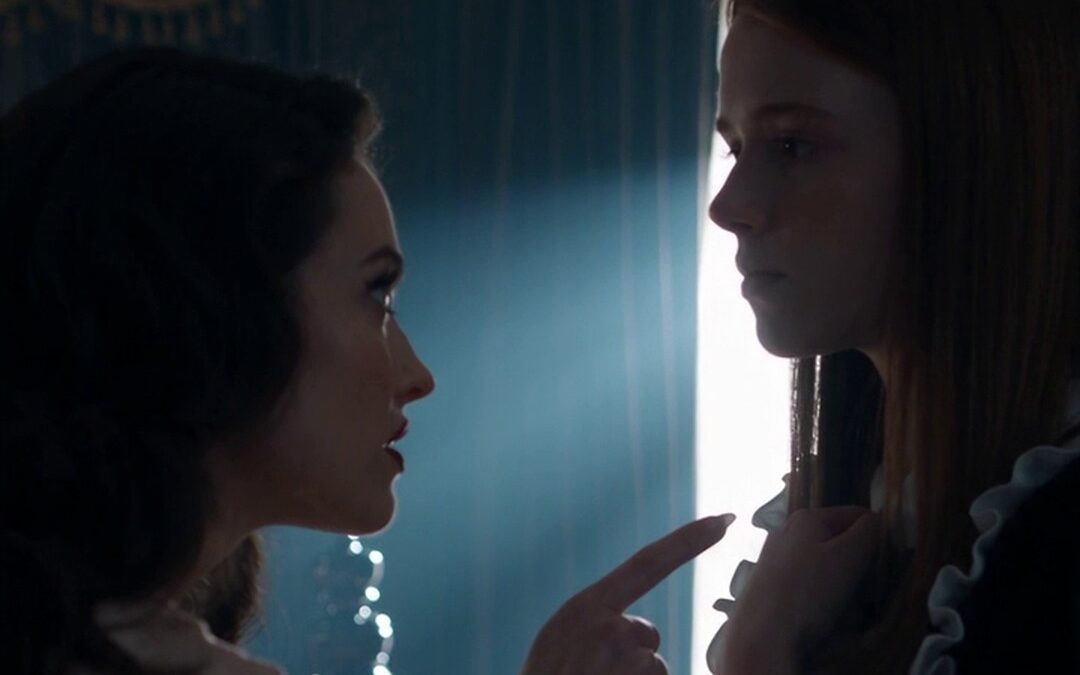
Chapter 2: The Name in the Ledger
“I thought she died,” Adrian repeated.
He still gripped the bedroom doorframe, the black serpent tattoo exposed along his right wrist where his cuff had ridden up. Nora could not tell whether he was grieving, angry, or deciding which feeling might be useful.
Celeste moved first. She crossed between them and reached for the open jewelry box.
“Adrian, you’re upsetting her,” she said. “Nora has been in my room, she’s wearing a piece of jewelry connected to a missing child, and she’s just admitted her mother took that child.”
Nora flinched at the verb. “My mother didn’t take anyone.”
“You said she took your sister home.”
“She never said she stole her.”
“Those are two ways to describe a baby disappearing from a hospital.”
“Don’t touch the box,” Adrian said.
Celeste’s hand froze. “You can’t be serious.”
“Step away.”
She looked at him, then withdrew her hand. “I’m trying to help you.”
“No. You’re trying to speak first.”
Nora kept her fingers closed around the star. “What does he mean, a missing child?”
“In 1999, my aunt Elena had a daughter at St. Agnes,” Adrian said. “The baby was there for two days. On the second night, someone removed her from the nursery. A nurse said a woman in a green coat was authorized to take her for an examination. The woman gave a false name. No one saw the baby again.”
“My mother wasn’t even eighteen in 1999,” Nora said. “She couldn’t have been that woman.”
Adrian glanced at the pendant. “How old are you?”
“Twenty-six.”
“The baby would be twenty-seven.”
“That doesn’t make me your missing baby.”
“No,” he said. “It doesn’t.”
Celeste’s voice was cool. “This is exactly why you shouldn’t indulge it. A stranger gives a child an old trinket and a story, and now she comes looking for the Rourkes.”
“I came looking for work,” Nora said. “I’m a housekeeper. I work for money.”
A flicker crossed Celeste’s face. She had expected shame and received a fact.
Adrian moved into the room, keeping several feet between himself and Nora. “May I see the pendant?”
“No.”
He nodded. “All right.”
“Why does it matter?” Nora asked.
“The missing baby wore one like it.”
“It’s the same one, according to my mother.”
He studied the scratches on the star’s back. “Where did she get it?”
“She said a nurse gave it to her.”
“What nurse?”
“My mother worked in laundry at St. Agnes. She wasn’t a nurse. She said she was taking linens downstairs when a nurse came with a bundle. The nurse told her a baby had died and the family didn’t want a scene. My mother heard the baby crying. She opened the blanket and found a girl with a silver star pinned inside.”
“What did she do?” Adrian asked.
“She took the baby home.”
“How?”
“She was sixteen. She lived with her aunt Ruth in South Boston. The nurse said the baby would be sent to an institution if nobody took her. My mother called Ruth, and they drove away before the nurse came back.”
“Did she report it?”
“Years later. She had the nurse’s name, but no proof of a birth. The police didn’t believe her. Then a lawyer warned her she could be charged if she repeated the story.”
“What lawyer?”
“I don’t know. My mother kept the letter.”
“Why didn’t you tell me when you applied for the job?” Adrian asked.
“Why would I? The listing said private estate in Beacon Hill. Mrs. Alvarez hired me through an agency. I didn’t know you owned the house. I didn’t know there was a missing baby.”
“Your mother never told you the family name?”
“She said the baby’s mother was Elena. She called the baby June.”
Adrian’s expression tightened. “The hospital file calls her June Elena Rourke.”
Nora felt the room tilt. It didn’t prove the story, but her mother had no apparent reason to know the hospital name.
“That could be a guess,” Celeste said.
“June isn’t a guess,” Nora replied. “My mother said she chose the name because the baby arrived near the first day of summer.”
“My aunt gave birth on June twenty-first,” Adrian said.
Nora’s heart beat hard against her ribs. “Then ask me something only my mother would know.”
“I don’t know what to ask,” he said.
“Neither do I.”
Celeste sat on the bed, satin folding beneath her. “We have a straightforward issue. Nora has made a serious claim against your family. You should have your people look into it. You should also have them look for my brooch. I don’t want a sentimental story to distract you.”
“You said she stole it before you knew about the story,” Adrian said.
“And she was in my room.”
“Why was she here?”
“I asked her to bring the mending basket. I was being considerate.”
“You said you needed a hem repaired,” Nora said. “The basket was by the door.”
“I never asked you to open my jewelry box.”
“I didn’t.”
“Then where is the brooch?”
“I don’t know.”
Adrian looked at Celeste. “Who else has a key?”
“I have one. You have one. Mrs. Alvarez has a master key.”
“When did you last see the brooch?”
“Last night.”
“Who else saw it?”
“No one.”
“You told me yesterday you couldn’t find it.”
“That’s what I said.”
“Now you’re saying Nora took it.”
“I found her in here.”
“You asked her to come.”
Celeste’s face cooled. “You weren’t there.”
“I read the staff report. You asked for the mending basket at 8:10. Nora entered at 8:12 and left at 8:14. Mrs. Alvarez was in the hall.”
Celeste recovered. “The schedule doesn’t prove I didn’t ask Nora to search for the brooch.”
“Did you?”
“No.”
“Did you search for it?” he asked Nora.
“No. I touched the box lid when I set down the basket. I didn’t open it.”
Celeste laughed softly. “A compelling distinction.”
“It matters,” Adrian said.
Celeste turned to him. “You believe her over me?”
“I believe neither of you yet.”
“That necklace is a coincidence.”
“Then we’ll establish that.”
Nora’s fingers tightened over the star. “What did your family say happened to the baby?”
Adrian looked at her. “My aunt died when I was fourteen. We were told the baby died in the hospital. We held a service with an empty box. My grandmother never believed it.”
“Why not?”
“She said Elena heard the baby cry, but she was feverish after delivery. My grandfather accepted the hospital’s explanation. He was afraid a scandal would expose how our family used the hospital for favors.”
Celeste looked at him. “You never told me that.”
“You never asked about the baby.”
“We talked about Elena.”
“We talked about her estate.”
“Don’t rewrite our relationship because she’s standing here.”
“I’m not.”
Nora did not want to be pulled into their private history, but she needed the accusation answered. “Can I go downstairs?”
“Of course,” Adrian said. “I’ll have Mrs. Alvarez meet you.”
“Don’t send anyone to escort me. And don’t follow.”
“I won’t.”
“I want Mrs. Alvarez present. I want the accusation written down exactly as Celeste made it. And I want my shift counted in full.”
“Agreed.”
Celeste gave a short laugh. “You’re negotiating now?”
“I’m making sure she can’t say I stole a brooch in exchange for keeping my job.”
“No one will ask you to stay,” Adrian said.
“I need the job. Put any payment you owe me in writing and send it through the agency. I’ll decide what to do after that.”
“Fair.”
Nora passed Adrian without touching his sleeve. At the landing, Mrs. Alvarez waited in her charcoal suit, ledger tucked under one arm.
“Are you all right?” she asked.
“I’m not sure. I want to know whether I’m being fired.”
“Not by me.”
“Did you see me enter Celeste’s room?”
“I saw you bring the basket. You were there two minutes. When I came up, you were leaving.”
“Will you write that down?”
“Already have.”
In the staff office, Mrs. Alvarez recorded the accusation and everyone with a key. She made a copy for Nora and sent another through the agency. The plain record steadied Nora more than Adrian’s attention had.
He arrived alone a little later.
“Celeste wants to delay an inventory of her room until her attorney arrives,” he said. “I haven’t agreed.”
“Why not?”
“If the brooch is missing, someone could move it. If it isn’t, I want to know why she said it was.”
“Have you searched her room?”
“Mrs. Alvarez is arranging an inventory with Celeste present. Nothing will be removed without a record.”
“How independent is it?”
“A jeweler and the estate attorney.”
“Your estate pays the attorney.”
He considered that. “You’re right. I’ll ask the agency to send an outside investigator if you make a formal complaint.”
“I want the truth about the brooch, and someone to check my room before she claims I hid it. I’ll be there. Mrs. Alvarez too.”
“Agreed.”
Mrs. Alvarez shut her ledger. “What are you asking of us now, Mr. Rourke?”
“I need Nora’s mother’s name.”
“Mae Bell,” Nora said.
“Do you have contact information?”
“My mother died last year.”
Adrian’s face pulled inward around the eyes. “I’m sorry.”
“Don’t be sorry for something you didn’t do.”
“I may have done something.”
“You don’t know that.”
“Neither do you.”
“Exactly.”
He asked whether Mae had kept documents. Nora said her half brother had the box of their mother’s things, but she would decide who saw them.
“Would you let a neutral person look?” Adrian asked.
“If I choose the person.”
“Fair.”
“Why are you looking into this?” Nora asked. “Because I might be your cousin? Because you want to clear your family’s name? Or because you feel guilty?”
“Any of those would be a reason to investigate.”
“Which one is it?”
“I don’t know yet.”
“That’s honest.”
“It’s also incomplete.”
“I can live with incomplete. I can’t live with someone pretending to know what happened before looking.”
“Then we’ll look.”
“Your way?”
“Your way, where I can.”
She did not trust him. She also did not need to decide everything in one day.
The brooch had not been found when Nora left the mansion. She went home and found her half brother Jack at the kitchen table with their mother’s archive box open.
“You told him about the necklace?” he asked.
“I didn’t know it was connected to him until today.”
“Mom wanted this left alone.”
“She told me June was my sister.”
“She told you a story.”
“She might have been right.”
“And if she wasn’t? You’re going to hand a stranger her whole life?”
“He’s not a stranger to the story. That’s the problem.”
Jack slid a yellowed envelope across the table. “This is the lawyer’s letter from when Mom got threatened. I don’t know if it matters.”
The firm Hales and North had warned Mae to stop making allegations about a child’s disappearance from St. Agnes. At the bottom, her mother had written: “Keep the original ledger page. They can deny a story. They can’t deny their own handwriting.”
“What ledger page?” Nora asked.
Jack took out a sheet wrapped in wax paper. It appeared to be part of a hospital register. One line was circled: June Elena Rourke, born June 21, 1999. Under “temporary transfer,” someone had written “returned to nursery, 1:40 a.m.” A second entry, at 2:15, read “infant released to family representative, H. Vale.”
Nora stared at the name. “Vale.”
“Celeste’s family?”
“I don’t know.”
Her mother had copied the page in her own handwriting. The hospital might have released the baby to a Vale representative, and the letter showed someone had threatened Mae into silence. Neither item proved Mae’s whole story. Nora photographed and scanned the documents, then kept the originals.
The next afternoon, Nora, Jack, and Mrs. Alvarez met Adrian in the Rourke family archives. The family archivist, Thomas Price, laid out three bound volumes.
“These records include correspondence and copies of filings,” Thomas said. “The hospital records are separate.”
“Who moved the baby?” Nora asked.
“We don’t know. The family file says she was declared dead after a respiratory emergency. There’s a copy of a death certificate, issued twelve days after the birth.”
Nora read it. The child’s name was Jane Elena Rourke.
“Jane?” she asked.
“My aunt wanted June,” Adrian said. “My grandfather registered her as Jane. He disliked the name June.”
“Was there a burial?”
“No,” Thomas said. “There’s a cemetery receipt for an unmarked plot, but no grave number.”
Nora looked at Adrian. “You told people she died without a body or grave.”
“My grandfather said that was standard for a hospital disposal.”
“Was it?”
“I don’t know.”
“Did you ask?”
“No.”
Thomas produced a letter from Charles Vale, Celeste’s father, to Adrian’s grandfather. It had been written two days after the birth. Charles promised to keep the “unfortunate hospital complication” discreet and said the ward staff had been spoken to.
“Why did he have authority at the hospital?” Nora asked.
“He sat on the board,” Adrian said.
“And your grandfather trusted him?”
“They were business partners.”
“Did you know about this letter?”
“No.”
“Would you have shown it to me if I hadn’t brought the ledger page?”
Adrian studied the table. “I don’t know.”
“Would you have searched these files without me?”
“I should have.”
“Would you have?”
“No.”
The answer hurt more because it was plain.
“Why not?” Nora asked.
“I believed the inquiry. My grandfather said reopening it would hurt Elena and expose the family. It was easier to accept that the baby died than to believe someone had taken her from a hospital we helped support.”
Jack folded his arms. “That’s a lot of money to leave a family quiet.”
“Yes,” Adrian said.
Nora looked at the letter. “Find out who was paid.”
Thomas located estate entries for payments to a company called Vale Medical Consulting, made from a hospital trust account in 1999. One payment went to Ruth Bell for $12,000. Another went to Hales and North. The company also paid Mae’s landlord for three months’ rent. The entries gave no reason.
“My mother never told me,” Nora said.
“Maybe she didn’t know,” Adrian replied.
“Or maybe she accepted money.”
“We don’t know.”
Nora was not ready to accept the family’s explanation, or to test against Adrian just because he asked. An independent genetic counselor explained that a comparison with a known relative could establish whether she was closely related to the Rourkes, but not verify every detail of the story.
“I don’t want a test with your lab,” Nora told Adrian.
“I can arrange an independent one.”
“You can arrange it. I can still say no.”
“All right.”
“Why do you want the test?”
“Because if you’re Elena’s daughter, I need to know what my family did to her.”
“And if I’m not?”
“Then I still need to know what they did to Mae.”
Nora agreed to meet the counselor. Adrian contacted his estranged uncle Paul, Elena’s brother, through the family attorney. Paul called Nora himself.
“Adrian says you may be the child we lost,” he said. “Did you have a star pendant?”
“Yes. One point bends inward. Three scratches on the back.”
“Elena made those with a sewing needle. She wanted to know it was hers. She finished the star before the baby was born.”
Nora touched the necklace. “My mother said the nurse gave it to her.”
“Did Mae know the baby’s name?”
“She called her June.”
“Elena wanted June. My father registered her as Jane because he hated anything he couldn’t control.”
“Did you see the baby?”
“Once. Through the nursery window. She had a small comma-shaped birthmark behind her left ear.”
Nora moved her hair aside. The mark was there, faint but unmistakable.
“Would you take a test?” she asked.
“If you want one. I don’t want the test to make you owe us anything.”
“I don’t.”
“Good. You’re a person before you’re a Rourke.”
That was the first welcome she had received from the family that didn’t feel like a claim.
The clinic collected samples from Nora and Paul. Adrian also provided one. The results would take several weeks.
During the wait, Celeste sent a letter through her attorney accusing Nora of entering her bedroom without permission and stealing a valuable family heirloom. It demanded Nora’s termination and threatened a police report. The agency advised Nora not to answer without counsel.
Adrian sent a written statement confirming that Nora had entered at Celeste’s request and that he had no evidence she stole anything. It helped. It did not undo the accusation.
Then the brooch was found in the lining of a hatbox in Celeste’s closet, wrapped beside an appraisal receipt dated three days before she claimed it was missing. The appraiser confirmed Celeste had asked if the setting could be sold without the sapphire being traced. She had never left the brooch with him.
At a meeting in the small library, Nora asked Celeste to withdraw the theft allegation in writing. Mrs. Alvarez and the estate attorney were present to take minutes.
“The brooch is yours,” Nora said. “You know that. I want you to withdraw the accusation.”
“I told Adrian I misplaced it.”
“You told his attorney you believed I stole it.”
“I did believe that at the time.”
“You had it in your closet.”
“I forgot where I put it.”
“You had an appraisal receipt.”
“I considered selling it. I changed my mind.”
“Before or after you accused me?”
Celeste looked to the attorney. “Is this a hearing?”
“It can be whatever you want, as long as the record is clear,” he said.
Celeste said she would confirm the brooch had been found and that she could not support a theft charge. She would not sign a statement saying she had been wrong.
“Then I want the agency to end my placement and pay the rest of my agreed month,” Nora said.
Adrian began, “You could finish the month at the townhouse—”
“No. I want the choice to be mine.”
“Understood. I’ll have the agency paid according to the contract.”
“Put it in writing.”
He turned to the attorney. “Prepare it.”
Celeste watched him. “You’re blaming me for something your family did twenty-seven years ago.”
“I’m blaming you for the accusation you made this week.”
“And the baby?”
“We’re still finding out.”
“Then ask my father.”
“He’s dead.”
“He was ill. Don’t drag my family into yours.”
“He wrote to my grandfather about the baby.”
“My father was a hospital trustee.”
“That’s true,” Adrian said. “So is the letter.”
Nora told Celeste she had nothing to gain from the truth beyond clearing her name and learning what happened to Mae. Celeste’s expression hardened.
“You think he’ll protect you because he feels guilty,” she said.
“I don’t.”
“You think being blood will give you a claim?”
“I don’t know whether I’m blood. I haven’t asked for one.”
“What do you want?”
“A clean record. My wages. The truth about my mother.”
Adrian told Celeste the agency would receive the inventory and the letter about the brooch. Her accusation would be withdrawn unless she had evidence.
Celeste rose. “You think this makes you powerful?”
“No,” Nora said. “I think I’m tired of you deciding who I am.”
Celeste left with her attorney. The meeting cleared Nora of theft but left open why Celeste had singled her out.
The answer surfaced when Adrian’s bookkeeper traced the payments to the Vale consulting company. They came from a hospital trust account administered by Charles Vale. The records might show hush money, relocation help, or an attempt to protect Mae. Adrian sent a preservation request to the executor of the Vale estate and Celeste’s lawyer.
The same afternoon, a fire started in the basement archive room of the Vale townhouse. It was contained, but several boxes labeled “St. Agnes, 1998–2001” were damaged. Celeste said she had not been there.
A housekeeper reported seeing her carry a black document case downstairs. Security footage showed Celeste entering the archive room at 4:12 p.m. and leaving thirteen minutes later with the case. The footage did not show her starting the fire. The locked case was found in her car, and she refused to open it without her lawyer.
“Do you think she set the fire?” Nora asked Adrian in the attorney’s office.
“I think she removed something before the fire.”
“That’s not what I asked.”
“I don’t know.”
“Would you say that if it were anyone else?”
“I hope so.”
“That isn’t an answer.”
“No,” he said. “It isn’t.”
The fire complicated the investigation. Celeste accused Adrian of using his influence to frame her. The Vale estate threatened suit. The hospital board reopened an internal review after an anonymous copy of Charles Vale’s letter reached reporters. Adrian’s family urged him to suppress the inquiry before it damaged their business.
Instead, he released the Rourke archive documents to the independent investigator. His public statement admitted that his family had accepted the hospital’s explanation without sufficient scrutiny and that his grandfather had chosen discretion over a full investigation. He did not accuse Celeste or her father of a crime. He did not hide the family’s part.
The statement brought criticism and questions from business partners. Adrian had made himself vulnerable without making the truth complete.
The DNA results arrived on a Tuesday. The counselor spoke to Nora first, then brought Adrian and Paul onto separate calls.
“Your comparison with Paul Rourke shows an extremely high likelihood of a close biological relationship consistent with aunt and niece,” the counselor said. “It strongly supports the connection you described. It cannot establish every part of the story.”
Nora gripped the edge of the table. “So he’s my uncle?”
“That’s consistent with the results.”
“And Adrian?”
“His comparison supports a first-cousin relationship.”
She stared at the wall. “What do I do now?”
“You don’t have to do anything immediately.”
After the call, Jack sat across from her with two mugs of tea.
“You’re a Rourke,” he said.
“I’m still a Bell.”
“You can be both.”
“I don’t know if I want to be either.”
“You’re Nora.”
That helped more than the test result did.
Nora agreed to meet Adrian and Paul at the counselor’s office, with Jack present. Paul joined by video. He was older, with a gravelly voice, and cried once before apologizing.
“I’ve spent twenty-seven years wondering whether she was alive,” he said. “I thought I had made room for the possibility. I hadn’t.”
“I’m sorry you lost her,” Nora said.
“You didn’t cause it.”
“I know.”
“Do you?” he asked gently.
“I’m trying.”
Adrian said she did not have to call them family, move into the Rourke house, or change her name.
“I know,” Nora said.
“I won’t ask you to forgive me for what my family did.”
“You shouldn’t.”
He accepted the rebuke. After the call, Paul asked whether he could write to Nora. She said yes, but did not promise a visit.
The explanation behind the hospital payments came from the document case Celeste had taken. It held a hospital photograph of an infant wearing a silver star, a letter from Charles Vale to his daughter, and a receipt for a private consultation.
In the letter, Charles admitted he had helped move Elena’s infant from the hospital. He feared a public scandal would destroy both families while the Rourkes faced a criminal investigation. He arranged for Nurse Vera Kline to take the baby to a temporary foster placement, but the letter said nothing about what happened afterward.
A second note to Celeste read: “I thought the girl had died. If the Bell woman is telling the truth, then Mae carried her away before we could place her. I paid Ruth to keep the child safe. I did not buy her silence. I bought time.”
The note was self-serving. The payments supported part of it, but Mae and Ruth were dead, and no document could establish whether Mae had been threatened, paid, or simply terrified.
A final page was a note Celeste had written to her father at nineteen. She said she had found the star in his desk and asked if she could have it. He told her it belonged to “a girl who wasn’t supposed to come home.” Celeste wrote that she didn’t want the Rourkes claiming another piece of the Vale family.
The note showed resentment, not that she had known Nora would appear.
“You knew the star was connected to the baby,” Nora said when Celeste reviewed the documents with her lawyer.
“I knew my father had a photograph. I didn’t know what happened to the child.”
“You saw it on me and accused me of theft.”
“I was afraid my father’s name would be dragged through the press. I was afraid Adrian would believe you over me.”
“You could have asked me.”
“Would you have told me?”
“I didn’t know what the star meant.”
“Exactly.”
“You knew more than I did. You used it to accuse me.”
“I believed you were looking for a way into this family.”
“I had a job.”
“You were wearing a silver star.”
“Under my collar.”
“I saw it when you picked up the basket.”
Nora understood then why Celeste had called her upstairs. She had wanted a private look at the necklace, and when the star matched the photograph, she’d turned suspicion into an accusation.
“You invited me to the bedroom to inspect the necklace?” Adrian asked.
Celeste’s face closed. “You don’t know what you’re talking about.”
“You asked Nora about Charles Vale. You brought her upstairs away from the staff.”
“I was trying to understand whether she had a claim.”
“She had no idea there was a claim.”
“I didn’t know that.”
“You didn’t ask.”
“You never told me about the missing baby,” Celeste said. “You kept your family secrets from me.”
“You were my fiancée,” Adrian replied. “You weren’t entitled to weaponize that against someone with less power.”
“I was protecting my family.”
“So was I.”
The serpent tattoo showed where Adrian’s sleeve had shifted. The mark looked darker against the stark light of the office.
“You think she’ll ever trust you?” Celeste asked. “You let your grandfather bury this. You let me believe the girl was dead. Now you’ll turn against me because she appeared.”
“I stopped accepting your account without evidence.”
“That’s the same thing.”
“No.”
Celeste touched the engagement band hanging from a chain around her neck. Adrian looked at it.
“You’re not going to be my wife,” he said.
Her attorney leaned forward, but Celeste raised a hand to stop him.
“You’re ending our engagement over a woman you met two months ago?”
“I’m ending it because you used my trust against Nora, then refused to correct a false accusation.”
“Your family covered up the same story.”
“My family did. I’m responsible for what I do now.”
“You think she’ll join your family? She has her own life. She’ll take the truth and leave you with the wreckage.”
“That’s her decision.”
“And you can live with that?”
“I’ll have to.”
Celeste turned to Nora. “You got what you wanted.”
“I wanted you to stop calling me a thief.”
“You wanted the truth.”
“Yes. I have part of it.”
“You have a family now.”
“I had a family before.”
“You have money and a name. People who will do anything for you.”
“I haven’t asked them to do anything.”
“You will.”
“I won’t become your worst fear just to prove you right.”
Celeste’s jaw tightened. Her lawyer took her arm, and this time she let him lead her out. The engagement band remained on the table beside the papers.
The fire marshal later concluded the heater had started the fire. No one proved Celeste had set it. The footage and locked case established that she had removed papers, but she said she had been protecting her father’s records from mishandling. The estate settled the dispute privately. Celeste signed a written withdrawal of the theft allegation and confirmed that the brooch had been in her possession when she reported it missing.
The hospital review found that Nurse Kline had falsified the infant transfer log and that Charles Vale used his board position to suppress questions. It could not establish whether Mae had accepted money or why Ruth received the payment. Too much time had passed; the people who could explain were gone.
Adrian paid the investigator through the family estate, not to Nora. He sent her copies of the records with a note: “You should have had the truth before you entered my house.”
Nora kept the note but did not answer it.
She left the mansion at the end of the month. The agency placed her with a retired judge on Beacon Hill. The work was quieter, and she continued paying her father’s rehabilitation bills. She wore the silver star openly.
Paul wrote each week, sometimes sending photographs of Elena as a teenager or beside a hospital bed. Nora wrote back when she had something to say. They agreed she would visit Oregon when she felt ready.
Adrian did not ask her to move into the Rourke house or accept money. He asked to meet for coffee at a place with no family security outside. Nora chose a café near the Common at noon, with Jack waiting a block away.
Adrian arrived in plain clothes, his sleeve rolled high enough to show the serpent. Nora placed an old photograph on the table. In it, a man stood beside Mae outside St. Agnes. The image was blurred, but the tattoo on his forearm was recognizable.
“Do you know him?” she asked.
Adrian leaned over the picture. His hand stopped above it.
“That’s my father.”
“My mother said he came to see her after she took the baby. He asked if June was healthy. He promised the hospital wouldn’t look for her.”
“He never told me.”
“She said he had a tattoo like a snake. Did he give her money?”
“I don’t know.”
“Did he help her?”
“I don’t know.”
“Then find the records. Don’t invent a kinder story.”
“I won’t.”
“I don’t want you calling yourself my guardian. I don’t want gifts from your family. I don’t want to be treated like a missing heir.”
“I’ll tell them.”
“You don’t get to fix what happened by making me part of your household.”
“I understand.”
“I don’t forgive you for believing Celeste first.”
“I should have asked questions before she called you a thief.”
“You had the staff records. You knew she asked me into the room.”
“Yes.”
“Why didn’t you stop her?”
“Because Celeste had been right about smaller things. Because I was tired and wanted one part of my life to be simple. I thought standing with her would keep the problem small.”
“It didn’t.”
“No.”
“People like you make problems bigger by deciding they’re small.”
He looked out the window at the passing traffic. “I knew that. I just didn’t apply it to you.”
It was the kind of answer she had wanted before: not perfect, not absolving, but honest.
“I need time,” she said.
“You have it.”
“Do you want me to call you family?”
“I want whatever you choose.”
“Do you want a relationship with me?”
“Yes. You’re my cousin if the story is true, and you’re someone I respect. Those aren’t the same reason.”
“And if I never want to see you again?”
“I’ll respect that.”
“Would you?”
“Yes.”
She searched his face for a bargain. She found shame and patience, neither of which counted as proof. Proof would take time.
“I’ll meet you again,” she said. “Because I want to see whether you can hear me when I’m not standing in your house.”
“I can do that.”
“Don’t promise what you can’t keep.”
“I’ll try.”
“That’s better.”
He glanced at the pendant. “May I ask about the star?”
“You can ask.”
“Do you know why Mae gave it to you?”
“She gave it to me when I was twenty-one. She said if I ever met someone who recognized it, I should ask what happened before I decided what to believe. The star wasn’t proof. It was a question.”
“She was right.”
Nora touched the pendant. “She said Elena bent the point herself. My mother added the chain after I was born. She kept it from me when I was little because the metal was sharp.”
“Did Mae know who June was?”
“She found out later. She saw the Rourke name on a document and became afraid the family would take the baby back. Then she was afraid they’d punish her for taking June.”
“Did she regret it?”
“She regretted not telling June the truth sooner. I don’t know whether she regretted taking her.”
“Maybe she saved you.”
“Maybe she kept you from losing me twice.”
Grief moved across Adrian’s face, but he did not ask Nora to comfort him. She had no duty to soothe a man for a loss he had not known how to investigate.
When they finished their coffee, he walked her to the door and stopped.
“I won’t follow you,” he said.
“I know.”
“If you want the archive files, I can send copies through your lawyer.”
“Send them to me directly. Keep the originals secured, and send the inventory to the investigator.”
“I will.”
Nora stepped into the pale afternoon. The star rested against her collarbone, no longer hidden and not yet a symbol she fully understood.
Adrian stayed by the café door.
She did not turn around. She crossed toward Jack, carrying her mother’s questions and her own, with no one else deciding what they meant.








