The Night I Nearly Believed My Wife About the Woman Who Caught Our Son
Chapter 1: The Broken Vase
The crystal vase burst against the marble staircase before I reached the hallway, and I found six-year-old Owen at the bottom with Lena crouched around him, one arm shielding his face from the glittering pieces.
“Stay there,” I said, stepping between them and the glass.
Claire stood several steps above us in a crimson silk blouse, gripping the rail with one hand while the other pressed against her throat.
“She came at me,” my wife said, her voice shaking hard enough to make me look for blood.
“She frightened Owen, and when I tried to stop her, she knocked the vase down.”
Lena had cared for our son for almost two years, but she looked at me as if the wrong answer would end that history in a sentence.
“She pushed your son first,” Lena said.
Claire’s sleeve had slipped down one shoulder, and her breathing came in short, uneven pulls.
Lena had Owen tucked against her knees, but her hands were trembling too, and I could not tell whether she had just saved him or frightened him.
I lifted Owen over the clear stretch of floor and carried him into the adjoining sitting room, where he held my neck so tightly that his fingers hurt.
“Did you see?” I asked him.
He pointed past my shoulder toward the security camera fixed above the middle of the staircase.
I turned back in time to see Claire glance at the narrow console on the upper landing, where our household tablet usually charged.
Her hand left the rail, then returned to it when she noticed me watching.
I had installed the camera after Owen began wandering downstairs at night, and I knew its view covered the middle steps, though the upper landing lay beyond its frame.
“I’ll check,” I said.
Claire moved down one step.
“Daniel, he needs you right now.”
“He has me,” I said, setting Owen on the sitting room sofa where I could still see him.
Lena stayed at the bottom of the stairs, careful not to cross the broken glass.
On the tablet, the security app opened without asking for a password because I had left my administrator session active that morning.
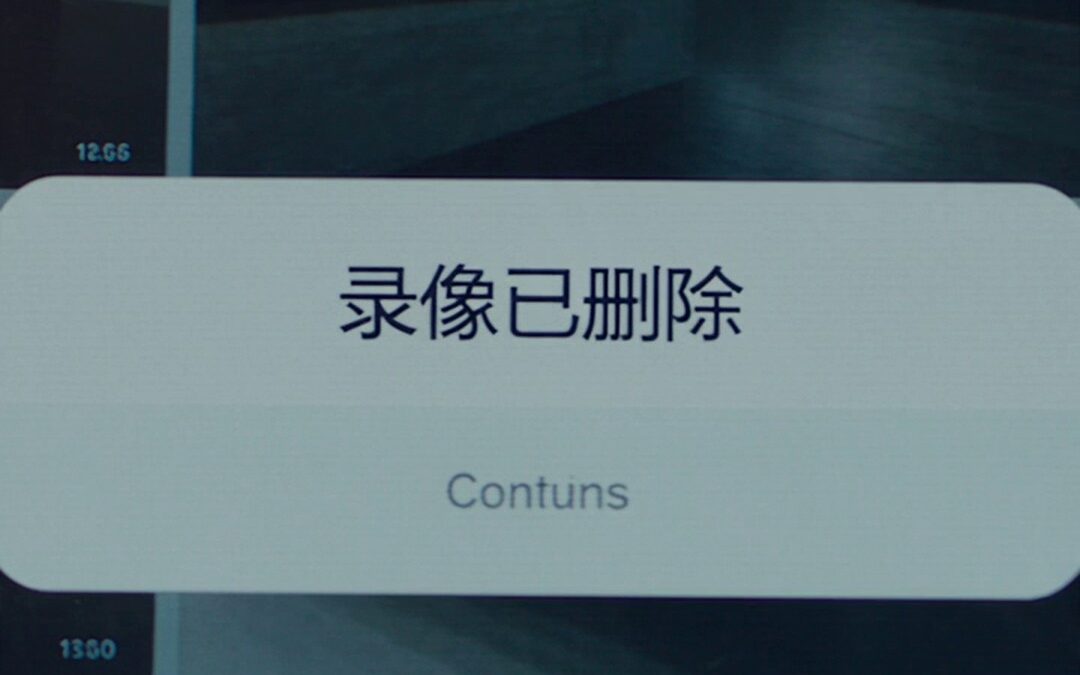
The newest saved clip showed an empty staircase from earlier in the afternoon; the next interval, the one that should have held Owen’s trip down the stairs, was gone.
A small notice remained in the activity history, which the app kept separately from its video clips.
I read the time, then looked at the kitchen clock I had checked just before leaving my office, trying to account for the short walk between them.
The clip had been deleted less than a minute before I entered the hallway, under my own administrator account.
Chapter 2: What the Camera Could See
My name on the deletion notice held me in place until Owen called from the sitting room.
“Dad, my arm hurts.”
I locked the tablet and went to him.
A red mark curved around the inside of his upper arm, partly hidden by his dinosaur shirt, and he pulled away when I reached for the sleeve.
“Okay,” I said, lowering my hand, “you don’t have to show me again.”
Lena stopped at the doorway, waiting as if she needed permission to come near the boy she had held a minute earlier.
“He landed on his feet,” she said, “but I caught him under that arm.”
Claire came down the stairs behind her, still holding the front of her crimson blouse.
“She grabbed him,” Claire said.
“I caught him,” Lena replied.
Owen pressed his face into the sofa cushion, and we fell quiet because his pain was the one thing none of us could argue away.
I carried him to the kitchen, away from the glass, and called his pediatrician’s after-hours line while he sat against me with a cup of water.
The nurse advised an examination that evening and told me what changes in his arm would require more urgent care.
I photographed the mark once, after asking Owen, and sent the picture through the practice’s patient portal.
From the kitchen threshold, I photographed the staircase before anyone moved the crystal, though raising my phone felt uncomfortably like choosing a side.
The vase’s heavy base lay among the middle steps, while a long shard had reached the floor where Lena and Owen stood when I arrived.
I asked everyone to stay clear of the stairs until the pieces were removed.
Then I reopened the tablet, took screenshots of the deletion notice and the gaps between the saved clips, and sent them to my personal email.
The next surviving clip showed an empty stretch of staircase before a bright blur crossed the camera’s view and crystal scattered down the steps.
It showed neither the upper landing nor the bottom, and it did not show a hand on the vase.
“Your account,” Claire said from the doorway.
“My account,” I agreed.
“You were in your office.”
“I was.”
She set down Owen’s shoes with a sharp little sound.
“Then maybe the clock is wrong, or you cleared a clip earlier and forgot.”
I had cleared clips before, especially the endless recordings of Owen coming downstairs in his pajamas, and I had seen the app display events out of order when the connection faltered.
Her explanation was plausible enough to slow me.
“The tablet was on the landing,” I said.
“It’s always on the landing,” Claire replied, looking toward Lena, “where anyone can pick it up.”
“Then check who used it,” Lena said.
“I will,” I told her.
“And hear me before you call the agency.”
Claire’s expression tightened.
“I already called.”
Lena worked through an agency that handled her placement and references, while Claire managed most of the schedules and reviews.
An allegation that Lena had attacked a parent in front of a child could suspend her work before anyone heard her account.
“What did you tell them?” I asked.
“That she shoved me and frightened Owen.”
Claire spoke as though she had completed a duty.
“I said we would send a written report tonight.”
Lena looked at me, and I understood that my silence could become part of that report without my signing anything.
“We won’t send one until we know what happened,” I said.
“He was just hurt, Daniel.”
“That’s why I’m taking him in.”
Owen wanted Lena to come with us, but the agency had told her not to perform childcare duties pending its review.
I told him she would be nearby when we returned, helped him into his jacket, and did not ask him another question about the stairs.
At urgent care, a physician’s assistant examined his arm, found no sign of a fracture, and explained that the mark was consistent with a firm grip but could not identify whose.
Owen let her finish only after she gave him a penlight to hold.
Claire remained in the waiting room because Owen asked for me, a choice that plainly hurt her even while I knew he had a right to make it.
On the drive home, he asked whether the stairs were clean.
“Not yet,” I said.
“Then use the back door.”
He fell asleep with the penlight tucked in his good hand.
Mrs. Alvarez, our housekeeper, was arriving for her evening shift when we pulled into the driveway, so I asked her to help clear the glass after we photographed it.
Claire had called her earlier to say Owen was hurt and a vase had broken, but she had not been in the house during the incident.
I carried Owen to the den, where he could sleep within sight of the kitchen.
Lena sat at the table with her coat beside her, waiting for a ride rather than leaving without telling him.
Mrs. Alvarez photographed each step before sweeping, and I watched the ordinary steadiness of her hands while mine kept finding reasons to shake.
When the stairs were safe, I asked Lena to tell me what happened from the beginning.
She glanced toward the den.
“Here?”
“We could use my office.”
“No,” she said, “I want him where I can see him, and I want the door open.”
I pulled out a chair at the other end of the kitchen table.
“That’s fair.”
She had been helping Owen put away drawing supplies upstairs because he wanted blue paper to show me a picture before dinner.
Claire came out of her room while he was halfway down the stairs and told him to return to the playroom to clean the remaining mess.
“He thought he heard you finishing your call,” Lena said.
“He probably did.”
Claire took Owen’s arm to turn him back, Lena told me, and he twisted away.
“She pushed your son first,” Lena said again, quieter this time, “with her free hand against his shoulder.”
“Where were you?”
“Two steps below him.”
“Did he fall?”
“His heel missed the edge, and I got my arm across him before he went backward.”
The mark inside Owen’s arm could have come from Claire’s grip or Lena’s catch, and I could not tell which from its shape.
Lena said Claire released him when he cried out, then went up to the landing while Lena guided him to the bottom and checked his head and feet.
There was a brief quiet, the scrape of something on the upper console, and then the vase came down.
“Did you see her knock it over?” I asked.
“No,” Lena said, “I looked up when I heard the scrape, and it was already moving.”
“Did you go up after her?”
“I stayed with Owen.”
Claire had said Lena attacked her near the top of the stairs and caused the vase to fall during their struggle.
Both women could be frightened and mistaken about an instant of movement, but their accounts of where Lena stood when the vase fell could not both be true.
“Why did Claire go to the landing?” I asked.
“I thought she wanted the tablet.”
Lena pointed to the charging cable on the narrow console.
“She looked at it before she went up.”
I remembered Claire’s glance after Owen pointed toward the camera, and for the first time I considered that she had looked toward the tablet’s usual place.
“Did you touch it?” I asked.
“No.”
“Did Owen?”
“Not since breakfast, when he used the drawing app.”
The security app was on that same tablet, still signed into my administrator account because I had adjusted the camera settings that morning.
I had left it open for convenience, never considering how little an account label would tell me about the person holding the device.
Lena ran a thumb along the edge of the table.
“I should have told you something before this.”
I waited.
“Last week I called my agency supervisor because I was concerned about the way Claire had been grabbing Owen.”
I remembered a delivery at the front door and Claire’s account of pulling him back from a truck outside.
“That was about the day he tried to run out?”
“That was one of the days.”
Lena said she had seen marks after two arguments, and on the day of the delivery she had watched Claire pull Owen by the arm hard enough that he stumbled into the umbrella stand.
“I asked how to raise it without making Owen tell the story in front of both his parents,” she said.
“Why didn’t you come to me?”
“I tried after the first mark.”
I remembered telling Lena that Claire had been handling a difficult week and asking her to give Claire room.
The memory included my relief at sounding fair to everyone.
“I should have come back to it,” I said.
“Yes,” Lena answered.
Her anger was brief and unmistakable.
The supervisor had asked Lena to document what she personally saw and arranged to speak with her again the following day about whether a safety report was needed.
A message from the supervisor had reached our household line that afternoon, and Claire had asked Lena what it was about.
“I told her I was getting advice about Owen,” Lena said.
“She asked if I was accusing her.”
“Were you afraid she’d retaliate?”
“Yes.”
“Why stay for the rest of your shift?”
“Because Owen was here.”
Lena moved her coat from the chair onto her lap.
“That doesn’t mean I’ll work here tomorrow.”
I wanted to promise she would have nothing to fear, but I had already shown her how little such a promise from me was worth.
Upstairs, a door closed, and she flinched before she could hide it.
I went to the landing while she remained where she could see Owen.
The tablet’s magnetic charging tip lay beside a fresh-looking scratch on the console, running from the back toward the stair edge.
I had set the vase at the back that morning because its base was too wide for such a narrow surface, and Claire had once worried Owen might pull it over.
The scratch might have come from a shard or from the base moving across the wood, so I photographed it without assigning it a cause.
Claire came down in a sweater and saw me studying the console.
“Are you measuring the furniture now?”
“I’m trying to understand how the vase fell.”
“Lena came at me, I stepped back, and my elbow caught it.”
“You said Lena knocked it down.”
“She did, Daniel.”
Claire stopped where the stairs met the hall.
“I didn’t give you a perfect description while Owen was crying.”
That was a fair objection, and she knew I valued being fair.
I told her what the clinician had found on Owen’s arm.
Claire’s face tightened.
“I held him because he was pulling away near the stairs.”
“Where were you?”
“Near the middle.”
“That’s where the camera points.”
“If it recorded.”
The camera’s green light meant it was active, but our system had missed motion before, and I had no basis to say it captured every second.
“Maybe,” I said.
Claire folded her arms.
“You’ve heard Lena alone.”
“She was willing to tell me her version.”
Claire glanced toward the kitchen.
“Of course she was.”
A month earlier, I would have taken her weary tone as evidence that she had carried too much of our family life while I worked behind my office door.
It was evidence of how she felt, but it did not tell me what happened to Owen.
I asked Claire to stay downstairs while I checked the tablet.
She agreed and said she would remember how I had treated her.
My first check ruled out almost nothing.
The tablet’s battery history showed it had been unplugged near the relevant time, but not whose hand held it.
The deletion history showed a saved motion clip had been removed by my signed-in session, and the next surviving clip showed the vase falling.
To compare the clocks, I walked across the middle stairs and watched a new harmless event appear on my phone.
The security system was thirty-eight seconds ahead of my phone, but correcting for that difference still put the deletion before I entered the hallway.
It put it before the vase fell, too.
I checked the order again because the difference mattered.
Whoever deleted the earlier event had done so before the crash that brought me out of my office.
I called the number on our security company’s service card, and an evening technician named Martin agreed to inspect the records the next day after verifying the household account.
He could not tell me what the missing clip showed, and he would not access our files over an unverified phone call.
“Does the deletion notice mean a video existed?” I asked.
“It means the system saved an event and received a deletion request from a signed-in session,” he said.
“Keep the tablet powered on and don’t remove anything else.”
I wrote down the limits of his answer before my fear could enlarge it.
Claire was sitting outside the den when I finished, with the door open and Owen asleep inside.
“He asked for you once,” she said.
I went in to straighten his blanket.
His injured arm lay outside it, the red mark dimmer in the lamplight but still there.
When I came back, Claire touched my wrist.
“I know I was rough with him,” she said.
“He twisted near the stairs, and I got scared.”
I sat beside her because that admission sounded like the beginning of an honest account.
Parents lost patience, and frightened parents grabbed children too hard.
Lena might have seen a clumsy attempt to steady Owen from below and called it a push.
“Why did the vase fall afterward?” I asked.
“I told you.”
“You said Lena came at you.”
“She did.”
“Where was Owen when Lena left him?”
“At the bottom.”
“Alone?”
“For a few seconds.”
I pictured Lena crouched around him when I arrived, then stopped myself from using that picture to prove what I had not seen.
Claire leaned against the wall.
“She was building a case against me, Daniel.”
“She told me about the agency call.”
“Then you know why she would turn anything I did into an accusation.”
I knew Lena had withheld that call from me.
I also knew she made it before Claire accused her.
“Why did the agency call the house?” I asked.
“Lena gave them the number.”
“Did you speak to the supervisor?”
“No, but Lena told me she’d accused me.”
“She says she asked for advice.”
“Ask the agency.”
I said I would, then asked Claire to sleep in the guest room while I stayed near Owen.
“You think I’ll hurt him tonight?”
“I think he needs a quiet night.”
“You’re afraid to answer.”
She stood and went upstairs before I could offer words that would satisfy either of us.
In the mudroom, Lena was waiting for her ride and writing her account for the agency.
I showed her the corrected timing on the tablet.
“The clip was deleted before the vase fell,” I said.
“She went to the tablet.”
“The event carries my account, so it doesn’t identify a person.”
Lena looked at me.
“I know what an account is.”
I had explained it because I needed to hear myself say that my name was not an answer.
Her car appeared at the gate.
“I’m not coming back while Claire’s here,” she said.
“You won’t have to.”
At the open door, she turned.
“Please don’t let Owen think this happened because he wanted the paper.”
The car’s headlights crossed the mudroom window as she left.
The next morning, Owen woke before dawn and asked for his blue paper.
I found it in the upstairs cabinet and brought it to the den, where he drew a door with a purple knob while I sat nearby.
“Lena said the stairs were bad,” he said.
“They weren’t safe yesterday.”
“Are they safe now?”
“The glass is gone.”
He pressed down so hard that his crayon broke.
“Mom was mad about the paper.”
I felt a question rise and let it go.
“I’m sorry it was scary,” I said.
Owen turned the broken crayon in his hand.
“Can you put the camera away?”
“It’s fixed to the wall.”
“I don’t want it looking at me.”
I had installed it because he used to wander downstairs at night, and now its little light made him uneasy in his own house.
I told him I would turn it away once the adults had finished checking the records, and that he would not have to watch them.
He pushed the broken crayon into my palm and returned to his drawing.
I called my sister Megan, who kept pajamas for Owen at her apartment because he stayed there often.
She arrived before nine with muffins and no questions for him.
I told her the adults disagreed about what had happened, that Owen had been examined, and that I needed him with someone he trusted while I worked.
“Is Claire here?” Megan asked.
“Yes.”
“Then I’d rather take him now.”
Claire came down when she heard us and stopped in front of the den.
“He’s my son,” she said.
“I know.”
“You can’t decide I’m dangerous because an employee says so.”
“I’m deciding he needs space from this argument.”
Megan held Owen’s jacket without stepping between them.
Claire moved aside, then knelt when Owen came out with his blue paper.
He gave her a brief hug after a pause, and I saw how her face changed when he let go.
As Megan drove away, I understood that I would have to own this choice if Lena’s account proved wrong.
Claire wanted our attorney present before discussing anything more.
I agreed to call one too, because the question had moved beyond a disagreement between us.
“You never took Lena’s concerns seriously before,” Claire said.
“No,” I answered, “I didn’t.”
She went to the guest room to make her calls.
I called Lena’s agency and spoke with her supervisor, Dana Price.
Dana could not give me Lena’s private file, but she confirmed that Lena had contacted her six days earlier about concerns involving Owen’s safety.
Claire’s call after the crash had put Lena on administrative hold, leaving her unable to accept another placement during the review.
“Your wife said you witnessed Lena push her,” Dana told me.
“I arrived after the vase broke.”
“I’ll correct my note.”
“Please record that I never said I witnessed an assault.”
“I will.”
The correction was small beside Lena’s lost work, but I could hear why she had asked for a fair hearing.
Claire had supplied the agency with an eyewitness who had seen nothing.
I called Lena next.
“I corrected what Dana was told about me,” I said.
“Thank you.”
Her voice sounded tired.
“I also want to understand the concerns you raised last week.”
“I’ll authorize Dana to share my note with a child protection worker or your lawyer.”
“You don’t have to send it to me.”
I sat down with a pen.
“Tell me what you saw at the front door.”
Lena described standing in the hall with Owen’s shoes while a delivery truck waited outside.
Owen opened the inner door, and Claire pulled him back by his upper arm hard enough that he stumbled into the umbrella stand.
“Was he about to reach the truck?” I asked.
“The front door was locked.”
I had heard Claire’s account of the truck and supplied the danger myself, never asking whether Owen could get outside.
Lena had photographed the marks for her dated notes and offered to send the picture to Dana.
I accepted that boundary.
“You asked me about this last night,” she said, “but you kept returning to what Claire said the truck might have done.”
She was right.
“I’m trying to separate what each of you saw.”
“So am I.”
After a pause, she added, “I couldn’t make a record of the push yesterday while I was catching him.”
I looked at the medical notes beside my pen.
“I know.”
“Then stop asking me as if I should have.”
“I’m sorry.”
She let the apology sit without trying to ease it for me.
Martin arrived just after lunch, a technician who had serviced our household system twice before.
Claire agreed through her attorney to let him inspect and export the records, provided both of us received his written findings.
He photographed the tablet on its charger before using his service account to copy the event history and the surviving clip without altering the originals.
Claire joined us in the dining room while he opened the export.
The camera saved motion in separate clips, Martin explained, and a user could remove a saved clip from household storage.
The audit list was kept separately to record administrative changes, so deleting video did not remove the account event.
“So Daniel’s name proves he did it,” Claire said.
“No,” Martin replied, “it proves a session signed in as Daniel requested the deletion.”
“Can you identify the device?” I asked.
“The registered household tablet on the landing.”
Claire looked at me.
“Anyone here could have picked it up.”
“That’s true,” Martin said.
He found the deleted event’s record and showed us that the system had saved twenty-three seconds of motion before receiving the deletion request.
“Do you know what it showed?” I asked.
“No.”
“Could you recover it?”
“Our household plan doesn’t retain a second copy after a user deletion, so I can’t promise one.”
Martin opened the next surviving clip, which began with an empty middle stair before the vase crossed the frame.
“This was saved after the deletion,” he said.
“It shows the vase falling, though it doesn’t show who moved it.”
Claire leaned forward.
“Does it show Lena attacking me?”
“No.”
“Does it show me pushing Owen?”
“No.”
“So it doesn’t settle what happened.”
“Not by itself,” Martin said.
He checked the camera’s angle from the staircase before leaving.
The upper console was outside its view, as was the floor at the bottom where Lena had crouched with Owen.
The middle steps, where both women said Owen had stumbled, were the part the missing event might have shown.
Martin gave us his written description and repeated its limits: the system established that a saved event was deleted from the tablet under my session before the vase fell, but it identified neither the person operating the tablet nor the contents of the deleted clip.
After he left, I stood on the middle step and looked up.
Claire’s account required Lena to leave Owen at the bottom, climb to the top, attack Claire beyond the camera’s view, and cause the vase to fall.
Lena’s required Claire to walk to the tablet on the upper landing, delete the earlier event, and make the vase fall while Owen and Lena remained below.
The timing fit Lena’s account better, but fitting was not proof.
My lawyer called back and advised me to preserve the exports, give the pediatric practice an accurate account of the injury, and avoid questioning Owen repeatedly.
“If you believe an adult pushed him near a staircase,” she said, “report what you know and what you don’t.”
“I’m worried about making an accusation I can’t take back.”
“You can state the uncertainty.”
I had been waiting for a video to tell me what my responsibility was.
I called the state child protection hotline and described the two accounts, Owen’s mark, the deletion record, and the limits Martin had identified.
I gave the worker the clinician’s and Dana’s names without telling her they could establish more than they could.
When I told Claire afterward, she gripped the kitchen counter.
“You reported me?”
“I reported that Owen may have been pushed.”
“You know what that does to a family?”
“I know what happens if I keep finding reasons to wait.”
She went upstairs, and I called Megan to say I would collect Owen after dinner.
He had settled into a puzzle and asked to sleep over, so I let him.
At dinner time, I opened the cabinet where Lena kept his blue paper.
She had made a tray labeled with the days of the week because Owen liked to save one drawing a day to show me after work.
Thursday’s slot held three stick figures on stairs, the tallest with a red block for a shirt.
I closed the tray without taking out the picture.
It told me what Owen had drawn, and I would not ask him to turn it into testimony for the adults.
Lena called while I was washing a plate.
“I remembered something about the tablet,” she said.
I dried my hand and found my pen.
“Claire asked me yesterday morning whether you’d changed the security password.”
“Before the crash?”
“At breakfast.”
“What did you tell her?”
“That I didn’t know.”
Claire had said the security app signed her out on her phone.
The tablet still held my administrator session because I had changed the camera settings that morning after several false alerts.
“Why does it matter to you now?” I asked.
“Because Martin said the deletion came from that tablet.”
Lena sounded impatient with herself.
“I was making Owen breakfast when she asked, and I didn’t connect it until you told me what he found.”
Claire’s glance toward the console after Owen pointed at the camera returned to me for a second time.
She had known the tablet’s place and had asked about access before anyone claimed a clip was missing.
“I’m calling with a fact,” Lena said, “not asking you to tell me what it proves.”
“I understand.”
The next morning, a child protection worker came to Megan’s apartment by appointment and spoke with me first.
She asked about Owen’s routines, his injury, and whether Claire had access to him that day.
I gave her the medical record and Martin’s description, then explained which parts of the staircase story I had witnessed and which I had been told.
She asked us not to rehearse the incident with Owen and said a trained interviewer could speak with him if needed.
When Megan brought him into the kitchen, the worker talked briefly about his puzzle and did not ask for a staircase account in that first meeting.
After she left, Megan poured coffee and sat across from me.
“You believed Claire at first,” she said.
“I nearly did.”
“I would have looked at her first too.”
She was not excusing me.
She was acknowledging the force of the scene I had walked into, which made my duty to check it more important.
Back home, Claire said her lawyer had advised her to discuss the incident only with counsel present.
We arranged a meeting for that afternoon, while Owen remained with Megan.
Before it began, I asked Mrs. Alvarez to show me the pictures she had taken before sweeping up the crystal.
The heavy base lay on the fifth step, with smaller pieces below it.
On the console, a pale crescent of dust showed where the vase had stood, and the scratch extended from that crescent toward the stair edge.
“I dusted around it before lunch yesterday,” she said.
“Could someone have moved it after that?”
“Of course.”
“Did you move it?”
“No.”
She enlarged the photograph.
“I can tell you where it was when I cleaned, and where it wasn’t when I came back.”
Claire’s first call to her had been about a broken vase and a hurt child.
She had mentioned Lena’s alleged attack only after Mrs. Alvarez reached the house.
That distinction did not prove dishonesty, and Mrs. Alvarez refused to claim she knew anything she had not seen.
I thanked her for keeping the pictures.
Alone on the staircase, I stood where Claire said Lena had rushed upward.
I was taller than Lena, yet from the middle step I could barely touch the console’s front edge.
The vase had been at its back, beyond my reach.
For Lena to strike it during an attack, she would have had to climb almost to the landing, leaving Owen alone below.
I replayed the surviving clip.
The vase entered the camera’s view moving outward from the wall rather than dropping straight down beside it.
I tested the reach once with a cardboard tube from the recycling bin, setting it at the back of the console and letting it fall onto the empty stairs.
It struck the top of the rail.
From the front edge, a light push carried the tube past the rail, closer to the path of the blur in the clip.
A cardboard tube was no crystal vase, and I wrote that limitation beside my observation.
The dust crescent and scratch mattered more: the heavy base had traveled toward the stair edge before it fell.
Claire could argue an elbow moved it during a struggle, and I could not exclude that with a photograph.
I called Martin to ask whether the surviving clip could place either woman immediately before the vase fell.
“No,” he said.
“There’s a gap after the deleted event, and both ends of the stairs are outside the frame.”
His answer left the physical sequence unresolved, but it prevented me from pretending the camera saw what I wanted it to see.
Dana called next.
With Lena’s permission, she read me the portion of Lena’s earlier note about the locked front door, the grip, and her concern that Claire’s physical responses to Owen’s resistance were escalating.
The note was dated six days before the vase broke.
“Claire knew you had this concern?” I asked.
“She knew I had contacted Lena, though I can’t tell you what Lena said to her.”
Dana also told me Claire’s first account to the agency.
“She said Lena was preparing a false safety complaint to protect her job, and that you saw Lena push her.”
“I’ve corrected the second part.”
“I have that correction.”
“Did Claire mention Owen’s injured arm?”
“She said he was frightened but unharmed.”
Claire had called before we found the mark, so that mistake alone proved little.
Her claim that Lena invented a concern after the crash could not fit the dated note.
“Is Lena still on hold?” I asked.
“Until we complete the review.”
“She’s losing work every day.”
“I understand,” Dana said, without promising an outcome she had not yet authorized.
I wanted to give the agency evidence it could assess without borrowing my certainty.
Before the meeting, I checked my own alibi more carefully.
My office call with a client had been recorded for our company’s project file, and the archive showed my face at my desk while I answered a correction the client sent through the call’s chat near the deletion time.
I obtained the recording through my ordinary access at work and shared the relevant excerpt with my attorney.
The call and chat could place me away from the tablet.
They could not identify who held it instead.
At four, Claire and her attorney, Rebecca Sloan, sat with me at the dining table while my attorney joined by video.
Mrs. Alvarez agreed to be available in the kitchen for questions about her photographs.
Lena refused to return to the house, a boundary I respected, and joined by video from the agency office with Dana beside her.
Owen was at Megan’s with his puzzle.
Rebecca began with the deletion.
“A missing clip cannot be treated as proof that Claire harmed Owen.”
“I agree,” I said.
Claire looked at me.
“The event shows my administrator session on the household tablet removed a saved clip before the vase fell.”
I placed Martin’s report on the table.
“It doesn’t identify a person or show what was deleted.”
Rebecca read the relevant page.
“Then Daniel might have used the tablet and forgotten.”
“I was on a work call, but a call record by itself wouldn’t prove I stayed at my desk.”
I played the short archived segment showing my face and voice as I answered the client’s chat correction.
Rebecca asked about the time stamps, and I showed how the message and response matched inside the company record.
“That places you in your office,” she said, “but it doesn’t place Claire at the tablet.”
“No,” I said.
I described the open session, the tablet’s place on the landing, and the fact that the deletion came from it.
“Everyone in the house could reach that landing,” Rebecca said.
“Yes.”
Lena leaned toward her camera.
“I saw Claire go up there after Owen stumbled.”
“I went up because Lena was shouting,” Claire replied.
“Did you touch the tablet?” Rebecca asked her.
“No.”
“Did you see Lena touch it?” I asked.
“I was shaken, and she was moving around Owen.”
Lena’s hands appeared at the edge of the screen, held still on the table.
“My hands were on him.”
“You could have gone upstairs afterward,” Claire said.
“Daniel found you at the bottom, but he wasn’t there the whole time.”
That was a real gap in what I knew.
Lena met my eyes through the screen.
“I can tell you I didn’t leave him,” she said.
“I can’t give you footage of every place I stood.”
I asked Claire to describe the moment after Owen stumbled and before the vase fell.
“She fussed over him, then came at me,” Claire said.
“Where was Owen?”
“At the bottom.”
“Alone?”
“For a few seconds.”
“Did you see Lena at the tablet?”
“No.”
“Did you see her leave Owen to climb the stairs before she came at you?”
“I was trying to steady myself.”
Rebecca raised a hand.
“She isn’t required to remember every movement.”
“I know,” I said.
I showed Mrs. Alvarez’s photographs, and she came in to confirm that she had dusted around the vase before lunch and photographed the staircase before moving any crystal.
She did not claim to know what made the scratch.
“The vase moved from the back of the console toward the stair edge,” I said, pointing to the dust crescent and the mark.
“Lena hit me, and my elbow caught it,” Claire replied.
“That would move it.”
“It could,” I said.
Claire’s shoulders lowered slightly, as if I had finally acknowledged a fact she had been trying to make me hear.
I described my cardboard-tube test only as a check on reach, not a reproduction of a crystal vase’s fall.
The front edge was reachable from the landing and outside the camera’s view.
The back of the console was hard to reach from the middle stairs, even for me.
Rebecca asked whether I knew exactly where Lena and Claire stood during the alleged struggle.
“No.”
“Then you can’t rule out Claire’s elbow.”
“No,” I said.
My attorney spoke from the screen.
“We should keep the physical observations separate from what the system verifies.”
That distinction helped me state the case without making any one clue carry more than it could.
The system verified a deletion under my session before the vase fell.
My work record placed me away from the tablet.
The photographs showed the vase had moved toward the edge, but could not identify who moved it.
Lena placed Claire at the landing and herself with Owen.
Owen’s medical record documented a grip mark without naming the hand responsible.
Lena’s dated agency note established that her safety concern existed before Claire accused her of inventing one.
Claire listened to the list without interrupting.
“You still can’t show me pushing him,” she said.
“No,” I answered.
“Then you don’t know what Lena did before I got there.”
“She says you were there first,” I said.
“That’s her version.”
I turned to Lena.
“Tell us where you were when Claire took Owen’s arm.”
“I was below him with the paper he wanted,” she said.
“Claire came out above him, told him to go back, and took his arm when he kept coming down.”
Claire looked at the tabletop.
“He wouldn’t listen because Lena lets him argue about everything.”
It was the first time that afternoon she had spoken about the paper without first speaking about Lena’s supposed attack.
I asked her why she had taken Owen’s arm.
“To keep him from going down while he was upset.”
“Was he running?”
“He was trying to get away from me.”
“Did you put your other hand on his shoulder?”
Claire looked up.
“He twisted, so I put my hand out.”
“Did he miss a step?”
“He stumbled.”
“Did Lena catch him?”
“She was there.”
The answer left us quiet.
Claire had described the grip, the second hand, and the stumble Lena had reported, though she chose different words for the movement.
She might have believed she was turning Owen back safely.
He had still stumbled near the edge, and Lena had caught him.
Rebecca touched Claire’s sleeve.
“You can stop answering for now.”
Claire pulled her arm away.
“He wasn’t going to fall.”
“You can’t know that,” Lena said.
Claire faced the screen.
“You were waiting for me to make a mistake.”
“I was watching Owen,” Lena replied.
Dana did not interrupt her.
Claire turned back to me.
“Lena told her supervisor I hurt him before she came to you.”
“She reported what she saw.”
“She was going to bring strangers into our house.”
The purpose of her call to Dana after the vase broke became clearer to me then.
An allegation that Lena attacked her would make Lena’s earlier concerns look like a defense against losing her job, and Claire had supplied my supposed eyewitness account to strengthen it.
The broken vase had brought me into the hallway to see Claire shaken and Lena beside the child.
I had taken that arrangement as the aftermath of Lena’s attack before I checked whether the earlier danger had happened at all.
“Why did you ask Lena yesterday morning if I changed the security password?” I asked.
“My phone had signed me out,” Claire said.
“That may be true.”
“I didn’t know your session was still open.”
“You used the tablet to check the garage camera on Tuesday while it was open.”
“I use the tablet all the time.”
“Yes,” I said.
The admission mattered more than an argument about a password.
Claire knew where the tablet lived and how readily it opened; my carelessness had made an action under my name available to anyone who picked it up.
Rebecca asked whether Martin found a separate unlock record that could identify the user.
“He didn’t,” I said.
“There’s no face or fingerprint in his report.”
Claire folded her hands.
“Then you’re accusing me because I might have used a tablet everyone could use.”
“I’m asking you about the whole sequence.”
“You’re choosing her calm account over mine.”
I remembered how I had judged both women in the hallway.
Claire’s visible distress had made her credible to me, while Lena’s trembling had made her suspect.
“I nearly believed you because you’re my wife,” I said.
“That was my first judgment.”
Claire’s expression shifted.
“So now you’re punishing me for it.”
“No.”
I placed my hand beside the photograph of the scratched console.
“I’m deciding what I can tell Owen’s agency and the safety worker truthfully.”
Claire had acknowledged that she gripped Owen, put her other hand on him, and saw him stumble before Lena caught him.
The deleted event came before the vase fell, which made the broken vase the second danger that evening, though it was the first one I saw.
Claire’s explanation of Lena’s attack required Lena to leave Owen, reach the upper landing and the vase, and return to the position where I found her.
No record showed that movement.
The records and photographs could not certify Claire’s motive or put her fingers on the tablet, but they gave me no honest basis to repeat her accusation against Lena.
“I’m withdrawing any suggestion that Lena attacked Claire,” I told Dana.
“I did not witness an attack, and the evidence I’ve checked does not support that claim.”
Claire stood.
“You’re ending our marriage in a meeting with an employee.”
“I’m making a decision about Owen.”
“You’re letting her take him from me.”
“No one here is deciding permanent custody.”
I stood too.
“He’ll stay with Megan and me while the safety worker and our lawyers arrange the next steps.”
Claire looked to Rebecca, who said she would discuss a temporary arrangement with her privately.
Claire walked out past the stairs without looking at the console.
On the screen, Lena asked Dana whether the hold on her work would be lifted.
Dana said the agency would review the material immediately, but she would not pretend the record had already been corrected.
“I want the complaint itself addressed,” Lena said.
“I don’t want a note saying the family changed its mind.”
I told Dana I would sign a statement that Claire had attributed an eyewitness claim to me that I never made.
I would also state what Claire had acknowledged about Owen stumbling and Lena catching him, and provide Martin’s report with its limits intact.
“Please keep Owen out of it beyond what the agency needs,” Lena said.
“He doesn’t owe anyone another account.”
Dana agreed.
After the call, my attorney explained that a report and a temporary parenting agreement could protect Owen immediately, while the child protection inquiry and any lasting custody order would require separate decisions.
I listened because part of me still wanted a single piece of evidence to finish everything.
The meeting had settled what I would do, but it could not settle how Owen would feel the next morning.
That evening I brought clothes and the blue paper tray to Megan’s apartment.
Owen was trying to fit a puzzle piece into the wrong corner.
“Did you fix the stairs?” he asked.
“The glass is gone.”
“And the camera?”
“I turned it away before I left.”
He studied the piece in his hand.
“Is Lena in trouble?”
“She was blamed for something she didn’t do,” I said.
“I told the people who heard it that she caught you.”
He lifted the piece, found its place, and pressed it down.
“Can I tell her my arm is better?”
“When she wants to talk, we can ask.”
Megan brought him apple slices, and he returned to the puzzle without another question.
The next day, Dana confirmed that my signed correction had reached the agency.
Its review removed the assault allegation from Lena’s employment record and ended the hold on her placements.
Dana retained Lena’s earlier safety note and the material from the meeting, because clearing the accusation against her did not erase what she had reported about Owen.
I sent the child protection worker Martin’s report, Mrs. Alvarez’s photographs, the medical record, and an account of what Claire acknowledged at the table.
I identified which records I had made, which others had made, and what none of us could verify.
Claire’s lawyer and mine arranged for Owen to stay with me at Megan’s for the week while they worked out supervised contact during the inquiry.
Claire disputed that she had endangered him and maintained that the vase fell during a confrontation.
I paid Lena for the shifts she lost during the agency hold, including the days after she said she would not return to our house.
I wrote a reference describing her care for Owen and stating plainly that she caught him on the stairs, then sent it to Dana and let Lena decide whether to use it elsewhere.
When I offered to pay for independent legal advice about the false complaint, she accepted without thanking me.
I was glad she did not feel obliged to make the repair comfortable for me.
Three weeks later, the child protection worker told me the inquiry had substantiated a concern about Claire’s physical handling of Owen and referred us to family services.
That finding was neither a criminal conviction nor a final custody order.
Our temporary arrangement remained while the family court reviewed the case, and Owen began seeing a child therapist who helped him talk about feeling safe without making him perform the staircase story for another adult.
The deleted twenty-three seconds stayed gone.
What survived established the order of the deletion and the vase’s fall; Lena’s earlier report, the physical marks, Claire’s account of Owen’s stumble, and the false eyewitness claim she gave Dana explained why her accusation against Lena could not stand.
One Saturday, Lena came to Megan’s porch with a small canvas bag Owen had left in her car.
She had accepted a placement with another family closer to her apartment and did not intend to work in our house again.
“I hope you understand,” she said.
“I do.”
Owen heard her voice and came to the doorway, stopping until she opened her arms.
He stepped into them carefully, favoring neither arm.
“I made a picture,” he told her.
“I’d like to see it,” she said.
He ran inside for the blue paper, leaving us beneath the porch light.
“I should have listened when you first told me you were worried,” I said.
“Yes,” Lena replied.
I let the answer stand.
Owen returned holding a drawing of a staircase with a wide green door at the bottom, and I moved aside so he could show it to her without either of us reaching for him.








