The Principal Said No One Would Believe Him—Then a Witness Turned the School’s Silent Clock Around
Chapter 2: What Time Kept
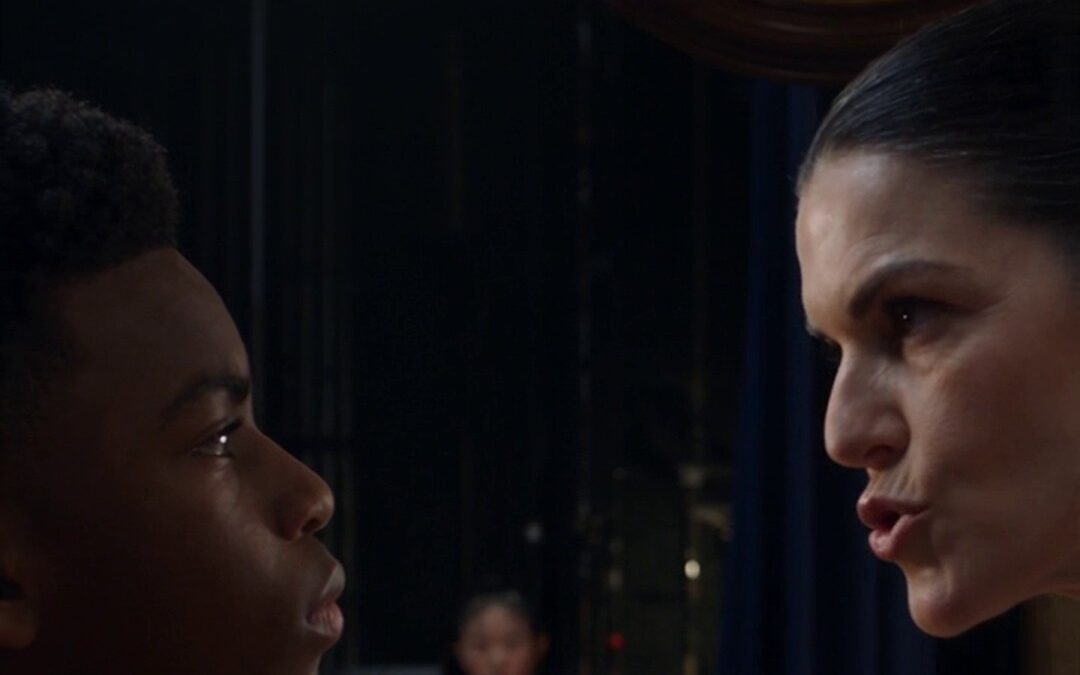
The red dot held steady.
Voss lowered her hand.
Darius stayed beside the chair.
Nia kept her phone raised.
Footsteps sounded in the corridor.
Principal Voss crossed toward the auditorium doors, composed as she was at assemblies and hearings.
“Mr. Bell,” she called. “Come in.”
A man appeared in the doorway with a district facilities badge and a canvas tool bag.
His name was Leon Hsu.
Darius knew him from the maintenance garage. Leon had taught him how to replace a stripped hinge screw without splitting old wood.
Leon looked from Darius to Nia, then up at the clock.
“The camera is transmitting?”
“Looks like it,” Nia said.
Voss stood between them and the doors.
“This is a student discipline matter.”
“I’m here because you reported a failed security device.”
“I reported a clock malfunction.”
“Those were different requests.”
Leon checked his phone. The clock’s live status had triggered an access log.
“Can you see the footage?” Darius asked.
“Not yet. It’s sending a status signal.”
“Where does the recording go?”
“Local storage first. Then a district server, if the connection works.”
Voss’s jaw shifted.
“Turn it off.”
“I can’t without authorization.”
“I’m the principal.”
“You’re not the data custodian.”
“I said turn it off.”
“I heard you.”
A second person entered: Ms. Avery from the district office, the regional student services coordinator. She wore a rain-speckled navy coat and carried a tablet.
“Is everyone safe?”
Darius answered first. “Yes.”
“Did anyone touch you?”
“No.”
“Did the principal threaten you?”
Nia lowered her phone slightly.
“She told us no one would believe him.”
Voss gave a controlled laugh.
“That isn’t a threat.”
“No,” Avery said. “It’s still relevant.”
She asked Leon to secure the connection and preserve the data.
Voss stepped aside.
The red dot continued glowing.
Darius rubbed the place where his jacket pocket pressed against his ribs.
Avery noticed.
“What’s in your pocket?”
“The repair invoice.”
“Why bring it?”
“Because she said she’d pay me.”
Voss’s eyes moved to the folded paper.
“That’s not connected to this.”
“It is if it shows who sent me into that room.”
Avery held out her hand.
“May I read it?”
He gave it to her. She flattened it against her tablet cover. The school maintenance account number appeared beside the trophy case repair request. Darius’s name was beneath it. Celeste Voss had approved his access to the auditorium.
Avery turned the invoice over.
A handwritten line crossed the back.
“Check clock enclosure after service.”
Darius stared at it.
“I didn’t write that.”
Voss went quiet.
“Who did?” Avery asked.
“I don’t know.”
Leon closed the auditorium doors.
“Then we find out.”
* * *
The district office stood beside the bus depot.
Darius had passed it hundreds of times but never entered.
Avery brought him and Nia there that morning. Voss had to stay at school while another administrator supervised her.
Leon carried the clock’s secured memory module in a sealed evidence bag.
Avery asked Darius to call his mother.
She answered between therapy appointments.
“Darius?”
“I’m at the district office.”
“Are you hurt?”
“No.”
“Are you in trouble?”
“I don’t know.”
A pause.
“Do you want me to come?”
He thought of her waiting at a bus stop with her cane.
“I’m okay.”
“That wasn’t my question.”
He closed his eyes.
“Can you come?”
“I’m on my way.”
Patrice Bell arrived with her cane and a folder of medical paperwork. She was fifty-two and had been recovering from a stroke for a year. It had weakened her right side, not her voice.
She looked at Darius first.
Then at Avery.
“I need to know whether my son is safe.”
“He is,” Avery said.
“Then I need to know why his school had him repairing equipment without a work order.”
Darius looked down.
“I had a work order.”
“You had an invoice,” Patrice said. “That isn’t the same thing.”
“We’re checking the records,” Avery said.
“Good.”
Patrice sat beside her son and rested a hand on his wrist.
Nia sat across the table, phone in her lap.
“I should have told someone earlier.”
“About what?” Darius asked.
“The clock. I saw the lens last month.”
“Why didn’t you say anything?”
“I thought it was for the school play.”
“Why would a camera sit inside a clock?”
“I didn’t ask.”
“That’s what you do,” he said. “You don’t ask.”
Nia accepted the rebuke.
“You’re right.”
Patrice looked between them.
“Tell us what happened before yesterday.”
Nia explained that she had stage-managed the scholarship ceremony three weeks earlier. Voss had told her not to let anyone near the clock, saying it was an antique the district wanted preserved.
“She knew it was recording,” Darius said.
“Maybe,” Avery replied. “We need proof.”
Leon joined them from the equipment room.
“The card is intact. It holds nine months of time-lapse files.”
“Did you watch them?” Avery asked.
“Only the status report. The files need to be copied and verified.”
“Can it show the stage?”
“It has a wide angle. No audio. One frame every few seconds.”
A district technician copied the files to a clean drive. A screen showed the auditorium from high above: empty chairs, warming stage lights, students arriving in gowns.
Darius searched the frames.
He found himself placing a chair by the aisle, then leaving through a side door to bring his mother water.
The time stamp jumped.
The room went empty.
For six minutes, nothing changed.
Then Voss entered from stage left with a document envelope. She placed it on the lectern and turned toward the clock.
A second figure came in wearing a district facilities vest. The image was too small for a face. The figure lifted the brass frame while Voss opened the envelope. She handed over a thin rectangular object. The other person put it inside the clock.
Nia covered her mouth.
“That was before the ceremony.”
“Who wore that vest?” Avery asked.
Leon leaned closer.
“Someone from central maintenance.”
Darius saw a reflection in the trophy case. The figure’s face was hidden, but each black work boot had a white stripe.
“Mr. Kessler.”
Leon looked at him.
“Are you sure?”
“He came to the shop two days ago. He asked if the clock had a removable lens.”
“Did you answer?”
“I said I didn’t know.”
Avery wrote down the name.
“Who is he?”
“Graham Kessler,” Leon said. “The district’s chief operations officer.”
Patrice set both hands on the table.
“So whoever put something in that clock had access to the whole district.”
“Yes,” Avery said.
“And Voss gave it to him.”
“We don’t know what it was.”
“Maybe a second card,” Darius said.
“The original card is still inside,” Leon replied. “A second one is possible.”
The technician checked the directory.
“There’s a hidden folder.”
Avery asked him to document the storage before opening it. He copied the folder, whose name was a string of numbers. The first file had been created three weeks earlier. The second came from the previous evening. The newest was timestamped 6:14 that morning.
“Who could access the clock?” Avery asked.
“Facilities, the principal, maybe the stage crew,” Leon said.
Nia looked at Darius.
“I saw it open during rehearsal. Voss and Kessler were there. He said it needed a safety inspection.”
The technician verified the newest file. It contained a short video, not time-lapse.
The image started black, then adjusted.
A hand appeared, wearing a ring with a square green stone.
“That’s Voss,” Nia said.
“How can you tell?” Patrice asked.
“I photographed her hand for the awards program.”
The technician paused the image. The ring filled the screen.
A text file showed an emergency override accepted at 6:14 a.m. The account was CVOSS.
“She accessed it herself,” Nia said.
“Maybe she was checking the system,” Darius replied.
“Maybe,” Avery said. “We need independent evidence.”
The video continued. A gloved hand removed a small device from the enclosure and put it in a padded envelope. The hand hesitated, then returned the envelope to the clock.
“She left something in there,” Darius said.
“Or replaced it,” Leon replied.
Avery checked the timestamp.
“Who had the room before school?”
“I did,” Darius said.
“Could you have seen the envelope?”
“No. I never opened the clock.”
“Could someone else have entered?”
“The side doors were unlocked for deliveries.”
“Who knew you’d be there?”
“The repair schedule was posted.”
He looked at the invoice again.
“Could that note have been used to bring me there?”
“We’ll check when it was written,” Avery said.
The technician scanned the invoice and compared it with the work order copy. The handwritten note had been added after Voss signed the approval.
The work-order audit showed it had been entered through a shared facilities account at the auditorium booking computer.
“It could have been anyone,” Leon said.
“Could Voss have done it?” Patrice asked.
“Yes.”
“Kessler?”
“Yes.”
“Someone using their account?”
“Yes.”
Patrice’s expression tightened.
“Then we ask who benefited.”
Avery called the district’s internal auditor that afternoon. The scholarship ceremony had announced a new foundation award, supposedly funding ten graduating seniors. The foundation transferred $240,000 to a district account.
Only $80,000 had reached students.
The rest had moved through the facilities budget.
“That’s why Kessler asked about the clock,” Darius said.
“Maybe,” Avery replied.
The money was administered by Future Bellwether, a private nonprofit. Kessler chaired its board. Voss was its treasurer.
* * *
The warning came before sunset.
Patrice sorted medication into a weekly container while Darius reviewed the district’s request for a formal statement.
His phone rang from a blocked number.
“You should stop,” a man said.
“Who is this?”
“You’re making things harder for your mother.”
The call ended.
Patrice heard the silence.
“What happened?”
“Nothing.”
“Try again.”
He showed her the call.
“Did he say your name?”
“He knew about you.”
“That doesn’t make the message true.”
“They could take my job at the repair shop.”
“Then we find another job.”
“They could block your therapy referral.”
“They can’t do that.”
“They have people everywhere.”
Patrice closed the pill container.
“They have offices. That is not everywhere.”
Darius looked at the folded invoice.
“I don’t want this to ruin the rest of your year.”
“It won’t.”
“You don’t know that.”
“No,” she said. “But I know what I’ve already lost by staying quiet.”
After her stroke, the school had reduced Darius’s work schedule without asking her. He’d been told it was temporary. No one told him his hours were listed as a scholarship expense.
The next morning Avery called. The district had placed Voss on administrative leave. Kessler had resigned, citing a medical issue. The district lawyer requested that the camera footage remain confidential. Avery said the request did not stop them preserving evidence.
After school, Darius met Nia at the library. She brought a laptop; he brought the invoice.
They reviewed the ceremony frames again. Nia knew the stage schedule and found a gap between two student speeches. Voss went into the stage wing and returned less than a minute later.
“What happened there?” Darius asked.
“I was reading the award names.”
“Was anyone with you?”
“Kessler was beside the lectern.”
“Did you see him take anything?”
“No.”
She enlarged the frame. The image blurred. The clock’s glass reflected the lectern, where an envelope sat open beside the microphone.
“Could he have used the ceremony to move money?” Darius asked.
“Not money,” Nia said. “Something smaller.”
In the next frame, Voss’s hand disappeared behind the lectern and returned empty.
Darius studied the clock.
“The second hand is gone.”
“Maybe it fell off.”
“Or someone removed it.”
The clock’s casing had a narrow slot behind the minute hand.
Avery joined them later with a printout from the grant system. The missing $160,000 had been divided among five transfers. Three went to Future Bellwether; two went to a consulting firm registered to Nolan Voss, the principal’s older brother.
“We’re preserving evidence,” Avery said. “We’re not deciding guilt.”
“Does the camera prove it?” Nia asked.
“No. It proves activity in the auditorium.”
“What does the hidden folder prove?”
“That someone accessed the system.”
“And the ring?”
“It supports identification. We need more.”
Darius showed her the invoice.
“The note sent me back into the room.”
“It may show planning. We still need the account audit.”
Avery had new records. The note had been added from Voss’s office terminal at 5:52 the previous afternoon. Her badge opened the office door. Eleven minutes later, the same terminal tried to delete the note. The deletion failed because the system had already backed up the work order.
“She sent me in,” Darius said.
“The evidence says that’s likely,” Avery replied.
“Why?” Nia asked.
“Maybe she wanted him to find something,” Avery said.
“What could he find?”
“We don’t know yet.”
Avery’s phone buzzed. The district had recovered another copy of the clock data from the facilities server. It included an access log: one device connected at 6:14, another at 6:17. The second belonged to the finance office and was linked to P. Bell.
Darius went cold.
“My mother?”
“She worked in district finance before her stroke,” Avery said.
Patrice appeared at the library entrance, returning from the clinic. She studied the login.
“My account was closed after I went on medical leave.”
“When?” Darius asked.
“Last October.”
The access was six months later.
“I never gave anyone my password,” Patrice said.
“Who knew it?” Darius asked.
“My supervisor. The district administrator. A few people in finance.”
Someone had used her account to access the clock. The same account had entered the instruction that sent Darius to the auditorium.
“Someone wanted you near that clock,” Avery said. “And wanted it to look like your mother did it.”
The lie led home.
* * *
Avery arranged a meeting with the district’s outside investigator, Daniel Ortiz, from a regional accounting firm retained by the school board.
He asked Patrice when she had last logged into the finance system.
“Six months before my stroke.”
“Did you write down your password?”
“No.”
“Share it?”
“No.”
“Keep a backup token?”
“It was on my key ring. The key ring is in a drawer at home.”
“Has anyone entered your home?”
“No.”
“Could someone have copied the token?”
“Possibly.”
Daniel asked about the login time.
“It was before the building opened,” Patrice said.
“Could you have been there?”
“No. I was at outpatient therapy.”
She pulled out the appointment card. Avery scanned it and requested the clinic record.
Daniel asked whether anyone else in the family had worked for the district.
“No,” Patrice said.
Darius turned to her.
“You used to handle payment files.”
“I handled payroll corrections.”
“Did you know about the foundation?”
“No.”
“Did you know the transfers were short?”
“No.”
“Why didn’t you tell me?”
“Because you were a child.”
“I’m sixteen.”
“You were fifteen when I went on leave.”
“That doesn’t mean I needed to be kept out.”
Patrice looked toward the window.
“I was embarrassed.”
“About what?”
“That I couldn’t do the work anymore. I’d worked for the district twenty-three years. After the stroke, I couldn’t type for long or walk across the building without resting. They told me my leave was temporary.”
“And then?”
“They replaced me and called my position redundant.”
“You appealed?”
“Yes. They denied it.”
“Why didn’t you fight harder?”
“I was tired of being treated like a problem.”
Darius understood the words. He’d mistaken her silence for surrender. He reached across the table and covered her hand.
“I’m sorry.”
“So am I.”
Daniel asked how her account could still be active. Avery explained that the finance office had a broad access group for maintenance and auditing. Patrice’s account should have been disabled when she left. Instead, a report showed it had been reactivated two months later with approval from the chief operations office.
“Who approved it?” Darius asked.
“Graham Kessler,” Avery replied.
“He had authority to request reactivation,” Daniel said. “Not to use her account.”
The clock system had a separate permission group. It included Voss, Kessler, Leon, and two technology staff, but not Patrice.
“Then how did her account get in?” Daniel asked.
“The finance login was added to the group during camera installation,” Leon said.
“Why?”
“I don’t know.”
An outside vendor installed it. Operations managed the contract.
“Could Kessler have requested that?” Daniel asked.
“Yes.”
The contract arrived two days later. Lantern Systems, a small company whose owner had once worked for Kessler, installed the clock camera under a safety grant.
A clause allowed the school to privately export footage without district review.
“Who signed?” Daniel asked.
“Voss and Kessler,” Avery said.
“The board authorized it?”
“No.”
The clock also appeared on the summer stage renovation plan. Its casing was to go into storage. Kessler had approved the renovation, and his office would receive the hardware.
The camera could have disappeared before anyone reviewed it.
Then the technician found a second hidden video, recorded on the ceremony date. A hand wearing Voss’s green ring opened the clock and placed a white envelope inside.
The timestamp was 8:42 p.m., after the school was empty.
The envelope had remained there for three weeks.
Avery arranged a controlled inspection of the sealed clock. Two days later, Leon brought the envelope to the district office.
Inside were a microSD card and a folded receipt.
The card held scans of transfer approvals. The receipt came from a bank vault rental under Nolan Voss’s name. The vault had been rented under a false identity and paid for by Future Bellwether.
The scans carried Kessler’s district credential. One approval bore Voss’s electronic signature. The records linked the grant money to the nonprofit and the consulting firm.
A spreadsheet titled “Legacy review” listed Patrice’s old employee number, the date her account had been reactivated, and a note:
Use prior payroll profile if questioned.
Darius read it twice.
“Someone planned to blame her.”
“Yes,” Daniel said.
“Who wrote it?”
“The metadata points to Kessler’s office. The file was created on a district workstation assigned to him under his credentials.”
“Could someone else have used them?”
“Possible. Investigators will compare his badge and network logs.”
Daniel said the district would preserve everything and refer the financial evidence to the county prosecutor. The board could put Voss on leave; it could not determine criminal guilt.
“Will the school tell families?” Nia asked.
“That depends on the board and the prosecutor.”
“Students deserve to know the camera wasn’t broken.”
“Yes,” Daniel said. “They do.”
Darius looked at the receipt.
The clock had protected the documents.
“Why send me into the auditorium?” he asked.
Neither Daniel nor Avery answered at first.
The invoice audit provided part of the answer. Voss had entered the note from her office terminal, but the temporary account had been created by a contractor hired by Kessler.
His timesheet placed him in the finance office on the morning Patrice’s account was reactivated.
His name was Ellis Ward, the district’s chief financial analyst. He had signed the foundation funding report and certified that all $240,000 had been distributed.
Ellis had once supervised Patrice.
* * *
The district asked Darius and his mother to stay home the next day.
They did not.
Patrice went to therapy. Darius went to school. He declined the counselor assigned to meet him at the entrance.
“I can walk to class.”
Nia waited by the front steps with a folder.
“I printed the scholarship roster.”
“Why?”
“The foundation said ten students got the money.”
“How many did?”
“Four.”
“Who were the other six?”
“Names on the announcement. No payment records.”
They walked toward the main office. Voss’s portrait had been removed from the lobby, though her nameplate remained.
A district administrator and a security guard stood near the office. Graham Kessler was talking to them. He stopped when he saw Darius.
“Mr. Bell.”
Darius didn’t answer.
“I’m sorry this has become frightening.”
“It wasn’t frightening until you called my mother’s account.”
“I didn’t.”
“Your office reactivated it.”
“I authorized a system review.”
“You left her name in the account.”
“That was an administrative error.”
“Then why did the note say to use her profile if questioned?”
Kessler glanced at the guard.
“I’m not familiar with that note.”
Nia stepped beside Darius.
“We have the audit log.”
“Those logs are incomplete.”
“They show your credentials.”
“Credentials can be copied.”
“They show your badge, too.”
Kessler remained calm.
“You two need to be careful.”
“Is that a threat?” Nia asked.
“It’s advice.”
“Give it to yourself.”
The administrator stepped between them.
“Mr. Kessler, the board asked you not to contact students.”
“I was speaking with them.”
“You’re not supposed to.”
Kessler looked at Darius.
“People who make accusations should understand who gets hurt.”
Then he walked away.
The administrator escorted Darius and Nia to the counselor’s office. Both students reported the interaction, and the district recorded their statements.
A local reporter called Patrice the next day. She declined to comment. Darius did the same.
The school board scheduled an emergency meeting for Friday. Avery asked if they would attend.
Patrice asked Darius what he wanted.
“I want the money sent to the students.”
“That may take time.”
“I want the truth on record.”
“That may take longer.”
“I want Mom’s name cleared.”
“That one comes first,” Patrice said.
They went.
The meeting room filled before the doors opened. Parents stood along the back wall; students gathered near the front, several scholarship recipients holding folded letters.
The board chair apologized and said the district had found irregularities. Voss was on leave while the review continued.
Daniel Ortiz presented the timeline: grants, transfers, access logs, the clock camera, and the envelope. Each item had an independent source. The camera matched the stage schedule; the receipt matched the vault company’s records; transfer approvals matched district server logs. The badge reader placed Kessler in the building. Ellis Ward’s timesheet placed him at the finance terminal.
Kessler sat near the back with his lawyer. Voss and Ellis were absent.
The board chair asked whether at least $160,000 had been redirected.
Daniel said the review found that amount in unauthorized transfers and that the prosecutor had received the evidence.
The board attorney stood.
“The district has no authority to determine whether any person committed a crime.”
A parent called out, “But you can tell us who signed the reports.”
The chair called for order.
Darius stood, palms damp. Patrice sat beside him. Nia was one row behind.
“My name is Darius Bell. The principal gave me a work order to repair the trophy case.”
The chair asked him to continue.
“I fixed it. Then I saw the clock camera.”
Kessler’s lawyer rose.
“This student isn’t trained to interpret surveillance records.”
“I’m not interpreting them. I’m telling you where I was and what I saw.”
The lawyer sat.
Darius showed the invoice.
“The note on the back sent me into the auditorium. It was added after the principal signed the work order. Then someone used my mother’s old account to make it look like she accessed the system.”
The chair asked if he had proof.
Daniel answered.
“Her account was reactivated under Mr. Kessler’s authorization. The work-order note was entered at a terminal linked to the same office. Mrs. Bell’s account was not assigned to the camera system.”
The lawyer stood again.
“Those logs show access, not intent.”
“That is correct,” Daniel said.
“Then the district cannot claim my client intended to frame anyone.”
“We have not claimed that.”
The lawyer said Kessler had cooperated fully.
Avery stood.
“The district received no cooperation from him after the evidence was discovered.”
“He was not required to answer questions.”
“Correct.”
“He exercised his rights.”
“Correct.”
“Then don’t suggest otherwise.”
The chair stopped the exchange.
The district’s lawyer described the camera contract. Lantern Systems had not disclosed its prior connection to Kessler. The camera wasn’t in the official equipment inventory. The safety grant paid for installation, and the board had never approved the private export clause. The contract remained under review.
Parents asked about the missing money. The district promised to seek recovery. A student asked whether recipients would still receive support. The board said it would consider emergency funding.
Darius stood again.
“Don’t call it emergency funding.”
The chair looked at him.
“Why not?”
“The money already belonged to the students.”
The room quieted.
“Call it what it is. Pay them what they were promised.”
The chair nodded.
“You’re right.”
The board voted to suspend the foundation relationship and create a temporary scholarship fund. They did not identify the funding source; the treasurer said it would be discussed in public session. It was not enough for Darius, but it was the first time someone in authority corrected the language.
After the meeting, the chair approached Patrice.
“We owe you an apology.”
“You do.”
“The account should have been closed.”
“Yes.”
“We’ll correct your record and restore your employee file.”
“I don’t want my old job back.”
“I understand.”
“Do you?”
The chair paused.
“No. Not fully.”
“Then don’t say it.”
The chair accepted that.
She offered Darius a district scholarship.
“No.”
“You haven’t heard the terms.”
“I don’t want money for telling the truth.”
“It would be recognition.”
“It would look like a reward.”
“It would be a scholarship.”
“Give it to someone who needs tuition.”
“Every student who applies will be considered.”
“Then add the students left off the list. Review the promises, too.”
The chair said they would.
Kessler’s lawyer approached as the family prepared to leave.
“My client denies wrongdoing.”
“Okay,” Darius said.
“He may file a defamation claim.”
“Is that a threat?”
“It’s a possibility.”
Patrice stepped between them.
“You’re speaking to a minor.”
“I’m speaking to his family.”
“You can speak to our attorney.”
“We don’t have one,” Darius said.
“Then you should get one.”
Avery joined them.
“The district can give them a legal contact for witnesses.”
“Your office isn’t representing the family,” the lawyer said.
“No,” Avery replied. “But I can give them the public defender’s referral list.”
Nia began recording. The lawyer told her to put the phone away.
“No.”
“You’re obstructing a conversation.”
“I’m documenting one.”
The security guard came closer.
“Is there a problem?”
“No,” Darius said.
The lawyer left. The guard stayed until the family reached the exit.
Outside, rain fell steadily. Darius held the invoice under his jacket. Nia shielded it with her folder. Patrice stepped carefully off the curb with her cane.
“Do you want my arm?” Darius asked.
“I have the cane.”
“I know.”
“I’ll take your arm anyway.”
She did.
The board had heard the evidence. The legal process had begun. Kessler had nearly turned the meeting into a debate about words, but the invoice made the timeline visible. The camera supplied an image; the audit logs supplied a trail; the account records provided independent confirmation.
* * *
The first legal result came six weeks later.
The county prosecutor charged Ellis Ward with falsifying financial records and misusing district credentials. Kessler remained under investigation. Voss was charged with theft and tampering with public records and pleaded not guilty.
The district placed Future Bellwether under temporary administration. The board released a corrected statement identifying the missing scholarship payments.
Patrice received a letter restoring her employee record. It said her account had been improperly reactivated, she had not accessed the surveillance system, and the district regretted the harm caused.
She read it once and put it in her folder.
“Do you feel better?” Darius asked.
“No.”
“Does it help?”
“Yes.”
Scholarship recipients began receiving funds. The district’s first payment came from its reserve account; the rest would be recovered through insurance and civil claims.
Nia’s family helped three students submit corrected applications. She also gave the district the original ceremony schedule, confirming who entered and left the auditorium. It placed Voss onstage when the camera showed her opening the envelope.
The bank verified the vault receipt. The vendor verified the account payment. Server logs verified the transfer approvals.
The evidence held.
At the administrative hearing, Voss said she had been trying to protect the school. The foundation had suffered from poor bookkeeping, she argued. The camera was a security tool, not a financial record. She had followed Kessler’s directions.
The hearing officer asked why she had denied the camera recorded anything.
“I was confused.”
Why had she entered the emergency override?
“It was a routine systems check.”
Why had she placed an envelope inside the clock?
“I don’t remember.”
The hearing officer showed the green ring in the footage. Voss said the recording had been edited.
A district technical witness explained that its checksum matched the original storage copy. A vendor witness independently confirmed the file had not been altered. The audit logs placed Voss’s badge at the terminal. The work-order audit linked her account to the instruction note. Scholarship transfer records carried her electronic approval.
She claimed her signature could have been copied. The forensic accountant showed that the login token was linked to her office device.
“I trusted Kessler,” Voss said.
The hearing officer asked again why she had kept the envelope in the clock.
She had no answer.
The board revoked her administrative license pending state review and terminated her contract for cause. Her appeal was denied.
Investigators traced transfers from the consulting firm to Nolan Voss’s bank account. Kessler was charged with conspiracy and fraud.
The chief operations officer had used scholarship funds to pay invoices for fabricated equipment repairs. The foundation approved them. The clock camera was meant to provide a record if the board questioned the spending, then disappear during the renovation before anyone reviewed it.
Kessler arranged the installation. Voss signed the contracts. Ellis certified the false payments. Patrice’s account was chosen because her old employee profile remained active. Her former supervisor knew her credentials and used them to make the activity look like routine finance work.
The invoice note brought Darius into the auditorium. Kessler expected him to find the envelope, then be blamed for tampering. He expected Voss to claim the camera had never recorded anything.
He did not expect the clock to transmit its status log.
He did not expect Nia to film Voss.
He did not expect Darius to keep the invoice.
Investigators found one more document in the hidden folder: a draft message from Voss’s office computer addressed to Kessler.
I’ll remove the card after the repair. The student will be there. If anyone asks, he opened the case.
The message had not been sent. Its metadata showed it was written the night before the clock began transmitting.
At trial, Voss admitted writing the draft but said she had never intended to send it.
The jury rejected that explanation.
The school board changed its surveillance rules. Cameras had to appear in the public equipment inventory and receive approval from the safety committee. Two employees were now required to access stored footage. The district created a written reporting line for students and staff.
The recipients received the full $240,000 through insurance, a civil settlement, and Kessler’s seized assets.
The settlement did not undo what happened. It paid the students what they had been promised.
Ellis reached a plea agreement. He admitted falsifying records and received probation, restitution, and a permanent ban from district finance work.
Kessler was convicted by a jury. He received a prison sentence and was ordered to repay the stolen funds.
Voss was convicted of theft and tampering. Her sentence included probation and restitution, and she was permanently barred from school administration.
Her brother’s consulting company closed.
The foundation dissolved.
* * *
Three months later, Voss asked to meet Darius.
Avery delivered the request through Patrice. Darius didn’t want to go, but his mother told him he didn’t have to. Nia asked if he wanted company.
He did.
The meeting took place at the district office. Voss wore a gray cardigan and no jewelry. Her lawyer waited outside. Avery sat at the table as a witness.
Voss spoke first.
“I owe you an apology.”
Darius waited.
“I used your work order to put you where you could be blamed.”
“Why?”
“I wanted the clock open.”
“You could have opened it yourself.”
“I thought you would find the envelope.”
“Why me?”
“You were reliable.”
“That was the reason?”
“It was the reason I gave myself.”
Darius looked at the table.
“You knew I was working for my mother.”
“Yes.”
“You knew she’d been fired.”
“Yes.”
“You knew her account was part of the lie.”
“I did.”
“Then why use it?”
Voss pressed her hands together.
“I thought the district would believe a former employee had accessed the system.”
“She was sick.”
“I know.”
“She was trying to get back to work.”
“I know.”
“You ruined her name.”
“I did.”
The plain answer surprised him.
“What did you want?”
“To keep my position.”
“Why?”
“I thought I’d spent my life building the school.”
“That’s not the same as protecting it.”
“No.”
“You made it sound like it was.”
“I did.”
Avery asked whether Voss wanted to add anything.
“I’m sorry I used your trust,” Voss said.
Darius remembered her beneath the clock, reaching for Nia’s phone, promising thirty dollars.
“You don’t get to ask me to forgive you.”
“I’m not asking.”
“Good.”
“I know I hurt your mother, too.”
“You’ll have to answer for that.”
“I will.”
Darius stood. Nia stood with him. Voss remained seated.
Outside, Nia asked what he felt.
“I don’t know.”
“You don’t have to.”
“I thought she’d sound different.”
“Different how?”
“Like a villain.”
“She sounded like herself.”
“That’s worse.”
“Maybe.”
He folded the invoice and put it in his pocket.
It had not become a prize.
It had become a record.
* * *
By spring, Patrice’s balance had improved enough for her to return to part-time work. She did not return to the district. Instead, she helped a neighborhood legal clinic organize employment records.
She was good at spotting small errors: a missing date, a duplicate line, a mismatched signature.
Darius kept his repair shop job. The owner raised his pay to fifteen dollars an hour. He still took the bus and came home tired, but his hours were steady.
Nia graduated at the top of her class. She received a scholarship from a local arts program and planned to study theater production. She kept the clock video but did not post it online.
The district released a public report naming the failures and explaining how the money had been traced. It left out the students’ private information.
The scholarship fund continued under a new board. Students helped review the application process.
The board invited Darius to join. He declined a seat but accepted a one-year student advisory position.
“I don’t want to decide who deserves help,” he said.
“What do you want?” the board chair asked.
“I want rules that keep anyone from hiding the money.”
The advisory role included reviewing those rules. He accepted.
The board asked whether he would give the first speech at the next scholarship ceremony.
He thought about his mother’s therapy copay, the unpaid invoice, and the clock.
“I’ll speak if the students left off the list get to speak, too.”
“They can.”
“Then yes.”
The school did not offer him a ceremonial check. It paid his approved invoice exactly thirty dollars. He kept the receipt. The money went into his mother’s medication jar.
She teased him for folding the bill neatly.
“You can put it in the bank.”
“It’s easier here.”
“Then don’t forget where you put it.”
“I won’t.”
The clock was stored in the auditorium equipment room. Its brass face was cleaned; the camera went into a sealed evidence archive. The district did not reinstall it.
Students chose a simple, readable clock for the stage. The old clock face went in a display case beside the repaired trophy case.
Darius had fixed the latch and helped choose the case’s new lock.
The plaque beside the clock did not list those who had failed. It described what the school had learned: records could be reviewed, scholarship promises had to be documented, and students could report concerns without punishment.
At the first ceremony after the investigation, the auditorium filled.
Patrice sat in the aisle.
Nia stood backstage with her headset.
Darius waited beside the lectern.
The new clock showed 6:58. Avery sat in the front row beside Leon. The board chair stood near the side door. Scholarship recipients held their letters.
Darius stepped to the microphone with one page of remarks. He did not read it all.
“I used to think a witness had to stop the bad thing,” he said.
“Sometimes a witness only has to tell the truth.”
He looked toward Nia.
She lifted her phone. Its red recording light was on.
“Sometimes the record is what keeps the truth standing.”
He stepped aside.
The students read their names one by one. One thanked her grandmother; another thanked a science teacher. A boy in a blue tie held his award letter in both hands.
When the ceremony ended, families stayed to take pictures and hug.
Patrice stood beneath the old clock display.
Darius joined her.
The brass face reflected the stage lights. Its hands had stopped at 6:14.
“That was when someone entered the hidden system,” he said. “It was also when the record began.”
Patrice touched the glass.
“Does that feel finished?”
“No.”
“Does it feel better?”
“Yes.”
“That’s enough for tonight.”
Nia came over carrying the old work order. She had framed the invoice.
Darius read the note on its back.
Check clock enclosure after service.
It no longer looked like an instruction meant to trap him. It looked like proof that paper could outlast the person who wrote on it.
He turned the frame so his mother could read the front.
The approval signature remained visible.
So did his name.
So did the thirty-dollar amount.
The clock had kept its time.
The students had kept their promises.
The school had learned to leave the records open.
Darius walked home beside his mother, carrying no secret in his pocket.
THE END








