The School Bus Came Back With a Faulty Door, and Everyone Blamed the Dispatcher—Even Her Daughter
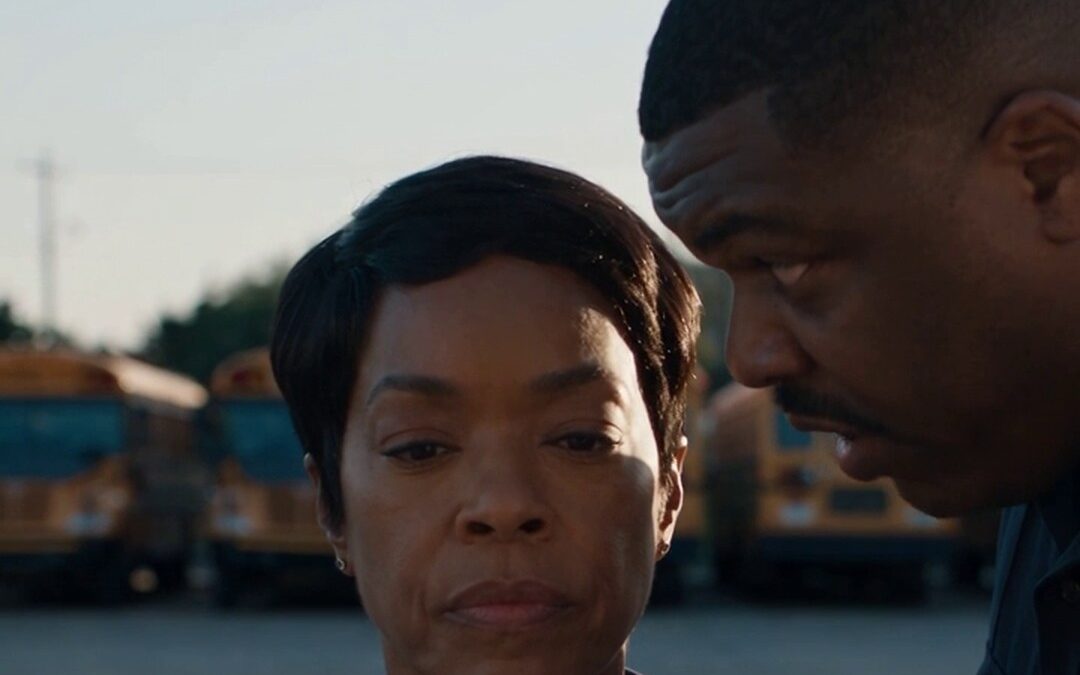
Chapter 1: The Key on the Wrong Hook
“Give me your keys,” Brett said, holding up the red plastic sleeve in front of three bus drivers.
It was the sleeve the depot used to mark a bus that could not go out.
June Calder kept her hand on the route cards she had been sorting.
“Which bus?”
“Eighteen.”
Behind Brett, the morning buses stood in crooked rows under the depot lights.
June’s daughter rode one of them to school, though never the one June dispatched.
Brett turned the sleeve so its empty pocket faced her.
“You sent it out after Rowan reported the door latch.”
June looked toward the repair bay.
Rowan, the mechanic, stood beside the open door with both hands in his coat pockets.
The latch on Bus 18 had failed twice that week, catching only after the driver pulled the service door shut a second time.
No child had been hurt, but the driver had brought the bus back before reaching the elementary school.
“Show her the sheet,” one of the drivers said.
Brett laid a route card on the counter.
June’s initials sat beside the morning assignment.
She had written them there herself.
Yesterday she had also exchanged two drivers’ keys without recording the change until lunchtime.
It had saved a late route, and Brett had warned her that an inspector would see only a gap in the record.
Now everyone in the room knew about it.
“I assigned Twenty-three,” June said.
Brett tapped the card.
“The driver left here in Eighteen.”
“That isn’t what I handed him.”
“You said that yesterday about the keys.”
June opened her mouth, then closed it.
The driver who had returned Bus 18 would remember the bus, not whose hand had passed him its key.
Brett set a small envelope beside the card.
Inside was June’s depot key.
“Paid leave while the district reviews it.”
June heard a bus start outside and thought of her daughter waiting under the porch light, trusting June to know which buses were safe.
She reached for the red sleeve.
Brett drew it back.
“I only want to see the ring,” she said.
He held it still.
A yellow cord ran through the ring beneath the sleeve.
The daily keys hung on blue cords.
Yellow meant spare, kept on a separate hook behind the counter.
June had touched the blue daily key for Bus 23 that morning.
She could picture its frayed knot against her thumb.
Rowan’s eyes shifted to the yellow cord, then to Brett.
June had no proof that the sleeve had stayed on that ring all morning.
She had only the question she could see in everyone’s faces now.
“Why was the no-dispatch sleeve on the spare key?”
Chapter 2: The Route That Changed
“Why was the no-dispatch sleeve on the spare key?”
Brett looked down at the yellow cord.
“Because somebody moved it.”
“Who?”
“That’s part of the review.”
He slid the ring into the envelope with June’s depot key and folded the flap.
Rowan stood beside the repair bay, watching.
June wanted him to say what he had seen that morning, but she did not know whether he had seen anything beyond the faulty latch and the sleeve.
Brett sent the drivers to their afternoon routes.
Only after they had gone did he lower his voice.
“The district office will contact you.”
“Am I accused of taking the sleeve off?”
“Bus 18 went out under a card you signed.”
“Keep the card where it is.”
“It’s going into the file.”
“That isn’t what I said.”
Brett met her eyes.
“I heard you.”
June had worked at the depot for eleven years, long enough to know when a supervisor was frightened.
She took her coat from the hook beside the counter and passed the spare-key cabinet on her way out.
Its door was open.
The hook for Bus 18 was bare.
At home, her seventeen-year-old daughter had lined her shoes beside the front door instead of kicking them under the bench.
“Brett called,” Willa said.
“He should’ve called me first.”
“He said you’re home for a few days.”
“That’s what paid leave means.”
Willa stood at the kitchen sink with a clean glass in her hands.
“Was it the bus with the door?”
“Yes.”
“The one that came back?”
“Yes.”
Willa set down the glass carefully.
June could bear anger better than that care.
“I didn’t send it,” she said.
Willa looked at the wet rim.
“Didn’t you tell me you switched keys yesterday?”
“I did.”
“You said Brett was making a big deal out of nothing.”
“I was wrong about that.”
Willa took the district bus by choice, and she knew how much of June’s life was spent getting other people’s children to school.
“I want to believe you,” she said.
“Then believe me.”
“That isn’t how it works.”
She went upstairs, carrying the glass she had just washed.
The next morning, a district human-resources officer named Ms. Vale called.
The review would include the route card, Rowan’s repair report, and interviews with the people on duty.
June could submit a statement and request copies of the records the district relied on.
“Preserve both sides of the card,” June said.
“We’ll preserve the original.”
“There’s a copy underneath.”
“What copy?”
“The route desk has a two-part pad.”
The depot’s printer was waiting for a part, so June had used the old duplicate cards that week.
She wrote on a white top card, and the pressure of her pen marked the yellow page bound beneath it.
The top card went with the route paperwork.
The yellow page stayed at the desk.
“I’ll ask transportation to retain the pad,” Ms. Vale said.
June wrote down the time of the call.
She remembered writing Bus 23 on Leo’s card, but memory was no longer enough.
She also remembered exchanging two drivers’ keys the day before and leaving the change out of the log until lunchtime.
She had kept a late route moving, then filled in the record when she had a quiet moment.
Brett had warned her that an inspector would see a gap and have no way to tell what happened inside it.
Now everyone else had reason to wonder whether she treated the morning’s assignment just as loosely.
June called the depot.
Rowan answered.
“Did you put the sleeve on Eighteen?”
“I reported the latch.”
“On the spare key?”
“I’m not discussing the review on this line.”
“Then tell Ms. Vale.”
“I will.”
He hung up.
Rowan had once held back a bus Willa rode because he found a loose step.
He was stubborn about repairs and precise about records.
His refusal on the depot phone told June only that he knew the distinction between the spare key and the daily key mattered.
By noon, she had filled three pages with her account.
Bus 23 had been parked beside the wash bay.
She had written 23 on Leo’s route card, initialed it, and set its blue-corded key pouch on the counter.
Bus 18 stood farther down the row, near the fence.
Leo had asked to leave five minutes early for a substitute rider, and June had agreed.
Then coffee spilled across the route maps.
She had gone into the records room to copy the sheets she could save and fetched paper towels from the supply closet.
When she returned, Leo and the pouch were gone.
She had not watched him start Bus 23.
June drew a line beneath that sentence.
It was the opening Brett would use, and she had given it to him herself.
That evening she drove to the public library.
The district’s internal assignment records were beyond her access, but the library kept bound issues of the town paper.
She searched for a photograph of the depot or a bus from that week and found only an older picture of Leo at a safety demonstration beside Bus 23.
Its blue key cord hung from the ignition.
She studied the frayed knot and felt foolish.
A month-old photograph could not tell her what Leo carried out of the depot yesterday.
She left without making a copy.
At home, Willa had made toast and set a second plate beside the toaster.
June accepted it without asking what it meant.
On Thursday, Ms. Vale sent copies of the records collected so far.
The route card showed June’s initials beside Bus 18.
The number looked darker than the rest of the writing, but it was a scan of a card several people had handled.
Rowan’s repair report said he had marked the latch for attention before the first departure and placed a red sleeve on the Bus 18 spare key.
June read that line twice.
She had thought the yellow cord meant somebody had moved the warning.
The report made its position look deliberate.
She called Ms. Vale.
“Why the spare?”
“Rowan said it was the key available.”
“Where was the daily key?”
“We’re asking.”
“Does the report say I saw the sleeve?”
“No.”
“Then why am I the only one home?”
“Because your initials are on the assignment card.”
“That tells you what I wrote.”
“It tells us what was released during your shift.”
June heard the difference Ms. Vale was drawing.
A dispatcher could make a dangerous assignment without ever touching the warning itself.
June printed the card at the library and held the page under a reading lamp.
The 18 seemed pressed harder than her initials.
That might mean another hand, or it might mean she had pressed harder when someone interrupted her.
She put it down and wrote her statement in order.
She had assigned Bus 23.
She had not removed the sleeve.
She had been away from the counter when Leo left.
She had entered the previous day’s key exchange late.
She did not soften the last part.
If the district discovered she had hidden it, every other sentence would become harder to believe.
When she sent the statement, she repeated her request to preserve the original card and bound yellow page.
On Friday, Leo came to her front porch.
He held his cap in both hands.
June opened the door with the chain still fastened.
“You should’ve called.”
“I did.”
“I didn’t pick up.”
Leo rolled the cap between his palms.
“Brett wants me to tell them you handed me Eighteen’s pouch.”
“Did I?”
“I don’t know.”
“You know where you went.”
“Twenty-three.”
June loosened the chain.
“What happened there?”
“I turned the key.”
Leo looked toward the street.
“The engine didn’t catch.”
June held the door open.
“Who gave you Eighteen?”
“Brett came over.”
“And?”
“He said he’d get me going.”
“Did he give you its key?”
Leo stared into his cap.
“I signed the trip sheet for Eighteen.”
“Because you drove it.”
“I didn’t write down the failed start on Twenty-three.”
“You should have.”
“I know.”
She could have offered him a version that spared him.
She needed his help badly enough to want to.
But Leo had carried children on a bus with an unreliable door, and she would not ask him to hide another gap in the record.
“Tell them every step,” she said.
“Brett says you might be fired.”
“Brett doesn’t get to choose your memory.”
Leo pulled on his cap and went down the steps.
Willa came home while June was still standing near the door.
“Was that Leo?”
“Yes.”
“Did he say what happened?”
“He went to Twenty-three first.”
Willa dropped her backpack.
“Did you ask him to blame Brett?”
“I asked who gave him the other key.”
“That’s different?”
“It has to be.”
One of Willa’s friends had been on Leo’s bus.
She had told Willa how the door opened an inch after a turn and how Leo pulled over to try the latch.
Nobody had been hurt, but Willa had heard enough to understand why the other parents were angry.
“I’m glad he brought them back,” she said.
“So am I.”
“Even if he says something you don’t like?”
“Even then.”
Willa took her backpack upstairs.
On Monday, the district invited June to a fact-finding meeting for Wednesday.
The letter said no employment decision had been made and that she could bring a representative.
June called her support staff association.
Mara agreed to attend.
“I need what you’ve got,” Mara said.
“My statement and a scan.”
“Bring them.”
“I want the yellow copy examined.”
“Put that request in writing.”
“I already did.”
“Good.”
June wanted to hear that the district had to accept the copy as proof.
Mara would promise only that the district needed to review relevant records fairly.
On Tuesday, a copy of Leo’s statement arrived.
It said he had received a pouch from June’s counter and driven Bus 18.
He had left out Bus 23 and its failed start.
June called him.
He did not answer, and she left no message.
Both things he had written were true.
Between them lay the part that mattered.
She took the statement to Mara’s office above a shoe repair shop.
“He told you something different?” Mara asked.
“At my house.”
“Was anyone there?”
“Willa was upstairs.”
Mara set the page down.
“They may say you pressured him.”
“I didn’t.”
“Write down the visit while you remember it.”
June described Leo’s words, his reluctance, and her own questions.
She signed and dated the account.
She had once thought records were what people made after something important happened.
Now strangers were using records to decide what had happened at all.
That night Brett left a voicemail.
“The district may ask about visitors,” he said.
“Tell them if you approached any drivers.”
June played it twice.
He knew Leo had been to her house.
Mara told her to keep the message and tell the district what she had already written.
June did not call Brett back.
At dinner, Willa said a picture of the route card was circulating among parents.
“Who took it?” June asked.
“I don’t know.”
“Don’t show me.”
“You should know what they’re saying.”
“I know what they saw.”
“They say you changed the card.”
June put down her fork.
“Do you think I did?”
“I think you told me yesterday’s key switch didn’t matter.”
“It did matter.”
“You only say that now.”
June let the words stand.
At Wednesday’s meeting, Ms. Vale sat with a transportation administrator named Mr. Ellis.
Brett sat beside him.
Mara and June sat opposite.
The original route card lay in a clear sleeve between them.
June could see a faint curved mark under the 8 in Bus 18.
It might have been part of the 3 she remembered writing.
She could not tell who had changed it.
Mr. Ellis began with the route.
“Who controlled the counter?”
“I did,” June said.
“Who initialed the card?”
“I did.”
“Who issued the pouch?”
“I set Twenty-three’s pouch on the counter.”
Brett leaned forward.
“Leo received a pouch from your counter.”
“Yes.”
“He drove Eighteen.”
“Yes.”
“That’s the problem.”
June looked at the red sleeve beside the card.
The yellow cord had been removed from its ring for inventory.
“Was it photographed before you separated it?” she asked.
“Yes,” Brett said.
“May I see the photograph?”
Ms. Vale wrote down the request.
Mara asked when Brett had learned of the latch report.
“I knew Rowan was checking it,” he said.
“Did you know the bus was held?”
“I knew it had a problem.”
“Was the hold on the route board?” June asked.
“It was in the shop report.”
“The route board is what I used.”
“The dispatch desk checks restrictions,” Brett said.
“Which restriction did you put on the board?”
Mr. Ellis raised a hand.
“We’ll go through procedure in order.”
He asked about June’s late log entry from the day before.
June described the loose mirror that had forced two drivers to exchange buses and the key swap she had recorded at lunchtime.
No children had ridden the bus with the loose mirror until Rowan tightened it.
That did not make her delayed entry accurate.
“I should’ve written it down when it happened,” she said.
Brett nodded.
“Then you understand why this card matters.”
“I understand why every line matters.”
“Your initials are beside Eighteen.”
“Who wrote Eighteen?”
“You signed the card.”
“That wasn’t my question.”
Brett looked at Mr. Ellis.
“I can’t identify a writer from a number.”
June thought he might stop there.
Then he added, “I know which bus left.”
Mr. Ellis took notes.
Ms. Vale asked if June had touched the red sleeve that morning.
“No.”
“Did you see it?”
“Not until Brett held it up.”
“Did you know Rowan had reported the latch?”
“I knew he’d looked at it earlier in the week.”
“That morning?”
“No.”
Rowan’s report had been filed before departure.
June could feel the inquiry shifting from who changed the card to whether she should have checked the shop file before she issued any pouch.
During a break, Mara stood with her beside a humming water fountain.
“They’re making it one question,” June said.
“Then keep the pieces separate.”
“I signed a card for Twenty-three.”
“Yes.”
“I left the counter.”
“Yes.”
“Somebody changed the card.”
“Can you show when?”
June looked at the conference-room door.
“The yellow copy can show what I first wrote.”
“Let’s get it.”
Transportation brought the bound pad in a cardboard box.
Its yellow pages were still attached at the top.
Beneath the torn card was a deep impression of 23 beside June’s initials.
The short hook at the bottom of the 2 was the way she always made it.
Mara turned the page toward Ms. Vale.
Brett leaned over.
“June could’ve written Twenty-three on that page later.”
“Then why is it under this card?” June asked.
“You had access to the pad all morning.”
“And after I went home?”
“I said all morning.”
The yellow page proved the number had been written there.
It did not yet prove when June had written it.
The next page held faint impressions from the cards before and after Leo’s.
They followed the order June remembered using that morning.
Mara pointed them out.
Brett said an orderly pad could still hold a late entry.
Mr. Ellis asked Ms. Vale to have the originals reviewed by the district records officer.
June wanted to show him every pressure mark herself.
She kept her hands folded.
Then Leo came in.
He sat with his cap in his lap, between Brett and the door.
Ms. Vale asked him to describe his departure.
“I took the pouch from the counter,” he said.
“Which bus did you approach?”
Leo glanced at Brett.
“Twenty-three.”
“Did you start it?”
“I tried.”
His fingers tightened around the cap.
“It didn’t start.”
“Why isn’t that in your statement?” Mr. Ellis asked.
“I was asked which bus I drove.”
“You were asked to describe your departure,” Ms. Vale said.
“I left that part out.”
June felt no triumph.
Leo had spent years carrying children safely, and now everyone at the table had reason to question what else he had left out.
“Who told you to take Eighteen?” Mr. Ellis asked.
Leo looked at Brett.
“You did.”
Brett remained composed.
“I told you a replacement was coming.”
“You brought the key.”
“I brought a pouch.”
“You said Eighteen was ready.”
“You were late and upset about Twenty-three,” Brett said.
“That didn’t make me forget.”
“You signed the trip sheet for Eighteen.”
“Because I drove it.”
“You inspected the door.”
“I opened and closed it twice.”
“The fault was intermittent.”
Leo looked down.
“I know that now.”
Brett turned to Mr. Ellis.
He said June had been at the counter when he came in for the replacement pouch.
“I was in the records room,” June said.
“You were there at some point that morning.”
“Yes.”
“You told Leo to leave early.”
“In Twenty-three.”
“You knew Eighteen was available.”
“I knew it was parked by the fence.”
June could see how Brett would arrange the facts.
She had initialed the card.
Leo had driven the bus shown on it.
Her earlier recordkeeping mistake made an unmarked change seem possible.
Unless she could establish when the substitution happened, Brett could say she had approved it and then gone for the paper towels.
Mr. Ellis asked for a record of Bus 23’s failed start.
Leo had made none.
No work request had been entered until after departure.
Two imperfect accounts faced a card bearing June’s initials.
Mr. Ellis adjourned the meeting to examine the originals and interview Rowan.
Outside, Leo caught up with June near the parking lot.
“I’m sorry.”
“You told them.”
“I should’ve told them first.”
“Yes.”
He pressed his cap against his chest.
“I thought they’d say I missed a bad door.”
“You did check it.”
“Not enough.”
June could not give him comfort she did not have.
“I’m glad you brought them back,” she said.
Leo walked to his truck.
Mara waited beside June’s car.
“His account helped,” she said.
“Brett had an answer for all of it.”
“Some answers can be checked.”
“Which ones?”
“He says you were at the counter when he brought the pouch.”
“I wasn’t.”
“We need more than memory.”
June unlocked her car, then stopped.
The coffee spill had sent her to the records room before she fetched the towels.
She had hung two damp route maps on the drying rail and copied them for drivers whose originals were stained.
The copier kept a usage log.
It would not show who changed the card, but it might place her away from the counter.
She told Mara.
“Can you get the log?”
“I can request it.”
“Do it now.”
June called Ms. Vale from the parking lot and asked her to preserve the copier record and the maps before anyone cleaned out the room.
“Does the log identify a person?” Ms. Vale asked.
“Only a department.”
“That won’t place you there.”
“No.”
June thought of the brown coffee rings.
“But I know which maps I copied.”
Ms. Vale agreed to request both.
June sat in her car for a moment.
She had found a way to test part of her own account.
Then she heard Brett’s answer in her head.
She could have approved Bus 18 before copying anything.
At home, she drew the depot counter on the back of a grocery list.
Willa found her moving a chair on the drawing.
“You’ve moved it three times,” she said.
“I can’t remember where Leo stood.”
“Why is the copier there?”
“I used it that morning.”
“You hate that copier.”
“It jams on damp paper.”
“You always tell me to dry paper first.”
“I did.”
“That sounds like you.”
Willa sat across from her.
“If you were copying maps, who was at the counter?”
“I don’t know.”
“You think Brett was.”
“He says I was there too.”
Willa studied the arrows.
“I can believe you were in the other room.”
“That isn’t enough.”
“It’s something.”
June looked at her daughter.
Willa had given her one honest piece of belief, no more than she could spare.
The next day, Ms. Vale sent Mara a summary of the copier log.
Two copies had been made under the transportation department code at 6:19 a.m.
June remembered going into the records room after Leo left with the Bus 23 pouch.
Leo had tried the bus a few minutes later.
The log might put June away from the counter when Brett changed the assignment, but Brett could still claim they had spoken first.
Mara requested the original maps and the copies in the driver packets.
When the district produced them, two originals had wide brown rings from the coffee cup.
Each copy carried the same mark and a small dark wedge from the copier’s worn glass.
They had survived because the drivers still used them and June had hung the originals to dry.
The district records officer could compare the pages and check whether the copier clock agreed with the office clock.
She could not say who had stood at the route desk.
“We still need the center of the story,” Mara said.
“The card?”
“The change.”
June thought about Leo leaving her counter with one pouch and starting a different bus.
Then she remembered Rowan’s first answer on the phone.
He had reported the latch but refused to say why the sleeve was on the spare key.
“Ask Rowan where the daily key was,” she said.
“That’s already part of the review.”
“I want the answer.”
Mara asked Ms. Vale to question Rowan about both keys and about every instruction he had given before departure.
His statement arrived the following Tuesday.
Rowan had found the latch fault during the early check.
Bus 18’s daily key was absent from its repair-bay peg.
He took the yellow-corded spare from the cabinet, tested the latch, attached the red sleeve to that ring, and returned it to the marked spare hook.
He entered the hold in the shop report.
He also told Brett that Bus 18 was not to be used until the latch was repaired.
Brett had said he understood.
Rowan later went to Bus 23 when its engine failed to start.
He found Brett and Leo beside it, checked the battery connections, and went back for a jump unit.
When he returned, they were gone.
He had not seen anyone change the card or take Bus 18’s daily key.
June read the statement again.
“Why wouldn’t he tell me?” she asked Mara.
“He told the district.”
“He wouldn’t say it on the depot phone.”
“He was right to make a record.”
The statement established two things.
Brett knew about the hold, and Rowan had tagged the key available to him.
It did not explain where the daily key had gone.
June pressed a finger against that blank in her notes.
“Brett said Eighteen was the only quick spare,” she said.
“That may mean he knew where its daily key was.”
“May,” Mara said.
June did not press further.
She had already learned what happened when she tried to turn an opening into an answer.
Parents were asking whether the district had checked other assignments.
The district issued a notice saying Bus 18 was out of service while it reviewed the morning departure.
It did not name June.
People named her anyway.
At the grocery store, a father from Willa’s school stopped talking when she reached the bread shelf.
June bought bread and forgot the milk.
Willa came home later with a carton and two oranges.
“One for each of us,” she said.
They ate at the kitchen table, dropping the peels into a bowl.
Ms. Vale called while June still held half an orange.
The district had examined the card and bound copy.
It had also received a photograph of the route desk taken shortly after the morning departures.
“Who took it?” June asked.
“We’ll discuss its source at the meeting.”
“What does it show?”
“The top card.”
“Was it taken before the bus came back?”
“Yes.”
June set down the orange.
If Bus 18 appeared on the card before Leo returned, Brett could argue the change had been part of the morning dispatch.
June called Mara.
“Ask for the original image,” Mara said.
“Brett sometimes photographs the board for the office.”
“Did he every day?”
“No.”
“Why that morning?”
“The printer was down.”
The photograph had a routine reason to exist.
That made June more afraid of it.
She went upstairs after the call.
Willa was filling out a college housing form and paused over a box asking for a parent’s occupation.
“Write dispatcher,” June said.
“I was going to.”
“You paused.”
“I was looking at the address.”
June nodded without believing her.
Willa pushed back her chair.
“You treat every question like a verdict now.”
“I know.”
“You were careless with the keys the day before.”
“Yes.”
“And that has nothing to do with this?”
“It gave people a reason to doubt me.”
“That isn’t nothing.”
“No.”
Willa rubbed her eyes.
“I don’t know what to think about Brett.”
“You don’t have to decide for me.”
“I’m not.”
June went downstairs before she could ask for reassurance Willa could not honestly give.
At Thursday’s meeting, the photograph lay beside the card.
It showed Bus 18 next to June’s initials on the counter.
A wall clock was visible but too blurred to read.
Brett had taken the picture with his district phone and sent it to Mr. Ellis as part of his morning update.
“That is contemporaneous,” Brett said.
“After Leo left,” Mara replied.
“Still that morning.”
“While June was copying the maps.”
“She wasn’t there all morning.”
Mr. Ellis studied the image.
“The card had been changed by then.”
“Somebody changed it,” June said.
Brett turned toward him.
“June admits she left a key swap out of the log the day before.”
“She was responsible for this desk.”
“Leo drove the bus listed on the card.”
He looked back at June.
“I wish there were a simpler explanation.”
June hated how steady he sounded.
His argument used facts she could not deny.
For a moment she felt like the only person in the room unable to accept what the paper said.
Ms. Harlan, the district records officer, entered with the bound pad.
She had examined the original top card and the pages beneath it under a document lamp.
She explained the limits of what she could see before giving her findings.
June’s 23 had been written while the top card rested on the bound yellow page.
Both strokes pressed through.
The 18 on the top card had been written after the card was detached.
Its strokes left no matching impression below.
Brett leaned forward.
“That shows two entries.”
“Yes,” Ms. Harlan said.
“It doesn’t identify the writer.”
“No.”
“Or tell us how many minutes passed.”
“No.”
“June could have changed it herself.”
“Yes.”
June appreciated the answer even though it hurt.
Ms. Harlan was there to say what the paper could bear.
She had also compared the impressions from the cards before and after Leo’s.
Their yellow pages matched their top copies in sequence.
The pad supported June’s account that she had first assigned Bus 23.
It did not prove she had opposed a later substitution.
“An original assignment can change when a bus fails,” Brett said.
“That can be proper,” Mr. Ellis replied.
“Exactly.”
“But the person authorizing it records the change,” Mara said.
“I authorized a substitution.”
June turned to Brett.
“Which bus?”
“Eighteen.”
Mr. Ellis’s pen stopped.
Brett looked at him.
“Twenty-three wouldn’t start, and Leo needed a bus.”
“You knew Eighteen was held,” Mr. Ellis said.
“I knew Rowan was checking a latch.”
“Rowan says he told you not to use it.”
“I thought he was still working on it.”
June looked at the red sleeve, now back on its yellow cord.
“You thought an unmarked daily key meant he’d cleared it?”
“I didn’t see the sleeve when I got that key.”
“Where did you get it?” Mr. Ellis asked.
“From the pouch cabinet.”
“Did Rowan tell you he had cleared the bus?”
“No.”
“Was there a clearance entry?”
“I didn’t check.”
Brett folded his hands.
“I was trying to keep the route running.”
Leo spoke from the end of the table.
“You told me Eighteen was ready.”
“I believed it was.”
“That’s what I believed too,” Leo said.
Mr. Ellis turned to June.
“Did Brett tell you he was substituting Eighteen?”
“No.”
Brett shook his head.
“She was at the counter when I came in for the pouch.”
“I was copying maps.”
“You were in the building.”
“Where was I standing?”
He looked at the photograph.
“I don’t remember exactly.”
Ms. Vale placed the copier log and the paired maps in front of Ms. Harlan.
She confirmed that the copies matched the coffee-stained originals, down to the dark wedge from the machine’s glass.
She had checked the copier clock against the office clock that week; they agreed within a minute.
Two copies were made at 6:19.
June had found the maps and identified why she had copied them.
The log supported her account of being in the records room, though it could not establish every second she was away.
Brett tapped the table beside the photograph.
“She could have approved the change before that.”
“Yes,” Ms. Harlan said.
Brett looked at Mr. Ellis.
“That is all I’ve been saying.”
For a moment June thought the meeting would end there.
The yellow copy showed what she had first assigned.
The copier log showed where she had gone.
Neither could speak the words Brett claimed she had said before leaving.
Then Mara asked him to walk through the substitution again.
“You said you came in for a replacement pouch,” she said.
“Yes.”
“Where was the Bus 18 daily key?”
“In the pouch cabinet.”
“Was the pouch already made up for Leo?”
“No.”
“Then you prepared it?”
“I took the key.”
“And changed the card?”
“Later.”
“Before the photograph?”
“Yes.”
“Did you put your initials beside the change?”
“No.”
Mr. Ellis looked from the card to Brett.
“Why not?”
“I meant to come back.”
“You came back to change the bus number,” June said.
“We needed the card to show what Leo drove.”
“Why write over my number?”
“The card belonged to his route.”
“Why leave my initials as the only name?”
Brett looked at her for the first time since Mara began asking.
He had an answer, but June could see him choosing which part of it he could bear to say.
“The office was calling about the late route,” he said.
“I was moving fast.”
“That explains being late with an entry,” Mr. Ellis said.
“It doesn’t explain leaving June’s initials on your change.”
Brett’s fingers tightened.
“I should have marked it.”
Ms. Vale looked down at her notes.
“You told us June was at the counter when you brought the replacement.”
“I thought she was.”
“You photographed the altered card and offered it to support that account.”
“It shows Eighteen on the card.”
“It shows the card after you changed it.”
Brett said nothing.
June looked at the sleeve.
On Tuesday, he had held it up before the drivers as if its absence from the daily key proved somebody at dispatch had ignored it.
But Rowan had put it on the only key he could reach.
The warning had been on the yellow-corded spare all along.
Brett had used the unmarked daily key to send Bus 18 out while the marked spare stayed on its hook.
Then he had written his substitution over June’s assignment, leaving her initials to carry it.
“Did you know where Rowan put the sleeve?” Mr. Ellis asked.
“No.”
“Did you ask him whether the bus was cleared?”
“No.”
“Did you check the shop report again?”
“No.”
Brett looked toward Leo.
“Twenty-three was down.”
“Then you could’ve canceled the route,” Leo said.
“I thought I had a usable bus.”
“You told me you knew.”
Brett swallowed.
“I was wrong.”
It was not a confession that he had set out to frame June.
June did not believe he had planned the failed battery, the faulty latch, or her coffee spill.
He had made a rushed choice and changed the card to match it.
When Bus 18 came back, he had let her initials stand between that choice and everyone asking who had made it.
Mr. Ellis asked Ms. Harlan about Brett’s photograph.
She had received the original image and its sending record from the district phone.
It was taken after the copier’s two recorded uses and after the time Leo said he tried Bus 23.
The blurred wall clock added nothing.
The phone record showed only that the altered card existed after the substitution.
It did not show who had authorized the change.
“Did you write Eighteen before taking this picture?” Mr. Ellis asked Brett.
“Yes.”
“Did June watch you do it?”
“I don’t remember seeing her.”
“Did you tell her?”
“No.”
Nobody spoke.
June had wanted one clean piece of proof that would make everyone believe her at once.
Instead, the original card and its bound copy showed the first assignment; the routine copier record supported where she had gone; Leo described his failed start and Brett’s substitution; and Brett finally acknowledged changing her card himself.
Each piece had survived for an ordinary reason.
Together they left no room for the account that June had knowingly sent out Bus 18.
Mr. Ellis closed his folder.
The district would finish its review and issue written findings.
June’s paid leave would continue until then.
There would be no decision at the table that afternoon.
Brett began to speak, but Mr. Ellis stopped him.
“We have enough for today.”
In the hallway, June stood beside Mara without moving.
“You heard him,” Mara said.
“Yes.”
“Go home.”
“I keep thinking of Leo pulling over.”
“You can think about that at home.”
“They may say I should’ve checked the shop report.”
“They’ll examine your part of the procedure.”
“Do I have one?”
“You assigned Twenty-three before you knew about the new hold.”
June pictured the route board that morning: bus numbers, driver names, and magnets for absent staff.
Bus 18 had no warning beside it.
“I should’ve checked it again,” she said.
“Maybe,” Mara replied.
June knew Mara would not turn a mistake from the day before into a virtue just to comfort her.
That was one reason she trusted her.
Three weeks later, the district issued its findings.
June had assigned Bus 23 to Leo.
After its failed start, Brett had substituted Bus 18 without confirming Rowan had cleared the latch.
He had changed June’s route card without marking the change as his own and had given the review an inaccurate account of June’s presence at the counter.
The district found no basis for the allegation that June removed the red sleeve or knowingly dispatched Bus 18.
It separately gave her a written warning for recording the previous day’s key exchange late.
Brett was removed from dispatch duties while the district completed its personnel process.
The letter did not tell June the final outcome for him.
Leo received instruction on reporting failed starts and recording vehicle changes before departure.
He came to June’s porch with the findings folded in his pocket.
“I should’ve written down Twenty-three,” he said.
“Yes.”
“I should’ve told them the whole thing first.”
“Yes.”
He nodded as though he had come for exactly those answers.
“Willa’s friend still rides with me.”
“I know.”
“I check the door three times now.”
“Check it twice,” June said.
“Then write it down.”
Leo gave her a tired smile.
The district put a hold board beside the route desk, where dispatchers could see which buses the repair bay had taken out of service.
Rowan marked it before the first departure, and any later change needed an entry beside the assignment.
The spare keys still hung on yellow cords.
The daily keys still hung on blue.
The warning was finally visible where the decision was made.
June returned on a Monday.
Some drivers welcomed her with ordinary questions about routes.
One avoided looking at her.
The father at the grocery store never mentioned how he had stopped talking beside the bread shelf.
That morning Willa stood at the front door with her backpack on one shoulder.
“Can you drive me to school?” she asked.
“You can take the bus.”
“I know.”
June picked up her keys.
Before they left, she stopped at the depot counter to collect a folder.
The red sleeve hung on its yellow cord inside the spare-key cabinet.
It was empty that morning.
June took the folder and closed the cabinet door.
Through the glass, the sleeve looked less like proof than a warning waiting for somebody to read it.








