The Storm Dragon Chose a Rooftop Glazier as Queen, Then Revealed Why the Royal Heir Could Never Call Rain
Chapter 2: The Measure of Rain
The doors had no locks.
Tamsin knew because she had measured them.
Three days earlier, she had climbed the outside wall, checked the hinges, and written the repair estimate herself.
Now silver light filled every seam.
A guard pulled at the handles.
They held.
The hatchling lifted his head.
His breath came in short bursts.
Water ran from the broken skylight, struck the council table, and spread across a century of polished oak.
Tamsin cupped her hand beneath the stream.
The dragon drank.
His wings loosened.
Corven watched the gauge in her other hand.
“Give me that,” he said.
Tamsin closed her fingers around it.
“No.”
“The inscription concerns my family.”
“It belongs to mine.”
Rain dripped from his dark hair.
He looked no older than thirty, though the city’s oldest portraits showed the same face.
Every child knew the stories.
Corven could command storms.
He could hear a lie spoken beneath his roof.
He had once stopped a flood by standing in its path.
Yet he had stood beside a thirsty child while rain struck the glass above them.
Tamsin looked back at the hatchling.
“Can you open a window?”
“Not while this chamber is sealed.”
“Then help me keep him wet.”
Corven removed his velvet mantle.
He soaked it in the falling rain and laid it beside the dragon.
The hatchling crawled onto it.
A low, relieved sound vibrated through the floor.
Tamsin shifted her weight.
Glass pressed through the sole of her boot.
Corven saw the red mark it left.
“Sit down.”
“I’m working.”
“The roof can wait.”
“He couldn’t.”
Corven accepted that.
He moved the broken glass away from her feet.
Only then did he hold out his hand.
“May I see the gauge?”
She turned it so he could read it.
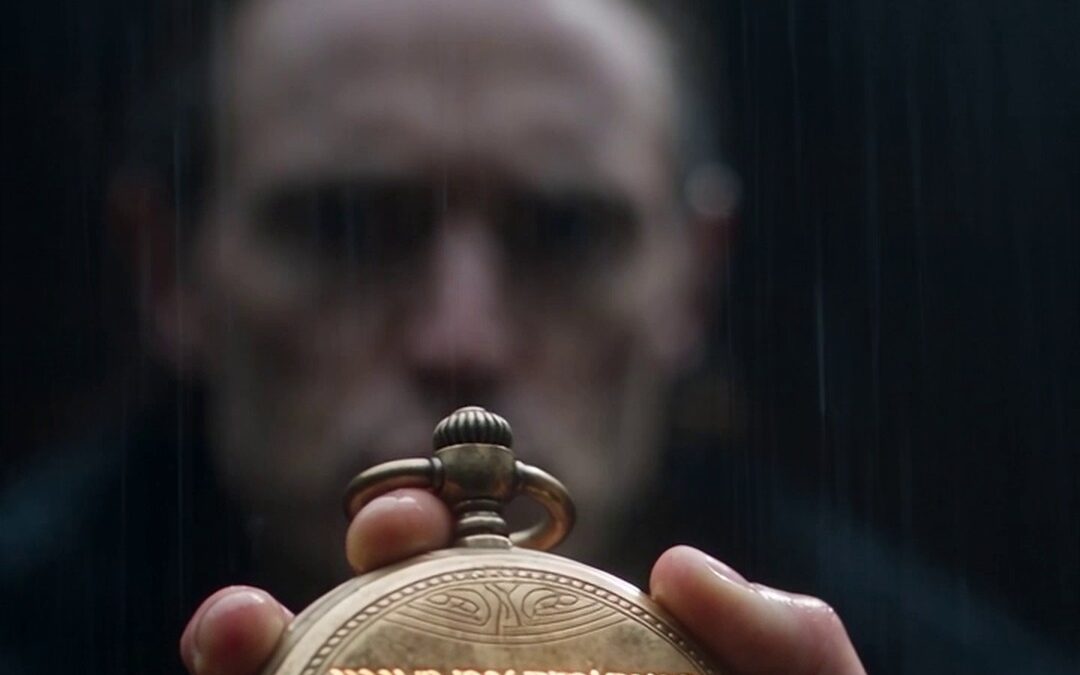
The letters glowed beneath the waterline.
LET THE RAIN CHOOSE ITS KEEPER.
Beneath them sat a small crown, made of seven falling drops.
Tamsin had cleaned that gauge every spring since she was nine.
The crown had never appeared.
“My father kept it on our kitchen shelf,” she said.
“What did he tell you about it?”
“That it measured storms.”
“Did it?”
“Badly.”
Corven looked up.
“He let you keep a broken gauge?”
“He said the important part was knowing when rain began.”
The silver light at the doors brightened.
The hatchling sneezed.
A spark struck the council table, but vanished in the water.
Tamsin touched his damp neck.
“What happens when he dries?”
Corven’s answer took a moment.
“He loses the strength to call water.”
“And then?”
“He cannot breathe.”
She looked at the soaked mantle.
It would dry.
The rain falling through the roof might stop.
“We need to get him outside.”
Corven went to the nearest door.
He placed his palm against it.
The silver light climbed his wrist, then drove him back.
He made no sound.
Tamsin saw the burn it left.
“The chamber chose to close,” he said.
“Chambers don’t choose.”
“This one does.”
“Then ask it what it wants.”
His gaze returned to the gauge.
“There should be a second line.”
Tamsin rubbed its copper rim.
Nothing appeared.
She lowered it into the water gathering on the table.
A thin stream poured through a hole in its base.
She caught the falling drops with her palm.
One.
Two.
Three.
On the seventh, new letters appeared.
Corven leaned close enough to read beside her.
THE HEIR CANNOT CALL WHAT THE CROWN HAS STOLEN.
The hatchling gave a small cry.
Corven went still.
“He was never refusing the rain,” he said.
“Who said he was?”
“The man who ordered the skylight sealed.”
* * *
Corven’s steward had a name.
Lord Soren Vey.
He governed the palace accounts, the royal archives, and the hatchling’s care while Corven attended to the eastern border.
He had served the crown for forty years.
He had also ordered the skylight sealed that morning.
Tamsin learned all of this while Corven tried the doors again.
The chamber remained closed.
They needed water.
They needed someone outside to bring it.
Corven pressed his injured palm against a narrow speaking grate.
“Captain,” he called.
A voice answered from the corridor.
Captain Ilyan led the royal guard.
He had been standing beside the doors since Tamsin broke the roof.
“The room will not open, sire.”
“Find Priest Elian.”
“And Lord Vey?”
“Keep him away from this wing.”
A pause followed.
“Understood.”
Tamsin looked at Corven.
“Why a priest?”
“Elian keeps the original charters.”
“Vey keeps the archives.”
“Yes.”
“That seems convenient for Vey.”
Corven looked toward the hatchling.
“It does now.”
He sent Ilyan for clean basins, too.
The doors admitted nothing larger than a folded sheet of paper.
Tamsin examined the speaking grate.
Its bars had been set into the stone with old mortar.
She had spent eleven years removing glass without cracking its frame.
“Give me your belt knife,” she said.
Corven handed it over.
She worked the blade beneath the lower bar.
Mortar crumbled.
“You’ll damage the wall.”
“I’ll put it on my bill.”
The bar came free.
A guard slid a narrow metal flask through the opening.
Tamsin filled the gauge first.
Then she soaked the hatchling’s wings.
Corven carried the remaining water to the mantle.
He knelt beside her.
“You noticed he needed rain.”
“His nose followed the drops on my sleeve.”
“I should have seen it.”
“Yes.”
He did not defend himself.
That unsettled her more than an argument would have.
Outside, boots crossed the corridor.
An older man spoke through the grate.
“Elian,” Corven said.
The priest lowered himself to one knee so Tamsin could see his face.
His hair was white.
His eyes fixed on the copper gauge.
“I thought that was gone,” he whispered.
Tamsin moved it out of sight.
“What is it?”
“A witness measure.”
“That doesn’t explain anything.”
“No,” Elian said. “It doesn’t.”
He asked her to read the inscription aloud.
She did.
The priest shut his eyes.
Corven demanded the original charter.
Elian had brought a copy.
The first charter lay in a sealed vault beneath the palace.
Its door required three keys.
Elian held one.
The keeper of civic records held another.
Lord Vey held the third.
“Then send for the civic keeper,” Corven said.
“I have.”
Elian flattened a page against the grate.
Tamsin read where he pointed.
Two centuries earlier, seven dragon clans had placed the storm crown in Corven’s family.
The crown came with a condition.
A living keeper, chosen freely by a storm hatchling, had to witness each succession.
The keeper could refuse.
The king could not appoint one.
The charter called that person queen of rain.
Tamsin looked at Corven.
“That’s a job?”
“It was,” Elian said.
“The title vanished from court records,” Corven added.
“When?”
Elian hesitated.
“Twenty-three years ago.”
Tamsin was twenty-three.
She disliked the way both men looked at her.
“My mother died when I was born,” she said.
“My father repaired windows.”
Elian’s gaze dropped to the gauge.
“Your father repaired more than windows.”
Tamsin could still picture his workbench.
Copper filings in the grain.
A chipped blue cup.
His hands guiding hers around the edge of a pane.
He had died two winters earlier after a long illness.
He had left her the shop, three unpaid invoices, and that gauge.
“He would have told me,” she said.
“Perhaps,” Elian replied.
“Do you know something?”
“I know he brought a child to my door.”
“When?”
“Twenty-three years ago.”
Tamsin’s fingers tightened.
“What child?”
Elian looked at her, then at Corven.
“I turned him away.”
The rain grew louder.
Elian rested one hand against the stone.
“I believed a sealed court decree.”
“What decree?” Tamsin asked.
“The decree said the queen of rain had died without an heir.”
* * *
Tamsin wanted the decree.
She wanted the name beneath it.
Most of all, she wanted Elian to stop watching her as though he remembered the shape of her face.
The chamber doors opened at dusk.
They did it without warning.
The silver light withdrew.
The hatchling was asleep inside Corven’s damp mantle.
Tamsin stepped into the corridor first.
Lord Vey waited beyond the guards.
He wore a plain gray coat.
Nothing about him suggested he had held a kingdom together through four border winters.
He studied the broken grate.
Then Tamsin’s bleeding foot.
Then the hatchling.
“I’m glad he has recovered,” Vey said.
Corven held the dragon closer.
“Why did you seal the skylight?”
“The physicians advised steady warmth.”
“Which physicians?”
Vey named three.
Elian wrote the names down.
“The chamber records the order,” Vey added. “You may inspect it.”
Tamsin watched him.
He did not look at the gauge.
That was careful.
He knew it was there.
Ilyan escorted Vey away from the hatchling’s wing.
Corven wanted him held.
Elian stopped him.
“An order can be mistaken,” the priest said.
“We need proof of intent.”
Corven’s jaw tightened.
“Get it.”
They took the hatchling to an open gallery.
Rain moved across the stone floor.
The little dragon woke when he smelled it.
He pressed against Tamsin’s wrist.
A servant brought dry boots.
Another brought a chair.
Tamsin accepted the boots.
She remained standing.
By midnight, the civic keeper arrived with her key.
Her name was Orla Fen.
She had held the city’s birth and death registers for thirty-six years.
She did not bow deeply.
She asked for a witness list.
Elian gave her one.
Corven signed it.
Tamsin read it before adding her name.
The archive vault stood beneath the palace kitchens.
Three locks opened in sequence.
Vey surrendered his key to Ilyan.
He watched the process from six paces away.
Inside, shelves held folded charters, tax rolls, military oaths, and marriage records bound with ribbon.
Orla asked for the decree Elian remembered.
Vey gave its date without looking at an index.
Tamsin noticed.
The document said Queen Meret had died at sea.
No child had survived her.
Seven witnesses had signed.
One was Elian.
He touched his signature.
“I saw the coffin,” he said.
“Did you see her?” Tamsin asked.
“No.”
Orla checked the civic death register.
Meret’s entry carried the same date.
The cause was listed as drowning.
The clerk’s mark belonged to a woman who had retired eight years ago.
Orla knew where she lived.
“Tomorrow,” she said.
Tamsin set the gauge beside the decree.
Its inscription had faded.
“It only showed words in rain,” she said.
Orla examined it without touching it.
“Where did your father find this?”
“He said it came with the shop.”
“Did it?”
“I never checked.”
Orla asked who had owned the shop before him.
Tamsin remembered a name on the deed.
Belen Ash.
Elian turned sharply.
“She was Meret’s attendant.”
The room narrowed around Tamsin.
“My father bought the shop from her.”
“He did,” Orla said. “I filed the transfer.”
“Was she alive then?”
“Yes.”
“She died when I was thirteen.”
Tamsin remembered Belen.
A stern old woman who brought pears at harvest.
She always inspected Tamsin’s hands for cuts.
She had never explained why.
Orla began a list.
The shop deed.
The retired clerk.
Belen’s papers, if any survived.
The witness measure.
The original queen’s charter.
No single item would settle the question.
Together, they might.
Corven looked at Tamsin.
“You can leave the palace.”
“The dragon needs water.”
“We can keep him outside.”
“That isn’t what I meant.”
“You can leave,” he repeated.
“I know.”
She stayed until dawn.
Not because of the title.
Not because of Corven.
The hatchling’s breath had steadied when rain touched her hand.
She wanted to know why someone had kept it from him.
At first light, Ilyan accompanied her to the shop.
Corven came too.
He left his crown behind.
Rain had washed the streets clean.
Tamsin unlocked the narrow door between a bakery and a shuttered cobbler.
Her father’s tools hung above the bench.
The blue cup still held three pencils.
She had never moved it.
Corven stopped in the doorway.
“You built the council skylight?”
“I repaired it.”
“Your father installed it.”
“Yes.”
Tamsin drew out the shop deed.
Belen Ash had sold it to her father for one crown.
The stated value was sixty.
On the back, in Belen’s cramped hand, was a note.
Keep the roof open when the child comes.
Tamsin read it twice.
“Which child?”
Corven could not answer.
Behind the deed lay a bundle of receipts.
Her father had paid Belen every month until her death.
The entries were marked for safekeeping.
Not rent.
Not wages.
Orla arrived with the retired clerk before noon.
The clerk’s name was Nessa Pell.
She recognized Meret’s death entry.
“I wrote it,” she said.
“Who gave you the information?” Orla asked.
Nessa looked at Corven.
“His steward.”
Vey had been young then.
He had held no great title.
But his name appeared in the clerk’s surviving daybook beside a fee for urgent registration.
Nessa had kept the daybook because it included her own apprenticeship records.
Orla compared the handwriting with the official register.
It matched.
“You never saw a body?” Tamsin asked.
“No.”
“Did you ask?”
“The court sent a sealed notice.”
Nessa swallowed.
“I believed it.”
Elian had said the same thing.
Tamsin could not bear another apology yet.
She turned the gauge over.
Her father had scratched a tiny mark beside its base.
Seven drops.
Beneath them, one letter.
B.
“Belen,” she said.
She fitted her nail into the seam.
The base turned.
Inside lay a narrow roll of oilcloth.
No one spoke while she opened it.
It held a dated statement.
Belen had signed it.
So had Tamsin’s father.
They had taken Meret from the harbor alive.
Meret had given birth in the glazier’s shop three nights later.
She had died that winter of a fever.
Her daughter had survived.
Tamsin lowered the page.
Elian gripped the edge of the bench.
Corven looked at her as if asking permission to believe it.
The final line named the person who had ordered Belen to remain silent.
Soren Vey.
* * *
They did not arrest Vey that morning.
Corven wanted to.
Orla made him read the statement again.
Belen described a frightened young mother.
She described a child.
She described Vey’s warning.
She did not say whether he had forged the death decree or believed it.
The difference mattered.
So did the signatures.
Belen and Tamsin’s father were dead.
The witnesses they could question had to be found.
Tamsin carried the statement upstairs.
At the shop window, she watched two city wardens enter the street.
They stopped outside the bakery.
One glanced at her door.
Ilyan saw them too.
“They work for the city,” he said.
“That doesn’t make them harmless.”
“No.”
He went out to speak with them.
They had a lawful notice.
The shop’s tax status was under review.
Its premises might be closed until the review ended.
Orla took the paper.
“The filing date is yesterday.”
“Who filed it?” Corven asked.
The warden pointed to the seal.
The treasury office.
Vey supervised it.
Tamsin felt the old fear rise.
The shop had survived thin winters.
It had survived her father’s illness.
A month closed would ruin it.
Corven offered to pay the disputed tax.
Orla shook her head.
“That would leave the notice in force.”
Tamsin held out her hand.
She read the property number.
It was wrong.
The notice named the empty cobbler’s shop next door.
Her father had taught her to check numbers before cutting glass.
A pane made for the wrong frame was still broken when the mistake was found.
She showed Orla.
The keeper smiled once.
“Useful.”
She wrote a formal objection.
The wardens withdrew.
“Will they try again?” Tamsin asked.
“Probably,” Orla said.
That afternoon, the hatchling’s water basin was removed from the gallery.
A servant said Vey had ordered fresh stone beneath it.
Ilyan found the basin in a locked storeroom.
The stone beneath it was fine.
The servant gave a written account.
He had followed an order bearing Vey’s office seal.
The hatchling was moved to a courtyard with a fountain.
Corven posted guards.
He also posted the servant’s account where every court officer could read it.
Vey complained that private instructions were being turned into spectacle.
Corven answered through counsel.
The palace advocate requested a formal inquiry.
The civic keeper supported it.
The charter allowed a public hearing when succession evidence had been concealed.
Elian requested the hearing before Corven could change his mind.
Tamsin spent that evening with the hatchling.
He lay beside the fountain.
His wings had grown glossy again.
When she approached, he raised his head.
“I don’t know what to call you,” she told him.
Corven sat on the opposite side.
“He has no formal name yet.”
“Why?”
“The naming comes after the first rain.”
“He’s been alive for eleven days.”
“The chamber was supposed to keep him safe until the ceremony.”
Tamsin looked at the open sky.
“He must have hated it.”
“He never cried when I held him,” Corven said.
“He didn’t have the strength.”
Corven’s expression tightened.
“I know that now.”
The hatchling climbed across his knee toward Tamsin.
She caught him before he reached the fountain.
His claws were cool.
Corven’s hand steadied her elbow.
He withdrew it when she looked at him.
“My father used to come home soaked,” she said.
“He worked on the palace roof in every season.”
“He told me kings could wait for glass.”
Corven glanced at her.
“He was right.”
Tamsin almost smiled.
The hatchling nudged her palm.
“What did you know about Meret?” she asked.
“She was my cousin.”
“Were you close?”
“When we were children.”
“What happened?”
“She objected to the council’s use of river water.”
“That sounds like a small argument.”
“It became a large one.”
Corven looked toward the fountain.
“She believed the crown’s reservoirs belonged to the city in drought years.”
“And you?”
“I believed Vey when he said she had taken a ship.”
Tamsin said nothing.
“He brought me her death decree months later,” Corven added.
“Were you away?”
“At the eastern border.”
“Did you come back?”
“Too late for a funeral.”
A bell rang over the roofs.
Corven stood.
The inquiry would begin in two days.
Vey had asked to address the council before it opened.
Corven’s advocate advised against a private meeting.
They agreed.
At dawn, a sealed packet arrived for Tamsin.
Ilyan checked it first.
It held no weapon.
Only a copy of her father’s last medical bills.
Someone had paid them.
The payment came through a charitable fund in Vey’s office.
A note lay beneath the bills.
He knew you were safe.
Tamsin read it once.
Then she asked Orla for the original fund ledger.
Vey’s payments began the winter Meret died.
They continued through her childhood.
The last was made six months before her father’s death.
Vey had not simply kept her secret.
He had paid to keep her alive.
That evening, the palace advocate returned with a second set of accounts.
The crown’s drought reserves had been moved into emergency control twenty-three years ago.
Vey had authorized the transfer.
Each year, he renewed the emergency.
Without a queen of rain to witness the reservoirs, the council could not end it.
Tamsin laid the two ledgers side by side.
Her childhood expenses.
The city’s water.
A living heir had been hidden while a dead queen’s absence kept Vey in power.
* * *
The hearing filled the council chamber.
The broken skylight remained open.
Tamsin had asked the builders to cover its sharp edges and leave the center clear.
Rain clouds moved beyond it.
The hatchling rested in a shallow pool beside her chair.
Corven sat beneath the royal crest.
He had offered her a place beside him.
She chose the witness bench.
Orla opened the hearing.
Elian read the original charter.
Then he read Meret’s death decree.
He did not soften his part in it.
“I signed after seeing a closed coffin,” he said.
“I did not verify the body.”
Vey stood when his turn came.
He had prepared well.
He admitted paying the glazier.
He admitted keeping Tamsin’s existence from court.
He denied threatening Belen.
He denied harming the hatchling.
“When Meret disappeared,” he said, “the border was near war.”
“A disputed heir would have divided the council.”
“I kept a child out of politics.”
Several councilors nodded.
Vey turned to Tamsin.
“Your father understood the danger.”
Tamsin held his gaze.
“He never told me.”
“He gave you an ordinary life.”
“You decided how ordinary it should be.”
“I ensured you had one.”
He let the room consider that.
Then he addressed Corven.
“The reservoir transfer fed the city through three droughts.”
Orla checked the accounts.
“That is true,” she said.
Vey spread his hands.
“Ask the bakers whether the water reached them.”
A baker in the gallery stood.
It had.
So had clean water during the fever winter.
Vey had built pipes.
He had hired crews.
He had solved real problems.
Tamsin understood why people trusted him.
She understood why Corven had.
The palace advocate asked about the sealed skylight.
Vey produced the physicians’ written advice.
The chamber should remain warm.
The dragon should be protected from sudden cold.
One physician spoke.
“I gave that advice,” she said.
“Did you advise sealing out rain?” Orla asked.
“No.”
“I was told the hatchling reacted poorly to it.”
“By whom?”
“Lord Vey.”
Vey answered calmly.
“The creature convulsed at the first rainfall.”
Tamsin looked at the hatchling in his pool.
He lifted one wing through the water.
Vey saw the movement.
“Conditions can change,” he said.
A councilor asked why Tamsin had not come forward earlier.
“She didn’t know,” Corven said.
Vey nodded.
“And now she stands to gain a crown.”
Tamsin rose.
“I stand to lose my shop.”
That quieted the councilor.
“I broke the skylight because he couldn’t breathe.”
“I learned about the charter afterward.”
Vey’s eyes narrowed.
“Intent can be hard to prove.”
“So can a queen,” she said.
She placed the gauge on the table.
Vey looked at it at last.
For the first time, his face lost its careful stillness.
The advocate poured rainwater into it.
The first inscription appeared.
Then the second.
The room watched the letters form.
Vey recovered.
“An old mechanism,” he said.
“Your father was a skilled craftsman.”
“Yes,” Tamsin said.
“He was.”
She opened the hidden base.
Orla read Belen’s statement aloud.
Vey challenged the signatures.
He challenged the date.
He challenged the memory of two dead people.
Orla had expected that.
She called Nessa Pell.
Nessa brought her daybook.
The payment for Meret’s death registration matched the treasury withdrawal Vey had signed.
Vey said the payment proved only that he had delivered a notice.
Orla called the harbor master’s daughter.
She had inherited her father’s tide logs.
The ship named in Meret’s decree had never left port.
Its departure had been canceled by a storm.
Vey said Meret could have sailed on another vessel.
Orla called the palace physician who had attended Meret before she vanished.
The physician was old.
Her hands trembled.
Her notes did not.
Meret had been seven months pregnant at her last palace visit.
Vey said he had never been told.
Then Tamsin showed the gauge to Orla.
“Turn it over,” she said.
Orla exposed the seven drops near the base.
Tamsin had assumed the letter beneath them stood for Belen.
It did.
But the mark was not scratched into the copper.
It had been struck from inside before the base was fitted.
Orla brought out the original witness register.
Twenty-three years earlier, Belen had recorded a measure in the queen’s custody.
Its identifying mark was seven drops and a B.
The register had been stored under another title.
Vey’s archive index called it a roof repair order.
Tamsin had recognized the measured rainfall written in its margins.
Her father used the same figures when he repaired gutters.
The register named Meret’s daughter.
Tamsin Vale.
It bore Meret’s signature, Belen’s, and the seal of the palace physician.
The physician recognized her seal.
So did two independent seal examiners appointed by the civic office.
Vey had indexed the record.
He had not destroyed it.
“You kept proof,” Tamsin said.
“I kept every record I could.”
“Then you knew.”
He looked toward the council.
“I knew a child existed.”
“And that she could end your emergency powers,” Orla said.
Vey’s answer came too quickly.
“She was a child.”
“She is twenty-three.”
“I was waiting for a stable year.”
Elian unfolded the drought accounts.
The city had seen six years with full reservoirs.
Vey had renewed the emergency through all six.
Corven asked him why.
Vey looked at the king.
“Because you let me run it.”
The words struck harder than a shout.
Corven remained seated.
“I did,” he said.
Orla called Ilyan.
He presented the servant’s account of the removed basin.
He presented the sealed skylight order.
Both bore Vey’s office seal.
The physician read her advice again.
Warmth.
Shelter.
Access to water.
No instruction to deny rain.
Vey argued the orders had been misunderstood.
The servant had obeyed their plain words.
Tamsin watched the hatchling.
He stood in his pool, small and bright.
She understood Vey’s design at last.
He had kept her alive because a dead heir might have brought an investigation.
He had kept her hidden because a living queen could end his rule.
He had kept the hatchling dry because a weak heir could not choose anyone.
The advocate stated that inference clearly.
Vey objected.
Orla agreed it was an inference.
Then she entered the records that supported it.
The hearing lasted until the lamps were lit.
At its end, the council suspended Vey’s offices.
The civic magistrate ordered the ledgers secured.
Vey would face charges for false registration, concealed records, and misuse of public funds.
The orders concerning the hatchling would be investigated separately.
Ilyan escorted him toward the door.
Vey stopped beside Tamsin.
“I gave you a childhood,” he said.
Tamsin held the gauge against her palm.
“My father gave me that.”
Vey had no answer.
Six weeks later, the magistrate found him responsible for the false record and the unlawful renewal of emergency control.
The court ordered restitution from the funds he had moved into his private office accounts.
It did not pretend every payment he had made was wicked.
The pipes remained.
The water they carried had always belonged to the city.
* * *
Autumn came slowly.
The roof over the council chamber stayed open until the last warm rain.
Tamsin sent a proper estimate for its repair.
Corven paid it from the palace maintenance account.
He did not add a crown.
The first time he visited her shop, he arrived with two guards and frightened away three customers.
The second time, he waited across the street.
The baker told everyone anyway.
By the third visit, Tamsin put him to work.
He held a frame steady while she set a pane.
He held it too tightly.
“You’re bending the lead,” she said.
“It looked loose.”
“It needs to move.”
“Glass moves?”
“In weather, everything does.”
He loosened his grip.
The baker watched from next door.
She later said the king looked like a man apologizing to a window.
Tamsin laughed harder than she expected.
It startled her.
So much of the summer had been spent reading what other people wrote about her.
Heir.
Keeper.
Witness.
Possible queen.
None of the words described the girl who knew which customer paid in eggs and which roof would fail before snow.
The charter left her a choice.
Orla explained it in the shop, with the hatchling asleep beneath the workbench.
Tamsin could accept the title of queen of rain.
She could refuse it.
If she refused, the crown would seek another keeper when the next storm dragon hatched.
The hatchling’s choice placed no legal duty on her until she consented.
“And if I accept?” Tamsin asked.
“You witness the use of the crown’s reservoirs.”
“You can stop a bad order,” Orla said.
“You can demand public records.”
“You cannot command the guards.”
Tamsin looked at Corven.
“That seems fair.”
“It is more oversight than I’ve had in years,” he said.
Elian came later.
He did not ask to be forgiven.
He brought the original decree and the page bearing his signature.
“I should have opened the coffin,” he said.
“Yes.”
“I should have asked where Meret’s attendant had gone.”
“Yes.”
“I am sorry.”
Tamsin let the words settle.
“I’ll work with you on the charter,” she said.
“I won’t call you family.”
Elian bowed his head.
“I understand.”
The next week, he brought her Meret’s letters.
He left them at the door and went away.
Tamsin read them at night.
Meret liked sour apples.
She argued with cartographers.
She feared deep water but loved rain on stone.
She had written about building public cisterns before Vey ever claimed the plan.
Tamsin recognized none of her mother’s handwriting.
She recognized the stubbornness.
It was enough for a beginning.
Corven gave her a ledger.
It listed the reservoir accounts in plain language.
No seals.
No hidden index.
She found two villages whose pumps had been delayed.
He sent crews.
When he asked what else she wanted, she told him to ask the villages.
He did.
The city found a way to talk about the scandal without treating Tamsin as one.
Some people still stared.
Some called her Your Highness.
She corrected them.
For a while, she had no title at all.
The hatchling visited the shop on wet mornings.
He grew too large for the space beneath the bench.
He liked the blue cup.
Tamsin moved the pencils before he could swallow one.
“He needs a name,” she said.
Corven looked at him.
“He does.”
“You keep waiting for a ceremony.”
“I keep waiting for you.”
“That sounds dangerous.”
“I know.”
He had learned to ask plainly.
He asked if she would come to the reservoir meeting.
She did.
He asked if she wanted a chair near his.
She took one near Orla.
He asked if he could walk her home.
Sometimes she said yes.
Sometimes she had work.
One evening, rain struck the shop roof while they ate bread and soup.
The hatchling slept across the doorway.
Corven set down his spoon.
“The council will offer you rooms in the palace.”
“I have rooms.”
“They’ll offer an income.”
“I earn one.”
“It could repair every roof in this district.”
Tamsin considered that.
“Then let’s repair every roof.”
The next month, she accepted a public fund for apprenticeships and storm repairs.
The money went through the civic office.
The accounts stayed open.
Her shop trained four apprentices.
One was the son of a baker who had never climbed higher than a kitchen shelf.
He hated ladders.
He proved excellent at cutting glass.
Tamsin kept her own wages.
She kept her father’s name above the door.
She also accepted the charter.
The ceremony took place beside the city’s oldest reservoir.
No throne was carried there.
Orla read the terms aloud.
The hatchling stood in shallow water.
He had finally been named Rainen, after no king or ancestor.
Corven had suggested it.
Tamsin had agreed because the dragon answered to it.
When Orla asked for her consent, Tamsin looked at the water.
It held the sky.
“I accept the work,” she said.
The crown’s seven drops shone on the gauge.
People cheered.
Afterward, Corven waited until the crowd moved away.
“I have another question,” he said.
“Ask it.”
“May I see you when neither of us is working?”
Tamsin glanced at the wet cuffs of his coat.
“You came to dinner last week.”
“We discussed pump valves.”
“We did.”
“I hoped we could discuss something else.”
She studied him.
He had failed her before he knew her.
He had admitted it in front of everyone.
He had spent months learning what repair required.
“Yes,” she said.
“On Friday.”
Rainen splashed both of them.
Corven looked down at his boots.
Tamsin laughed.
The dragon did it again.
* * *
Five years later, the council chamber had a new roof.
Tamsin had designed it.
Seven narrow channels carried rain from the glass into a stone basin.
They could be closed against cold.
They could never be sealed without three public signatures.
Rainen had grown tall enough to rest his chin on the council table.
He still preferred the basin.
On the first day of spring, a young apprentice climbed the maintenance ladder with Tamsin.
He checked each channel.
Then he called down, “It’s going to rain.”
Tamsin looked at the sky.
He was right.
Corven waited below with a stack of reservoir reports.
He had learned to hold a glass frame without bending it.
He had not learned to keep his papers dry.
Tamsin came down the ladder.
“Move those,” she said.
“Where?”
“Anywhere with a roof.”
“We are under one.”
“Watch the channels.”
The first drops struck the skylight.
Water ran down the narrow grooves.
Rainen lifted his head.
Five years earlier, Tamsin had broken glass to bring him rain.
Now the chamber welcomed it by design.
The city’s reservoirs stood in public trust.
The villages had working pumps.
Her father’s shop had six apprentices and a waiting list.
Elian still sent records when he found them.
Tamsin still read them at her own pace.
Vey remained out of office.
The law had answered for what he did.
His charity had never bought the right to choose her life.
Corven put the reports aside.
He held out his hand.
Tamsin took it.
Their wedding had been small, three summers earlier.
Orla had witnessed it.
The baker had cried and denied crying.
Rainen had tried to drink from the flower bowls.
None of that had changed the charter.
Tamsin could still refuse any crown order touching the rain.
Corven had signed that protection into law himself.
The apprentice came down from the ladder.
“Do I close the upper vents?”
Tamsin looked at Rainen.
His wings spread beneath the glass.
“No,” she said.
“He needs the rain.”
Corven smiled at her.
Once, those words had been an accusation.
Now they were a promise they both knew how to keep.
Rain reached the basin.
Rainen drank.
Tamsin set her father’s copper gauge beneath the flow.
It measured badly.
She kept it there anyway.
Seven drops touched its rim.
The old words returned in pale light.
LET THE RAIN CHOOSE ITS KEEPER.
Tamsin closed her hand around Corven’s.
Above them, the glass held.
Below it, the water fell freely.
THE END








