They Found a Child Alone on Her School Bus, and Her Signed Form Could End a Sixteen-Year Career
Chapter 1: The Last Sweep
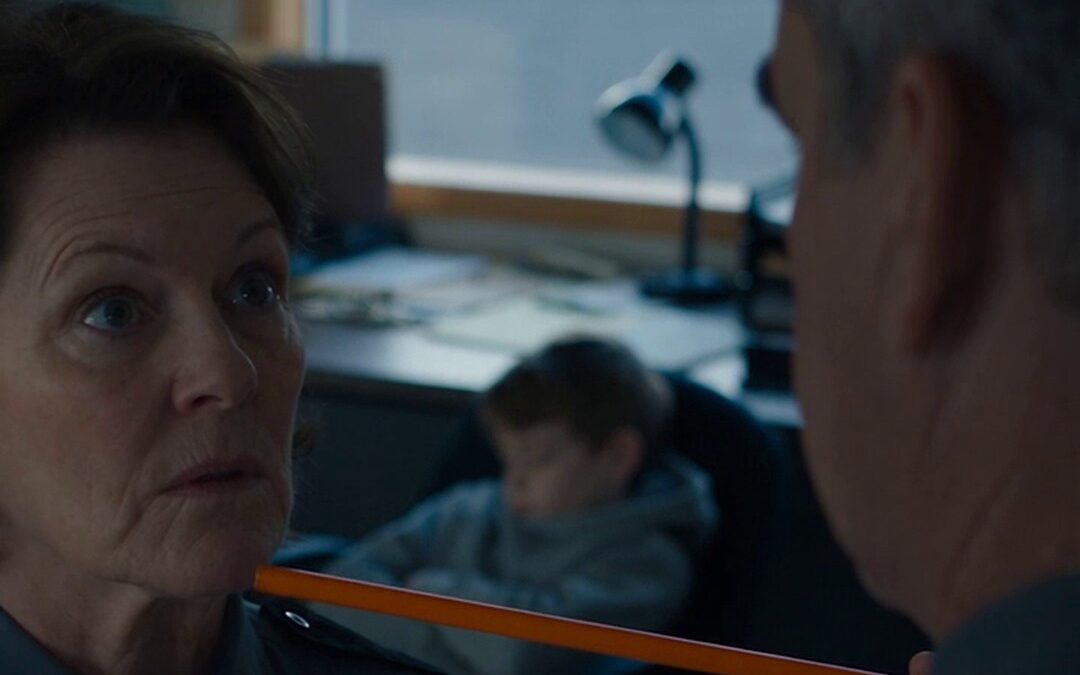
Dale held up the orange sweep paddle as if it were a piece of the boy’s clothing.
“You signed this bus clear, Ruth.”
Behind him, the second grader sat with his mother in the depot office, wrapped in a gray sweatshirt, his knees pressed together beneath the chair.
He had been found alone on Bus 12 twenty minutes after the yard closed to students.
Ruth had driven Bus 12 that afternoon.
Her route placard was still in its front window, and her initials were on the sweep sheet clipped beside the driver’s seat.
“I walked every row,” she said.
Dale looked at the paddle in his hand.
It was a flat piece of orange metal with a strip of black tape across its handle, made to hang at the back of the bus until a driver carried it forward during a final walk-through.
Ruth had carried it forward.
She remembered tapping the last seat with her knuckles, then watching a folded candy wrapper tremble beneath the heater as she walked up the aisle.
“You missed a stop last month,” Dale said.
Ruth felt the mechanic at the next desk go still.
She had missed one.
A girl had waited seven minutes for another bus, and Ruth had written the incident report herself.
“That’s why I checked twice today,” she said.
Colin stood near the door with his jacket zipped to his chin.
He drove the late shuttle after Ruth’s route, although Dale’s eyes kept returning to the placard and the signed sheet.
“The boy says he fell asleep,” Dale said.
“He was asleep when they found him,” Ruth replied.
Her voice came out harder than she meant it to.
The mother drew the boy closer.
Ruth tried again.
“Ask when he got on.”
“He doesn’t know,” Dale said.
Ruth looked away before the mother could see her frustration.
She had driven school buses for sixteen years; she knew what a frightened child could forget, and how little patience a parent should have for that distinction.
Dale set the paddle on the counter and held out his hand.
Ruth unhooked her depot keys.
Through the office window, Bus 12 stood under the yard lights, its door folded open for the search.
Ruth had turned it in with clean rubber steps.
Now a crescent of red field clay marked the lowest one, and another smear climbed toward the aisle.
She looked at Colin’s shoes, then at the clay again.
Why was red field clay on the steps of a bus she had swept clean?
Chapter 2: The Second Trip
Why was red field clay on the steps of a bus she had swept clean?
Ruth did not ask while Dale’s hand was still waiting for her keys.
She laid the ring on the counter, and its brass tags struck the laminate hard enough to make the boy lift his head.
Dale followed her gaze through the office window to Bus 12.
“That clay could have been there all day,” he said.
“It wasn’t there when I came in.”
“You didn’t photograph the steps.”
“No.”
He closed his fingers around the keys.
“Go home while I establish what happened.”
Ruth looked at Colin by the door.
His shoes were dusty, but the clay on Bus 12’s steps was too common around the athletic annex to prove who had brought it aboard.
“Did you take Twelve out after me?” she asked.
“I brought it into the yard,” Colin said.
“That isn’t what I asked.”
“Put your account in writing,” Dale said.
The boy’s mother drew him closer.
Ruth had already asked when he boarded, and she saw no reason to make him answer for the adults again.
“Is this a suspension?” she asked Dale.
“Paid leave pending the district review.”
“For how long?”
“I’ll know more after I speak to everyone.”
Ruth left through the side door.
Outside, Bus 12 stood beneath the yard lights with its door folded open.
Every driver knew the sweep routine: walk to the rear after the last student got off, check the seats and floor, carry the orange paddle forward, then sign the sheet.
Ruth had done all of it.
Through the window she could see the paddle on Dale’s counter, black tape peeling from its handle.
The hook at the rear of Bus 12 was empty.
At home, her daughter Beth opened the door before Ruth reached the porch.
Parents on the route had already been called.
Beth’s nine-year-old daughter rode with Ruth three mornings a week.
“Was a child left on your bus?” Beth asked.
“A child was found on it.”
“That’s a careful answer.”
“It’s the one I have.”
Beth still wore her grocery bakery apron, flour caught at one cuff.
“Did you sign that you checked it?”
“Yes.”
“And did you?”
“Yes.”
Beth folded her arms.
“After the stop you missed last month, you said you’d slow down.”
“I did.”
“I need to know my girl’s safe.”
“She is.”
Beth looked toward the stairs, where her daughter was getting ready for bed.
Ruth had expected anger from the boy’s mother.
Beth’s doubt landed differently because it came from the person who knew her best.
“I’ll tell you what I find out,” Ruth said.
Beth gave a tired nod and went upstairs.
At the kitchen table, Ruth wrote down Wednesday afternoon before memory could begin improving it.
She had left the middle school at 2:42 with twelve students.
Six got off at the athletic annex, including two with baseball gear.
She dropped the others along her regular route and returned Bus 12 to the depot at 3:26.
She walked the aisle, carried the paddle forward, signed the sweep sheet at 3:31, and put her keys on the board.
At the sink she had seen Colin take keys from Dale.
Ruth wrote, *Colin took Twelve*, then crossed it out.
From the sink she had not seen which keys he took.
She wrote that instead.
She added the clay, including that she had not seen it when she completed her sweep.
Then she remembered the candy wrapper trembling beneath the rear heater as she walked forward.
A child might have been hidden under a seat she believed she had checked.
The thought made her grip the pen harder.
She wrote that she had looked under the seats but could not swear she had touched the floor beneath each one.
It was a poor defense.
It was also the truth.
Her phone lit with a message from another driver asking what had happened.
Ruth turned it face down.
The next morning Dale met her in the transportation office with a district personnel officer.
They had her account on the table.
The officer asked Ruth to describe her sweep, then pointed to the sentence about the floor.
“Why include that?” she asked.
“Because I didn’t want my memory to get better overnight.”
The officer made a note.
Dale said the boy was eight and home with his mother.
Ruth felt her shoulders lower.
“Did anyone learn when he boarded?” she asked.
“He remembers seeing ball fields,” Dale said.
“My route stopped there.”
“That’s why it doesn’t settle anything.”
Dale showed her a copy of the sweep sheet.
Her initials filled the final box.
No second driver had signed.
“Was Twelve used again?” she asked.
“Colin moved it to clear a lane.”
“Outside the yard?”
“His account says no.”
“Then what brought clay onto the steps?”
“It could have been tracked in earlier.”
Ruth tapped her account.
“I’m telling you what I saw when I finished.”
“And I’m recording it,” Dale said.
The officer explained that Ruth would remain on paid leave during the safety review and could bring a representative to the next meeting.
No employment decision would be made that morning.
Ruth signed to acknowledge the notice.
“I want to see the bus,” she said.
“It’s out of service for the review,” Dale replied.
“I know how to look at it.”
“I know you do.”
Ruth had trained new drivers on the sweep procedure, including Colin.
Now her signature was the clearest document in the room, and she could not touch the bus it described.
In the parking lot she called June, the union representative who drove an elementary route.
June listened to Ruth’s account without interrupting.
“Don’t go back to the bus,” she said.
“I won’t.”
“Don’t contact the boy.”
“I wasn’t going to.”
“Send me what you wrote last night.”
“You think I left something out?”
“I think you included something Dale can use against you, and you kept it in.”
“That was the truth.”
“Then I can work with it.”
June would request the vehicle movement record, the original sweep sheet, and the dispatch board through the review.
She warned Ruth that a bus trace could show where the vehicle traveled without identifying a passenger or driver.
“I know,” Ruth said.
The clay was a question.
She still needed to find out when it got there.
Ruth drove to the public entrance of the athletic annex.
A red dirt path ran from the playing fields to the bus curb.
She stood where Bus 12 had stopped on her route.
One of her baseball players could have tracked clay aboard, and her claim that the steps were clean afterward depended entirely on her word.
Mina, the program aide, came through the door carrying returned water bottles.
“Ruth,” she said quietly.
“Morning.”
“I heard about the boy.”
“Was he here after my bus left?”
Mina tightened her grip on the tub.
“I can’t discuss a student’s record with you.”
“You’re right.”
Ruth stepped aside.
Mina had handled late pickups for years.
She would not break a rule because Ruth looked frightened.
“Can you tell me how you record departures?” Ruth asked.
“We mark them when they leave the program.”
“Does the sheet stay here?”
“It goes to the school office.”
“Thank you.”
Mina lifted the tub again.
“Yesterday was crowded,” she said.
“Because of the teams?”
“And the younger kids waiting inside.”
Ruth looked from the program door to the curb.
“Was there another bus?”
Mina hesitated.
“That’s part of the record too.”
Ruth let her go.
An ordinary sign-out sheet existed because the annex had to account for children at pickup.
It might show only a time, but at least it had a reason to exist before anyone accused Ruth.
In a diner parking lot, Ruth drew a timeline on the back of her coffee receipt.
Her bus had reached the annex shortly before three and returned to the depot at 3:26.
The boy had been found after Bus 12 returned to the yard later that afternoon.
He could have boarded on Ruth’s trip or on a second one.
His memory of ball fields fit either.
Ruth thought again about the orange paddle.
She had carried it forward at 3:31.
If Colin took passengers afterward, he should have returned it to the rear before starting and brought it forward after his own sweep.
It was at the front when the boy was found.
That could mean Colin had skipped a step.
It could also mean Ruth had missed the boy.
She wrote beneath the times: *Who put the paddle back?*
June called while Ruth was still staring at the receipt.
“I’ve requested the sign-out record,” she said.
“And the original sweep sheet?”
“Yes.”
“Dale already showed me a copy.”
“I want to see the space for a second trip.”
June had argued for that space two years earlier, after a route change on the dispatch board led to a driver being blamed for a missed pickup.
The district had added a second signature box, but June said she rarely saw it used.
“The vehicle record has to be pulled by the safety officer,” she added.
“When?”
“I’ve asked for it this week.”
Ruth folded the receipt.
A record kept for routine operations would survive a few days.
Whether it helped her was another matter.
That afternoon Dale sent notice of a Monday meeting and attached Colin’s written statement.
Colin said he had moved Bus 12 within the yard at 3:48 because maintenance needed the lane.
He had taken no passengers.
The orange paddle was already at the front when he entered.
Ruth read the statement twice.
If Colin was telling the truth, he accounted for the changed parking place while leaving the boy on her trip.
If he was lying, he had committed himself to a story a vehicle record might test.
“Did Dale ask him about his shoes?” Ruth asked June.
“He said he’d walked through the ballfield earlier.”
“He might have.”
“Exactly.”
Ruth disliked hearing her own objection from June, but she needed someone who would say it before Dale did.
At home she drafted a note to the boy’s mother.
*I am sorry he was alone.*
She could say that without claiming responsibility for leaving him.
She could also see how an apology from the accused driver might feel like a request for something in return.
She folded the note and put it in her bag.
On Friday the district safety officer released a certified trace of Bus 12’s movements.
June brought it to Ruth’s kitchen table.
After Ruth’s 3:31 sweep, the bus had traveled from the depot to the athletic annex, stopped there, made three neighborhood stops, and returned to the yard at 4:07.
Ruth followed the route with her finger.
“Colin said he stayed in the yard.”
“That part of his account is false,” June said.
“So he took the boy.”
“We don’t know when the boy boarded.”
Ruth pulled her hand from the page.
Dale could still argue she had missed him on her route and Colin had driven afterward without noticing him.
The trace did not show seats or faces.
At the annex stop, the printed time fell just after half past three.
Ruth pictured the curb, the red path, and the new clay on the steps.
The bus had returned to the fields after her sweep.
That explained how fresh clay could reach a bus she had turned in clean, but it did not prove who carried it aboard.
The dispatch board gave them less.
It showed Bus 12 assigned to Ruth until 3:30 and nobody assigned afterward.
The late-shuttle space was blank.
“Dale says Colin was supposed to use Sixteen,” June said.
“What happened to it?”
“It wouldn’t start.”
“So someone gave him Twelve.”
“Dale says he told Colin to wait.”
“Did anyone hear that?”
“Not yet.”
Ruth remembered seeing keys pass from Dale’s hand to Colin’s.
She could not identify the ring.
Whether Dale had authorized the trip mattered to the district, but it did not change a driver’s duty to check an empty bus.
June had received a copy of the annex sign-out sheet with student names masked.
The school would let the administrator review the original at Monday’s meeting.
“I wish his mother could see it now,” Ruth said.
“She can ask for her son’s record,” June replied.
“She’s been told about the second trip.”
“And?”
“She asked when he boarded.”
Ruth touched the folded note in her bag, then left it there.
She would not use an apology to seek evidence from a mother whose son had been frightened.
At Beth’s daughter’s school presentation that afternoon, Ruth sat in the last row.
Her granddaughter spotted her from the front of the room and smiled through two practiced sentences about the planets.
Afterward she carried over a cardboard Saturn.
“I fixed its ring,” she told Ruth.
“With what?”
“Tape.”
Across the room, two parents stopped talking when they recognized Ruth.
Beth noticed.
On the walk to the car she said, “She heard another version today.”
“What version?”
“That the boy was under a seat and you never looked.”
“He might have been under a seat when somebody failed to look.”
“Ruth.”
“What do you want me to say?”
“I want one sentence I can give her.”
Ruth stopped beside the car.
“Tell her I’m trying to learn when he got on.”
“That sounds like an investigator.”
“It’s the only answer I trust.”
Beth opened the car door but did not get in.
“Your incident report last month sounded careful too.”
“I wrote that I missed the stop.”
“You told me a truck blocked your view.”
“It did.”
“You were also talking to another driver on the radio.”
Ruth felt her face warm.
She had reported the radio conversation to the district but let Beth keep the simpler account.
“I was,” Ruth said.
“That’s why I’m having trouble.”
Ruth glanced at her granddaughter repairing Saturn in the back seat.
“I should’ve told you.”
“Yes.”
Beth got into the car.
Over the weekend Ruth opened the binder of route instructions in her garage.
She found the child-check procedure from the year the orange paddles were introduced.
Before a passenger trip, the paddle belonged at the rear.
After the last student got off, the driver carried it forward during the sweep.
Before the next passenger trip, a driver returned it to the rear.
The instructions did not assign the reset to a particular person when two drivers exchanged a bus.
Custom had filled that gap at the depot.
One driver left the paddle forward as a sign of a completed sweep; the next driver reset it before taking students.
Ruth knew because she had taught it.
She called June.
“The current procedure still says the driver beginning a trip checks the paddle at the rear?”
“Yes.”
“Then Colin’s statement matters.”
“If he carried passengers.”
“The bus took the late route.”
“The bus did,” June said.
“Stay precise.”
Ruth closed the binder.
Every promising fact seemed to lose a little of its shine when June put it into a sentence Dale could defend.
On Sunday Ruth returned to the public lot at the annex.
She walked from the program door to the bus curb.
The playing fields were visible from the windows, so the boy could remember them whether he boarded on Ruth’s trip or later.
Red clay had dried in the grooves of the curb.
It was everywhere a child might step.
Ruth took no sample.
A pocketful of dirt could not date the clay already on Bus 12.
She wrote down the view from the door, the path, and the place a group might wait.
She had spent the morning where the boy had stood and still could not say which bus he entered.
Monday’s meeting included the boy’s mother.
Her name was Erin, and she sat across from Ruth with a canvas folder on her lap.
The boy stayed home.
“I was told he was alone in a closed bus,” Erin said.
“He was,” Dale replied.
“For how long?”
“Twenty-one minutes between the bus returning and our finding him.”
Erin looked at Ruth.
“You signed that you checked it.”
“After my route,” Ruth said.
“I checked it then.”
“The board had your name on Twelve.”
“Until 3:30,” June said.
“And it moved again,” Ruth added.
Erin opened her folder.
“I want to hear about that trip.”
Dale explained the trace and Colin’s first statement.
Colin had revised his account over the weekend.
He now said he drove to the annex for sports equipment, then made neighborhood stops to deliver it to staff.
He still said he had carried no children.
“His first statement said he never left the yard,” Ruth said.
“He says he feared discipline for taking the bus without a dispatch entry,” Dale replied.
“That’s one possible explanation,” June said.
Dale did not argue.
He looked like a man who had spent four days discovering blank spaces in records he thought were complete.
Erin removed a sheet from her folder.
The school had given her the part of the annex record concerning her son.
It showed he was present at the program at 3:15 and released to the late bus after 3:30.
“I saw the original this morning,” Erin said.
She passed the sheet to Dale.
Ruth watched his face change as he read.
“Was he at the annex after my route ended?” she asked.
“The record says he was.”
For a moment the room was quiet.
Then Erin said, “I asked the aide whether she watched him sit down.”
Dale looked up.
“She didn’t?”
“She had another pickup inside.”
Ruth understood why Erin had asked.
The record placed the boy at the annex after Ruth’s trip, but a mark might have been made from memory.
Even if it was accurate, the release entry alone did not show the boy seated on Bus 12.
June asked to inspect the bound book.
A school administrator was bringing it over.
During the break, Erin stopped Ruth in the hall.
“I’m not ready to tell my son this is settled,” she said.
“I wouldn’t ask you to.”
“He woke up and couldn’t open the door.”
“I’m sorry he had to feel that.”
Erin studied her.
“He keeps asking whether the drivers knew he was there.”
“I don’t know what Colin knew,” Ruth said.
“I know what I did on my trip.”
“That’s another careful answer.”
“It’s all I can prove.”
When the administrator arrived, she opened the bound sign-out book on the table.
The annex staff checked attendance during the program and recorded each departure.
At day’s end the book went to the school office so staff could answer pickup questions and account for every child.
The Wednesday page sat between days completed in the same ink and columns.
“Mina made the 3:15 mark,” the administrator said.
“Did she see him then?” Dale asked.
“Yes.”
“Did she see him board Twelve?”
“She took the late group to the curb, then went inside for a parent.”
Ruth leaned closer to the book.
Beside the boy’s departure entry was a small bent mark that appeared beside several other names.
“What does that mean?” she asked.
“It marks children sent with the late-bus group,” the administrator said.
“How many?”
“Nine.”
“Who counted them at the bus?”
“The driver should have had a loading tally.”
Dale said Colin had turned in no tally.
“What does the aide hand the driver?” Ruth asked.
“A count card.”
“Is there a copy?”
The administrator paused.
“It comes from a pad.”
She did not know whether the pad retained a copy, but she would check when she returned to the school.
Dale called Colin in.
He sat at the end of the table, away from Erin.
Bus 16 had failed to start, he said, so he took Twelve without writing his name on the board.
He loaded equipment at the annex and stopped along the late route to deliver it.
He had not checked beneath every seat when he parked because he believed there had been no students.
“That was wrong,” he said.
“Did you see this boy at the annex?” Dale asked.
“No.”
“Did anyone ask you to take the late group?”
“No.”
The administrator said the group had been told a bus was coming.
Colin spread his hands.
“I don’t know who told them.”
June asked why the vehicle trace showed three stops on the late-shuttle route.
“For equipment,” Colin said.
“To whom?”
“Staff.”
“Which staff?”
“I don’t remember every name.”
Dale ended the exchange before it became a contest over recollections.
The school would check its records, interview the annex staff, and report back.
Ruth’s leave would continue.
Erin shut her folder.
“You’ve had five days,” she said.
“My son was alone for twenty-one minutes.”
Dale accepted the words without defending the delay.
Outside, Beth had sent a message asking how the meeting went.
Ruth typed, *The school record places him at the annex after my route.*
Beth replied, *Does that settle it?*
Ruth looked at the phone.
*They’re checking how he got on the bus.*
The next morning Colin gave the district another detail.
He said Ruth had come to the annex curb while he loaded equipment and asked him for a forgotten route folder.
If she had been there, Dale said, she might have seen the boy board or known the paddle had not been reset.
Colin had placed her at the one site that connected his trip to the child.
“I wasn’t there,” Ruth told June.
“I believe you.”
“Then why is Dale repeating it?”
“He has to ask you about a witness account.”
“He’s the witness to his own story.”
“And we’ll make him say exactly what he claims he saw.”
At the next meeting, Dale laid out a map of the annex curb.
“Where were you between 3:30 and four?” he asked Ruth.
“At the depot sink, then driving home.”
“Can anyone confirm when you left?”
“The mechanic saw me at the sink.”
“After that?”
“No.”
Colin had chosen an interval that no signed document covered.
“You came to the bus door,” he said.
“No.”
“You wanted your green folder.”
“My folder was in my car.”
“You could’ve had another.”
“I could have,” Ruth said.
She had photographed the folder where she found it on Tuesday, beneath her passenger seat.
The picture proved nothing about where it had been Wednesday, so she left it in her bag.
Dale told Colin not to argue directly with her.
Ruth almost laughed.
Her signature had counted against her for nearly a week.
Now Colin could put her at the annex with one unsupported conversation, and she had to spend a meeting denying it.
Outside, June caught up with her.
“Tell me if you went back,” June said.
“I didn’t.”
“Even for a minute?”
“You’re doing it too.”
“I’m preparing for Dale’s next question.”
Ruth stopped.
“I lied to Beth about the missed stop.”
June waited.
“I let her think the truck was the whole reason,” Ruth said.
“I left out the radio call.”
“That wasn’t wise.”
“I’m telling you because I don’t want you wondering what else I’ve cleaned up.”
“What else?”
“Nothing.”
June nodded.
“Then we work with nothing.”
At Beth’s house that evening, Ruth told her about Colin’s claim before anyone else could.
Beth folded her daughter’s laundry as she listened.
“Did you go back to the annex?” she asked.
“No.”
Beth smoothed a shirt across her knees.
“After last month, I need more than your word.”
“I know.”
“That doesn’t mean I think you hurt the boy.”
“It sounds close.”
“I think you sometimes tell the part of a story you can stand to hear.”
Ruth sat on the other end of the couch.
“That’s fair about the stop.”
“I don’t want it to be fair today.”
For a while Beth folded in silence.
Then Ruth said, “I’m going to find out what happened at that curb.”
“Can you?”
“I can find out what Colin took from there.”
At home Ruth compared the certified trace with an old late-shuttle route map.
Bus 12 stopped at the annex curb at 3:36.
Its next three stops matched the corners on the family shuttle handout: the library, the grocery, and the community center.
The first stop lasted long enough for a group to get off.
The pattern looked like a passenger route, but the trace could not label the people inside.
“Dale compared the stops,” June said when Ruth called.
“What does he say?”
“They’re persuasive.”
“And Colin?”
“He says staff took equipment at those corners.”
“Does anyone confirm that?”
“The district is asking.”
Ruth looked back at Mina’s sign-out marks.
The aide had released nine children to the curb.
A driver should have had a loading tally, but Colin said he made none.
Ruth thought of the count card the administrator had mentioned.
She called the annex office and asked about the release procedure, keeping her questions away from individual students.
“Does an aide walk the late group out?” she asked.
“Usually,” the administrator said.
“Did Mina do that Wednesday?”
“Yes.”
“Where does she count them?”
“At the program door and again at the curb.”
“Does she hand the count card to the driver?”
“Yes.”
“Is there a sheet beneath the card?”
The administrator was quiet.
“There’s a carbon under each one,” she said.
“Would Wednesday’s still be on the pad?”
“I’ll have to look.”
Ruth thanked her.
She had stood at that curb twice without asking the question that mattered.
The aide’s mark showed children leaving the room; a count card could show what was handed over at the bus.
Ruth called June.
June made the formal request through the district.
The administrator found the pad in the annex office, where it was kept for reconciling pickup questions.
Before sharing the entry concerning Erin’s son, she contacted Erin.
The wait lasted through Wednesday.
Ruth did not return to the annex.
She had found where a record might be; the school had to inspect and verify its own pad.
After school she helped Beth’s daughter build a cardboard solar system.
Beth came home to find Saturn hanging from string above the kitchen table.
“I made Jupiter too small,” the girl said.
“It’ll survive,” Beth replied.
The child went to wash paint from her hands.
Beth stood beside Ruth.
“I told her you were trying to find out what happened.”
“That’s true.”
“She asked if you’d drive her bus again.”
“What did you say?”
“That I didn’t know.”
Ruth watched the cardboard planets turn.
“You can tell her I’m still her grandma.”
Beth’s face tightened.
“She knows that.”
“I needed to hear it.”
Beth touched Saturn’s taped ring.
“I’m sorry I made you ask.”
On Thursday June brought a copy of the count-card carbon to Ruth’s house.
It recorded nine children released at the curb to Bus 12 at 3:36.
Erin’s son was among them.
Beside the driver line was Colin’s initial, pressed through from the top card.
“The administrator checked it against the pad,” June said.
“And Mina?”
“She remembers handing a card to the driver at Twelve’s door.”
“Did she see Colin’s face?”
“Not clearly enough to swear to it.”
Ruth lowered the copy.
That restraint made Mina’s account more useful, not less.
The carbon existed because the annex counted children before transferring them to a bus.
It survived because the office kept the pad for pickup disputes.
The administrator had checked the original against the surrounding days.
Colin could still argue someone else wrote his initial, or that one of the nine never boarded.
He would have to explain why he had said no group was there.
“Has Dale seen it?” Ruth asked.
“Yes.”
“What did he say?”
“Final review tomorrow.”
Ruth read the sheet again.
The orange paddle had been forward when she signed.
Colin had said it was forward when he took the bus.
If he carried passengers, he should have returned it to the rear first.
Its position when the boy was found would then say nothing about whether Ruth had completed her sweep.
It would show that no one had reset the bus for a second trip.
The final review began Friday morning.
Erin and the school administrator sat across from Ruth and June.
Colin’s three accounts lay on the table in front of Dale.
Dale began with the vehicle trace.
“I said I stayed in the yard because I was scared,” Colin said.
“Scared of what?” Dale asked.
“Taking Twelve without a dispatch entry.”
“You drove the late-shuttle route.”
“I stopped along it.”
“For whom?”
“Staff with equipment.”
Colin named a coach.
Dale said the coach had told the district she went home in her own car and received nothing.
“Maybe I mixed up the day,” Colin said.
Dale looked at him.
“Were there children on Twelve after Ruth signed her sweep?”
“No.”
“You’re certain?”
“Yes.”
Dale set the count-card carbon in front of him.
Colin looked at the driver line before he touched the sheet.
He said he sometimes initialed blank cards for Mina when the program was busy.
The administrator shook her head.
“That isn’t our practice.”
“It happened once,” Colin said.
“It did not happen Wednesday,” she replied.
Mina had assembled nine children at the curb and written the count there.
She handed the top card to the driver at Bus 12’s open door.
The carbon stayed on the pad beneath it.
Colin pointed to the list.
“A count can be wrong,” he said.
“Kids run back inside.”
“That can happen,” Dale said.
“I could have taken eight.”
Erin’s hands tightened around her folder.
“My son said he got on a bus.”
“He remembers the ball fields from earlier,” Colin said.
“He was confused when they found him.”
Ruth felt the room lean toward the ambiguity he needed.
The boy had been at the annex twice while Bus 12 was there.
Mina had not watched him sit down.
A driver defending his job would press both points.
June asked to question Colin about his new claim.
Dale agreed.
“You said Ruth came to the bus door,” June said.
“She did.”
“Where were the nine children?”
“There weren’t nine children.”
“Then why did Mina hand a count card to Twelve’s driver?”
“She’s remembering another day.”
“Did she hand you a blank card?”
“She might have.”
“And Ruth was standing beside you?”
“Yes.”
Ruth heard how much Colin needed to be true at once.
She turned to him.
“You said I wanted a green folder.”
“You did.”
“You could be right about its color.”
He looked briefly relieved.
“I’m saying I wasn’t at the annex,” Ruth continued.
“The point is that you chose a detail I can’t prove from where the folder is today.”
Dale raised a hand.
“Keep to what happened Wednesday.”
“That’s what I’m trying to do.”
Ruth turned toward him.
“Ask Colin where the paddle was when he took Twelve.”
“At the front,” Colin said.
“Where I left it after my trip.”
“You signed the bus clear,” he said.
“I did.”
“You could have missed him.”
“I could have missed a child who was on my bus,” Ruth replied.
“Show me how this boy was under my seats while Mina checked him present at the annex after I parked.”
“That check could be wrong,” Colin said.
“It could.”
Ruth kept her voice level.
“Then the later count must be wrong too.”
“Mina says she handed a card to the driver with nine children at the curb.”
“The bus made the late-route stops.”
“You say every stop was for equipment.”
Colin looked to Dale.
“She’s building a story out of separate records.”
Dale did not dismiss the objection.
“Each record has limits,” he said to Ruth.
“The trace doesn’t identify passengers.”
“The carbon doesn’t show every child climbing aboard.”
“And Mina didn’t watch the boy take a seat.”
For a moment Ruth thought he would leave the finding open.
She had spent nine days learning what each record could and could not say, and now its limits filled the room.
Erin spoke.
“My son told me he left with the late group.”
Colin turned toward her.
“He couldn’t tell anyone which trip.”
“Then check when he was still inside,” she said.
Dale asked the administrator to describe the 3:15 attendance check.
Mina had seen the boy in the program room and marked him present.
She later wrote his departure beside the other children in the late group.
The entries were in the original bound book, kept in sequence with the previous and following days.
The administrator had inspected it herself and spoken with Mina.
Dale called the district safety officer, who confirmed that she had pulled the movement trace directly from the vehicle service account.
It was kept for route and maintenance reviews.
It placed Bus 12 at the annex curb when the group was released, at the three late-shuttle stops afterward, and in the yard at 4:07.
The officer could not identify a driver or passenger from that record.
Its route and times independently matched the school’s count.
Dale put the trace beside the carbon.
“Your first account said you never left the yard,” he told Colin.
“I was scared.”
“Your second said you moved equipment without students.”
“I thought that was what happened.”
“You accepted a card for nine children.”
“I don’t remember signing.”
“A minute ago you said you sometimes signed blank cards.”
“I was explaining the initial.”
“Did Ruth come to the annex?”
Colin rubbed the worn patch on his sleeve.
“I thought I saw her.”
“That isn’t what you wrote.”
“No.”
Dale waited.
“I don’t know who it was,” Colin said.
It was as close as he came to withdrawing the accusation.
Dale asked him one more question.
“When you parked Twelve at 4:07, did you walk to the rear and check beneath the seats?”
Colin stared at the count card.
“No.”
Erin looked away.
The boy had been at the annex after Ruth completed her route.
He had been released with the late group to Bus 12’s second trip.
The driver of that trip returned the bus without a sweep.
Dale said those findings would be included in the safety report, with employment decisions to follow the remaining review.
He did not announce a firing or ask anyone to forgive Colin.
The orange paddle lay on a side table.
Dale picked it up by its black-taped handle.
“I held this up to you Wednesday,” he told Ruth.
“Yes.”
“I thought it meant you were the last person to check Twelve.”
“It meant I checked it after my route.”
Dale looked toward the empty second-signature box on the sweep sheet.
“We let one sweep stand for another trip.”
“And the board still showed my name,” Ruth said.
“I left the later assignment blank.”
His failure had made her the obvious driver to blame.
It had not put the boy on the second trip or excused Colin from checking the bus.
Erin stood.
“I want the report to say how long my son was alone.”
“It will,” Dale said.
“He keeps asking whether anyone looked for him.”
Dale had no ready answer.
Ruth could have said that she looked after her trip.
Erin already knew, and Ruth would not turn the boy’s question into a request for comfort.
“I’m sorry he was alone,” Ruth said.
Erin held her gaze.
“I know you didn’t leave him there.”
That was all she offered.
Ruth was grateful for exactly that much.
Two weeks later the district completed its review.
Ruth’s paid leave ended.
The finding stated that Erin’s son remained at the annex after Ruth’s route and was released to the later Bus 12 trip.
It also recorded the blank dispatch assignment and the missing post-trip sweep.
Colin was placed on leave during the employment process and later no longer drove for the district.
Ruth was not told which finding decided his employment outcome, and she did not ask for his personnel file.
The district added a handoff line to the dispatch board.
A driver taking a bus had to sign for it, confirm the orange paddle was on its rear hook before carrying passengers, and make a separate sweep entry at the end.
Dale checked the new line himself during its first week.
The correction traveled through the depot, but the first accusation had already reached Beth’s daughter, the parents at school, and drivers who had worked beside Ruth for years.
One told her he had never believed she would skip a sweep.
Another admitted he had believed it because she missed the stop last month.
Ruth could answer both honestly.
She had missed that stop.
She had checked Bus 12.
Beth invited her to dinner on her first day back.
After the dishes, they stood at the kitchen sink while Beth’s daughter worked on another cardboard planet.
“I told her the district found out you checked your bus,” Beth said.
“Did you tell her about the second trip?”
“I said another trip happened after yours.”
Ruth dried a plate.
“That’s enough for her.”
“I should have told you about the radio last month,” Ruth said.
“You should have.”
Beth rinsed the next plate.
“I should have waited before treating every careful sentence like a lie.”
Neither asked the other to forget the week.
On Monday Ruth reported before the first buses left.
Her assignment was Bus 19, with stiff seat backs and a heater that clicked as it warmed.
She checked the tires, adjusted the mirrors, and walked the aisle before any child boarded.
An orange paddle hung from the rear window.
For a moment she saw Dale holding up the one from Bus 12 and Erin’s son sitting with his knees pressed together beneath the office chair.
Ruth touched the paddle to make sure its hook held.
It would stay there until the last child stepped off.
Then she would carry it forward herself.








