They Said She Left a Child on Her School Bus—and Nine Years of Trust Could Vanish With Her Route Keys
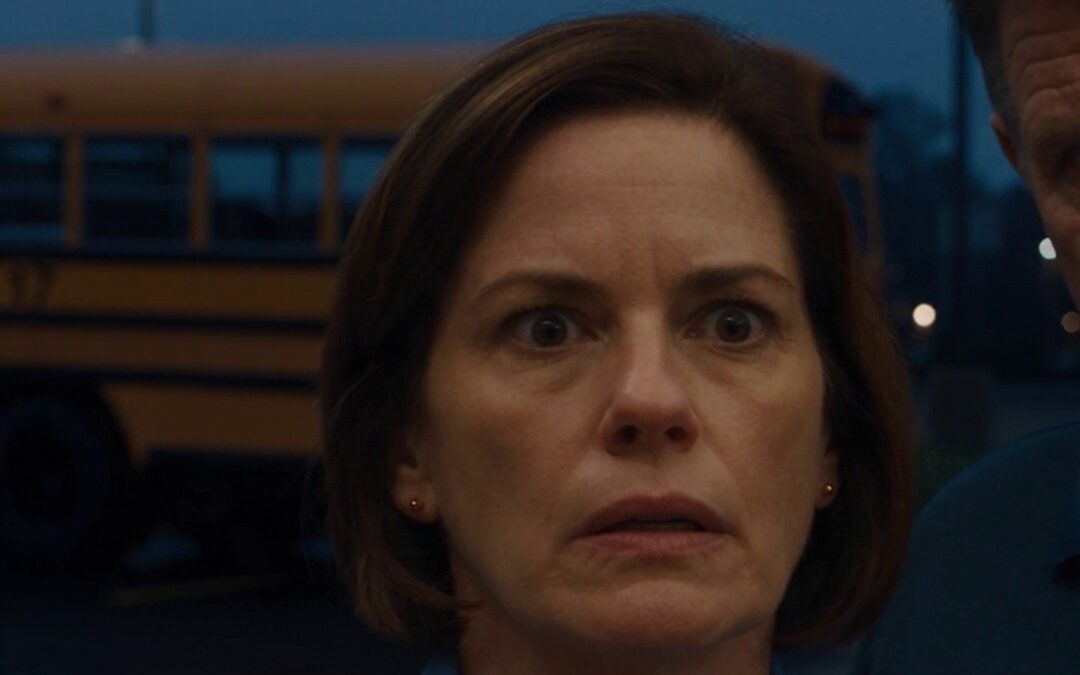
Chapter 1: The Purple Band
Dale held up the orange EMPTY paddle in front of three drivers and asked Mara which part of a child she had missed.
Its handle had a crescent of gray tape where Mara had repaired it last fall.
“Owen was found on your bus,” Dale said.
Mara looked through the depot window at Bus 17, parked with its doors shut, and thought of Owen’s small face appearing above a seat back at the school.
“I walked every row.”
“You signed the sweep card.”
“I know.”
At the elementary school that afternoon, Owen had stepped down from Bus 17 with the other children and given her a solemn wave.
Mara had walked the aisle after the last backpack cleared the steps, checked behind the rear bench, and turned the paddle in the back window to EMPTY.
She had left the folding door open for the mechanic who was coming to take the bus back to the depot.
She had meant to tell Dale that part before he called her into the office.
She had not.
Owen’s mother came in behind him now, one hand tight around her coat sleeve.
“He was in there when they parked it,” she said.
Mara had driven Owen for two years, and his mother had trusted her with the particular quiet he kept when a room grew loud.
“I saw him get off,” Mara told her.
“You saw a lot of children get off.”
Dale laid Mara’s signed sweep card beside the paddle.
The card bore her initials, and the paddle had been displayed in the rear window when the mechanic took Bus 17 away.
There was no camera footage to settle it; the bus recorder had been out for service since Monday, a fact Mara knew because she had reported it.
“I did leave the door open,” she said.
Dale’s eyes lifted.
“For the mechanic.”
“You should have said that first.”
He took her route keys and told her she was off duty while the district reviewed what had happened.
Owen stood near the office wall, unharmed but pale, rubbing a purple paper band on his wrist until its edge curled.
Mara knew those bands.
The school office put them on children waiting for a parent after the buses had unloaded, so a pickup aide could tell at a glance who belonged in the late group.
She had seen Owen wave before she turned the paddle.
She had seen no purple on his wrist then.
Mara looked from the band to the orange paddle in Dale’s hand.
“How did Owen get that band after I marked the bus empty?”
Chapter 2: After the Sweep
“How did Owen get that band after I marked the bus empty?”
Dale lowered the orange paddle, but he did not give Mara back her route keys.
“He may have had it already,” he said.
“I saw his wrist when he waved.”
“You also told me you shut the bus down properly.”
“I told you I swept it.”
Owen’s mother, Celia, drew him closer.
Mara wished she had mentioned the open door the moment Dale called her in, before the omission could sound like a lie.
Owen stopped rubbing the purple band around his wrist.
“I got off,” he said.
Celia looked down at him.
“I hear you, honey.”
Mara heard him too, but she would not ask a nine-year-old to prove what the adults had failed to understand.
Dale sent the other drivers back to work and closed the depot office door.
“Start after the last child unloaded,” he said.
Mara described walking the aisle, checking behind the rear bench, turning the EMPTY paddle in the back window, and stepping down.
“And the door?”
“I left it open for Tom.”
“Did he ask you to?”
“He said he was taking Bus 17 for inspection.”
“That’s different.”
It was, and Mara felt the difference settle between them.
The district rule required an unattended bus to be secured, even when a mechanic was expected.
Dale laid her signed sweep card beside the paddle.
“Tom saw this when he got in,” he said.
Celia looked at the card.
“I called the school when my shift ran late,” she said.
“They told me Owen was with the late pickup group.”
Dale wrote that down.
For an instant Mara thought the matter might end there, until Celia asked, “Then how did he get to the depot?”
No one answered.
Celia’s hand remained on Owen’s shoulder, steady enough that Mara could see how much effort it took.
“Was the bus moving when he was alone?” Celia asked.
“We’re establishing that,” Dale said.
“I’m asking what you know.”
“He was aboard when it reached this lot.”
Owen pressed the curled edge of his band against his sleeve.
Mara wanted to tell Celia that he had waved, that she could still see his hand above the step rail.
She had already said it, and saying it again would only ask Celia to choose between Mara’s memory and the place where Owen had been found.
Dale said Mara would be on paid administrative leave while the transportation director reviewed the incident.
He would speak with the school, Tom, and the yard worker who found Owen.
He asked Mara for a written statement and told her not to question Owen.
“I wouldn’t,” she said.
“I need to say it.”
She understood why, which did nothing to soften it.
In the conference room, she wrote that Owen got off and that she checked every row.
She wrote that she left the folding door open “for Tom,” then crossed out those words and wrote “because I expected Tom.”
He had not specifically asked her to leave it open.
When she gave Dale the page, he noticed the correction.
“Leave the crossed-out words,” he said.
“I did.”
He copied the statement and handed her the original.
Outside, Mara stood without her keys and looked through the fence at Bus 17.
Someone had returned the orange paddle to its rear window after Dale held it up in front of the drivers.
Its crescent of gray tape faced the lot.
The paddle had been handled, carried into an office, and put back as though the afternoon had ended normally.
A driver crossing the lot glanced toward Mara and then at the bus.
He gave her the brief nod he always gave her before a route.
She could not tell whether he had heard Dale’s question or only seen him take her keys.
At home, her husband Luis had left a covered plate on the stove.
He watched her set down her bag without taking out the route sheets she usually sorted at the kitchen table.
“Dale called,” he said.
“Owen was found on my bus.”
“Was he hurt?”
“No.”
Mara told him about the sweep, the purple band, and the open door.
At the last detail, he looked at her for a second longer.
“You told Dale that right away?”
“After he asked.”
Luis pulled out a chair.
He knew how carefully she checked a bus, and he also knew how she sounded when she wanted a mistake to become a detail.
“You need to tell the whole thing every time,” he said.
“I wrote it down.”
“I’m talking about when it happened.”
“I know.”
He pushed the plate toward her and stopped trying to make her eat.
Mara lifted the cover, saw that the food had gone cool, and put it back.
“I thought Tom was right behind me,” she said.
“Was he?”
“No.”
Luis waited.
“I know what I should have done,” she said.
“I’m trying to understand what happened to Owen.”
“I’m trying to understand both.”
The next morning, Dale texted her to come to a meeting with the transportation director at ten.
Three drivers had also messaged to ask whether the story was true.
Mara answered none of them.
Luis slid a blank notebook across the breakfast table.
“Write the times before anyone gives you theirs,” he said.
She nearly pushed it back, then opened it.
She had reached the school at about three ten.
The children had unloaded in two uneven streams because a boy dropped a mitten on the steps.
Owen had been near the end and had waved from below the handrail.
Mara had waited until the curb cleared before walking back.
She remembered a green science folder on a seat, and a girl returning to claim it.
Owen had carried a green folder that morning too.
Had Mara seen his, or only a similar one?
She wrote the question down without answering it.
Beside it, she wrote the things she did not know: when Tom arrived, when Celia called, and whether the gate beside the pickup walk had been open.
Luis glanced at the page.
“You can leave blanks,” he said.
“I hate blanks.”
“That doesn’t fill them.”
At ten, the transportation director introduced herself as Ruth.
Tom, the mechanic, sat beside Dale with his reading glasses hanging from his shirt collar.
Ruth said Owen was home and the district was reviewing both how he came to be on Bus 17 after the route ended and whether the bus had been secured.
She asked each person to describe what they observed.
Mara repeated her statement.
Tom said he reached Bus 17 after finishing work on another vehicle at the school.
“The door was open, and the EMPTY paddle was turned,” he said.
“I thought it was ready to move.”
“Did you walk the aisle?” Ruth asked.
“No.”
“Could you see the rear bench from the front?”
“Not well.”
Tom looked at the table.
He had driven Bus 17 through the shared service lane to the depot at approximately three forty.
A yard worker found Owen when she boarded to bring the bus into the inspection bay at four eight.
For twenty-eight minutes after the move, no one had known he was there.
Ruth asked why Owen had not called out.
Tom said Owen told his mother he thought the bus was being parked and someone would come back.
Mara pictured the rear bench of Bus 17 and the high seat back in front of it.
A child sitting low there could hear an adult board without being visible from the driver’s seat.
She knew that because she had explained it to new drivers during sweep training.
Dale set out the case against Mara without raising his voice.
She had signed the sweep card, turned the paddle, and left the bus open.
Tom had moved it on that basis.
Owen had been found inside.
“I saw him get off,” Mara said.
“Then we need to know when he got back on,” Ruth said.
Mara asked about the school’s late pickup record.
The principal had agreed to provide it, but Ruth had not received it yet.
“Can I see it when it comes?” Mara asked.
“After the school gives us the relevant part.”
The full book contained other children’s information; Ruth could not hand it to a driver.
“What time did Owen get the band?”
“The office hasn’t confirmed that.”
Dale turned the paddle over in his hands.
“Mara, did you reach the rear bench?”
“Yes.”
“Are you certain?”
“The loose screw on the rear panel caught my sleeve.”
Tom looked up.
Maintenance had an open work order for the screw, but knowing about it did not prove when Mara had touched it.
Ruth asked why she left the door open.
“I thought Tom would be there in a minute,” Mara said.
“He came much later.”
“I was held up,” Tom said.
“I know.”
“Did you see anyone near the bus?” Ruth asked him.
“A few people by the covered walk.”
“Anyone boarding?”
“No.”
Tom lifted his glasses from his collar, then let them hang again.
“I looked at the paddle, got in, and took it over.”
Ruth wrote down each part without telling him which one troubled her.
The meeting ended without a finding.
Ruth would obtain the school’s records and speak with the employees at the pickup walk.
The district had notified its insurer of an incident involving a child on a bus after service, a routine step Ruth explained before Mara could mistake it for a verdict.
Outside, Tom caught up with Mara.
“I should’ve walked the bus,” he said.
“You trusted the paddle.”
“I trusted you.”
That landed harder.
They looked across the fence toward the school’s covered pickup walk.
A small gate opened from there into the service lane.
“That gate stays open for deliveries,” Tom said.
“Was it open yesterday?”
“I didn’t look.”
Mara had not looked either.
Tom rested a hand on the fence.
“I’m going to tell Ruth I didn’t check it,” he said.
“You already told her.”
“I mean the gate.”
“Tell her what you saw, Tom.”
“I didn’t see it.”
“Then tell her that.”
At home, she called Ruth and left a message asking her to check the gate and the late pickup procedure.
Then she drove to the elementary school and went through the front entrance.
The secretary, June, recognized her immediately.
June had called Mara over forgotten mittens often enough to know when a visit was ordinary.
“I’m not here to ask Owen anything,” Mara said.
“Good.”
“How do the purple bands work?”
June glanced toward the principal’s office.
“I’ve been told to send questions about yesterday to him.”
“I’m asking about the regular procedure.”
June held the counter edge.
“When a parent calls about a late pickup, we bring the child to the office, put on a band, and enter the call in the pickup book.”
“Could Owen have received his before the buses unloaded?”
“It’s possible if his mother called early.”
Mara felt her one clear thought grow less clear.
She had assumed the band meant Owen entered the office after her sweep.
It might only mean Celia had called.
“Do they keep wearing them until a parent comes?” Mara asked.
“Usually.”
“Even if one gets loose?”
“We replace it.”
June stopped there, aware that yesterday’s entry was no longer an ordinary question.
“Yesterday’s entry is with the principal,” June said.
Mara thanked her and left.
From the public parking area, she could see the gate beyond the covered walk.
A child could reach the service lane from there without passing the front office again.
Mara had crossed town and risked looking as if she were pressing a school employee.
All she had earned was a narrower question.
Back home, she left Ruth a second message.
She explained that Owen might have received the band before the route ended and asked for the actual time.
Giving Ruth a reason to doubt her own theory felt like loosening her grip on the only thing she had.
That evening, Owen’s father, Ben, called.
“Celia said you saw him get off,” he said.
“I did.”
“He says he got off too.”
“I believe him.”
“He also says he was on the bus when it moved.”
“I believe that too.”
“Then one of you is leaving something out.”
Ben had arranged his workday around Owen’s bus for two years.
He had earned the right to ask.
“I left the door open,” Mara said.
“I should have secured it.”
“Celia told me.”
“I didn’t tell Dale right away.”
Ben was quiet.
“I used to tell Owen you’d notice if anything went wrong,” he said.
Mara pressed her thumb into the kitchen tile.
“I noticed afterward.”
“That isn’t the same.”
“No.”
“Celia had to drive to the depot,” Ben said.
“She walked through that lot looking for a hurt child.”
Mara shut her eyes.
“I’m sorry she had to do that.”
“I know you are.”
His voice did not soften.
“I need to know whether saying you saw Owen get off is something you remember, or something you need to be true.”
“I remember him waving.”
Ben let out a breath.
“Then tell the district exactly that.”
The next morning, Ruth called.
The school had provided the pickup book, and the principal would join them at noon.
“Does Owen’s entry have a time?” Mara asked.
“It has several.”
At the district building, Ruth, Dale, the principal, and June sat around a meeting table.
The principal placed a copy of one page in front of them with the other children’s entries covered.
June had recorded Celia’s call at two fifty-four.
She had recorded Owen reporting to the office at three twenty-seven and receiving a band at three twenty-nine.
“Bus 17 unloaded around three ten,” Ruth said.
“According to Mara,” Dale said.
“And the school’s curb roster,” the principal replied.
Mara stared at the times.
Owen had been in the office after he got off her bus.
At last, the band meant something.
Dale leaned over the book.
“It still doesn’t establish when Mara swept.”
“I swept after the children got off.”
“Were you at the bus until three twenty-nine?”
“No.”
“What time did you leave?”
“I can’t give you a minute.”
Dale spread his hands.
“That’s the gap.”
The book proved Owen had gone to the office.
It did not prove Mara had swept before he could return.
Mara looked at June, who had made the entries.
“Did you see him come in?” Mara asked.
“Yes,” June said.
“He came from the front hall with the other late pickup children.”
Dale touched the covered portion of the copy.
“Can we review the original before making a finding?”
“We will,” Ruth said.
Mara wanted the page to end the meeting.
Instead, she had to sit with the difference between an answer to one question and an answer to the accusation.
During a recess, Ruth found her beside a humming vending machine.
“June remembers replacing Owen’s band,” she said.
“He pulled the first one off while he waited.”
Mara pictured him worrying the curled paper in Dale’s office.
“He was there long enough to do that.”
“Apparently.”
“Can I see where the late group waits?”
“If the principal agrees, and someone goes with you.”
They crossed to the school after dismissal.
June showed them the benches outside the office, the drawer of purple bands, and the pickup book kept beside it.
She explained that she noted replacement bands so the aide taking children outside would not mistake one child for two arrivals.
“Was Owen carrying his folder?” Mara asked.
“The green one?”
“Yes.”
“He set it by the bench, then picked it up when the aide took them outside.”
Mara’s tidy reason for him returning to the bus disappeared.
June pointed to the place where the late group lined up.
“He was waiting here when I changed his band,” she said.
“Did you watch him go outside?”
“I watched the group leave.”
“Not each child?”
“Not every step.”
June’s answer was honest, and Mara had no reason to ask her to improve it.
From the covered walk, a child could reach the service gate in less than a minute if the aide’s attention moved to the front doors.
The gate lay beyond the office windows.
The principal opened it, and Bus 17’s parking place came into view.
Mara stepped toward it, then waited for him to join her.
Owen could have boarded through an open door without anyone inside the school seeing him.
That possibility still did not establish that he had.
Mara stood where the front of the bus would have been.
From there, the open folding door would have looked like an invitation to a child who had ridden the same vehicle every school day.
The thought made her feel sick, because she was the one who had left it open.
Ruth said the late pickup aide had left for an appointment.
She would speak with her the next morning.
She had also requested Tom’s move sheet and the bus’s vehicle movement report.
“Would the tracker tell you when Owen boarded?” Mara asked.
“It records where the bus was, not who was inside.”
The recorder inside Bus 17 had been out for service, as Mara herself had reported on Monday.
Every possible shortcut seemed tied to a fact that could not answer the question.
On Friday, Ruth called again.
The aide remembered Owen asking to get his “paper person” between three thirty-one and three thirty-six.
She told him to stay with the group.
A parent arrived with a younger child who needed help at the front doors, and when the aide looked back, Owen stood by the benches again.
“She didn’t see him go through the gate,” Ruth said.
“So she can’t say he did.”
“No.”
“Did she notice how long she lost sight of him?”
“She couldn’t give me a reliable number.”
Tom’s sheet placed him at Bus 17 at approximately three thirty-four.
Owen could have slipped through the gate while Tom approached, then moved toward the back before Tom climbed in.
It was an answer that fit.
It still needed to be tested.
Ruth scheduled a formal review for Monday.
The district had not decided whether Mara would return to driving.
After the call, Mara searched a kitchen drawer for a thank-you card Owen had drawn the previous spring.
He had pictured Bus 17 with an enormous orange paddle in its rear window and a folded paper figure standing beside it.
Mara remembered his habit then.
He liked to fold people from the stiff paper in his science folder and stand them on the ledge behind the back bench.
She had asked him more than once to take them home because loose things could slide.
On Thursday morning, a white figure with a purple crayon face had stood there.
Had she seen it during the afternoon sweep?
She could remember the rear screw snagging her sleeve and the empty seat seam below it.
She could not remember a figure on the ledge.
Its absence might mean Owen had taken it with him, or another child had moved it.
Mara held the old card beside her notebook and tried to remember whether Owen had folded more than one person.
She could picture his careful fingers pressing down a crease, but not the number of figures he had carried that week.
“I could convince myself of anything right now,” she told Luis.
“Then tell Ruth what you know and where it came from.”
Mara called Ruth.
“I don’t want Owen questioned because I found an old card,” she said.
“I thought you should compare it with what the aide already reported.”
Ruth said she would.
By Sunday, Mara’s sister had heard a version in which Owen had been locked on the bus all afternoon.
Mara replied that he was found twenty-eight minutes after it moved to the depot and that the district was reviewing how he got aboard.
Her sister wrote, “People are saying you signed the sweep.”
“I did,” Mara answered.
An hour passed before her sister wrote again.
“You always told me that signature meant you were sure.”
Mara put the phone away and washed a mug that was already clean.
Luis took it gently from her.
“What proves he came back after you swept?” he asked.
“That’s what I’m trying to find.”
They sat at the kitchen table with her notebook.
Luis drew a line and marked unloading, the office band, and Tom moving the bus.
“Where were you between these?” he asked.
“Leaving the bus.”
“Can anyone place you?”
Mara opened her mouth, then stopped.
After turning the paddle, she had gone into the school office with a route change slip for a child who would ride a different bus the following week.
She had handed it to June at the counter.
Luis tapped the line.
“When?”
“She may have stamped it.”
The school kept those slips in a route file because families sometimes questioned when a change was received.
A stamp would put Mara away from Bus 17.
It could not, by itself, prove she had swept first.
“Why didn’t I remember that?” Mara said.
“You were trying to remember Owen.”
“I carried the slip in with my route pouch.”
“Then say that too.”
Mara wrote to Ruth that night and asked her to request the slip.
She did not contact June again.
At eight on Monday, Ruth replied that the principal had found it in the ordinary route file.
June’s stamp read three nineteen.
Mara drove to the review with the time repeating in her head.
By three nineteen, she had left the bus, crossed the walk, and handed June the slip.
Owen had reported to the office eight minutes later.
Dale could still say she turned the paddle without making a proper sweep.
Only Mara could remember walking to the back.
At the district building, Ruth met her in the hall.
“The slip helps place you,” she said.
“I know what it can’t prove.”
Inside, Dale sat with the principal and a district human resources representative.
The representative explained that he was there because the finding could affect Mara’s assignment or discipline.
Tom came in last.
Celia and Ben would hear the findings separately, Ruth said, so they would not have to sit across from the employees while facts were disputed.
Mara was relieved and hurt in equal measure.
Ruth began with the timeline.
Bus 17 unloaded at about three ten.
June stamped Mara’s route slip at three nineteen.
Owen reported to the office at three twenty-seven and received a replacement purple band at three twenty-nine.
Between three thirty-one and three thirty-six, he asked the aide for his paper person.
Tom entered Bus 17 at approximately three thirty-four.
The yard worker found Owen aboard at four eight.
Dale waited until she finished.
“None of that establishes Mara checked the rear seats,” he said.
“I signed the card after I did,” Mara replied.
“Your signature is what we’re evaluating.”
He was right.
The card could not verify itself.
Tom cleared his throat.
“I found the bus open with the paddle turned.”
“You did,” Dale said.
“I took that as clearance to move.”
“We’ll address your check separately.”
“It’s part of how Owen reached the depot.”
The HR representative wrote something down.
Dale made another argument.
“Owen could have returned while Mara was still at the bus.”
“I was at June’s counter at three nineteen,” Mara said.
“Your slip was stamped then.”
“You think I went back?”
“I’m saying the stamp doesn’t rule it out.”
Mara imagined returning from the office to an open bus, pretending to sweep while Owen moved among the seats, then leaving again.
Dale did not have to prove that sequence yet.
He only had to show that her records did not exclude it.
Ruth turned to the principal.
“What did June observe when Mara brought in the slip?”
“She remembers Mara saying Bus 17 was clear for Tom.”
“Did she write that down?” Dale asked.
“No.”
“Then it’s a memory from after the incident.”
“Yes.”
Mara felt angry at an objection she would have made in his place.
The principal said Owen had told Celia and Ben at home that he went back for the folded figure he believed he had left on the rear ledge.
He had opened the service gate when the aide turned toward the front doors.
He boarded through the bus’s open folding door.
His parents had written down his account that evening and given it to the school; no one at the review had questioned him again.
Mara kept her hands flat on the table.
At last they had the path Owen said he took.
Dale did not yield.
“A child can mix up the order when adults ask what happened,” he said.
“His account explains a possible return.”
“It doesn’t verify when Mara swept.”
Ruth agreed and placed a photograph on the table.
The yard worker had taken it as part of her incident report after finding Owen, before anyone heard about a paper person.
A white folded figure with a purple face stood on Bus 17’s rear ledge.
Mara leaned closer.
She had seen one there that morning.
But in the photograph it faced the aisle; in her memory, it had been flattened under the window latch, facing the glass.
Maybe Owen had carried it off the bus and brought it back.
Maybe there were two.
Maybe her memory of its position was wrong.
“What do you make of it?” Ruth asked.
“I can’t tell you what it proves.”
Ruth nodded.
Dale studied the photograph after Mara passed it to him.
“If he went back for this, why leave it there?” he asked.
The principal answered carefully.
“Owen told his parents he sat down because the bus began to move.”
“That’s his account,” Dale said.
“Yes.”
Ruth slid the photograph beside the pickup book.
Its value was limited, and she left it there without trying to make it larger.
The HR representative requested a short break.
In the hall, Mara stood near the door to the room where Owen’s parents waited.
Tom came out beside her.
“I’m sorry,” he said.
“For which part?”
“For thinking the paddle meant the bus was safe to move.”
“I turned it.”
“After your sweep.”
“I left the door open.”
Tom looked down at his hands.
“I used to tell new mechanics to check the paddle before moving a bus.”
“Did you tell them to check inside?”
“I told them the driver had already done it.”
Mara thought of Dale holding up the orange paddle on Thursday.
To him it meant she had claimed Owen was not aboard when she finished.
To Tom it meant Owen could not be aboard when Tom arrived.
Those were different claims.
An open door lay between them.
Tom looked toward the meeting room.
“I’m going to say that in there,” he said.
“Say what you did, too.”
“I did.”
“I know.”
She did not want him to take her share of the failure.
She needed him to name his own.
When the meeting resumed, Ruth brought out the vehicle movement report from the maintenance contractor.
Bus 17’s location unit produced the report whenever its engine started or stopped.
The district had requested it the morning after Owen was found, and the contractor had sent it Friday.
The bus remained at the school curb from its arrival until Tom started it at three thirty-four.
Ruth had checked that movement against Tom’s sheet and the yard entry at the depot.
“There was no other move,” she said.
Dale read the report.
“It doesn’t show who was aboard at three twenty.”
“No,” Ruth said.
“It shows where the bus was while we establish where Owen was.”
She asked June to join them.
June carried the original pickup book and the route file from the school office.
The principal stayed beside her as she opened them.
She showed Celia’s call, Owen’s arrival, the replacement band, and her stamp on Mara’s route slip.
“Why mark a second band?” the HR representative asked.
“We count the children waiting outside,” June said.
“If one band comes off, I write down the replacement so the aide doesn’t count an extra child.”
The answer was as ordinary as the book.
No one had created its entries for Mara, and no one had expected them to settle a driver’s job.
June kept it because the school needed to know which children were waiting for parents.
Dale examined the intact page.
The earlier entries and Celia’s later signout put Owen’s lines in the middle of an ordinary afternoon.
“Could Mara have gone back to the bus after handing you the slip?” he asked.
“I couldn’t see her the whole time,” June said.
“She left through the front doors.”
June remembered Mara saying the bus was clear for Tom.
Dale asked whether that memory came from a note.
“No,” June said.
“I remember because Tom’s work order was clipped to her route pouch.”
Dale thanked her.
He had not been defeated by her answer.
He had reached the edge of what she could honestly know.
Ruth asked June whether the book ever left the front office during the school day.
“No,” June said.
“The aide brings the children out, but I keep the book at the counter.”
“And you made these entries as things happened?”
“I did.”
The principal confirmed that he had collected the book from its usual place and covered the other children’s entries only on the copy.
Mara watched Dale turn one page forward and back.
He was looking for a reason the times might have been assembled later.
She would have looked for one too.
Mara asked to speak.
“I understand why you thought I missed him,” she told Dale.
“I signed the card, turned the paddle, and left the bus open.”
“Yes.”
“If Owen stayed aboard all along, I failed the sweep.”
“Yes.”
“But he was in June’s office after I left the bus.”
“After you handed in the slip,” Dale said.
“We still have to decide whether you swept before that.”
“I did.”
“I need evidence that lets the district make that finding.”
For a moment, Mara thought she would lose.
The book placed Owen in the office.
It did not place her hand on the rear panel before three nineteen.
“The loose screw caught my sleeve,” she said.
“I told you that Thursday.”
“You did.”
“I filed the work order with Tom on Monday.”
Tom reached into his folder.
The routine work order described the screw snagging clothing during an aisle sweep and named Mara as the driver who reported it.
Dale read it.
“This shows you knew about the screw.”
“Yes,” Mara said.
“It doesn’t show when you touched it on Thursday.”
“I know.”
She had wanted it to be the last piece.
It was only context.
“I’m not asking you to make that paper say more,” Mara said.
“I’m telling you why I remember reaching the back.”
Dale set the work order down.
“I hear that.”
His face gave her no sign that hearing it had changed his mind.
Ruth set the work order beside the pickup book.
“Owen’s account says he left the office through the service gate and entered the open bus after he asked for his paper person,” she said.
“The aide places his request and her brief loss of sight between three thirty-one and three thirty-six.”
“June’s book places him in the office after Mara was at her counter.”
“The movement report places the bus at the same curb until Tom started it at three thirty-four.”
She looked at Dale.
“What alternative sequence fits those sources more closely?”
Dale tapped the copied entry.
“His mother was told he was in the late group.”
“The original entry supports that,” Ruth said.
“And we know he returned?”
“We have his account, the aide’s account of his absence, the path through the gate, and Tom’s account of the open door.”
Dale looked at the report again.
“Mara could have skipped the sweep and turned the paddle.”
“She could have,” Ruth said.
“But that wouldn’t change when Owen reached the office or explain how he came to be aboard when Tom moved the bus.”
“What if he got back on before she left?” Dale asked.
“Then her presence at June’s counter and the aide’s later account would need another explanation for his absence from the late group,” Ruth said.
“And we would need a reason Owen described the gate and the open door without being led to them.”
Dale did not answer.
Ruth gave him time to read the entries once more.
“He returned,” he said at last.
It was the first time he had said it as a fact.
Ruth waited.
“If he returned after Mara left for the office,” Dale continued, “the bus could have been empty when she signed the card.”
Mara held herself still.
“Could have been” was not the same as “was.”
Dale turned toward her.
“The records support the sequence you gave us,” he said.
“I should have waited for them before speaking as if I knew you missed him.”
Mara remembered the three drivers watching him hold up the paddle.
Ruth stated the finding plainly.
The district would not find that Mara failed to sweep Bus 17 or knowingly left Owen aboard.
The evidence showed Owen got off, entered the late pickup group, and returned through the service gate after Mara left the bus.
Mara had still violated the rule requiring her to secure the unattended bus.
Tom had moved it without an independent check for a child, contrary to the district’s vehicle movement procedure.
The school would review how Owen left the late group and reached the gate.
No single page had cleared Mara.
The pickup book established where Owen was after unloading; June verified how its entries were made; the aide and Owen supplied the route back; Tom’s account and the movement report established when the bus left.
Mara looked at the orange paddle on the side table.
It had told the truth when she turned it.
Leaving the door open had allowed that truth to expire.
Ruth asked Mara to wait outside while the employment consequence was discussed.
Celia and Ben were invited in to hear the factual finding from Ruth and the principal.
Mara did not try to read their faces through the doorway.
She bought water from the vending machine and stood with the unopened bottle in her hand.
Tom waited nearby.
“I moved it without checking,” he said.
“You told them.”
“I should have done it then.”
“Yes.”
He looked at her route pouch.
“Will you drive again?”
“I haven’t been told.”
Mara turned the bottle once between her palms.
Inside the other room, a chair scraped across the floor.
She could not tell whose chair it was.
When Ruth called Mara back, the HR representative handed her a written notice.
Mara would receive a formal warning for leaving the bus unsecured and complete refresher training before returning to a route.
She could submit a written response for her personnel file.
The days she had spent off duty would be paid.
Tom’s employment review was separate and would not be discussed with her.
Dale said he would tell the drivers who had heard his accusation that the district found Mara did not leave Owen aboard during her sweep.
“Please use those words,” Mara said.
“I will.”
“Will they hear it from you?” she asked.
“Yes,” Dale said.
“I asked you in front of them.”
She folded the notice once, then opened it again.
The principal said the school would keep the late pickup group inside until the service gate was checked and secured.
Ruth said a turned EMPTY paddle would no longer be enough clearance for a mechanic or yard worker to move an unattended bus.
Whoever moved it would walk the aisle first.
Those procedures could change quickly.
Mara knew people would take longer.
Celia came into the hall with Ben a few steps behind her.
Owen was with a relative, away from the meeting.
“We heard the timeline,” Celia said.
Mara held the warning notice at her side.
“I’m sorry I left the door open.”
Celia glanced at the paper.
“I believe he got off when you said he did.”
“Thank you.”
“I’m still thinking about the door.”
“You should.”
Ben came closer.
“Owen asked if you were angry at him.”
“No.”
“He thinks he caused all this by going back.”
“He was trying to get something he made.”
Ben’s expression softened a little.
“He said it was for Celia.”
Celia pressed her lips together and looked toward the exit.
“Please tell him I’m glad he came home,” Mara said.
Celia nodded.
She did not hug Mara or promise that Owen would ride with her again.
Mara did not ask.
Two weeks later, the district finished its written incident report.
It described Owen’s return and the failures that let him reach the depot: the open bus door, the gate and supervision gap, and Tom’s move without another check.
The district sent the report to its insurer, which it had notified when the incident occurred.
There was no ceremony in which everyone agreed the damage was over.
Mara wrote a response to the warning notice.
She accepted that she had left Bus 17 unsecured and asked that the finding about her completed sweep be kept with the notice in her file.
The HR representative confirmed that both pages would remain together.
At home, Luis read the response after she offered it to him.
“You put the door first,” he said.
“I left it open.”
“You put the rest in there too.”
“I need anyone reading it later to know both.”
Mara attended refresher training with a group of new drivers.
She walked the aisle of an empty bus, touched the rear panel, and checked each seat on her way back.
Then she secured the folding door.
The trainer watched her repeat it.
“Did you think I’d forget?” she asked.
“I think you’ll remember it forever,” he said.
“That doesn’t make the practice unnecessary.”
She could not argue.
Dale returned her route keys on a Monday morning.
Bus 17’s brake inspection was finished, its recorder was back from service, and the loose rear-panel screw had been repaired.
“Owen’s parents asked to keep him with his temporary driver through the term,” Dale said.
“They don’t have to explain that to me.”
“No.”
Mara took the keys.
Dale held the office door while she stepped into the lot.
The three drivers who had heard his accusation had heard his correction, he told her.
Mara believed he had said it.
She also knew the story had reached people who had never stood in that office.
A week after she resumed driving, a new driver mentioned a version of the story in which Owen had slept through the entire route while the EMPTY paddle faced out.
“Owen got off,” Mara told him.
“He came back after the sweep.”
“I didn’t know,” he said.
“That’s why I’m telling you.”
She showed him where the paddle hung during a route and when to turn it after walking the aisle.
Then she showed him the folding door latch.
“If you leave the bus, secure it,” she said.
“And if you move one someone else parked, walk it yourself.”
He did both during practice.
In spring, Mara saw Owen at a school event while she was driving an activity bus.
He stood beside Celia in the pickup area with a green folder against his coat.
He noticed Mara through the windshield and raised one hand.
She raised hers from the wheel.
It was a small exchange with no promise tucked inside it.
After the children boarded, Mara drove the short route, checked behind every seat, and stopped at the rear window.
The orange EMPTY paddle still had its crescent of gray tape.
She turned it outward, walked back down the aisle, and secured the door before she left.








